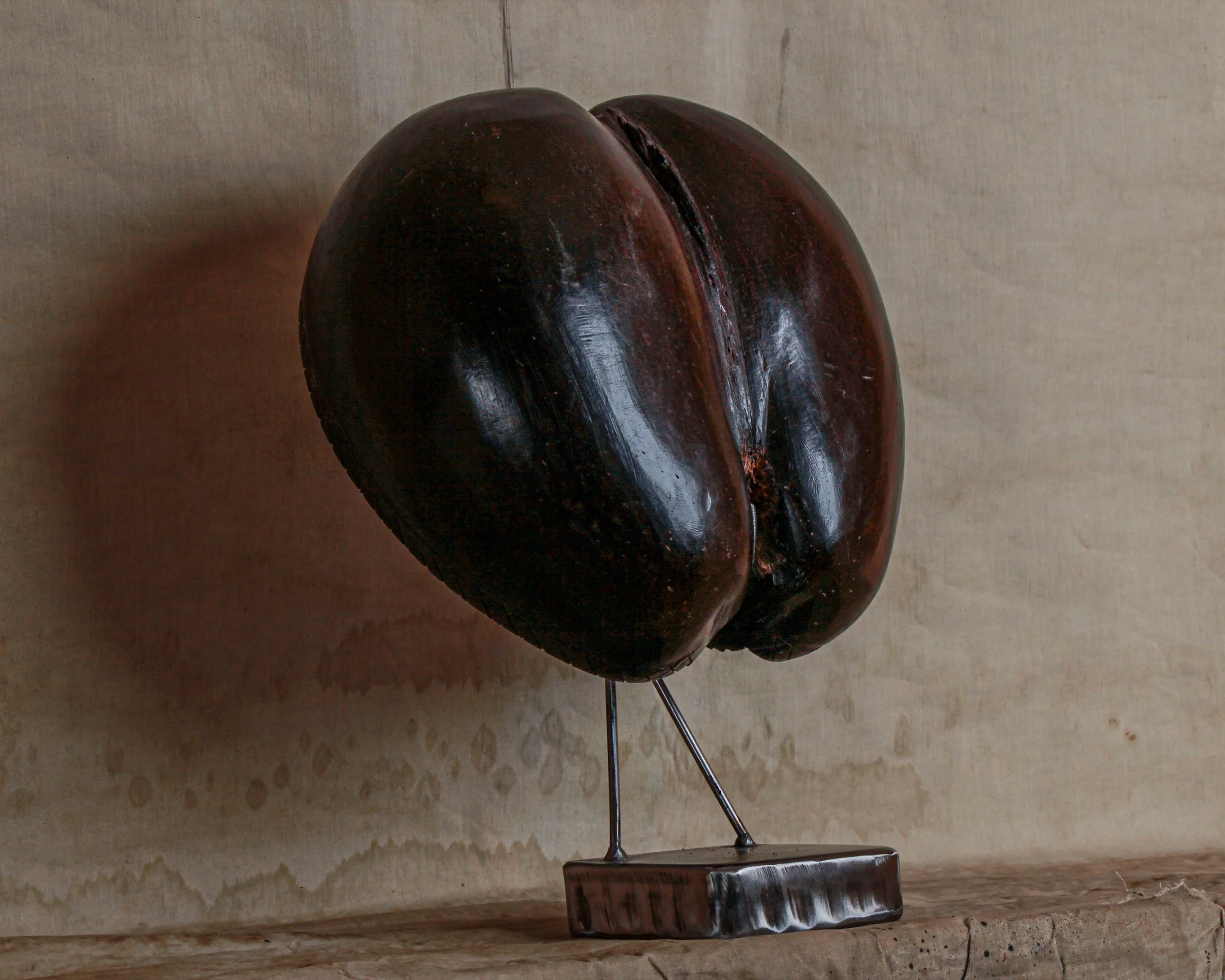
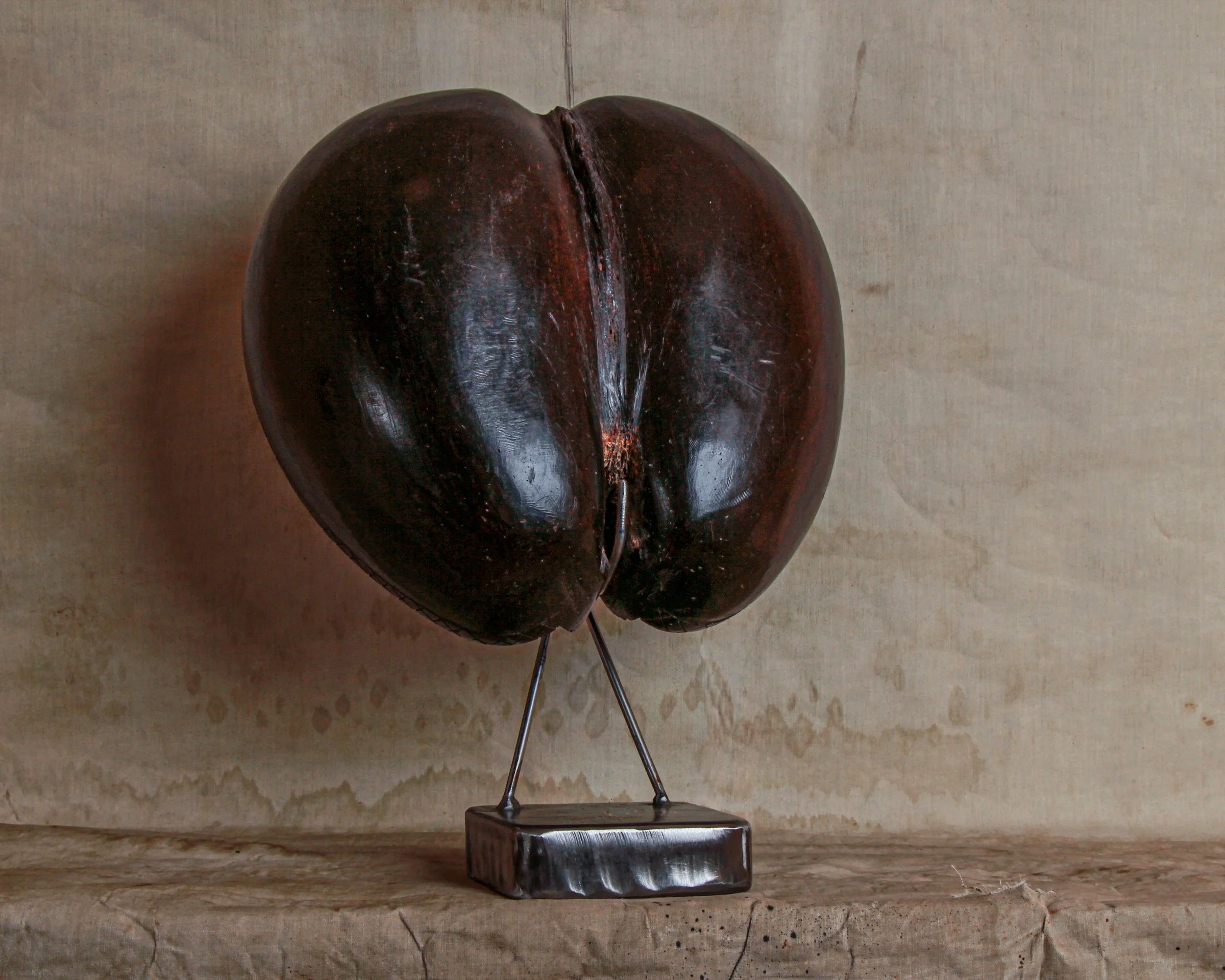
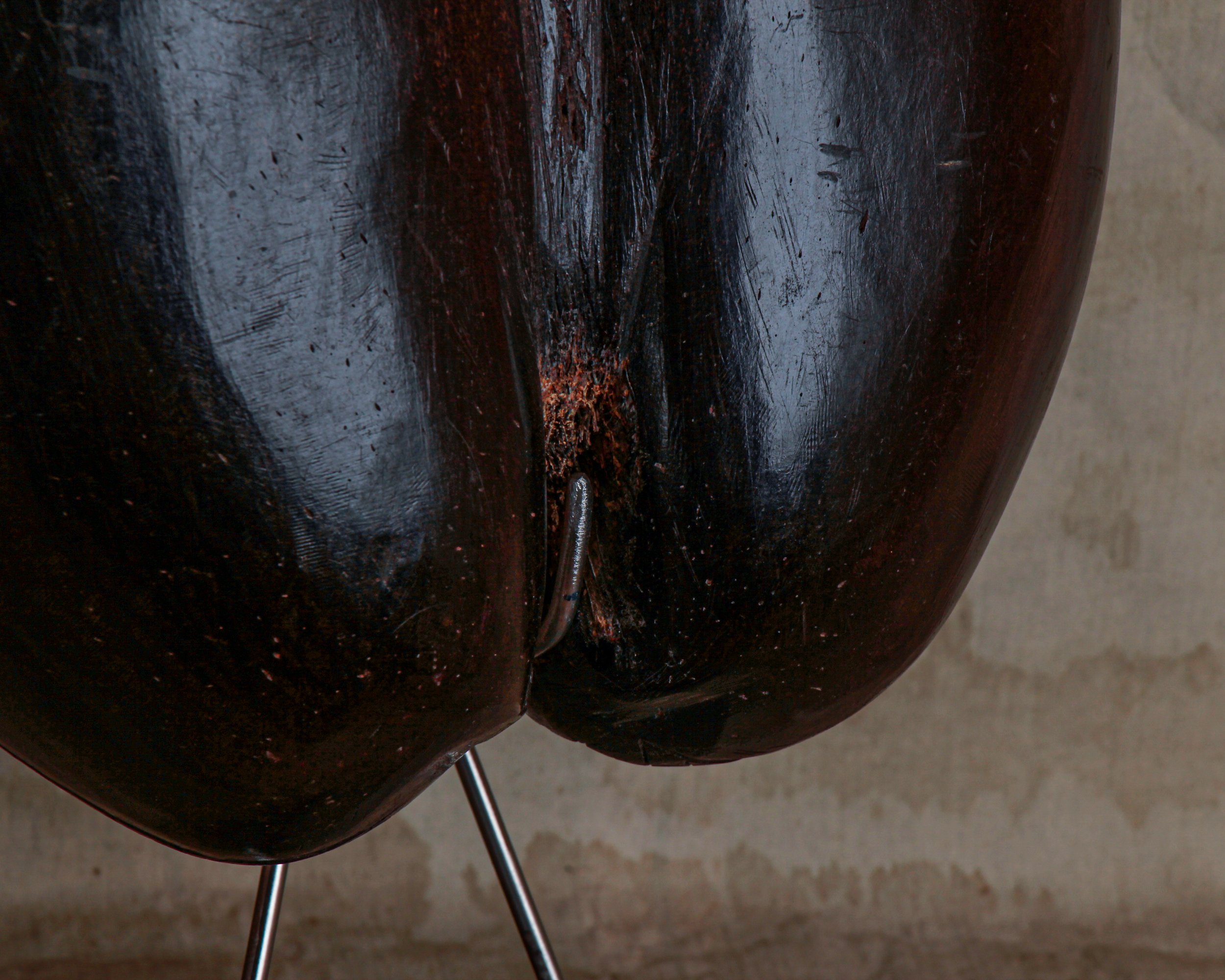
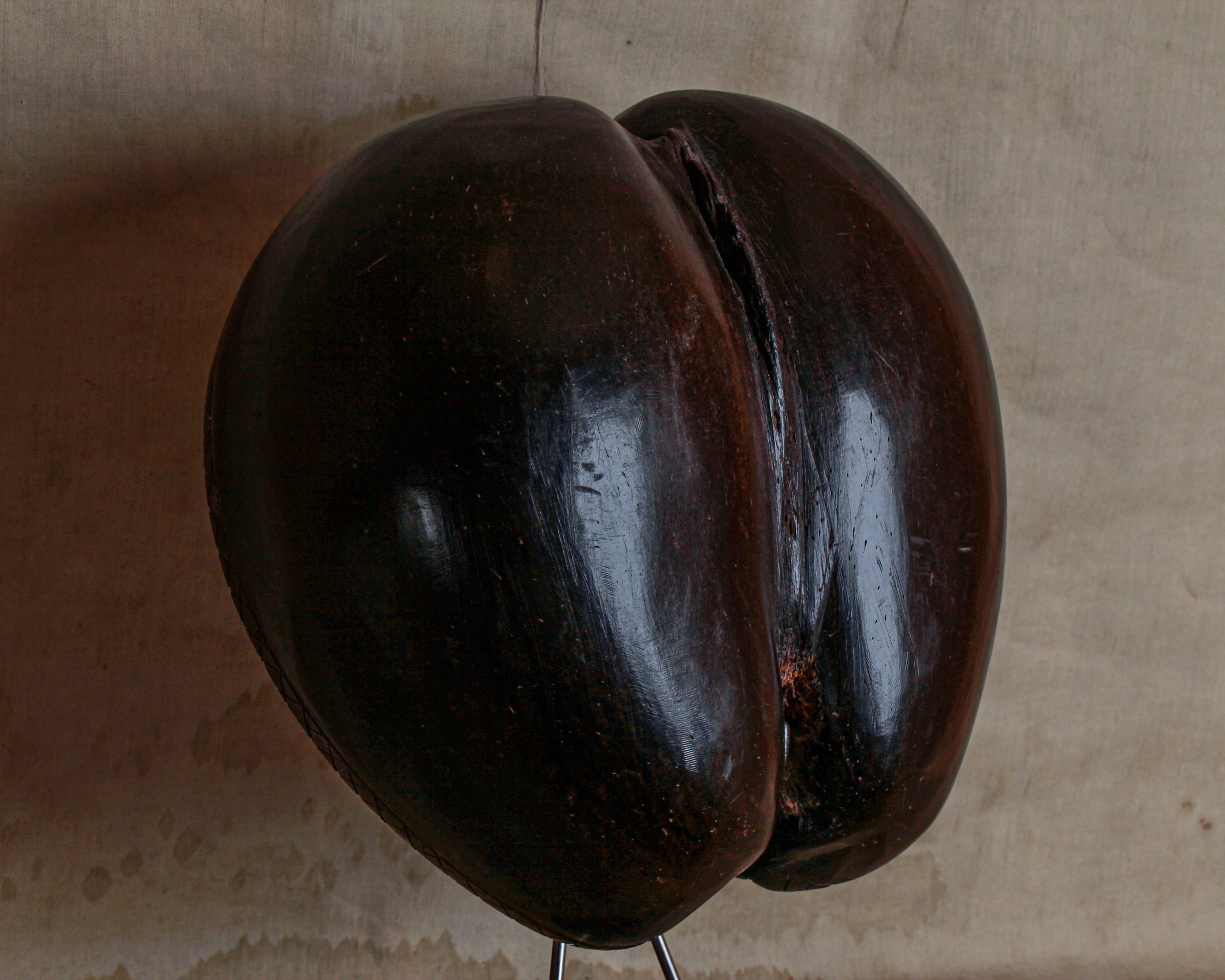
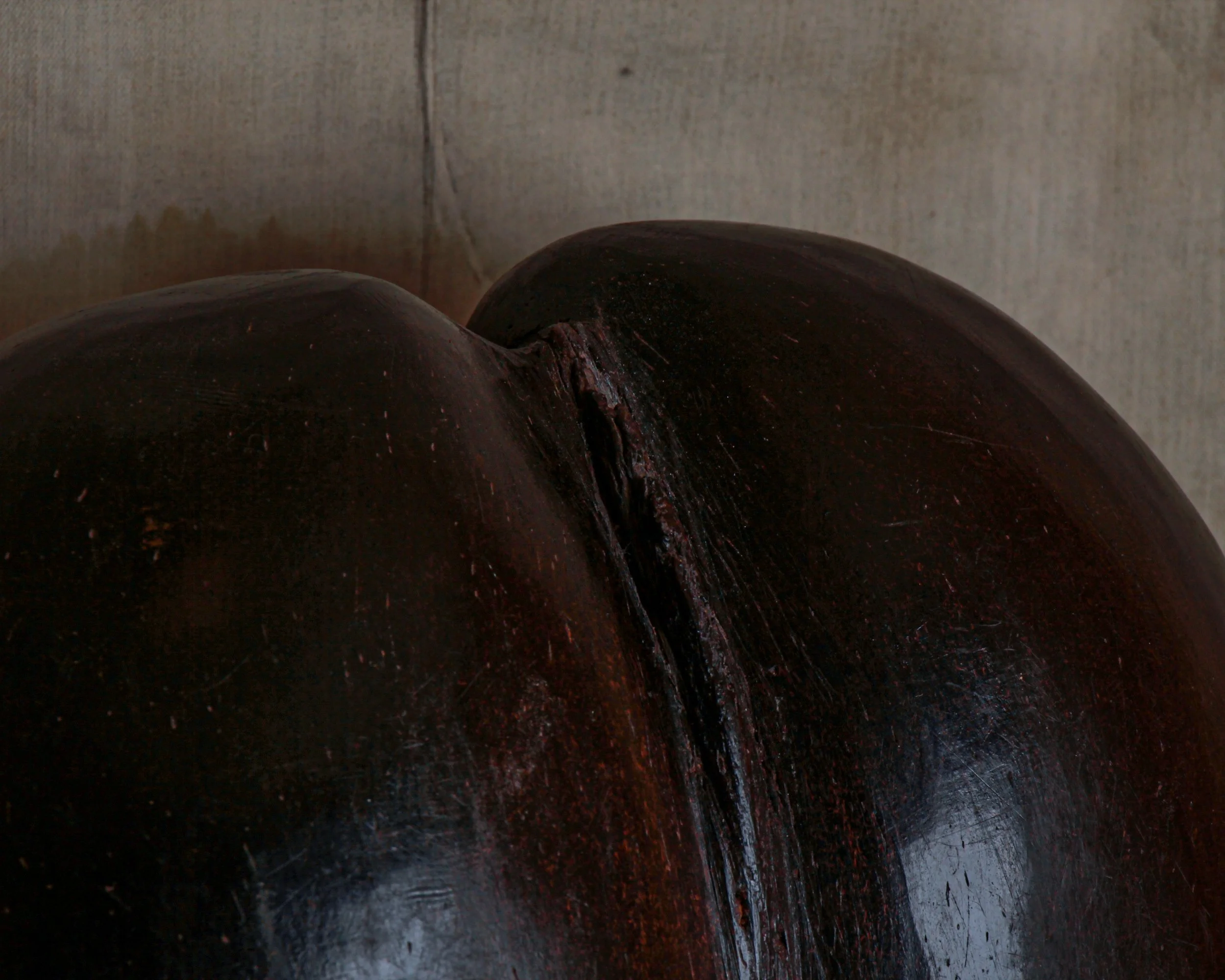
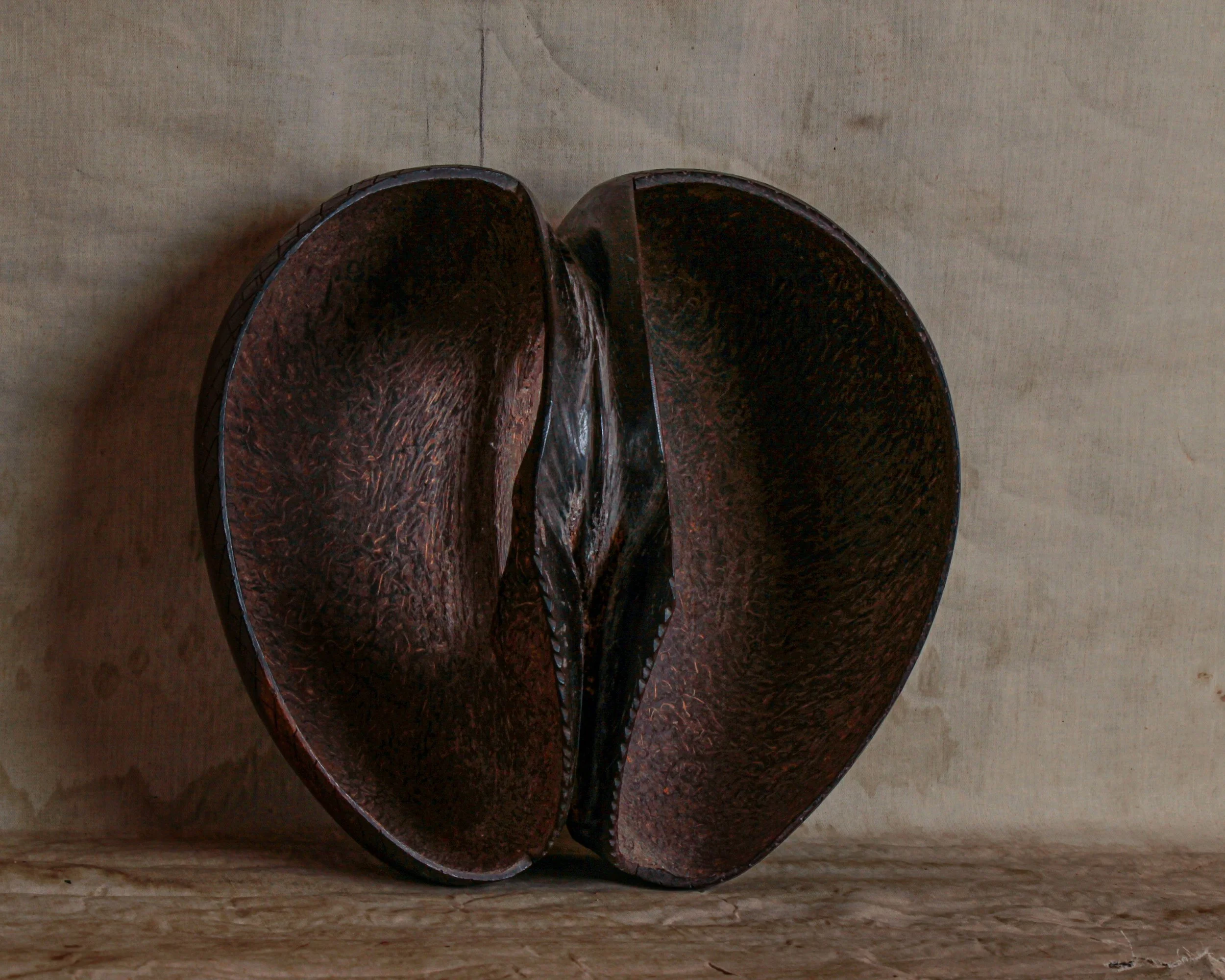
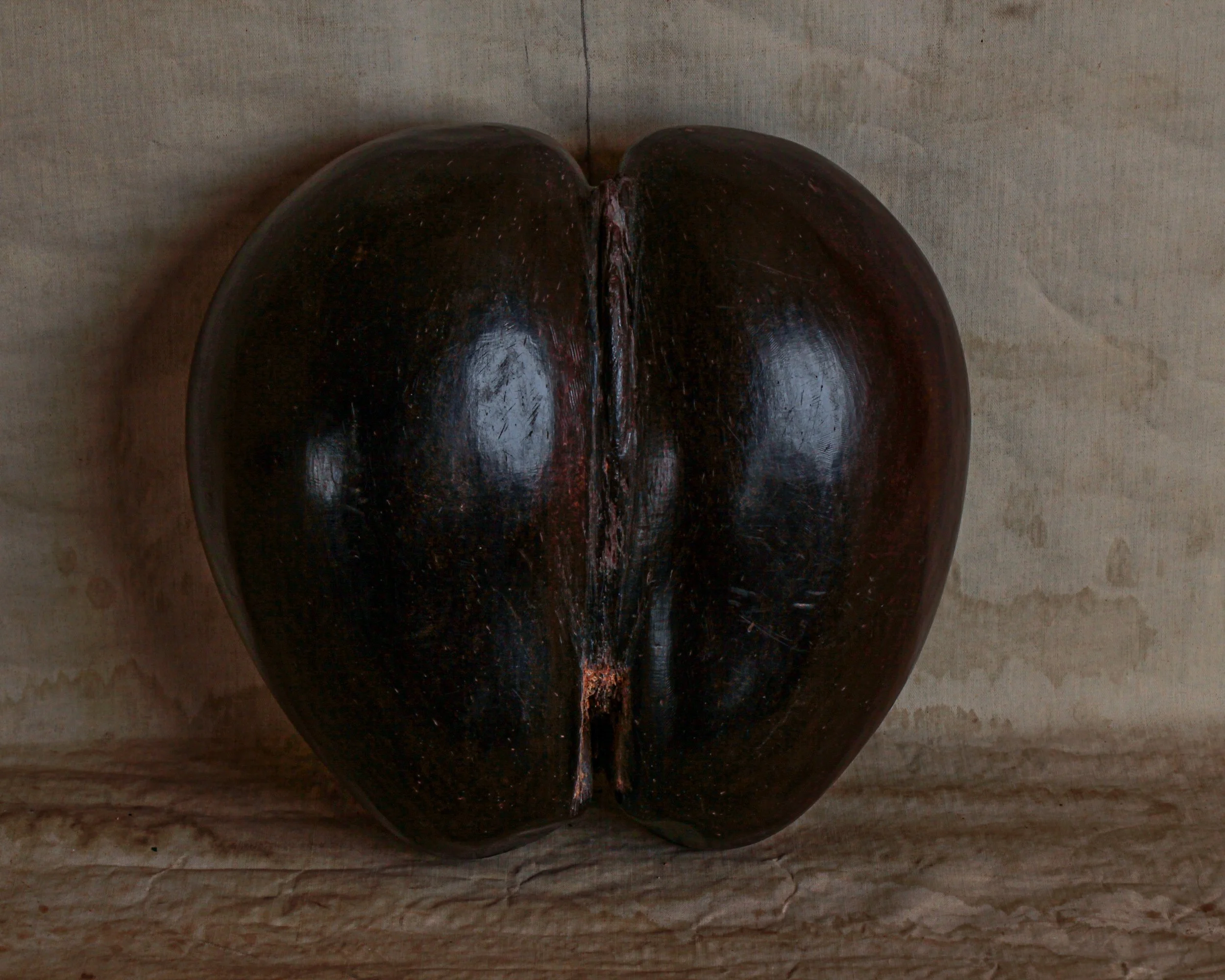
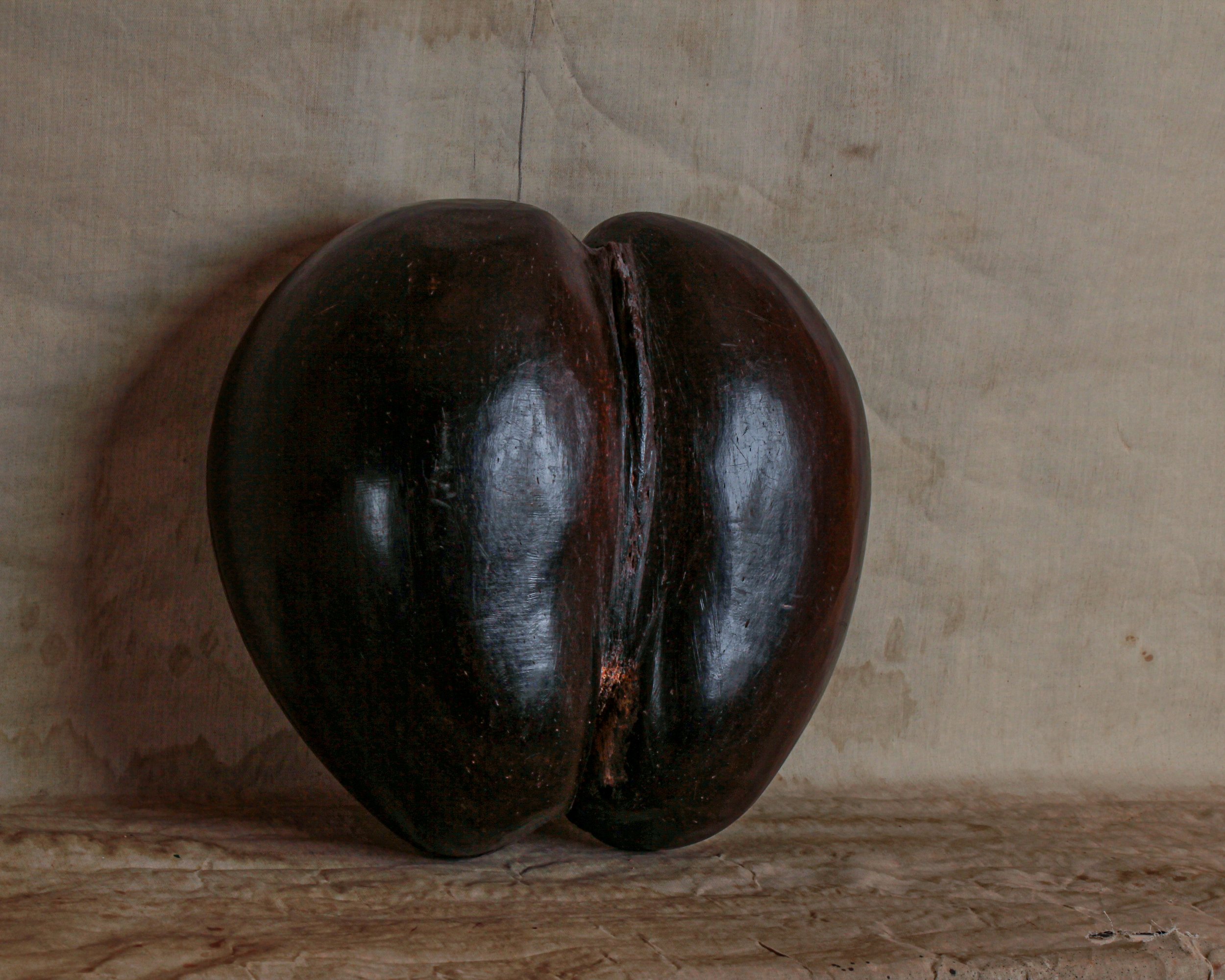
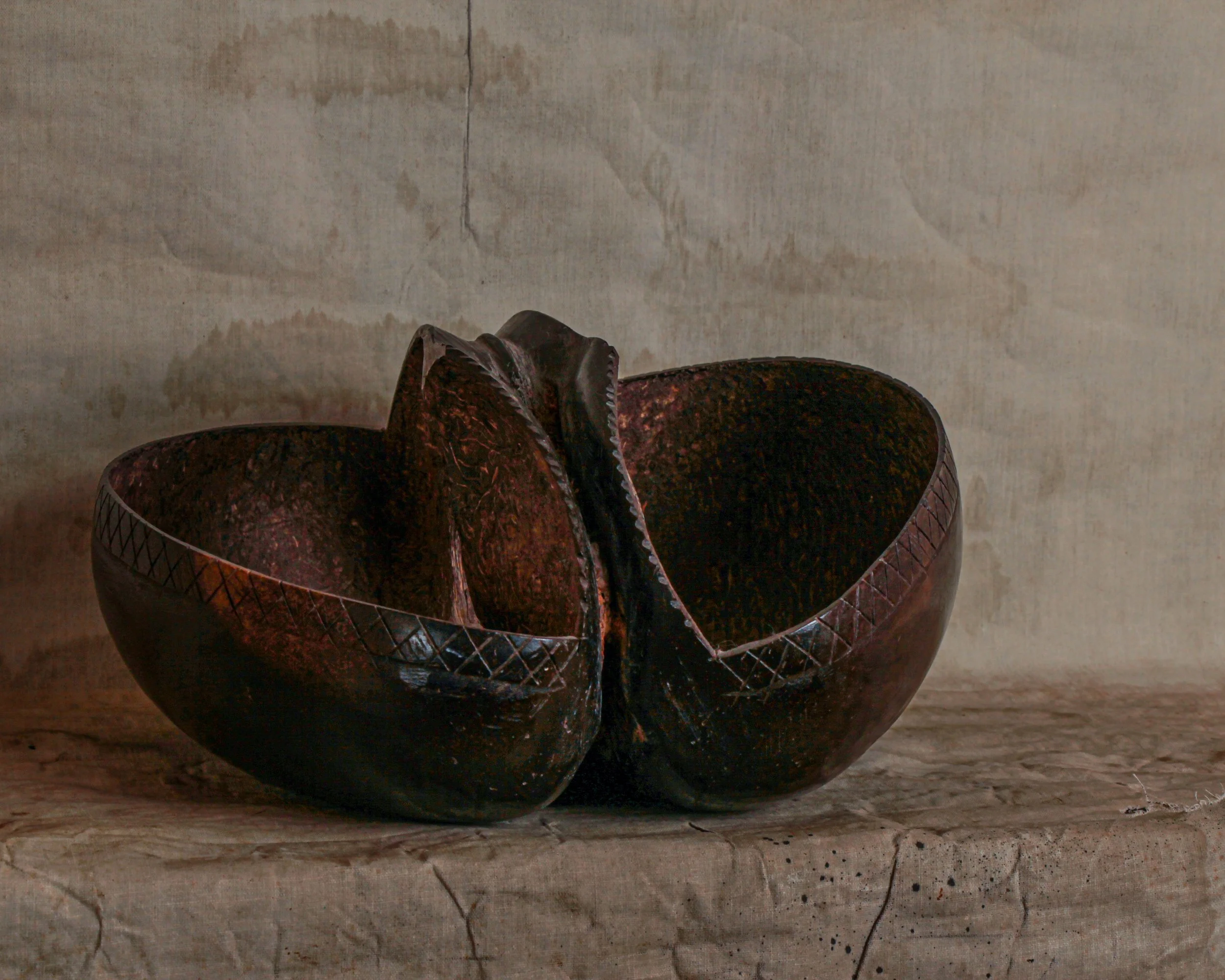
This is a wonderful old coco de mer, the extraordinary double-lobed seed of the Lodoicea maldivica palm, native only to the Seychelles islands of Praslin and Curieuse. Its unmistakable form is almost sculptural on its own, with two broad rounded lobes divided by a deep central cleft. The surface has developed a rich, nearly black-brown patina with reddish undertones, along with scratches, handling marks, and areas of natural wear that give it plenty of character.
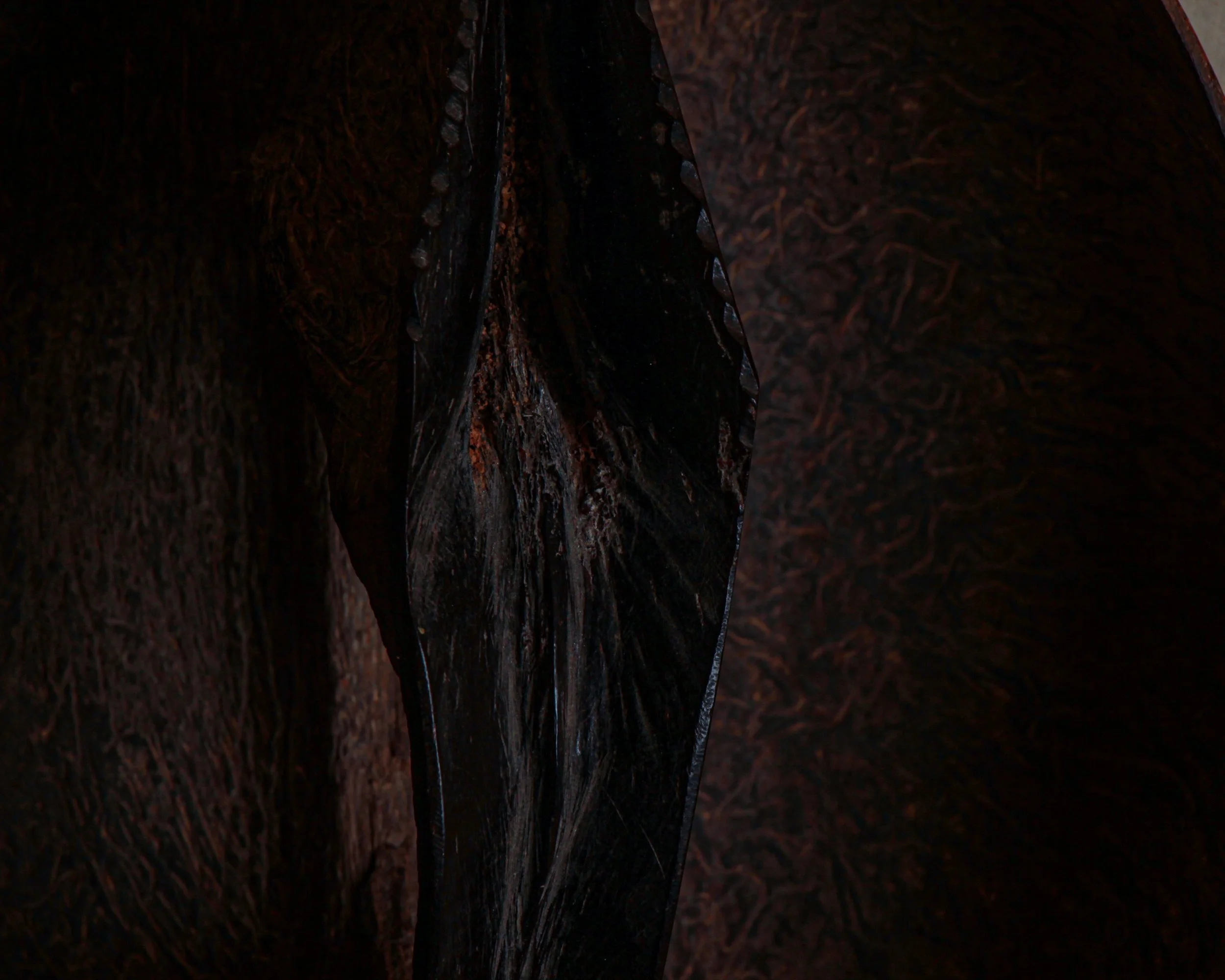
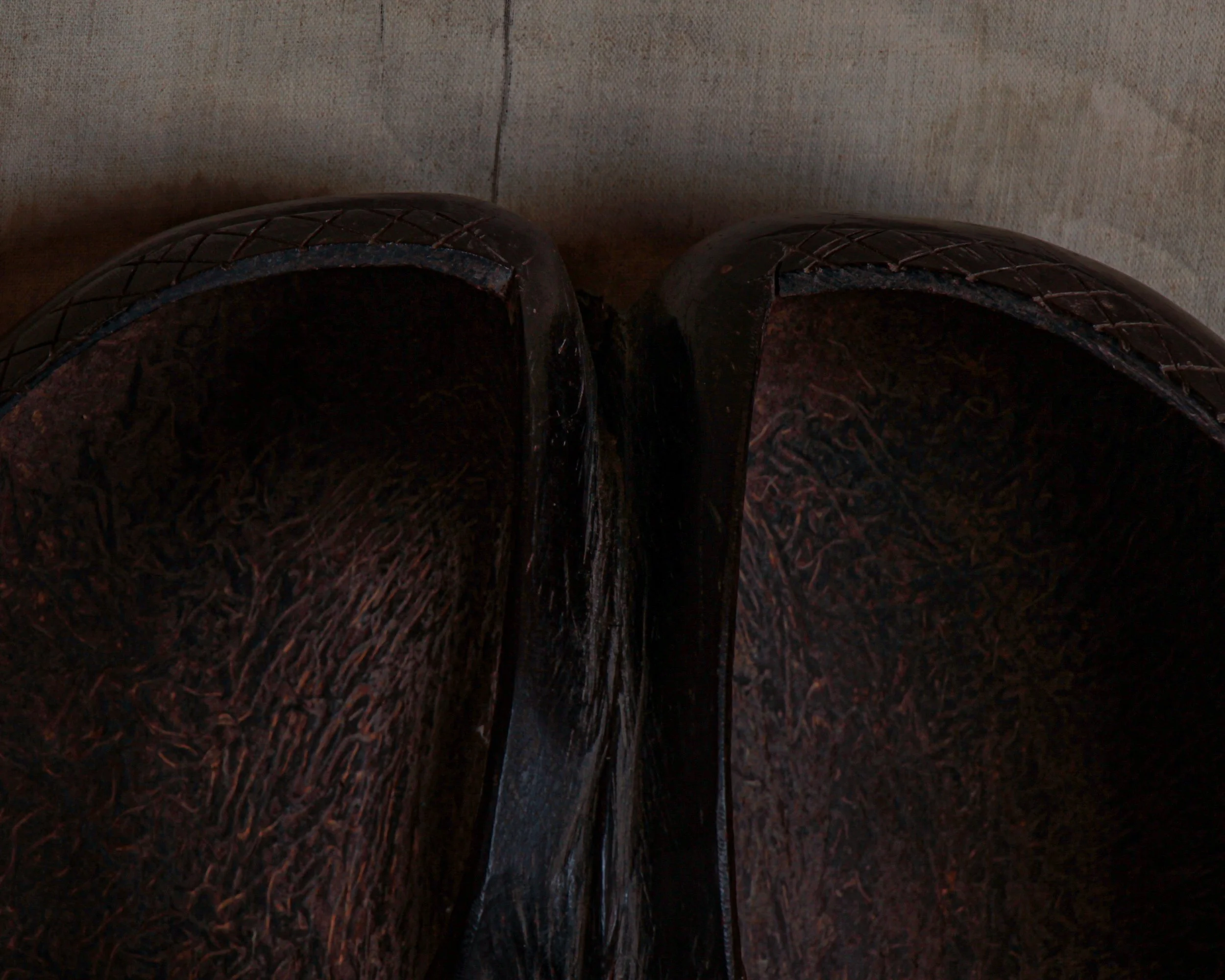
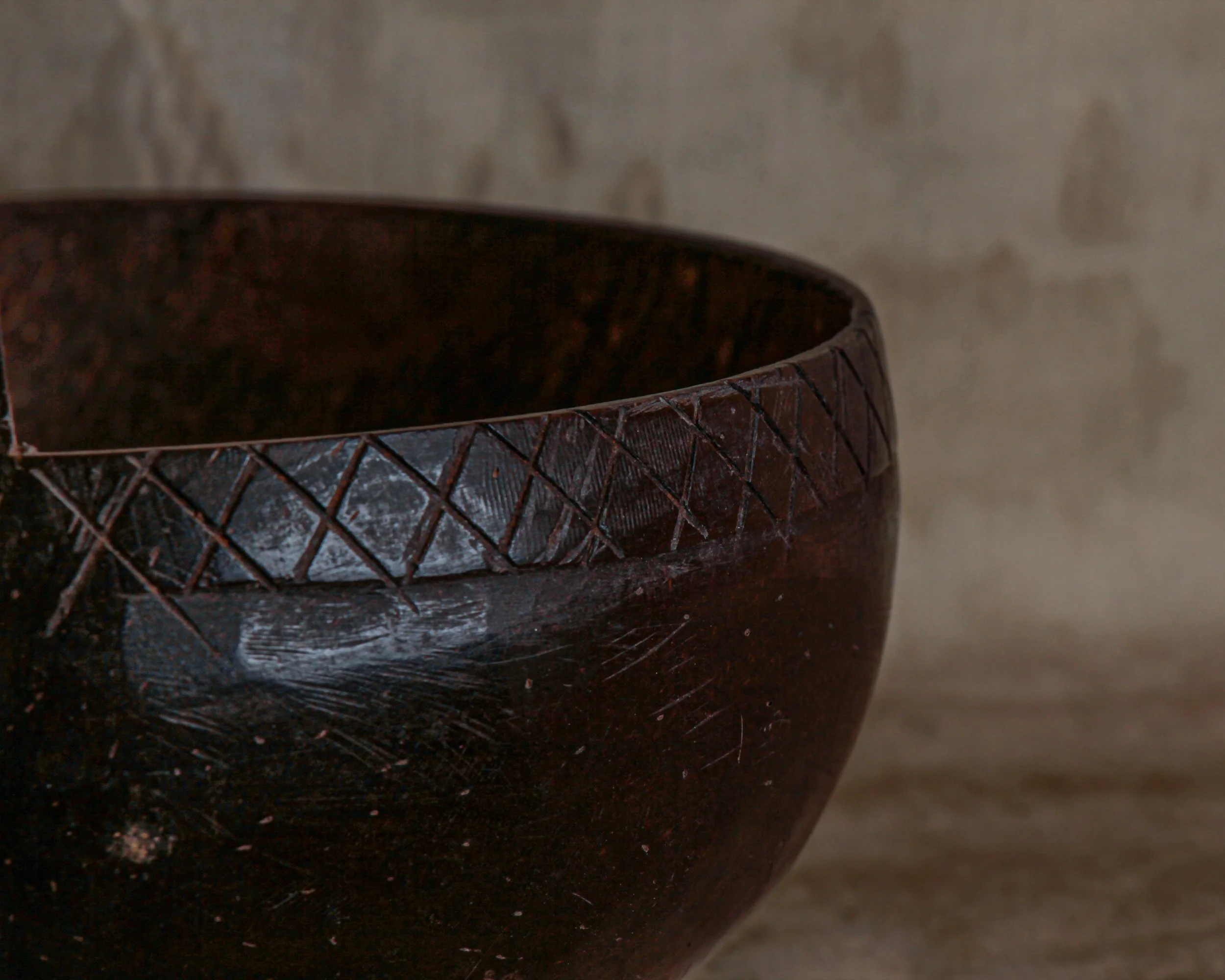
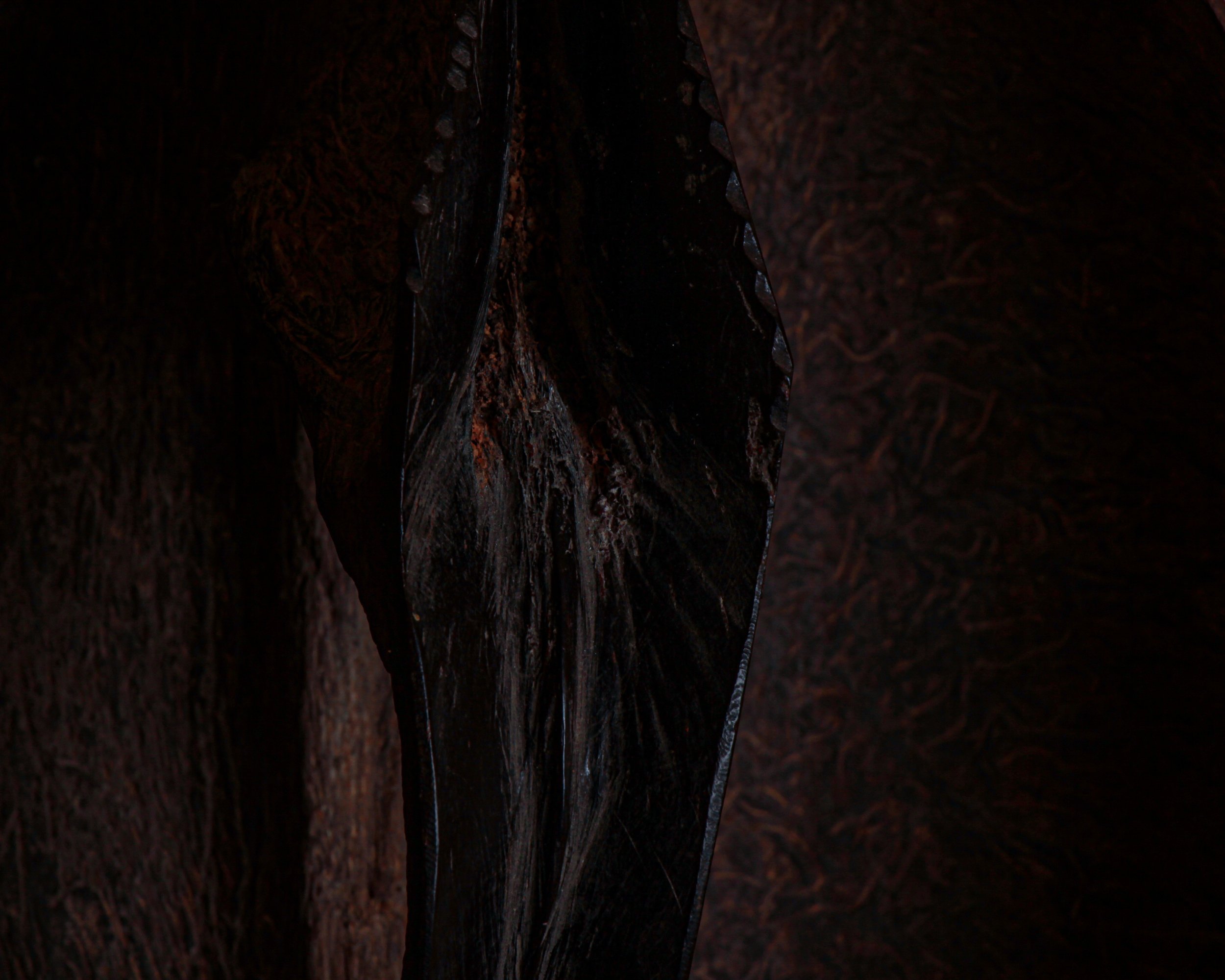
This example has also been opened and worked by hand, revealing the beautifully textured interior and a simple incised crosshatched decoration around portions of the edge. Although cut in half, it retains the iconic heart-like silhouette for which the coco de mer is famous. Displayed on its custom metal stand, it reads somewhere between natural-history specimen, folk sculpture, and outright conversation piece.
The coco de mer has fascinated travelers and collectors for centuries. Before Europeans knew where the palms actually grew, the enormous nuts occasionally washed ashore in India, Sri Lanka, and the Maldives. With no known tree to explain them, people imagined they came from mysterious trees growing beneath the Indian Ocean, which helped inspire the name coco de mer, or “coconut of the sea.”
The reality is arguably stranger. Coco de mer palms grow naturally in only a tiny corner of the Seychelles, and they produce the largest seeds in the plant kingdom. Individual seeds can weigh roughly 25 kilograms or more, an astonishing investment of energy for a single seed.
Their suggestive shape has also given the coco de mer a long association with fertility, sexuality, mythology, and good fortune. Over time, polished shells were turned into bowls, containers, decorative objects, and prized souvenirs. Today the species is carefully protected in the Seychelles, making older examples particularly appealing as pieces of both natural and collecting history.
This is a wonderful old coco de mer, the extraordinary double-lobed seed of the Lodoicea maldivica palm, native only to the Seychelles islands of Praslin and Curieuse. Its unmistakable form is almost sculptural on its own, with two broad rounded lobes divided by a deep central cleft. The surface has developed a rich, nearly black-brown patina with reddish undertones, along with scratches, handling marks, and areas of natural wear that give it plenty of character.
This example has also been opened and worked by hand, revealing the beautifully textured interior and a simple incised crosshatched decoration around portions of the edge. Although cut in half, it retains the iconic heart-like silhouette for which the coco de mer is famous. Displayed on its custom metal stand, it reads somewhere between natural-history specimen, folk sculpture, and outright conversation piece.
The coco de mer has fascinated travelers and collectors for centuries. Before Europeans knew where the palms actually grew, the enormous nuts occasionally washed ashore in India, Sri Lanka, and the Maldives. With no known tree to explain them, people imagined they came from mysterious trees growing beneath the Indian Ocean, which helped inspire the name coco de mer, or “coconut of the sea.”
The reality is arguably stranger. Coco de mer palms grow naturally in only a tiny corner of the Seychelles, and they produce the largest seeds in the plant kingdom. Individual seeds can weigh roughly 25 kilograms or more, an astonishing investment of energy for a single seed.
Their suggestive shape has also given the coco de mer a long association with fertility, sexuality, mythology, and good fortune. Over time, polished shells were turned into bowls, containers, decorative objects, and prized souvenirs. Today the species is carefully protected in the Seychelles, making older examples particularly appealing as pieces of both natural and collecting history.