ITEM NOT AVAILABLE IMMEDIATELY—INQUIRE IF INTERESTED hello@heimweeantiques.com
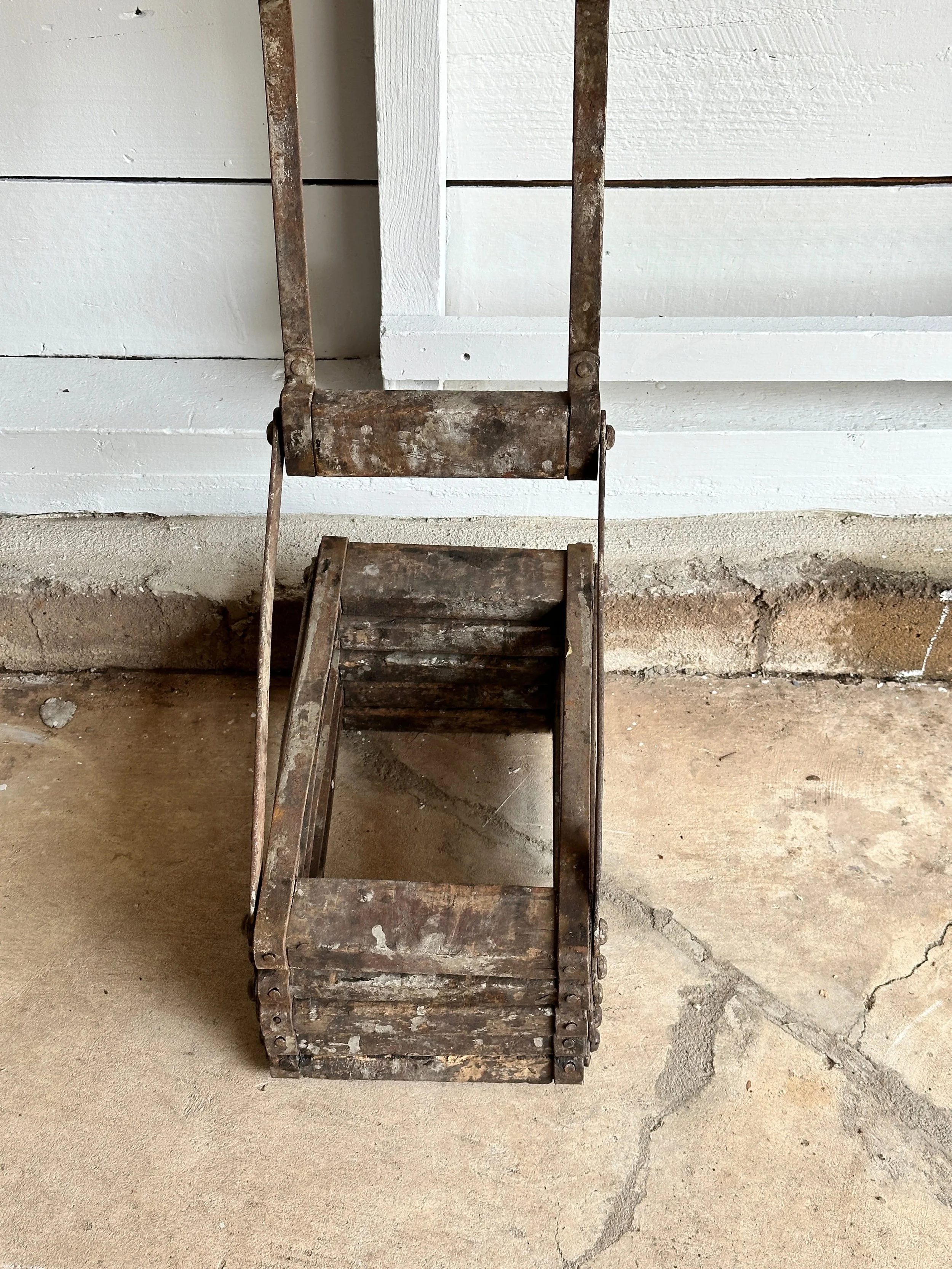
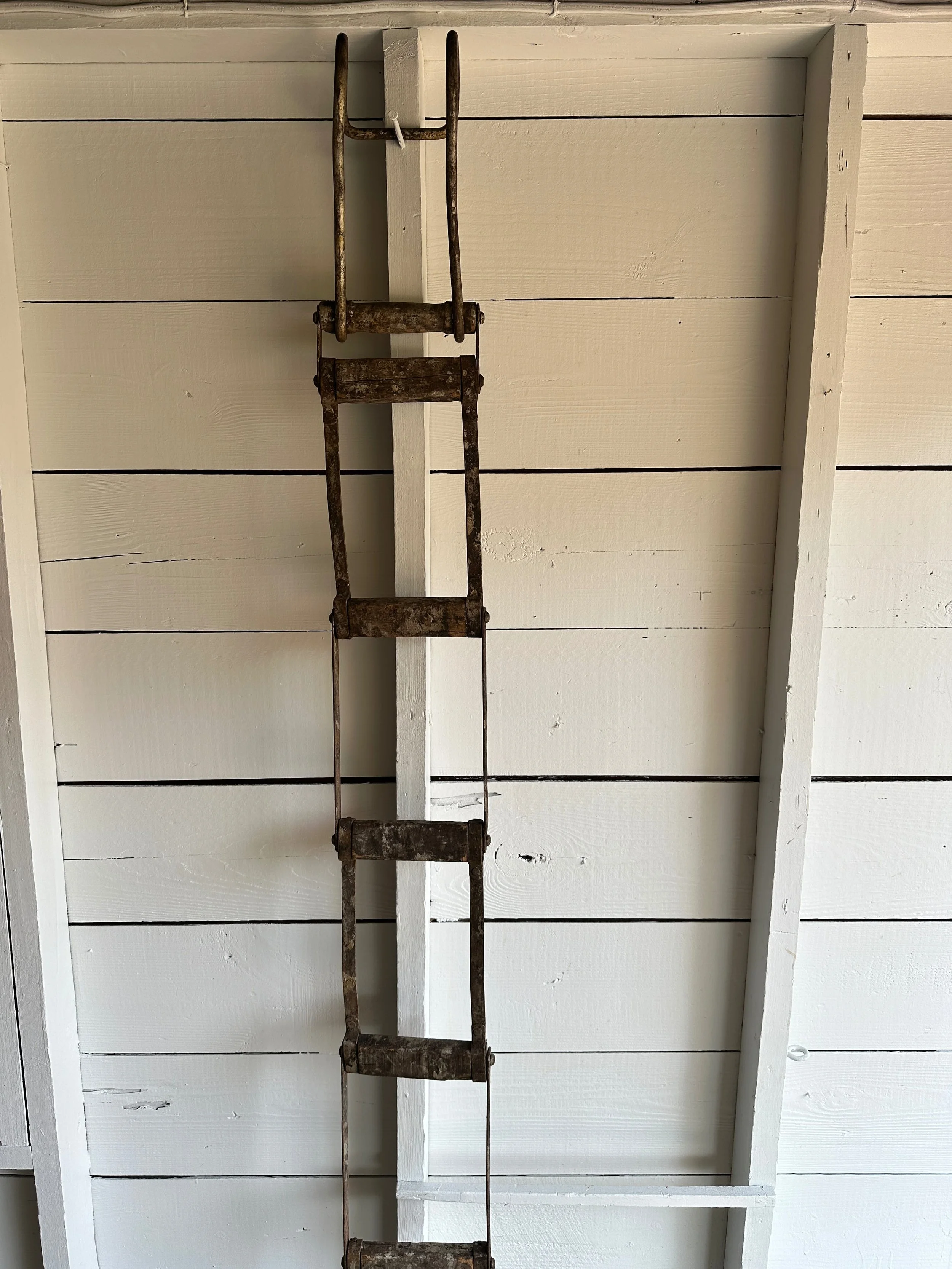
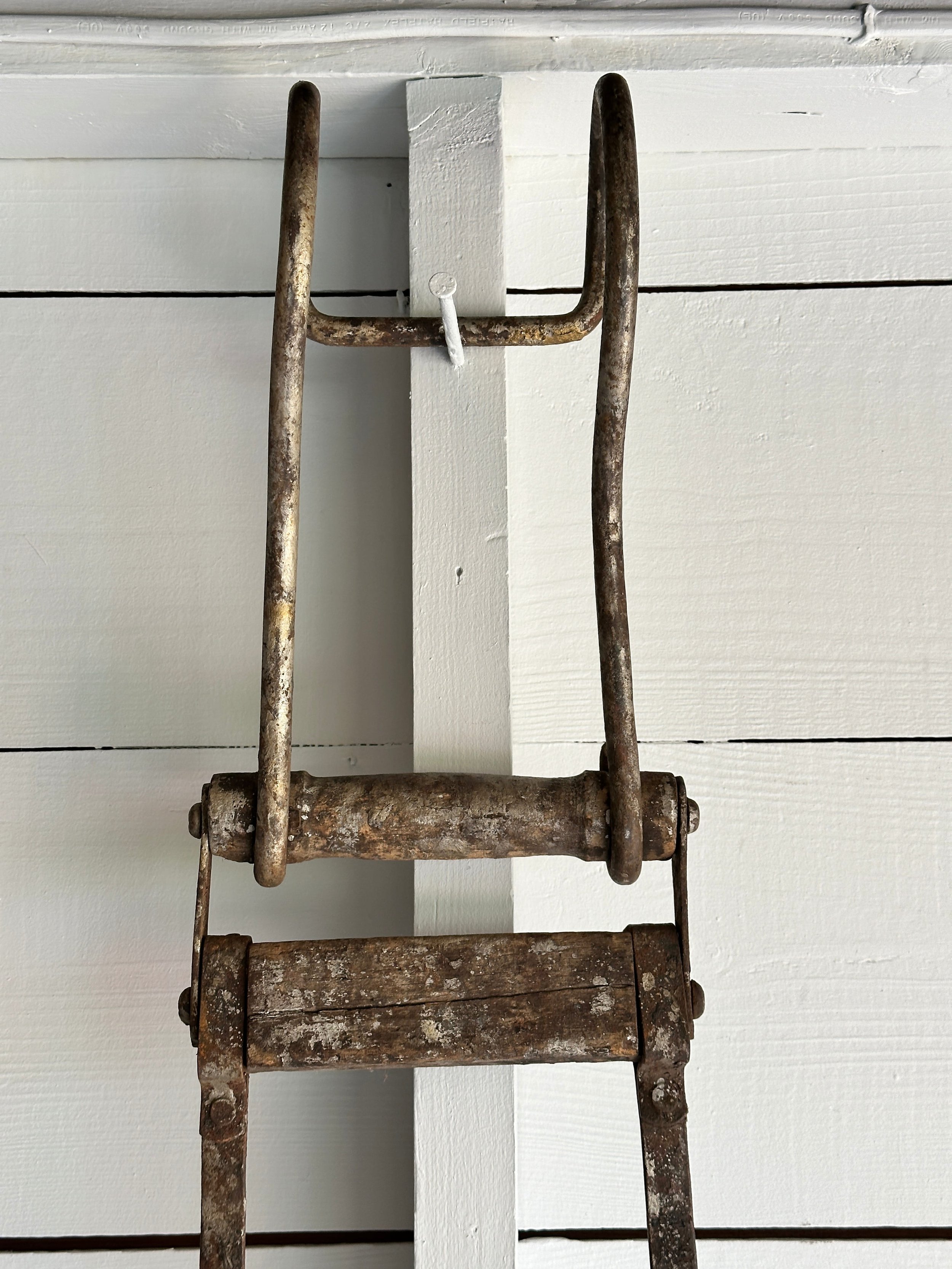
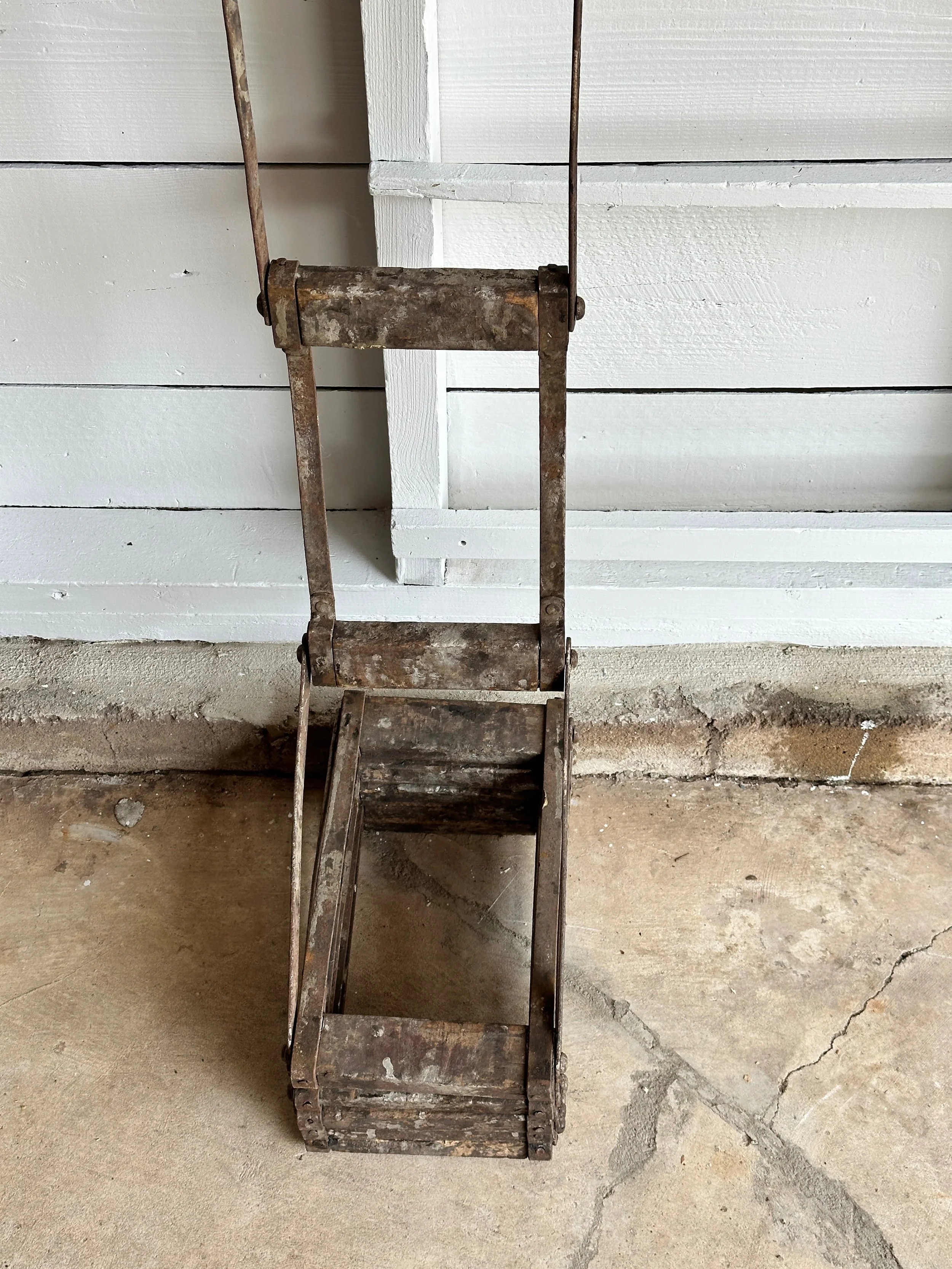
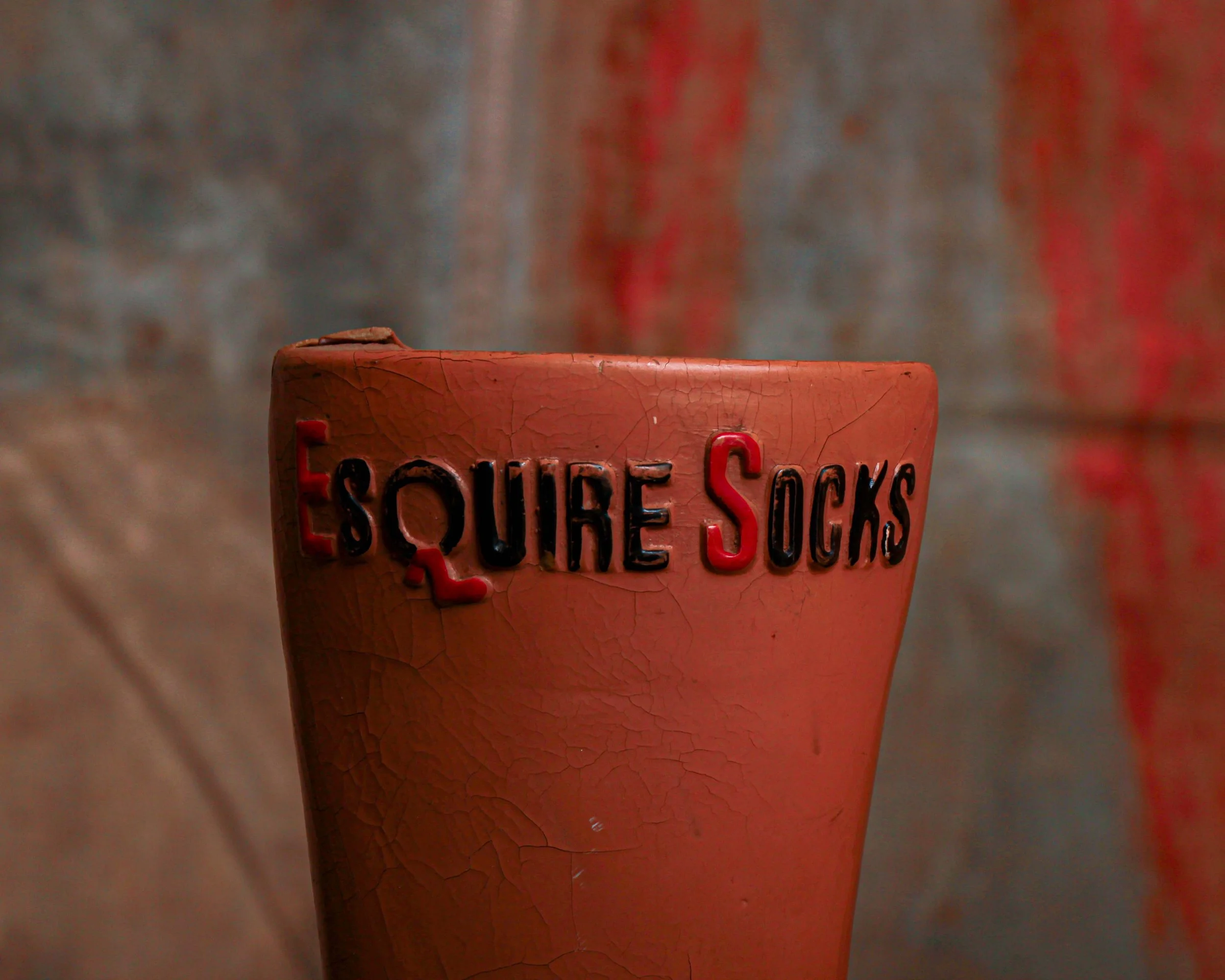
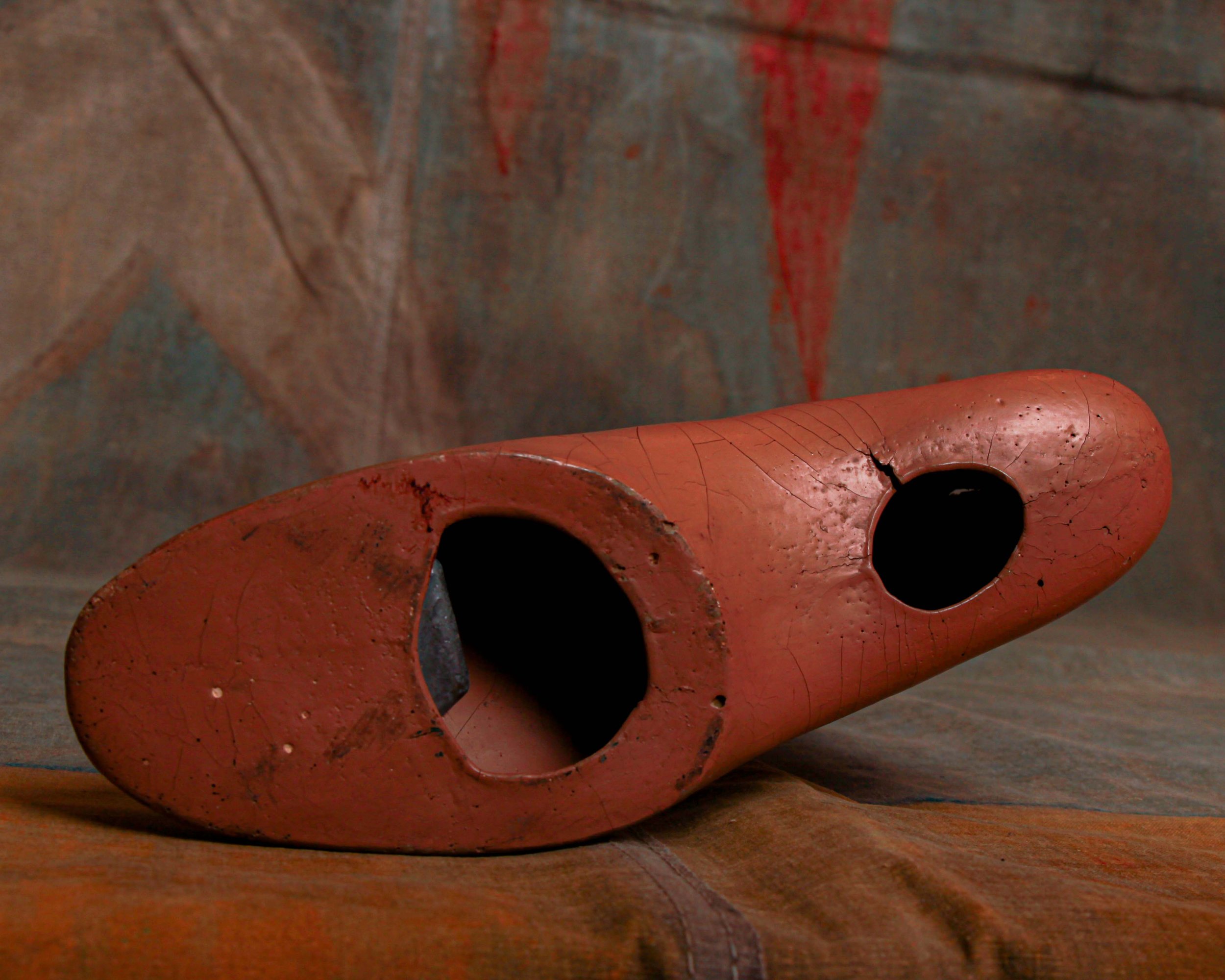
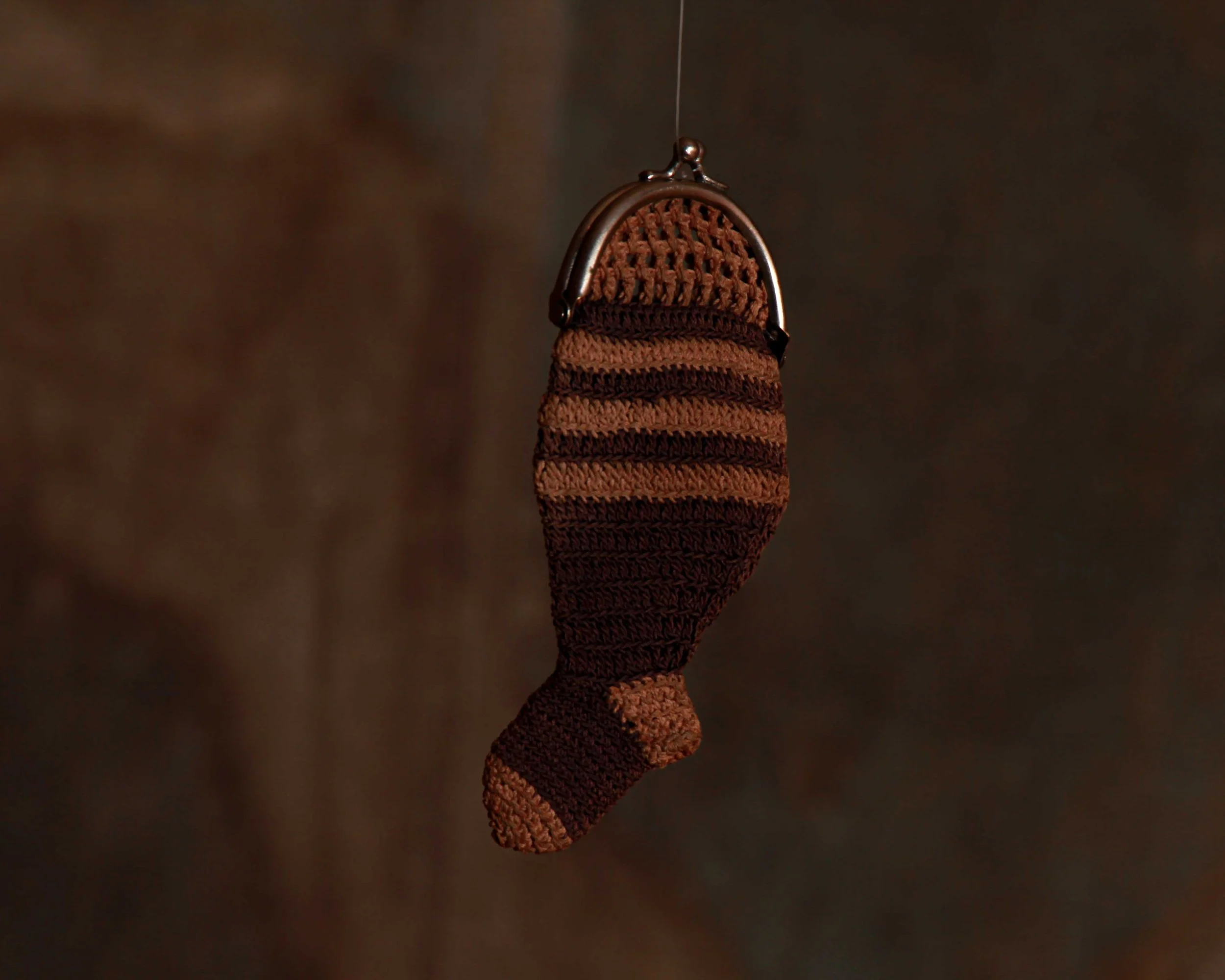
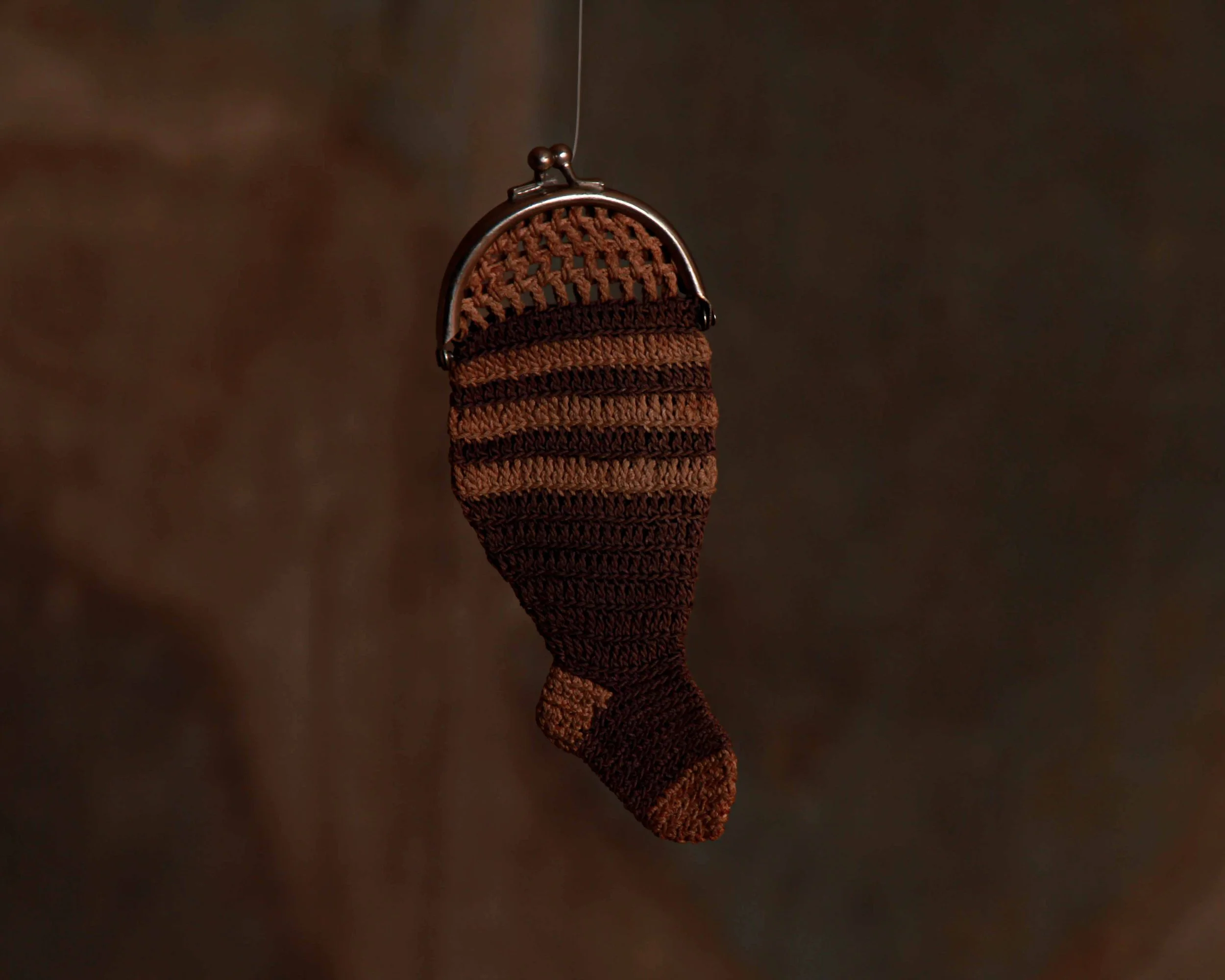
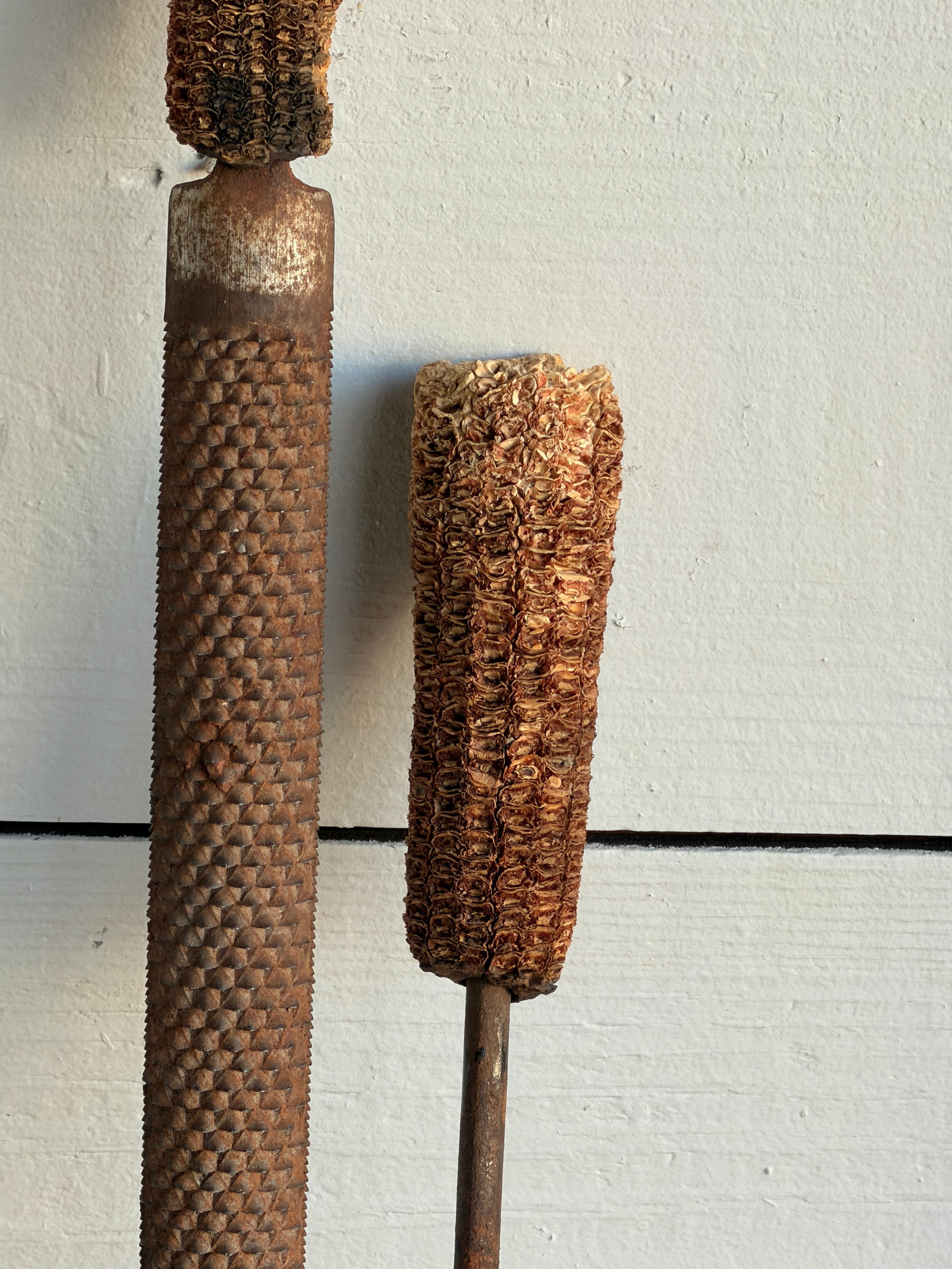
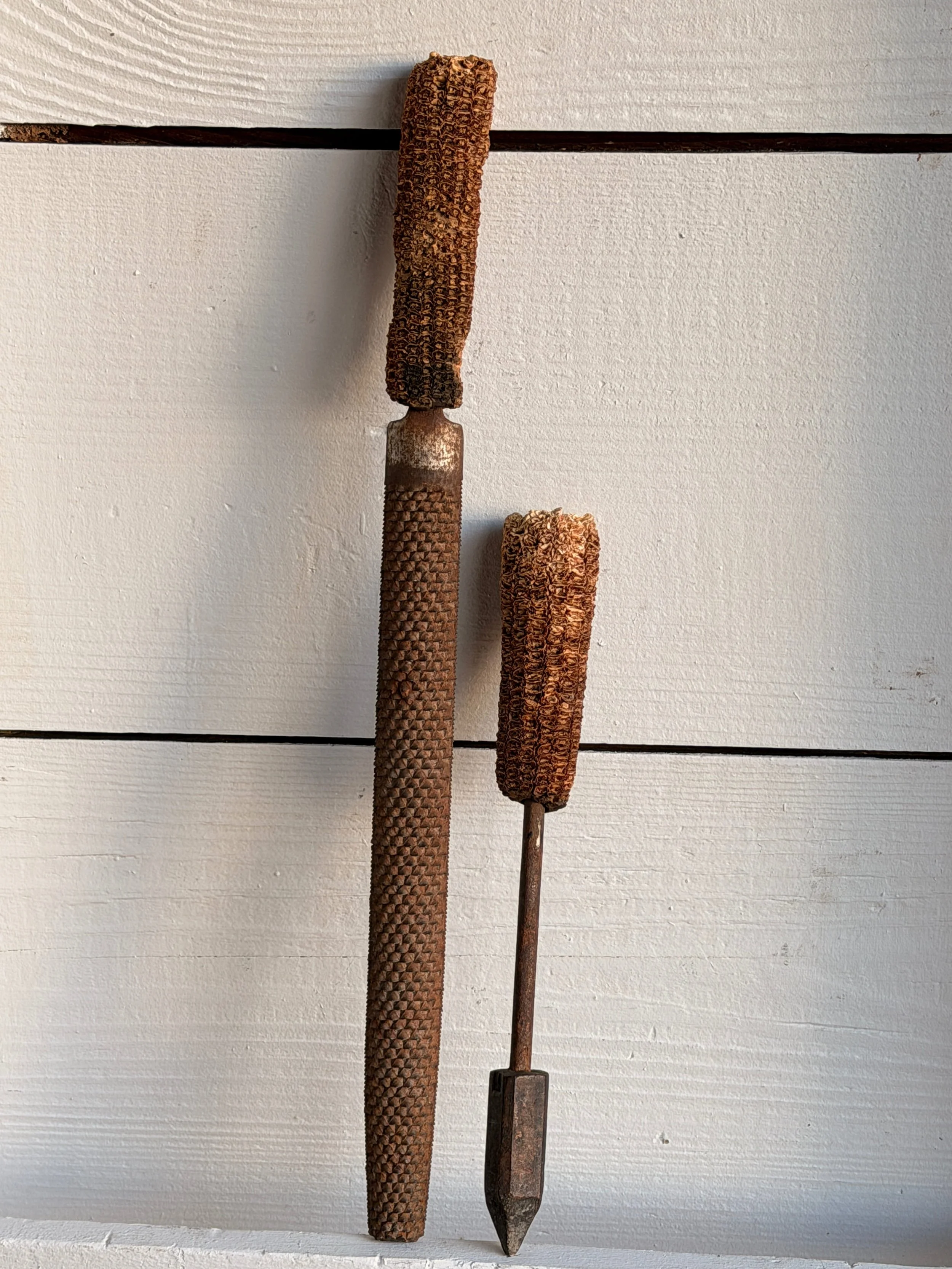
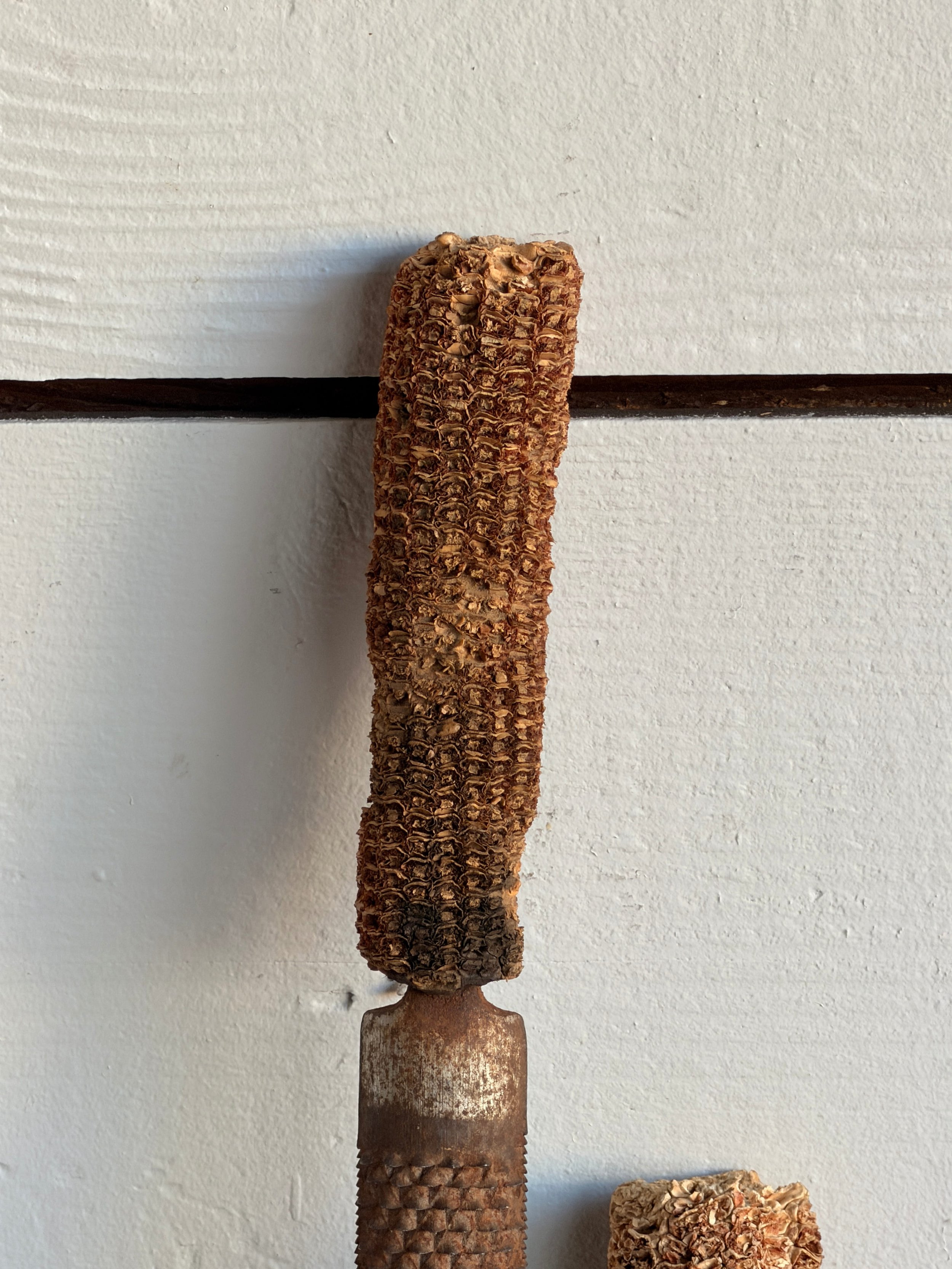
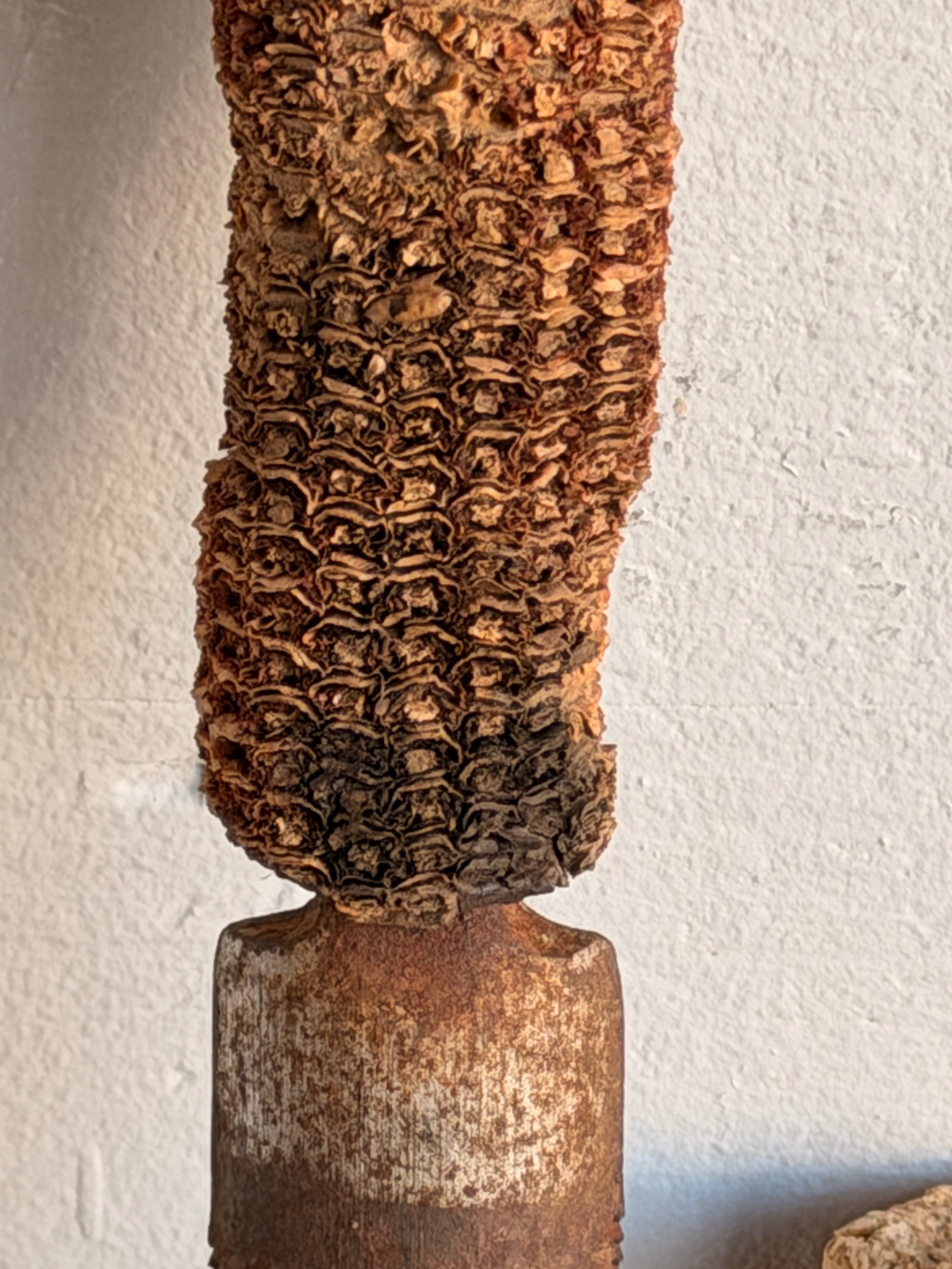
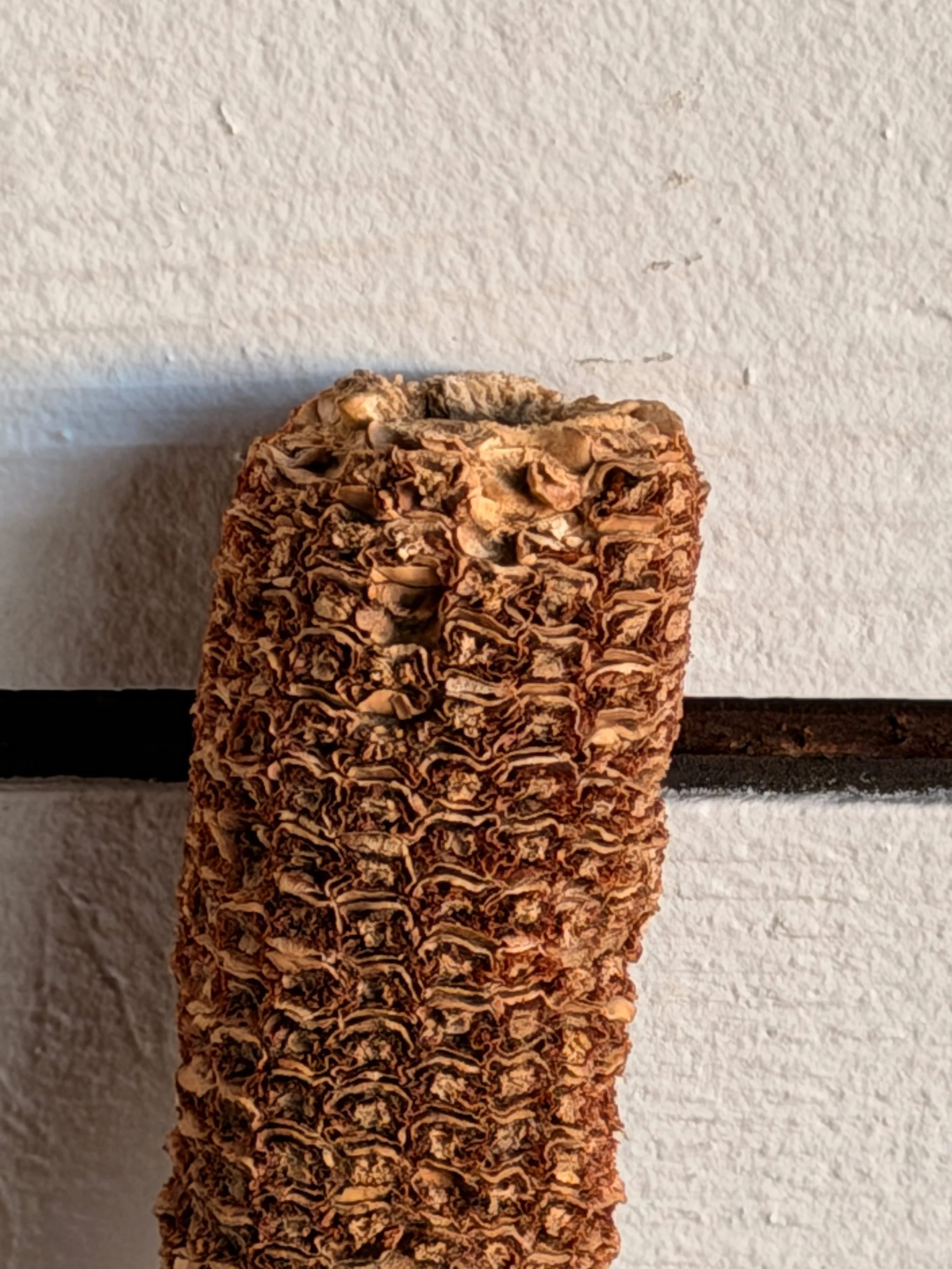
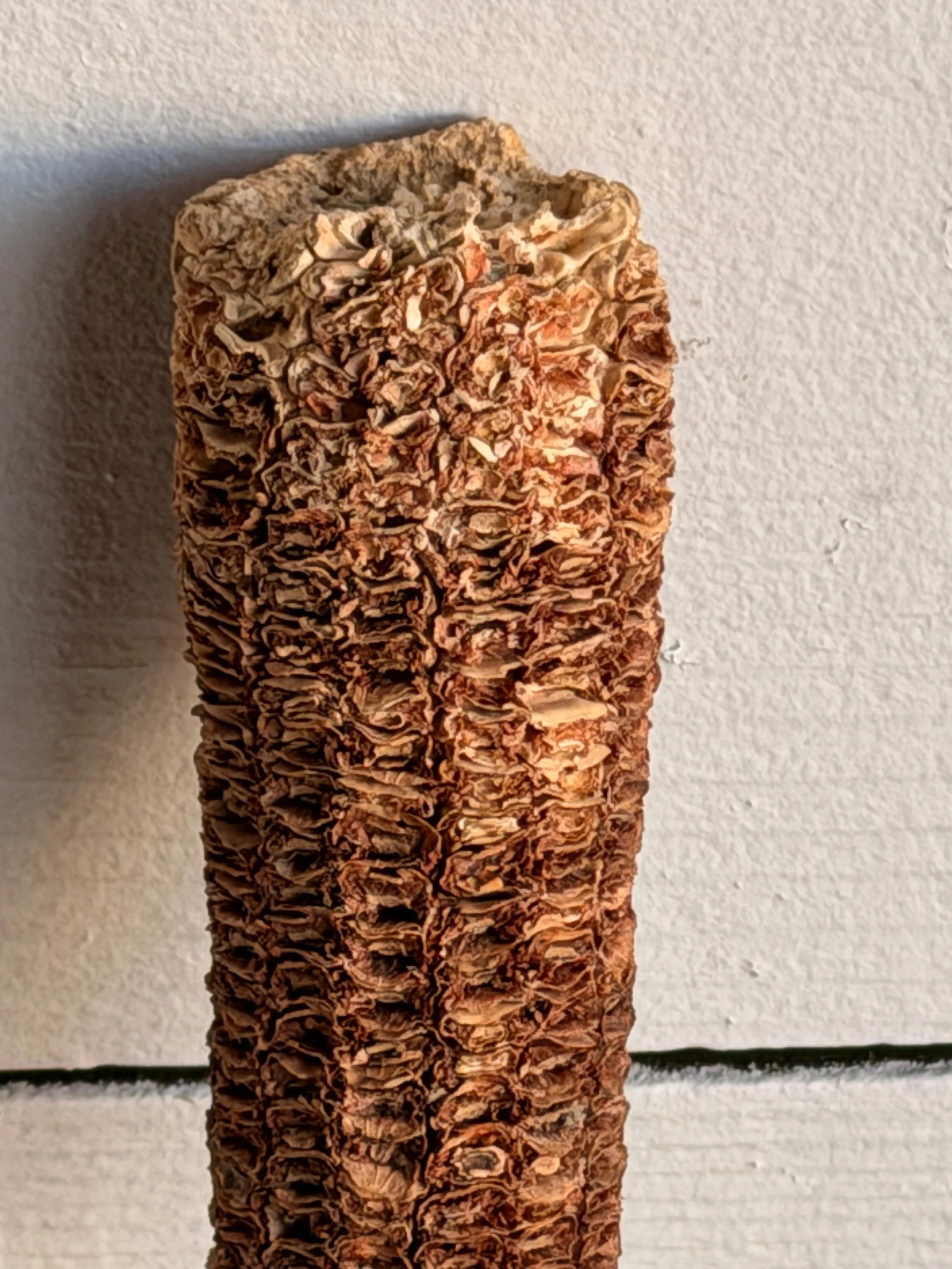
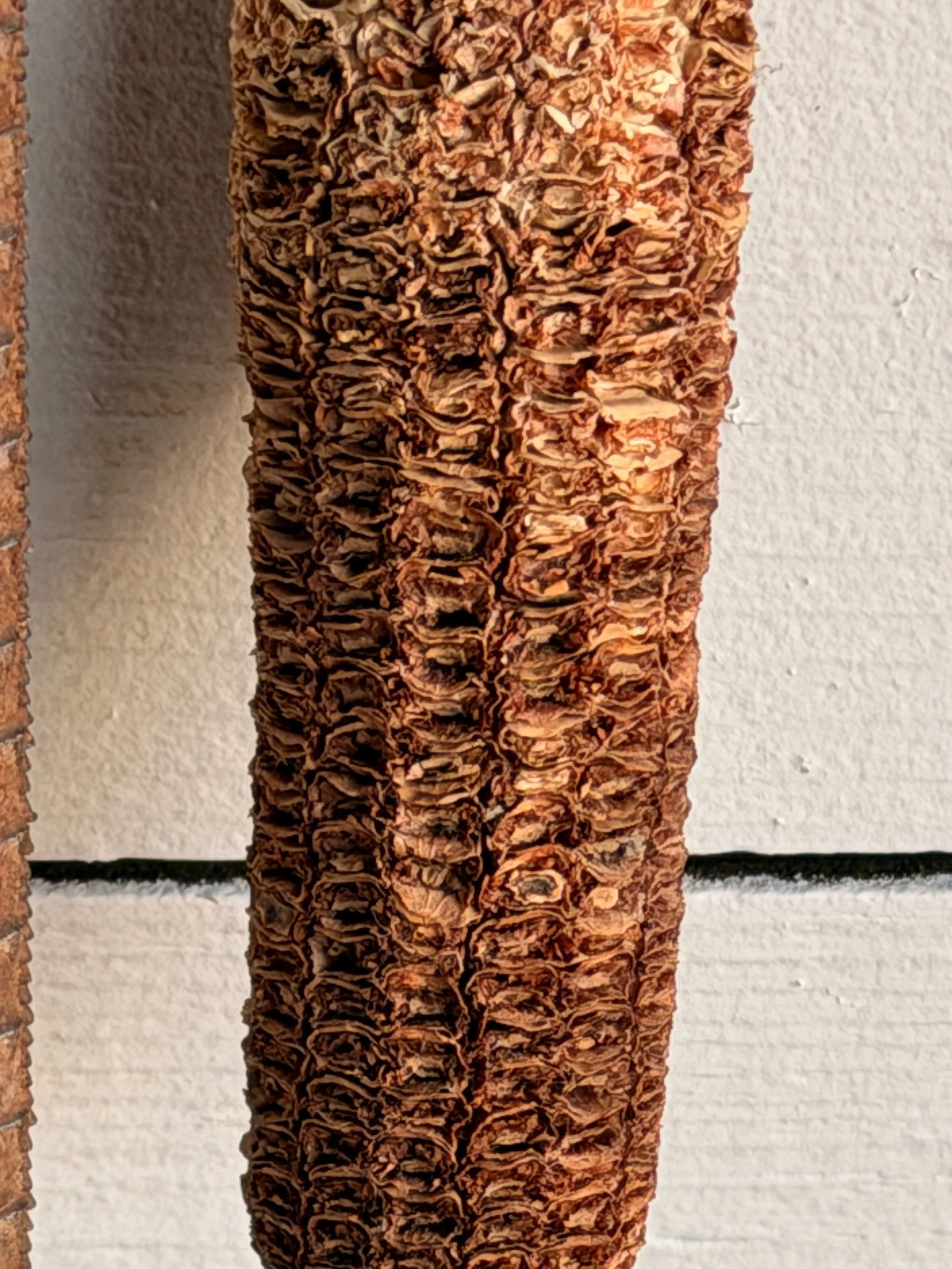
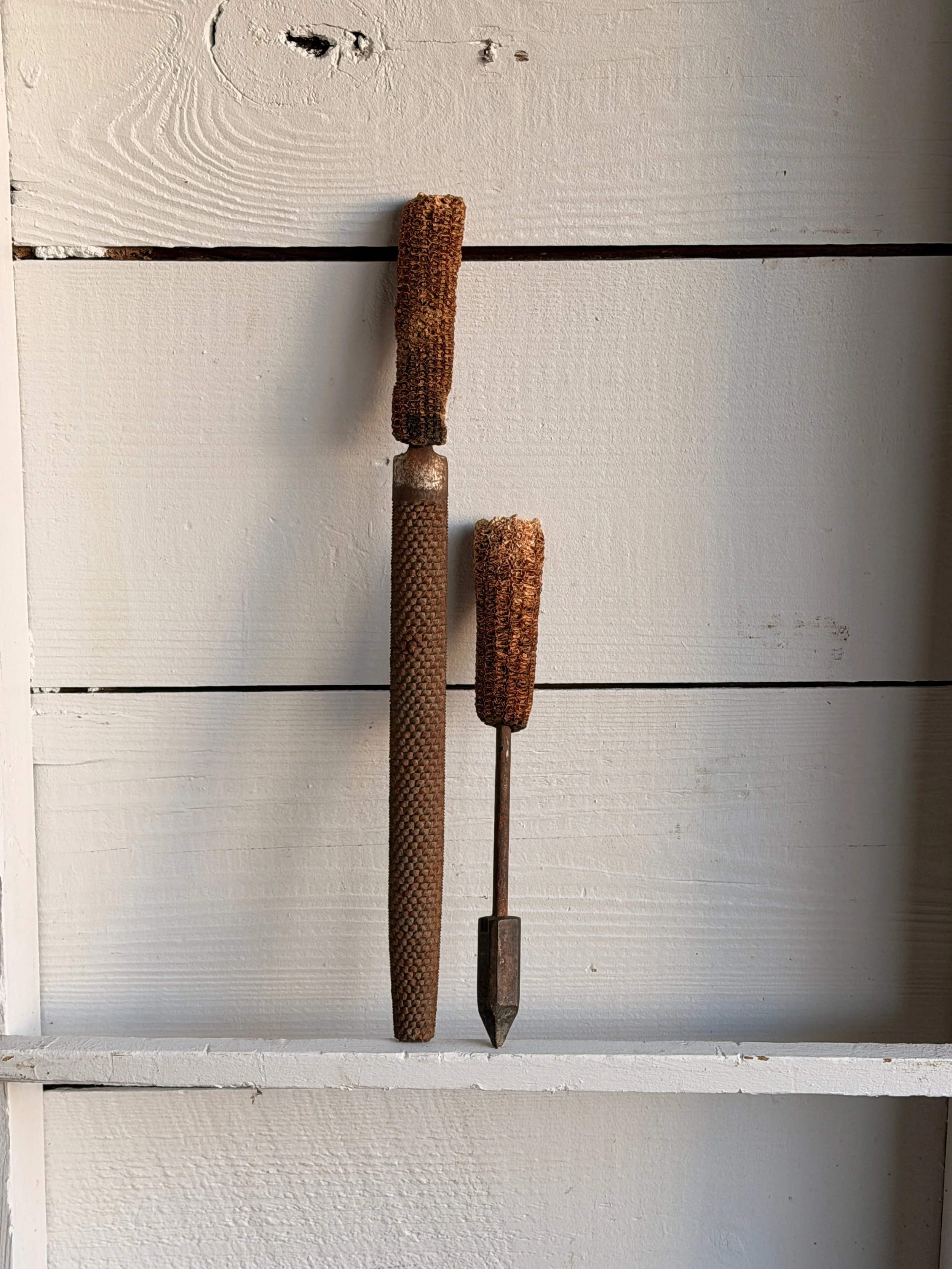
What you’re looking at reads like a bit of improvisation rather than original design. The core object is doing one job, likely something mechanical or industrial, and then at some point someone decided it needed a grip and reached for whatever was on hand. In this case, a corn-on-the-cob style handle. It’s almost humorous, but in a very practical, no-nonsense way.
That kind of addition usually points to use rather than display. Someone needed better leverage, more control, or just something more comfortable in the hand, and instead of sourcing a proper handle, they adapted. It’s a small act of problem-solving you can see frozen in place. The contrast between the utilitarian base and the almost playful handle gives it a strange charm.
You see this a lot with workshop tools, agricultural equipment, or even small shop fixtures. Handles break, get lost, or never existed to begin with, and people retrofit whatever works. Corn cob handles were cheap, easy to grip, and already shaped for the hand, so they show up in places you wouldn’t expect. Not original, but absolutely honest.
From a collecting standpoint, that kind of modification can go either way. It’s not factory correct, but it adds a layer of narrative. It tells you this wasn’t sitting on a shelf. It was used, adapted, and kept in service. For the right person, that’s the whole appeal.
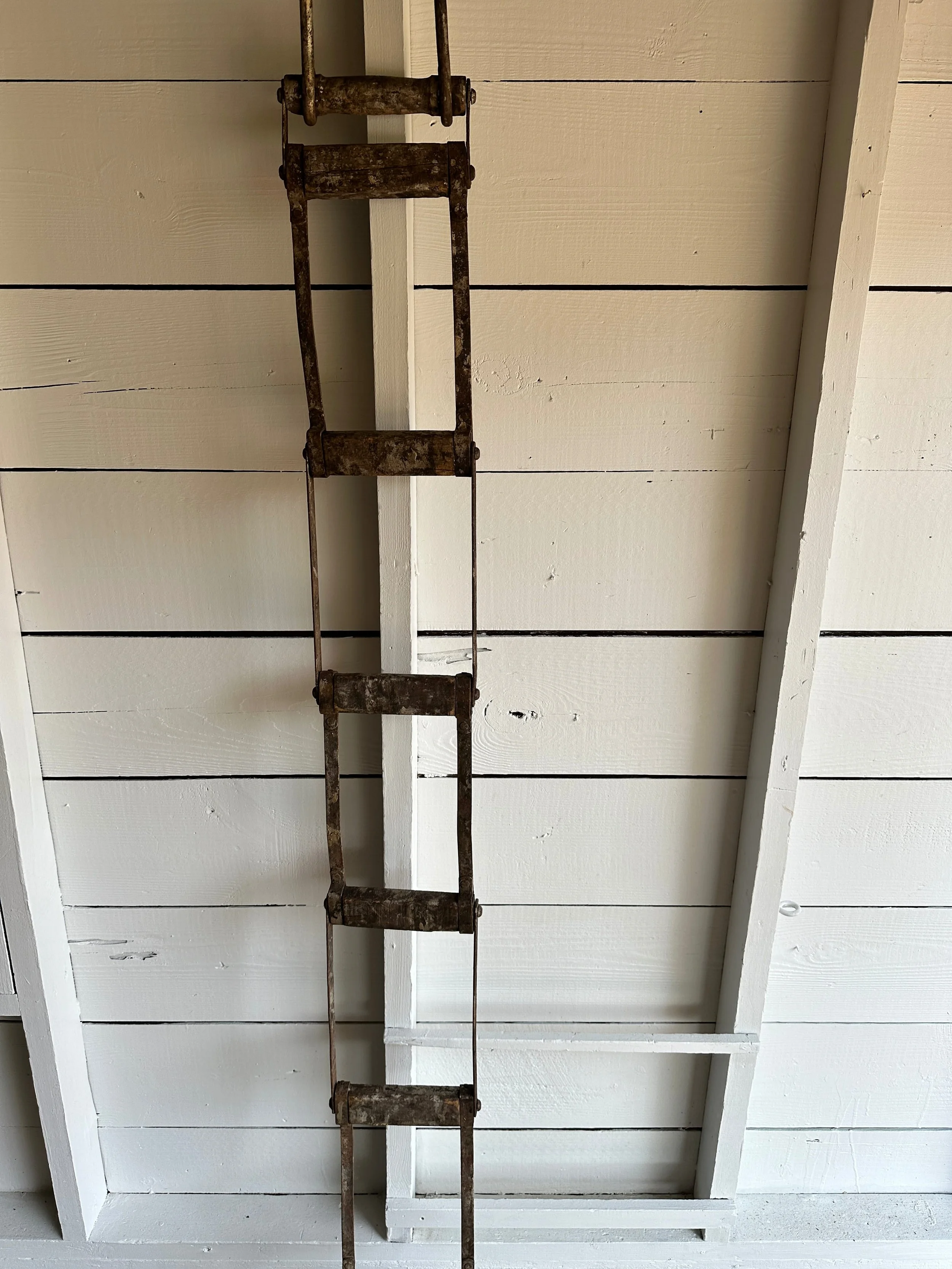
They land somewhere between agricultural artifact and found-object art. Functional history with just enough visual punch to hold a wall on their own. You don’t need to know what they are to appreciate them, but once you do, they get even better.
ITEM NOT AVAILABLE IMMEDIATELY—INQUIRE IF INTERESTED hello@heimweeantiques.com
What you’re looking at reads like a bit of improvisation rather than original design. The core object is doing one job, likely something mechanical or industrial, and then at some point someone decided it needed a grip and reached for whatever was on hand. In this case, a corn-on-the-cob style handle. It’s almost humorous, but in a very practical, no-nonsense way.
That kind of addition usually points to use rather than display. Someone needed better leverage, more control, or just something more comfortable in the hand, and instead of sourcing a proper handle, they adapted. It’s a small act of problem-solving you can see frozen in place. The contrast between the utilitarian base and the almost playful handle gives it a strange charm.
You see this a lot with workshop tools, agricultural equipment, or even small shop fixtures. Handles break, get lost, or never existed to begin with, and people retrofit whatever works. Corn cob handles were cheap, easy to grip, and already shaped for the hand, so they show up in places you wouldn’t expect. Not original, but absolutely honest.
From a collecting standpoint, that kind of modification can go either way. It’s not factory correct, but it adds a layer of narrative. It tells you this wasn’t sitting on a shelf. It was used, adapted, and kept in service. For the right person, that’s the whole appeal.
They land somewhere between agricultural artifact and found-object art. Functional history with just enough visual punch to hold a wall on their own. You don’t need to know what they are to appreciate them, but once you do, they get even better.