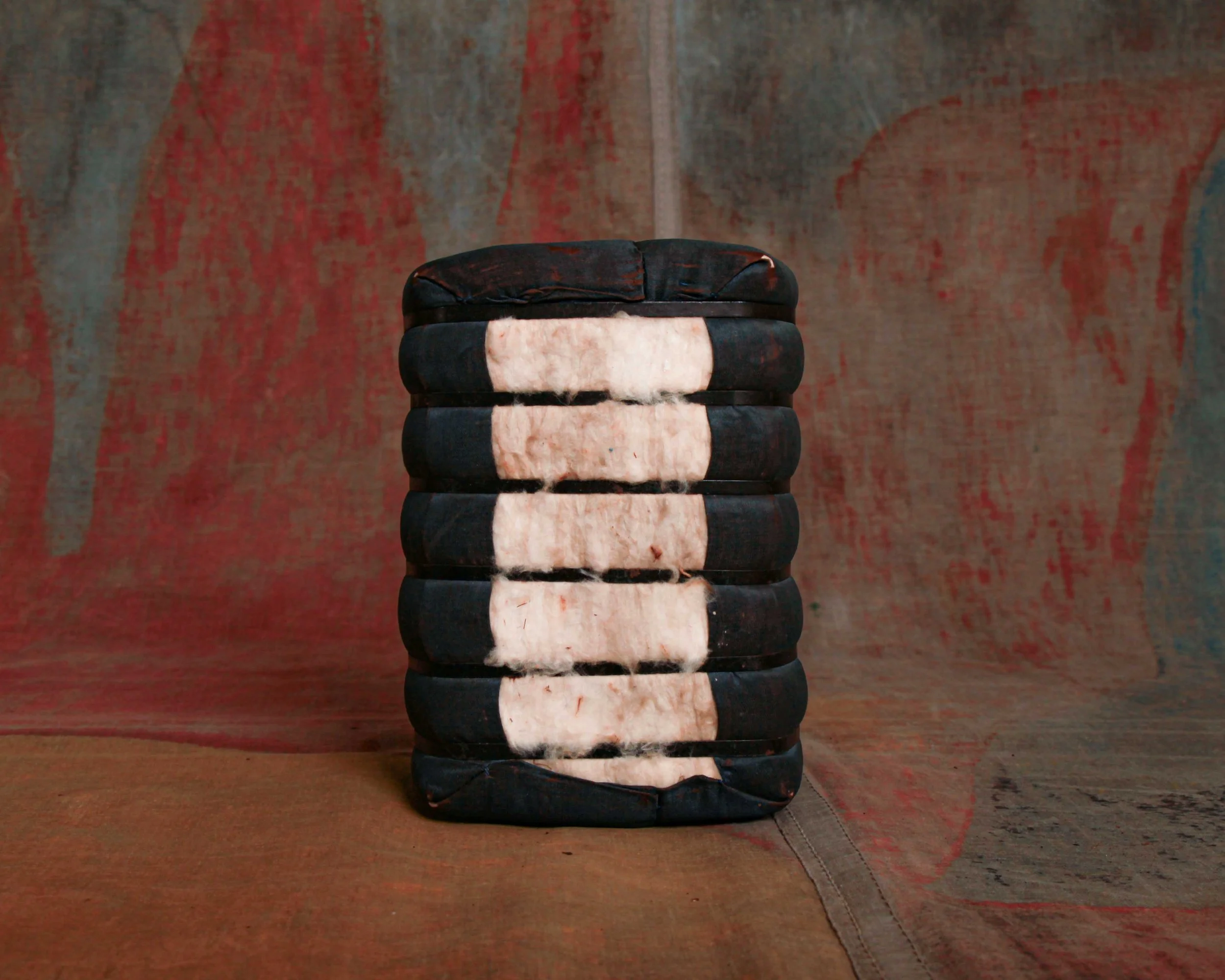
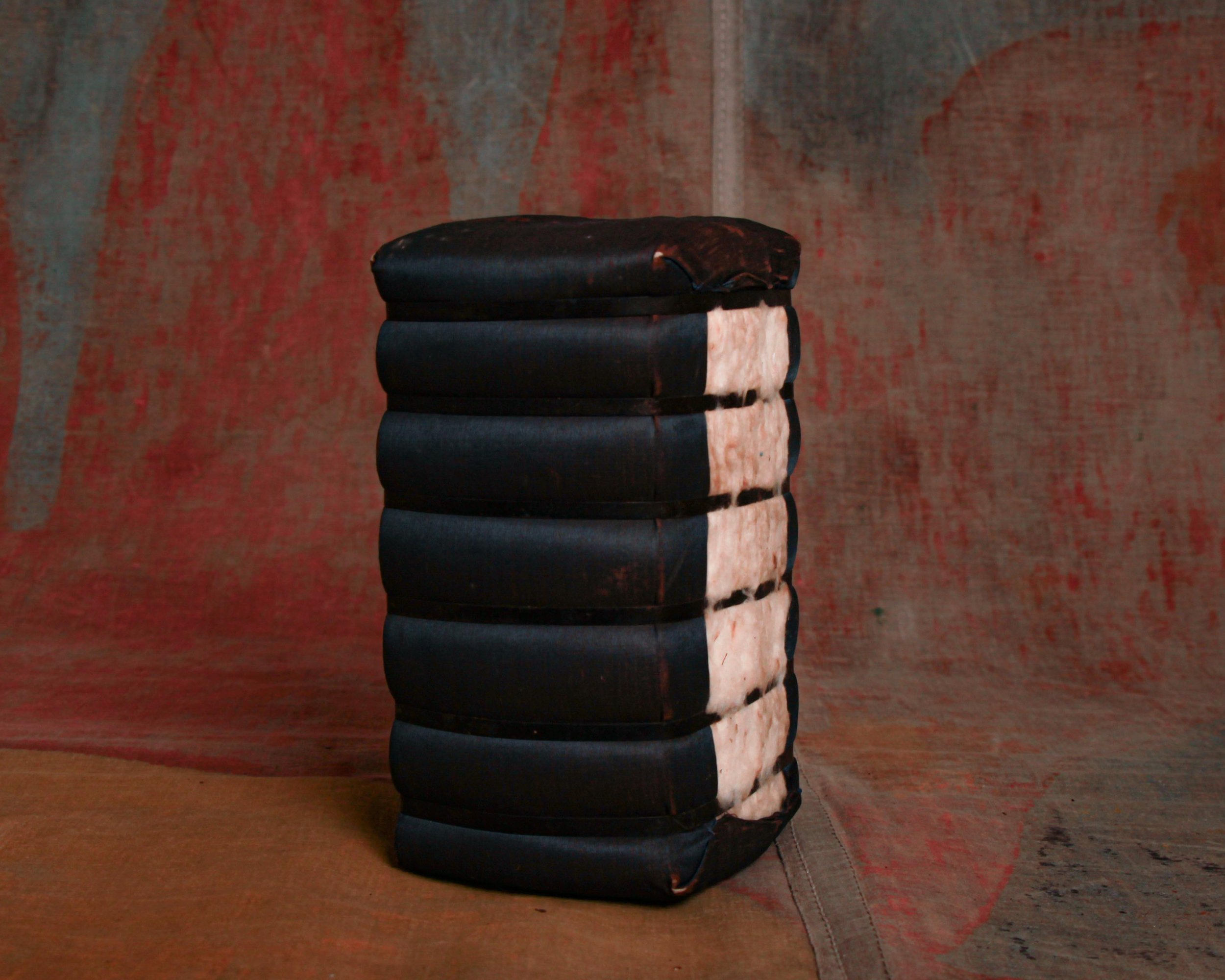
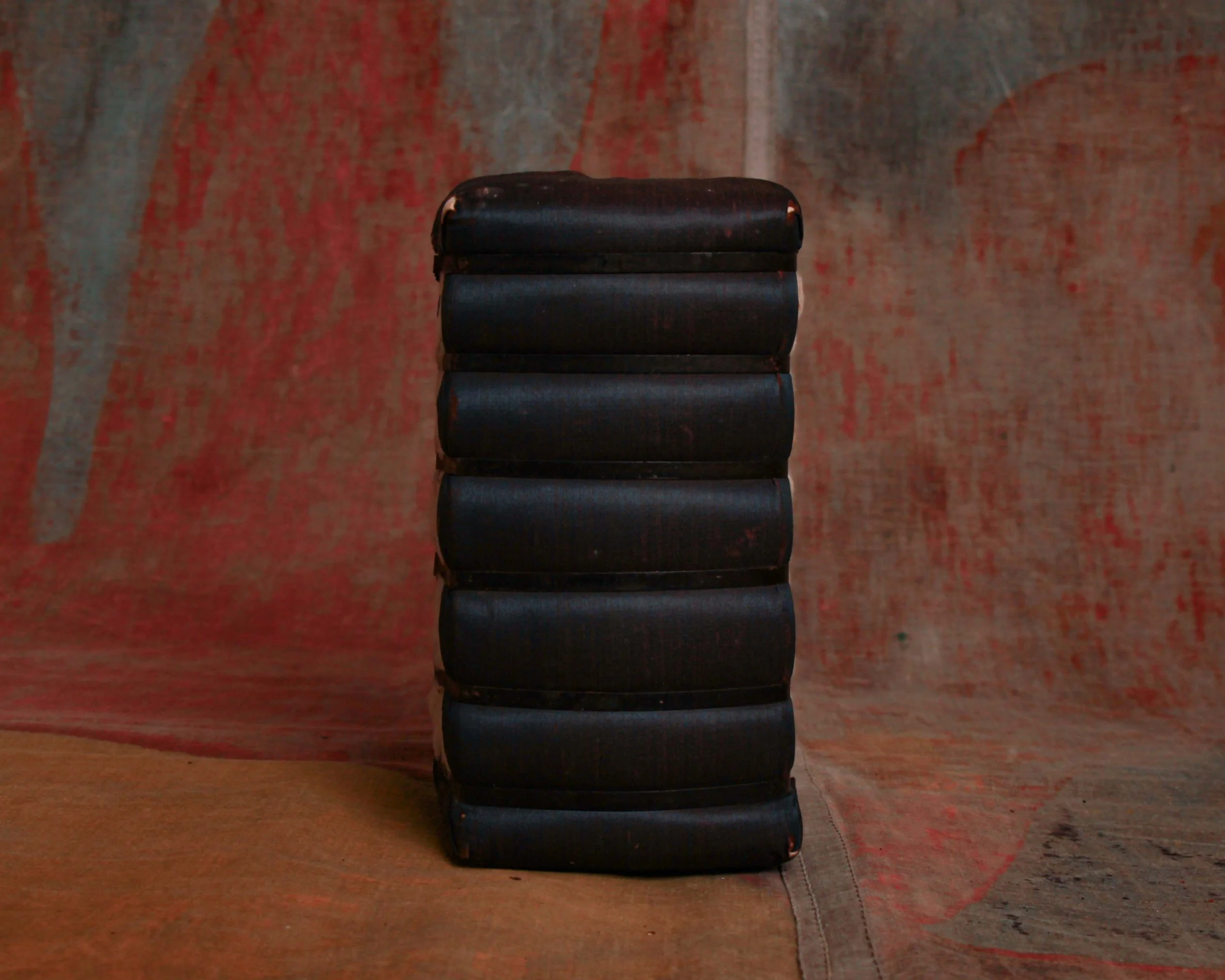
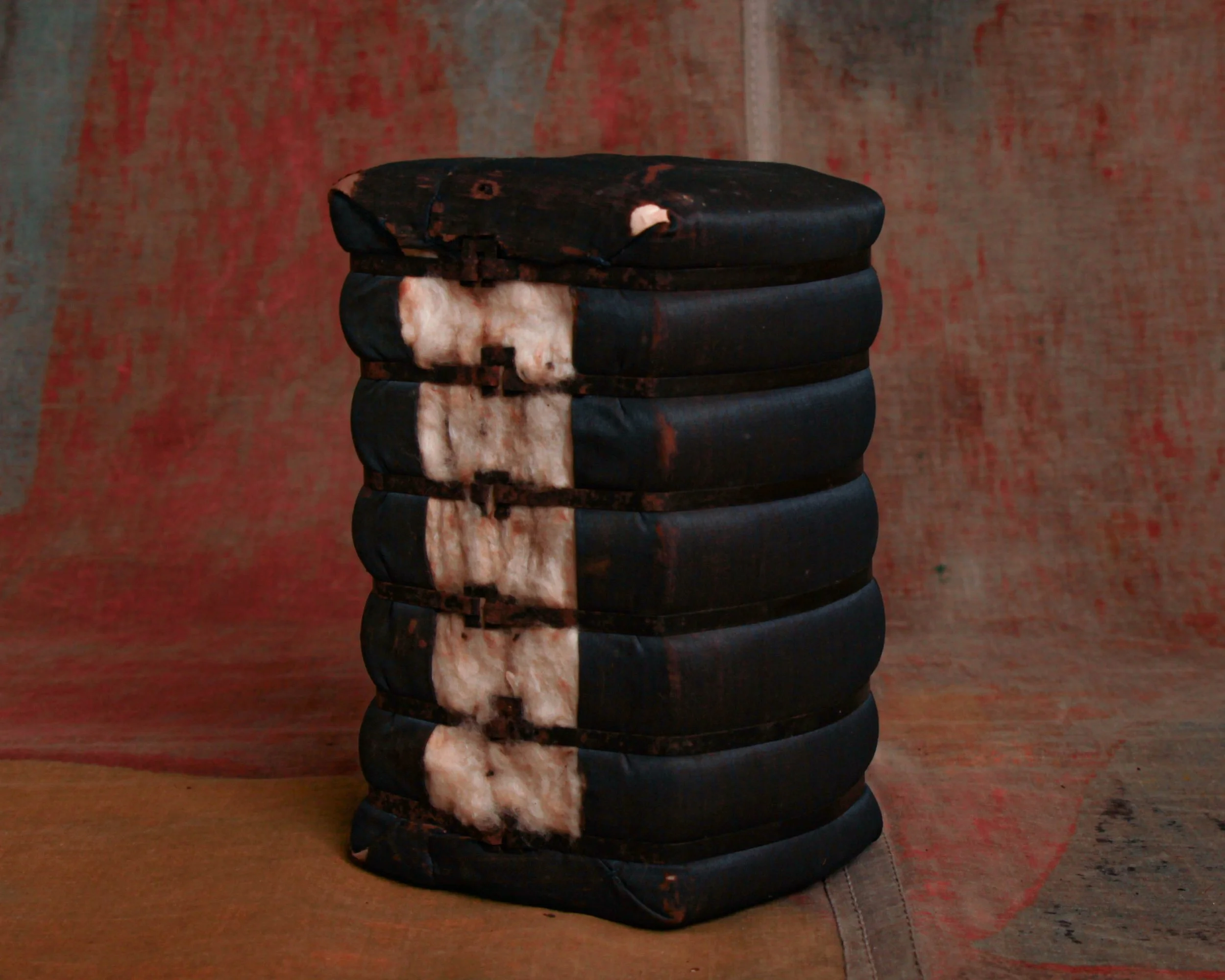
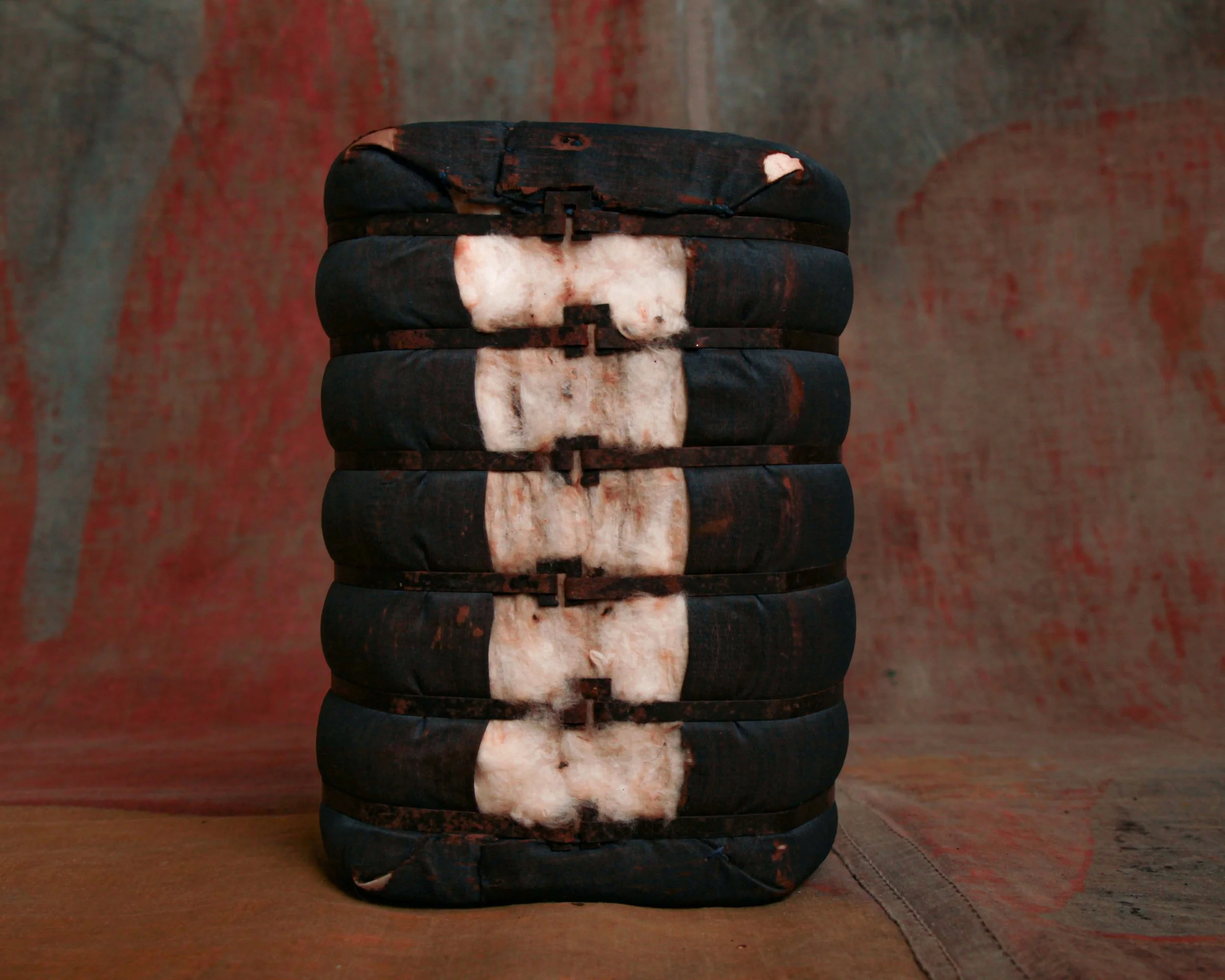


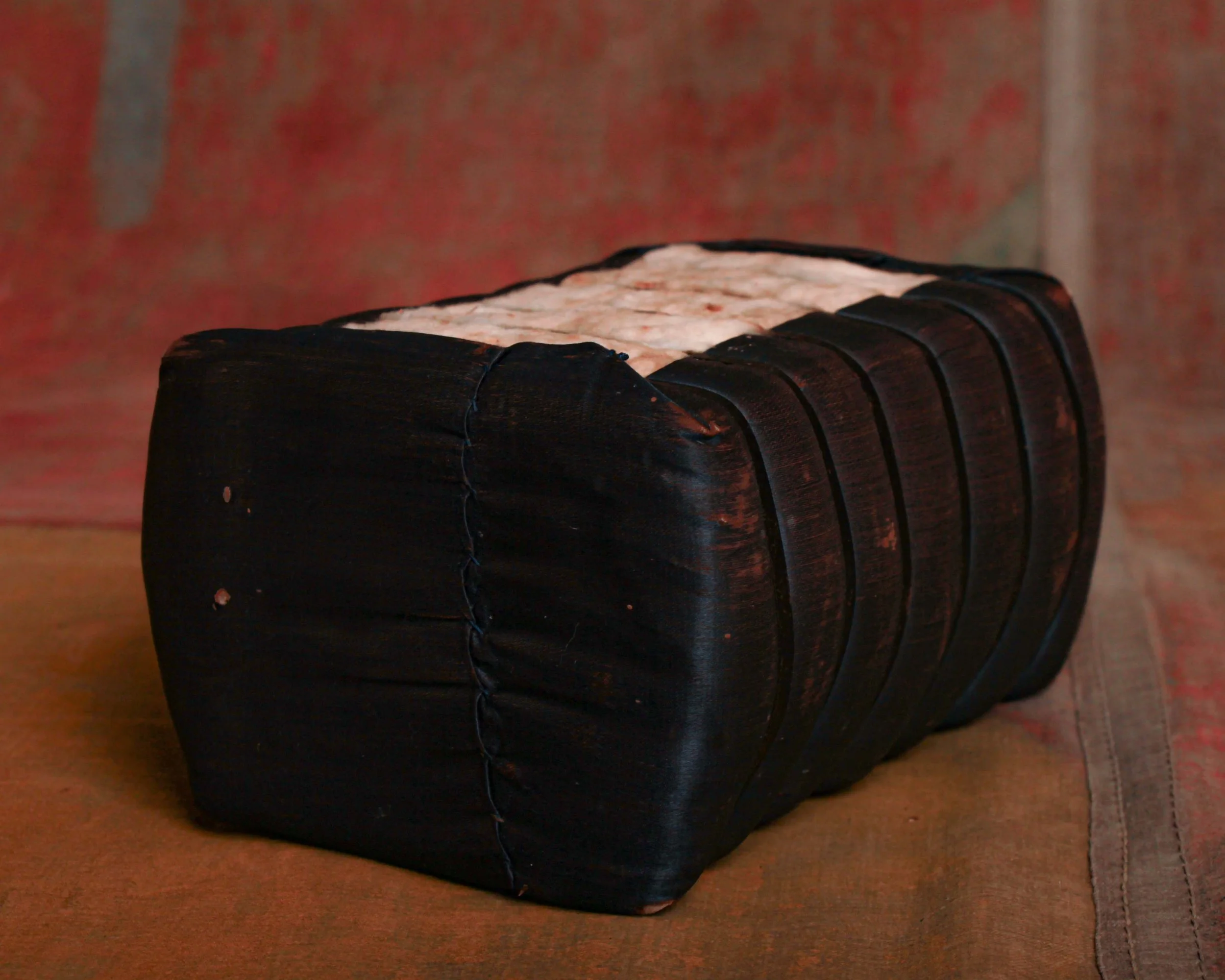
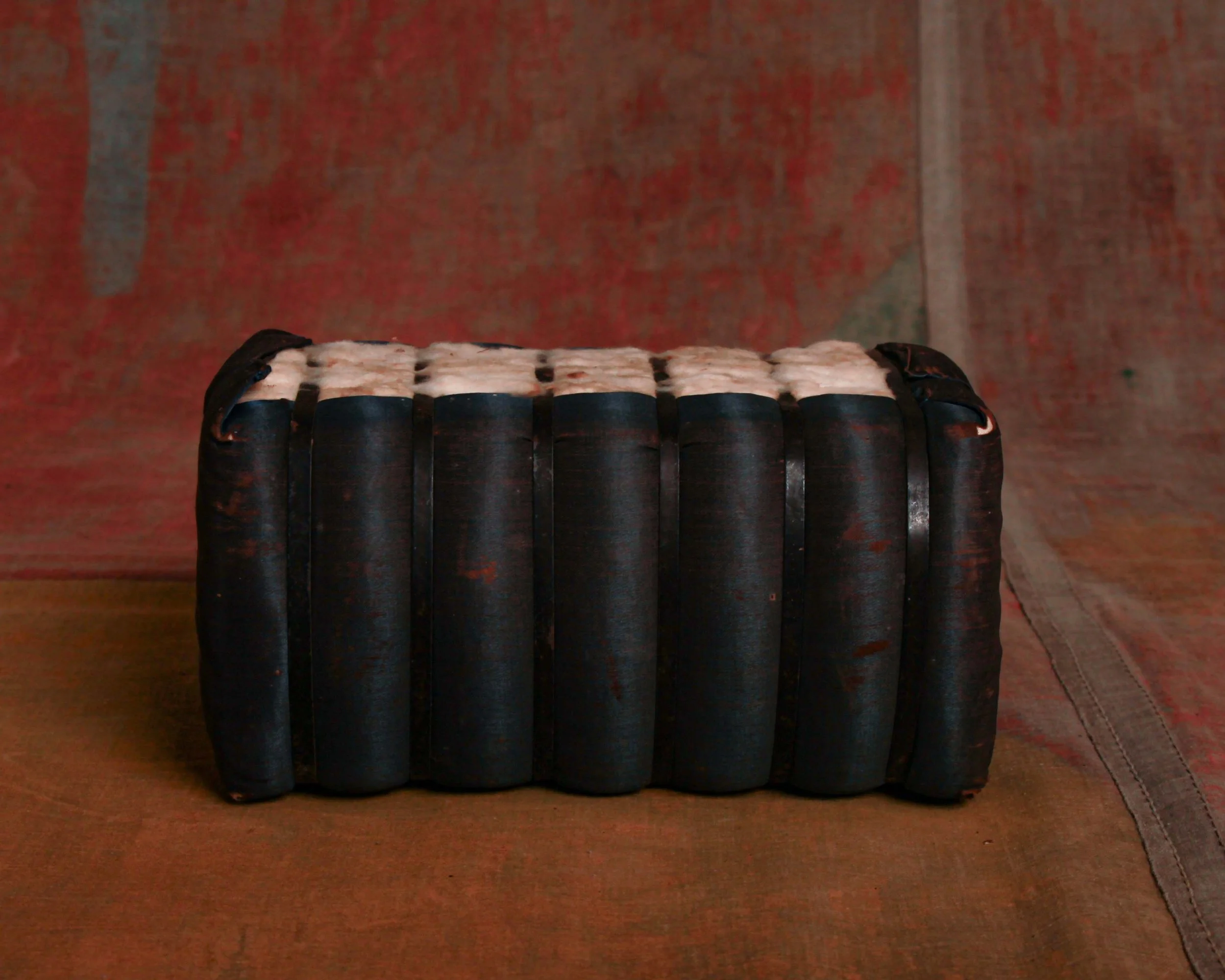
At first glance it looks almost minimalist, like a small piece of modern sculpture. Then you realize what it actually is, and the charm really sets in. This is an antique cotton bale salesman’s sample, a pocket-sized stand-in for something that once weighed hundreds of pounds and fueled an entire industry.
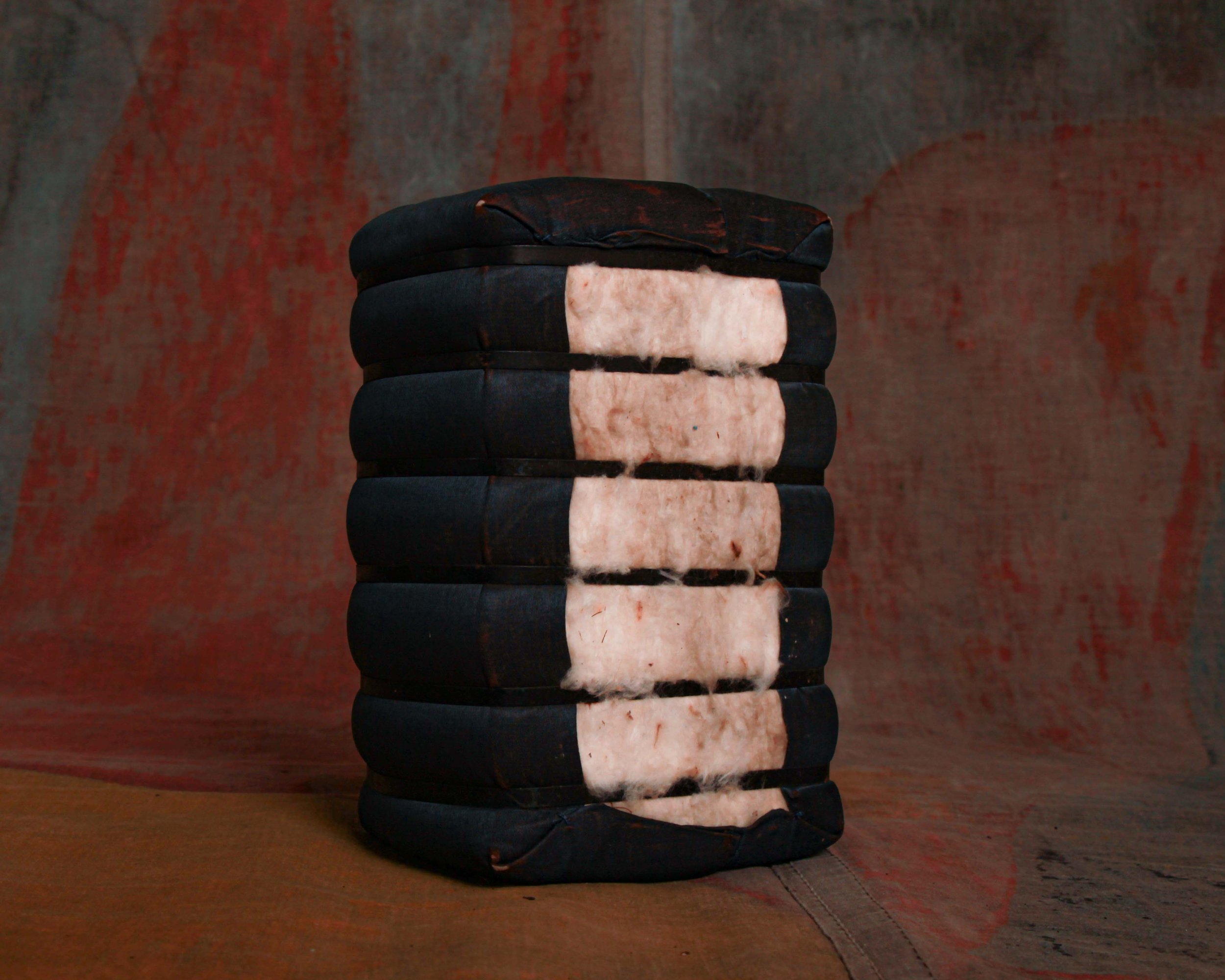
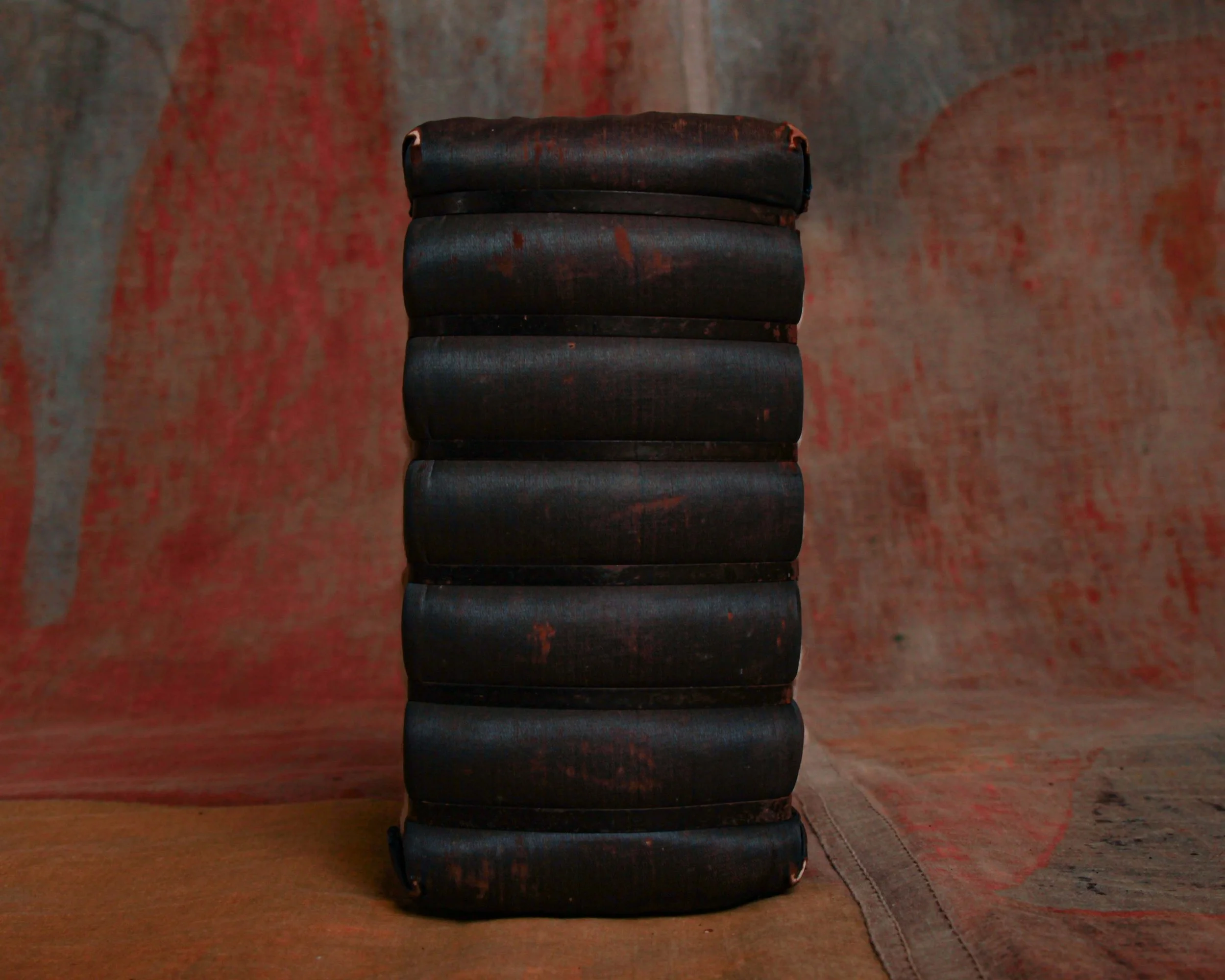
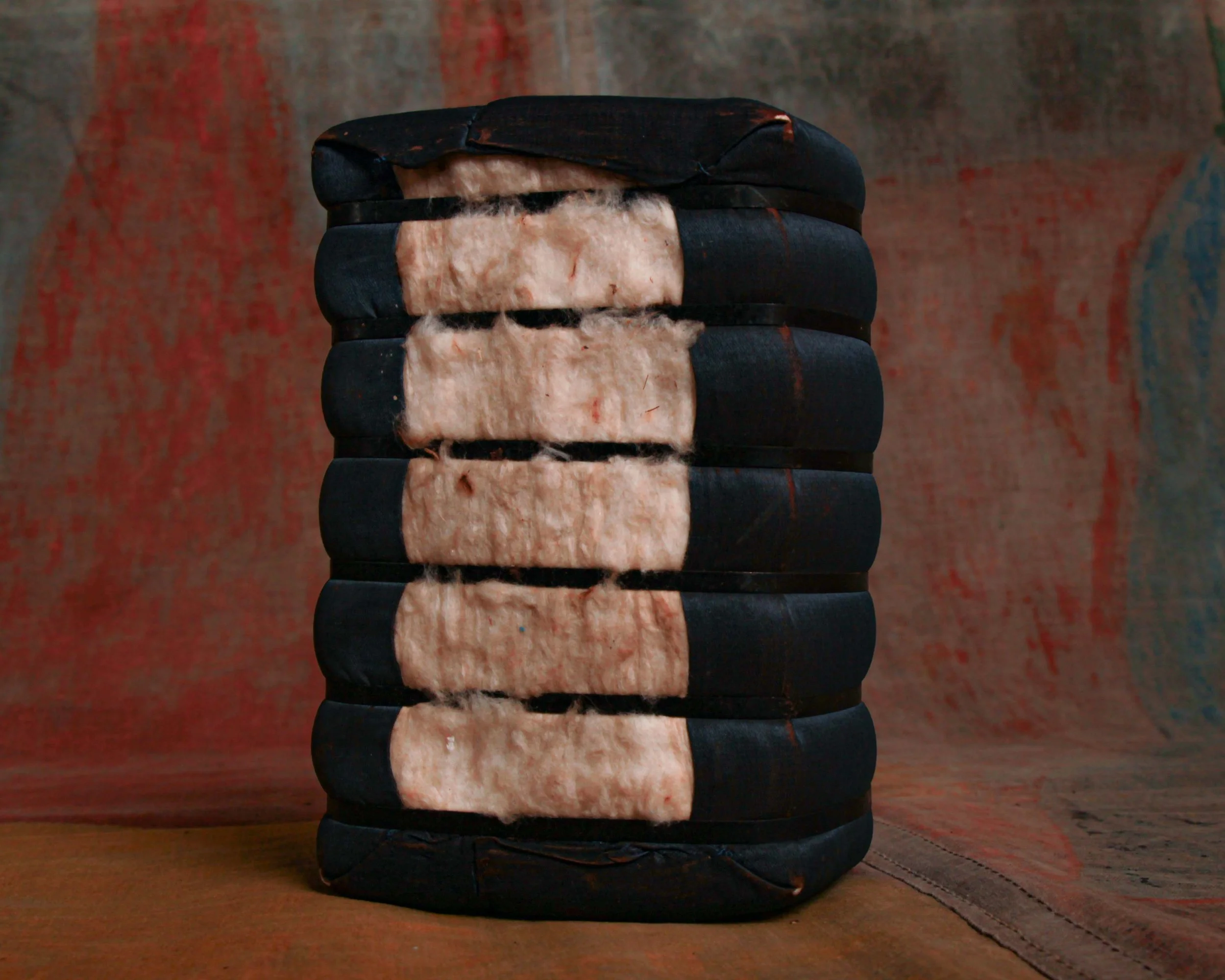
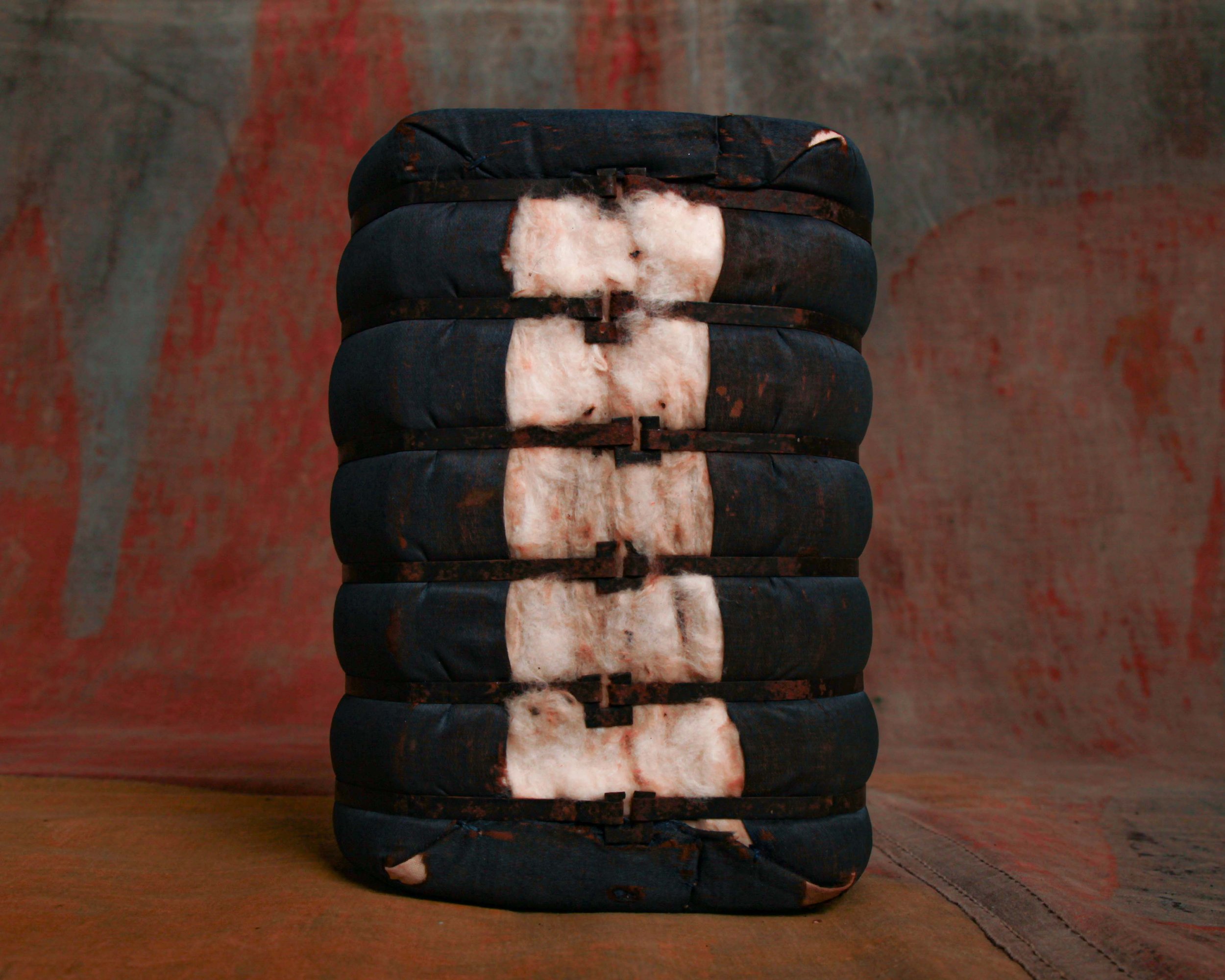
Wrapped in dark, tightly stitched silk fabric bands, the form is compact and dense, with a vertical window of exposed cotton running down one side. That strip is the whole point. It was meant to be touched, inspected, pinched between fingers. A tactile sales pitch. The cotton itself is still beautifully present, slightly uneven, softly compressed, with tiny flecks and fibers.
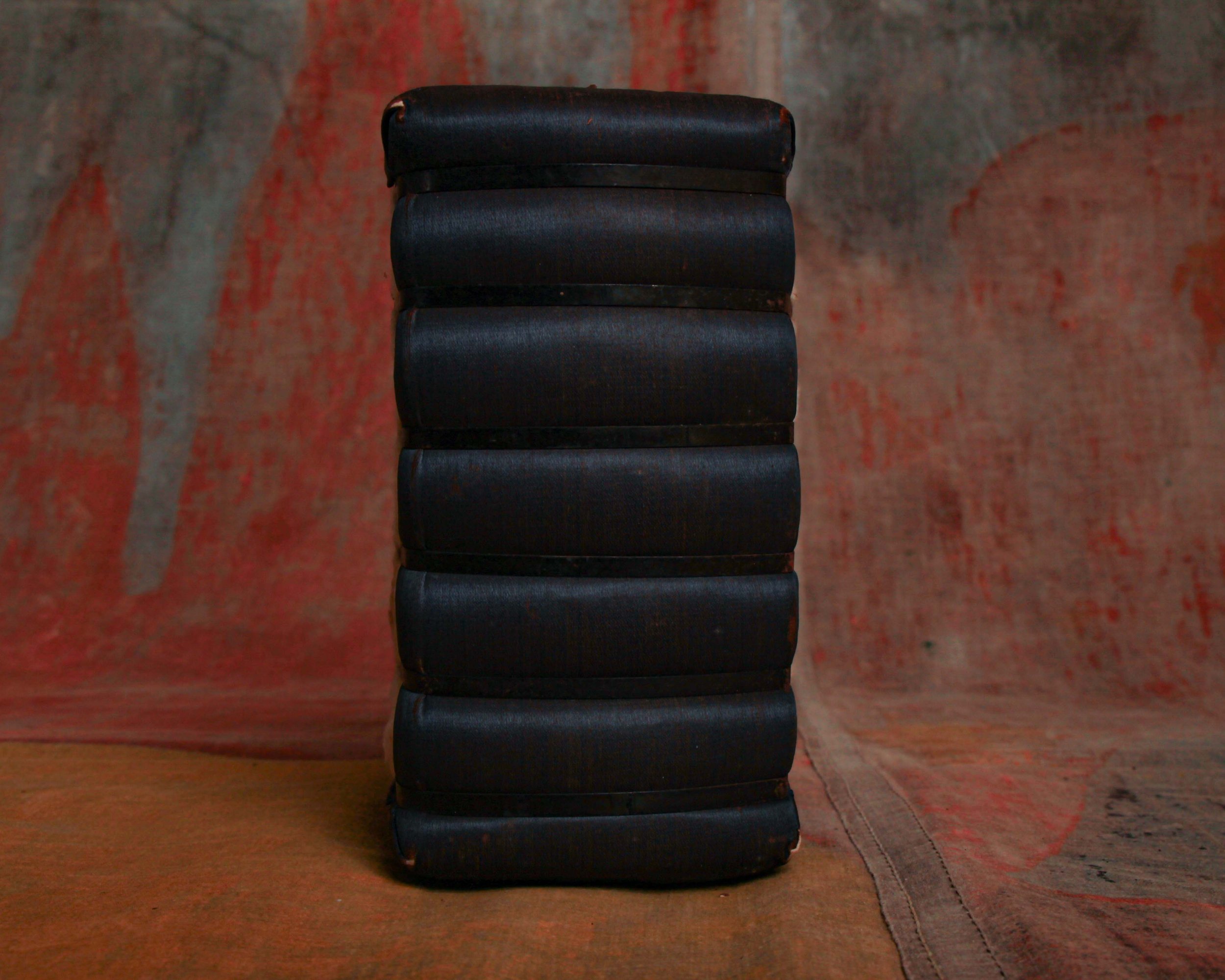
The construction is wonderfully utilitarian. Each padded band is stitched and stacked with intention, creating that distinctive ribbed profile. The surface shows wear from handling, small scuffs, subtle staining, and softened edges that speak to time spent in pockets, cases, or hands across desks and counters.
Category History
Old salesman samples are small objects with a big job—they were the pitch. Before catalogs and digital images, traveling salesmen carried miniature versions of what they were selling: stoves, tools, furniture, even clothing. Scaled down but carefully made, these samples let buyers see construction, materials, and design without hauling the full-size item around.
They weren’t toys, though they often look like them now. They were working tools, built to demonstrate quality and win orders. Details mattered—hinges that functioned, drawers that opened, stitching that mirrored the real thing.
What makes them compelling today is that balance between precision and charm. They carry the logic of the full-sized object but in a more approachable form. Many show wear from handling—softened edges, small repairs, signs of being passed from hand to hand.
They’re snapshots of commerce in motion, where persuasion relied on something you could hold, inspect, and trust.
At first glance it looks almost minimalist, like a small piece of modern sculpture. Then you realize what it actually is, and the charm really sets in. This is an antique cotton bale salesman’s sample, a pocket-sized stand-in for something that once weighed hundreds of pounds and fueled an entire industry.
Wrapped in dark, tightly stitched silk fabric bands, the form is compact and dense, with a vertical window of exposed cotton running down one side. That strip is the whole point. It was meant to be touched, inspected, pinched between fingers. A tactile sales pitch. The cotton itself is still beautifully present, slightly uneven, softly compressed, with tiny flecks and fibers.
The construction is wonderfully utilitarian. Each padded band is stitched and stacked with intention, creating that distinctive ribbed profile. The surface shows wear from handling, small scuffs, subtle staining, and softened edges that speak to time spent in pockets, cases, or hands across desks and counters.
Category History
Old salesman samples are small objects with a big job—they were the pitch. Before catalogs and digital images, traveling salesmen carried miniature versions of what they were selling: stoves, tools, furniture, even clothing. Scaled down but carefully made, these samples let buyers see construction, materials, and design without hauling the full-size item around.
They weren’t toys, though they often look like them now. They were working tools, built to demonstrate quality and win orders. Details mattered—hinges that functioned, drawers that opened, stitching that mirrored the real thing.
What makes them compelling today is that balance between precision and charm. They carry the logic of the full-sized object but in a more approachable form. Many show wear from handling—softened edges, small repairs, signs of being passed from hand to hand.
They’re snapshots of commerce in motion, where persuasion relied on something you could hold, inspect, and trust.