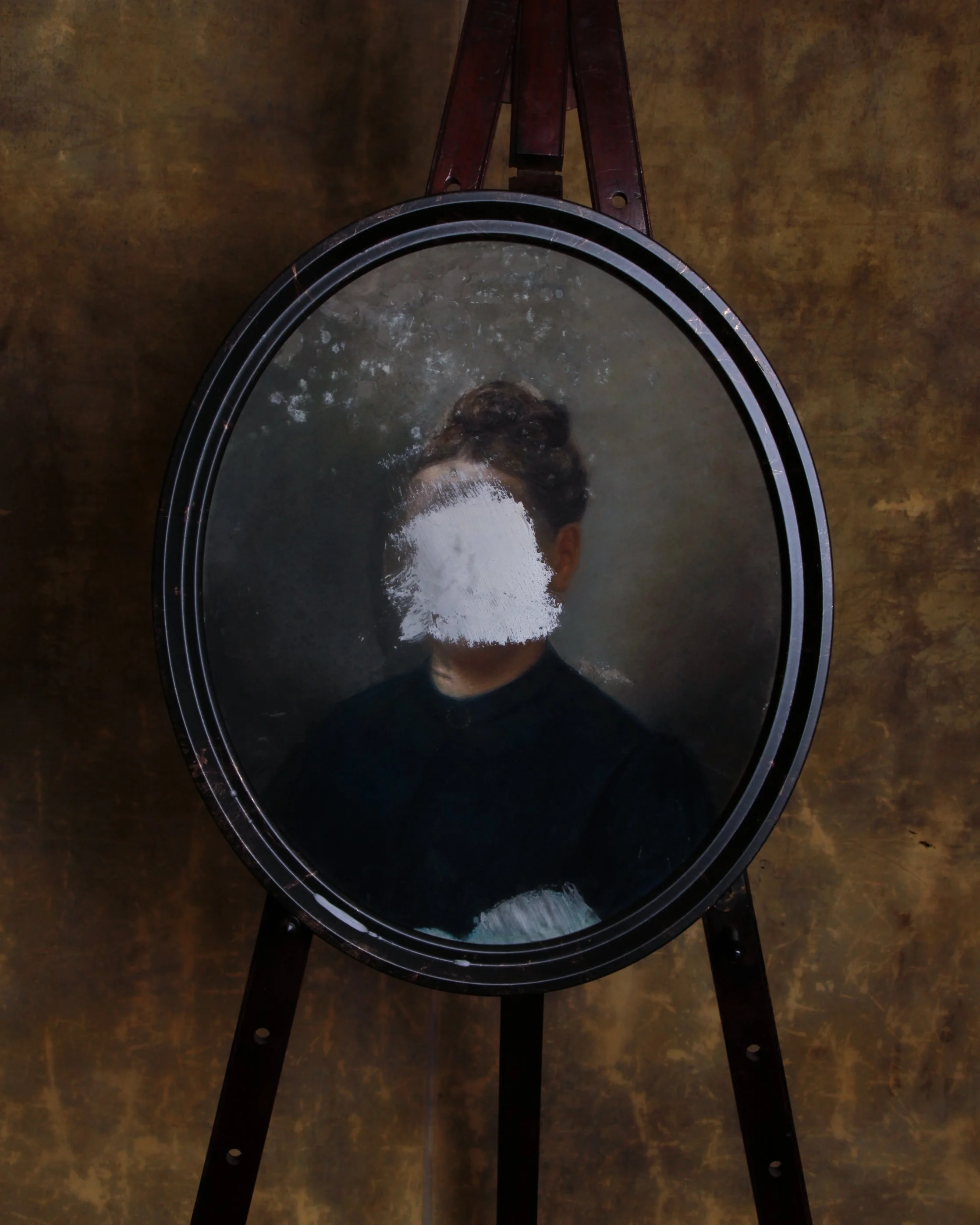



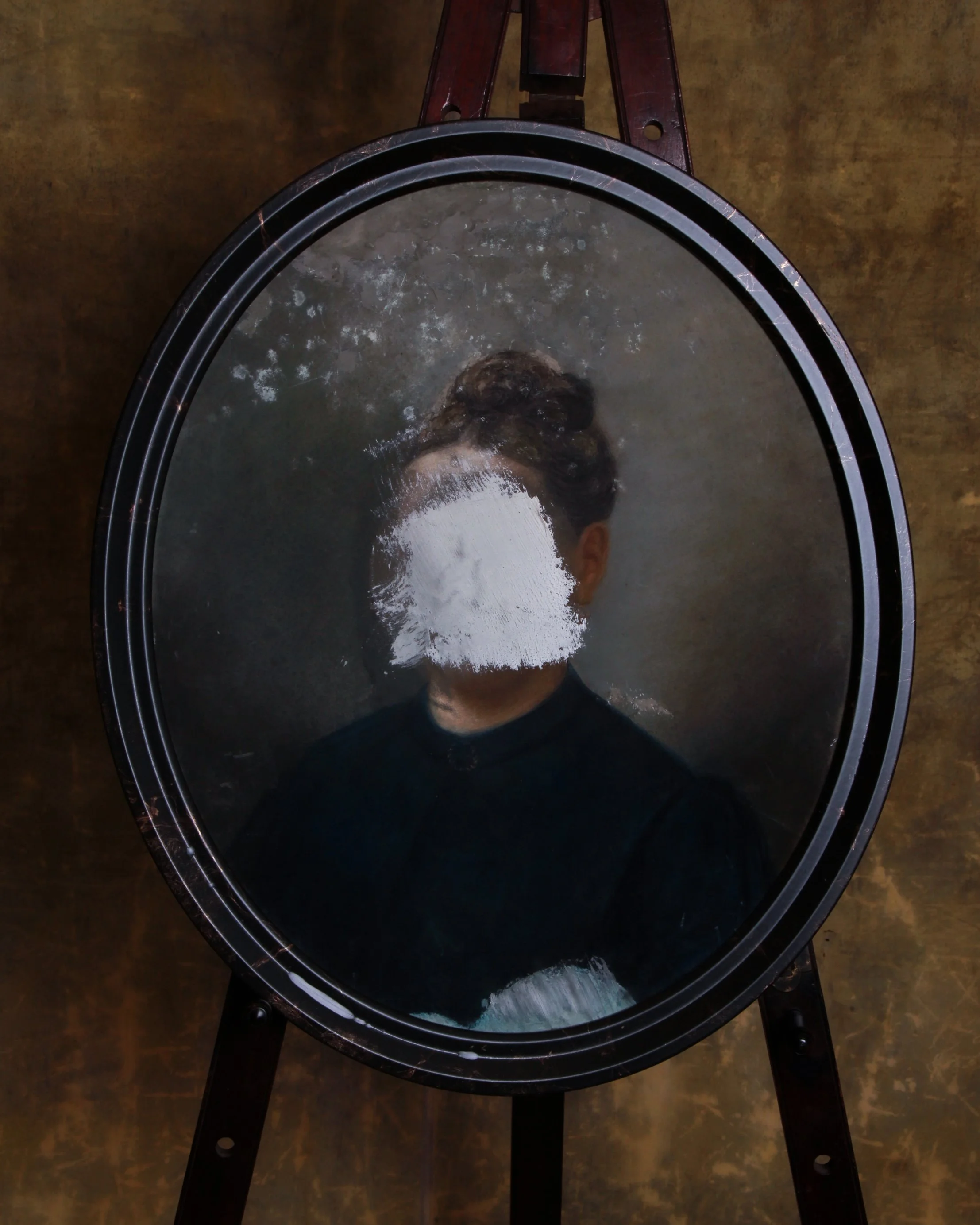
This French school portrait, circa 1870, is executed in pastels on paper, laid to card, and set in a handsome oval frame, but what makes it memorable is not the sitter’s identity. It is the fact that someone later tried to erase her.
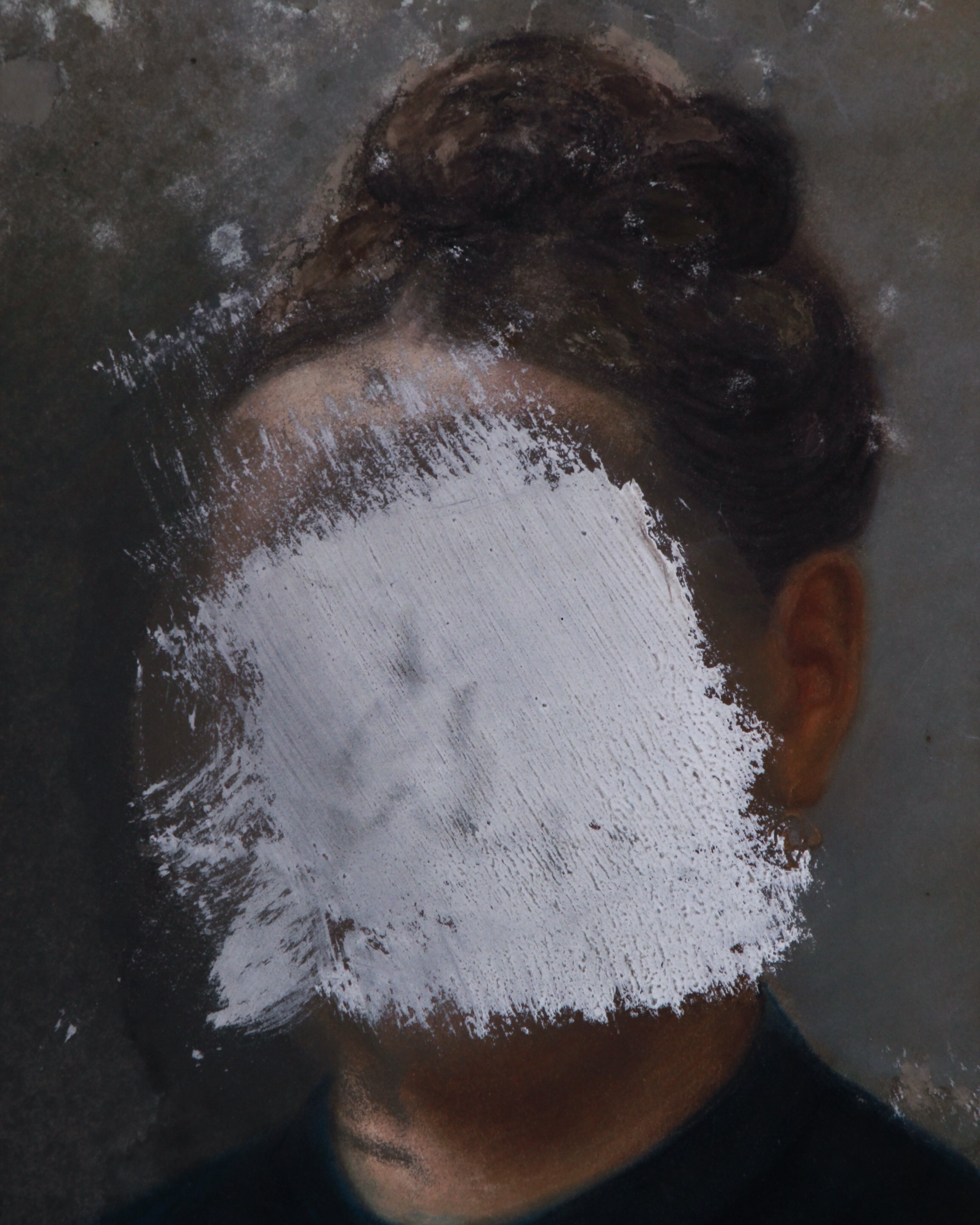
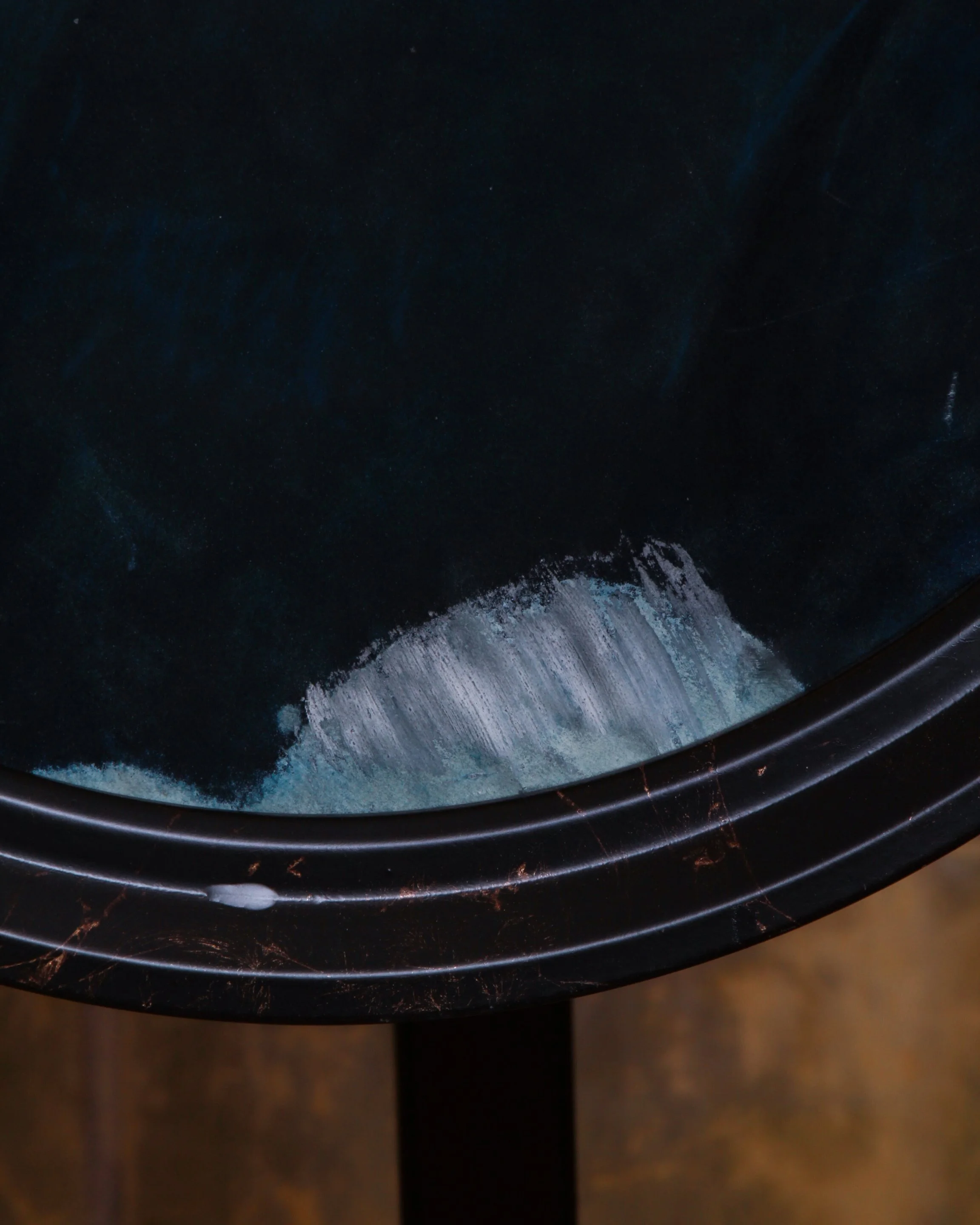
The woman is shown in the sober, formal manner typical of the period, dressed in black with her hair arranged high at the back of her head. The palette is restrained and the composition conventional, which makes the intervention across her face feel even more jarring. A broad patch of white paint has been brushed directly over her features, with another smaller area at the bottom of the composition. The surface elsewhere shows age, abrasion, and scattered losses, all of which add to the painting’s strange, layered presence.
Portraiture in 19th-century France was deeply tied to family, status, memory, and respectability. Even modest households commissioned likenesses to mark marriages, inheritances, anniversaries, or simply to preserve a face for future generations. Once painted, these portraits often remained in families for decades, passing through houses, marriages, arguments, deaths, and changing fortunes.
That is what makes deliberate damage so intriguing. Defacing a portrait was rarely neutral. It could be an act of anger, rejection, censorship, embarrassment, grief, or even dark humor. Was the face covered by the painter after a disagreement? By the sitter herself? By a spouse, child, jealous lover, or later owner who wanted the person gone but could not quite bring themselves to throw the portrait away?
There is no way to know, and that uncertainty is really the appeal. The painting began as a straightforward record of one person’s appearance. The later act of obliteration turned it into something else entirely: a portrait not only of a woman, but of a relationship that clearly went wrong somewhere along the way.
This French school portrait, circa 1870, is executed in pastels on paper, laid to card, and set in a handsome oval frame, but what makes it memorable is not the sitter’s identity. It is the fact that someone later tried to erase her.
The woman is shown in the sober, formal manner typical of the period, dressed in black with her hair arranged high at the back of her head. The palette is restrained and the composition conventional, which makes the intervention across her face feel even more jarring. A broad patch of white paint has been brushed directly over her features, with another smaller area at the bottom of the composition. The surface elsewhere shows age, abrasion, and scattered losses, all of which add to the painting’s strange, layered presence.
Portraiture in 19th-century France was deeply tied to family, status, memory, and respectability. Even modest households commissioned likenesses to mark marriages, inheritances, anniversaries, or simply to preserve a face for future generations. Once painted, these portraits often remained in families for decades, passing through houses, marriages, arguments, deaths, and changing fortunes.
That is what makes deliberate damage so intriguing. Defacing a portrait was rarely neutral. It could be an act of anger, rejection, censorship, embarrassment, grief, or even dark humor. Was the face covered by the painter after a disagreement? By the sitter herself? By a spouse, child, jealous lover, or later owner who wanted the person gone but could not quite bring themselves to throw the portrait away?
There is no way to know, and that uncertainty is really the appeal. The painting began as a straightforward record of one person’s appearance. The later act of obliteration turned it into something else entirely: a portrait not only of a woman, but of a relationship that clearly went wrong somewhere along the way.