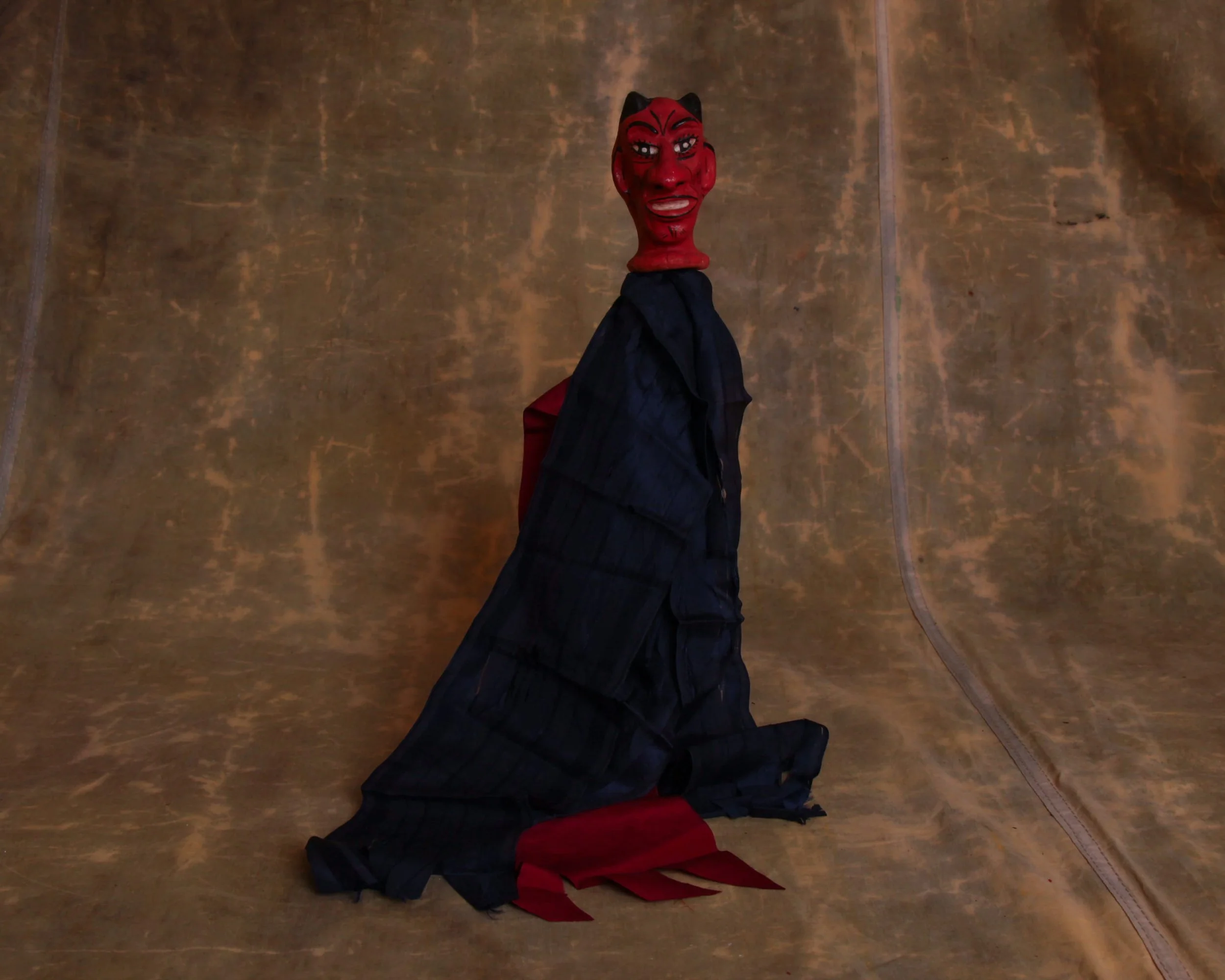
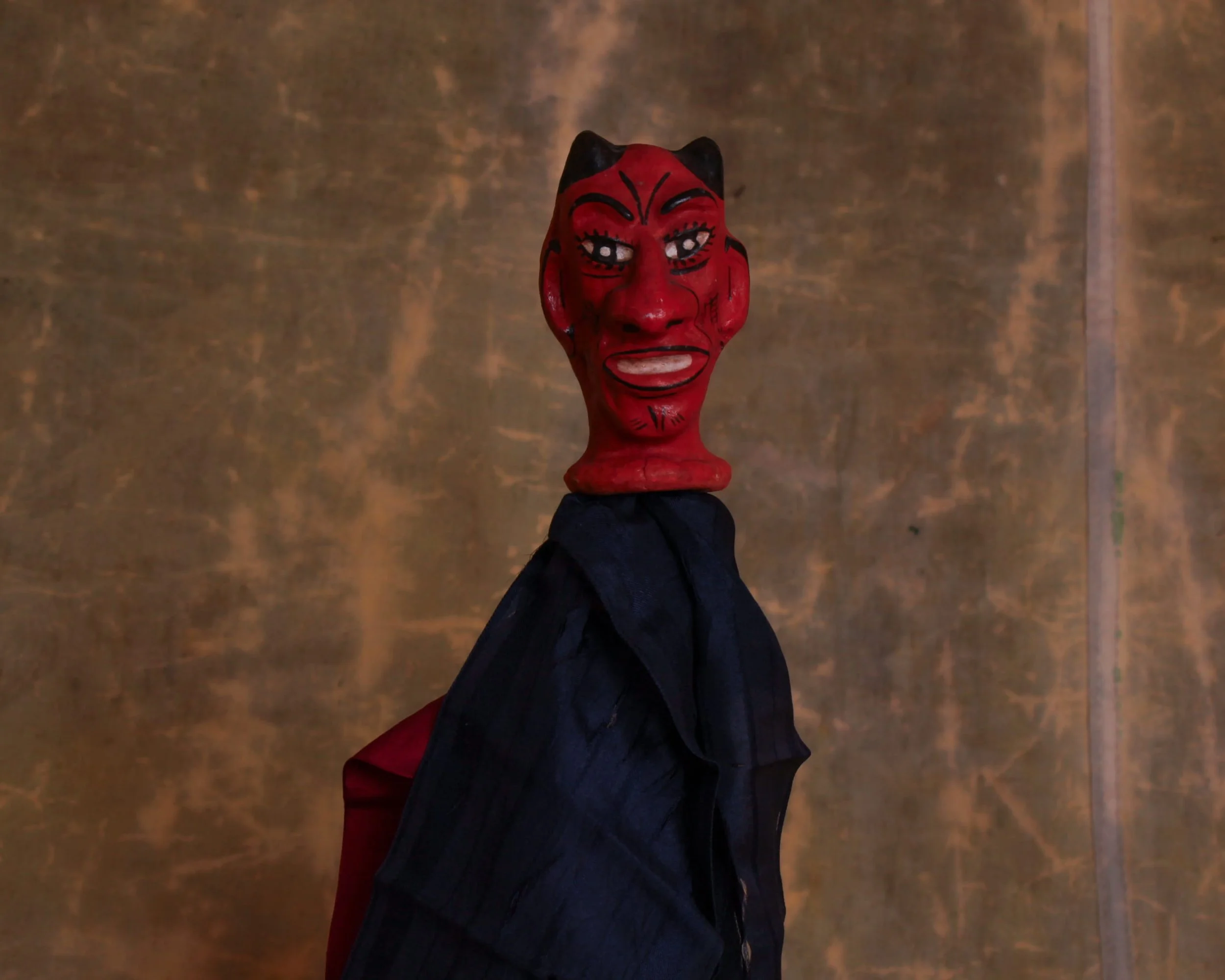
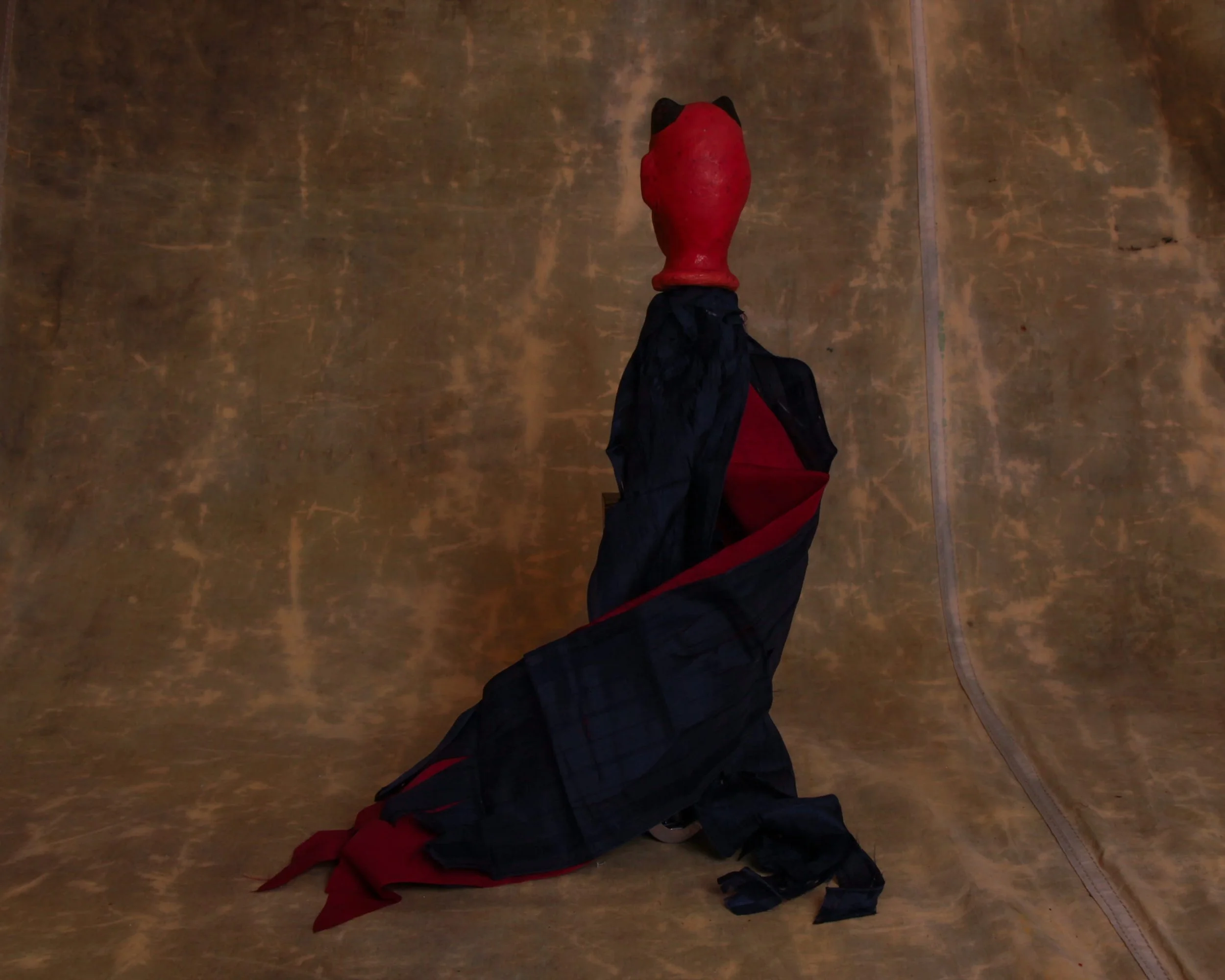
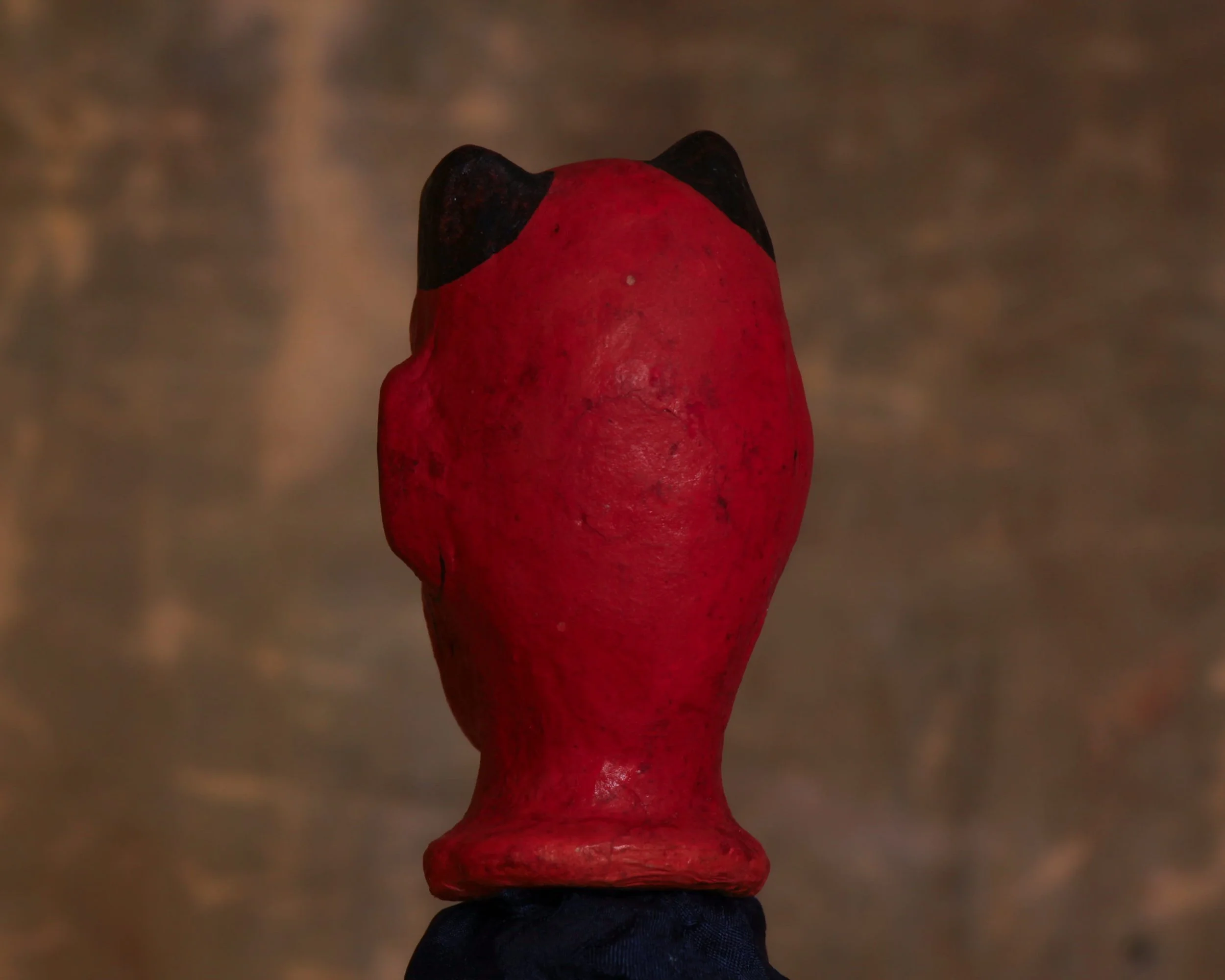
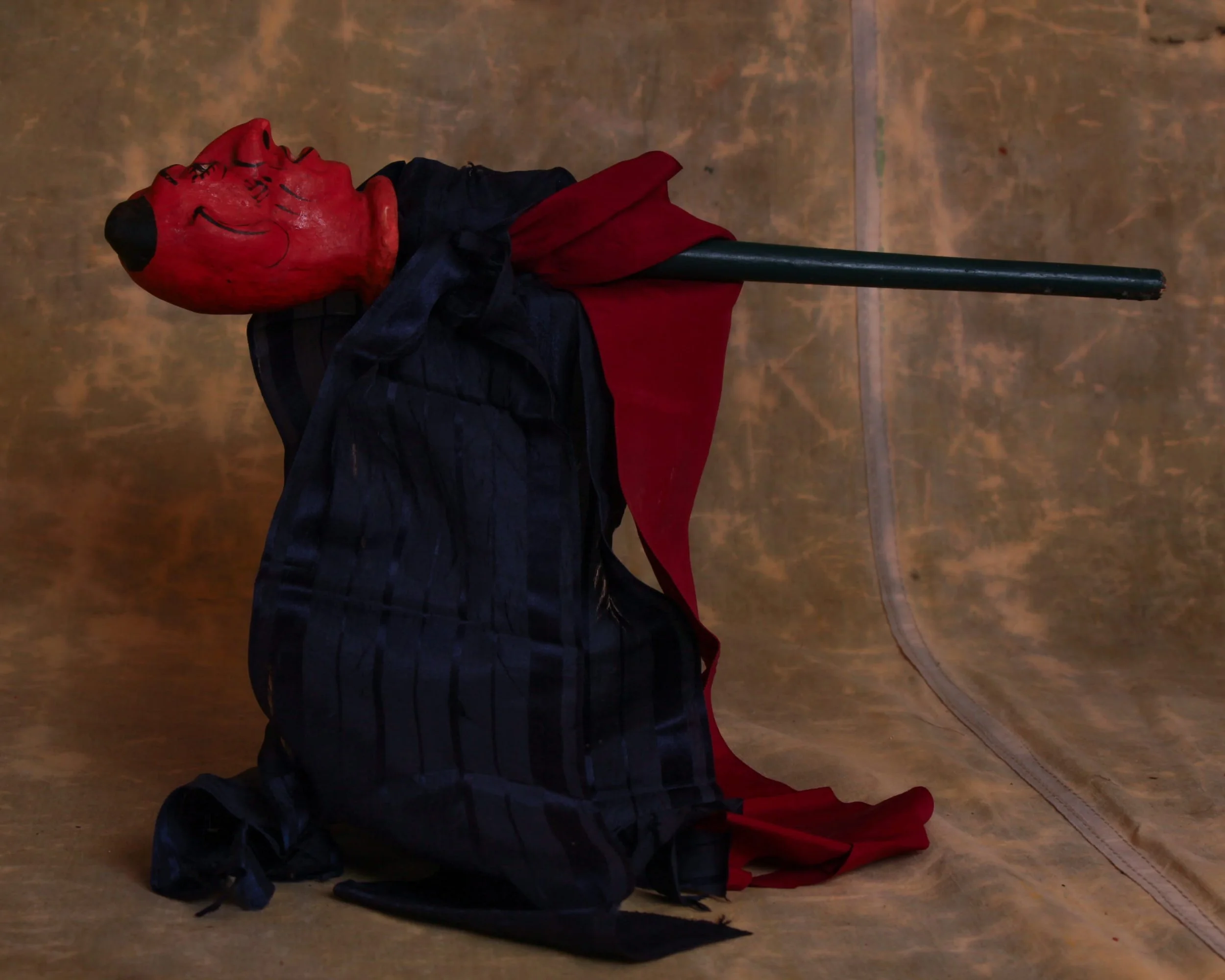
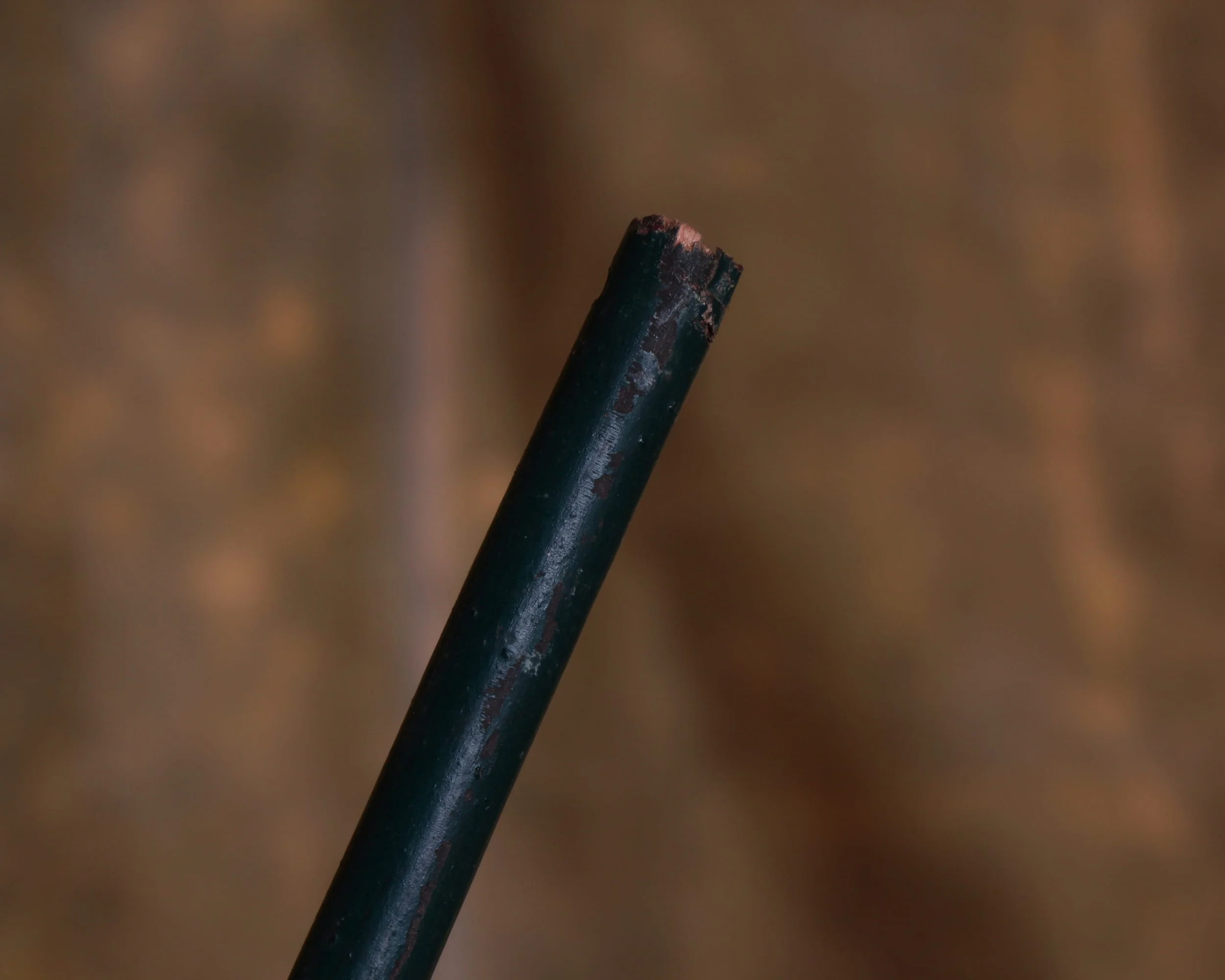
This early 20th century papier-mâché devil puppet has the kind of presence that doesn’t stay quiet on a shelf. Likely German and dating to the 1910s, it’s built as a hand puppet mounted on a wooden rod, originally meant to pop up, stir the crowd, and disappear just as quickly.
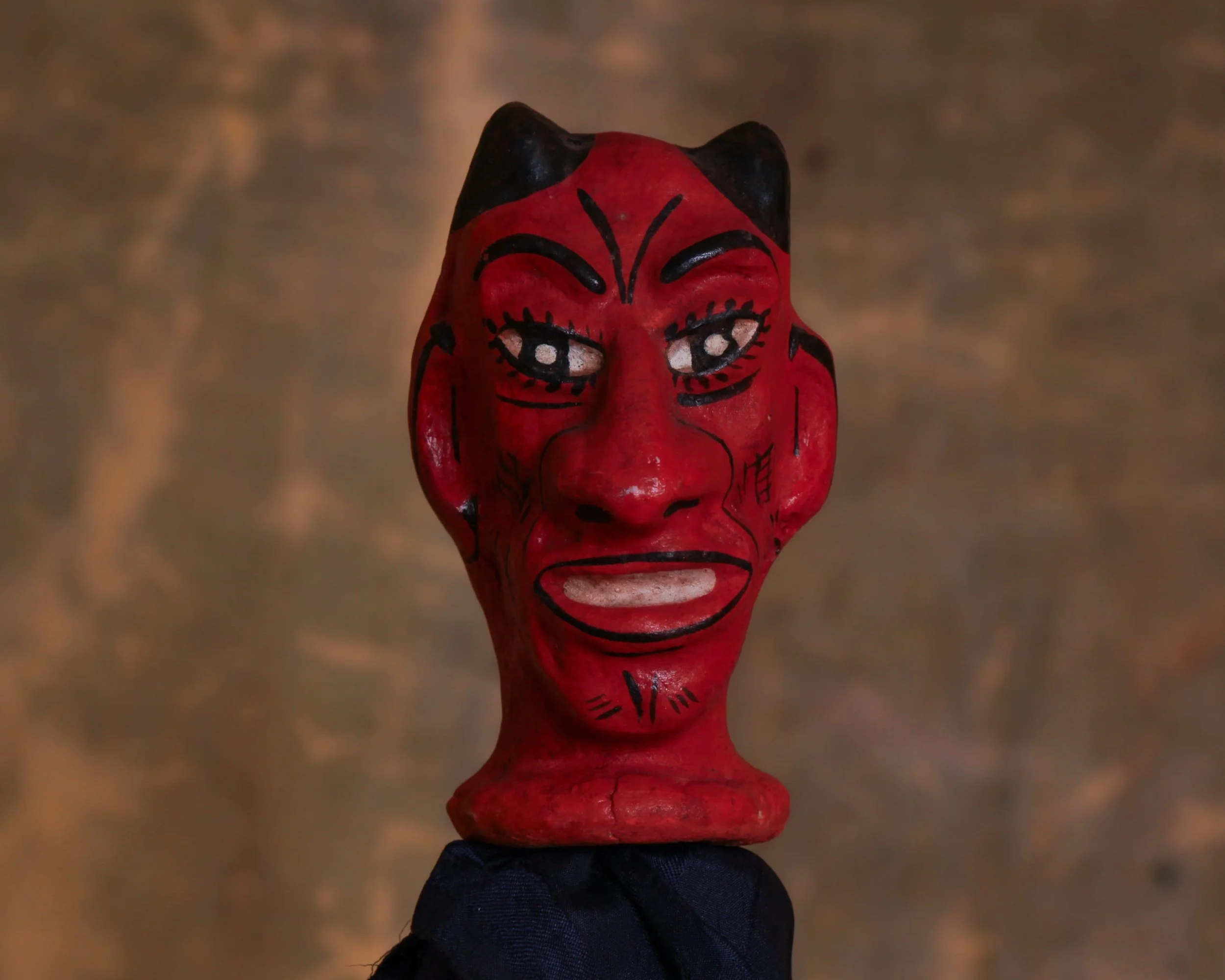
The head is hand-painted in a bold, almost mischievous red, with black horns, sharp brows, and a grin that lands somewhere between charming and slightly suspect. The features have that great, slightly exaggerated folk quality—expressive, a touch uneven, and full of character. It still wears its dark cloth costume, with flashes of red underneath.
At 16 inches tall, it reads more like a small sculpture now than a toy.
Puppet Shows
Early puppet shows sit somewhere between storytelling and sleight of hand. Long before film or television, they were a way to bring characters to life with simple means—wood, cloth, string, and a bit of voice work. Found across Europe, Asia, and beyond, these performances adapted easily to their surroundings, whether staged in marketplaces, small theaters, or traveling booths.
The mechanics were straightforward but effective. Hand puppets, rod puppets, marionettes—each with its own style of movement and control. What mattered wasn’t realism, but rhythm. A good puppeteer could suggest emotion and action with just a tilt of the head or a well-timed gesture.
Stories ranged widely. Folk tales, moral lessons, satire, even political commentary slipped in under the guise of entertainment. Because the figures were one step removed from real actors, they could say and do things that might not land the same way otherwise.
What makes early puppet shows compelling now is their immediacy. Everything is visible—the strings, the hands, the stage—yet the illusion still works.
They’re less about hiding the trick and more about inviting you into it, where imagination does most of the heavy lifting.
This early 20th century papier-mâché devil puppet has the kind of presence that doesn’t stay quiet on a shelf. Likely German and dating to the 1910s, it’s built as a hand puppet mounted on a wooden rod, originally meant to pop up, stir the crowd, and disappear just as quickly.
The head is hand-painted in a bold, almost mischievous red, with black horns, sharp brows, and a grin that lands somewhere between charming and slightly suspect. The features have that great, slightly exaggerated folk quality—expressive, a touch uneven, and full of character. It still wears its dark cloth costume, with flashes of red underneath.
At 16 inches tall, it reads more like a small sculpture now than a toy.
Puppet Shows
Early puppet shows sit somewhere between storytelling and sleight of hand. Long before film or television, they were a way to bring characters to life with simple means—wood, cloth, string, and a bit of voice work. Found across Europe, Asia, and beyond, these performances adapted easily to their surroundings, whether staged in marketplaces, small theaters, or traveling booths.
The mechanics were straightforward but effective. Hand puppets, rod puppets, marionettes—each with its own style of movement and control. What mattered wasn’t realism, but rhythm. A good puppeteer could suggest emotion and action with just a tilt of the head or a well-timed gesture.
Stories ranged widely. Folk tales, moral lessons, satire, even political commentary slipped in under the guise of entertainment. Because the figures were one step removed from real actors, they could say and do things that might not land the same way otherwise.
What makes early puppet shows compelling now is their immediacy. Everything is visible—the strings, the hands, the stage—yet the illusion still works.
They’re less about hiding the trick and more about inviting you into it, where imagination does most of the heavy lifting.