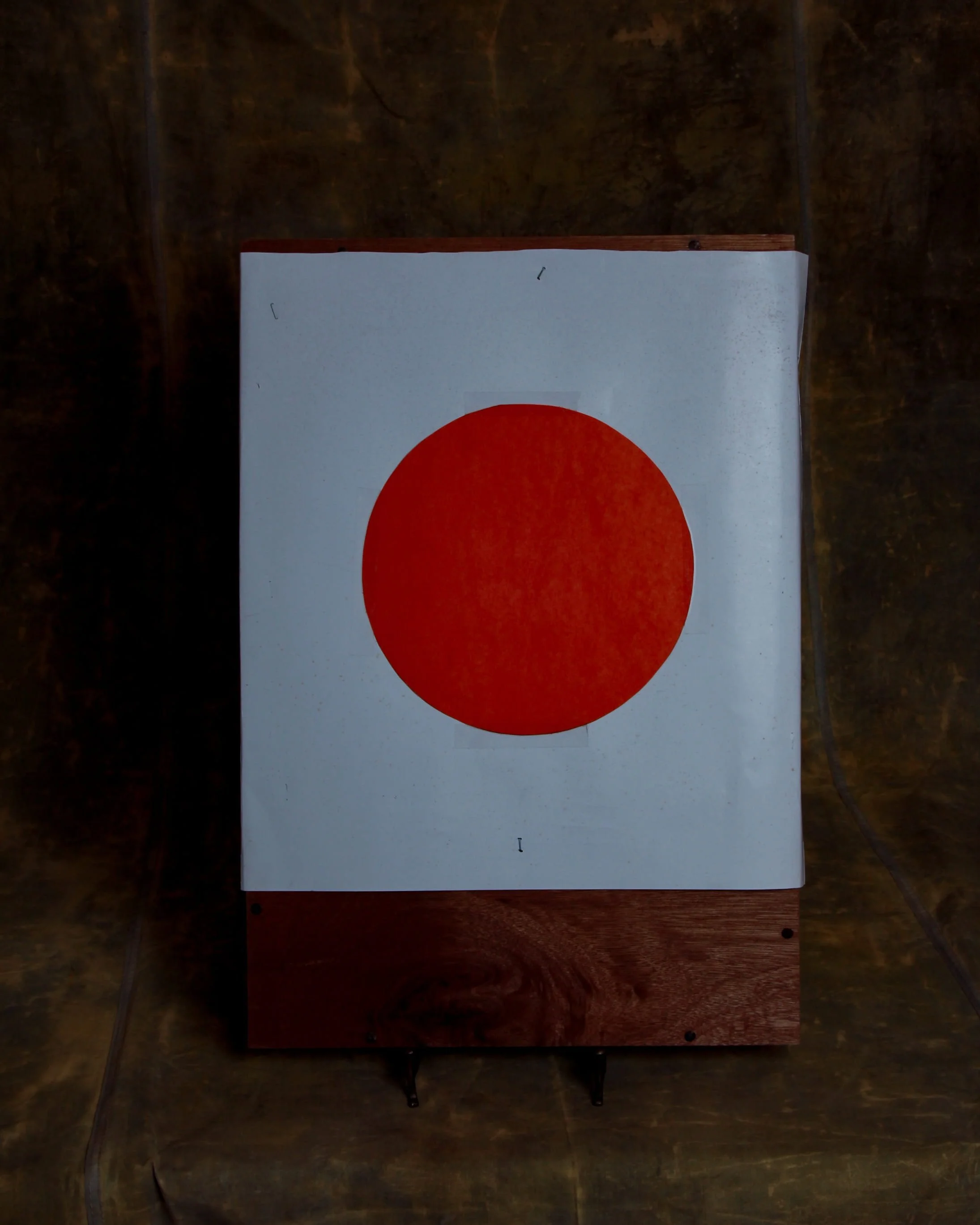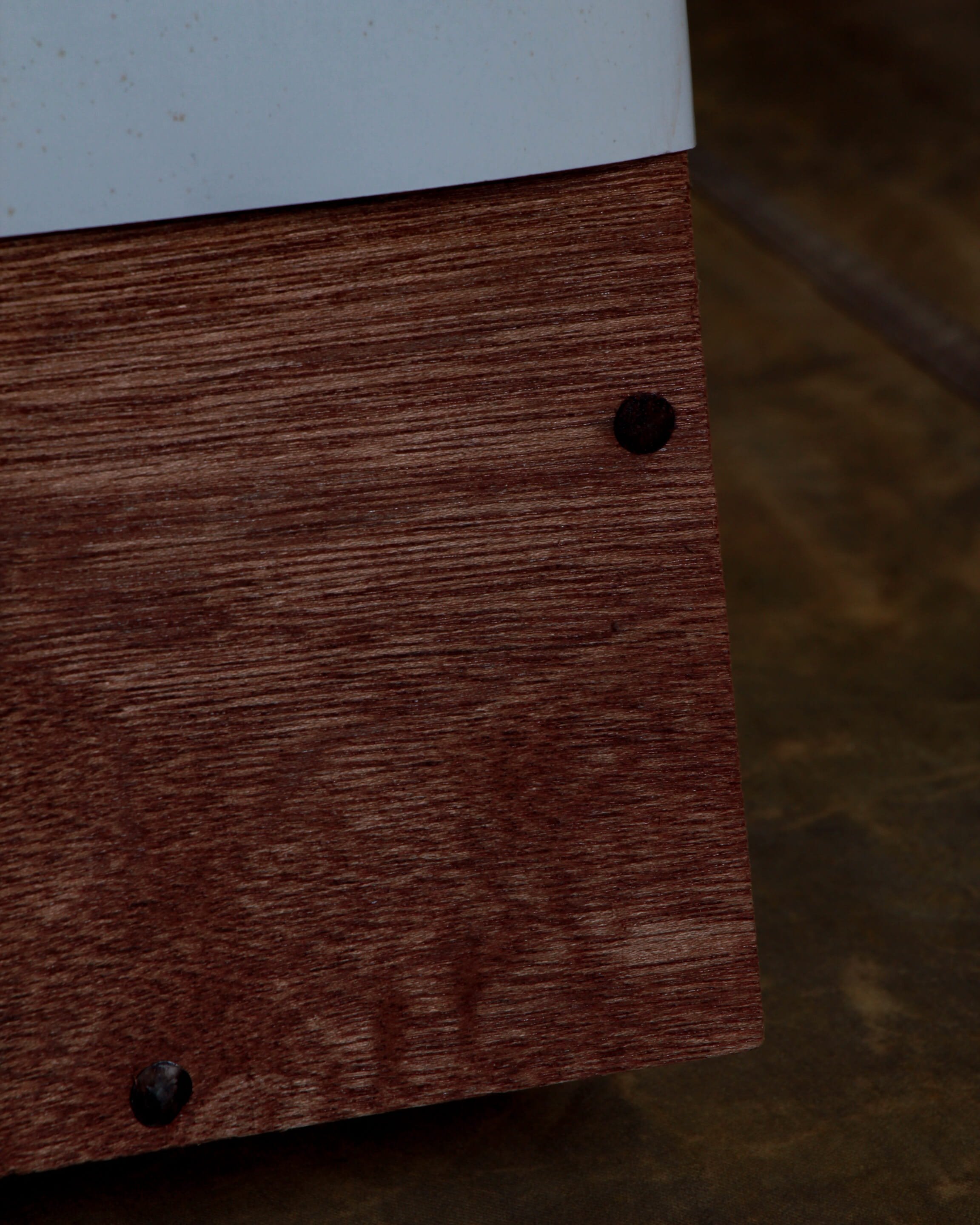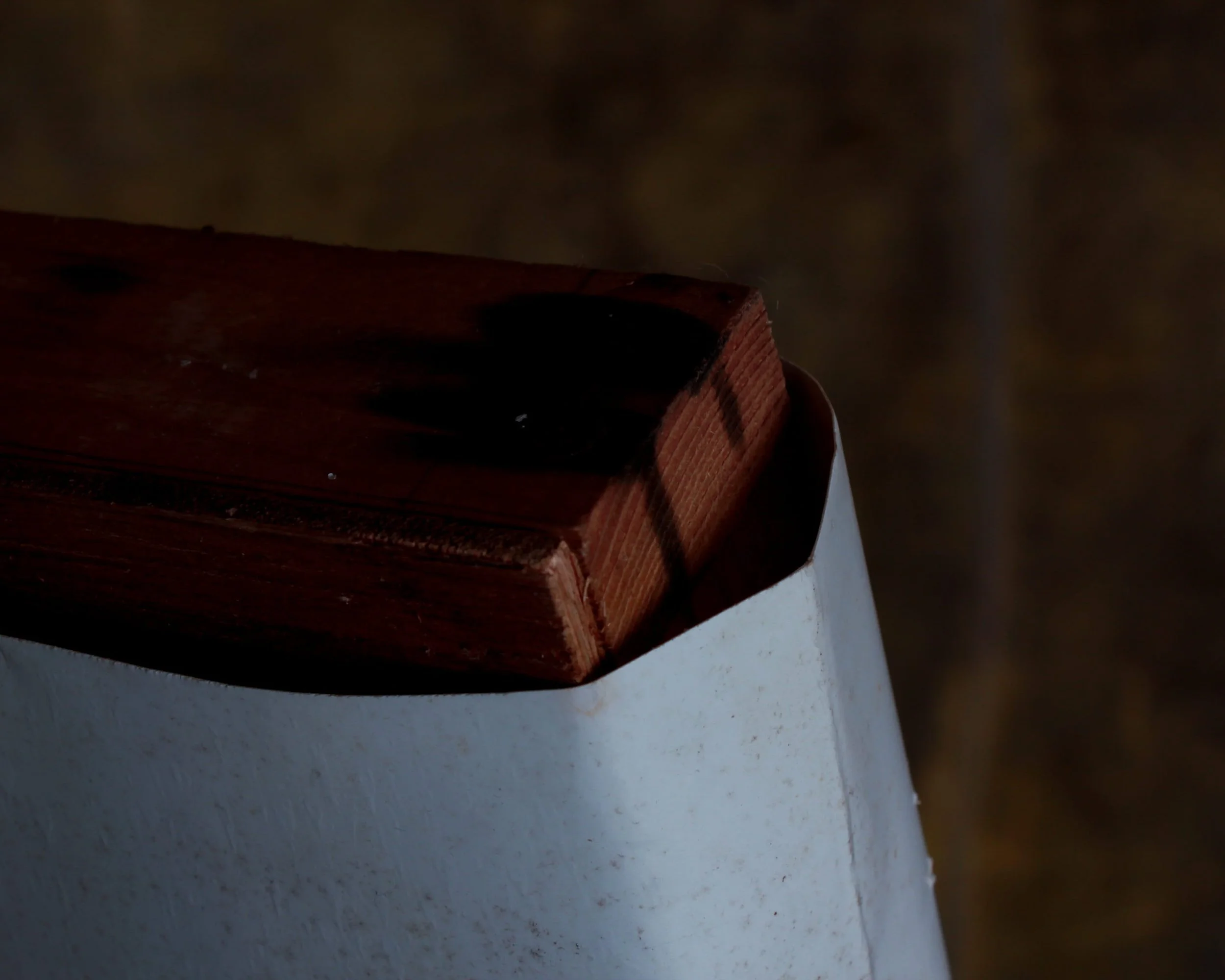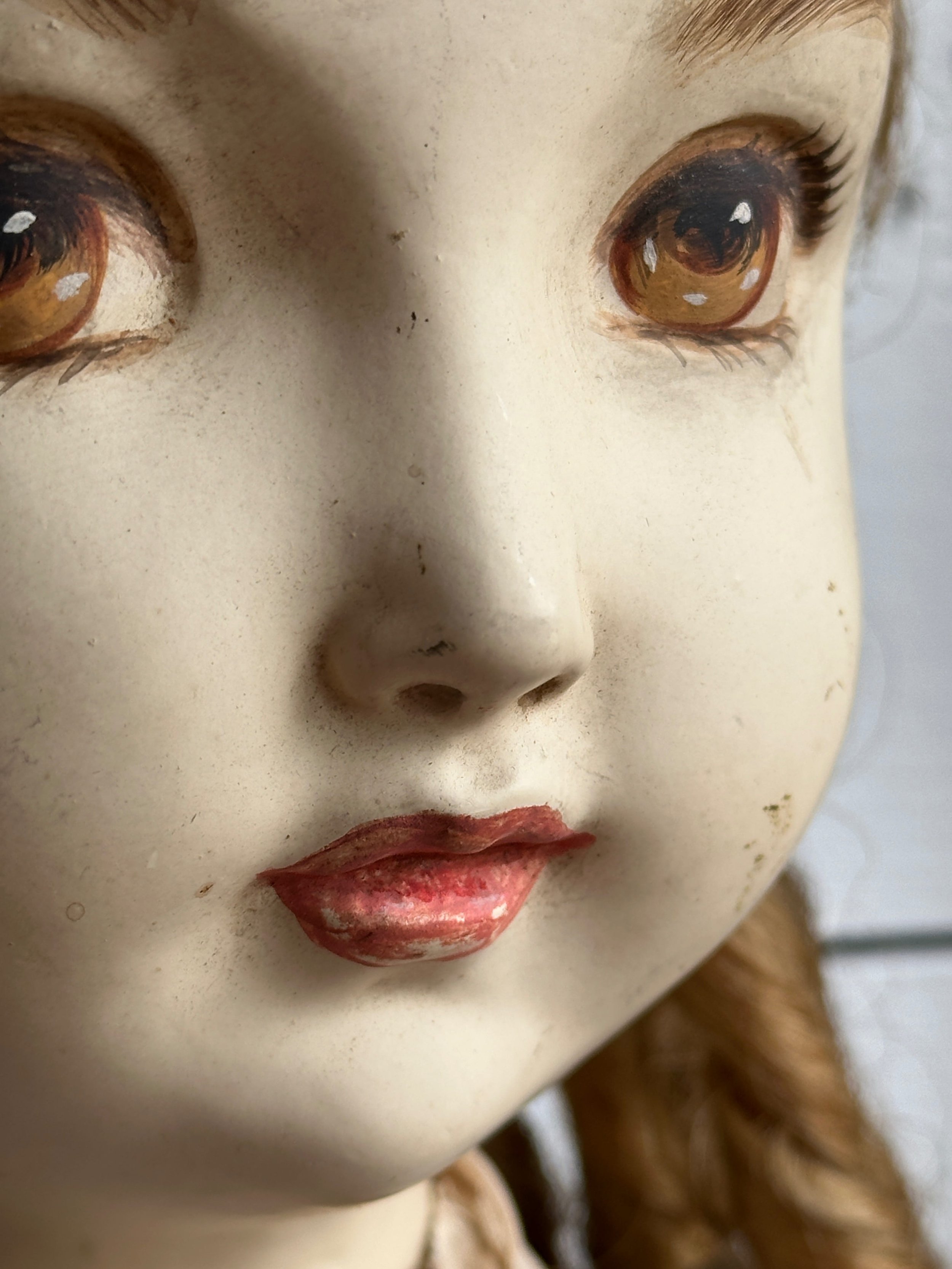
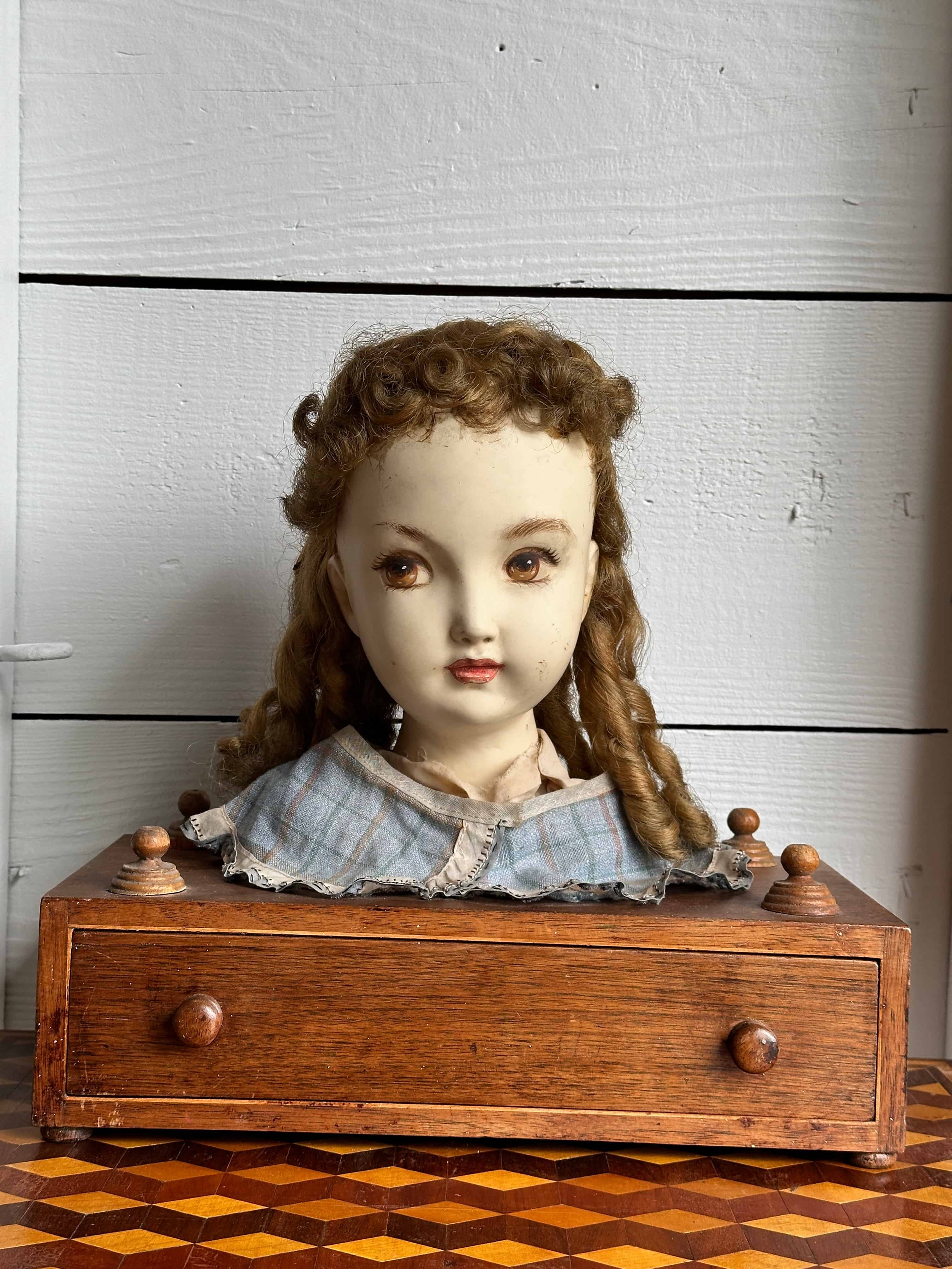
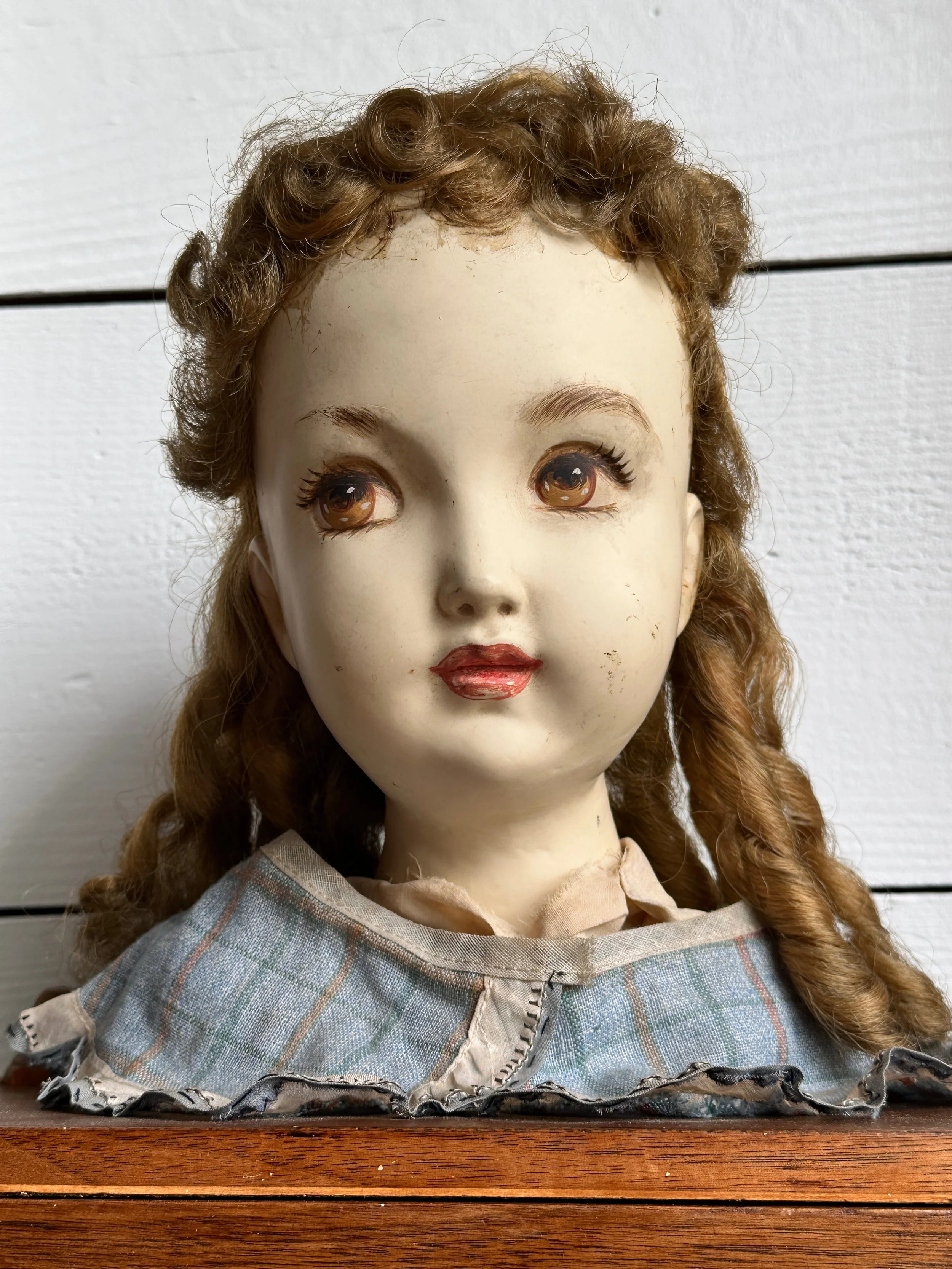
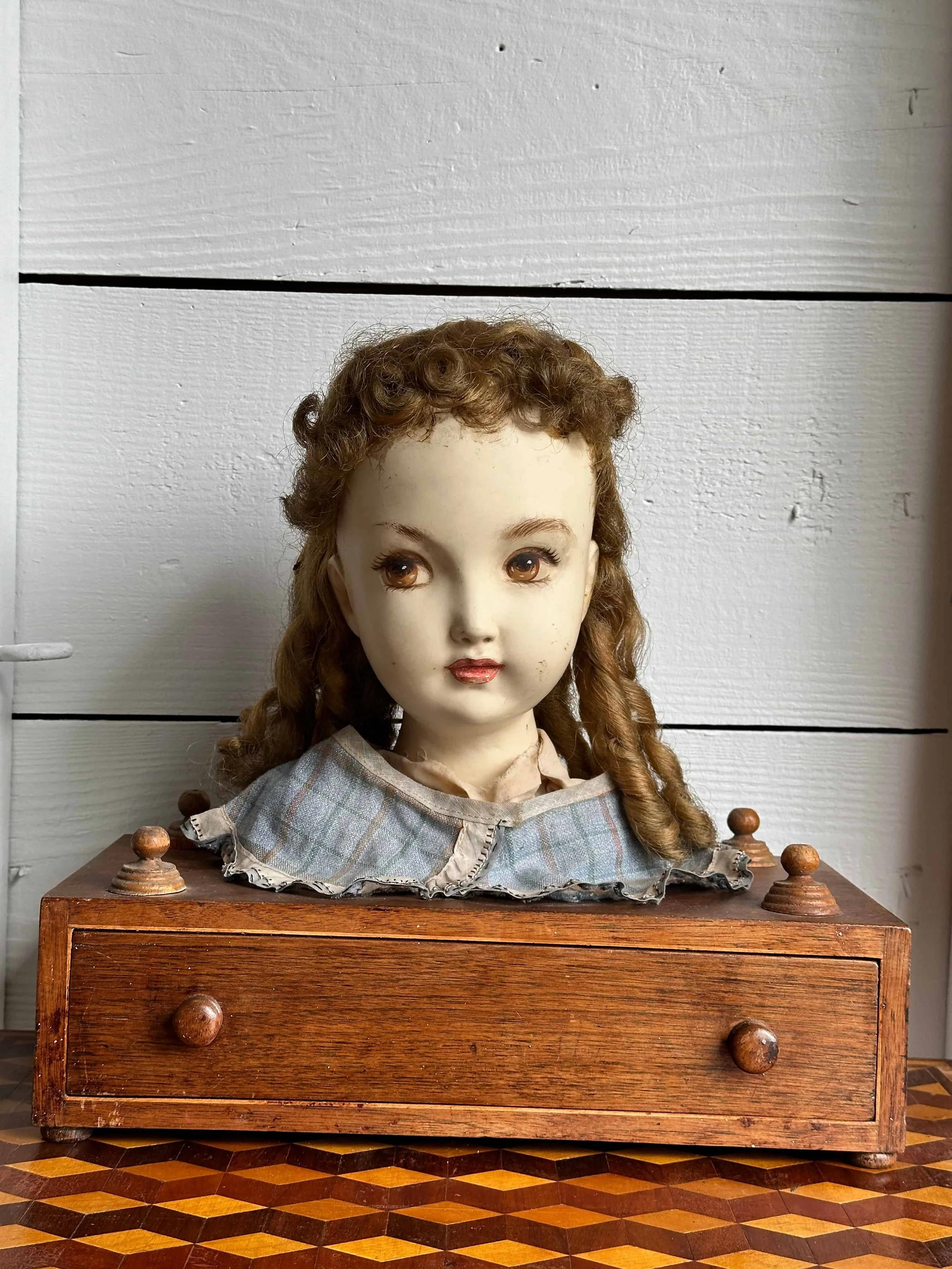
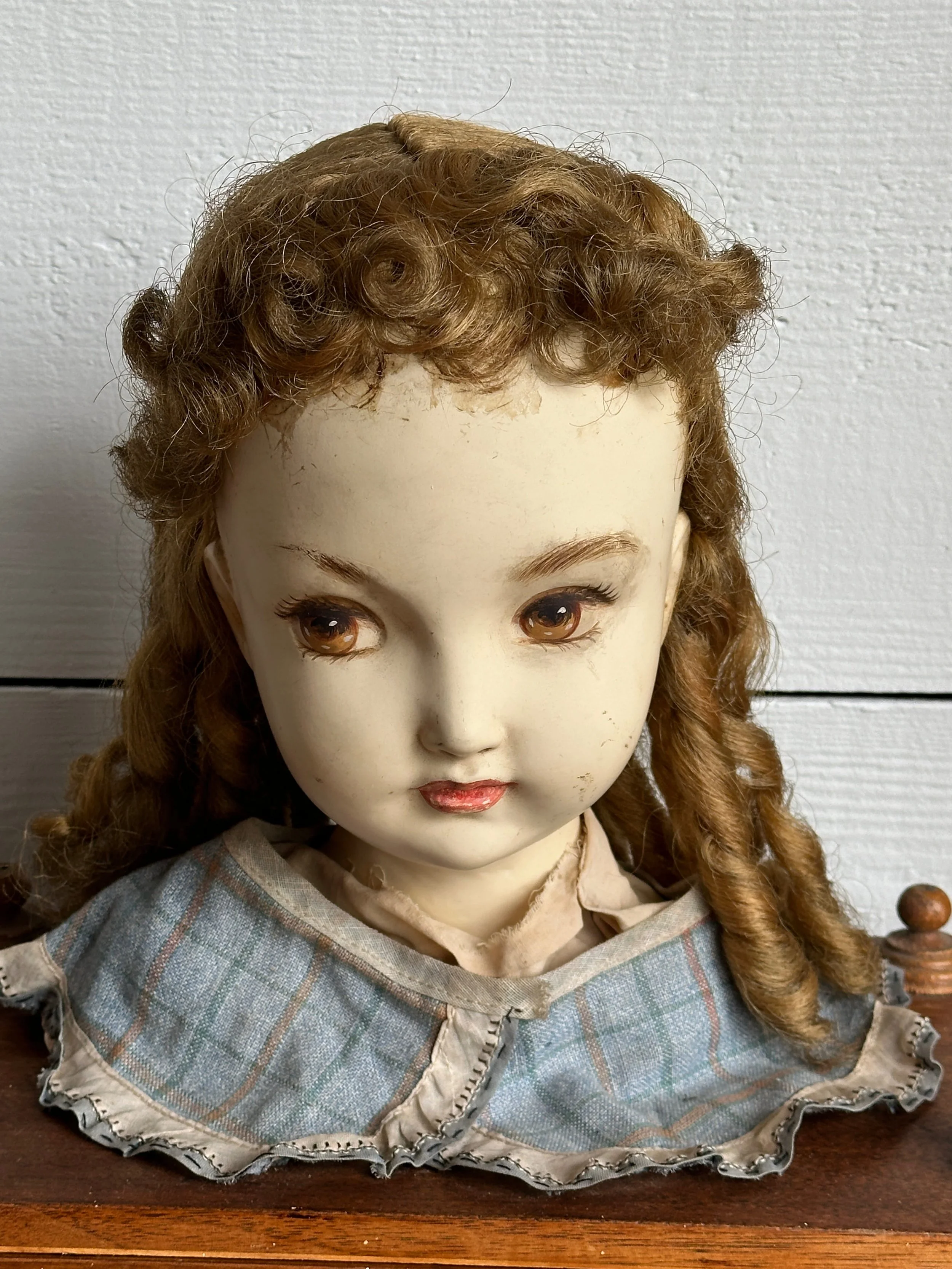
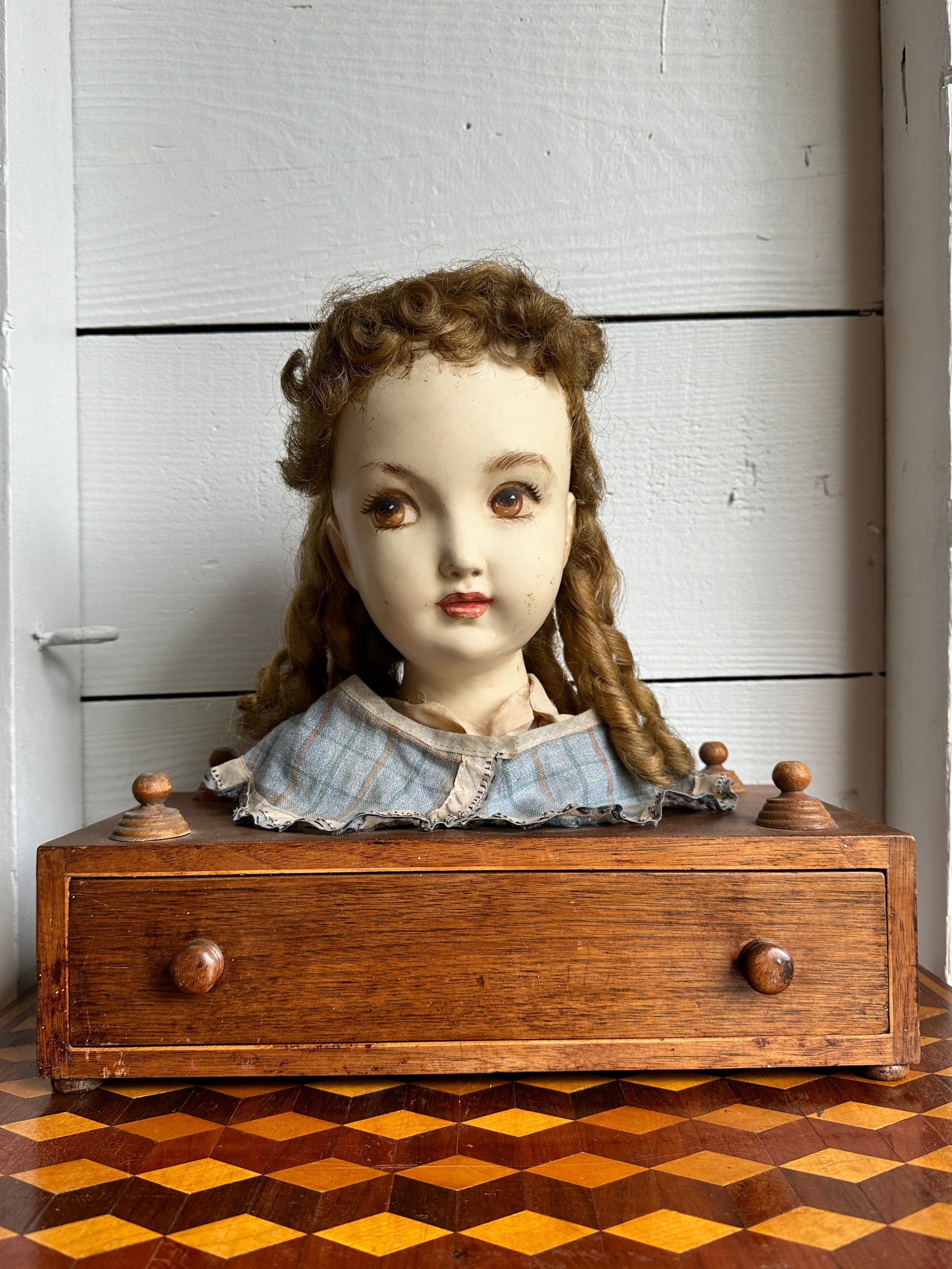
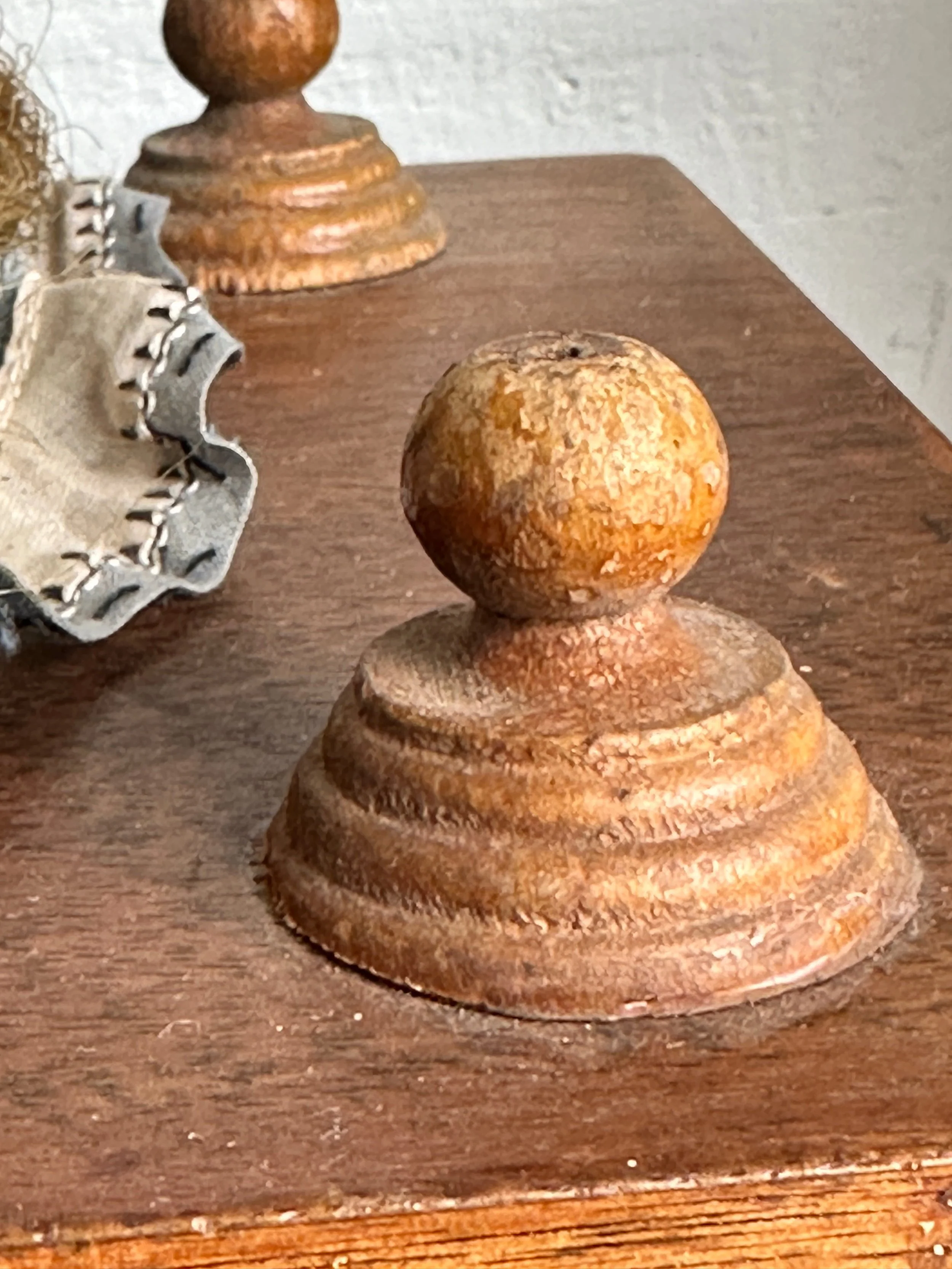
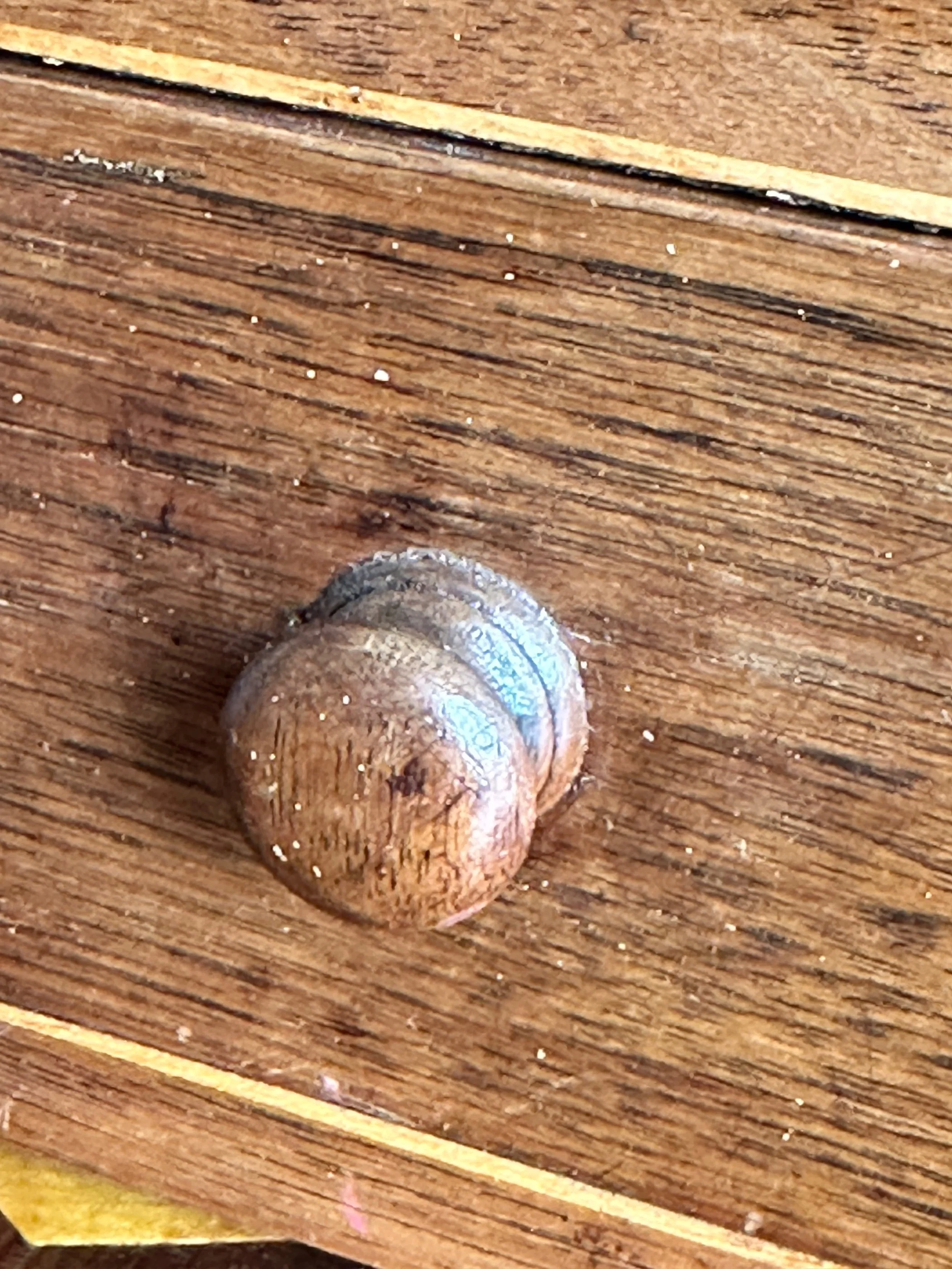
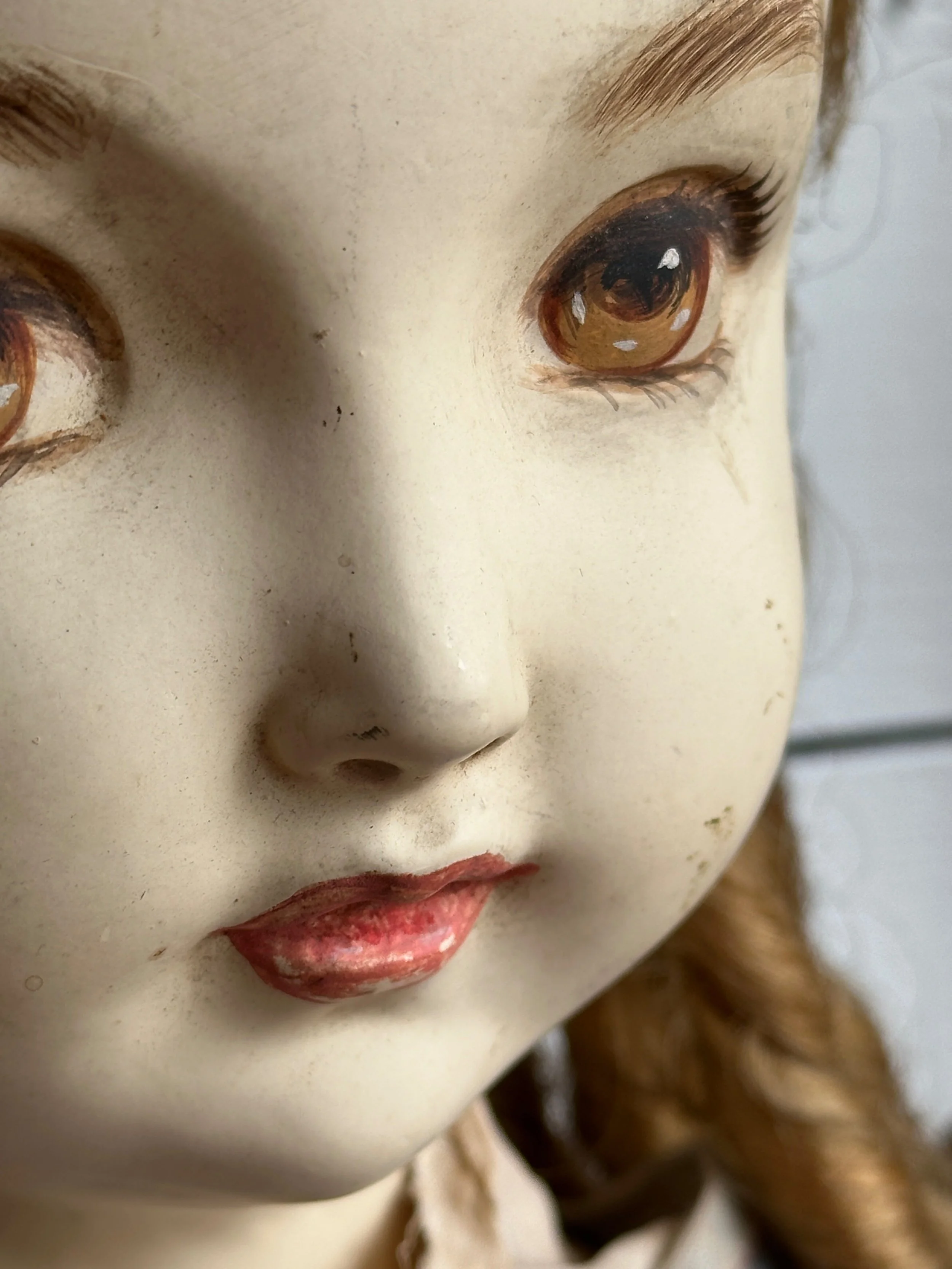
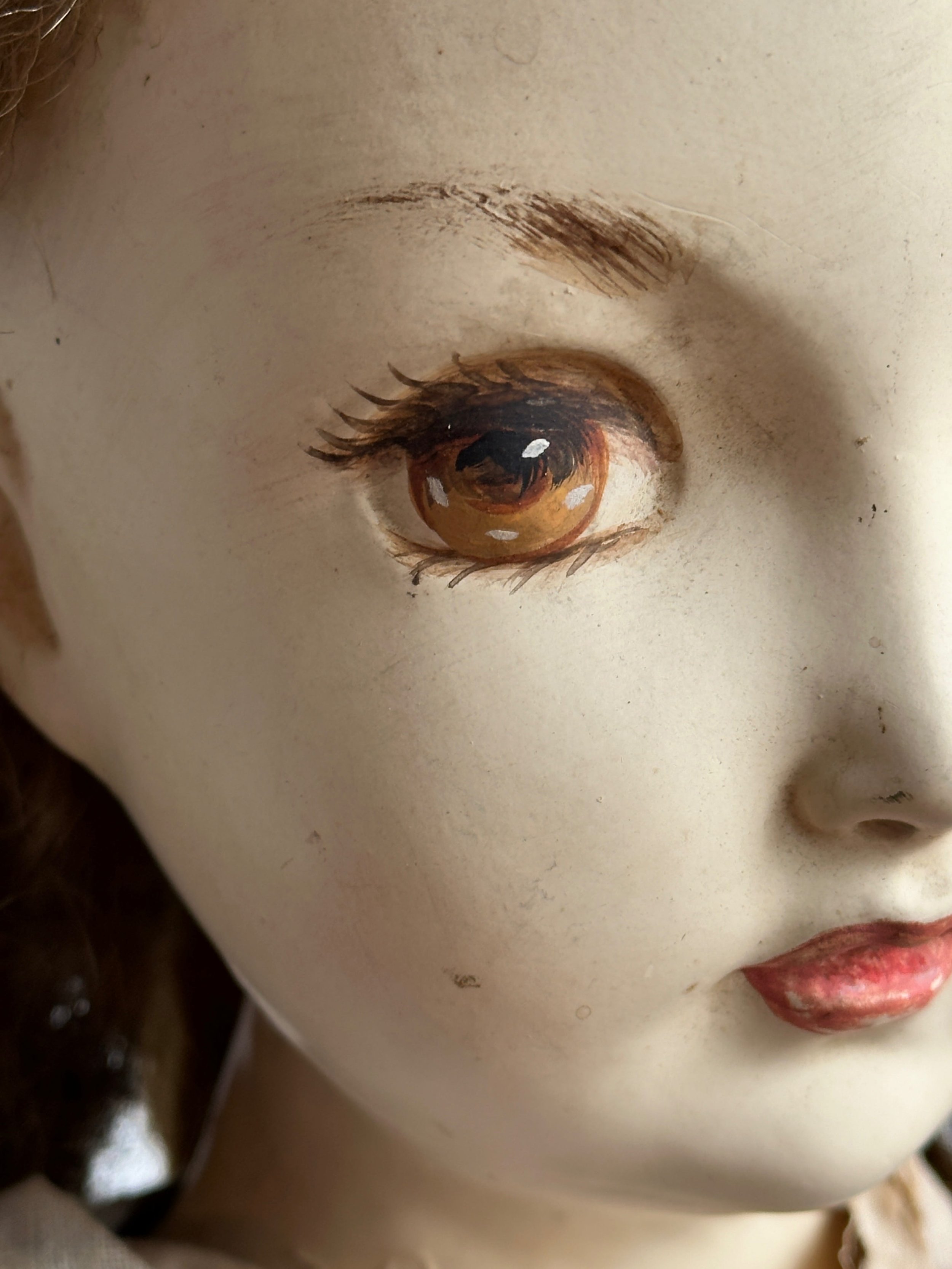
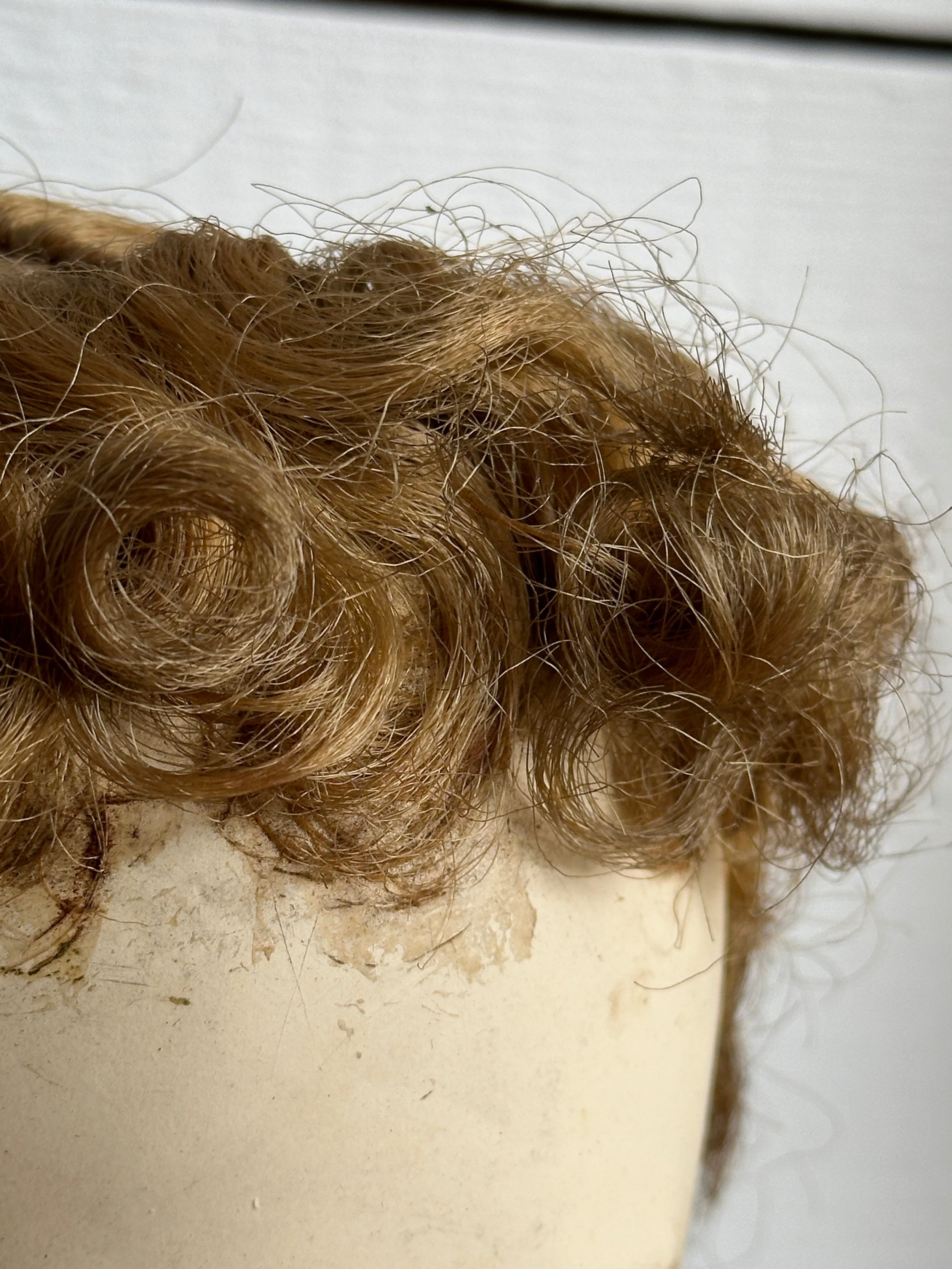
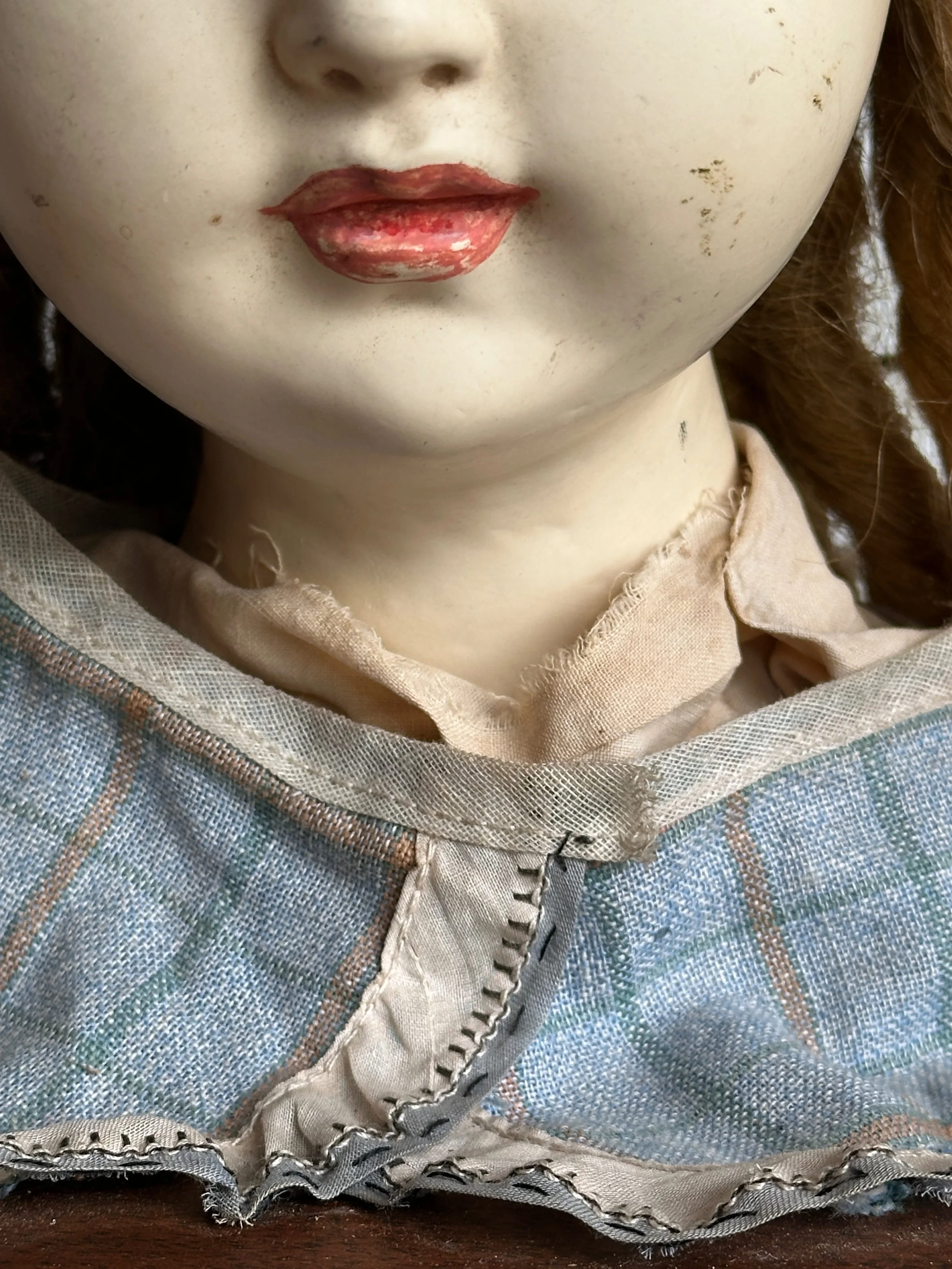
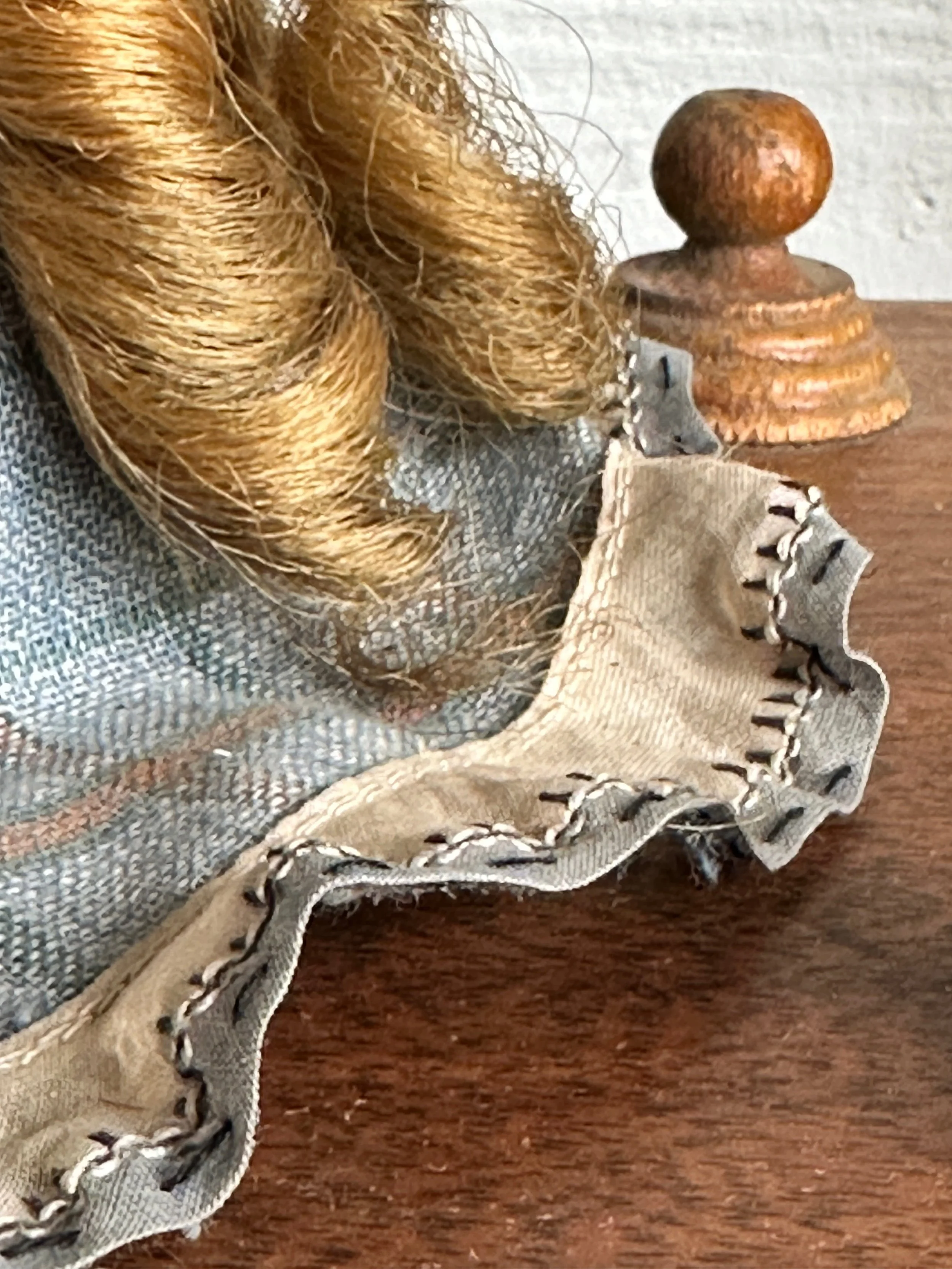
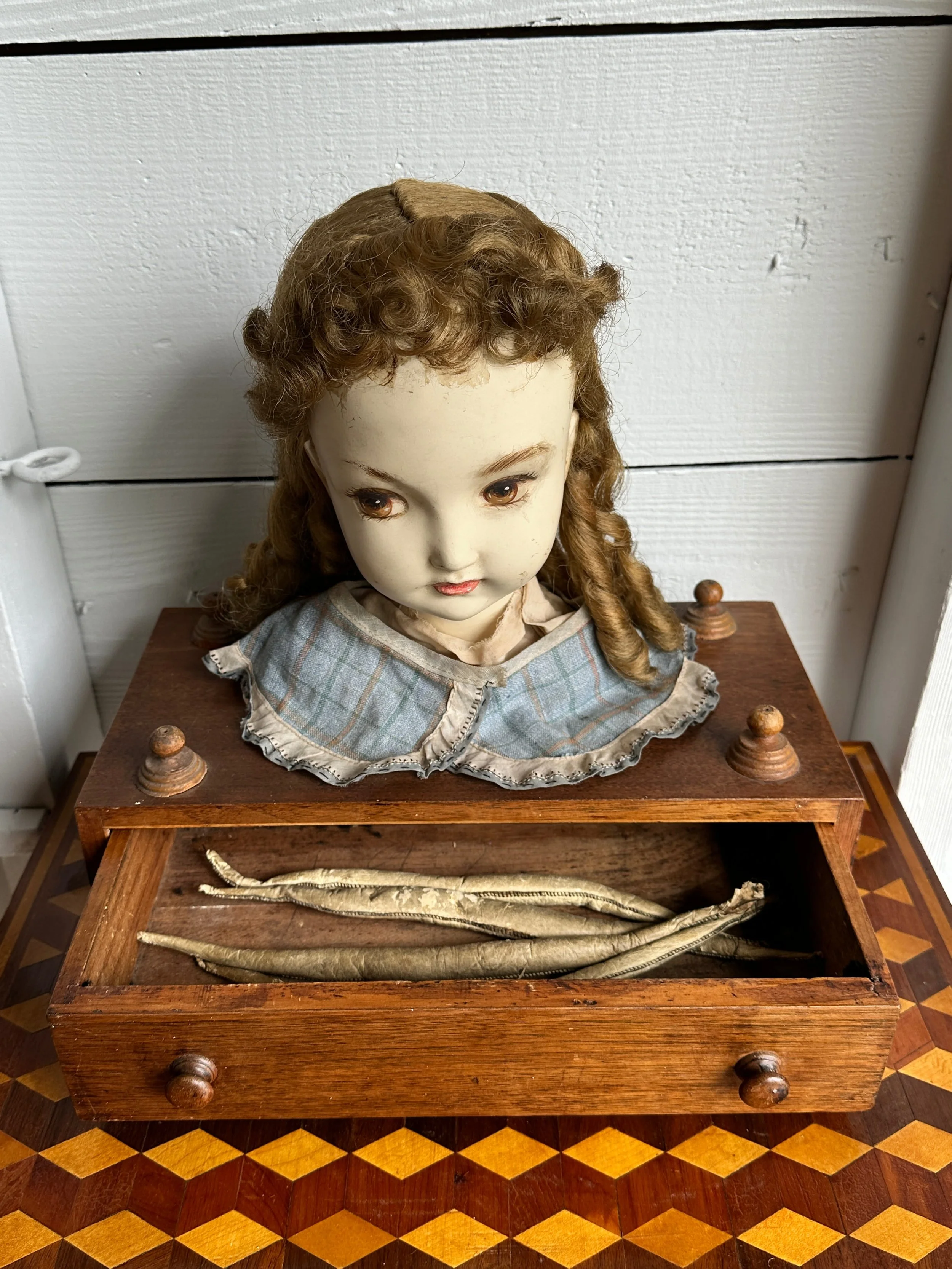
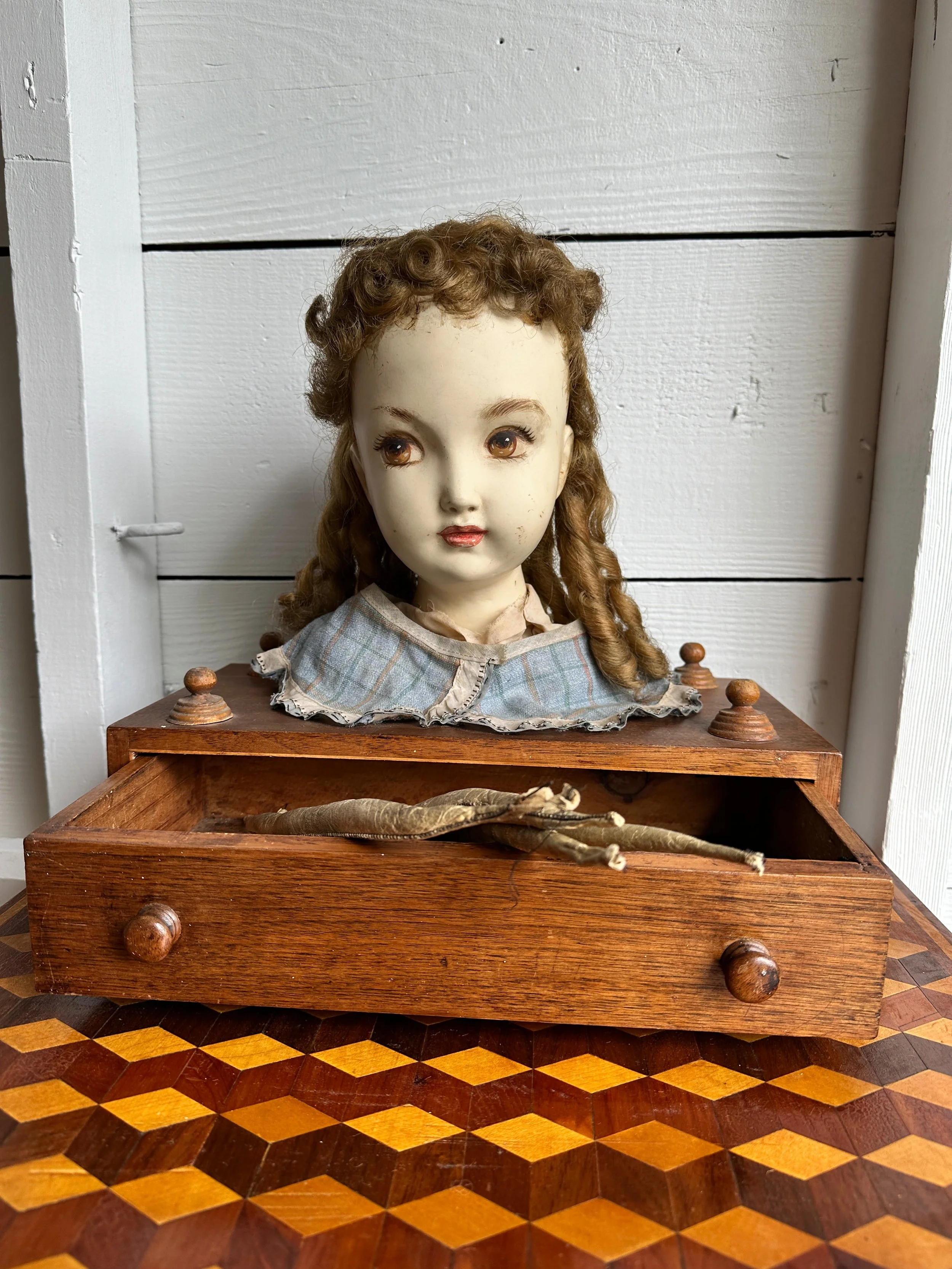
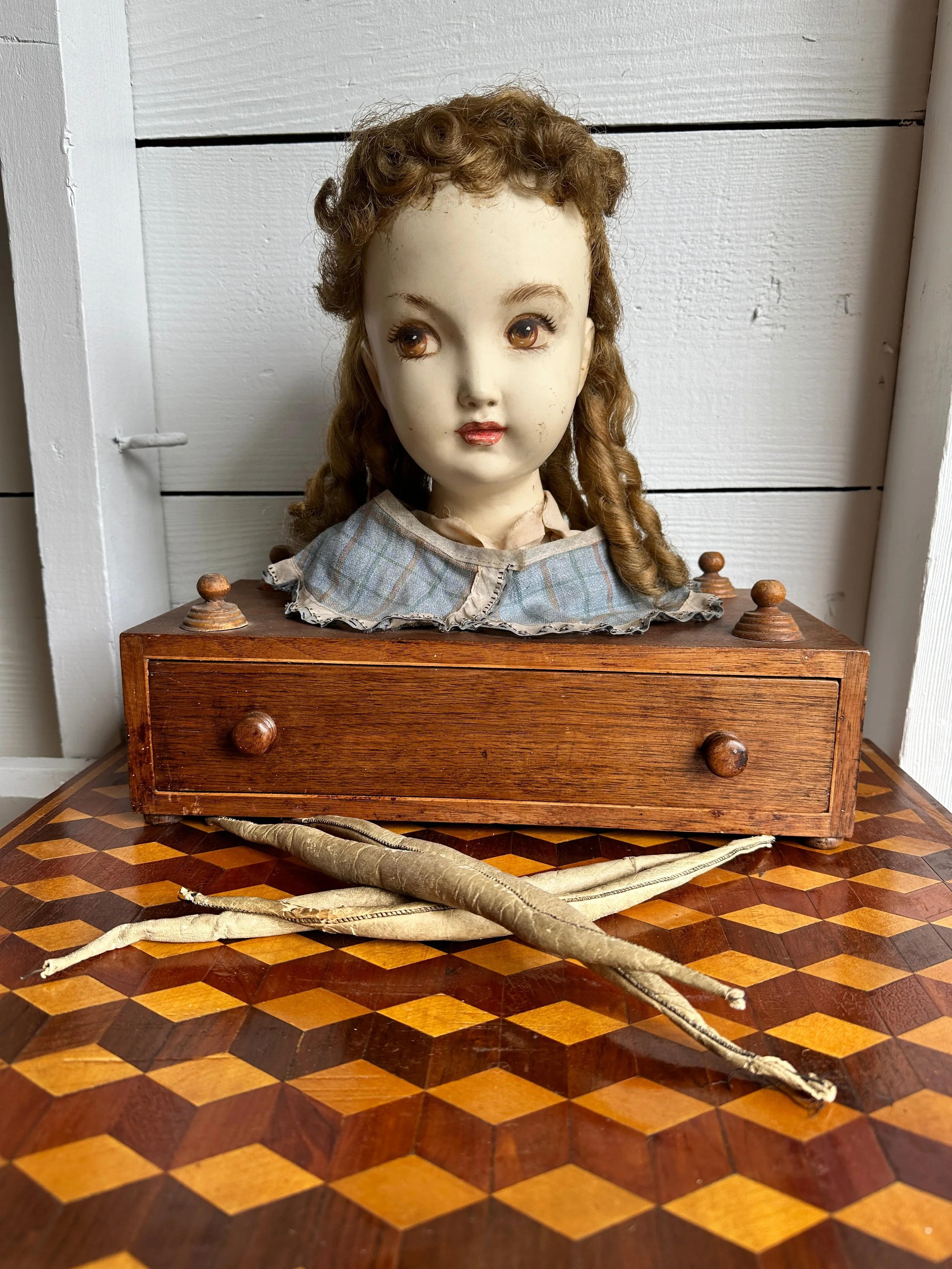
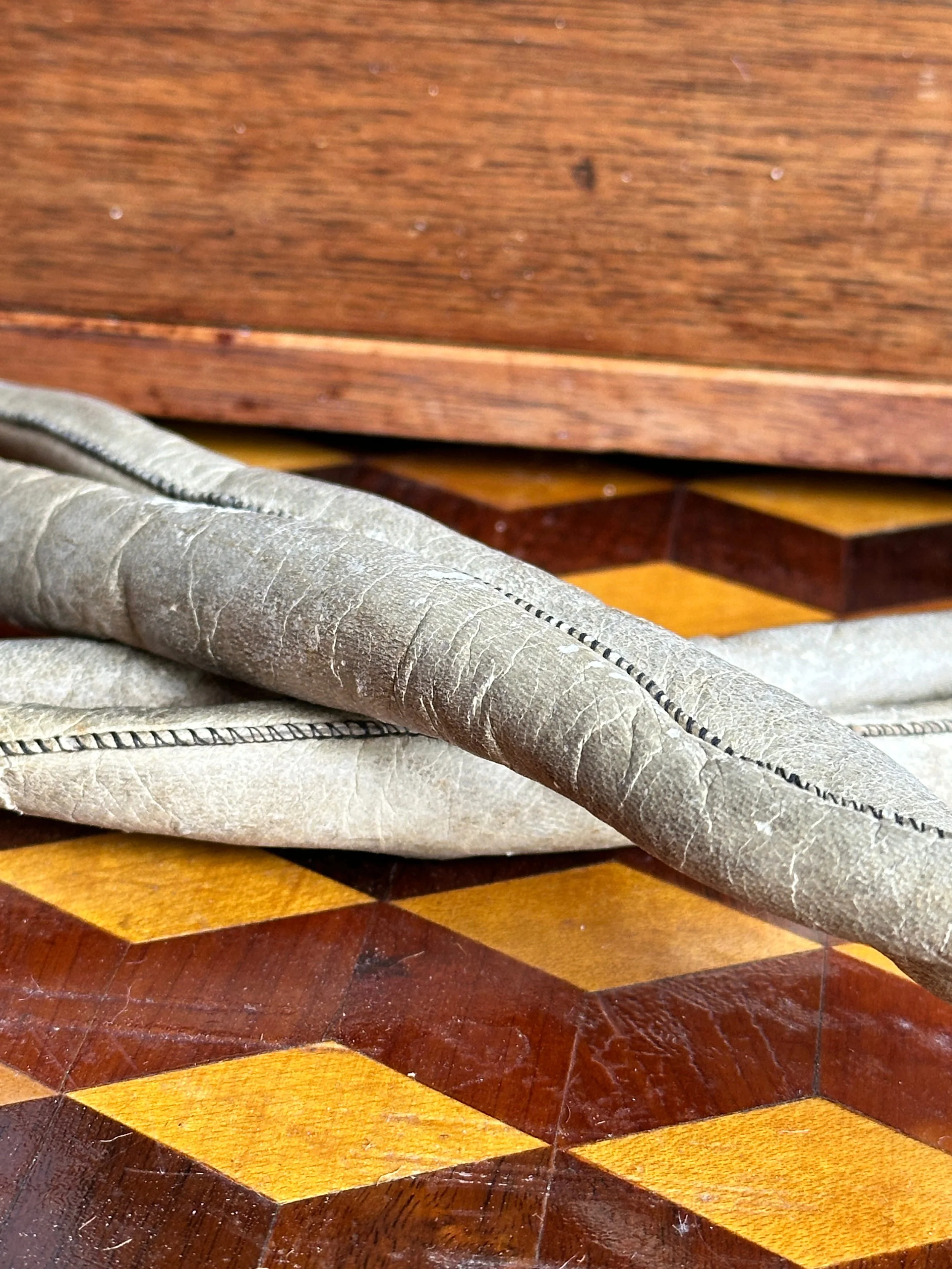
Dating to the late 1800s, this early styling doll head was once a training ground for curls, braids, and bows. Mounted to a wooden cabinet with a single drawer, she comes with her original horsehair and leather rollers tucked neatly inside. The cabinet itself has sweet turned finials on each corner and a warm, worn finish that pairs beautifully with her glassy stare. Her hair is shiny and still full of bounce after more than a century. It’s creepy in all the right ways.
Measures 14" tall, 14" wide, 7.5" deep.
Category History
An 1800s hair styling teaching aid for children is equal parts etiquette lesson and hands-on training tool. In a time when personal grooming was tied closely to social expectation, young girls were often taught early how to care for hair—both their own and others’. These teaching aids, sometimes in the form of small mannequins, partial heads, or even mounted hairpieces, gave them something to practice on before working with real clients or family members.
Human hair was commonly used, carefully attached to cloth, wax, or wooden forms. The goal wasn’t play, but repetition—learning how to part, braid, coil, and pin hair neatly and efficiently. Styles could be elaborate, and precision mattered. A well-set arrangement reflected discipline and attention to detail, qualities that carried social weight at the time.
What makes these objects interesting now is how direct they are. No abstraction, no simplification—just real materials shaped for instruction. They often show heavy use: loose strands, reworked sections, evidence of being handled again and again.
They sit somewhere between domestic life and early vocational training. Not quite toy, not quite tool—more like a quiet introduction to skill, patience, and presentation, all centered around something as everyday, and as telling, as hair, shaping habits, expectations, and confidence from a young age.
Dating to the late 1800s, this early styling doll head was once a training ground for curls, braids, and bows. Mounted to a wooden cabinet with a single drawer, she comes with her original horsehair and leather rollers tucked neatly inside. The cabinet itself has sweet turned finials on each corner and a warm, worn finish that pairs beautifully with her glassy stare. Her hair is shiny and still full of bounce after more than a century. It’s creepy in all the right ways.
Measures 14" tall, 14" wide, 7.5" deep.
Category History
An 1800s hair styling teaching aid for children is equal parts etiquette lesson and hands-on training tool. In a time when personal grooming was tied closely to social expectation, young girls were often taught early how to care for hair—both their own and others’. These teaching aids, sometimes in the form of small mannequins, partial heads, or even mounted hairpieces, gave them something to practice on before working with real clients or family members.
Human hair was commonly used, carefully attached to cloth, wax, or wooden forms. The goal wasn’t play, but repetition—learning how to part, braid, coil, and pin hair neatly and efficiently. Styles could be elaborate, and precision mattered. A well-set arrangement reflected discipline and attention to detail, qualities that carried social weight at the time.
What makes these objects interesting now is how direct they are. No abstraction, no simplification—just real materials shaped for instruction. They often show heavy use: loose strands, reworked sections, evidence of being handled again and again.
They sit somewhere between domestic life and early vocational training. Not quite toy, not quite tool—more like a quiet introduction to skill, patience, and presentation, all centered around something as everyday, and as telling, as hair, shaping habits, expectations, and confidence from a young age.