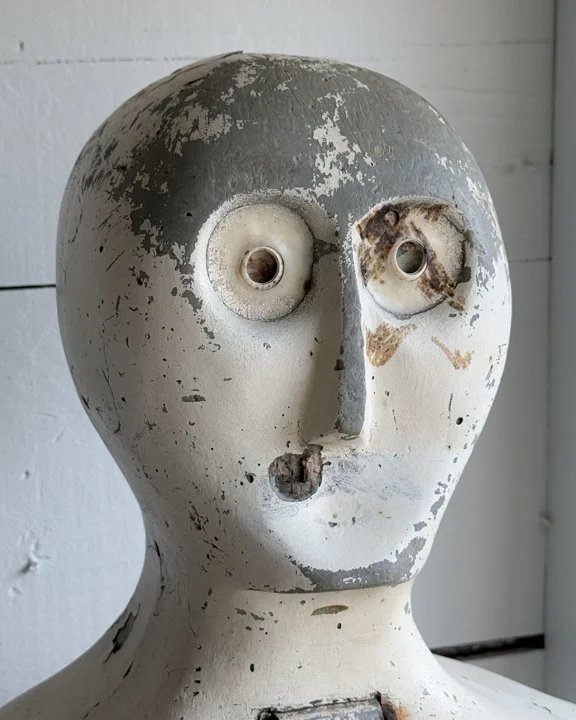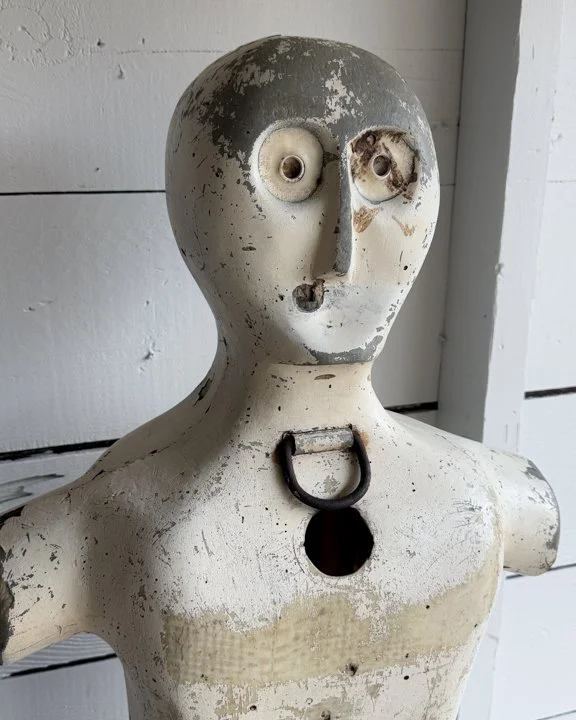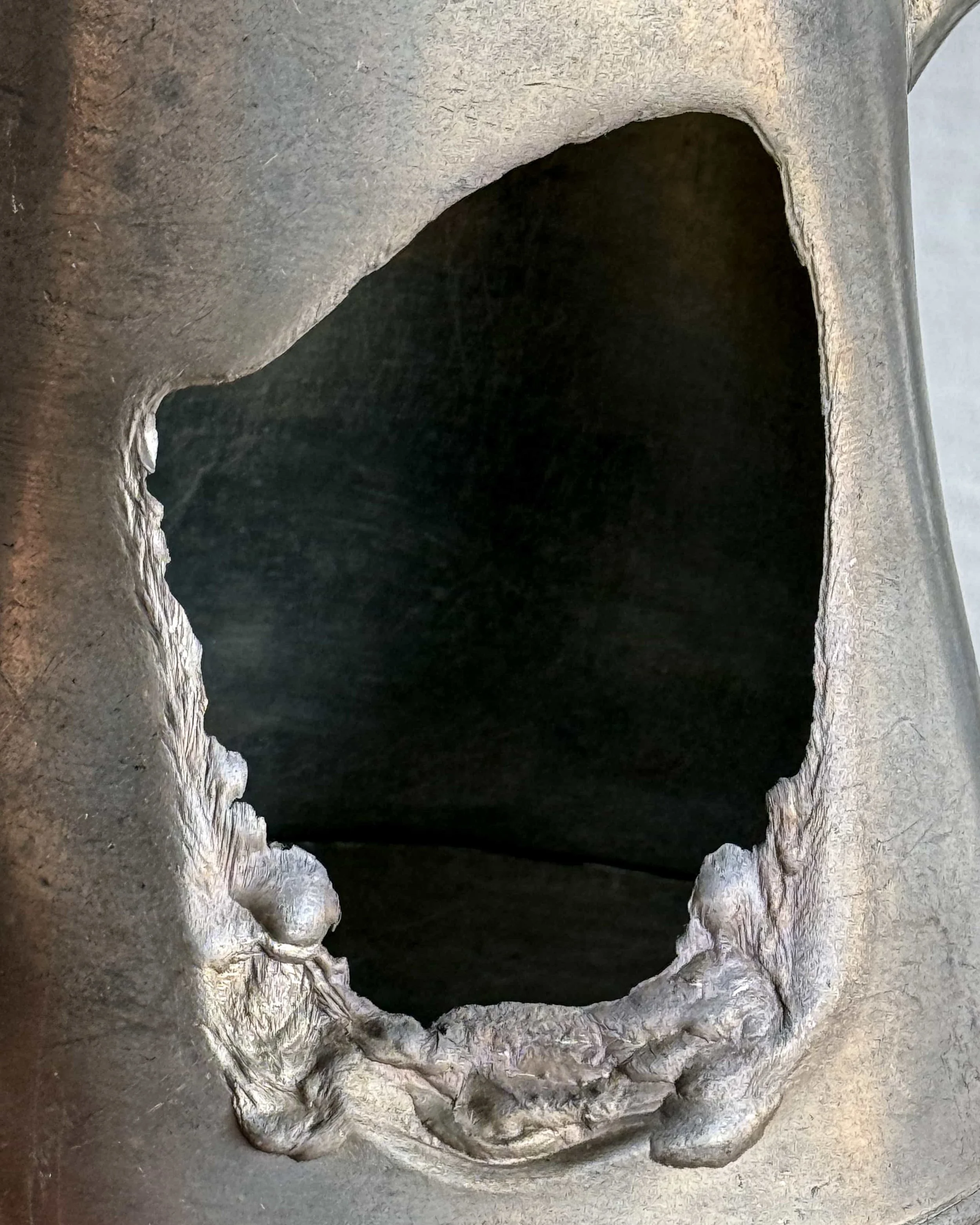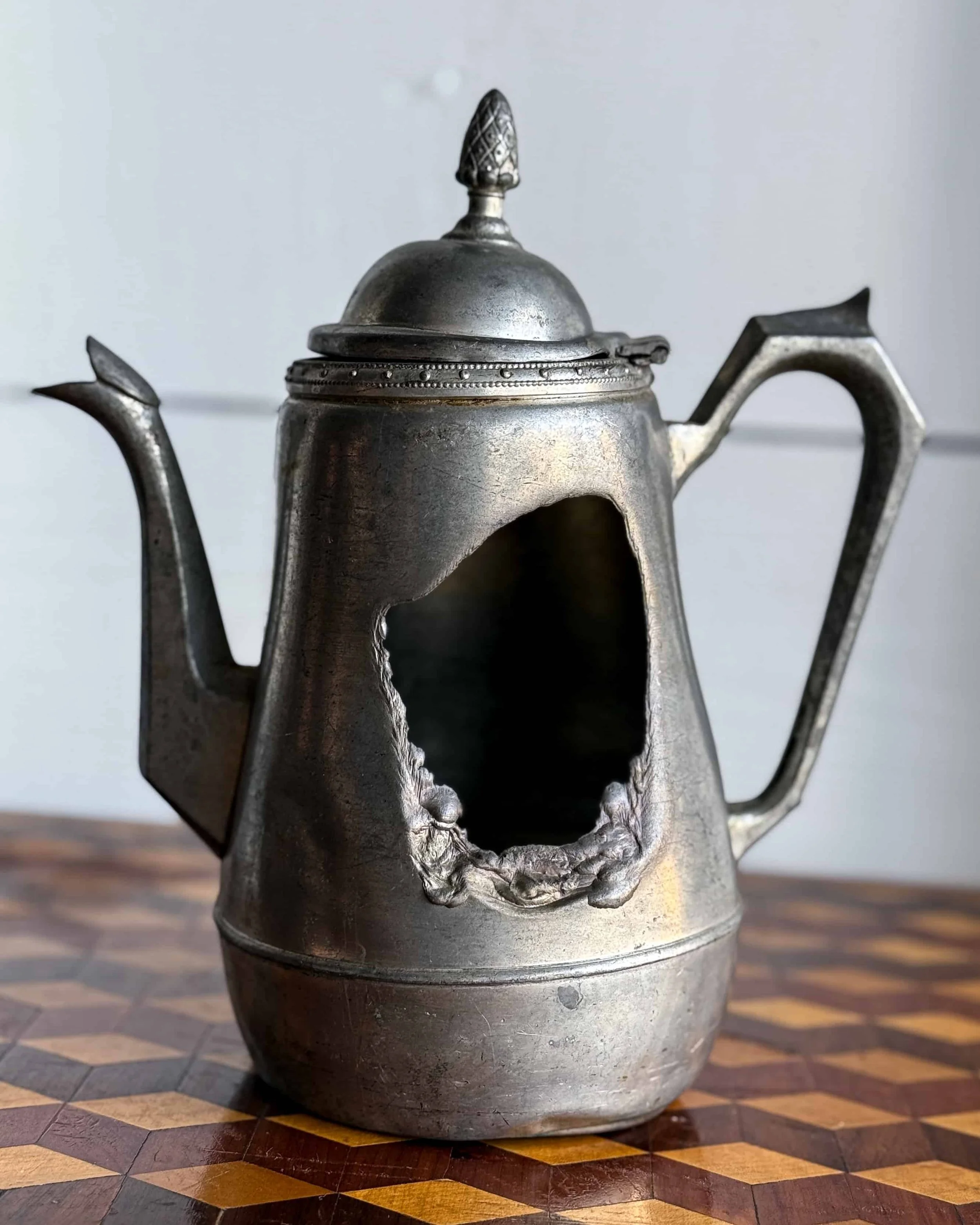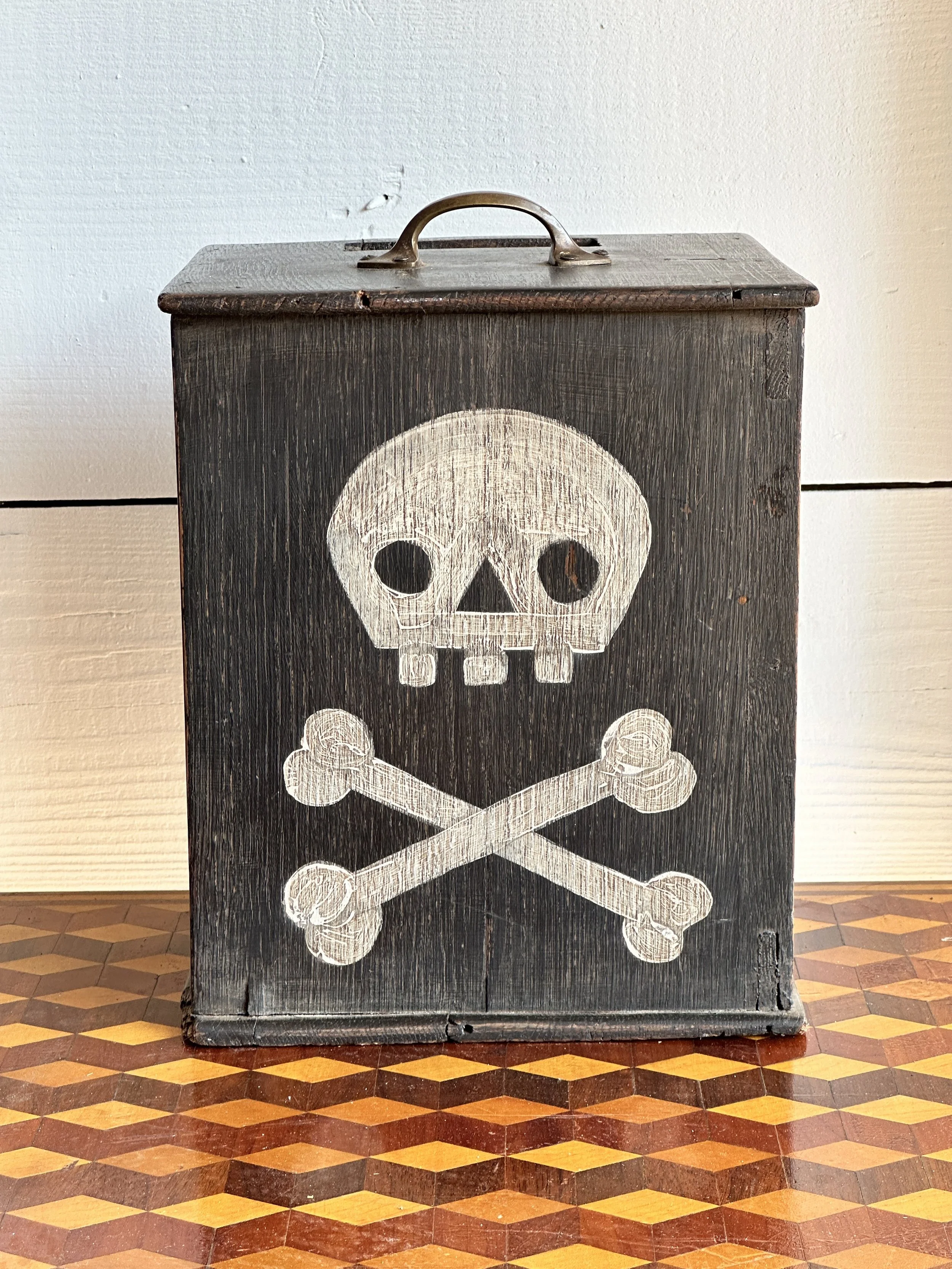
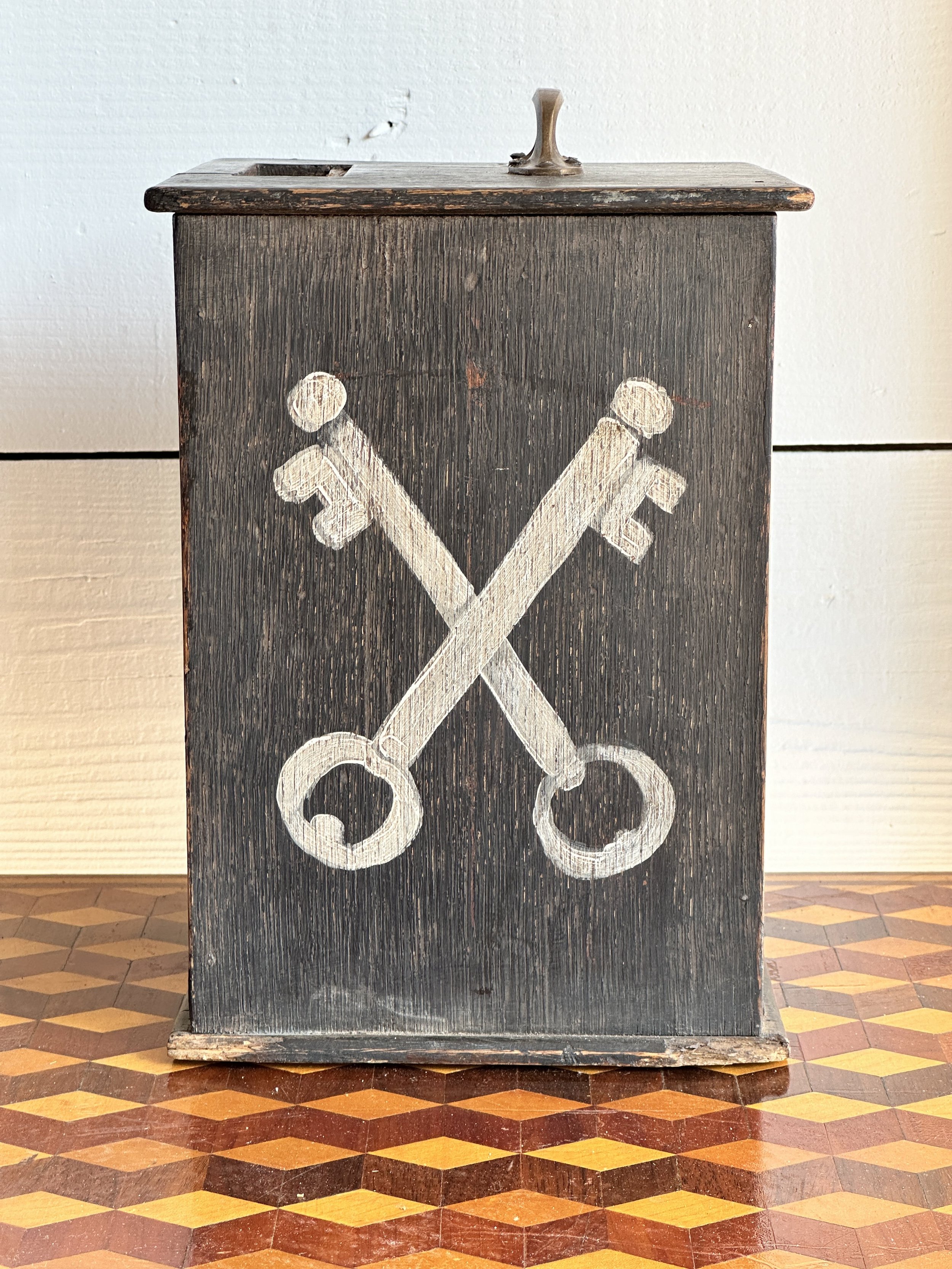
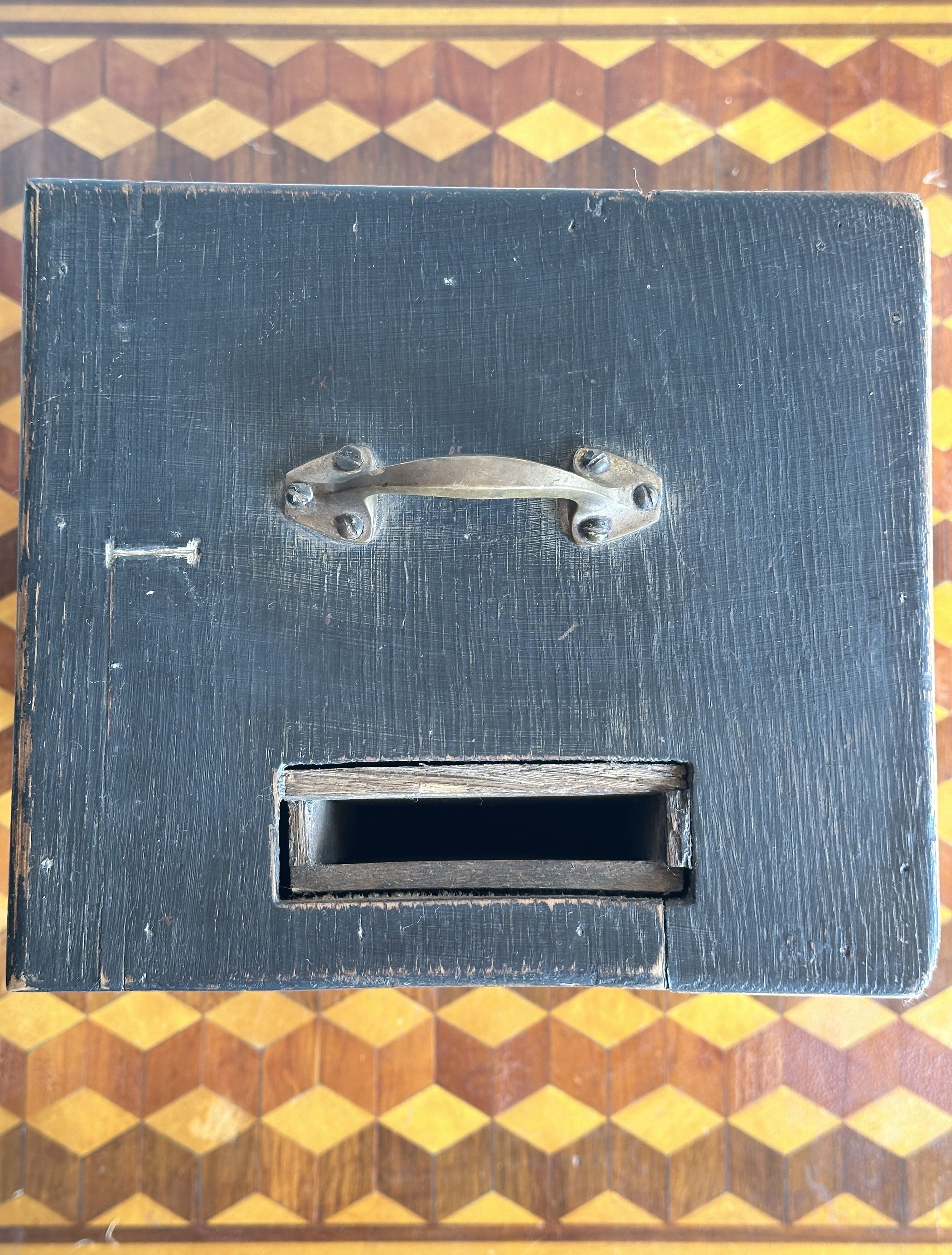
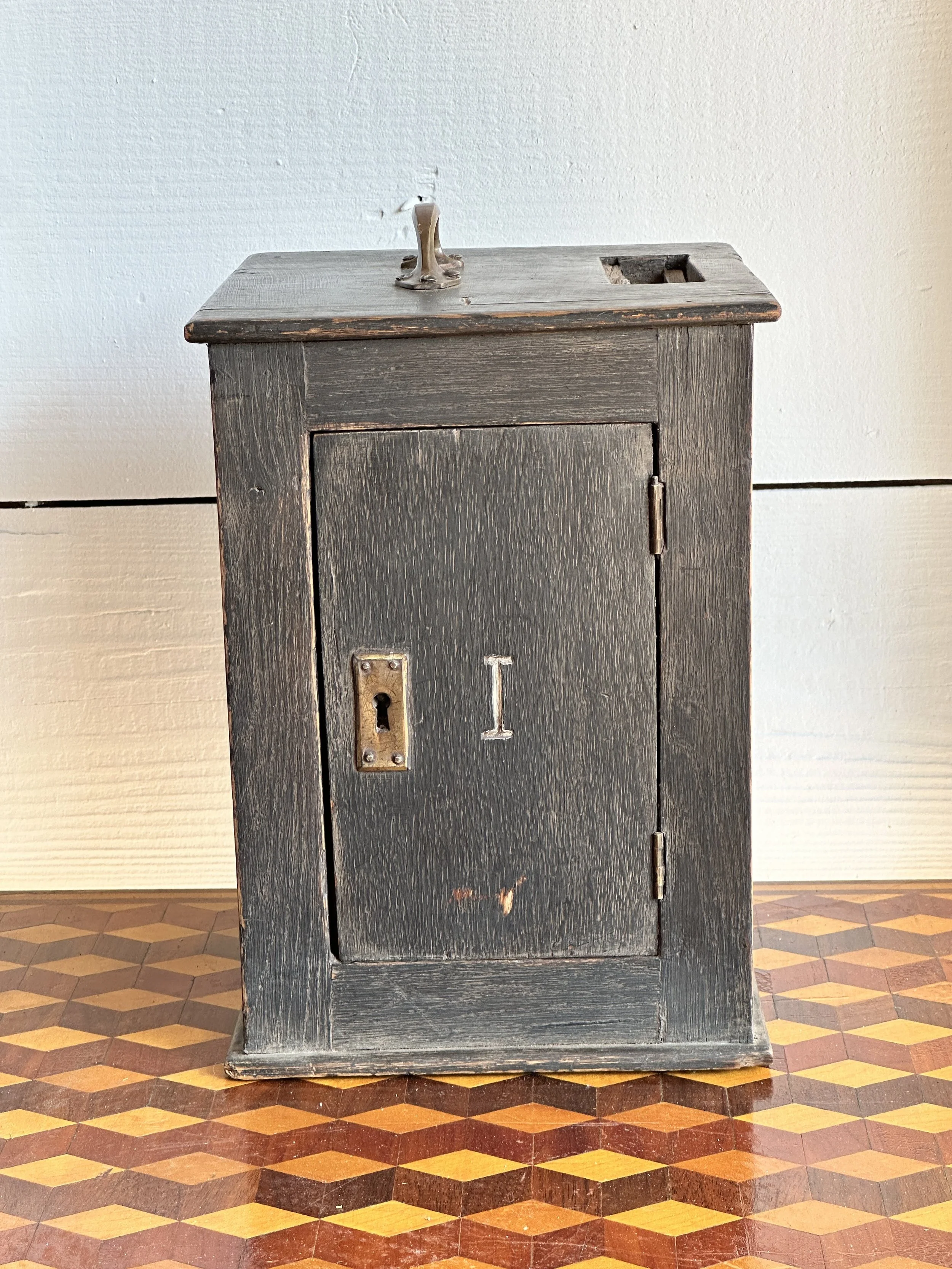
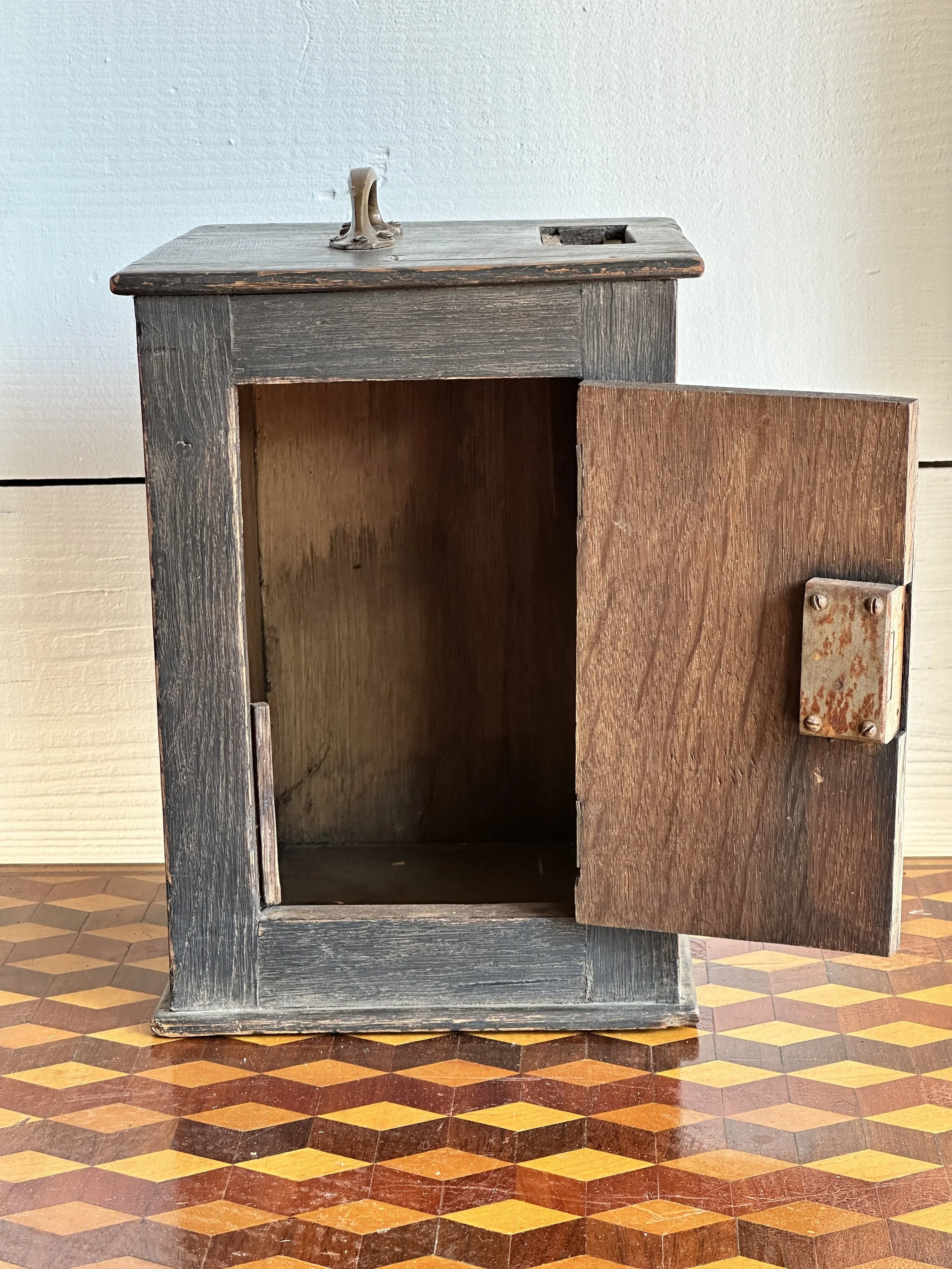
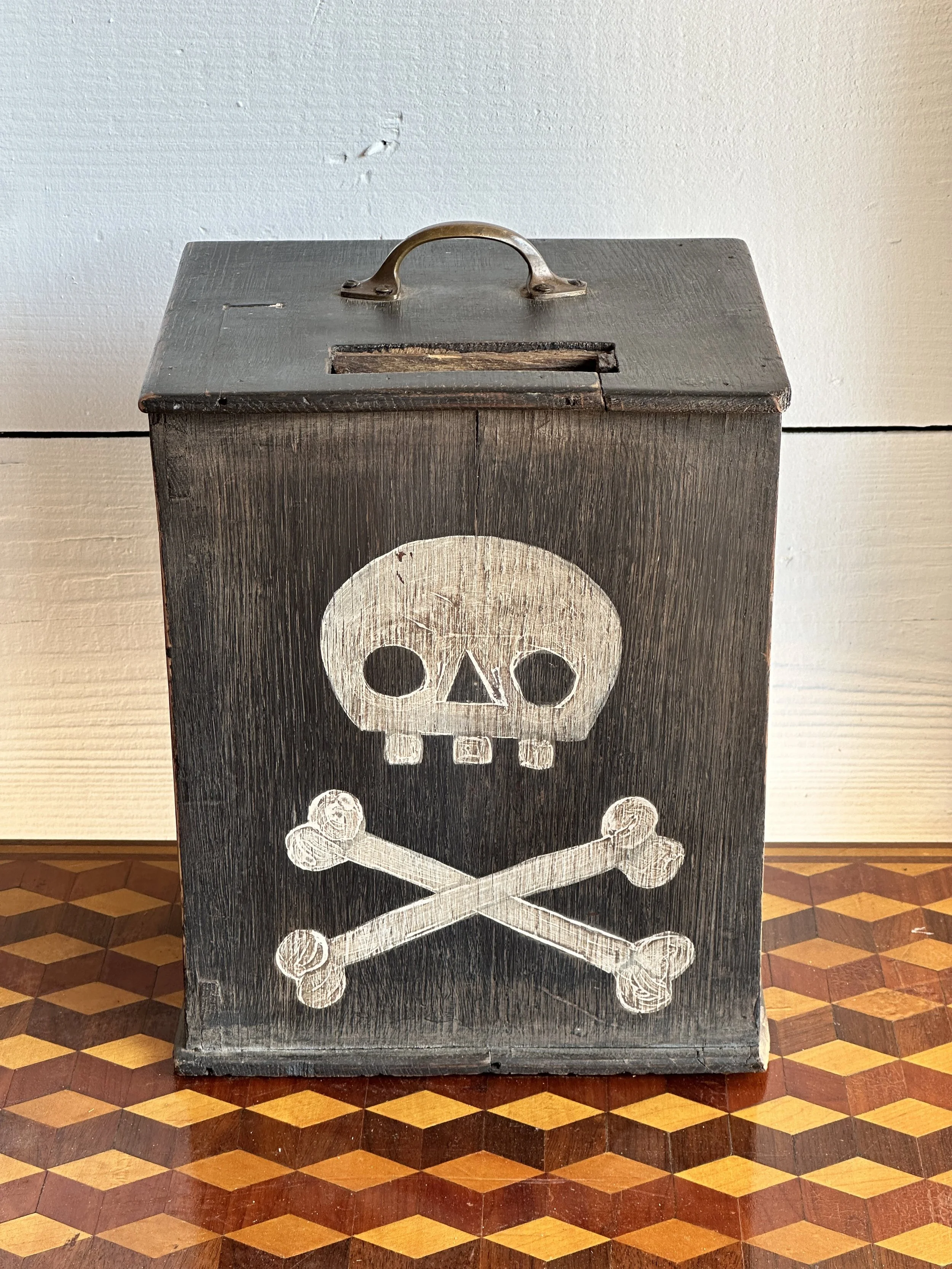
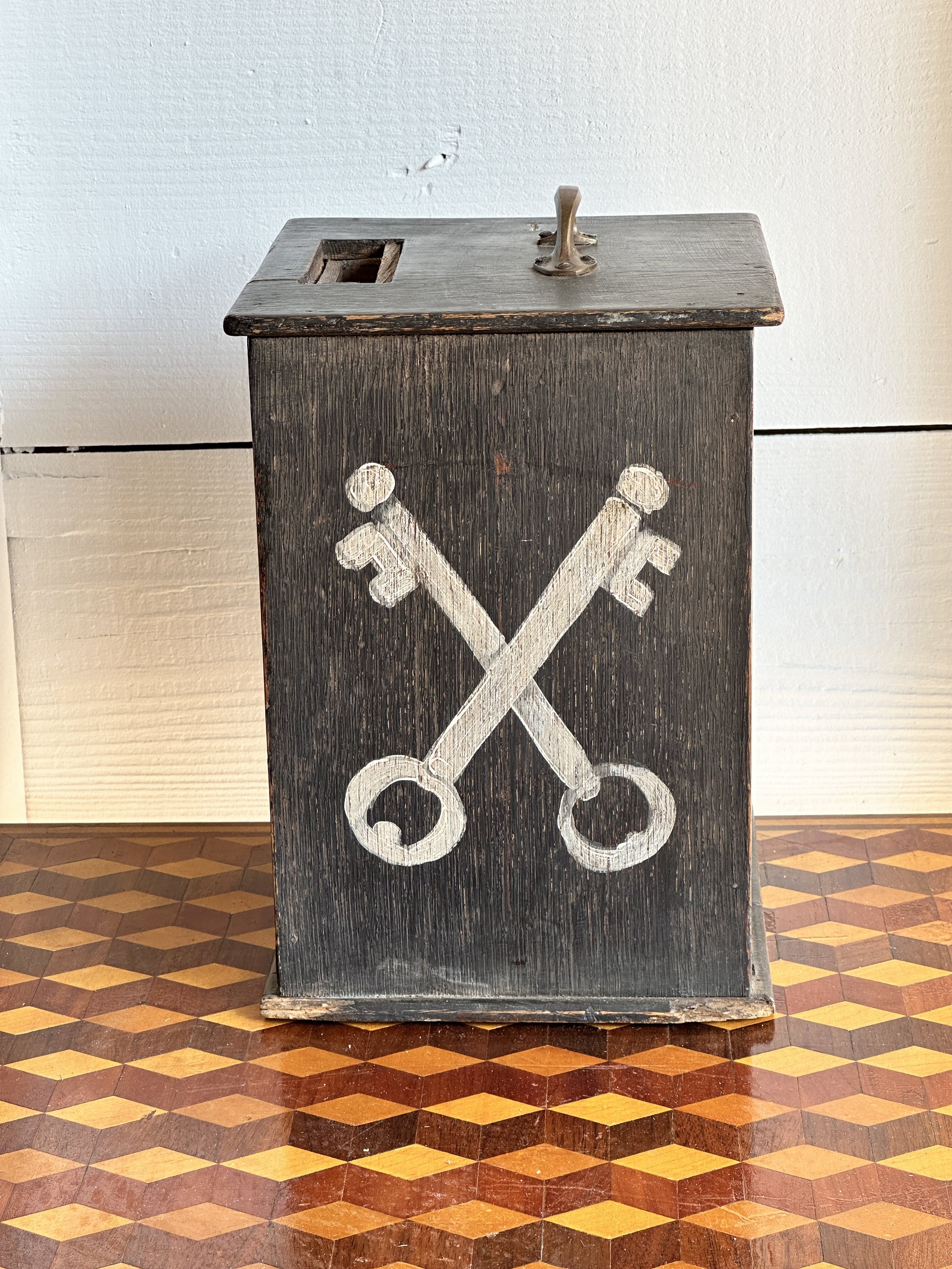
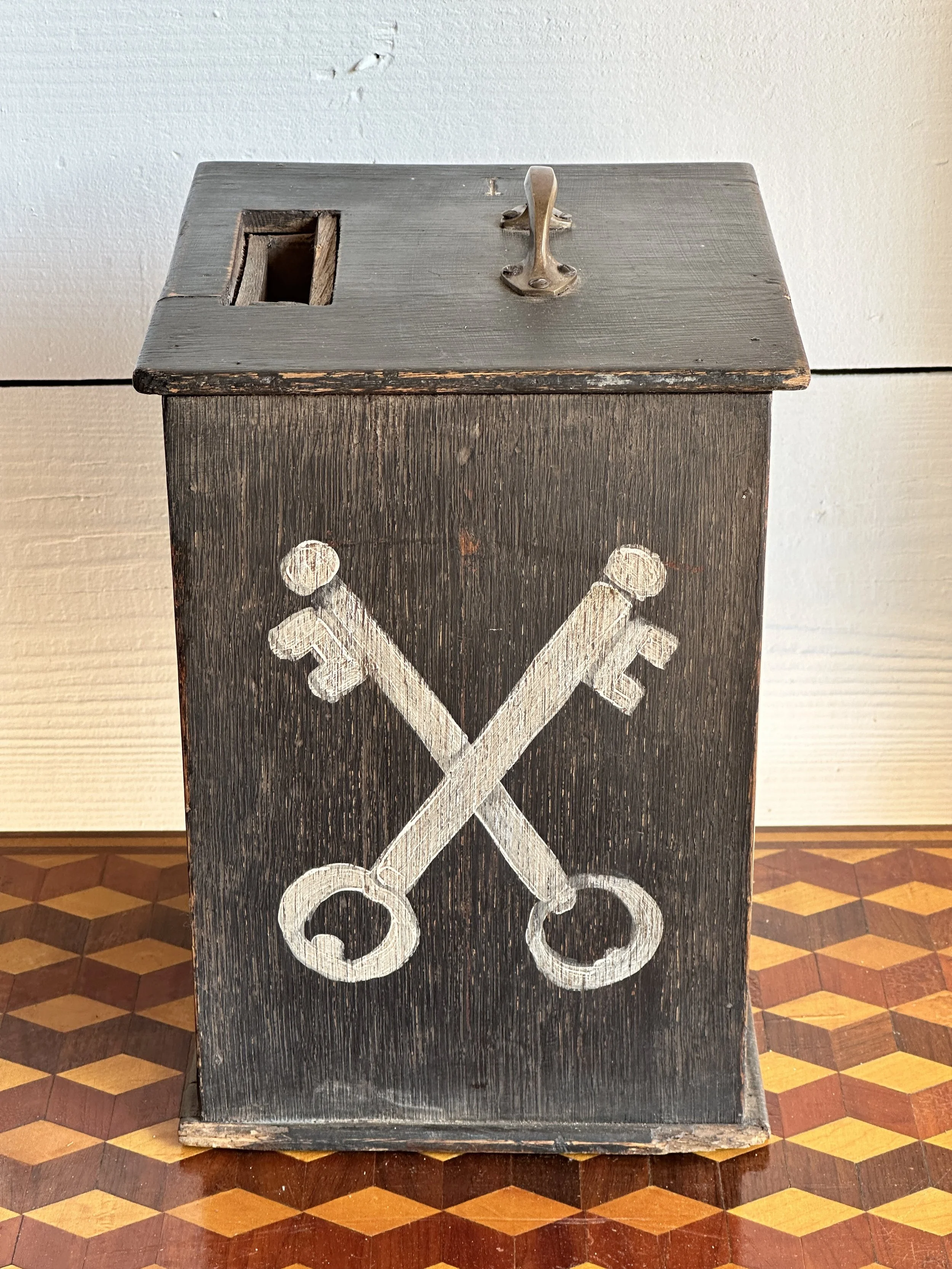
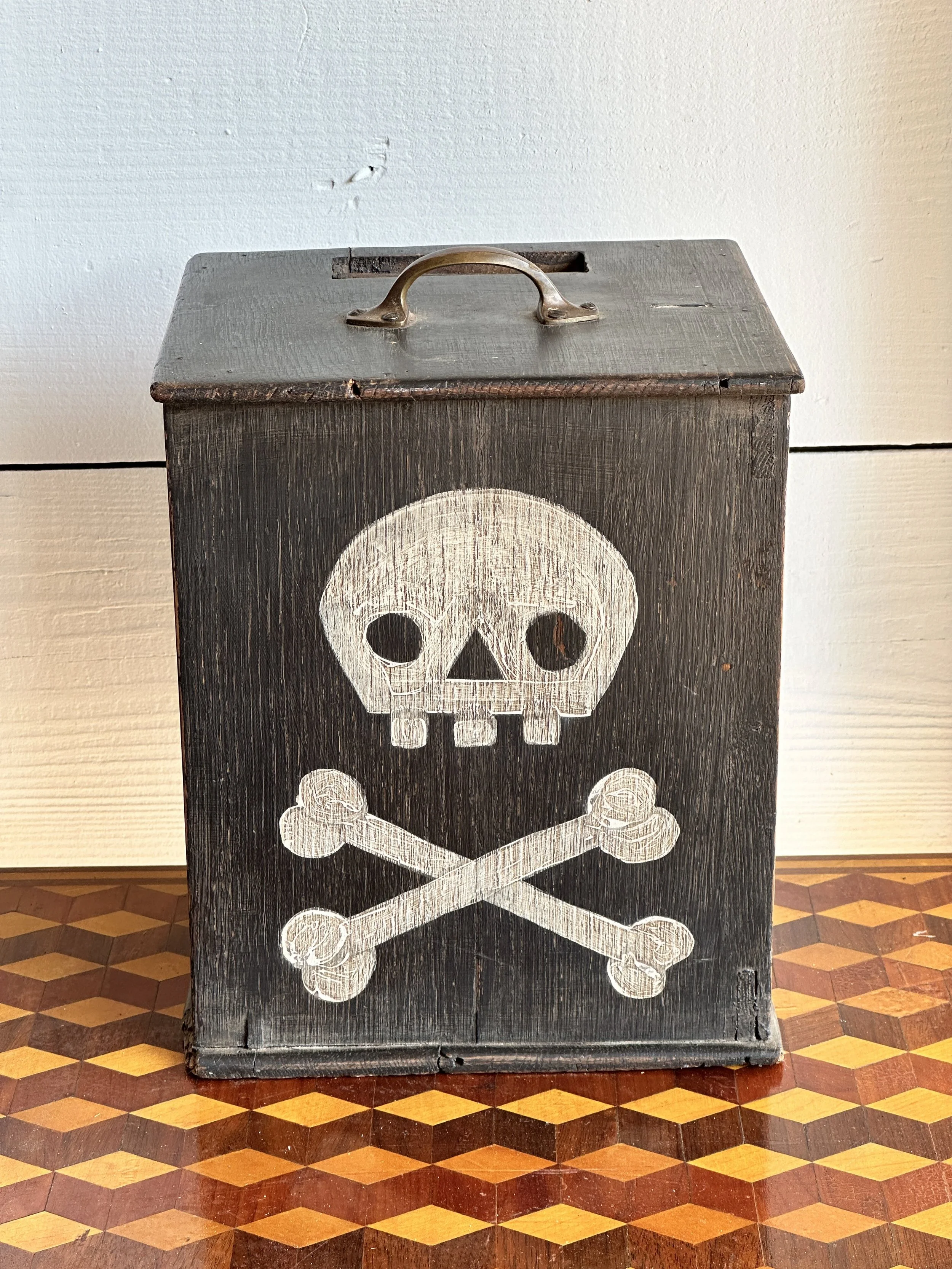
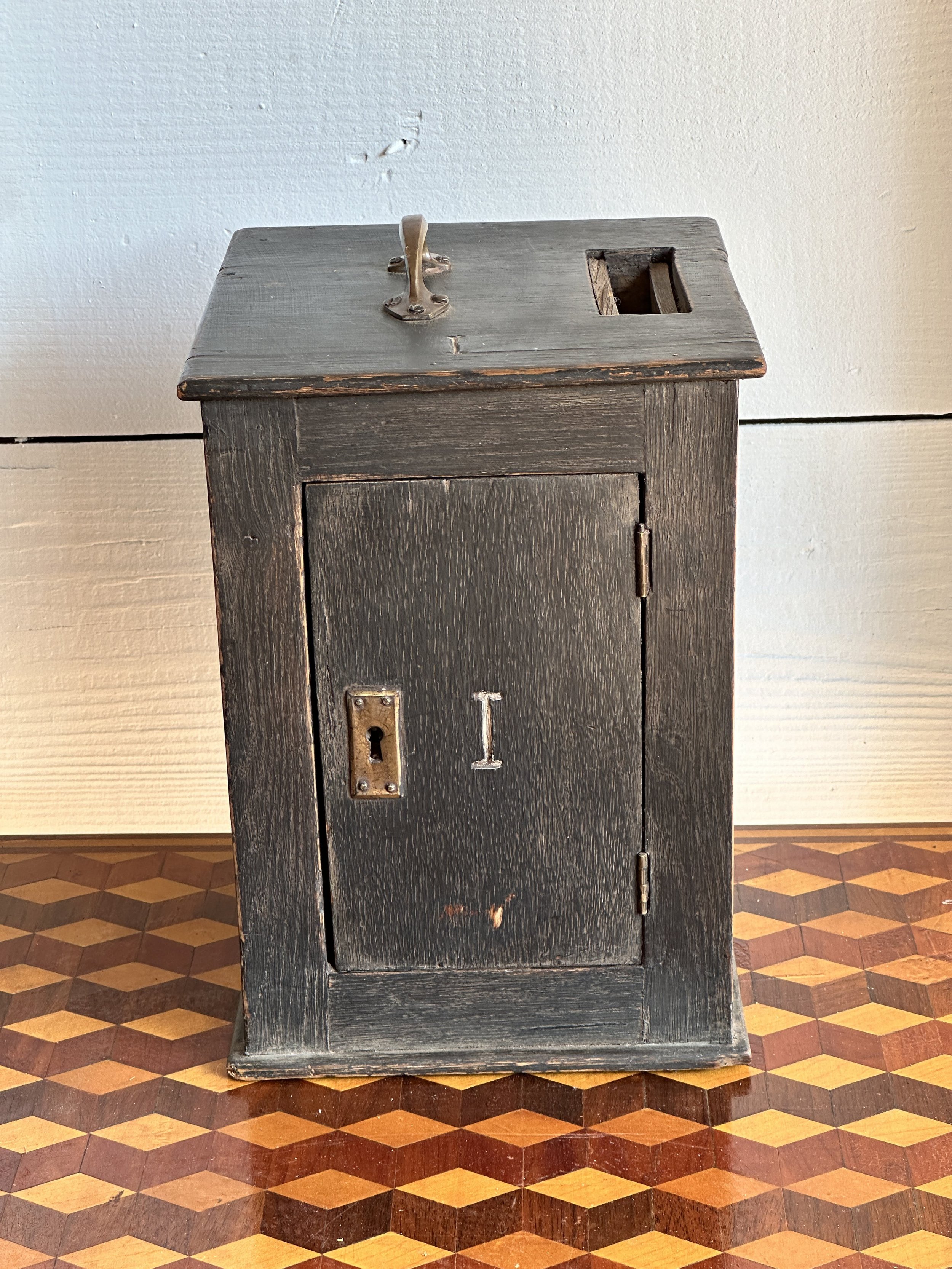
This early 20th-century church grave donation box once stood watch at graves, reminding passersby to make a donation for those less fortunate. Painted boldly with a skull and crossbones, it wears the classic Memento Mori symbol—an unmistakable reminder that death spares no one. On the reverse, a pair of crossed keys signals something gentler: the promise of entry into heaven for the faithful. Made of wood, with a hand-painted black surface rubbed to a soft, timeworn finish, the box still carries its original hardware and a sturdy handle up top. The slot was cut for offerings, and the hinged back door gave access to the collection within.
Measures: W 8.3" x D 7.1" x H 10.2"
Donation Box
A church grave donation poor box is a small object tied to a very specific moment—when remembrance meets charity. Common in the 18th and 19th centuries, these boxes were placed near graves, churchyards, or within parish spaces, inviting visitors to leave a coin in honor of the deceased or in support of the poor.
They were typically made from wood or metal, built to be sturdy and secure. A simple slot at the top, a lock below, sometimes accompanied by painted or carved inscriptions reminding passersby of mortality and generosity. The messaging was direct: remember the dead, help the living.
What makes them compelling is how they connect two ideas—memory and action. Visiting a grave wasn’t just reflective; it came with the option to contribute, turning private thought into a small public gesture.
Over time, these boxes pick up a quiet patina. Worn edges around the slot, softened surfaces from years of handling, the occasional repair.
They’re modest objects, but loaded with intention. Not just containers for coins, but markers of a practice where remembrance carried weight—and where even a small offering had meaning.
This early 20th-century church grave donation box once stood watch at graves, reminding passersby to make a donation for those less fortunate. Painted boldly with a skull and crossbones, it wears the classic Memento Mori symbol—an unmistakable reminder that death spares no one. On the reverse, a pair of crossed keys signals something gentler: the promise of entry into heaven for the faithful. Made of wood, with a hand-painted black surface rubbed to a soft, timeworn finish, the box still carries its original hardware and a sturdy handle up top. The slot was cut for offerings, and the hinged back door gave access to the collection within.
Measures: W 8.3" x D 7.1" x H 10.2"
Donation Box
A church grave donation poor box is a small object tied to a very specific moment—when remembrance meets charity. Common in the 18th and 19th centuries, these boxes were placed near graves, churchyards, or within parish spaces, inviting visitors to leave a coin in honor of the deceased or in support of the poor.
They were typically made from wood or metal, built to be sturdy and secure. A simple slot at the top, a lock below, sometimes accompanied by painted or carved inscriptions reminding passersby of mortality and generosity. The messaging was direct: remember the dead, help the living.
What makes them compelling is how they connect two ideas—memory and action. Visiting a grave wasn’t just reflective; it came with the option to contribute, turning private thought into a small public gesture.
Over time, these boxes pick up a quiet patina. Worn edges around the slot, softened surfaces from years of handling, the occasional repair.
They’re modest objects, but loaded with intention. Not just containers for coins, but markers of a practice where remembrance carried weight—and where even a small offering had meaning.