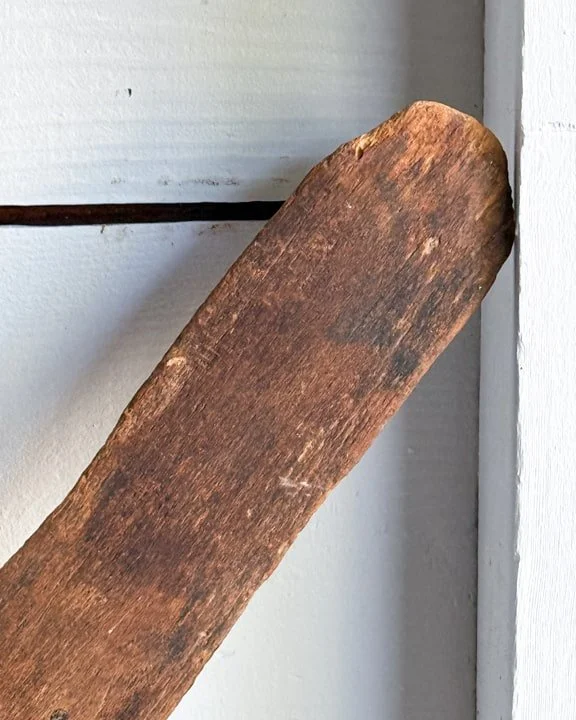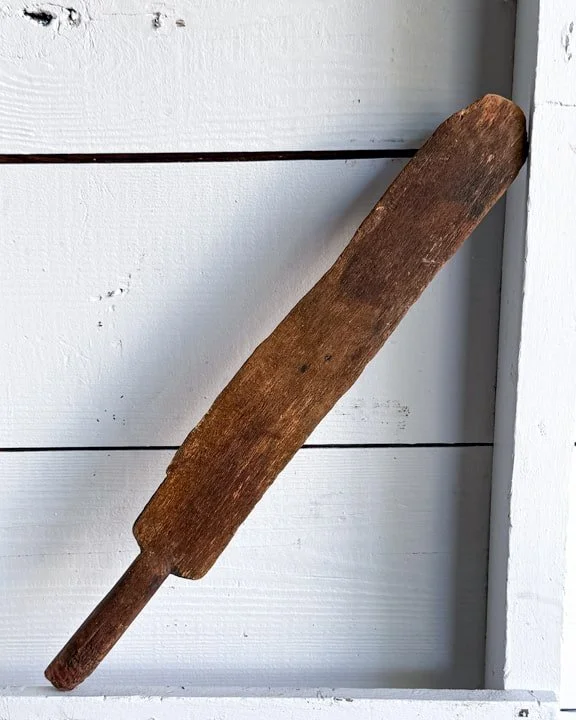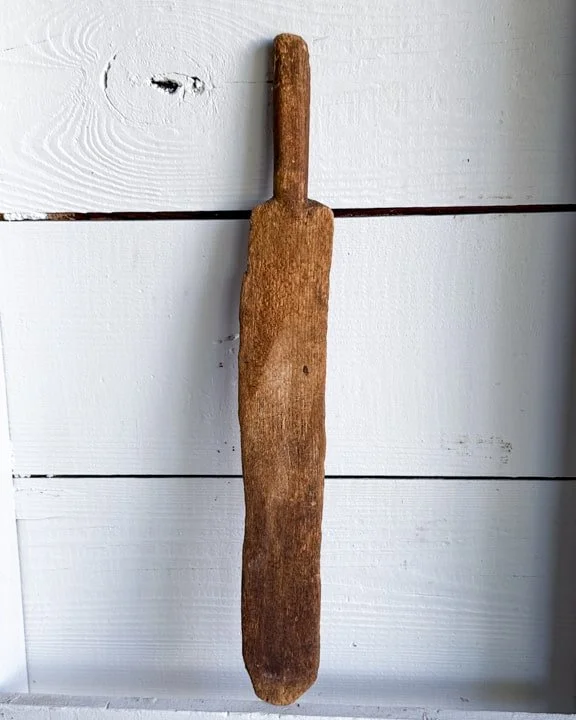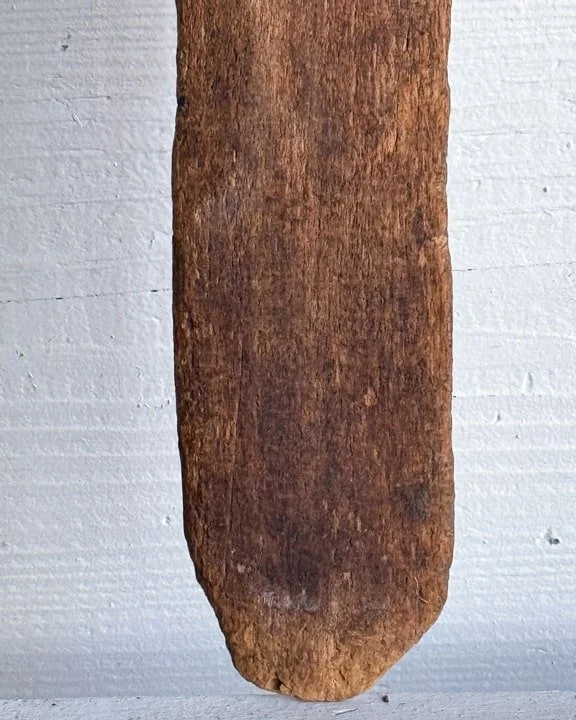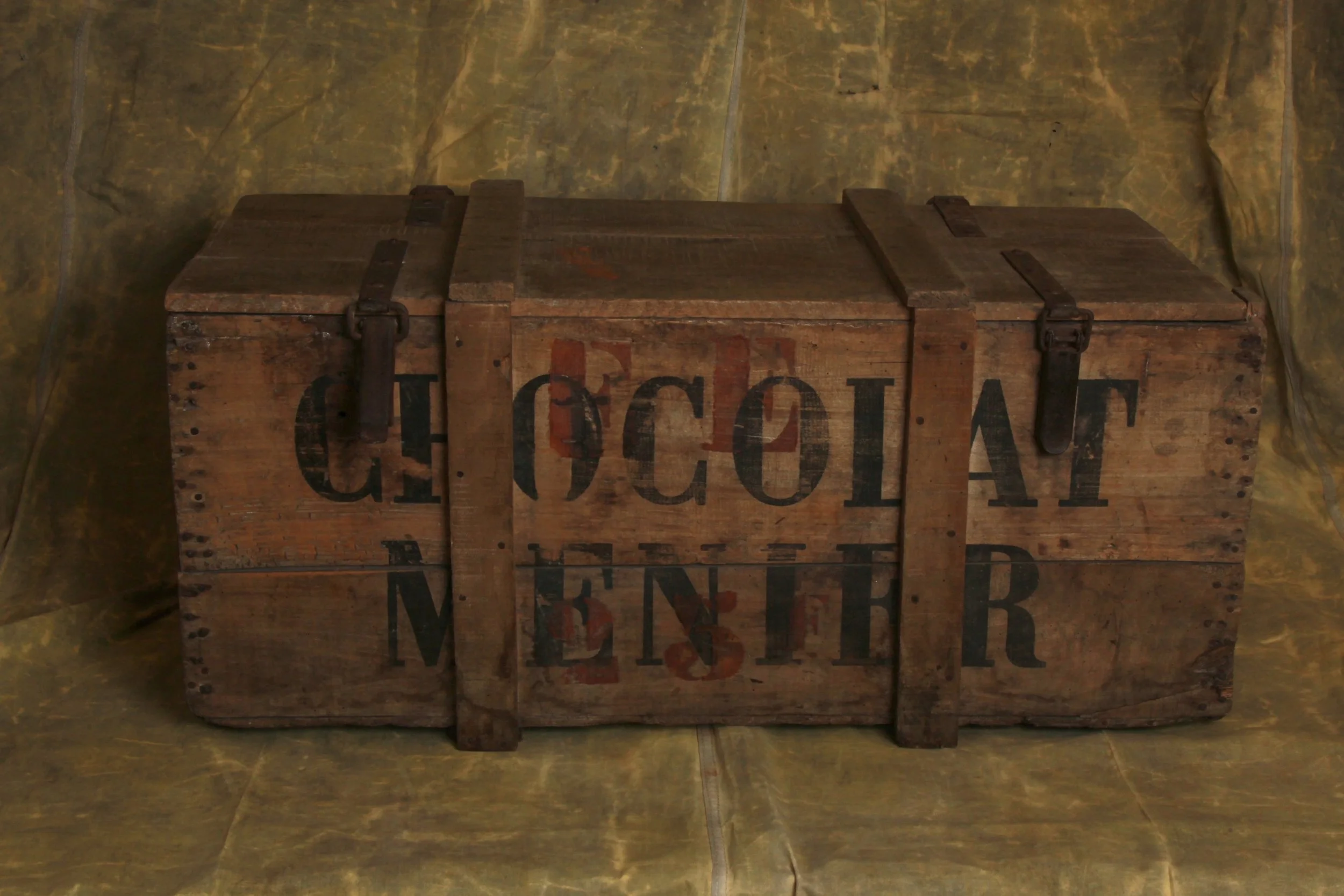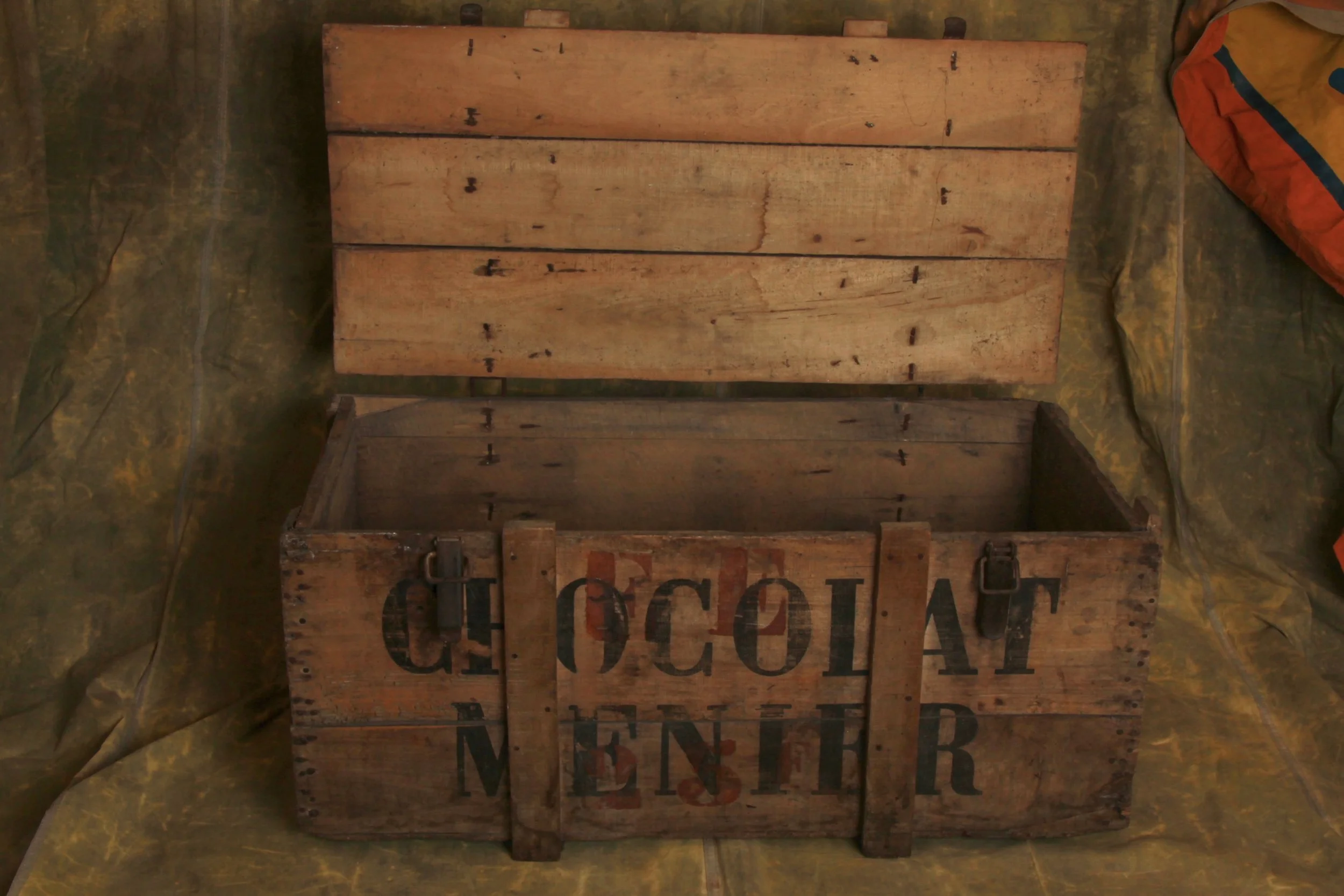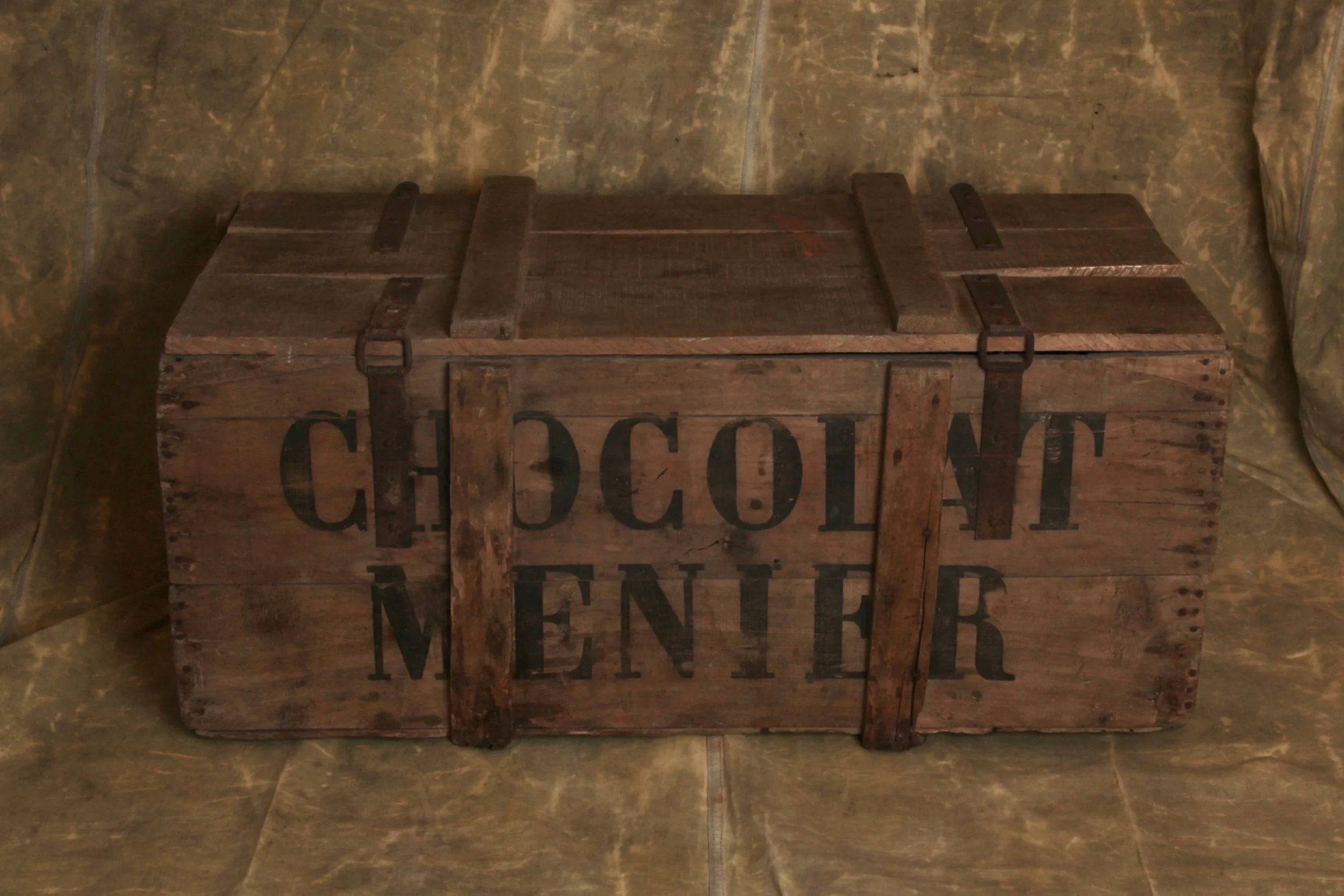
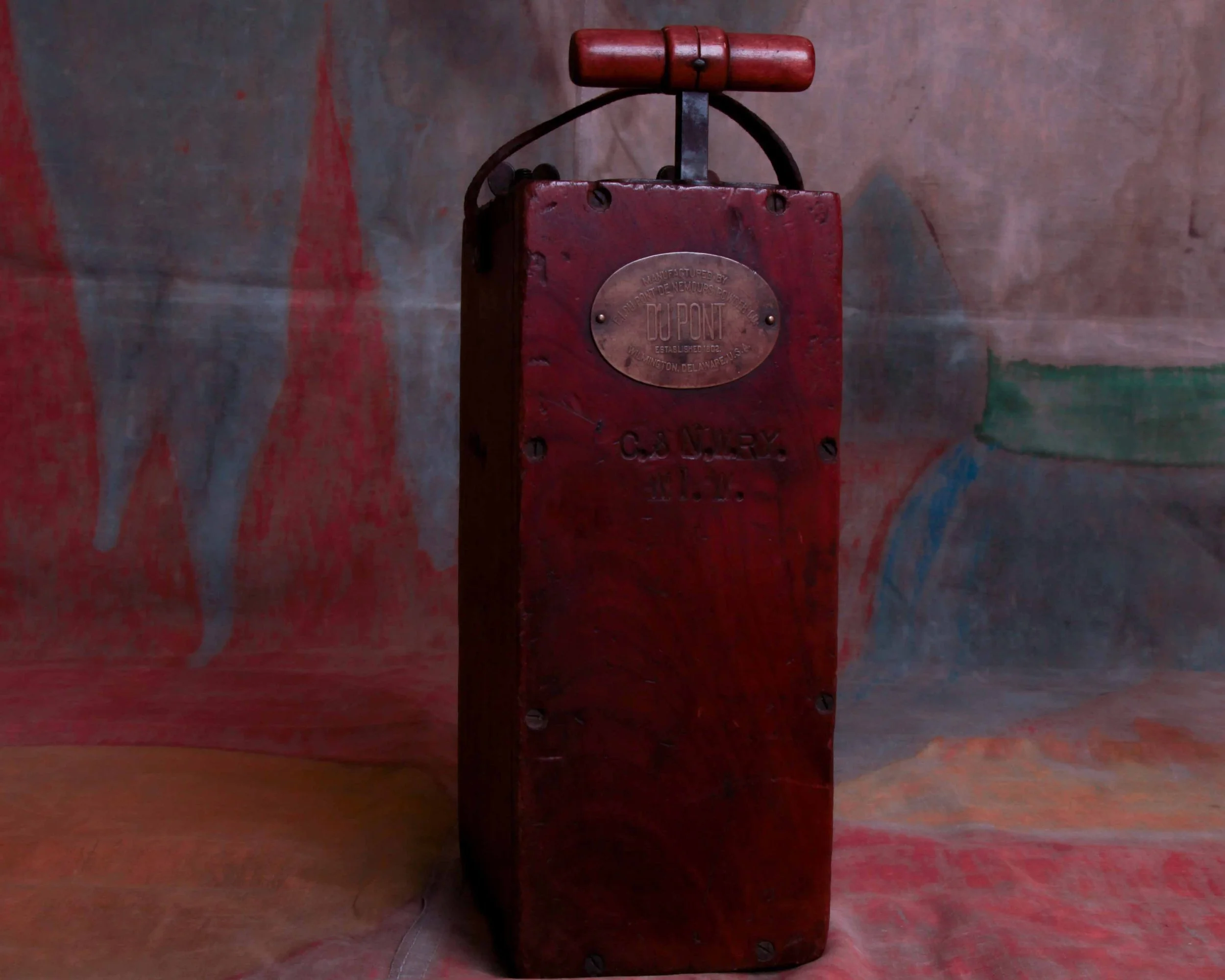
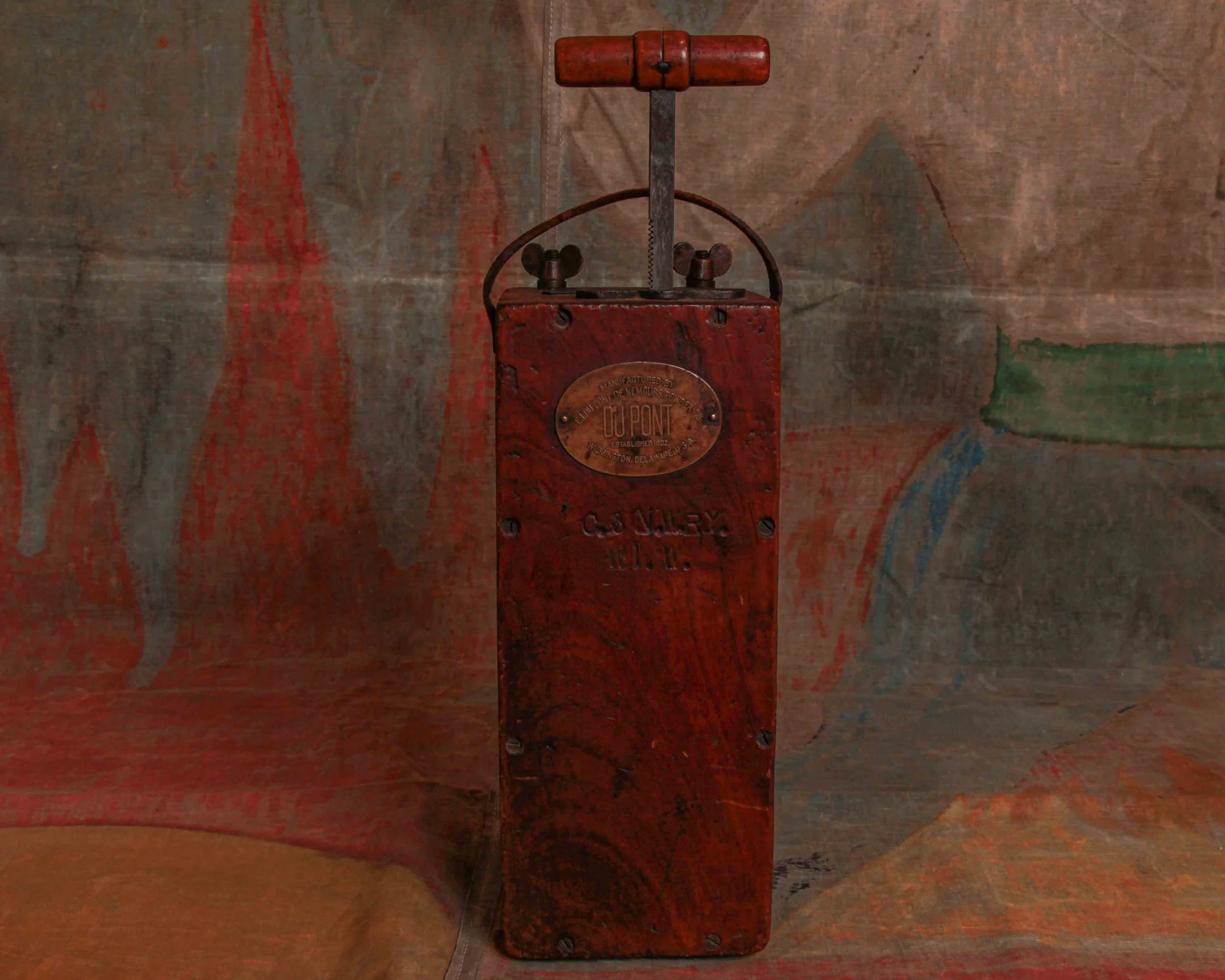
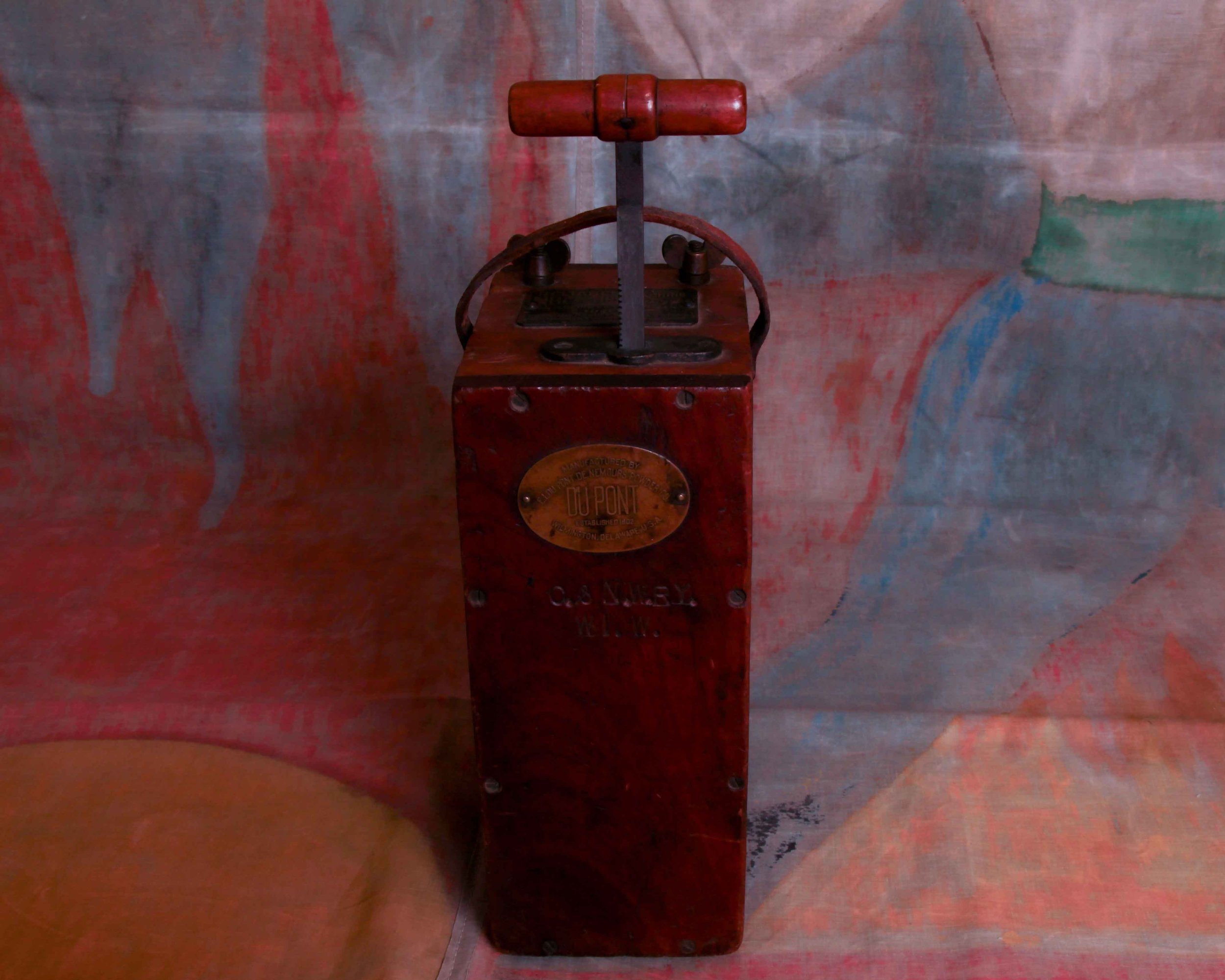
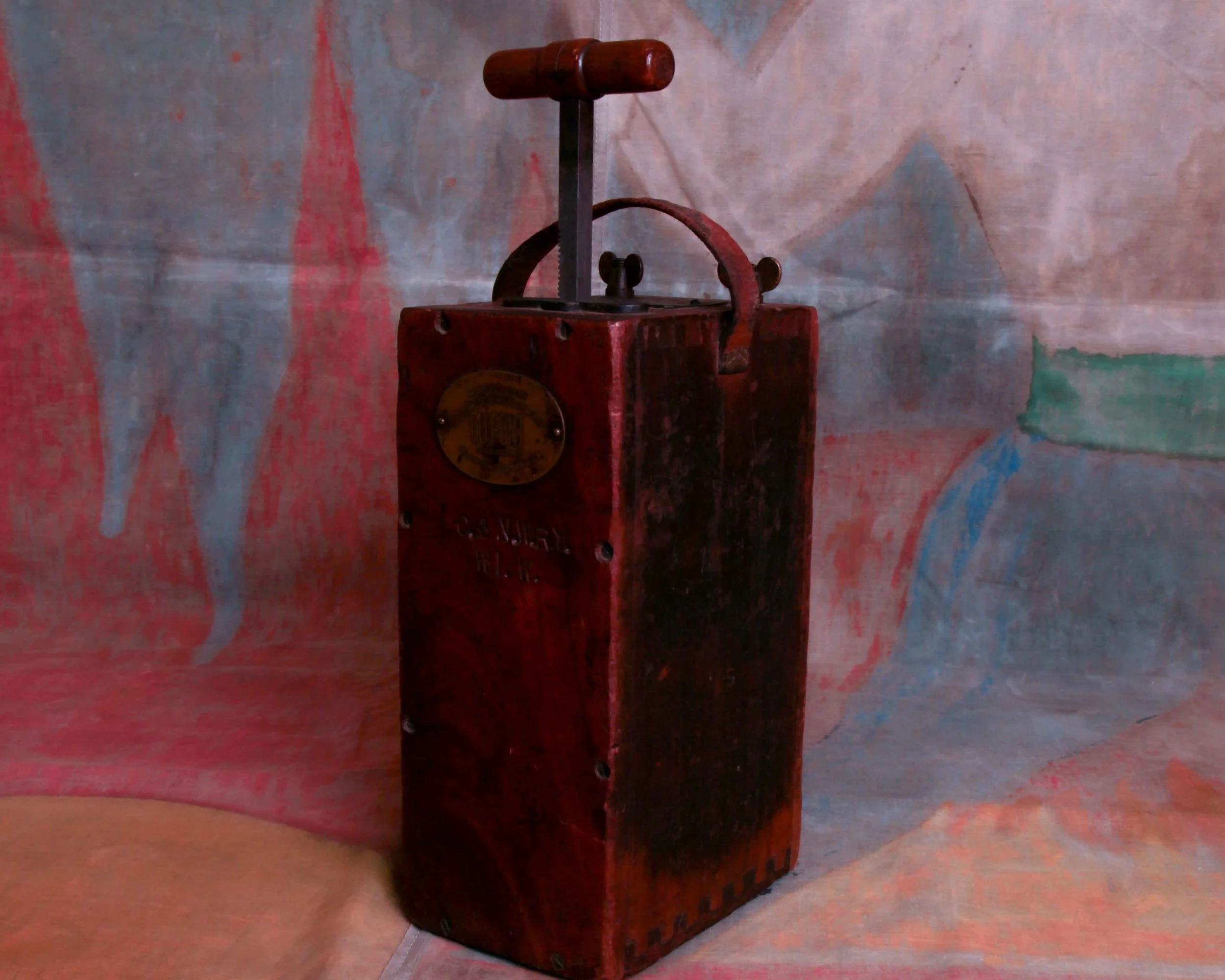
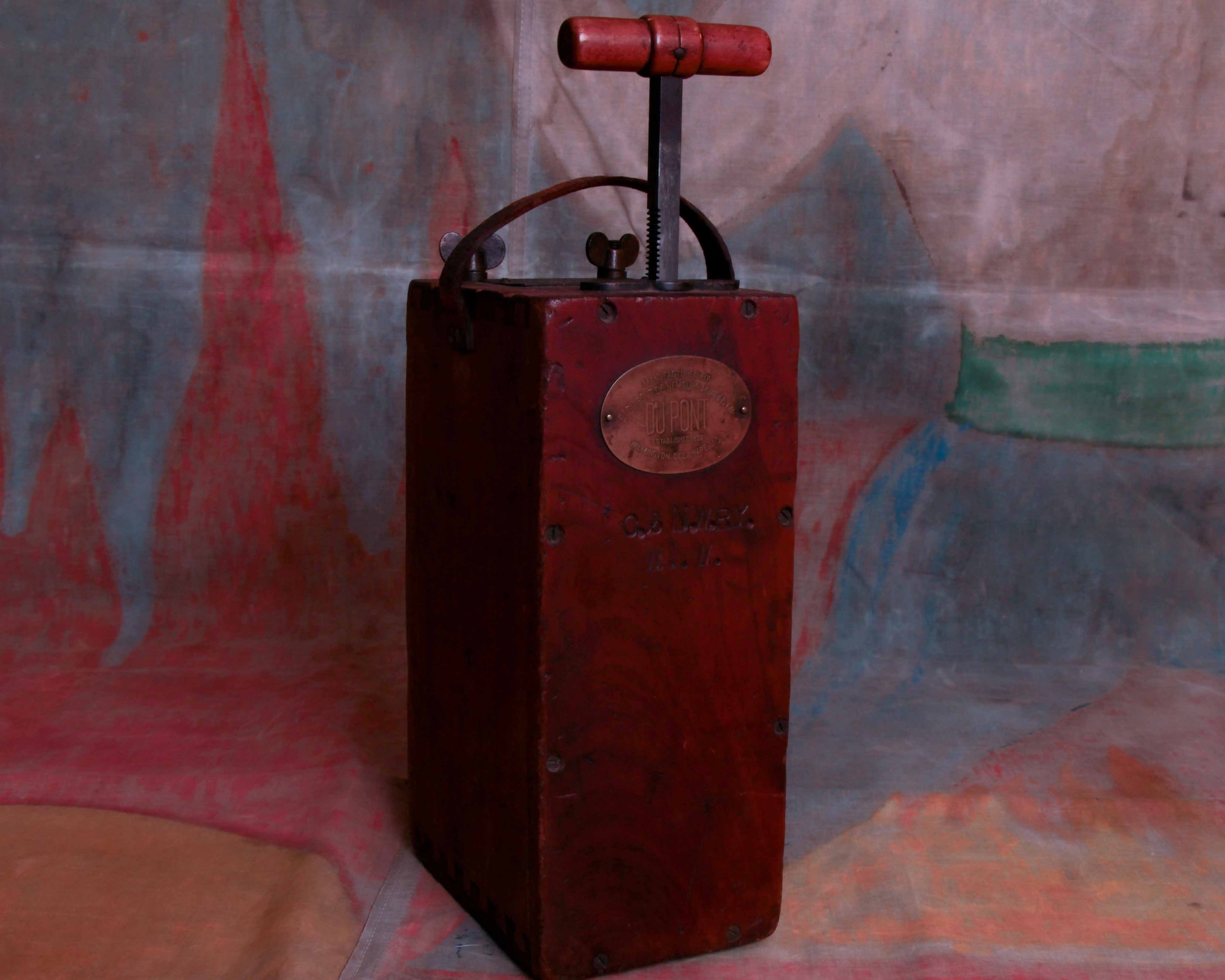
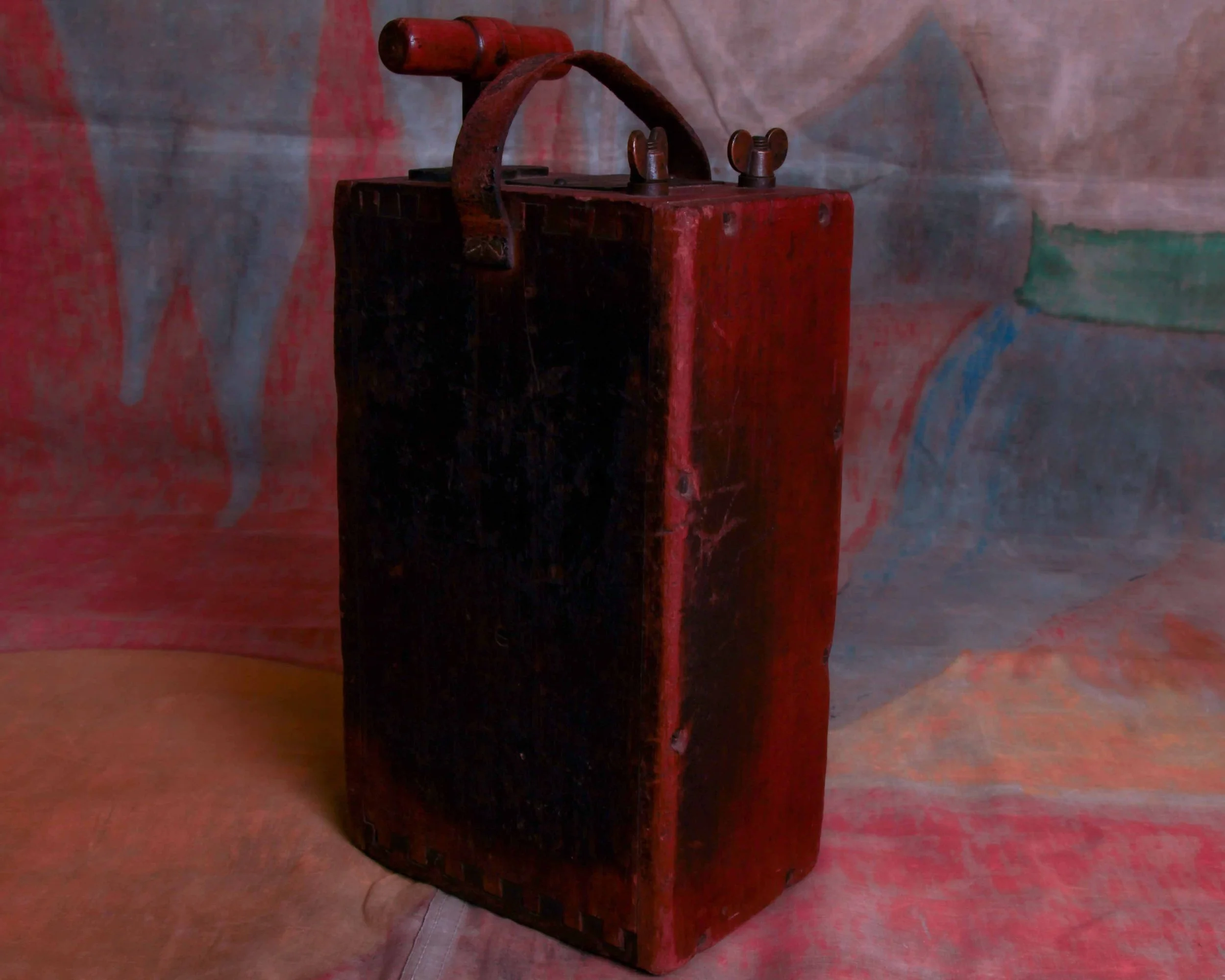
A genuine DuPont dynamite blasting machine, built when the margin for error was slim and the engineering had to be right every single time.
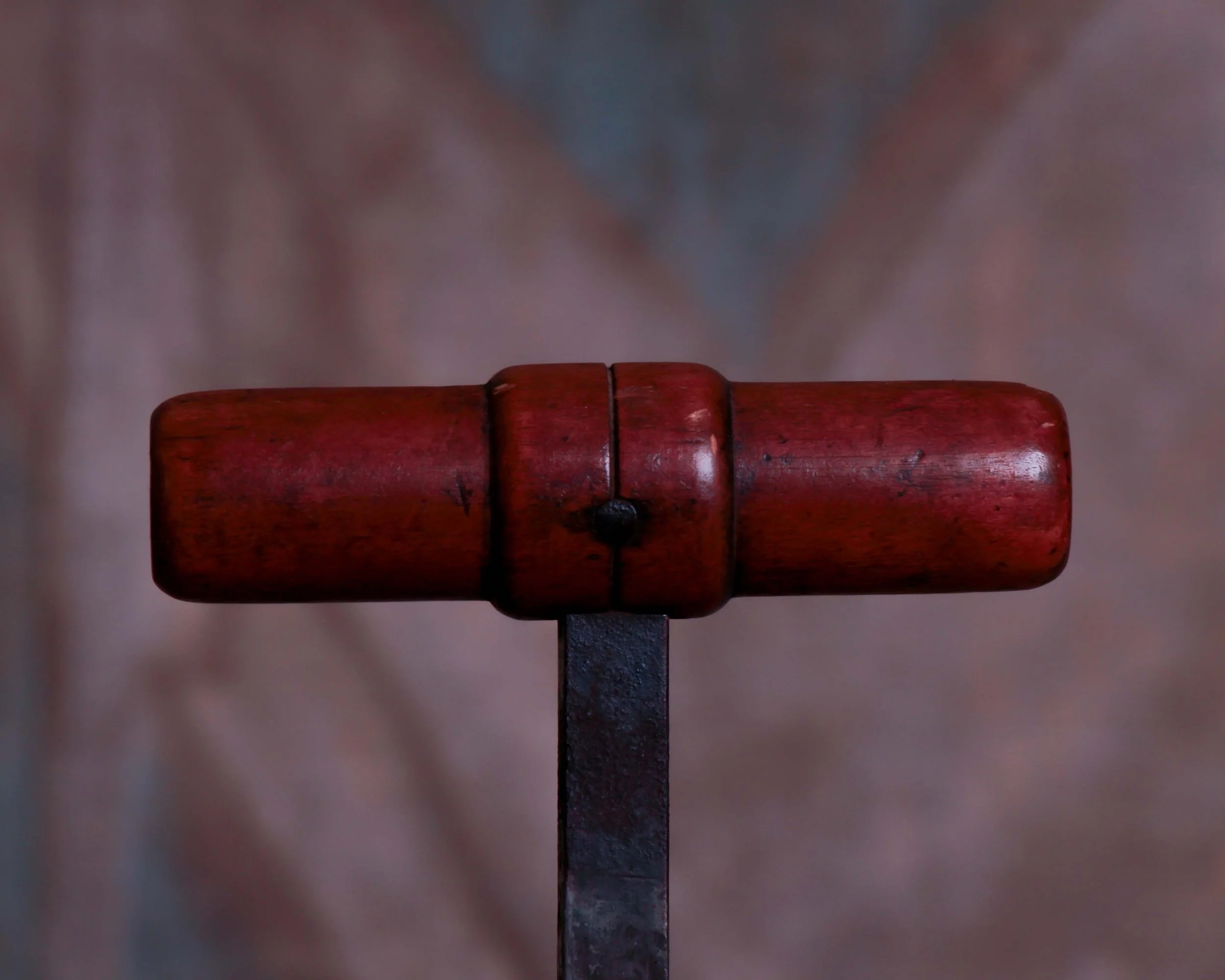
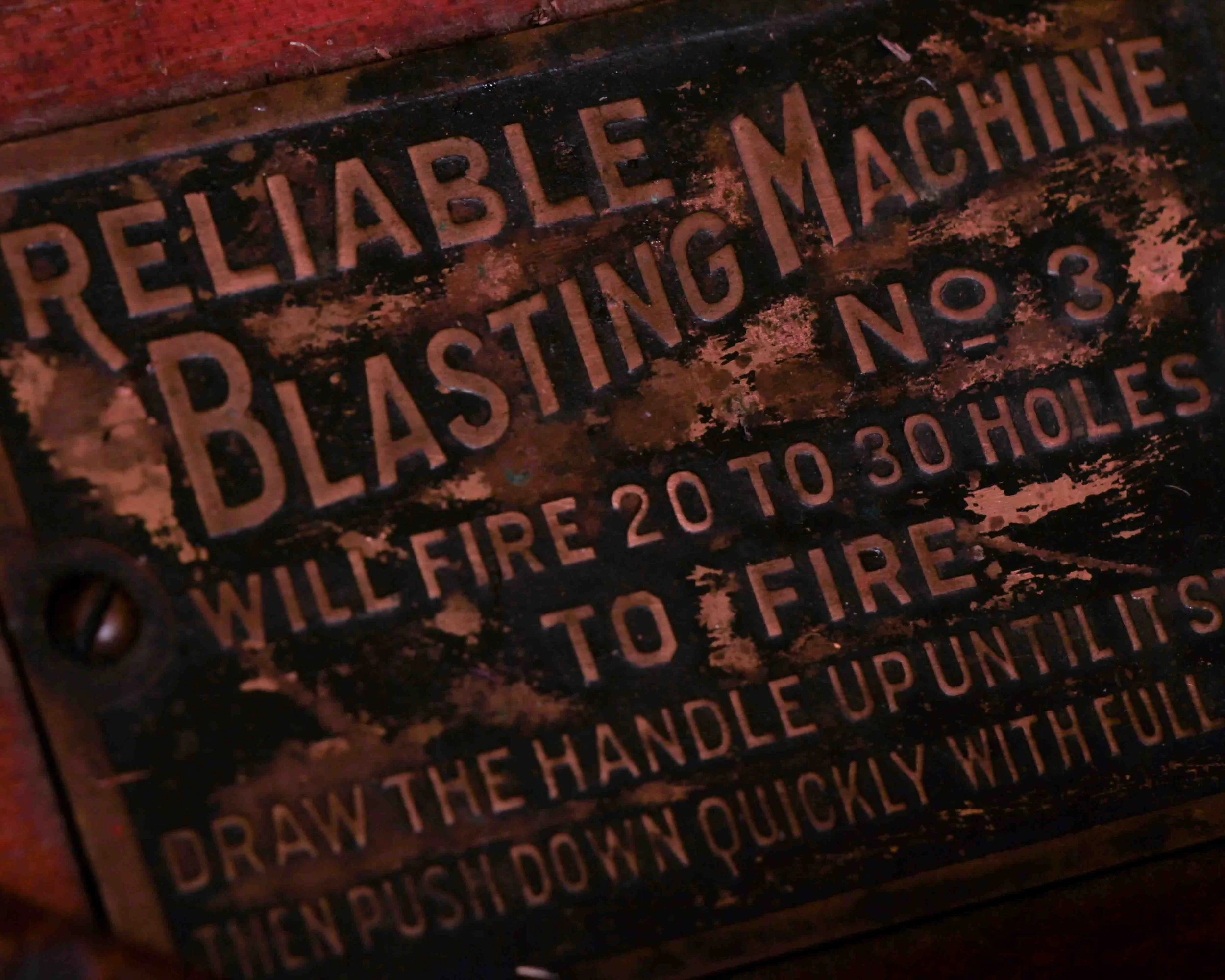
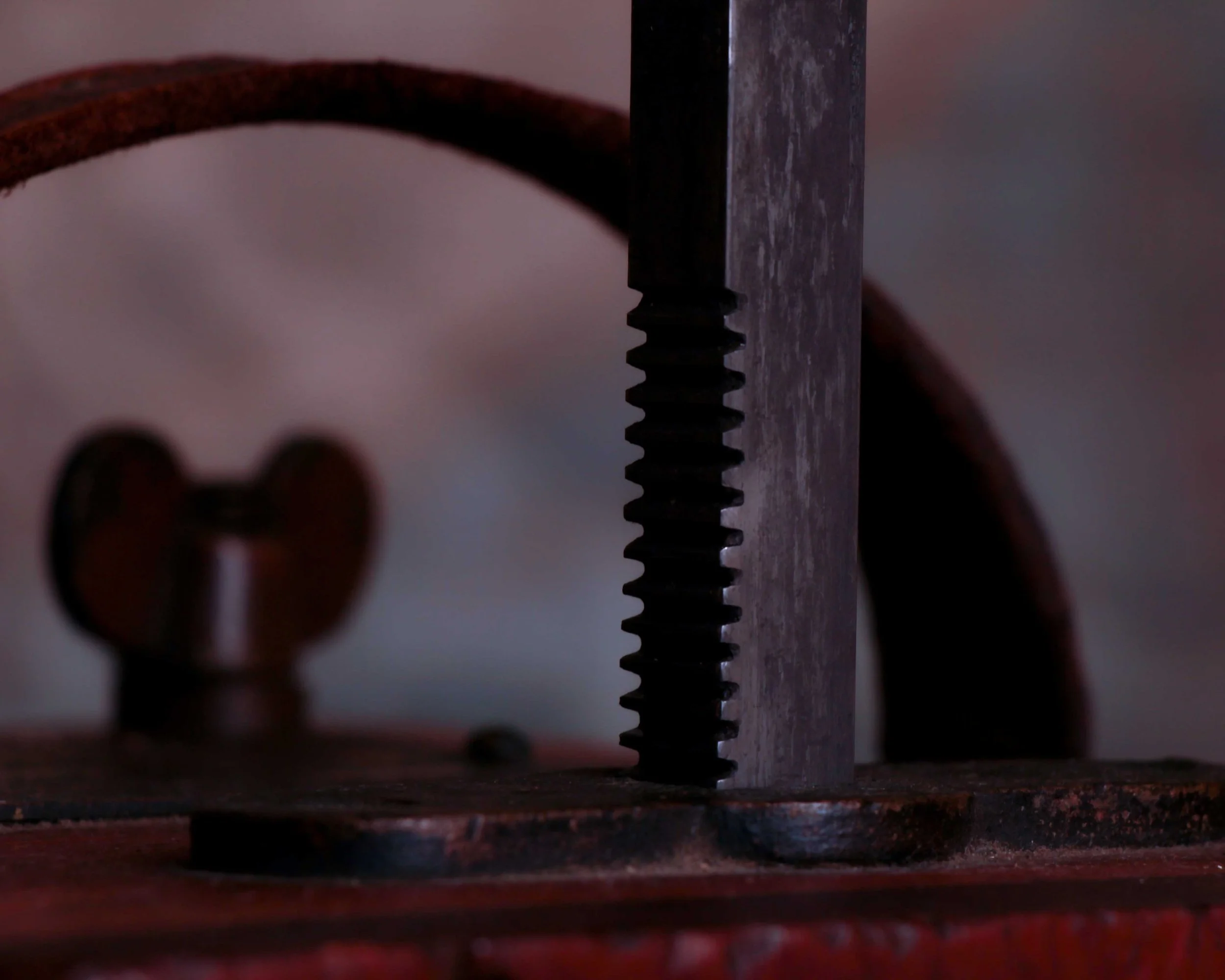
Up top, a steel threaded rod rises through the lid, topped with a turned wooden T-handle that fits perfectly in the hand. Cranking it would have felt deliberate and physical, each turn building charge, each click of the internal gearing doing exactly what it was designed to do.
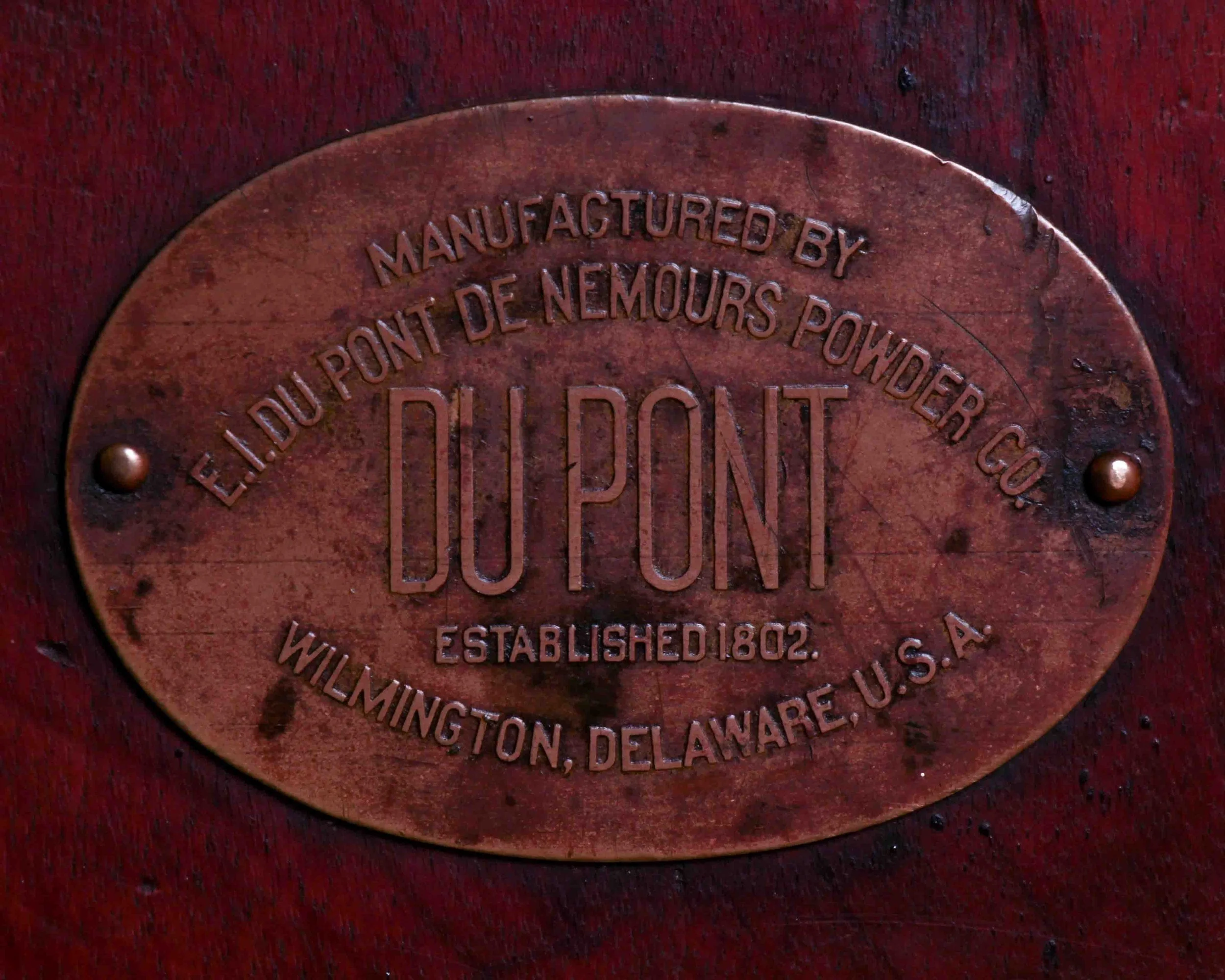
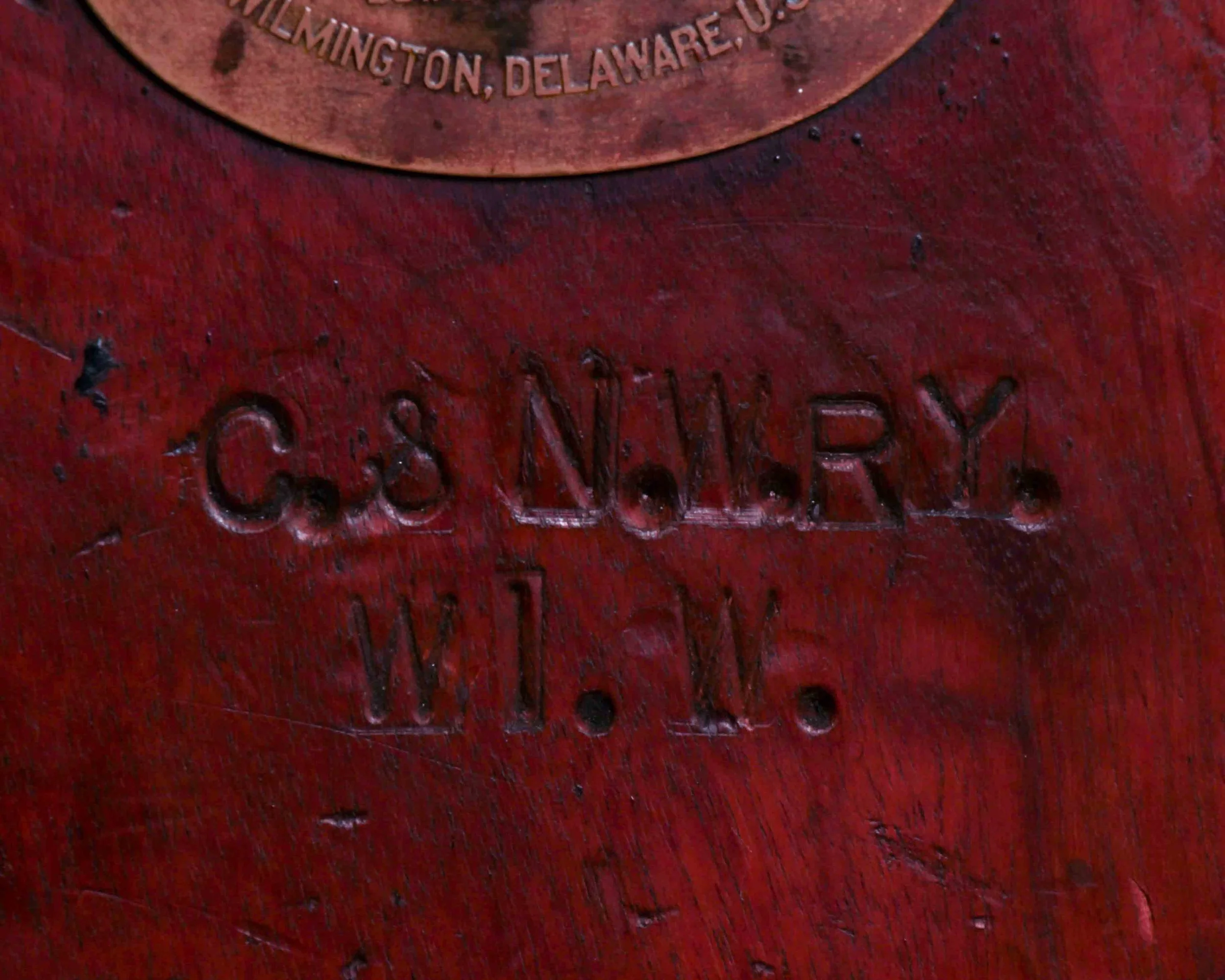
The brass DuPont plaque on the front is a standout. Oval, warm, and beautifully aged, it reads “Manufactured by E. I. du Pont de Nemours Powder Co., Established 1802, Wilmington, Delaware, U.S.A.” Below it, carved ownership markings add a human layer, grounding this powerful tool in a specific place and set of hands.
Category History
The dynamite blaster sits at the moment when muscle gave way to controlled force. In the late 19th and early 20th centuries, as mining, railroad building, and quarrying expanded, blasting needed to be safer and more predictable. Enter the blaster—a compact device, often a hand-cranked generator or plunger box, designed to send an electric charge down a wire and detonate dynamite at a distance.
Early versions were mechanical and straightforward. A push or crank generated a brief surge of electricity, enough to trigger a detonator cap embedded in the charge. The operator could stand clear, reducing risk and improving timing. It turned blasting from a guess into a sequence—set, wire, test, fire.
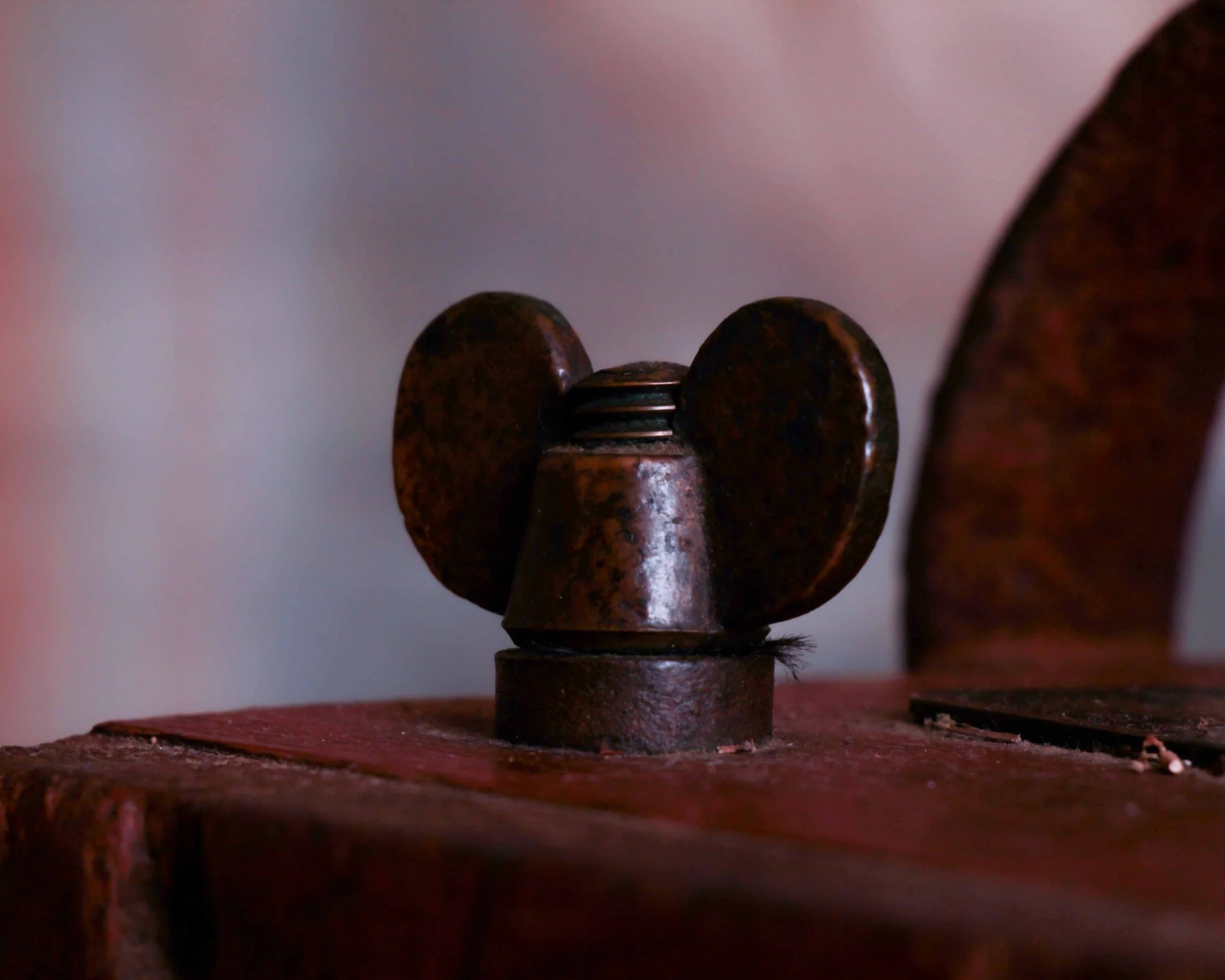
What’s compelling now is how physical the process still was. You feel it in the device itself—wooden boxes, brass terminals, heavy switches, all built to withstand rough environments and repeated use. Many show wear from fieldwork: dents, repairs, replaced parts.
They’re not subtle objects, but they’re precise. Tools built to manage something inherently chaotic, giving workers a measure of control over rock, earth, and distance.
A genuine DuPont dynamite blasting machine, built when the margin for error was slim and the engineering had to be right every single time.
Up top, a steel threaded rod rises through the lid, topped with a turned wooden T-handle that fits perfectly in the hand. Cranking it would have felt deliberate and physical, each turn building charge, each click of the internal gearing doing exactly what it was designed to do.
The brass DuPont plaque on the front is a standout. Oval, warm, and beautifully aged, it reads “Manufactured by E. I. du Pont de Nemours Powder Co., Established 1802, Wilmington, Delaware, U.S.A.” Below it, carved ownership markings add a human layer, grounding this powerful tool in a specific place and set of hands.
Category History
The dynamite blaster sits at the moment when muscle gave way to controlled force. In the late 19th and early 20th centuries, as mining, railroad building, and quarrying expanded, blasting needed to be safer and more predictable. Enter the blaster—a compact device, often a hand-cranked generator or plunger box, designed to send an electric charge down a wire and detonate dynamite at a distance.
Early versions were mechanical and straightforward. A push or crank generated a brief surge of electricity, enough to trigger a detonator cap embedded in the charge. The operator could stand clear, reducing risk and improving timing. It turned blasting from a guess into a sequence—set, wire, test, fire.
What’s compelling now is how physical the process still was. You feel it in the device itself—wooden boxes, brass terminals, heavy switches, all built to withstand rough environments and repeated use. Many show wear from fieldwork: dents, repairs, replaced parts.
They’re not subtle objects, but they’re precise. Tools built to manage something inherently chaotic, giving workers a measure of control over rock, earth, and distance.