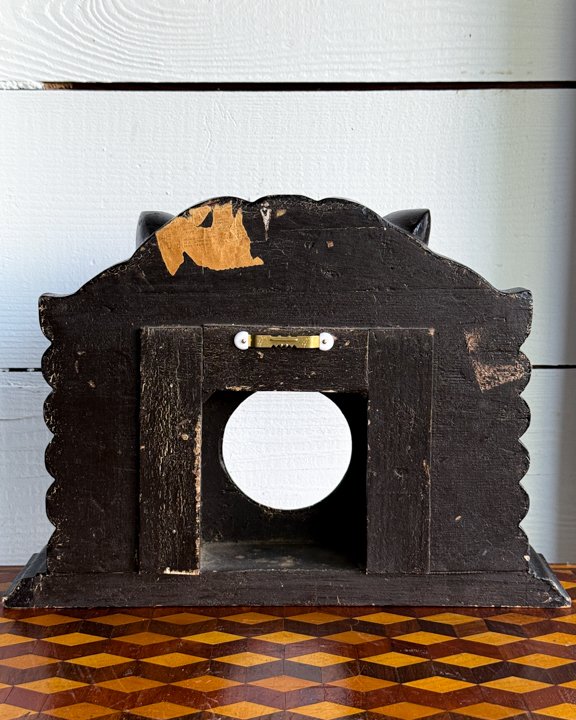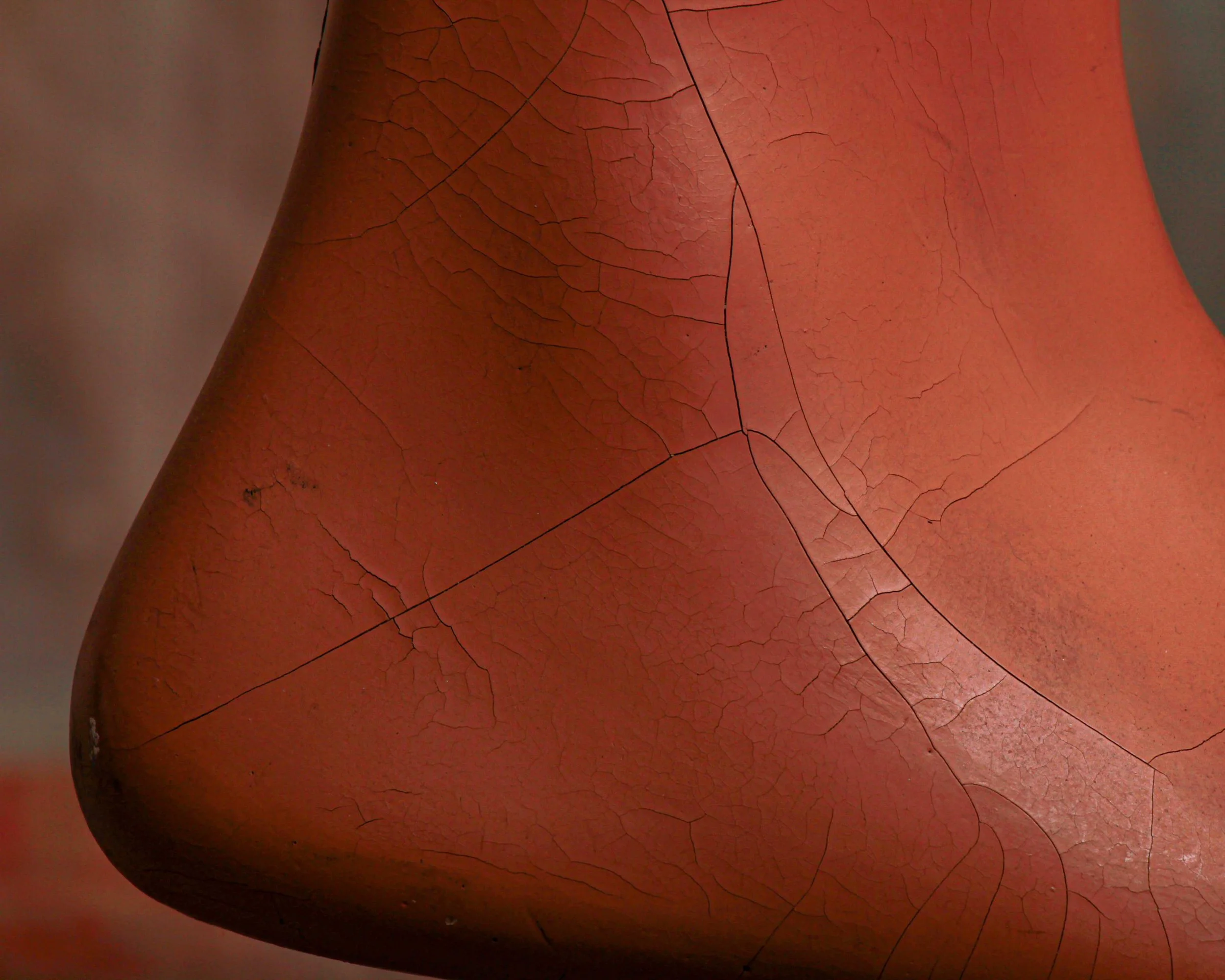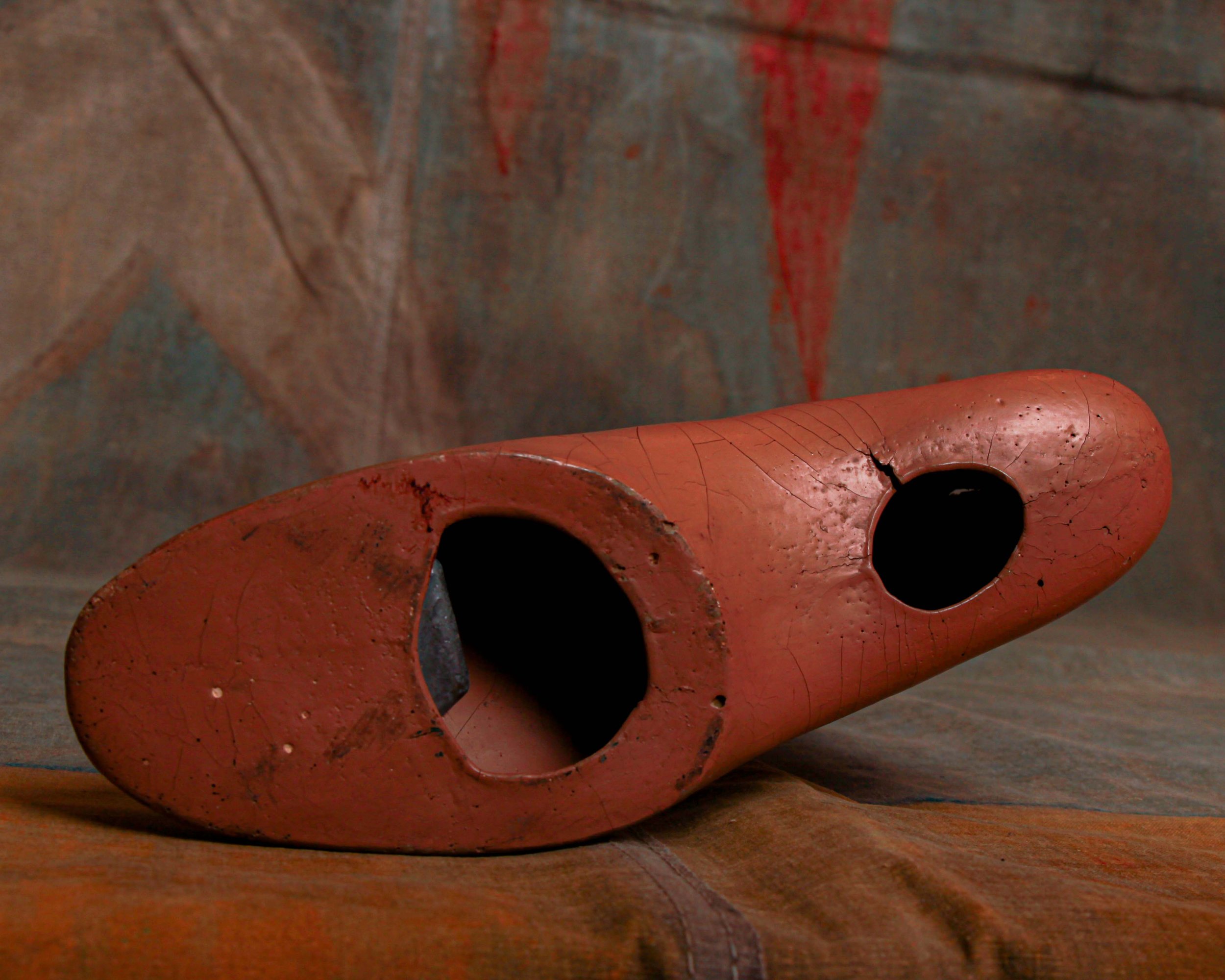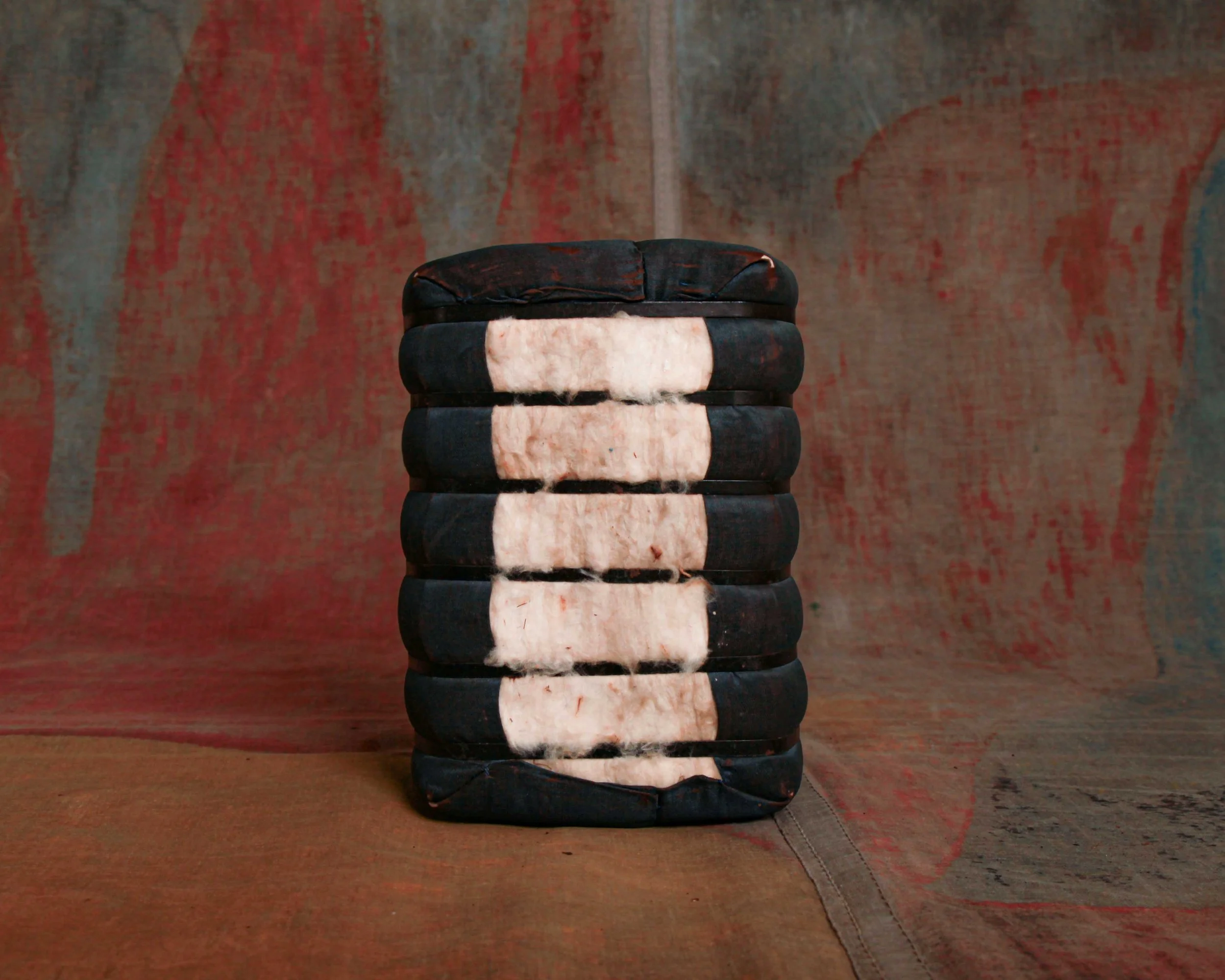








Here we have a wonderfully eerie composition wind-up walker doll by Waterbury Clock Company, decked out in a checkered suit and bowler hat. He was built to shuffle along when wound, but time and wear have left him in the “display only” category as his mechanism no longer works. The real showstopper is his face: the once-smooth composition has aged into a mesmerizing web of cracks, giving him the look of an antique mosaic or Freddy Krueger.
There’s a strange charm in that transformation—less toy, more character—like time stepped in and added a personality the maker never planned.
Waterbury Clock Co.
Waterbury Clock Co. toys come from a place where precision met play. Founded in Connecticut in the 19th century, the Waterbury Clock Company built its reputation on reliable timepieces—small, tightly engineered mechanisms designed to keep accurate time. It didn’t take long for that expertise to spill over into something a bit more entertaining.
By the late 1800s and early 1900s, Waterbury began producing mechanical novelties and toys that used the same principles as their clocks. Springs, gears, and escapements were reimagined to power movement instead of measurement. Wind them up, and figures would march, nod, or perform simple actions, all driven by compact clockwork hidden inside.
What makes these toys interesting is how deliberate they feel. They’re not overly complex, but they’re precise. Every movement is controlled, repeatable, and tied directly to the mechanism. You can sense the clockmaker’s hand behind it.
Materials followed suit—metal cases, painted details, sturdy construction—built to house the mechanism as much as to present the figure. Over time, wear shows up in softened paint and slightly looser movement, but the core function often remains.
They sit in that space between utility and amusement. Not just toys, but small demonstrations of engineering—timekeeping turned playful, without losing its sense of discipline.
Here we have a wonderfully eerie composition wind-up walker doll by Waterbury Clock Company, decked out in a checkered suit and bowler hat. He was built to shuffle along when wound, but time and wear have left him in the “display only” category as his mechanism no longer works. The real showstopper is his face: the once-smooth composition has aged into a mesmerizing web of cracks, giving him the look of an antique mosaic or Freddy Krueger.
There’s a strange charm in that transformation—less toy, more character—like time stepped in and added a personality the maker never planned.
Waterbury Clock Co.
Waterbury Clock Co. toys come from a place where precision met play. Founded in Connecticut in the 19th century, the Waterbury Clock Company built its reputation on reliable timepieces—small, tightly engineered mechanisms designed to keep accurate time. It didn’t take long for that expertise to spill over into something a bit more entertaining.
By the late 1800s and early 1900s, Waterbury began producing mechanical novelties and toys that used the same principles as their clocks. Springs, gears, and escapements were reimagined to power movement instead of measurement. Wind them up, and figures would march, nod, or perform simple actions, all driven by compact clockwork hidden inside.
What makes these toys interesting is how deliberate they feel. They’re not overly complex, but they’re precise. Every movement is controlled, repeatable, and tied directly to the mechanism. You can sense the clockmaker’s hand behind it.
Materials followed suit—metal cases, painted details, sturdy construction—built to house the mechanism as much as to present the figure. Over time, wear shows up in softened paint and slightly looser movement, but the core function often remains.
They sit in that space between utility and amusement. Not just toys, but small demonstrations of engineering—timekeeping turned playful, without losing its sense of discipline.