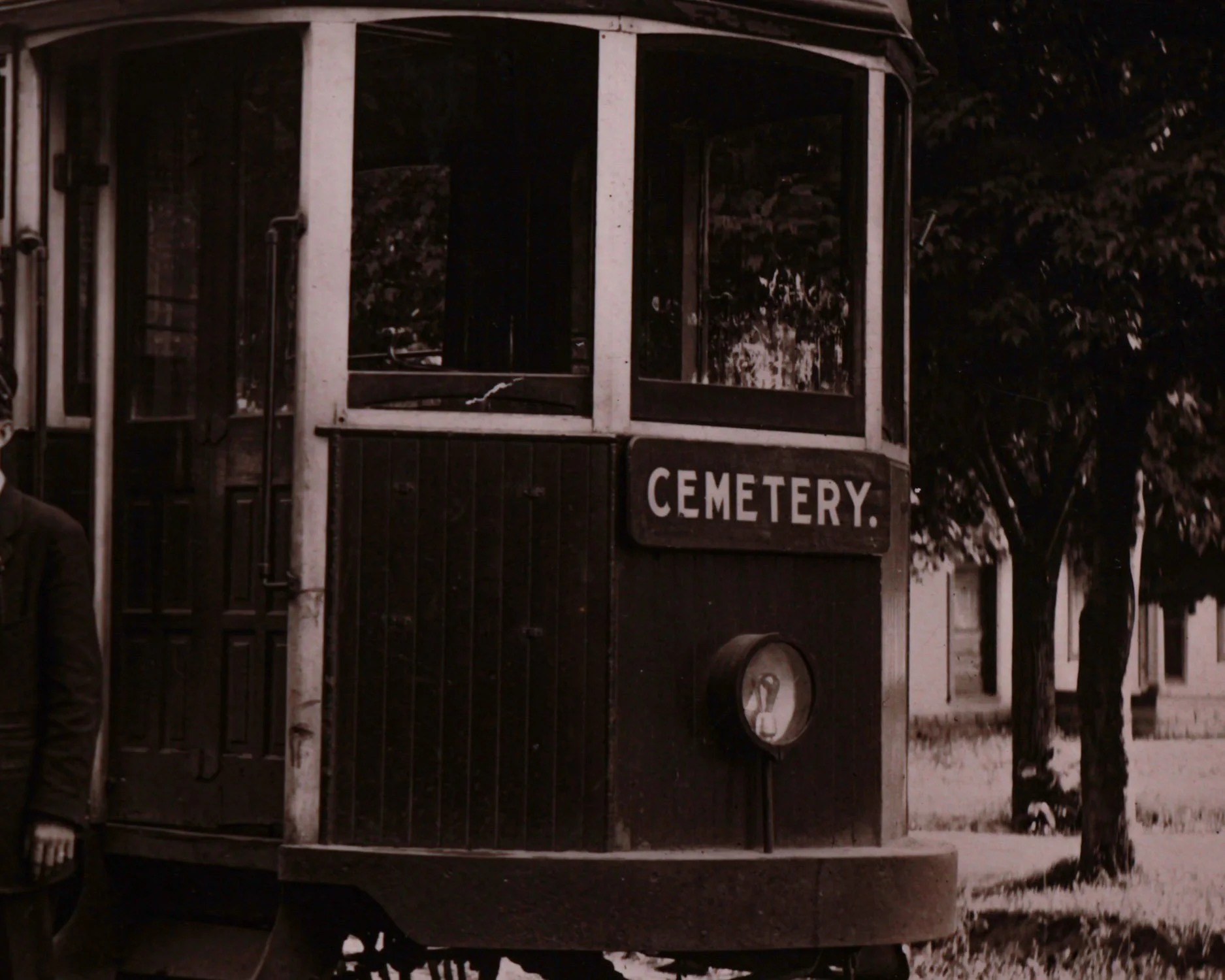
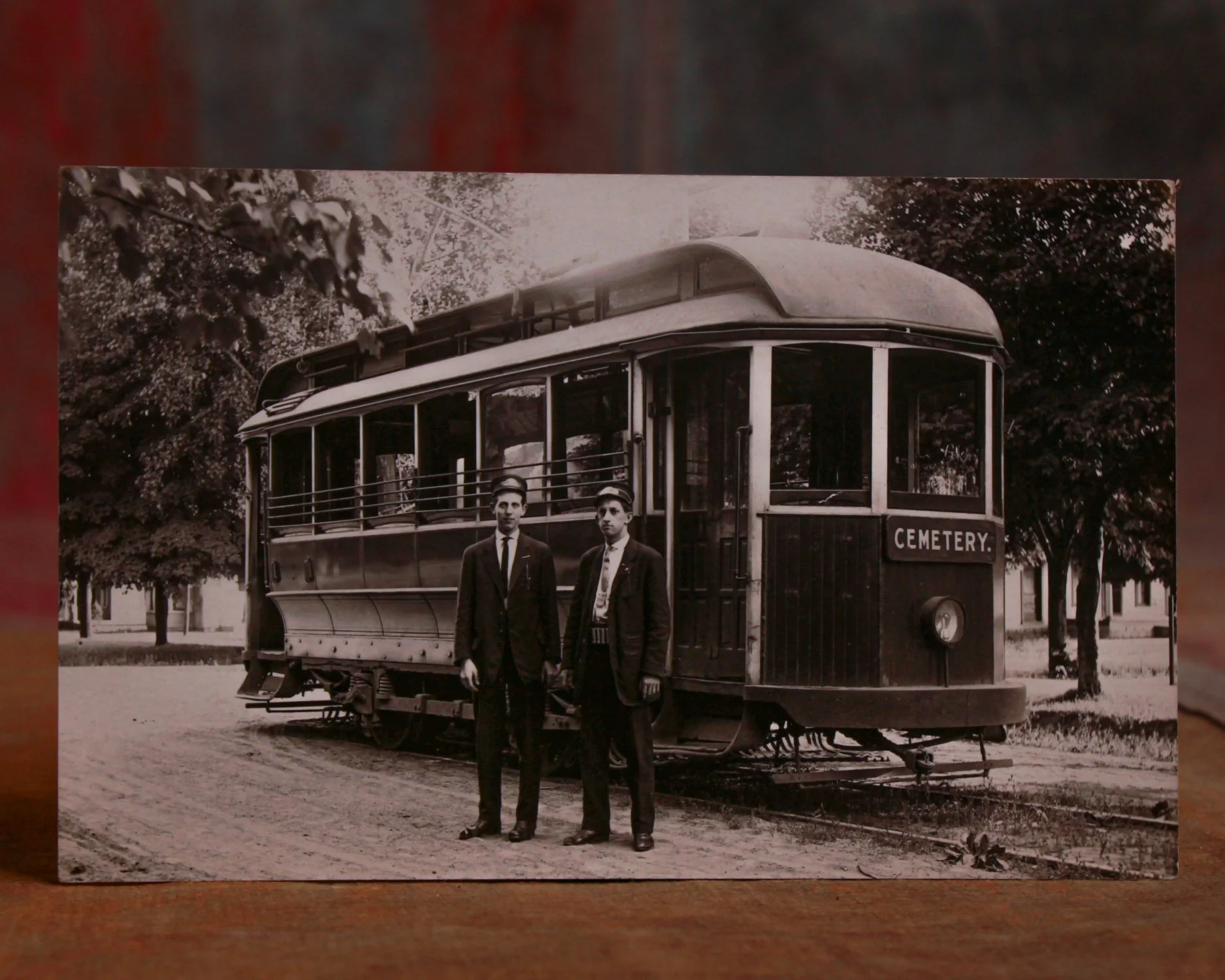

An unusual early 20th century real photo postcard (RPPC) showing an electric streetcar with a large destination sign reading “CEMETERY” across its front. Two men, presumably streetcar employees, stand beside the vehicle wearing suits and caps. The streetcar features a rounded roof, open side windows, a central headlamp, and an overhead trolley pole. Photographed on a tree-lined street, the scene captures a particularly interesting aspect of early American public transportation: streetcars that carried passengers to local cemeteries.
During the late 19th and early 20th centuries, electric streetcars transformed transportation throughout American cities and towns. Beginning in the 1880s, electric traction gradually replaced horse-drawn streetcars, providing a faster, cleaner, and more dependable way for people to travel.
As streetcar networks expanded, routes began connecting residential neighborhoods, business districts, parks, amusement grounds, and cemeteries. Many burial grounds had been established on the outskirts of growing cities, where land was more affordable and spacious.
Before automobiles became widely accessible, visiting these cemeteries could involve a lengthy journey by horse-drawn carriage or on foot. Streetcar companies recognized the demand for convenient transportation, particularly on Sundays, holidays, and Memorial Day, when families gathered to visit graves and pay their respects.
Some cities developed dedicated cemetery routes, while others extended existing lines to serve burial grounds. These services carried mourners, funeral attendees, cemetery workers, and ordinary visitors.
In certain communities, specially designed funeral streetcars were even introduced to transport coffins and funeral parties directly to cemeteries. These vehicles sometimes featured separate compartments for the deceased and accompanying mourners.
By the 1920s and 1930s, increasing automobile ownership and the growth of motorized funeral services began reducing demand for cemetery streetcars.
Many routes were eventually discontinued as buses replaced streetcars and cities shifted away from extensive electric railway networks.