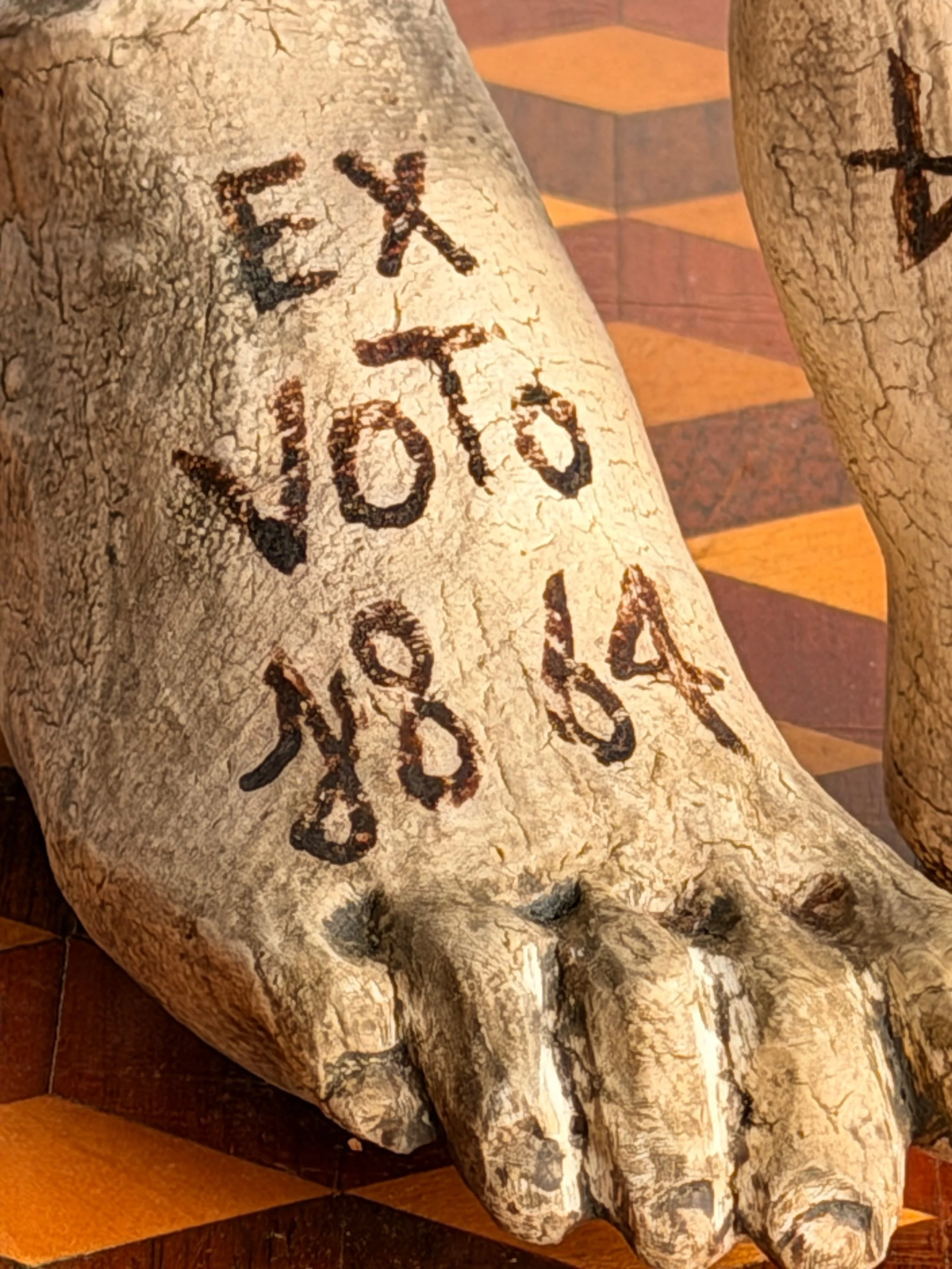
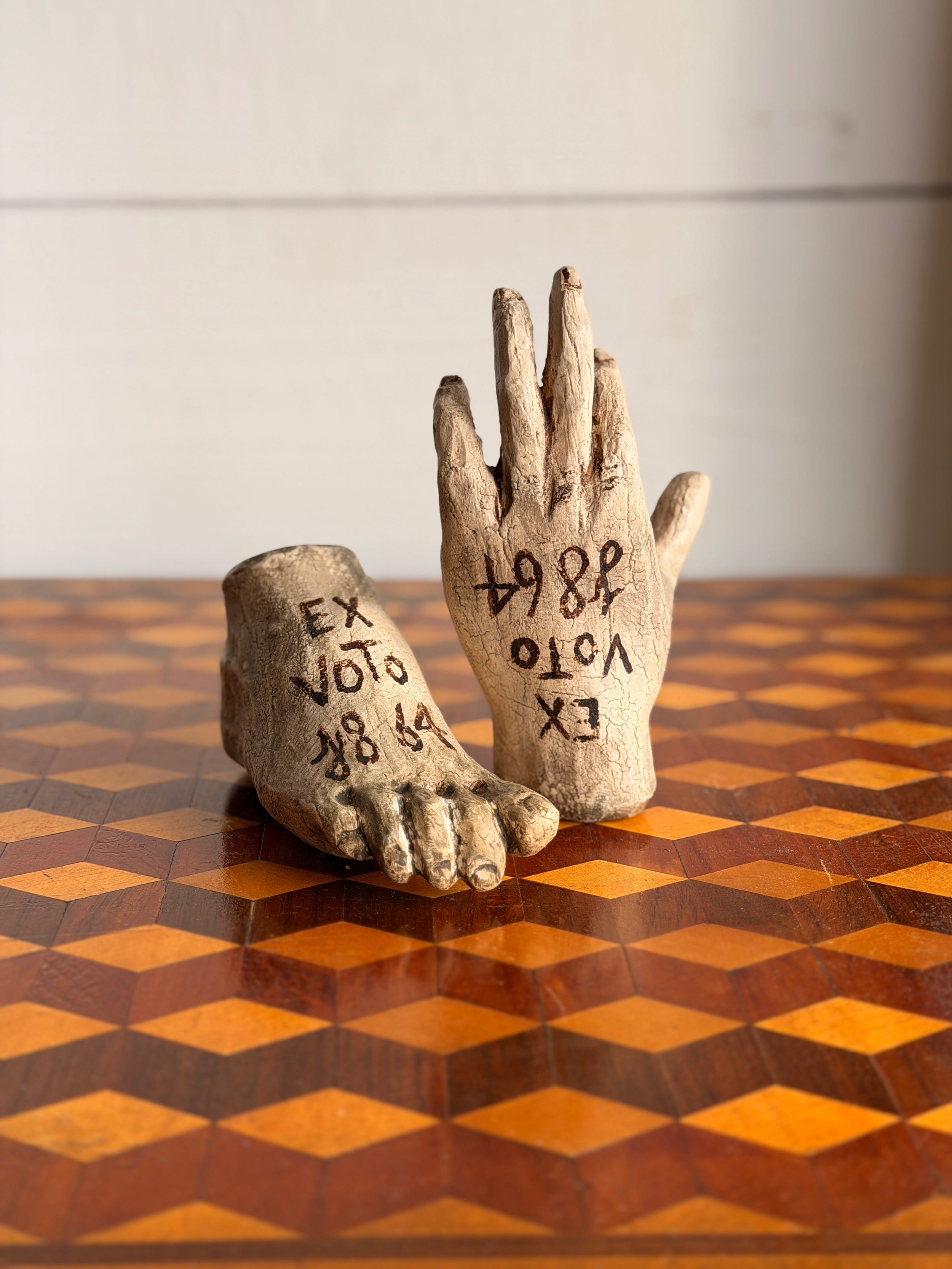
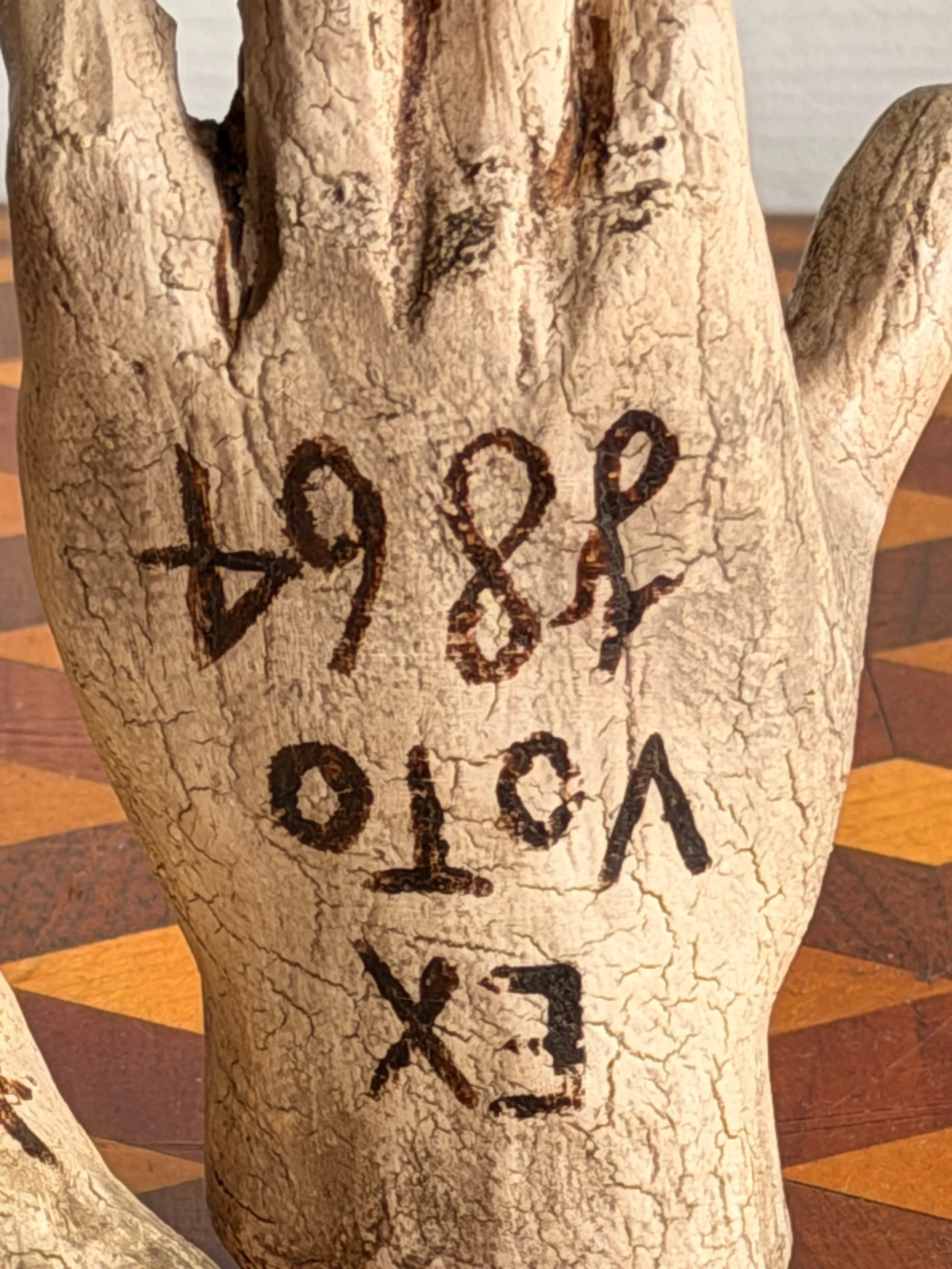
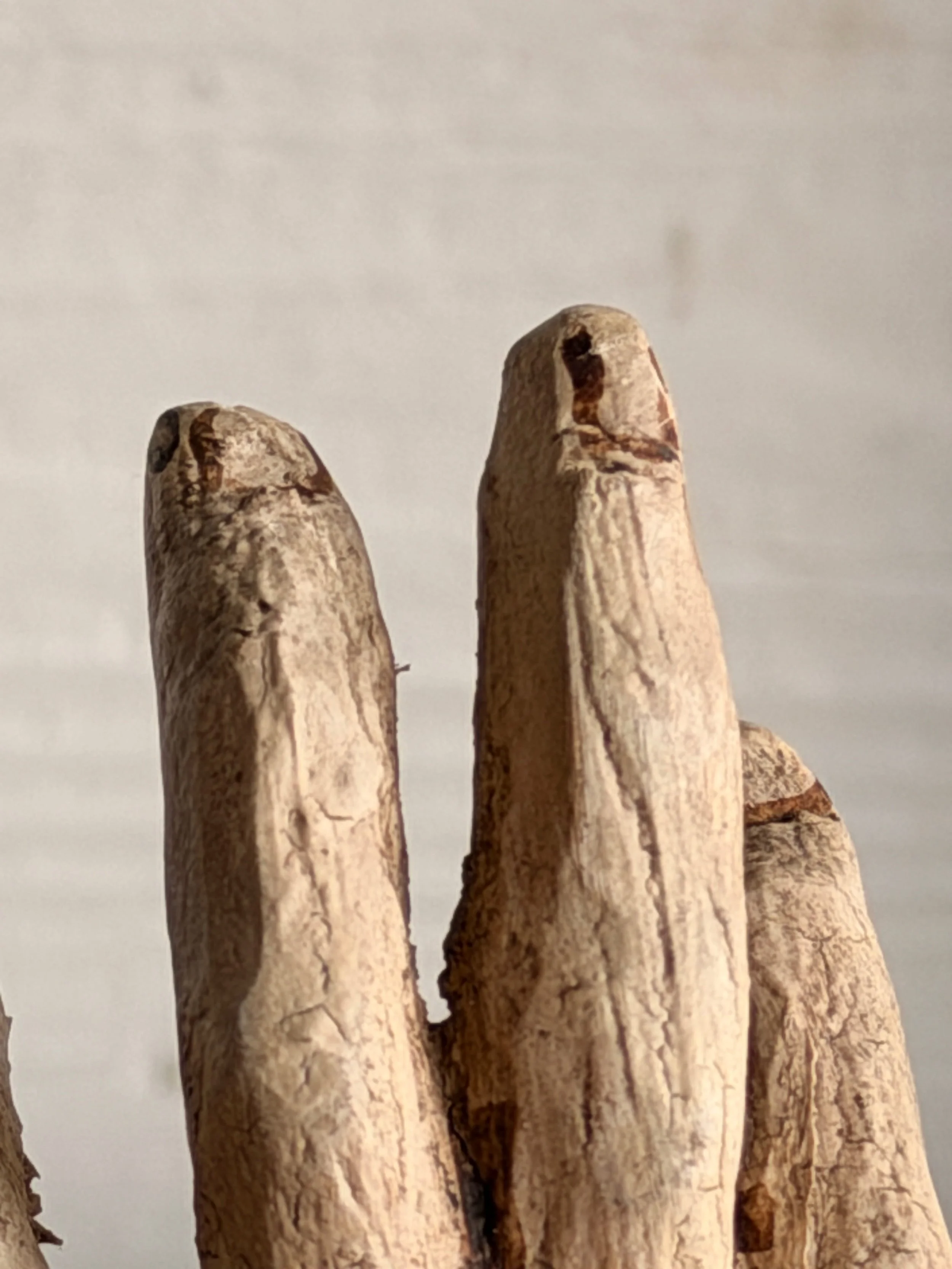
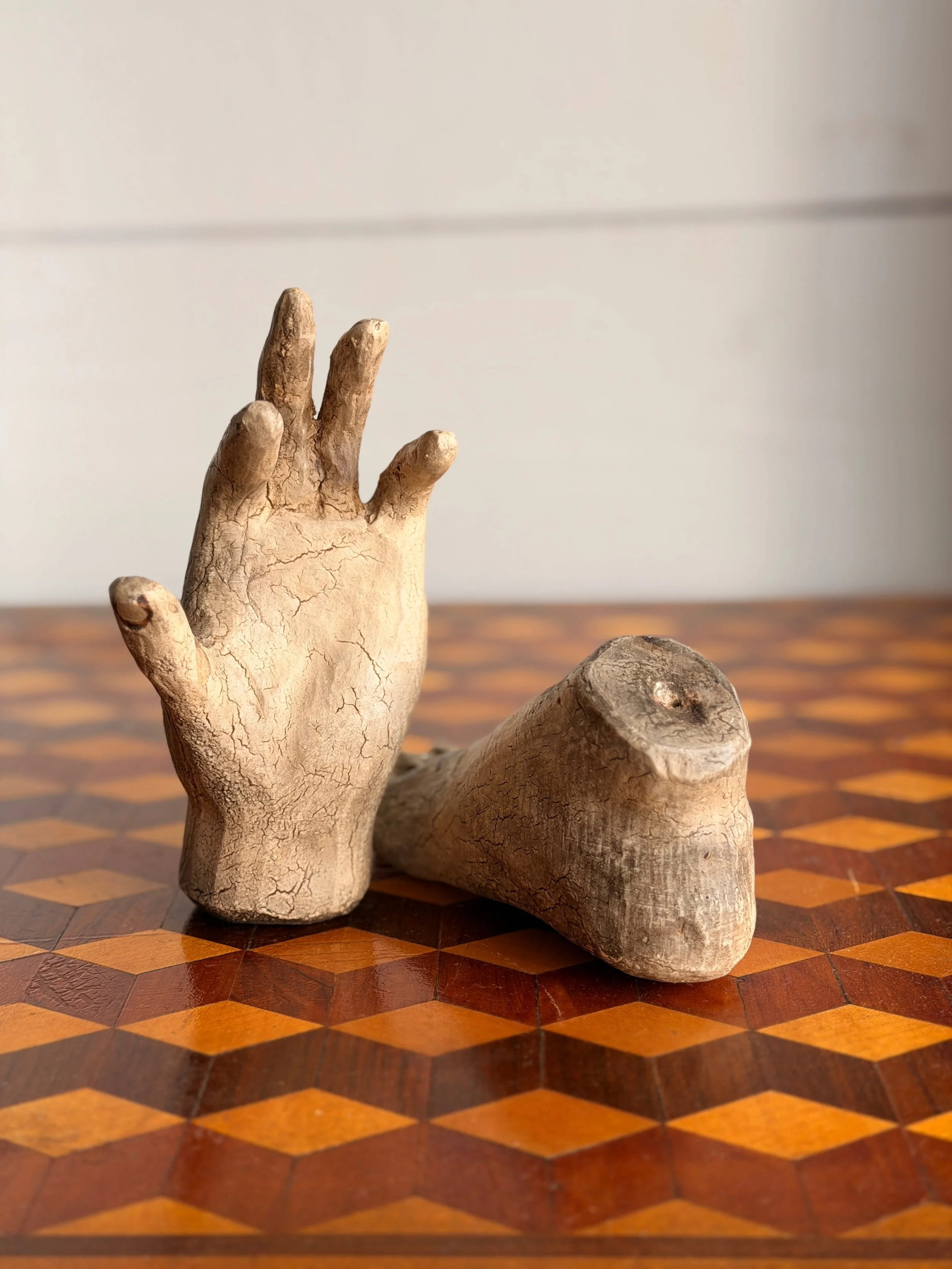
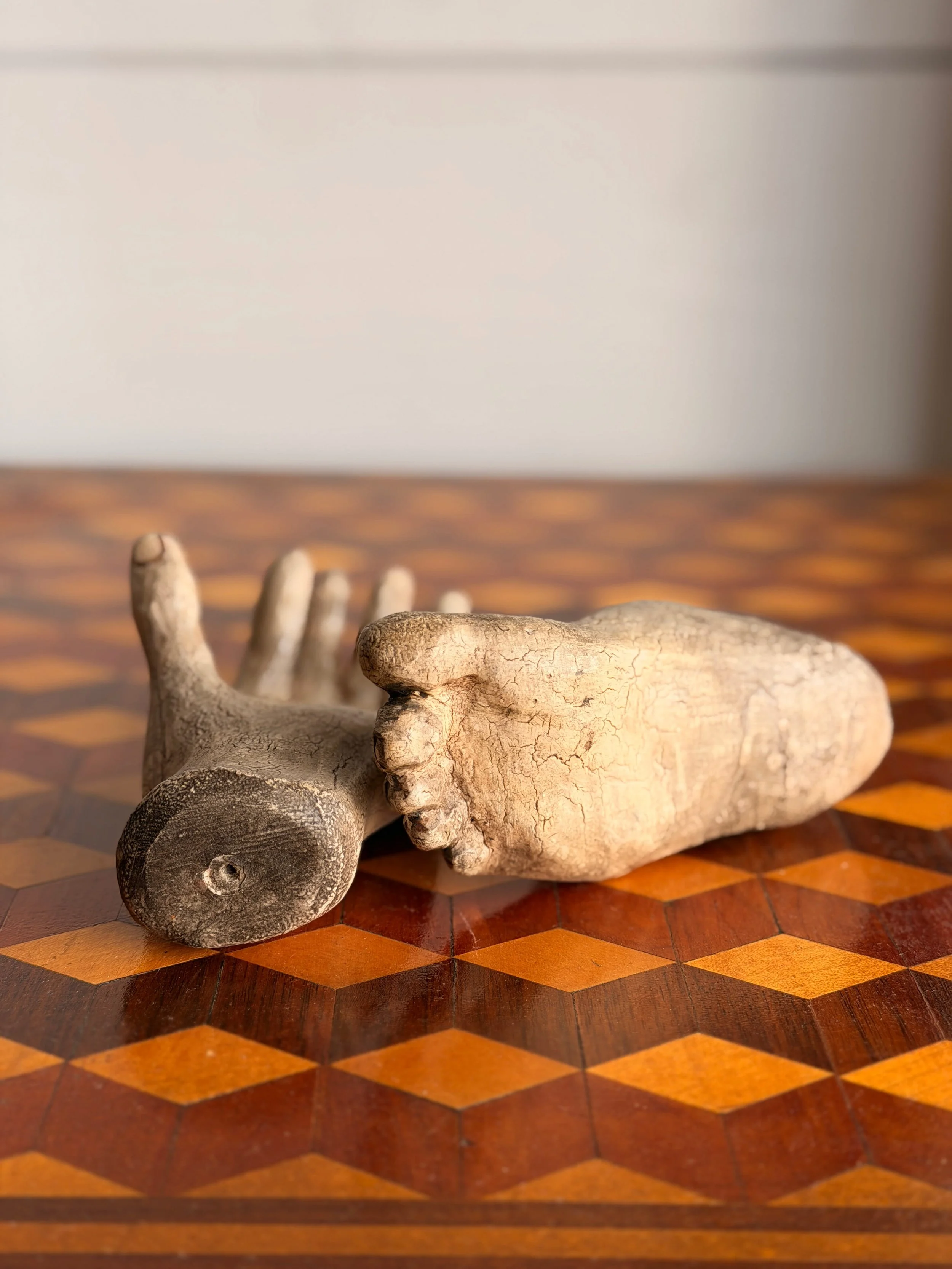
A quiet thank you, carved in wood and carried across time. This French Ex Voto pair, dated 1864, takes the form of a hand and foot—direct, personal, and unmistakably human. These weren’t made to impress, but to give thanks. At some point, someone faced an injury serious enough to turn to prayer, and lived to return the favor.
Ex votos like these were offered at shrines in gratitude for healing, often representing the exact body parts restored. The hand and foot here tell a clear story—whatever happened, it affected both, and the outcome felt nothing short of miraculous.
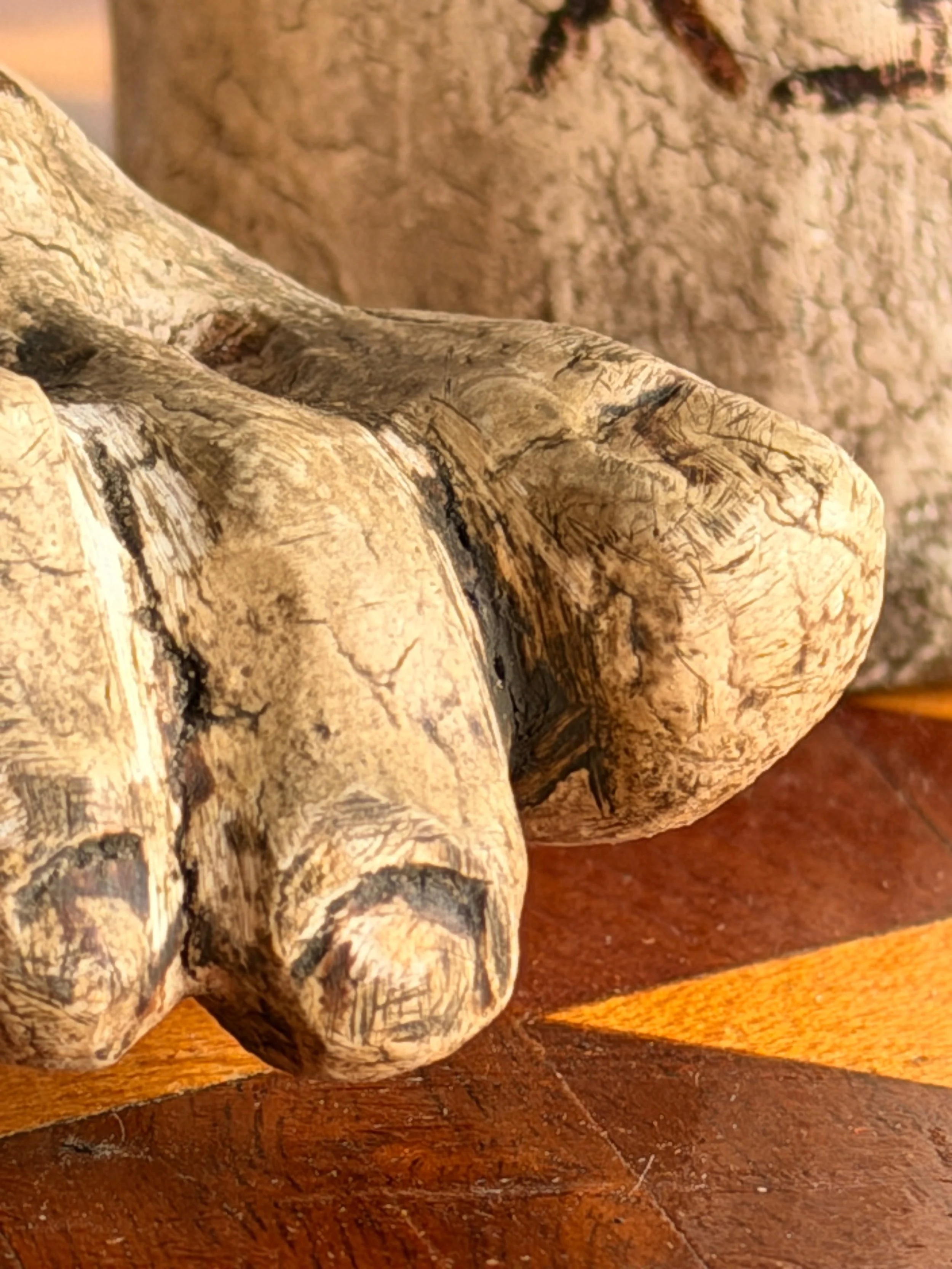
Beautifully worn with a dry, cracked surface and simple inked inscription, they carry the kind of patina you can’t fake. The carving is naive in the best way—honest, slightly irregular, full of character. Today, they read as sculptural objects, but their real presence comes from the story they hold: part faith, part survival, and entirely human.
Hand: 6" H × 3" W × 3" D
Foot: 3" H × 2.5" W × 2.5" D
France, 19th century
Category History
Ex votos are thank-you notes made solid. The term comes from the Latin “ex voto suscepto,” meaning “from a vow fulfilled,” and they’ve been used for centuries across Catholic cultures. Offered at shrines or churches, these objects mark a moment when something went wrong—and then, somehow, right.
They take many forms: small paintings, metal plaques, carved body parts, personal items. A healed leg, a saved ship, a survived illness—all translated into something tangible and left behind in gratitude. Materials are often simple—wood, tin, wax—but the intention is direct.
What makes ex votos compelling is their specificity. They aren’t abstract symbols; they point to real events, real people, real stakes. Often inscribed or depicted in detail, they read like condensed stories.
Over time, they gather together in clusters, turning individual experiences into a collective record. Not polished, not anonymous—just quiet acknowledgments of something endured and something received.
A quiet thank you, carved in wood and carried across time. This French Ex Voto pair, dated 1864, takes the form of a hand and foot—direct, personal, and unmistakably human. These weren’t made to impress, but to give thanks. At some point, someone faced an injury serious enough to turn to prayer, and lived to return the favor.
Ex votos like these were offered at shrines in gratitude for healing, often representing the exact body parts restored. The hand and foot here tell a clear story—whatever happened, it affected both, and the outcome felt nothing short of miraculous.
Beautifully worn with a dry, cracked surface and simple inked inscription, they carry the kind of patina you can’t fake. The carving is naive in the best way—honest, slightly irregular, full of character. Today, they read as sculptural objects, but their real presence comes from the story they hold: part faith, part survival, and entirely human.
Hand: 6" H × 3" W × 3" D
Foot: 3" H × 2.5" W × 2.5" D
France, 19th century
Category History
Ex votos are thank-you notes made solid. The term comes from the Latin “ex voto suscepto,” meaning “from a vow fulfilled,” and they’ve been used for centuries across Catholic cultures. Offered at shrines or churches, these objects mark a moment when something went wrong—and then, somehow, right.
They take many forms: small paintings, metal plaques, carved body parts, personal items. A healed leg, a saved ship, a survived illness—all translated into something tangible and left behind in gratitude. Materials are often simple—wood, tin, wax—but the intention is direct.
What makes ex votos compelling is their specificity. They aren’t abstract symbols; they point to real events, real people, real stakes. Often inscribed or depicted in detail, they read like condensed stories.
Over time, they gather together in clusters, turning individual experiences into a collective record. Not polished, not anonymous—just quiet acknowledgments of something endured and something received.