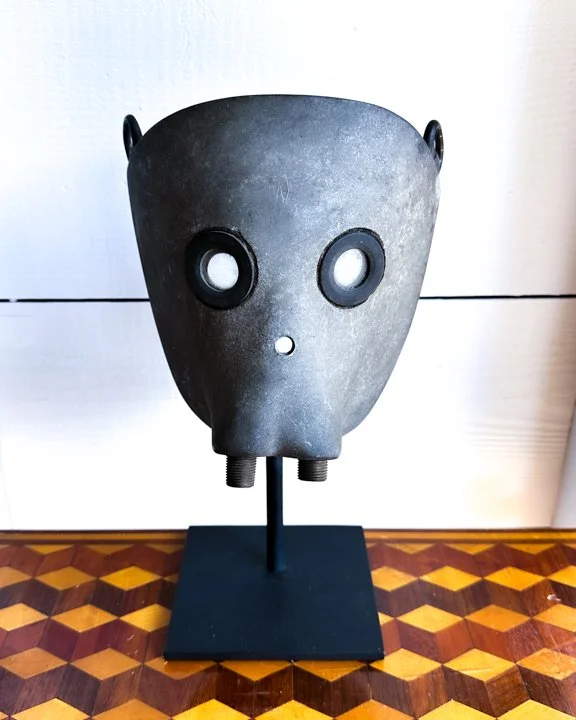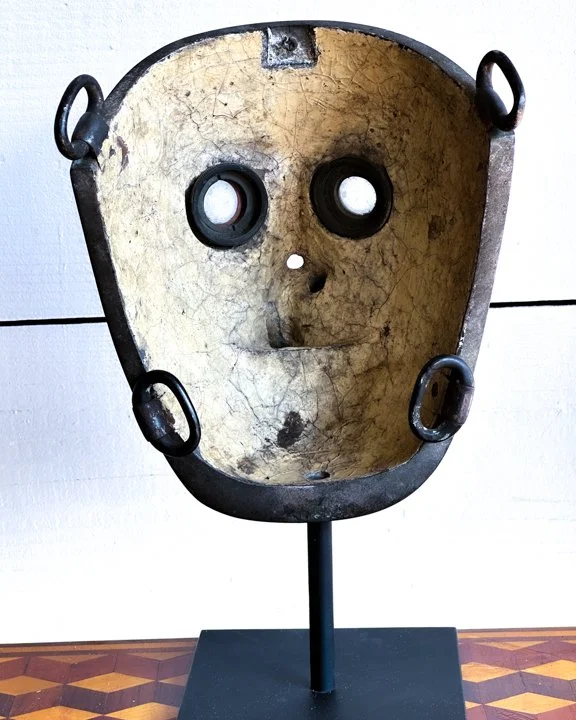
Some objects don’t just hang on a wall, they look back at you.
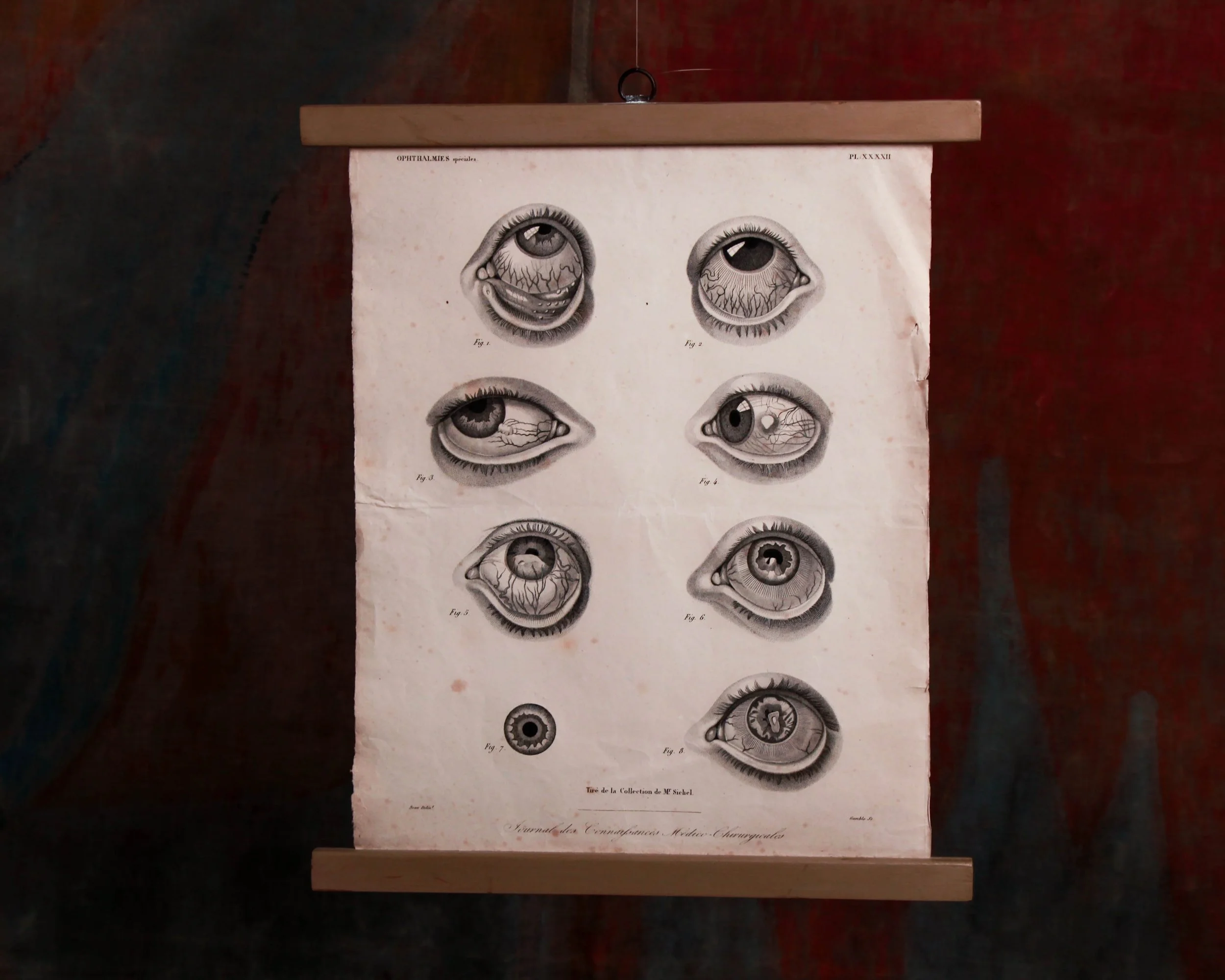
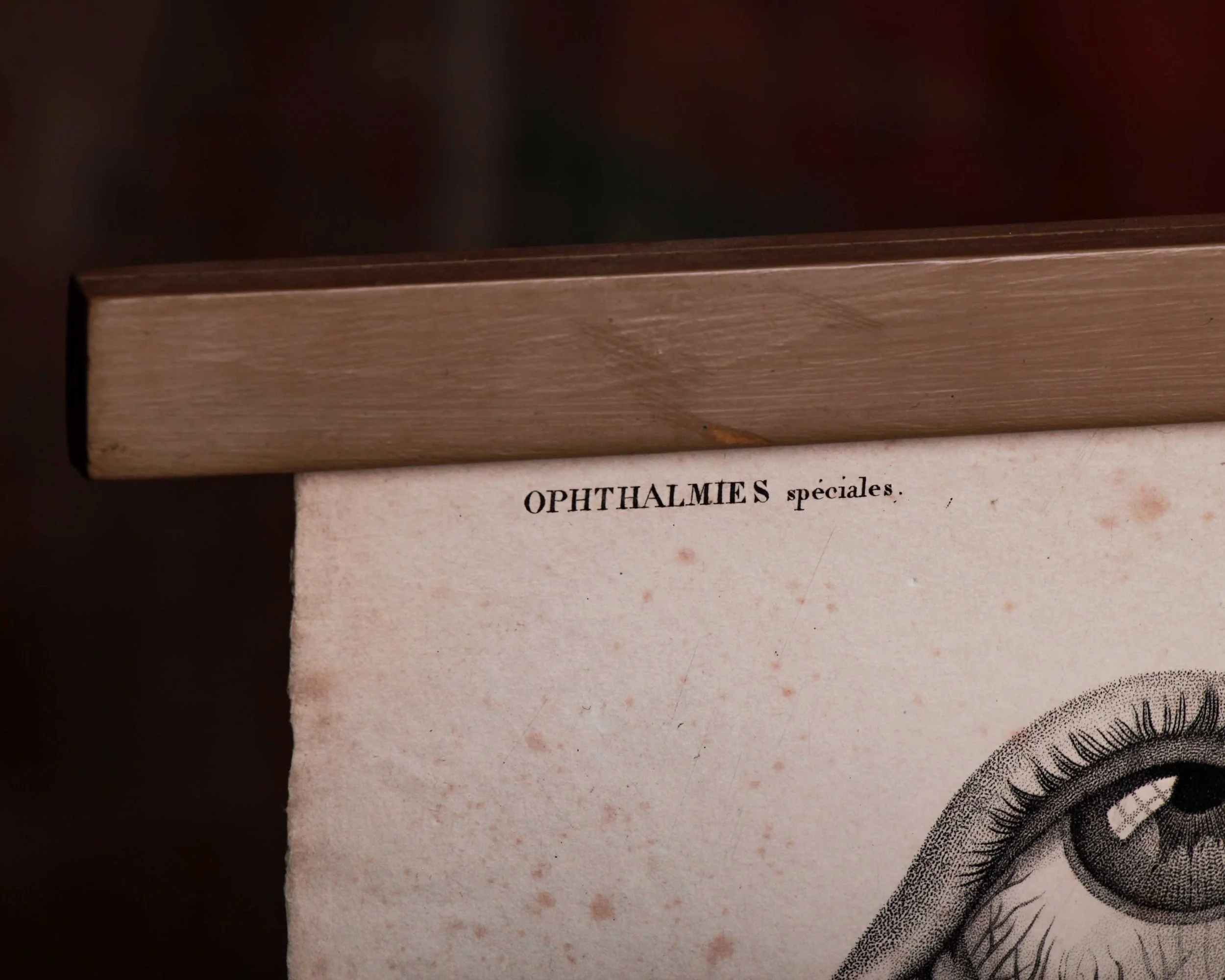
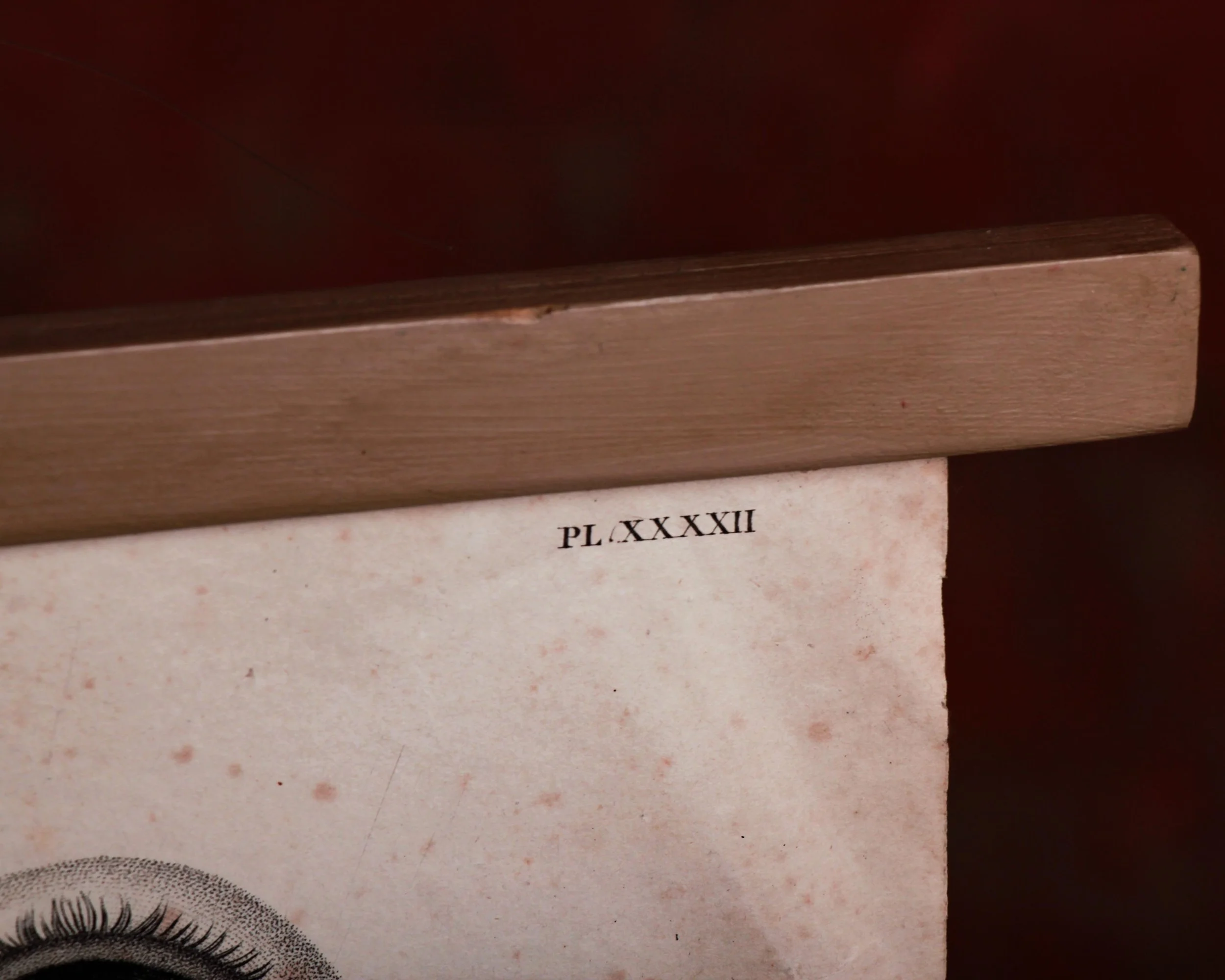
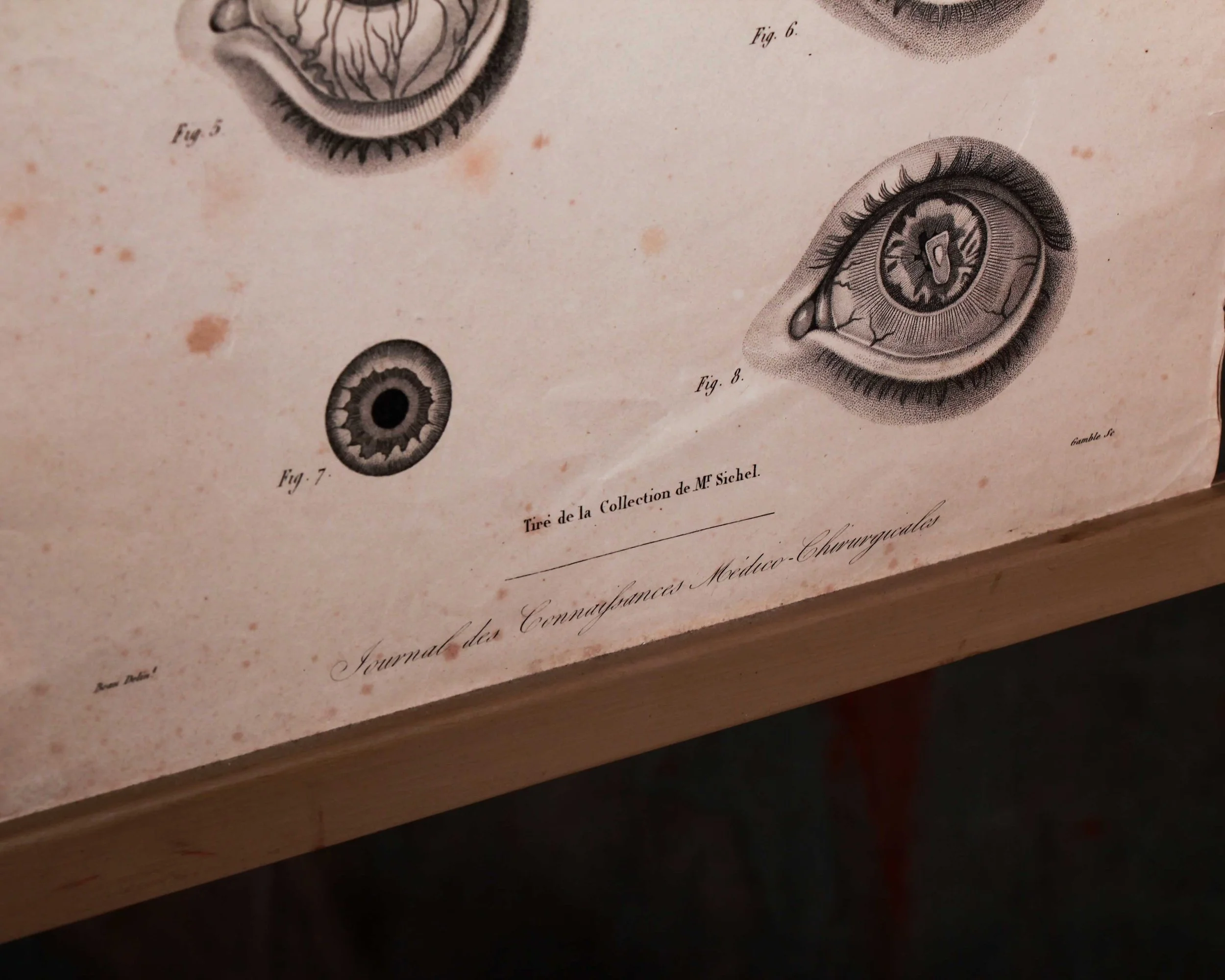
This is a 19th century French ophthalmological lithograph, a study of the human eye rendered with the kind of precision that sits somewhere between science and obsession. Titled “Ophtalmies spéciales” and pulled from a medical journal—Journal des Connaissances Médico-Chirurgicales—this plate would have originally served as a teaching aid, helping physicians and students understand the many conditions and structures of the eye at a time when modern ophthalmology was still finding its footing.
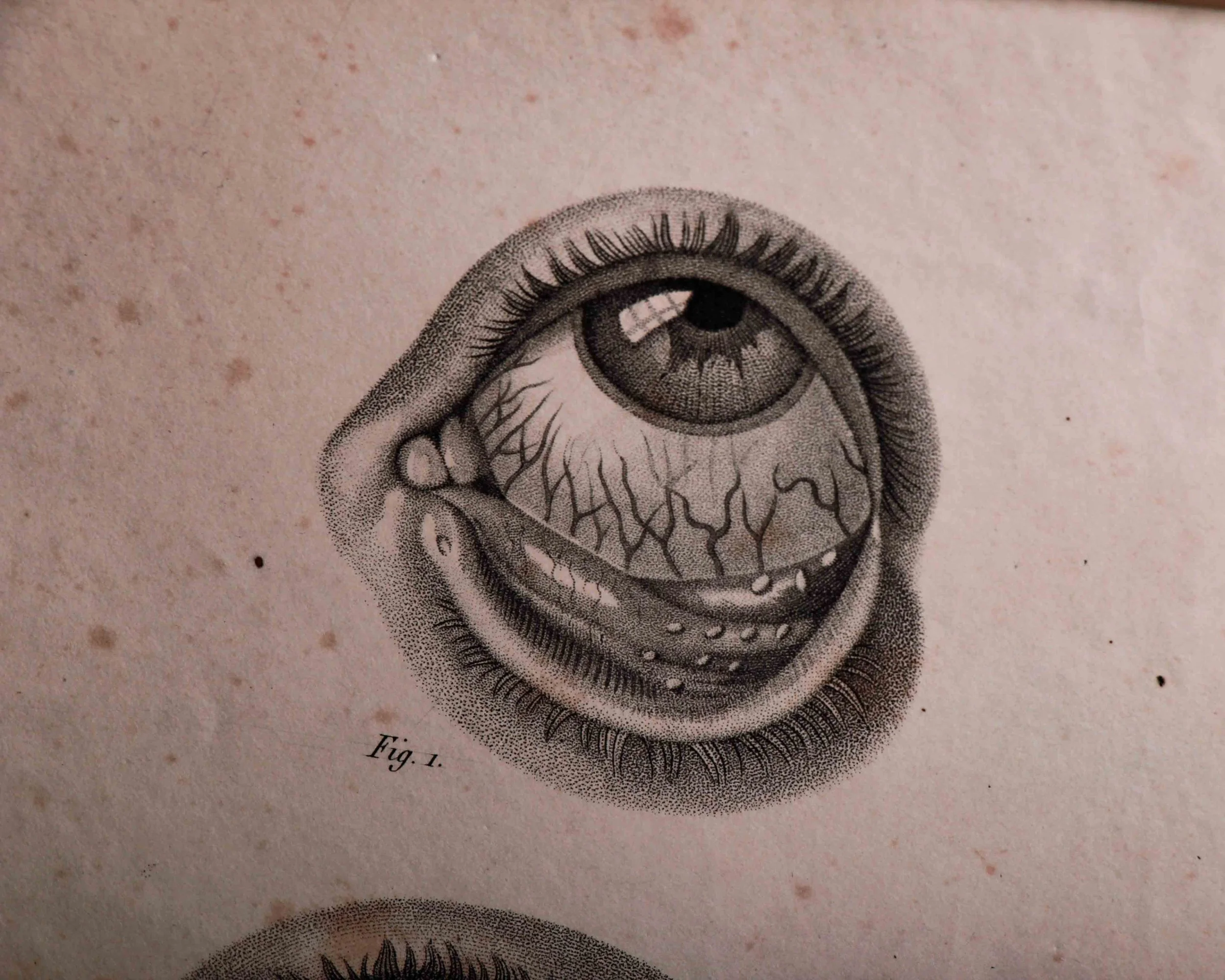
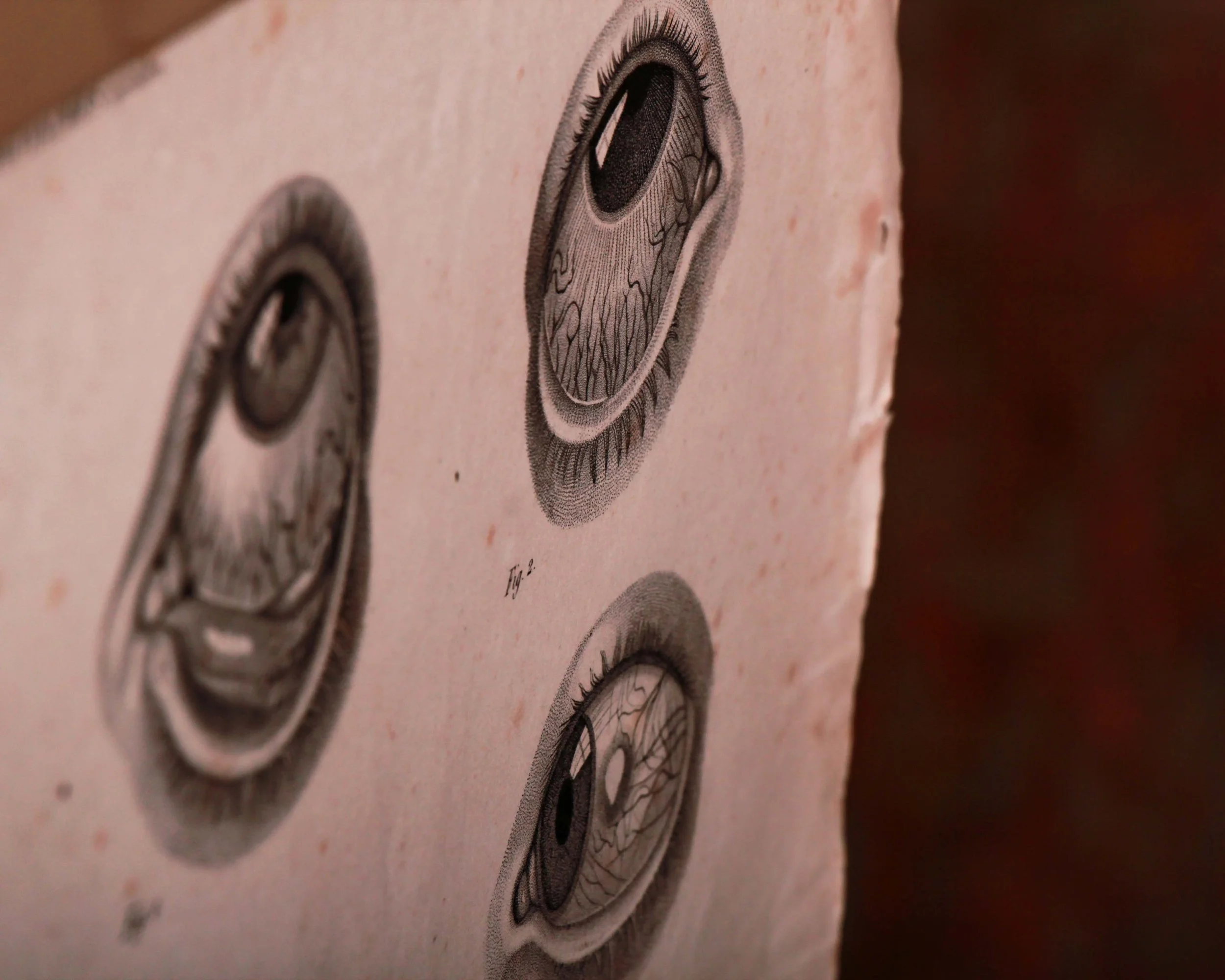
Each vignette isolates the eye in a different state, peeled back, examined, diagrammed. There’s something undeniably clinical about it, but also strangely intimate. The lashes are delicate, the veins carefully traced, the shading soft and deliberate. It’s not just anatomy, it’s interpretation. You can feel the artist working alongside the physician, translating observation into something legible, repeatable, and just a little bit haunting.
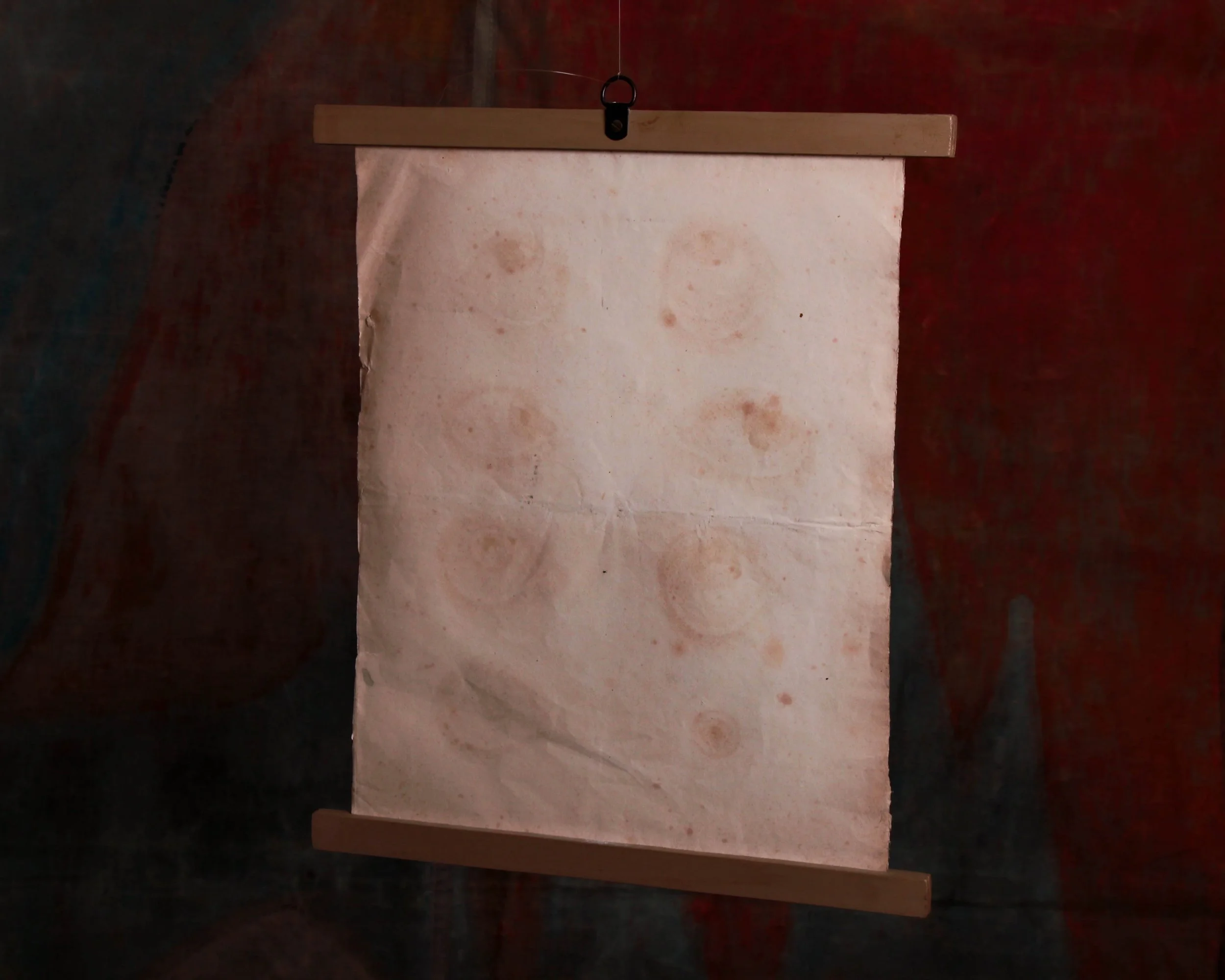
Lithography, which gained traction in the early 19th century, allowed for this level of detail to be reproduced with remarkable fidelity. Before photography took over, this was how knowledge traveled—drawn, inked, pressed, and distributed. Plates like this were often handled, referenced, folded, and filed away, which explains the gentle creases, foxing, and scattered age spots across the surface. Nothing distracting, just the quiet patina of use and time.
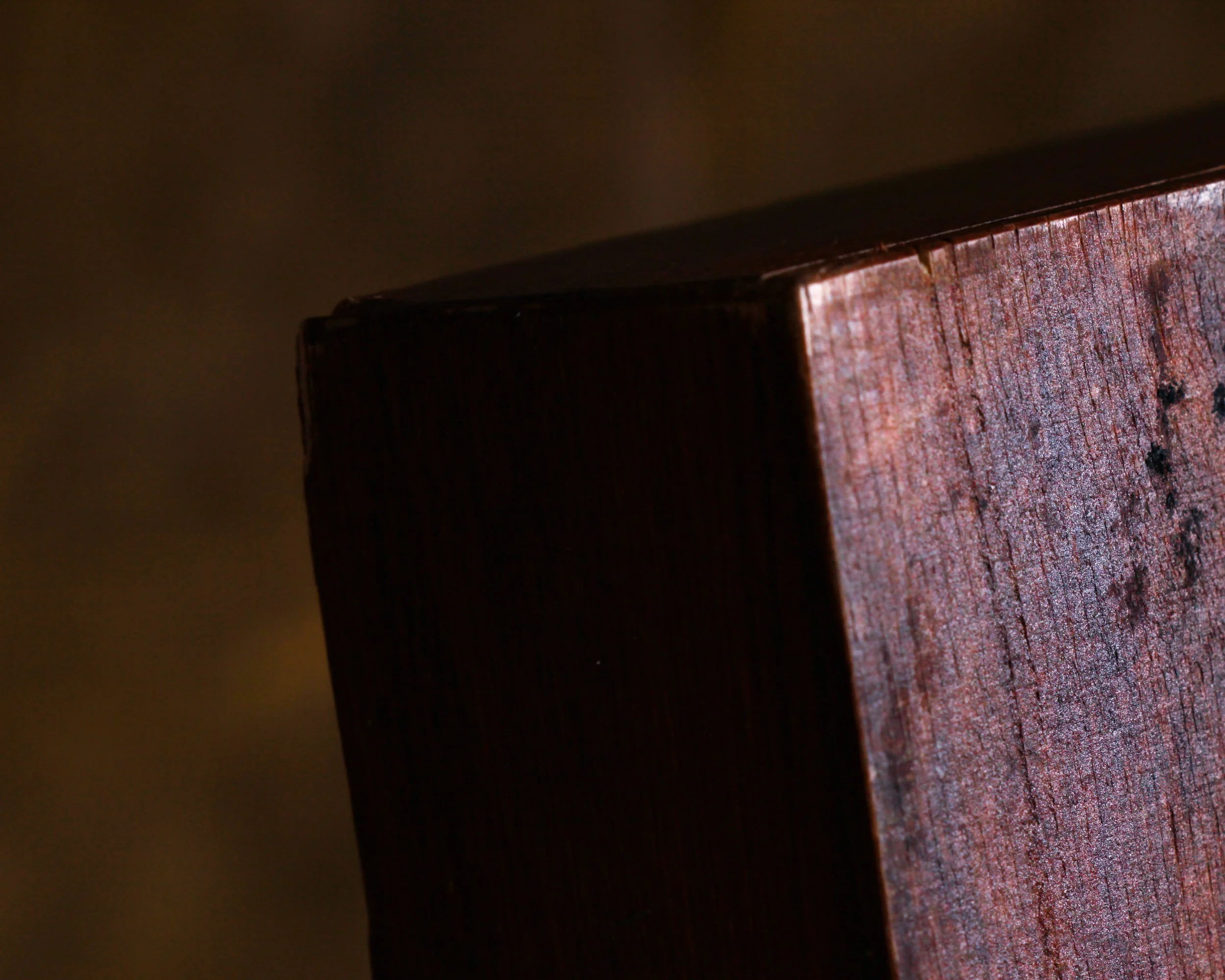
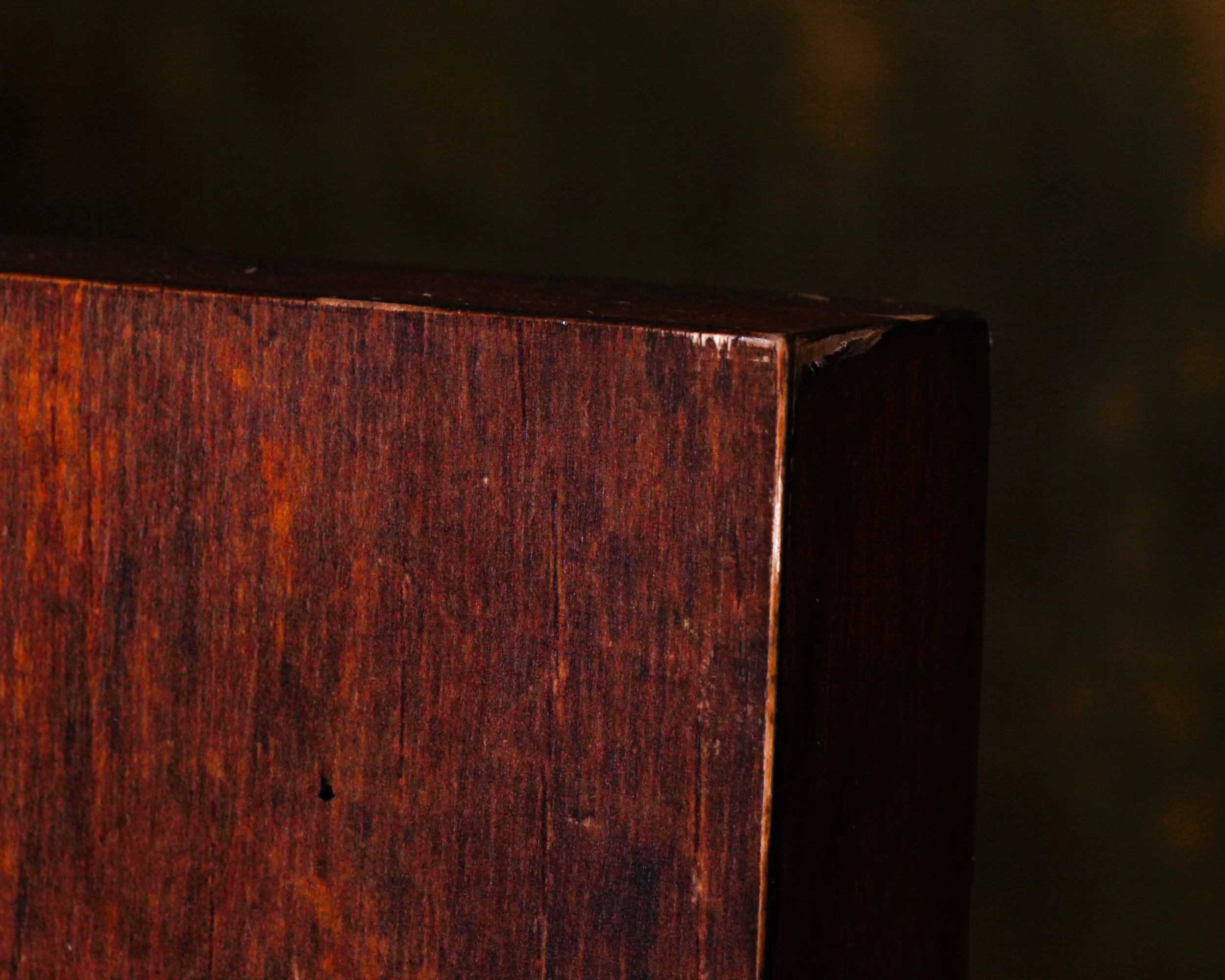
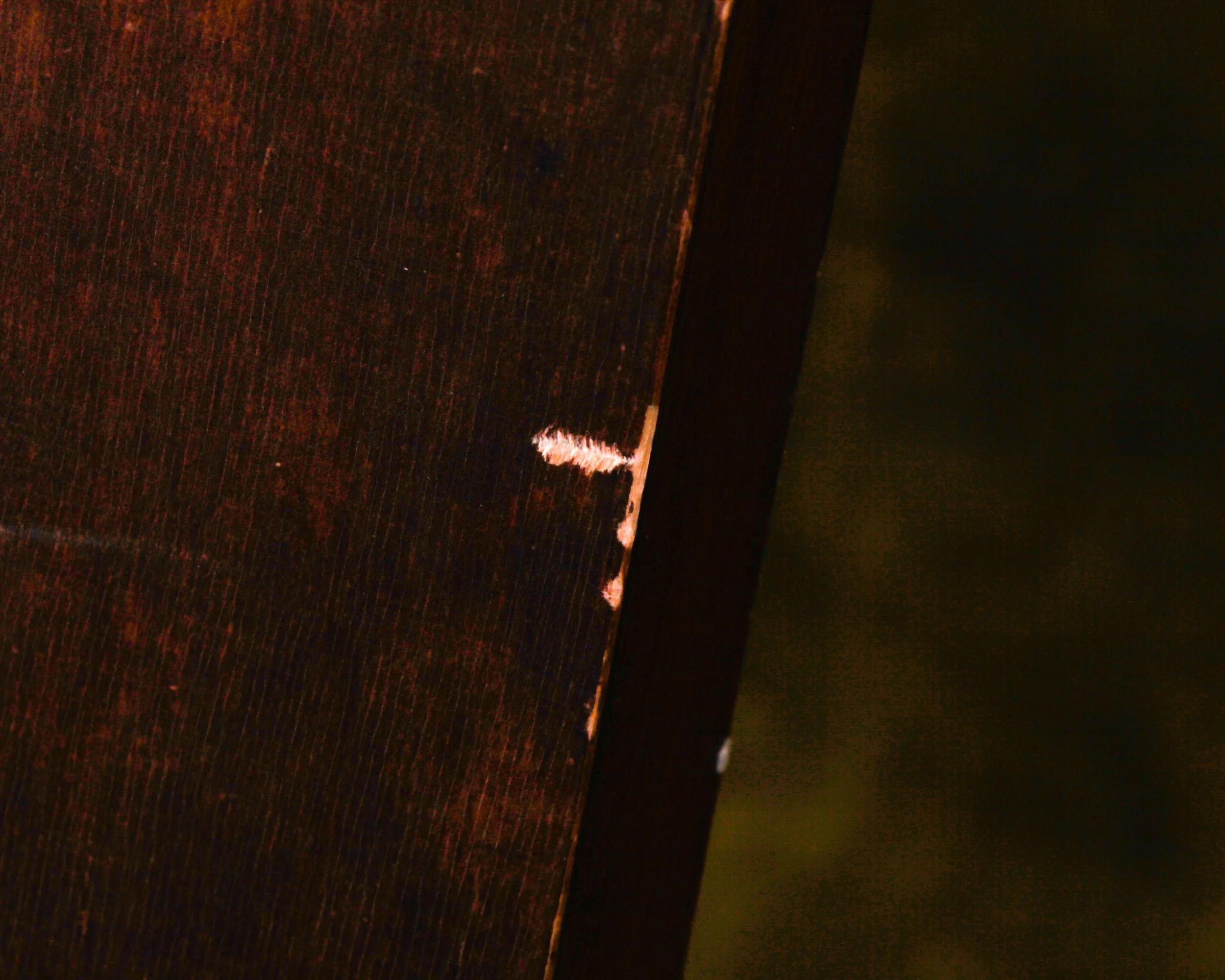
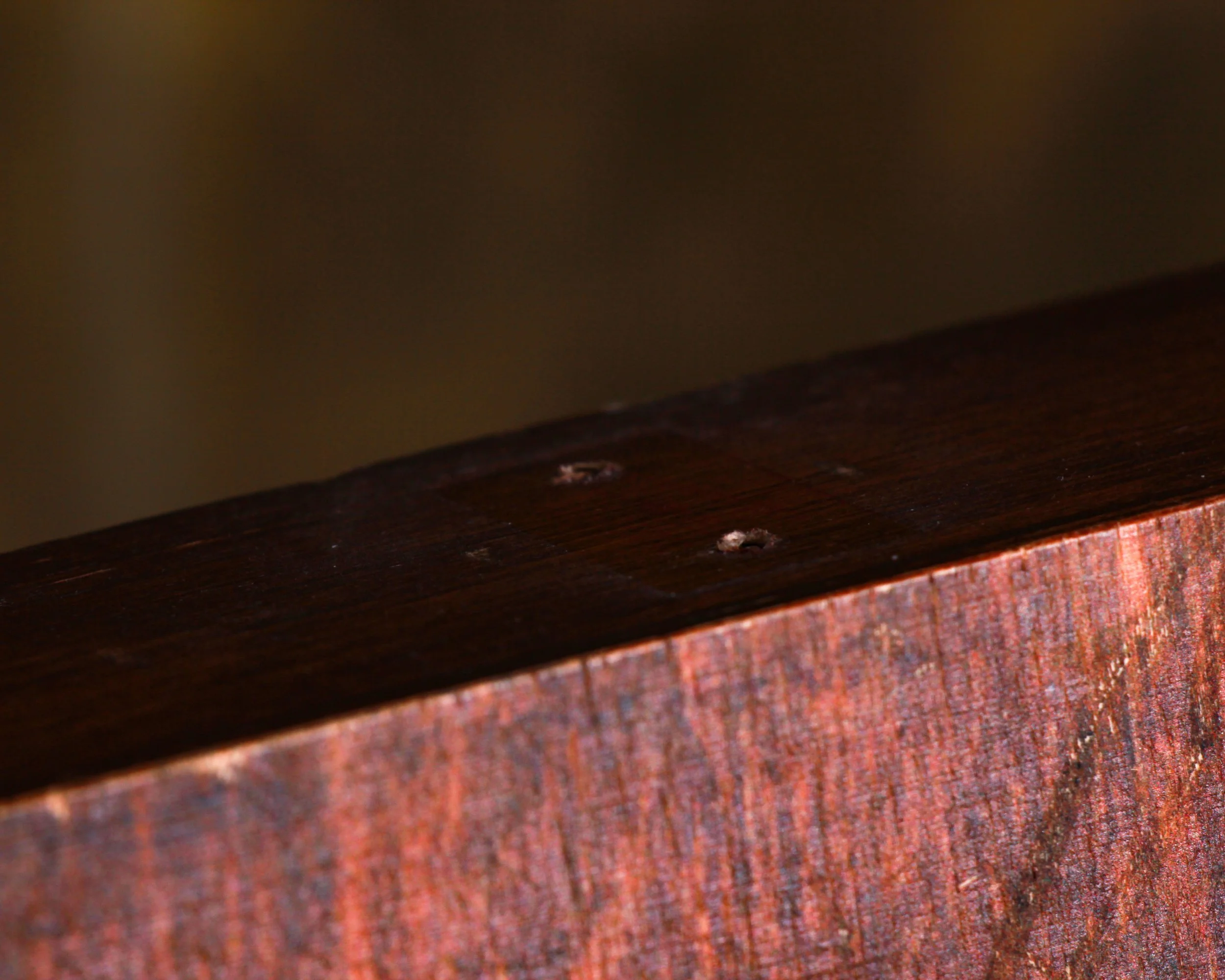
What makes this example especially appealing is its presentation. Mounted in a detachable wooden hanger, it reads less like a page torn from a book and more like an object reclaimed. The edges remain slightly irregular, the paper soft with age, the ink still crisp where it matters most.
It’s a reminder of a time when understanding the body required patience, observation, and a steady hand. And in this case, a willingness to stare directly into the eye and keep going.
Some objects don’t just hang on a wall, they look back at you.
This is a 19th century French ophthalmological lithograph, a study of the human eye rendered with the kind of precision that sits somewhere between science and obsession. Titled “Ophtalmies spéciales” and pulled from a medical journal—Journal des Connaissances Médico-Chirurgicales—this plate would have originally served as a teaching aid, helping physicians and students understand the many conditions and structures of the eye at a time when modern ophthalmology was still finding its footing.
Each vignette isolates the eye in a different state, peeled back, examined, diagrammed. There’s something undeniably clinical about it, but also strangely intimate. The lashes are delicate, the veins carefully traced, the shading soft and deliberate. It’s not just anatomy, it’s interpretation. You can feel the artist working alongside the physician, translating observation into something legible, repeatable, and just a little bit haunting.
Lithography, which gained traction in the early 19th century, allowed for this level of detail to be reproduced with remarkable fidelity. Before photography took over, this was how knowledge traveled—drawn, inked, pressed, and distributed. Plates like this were often handled, referenced, folded, and filed away, which explains the gentle creases, foxing, and scattered age spots across the surface. Nothing distracting, just the quiet patina of use and time.
What makes this example especially appealing is its presentation. Mounted in a detachable wooden hanger, it reads less like a page torn from a book and more like an object reclaimed. The edges remain slightly irregular, the paper soft with age, the ink still crisp where it matters most.
It’s a reminder of a time when understanding the body required patience, observation, and a steady hand. And in this case, a willingness to stare directly into the eye and keep going.