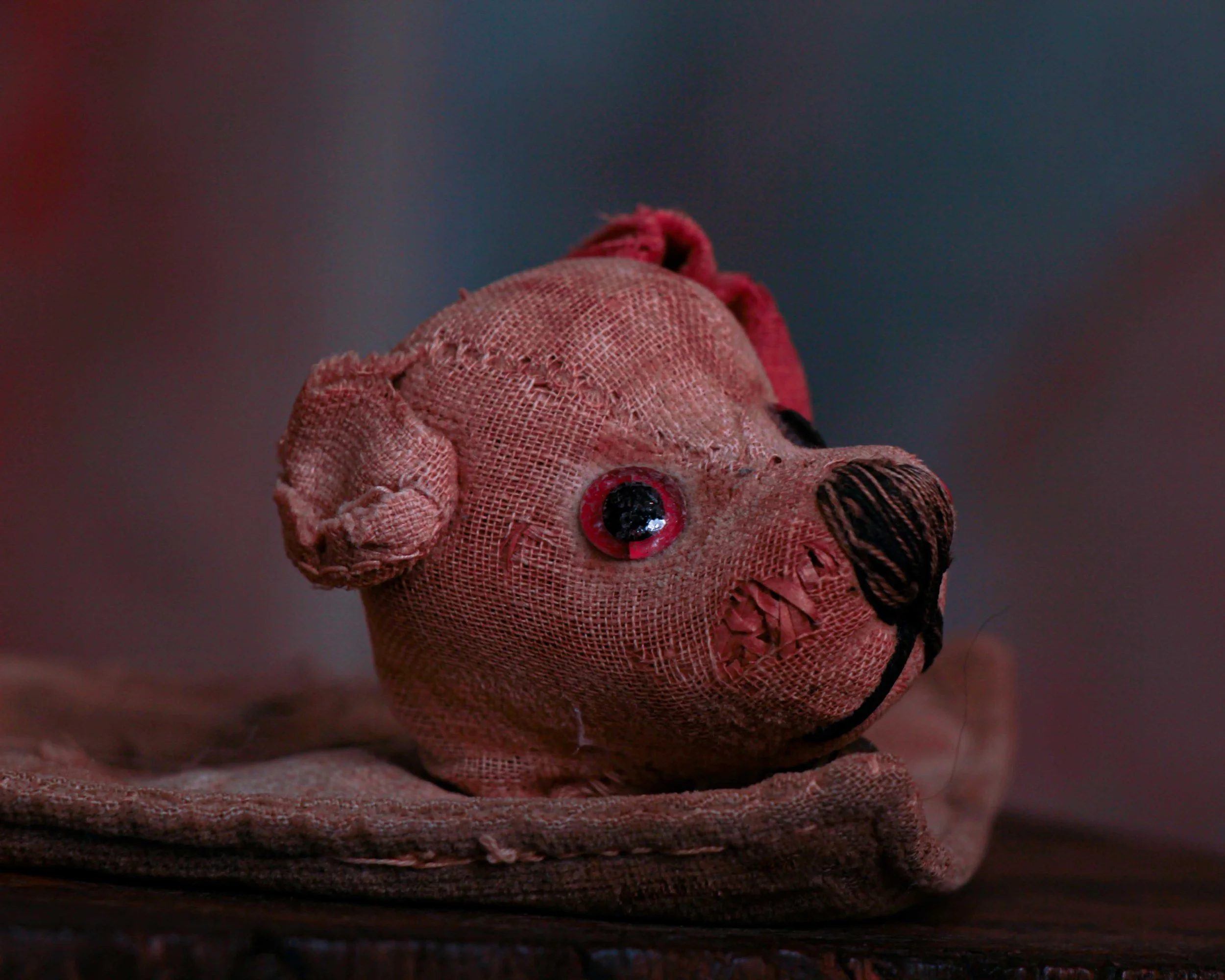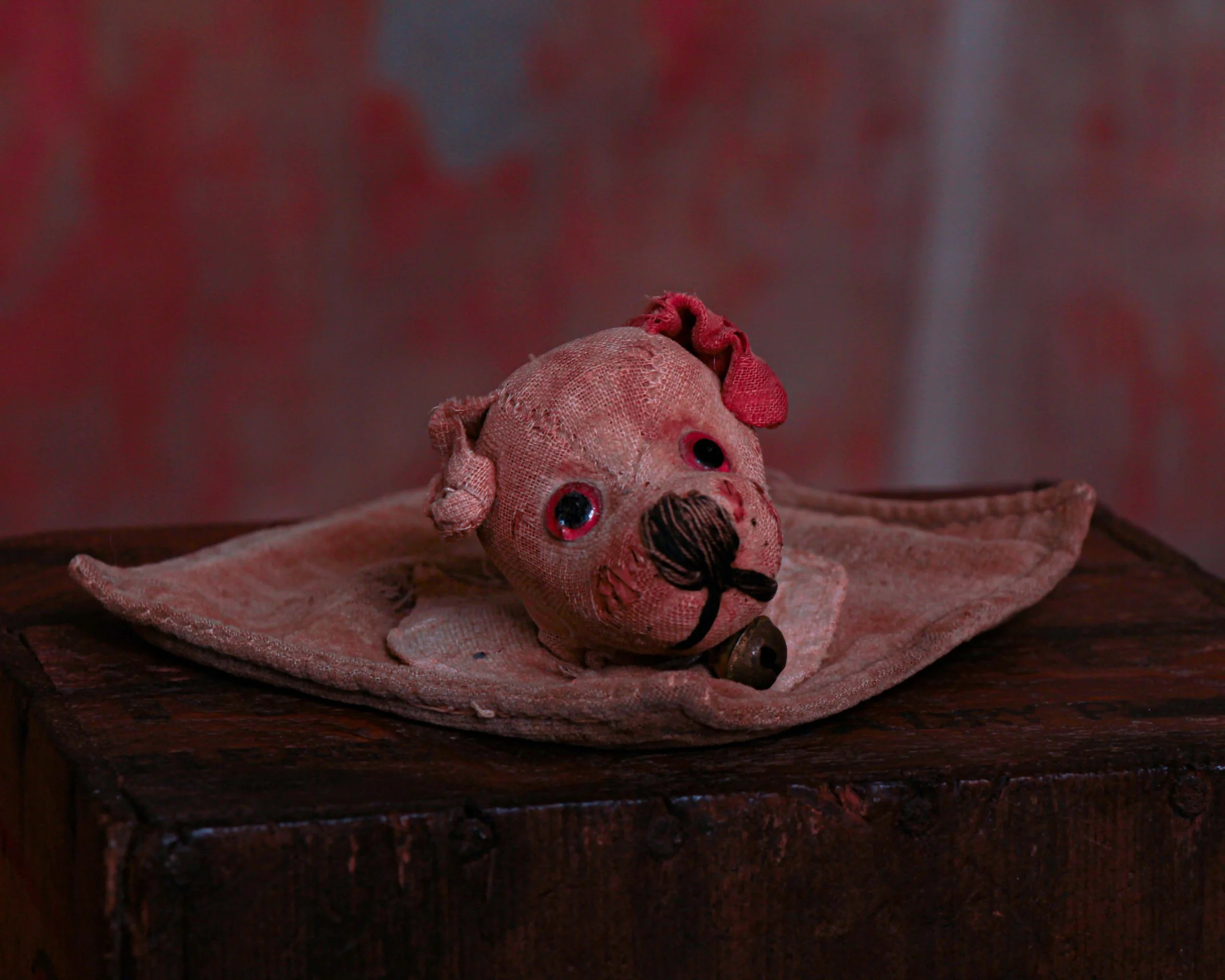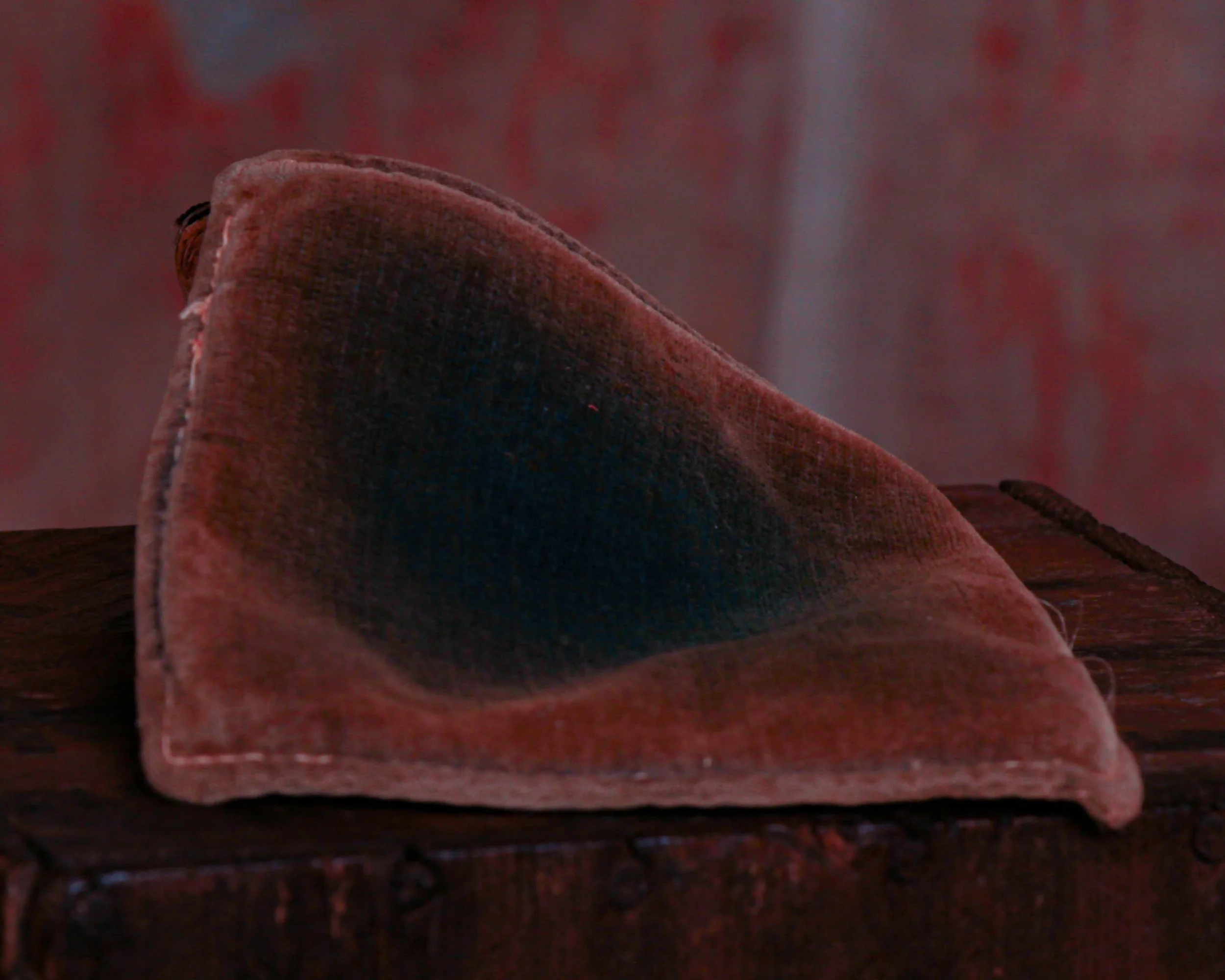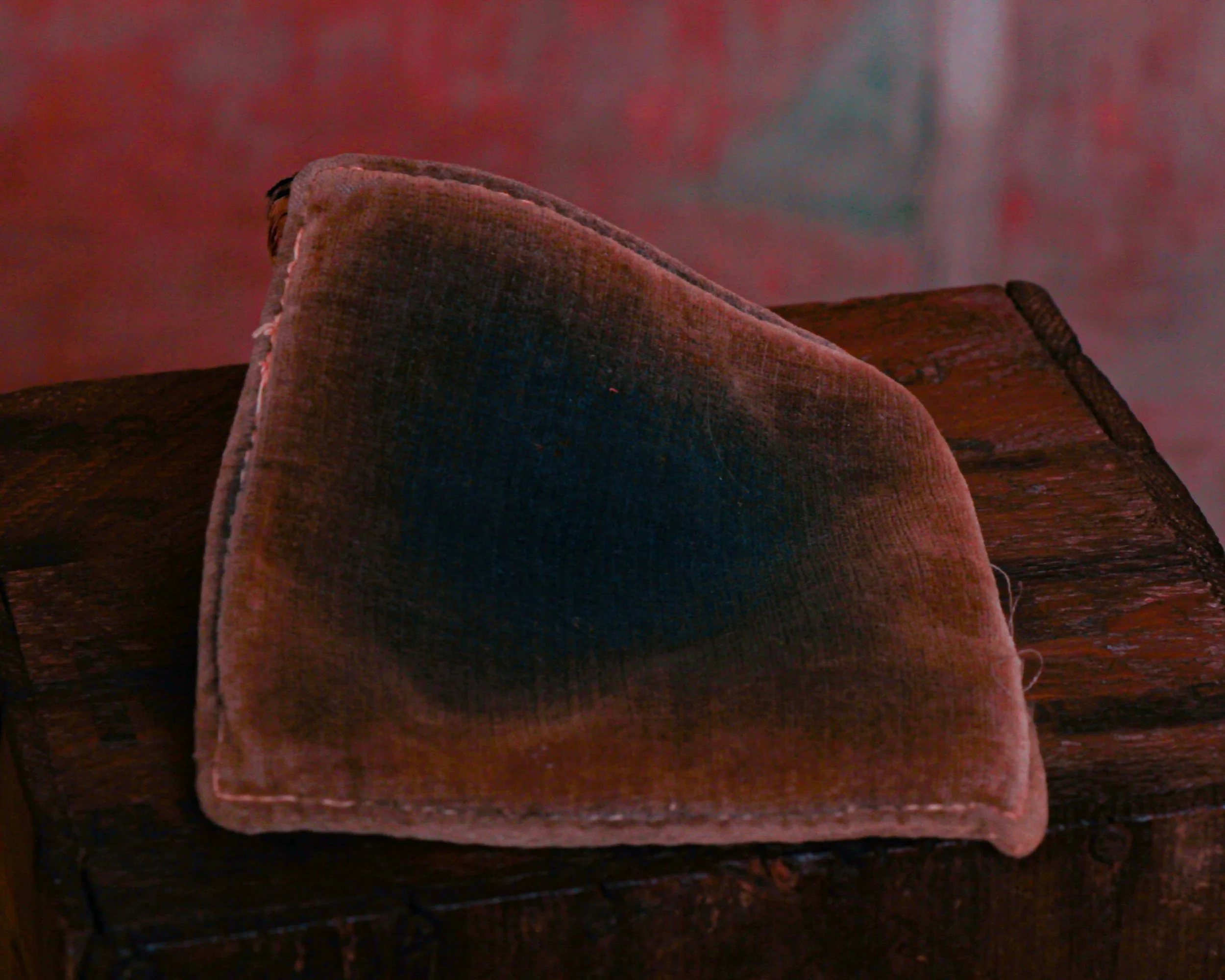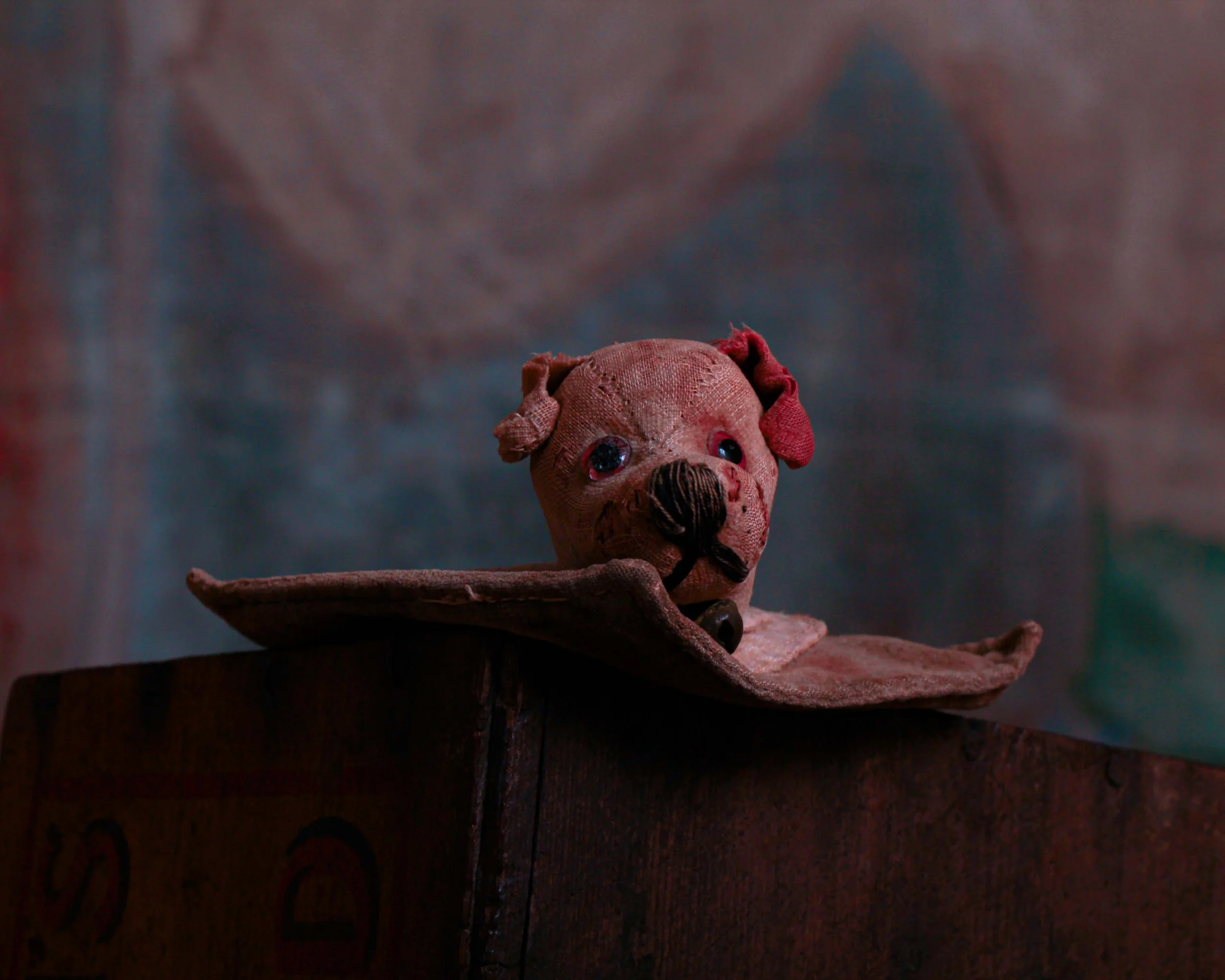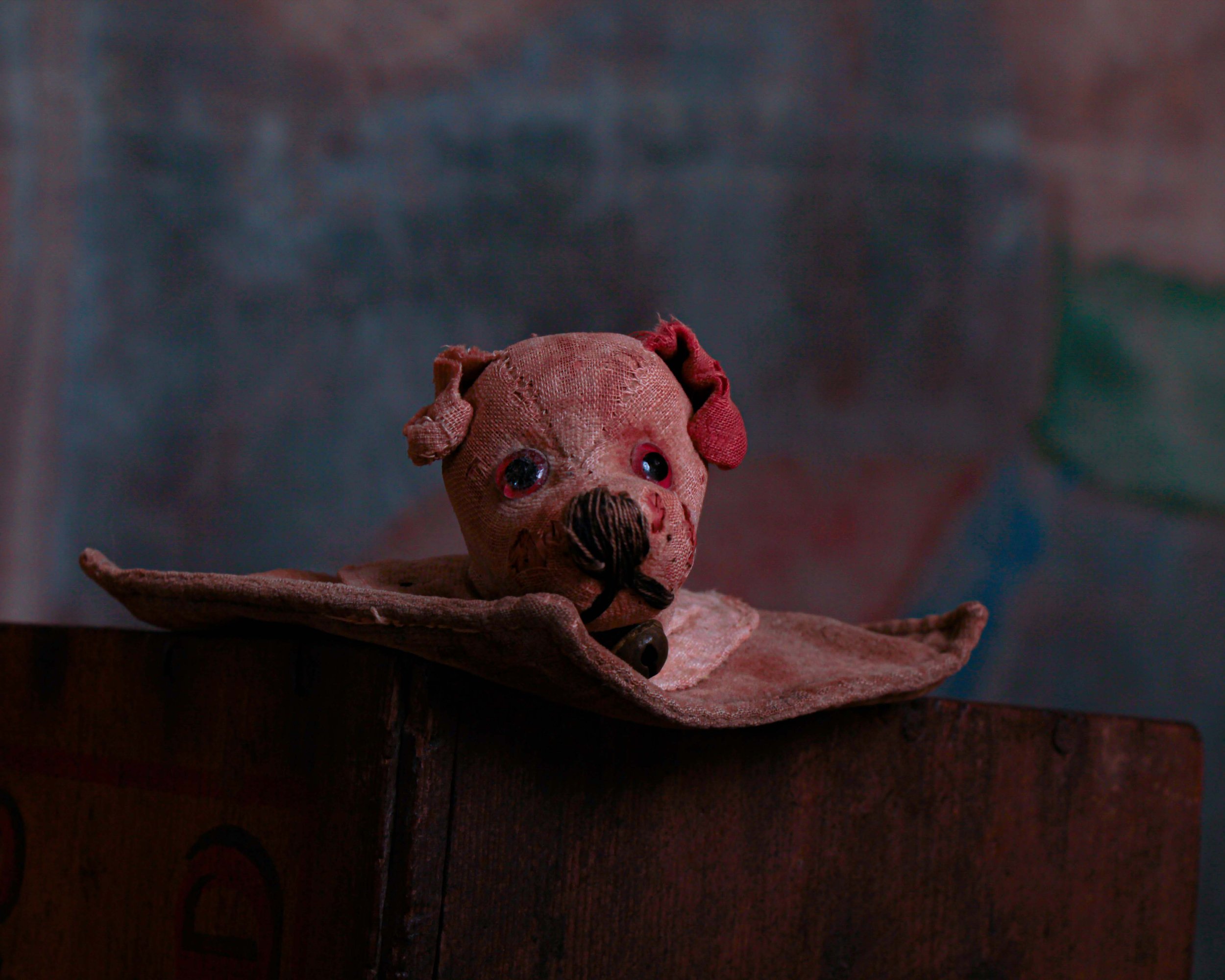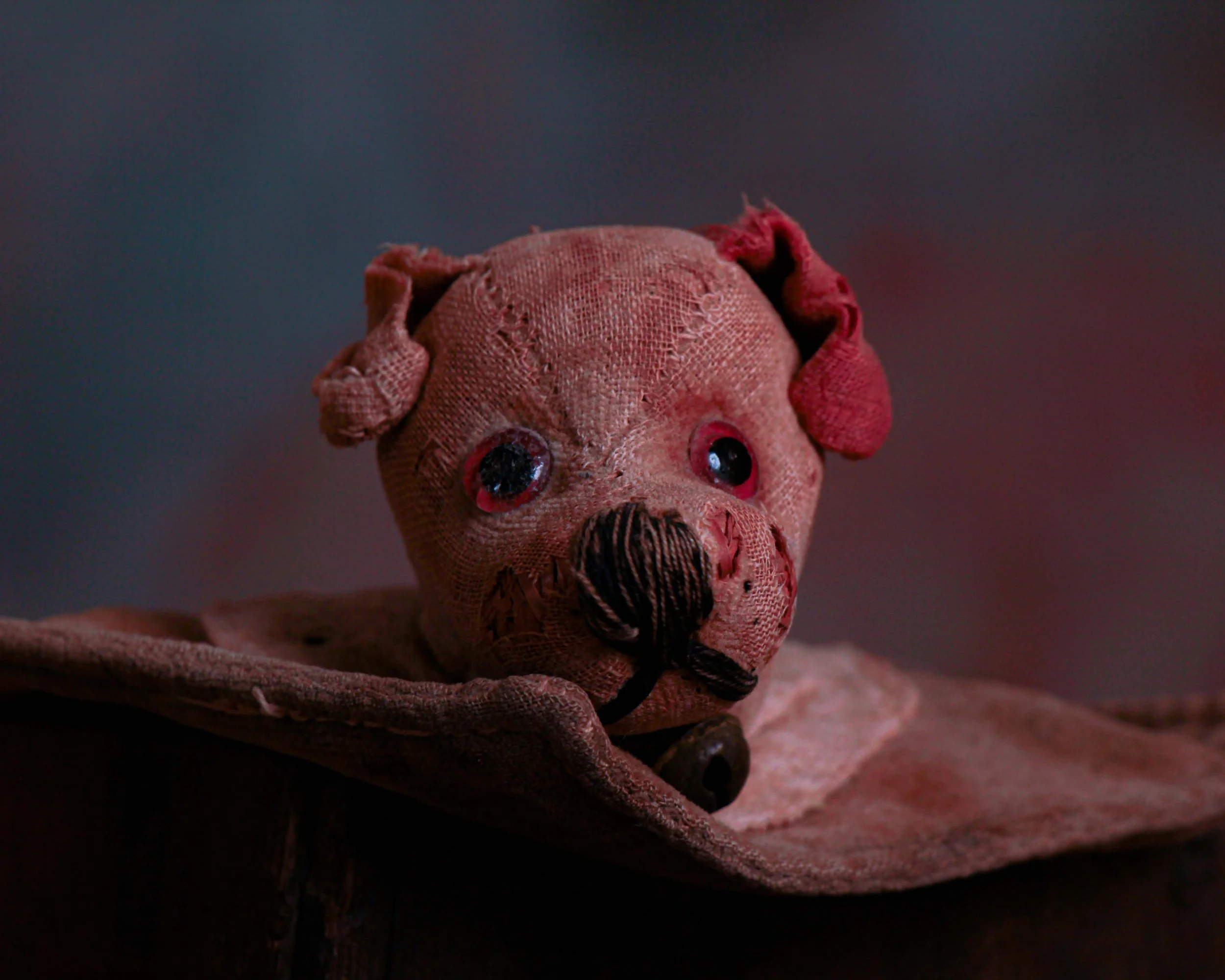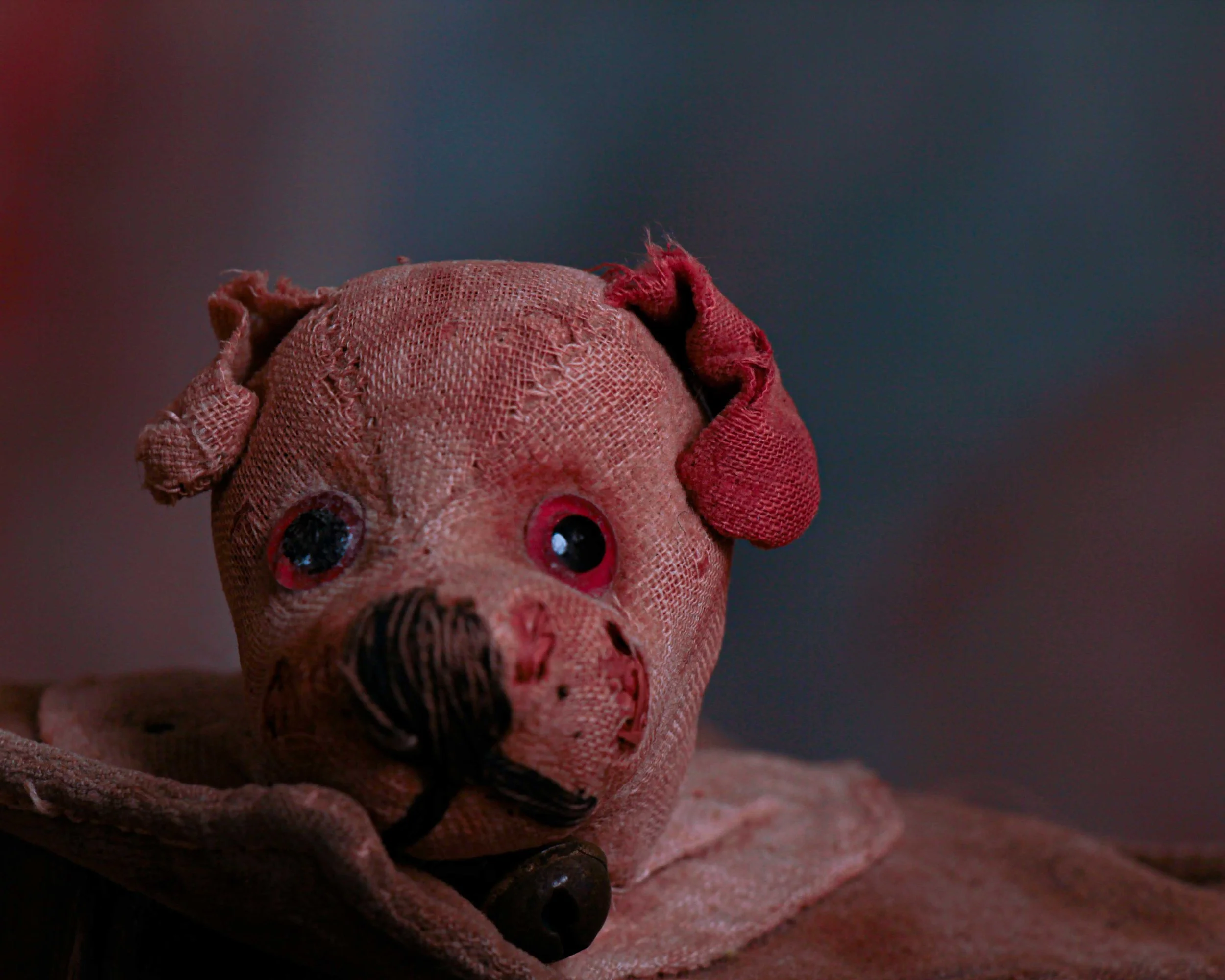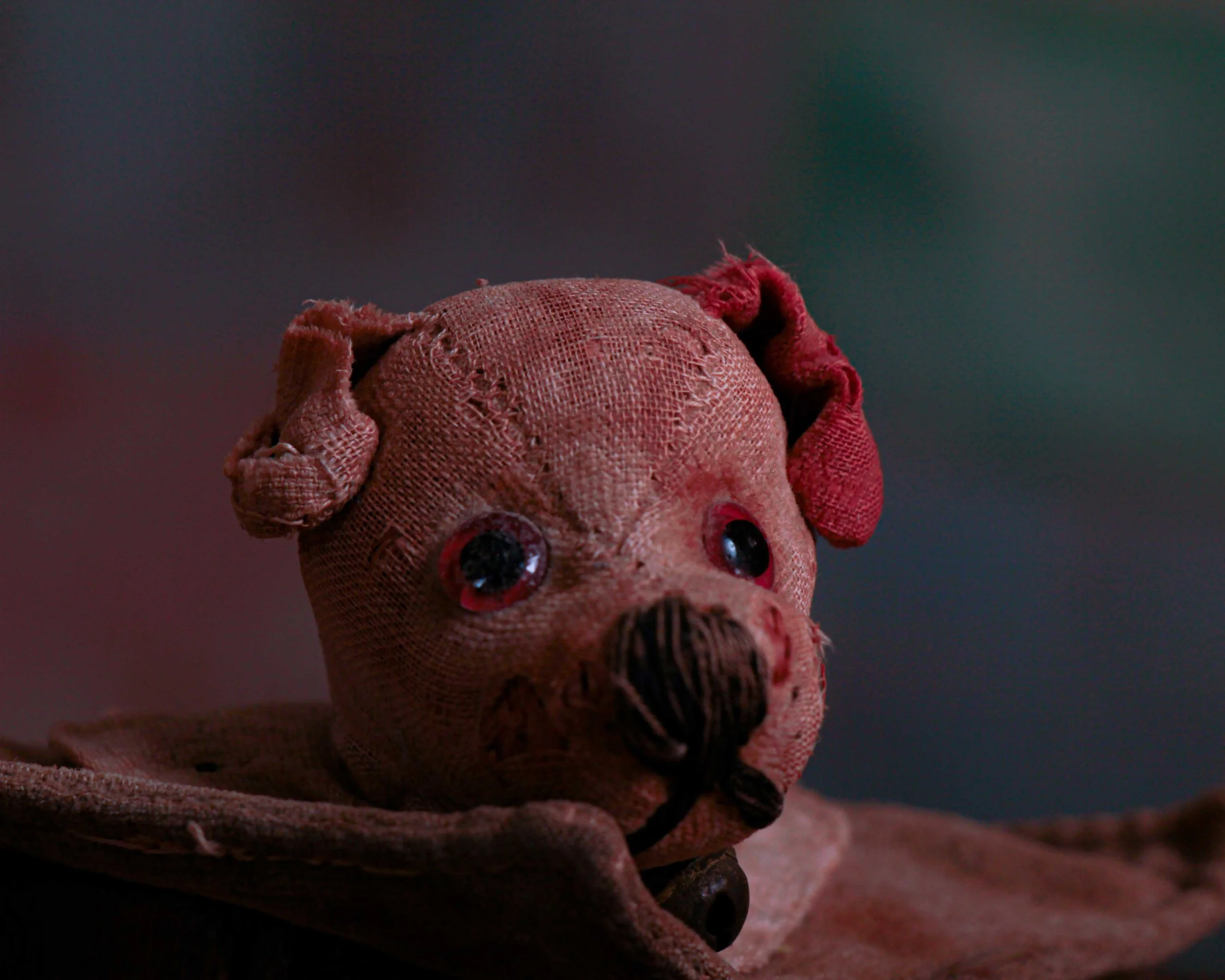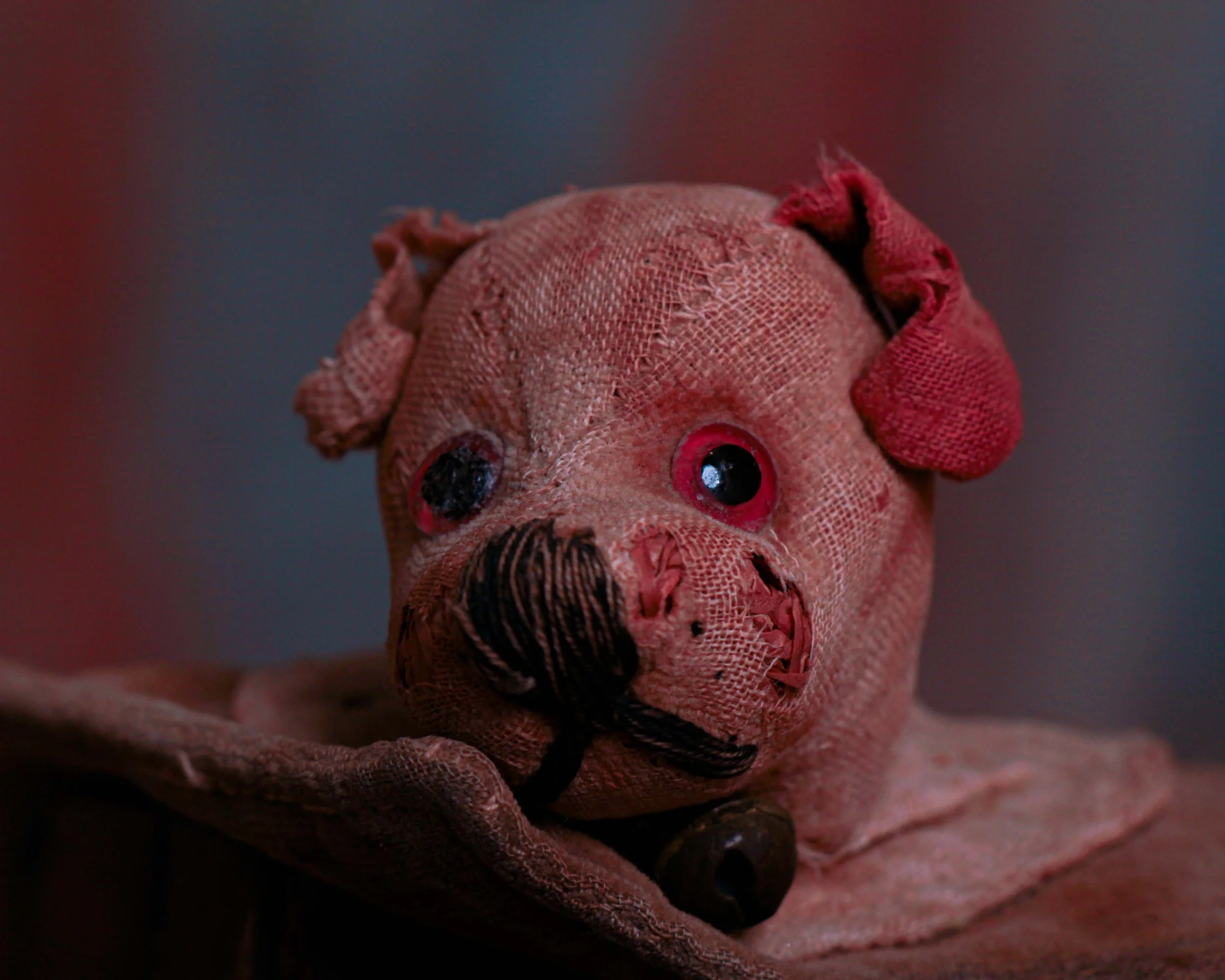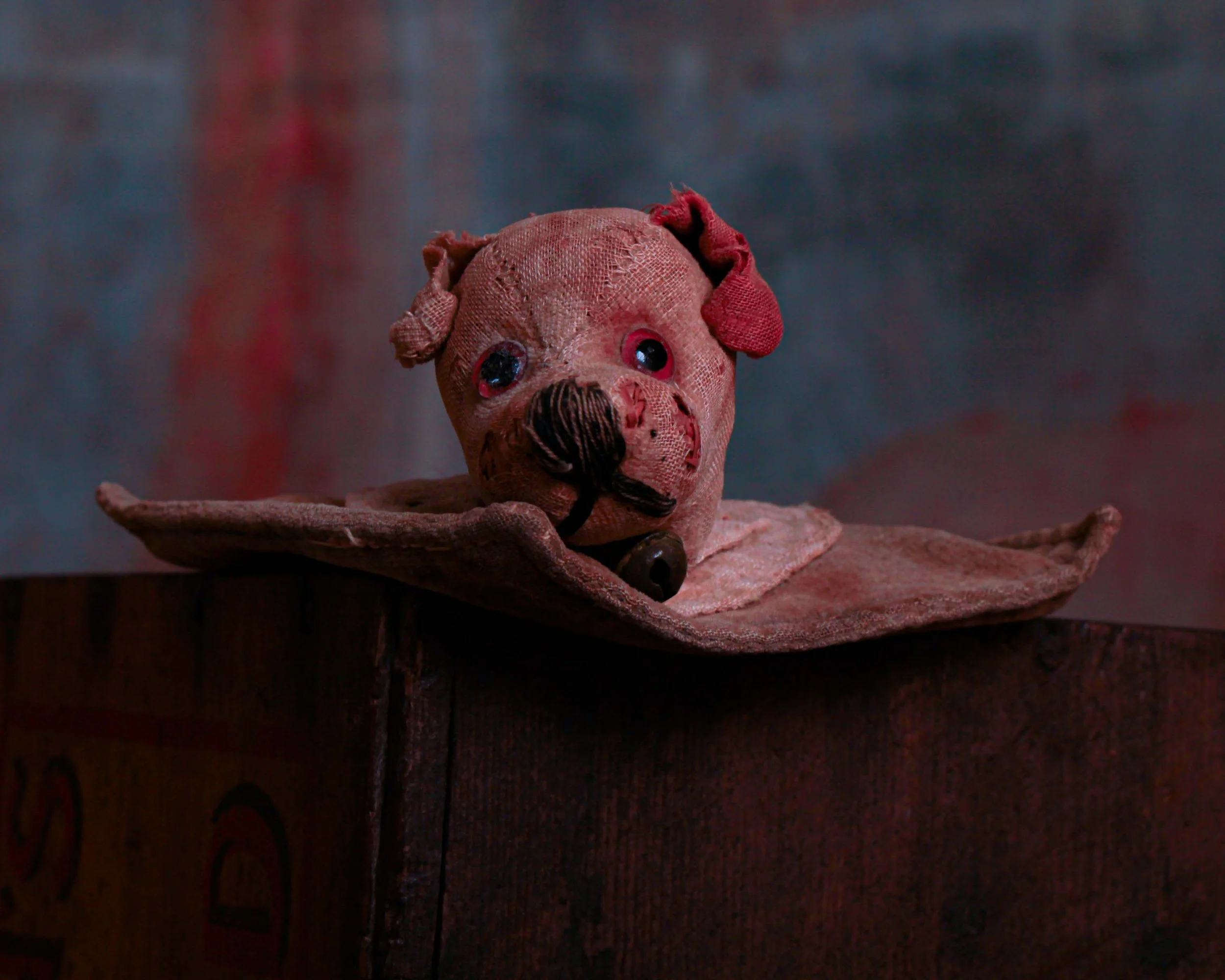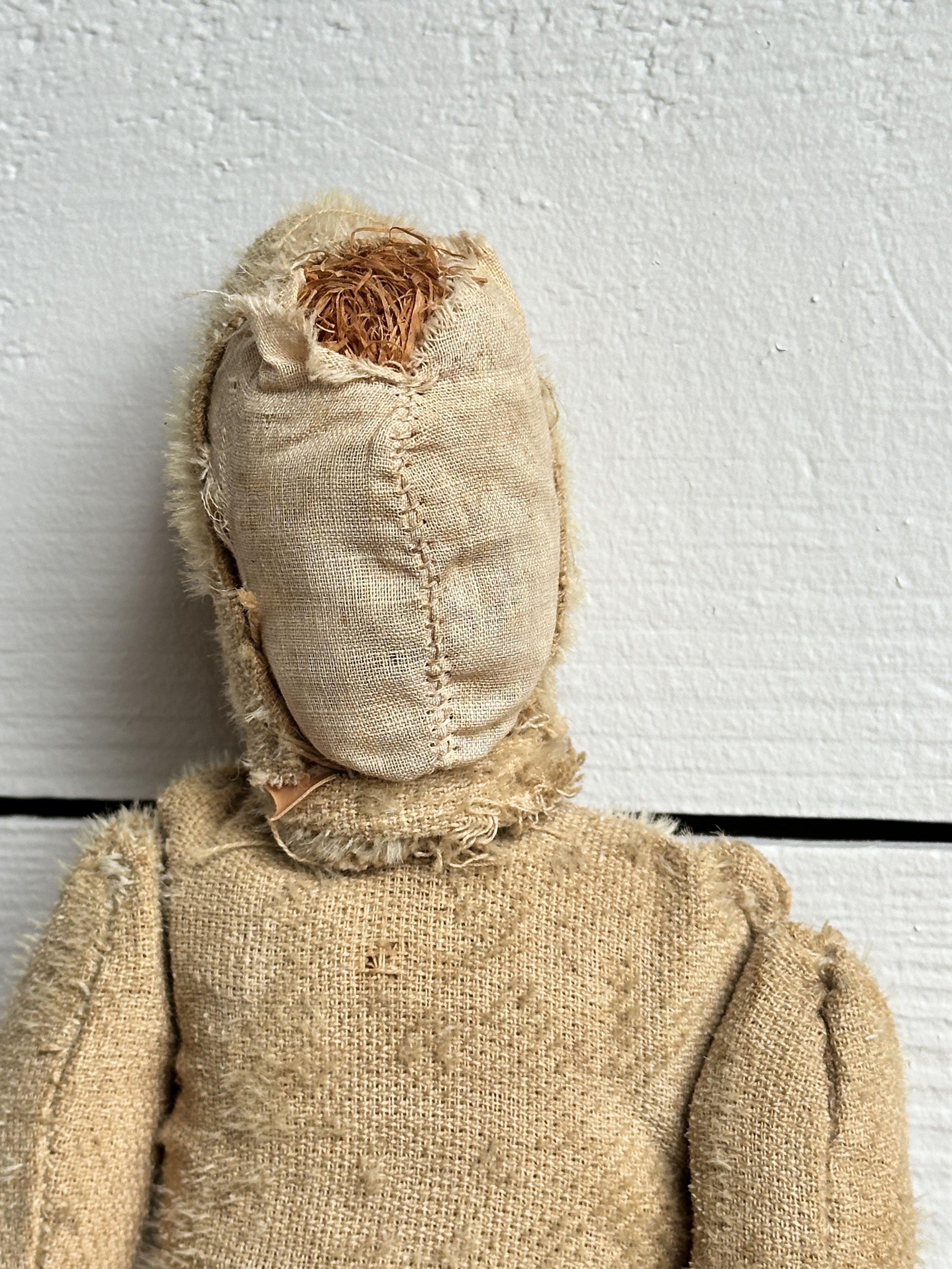
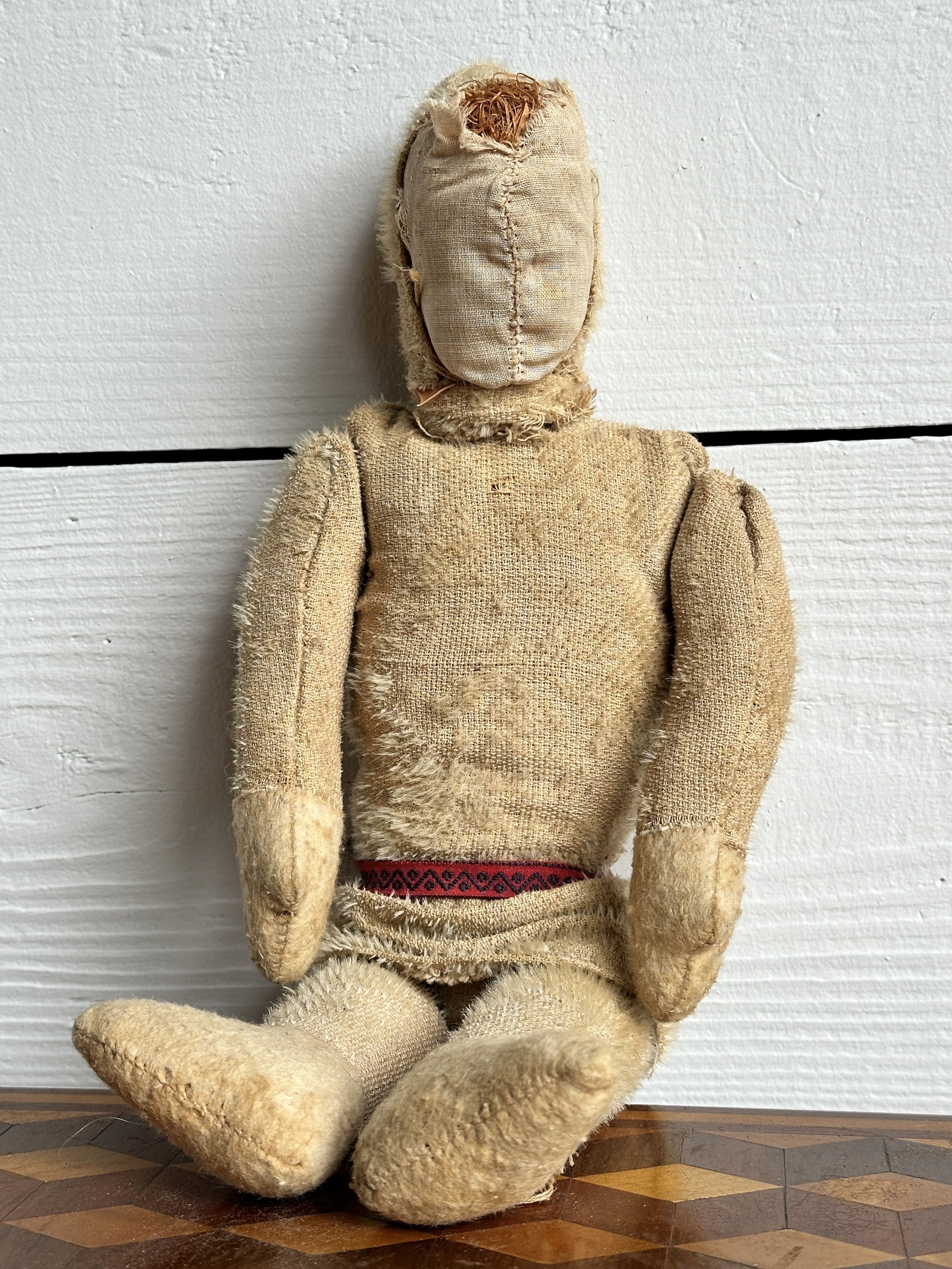
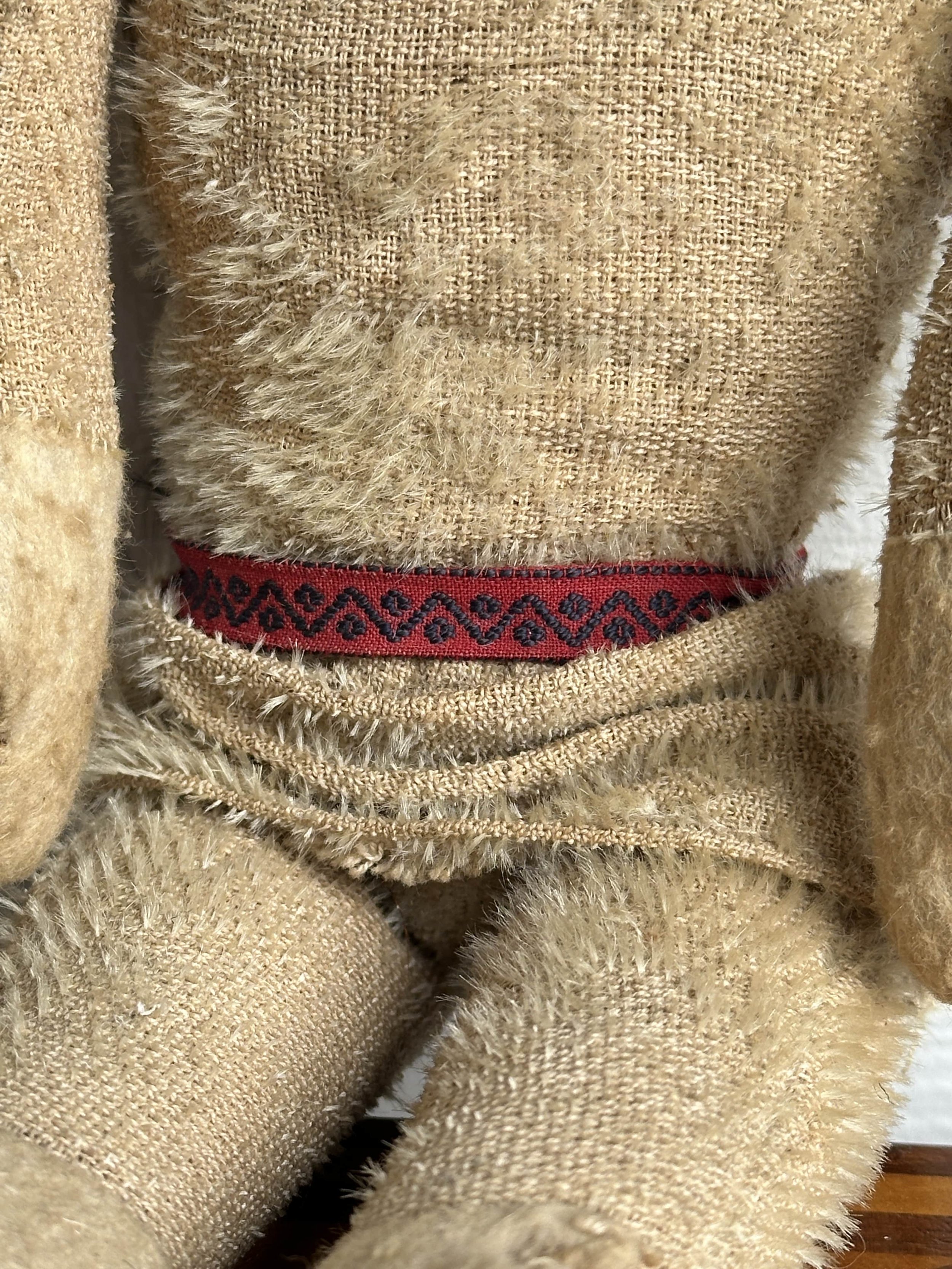
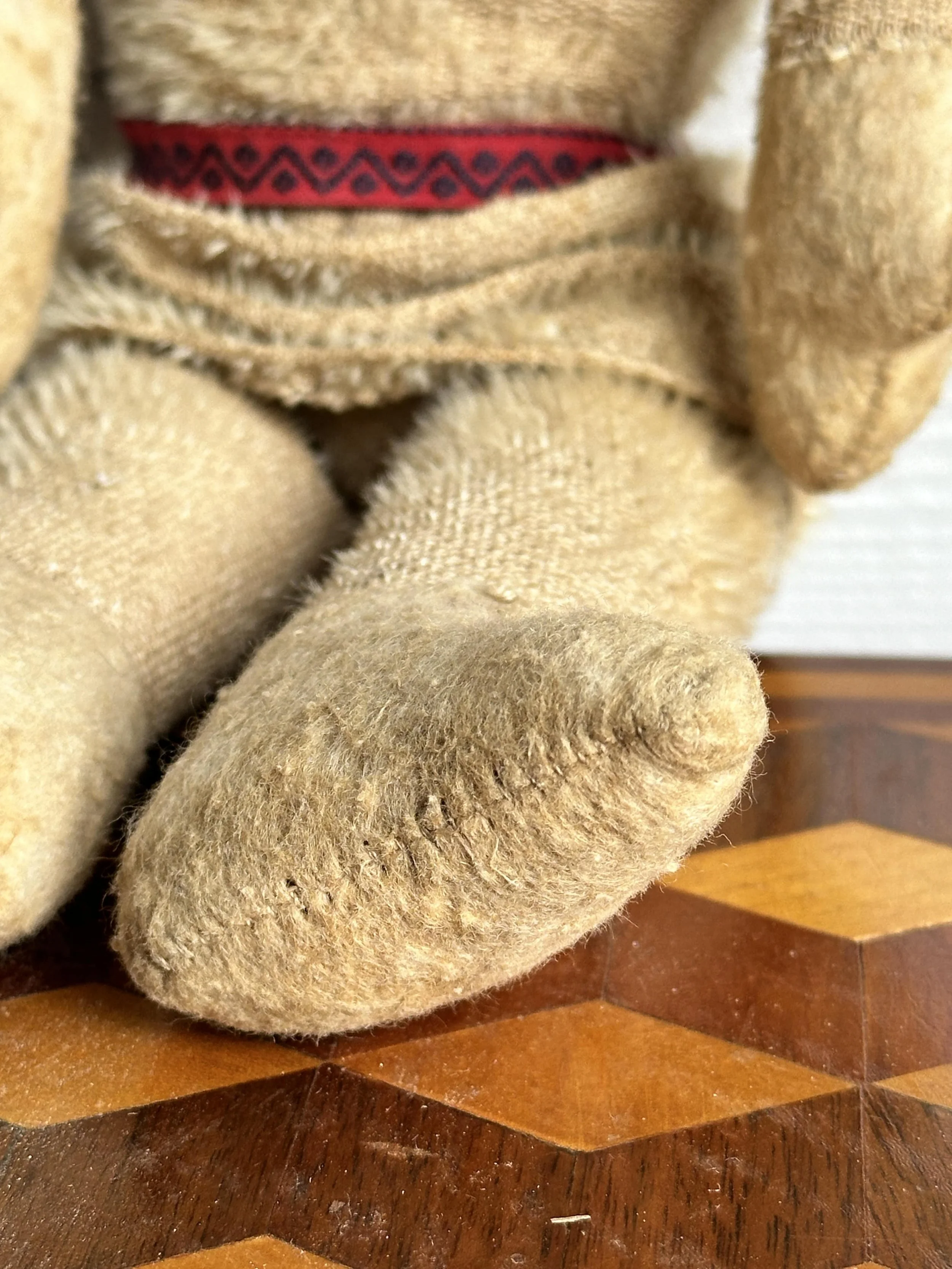
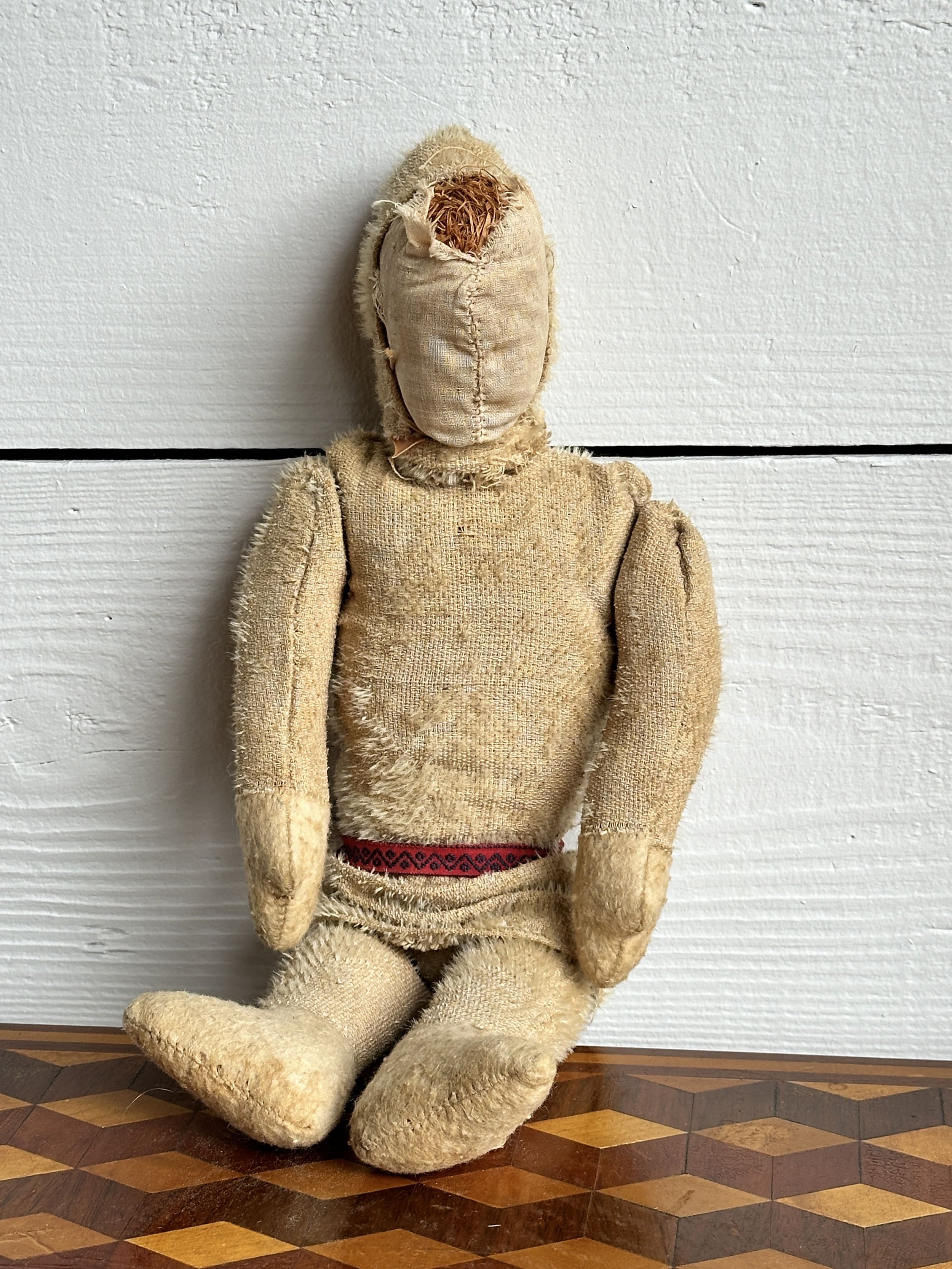
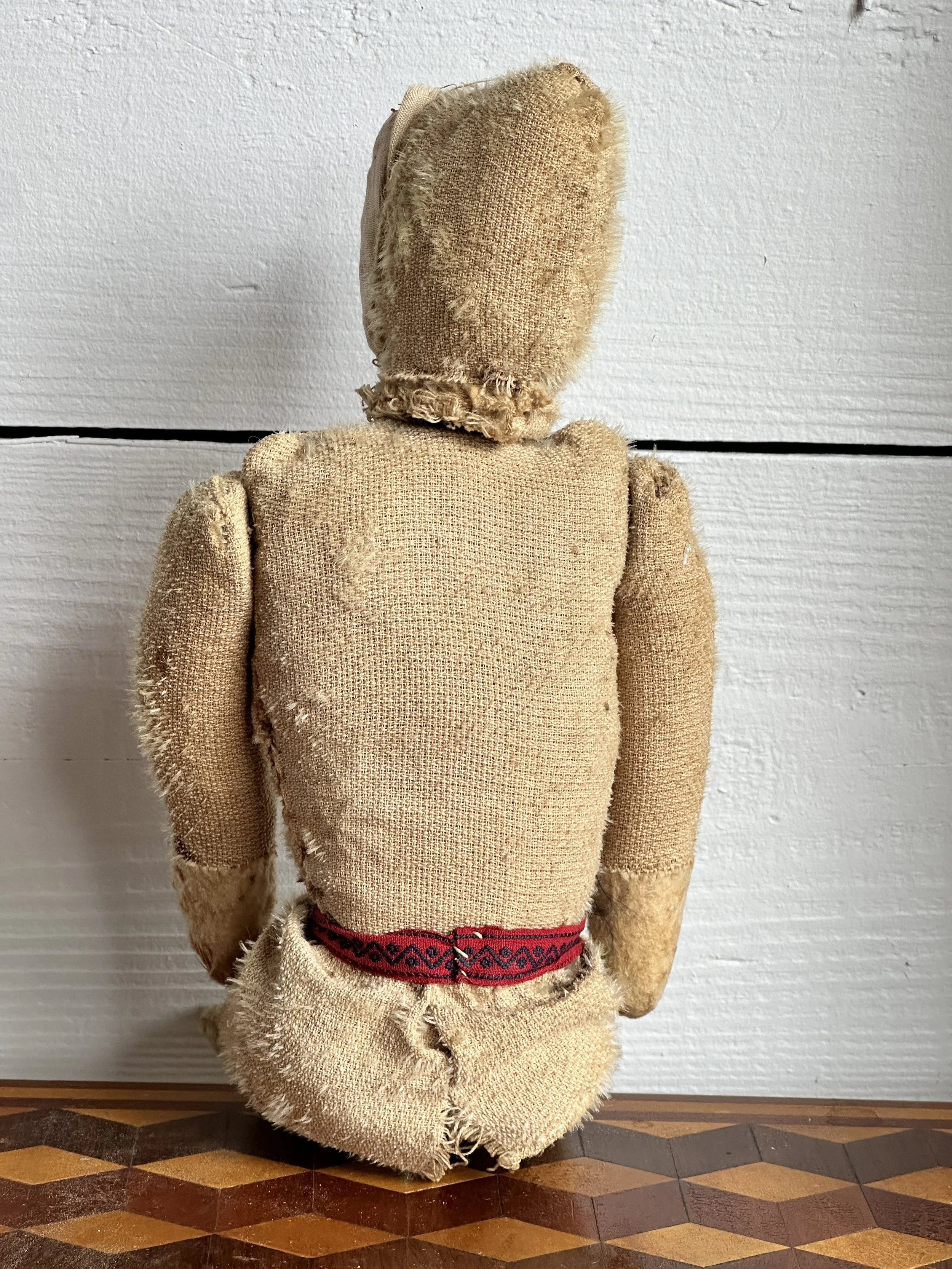
Here is a scrappy survivor that's clearly been through some things and lived to tell the tale (or at least mime it). Crafted from coarse, nubby fabric and stuffed with what looks like straw, this figure wears a red woven belt that’s probably the fanciest thing about him. The face? Let’s just say it’s seen better days — hand-stitched from plain cloth with a patchy peek of stuffing trying to bust free like bad bedhead.
The arms and legs are seemingly lifeless, the seams are a little wonky, and the proportions are wonderfully clumsy — but that's exactly where all the charm lives. It’s imperfect, humble, and full of personality — basically the folk art doll equivalent of a scruffy underdog hero.
You can see the maker’s hand in every stitch and adjustment, decisions made on the fly with whatever was available. It doesn’t try to be refined or polished—it just exists, a little awkward and completely honest, carrying the quiet warmth of something made to be held, handled, and kept close.
Category History
Old dolls tend to outgrow their original purpose. Made from wood, cloth, composition, or early plastics, they were built to be handled—dressed, carried, occasionally forgotten, then found again. Styles shifted with the times, from simple handmade figures to more detailed factory-made examples with painted features and jointed limbs.
What makes them interesting now isn’t perfection, it’s what’s changed. Worn paint, loose stitching, repairs—each mark hints at how they were used and who they belonged to. Some feel sweet, others a little uncanny, depending on how time has treated them.
They sit somewhere between toy and portrait. Not quite lifelike, but close enough to hold a presence. Less about play now, more about memory and the quiet weight of time, and the stories they carry without ever speaking.
Here is a scrappy survivor that's clearly been through some things and lived to tell the tale (or at least mime it). Crafted from coarse, nubby fabric and stuffed with what looks like straw, this figure wears a red woven belt that’s probably the fanciest thing about him. The face? Let’s just say it’s seen better days — hand-stitched from plain cloth with a patchy peek of stuffing trying to bust free like bad bedhead.
The arms and legs are seemingly lifeless, the seams are a little wonky, and the proportions are wonderfully clumsy — but that's exactly where all the charm lives. It’s imperfect, humble, and full of personality — basically the folk art doll equivalent of a scruffy underdog hero.
You can see the maker’s hand in every stitch and adjustment, decisions made on the fly with whatever was available. It doesn’t try to be refined or polished—it just exists, a little awkward and completely honest, carrying the quiet warmth of something made to be held, handled, and kept close.
Category History
Old dolls tend to outgrow their original purpose. Made from wood, cloth, composition, or early plastics, they were built to be handled—dressed, carried, occasionally forgotten, then found again. Styles shifted with the times, from simple handmade figures to more detailed factory-made examples with painted features and jointed limbs.
What makes them interesting now isn’t perfection, it’s what’s changed. Worn paint, loose stitching, repairs—each mark hints at how they were used and who they belonged to. Some feel sweet, others a little uncanny, depending on how time has treated them.
They sit somewhere between toy and portrait. Not quite lifelike, but close enough to hold a presence. Less about play now, more about memory and the quiet weight of time, and the stories they carry without ever speaking.