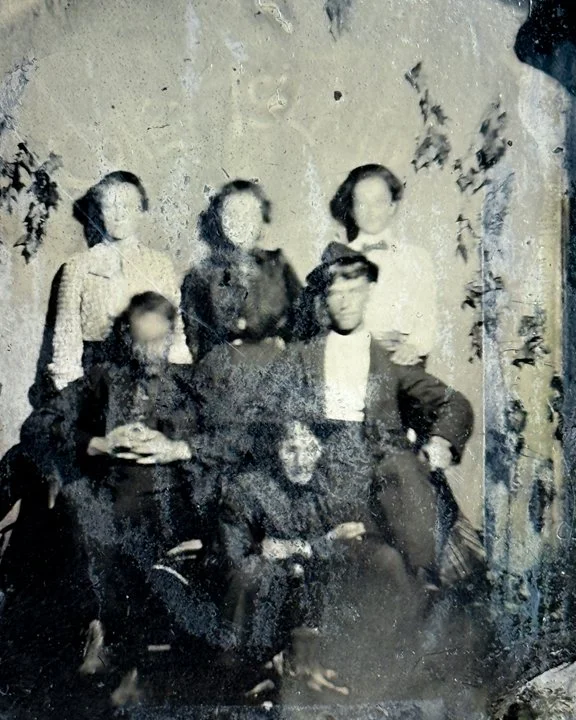
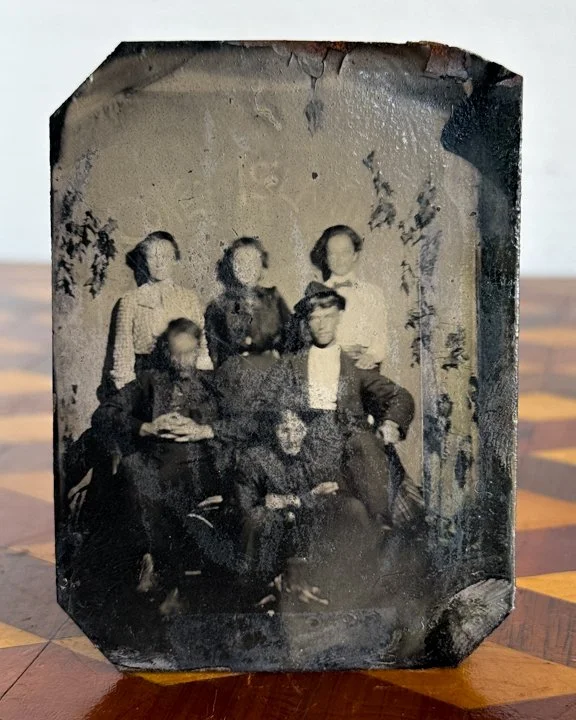
There’s something haunting and oddly magnetic about this late 19th-century tintype, snapped along the boardwalks of Coney Island when the seaside resort was at its rowdiest. A group of five are posed against a studio backdrop, but fate has erased their defining feature: their faces. What remains is a ghostly tableau, a Victorian snapshot where identity has been replaced with blank anonymity.
The loss feels accidental, but it changes everything. Clothing, posture, and setting are still sharply present, giving you just enough to build a story without ever confirming it. The longer you look, the more it shifts—from a casual group portrait into something quieter, almost cinematic. It’s less about who they were and more about what’s left behind: gesture, presence, and the strange persistence of an image that refuses to fully resolve.
Category History
Tintype photography is one of those processes that feels both scrappy and ingenious. Introduced in the 1850s, it wasn’t actually made on tin but on thin sheets of iron coated with a dark lacquer. The image—created through the wet plate collodion process—appeared directly on that surface, producing a one-of-a-kind photograph that was durable, affordable, and quick to make.
That combination made tintypes wildly popular. Street photographers, traveling fairs, and small studios could produce portraits in minutes. No negatives, no waiting—just a finished image handed over on the spot. They became the everyday photograph of their time, capturing soldiers, families, and individuals who might never have sat for a more formal portrait.
What makes tintypes compelling now is their immediacy. Slight imperfections—soft focus, uneven exposure, a bit of ghosting—aren’t flaws so much as fingerprints of the process. They feel direct, almost unfiltered.
Small, sturdy, and deeply personal, tintypes carry a quiet presence—little pieces of time fixed onto metal, meant to last.
There’s something haunting and oddly magnetic about this late 19th-century tintype, snapped along the boardwalks of Coney Island when the seaside resort was at its rowdiest. A group of five are posed against a studio backdrop, but fate has erased their defining feature: their faces. What remains is a ghostly tableau, a Victorian snapshot where identity has been replaced with blank anonymity.
The loss feels accidental, but it changes everything. Clothing, posture, and setting are still sharply present, giving you just enough to build a story without ever confirming it. The longer you look, the more it shifts—from a casual group portrait into something quieter, almost cinematic. It’s less about who they were and more about what’s left behind: gesture, presence, and the strange persistence of an image that refuses to fully resolve.
Category History
Tintype photography is one of those processes that feels both scrappy and ingenious. Introduced in the 1850s, it wasn’t actually made on tin but on thin sheets of iron coated with a dark lacquer. The image—created through the wet plate collodion process—appeared directly on that surface, producing a one-of-a-kind photograph that was durable, affordable, and quick to make.
That combination made tintypes wildly popular. Street photographers, traveling fairs, and small studios could produce portraits in minutes. No negatives, no waiting—just a finished image handed over on the spot. They became the everyday photograph of their time, capturing soldiers, families, and individuals who might never have sat for a more formal portrait.
What makes tintypes compelling now is their immediacy. Slight imperfections—soft focus, uneven exposure, a bit of ghosting—aren’t flaws so much as fingerprints of the process. They feel direct, almost unfiltered.
Small, sturdy, and deeply personal, tintypes carry a quiet presence—little pieces of time fixed onto metal, meant to last.