ITEM NOT AVAILABLE IMMEDIATELY—INQUIRE IF INTERESTED hello@heimweeantiques.com
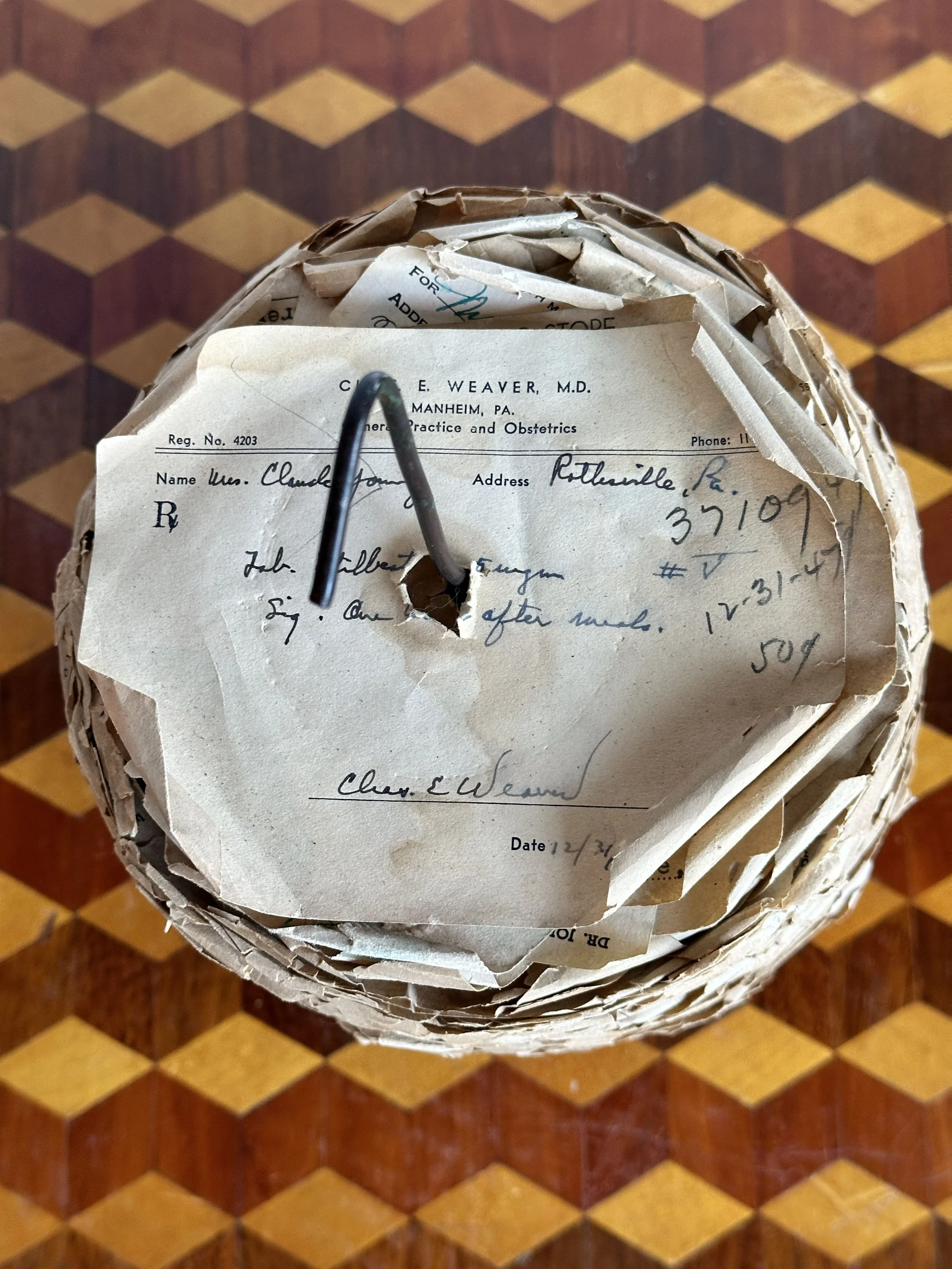
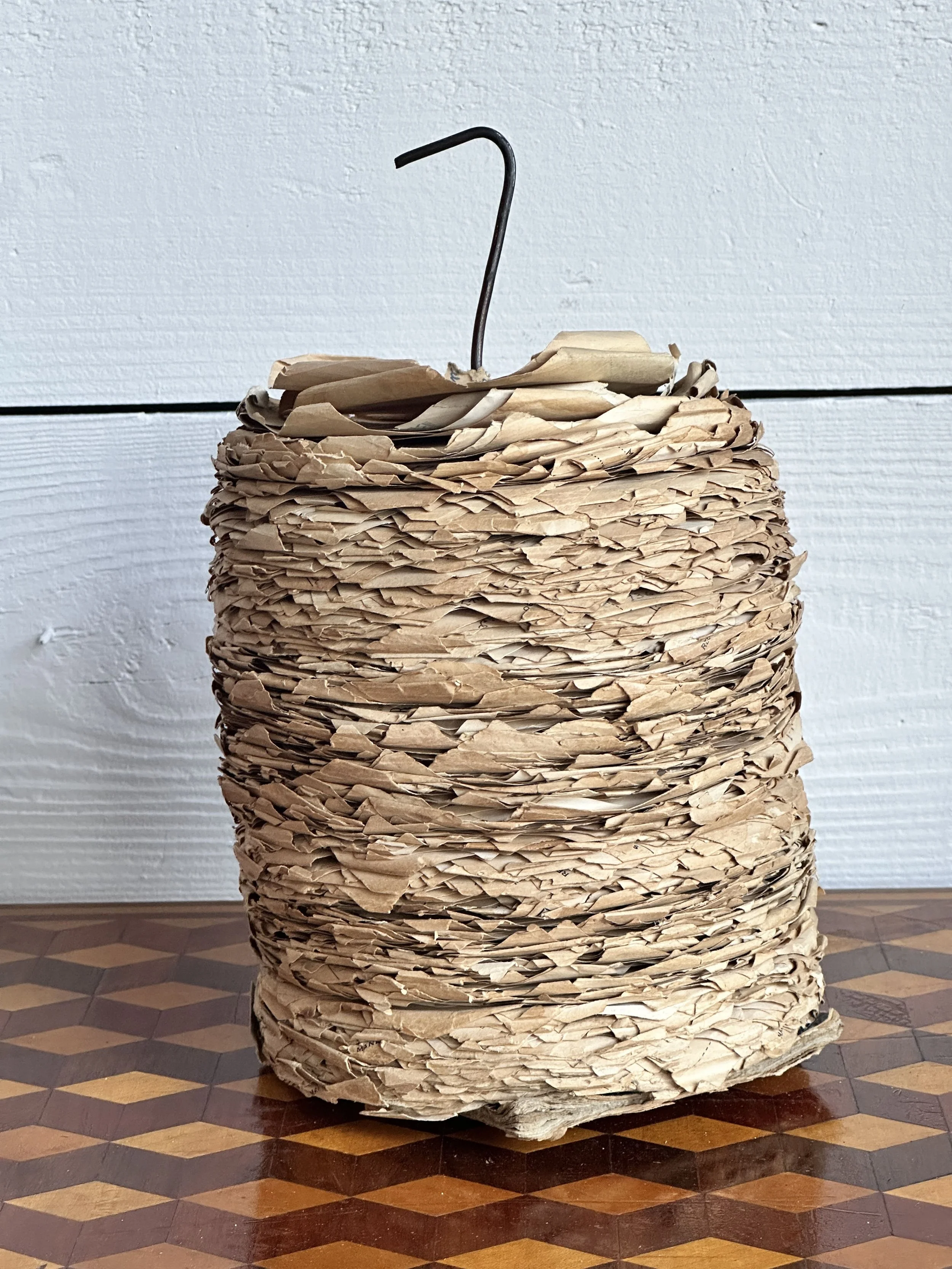
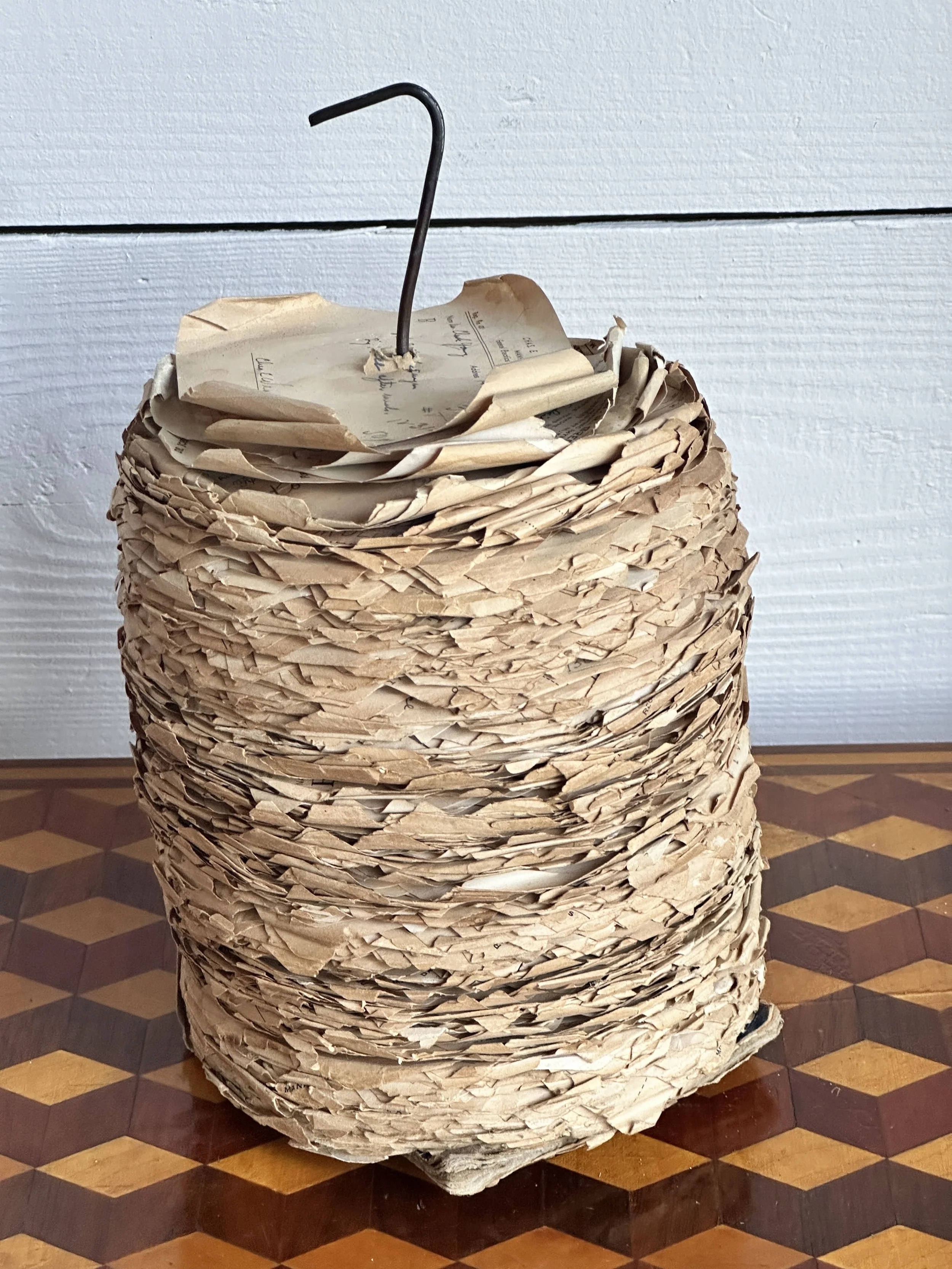
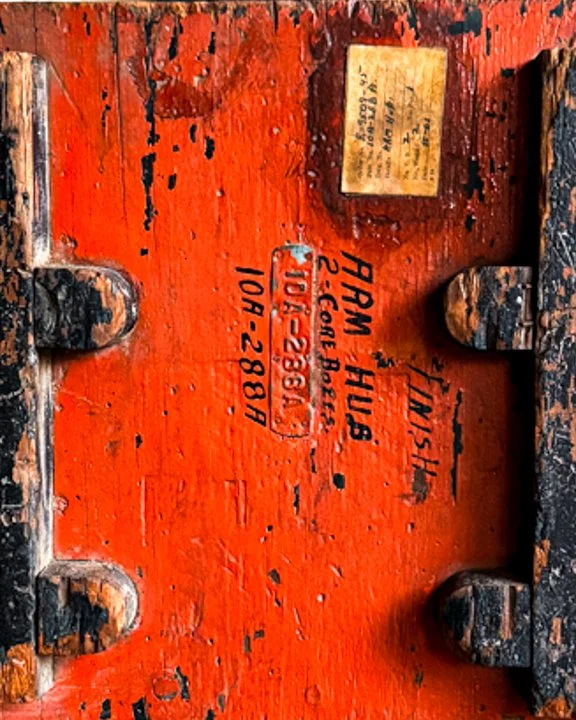
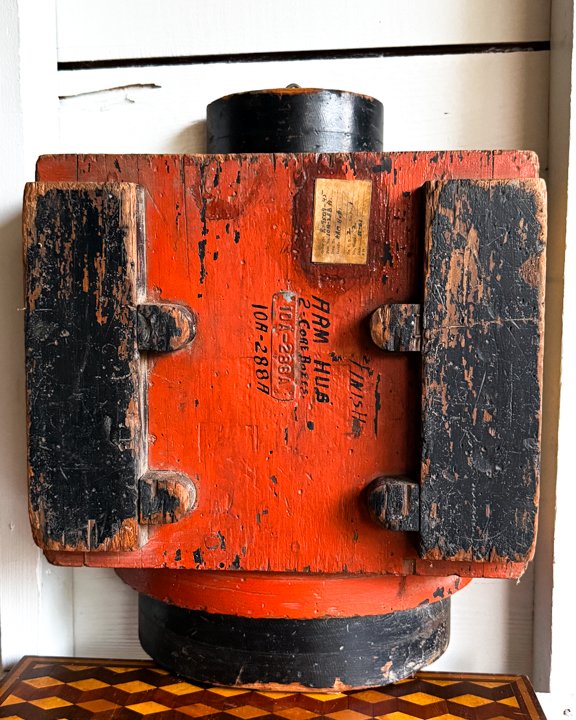
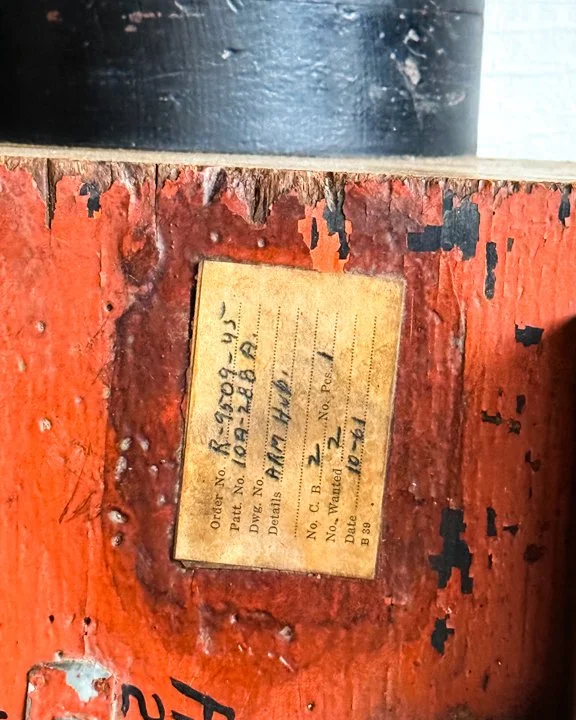
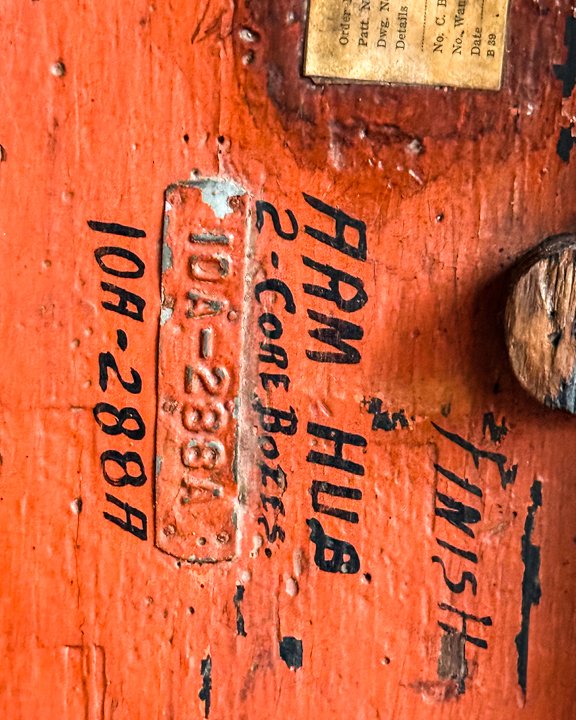
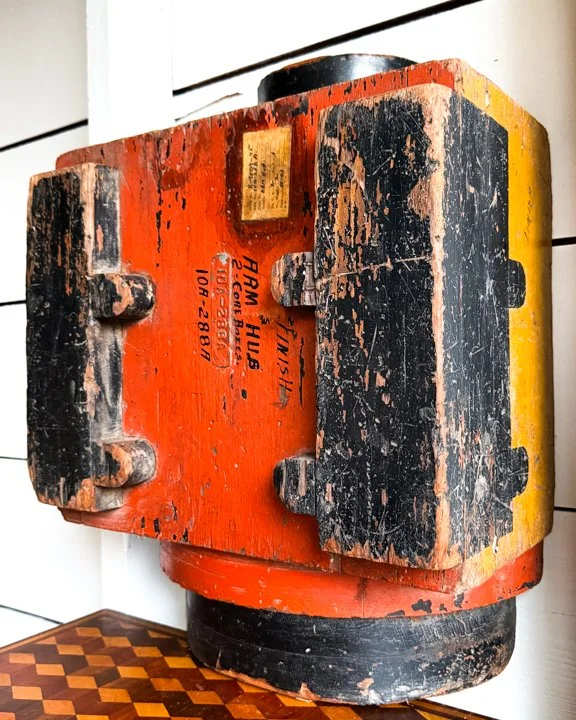
This massive industrial mold once helped birth metal parts with precision and muscle. Cast in thick wood and painted in high-vis safety orange (with beautifully worn black and yellow accents), it proudly wears its patina like a badge of honor. The handwritten label reads “ARM HUB — 2 Core Boxes — 10A-288A,” which sounds like the start of a poem if you’re into heavy machinery. There’s even an old paper tag still attached—factory handwriting and all.
Category History
Old factory cogs and molds are the bones of industry—the parts that did the real work while the finished products took the credit. In the late 19th and early 20th centuries, factories ran on systems of gears, pulleys, and cast components, each piece designed to transfer motion, shape material, or repeat a task with consistency.
Cogs were all about movement. Cast in iron or steel, their teeth were cut to precise ratios, turning energy from steam or belt drives into coordinated action across an entire workshop. Wear patterns tell the story—polished edges where friction lived, slight irregularities from years of rotation.
Molds, on the other hand, were about form. Whether used for metal casting, rubber goods, or early plastics, they defined the final shape of an object long before it existed. Every cavity, seam line, and vent was intentional, built to release cleanly and repeat reliably.
What makes both compelling now is their stripped-down honesty. No decoration, just function. Yet over time, they’ve taken on a sculptural quality—heavy, geometric, and quietly expressive. You can read their purpose in their form, and their history in their wear. They’re not the product, but they’re the reason the product exists at all.
ITEM NOT AVAILABLE IMMEDIATELY—INQUIRE IF INTERESTED hello@heimweeantiques.com
This massive industrial mold once helped birth metal parts with precision and muscle. Cast in thick wood and painted in high-vis safety orange (with beautifully worn black and yellow accents), it proudly wears its patina like a badge of honor. The handwritten label reads “ARM HUB — 2 Core Boxes — 10A-288A,” which sounds like the start of a poem if you’re into heavy machinery. There’s even an old paper tag still attached—factory handwriting and all.
Category History
Old factory cogs and molds are the bones of industry—the parts that did the real work while the finished products took the credit. In the late 19th and early 20th centuries, factories ran on systems of gears, pulleys, and cast components, each piece designed to transfer motion, shape material, or repeat a task with consistency.
Cogs were all about movement. Cast in iron or steel, their teeth were cut to precise ratios, turning energy from steam or belt drives into coordinated action across an entire workshop. Wear patterns tell the story—polished edges where friction lived, slight irregularities from years of rotation.
Molds, on the other hand, were about form. Whether used for metal casting, rubber goods, or early plastics, they defined the final shape of an object long before it existed. Every cavity, seam line, and vent was intentional, built to release cleanly and repeat reliably.
What makes both compelling now is their stripped-down honesty. No decoration, just function. Yet over time, they’ve taken on a sculptural quality—heavy, geometric, and quietly expressive. You can read their purpose in their form, and their history in their wear. They’re not the product, but they’re the reason the product exists at all.