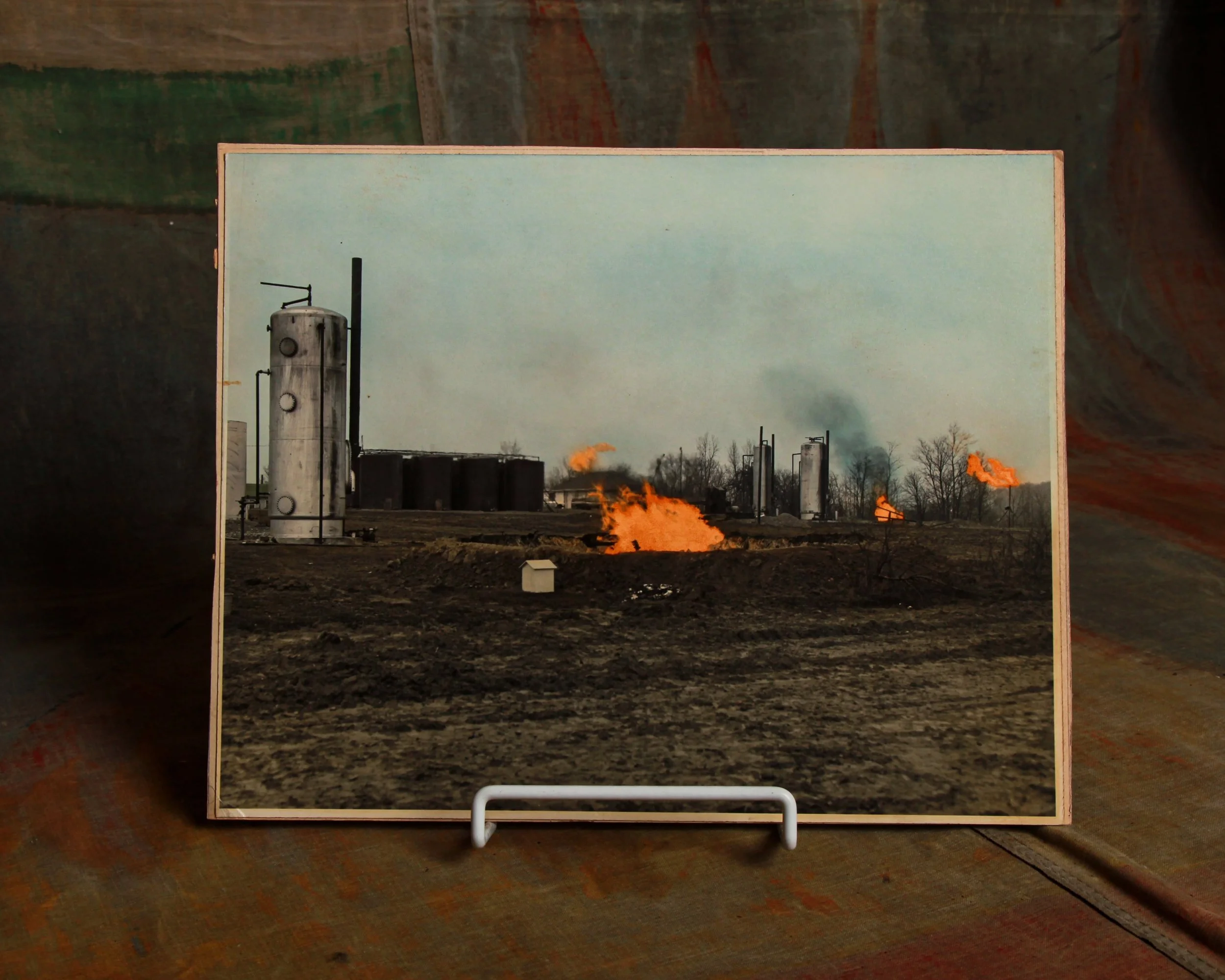
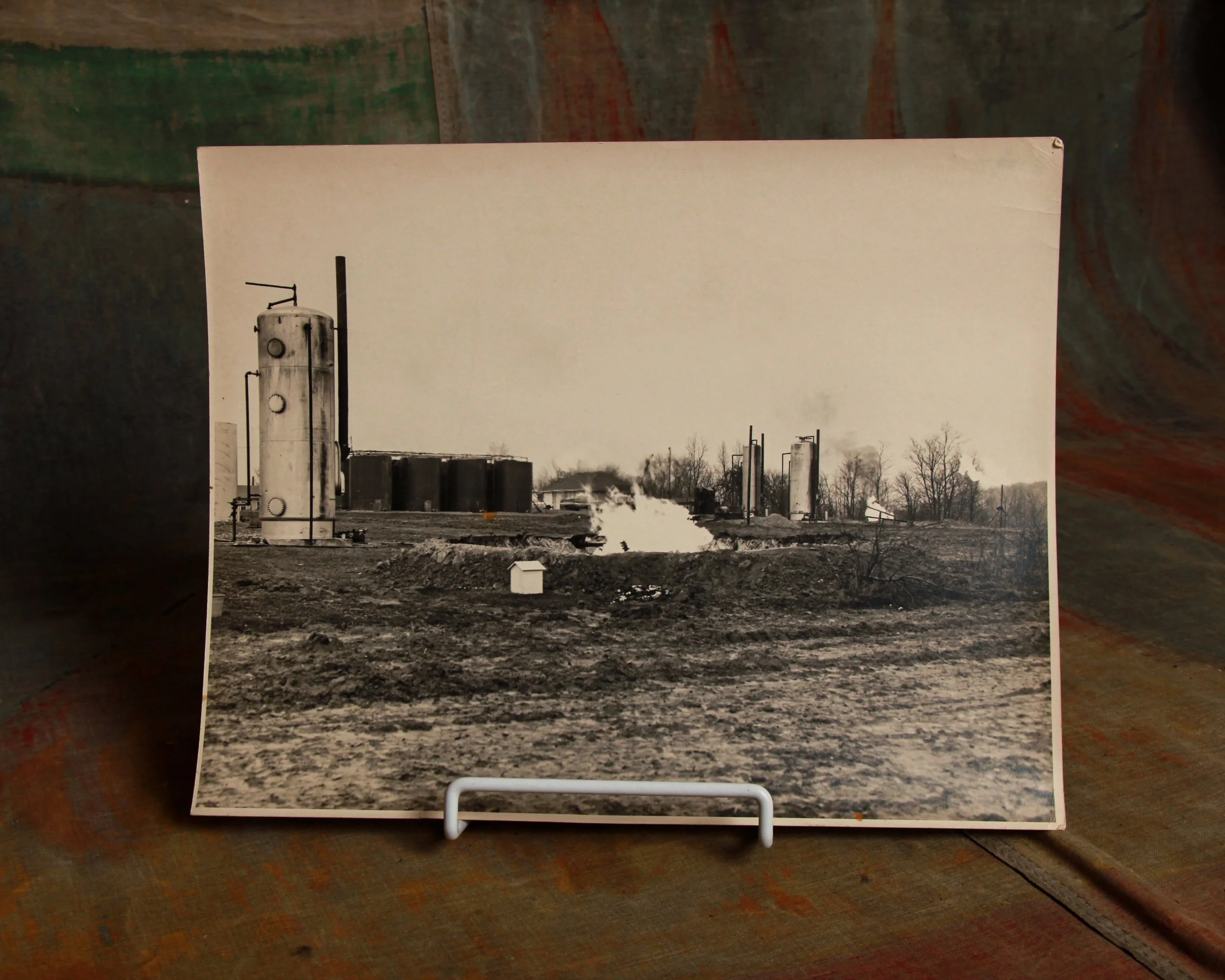
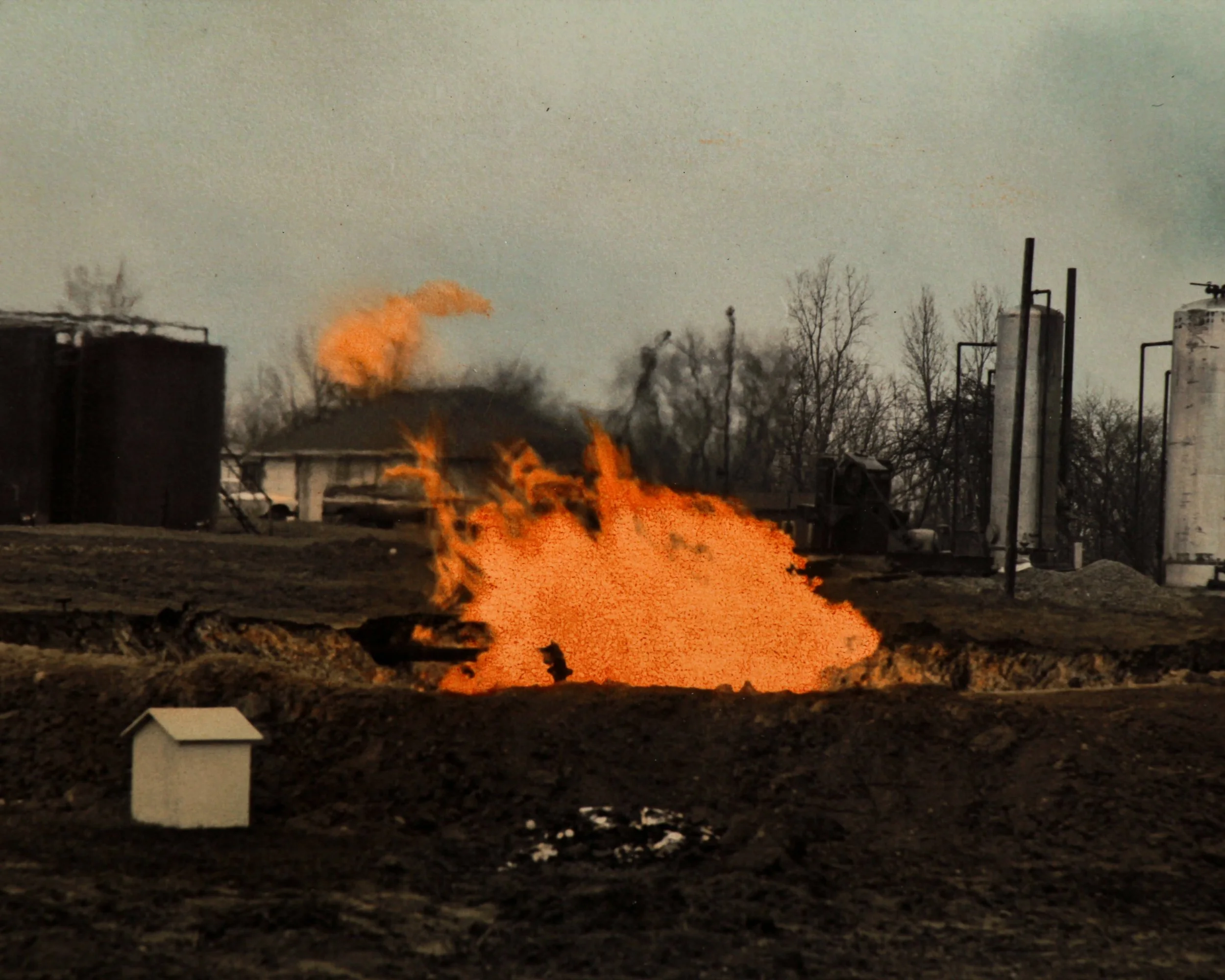
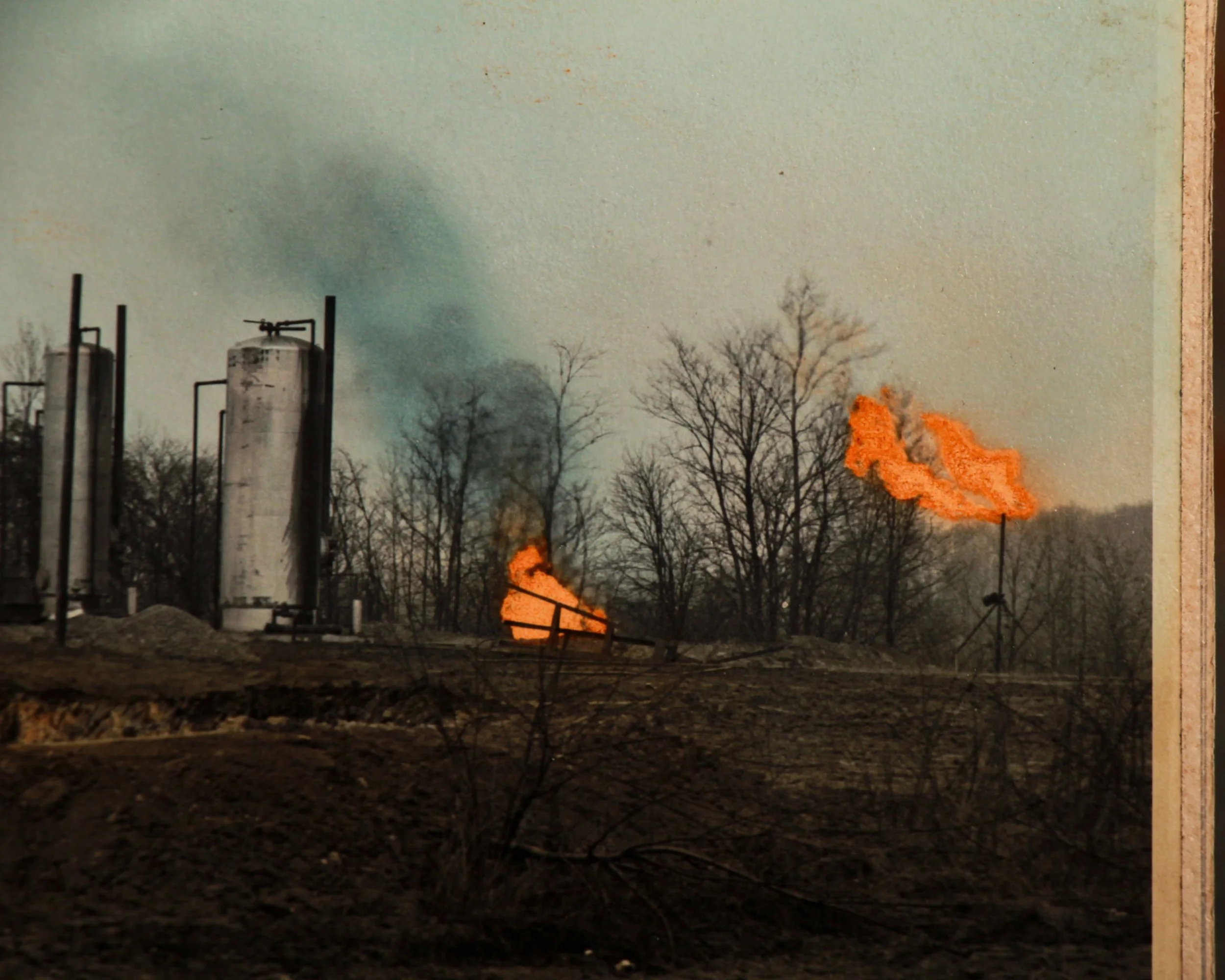
Here’s a pair that deserves its own hazard zone. These two industrial photographs capture the same scene—an oil field or refinery with gas flaring up dramatically—but in two different moods: one is a stark black-and-white print, and the other’s been colorized with fire so vivid it practically hisses. Both are printed on thick, 8" x 10" board.
Together, they feel like before and after, or maybe truth and interpretation side by side. The contrast pulls you in—one grounded and documentary, the other almost cinematic, pushing the drama just a little further.
Category History
Colorized photography sits somewhere between documentation and interpretation—a black-and-white image given a second life through added color. The practice dates back to the 19th century, when early photographs were often hand-tinted with watercolor, oils, or dyes. Since photography initially captured only tones of light and shadow, color was applied afterward to bring scenes closer to how they were remembered rather than how they were recorded.
The process was meticulous. Artists worked directly on prints or glass plates, adding subtle washes to skin, clothing, and backgrounds. The goal wasn’t always realism—it was mood, emphasis, sometimes even idealization. A pale sky might turn vivid blue, a dress more saturated than it ever was.
By the early 20th century, techniques became more standardized, with stencils and early color processes helping speed things along. Later, in the digital era, colorization returned in a new form—software replacing brushes, but the underlying idea staying the same.
What makes colorized photography compelling is that it blurs the line between fact and interpretation. You’re looking at a real moment, but filtered through someone else’s sense of how it should feel.
It invites a different kind of viewing. Less about strict accuracy, more about presence—pulling the past a little closer, even if it means changing it slightly along the way.
Here’s a pair that deserves its own hazard zone. These two industrial photographs capture the same scene—an oil field or refinery with gas flaring up dramatically—but in two different moods: one is a stark black-and-white print, and the other’s been colorized with fire so vivid it practically hisses. Both are printed on thick, 8" x 10" board.
Together, they feel like before and after, or maybe truth and interpretation side by side. The contrast pulls you in—one grounded and documentary, the other almost cinematic, pushing the drama just a little further.
Category History
Colorized photography sits somewhere between documentation and interpretation—a black-and-white image given a second life through added color. The practice dates back to the 19th century, when early photographs were often hand-tinted with watercolor, oils, or dyes. Since photography initially captured only tones of light and shadow, color was applied afterward to bring scenes closer to how they were remembered rather than how they were recorded.
The process was meticulous. Artists worked directly on prints or glass plates, adding subtle washes to skin, clothing, and backgrounds. The goal wasn’t always realism—it was mood, emphasis, sometimes even idealization. A pale sky might turn vivid blue, a dress more saturated than it ever was.
By the early 20th century, techniques became more standardized, with stencils and early color processes helping speed things along. Later, in the digital era, colorization returned in a new form—software replacing brushes, but the underlying idea staying the same.
What makes colorized photography compelling is that it blurs the line between fact and interpretation. You’re looking at a real moment, but filtered through someone else’s sense of how it should feel.
It invites a different kind of viewing. Less about strict accuracy, more about presence—pulling the past a little closer, even if it means changing it slightly along the way.