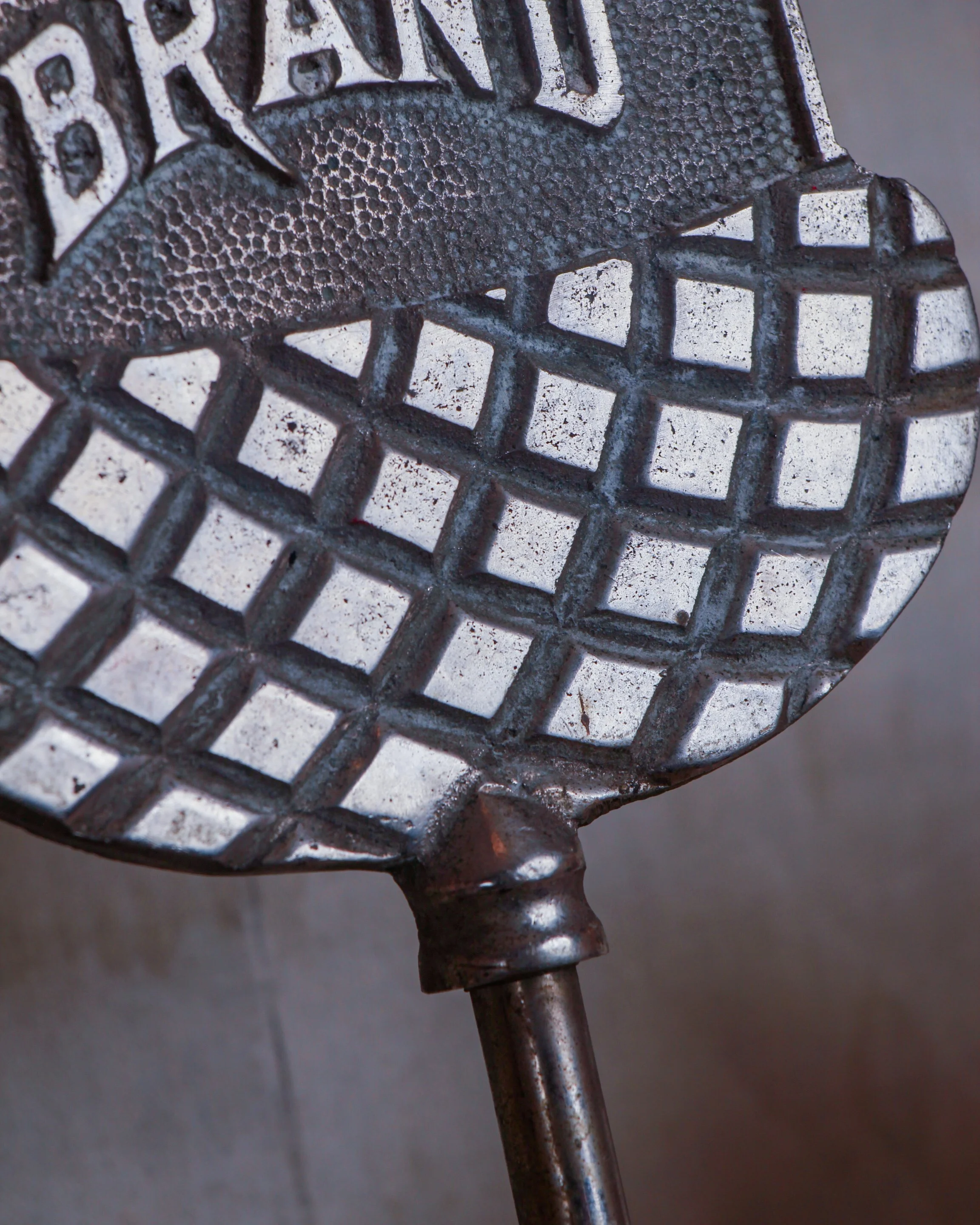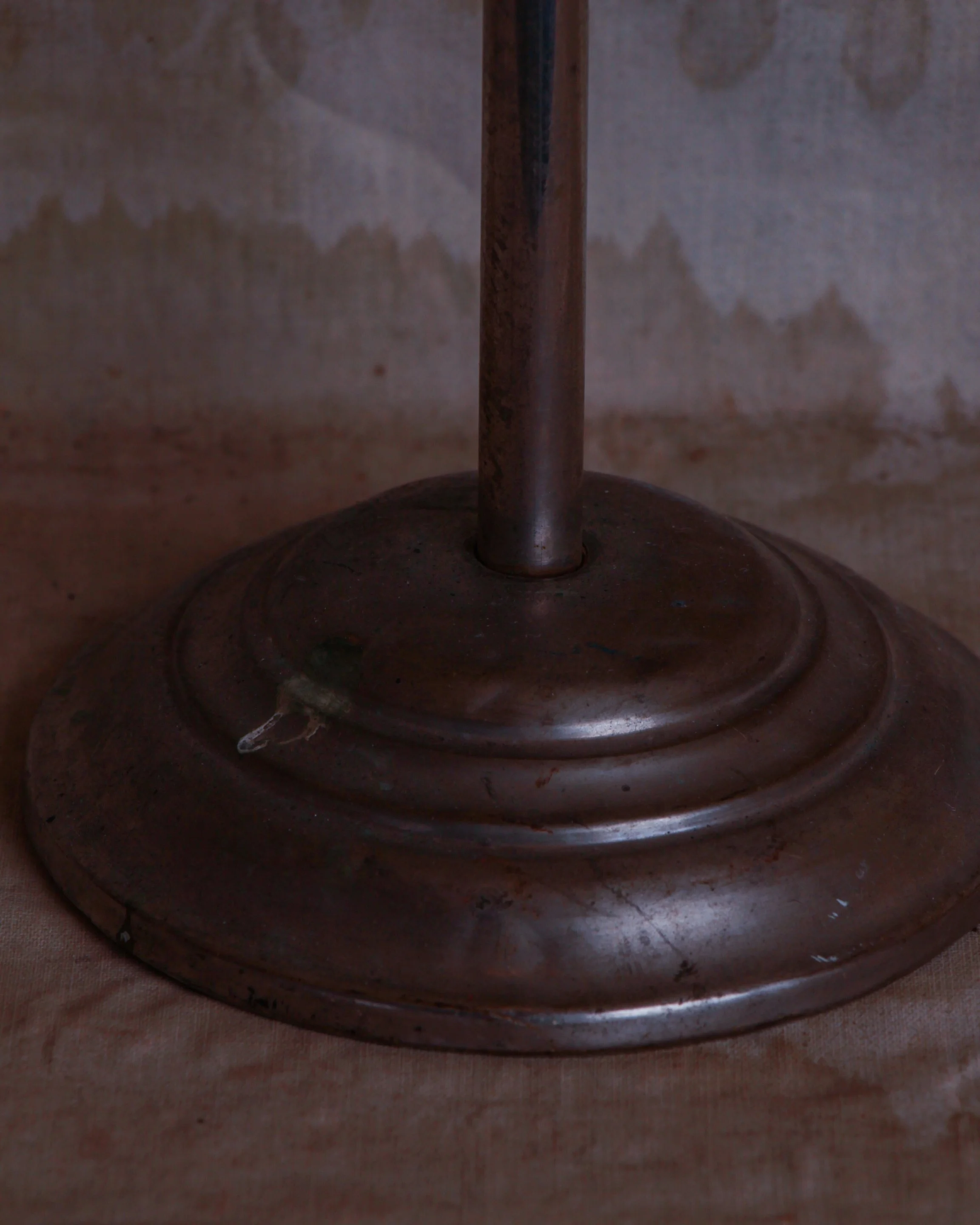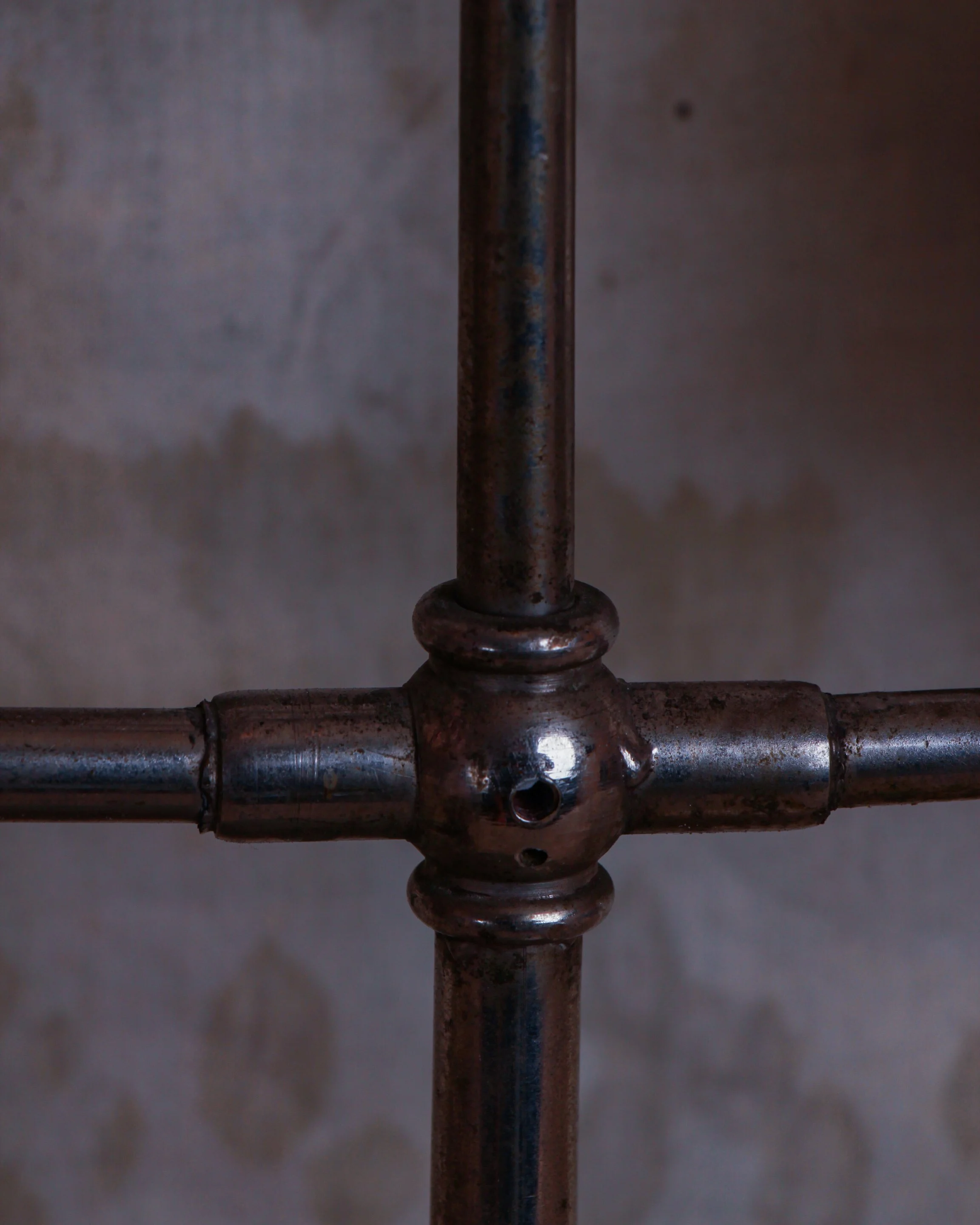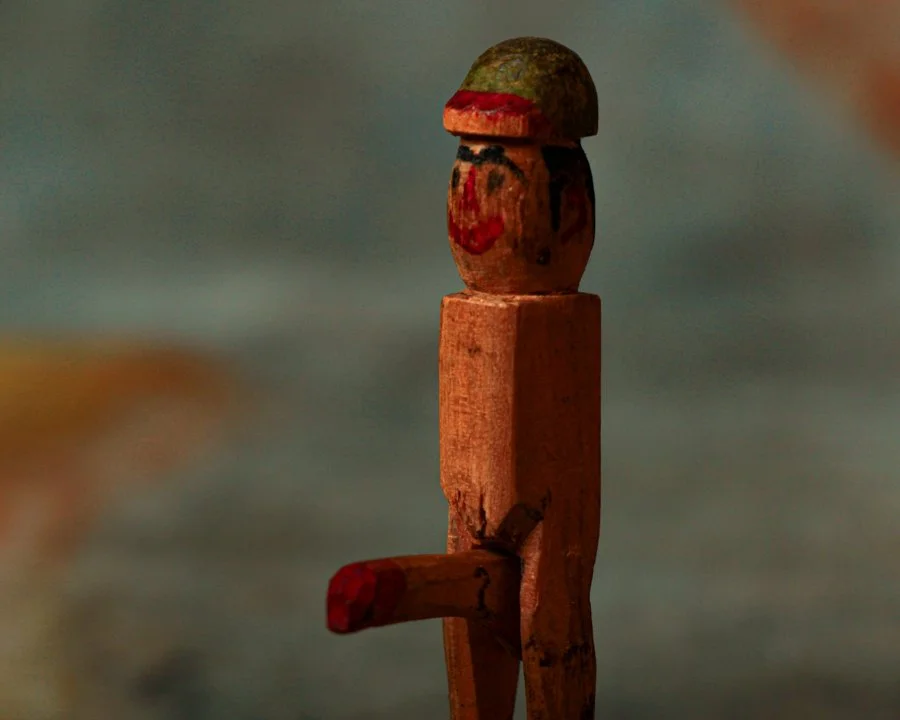
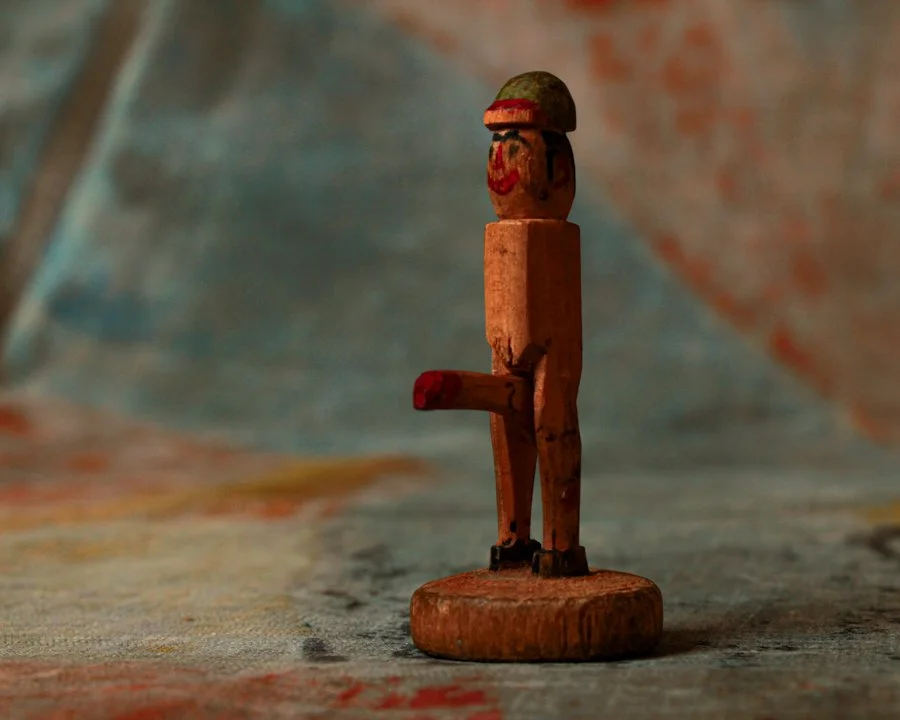
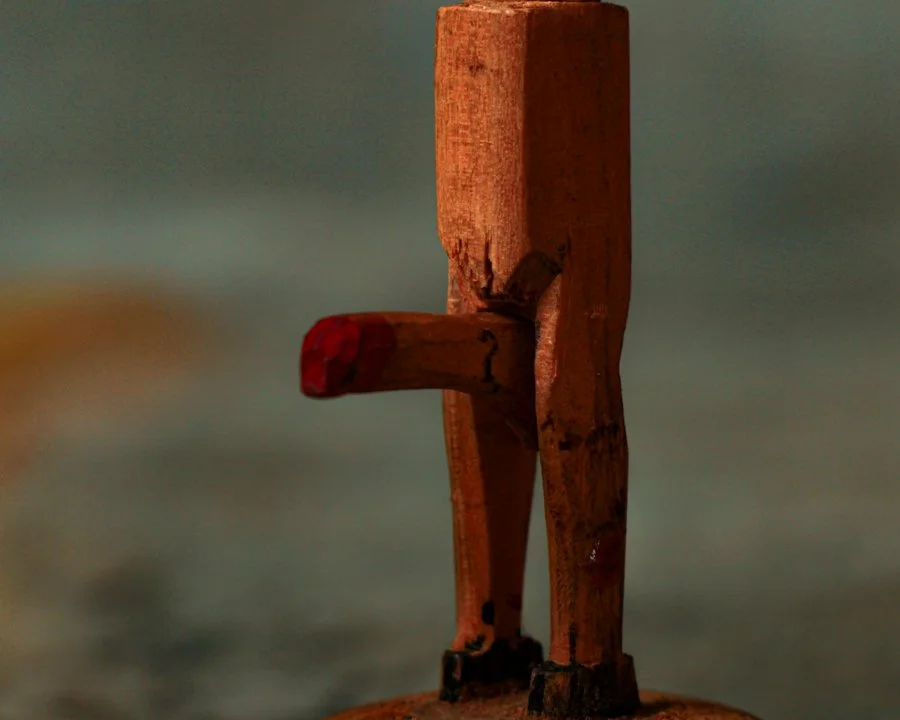
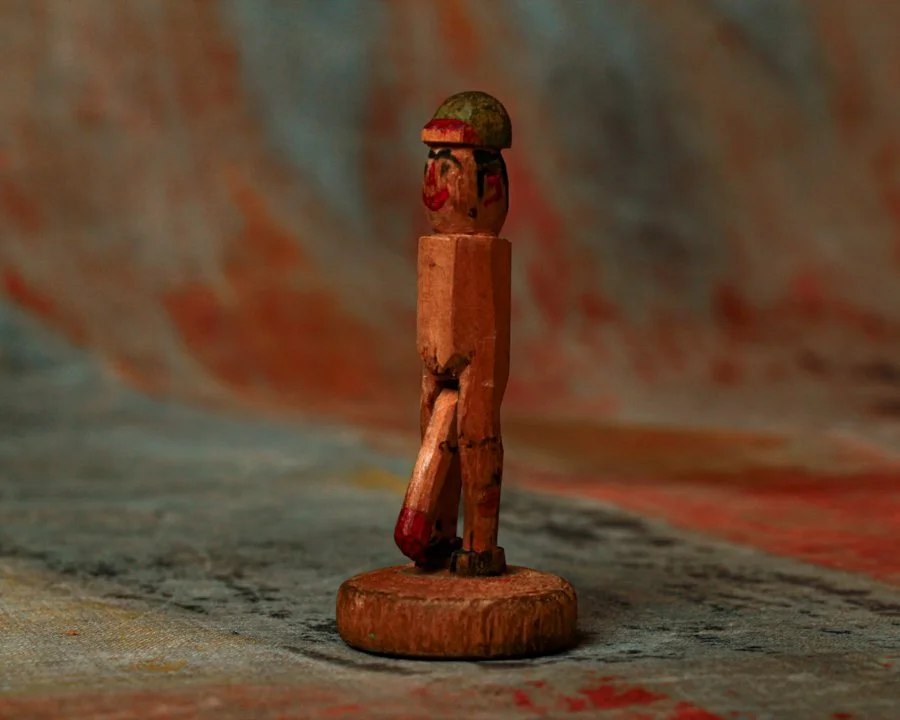
What you're looking at is a delightfully crude hand-carved wooden figure that walks the fine line between innocent mischief and bawdy humor. Standing proudly (pun fully intended) on a round base, this little character features a manually articulated phallus that swings upward like a flag at full mast.
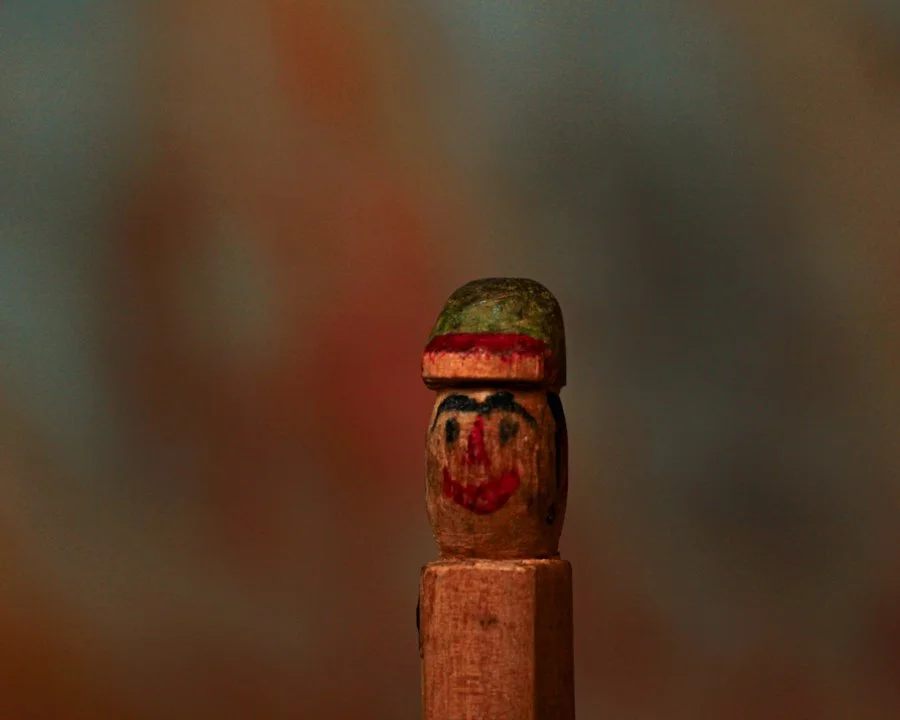
This folk art marvel features a smiling hand-painted face, a green and red cap, and rudimentary limbs. He's chipped, worn, and a little paint-drunk.
There’s a kind of unapologetic humor baked into it—playful, slightly irreverent, and clearly made to get a reaction, whether a laugh, a raised eyebrow, or both.
Category History
Folk art lives in that space where making isn’t about fitting into an art world—it’s about expressing something directly, often with whatever is at hand. It’s shaped by necessity, tradition, and instinct rather than formal training. You see it in carved figures, painted signs, stitched textiles, weathervanes, toys—objects that were sometimes made to be useful, sometimes just because someone felt like making them.
What sets folk art apart is its independence. Proportion might bend, perspective might flatten, colors might lean bold or unexpected—but it all works because it’s guided by the maker’s eye, not a rulebook. There’s often a strong sense of place, too. Materials and motifs reflect where it was made, whether that’s rural, coastal, urban, or somewhere in between.
Many pieces carry a kind of quiet storytelling. A carved animal that feels more like a memory than a specimen, a painted scene that captures an event or daily life without worrying about precision. Imperfections aren’t flaws—they’re part of the language.
Over time, these objects shift from everyday use into something more reflective. What was once a tool or decoration becomes a record of how someone saw the world and chose to shape it. Folk art doesn’t try to impress—it connects, directly and without much explanation.
What you're looking at is a delightfully crude hand-carved wooden figure that walks the fine line between innocent mischief and bawdy humor. Standing proudly (pun fully intended) on a round base, this little character features a manually articulated phallus that swings upward like a flag at full mast.
This folk art marvel features a smiling hand-painted face, a green and red cap, and rudimentary limbs. He's chipped, worn, and a little paint-drunk.
There’s a kind of unapologetic humor baked into it—playful, slightly irreverent, and clearly made to get a reaction, whether a laugh, a raised eyebrow, or both.
Category History
Folk art lives in that space where making isn’t about fitting into an art world—it’s about expressing something directly, often with whatever is at hand. It’s shaped by necessity, tradition, and instinct rather than formal training. You see it in carved figures, painted signs, stitched textiles, weathervanes, toys—objects that were sometimes made to be useful, sometimes just because someone felt like making them.
What sets folk art apart is its independence. Proportion might bend, perspective might flatten, colors might lean bold or unexpected—but it all works because it’s guided by the maker’s eye, not a rulebook. There’s often a strong sense of place, too. Materials and motifs reflect where it was made, whether that’s rural, coastal, urban, or somewhere in between.
Many pieces carry a kind of quiet storytelling. A carved animal that feels more like a memory than a specimen, a painted scene that captures an event or daily life without worrying about precision. Imperfections aren’t flaws—they’re part of the language.
Over time, these objects shift from everyday use into something more reflective. What was once a tool or decoration becomes a record of how someone saw the world and chose to shape it. Folk art doesn’t try to impress—it connects, directly and without much explanation.