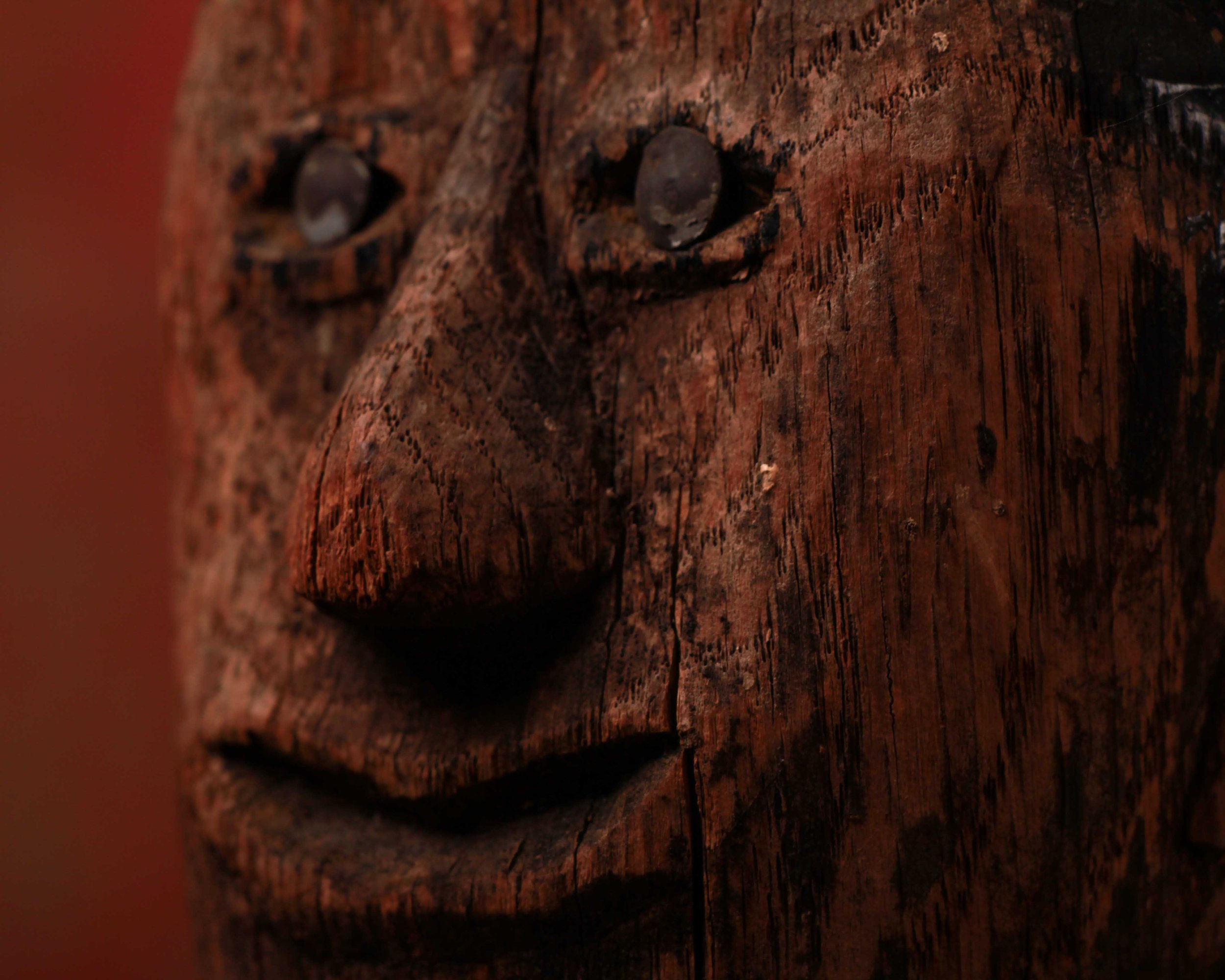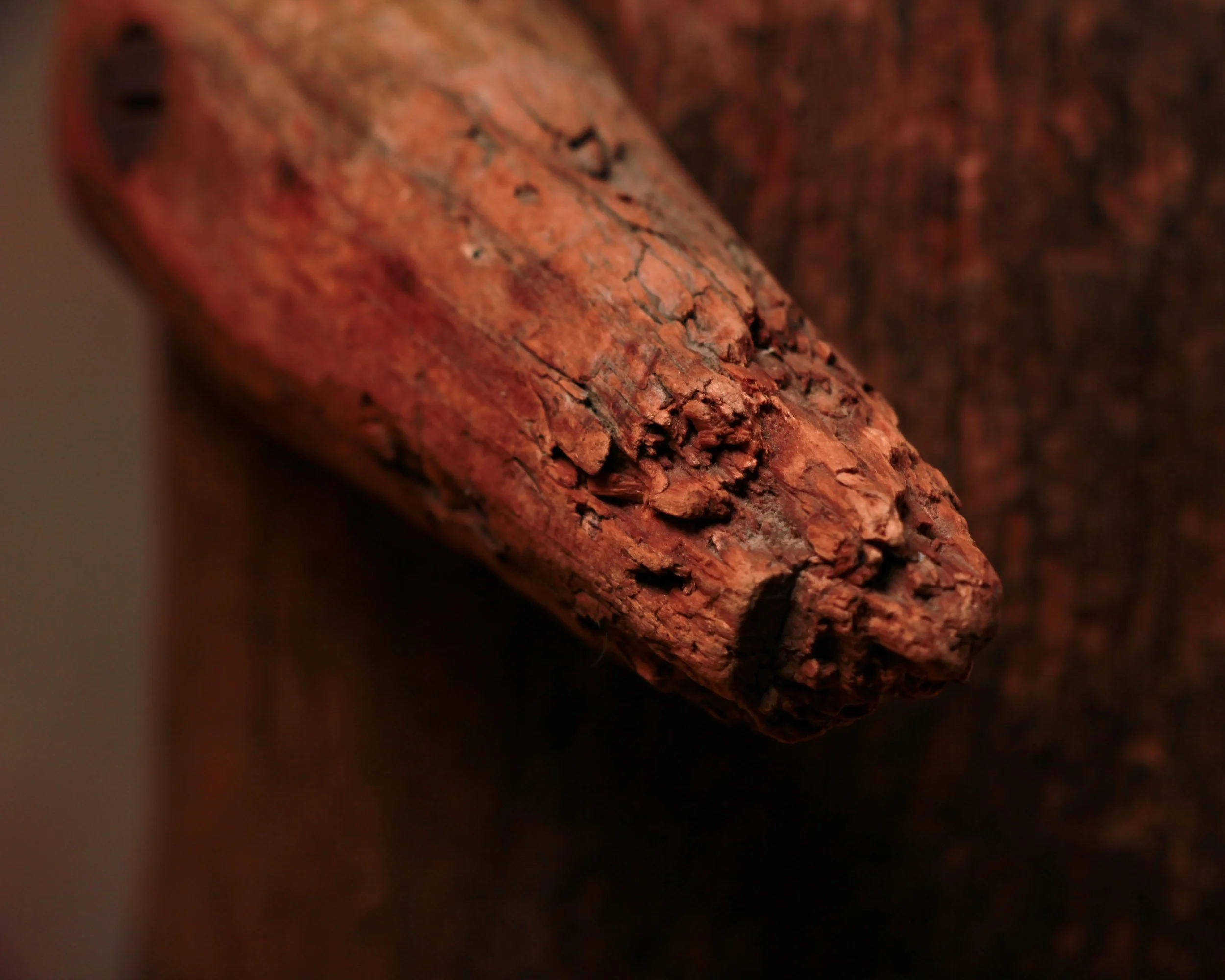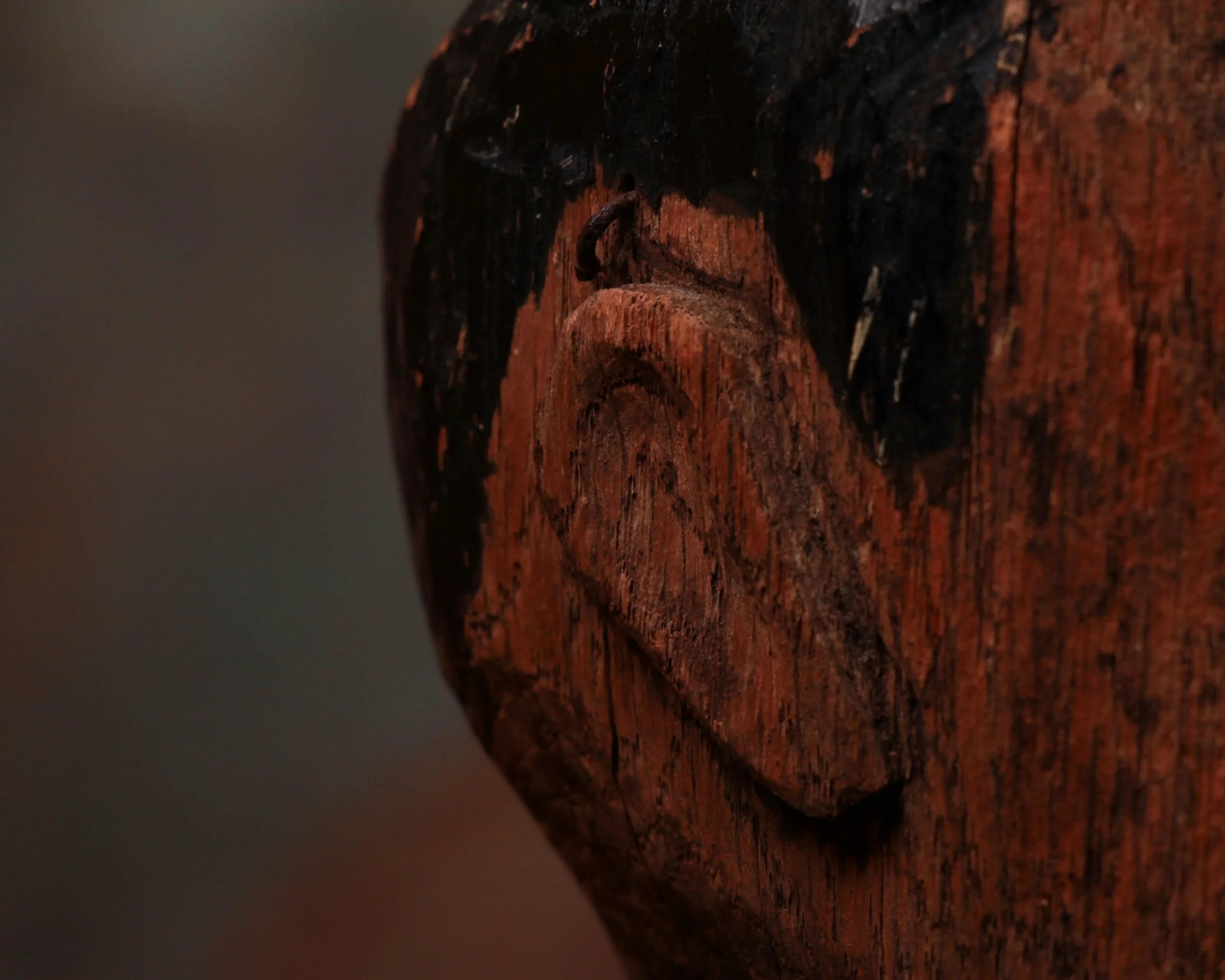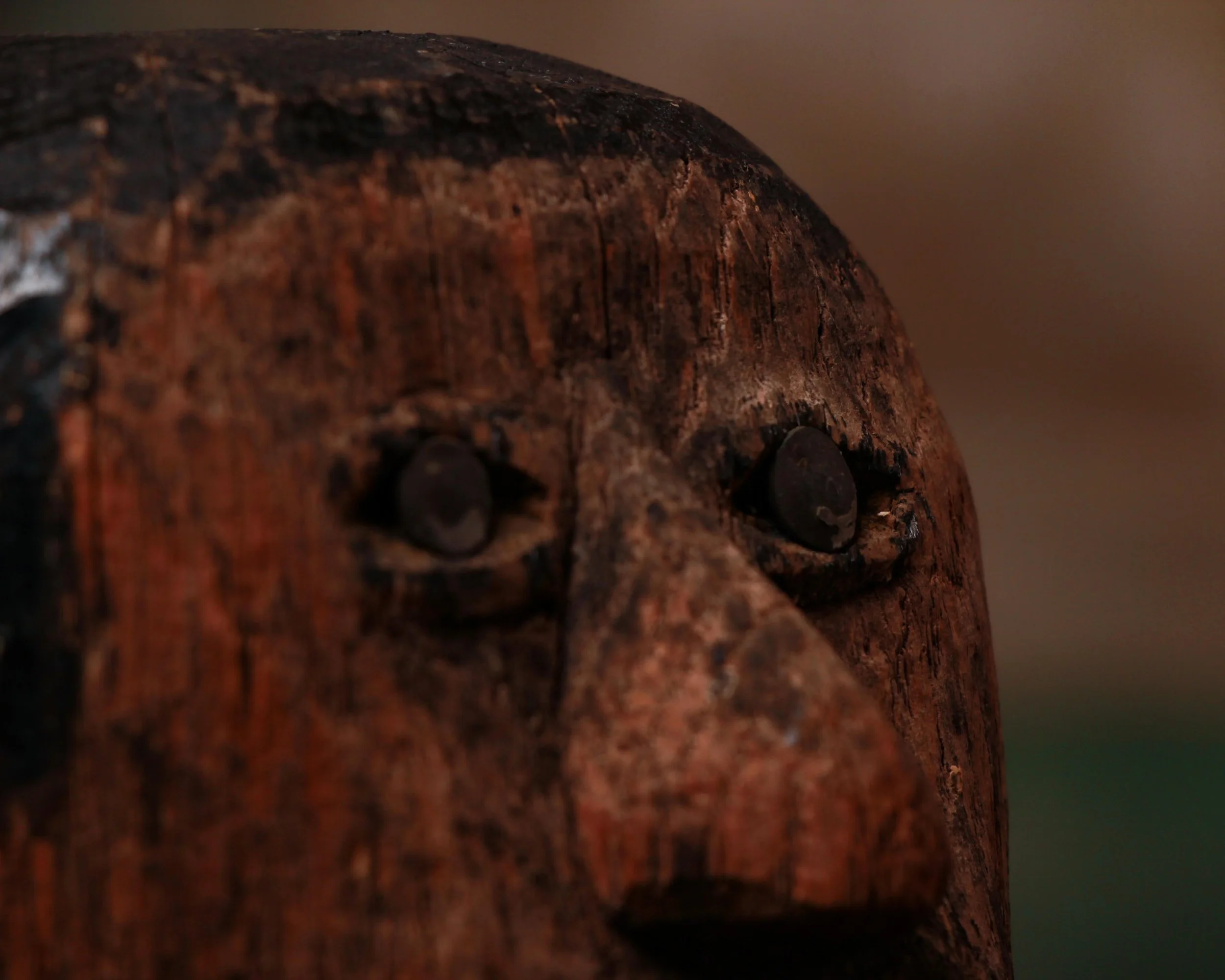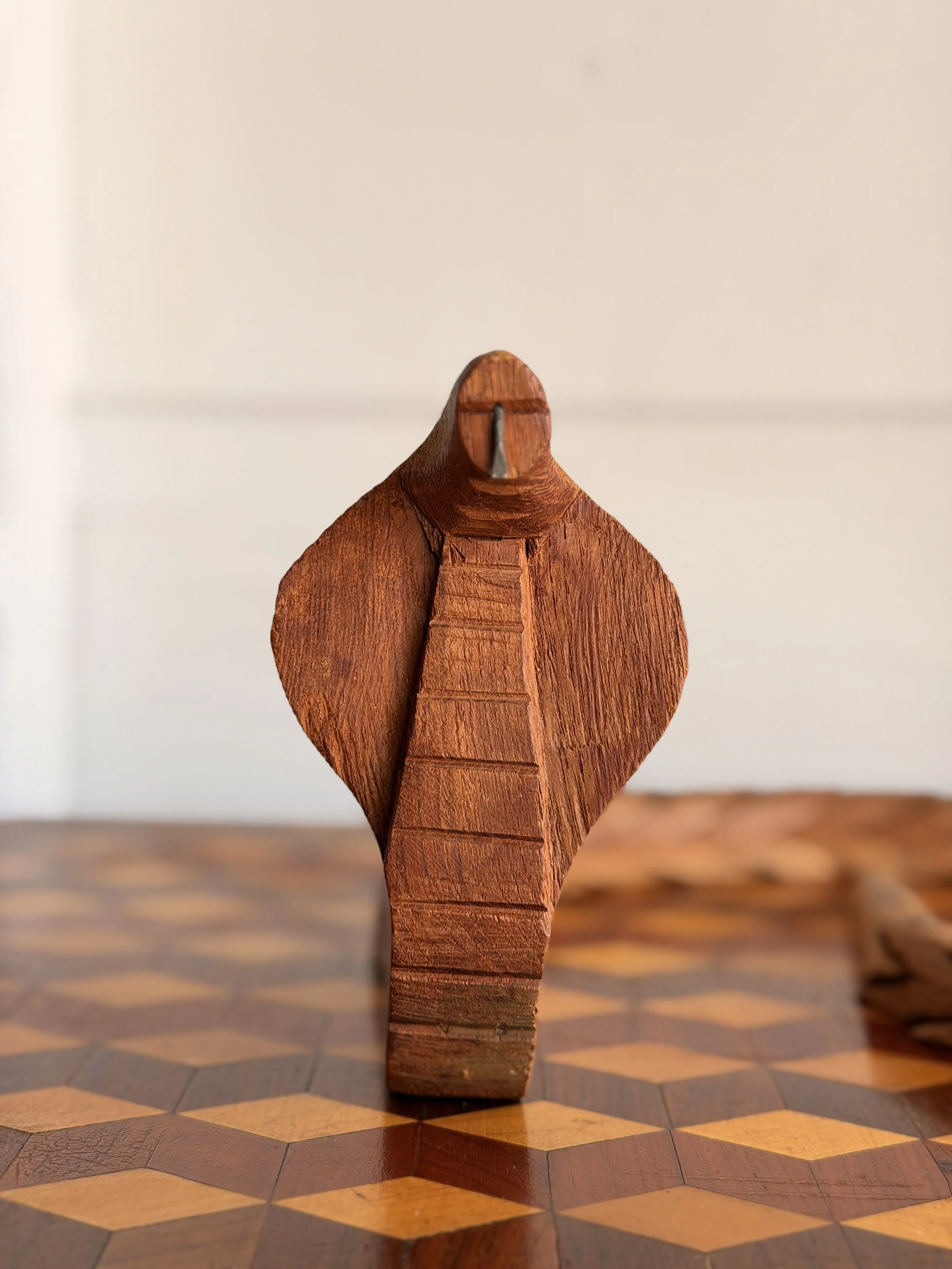
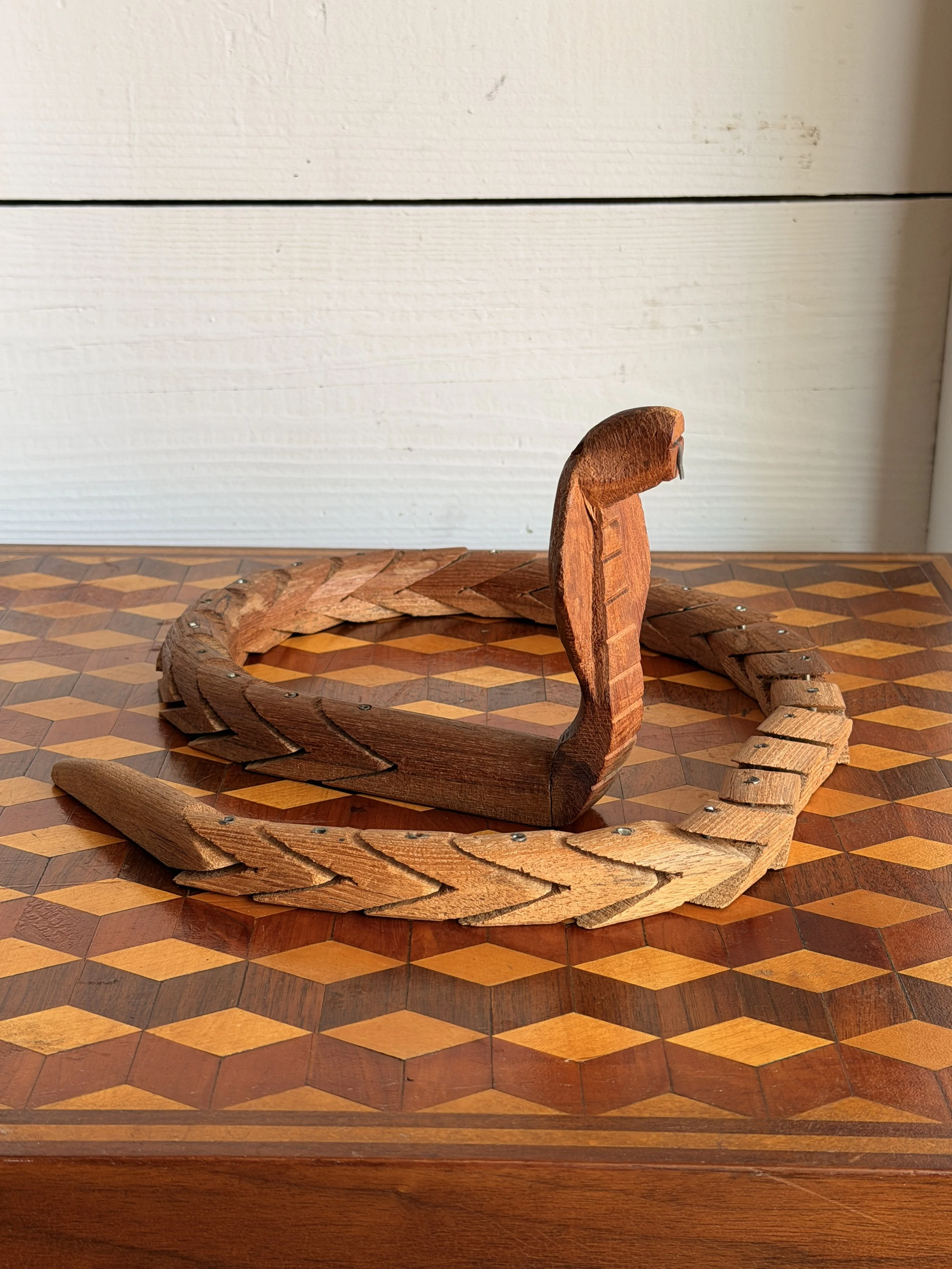
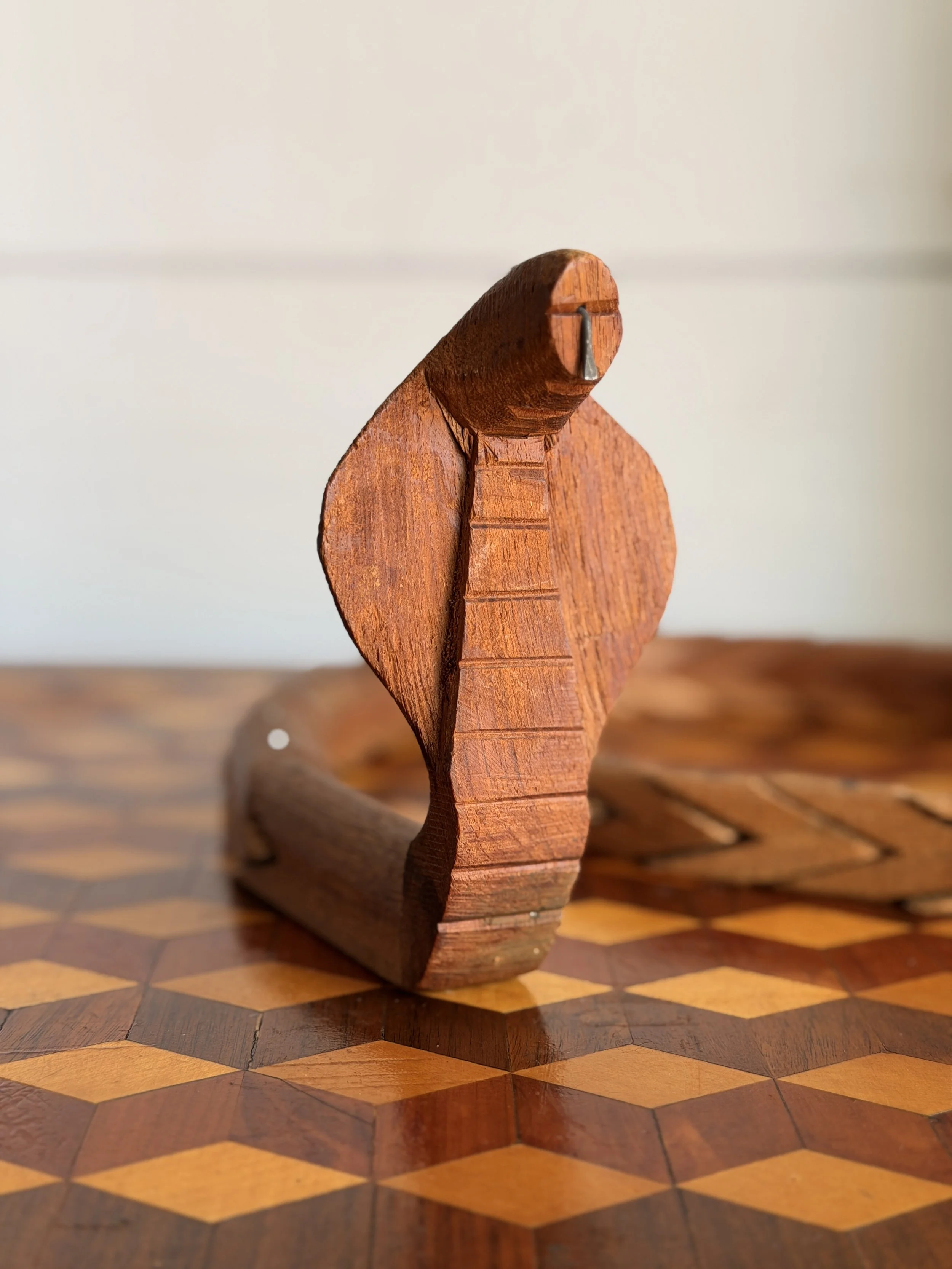
This hand-carved wooden cobra has the kind of clever construction that makes folk art so much fun to study up close. The snake rises upright with its hood spread wide, its simplified head reduced to a few strong cuts and a small metal tongue. Horizontal incisions run down the front of the neck, suggesting the segmented belly scales of a cobra. The carving is direct and wonderfully unfussy, with visible tool marks, an uneven surface, and a warm, dry patina that has developed with age.
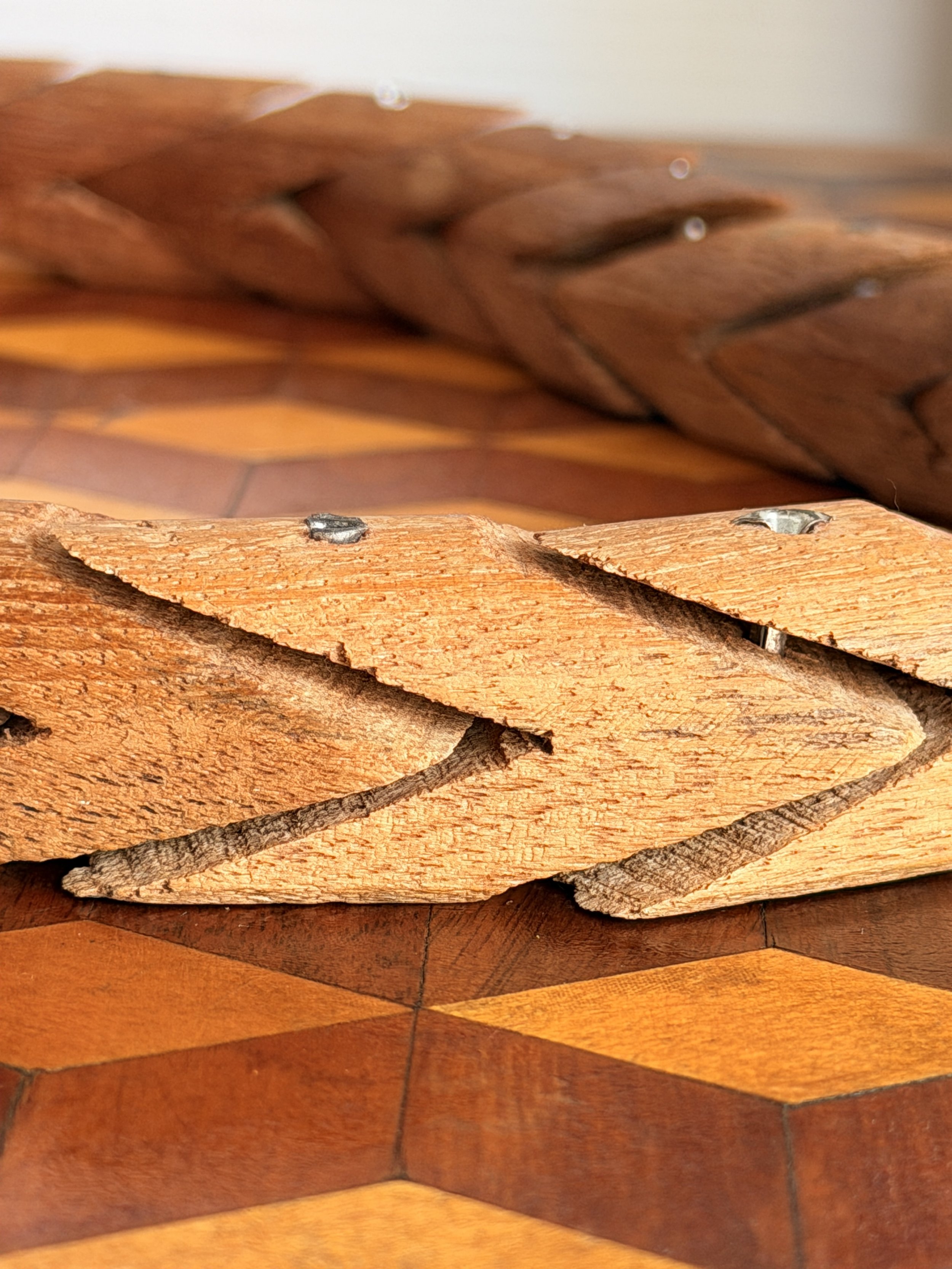
The real surprise, though, is the body. Viewed from above it reads as a long, coiling snake, but from the side the construction becomes much stranger and more inventive. The body is made from a repeating series of overlapping carved sections, each shaped almost like a little snake head with an open mouth biting into the one ahead of it. Small metal pins connect the individual pieces, allowing the body to bend and curve while also creating a terrific sawtooth silhouette. It is part sculpture, part mechanical puzzle.
Snakes have appeared in folk and decorative art across cultures for centuries, often carrying several meanings at once. Because snakes shed their skins, they became natural symbols of renewal and transformation. Cobras in particular have long been associated with protection, power, danger, and supernatural authority, especially throughout South Asia and parts of Africa.
Wooden snake carvings also appealed to makers because the animal’s long, flexible form invited experimentation. Carvers could create rigid sculptures, walking sticks, toys, articulated snakes, or ingenious chain-like constructions such as this one. Articulated wooden animals became especially popular as handmade souvenirs and folk objects during the 19th and early 20th centuries, when makers often combined local carving traditions with a bit of mechanical ingenuity.
This cobra fits comfortably into that world: slightly eccentric, handmade, and full of personality, with a construction that becomes more interesting the longer you look at it.
This hand-carved wooden cobra has the kind of clever construction that makes folk art so much fun to study up close. The snake rises upright with its hood spread wide, its simplified head reduced to a few strong cuts and a small metal tongue. Horizontal incisions run down the front of the neck, suggesting the segmented belly scales of a cobra. The carving is direct and wonderfully unfussy, with visible tool marks, an uneven surface, and a warm, dry patina that has developed with age.
The real surprise, though, is the body. Viewed from above it reads as a long, coiling snake, but from the side the construction becomes much stranger and more inventive. The body is made from a repeating series of overlapping carved sections, each shaped almost like a little snake head with an open mouth biting into the one ahead of it. Small metal pins connect the individual pieces, allowing the body to bend and curve while also creating a terrific sawtooth silhouette. It is part sculpture, part mechanical puzzle.
Snakes have appeared in folk and decorative art across cultures for centuries, often carrying several meanings at once. Because snakes shed their skins, they became natural symbols of renewal and transformation. Cobras in particular have long been associated with protection, power, danger, and supernatural authority, especially throughout South Asia and parts of Africa.
Wooden snake carvings also appealed to makers because the animal’s long, flexible form invited experimentation. Carvers could create rigid sculptures, walking sticks, toys, articulated snakes, or ingenious chain-like constructions such as this one. Articulated wooden animals became especially popular as handmade souvenirs and folk objects during the 19th and early 20th centuries, when makers often combined local carving traditions with a bit of mechanical ingenuity.
This cobra fits comfortably into that world: slightly eccentric, handmade, and full of personality, with a construction that becomes more interesting the longer you look at it.