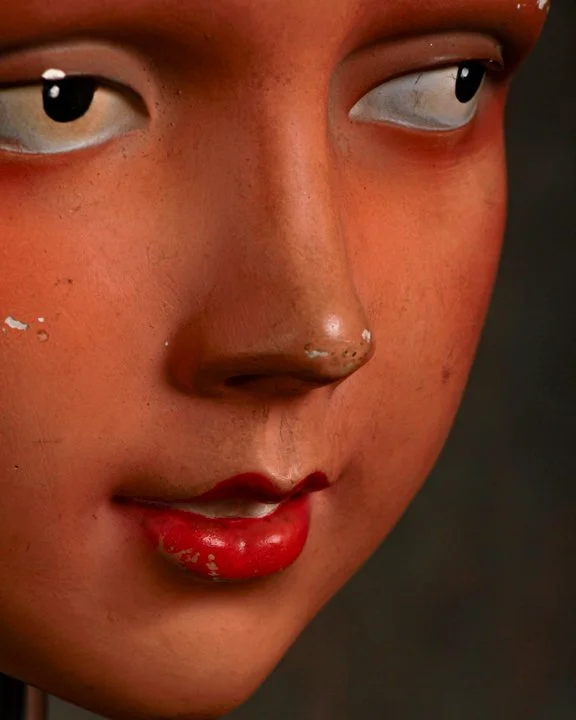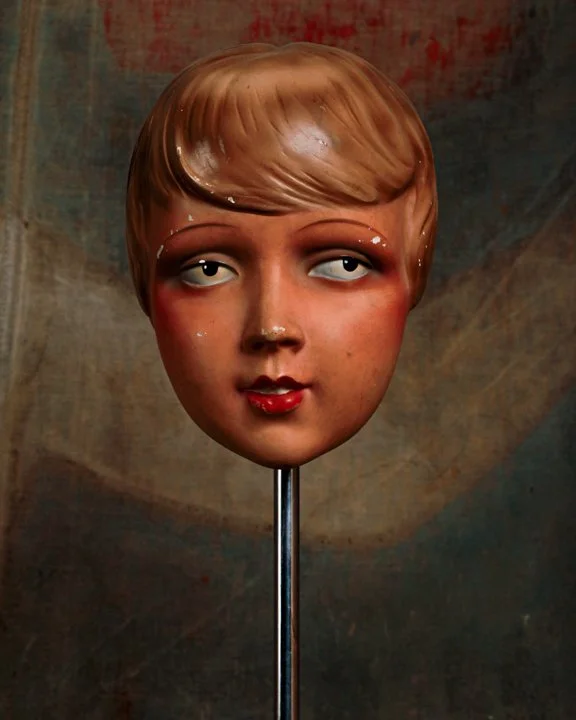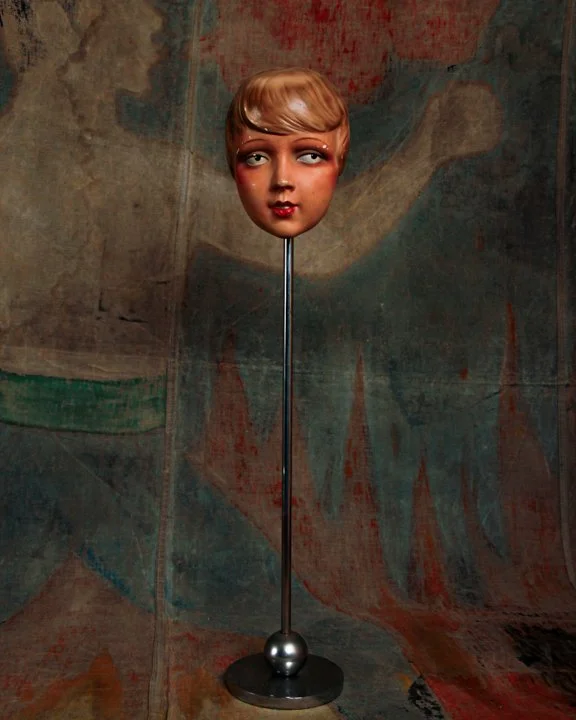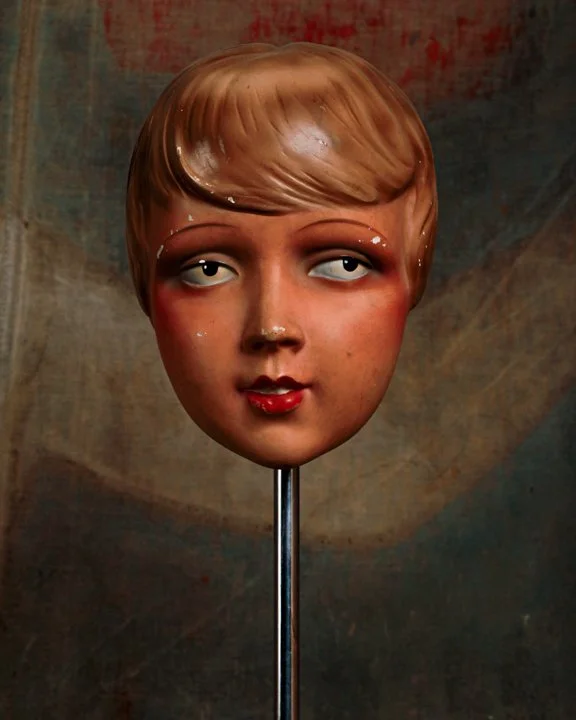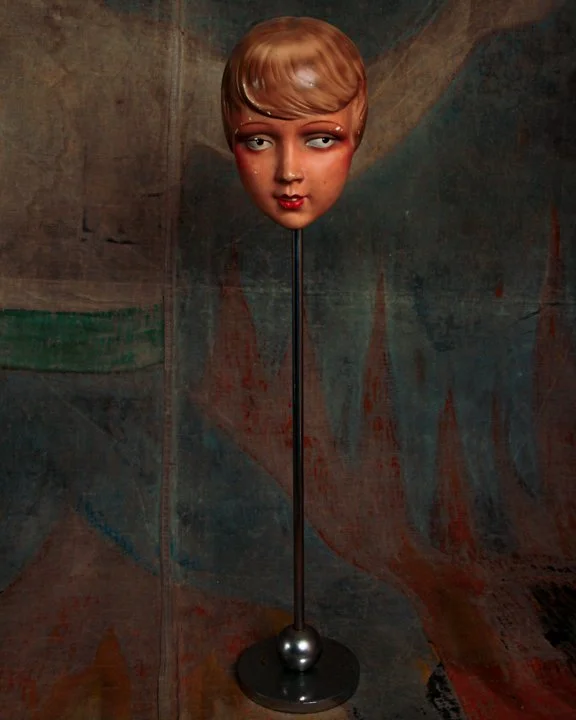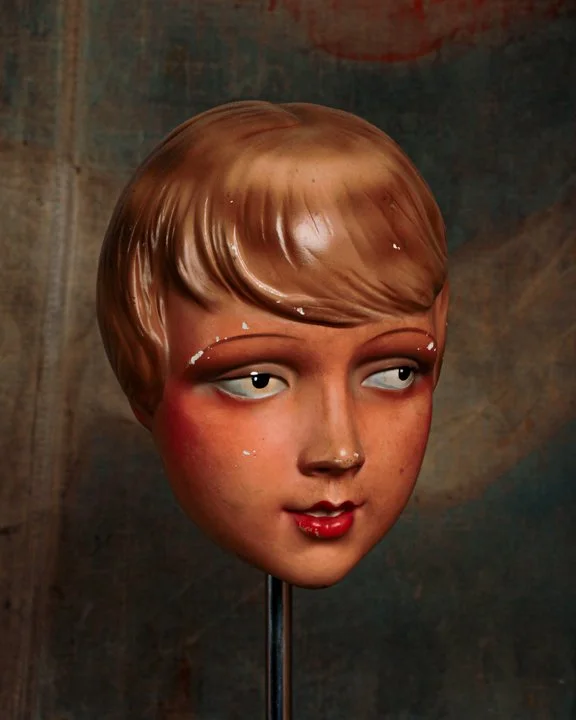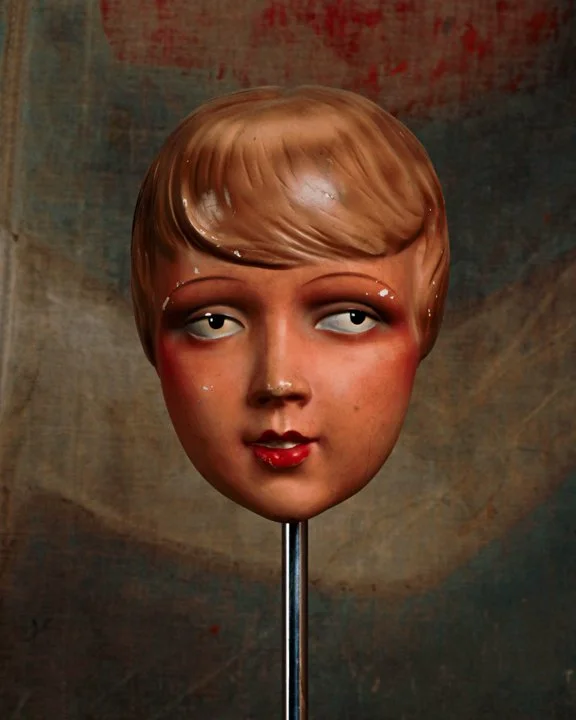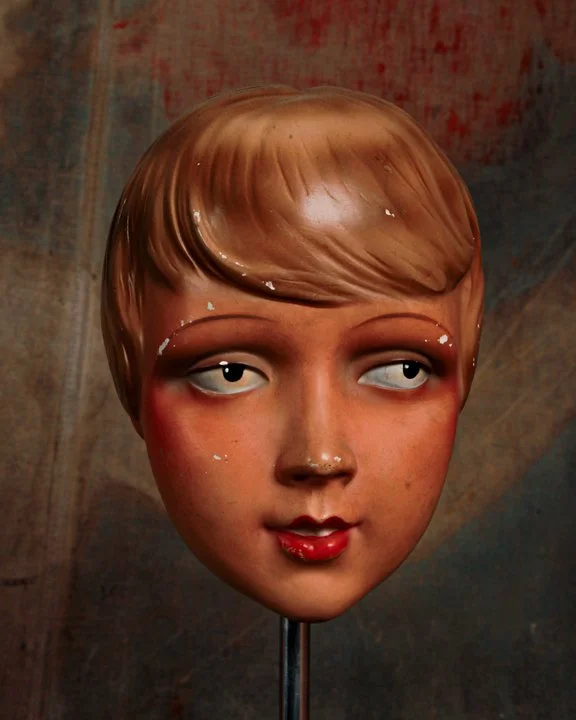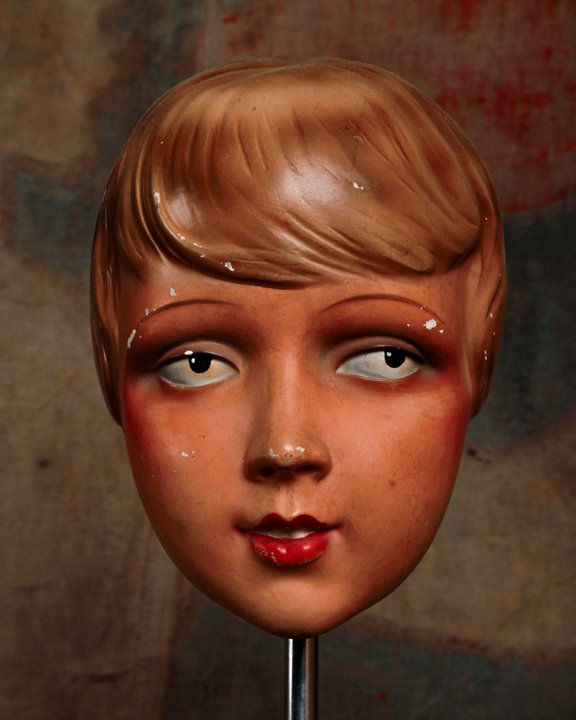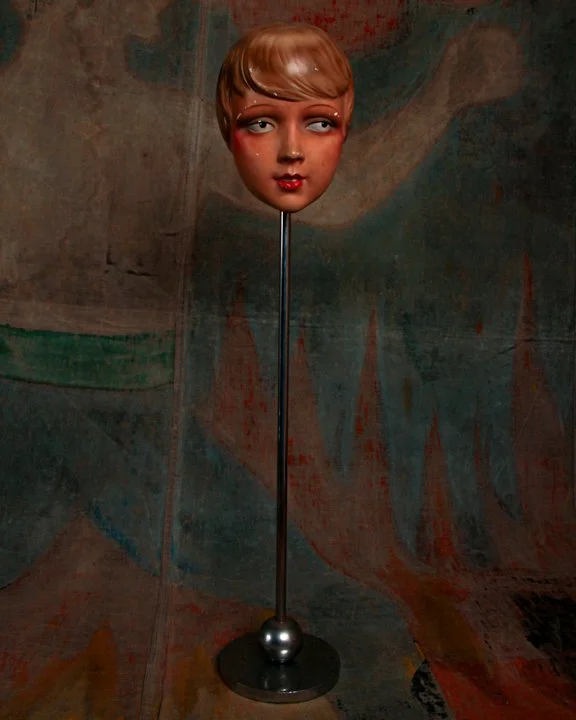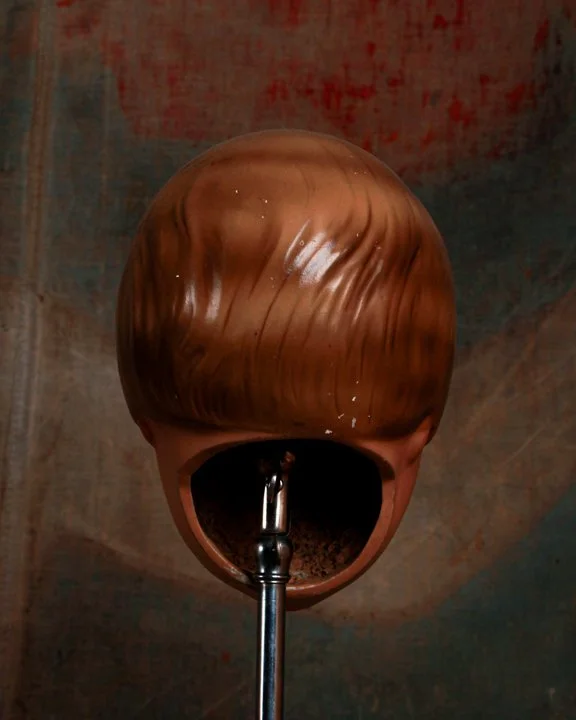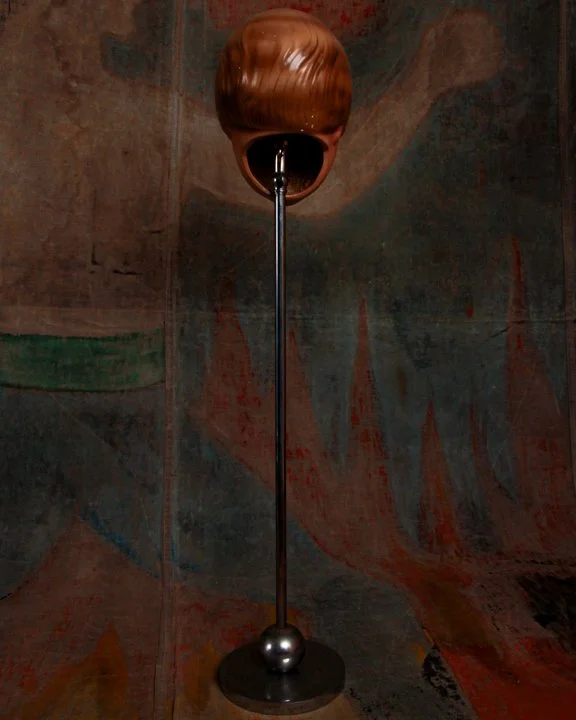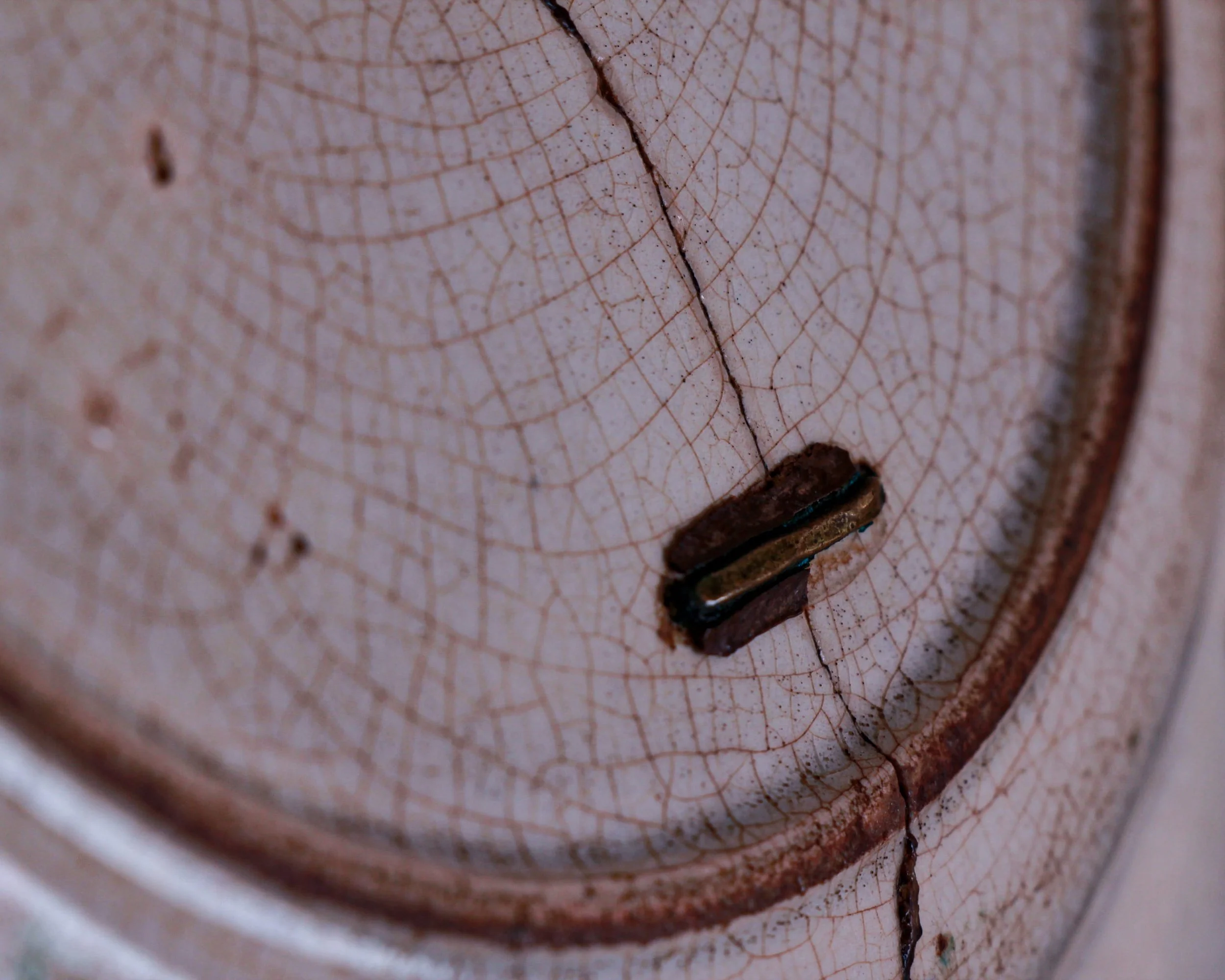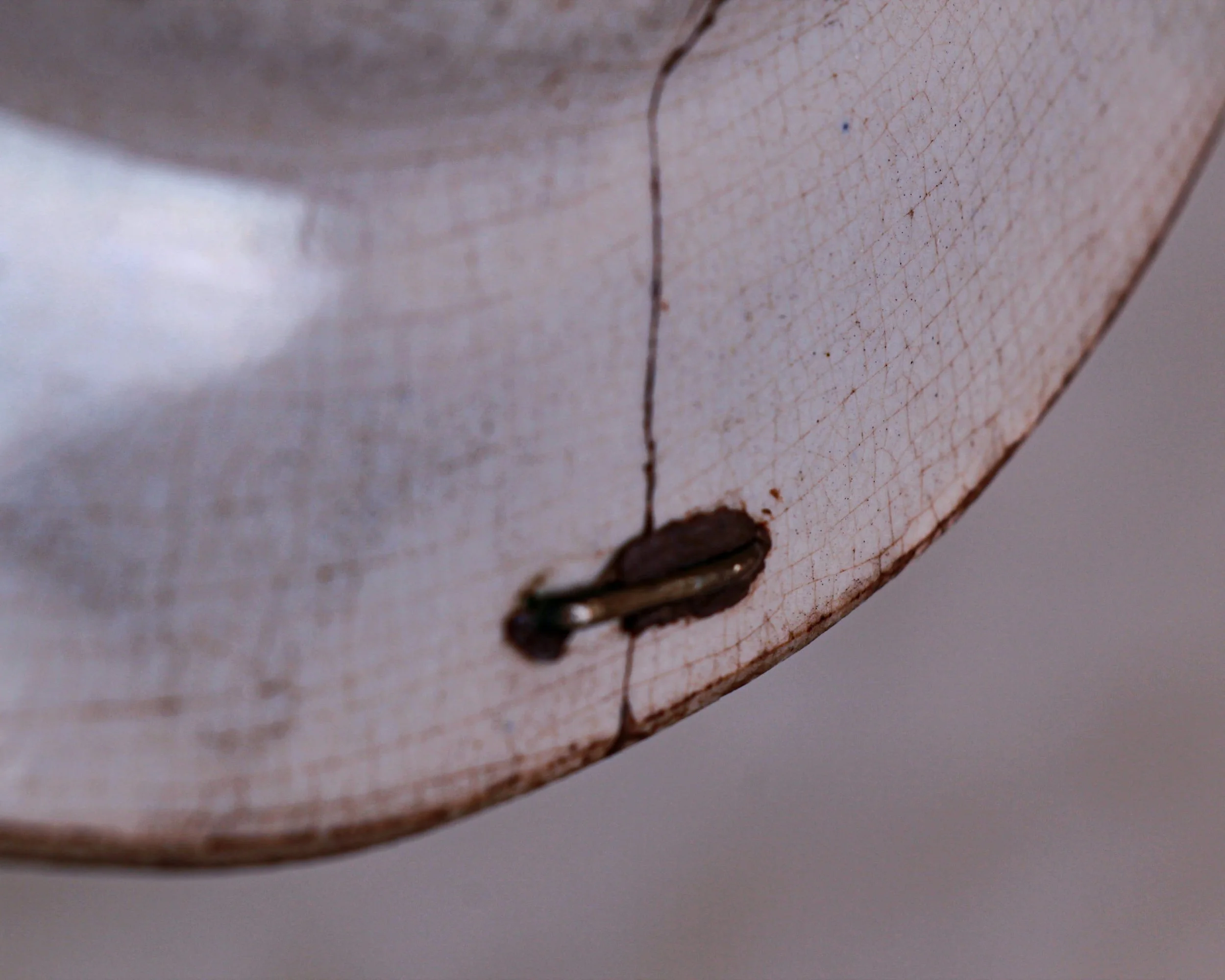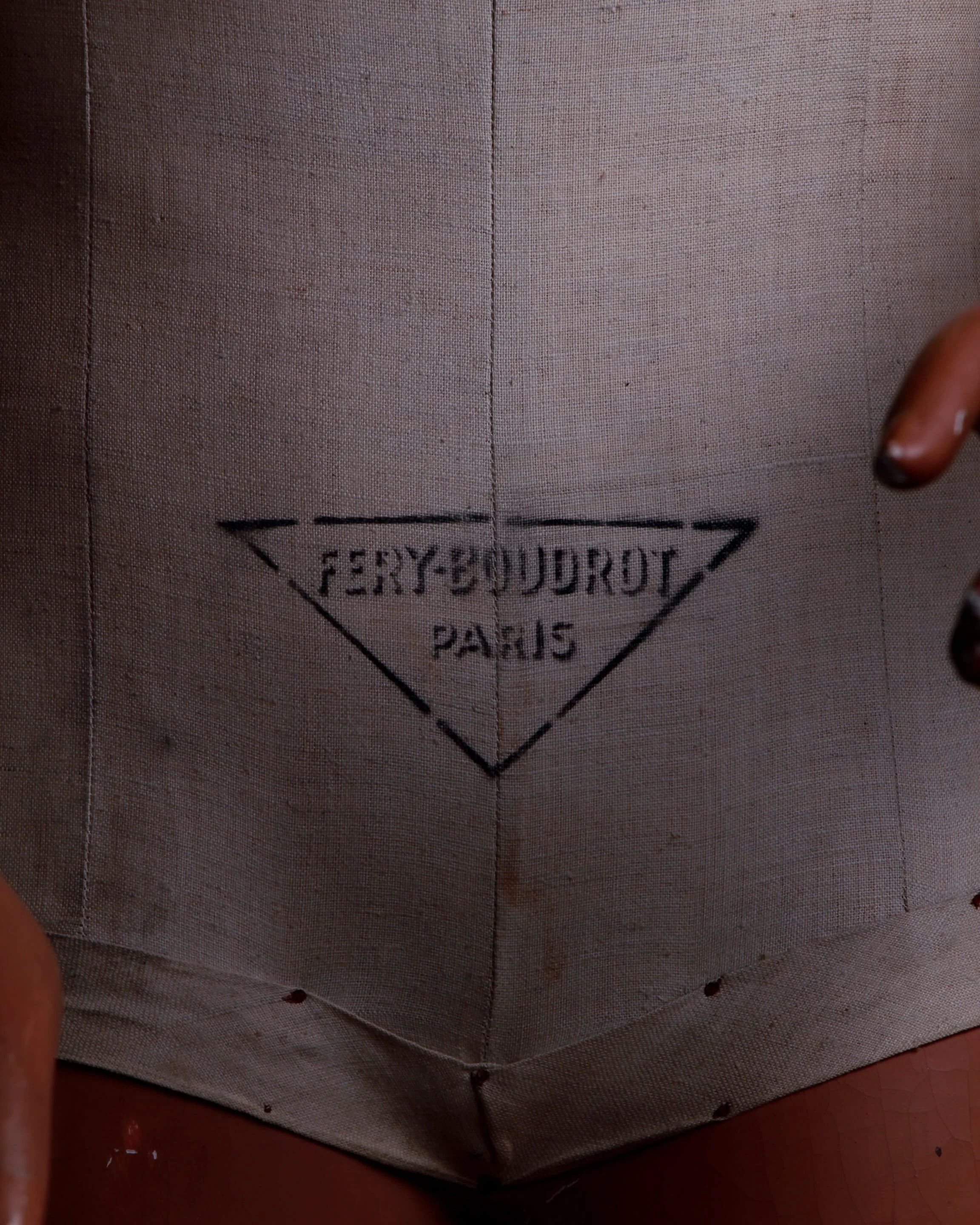
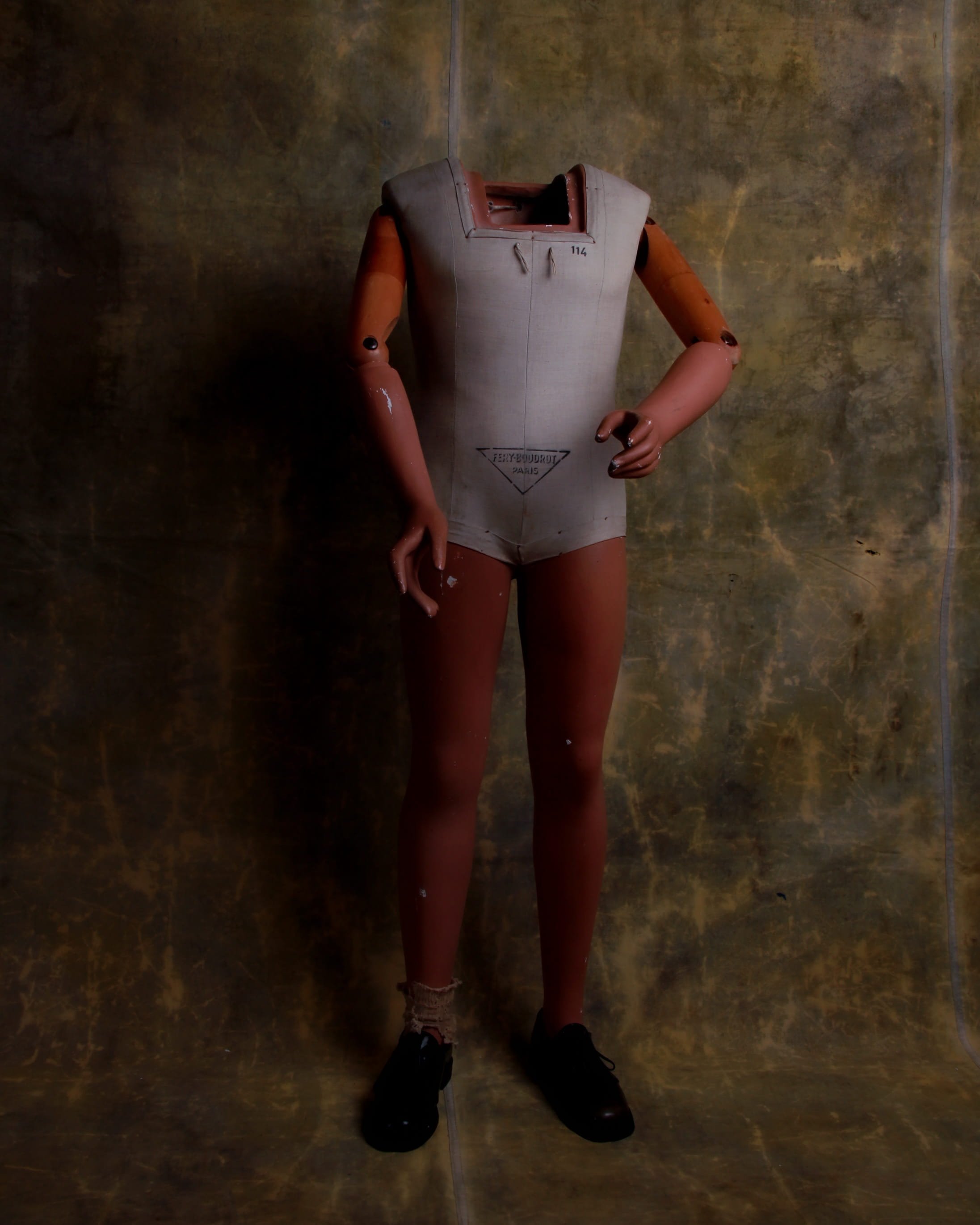
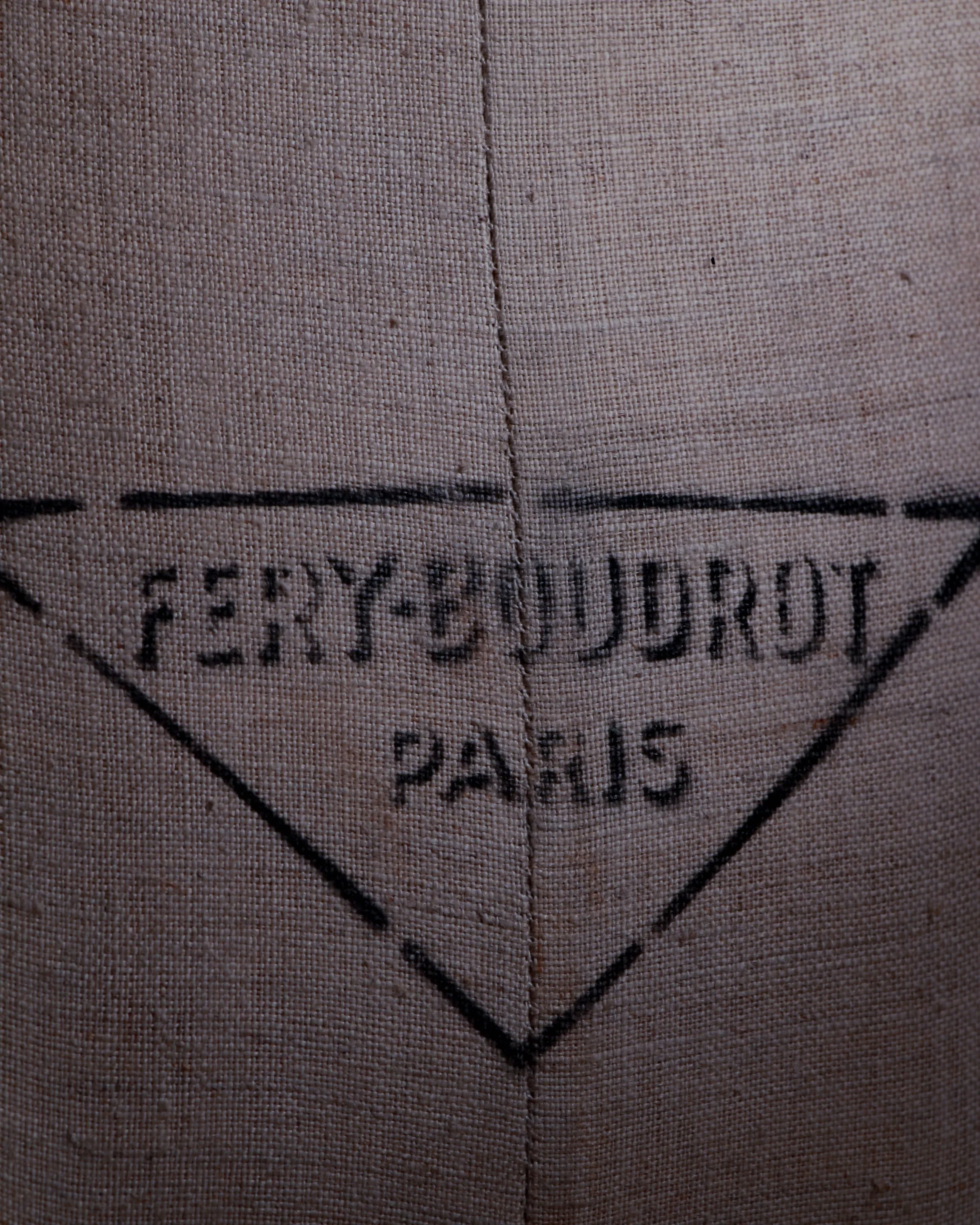
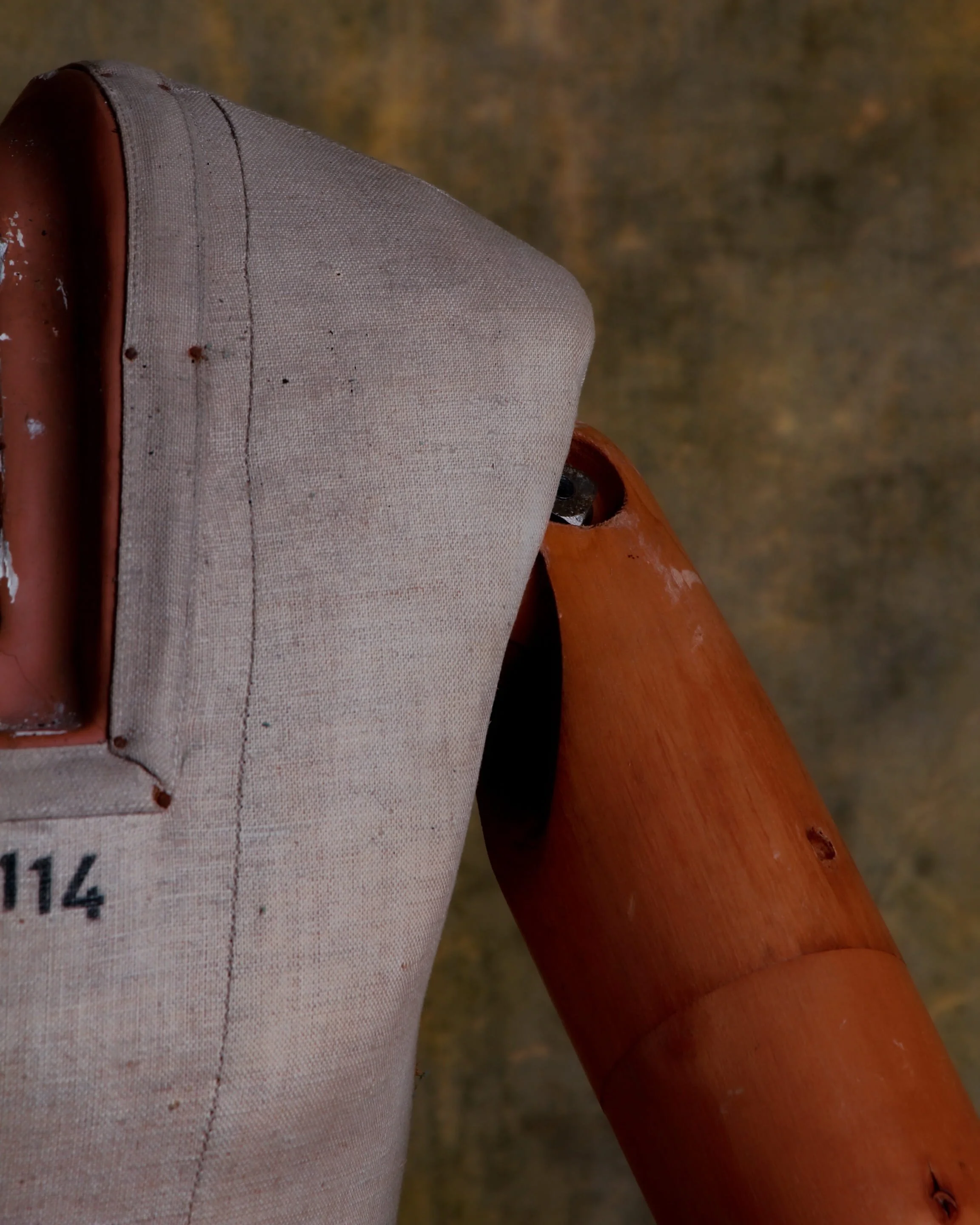
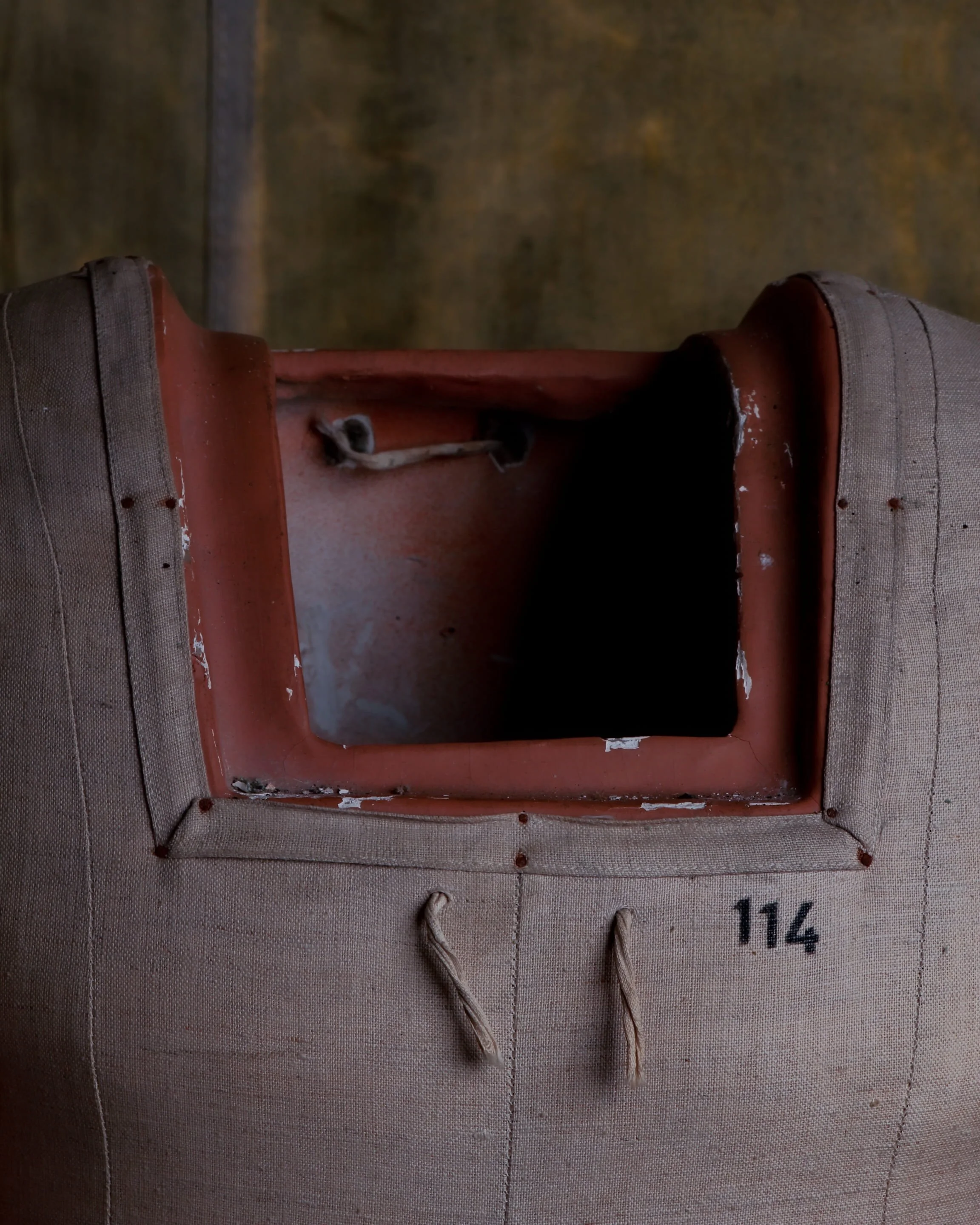
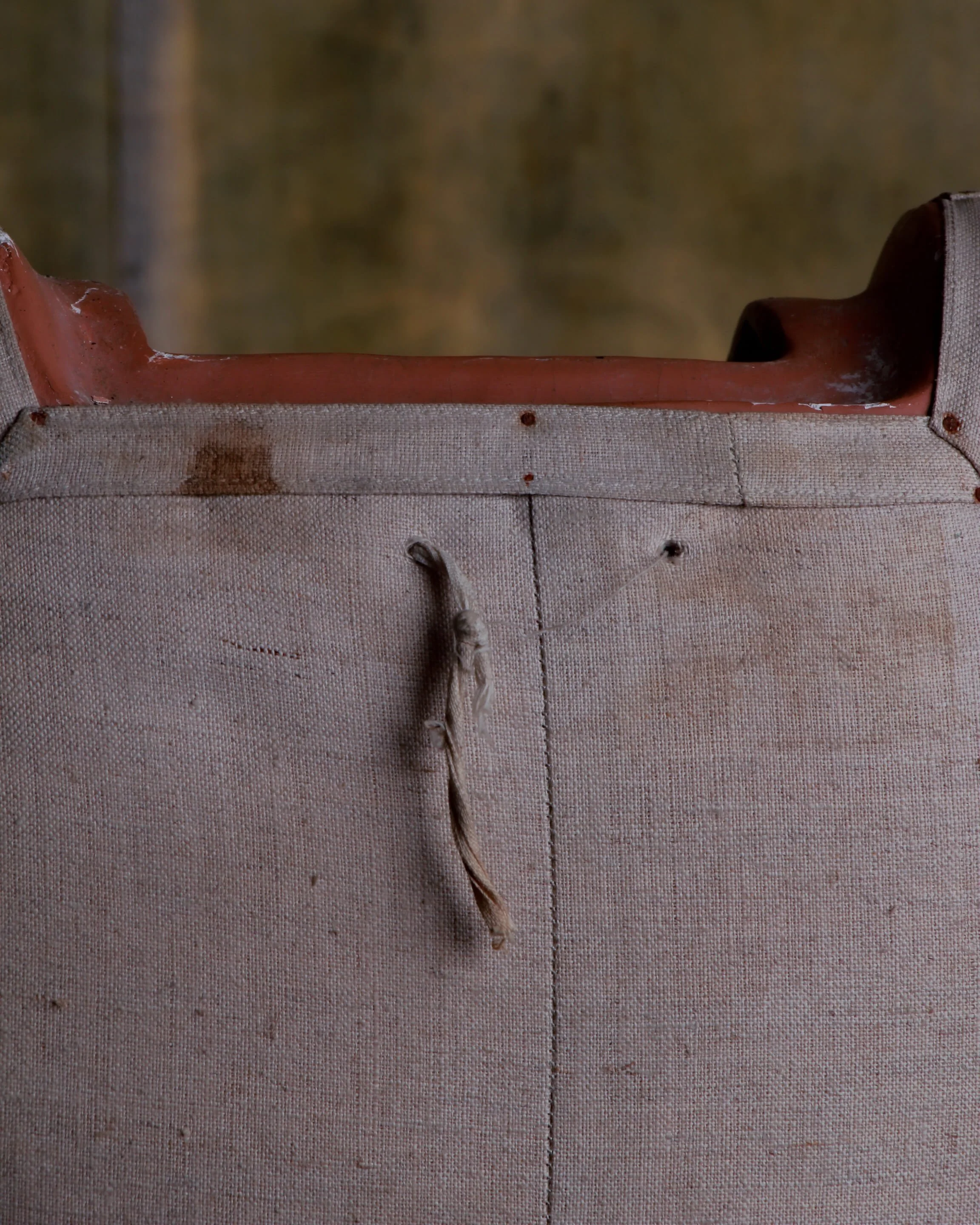
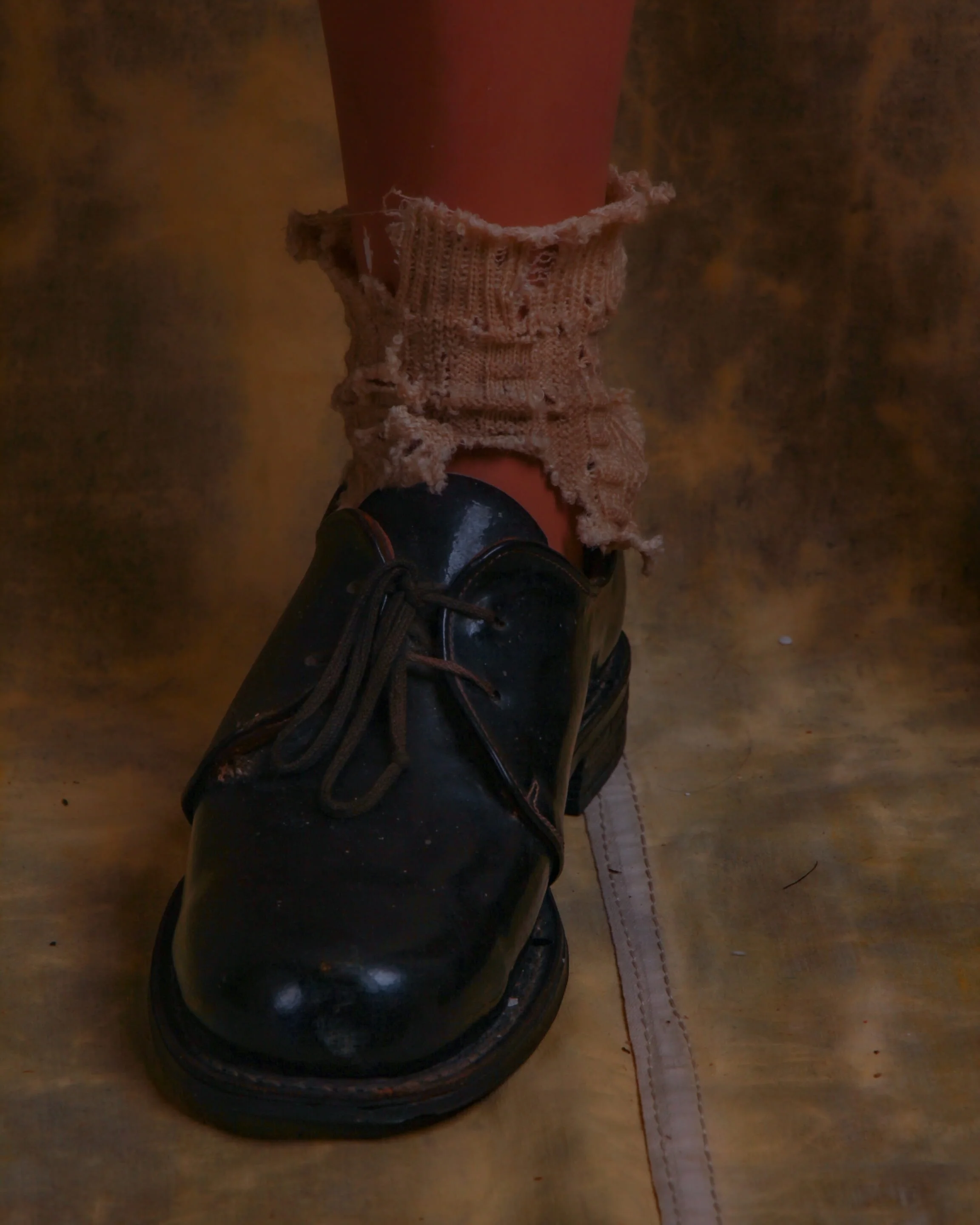
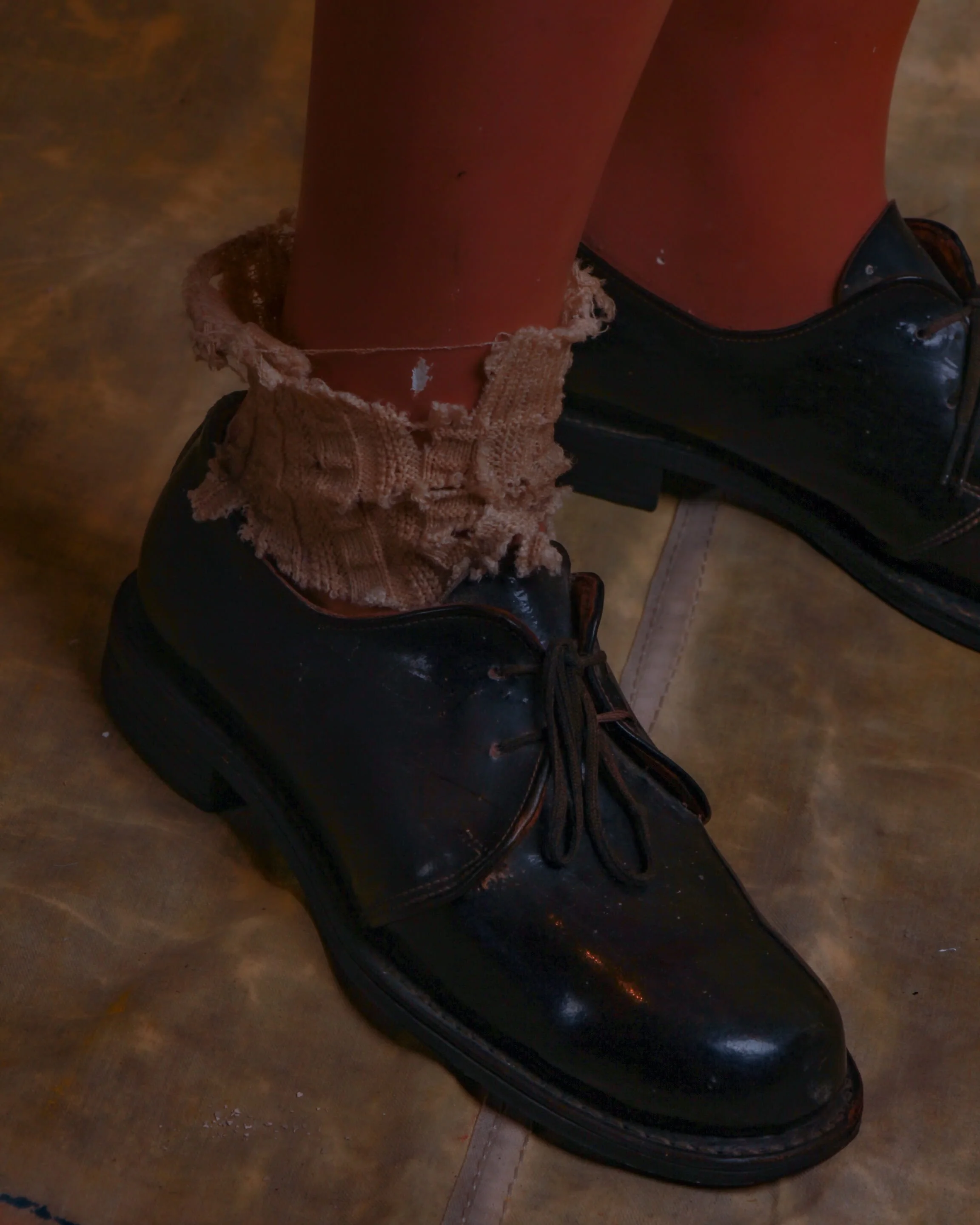
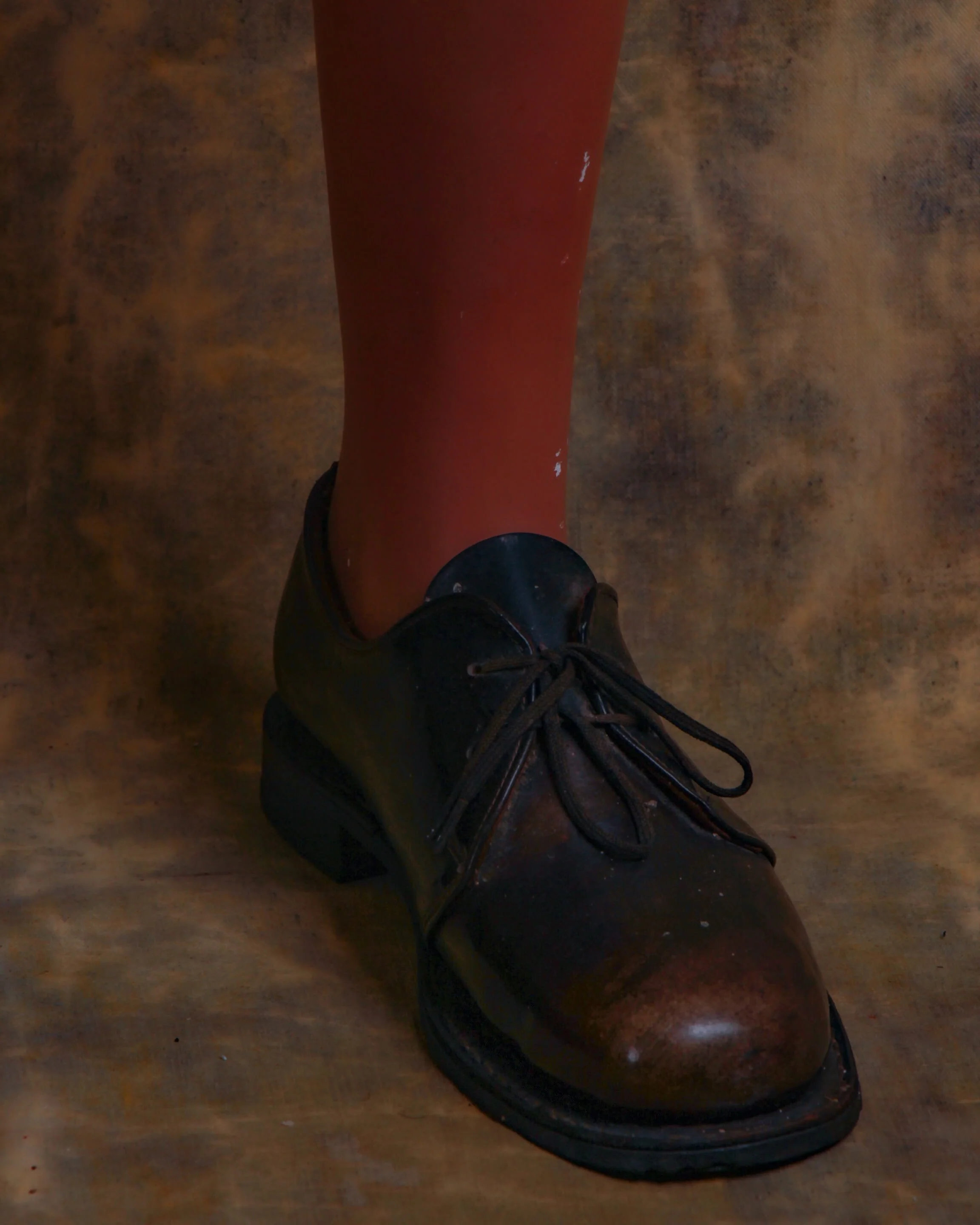
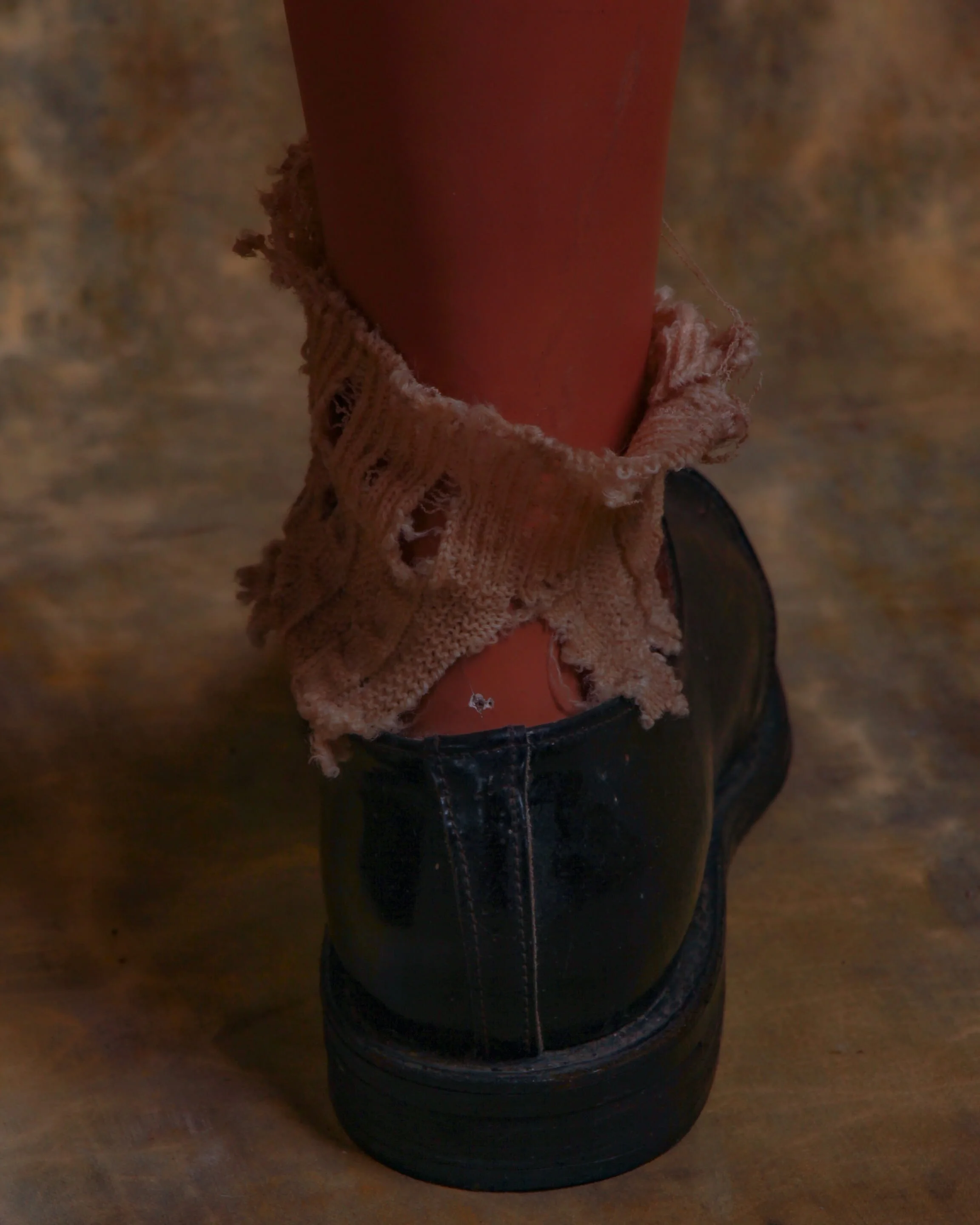
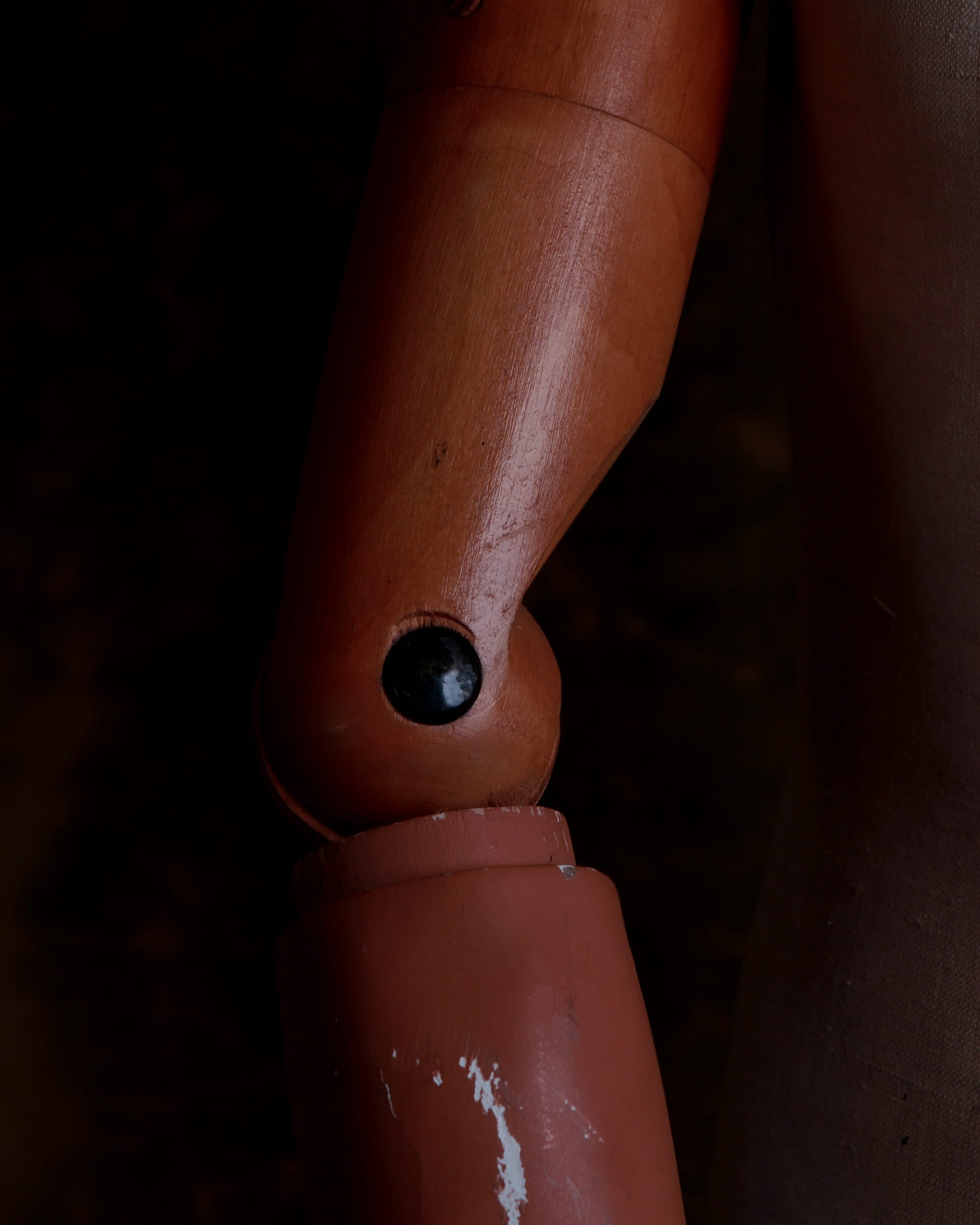
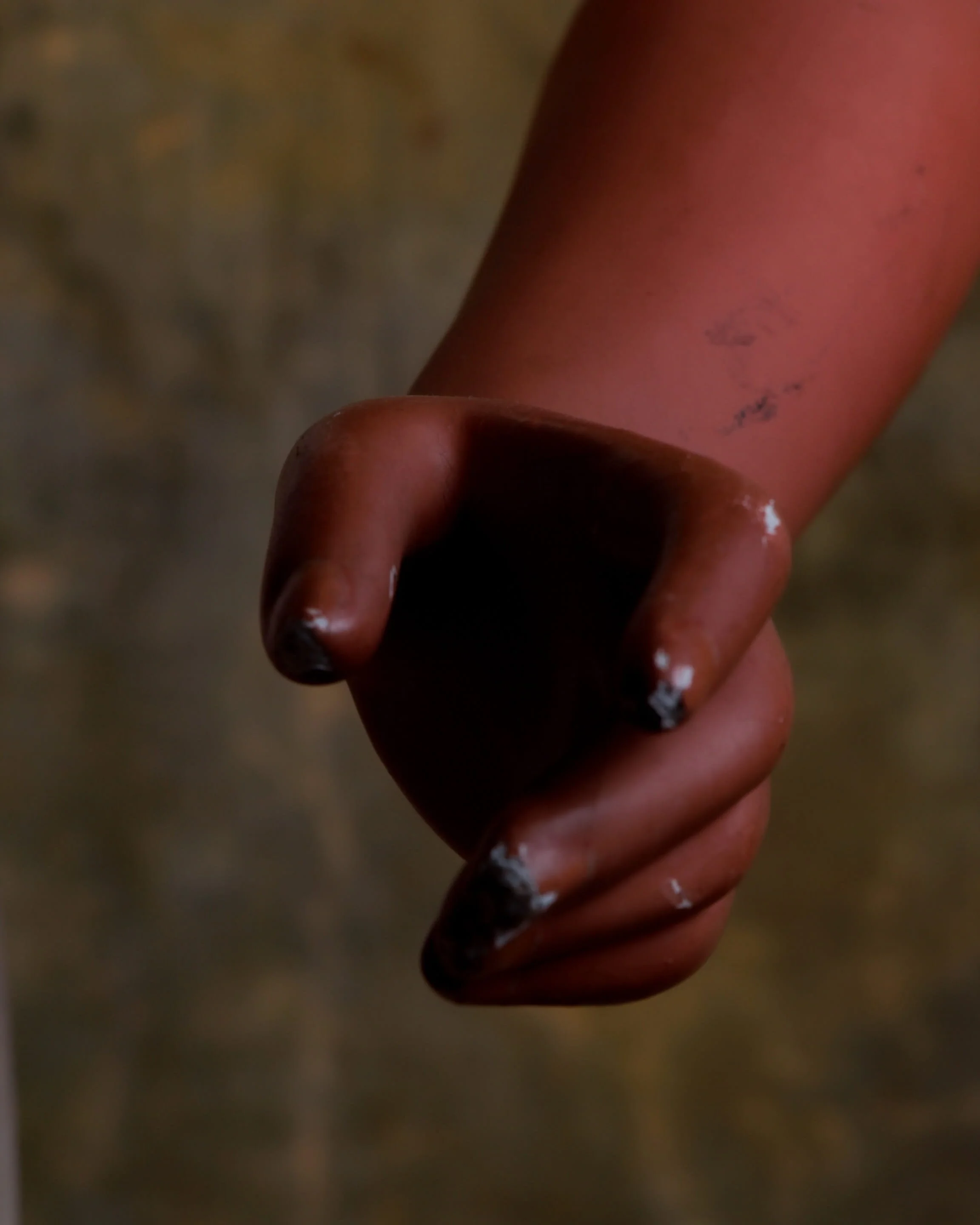
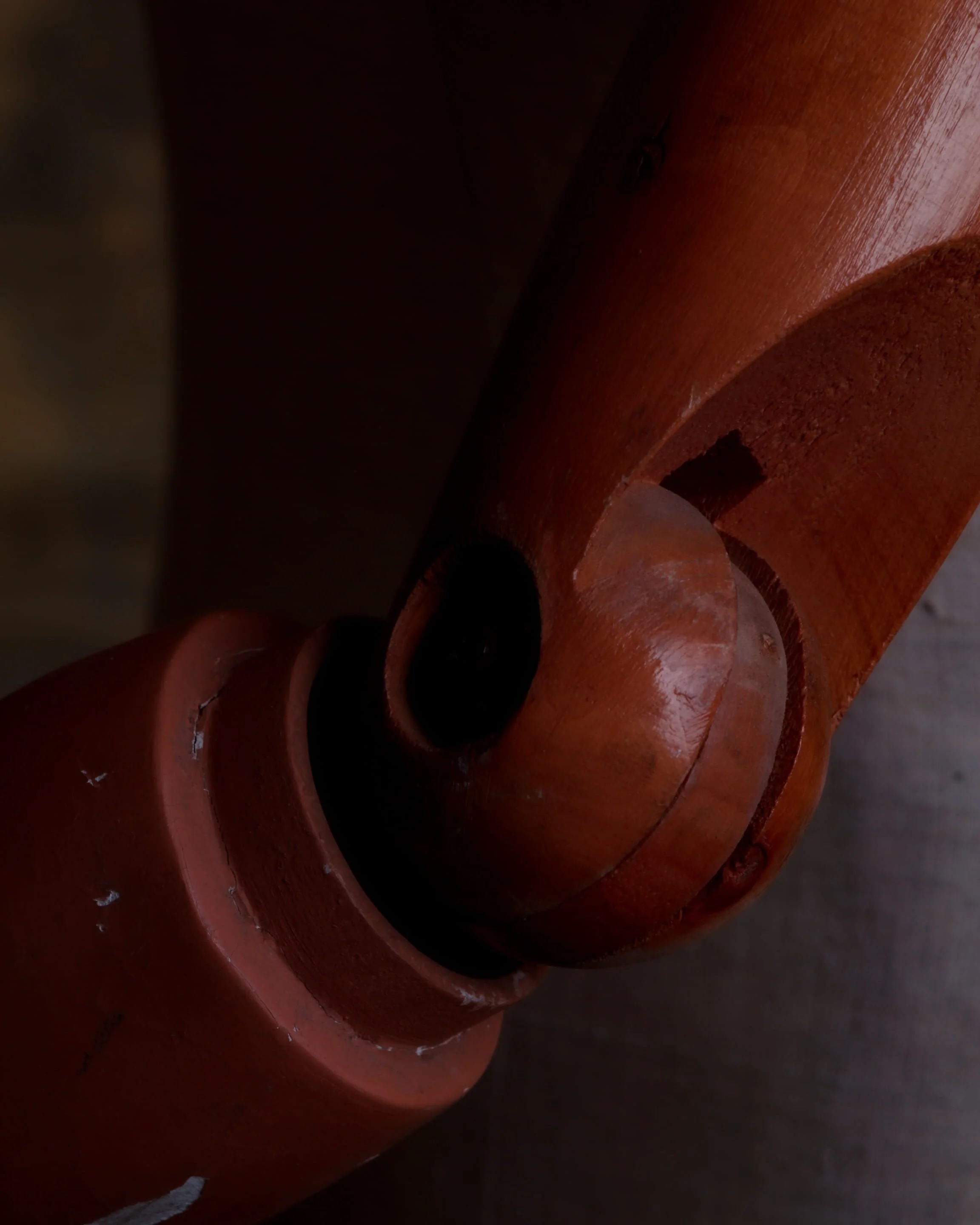
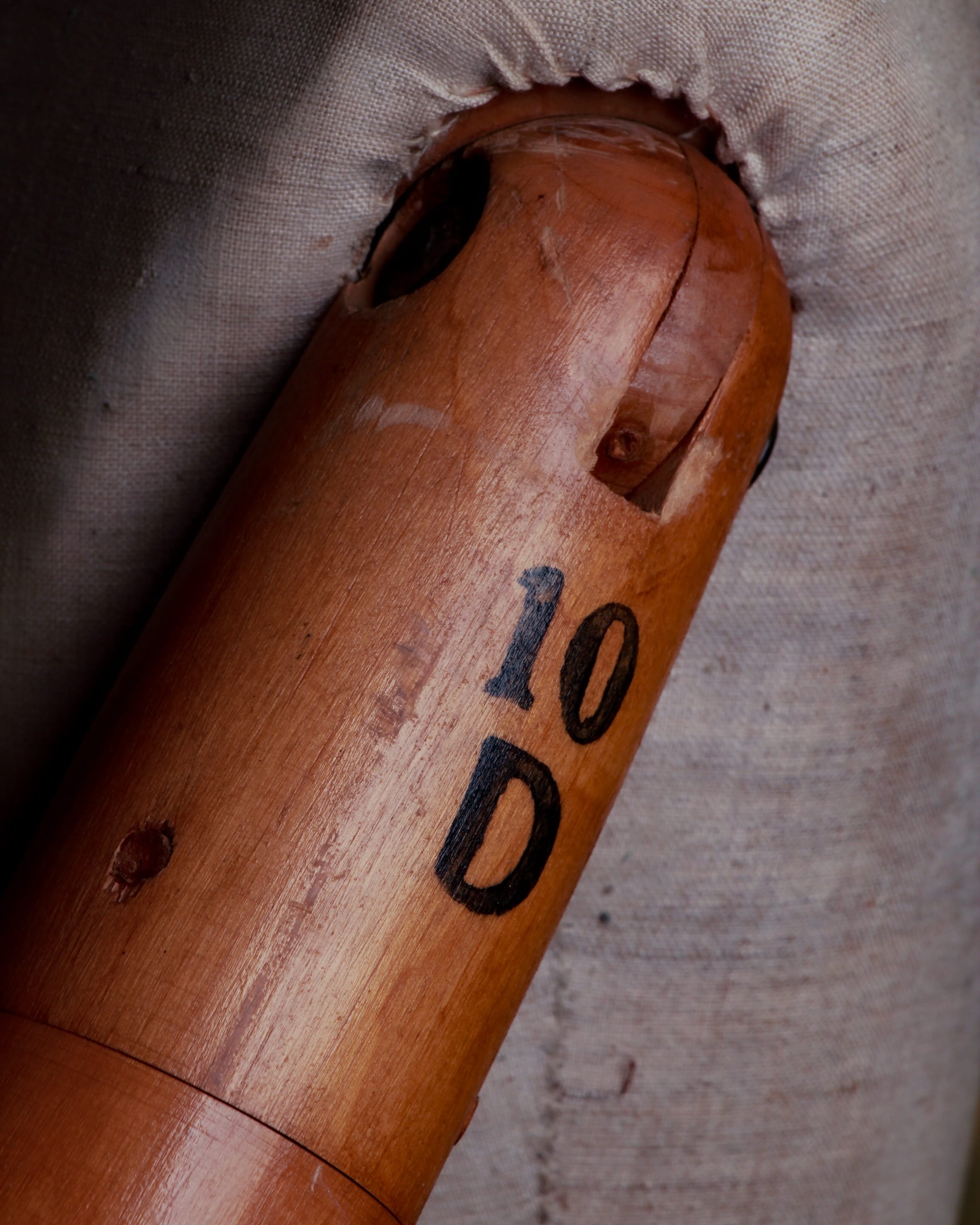
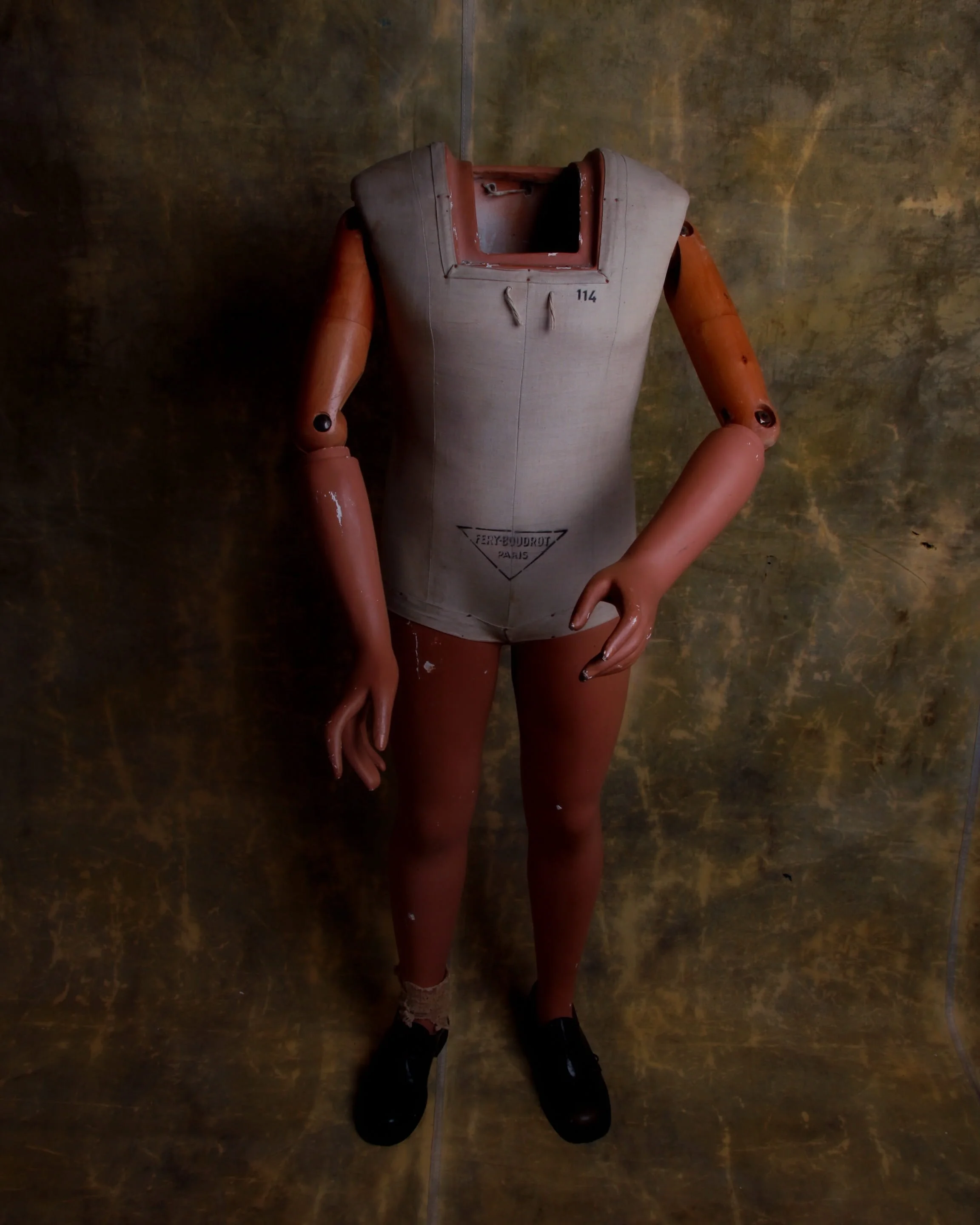
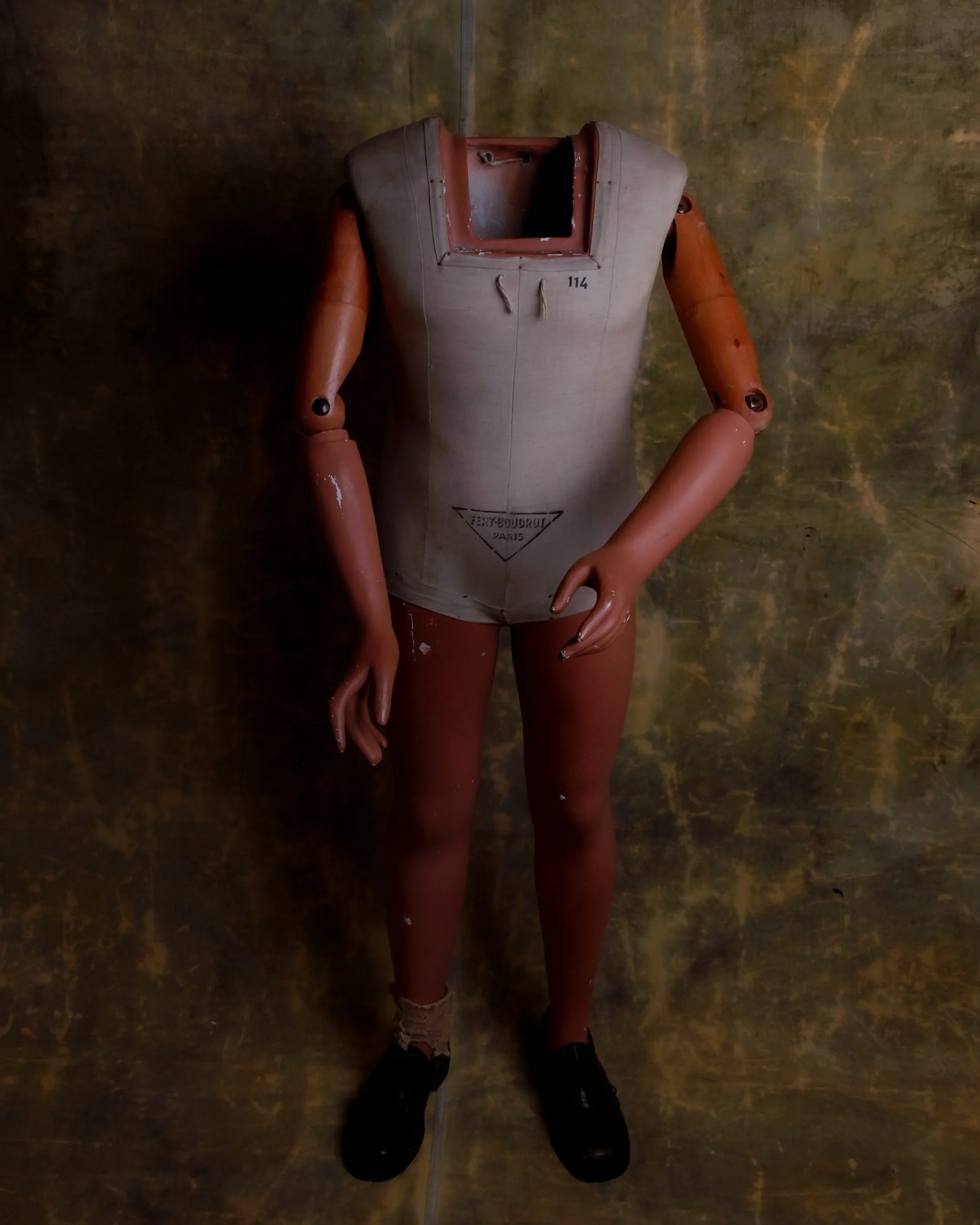
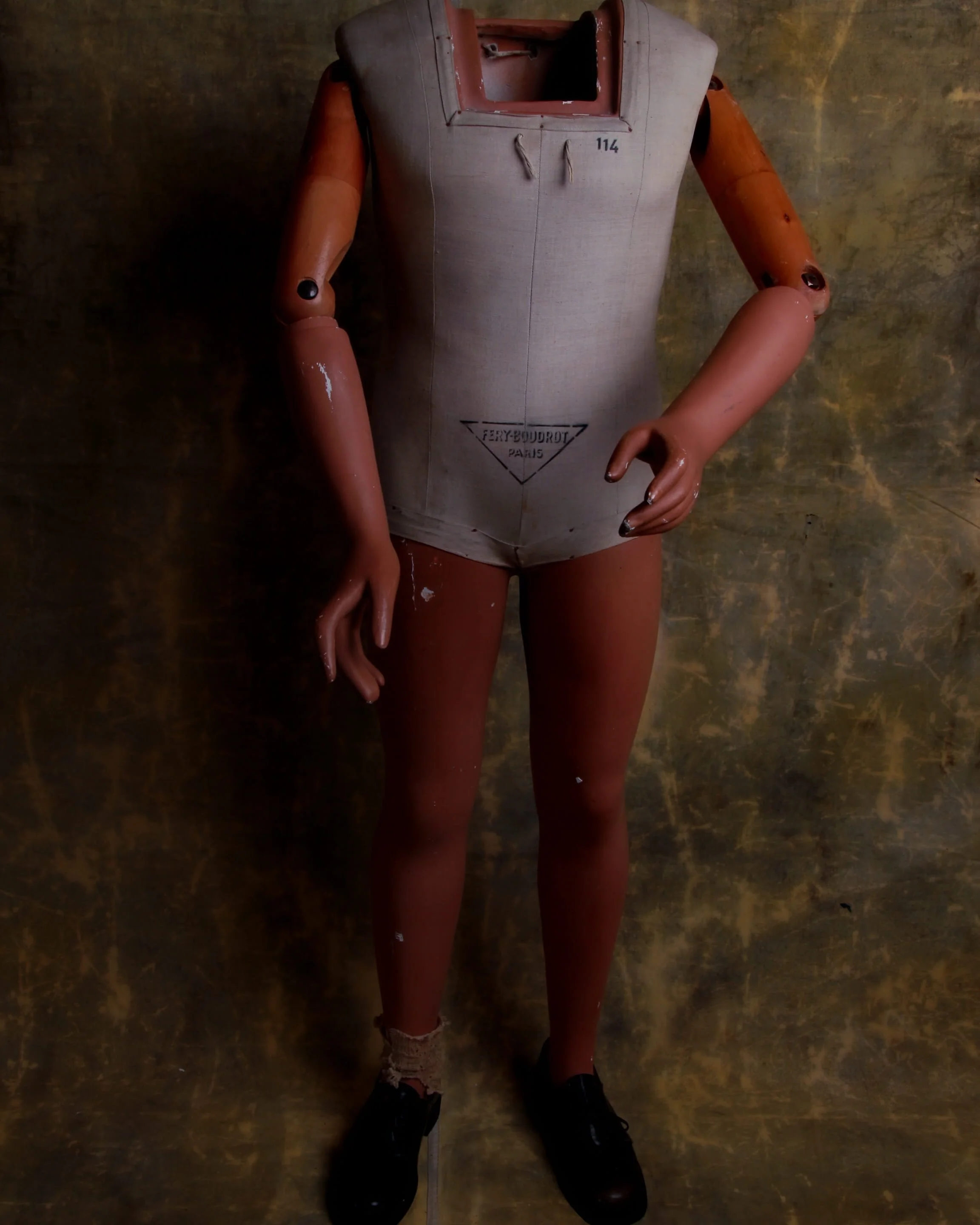
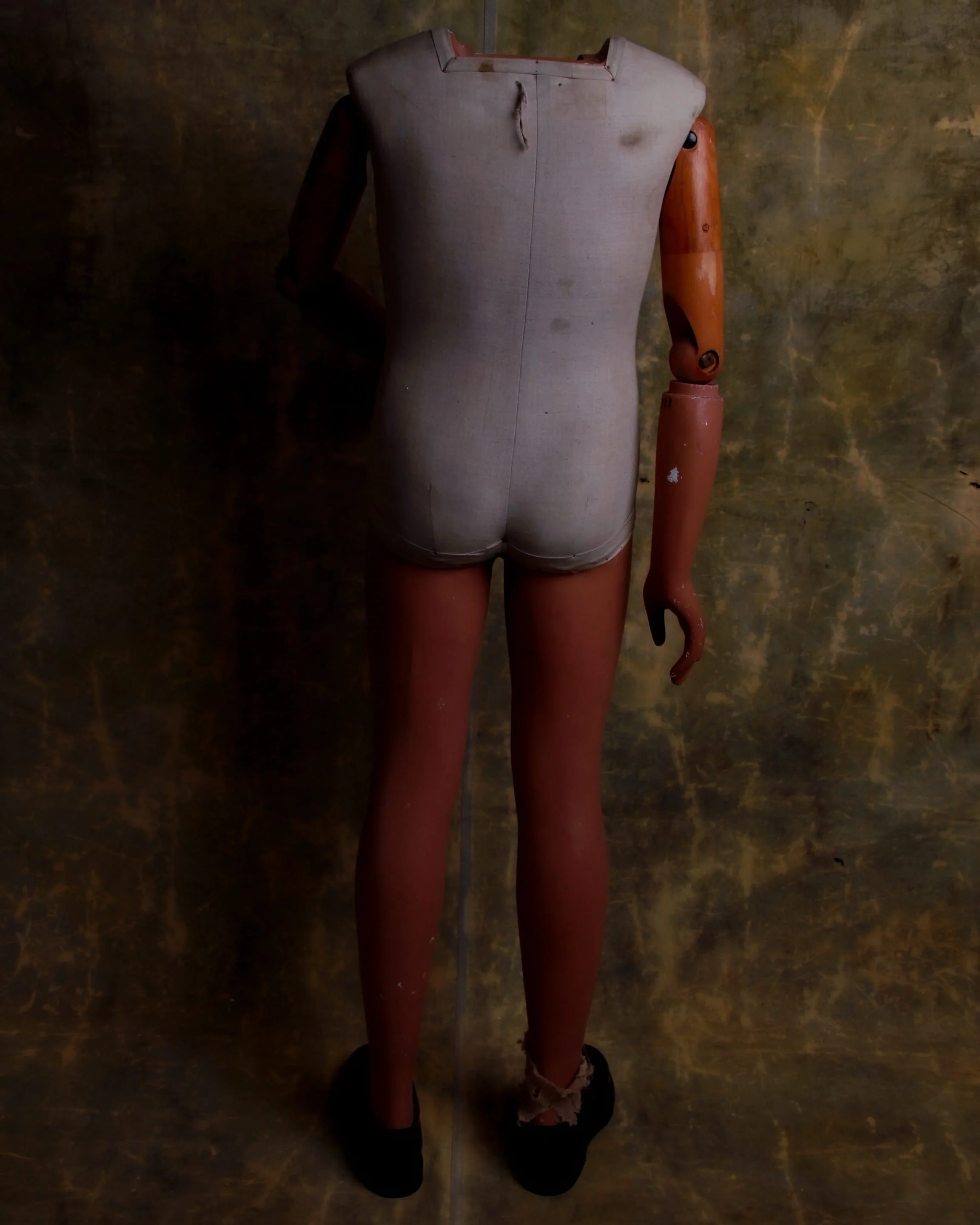
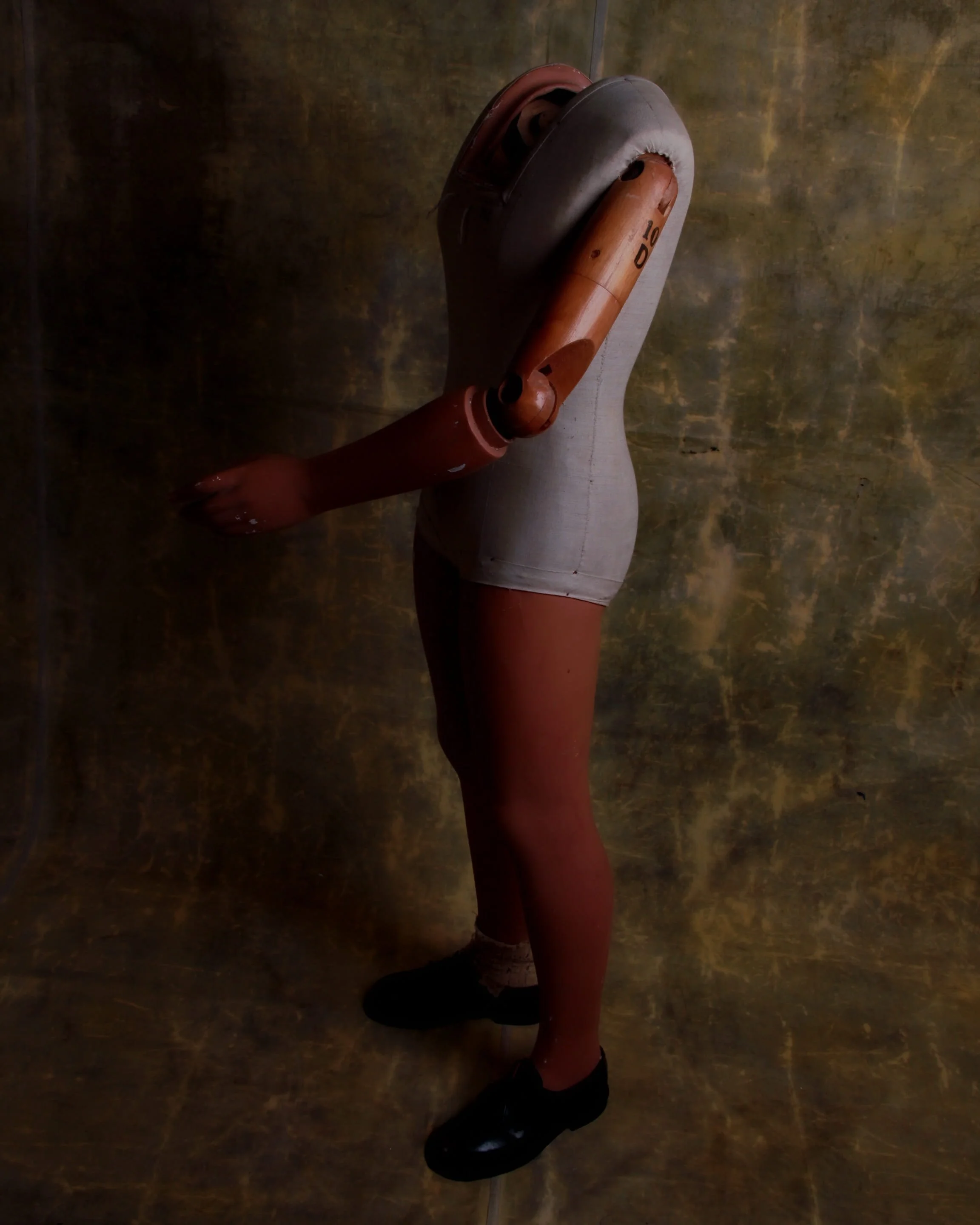
This antique French child's mannequin, fabricated by Maison Fery-Boudrot in Paris during the 1930s, is a captivating piece of artistry. Standing at a petite size, the mannequin exudes charm with its delicate features and lifelike pose. Made from a combination of wood, plaster, rubber, and linen, the mannequin showcases meticulous craftsmanship. Its wooden arms are fully articulated, allowing for graceful movement and posing. The mannequin comes dressed in its leather shoes (and half a sock). A true collector's item, this exquisite piece captures the essence of vintage French craftsmanship and is sure to be a focal point in any antique collection.
Category History
Antique French mannequins by Maison Fery-Boudrot sit at that elegant intersection of retail display and sculptural presence. Produced in the early to mid-20th century, these mannequins were designed for Parisian shop windows, where presentation wasn’t just about showing clothing—it was about setting a tone.
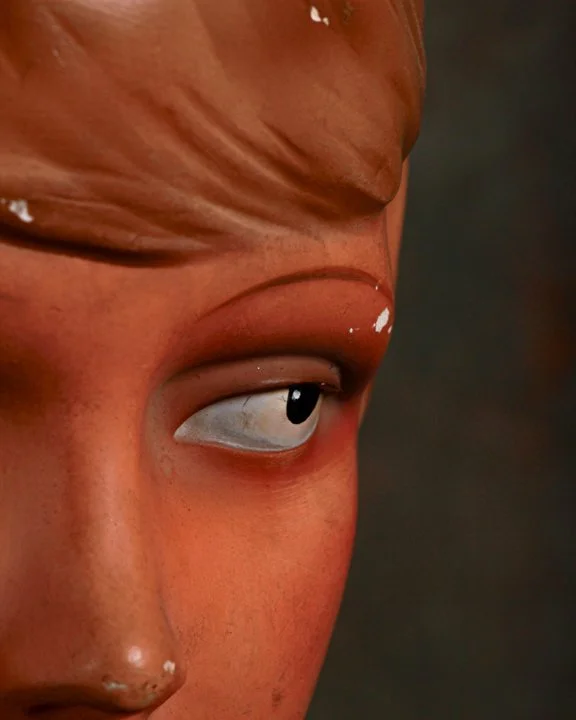
Fery-Boudrot mannequins are known for their refined proportions and distinctive faces. Features are softly modeled but intentional—arched brows, defined lips, and a gaze that feels composed rather than animated. Many were made from papier-mâché or composition, finished with hand-applied paint that gave the skin a matte, almost lifelike quality without chasing realism too closely.
What sets them apart is restraint. They don’t overact. The poses are balanced, the gestures minimal, letting the clothing take center stage while still holding their own as objects. You can feel the influence of French design—controlled, thoughtful, and quietly confident.
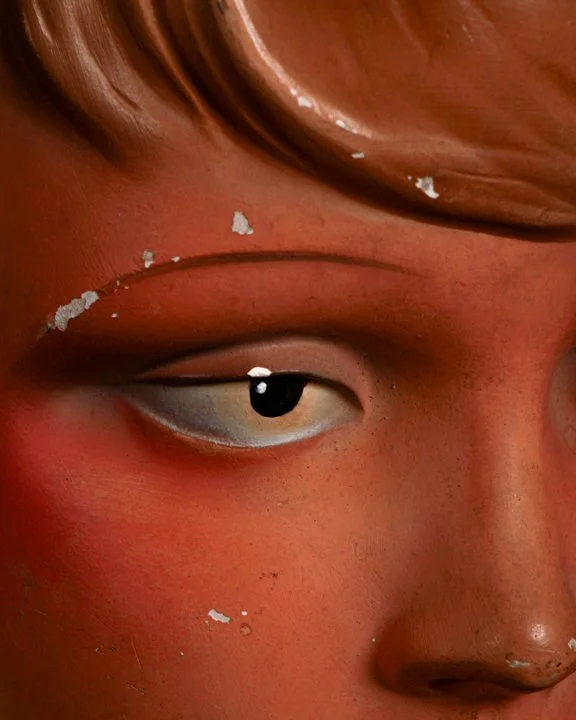
Over time, they develop a surface that’s hard to replicate. Fine cracking, softened paint, small chips—evidence of years in storefronts, studios, or storage.
Today, they read as more than display tools. They’re portraits of an era when even retail objects were designed with a certain poise—meant not just to present fashion, but to embody it.
This antique French child's mannequin, fabricated by Maison Fery-Boudrot in Paris during the 1930s, is a captivating piece of artistry. Standing at a petite size, the mannequin exudes charm with its delicate features and lifelike pose. Made from a combination of wood, plaster, rubber, and linen, the mannequin showcases meticulous craftsmanship. Its wooden arms are fully articulated, allowing for graceful movement and posing. The mannequin comes dressed in its leather shoes (and half a sock). A true collector's item, this exquisite piece captures the essence of vintage French craftsmanship and is sure to be a focal point in any antique collection.
Category History
Antique French mannequins by Maison Fery-Boudrot sit at that elegant intersection of retail display and sculptural presence. Produced in the early to mid-20th century, these mannequins were designed for Parisian shop windows, where presentation wasn’t just about showing clothing—it was about setting a tone.
Fery-Boudrot mannequins are known for their refined proportions and distinctive faces. Features are softly modeled but intentional—arched brows, defined lips, and a gaze that feels composed rather than animated. Many were made from papier-mâché or composition, finished with hand-applied paint that gave the skin a matte, almost lifelike quality without chasing realism too closely.
What sets them apart is restraint. They don’t overact. The poses are balanced, the gestures minimal, letting the clothing take center stage while still holding their own as objects. You can feel the influence of French design—controlled, thoughtful, and quietly confident.
Over time, they develop a surface that’s hard to replicate. Fine cracking, softened paint, small chips—evidence of years in storefronts, studios, or storage.
Today, they read as more than display tools. They’re portraits of an era when even retail objects were designed with a certain poise—meant not just to present fashion, but to embody it.