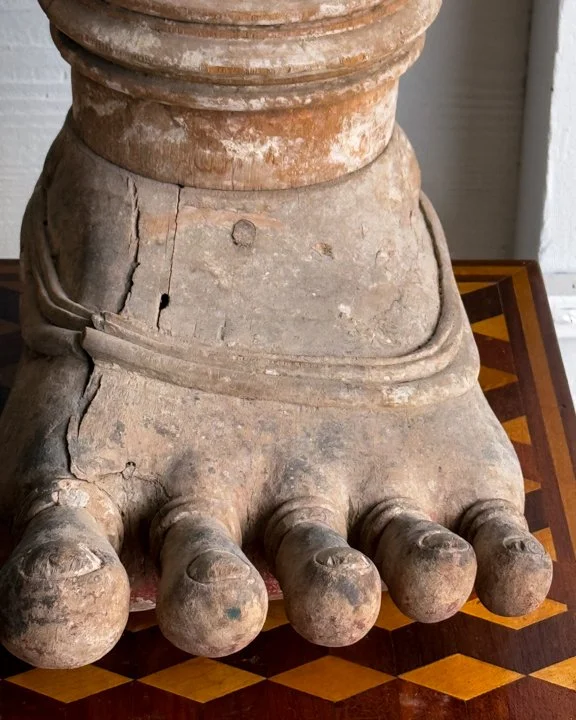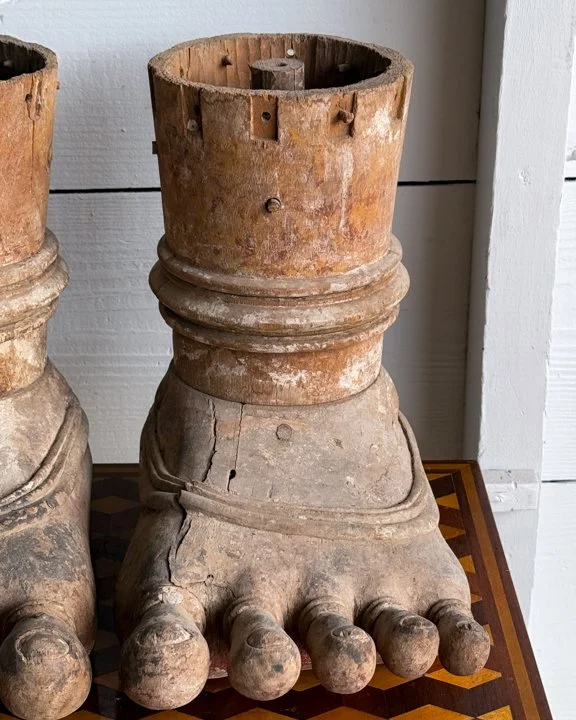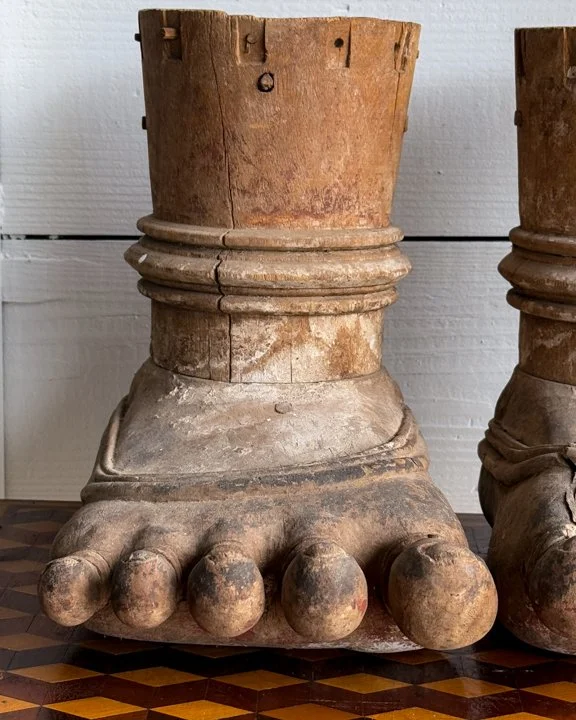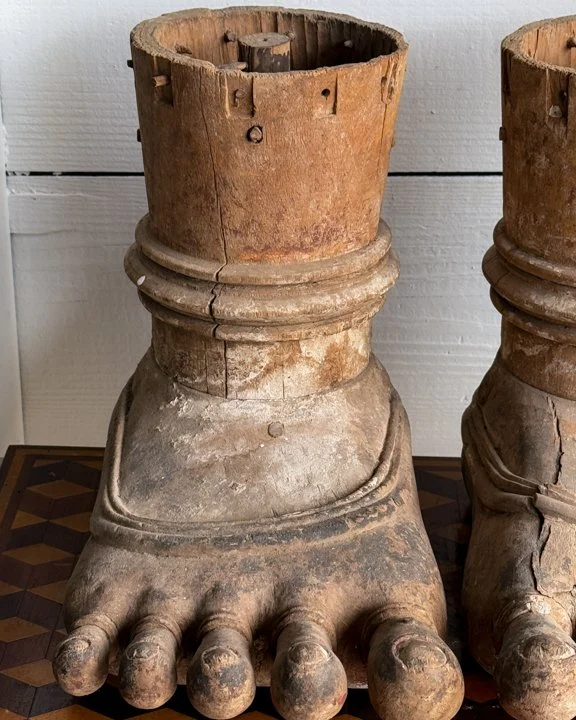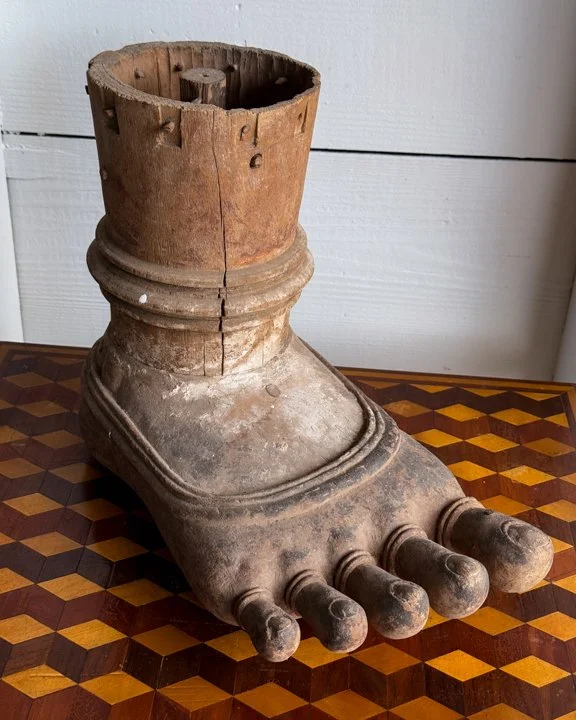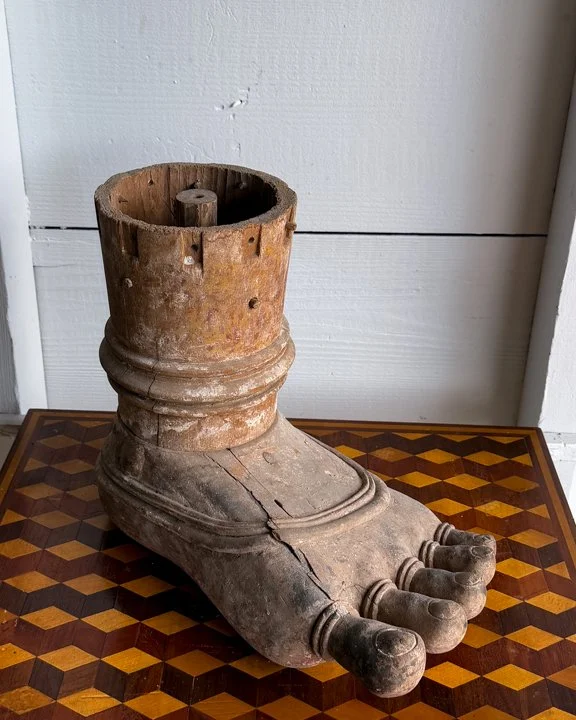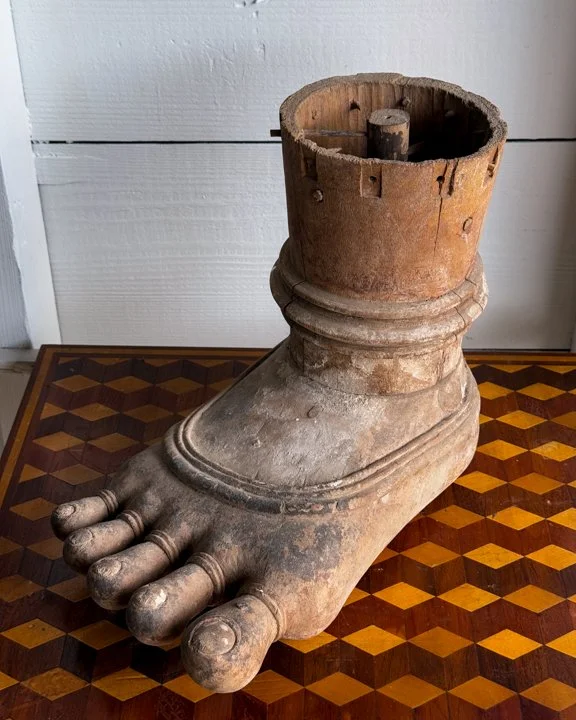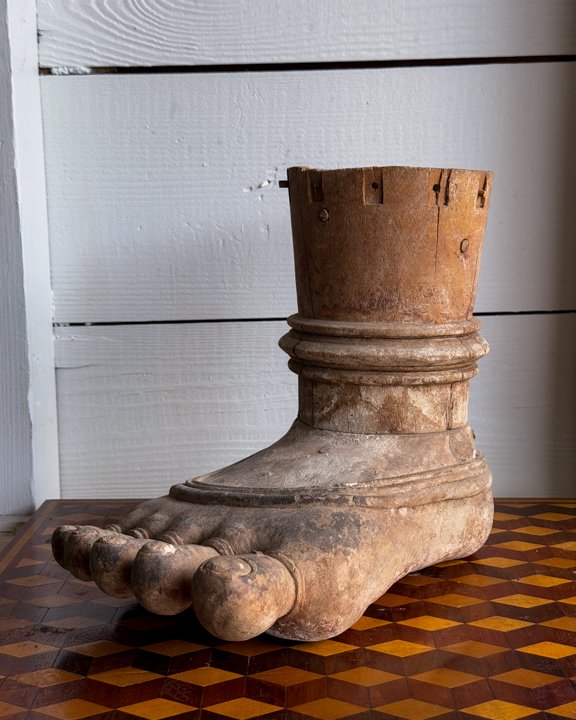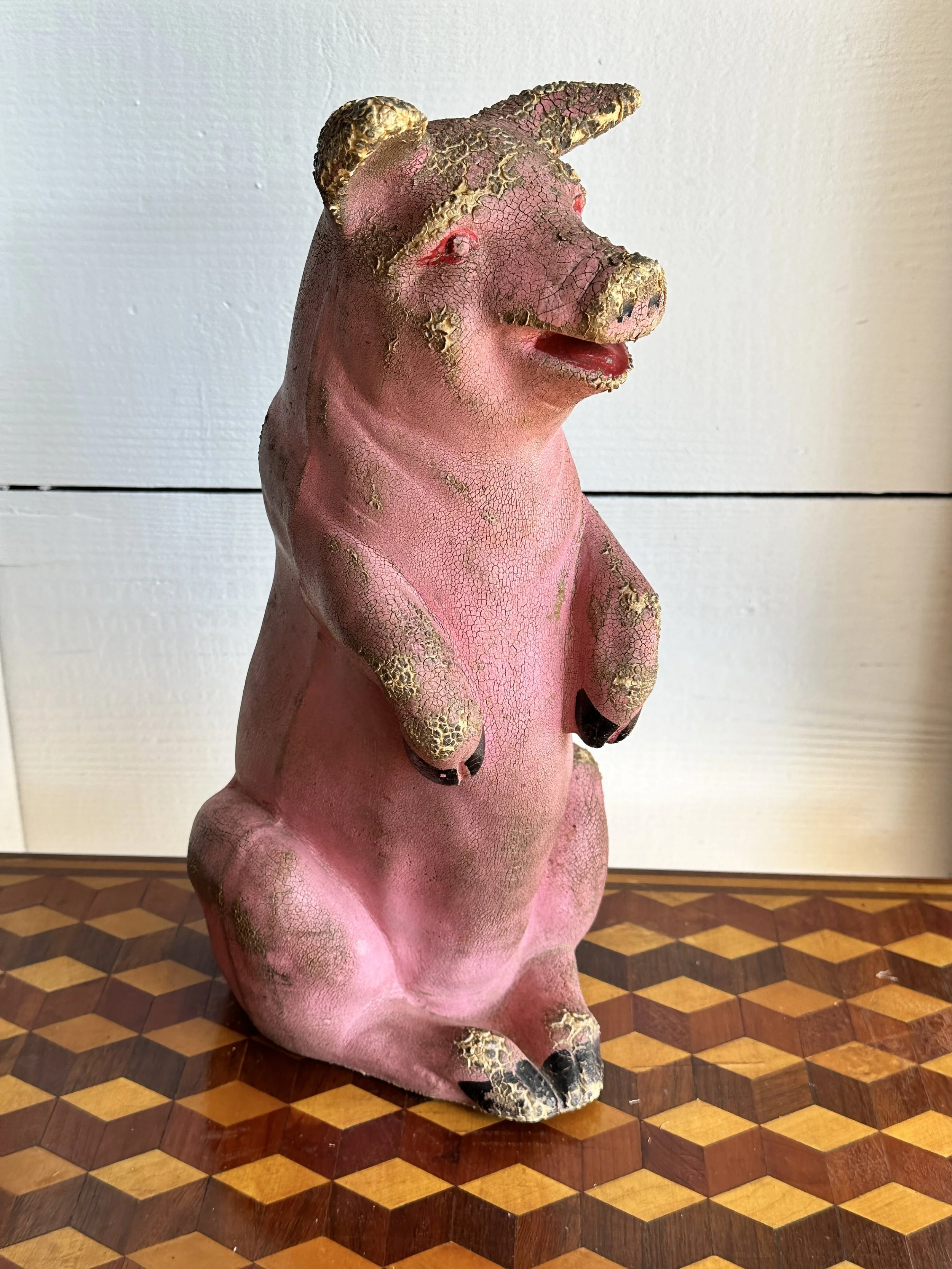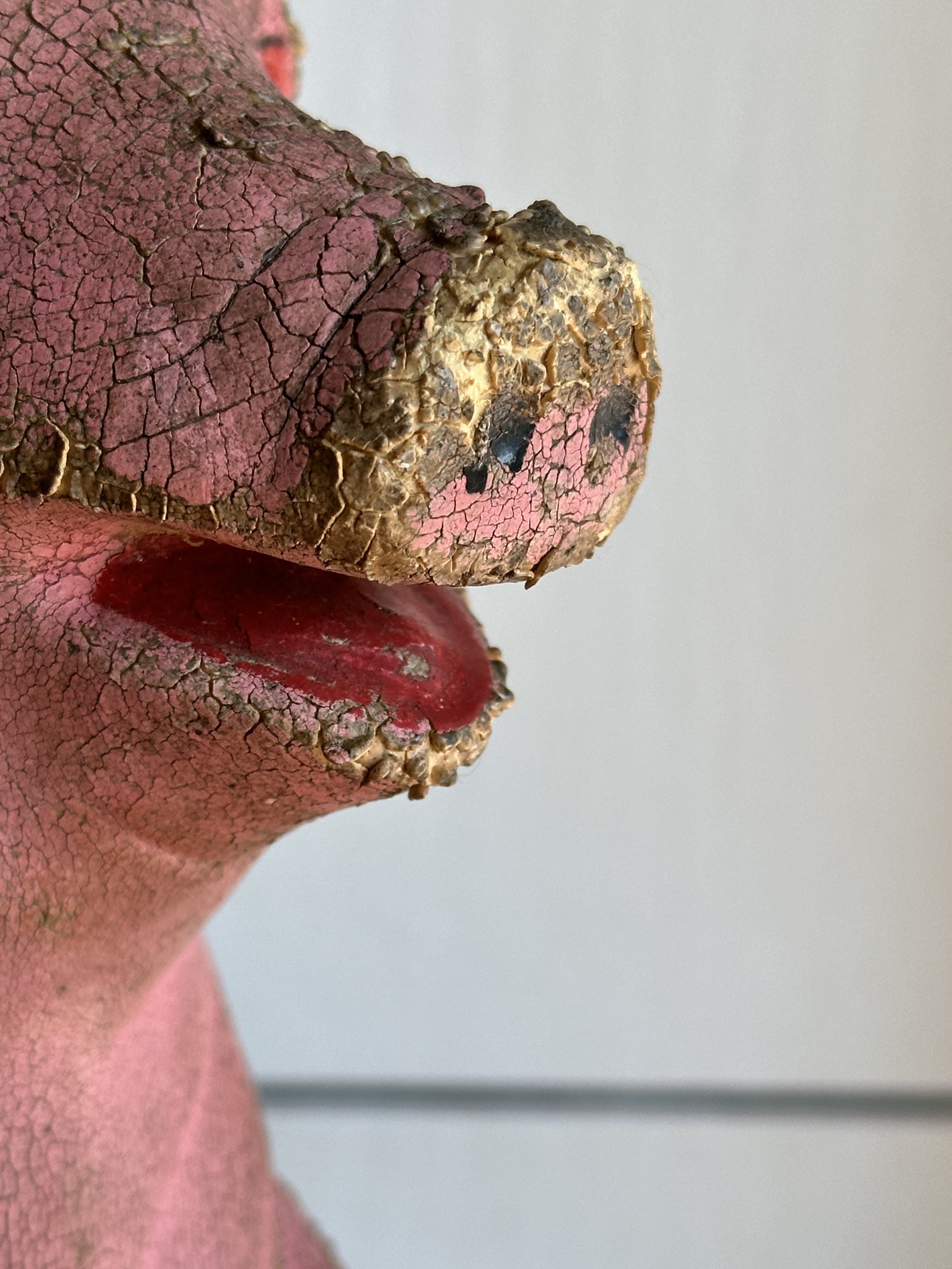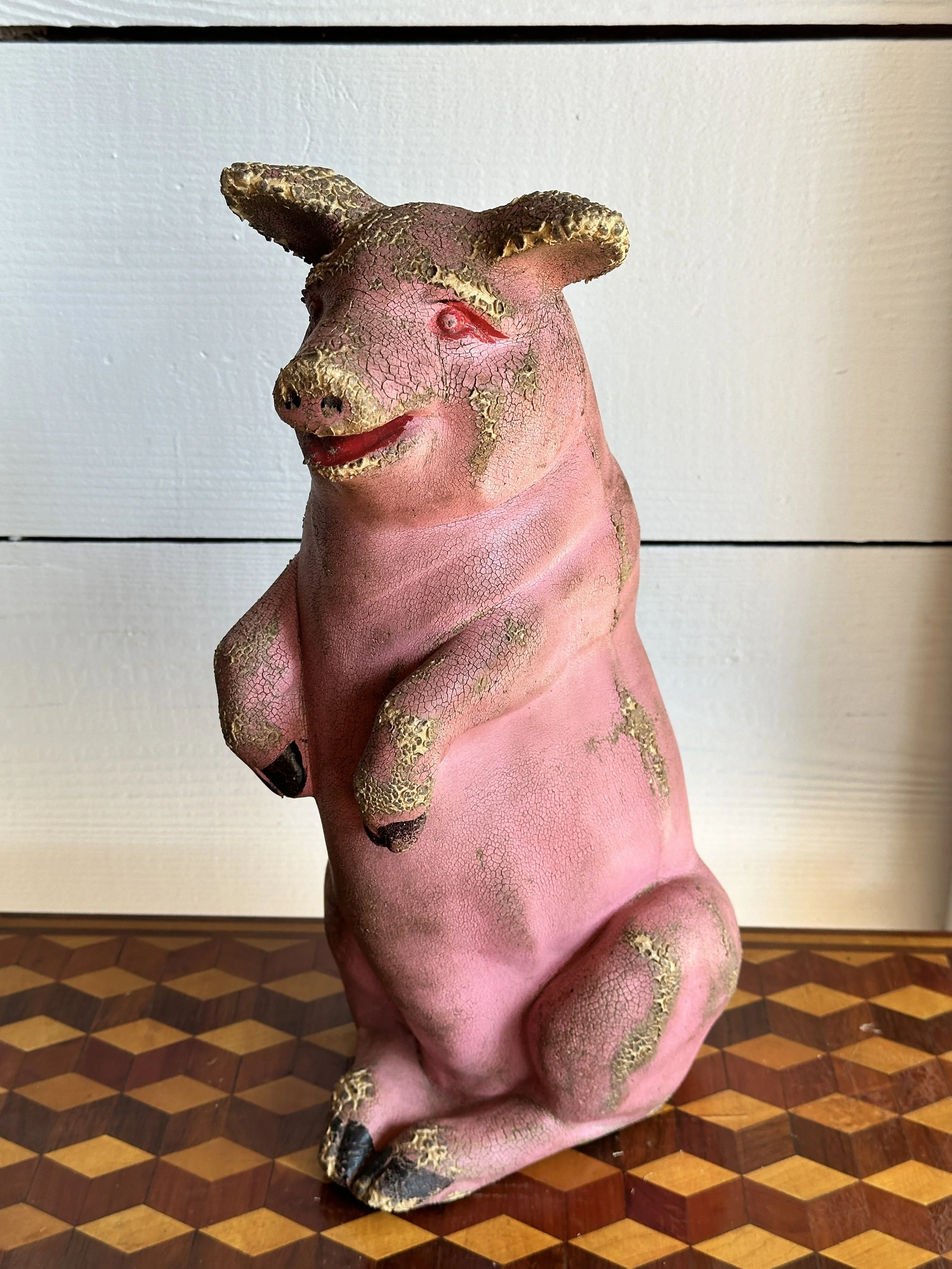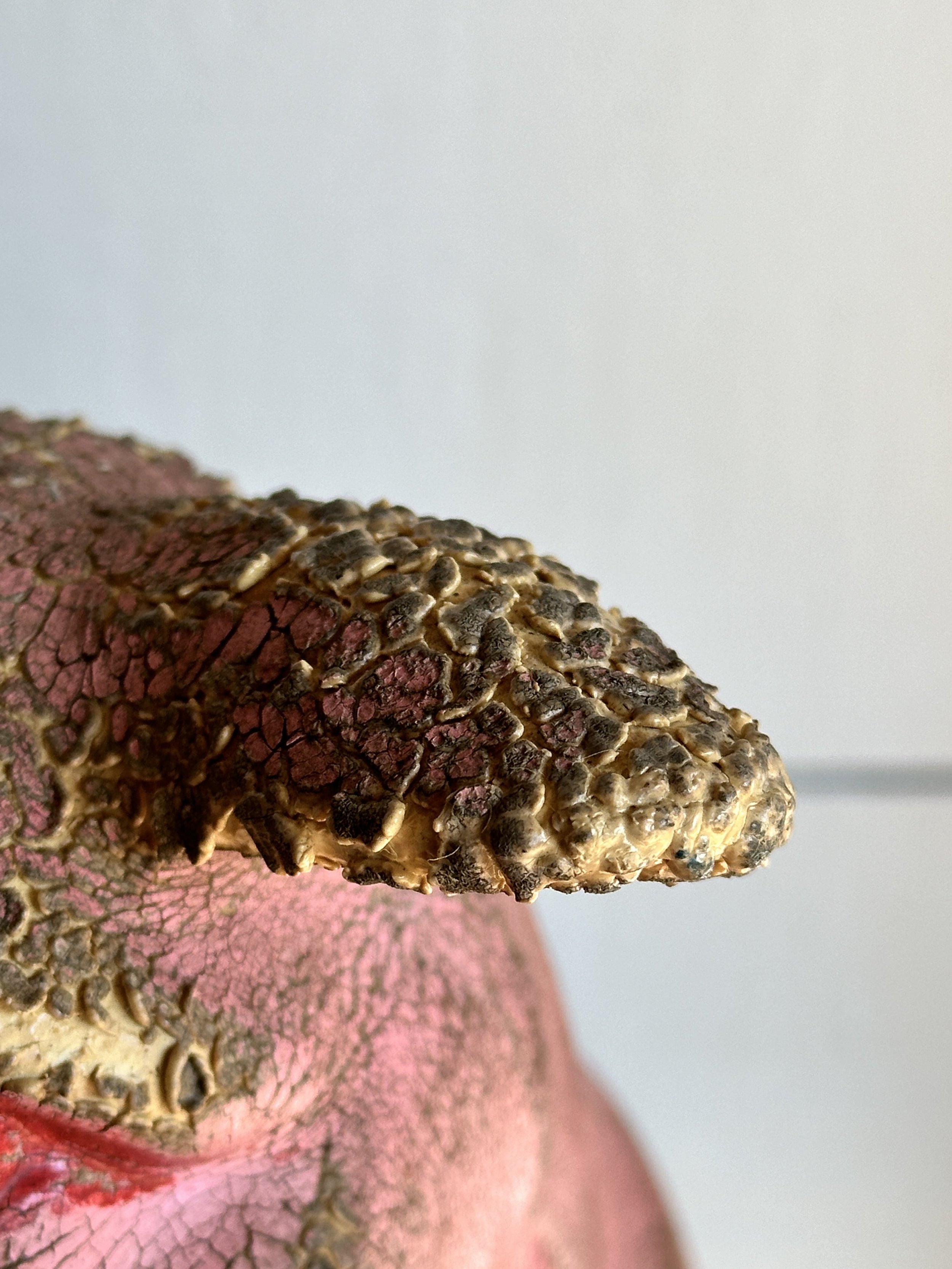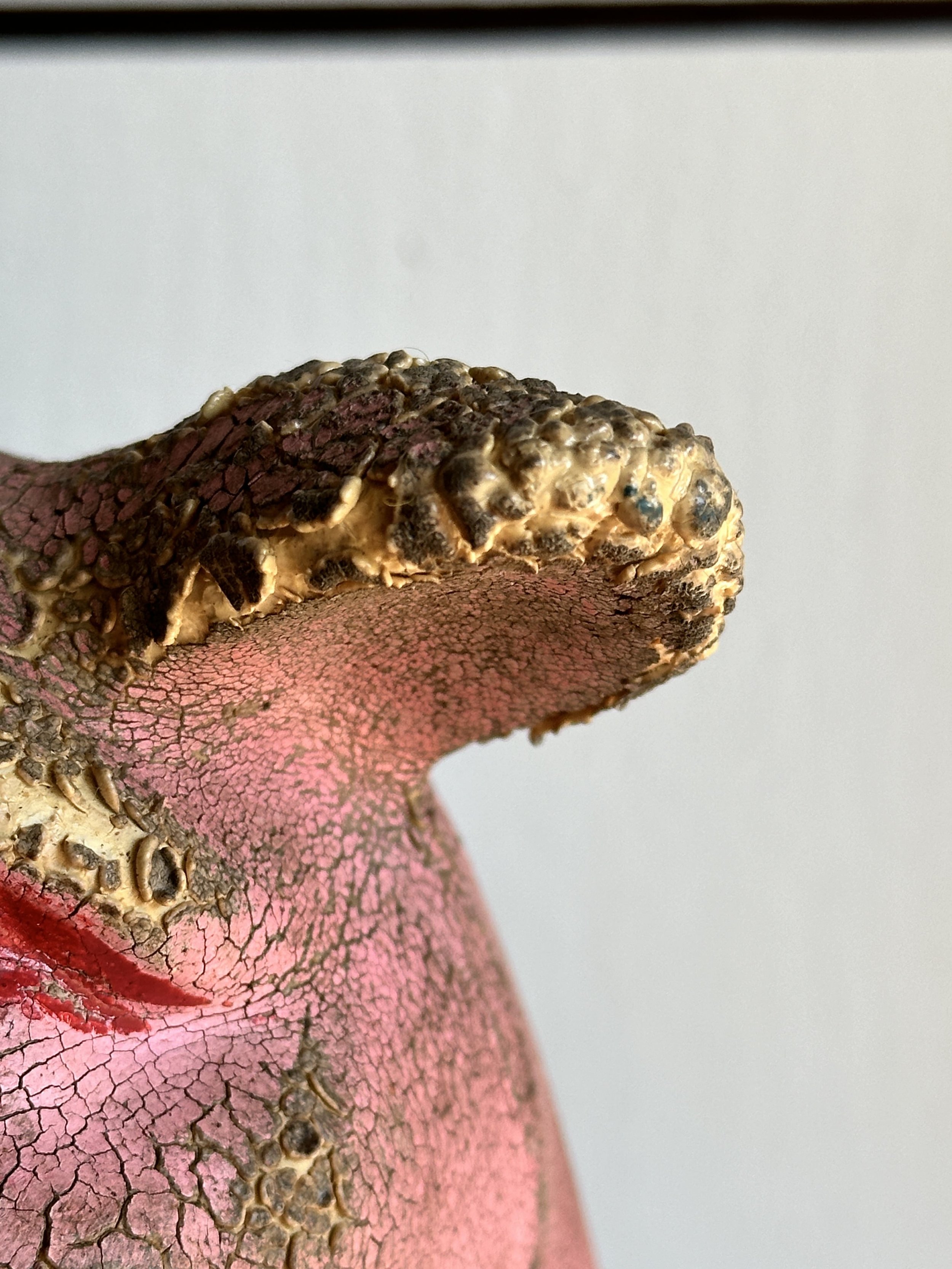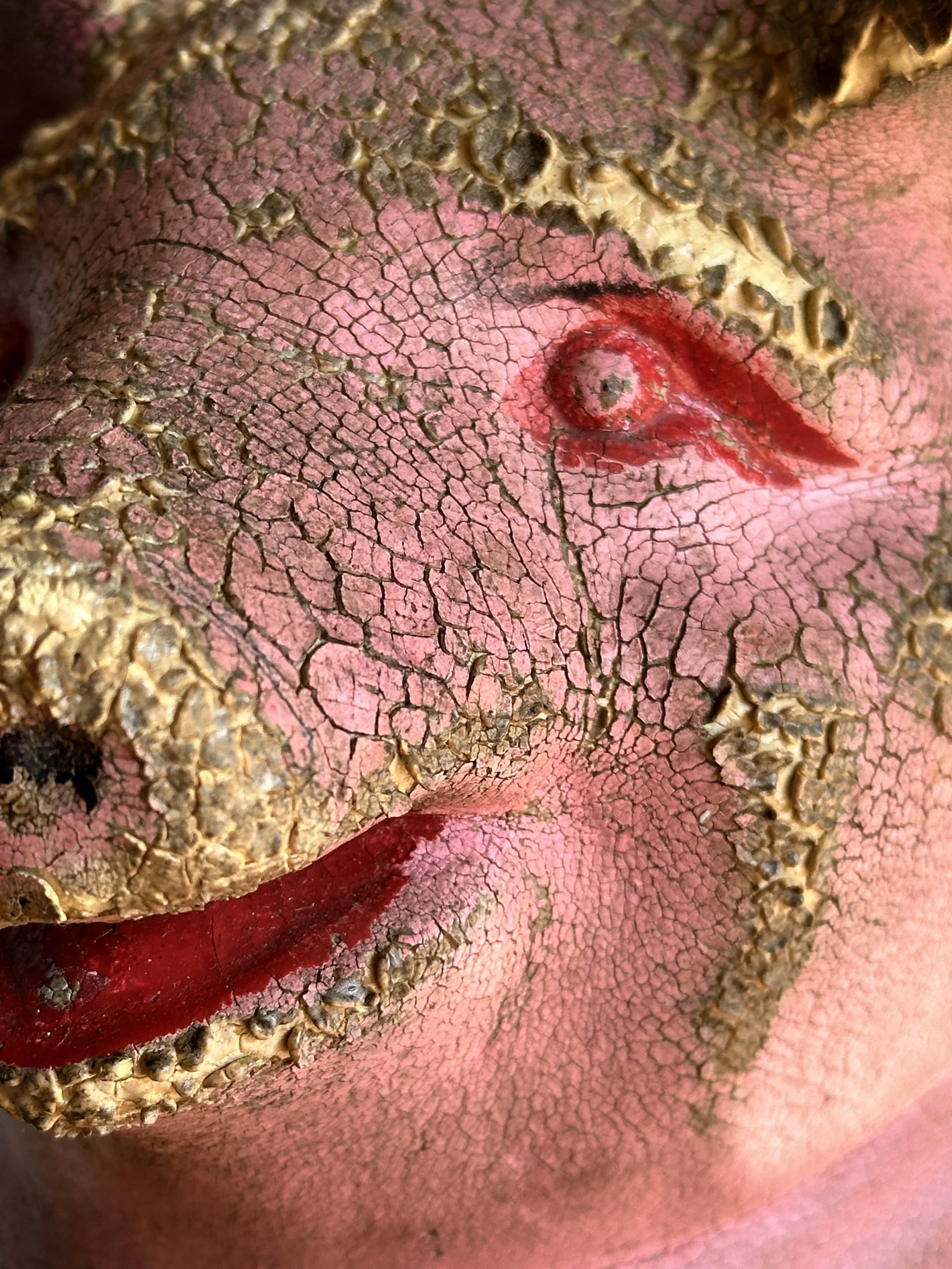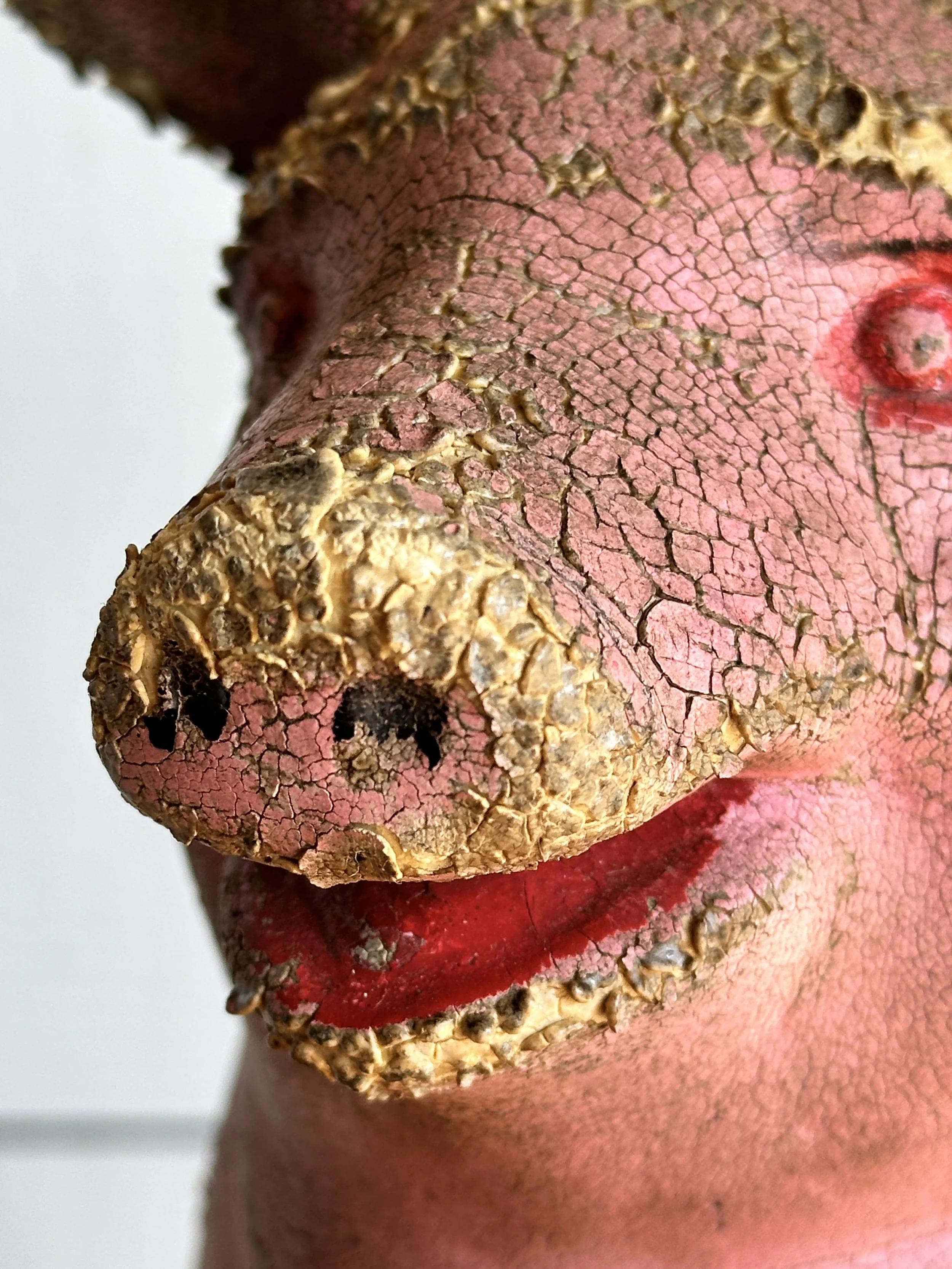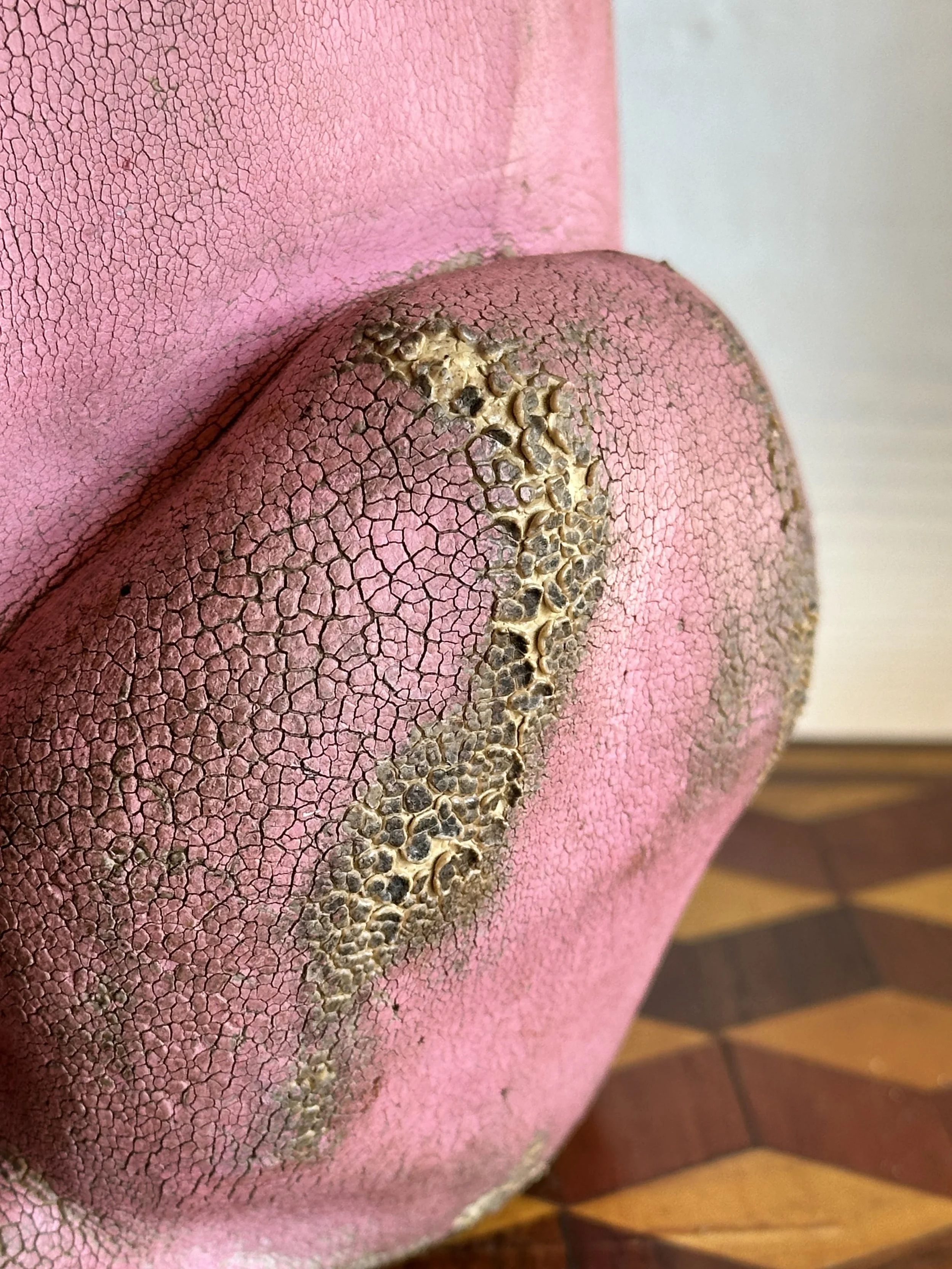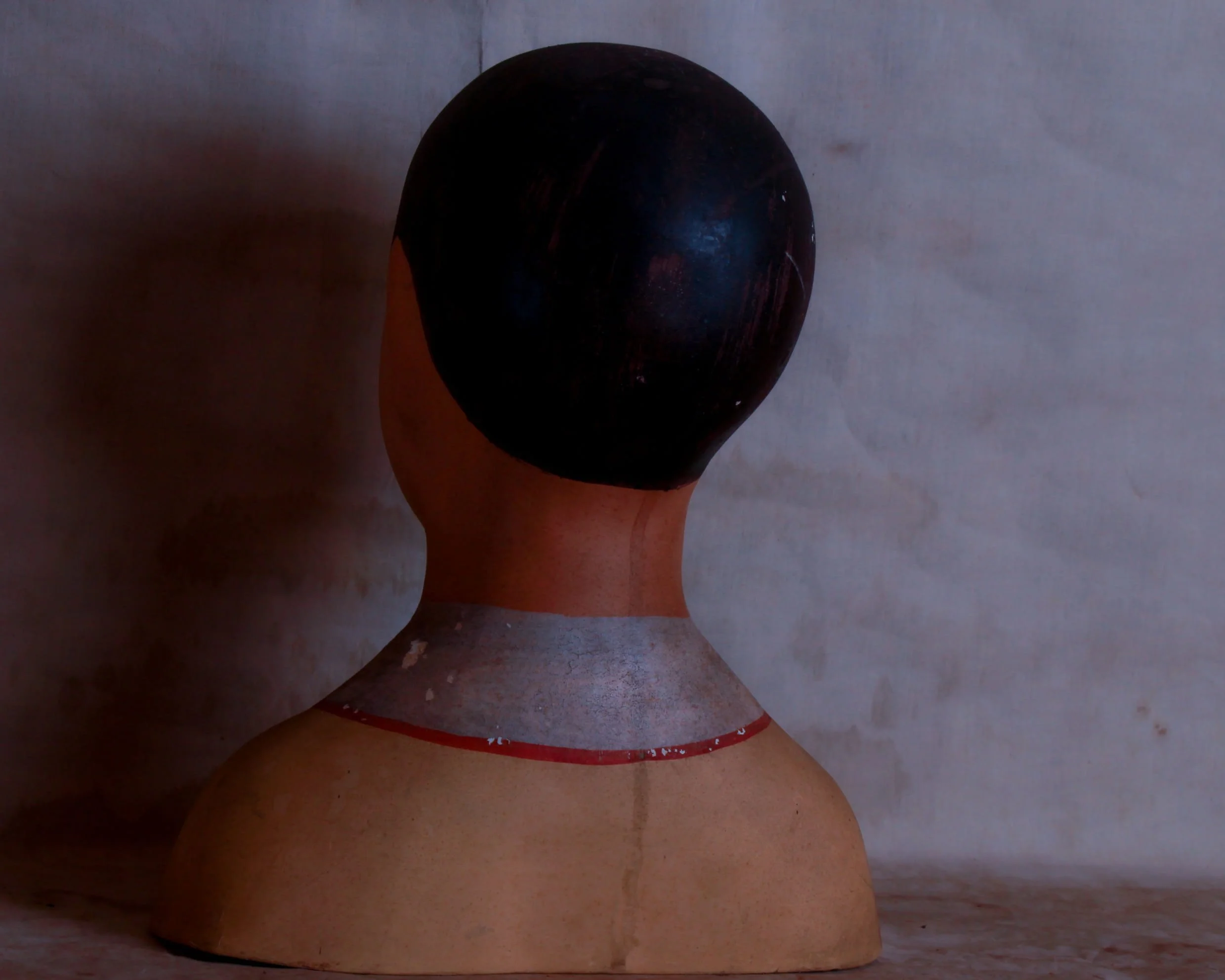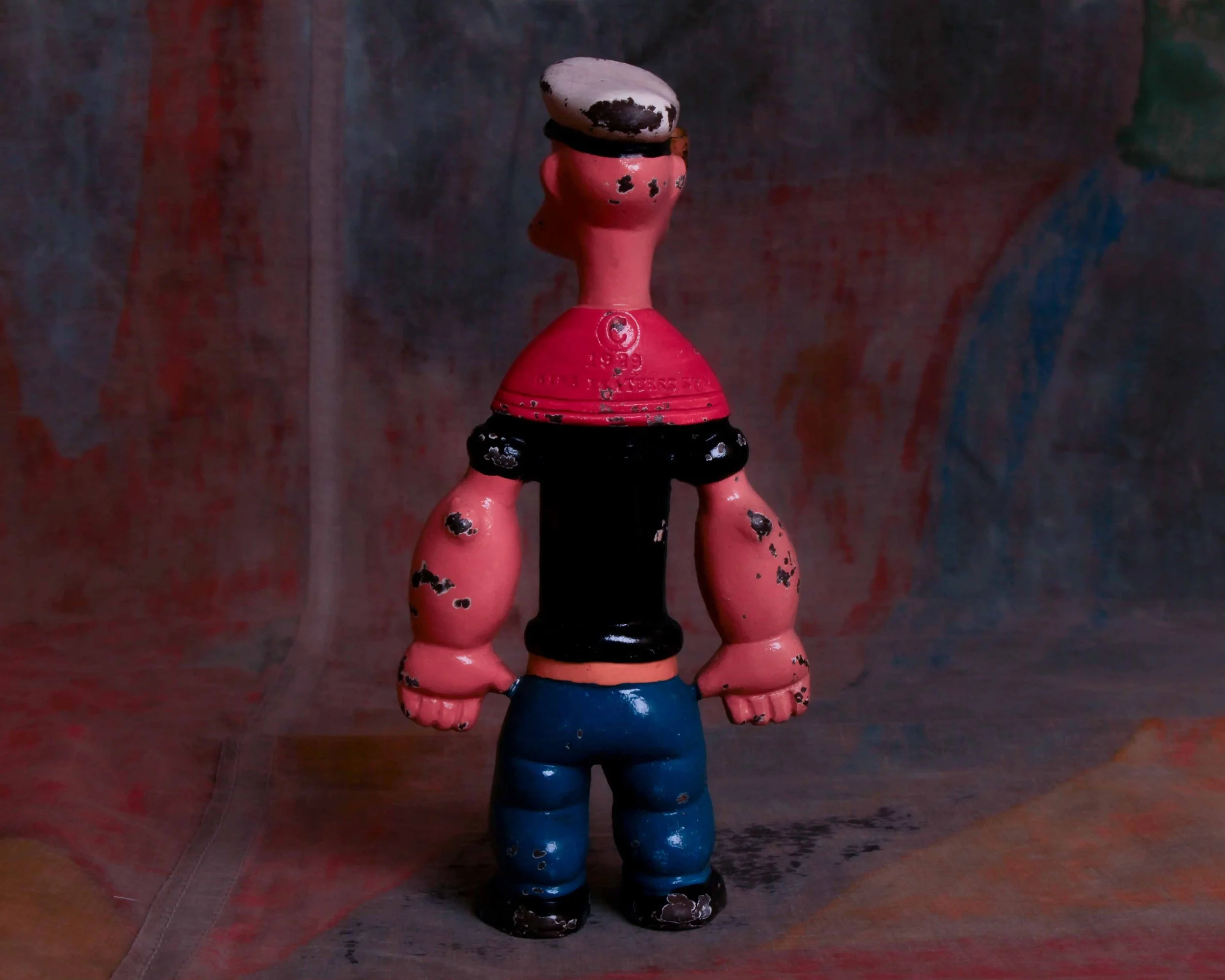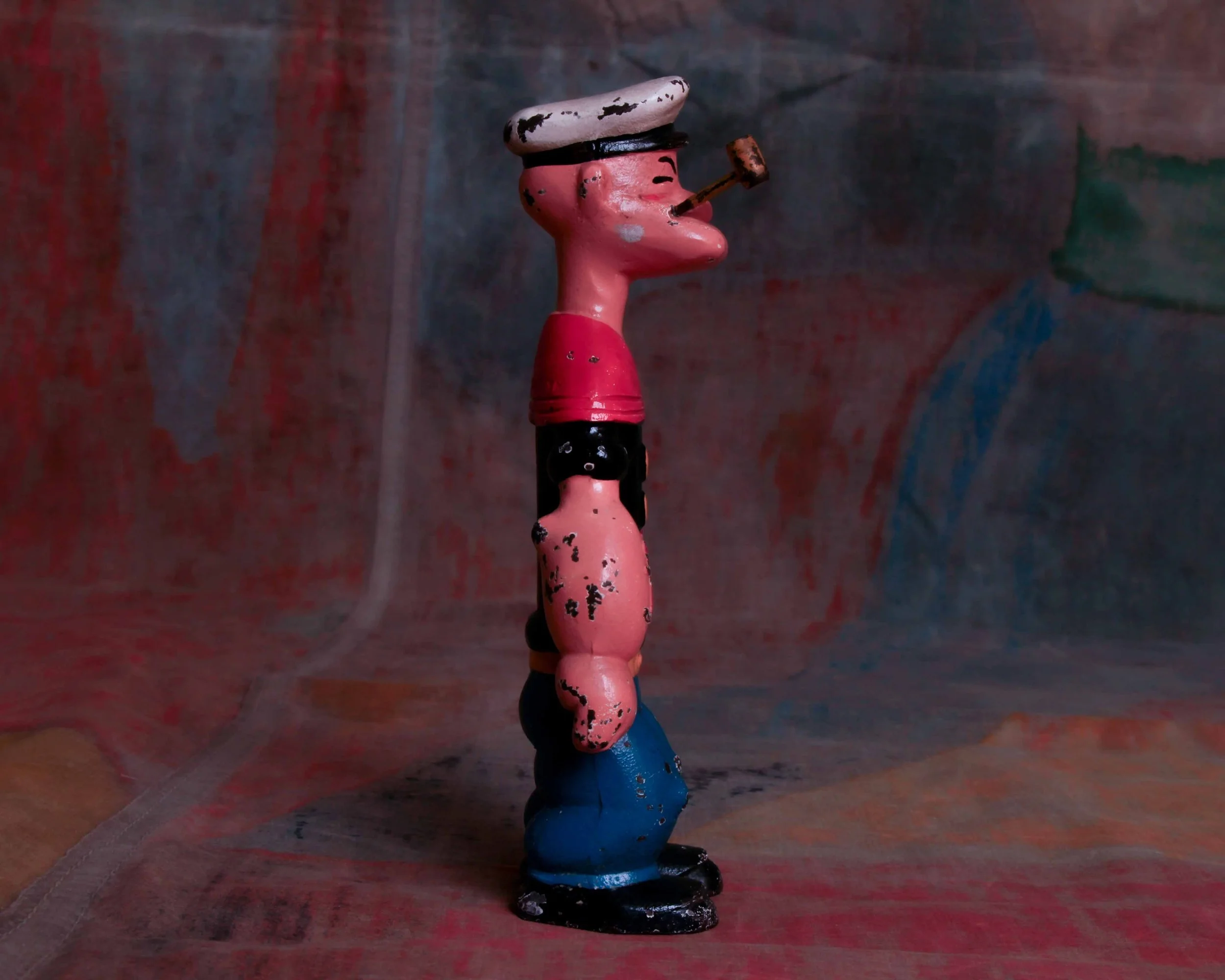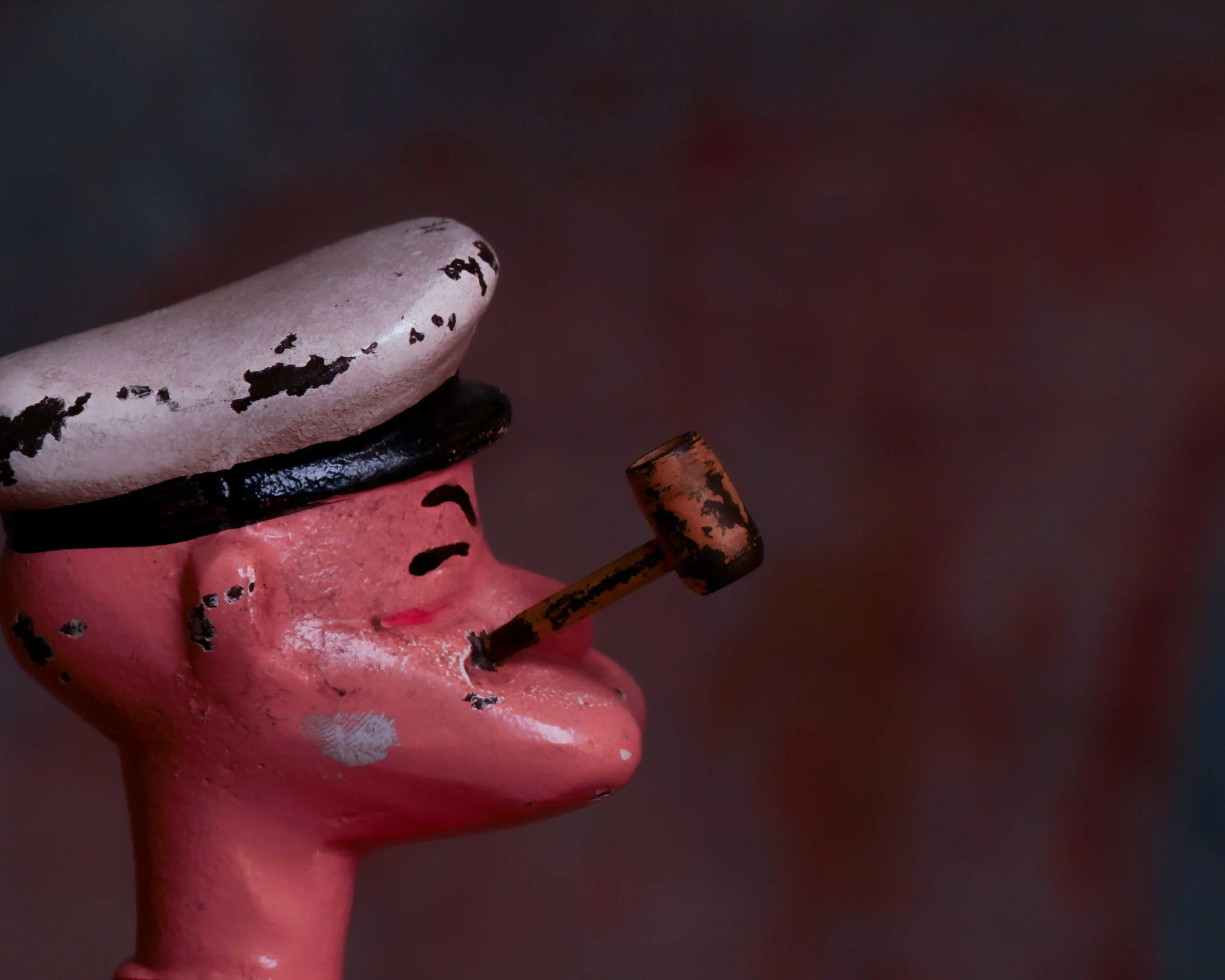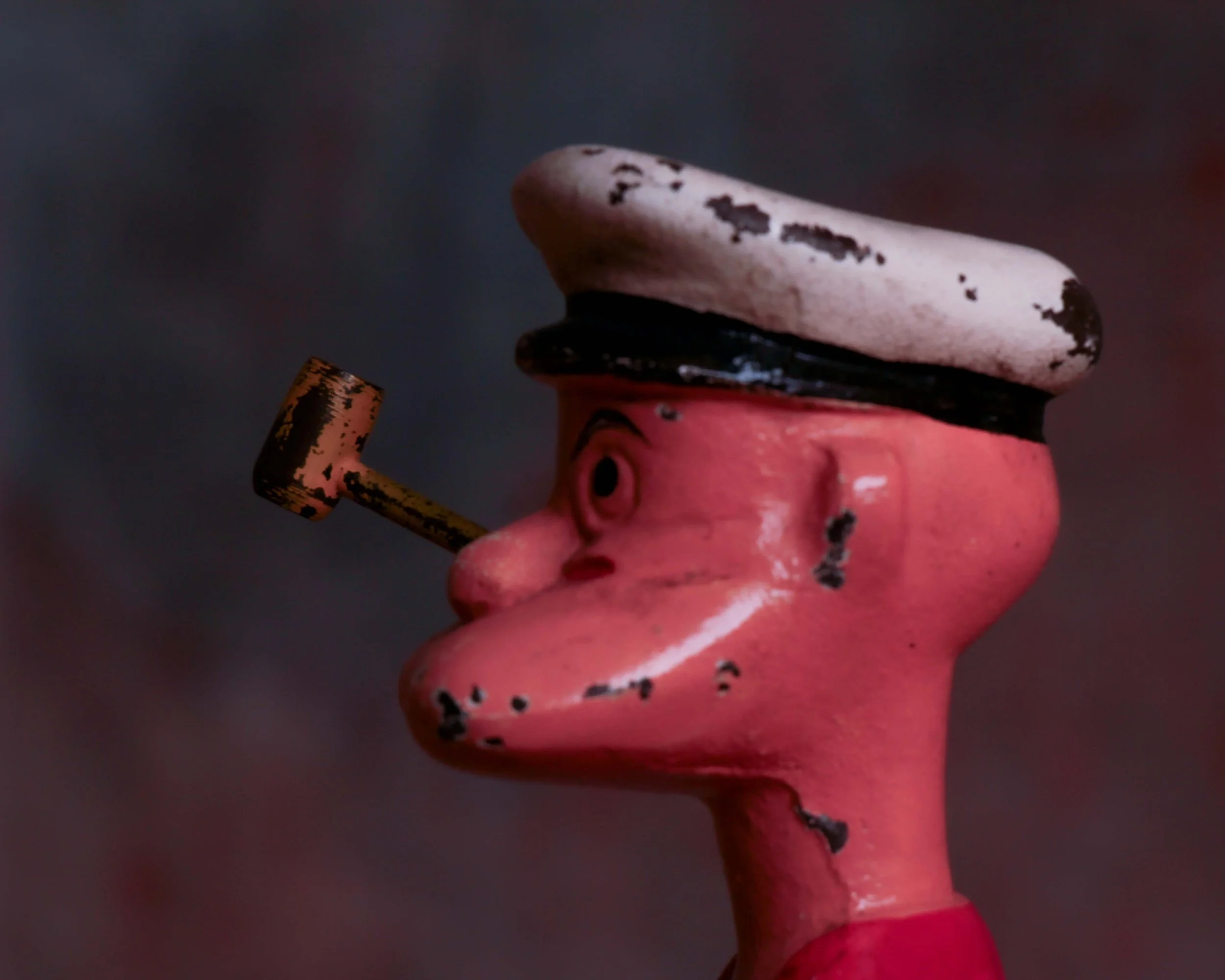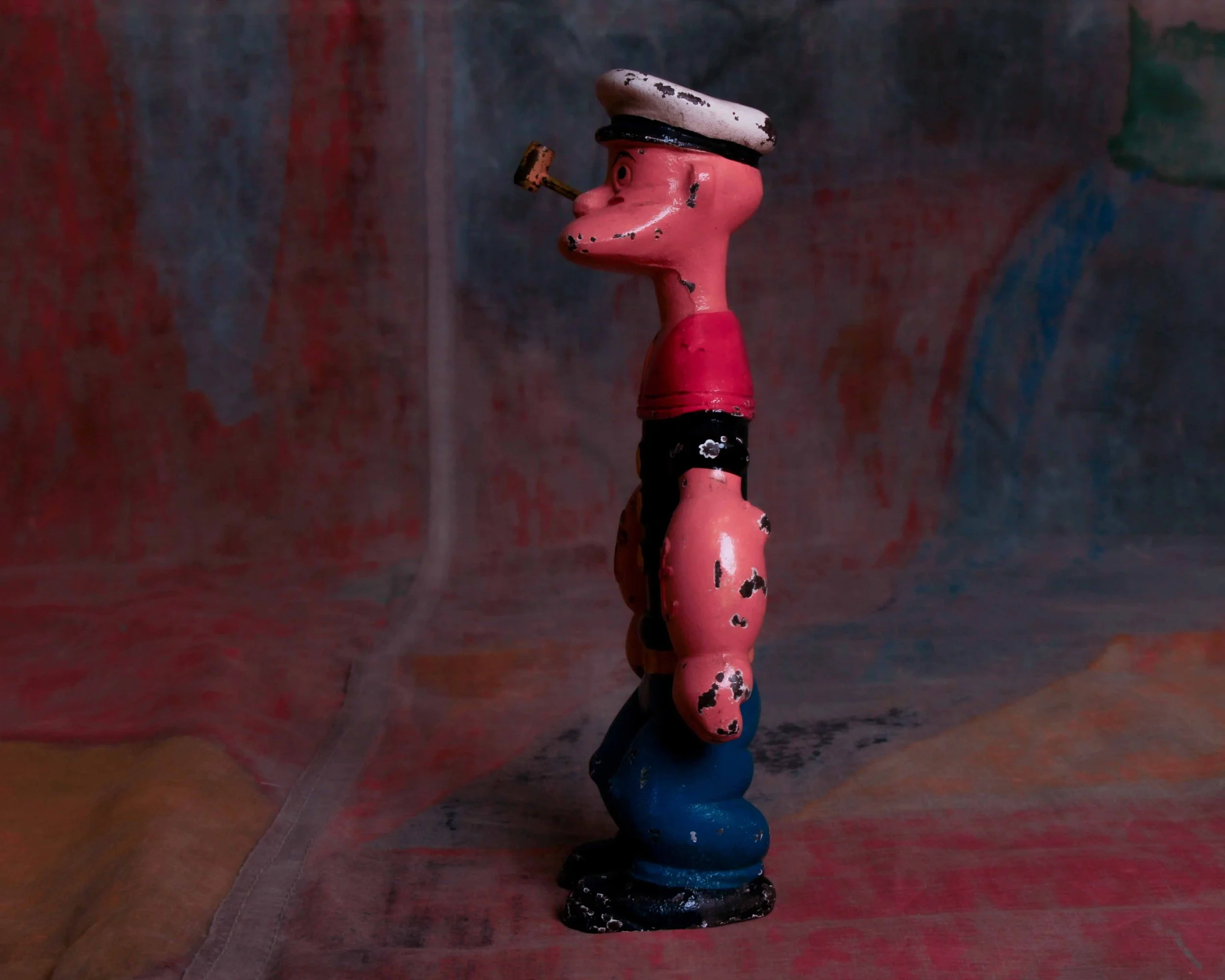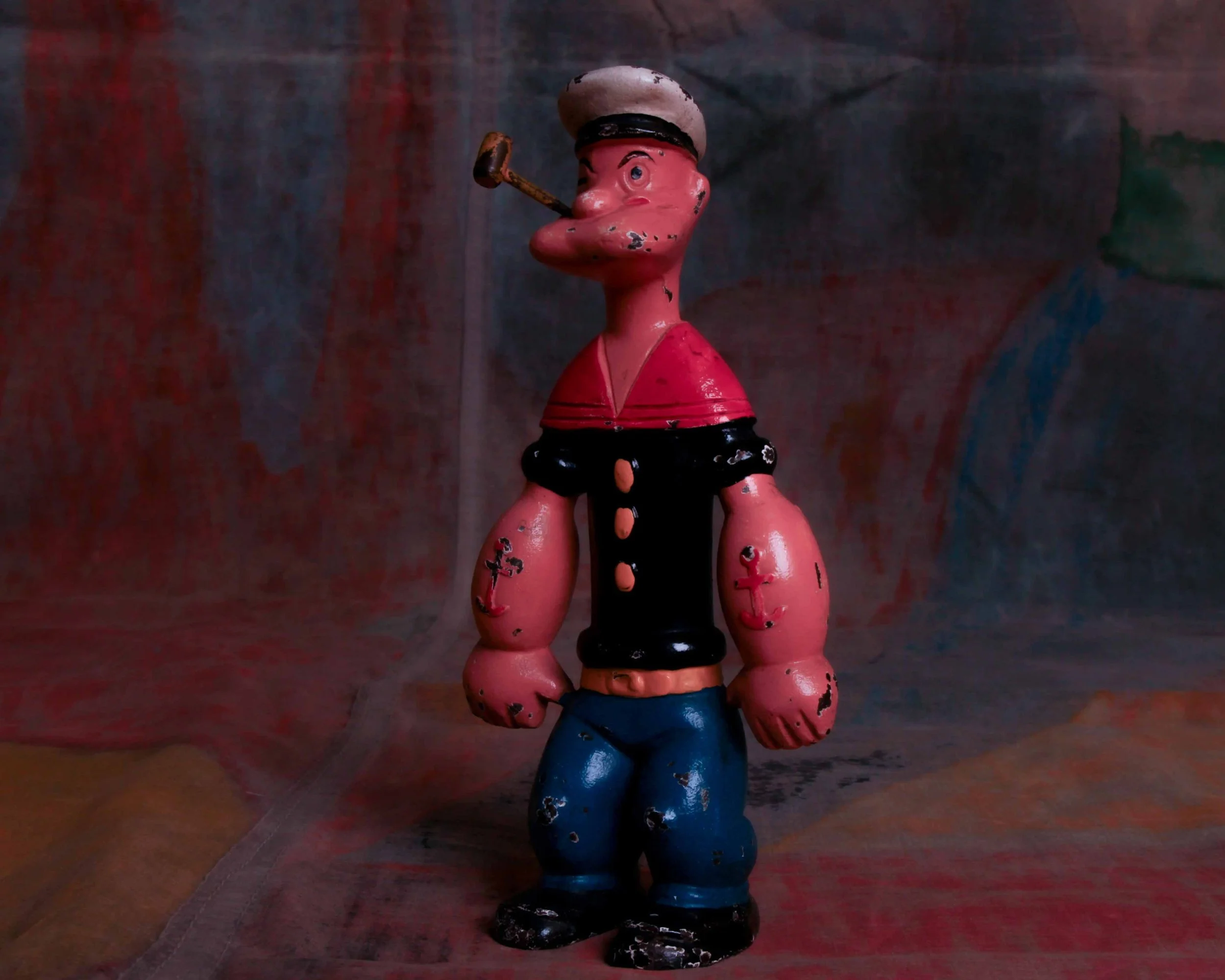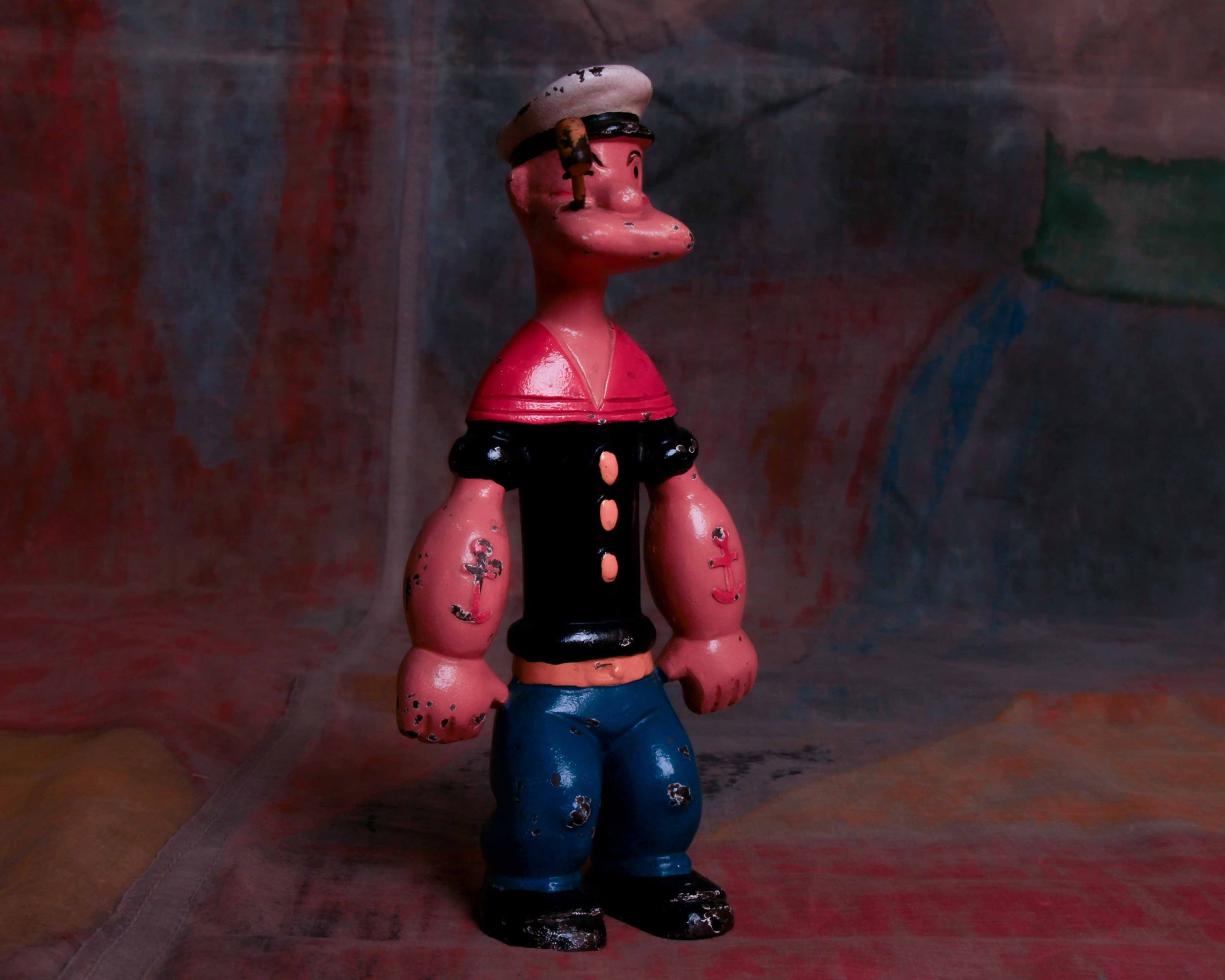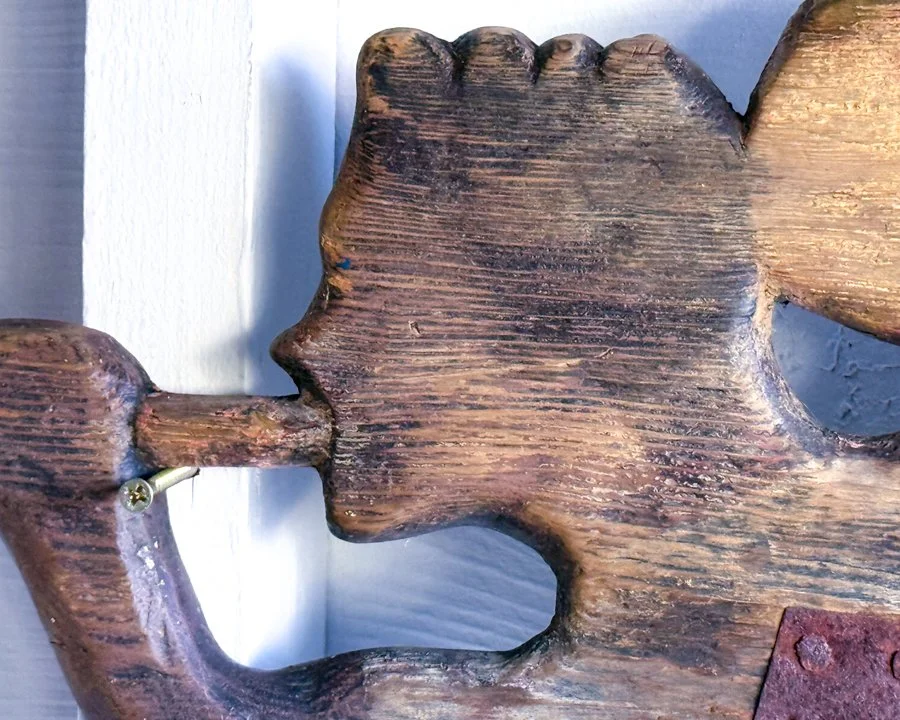
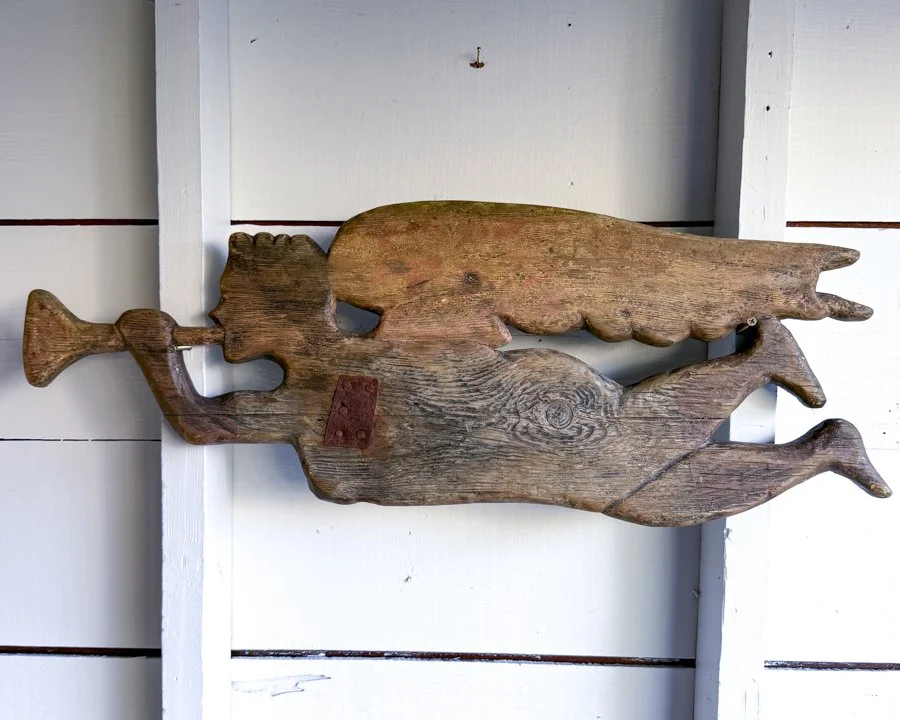
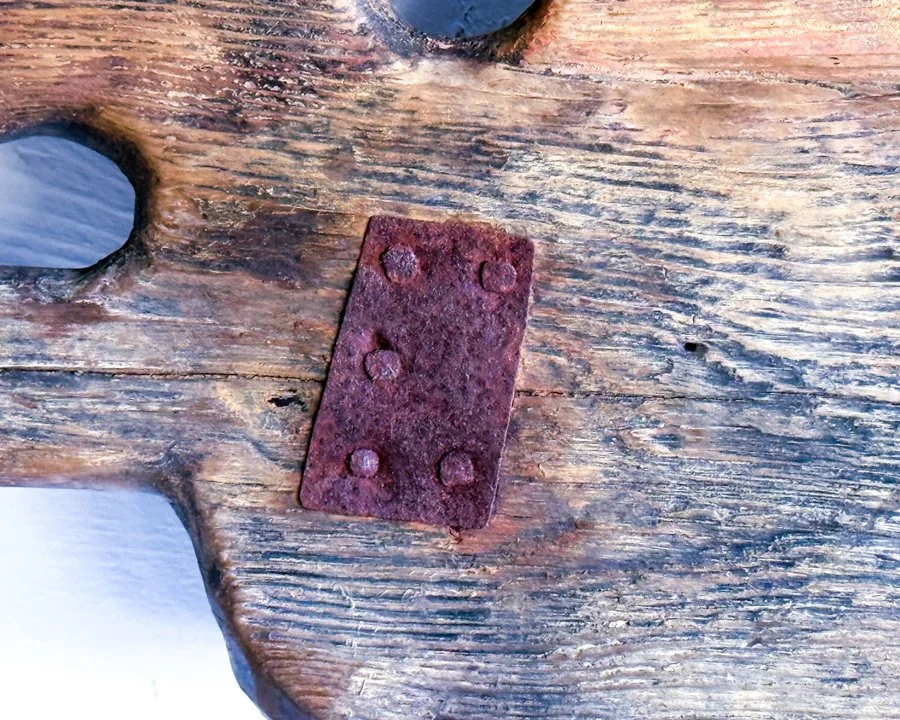
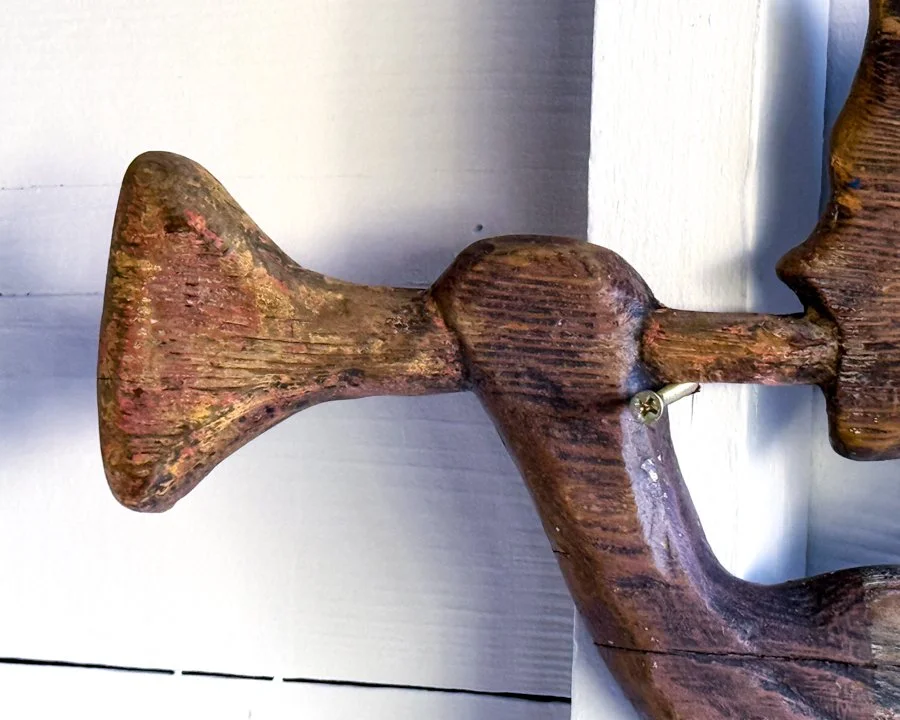
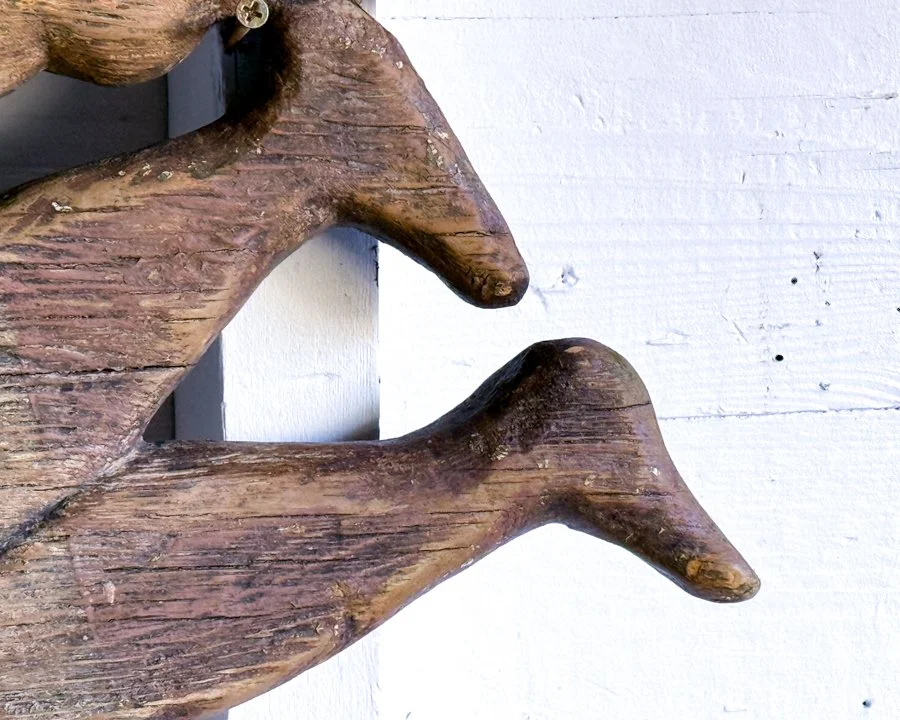
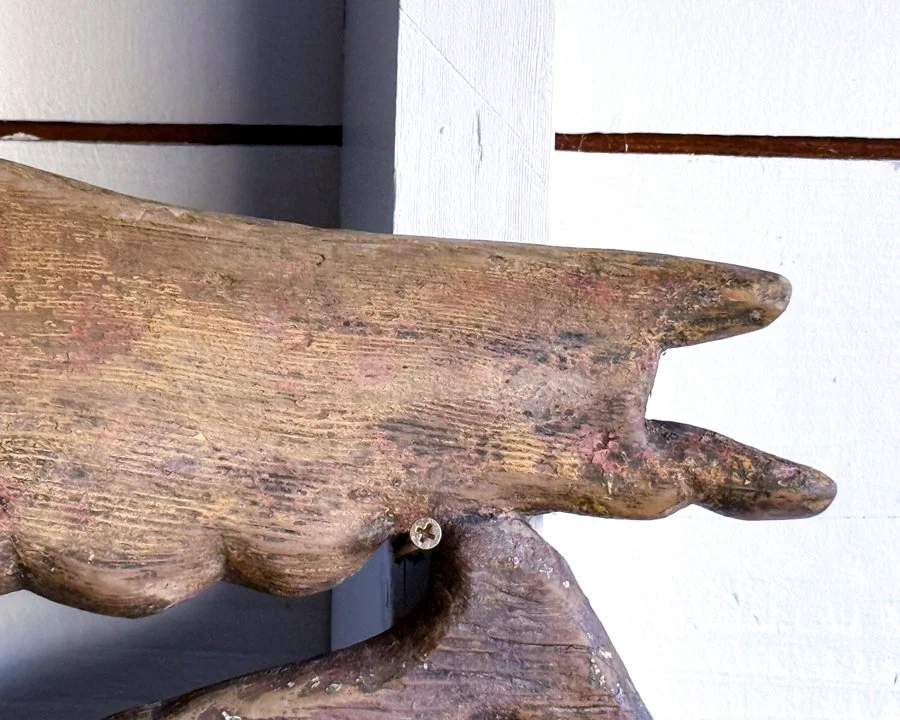
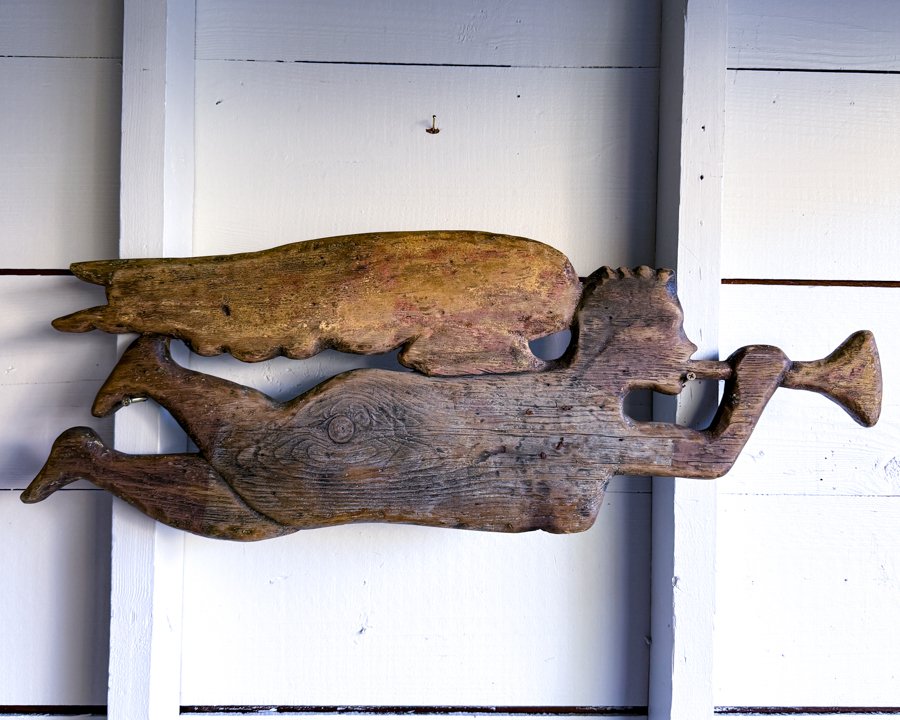
Carved from a single plank of hardwood and weathered to absolute perfection, this 19th-century weathervane is the real deal, and then some. Featuring an endearing make-do repair, made with an oxidized iron patch. Every detail is hand-carved, from his blocky wings and stylized curls to the long trumpet jutting from his mouth with zero subtlety.
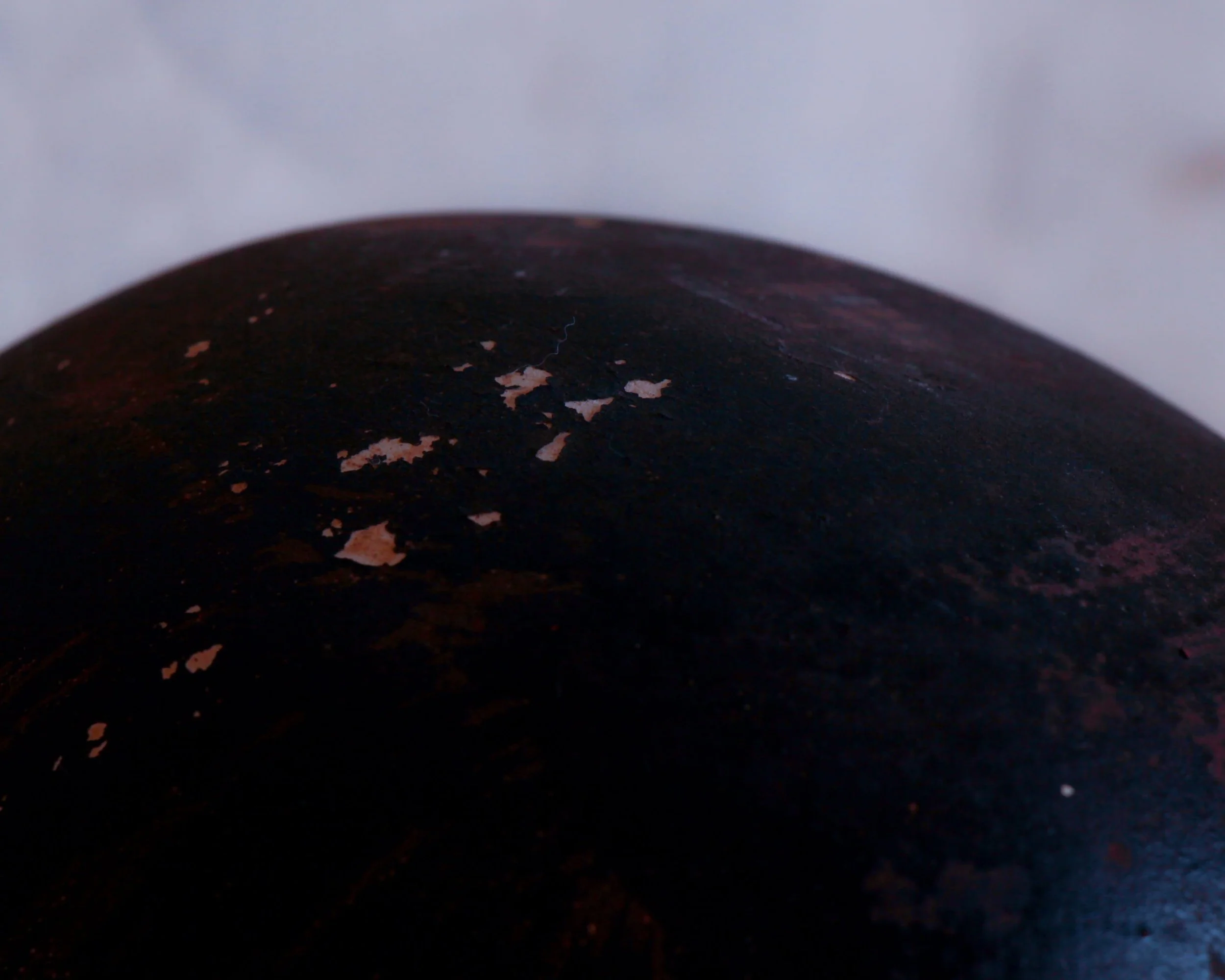
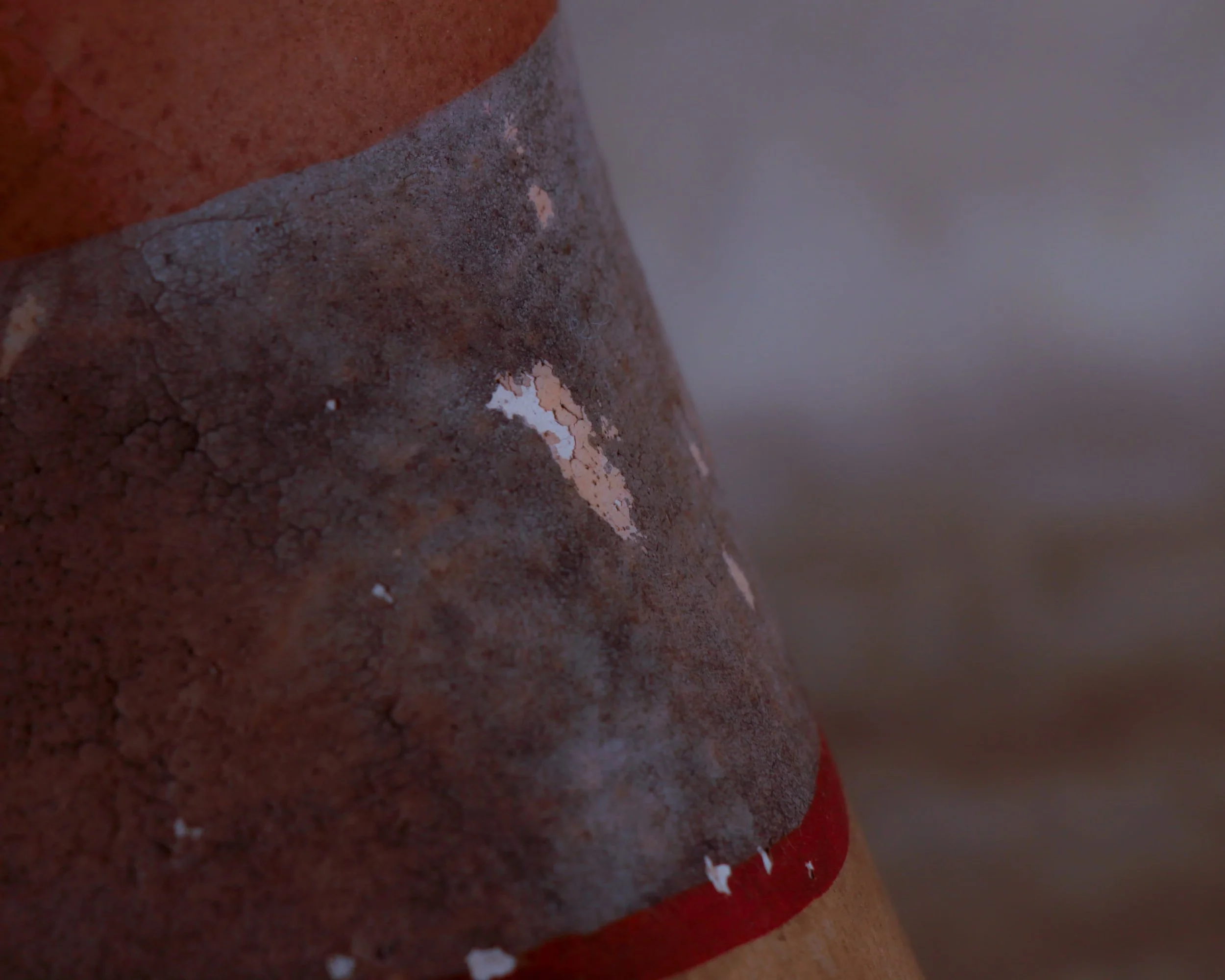
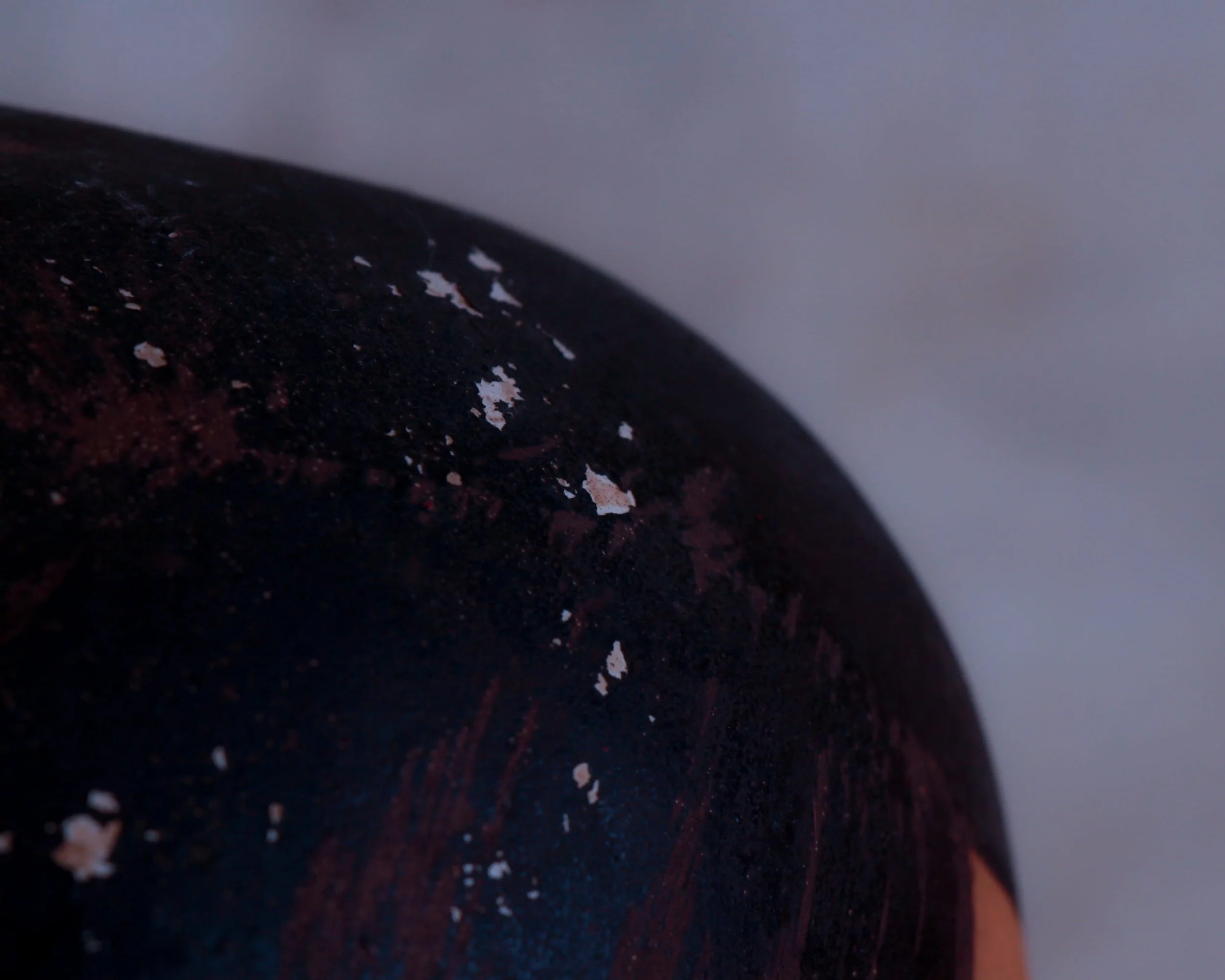
The surface tells the rest of the story—layers of worn paint, softened edges, and that unmistakable patina that only comes from years exposed to wind, rain, and sun, doing exactly what it was meant to do.
Weathervanes
Weathervanes are one of those objects that quietly do their job while doubling as a kind of public sculpture. Dating back centuries, they were originally practical—mounted on rooftops to show wind direction, helping farmers, sailors, and townspeople read the weather at a glance. But it didn’t take long for function to pick up a bit of personality.
Early examples were often simple—arrows or basic shapes—but by the 18th and 19th centuries, they evolved into more expressive forms. Roosters, horses, ships, banners—each one chosen for symbolism, local identity, or just visual appeal. Crafted from copper, iron, or wood, they were built to withstand the elements while remaining light enough to turn easily with the wind.
What makes weathervanes compelling now is how they age. Copper develops that soft verdigris, painted surfaces fade and peel, and the constant motion leaves subtle wear at the pivot point. They carry the weather they’ve tracked.
There’s also a quiet balance in their design. They need to be precise enough to function, but free enough to move. That tension gives them a kind of elegance.
Today, they read as markers of place—objects that once guided daily decisions, now standing as silhouettes against the sky, still turning, still pointing, still present.
Carved from a single plank of hardwood and weathered to absolute perfection, this 19th-century weathervane is the real deal, and then some. Featuring an endearing make-do repair, made with an oxidized iron patch. Every detail is hand-carved, from his blocky wings and stylized curls to the long trumpet jutting from his mouth with zero subtlety.
The surface tells the rest of the story—layers of worn paint, softened edges, and that unmistakable patina that only comes from years exposed to wind, rain, and sun, doing exactly what it was meant to do.
Weathervanes
Weathervanes are one of those objects that quietly do their job while doubling as a kind of public sculpture. Dating back centuries, they were originally practical—mounted on rooftops to show wind direction, helping farmers, sailors, and townspeople read the weather at a glance. But it didn’t take long for function to pick up a bit of personality.
Early examples were often simple—arrows or basic shapes—but by the 18th and 19th centuries, they evolved into more expressive forms. Roosters, horses, ships, banners—each one chosen for symbolism, local identity, or just visual appeal. Crafted from copper, iron, or wood, they were built to withstand the elements while remaining light enough to turn easily with the wind.
What makes weathervanes compelling now is how they age. Copper develops that soft verdigris, painted surfaces fade and peel, and the constant motion leaves subtle wear at the pivot point. They carry the weather they’ve tracked.
There’s also a quiet balance in their design. They need to be precise enough to function, but free enough to move. That tension gives them a kind of elegance.
Today, they read as markers of place—objects that once guided daily decisions, now standing as silhouettes against the sky, still turning, still pointing, still present.