ITEM NOT AVAILABLE IMMEDIATELY—INQUIRE IF INTERESTED hello@heimweeantiques.com
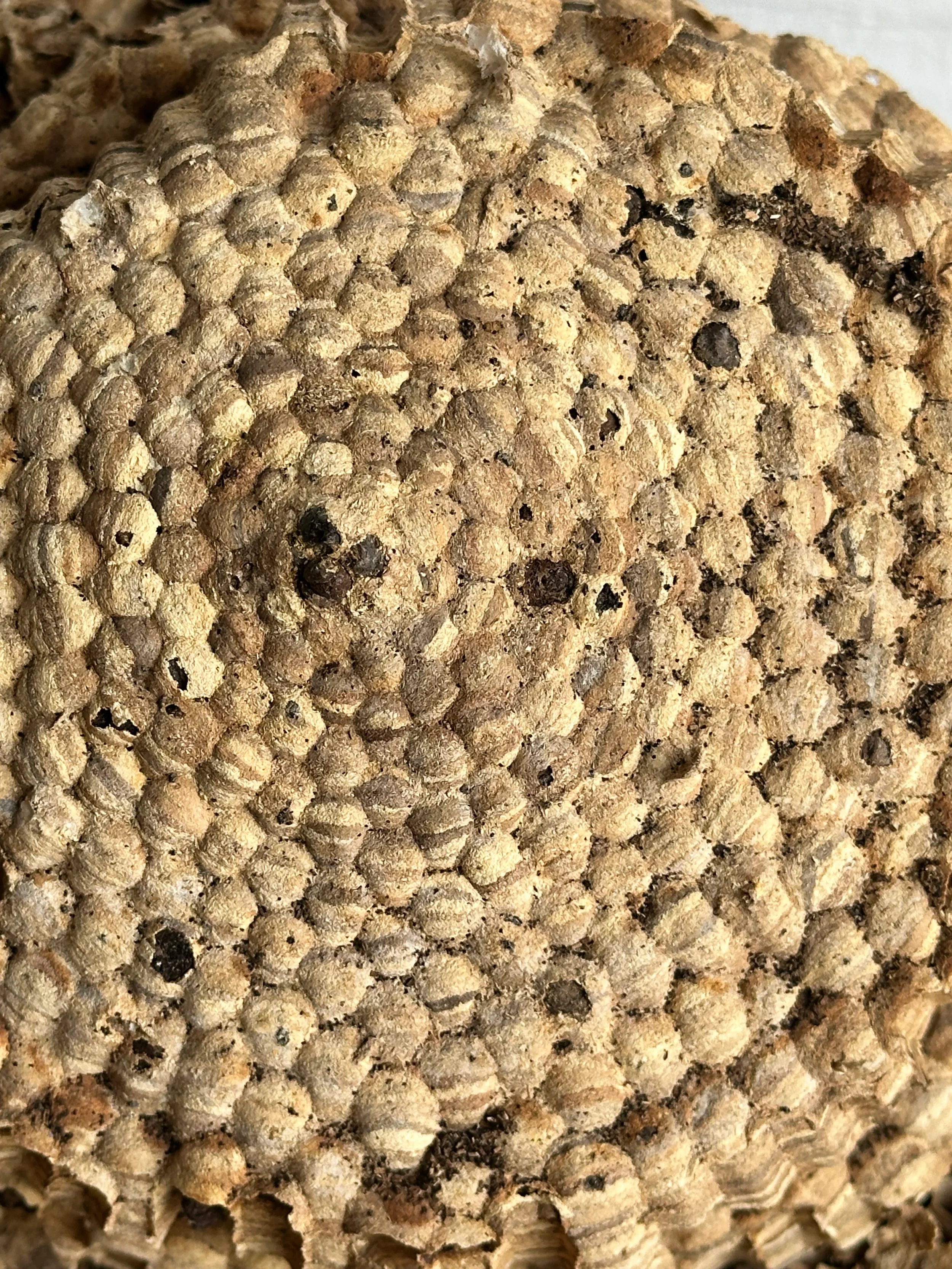
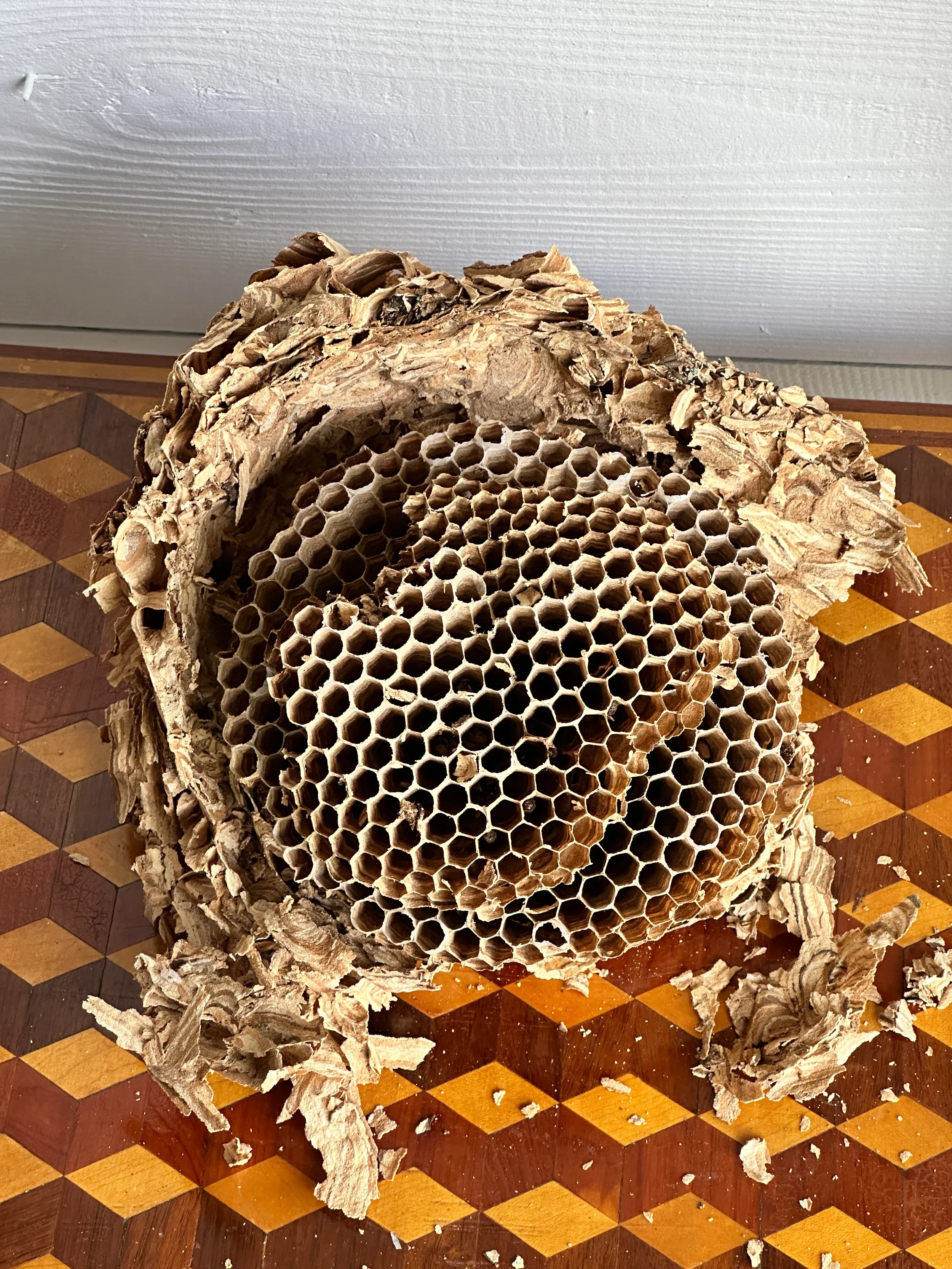
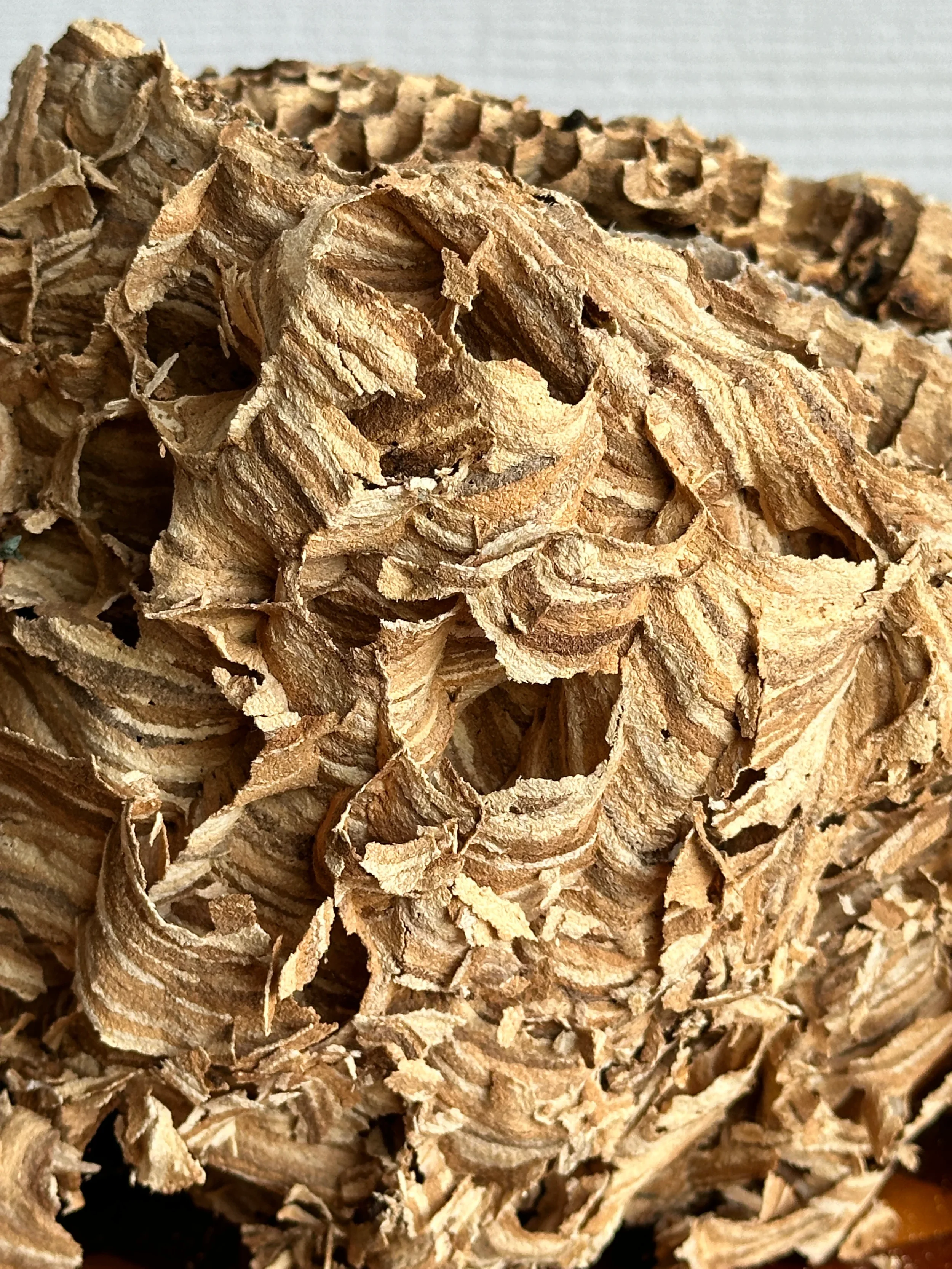
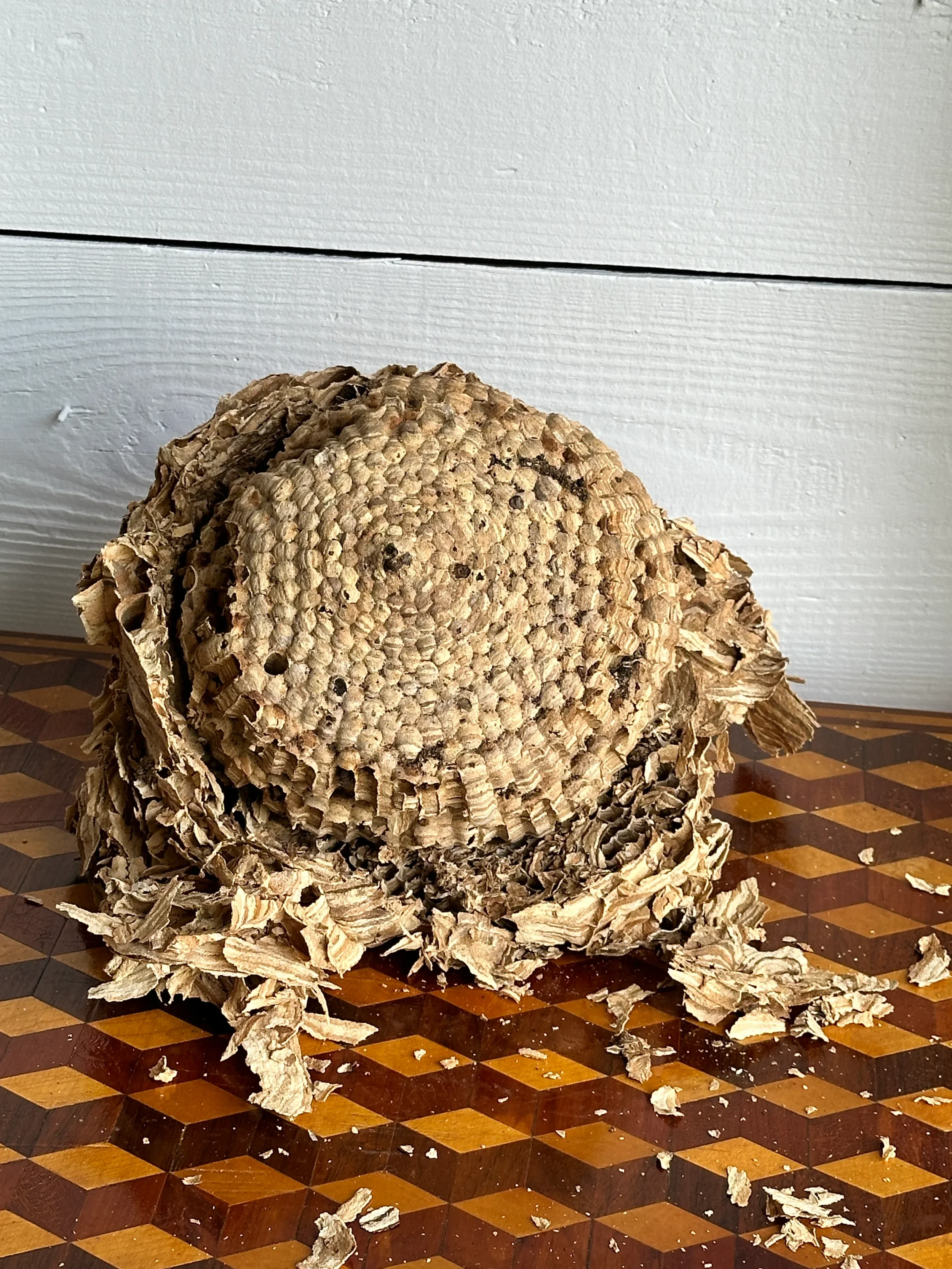
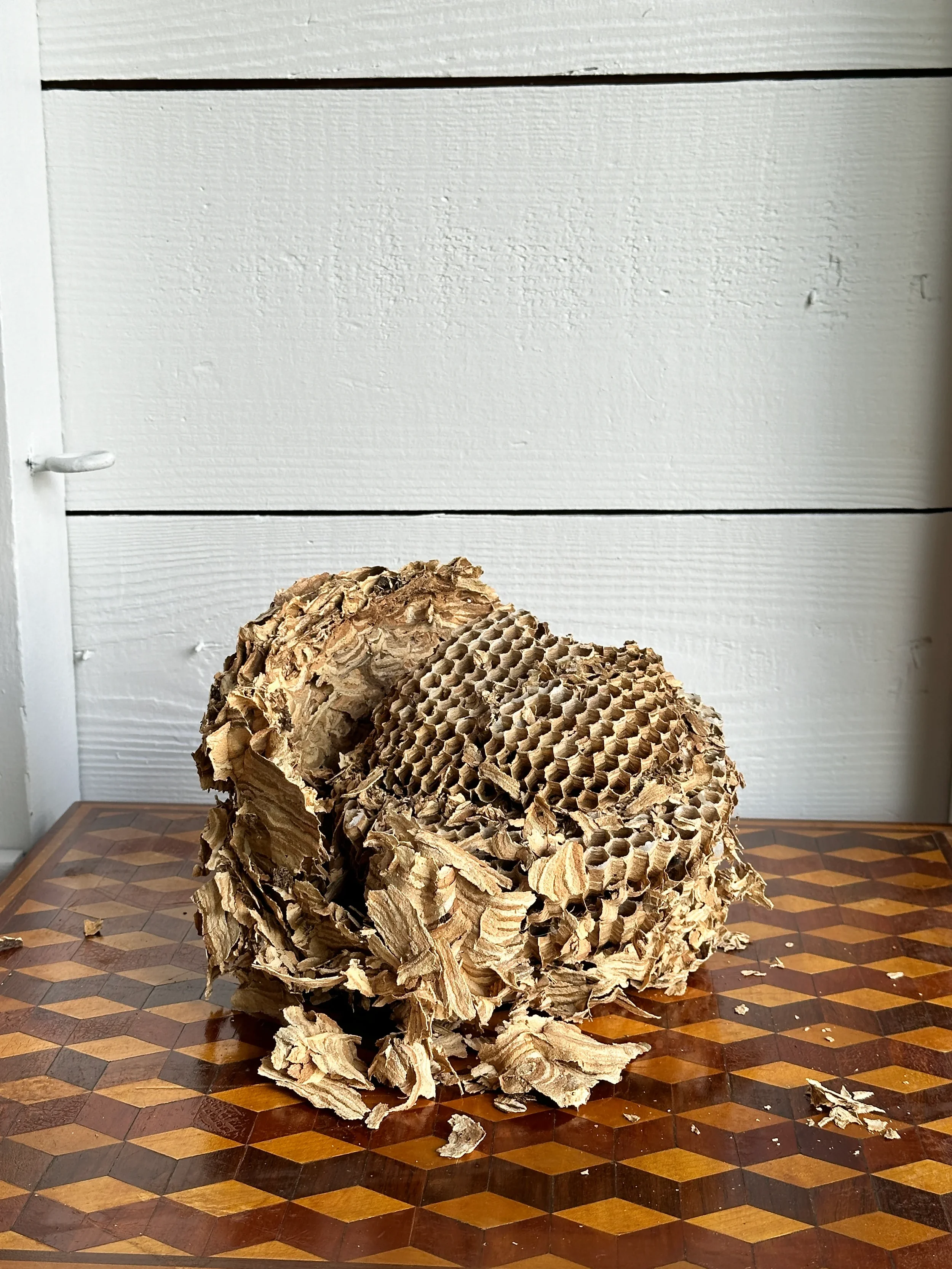
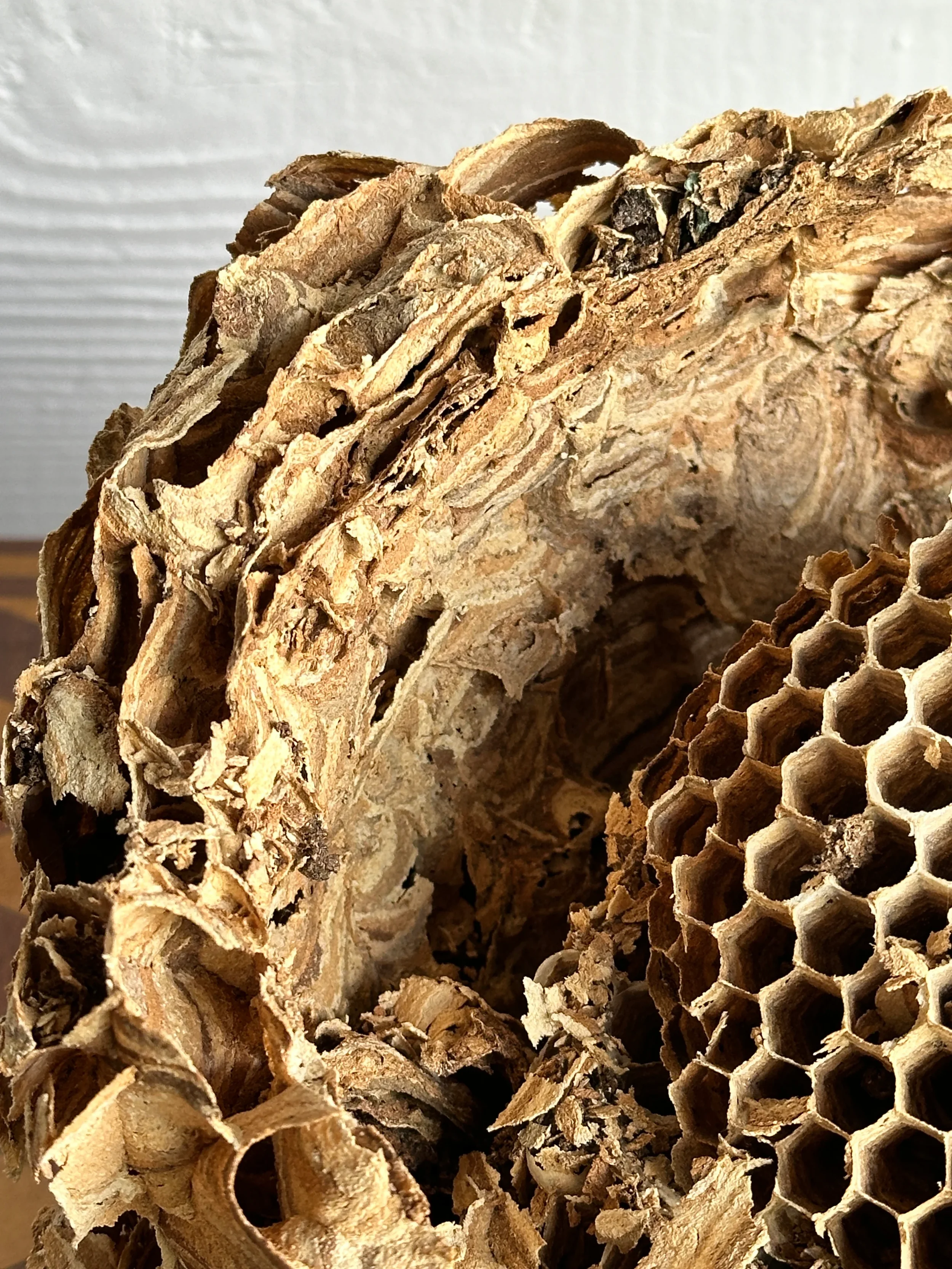
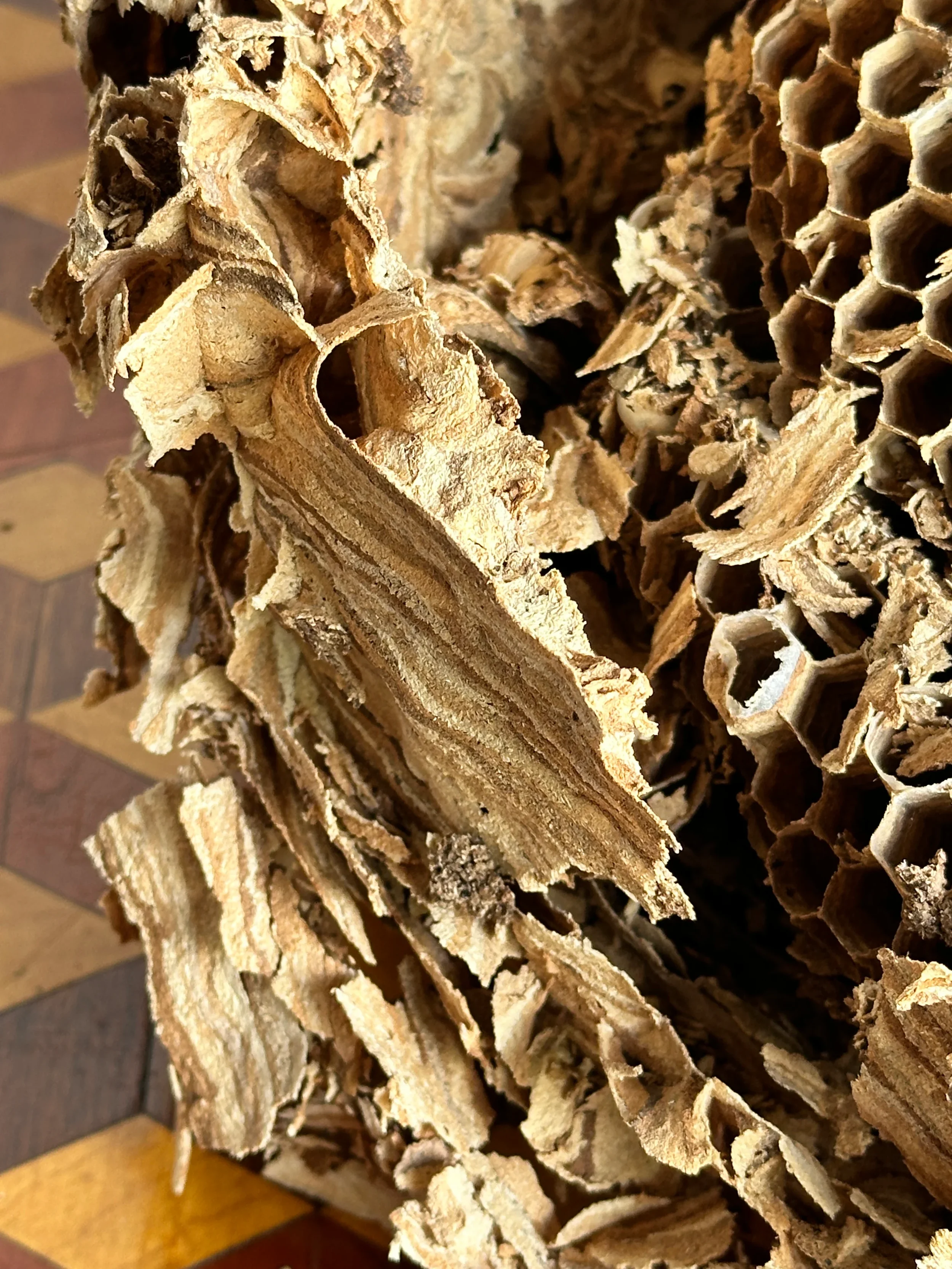
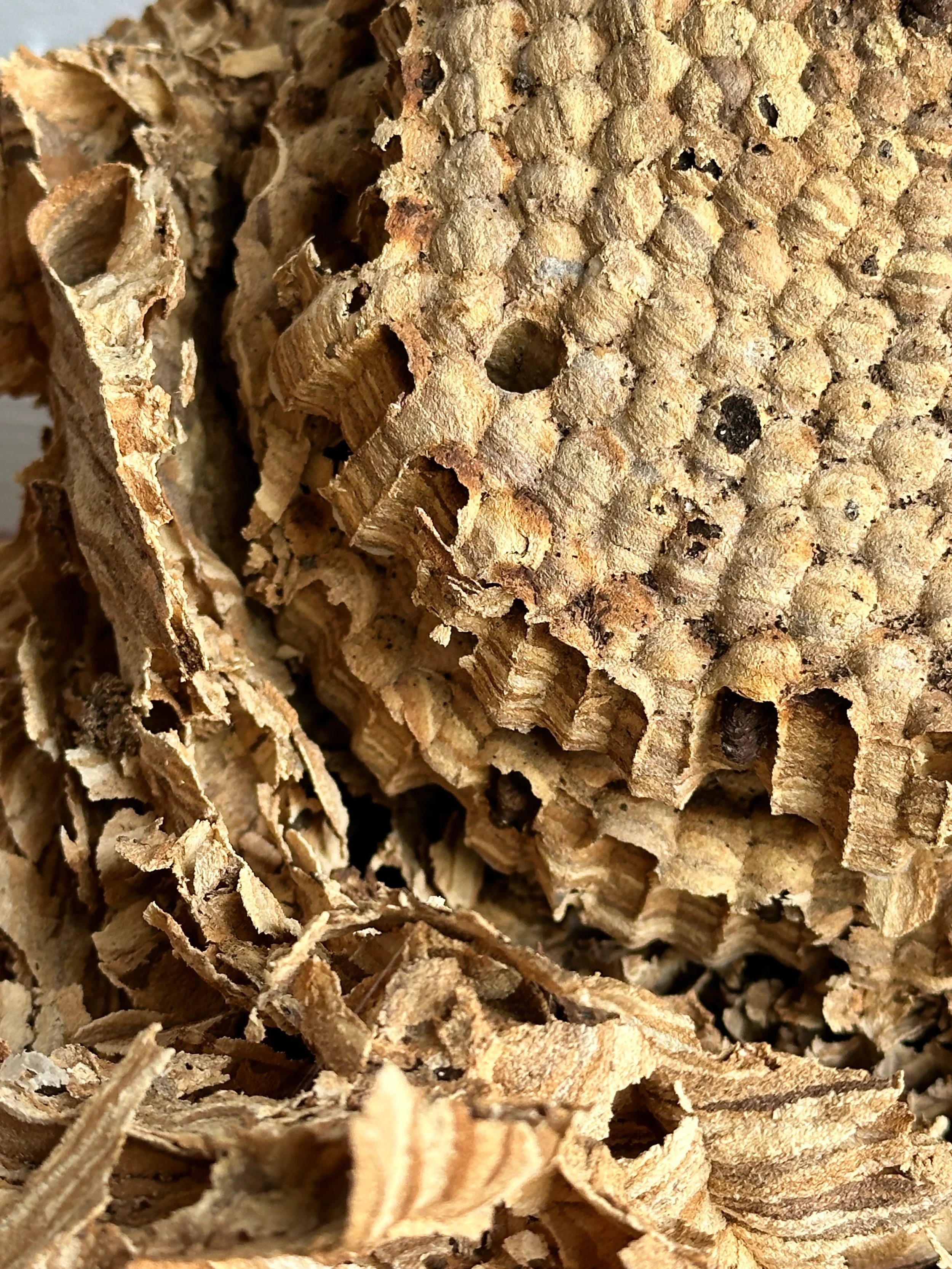
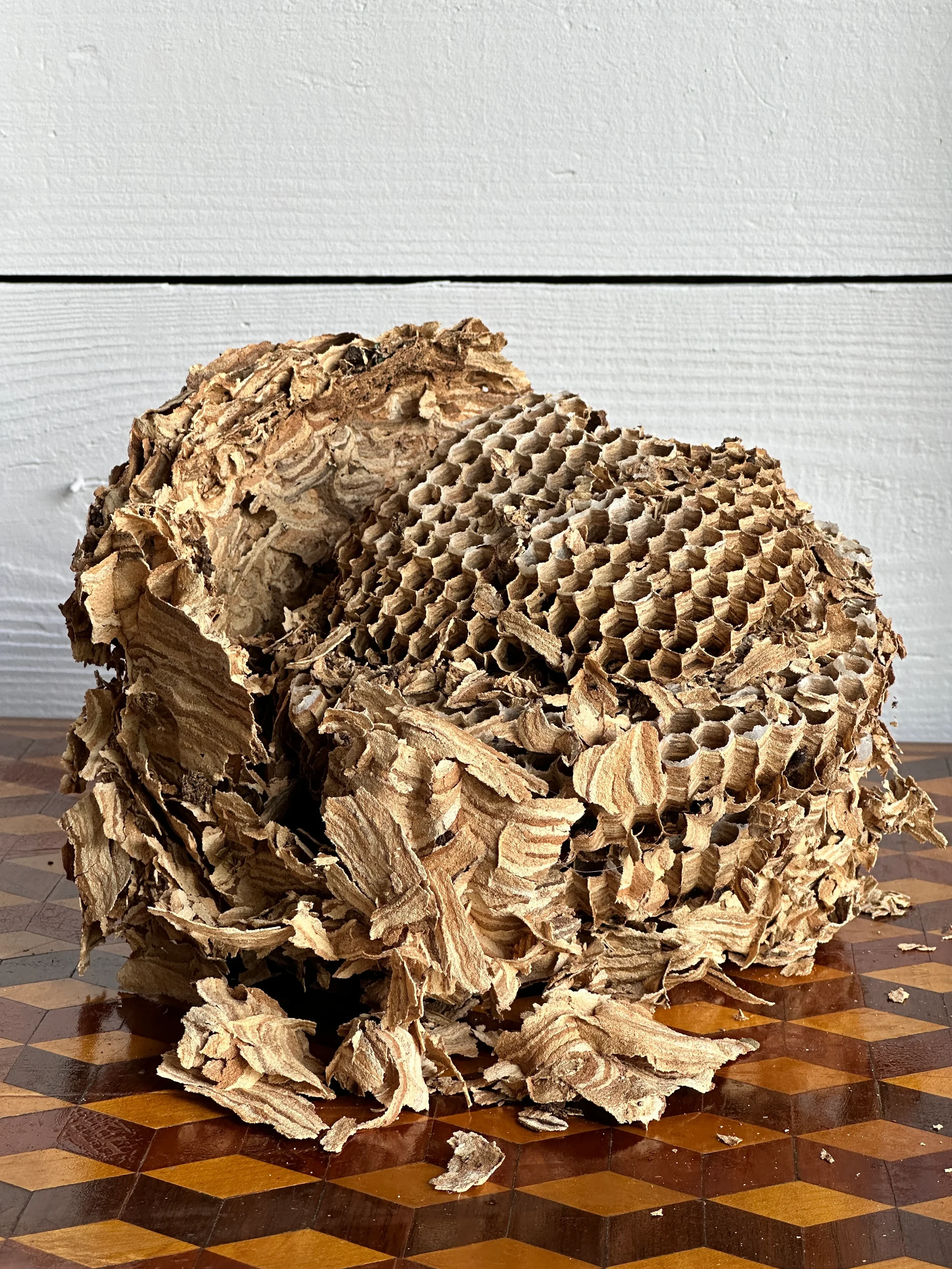
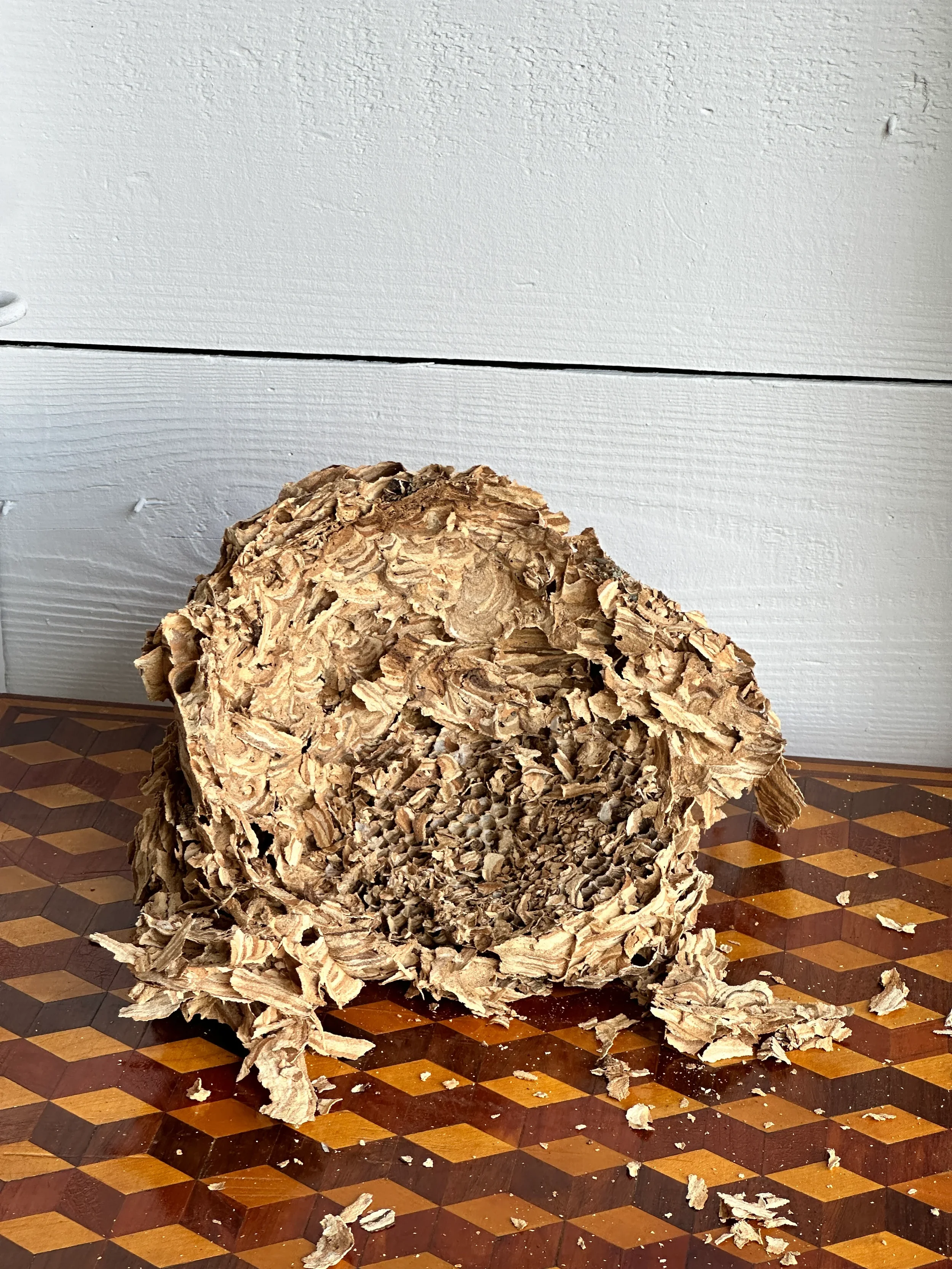
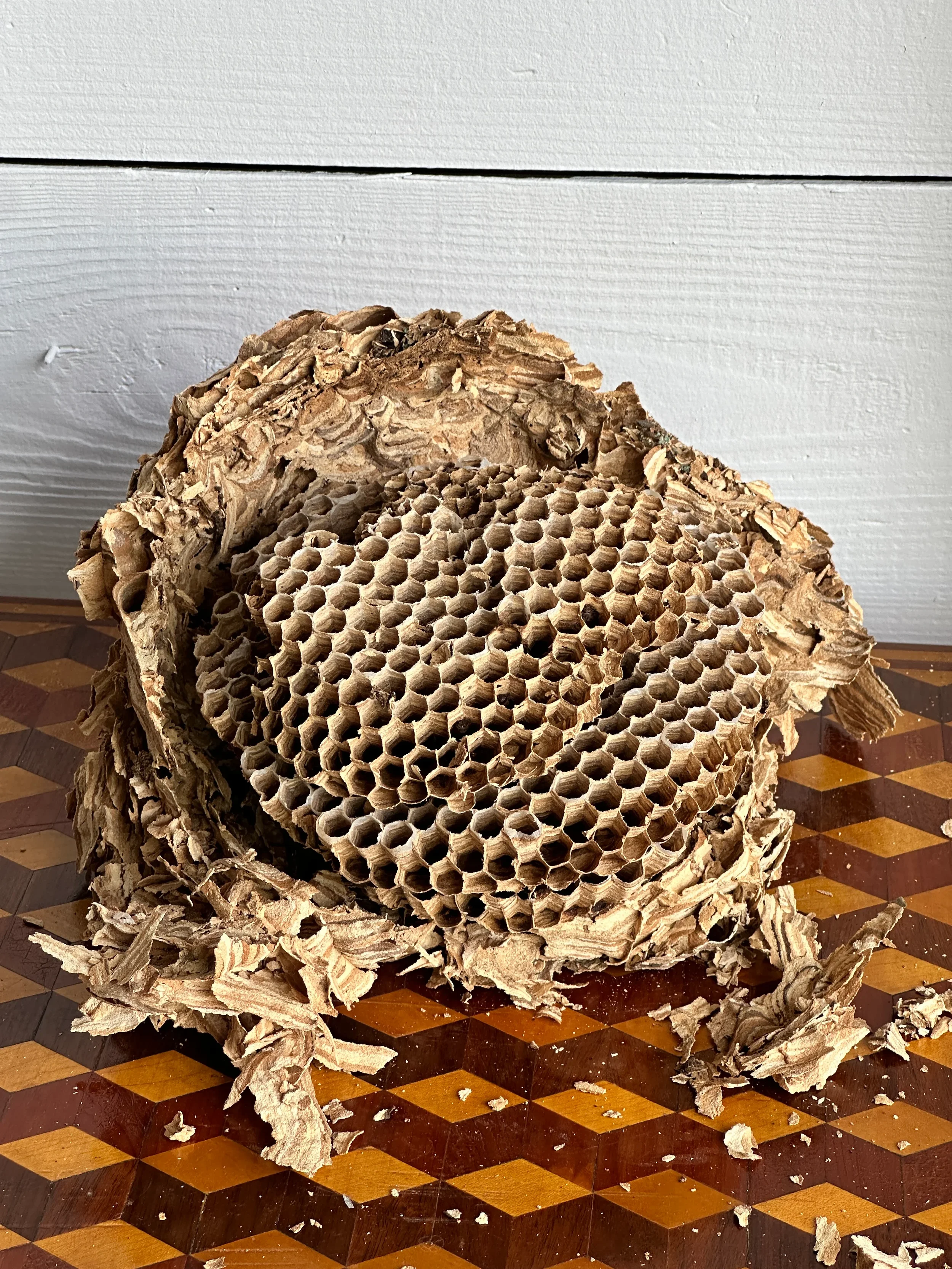
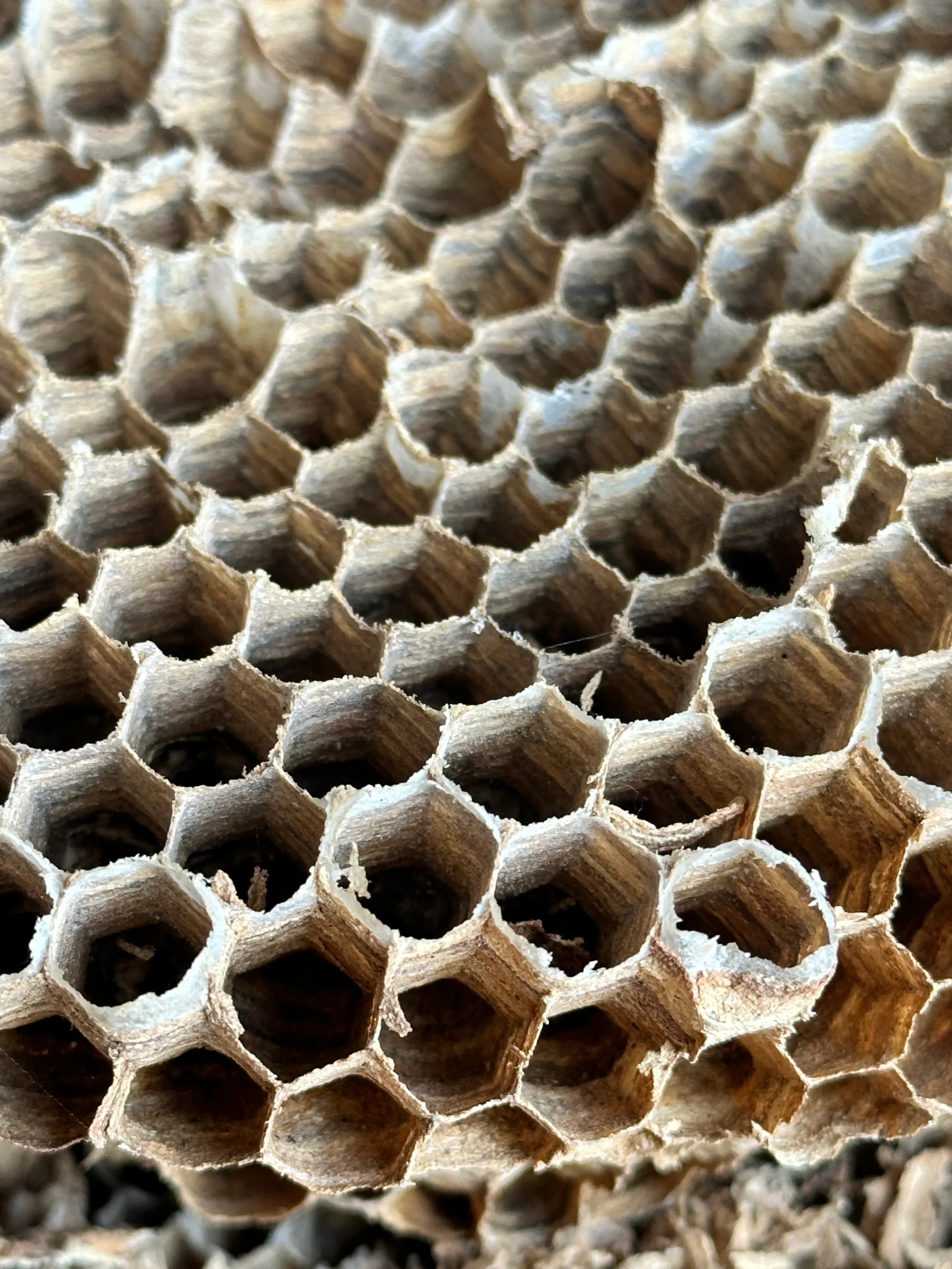
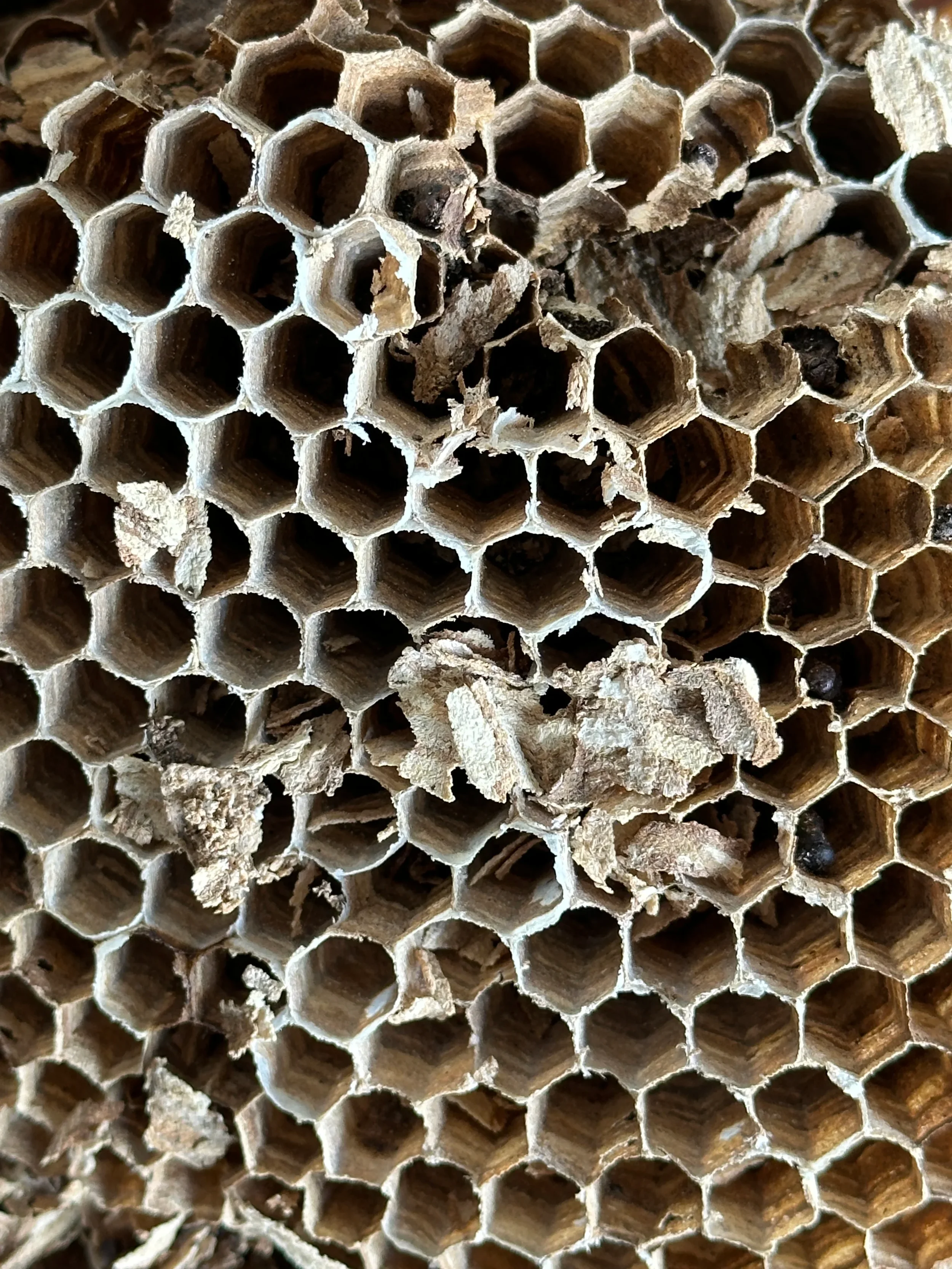
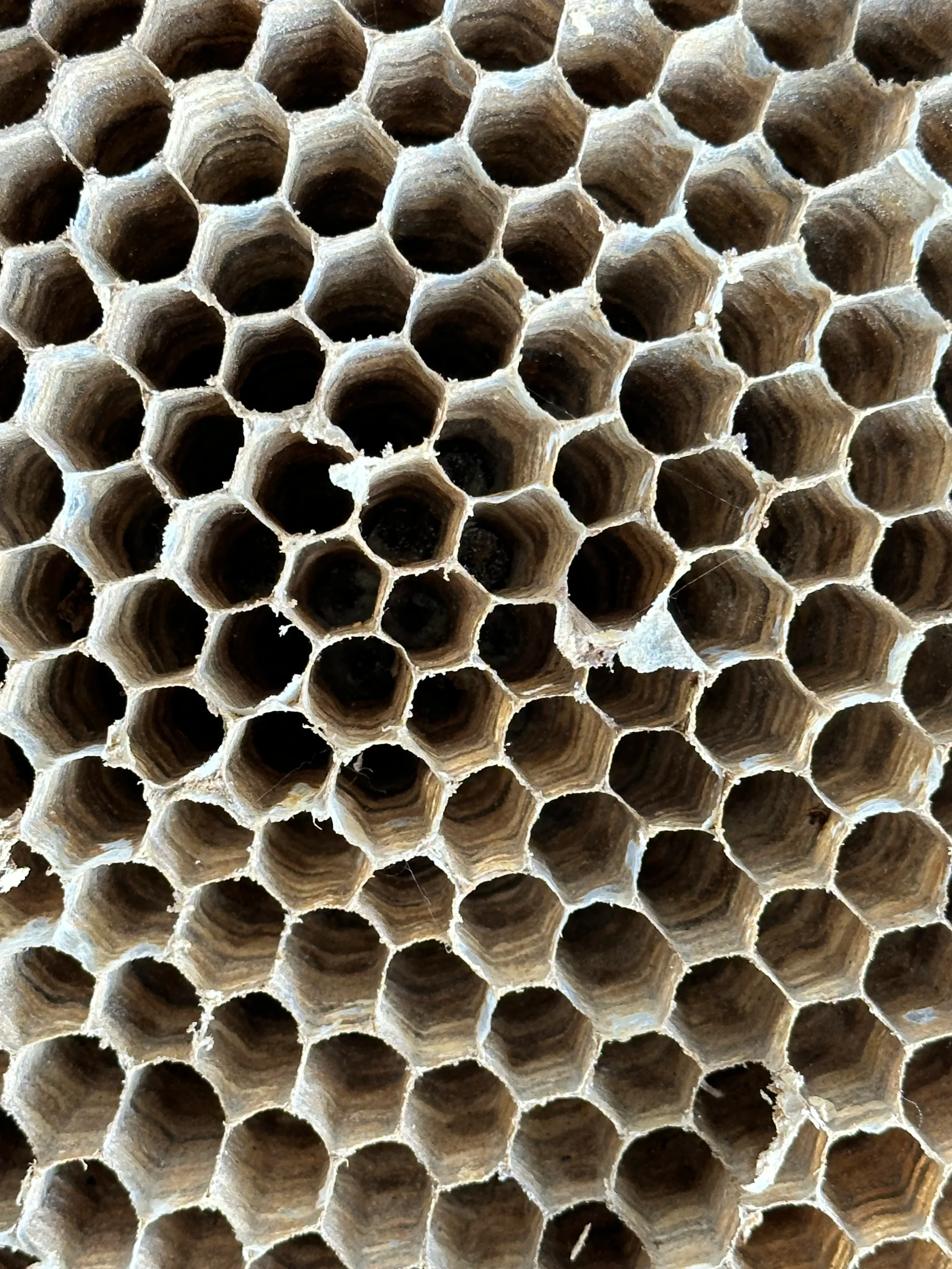
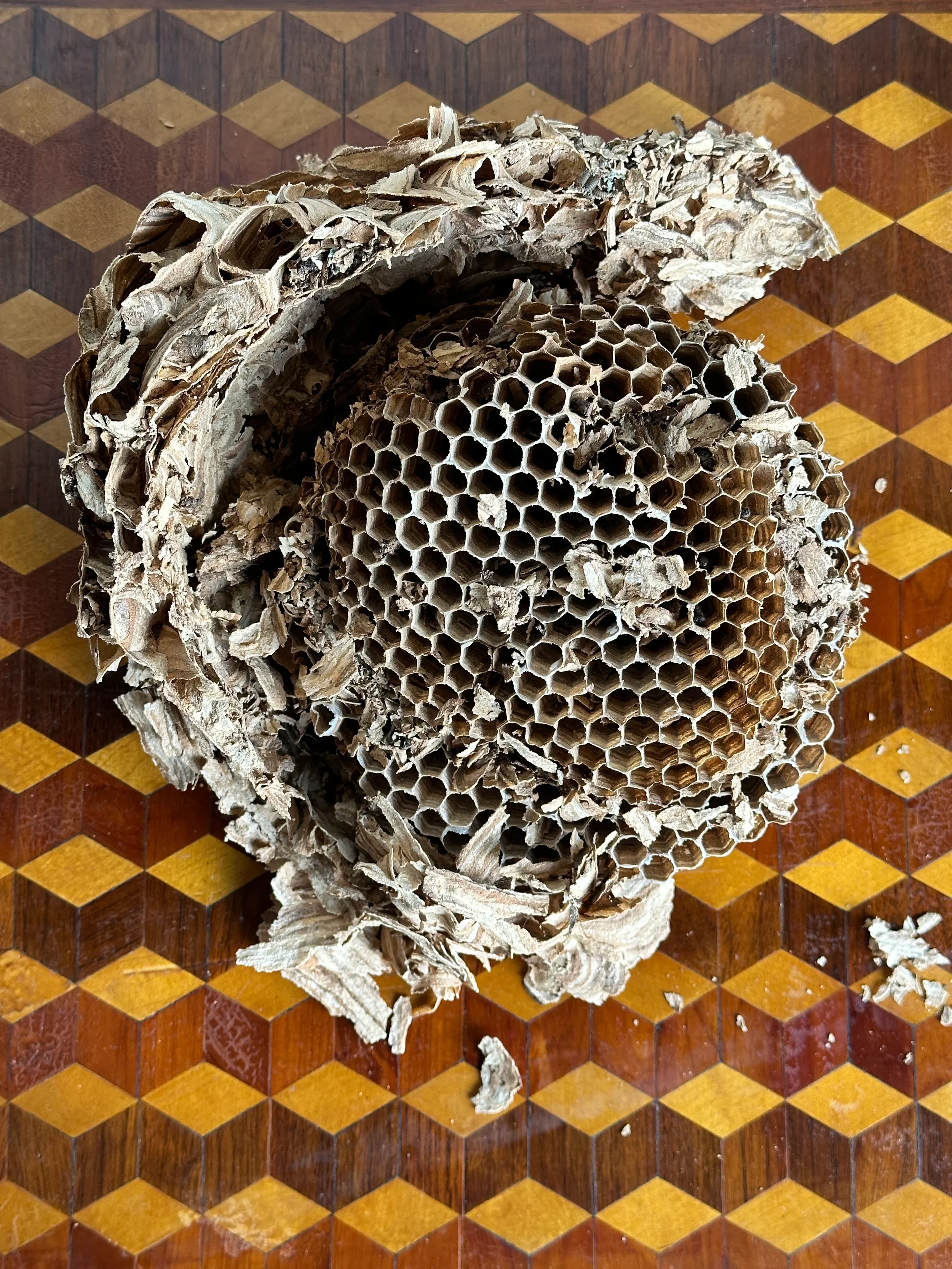
Here’s nature’s architecture at its most fierce and fragile—a dried hornet’s nest. Once buzzing with energy, now it sits as a sculptural relic. The outer shell curls in layered, papery swirls, while the interior reveals perfect hexagonal chambers built with mathematical precision. Every cell was once a cradle of life, carefully crafted from chewed fibers and instinct.
It’s a reminder of how hornets are nature’s obsessive engineers, creating an intricate fortress from nothing but wood pulp and determination.
Category History
A hornet’s nest is one of those natural objects that feels engineered. Built by social wasps, typically in spring and summer, it begins with a single queen chewing wood fibers into a pulp and shaping them into the first delicate cells. As the colony grows, that process repeats—layer upon layer—until the nest becomes a full, enclosed structure with a swirling, almost topographic surface.
The material itself is essentially paper, made from weathered wood mixed with saliva. That’s what gives the nest its distinctive striated look—bands of gray, tan, and brown that reflect whatever the hornets were harvesting nearby. Inside, the structure is surprisingly organized: stacked combs connected by narrow supports, all designed for efficiency and protection.
What’s striking is how purposeful it feels. Every curve and opening serves a role—ventilation, defense, expansion. The outer shell acts as insulation and armor, while the interior stays relatively stable despite changing conditions.
Once abandoned, usually in colder months, the nest becomes something else entirely. Without its inhabitants, it reads less like a threat and more like a natural sculpture. Lightweight, intricate, and unexpectedly refined, it’s a reminder that design doesn’t always come from a studio—sometimes it’s built instinctively, one small layer at a time.
ITEM NOT AVAILABLE IMMEDIATELY—INQUIRE IF INTERESTED hello@heimweeantiques.com
Here’s nature’s architecture at its most fierce and fragile—a dried hornet’s nest. Once buzzing with energy, now it sits as a sculptural relic. The outer shell curls in layered, papery swirls, while the interior reveals perfect hexagonal chambers built with mathematical precision. Every cell was once a cradle of life, carefully crafted from chewed fibers and instinct.
It’s a reminder of how hornets are nature’s obsessive engineers, creating an intricate fortress from nothing but wood pulp and determination.
Category History
A hornet’s nest is one of those natural objects that feels engineered. Built by social wasps, typically in spring and summer, it begins with a single queen chewing wood fibers into a pulp and shaping them into the first delicate cells. As the colony grows, that process repeats—layer upon layer—until the nest becomes a full, enclosed structure with a swirling, almost topographic surface.
The material itself is essentially paper, made from weathered wood mixed with saliva. That’s what gives the nest its distinctive striated look—bands of gray, tan, and brown that reflect whatever the hornets were harvesting nearby. Inside, the structure is surprisingly organized: stacked combs connected by narrow supports, all designed for efficiency and protection.
What’s striking is how purposeful it feels. Every curve and opening serves a role—ventilation, defense, expansion. The outer shell acts as insulation and armor, while the interior stays relatively stable despite changing conditions.
Once abandoned, usually in colder months, the nest becomes something else entirely. Without its inhabitants, it reads less like a threat and more like a natural sculpture. Lightweight, intricate, and unexpectedly refined, it’s a reminder that design doesn’t always come from a studio—sometimes it’s built instinctively, one small layer at a time.