ITEM NOT AVAILABLE IMMEDIATELY—INQUIRE IF INTERESTED hello@heimweeantiques.com
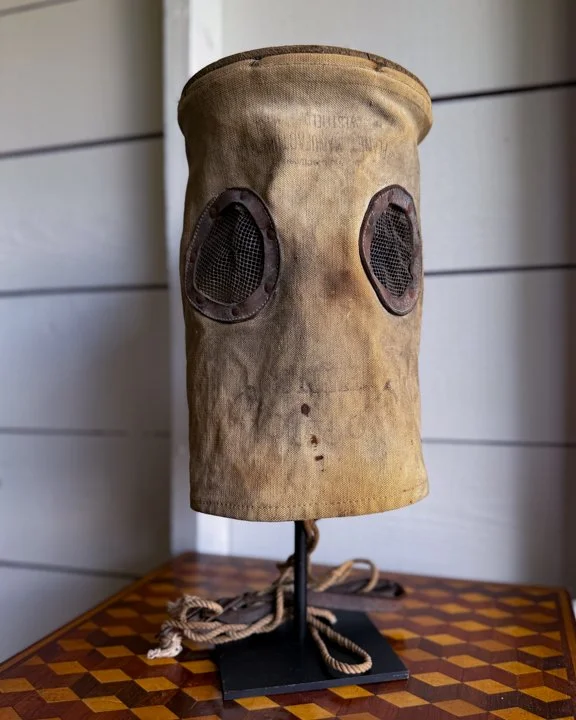
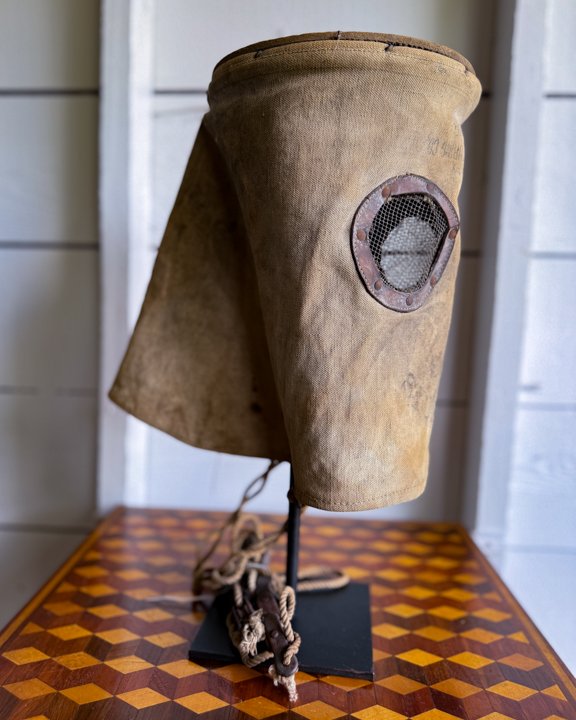
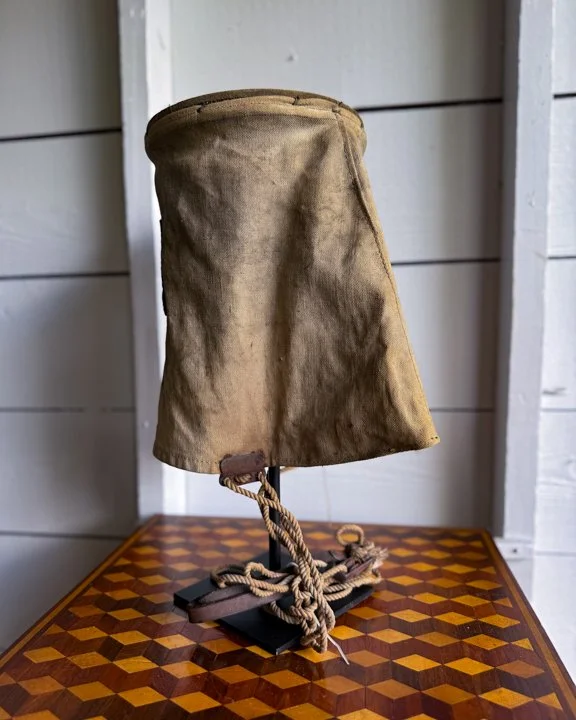
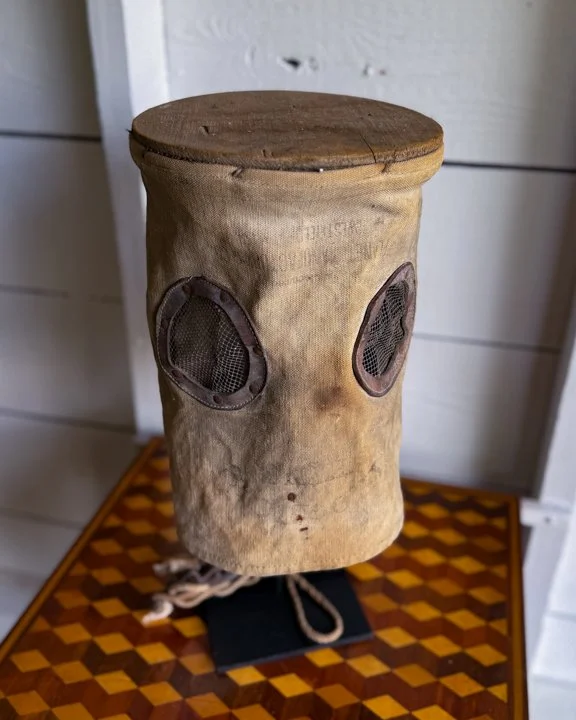
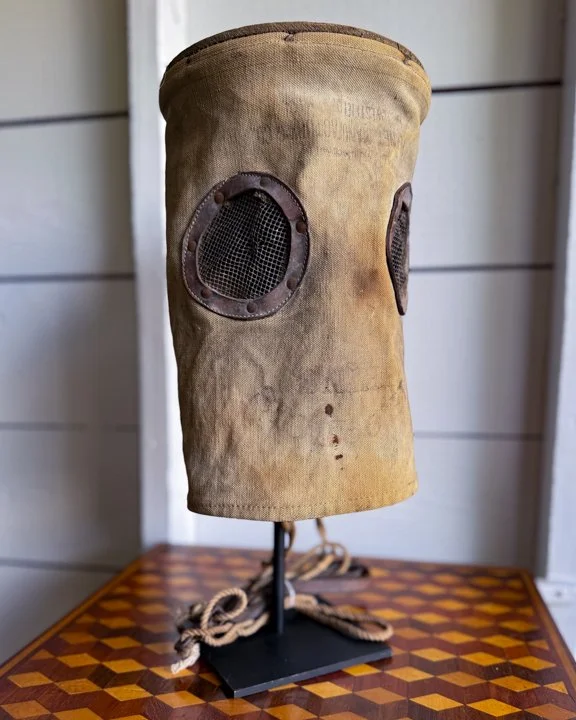
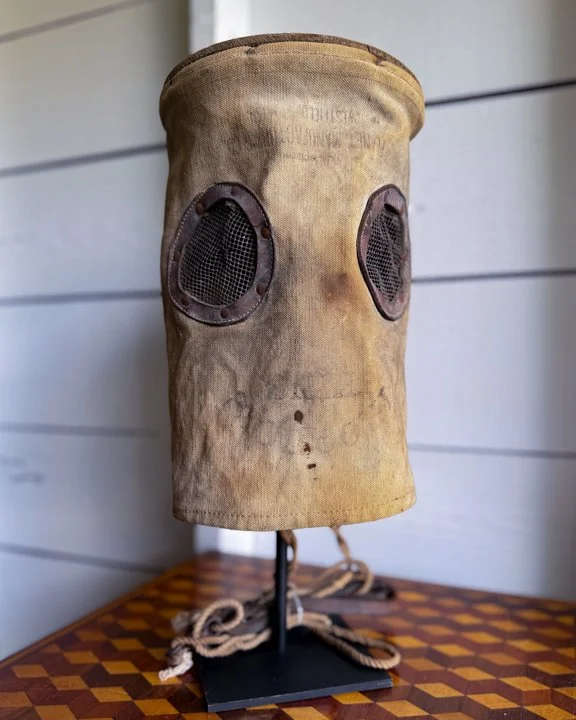
At first glance it reads like some kind of post-apocalyptic artifact, but what you’re looking at is actually a horse feeding mask turned upside down, reimagined on a custom stand to give it the uncanny presence of a smoke mask.
Made of heavy canvas with wire-mesh breathing holes rimmed in rusted metal, a wooden base (now at the top), it has all the patina and wear you’d expect from years of honest use. The drawstring cord dangles like an afterthought, grounding it in its true utilitarian origins.
Category History
The horse feeding bag, sometimes called a nosebag, is a simple solution to a very practical problem: how do you feed a working animal wherever it happens to be standing? Widely used in the late 19th and early 20th centuries, especially in cities and military settings, these bags allowed horses to eat without needing a trough or stable.
Typically made from canvas, leather, or a combination of both, the bag slips over the horse’s nose and is secured behind the ears. Grain or feed is poured inside, and the horse can eat comfortably while standing hitched to a post, wagon, or carriage. It kept things efficient and contained—no spilled feed, no need to move the animal.
What’s interesting is how tailored the design is. The shape accommodates the horse’s muzzle, the materials are tough enough to handle wear and moisture, and ventilation was often built in to keep things from getting too warm or damp.
Surviving examples usually show it all—softened fabric, repairs, worn straps, the imprint of long use. They weren’t decorative, but they have a presence now that feels sculptural.
A straightforward object that reflects a time when animals were part of daily infrastructure—and every detail of their care had to be portable, durable, and ready to work.
ITEM NOT AVAILABLE IMMEDIATELY—INQUIRE IF INTERESTED hello@heimweeantiques.com
At first glance it reads like some kind of post-apocalyptic artifact, but what you’re looking at is actually a horse feeding mask turned upside down, reimagined on a custom stand to give it the uncanny presence of a smoke mask.
Made of heavy canvas with wire-mesh breathing holes rimmed in rusted metal, a wooden base (now at the top), it has all the patina and wear you’d expect from years of honest use. The drawstring cord dangles like an afterthought, grounding it in its true utilitarian origins.
Category History
The horse feeding bag, sometimes called a nosebag, is a simple solution to a very practical problem: how do you feed a working animal wherever it happens to be standing? Widely used in the late 19th and early 20th centuries, especially in cities and military settings, these bags allowed horses to eat without needing a trough or stable.
Typically made from canvas, leather, or a combination of both, the bag slips over the horse’s nose and is secured behind the ears. Grain or feed is poured inside, and the horse can eat comfortably while standing hitched to a post, wagon, or carriage. It kept things efficient and contained—no spilled feed, no need to move the animal.
What’s interesting is how tailored the design is. The shape accommodates the horse’s muzzle, the materials are tough enough to handle wear and moisture, and ventilation was often built in to keep things from getting too warm or damp.
Surviving examples usually show it all—softened fabric, repairs, worn straps, the imprint of long use. They weren’t decorative, but they have a presence now that feels sculptural.
A straightforward object that reflects a time when animals were part of daily infrastructure—and every detail of their care had to be portable, durable, and ready to work.