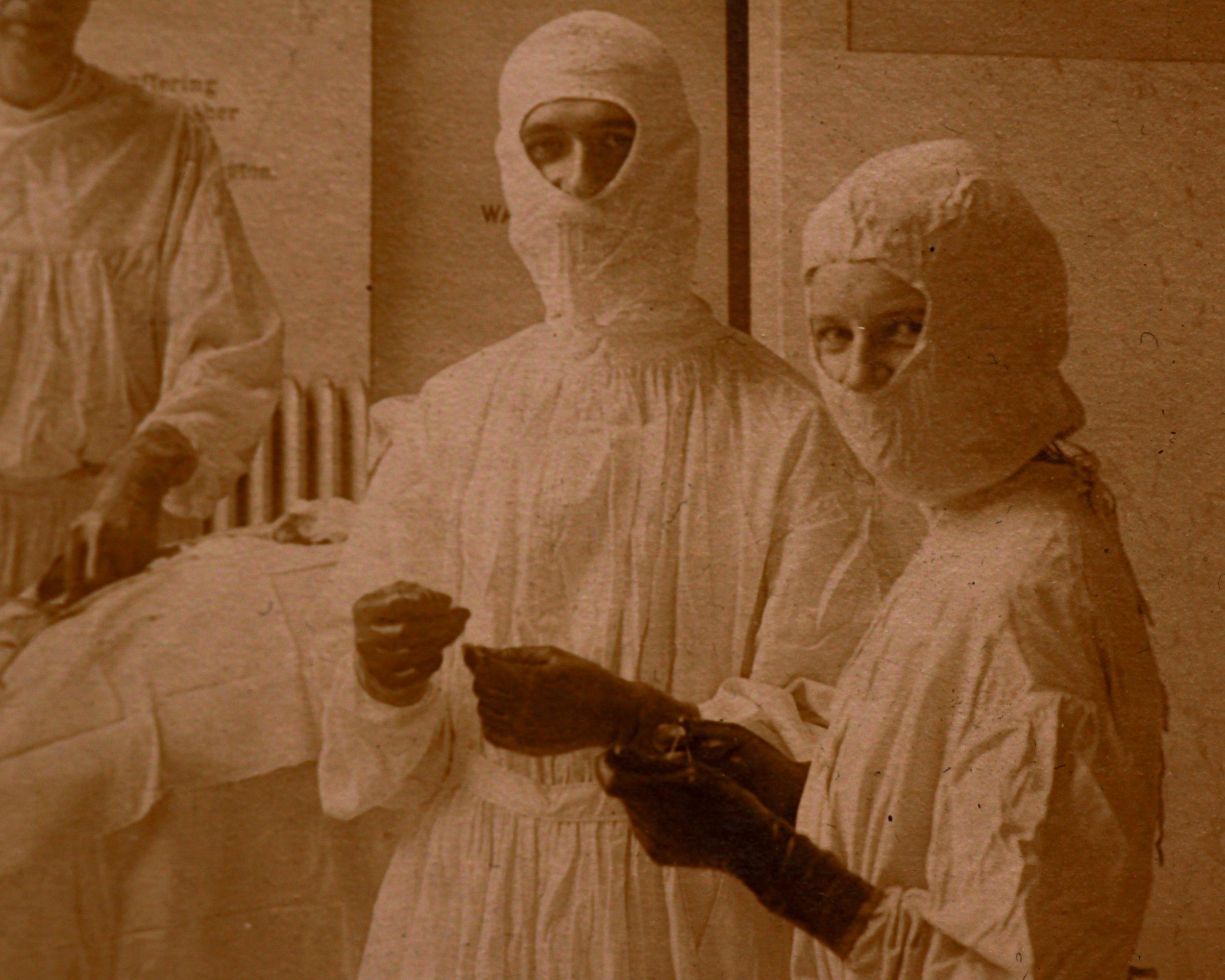
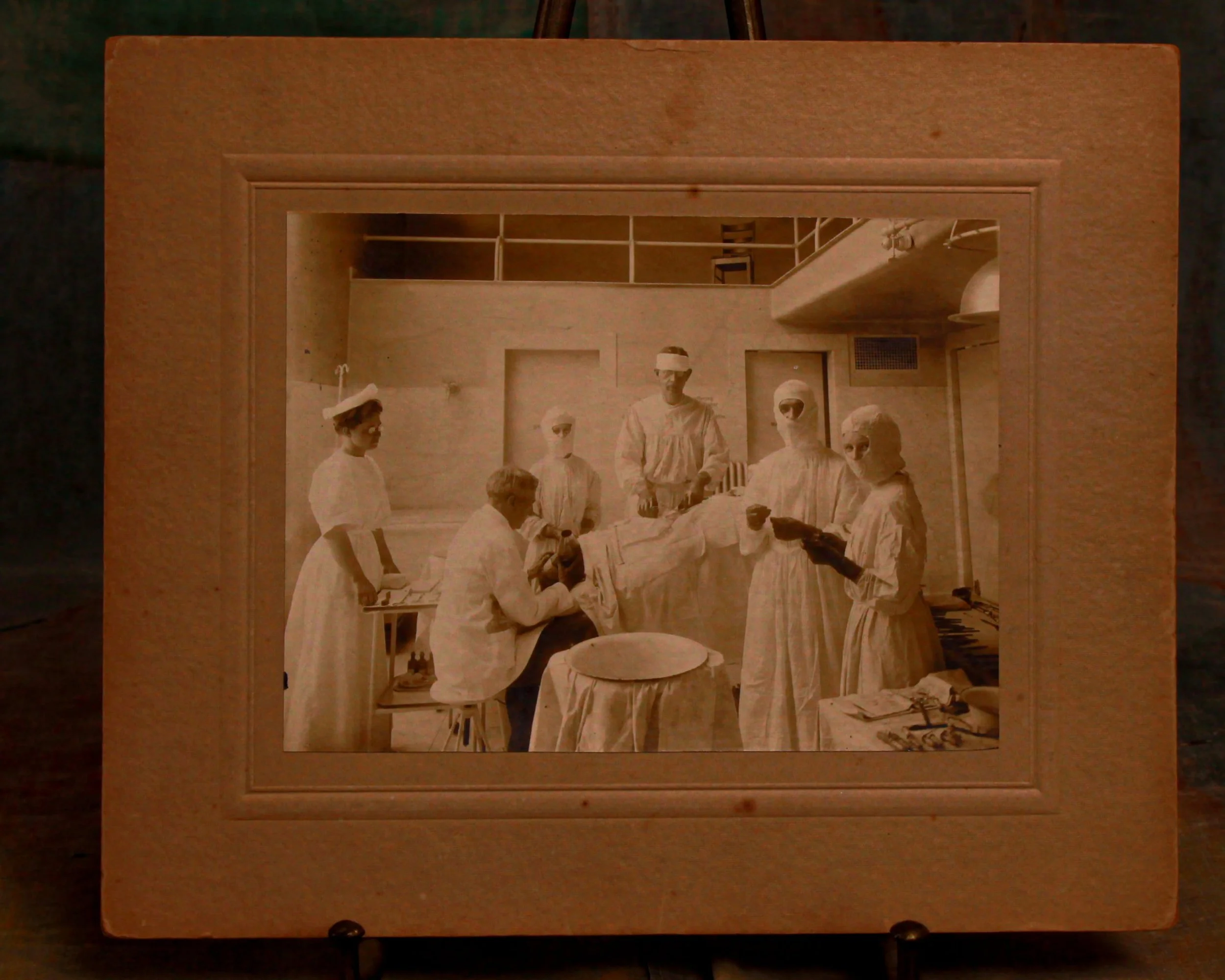
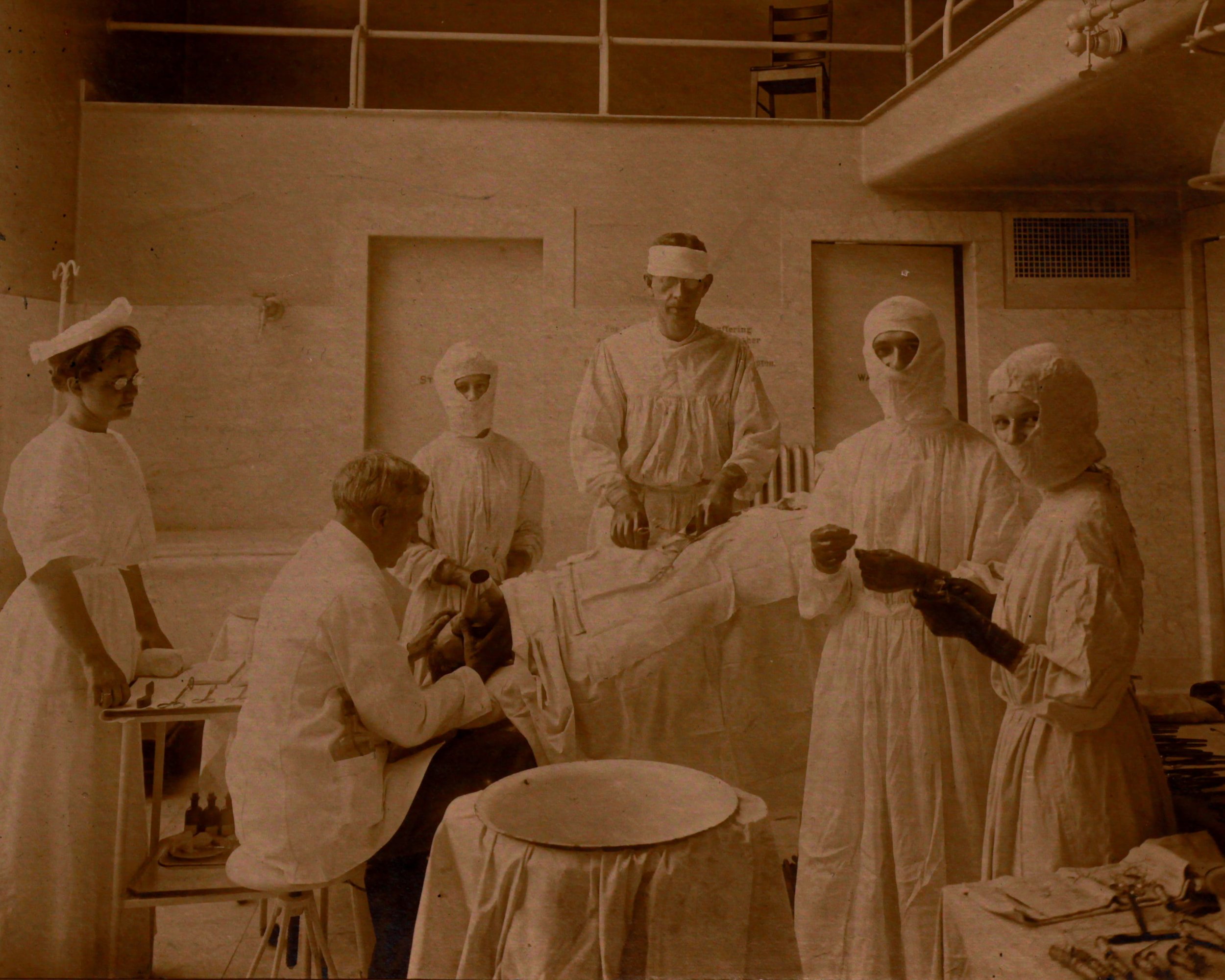
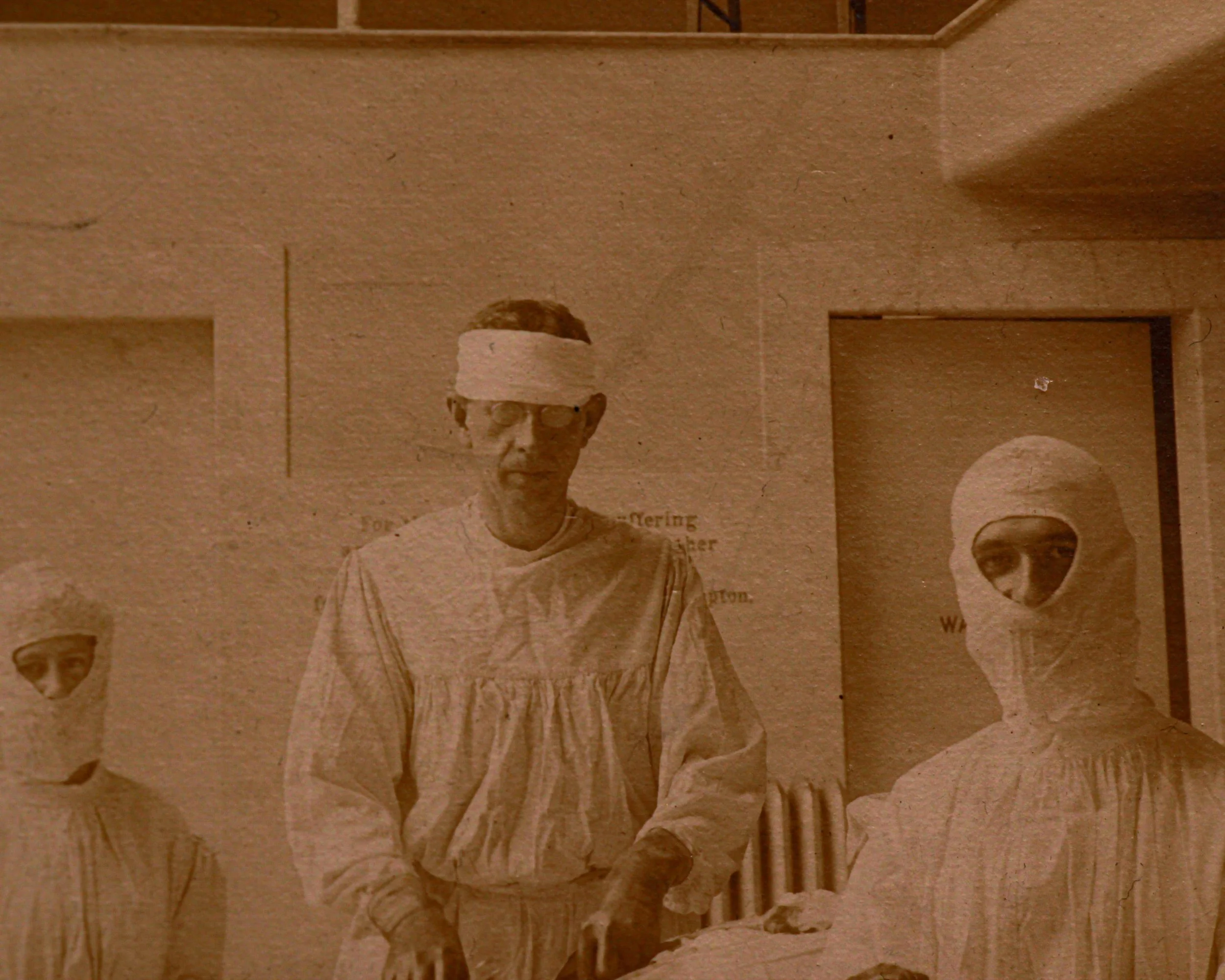
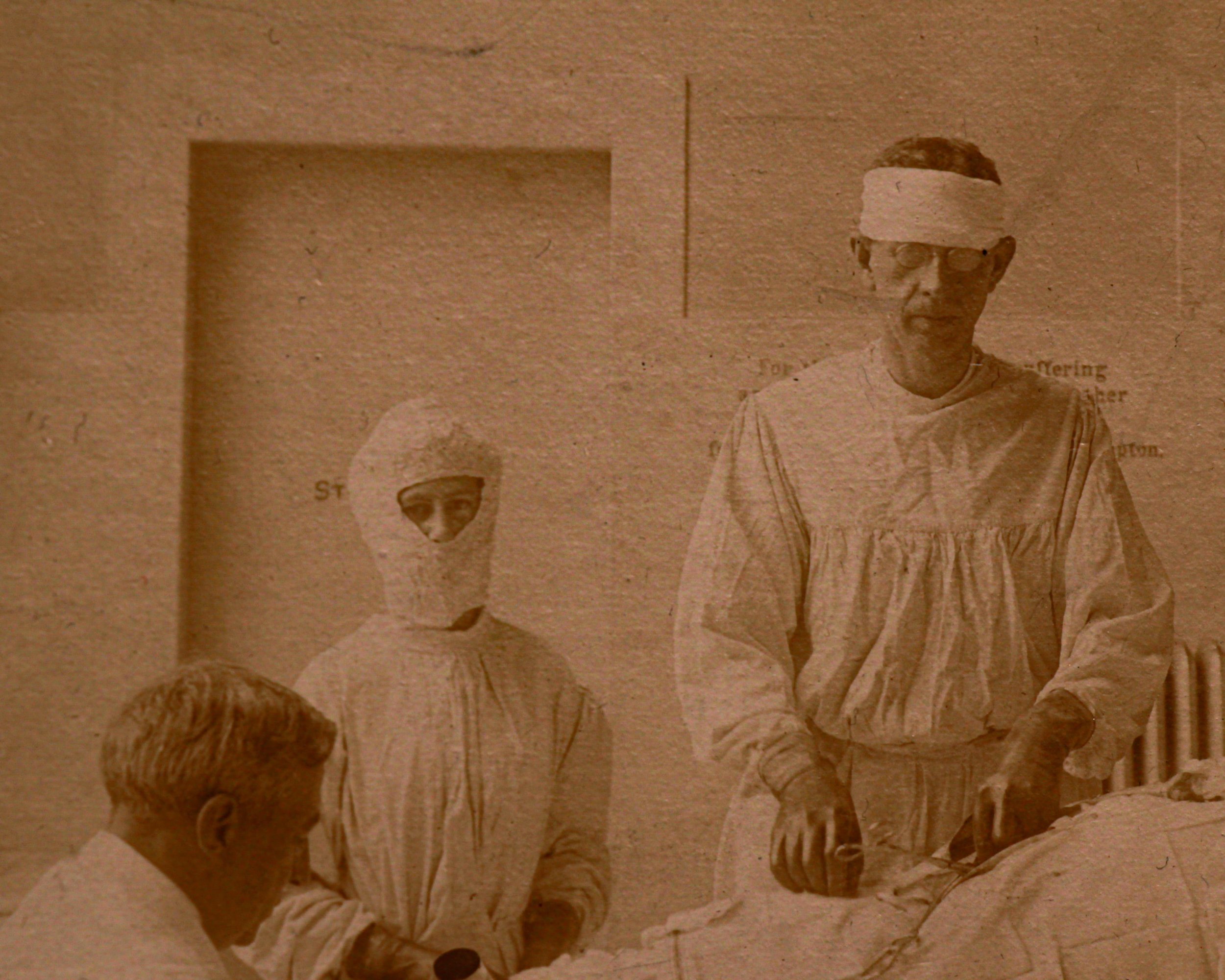
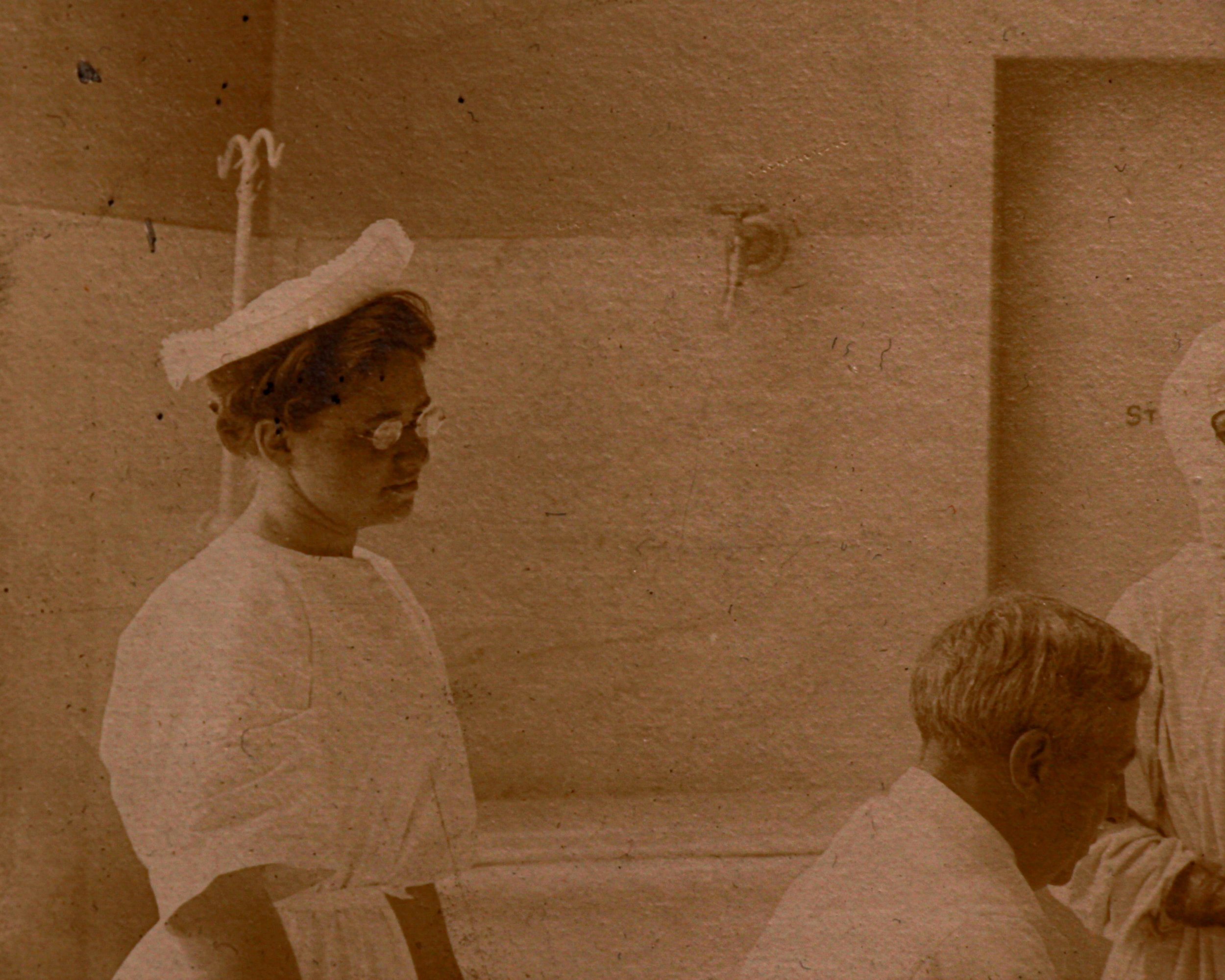
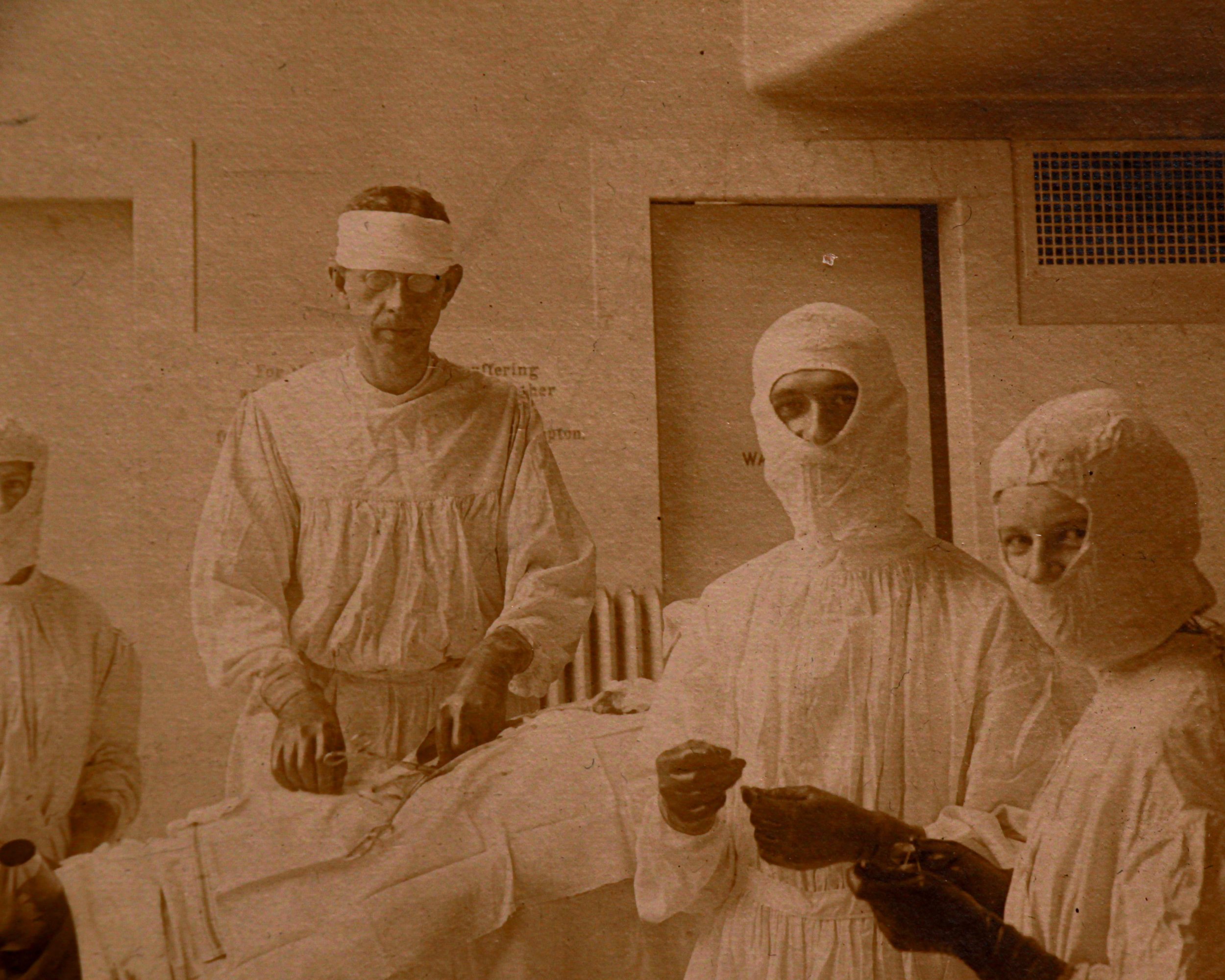
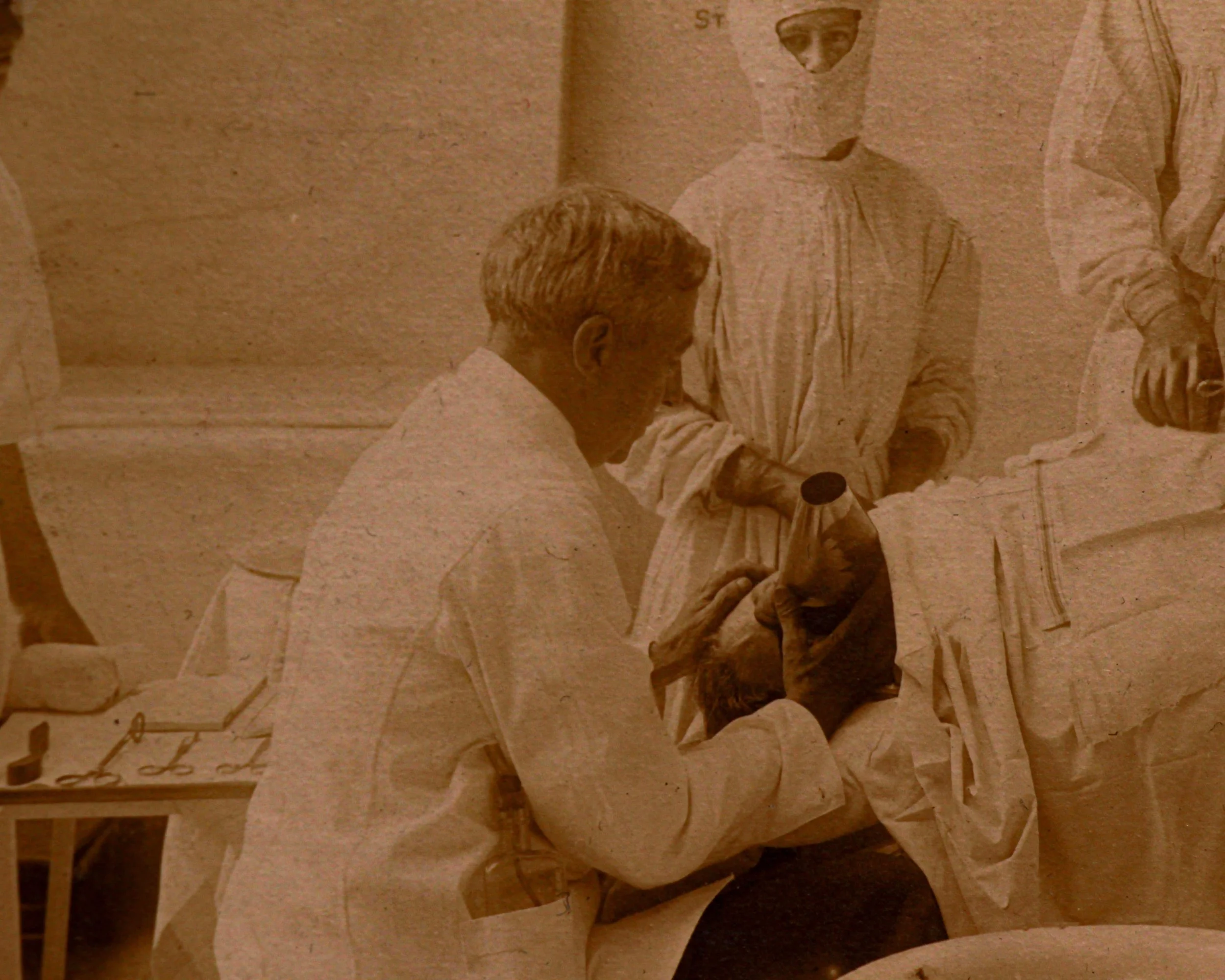

Here's a charmingly eerie glimpse into early 20th-century medicine: a mounted photograph taken in the operating room of Cooley Dickinson Hospital in Northampton, Massachusetts, circa 1910s. Six medical staff are seen mid-surgery-three of them suited up like turn-of-the-century ninjas, their faces completely veiled in gauze and cotton. There's a nurse in glasses calmly observing, an anesthetist holding a cone to the patient's face, and a surgeon with a blindfold bandana situation that raises a few questions.
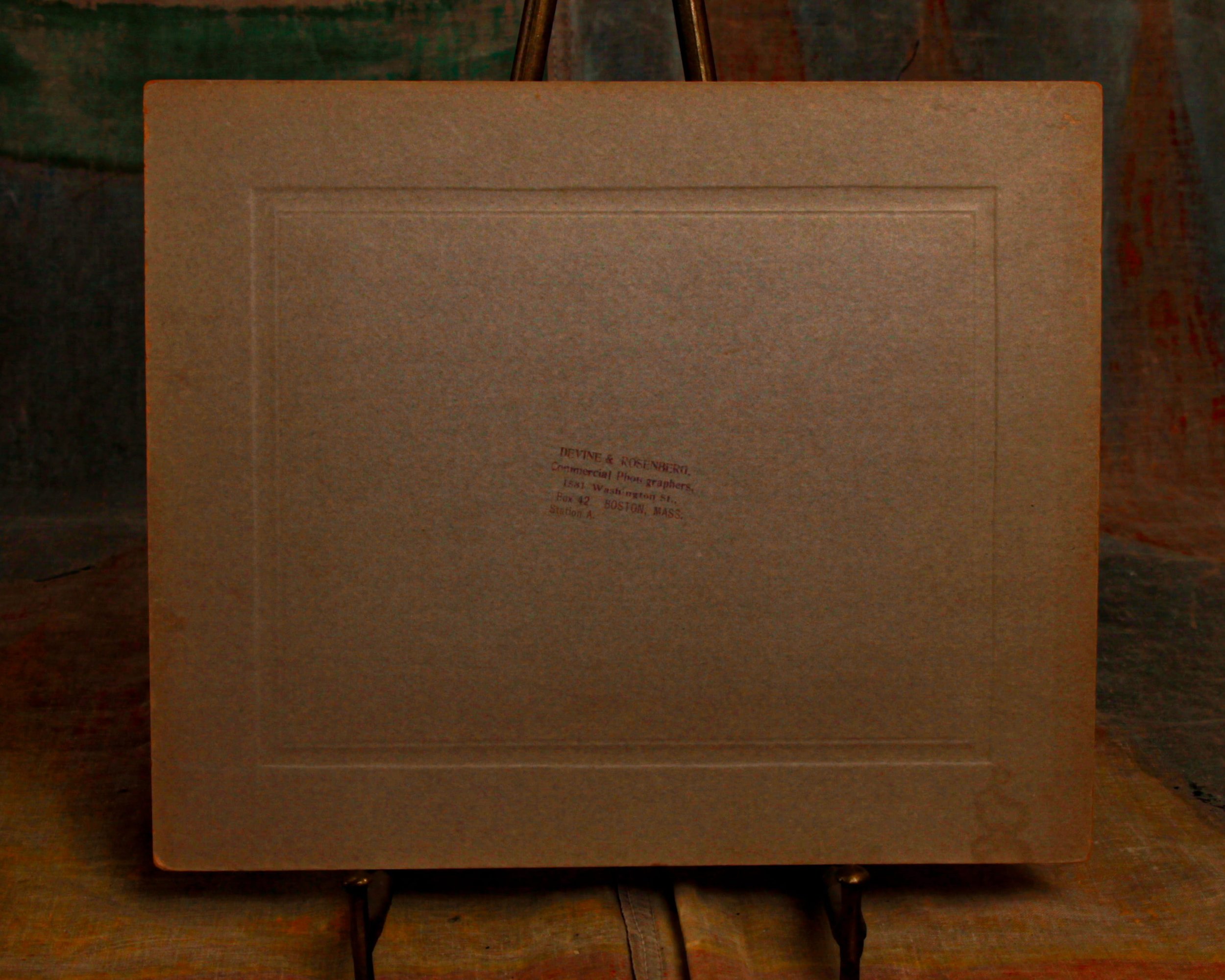
Printed by Devine & Rosenberg of Boston, this sepia-toned photo is affixed to its original studio mount, complete with bevel-edged framing.
Category History
Early 1900s surgery sits right at a turning point—half rooted in rough, practical tradition, half stepping into modern medicine. By this point, anesthesia was already in use, which meant operations could be more controlled and less frantic than in the 19th century. At the same time, antiseptic and aseptic practices were becoming standard, thanks to earlier breakthroughs in understanding infection. Surgeons were finally operating with cleaner hands, sterilized tools, and a clearer sense of what could go wrong.
Hospital operating rooms began to reflect that shift. Spaces were often tiled—walls, floors, even ceilings—so they could be washed down thoroughly. Light mattered, too. Large windows or overhead lamps were used to flood the room, making every detail visible. The layout was deliberate: instrument tables arranged within easy reach, assistants positioned with purpose, everything designed to reduce unnecessary movement.
There’s a noticeable change in how surgery was approached. It became less about speed alone and more about precision. Specialized instruments appeared, tailored to specific procedures, and surgical teams started to function as coordinated units rather than individuals improvising in the moment.
Still, it wasn’t what we’d call modern. Techniques varied, risks were high, and recovery could be unpredictable. But this era laid the groundwork. It’s where surgery began to look familiar—structured, methodical, and increasingly guided by knowledge rather than guesswork.
Here's a charmingly eerie glimpse into early 20th-century medicine: a mounted photograph taken in the operating room of Cooley Dickinson Hospital in Northampton, Massachusetts, circa 1910s. Six medical staff are seen mid-surgery-three of them suited up like turn-of-the-century ninjas, their faces completely veiled in gauze and cotton. There's a nurse in glasses calmly observing, an anesthetist holding a cone to the patient's face, and a surgeon with a blindfold bandana situation that raises a few questions.
Printed by Devine & Rosenberg of Boston, this sepia-toned photo is affixed to its original studio mount, complete with bevel-edged framing.
Category History
Early 1900s surgery sits right at a turning point—half rooted in rough, practical tradition, half stepping into modern medicine. By this point, anesthesia was already in use, which meant operations could be more controlled and less frantic than in the 19th century. At the same time, antiseptic and aseptic practices were becoming standard, thanks to earlier breakthroughs in understanding infection. Surgeons were finally operating with cleaner hands, sterilized tools, and a clearer sense of what could go wrong.
Hospital operating rooms began to reflect that shift. Spaces were often tiled—walls, floors, even ceilings—so they could be washed down thoroughly. Light mattered, too. Large windows or overhead lamps were used to flood the room, making every detail visible. The layout was deliberate: instrument tables arranged within easy reach, assistants positioned with purpose, everything designed to reduce unnecessary movement.
There’s a noticeable change in how surgery was approached. It became less about speed alone and more about precision. Specialized instruments appeared, tailored to specific procedures, and surgical teams started to function as coordinated units rather than individuals improvising in the moment.
Still, it wasn’t what we’d call modern. Techniques varied, risks were high, and recovery could be unpredictable. But this era laid the groundwork. It’s where surgery began to look familiar—structured, methodical, and increasingly guided by knowledge rather than guesswork.