
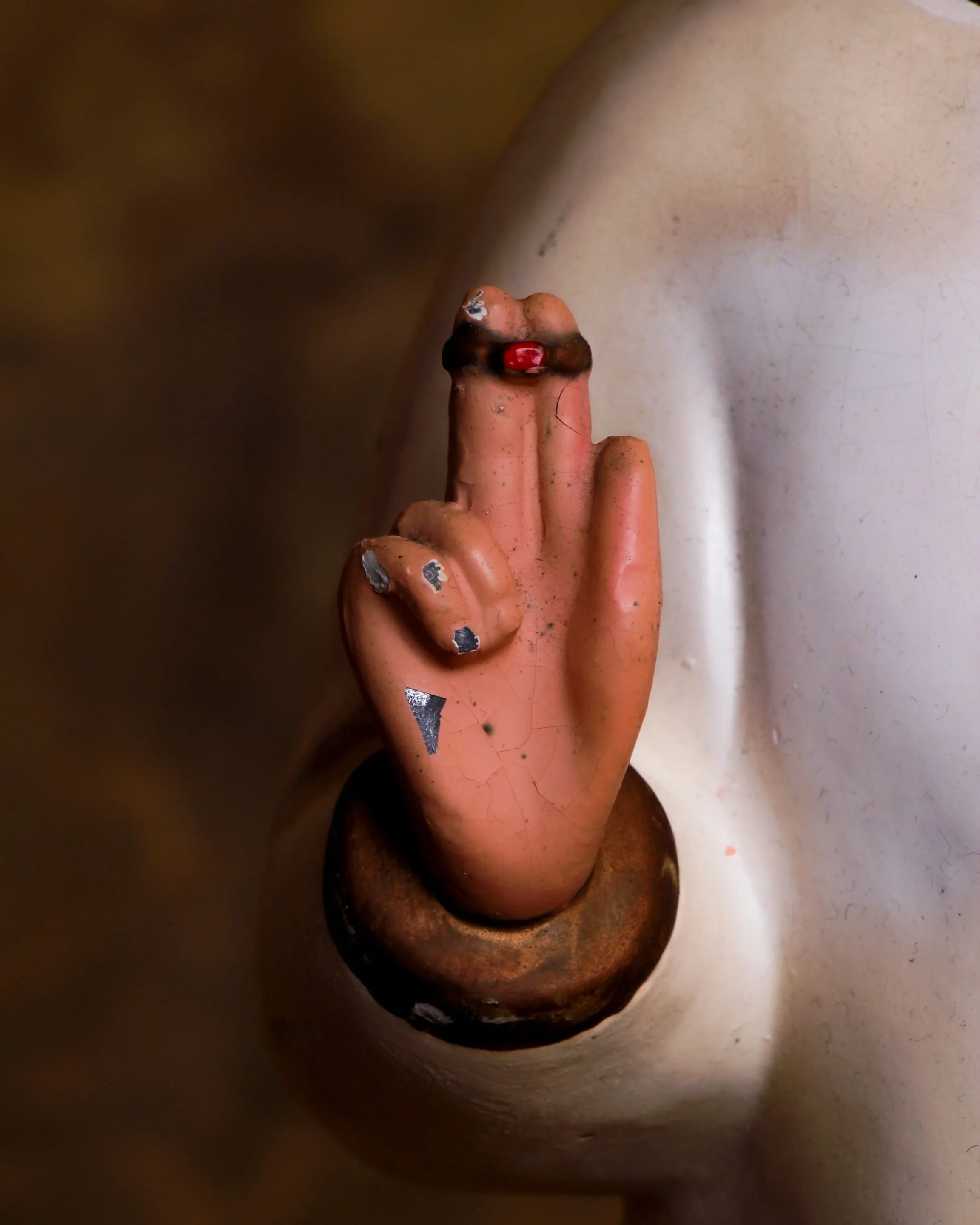
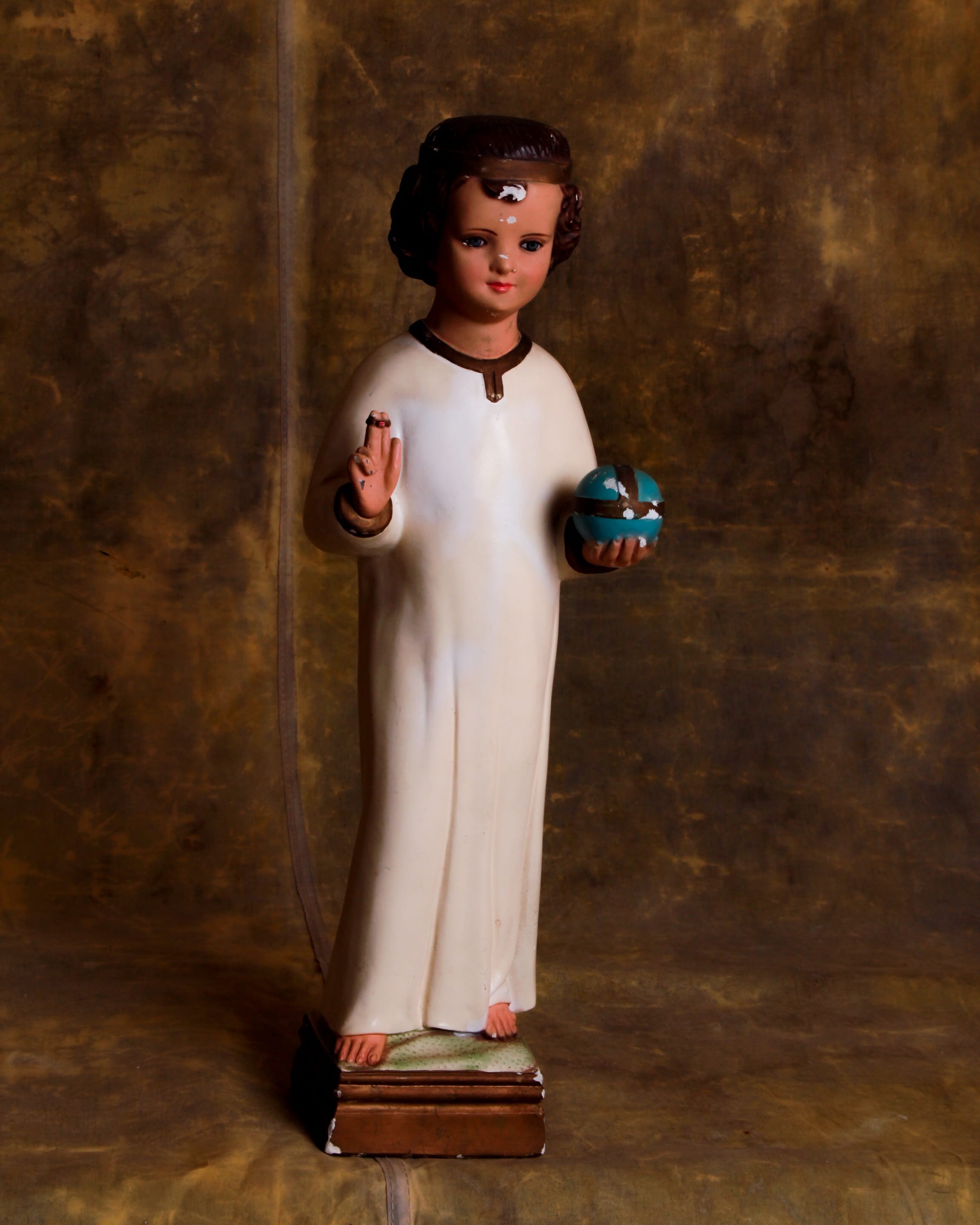
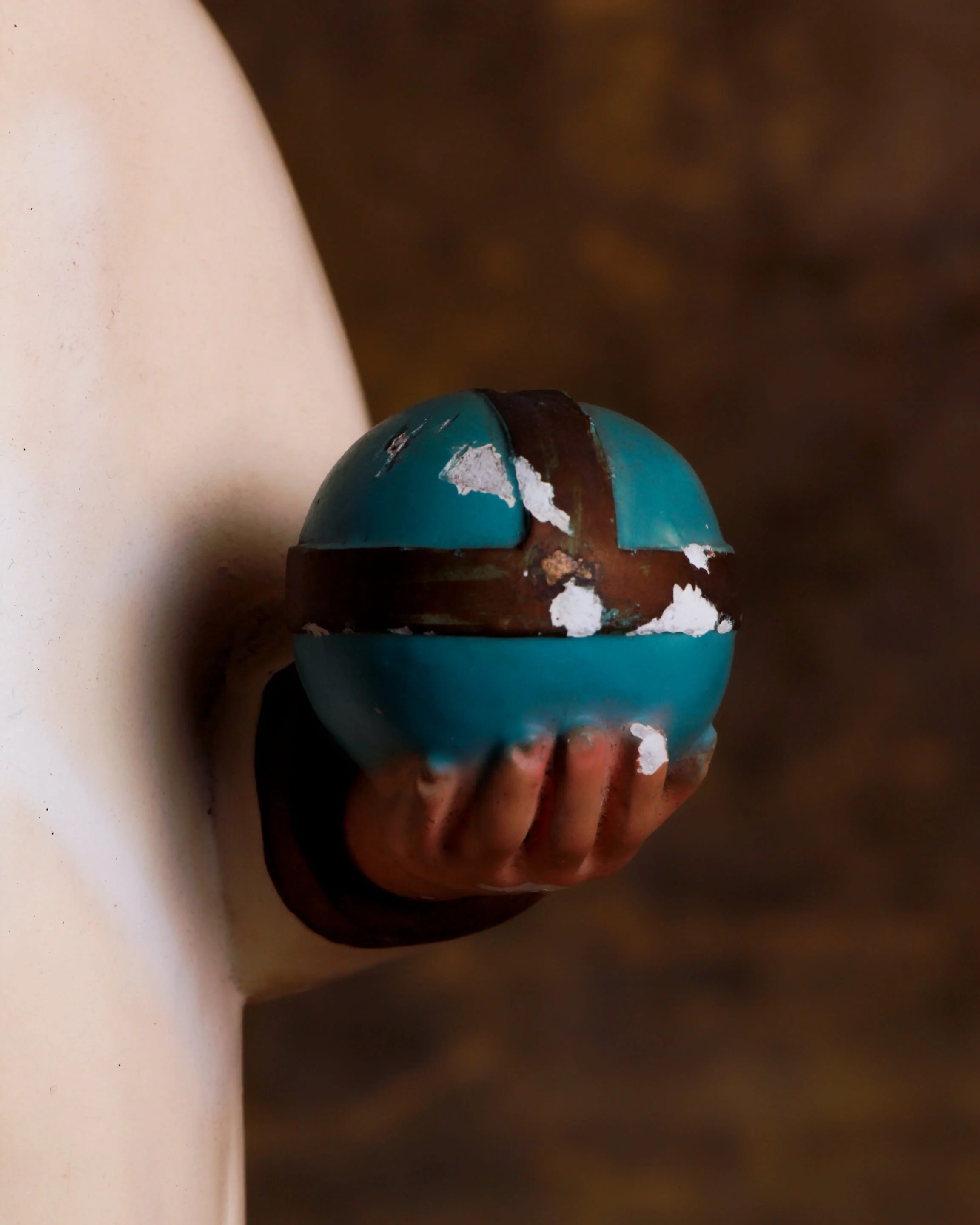
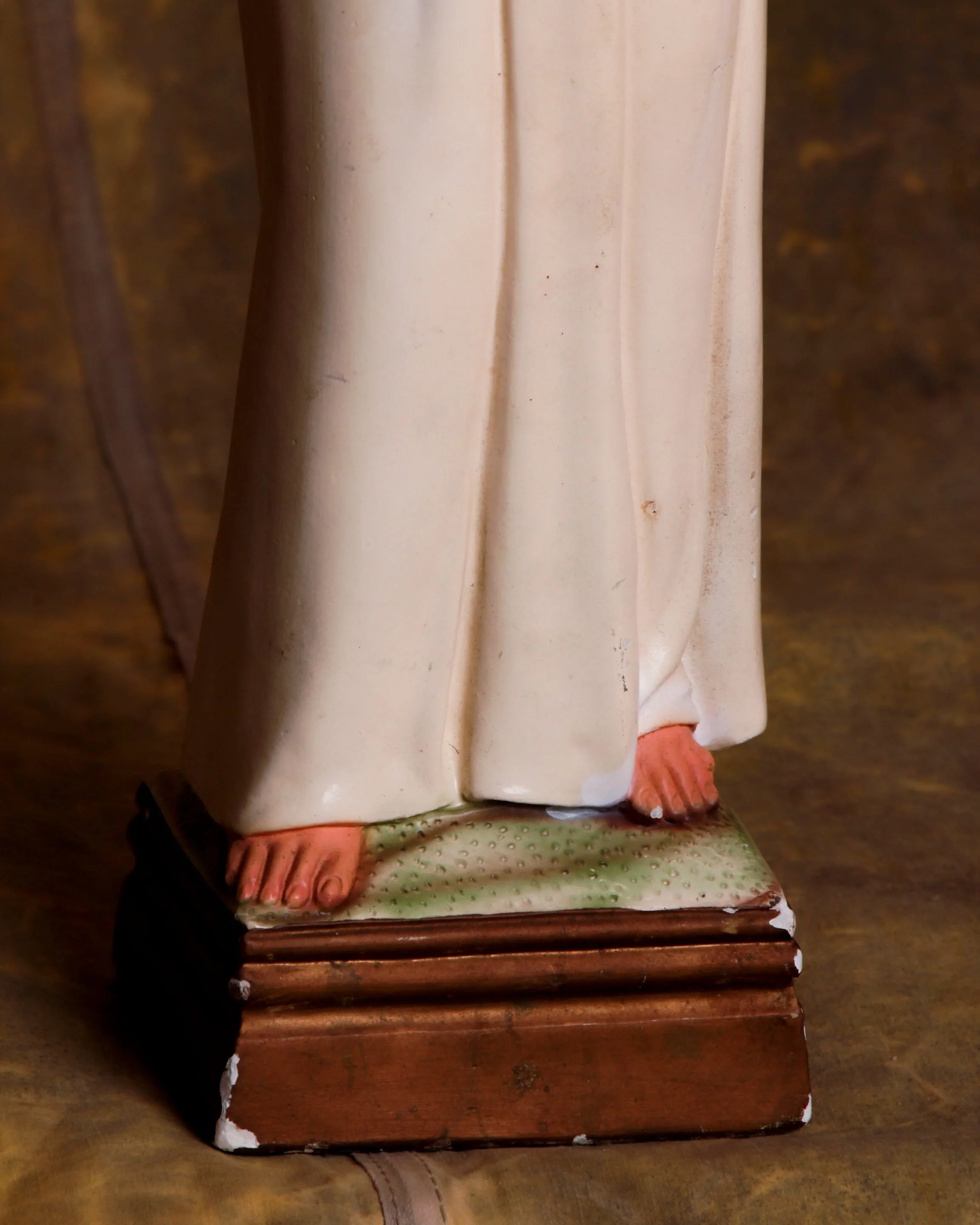
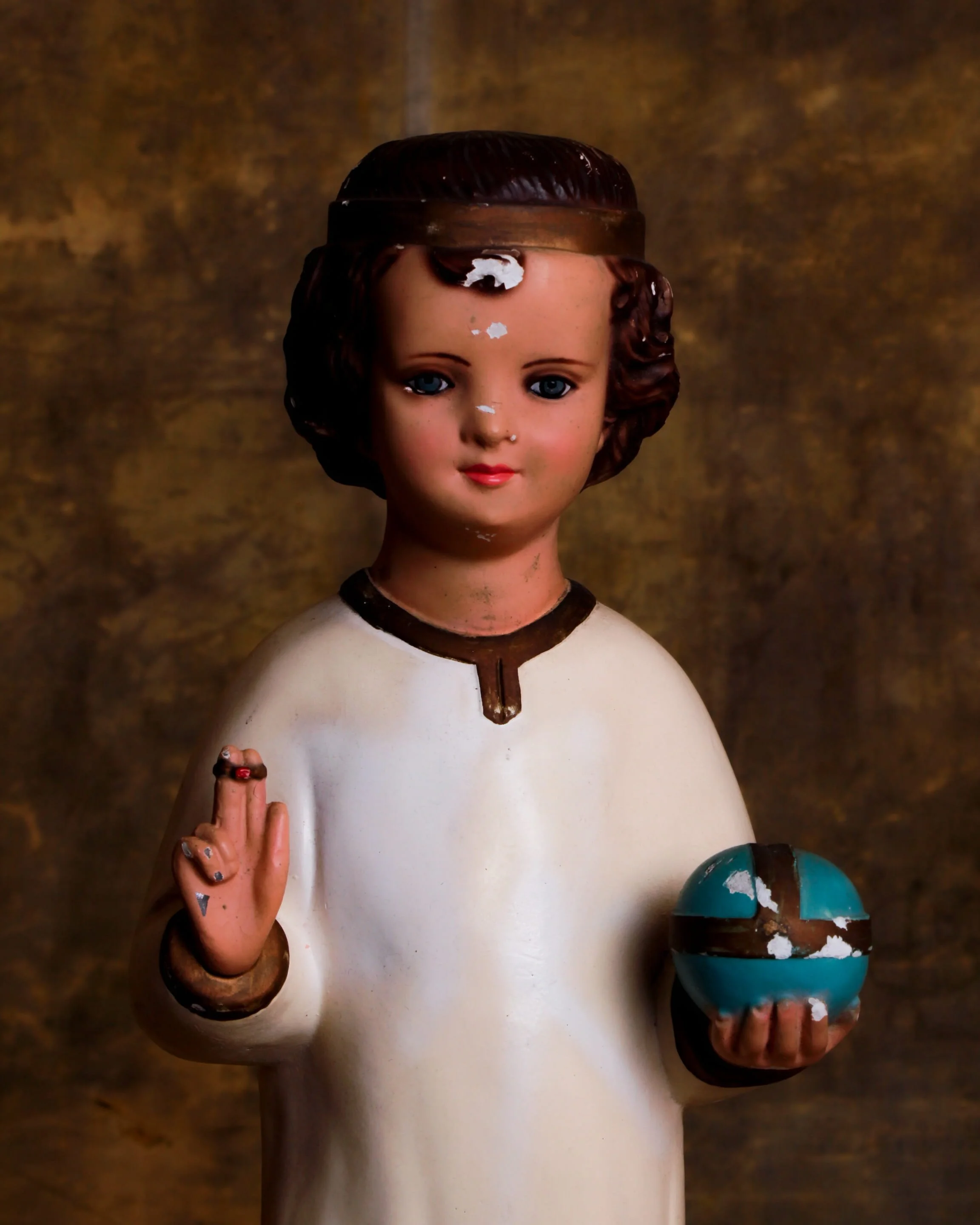
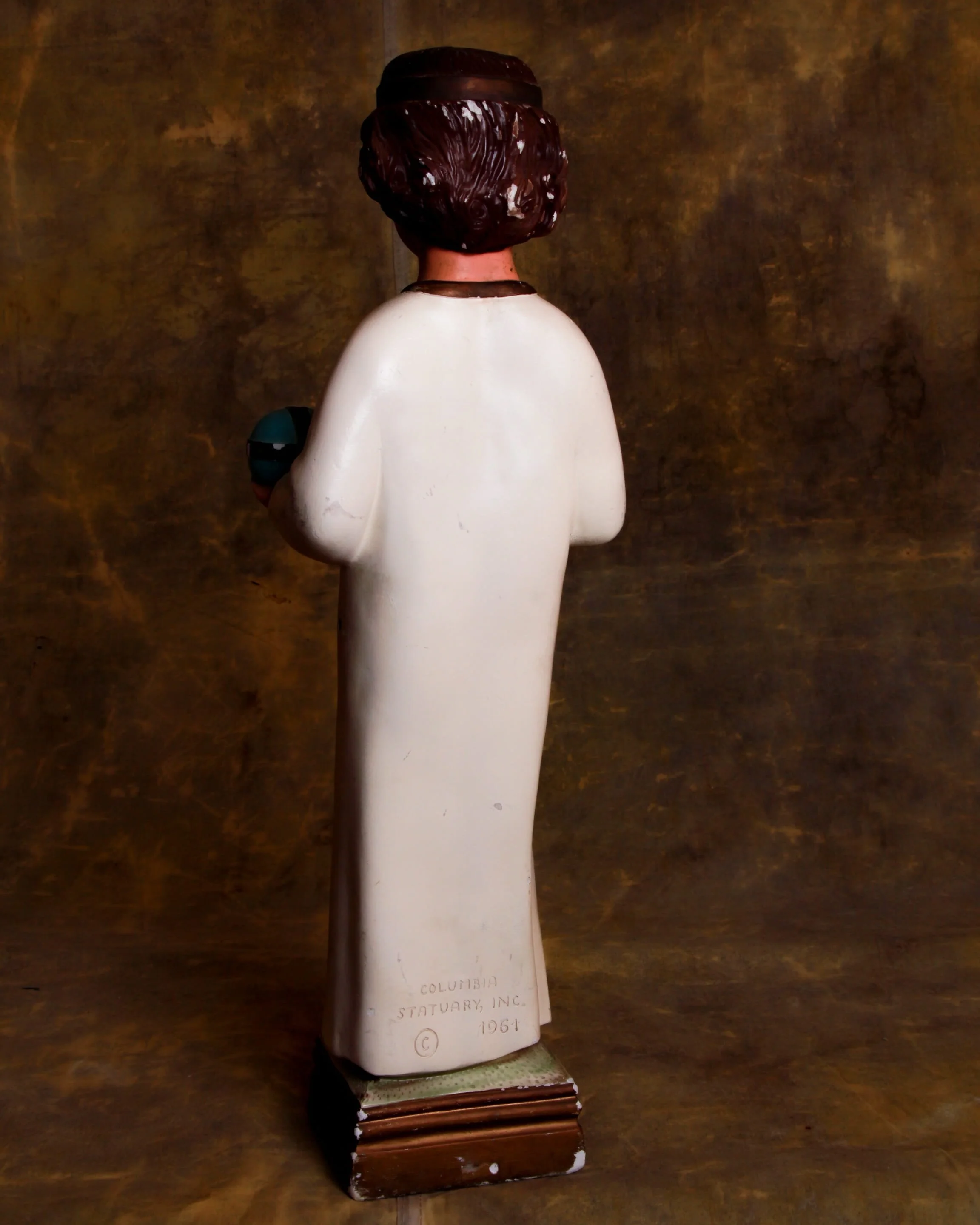
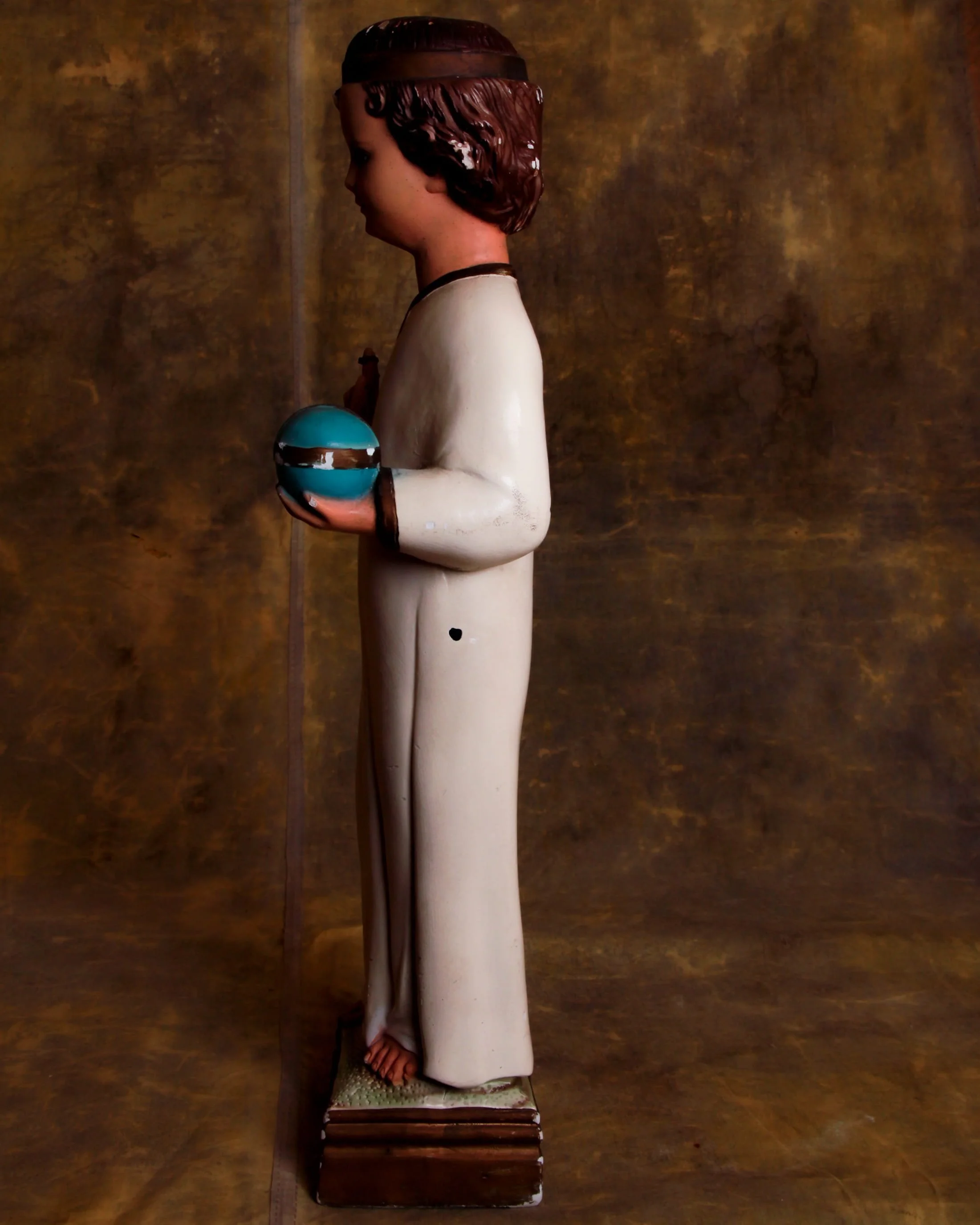
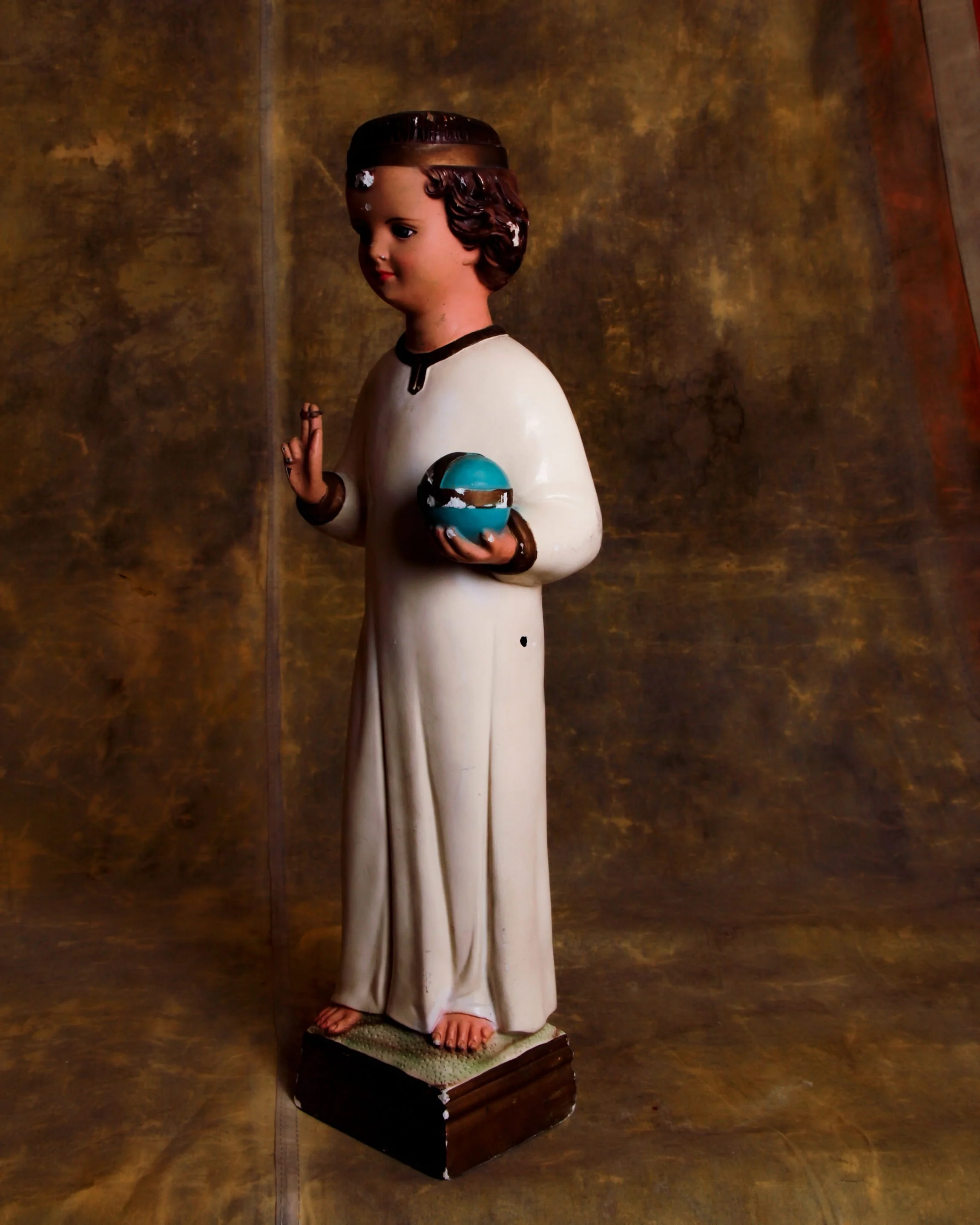
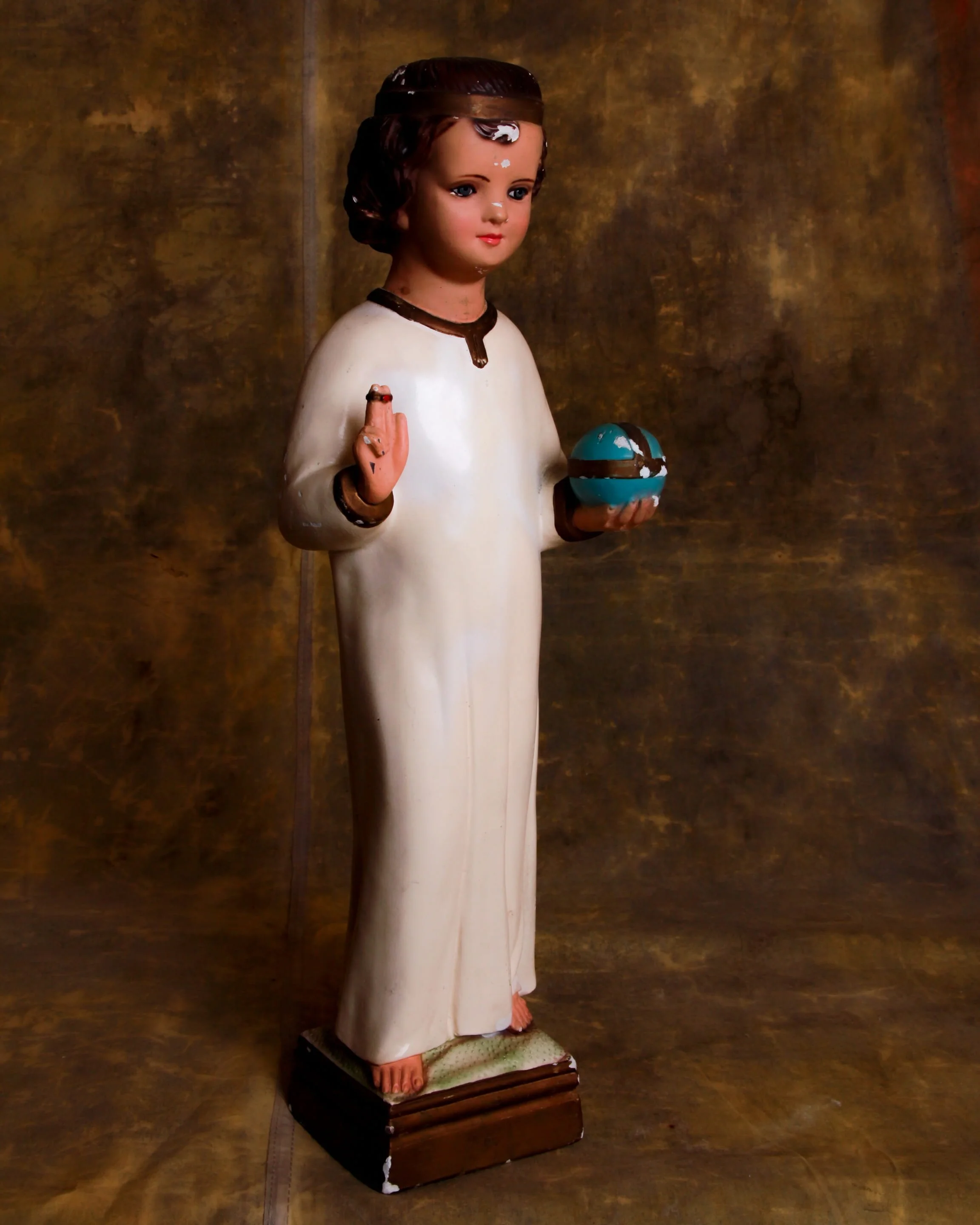
Few devotional figures are as instantly recognizable as the Infant Jesus of Prague, and this charming 1961 chalkware example captures the beloved icon with a warmth and simplicity that feels both reverent and approachable. Standing serenely upon its stepped base, the Christ Child raises one hand in blessing while cradling a small orb in the other, a traditional symbol of His sovereignty over the world. The result is a figure that balances sacred symbolism with an unmistakably human presence.
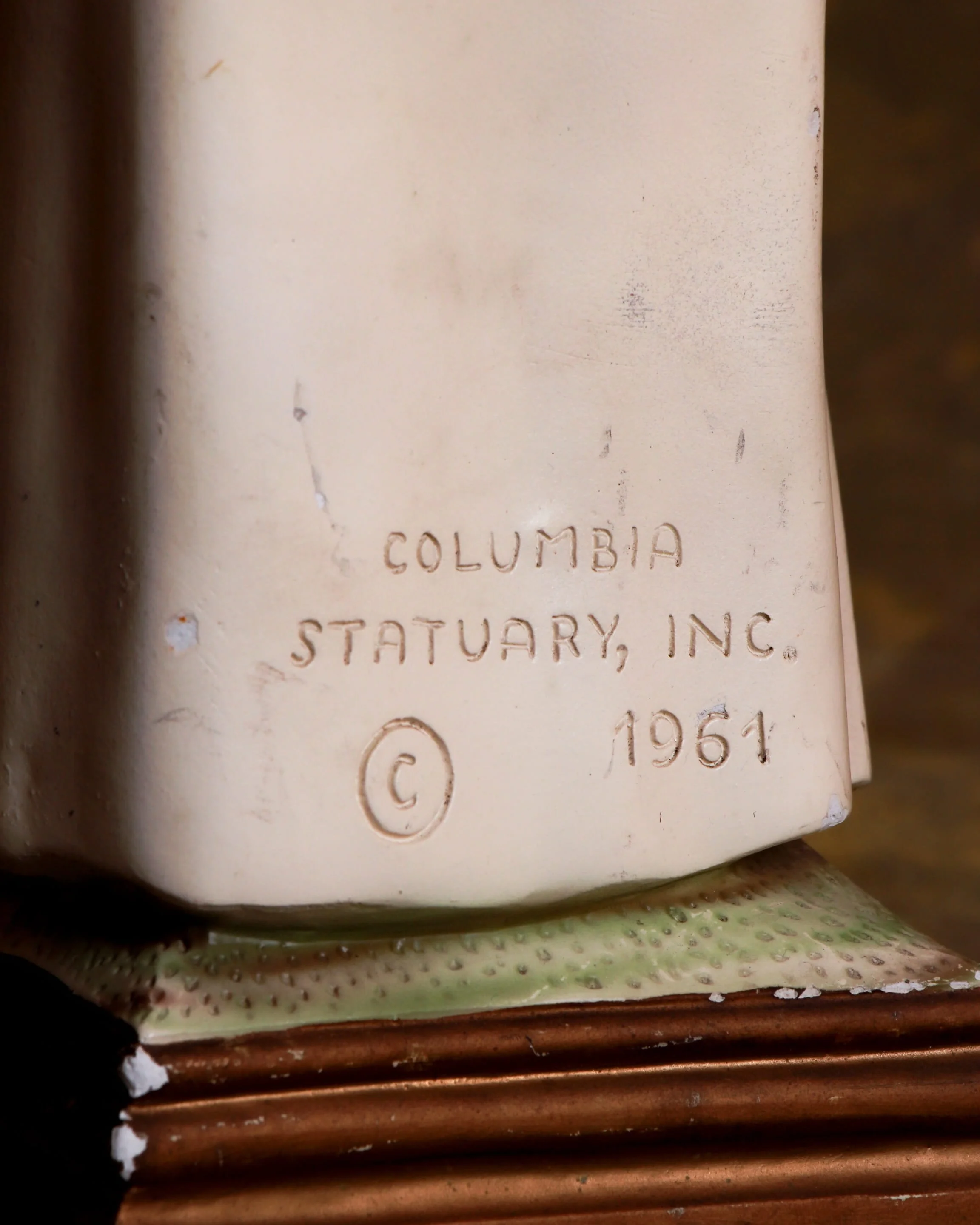
Produced by Columbia Statuary, Inc. in 1961, this statue reflects a period when religious figures were commonly found in family homes, schools, churches, and personal shrines. Unlike earlier hand-carved devotional objects, mid-century chalkware statues were created to bring faith into everyday spaces, offering households an affordable yet meaningful expression of devotion. Today, they serve as fascinating reminders of both religious practice and the decorative traditions of the era.
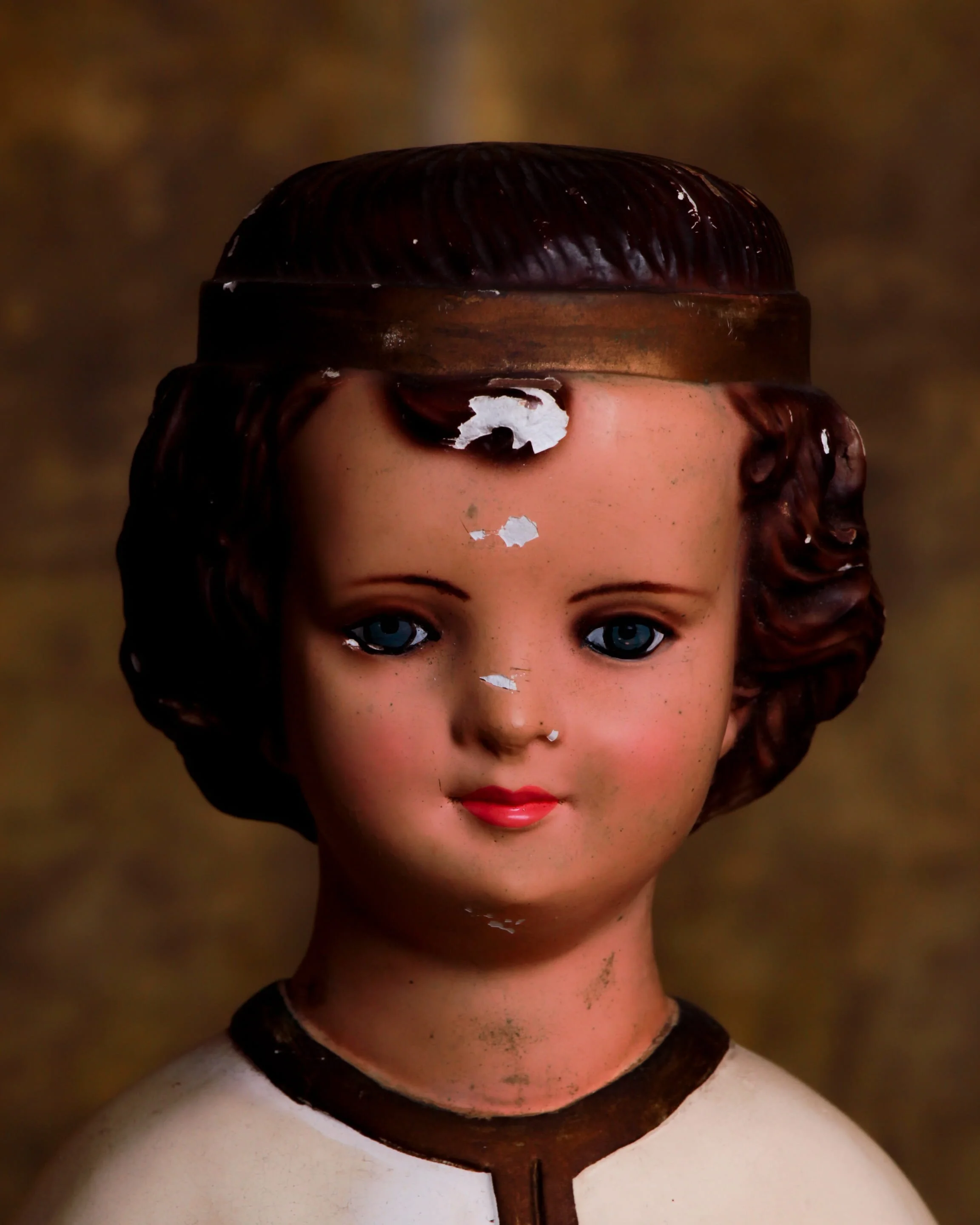
What makes this example especially appealing is its expressive face. With softly painted blue eyes, rosy cheeks, and carefully modeled curls, the figure possesses a gentle personality that draws you in. The bright blue orb provides a welcome splash of color against the crisp white robe, while the subtle gilt accents lend a touch of ceremony without feeling overly ornate.
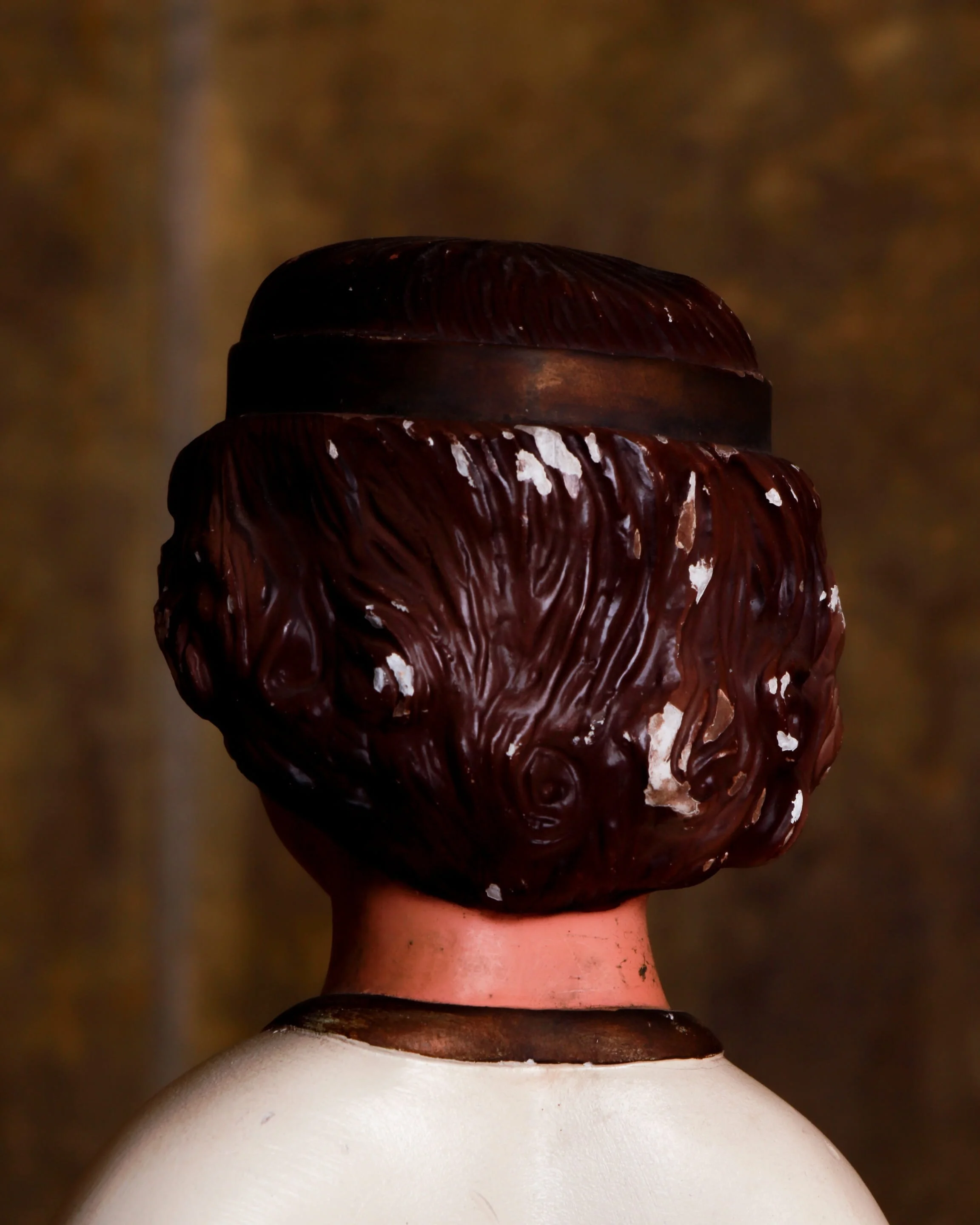
As expected from a piece that has spent more than six decades in the world, signs of age are present throughout. Minor chips, paint loss, surface wear, and scattered imperfections can be seen on the figure and base. Fortunately, these condition issues do little to diminish its visual appeal. In many ways, they add to its authenticity, reflecting years of display and devotion rather than neglect.
Whether you're a collector of religious folk art, mid-century devotional objects, or simply someone who appreciates pieces with a story to tell, this Child of Prague statue offers plenty of character. Equal parts sacred object and decorative sculpture, it remains a thoughtful and engaging survivor from a different chapter of American religious life.
Few devotional figures are as instantly recognizable as the Infant Jesus of Prague, and this charming 1961 chalkware example captures the beloved icon with a warmth and simplicity that feels both reverent and approachable. Standing serenely upon its stepped base, the Christ Child raises one hand in blessing while cradling a small orb in the other, a traditional symbol of His sovereignty over the world. The result is a figure that balances sacred symbolism with an unmistakably human presence.
Produced by Columbia Statuary, Inc. in 1961, this statue reflects a period when religious figures were commonly found in family homes, schools, churches, and personal shrines. Unlike earlier hand-carved devotional objects, mid-century chalkware statues were created to bring faith into everyday spaces, offering households an affordable yet meaningful expression of devotion. Today, they serve as fascinating reminders of both religious practice and the decorative traditions of the era.
What makes this example especially appealing is its expressive face. With softly painted blue eyes, rosy cheeks, and carefully modeled curls, the figure possesses a gentle personality that draws you in. The bright blue orb provides a welcome splash of color against the crisp white robe, while the subtle gilt accents lend a touch of ceremony without feeling overly ornate.
As expected from a piece that has spent more than six decades in the world, signs of age are present throughout. Minor chips, paint loss, surface wear, and scattered imperfections can be seen on the figure and base. Fortunately, these condition issues do little to diminish its visual appeal. In many ways, they add to its authenticity, reflecting years of display and devotion rather than neglect.
Whether you're a collector of religious folk art, mid-century devotional objects, or simply someone who appreciates pieces with a story to tell, this Child of Prague statue offers plenty of character. Equal parts sacred object and decorative sculpture, it remains a thoughtful and engaging survivor from a different chapter of American religious life.