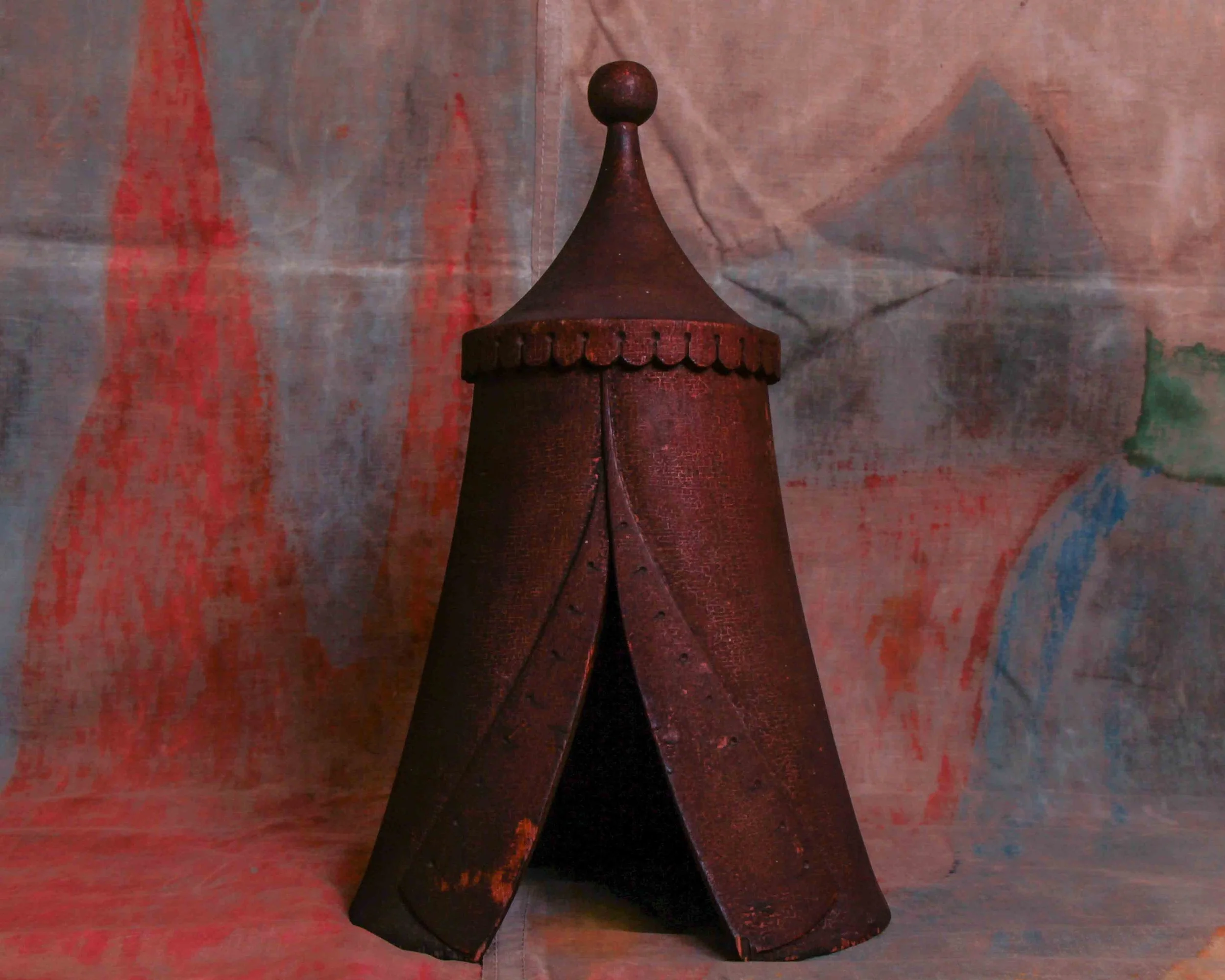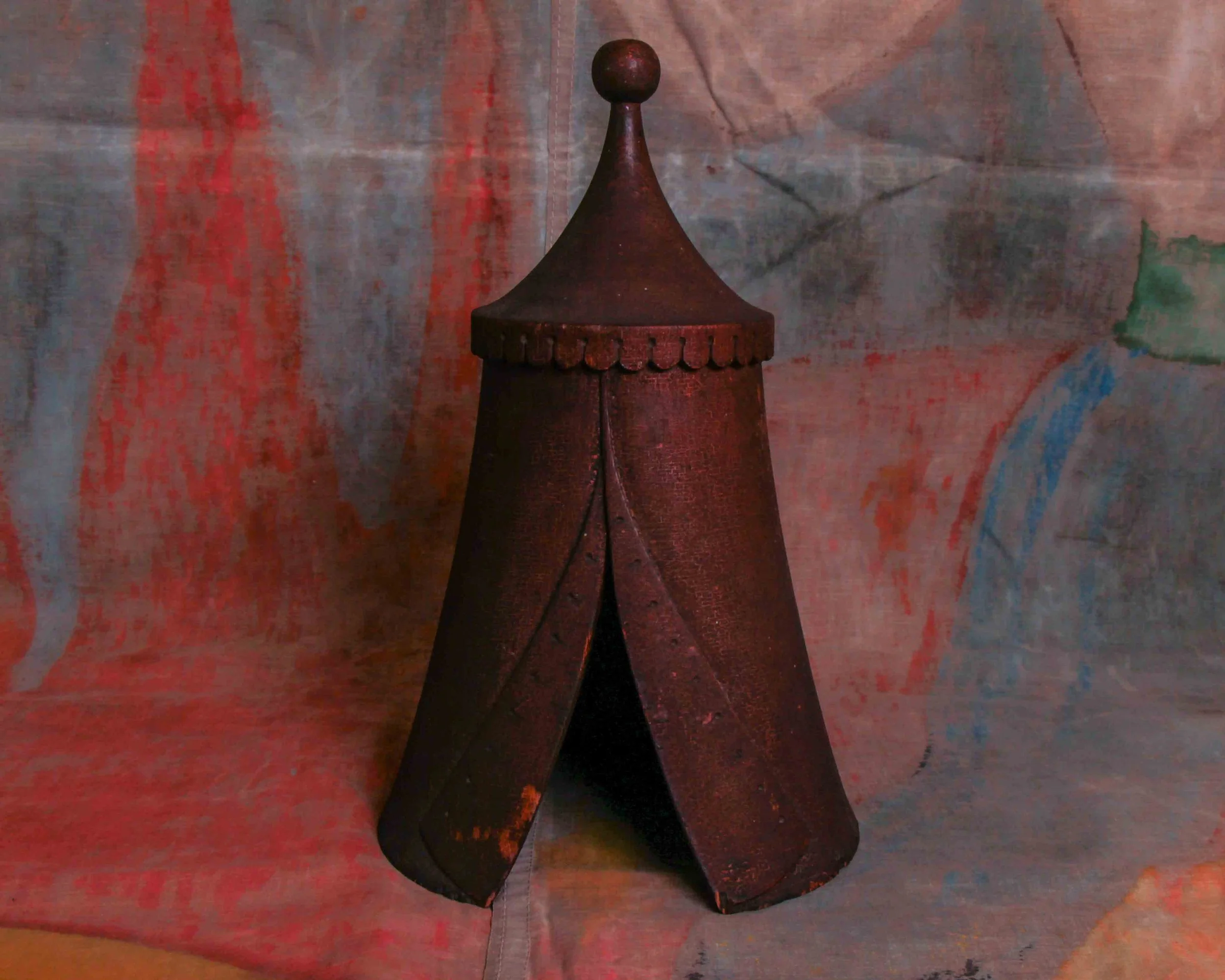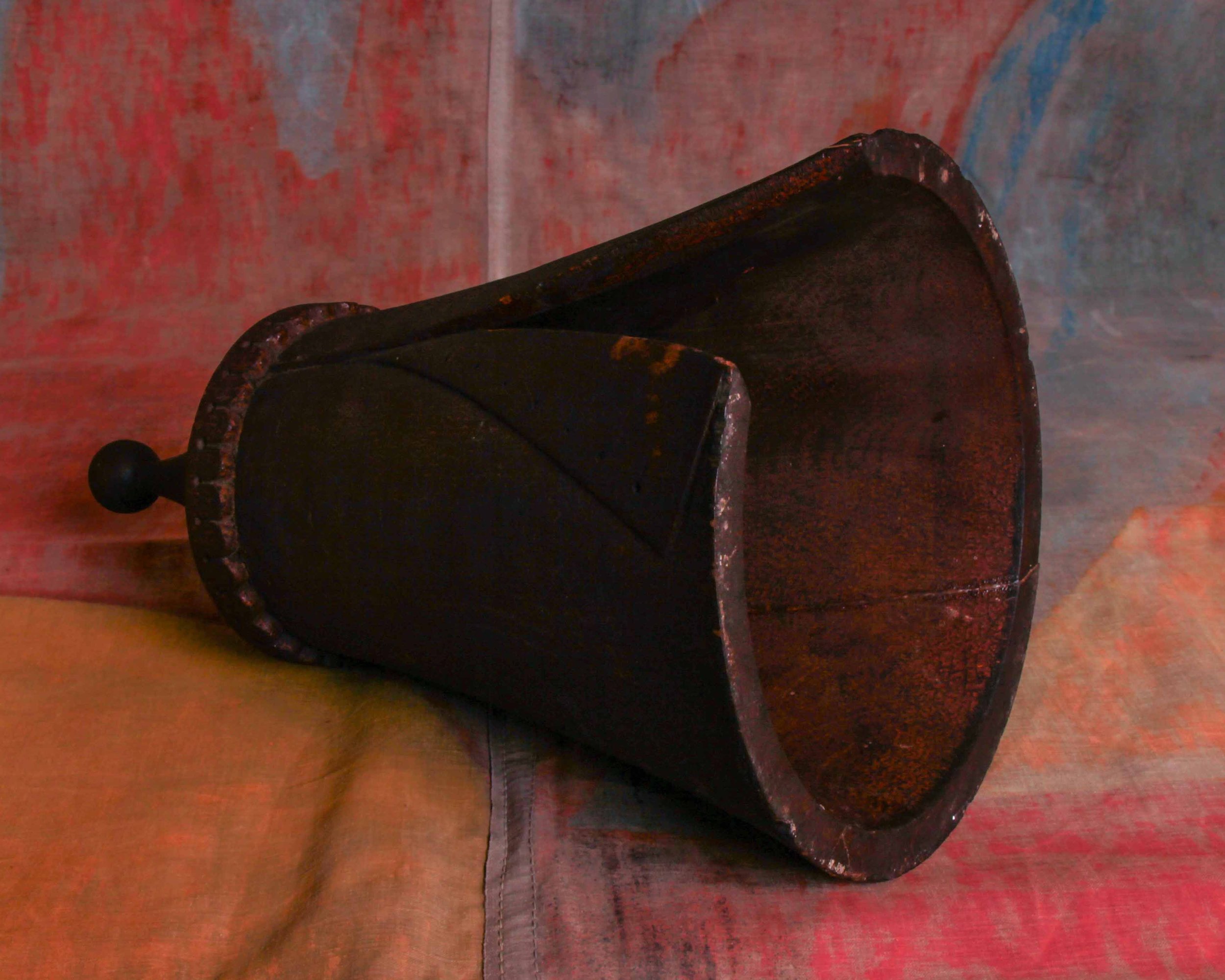
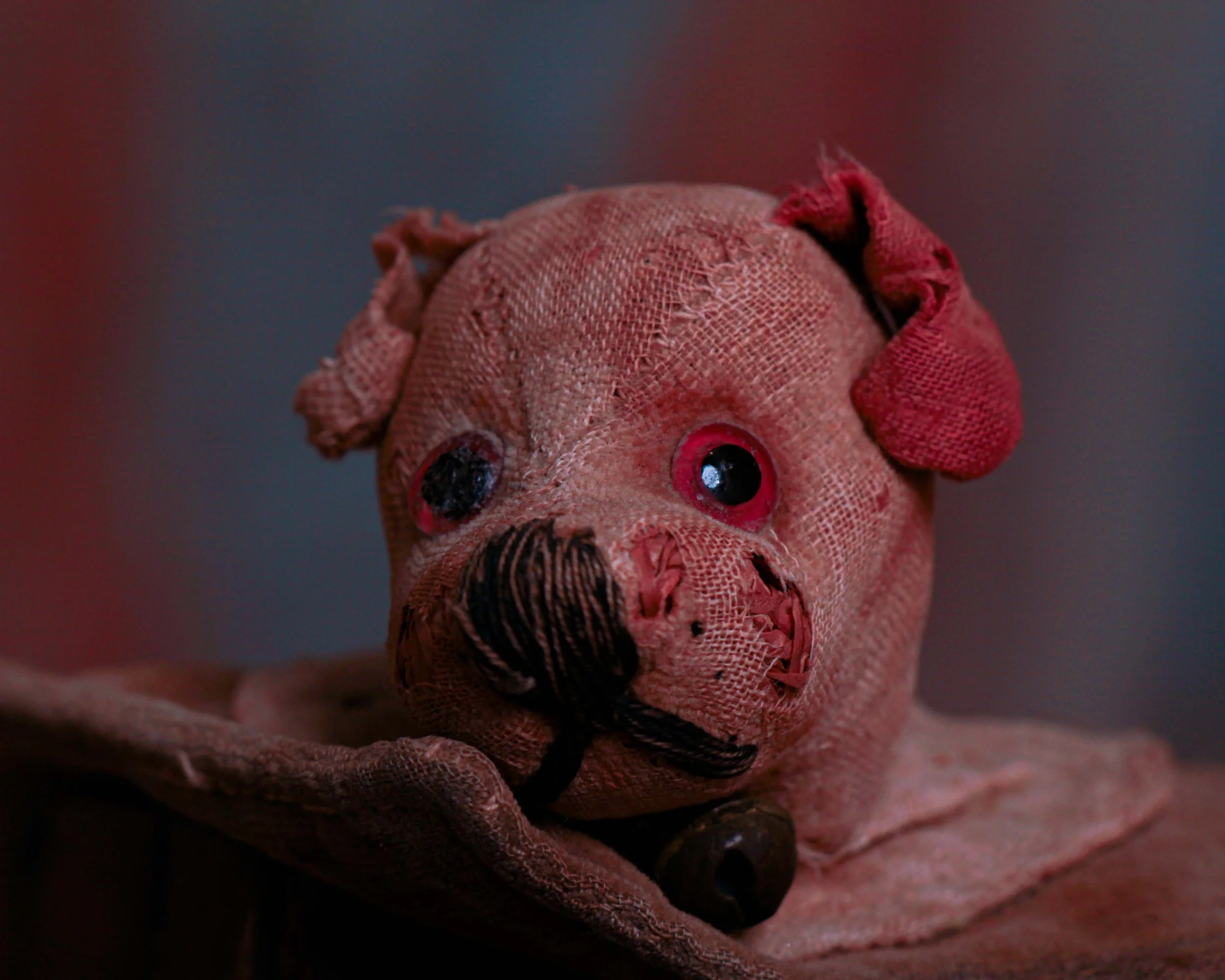
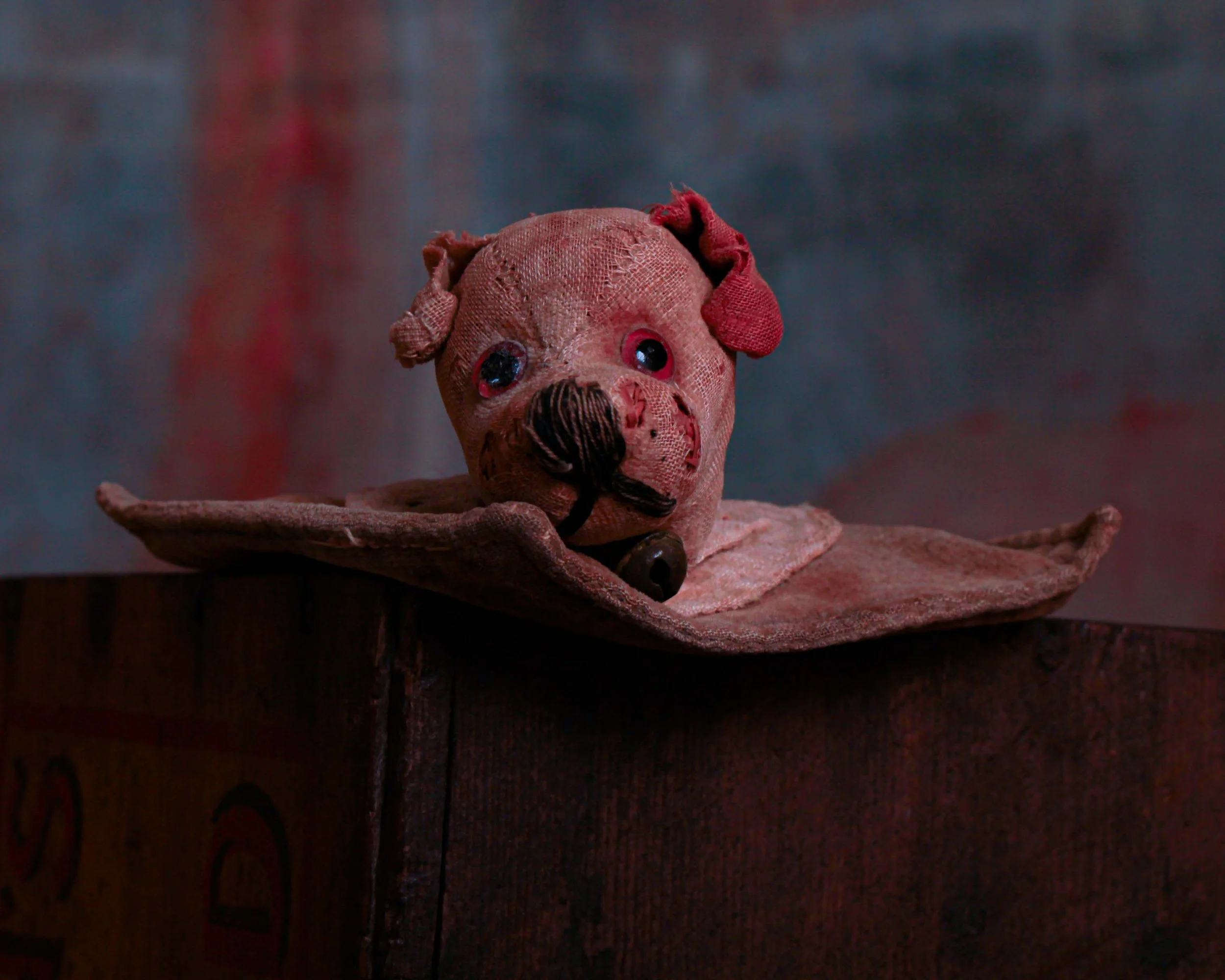
This little fellow earned his keep at the writing desk, not the toy box. Long before ballpoints and disposable pens, this cloth dog was the quiet assistant stationed beside an inkwell, patiently waiting to clean nibs, blot excess ink, and save more than a few handwritten letters from disaster.
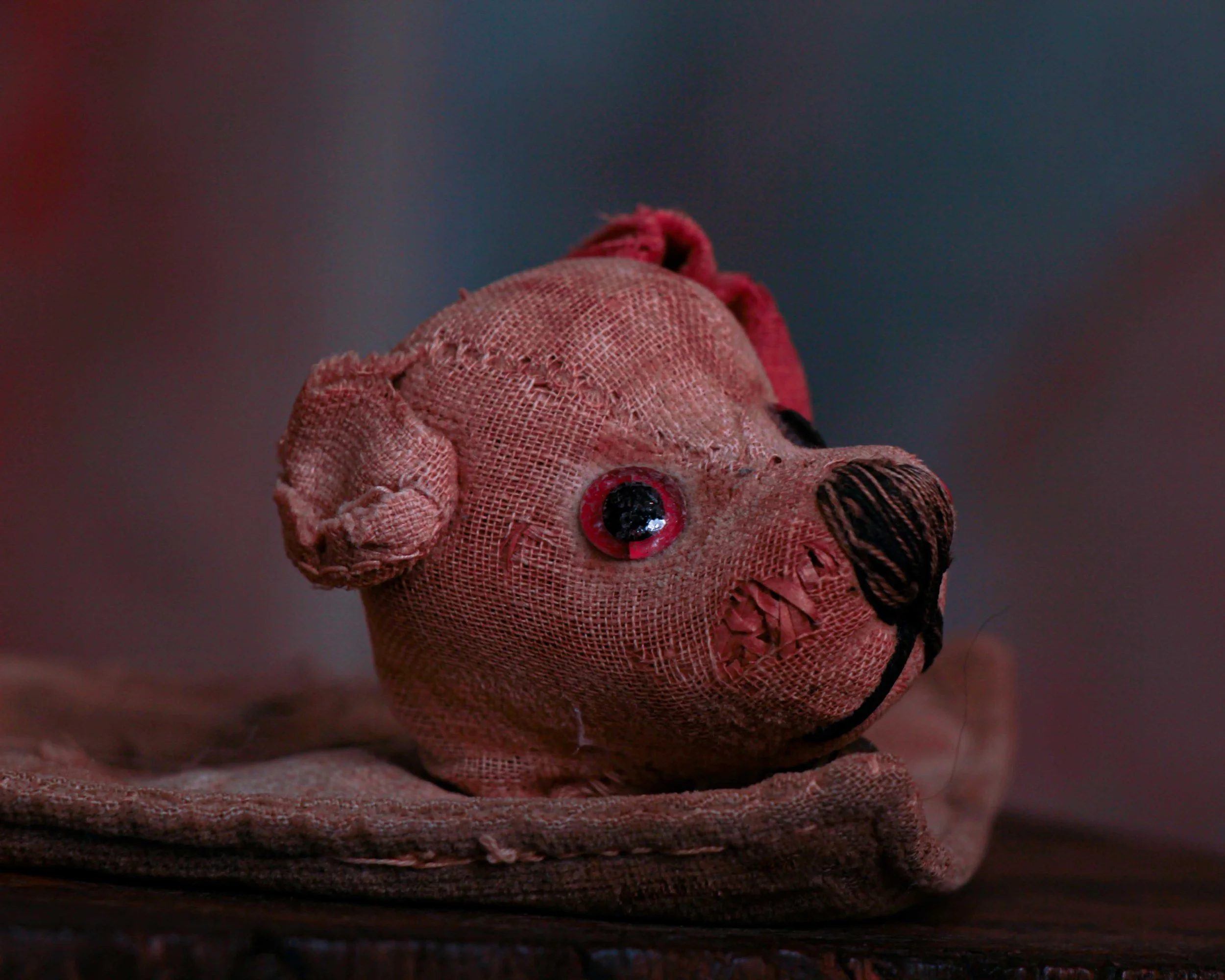
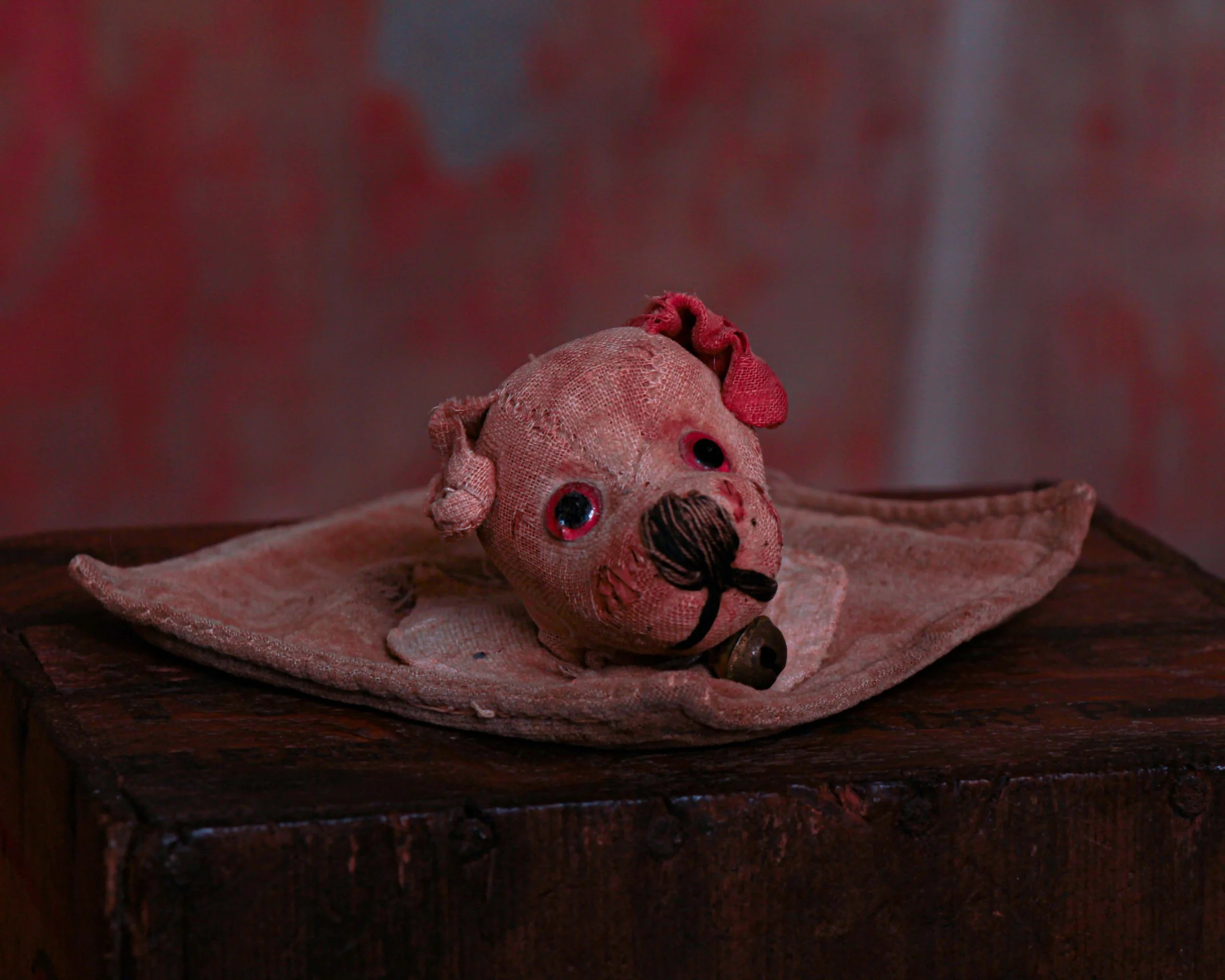
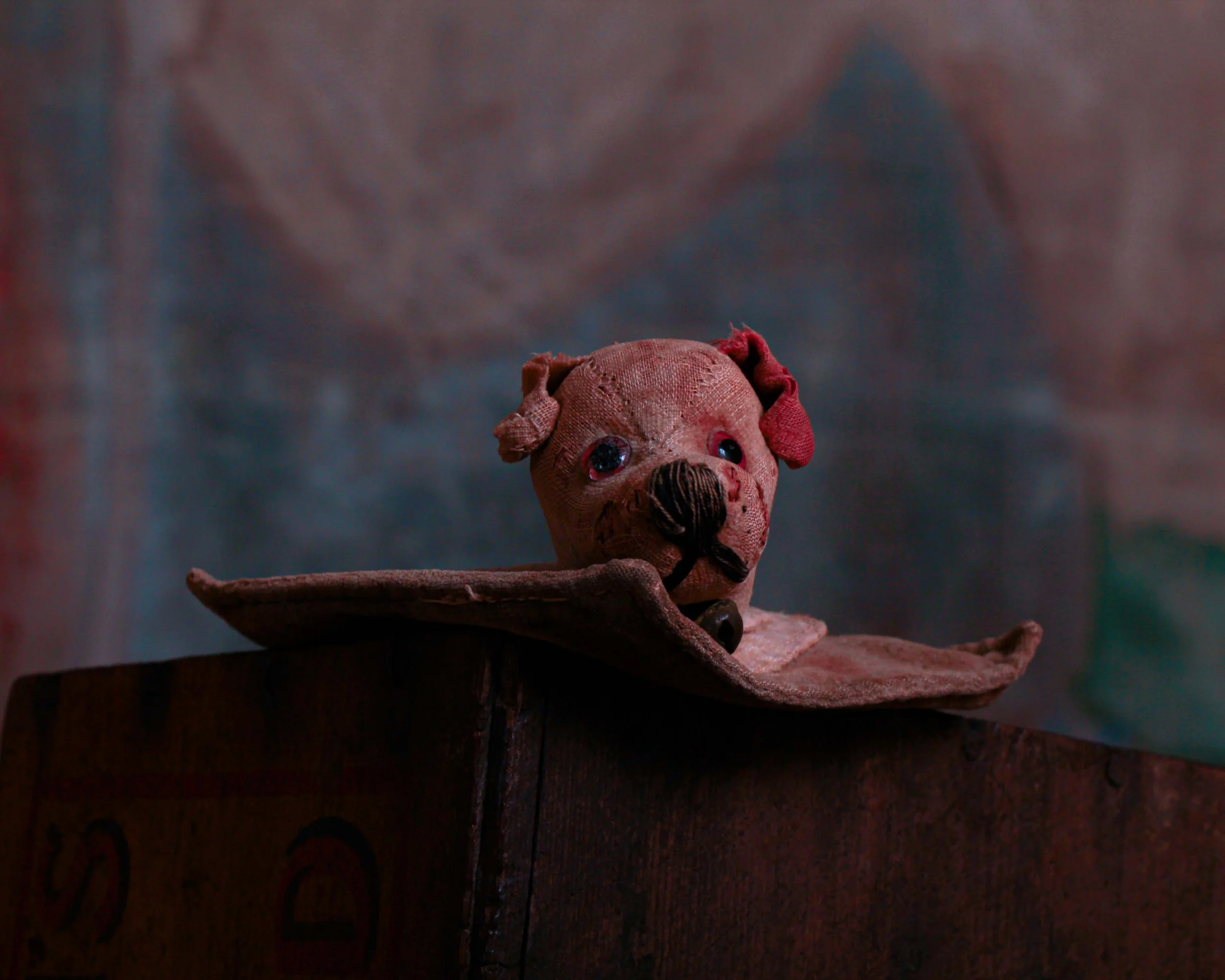
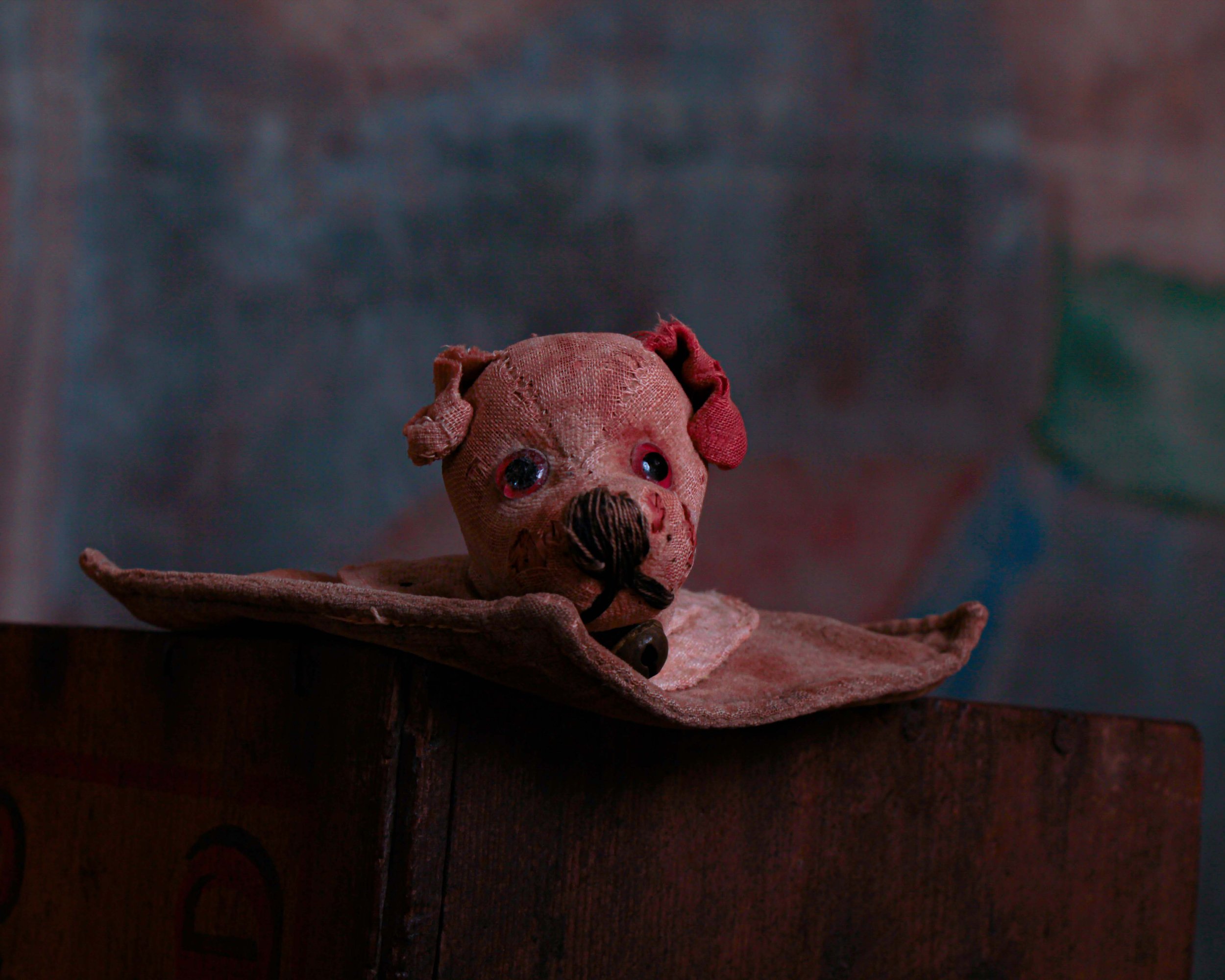
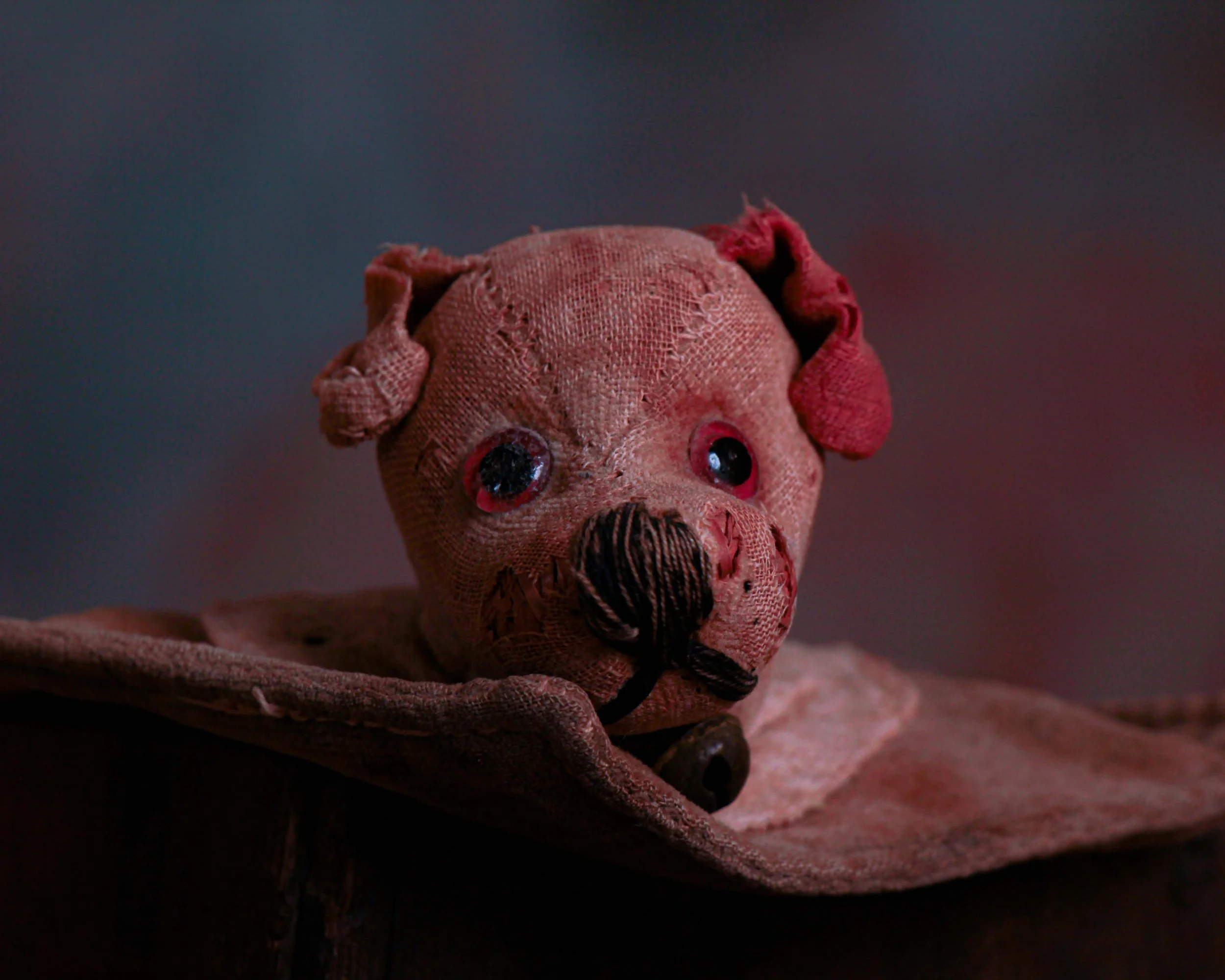
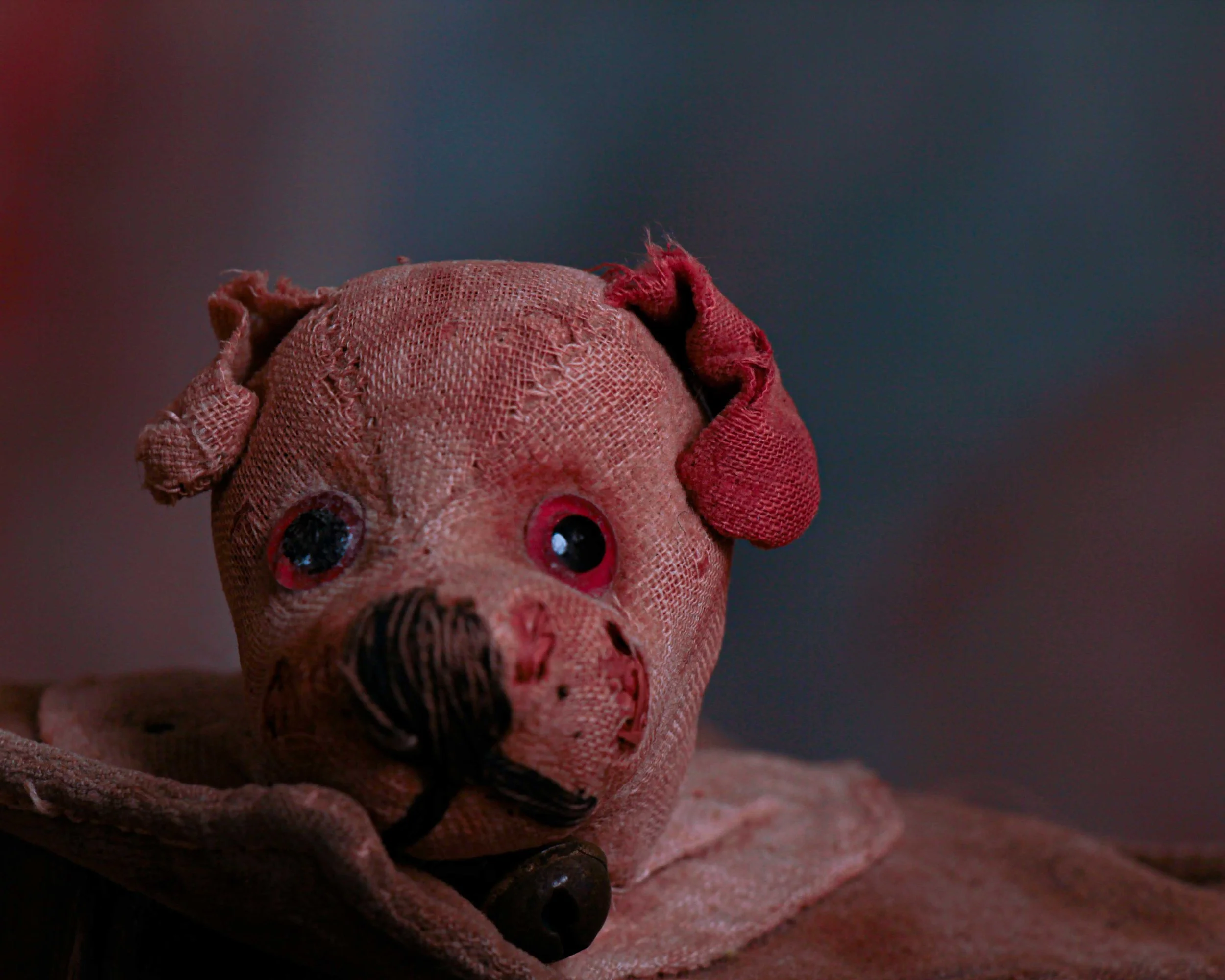
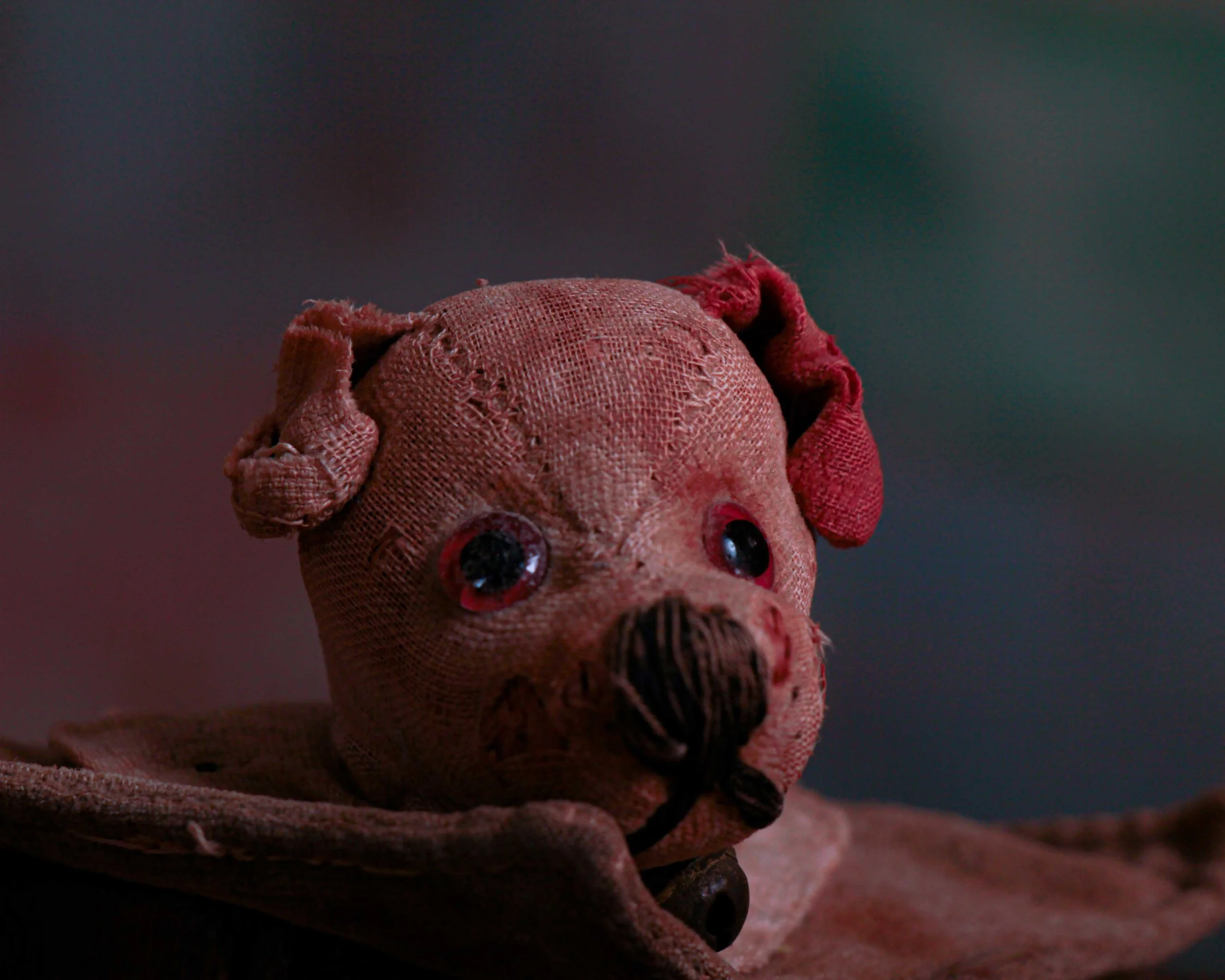
Shaped like a low, lounging pup, he’s stitched from soft, timeworn fabric with a gently padded body and a wonderfully expressive face. Glass eyes peer out with that slightly startled, eternally alert look, while a stitched snout and thread whiskers give him just enough personality to feel alive. The ears, mismatched and charmingly rumpled, only add to his endearing, well-used character.
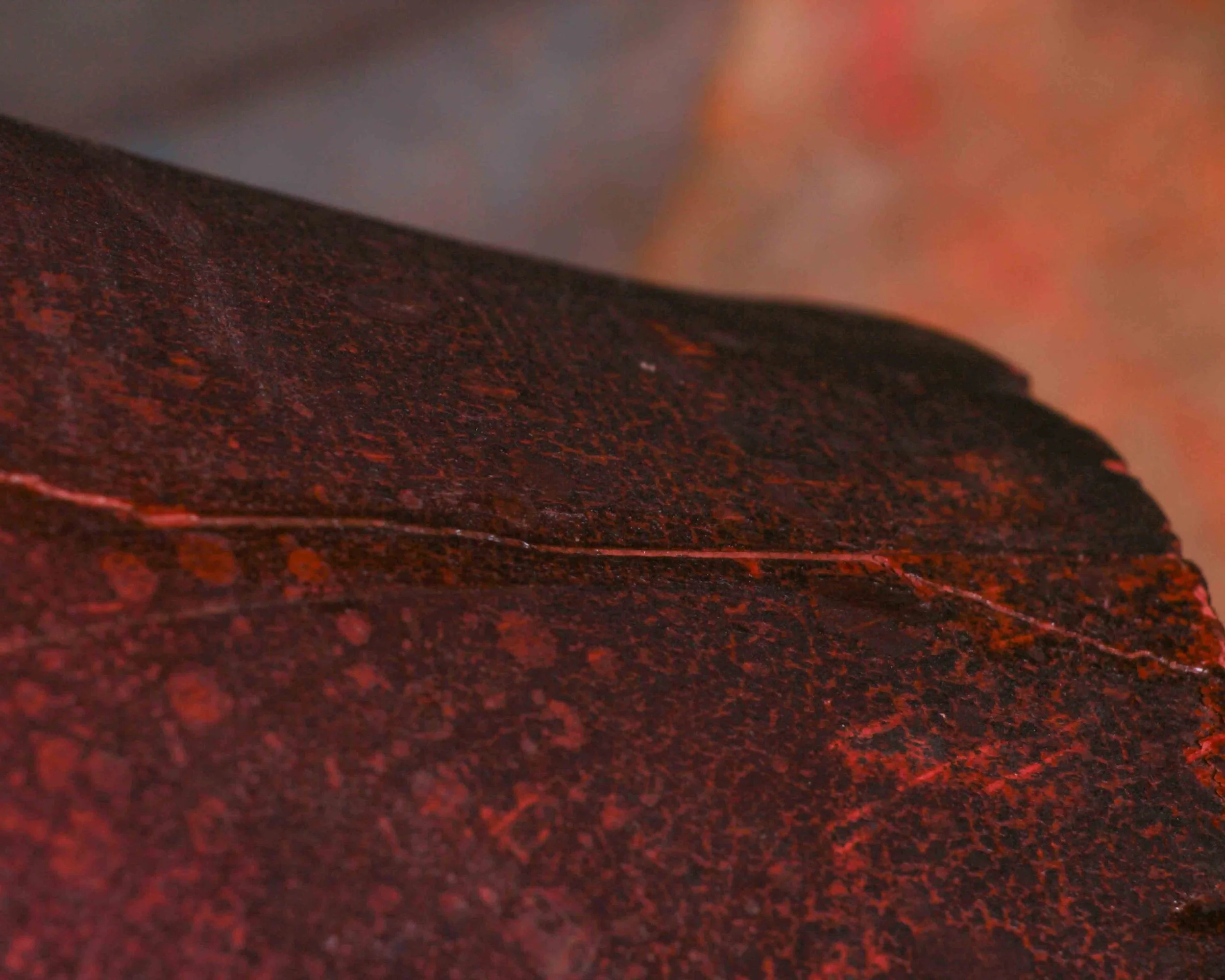
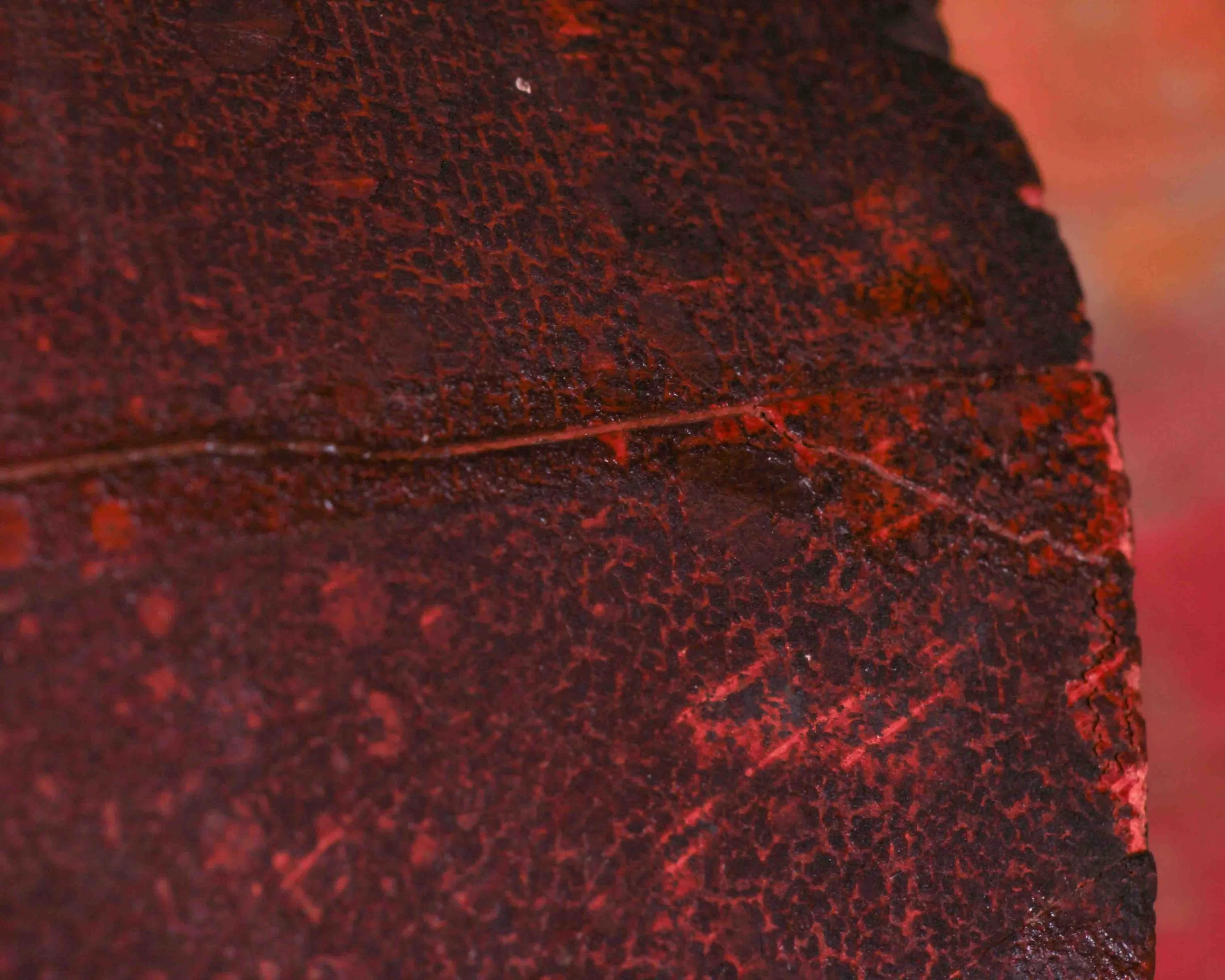
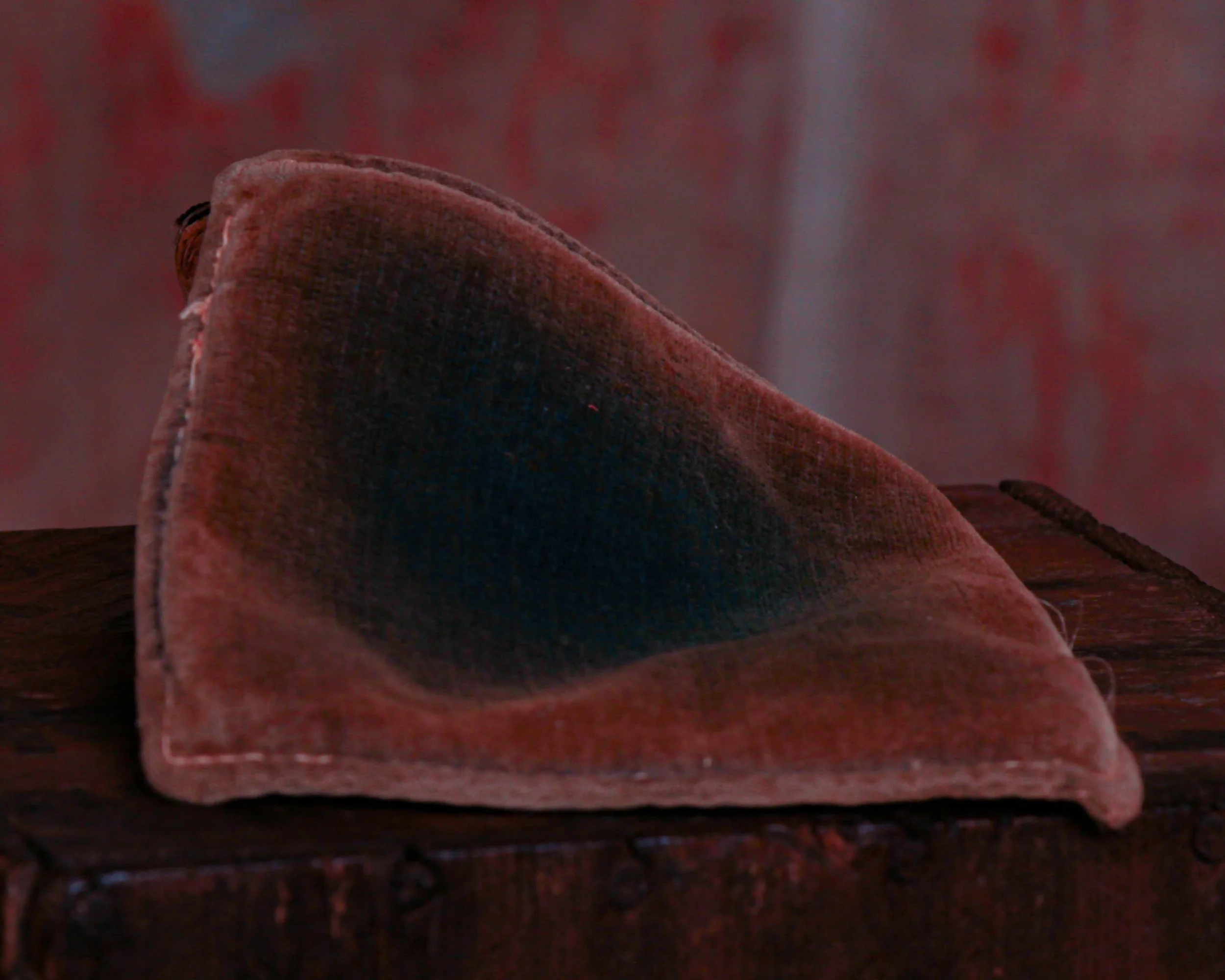
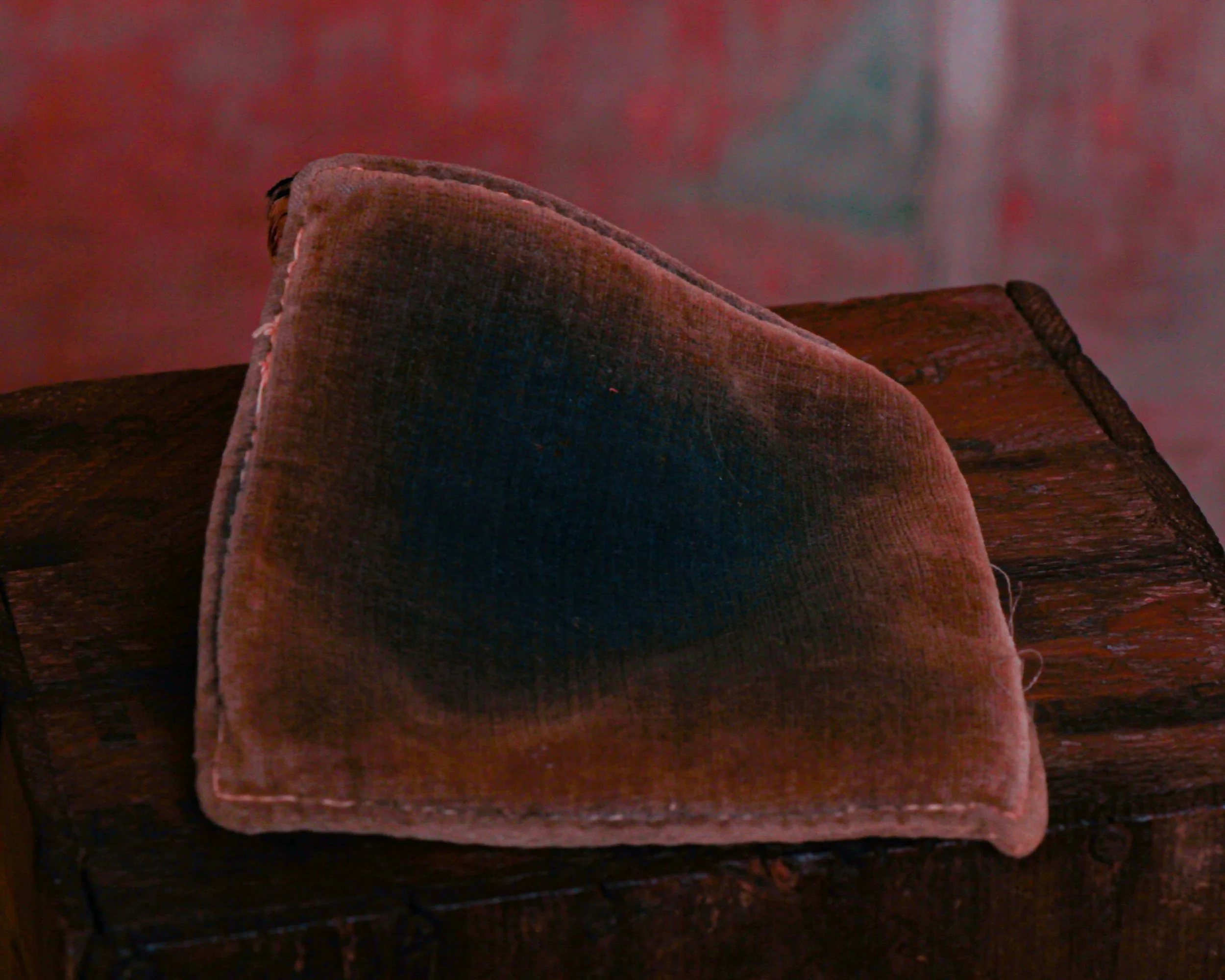
Flip him over and the story really comes through. The cloth shows deep inky shadows, especially along the underside and folds, where countless pen nibs were wiped clean after long hours of correspondence. These aren’t stains so much as evidence, proof of a working life spent in service to handwriting.
Category History
An ink pen wipe is one of those small, easily overlooked objects that quietly kept things running. In the days of dip pens and fountain pens, excess ink was a constant companion—too much on the nib meant blots, smears, and ruined pages. The pen wipe stepped in as a simple solution: a layered pad of fabric, often wool or felt, stitched together so writers could quickly clean the nib between dips.
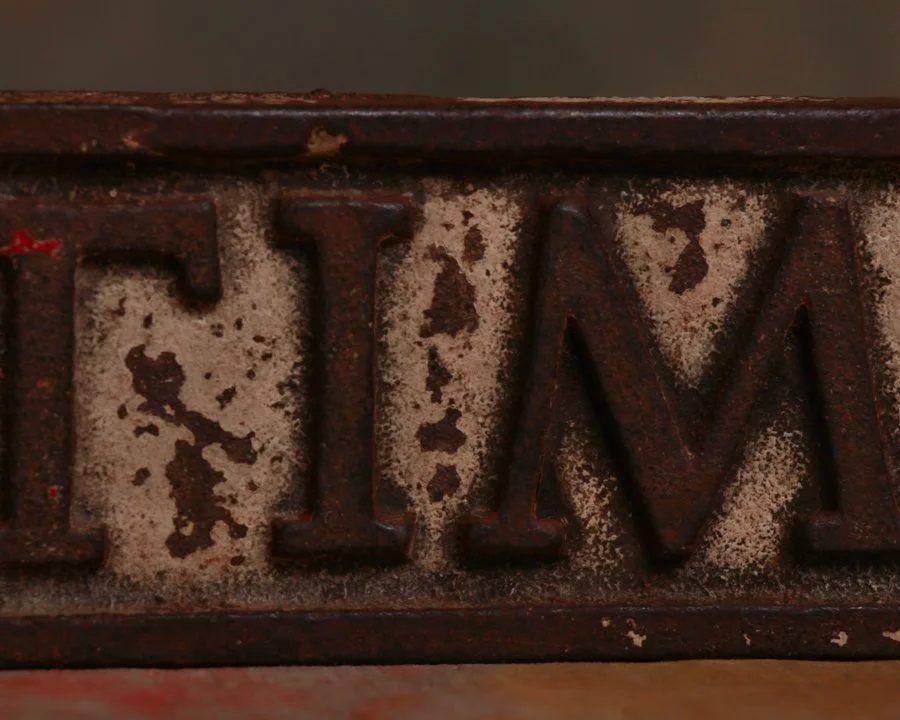
They came in all forms—plain utilitarian stacks of cloth, or more decorative versions shaped like flowers, hearts, or small novelty objects. Some even doubled as advertising pieces, with printed names or logos on the top layer.
What makes them interesting now is how personal they feel. Repeated use leaves its mark—ink stains building up over time, edges softening, colors deepening. They weren’t meant to be preserved, but to be used until worn out.
Today, they read as quiet companions to writing itself—evidence of a slower, more deliberate process where even a small pause had its own tool.
This little fellow earned his keep at the writing desk, not the toy box. Long before ballpoints and disposable pens, this cloth dog was the quiet assistant stationed beside an inkwell, patiently waiting to clean nibs, blot excess ink, and save more than a few handwritten letters from disaster.
Shaped like a low, lounging pup, he’s stitched from soft, timeworn fabric with a gently padded body and a wonderfully expressive face. Glass eyes peer out with that slightly startled, eternally alert look, while a stitched snout and thread whiskers give him just enough personality to feel alive. The ears, mismatched and charmingly rumpled, only add to his endearing, well-used character.
Flip him over and the story really comes through. The cloth shows deep inky shadows, especially along the underside and folds, where countless pen nibs were wiped clean after long hours of correspondence. These aren’t stains so much as evidence, proof of a working life spent in service to handwriting.
Category History
An ink pen wipe is one of those small, easily overlooked objects that quietly kept things running. In the days of dip pens and fountain pens, excess ink was a constant companion—too much on the nib meant blots, smears, and ruined pages. The pen wipe stepped in as a simple solution: a layered pad of fabric, often wool or felt, stitched together so writers could quickly clean the nib between dips.
They came in all forms—plain utilitarian stacks of cloth, or more decorative versions shaped like flowers, hearts, or small novelty objects. Some even doubled as advertising pieces, with printed names or logos on the top layer.
What makes them interesting now is how personal they feel. Repeated use leaves its mark—ink stains building up over time, edges softening, colors deepening. They weren’t meant to be preserved, but to be used until worn out.
Today, they read as quiet companions to writing itself—evidence of a slower, more deliberate process where even a small pause had its own tool.