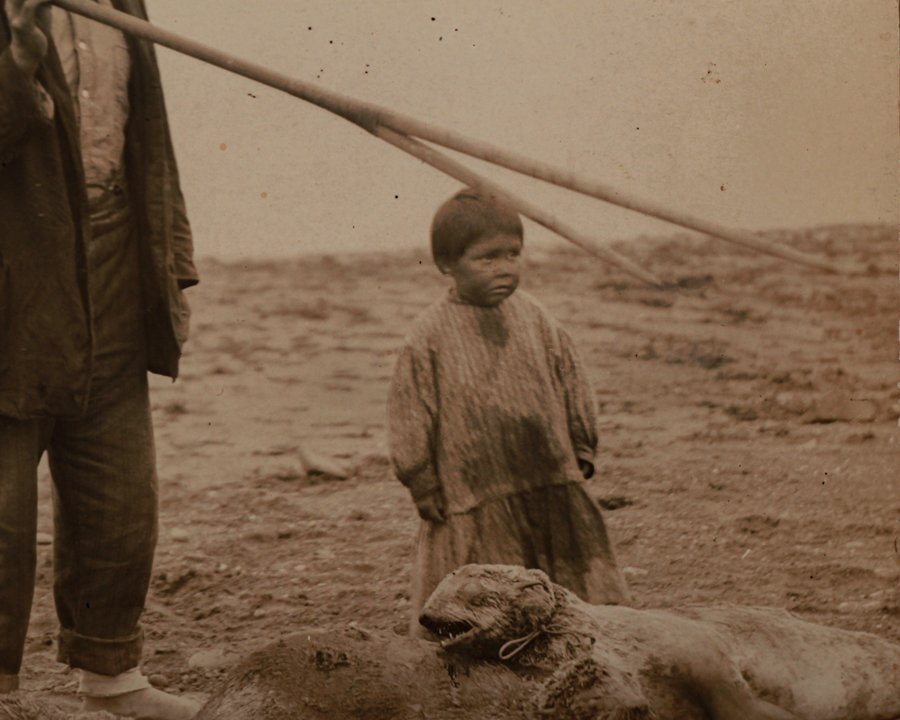
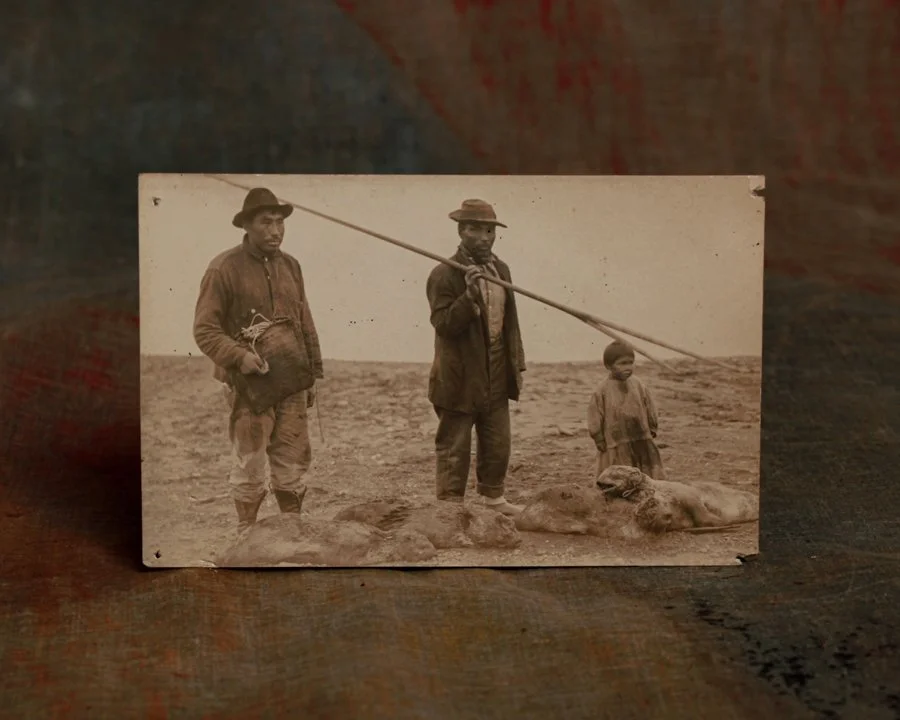
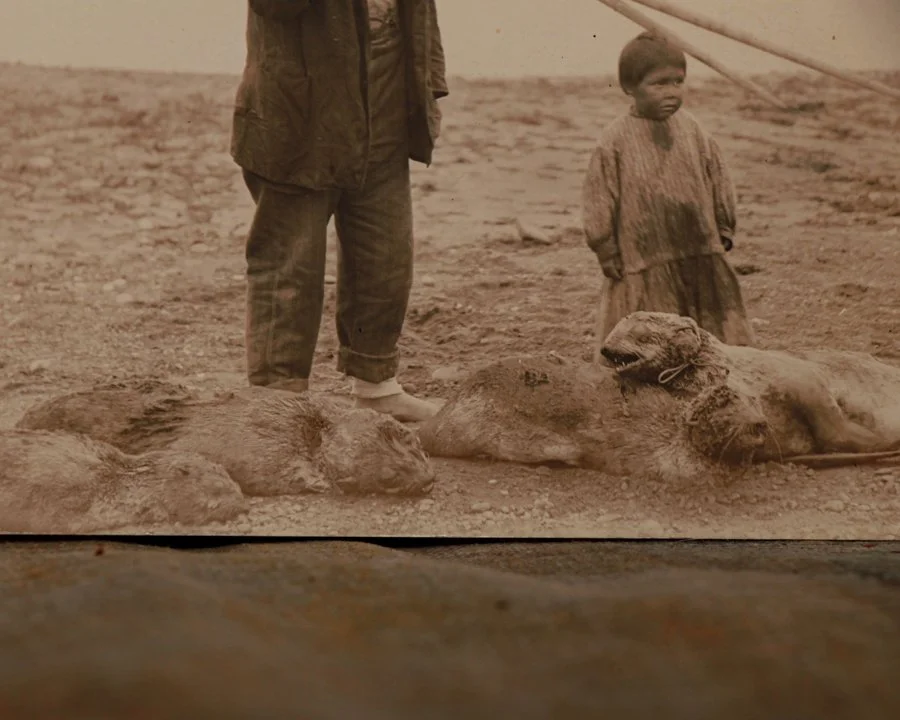
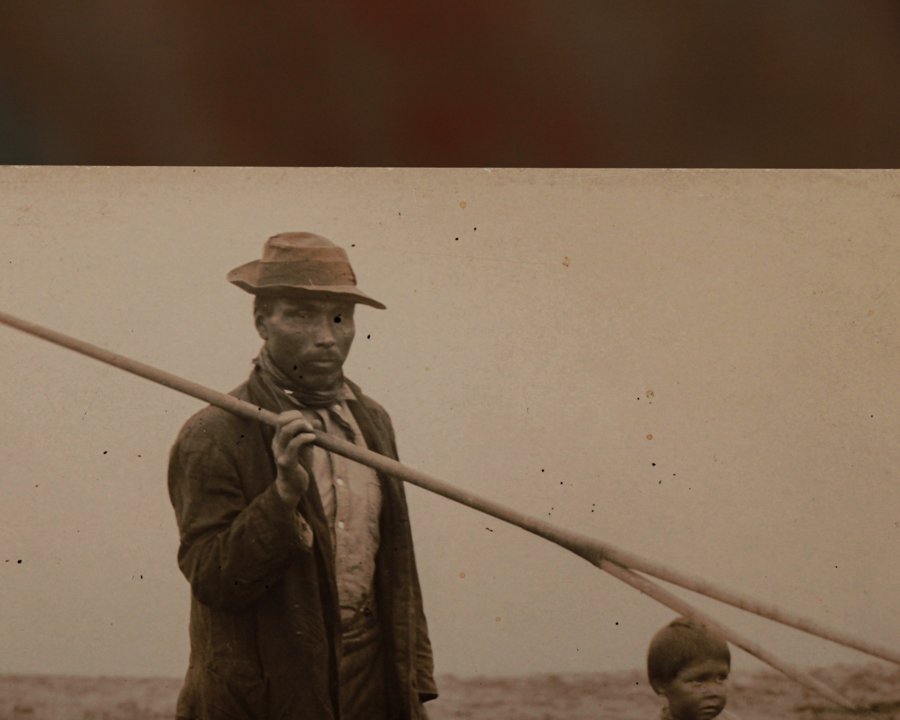
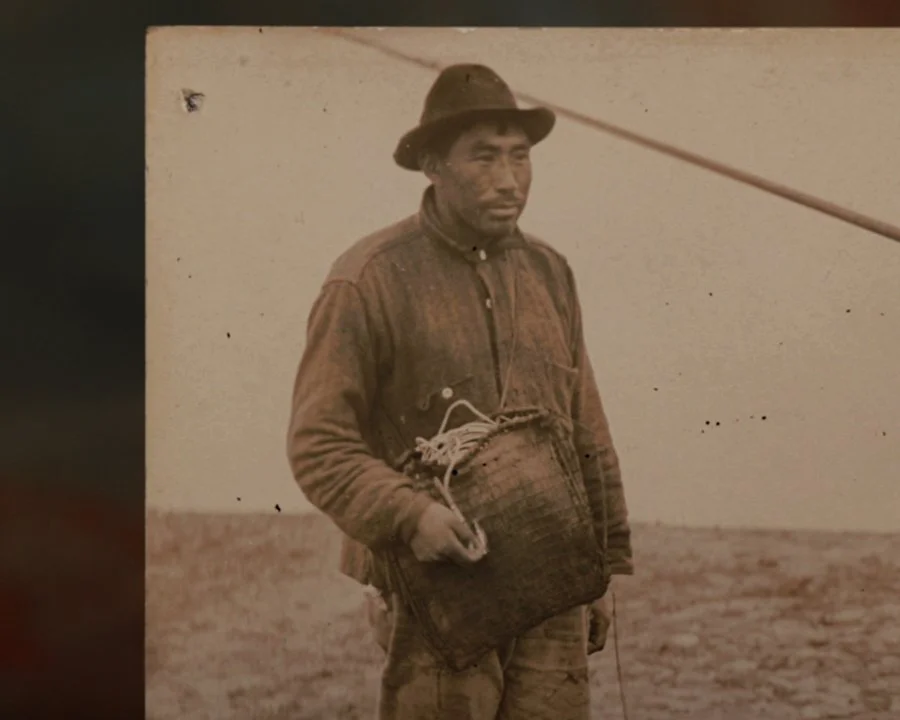
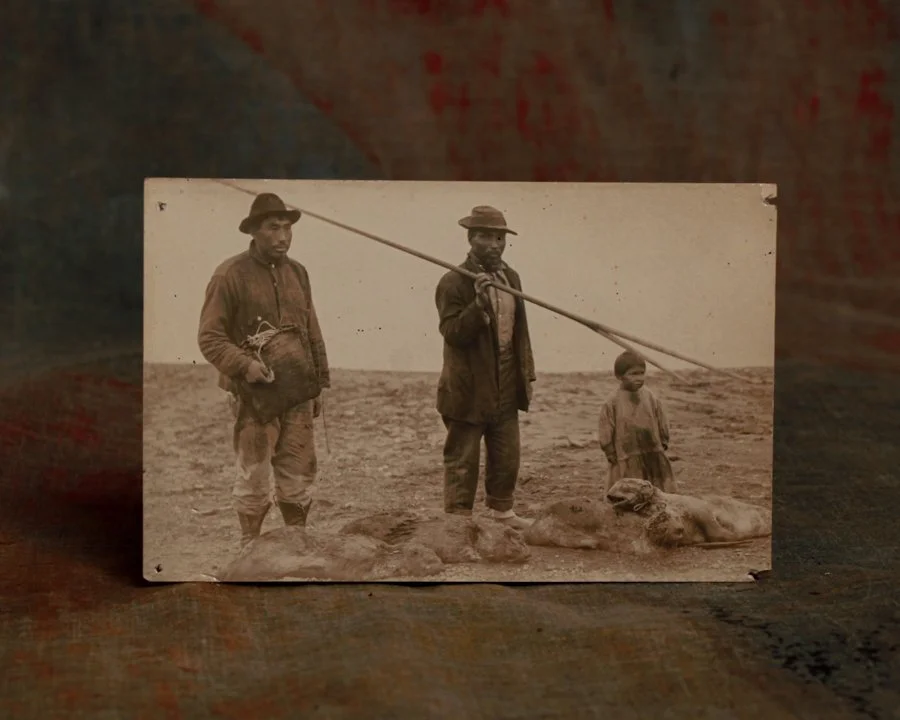

This original real photo postcard captures a moment of life and survival among Alaskan Inuit hunters. Likely taken in the early 20th century, the scene shows two men and a young child standing on rocky tundra beside several freshly hunted seals. One man holds a long harpoon over his shoulder, while the other grips a woven pouch-possibly used for rope or tools. The child, wearing a simple oversized dress, stands barefoot just inches from the seals, their body language quiet and observant.
The photo is uncaptioned, but the clarity of the image and the composition speak volumes. The tone is documentary and direct, offering a rare, unvarnished look at subsistence life in the Arctic, where hunting was not sport or spectacle-it was survival.
Alaskan Inuit Hunters
Alaskan Inuit hunters developed their skills in one of the most demanding environments on earth, where success wasn’t just about technique—it was about survival, timing, and deep familiarity with the land and sea. Hunting was central to daily life, providing food, clothing, tools, and fuel. Nothing was wasted. Seal, whale, caribou, fish—each animal carried multiple uses, and knowing how to process and preserve those resources was just as important as the hunt itself.
What stands out is the level of observation involved. Hunters read ice conditions, animal behavior, weather patterns, and seasonal shifts with precision. Small details mattered—a change in wind, the texture of snow, the movement of water under ice. This knowledge was passed down over generations, shaped by experience rather than written instruction.
Tools reflected that same balance of function and environment. Harpoons, kayaks, clothing made from animal skins—all designed specifically for Arctic conditions. Lightweight where needed, durable where it counted.
Hunting was rarely a solitary act. It was tied to community—shared effort, shared risk, shared reward. Cooperation increased success and ensured that resources were distributed where needed.
Today, Inuit hunting traditions continue, adapted but still grounded in that same relationship with the environment. It’s a practice built on respect—for the animals, the land, and the knowledge required to move within both.
This original real photo postcard captures a moment of life and survival among Alaskan Inuit hunters. Likely taken in the early 20th century, the scene shows two men and a young child standing on rocky tundra beside several freshly hunted seals. One man holds a long harpoon over his shoulder, while the other grips a woven pouch-possibly used for rope or tools. The child, wearing a simple oversized dress, stands barefoot just inches from the seals, their body language quiet and observant.
The photo is uncaptioned, but the clarity of the image and the composition speak volumes. The tone is documentary and direct, offering a rare, unvarnished look at subsistence life in the Arctic, where hunting was not sport or spectacle-it was survival.
Alaskan Inuit Hunters
Alaskan Inuit hunters developed their skills in one of the most demanding environments on earth, where success wasn’t just about technique—it was about survival, timing, and deep familiarity with the land and sea. Hunting was central to daily life, providing food, clothing, tools, and fuel. Nothing was wasted. Seal, whale, caribou, fish—each animal carried multiple uses, and knowing how to process and preserve those resources was just as important as the hunt itself.
What stands out is the level of observation involved. Hunters read ice conditions, animal behavior, weather patterns, and seasonal shifts with precision. Small details mattered—a change in wind, the texture of snow, the movement of water under ice. This knowledge was passed down over generations, shaped by experience rather than written instruction.
Tools reflected that same balance of function and environment. Harpoons, kayaks, clothing made from animal skins—all designed specifically for Arctic conditions. Lightweight where needed, durable where it counted.
Hunting was rarely a solitary act. It was tied to community—shared effort, shared risk, shared reward. Cooperation increased success and ensured that resources were distributed where needed.
Today, Inuit hunting traditions continue, adapted but still grounded in that same relationship with the environment. It’s a practice built on respect—for the animals, the land, and the knowledge required to move within both.