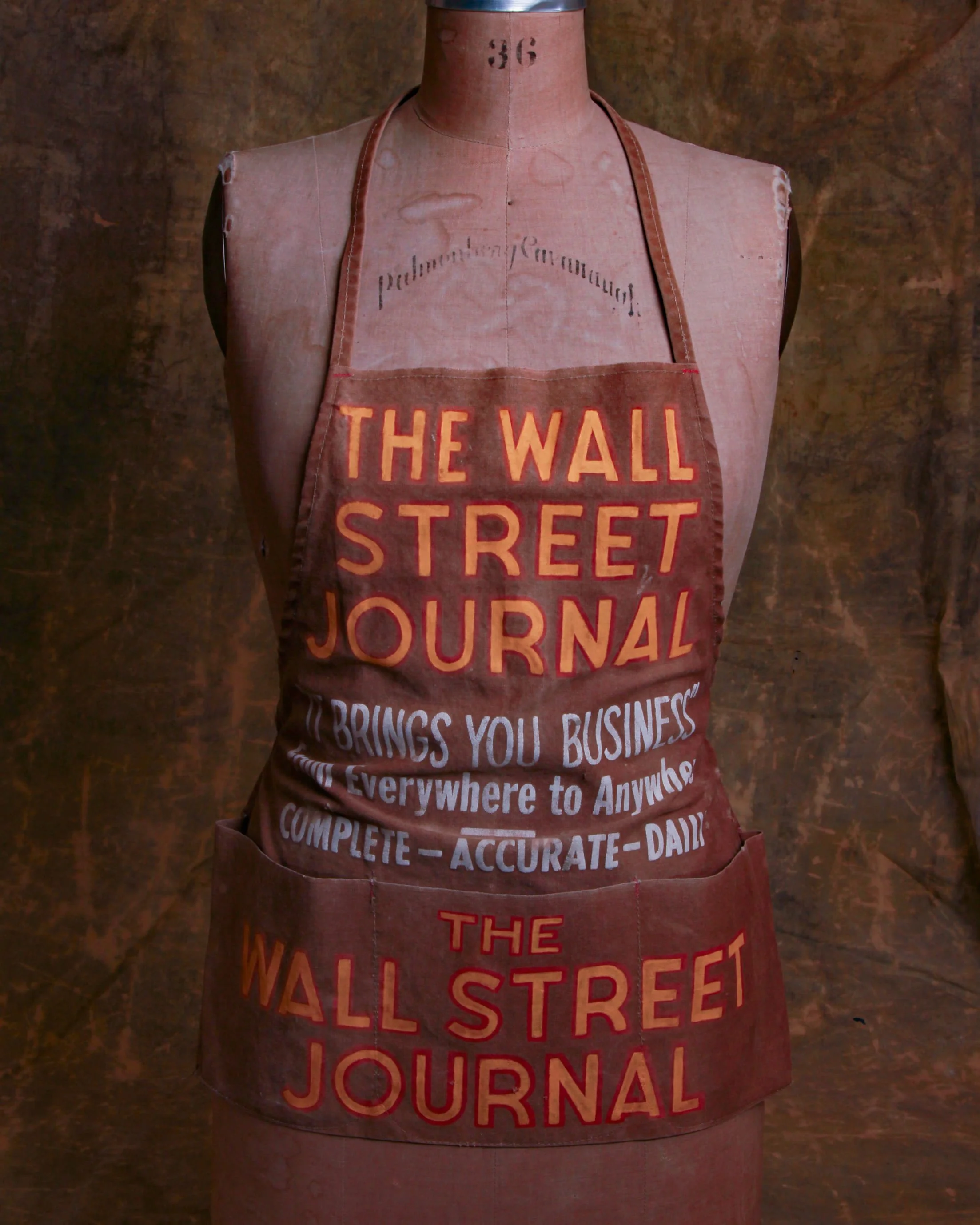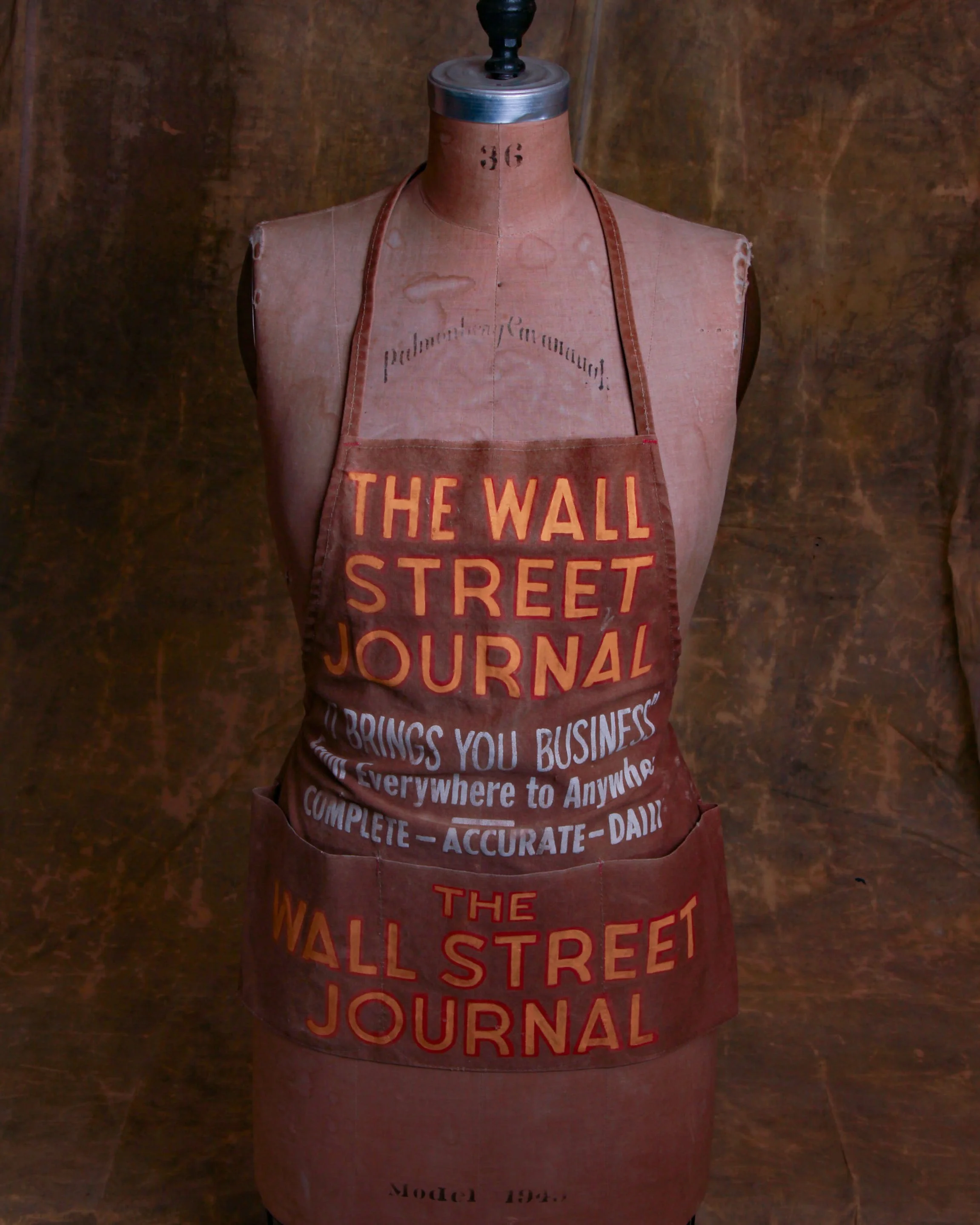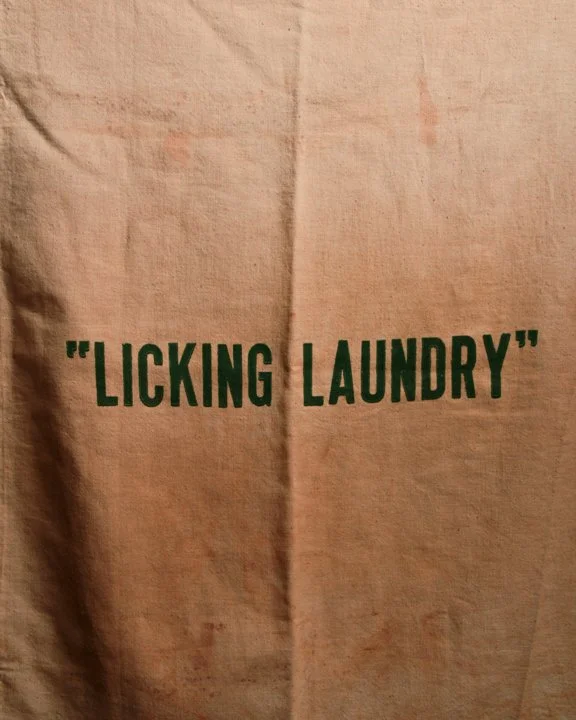

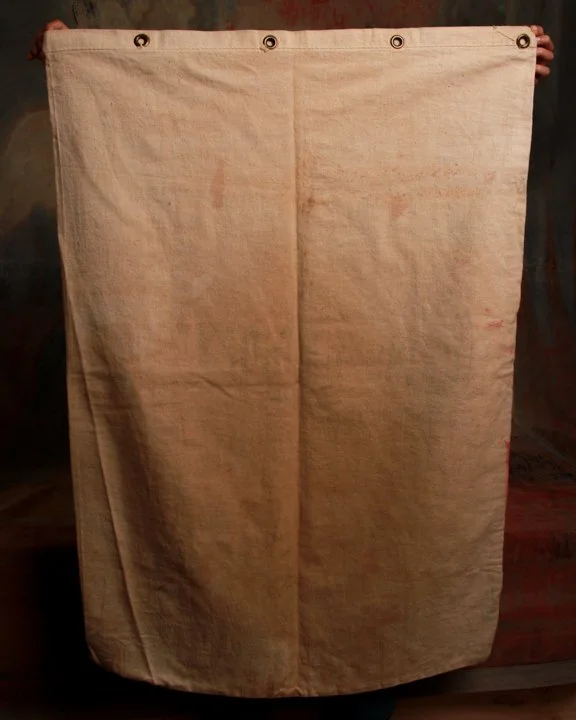
Step back into the 1940s with this industrial canvas laundry bag, a sturdy relic of hardworking utility. Measuring 36" x 26", its faded yellowish-white canvas bears bold green all-caps lettering reading "LICKING LAUNDRY", evoking the charm of hardworking textiles, straightforward design and small-town services. Durable and full of character, this bag is perfect as a decorative piece or practical use. Its weathered appearance tells a story of decades of use, making it a true testament of simpler times.
The fabric remains strong, with reinforced seams and a softness that only comes from years of handling and purpose-driven wear.
Category History
Laundries in the 1940s were part utility, part neighborhood rhythm. Before home machines became common, washing clothes meant either sending them out or spending hours over tubs, wringers, and lines. Commercial laundries and early self-service laundromats stepped in to bridge that gap, offering efficiency at a moment when time and labor mattered.
Dry cleaning, already established by then, handled the garments that couldn’t take water—wool suits, dresses, uniforms. Solvent-based cleaning allowed fabrics to be refreshed without shrinking or warping, and by the 1940s it had become a standard part of urban life. You dropped things off, got a ticket, and returned later to find everything pressed and ready.
Self-service laundromats were just beginning to appear, with rows of coin-operated machines turning what had been private labor into a shared public activity. The experience was practical but social—people waiting, talking, watching cycles run.
What’s interesting is the visual and material culture around it. Paper tags, metal hangers, stamped tickets, bold signage—objects designed for quick identification and constant turnover.
These spaces were built around repetition and routine. Load, wash, dry, press, repeat.
Today, they read as snapshots of everyday life—systems built to handle the constant flow of clothing, quietly supporting how people presented themselves to the world.
Step back into the 1940s with this industrial canvas laundry bag, a sturdy relic of hardworking utility. Measuring 36" x 26", its faded yellowish-white canvas bears bold green all-caps lettering reading "LICKING LAUNDRY", evoking the charm of hardworking textiles, straightforward design and small-town services. Durable and full of character, this bag is perfect as a decorative piece or practical use. Its weathered appearance tells a story of decades of use, making it a true testament of simpler times.
The fabric remains strong, with reinforced seams and a softness that only comes from years of handling and purpose-driven wear.
Category History
Laundries in the 1940s were part utility, part neighborhood rhythm. Before home machines became common, washing clothes meant either sending them out or spending hours over tubs, wringers, and lines. Commercial laundries and early self-service laundromats stepped in to bridge that gap, offering efficiency at a moment when time and labor mattered.
Dry cleaning, already established by then, handled the garments that couldn’t take water—wool suits, dresses, uniforms. Solvent-based cleaning allowed fabrics to be refreshed without shrinking or warping, and by the 1940s it had become a standard part of urban life. You dropped things off, got a ticket, and returned later to find everything pressed and ready.
Self-service laundromats were just beginning to appear, with rows of coin-operated machines turning what had been private labor into a shared public activity. The experience was practical but social—people waiting, talking, watching cycles run.
What’s interesting is the visual and material culture around it. Paper tags, metal hangers, stamped tickets, bold signage—objects designed for quick identification and constant turnover.
These spaces were built around repetition and routine. Load, wash, dry, press, repeat.
Today, they read as snapshots of everyday life—systems built to handle the constant flow of clothing, quietly supporting how people presented themselves to the world.