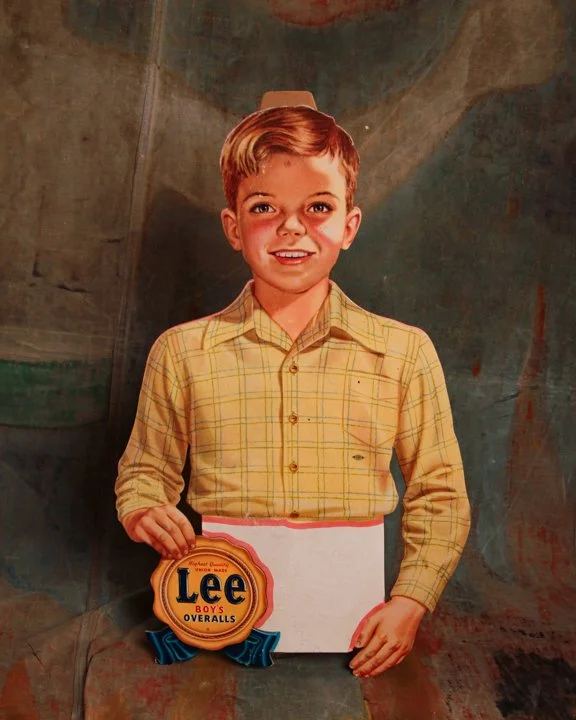


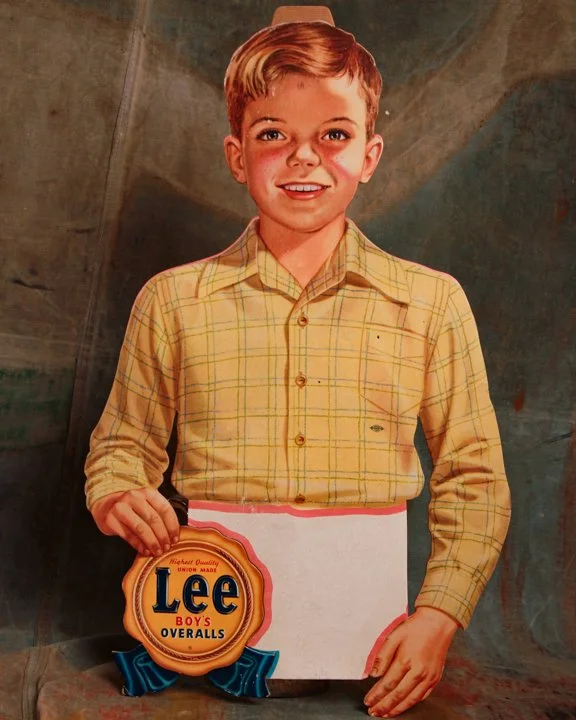
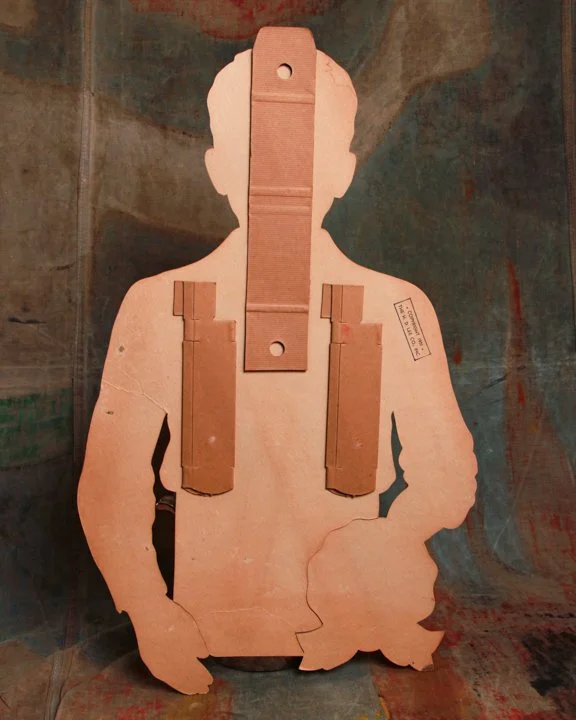
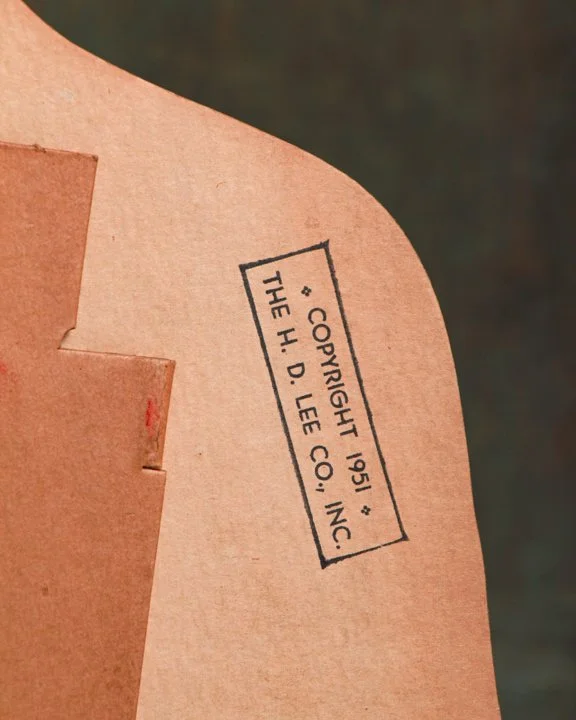
This die-cut cardboard display was cooked up by the H.D. Lee Company in 1951 as in-store advertising for their boys’ line—specifically, to be tucked right into a pair of overalls. He’s got that squeaky-clean, freckle-faced, all-American look you’d expect from mid-century marketing: rosy cheeks, a pressed yellow plaid shirt, and a smile that says “golly gee” without needing to say anything at all.
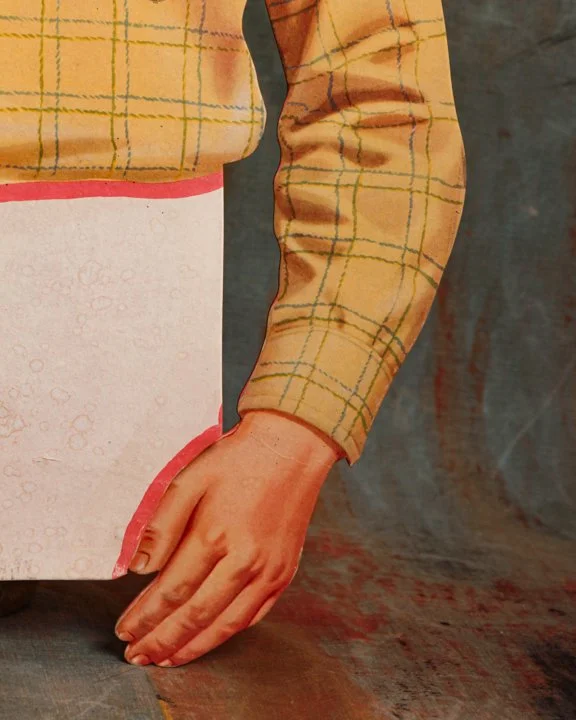
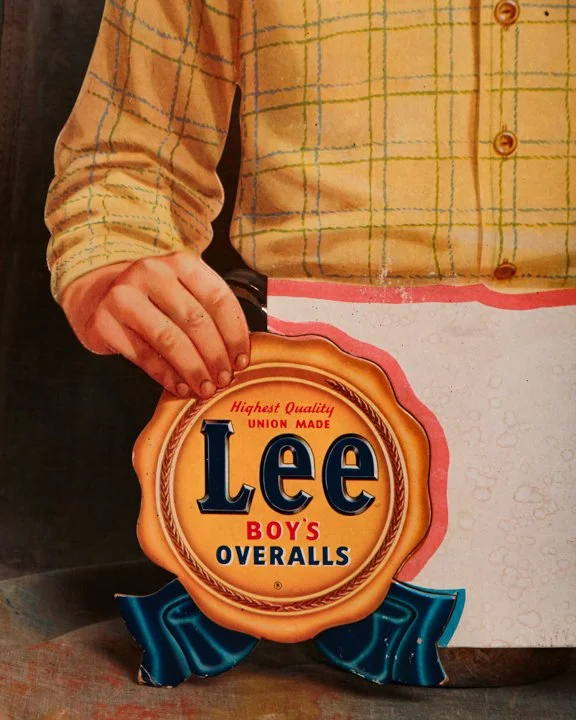
Made of thick die-cut cardboard with a sturdy built-in easel and shoulder tabs for mounting, he’s still holding tight to a colorful medallion that reads “Lee Boy’s Overalls — Highest Quality, Union Made.” There’s wear here and there—some scuffs, light fading, and a bit of staining—but honestly, nothing that doesn’t feel right at home for a piece that’s been standing tall for over 70 years.
Category History
H.D. Lee Company boys overalls from the 1950s sit squarely in that postwar moment when clothing had to keep up with real life—school, chores, play, and everything in between. Founded in 1889, Lee built its reputation on durable workwear, and by the mid-20th century, that same approach carried into children’s clothing.
These overalls were designed to take a beating. Heavy denim, reinforced stitching, metal hardware, and adjustable straps meant they could grow with the wearer and survive repeated use. Pockets were practical, not decorative—built to hold tools, toys, or whatever the day called for.
What makes them interesting is how closely they mirror adult workwear. They weren’t simplified versions; they followed the same logic—function first, durability always. There’s a kind of honesty in that.
Over time, they develop character. Faded knees, softened fabric, small repairs—each mark tied to movement and use. They were worn, not preserved.
Today, they read as both clothing and artifact. A snapshot of everyday life, where even kids’ garments were built with intention—made to last, to be handed down, and to carry a bit of the wearer with them.
This die-cut cardboard display was cooked up by the H.D. Lee Company in 1951 as in-store advertising for their boys’ line—specifically, to be tucked right into a pair of overalls. He’s got that squeaky-clean, freckle-faced, all-American look you’d expect from mid-century marketing: rosy cheeks, a pressed yellow plaid shirt, and a smile that says “golly gee” without needing to say anything at all.
Made of thick die-cut cardboard with a sturdy built-in easel and shoulder tabs for mounting, he’s still holding tight to a colorful medallion that reads “Lee Boy’s Overalls — Highest Quality, Union Made.” There’s wear here and there—some scuffs, light fading, and a bit of staining—but honestly, nothing that doesn’t feel right at home for a piece that’s been standing tall for over 70 years.
Category History
H.D. Lee Company boys overalls from the 1950s sit squarely in that postwar moment when clothing had to keep up with real life—school, chores, play, and everything in between. Founded in 1889, Lee built its reputation on durable workwear, and by the mid-20th century, that same approach carried into children’s clothing.
These overalls were designed to take a beating. Heavy denim, reinforced stitching, metal hardware, and adjustable straps meant they could grow with the wearer and survive repeated use. Pockets were practical, not decorative—built to hold tools, toys, or whatever the day called for.
What makes them interesting is how closely they mirror adult workwear. They weren’t simplified versions; they followed the same logic—function first, durability always. There’s a kind of honesty in that.
Over time, they develop character. Faded knees, softened fabric, small repairs—each mark tied to movement and use. They were worn, not preserved.
Today, they read as both clothing and artifact. A snapshot of everyday life, where even kids’ garments were built with intention—made to last, to be handed down, and to carry a bit of the wearer with them.