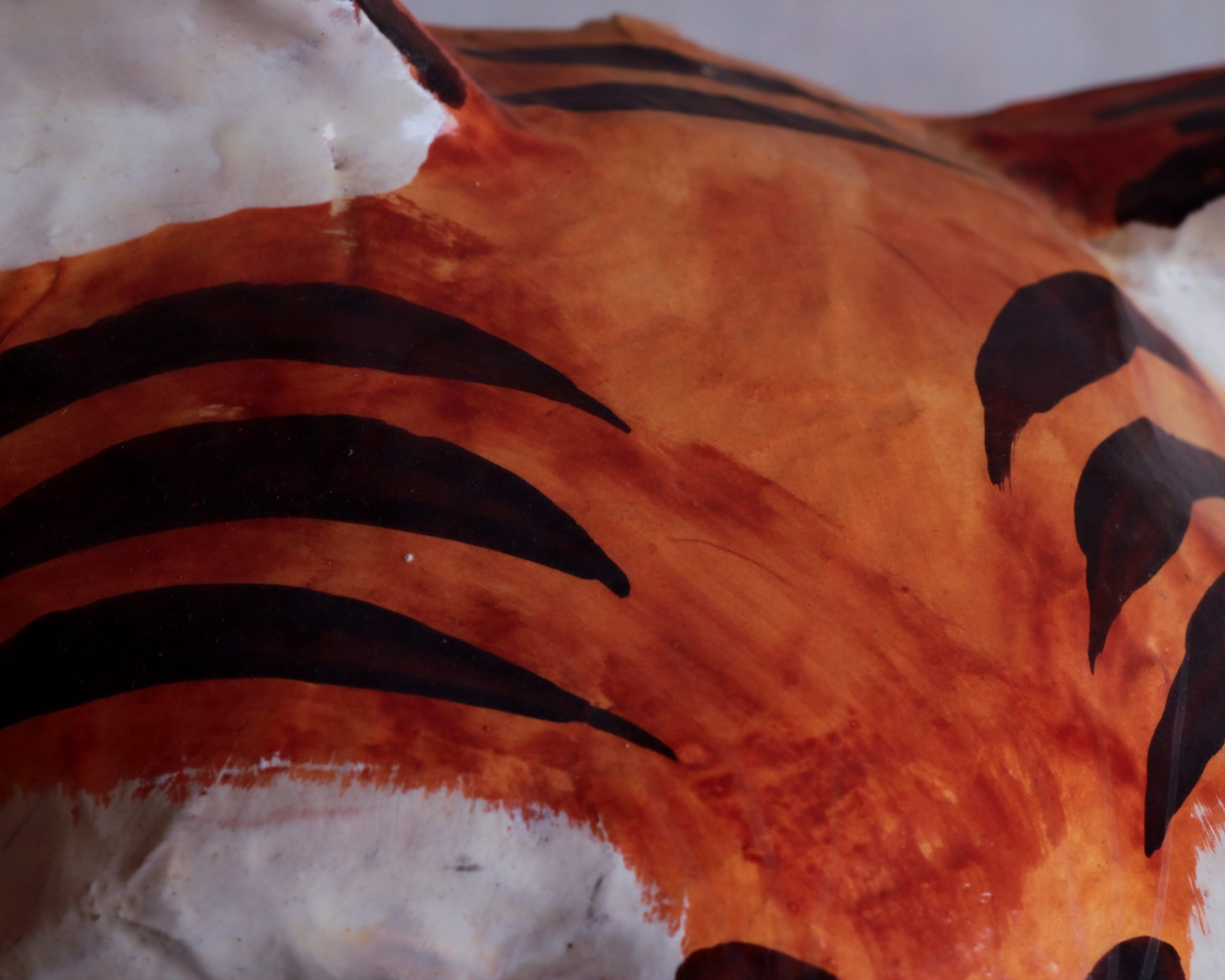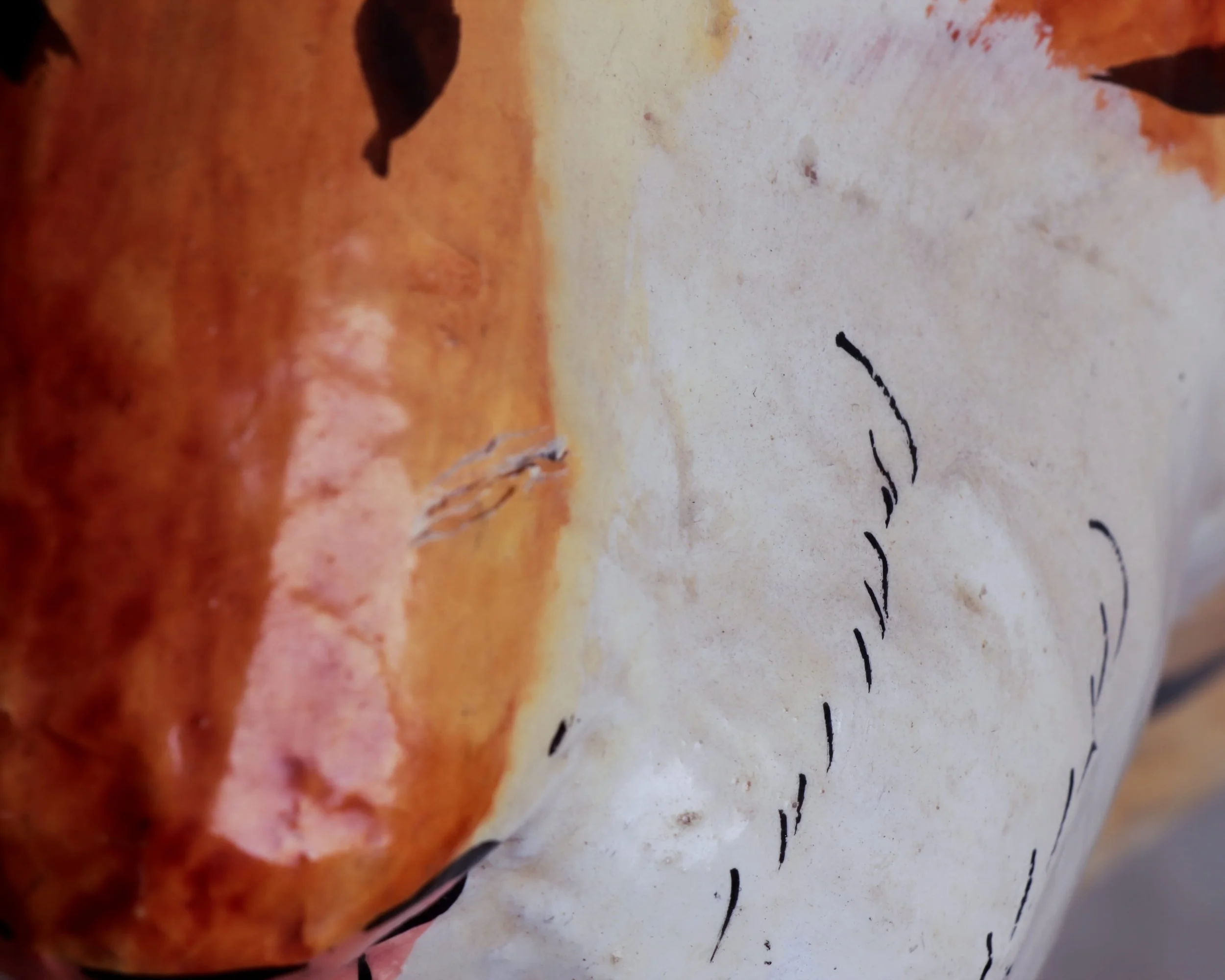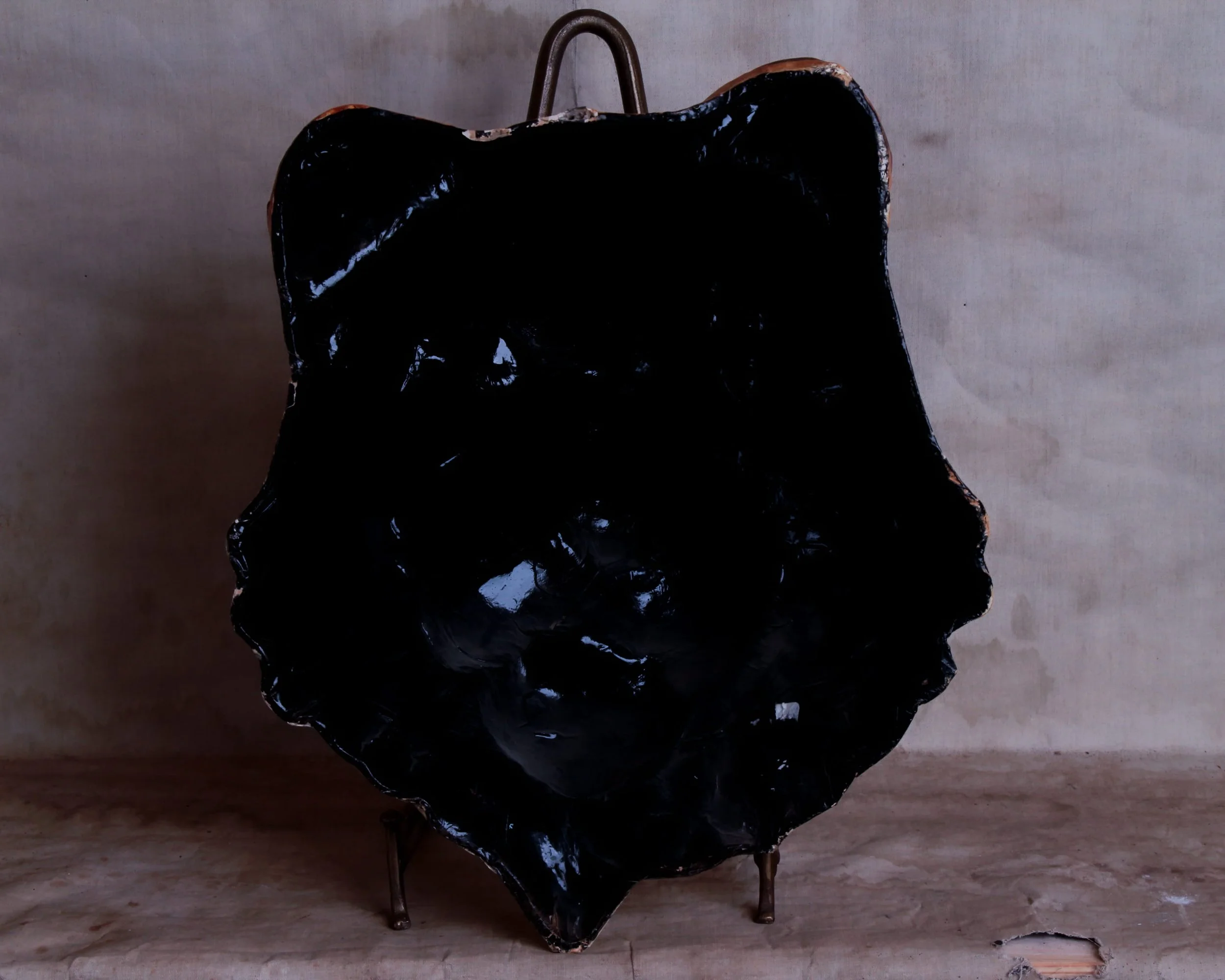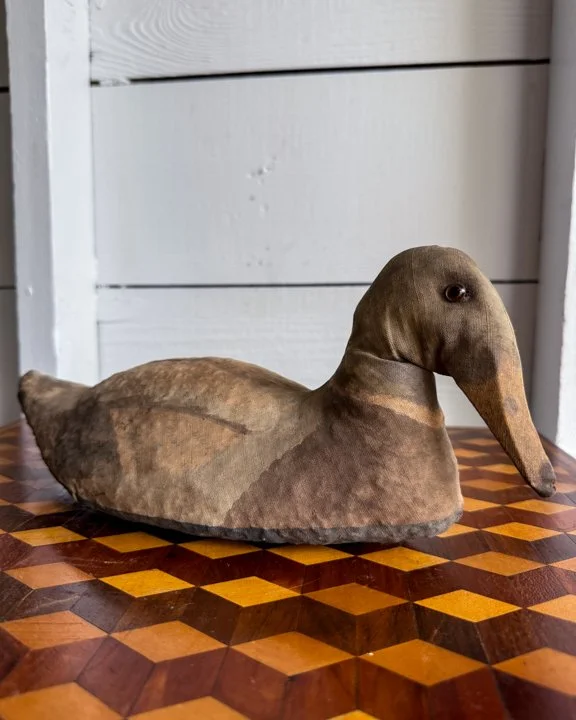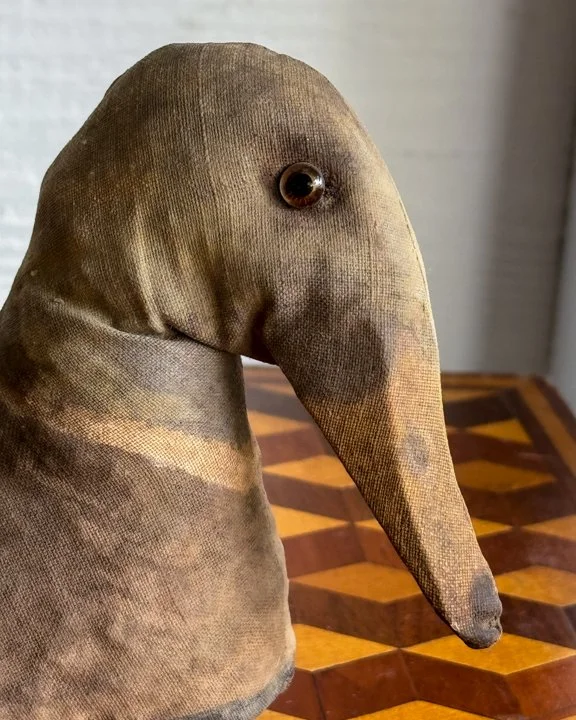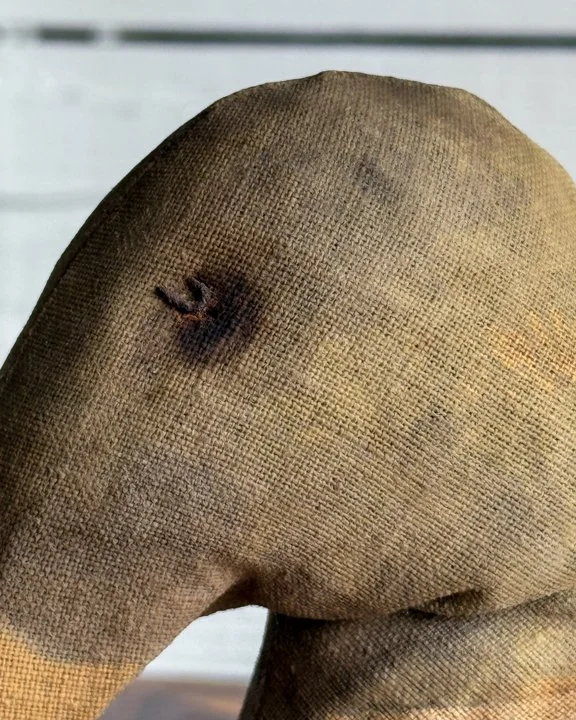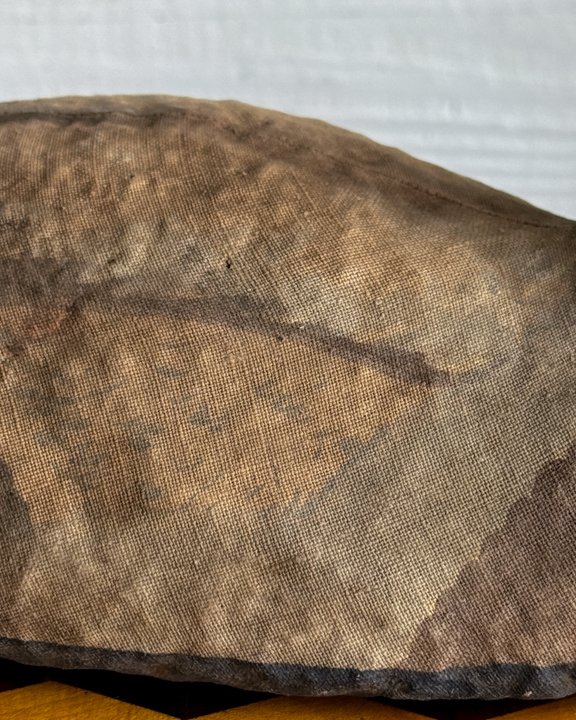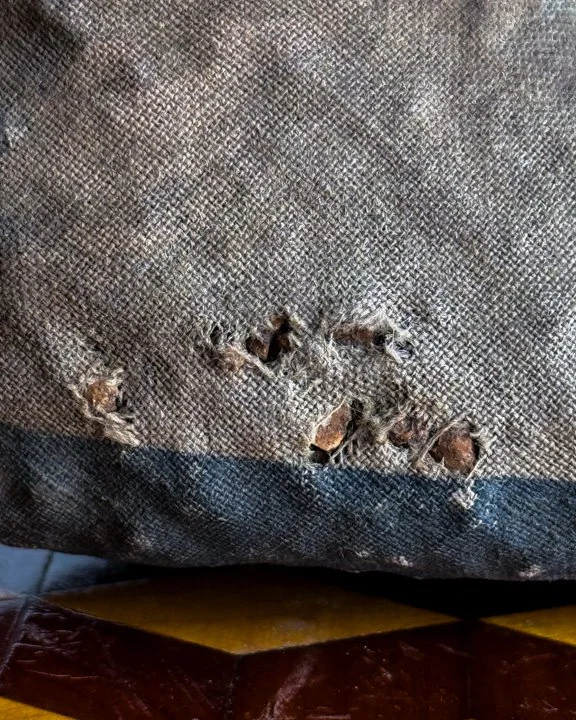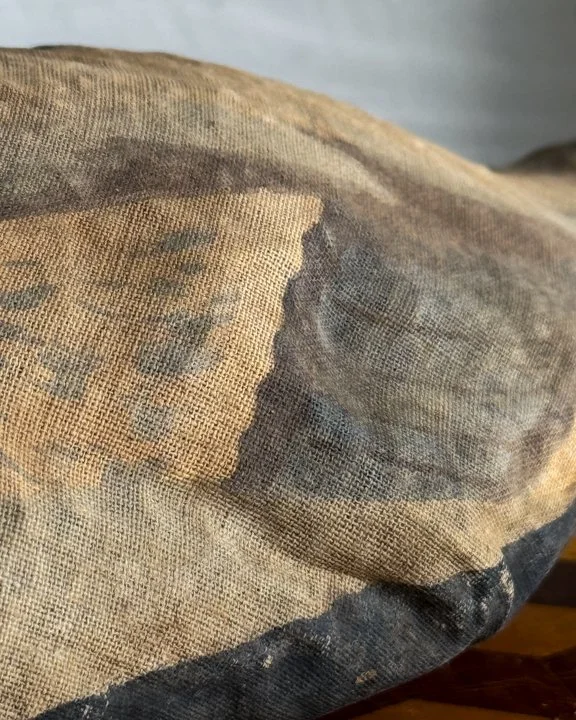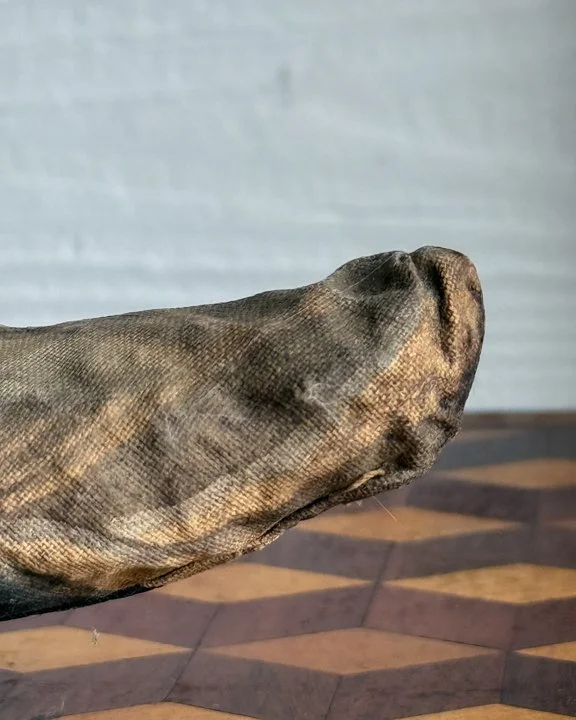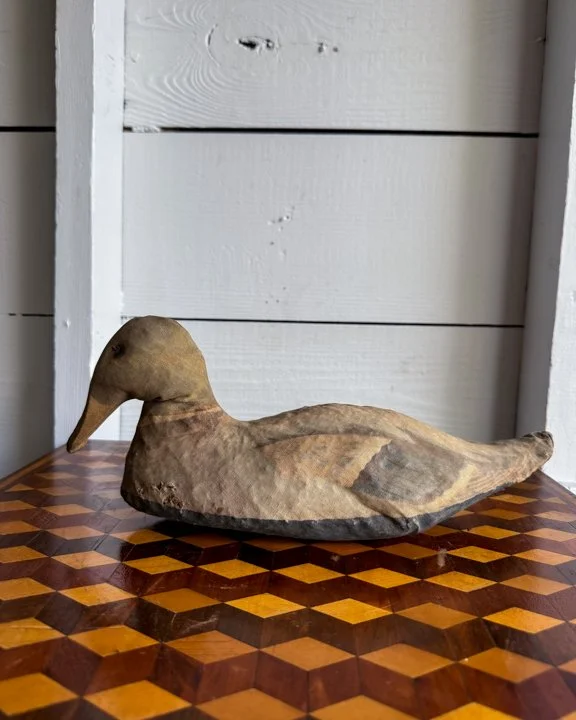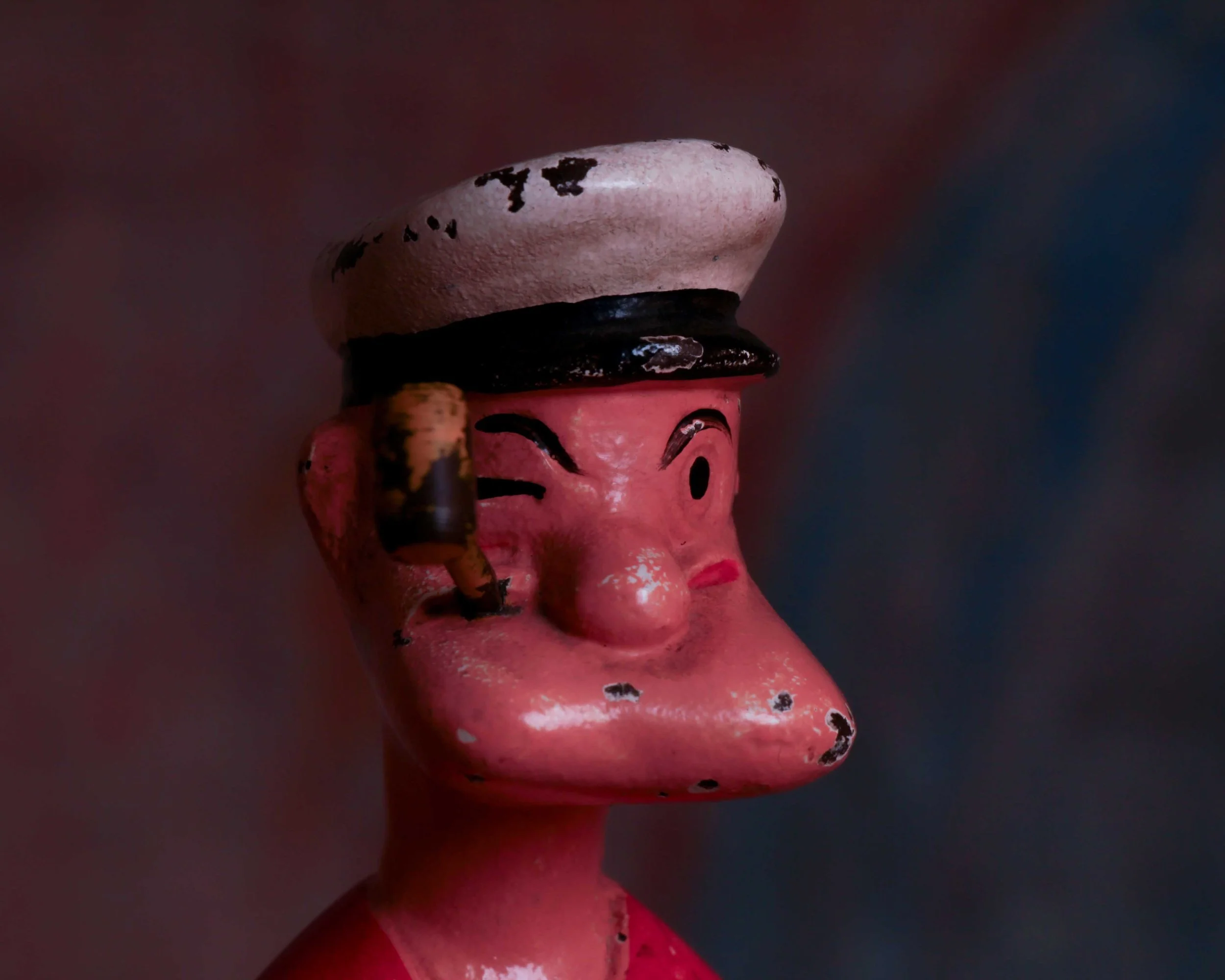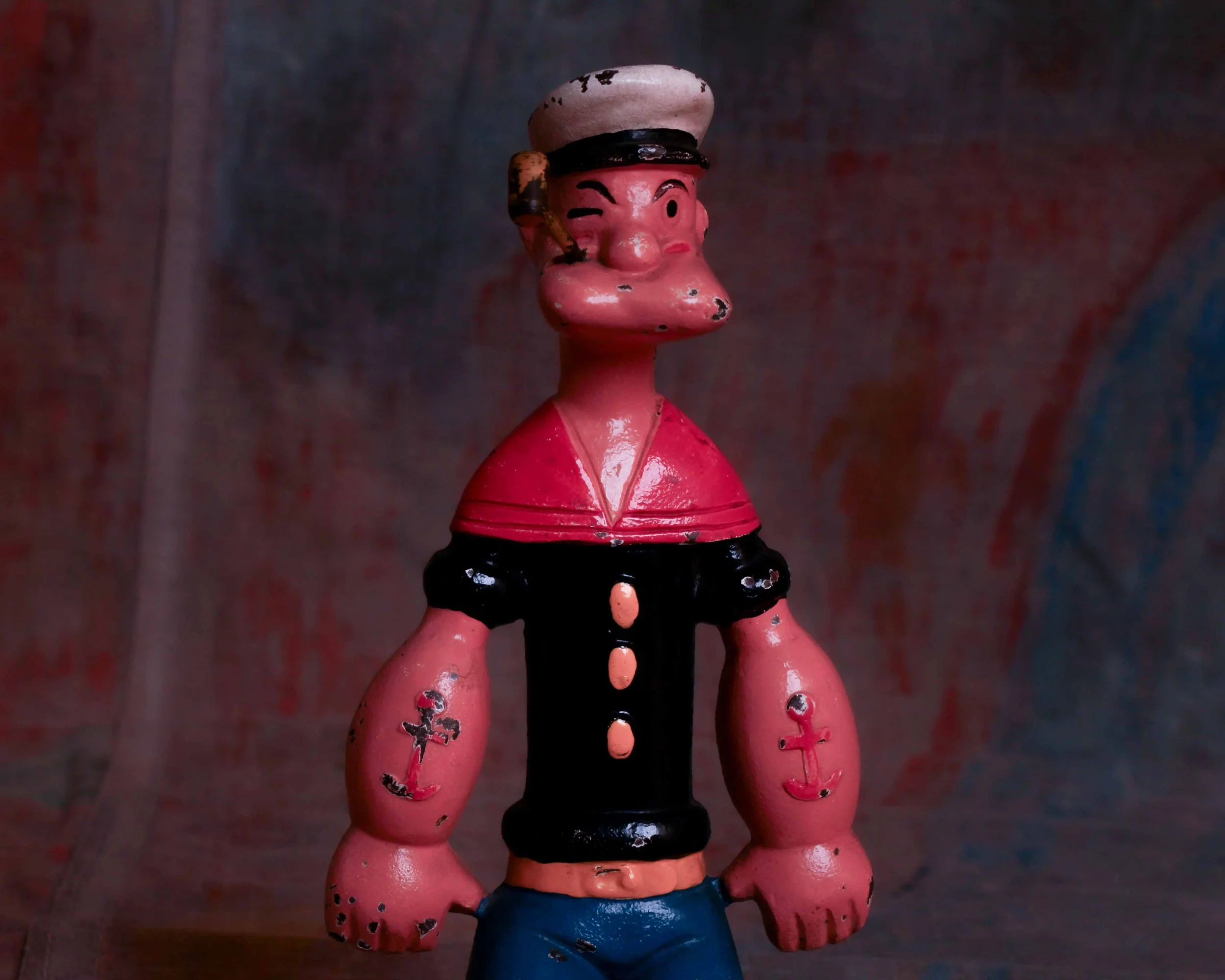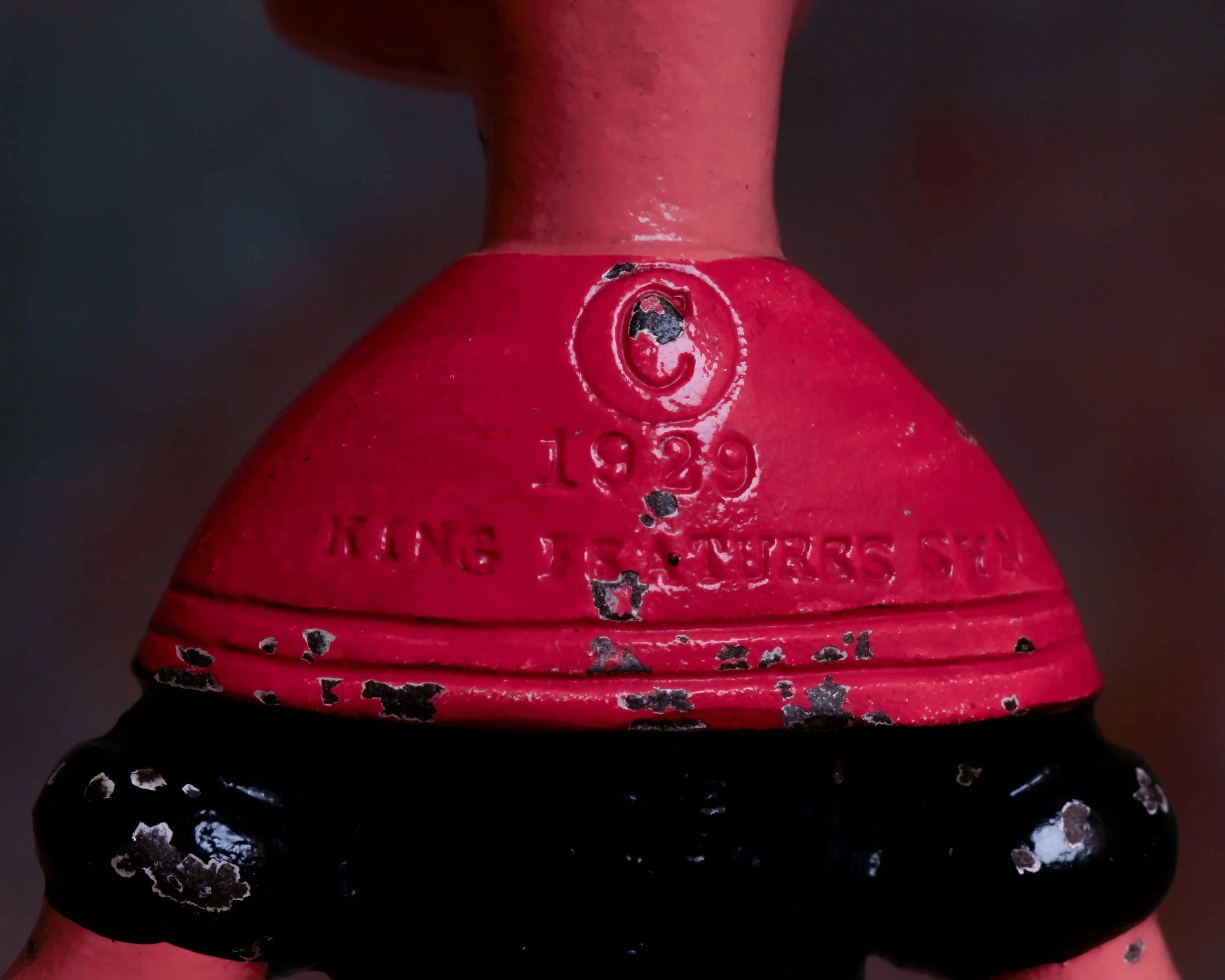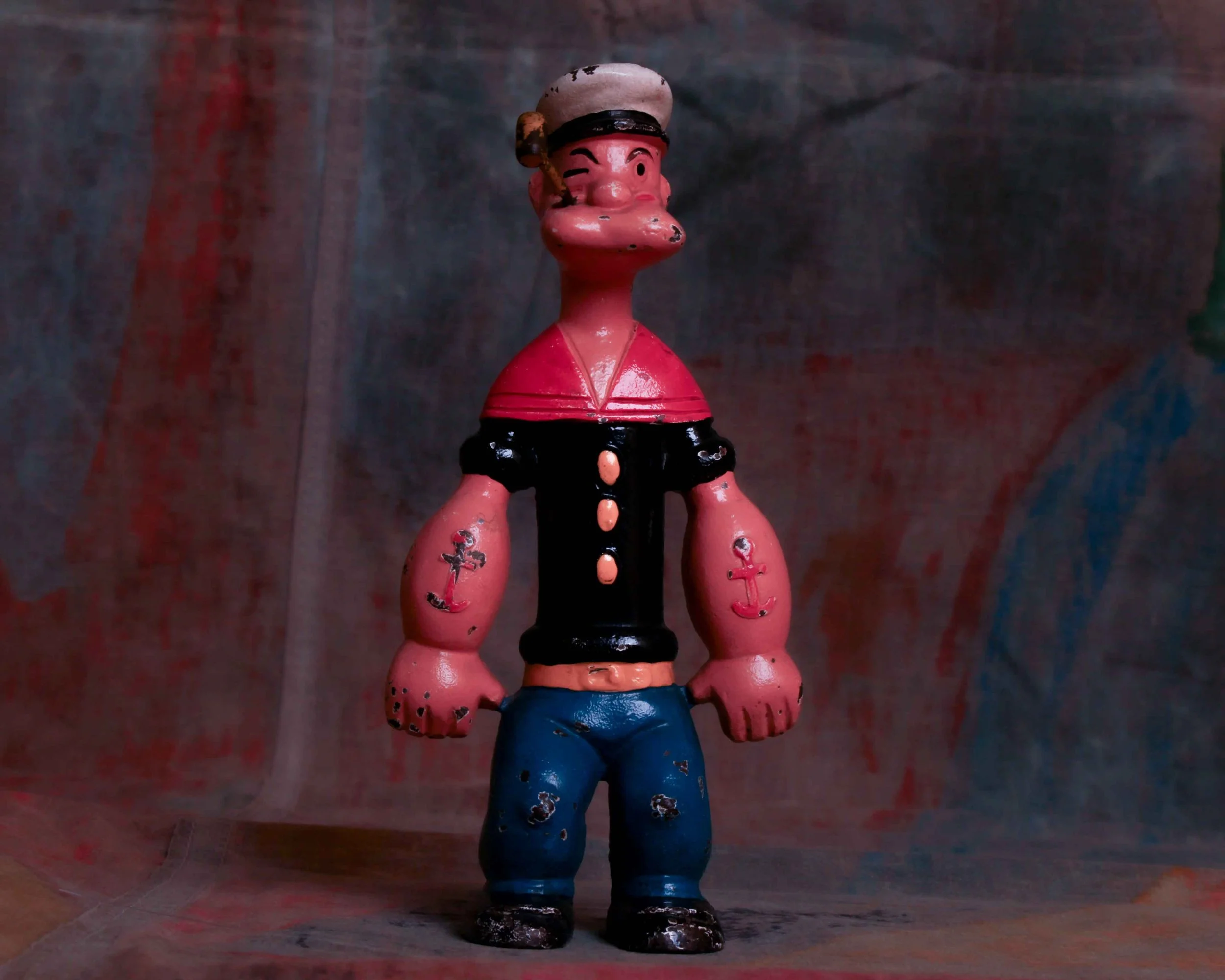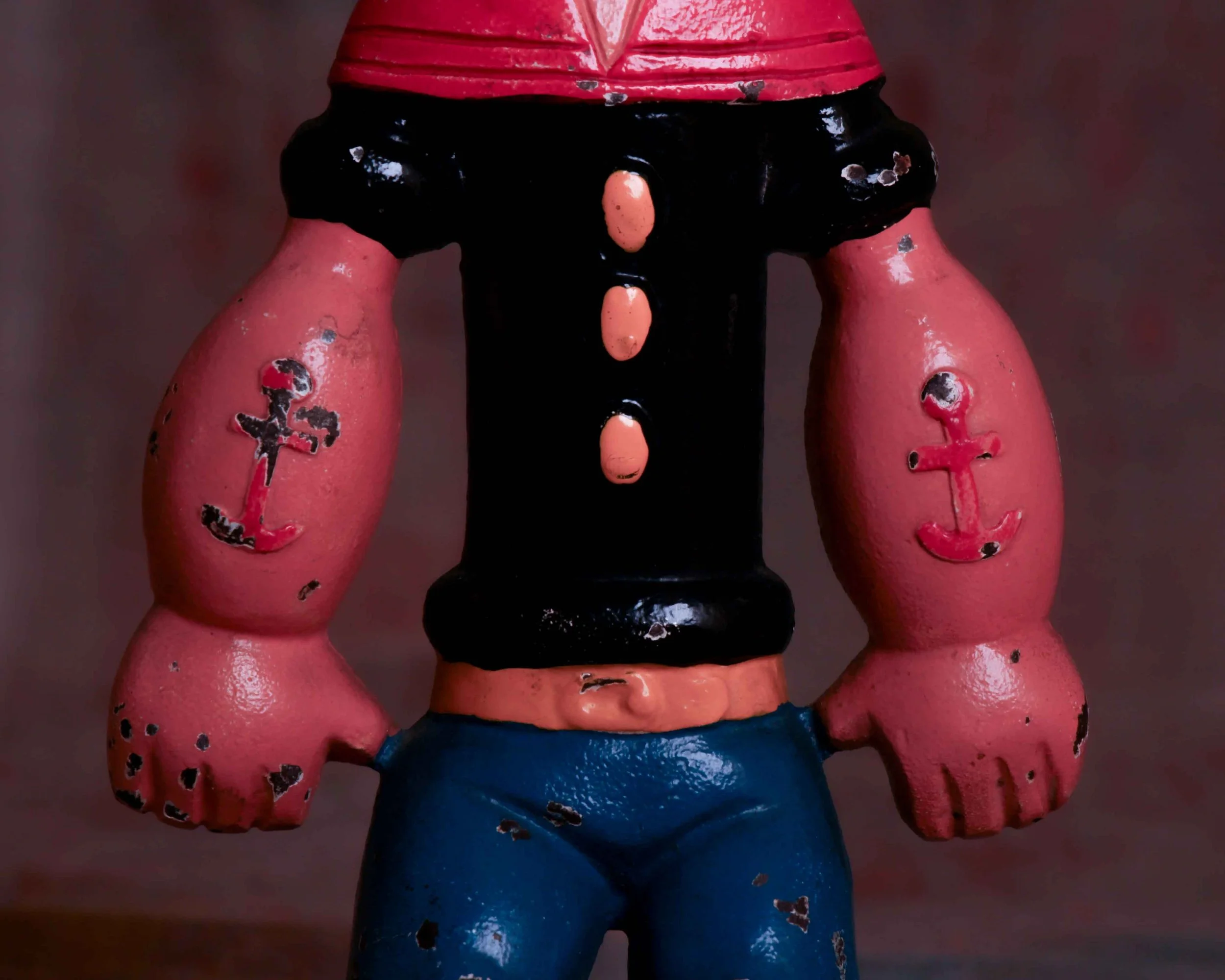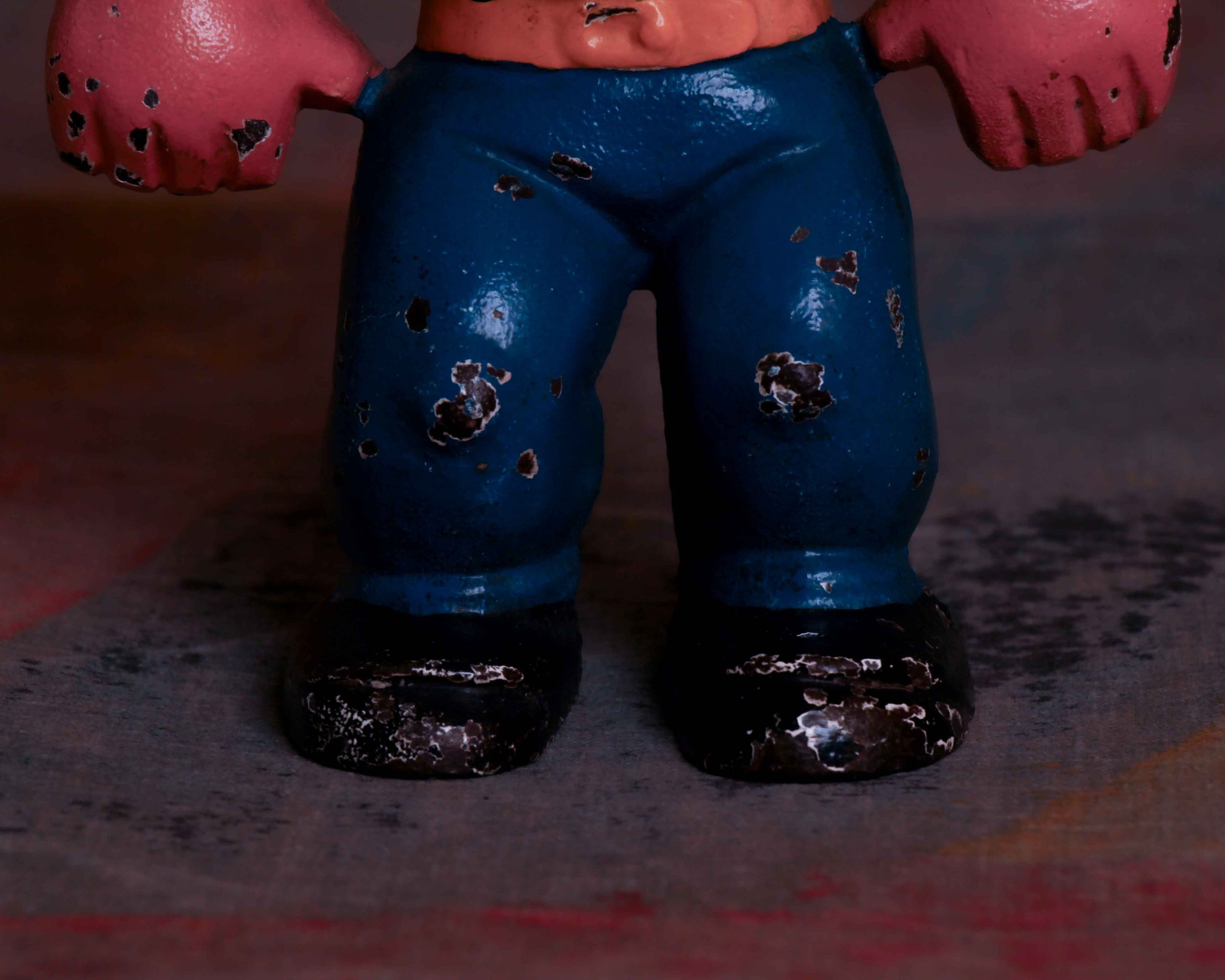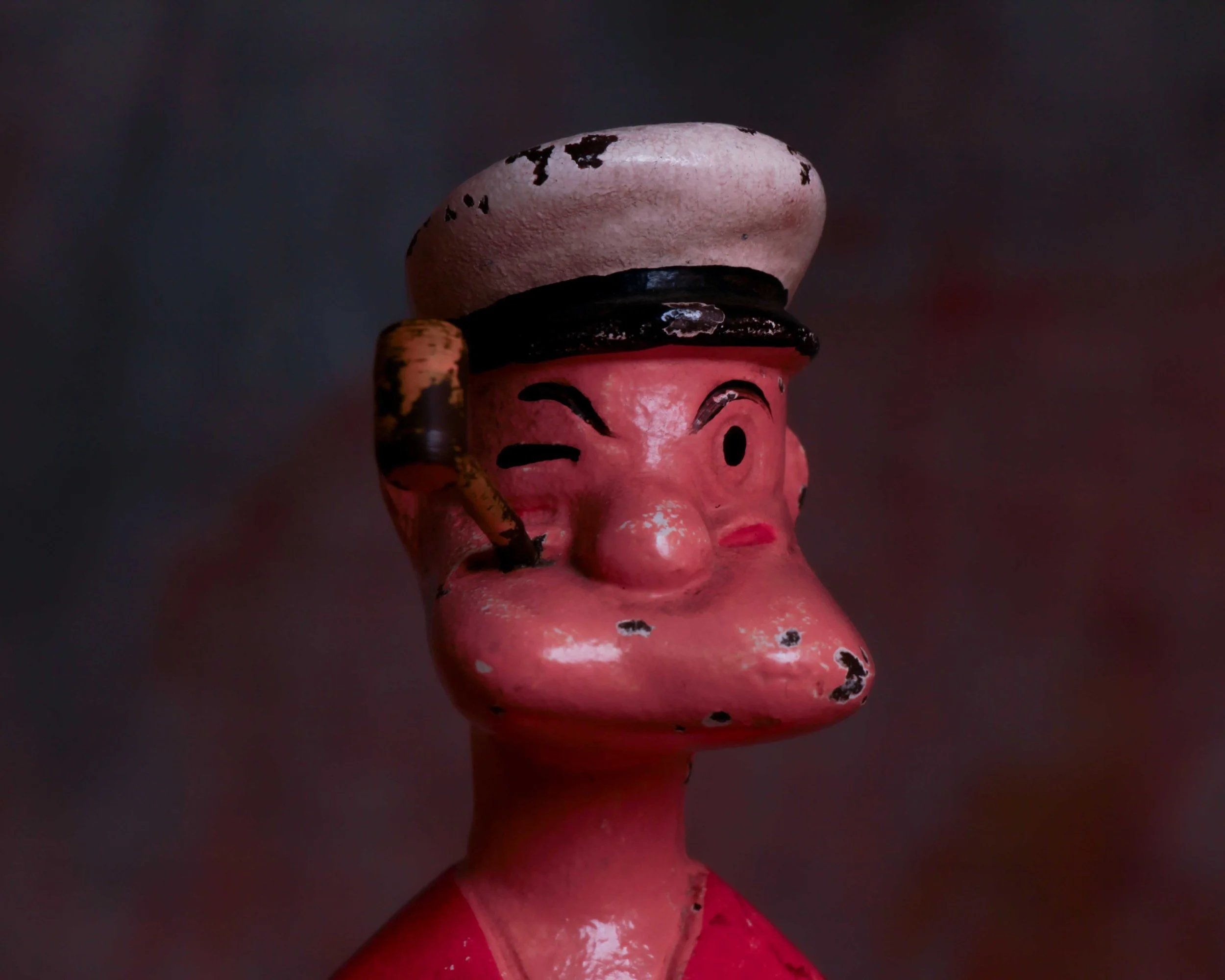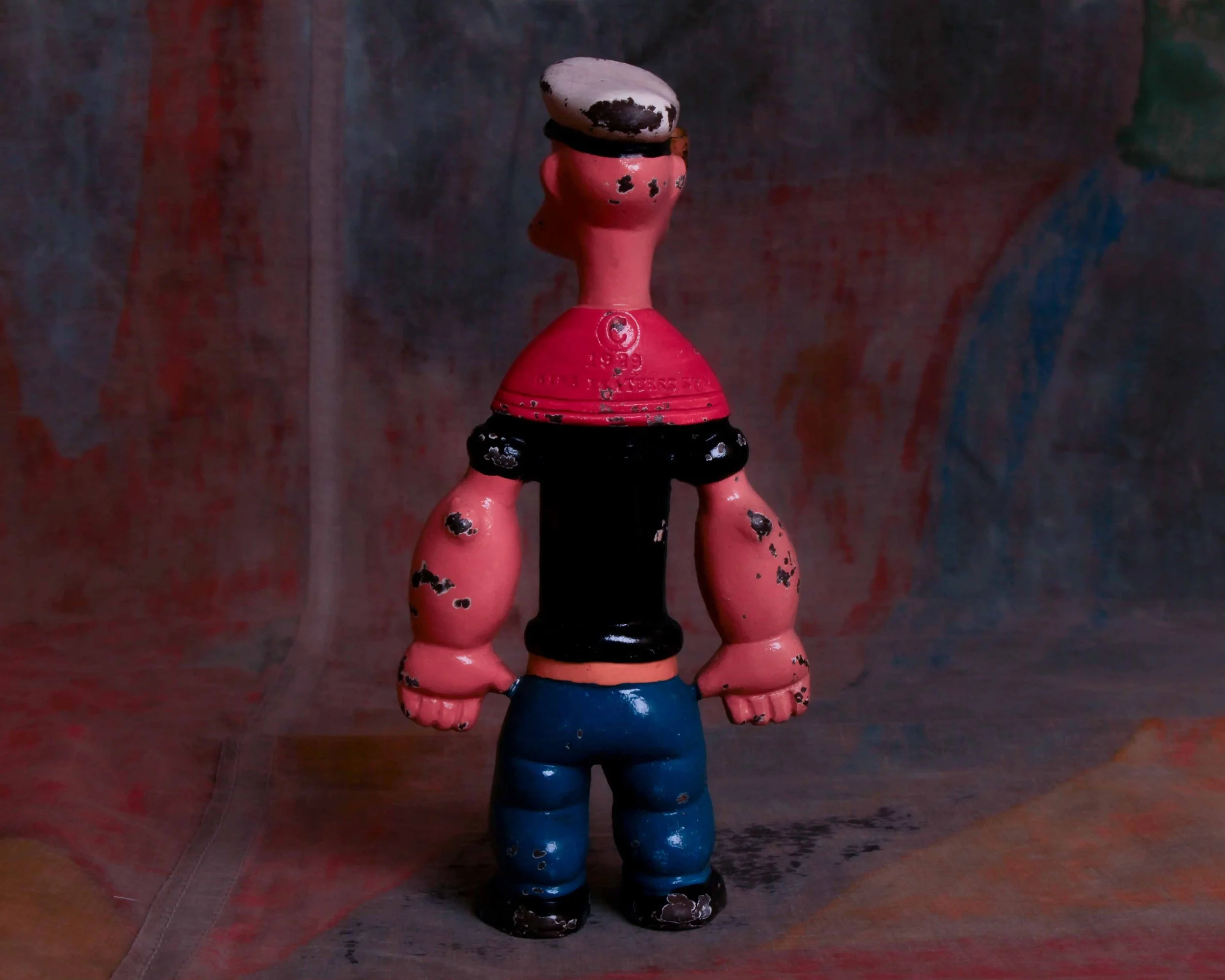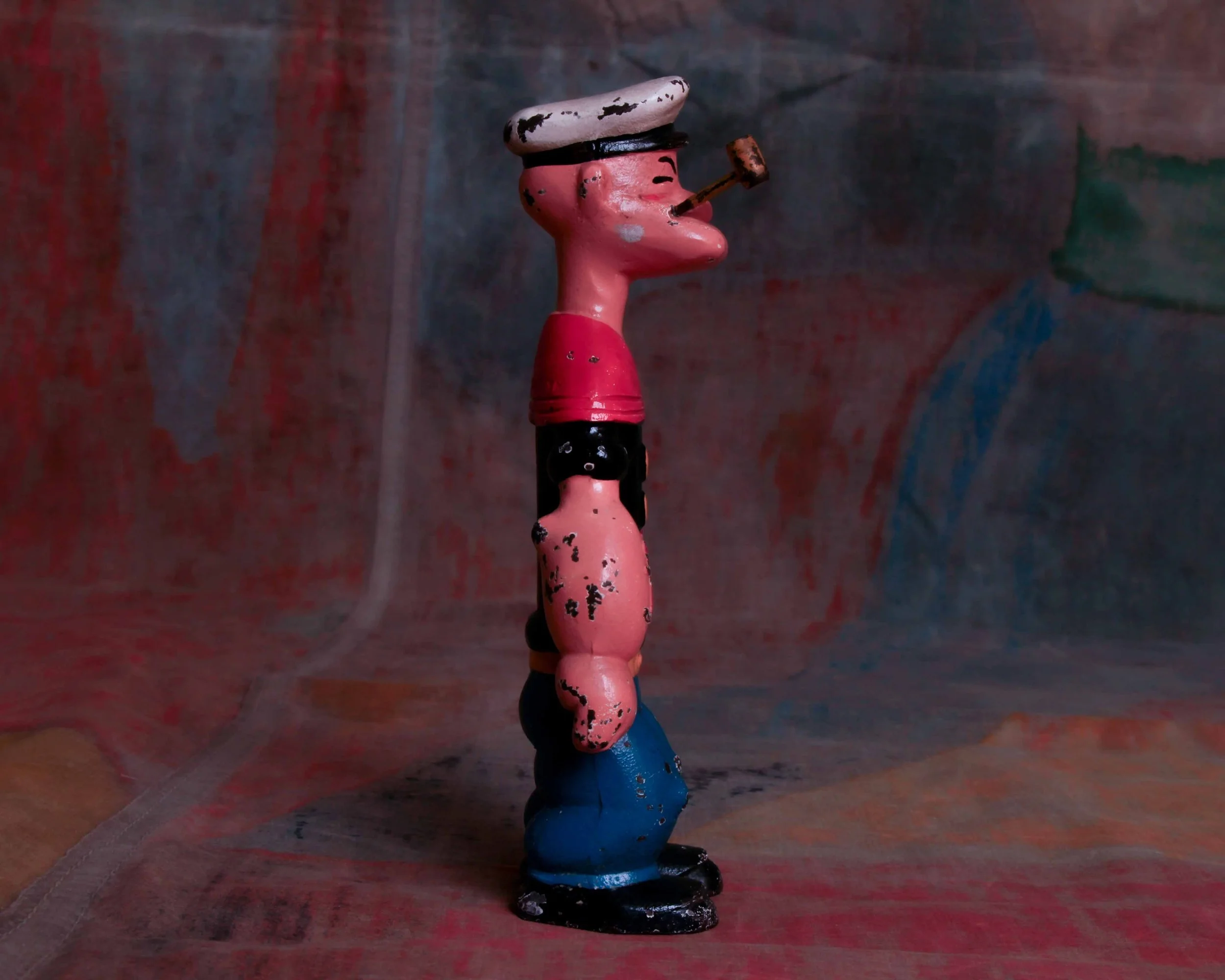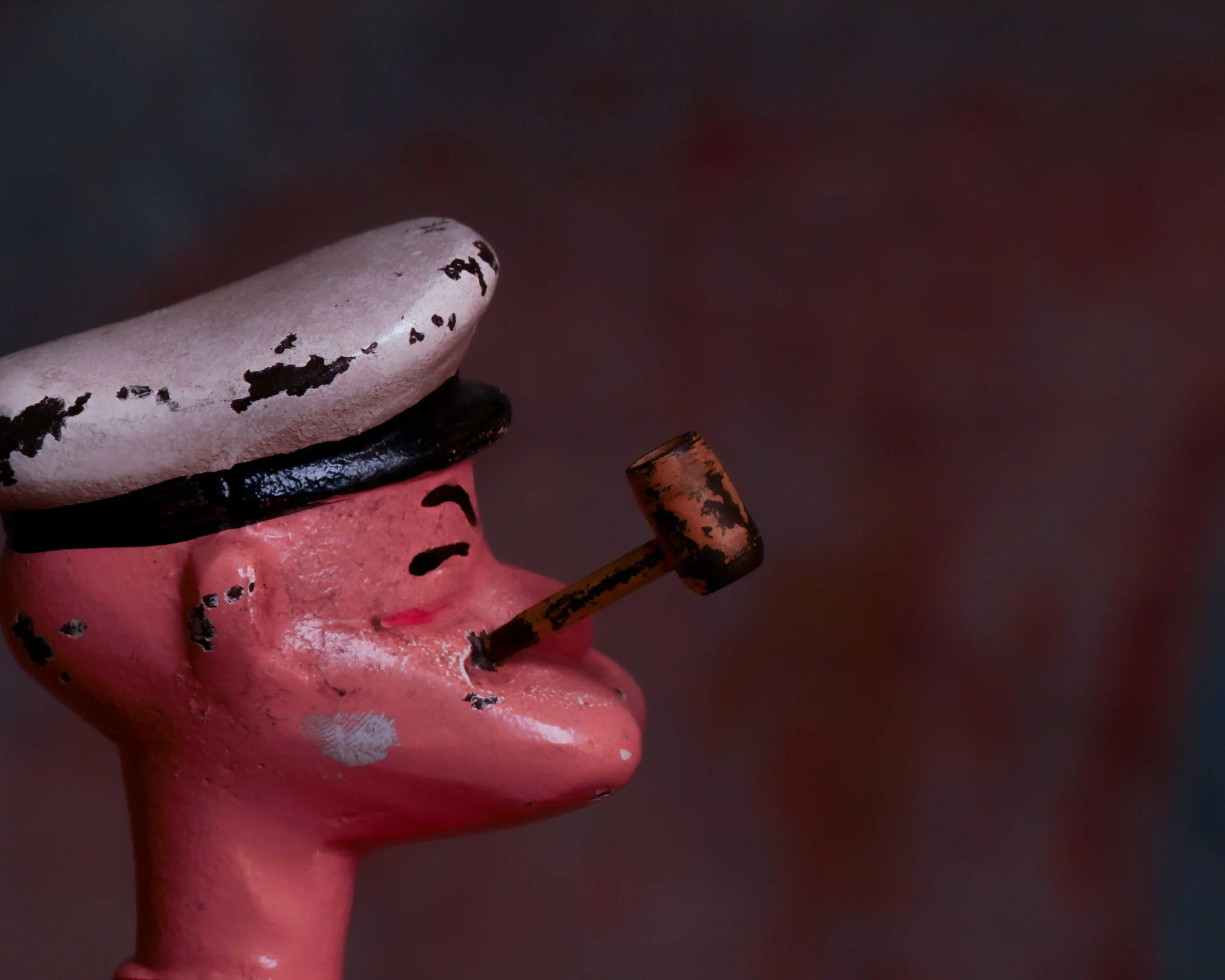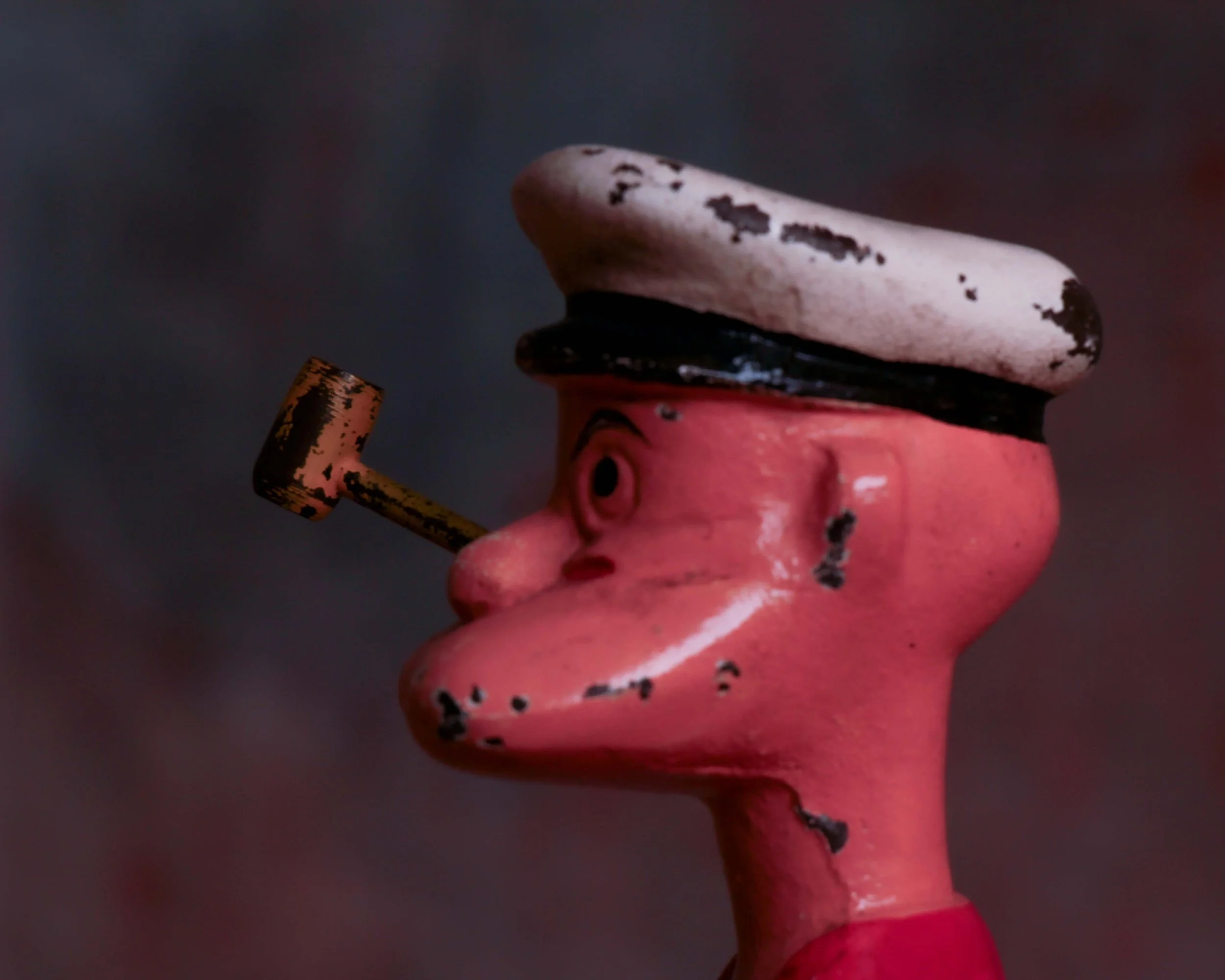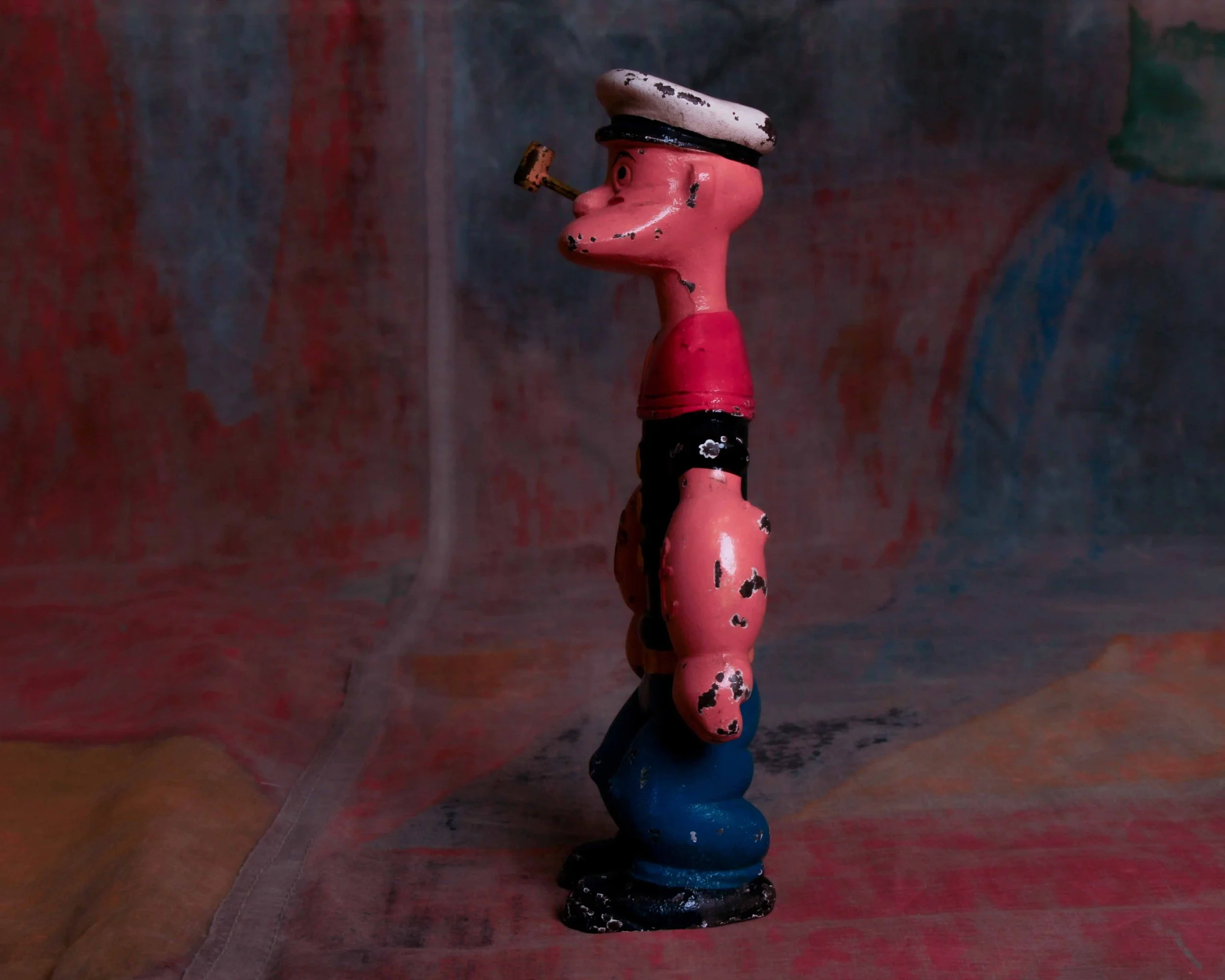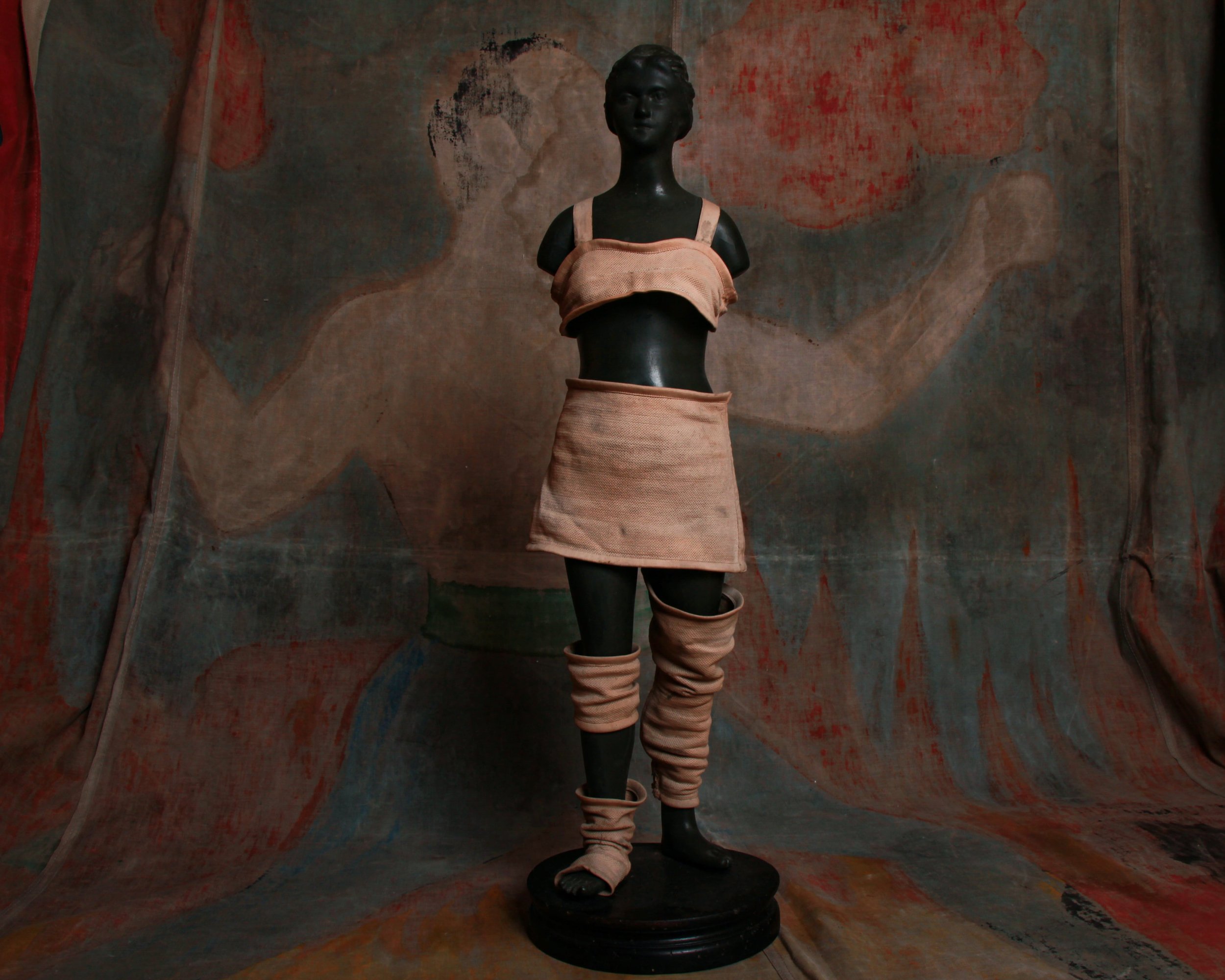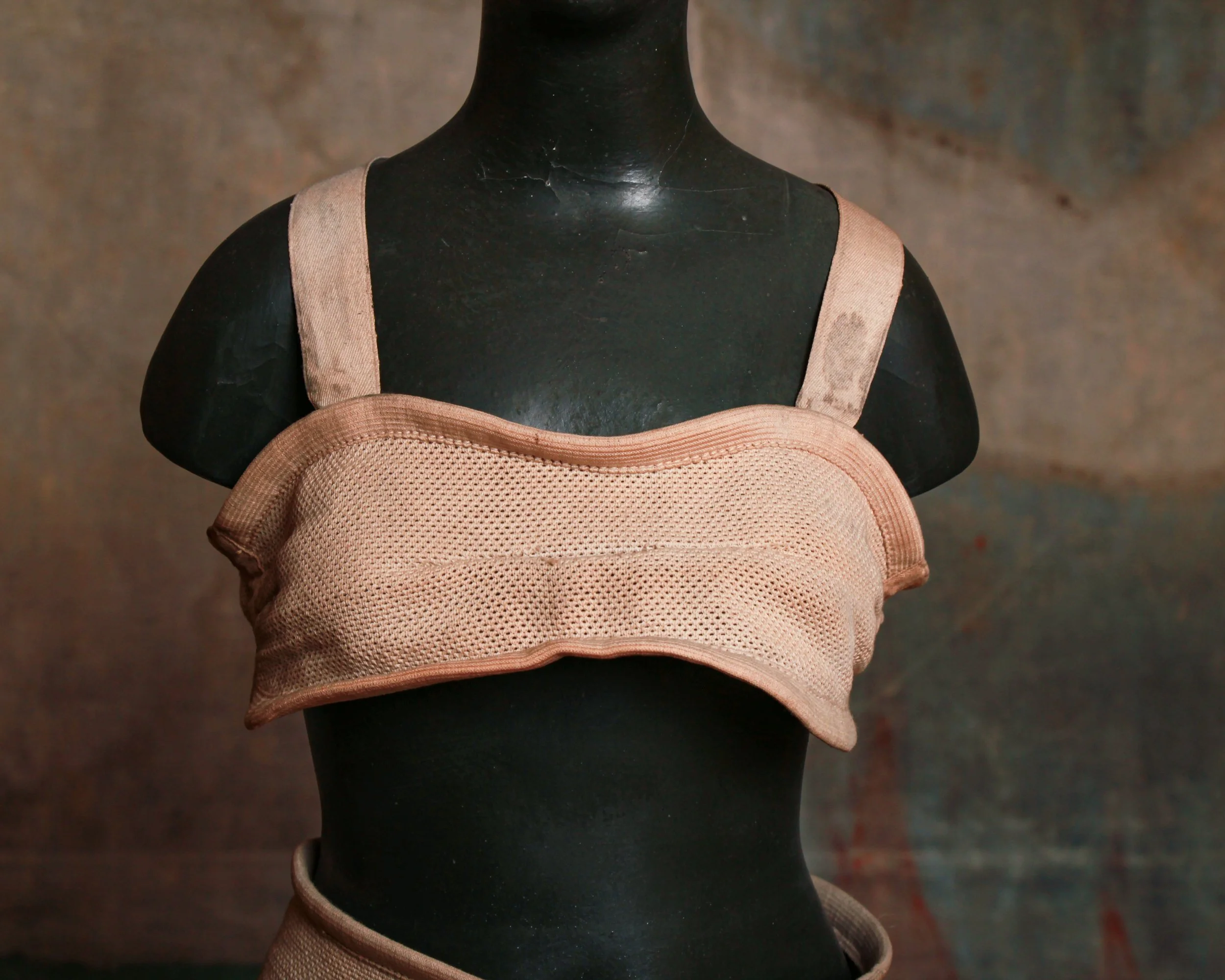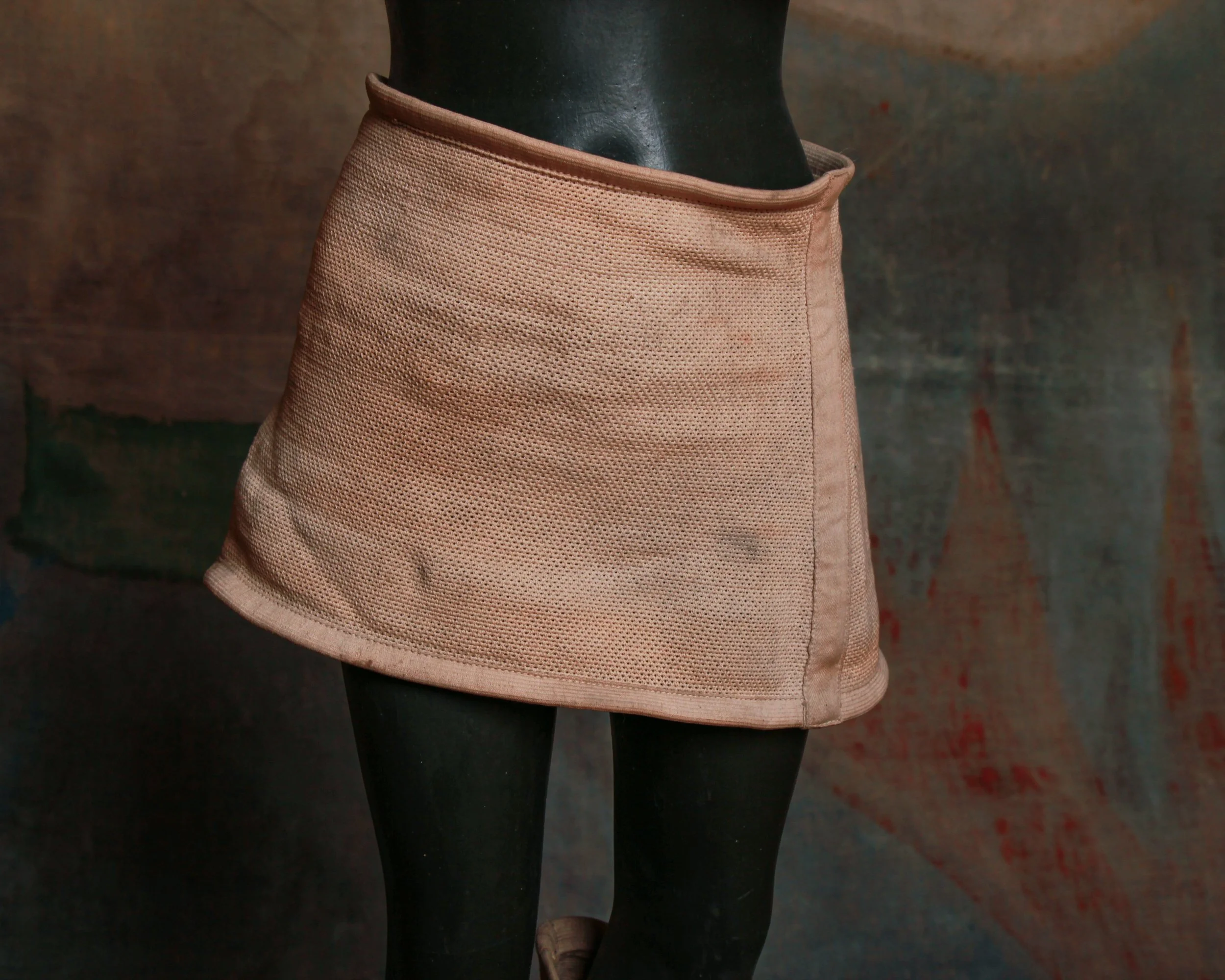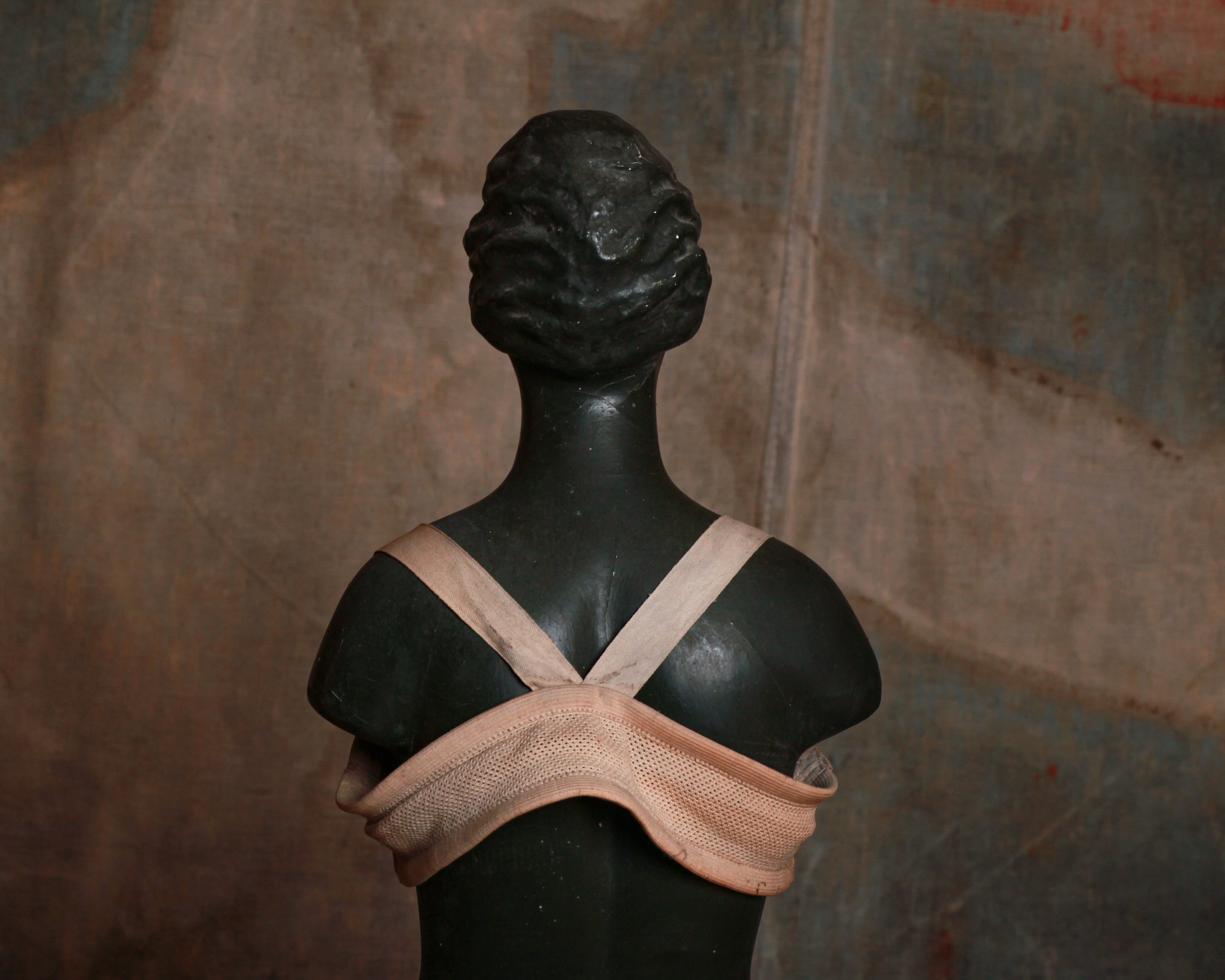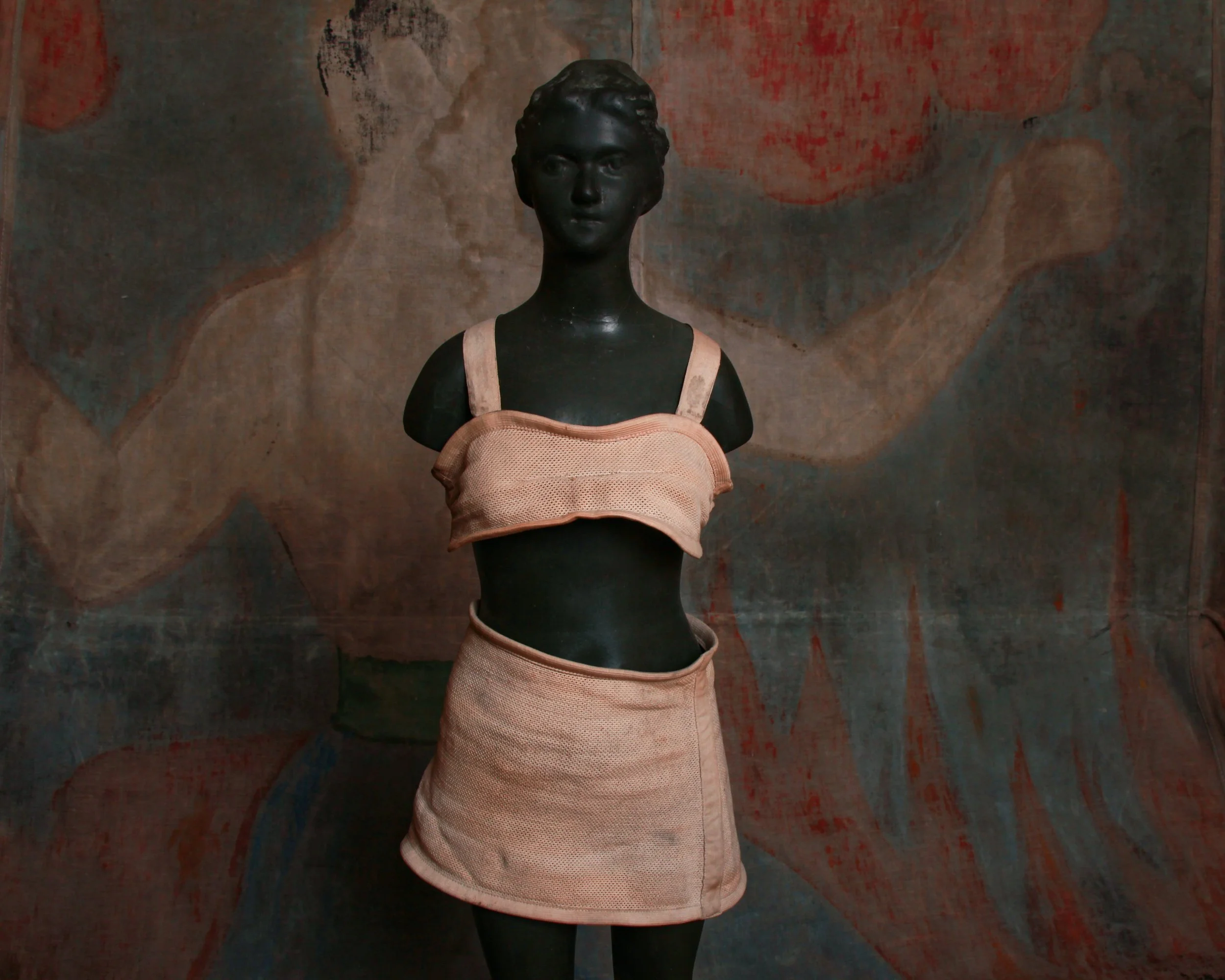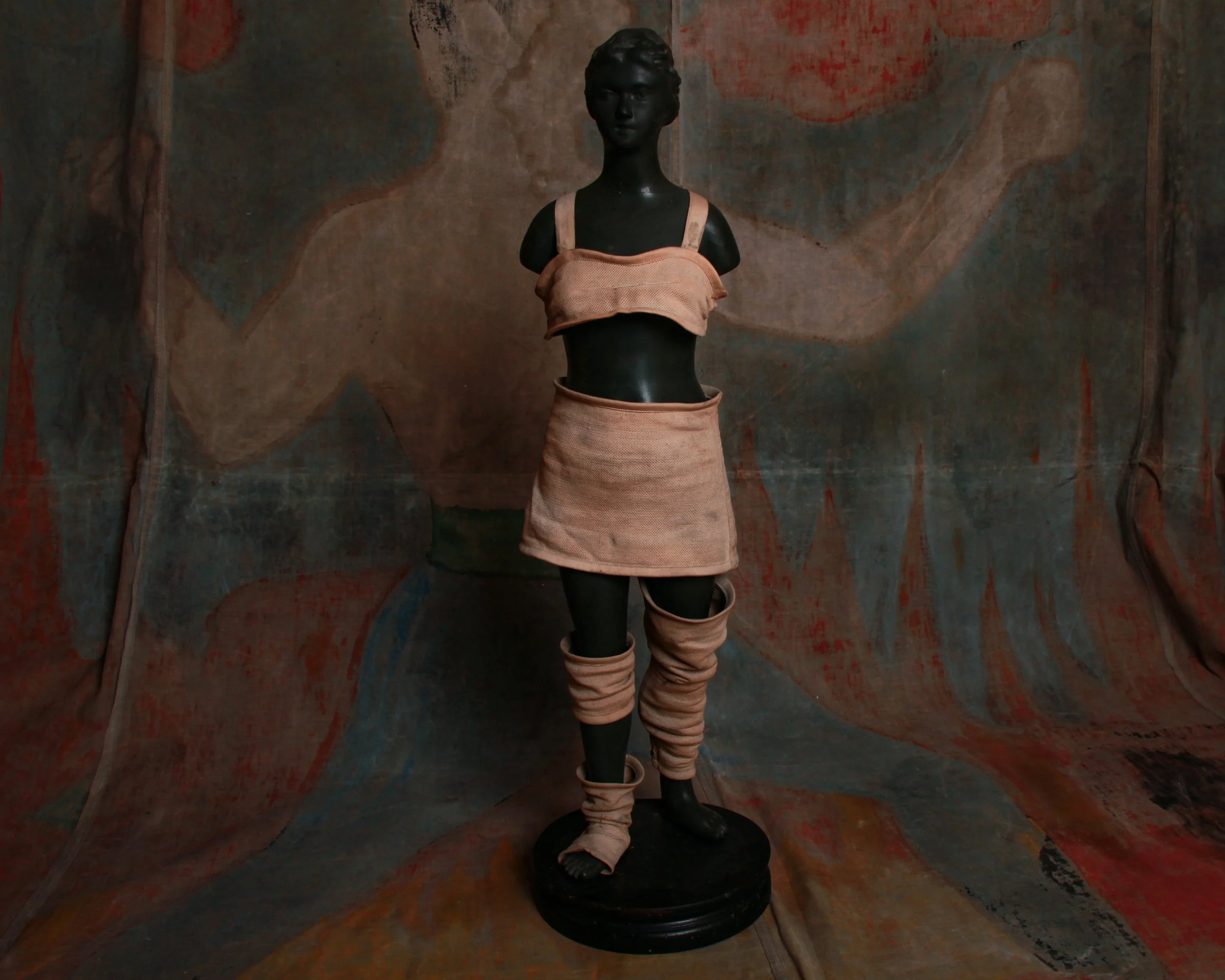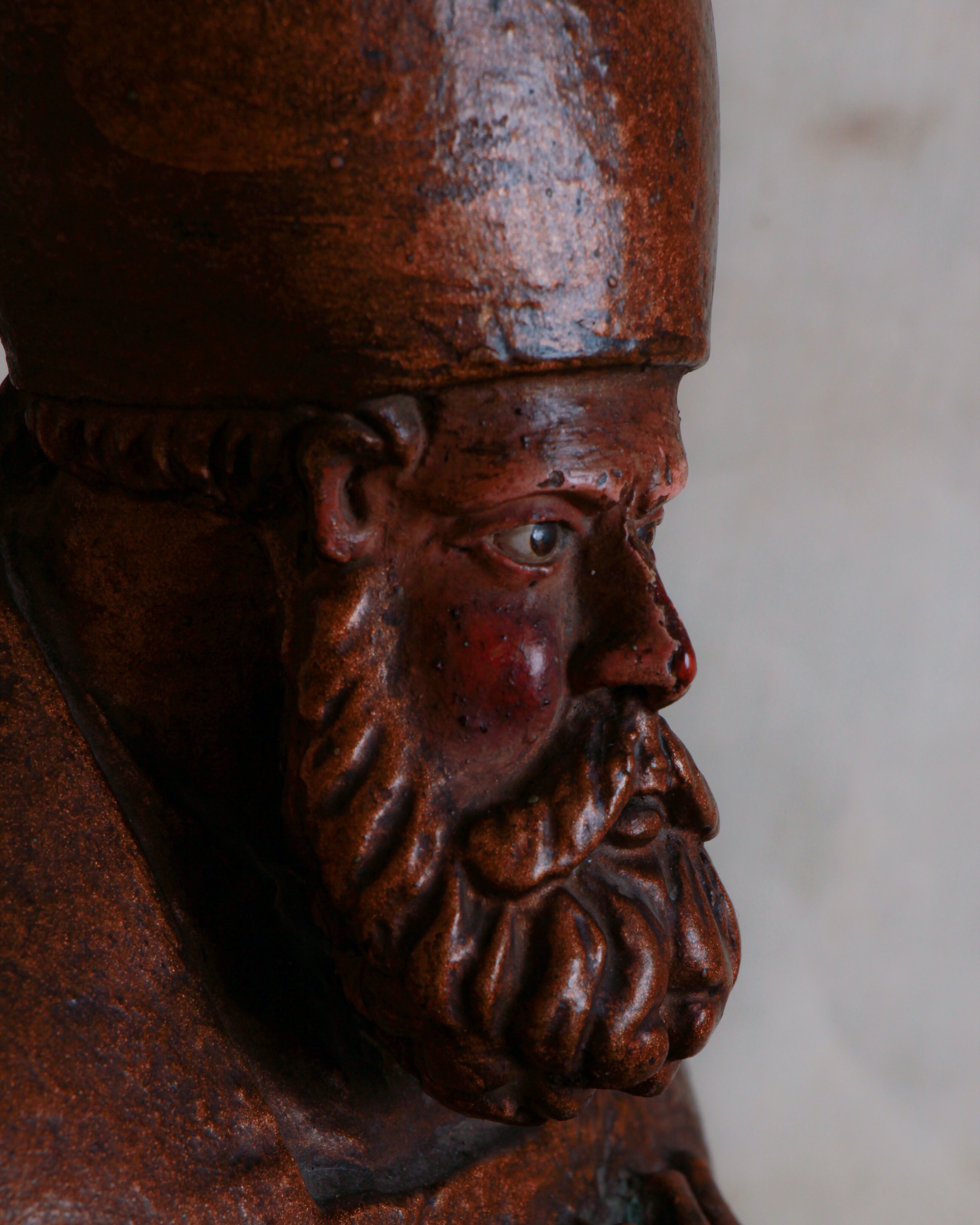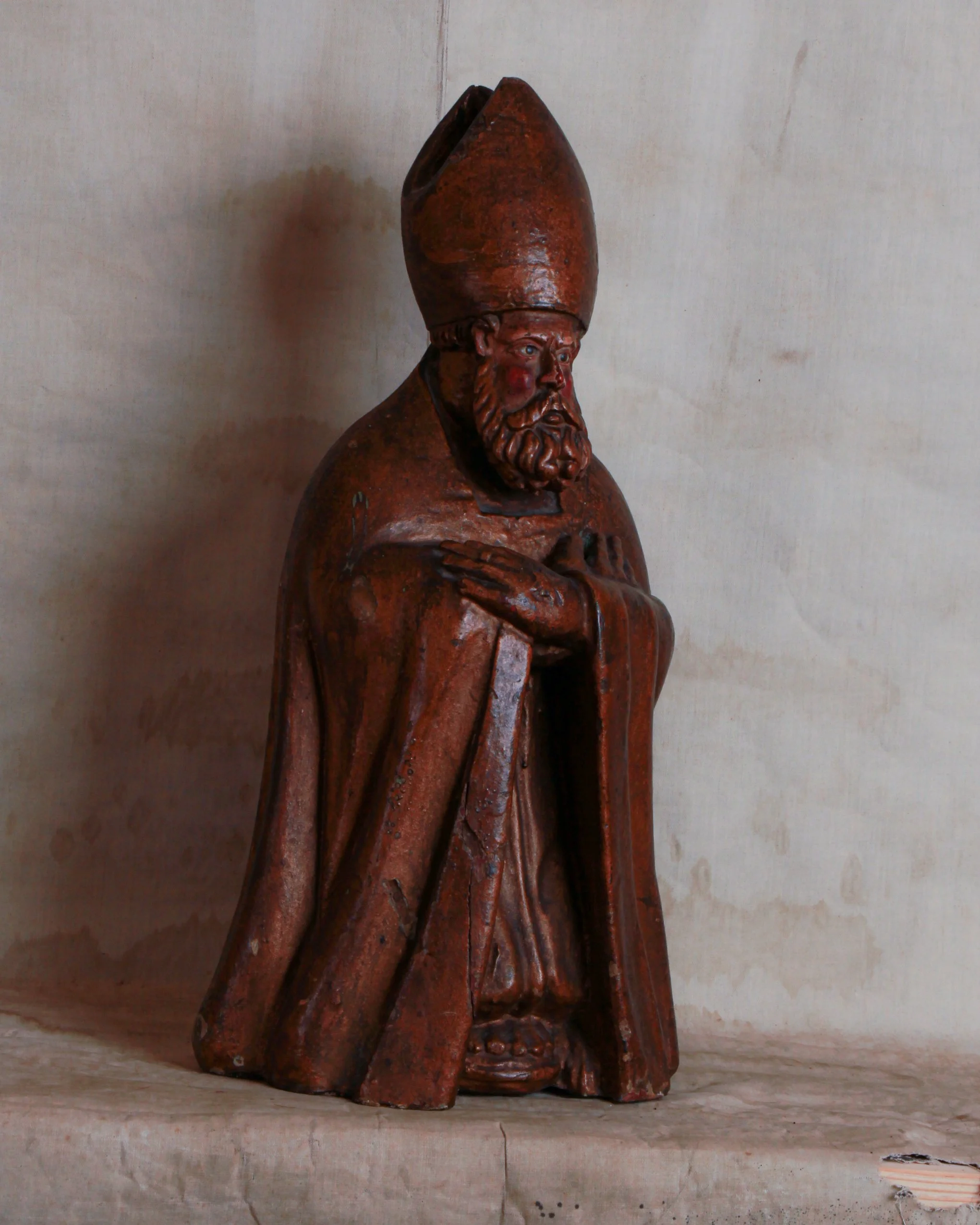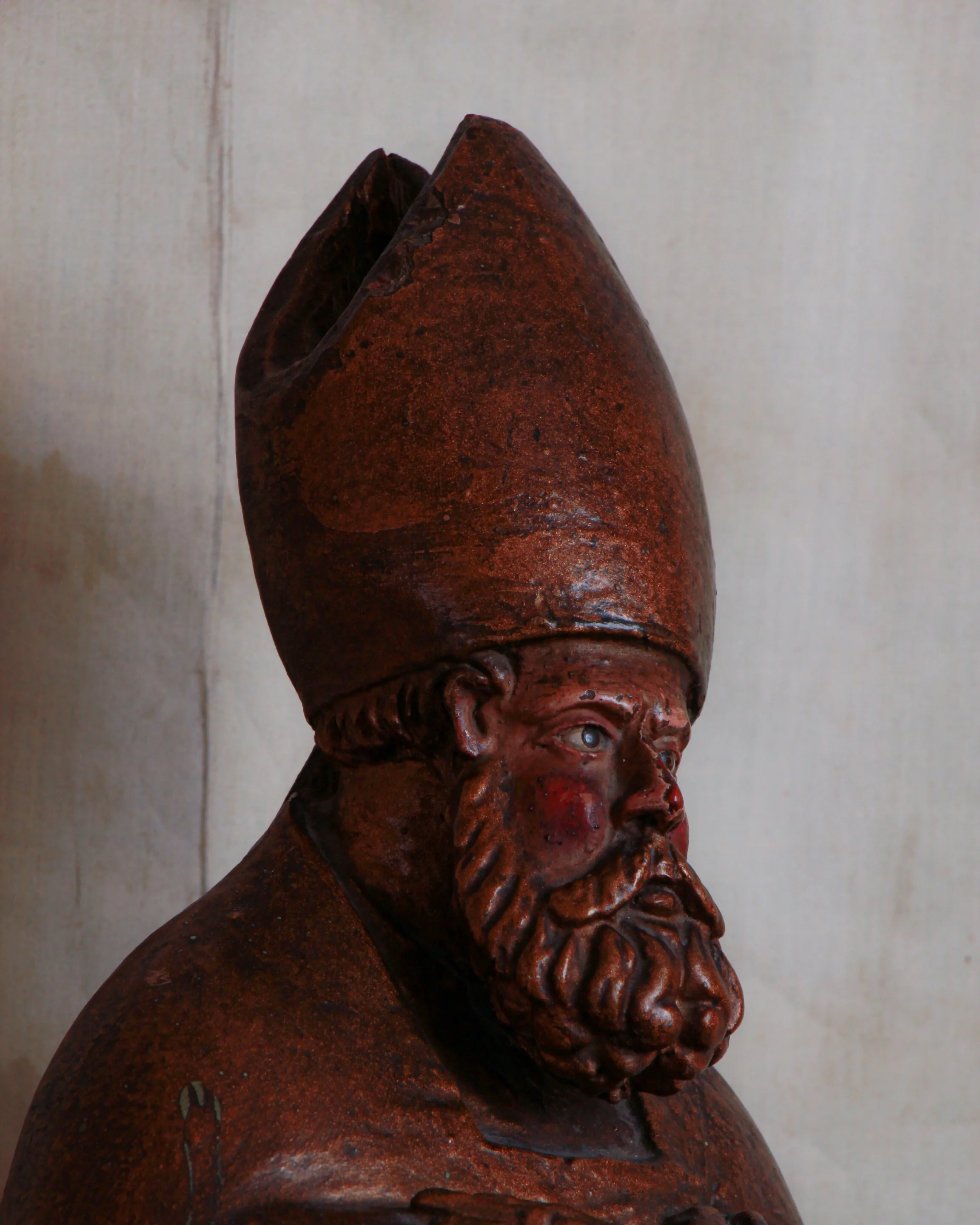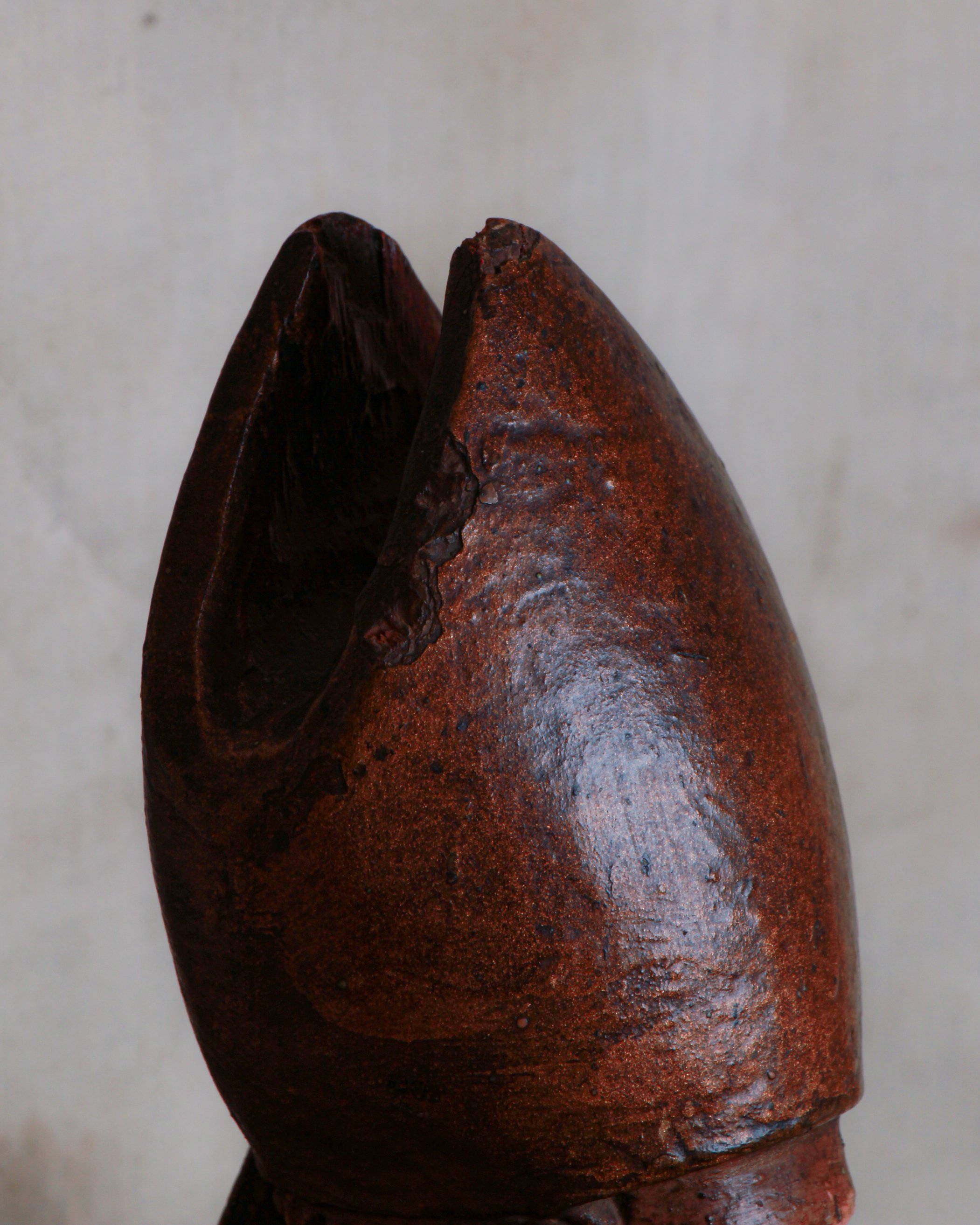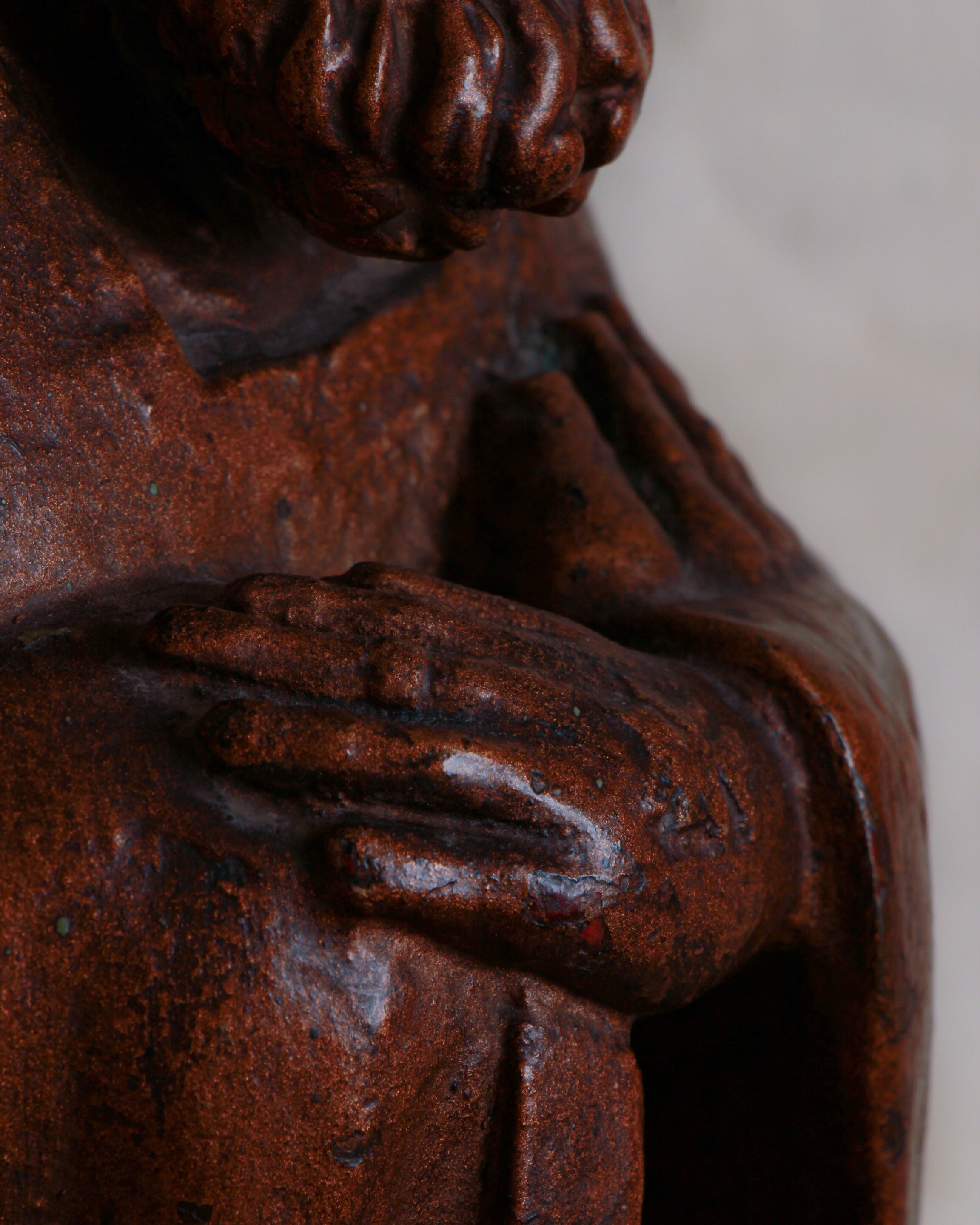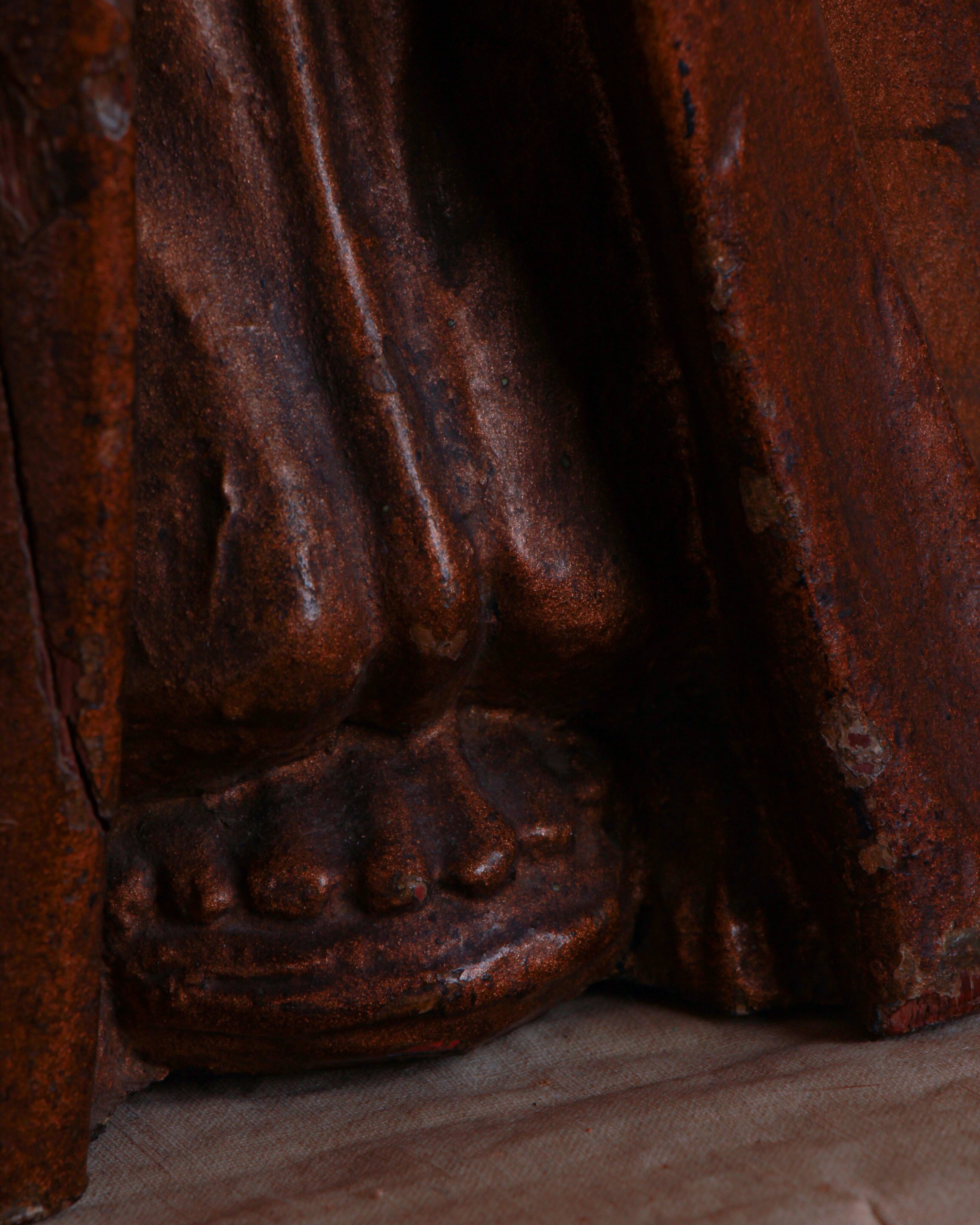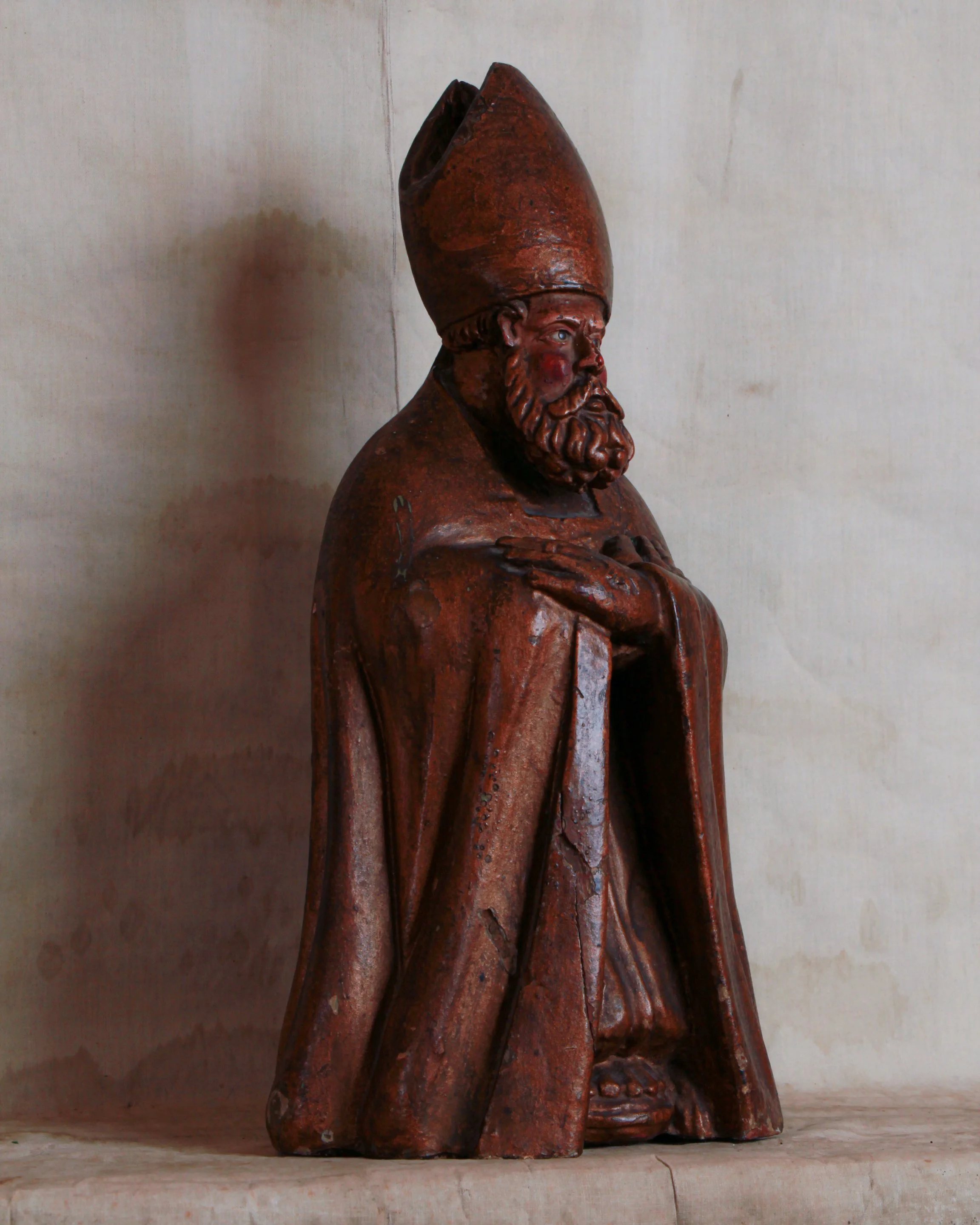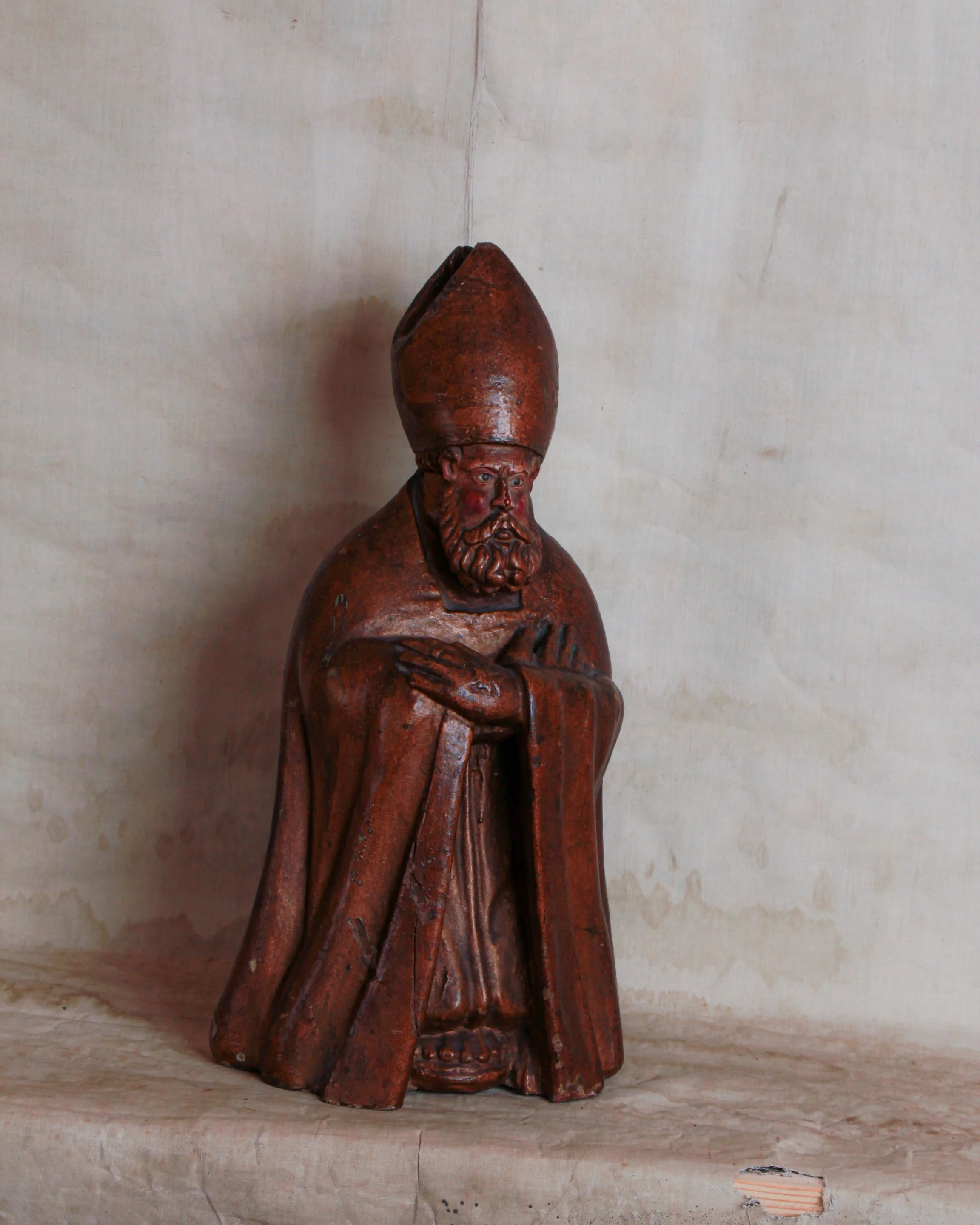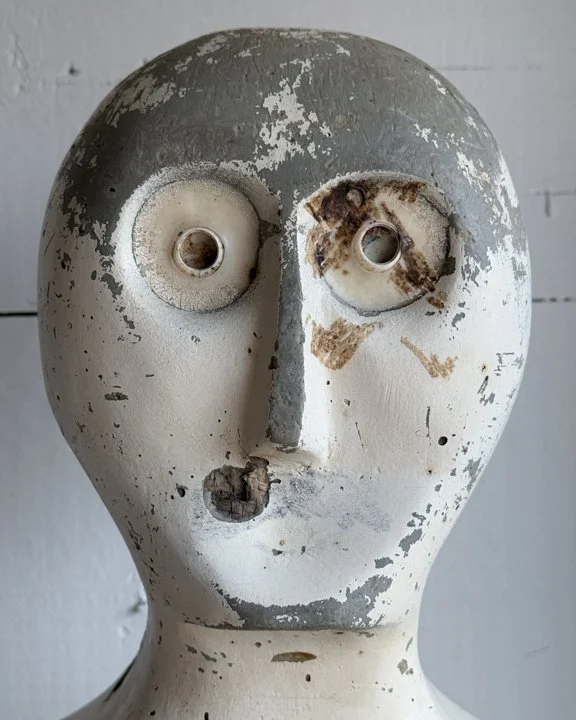

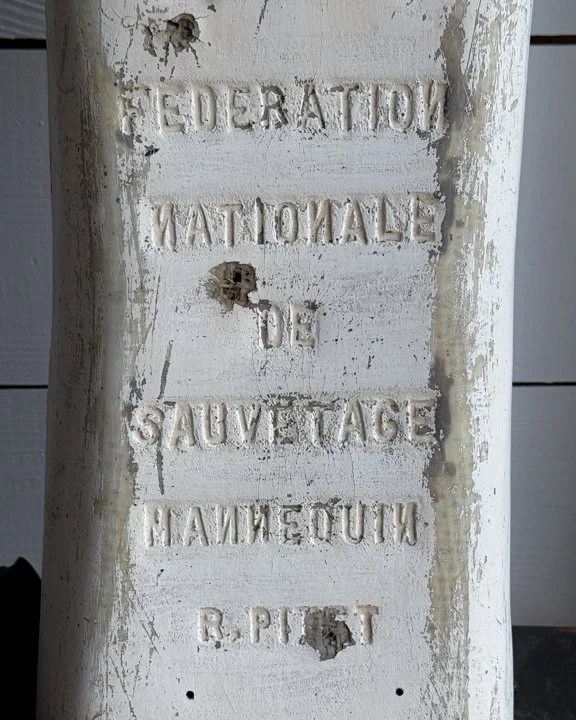
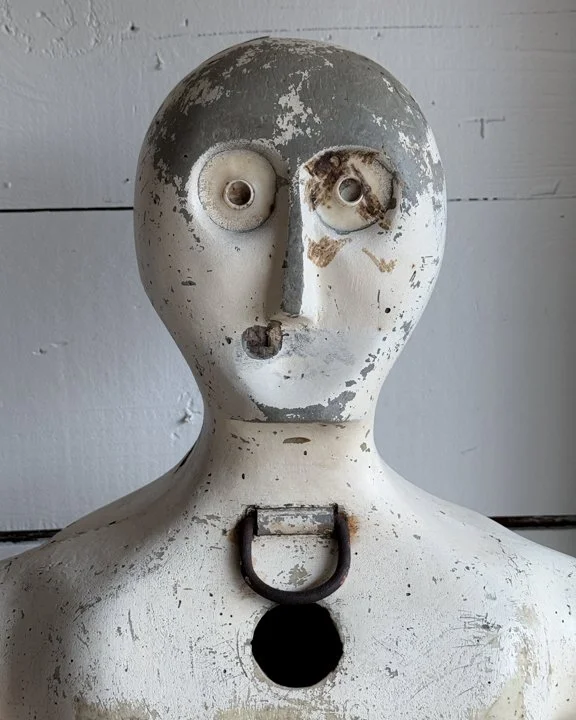
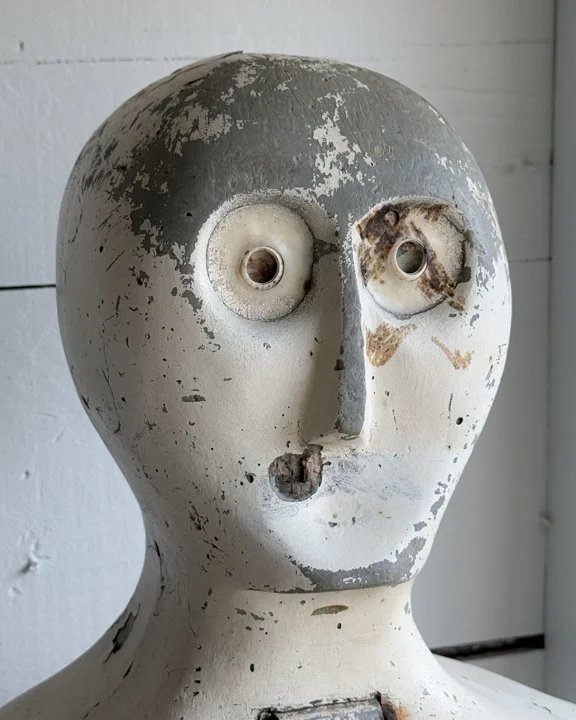
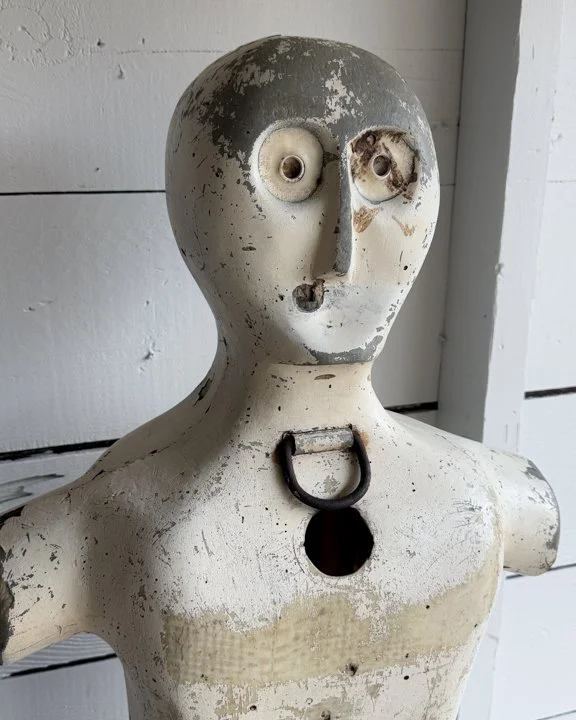

French lifeguard training dummy, cast in metal and stamped with “Fédération Nationale de Sauvetage – Mannequin – R. Pitet.” Dating to the 1930s, this unusual figure was built for water rescue practice, weighted so it could sink, be retrieved, and handled like an unconscious body during lifesaving drills.
This example comes with a cord and European plug, suggesting it may have been adapted at some point—possibly rigged to light up, though it hasn’t been tested. Mounted on a wooden base.
The surface shows age and use, with a patina that adds to its presence.
Category History
Before CPR dummies became standardized and clinical, early European lifeguard training mannequins were a bit more inventive—and a lot more tactile. Dating to the early 20th century, many were constructed from carved wood forms paired with rubber elements to simulate limbs, joints, or airway resistance. The goal wasn’t realism in the modern sense, but durability and repetition. These were tools built to be hauled to poolsides, beaches, and training halls, then handled over and over again.
The wooden core gave them weight—important for practicing carries and water rescues—while rubber sections allowed for a degree of flexibility when learning resuscitation techniques or positioning. Some even had rudimentary chest cavities or valves to mimic breathing resistance, a far cry from today’s molded plastic precision, but effective in their own way.
What’s compelling is how physical they are. You feel the intention behind them: to teach muscle memory, not just theory. They often show heavy wear—scuffs, water marks, repairs—because they were working objects, not display pieces.
They sit at an interesting crossroads of medical history and design. Part training equipment, part sculptural object, they reflect a time when lifesaving techniques were still evolving, and the tools used to teach them were as hands-on and resourceful as the people using them.
French lifeguard training dummy, cast in metal and stamped with “Fédération Nationale de Sauvetage – Mannequin – R. Pitet.” Dating to the 1930s, this unusual figure was built for water rescue practice, weighted so it could sink, be retrieved, and handled like an unconscious body during lifesaving drills.
This example comes with a cord and European plug, suggesting it may have been adapted at some point—possibly rigged to light up, though it hasn’t been tested. Mounted on a wooden base.
The surface shows age and use, with a patina that adds to its presence.
Category History
Before CPR dummies became standardized and clinical, early European lifeguard training mannequins were a bit more inventive—and a lot more tactile. Dating to the early 20th century, many were constructed from carved wood forms paired with rubber elements to simulate limbs, joints, or airway resistance. The goal wasn’t realism in the modern sense, but durability and repetition. These were tools built to be hauled to poolsides, beaches, and training halls, then handled over and over again.
The wooden core gave them weight—important for practicing carries and water rescues—while rubber sections allowed for a degree of flexibility when learning resuscitation techniques or positioning. Some even had rudimentary chest cavities or valves to mimic breathing resistance, a far cry from today’s molded plastic precision, but effective in their own way.
What’s compelling is how physical they are. You feel the intention behind them: to teach muscle memory, not just theory. They often show heavy wear—scuffs, water marks, repairs—because they were working objects, not display pieces.
They sit at an interesting crossroads of medical history and design. Part training equipment, part sculptural object, they reflect a time when lifesaving techniques were still evolving, and the tools used to teach them were as hands-on and resourceful as the people using them.