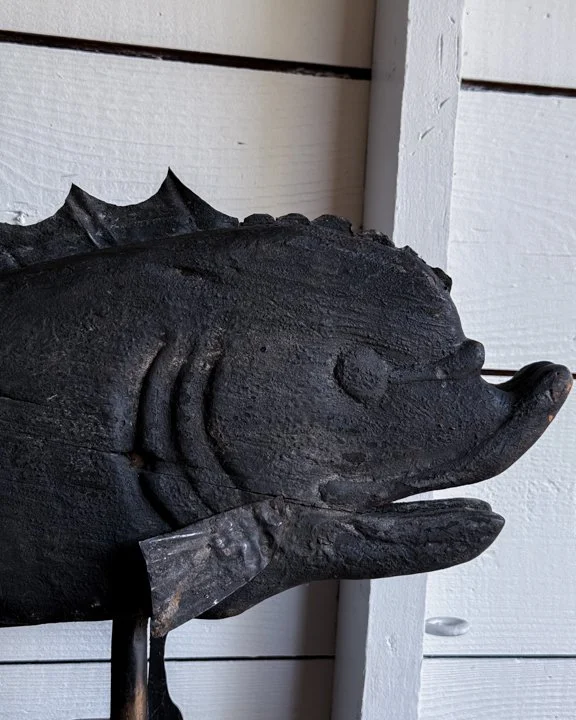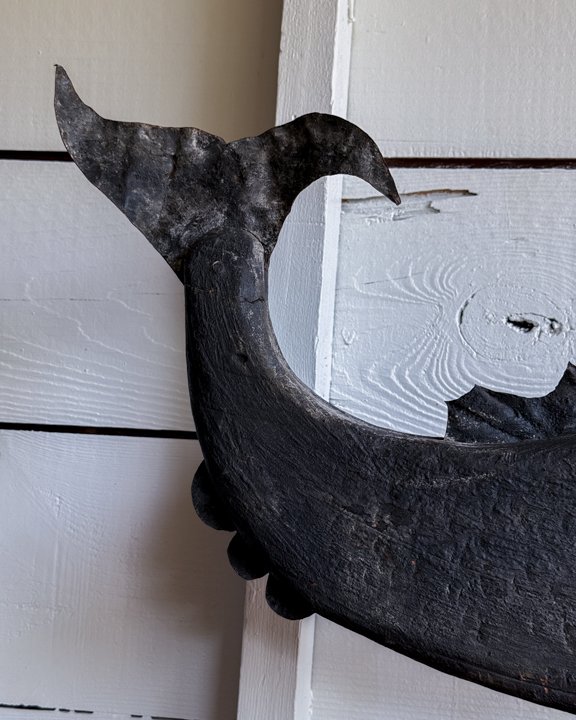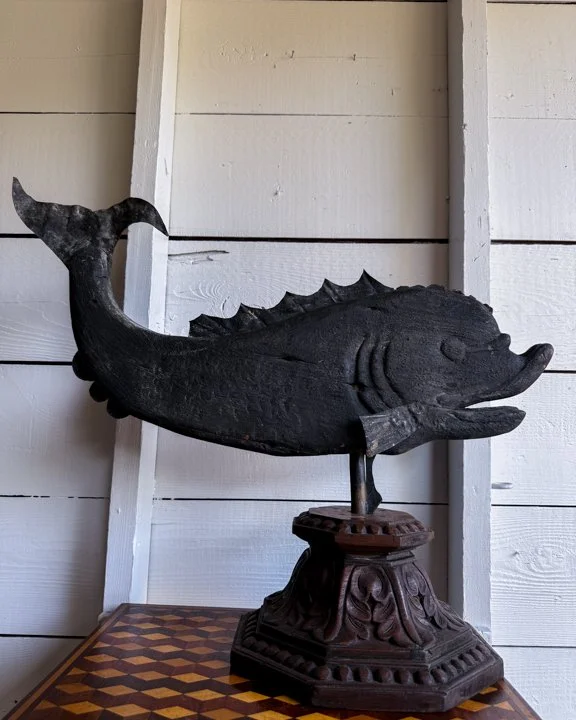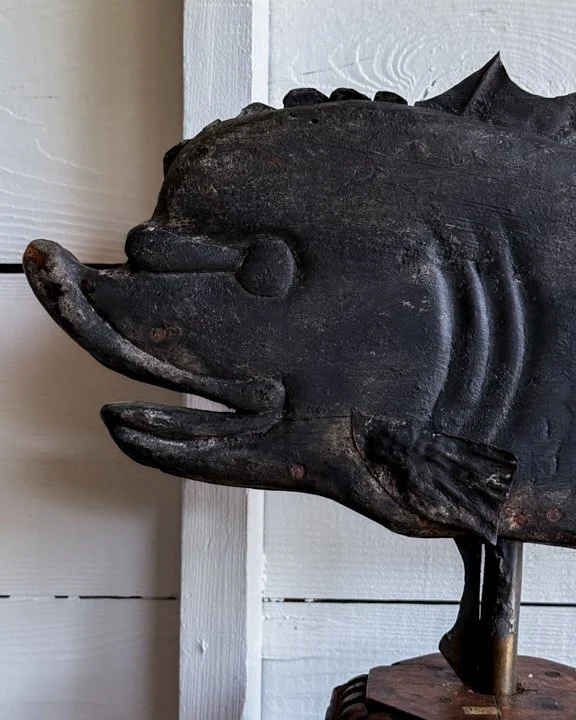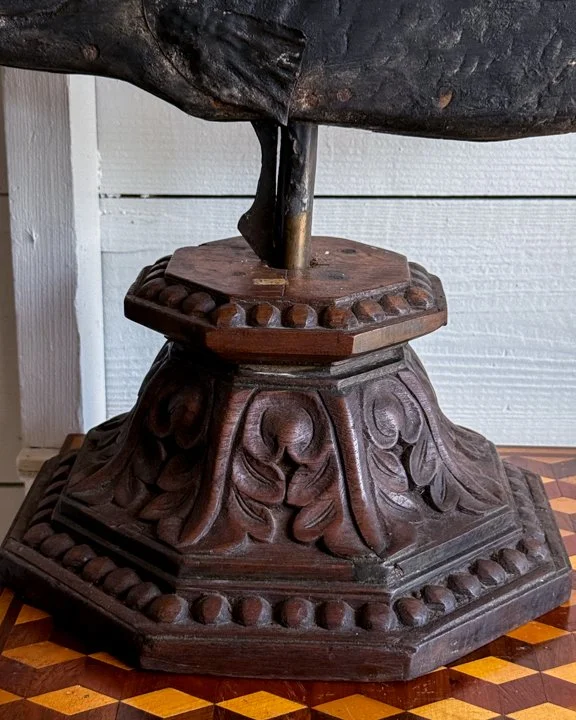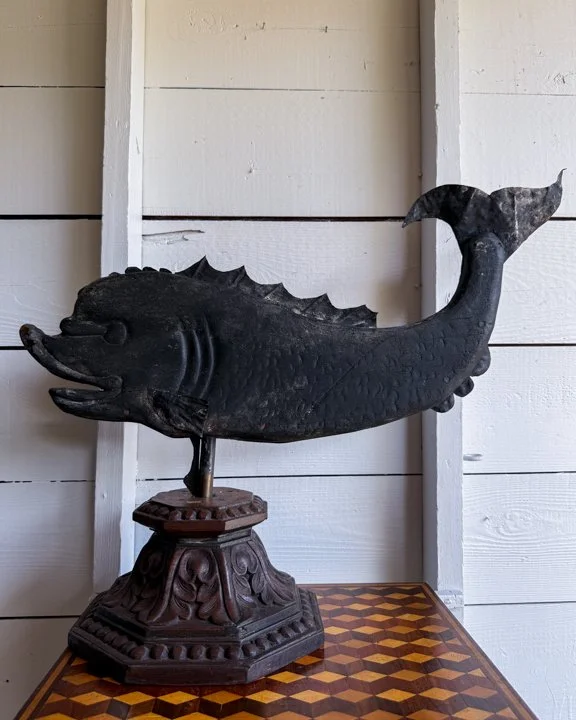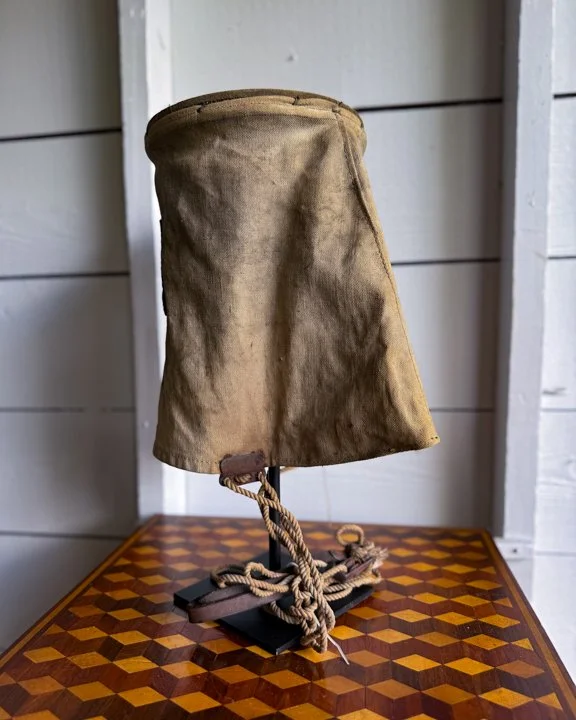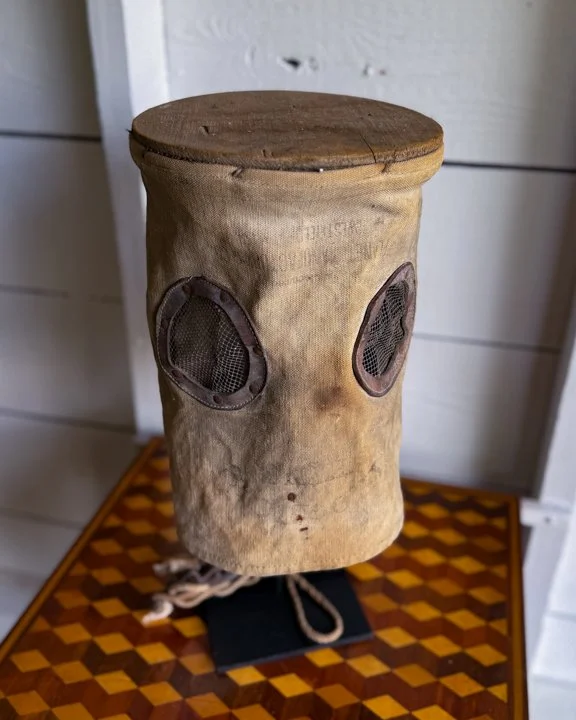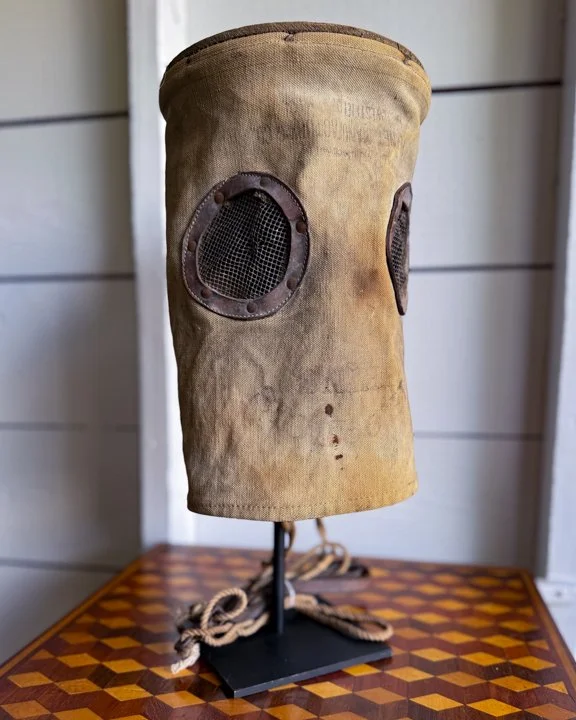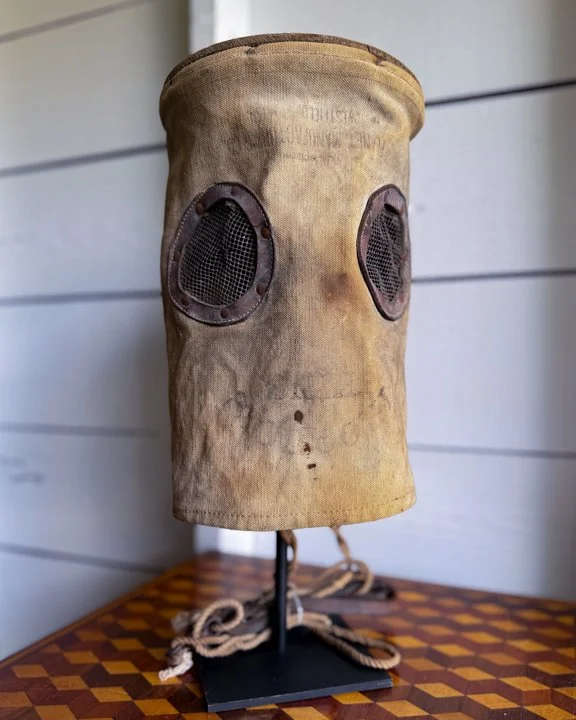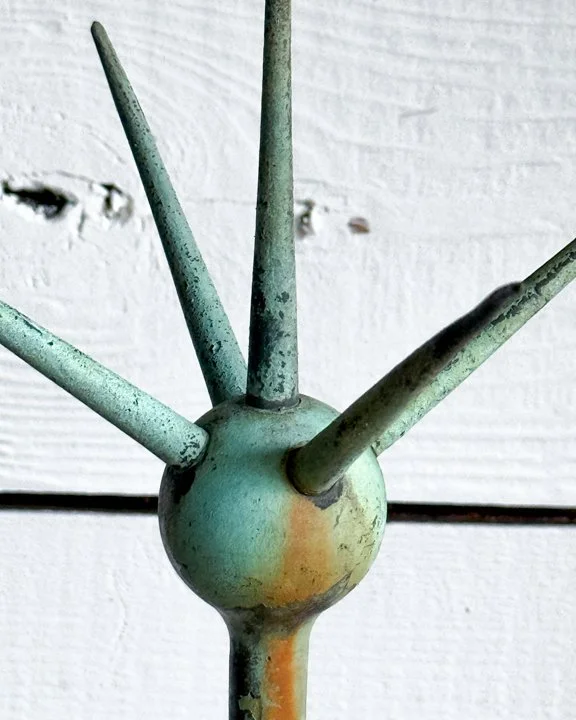
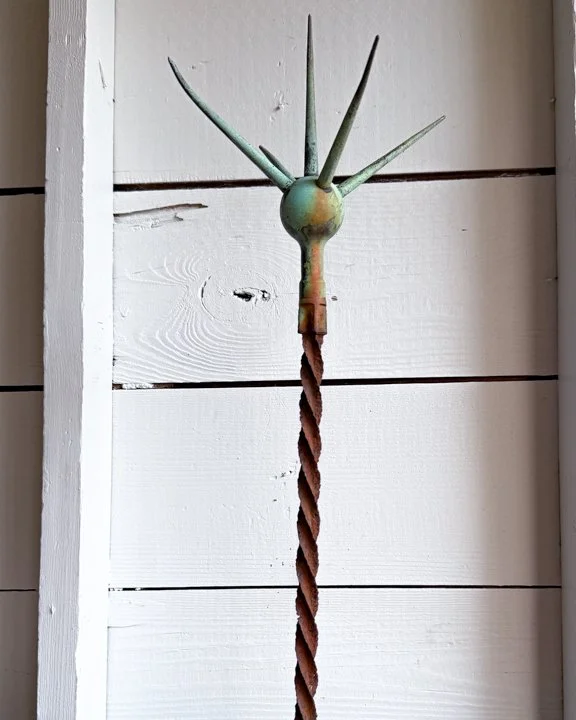
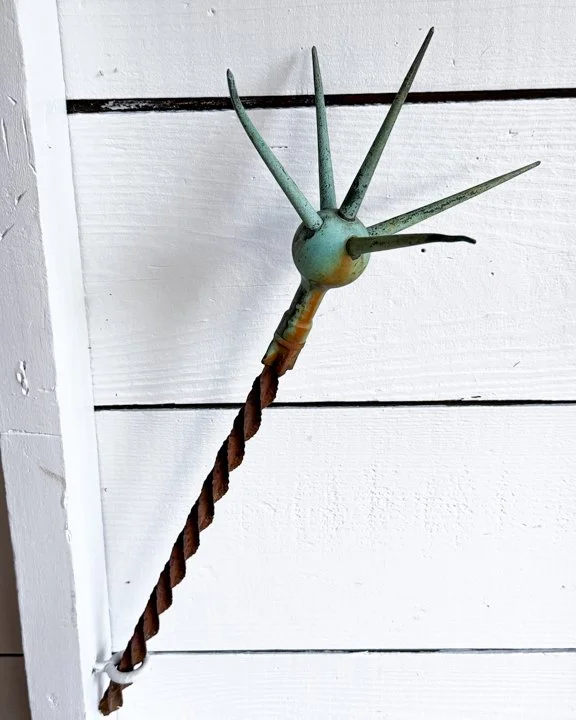
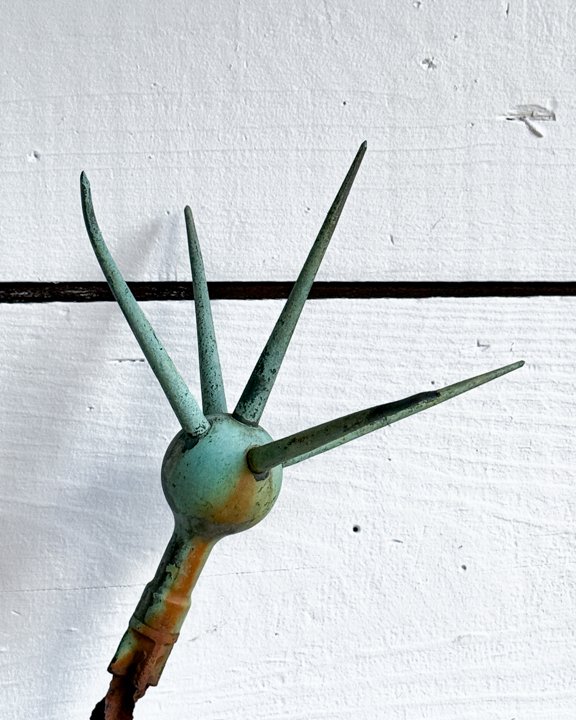
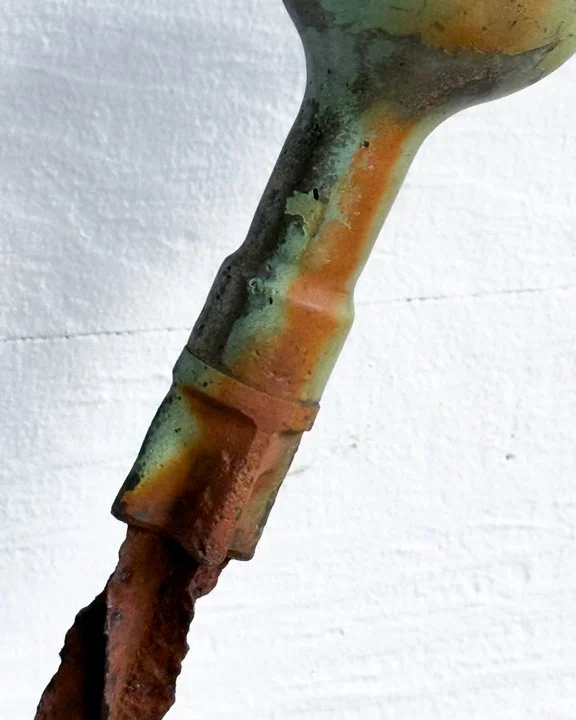
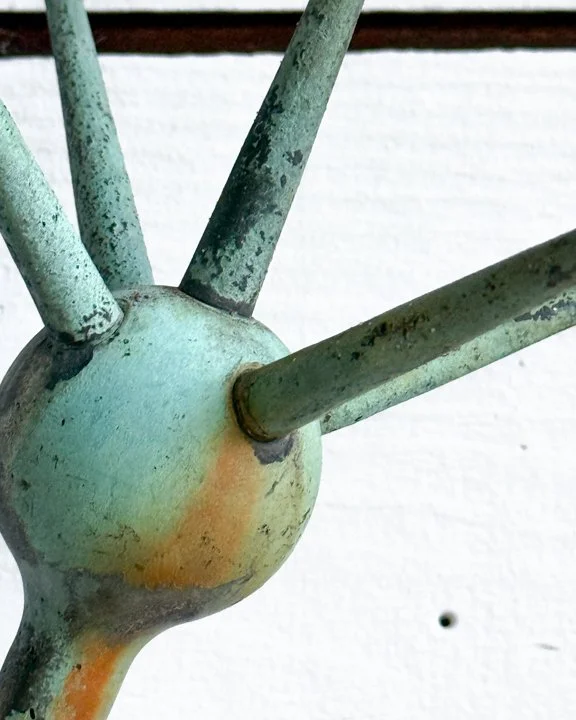
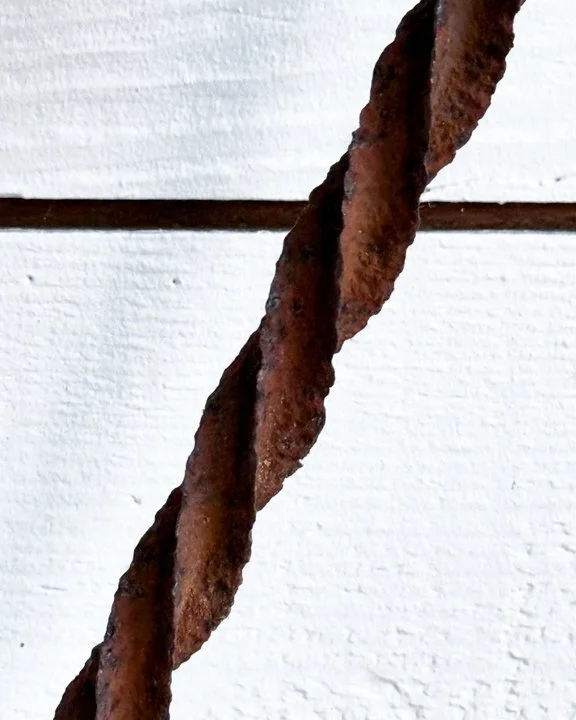
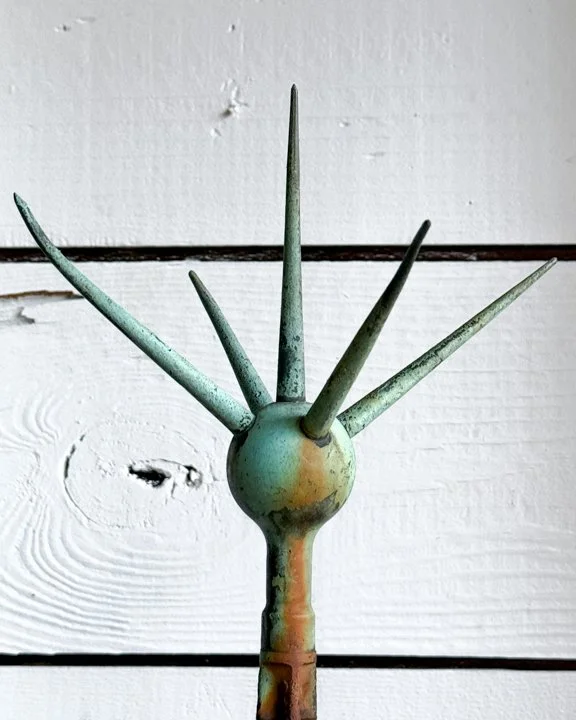
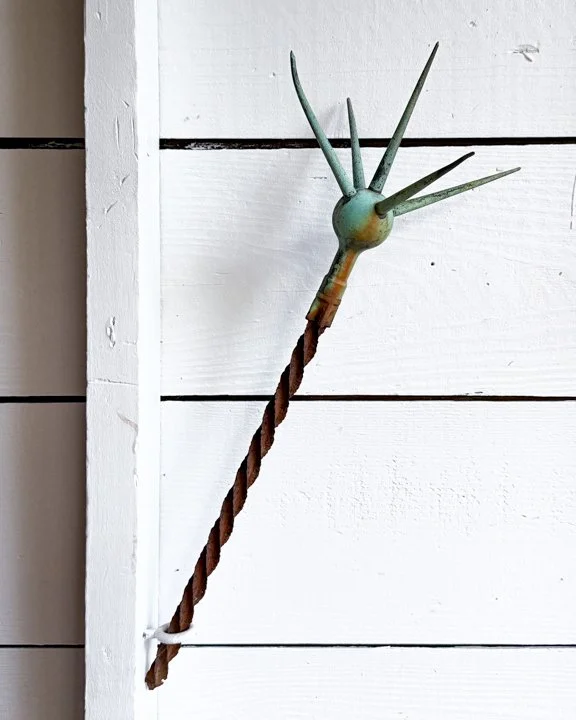
This antique lightning rod finial has the perfect balance of menace and beauty — part weapon, part weather guardian. Made of copper with a brilliant verdigris patina, its spiked crown once channeled raw electricity from stormy skies to the safety of a rooftop conductor. The twisted iron shaft below adds a sculptural, almost steampunk touch — like a medieval scepter for the gods of thunder.
Lightning Rod
The antique lightning rod is one of those objects where science, superstition, and craftsmanship all meet at the roofline. First popularized in the late 18th century after Benjamin Franklin demonstrated the electrical nature of lightning, these rods were designed to do something deceptively simple: give a lightning strike a safe path to the ground.
By the 19th century, they had become common fixtures on barns, homes, and public buildings. A typical system included a pointed metal rod at the top, connected to a conductive cable running down the structure and into the earth. The goal wasn’t to “attract” lightning so much as to manage it—redirecting that immense energy away from wood and combustible materials.
But practicality wasn’t the whole story. Many rods were topped with decorative finials—glass balls, arrowheads, ornate points—that added a visual element to their function. Those glass spheres, often in soft blues or ambers, were believed by some to offer additional protection, though their role was more aesthetic than scientific.
What makes antique lightning rods compelling now is that dual nature. They’re engineered, but also expressive. Weathered metal, oxidized surfaces, and the occasional surviving glass element give them a presence that feels both industrial and sculptural.
They once stood as quiet guardians, channeling something unpredictable into something controlled. Today, they read as markers of ingenuity—objects that took a force of nature and found a way to live with it.
This antique lightning rod finial has the perfect balance of menace and beauty — part weapon, part weather guardian. Made of copper with a brilliant verdigris patina, its spiked crown once channeled raw electricity from stormy skies to the safety of a rooftop conductor. The twisted iron shaft below adds a sculptural, almost steampunk touch — like a medieval scepter for the gods of thunder.
Lightning Rod
The antique lightning rod is one of those objects where science, superstition, and craftsmanship all meet at the roofline. First popularized in the late 18th century after Benjamin Franklin demonstrated the electrical nature of lightning, these rods were designed to do something deceptively simple: give a lightning strike a safe path to the ground.
By the 19th century, they had become common fixtures on barns, homes, and public buildings. A typical system included a pointed metal rod at the top, connected to a conductive cable running down the structure and into the earth. The goal wasn’t to “attract” lightning so much as to manage it—redirecting that immense energy away from wood and combustible materials.
But practicality wasn’t the whole story. Many rods were topped with decorative finials—glass balls, arrowheads, ornate points—that added a visual element to their function. Those glass spheres, often in soft blues or ambers, were believed by some to offer additional protection, though their role was more aesthetic than scientific.
What makes antique lightning rods compelling now is that dual nature. They’re engineered, but also expressive. Weathered metal, oxidized surfaces, and the occasional surviving glass element give them a presence that feels both industrial and sculptural.
They once stood as quiet guardians, channeling something unpredictable into something controlled. Today, they read as markers of ingenuity—objects that took a force of nature and found a way to live with it.