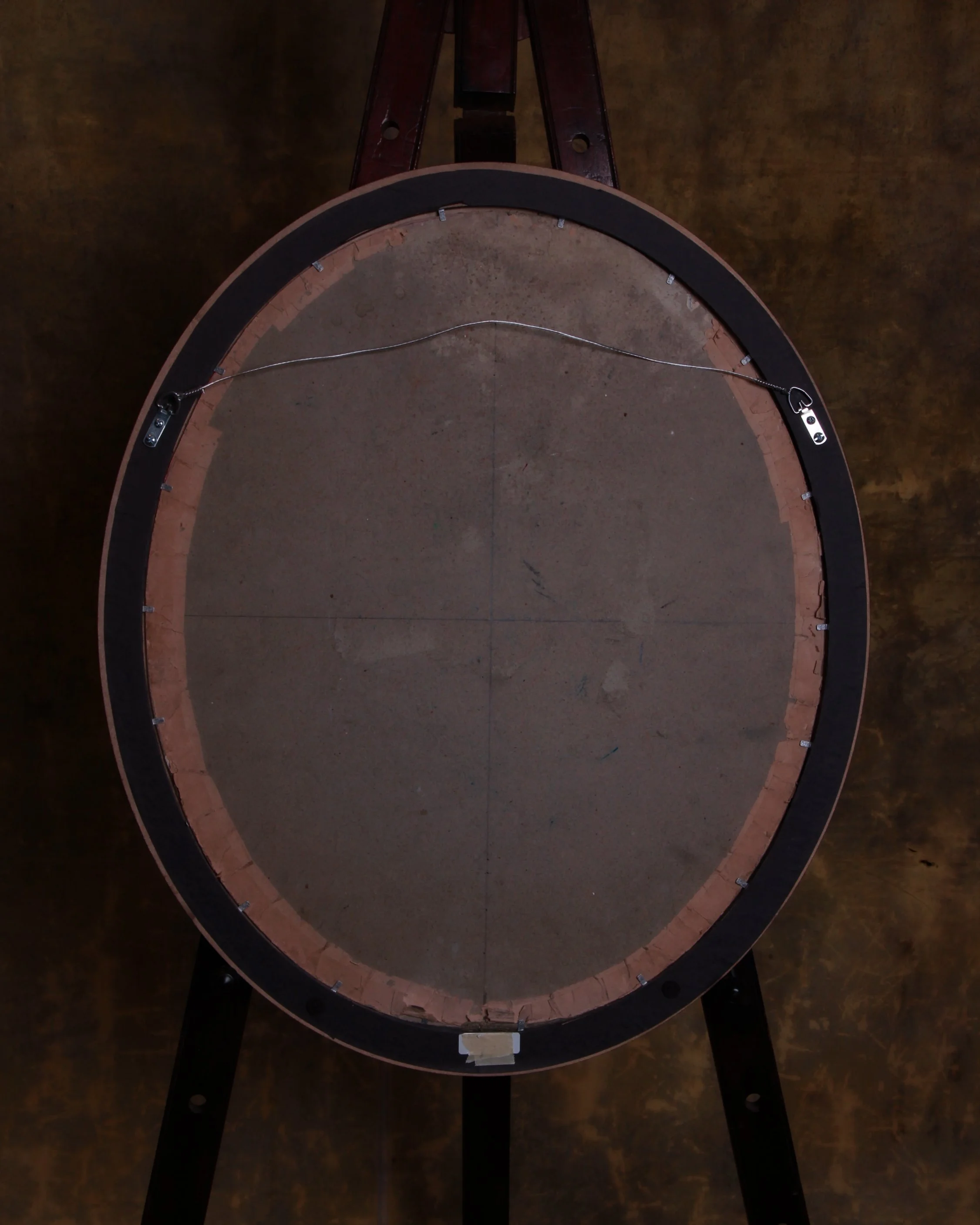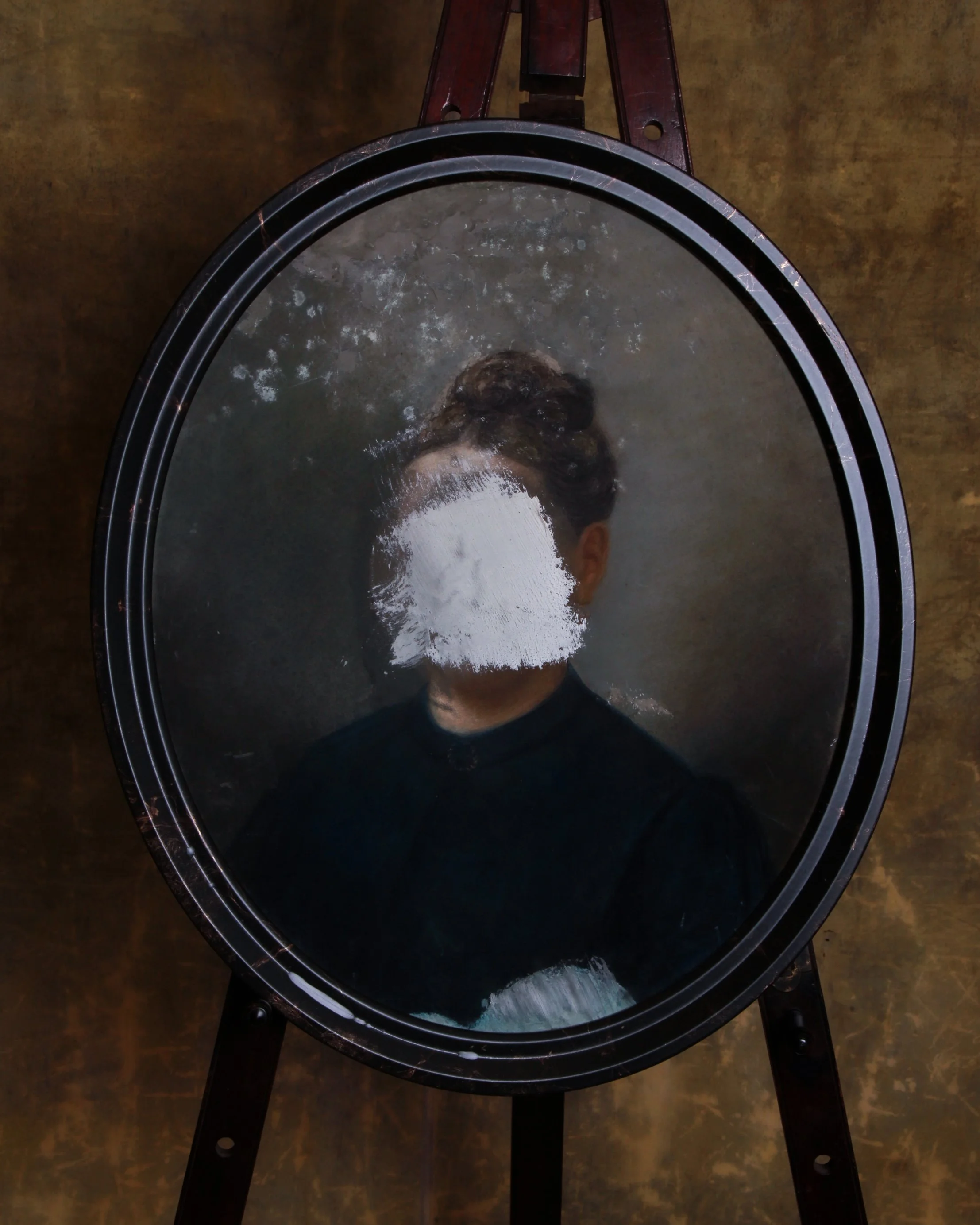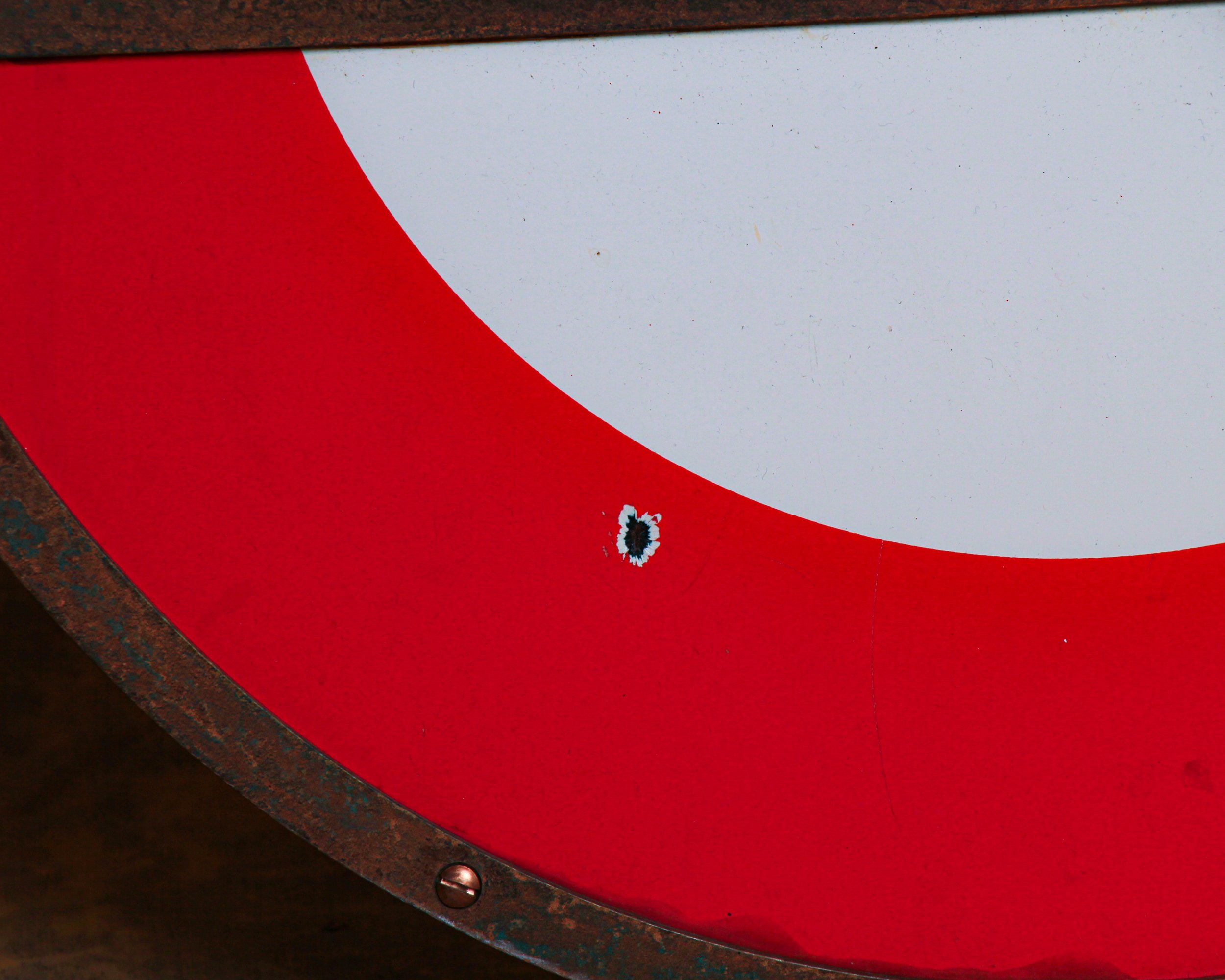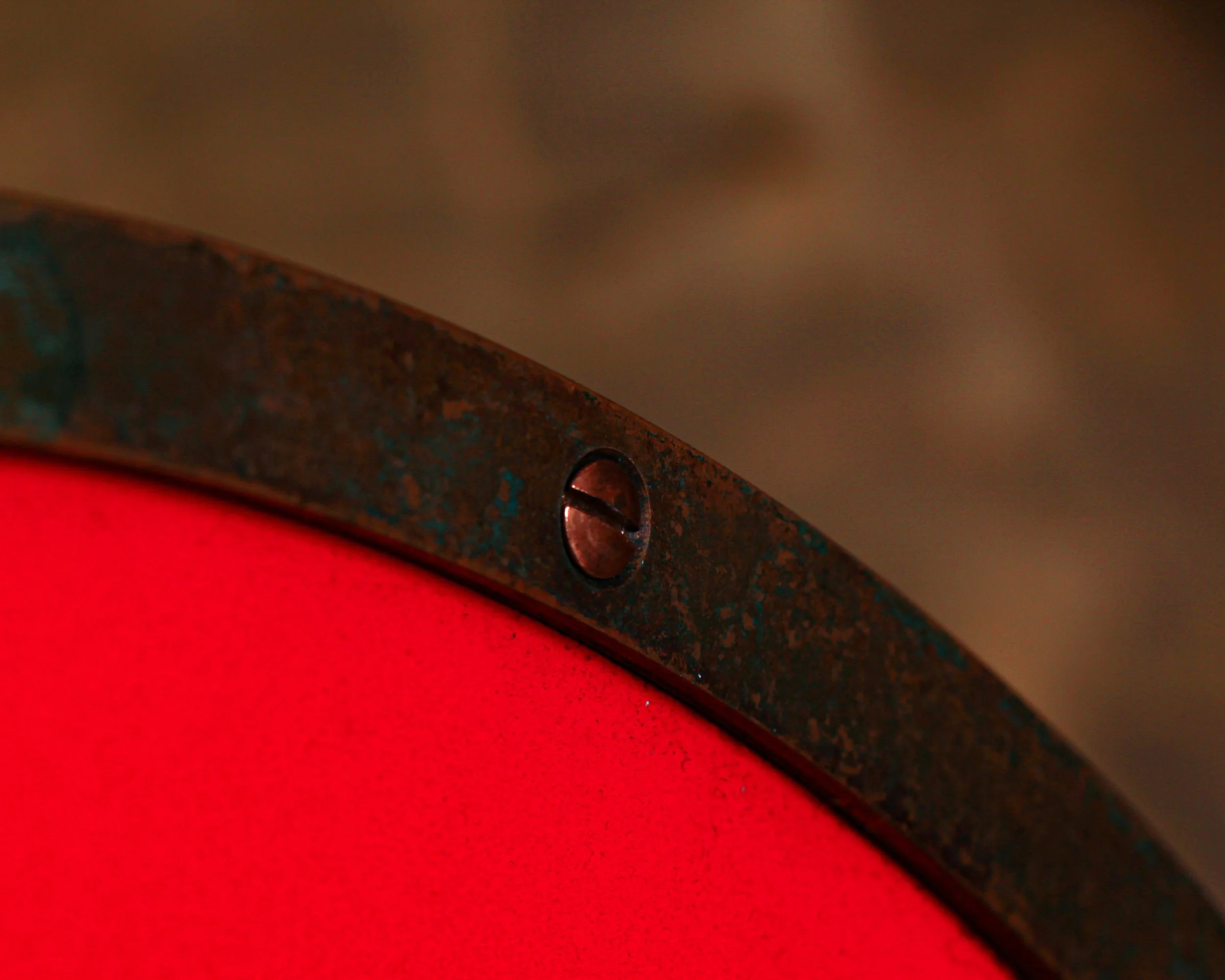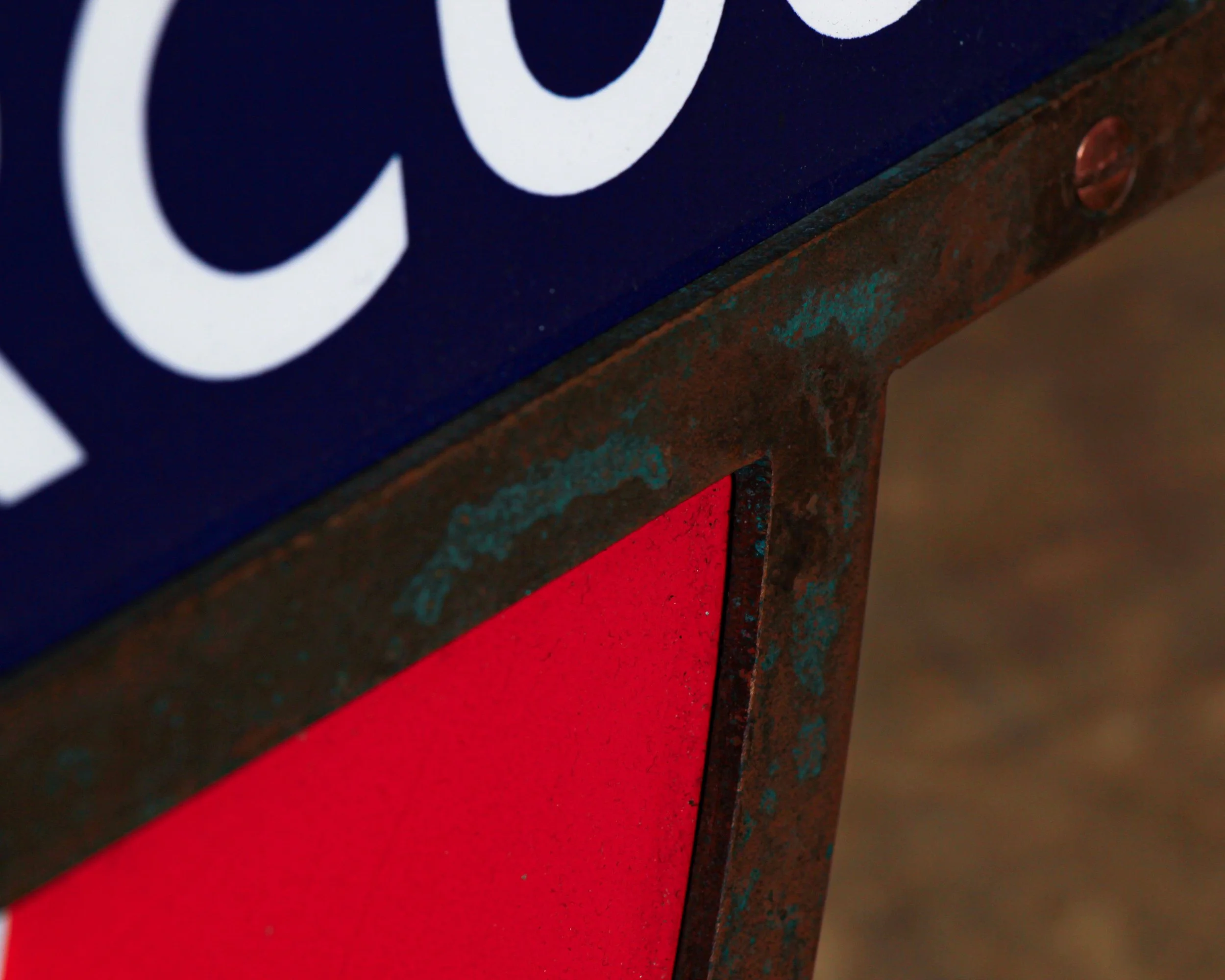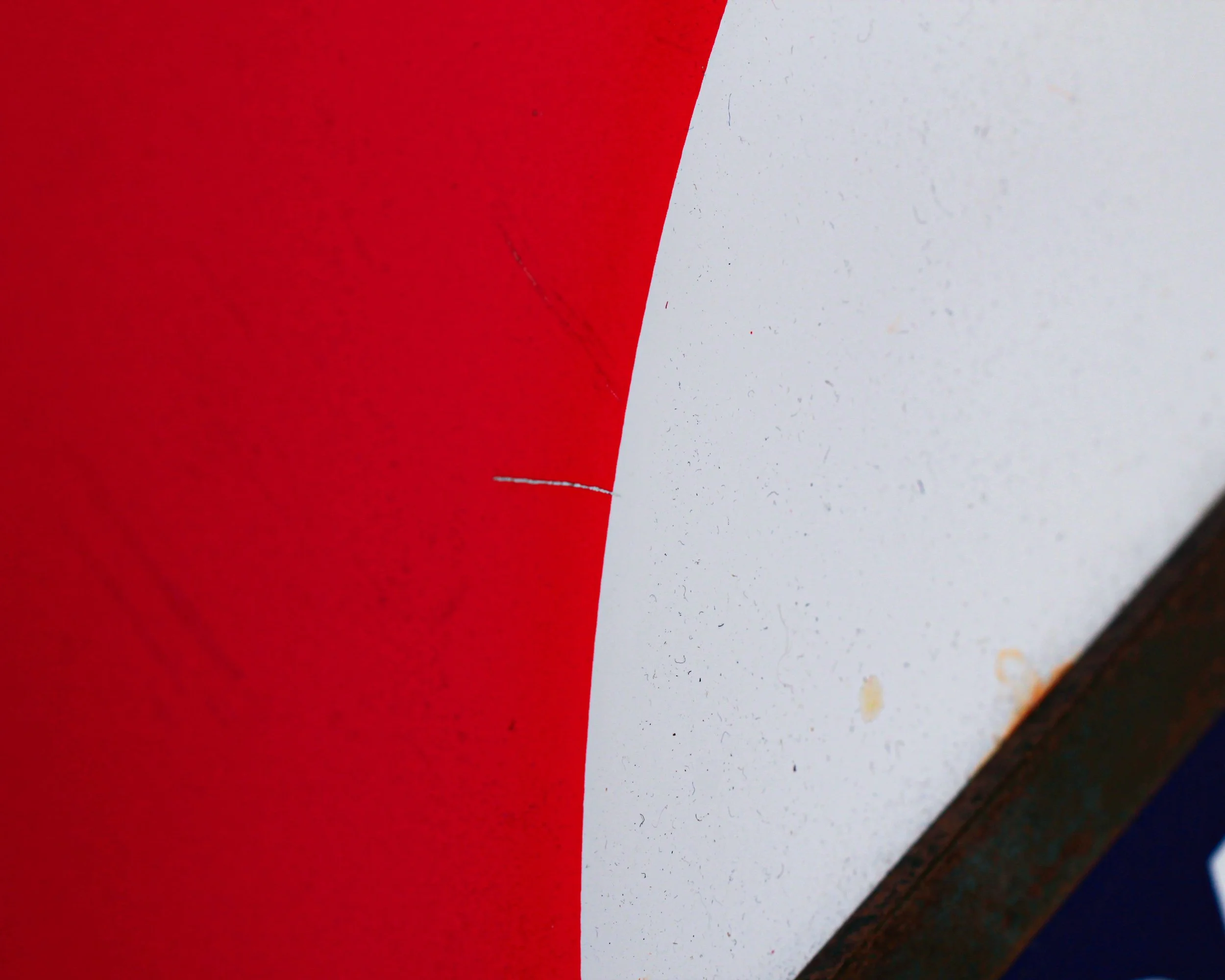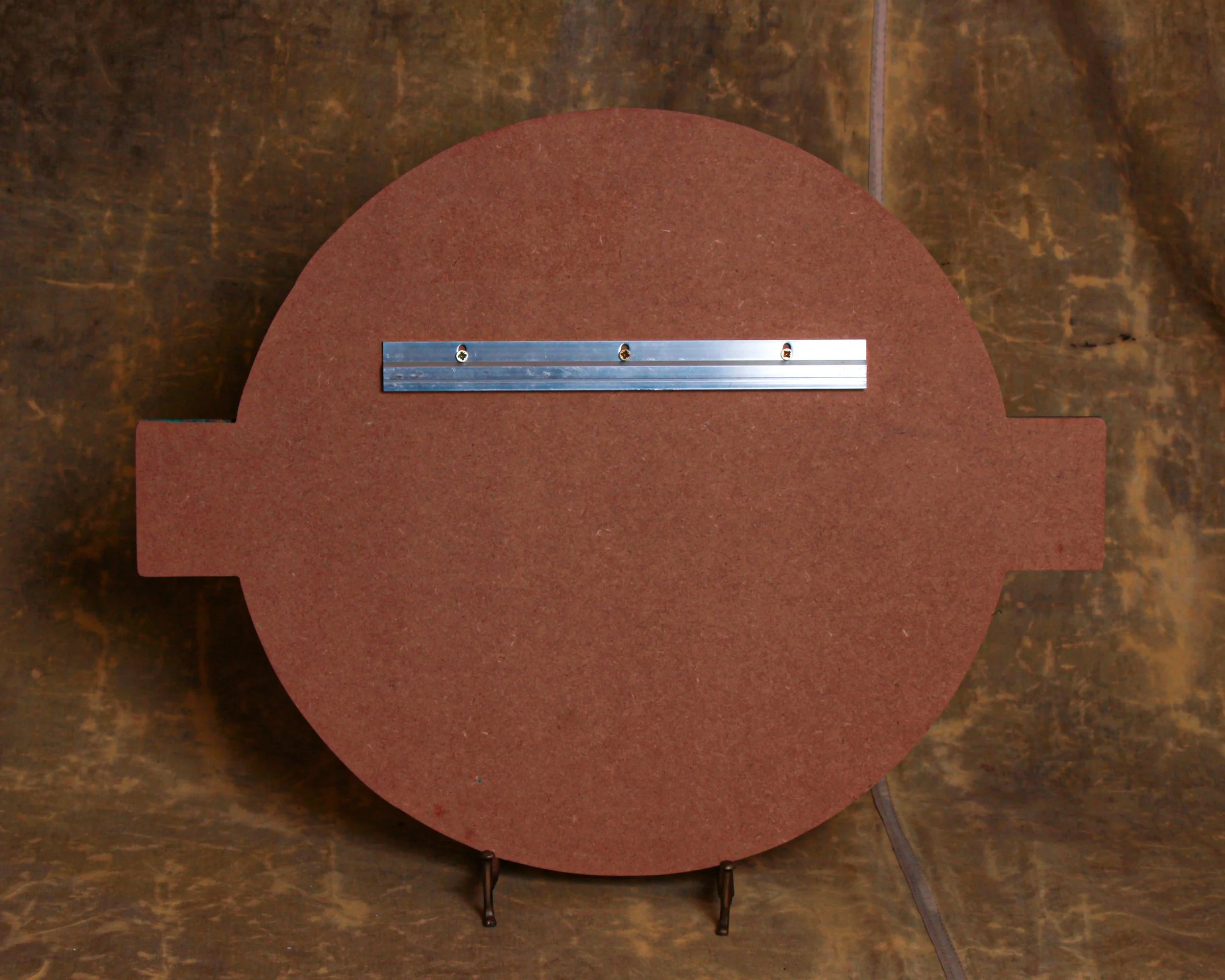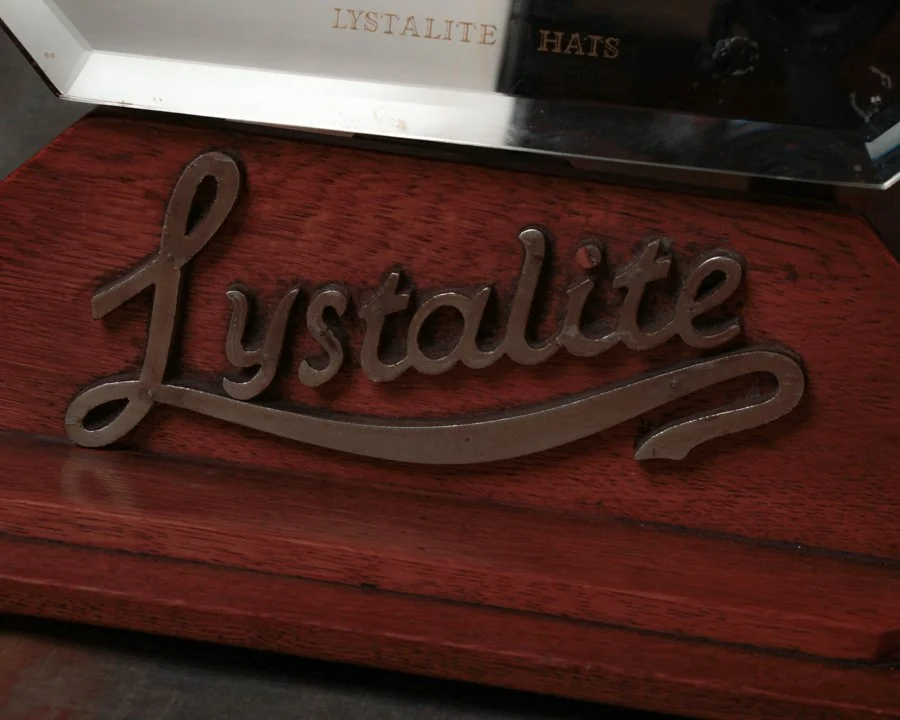
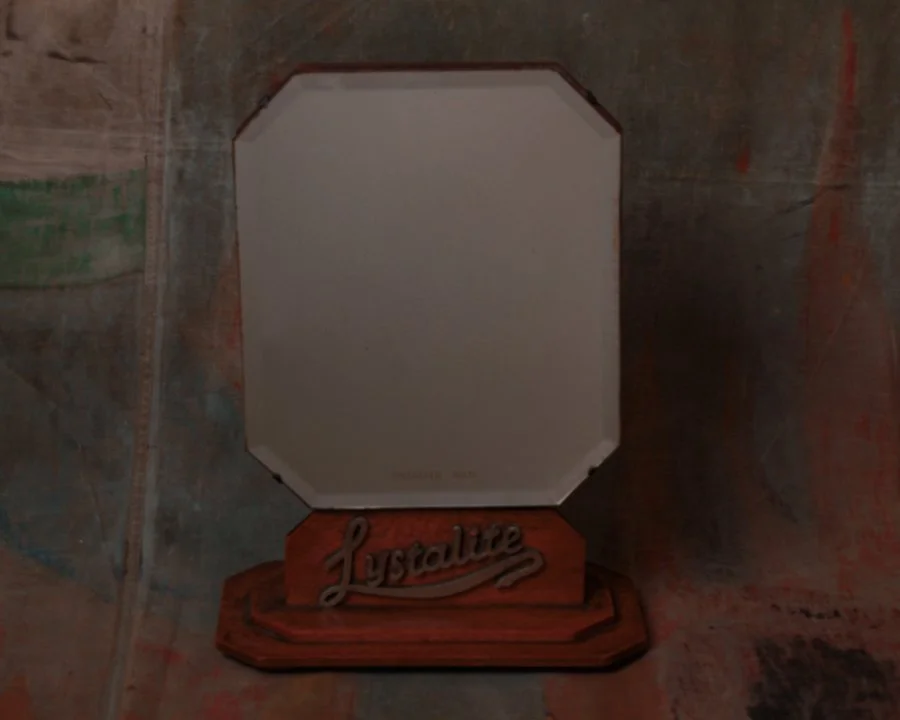
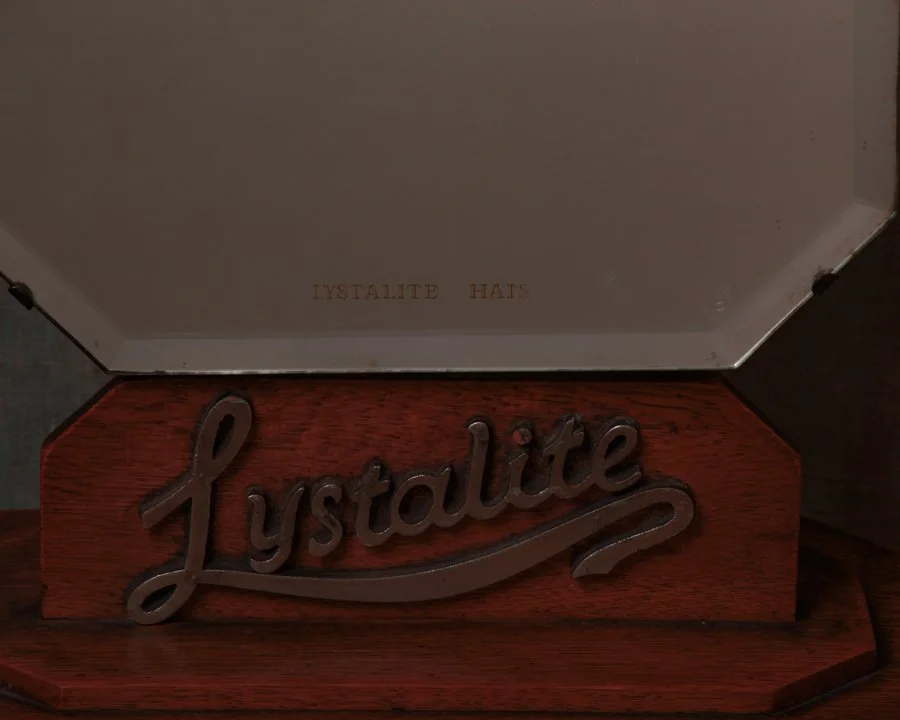
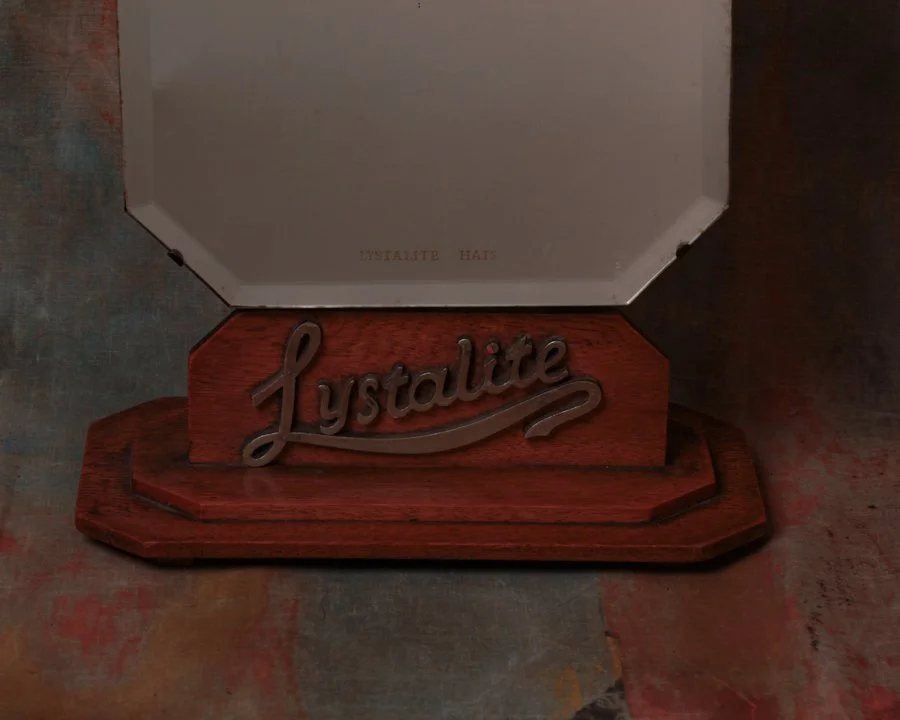
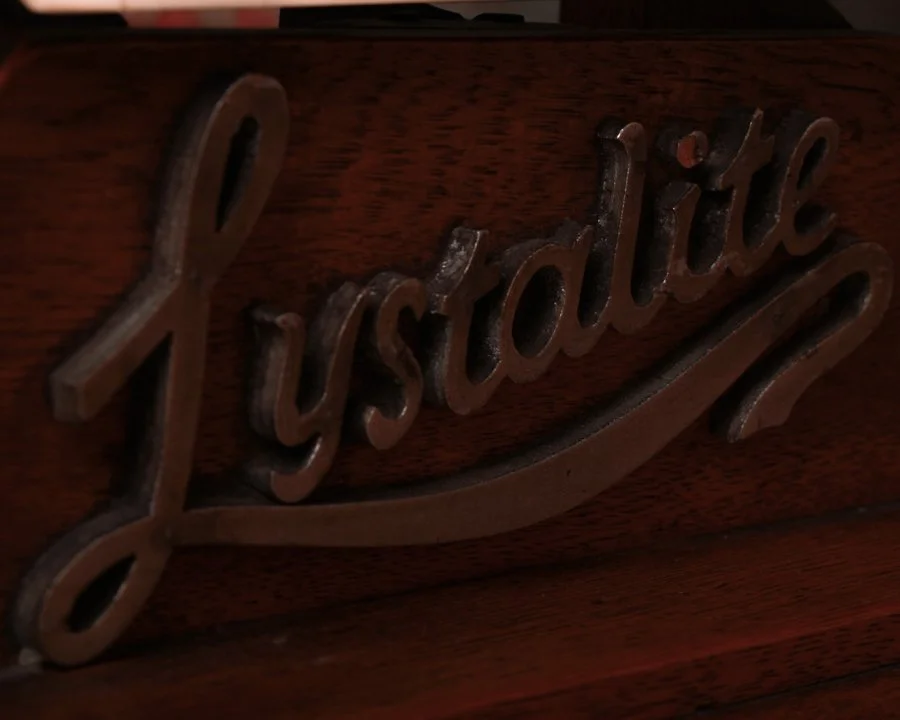
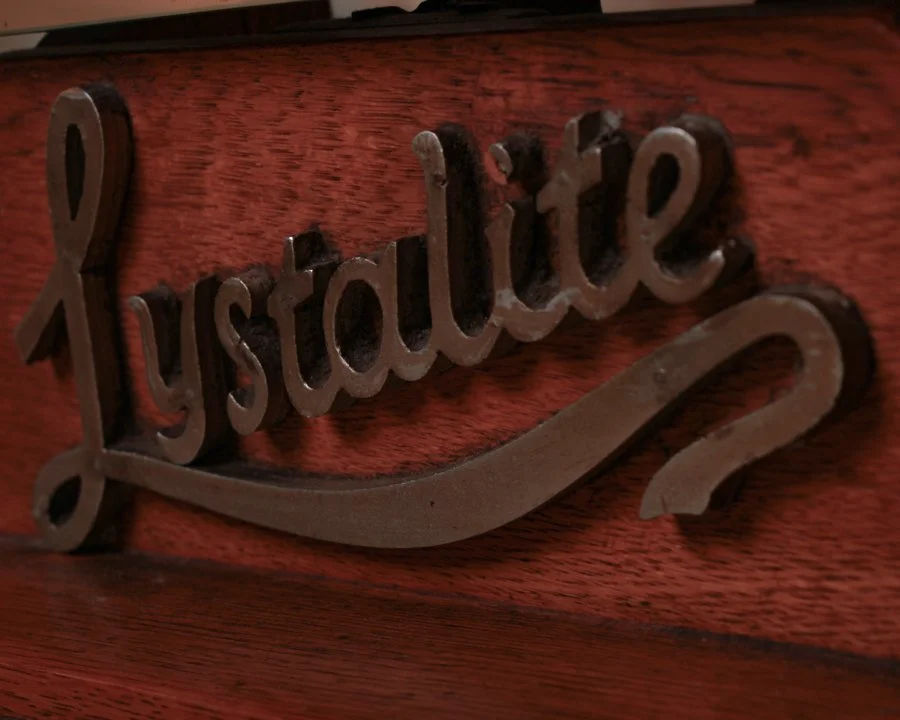
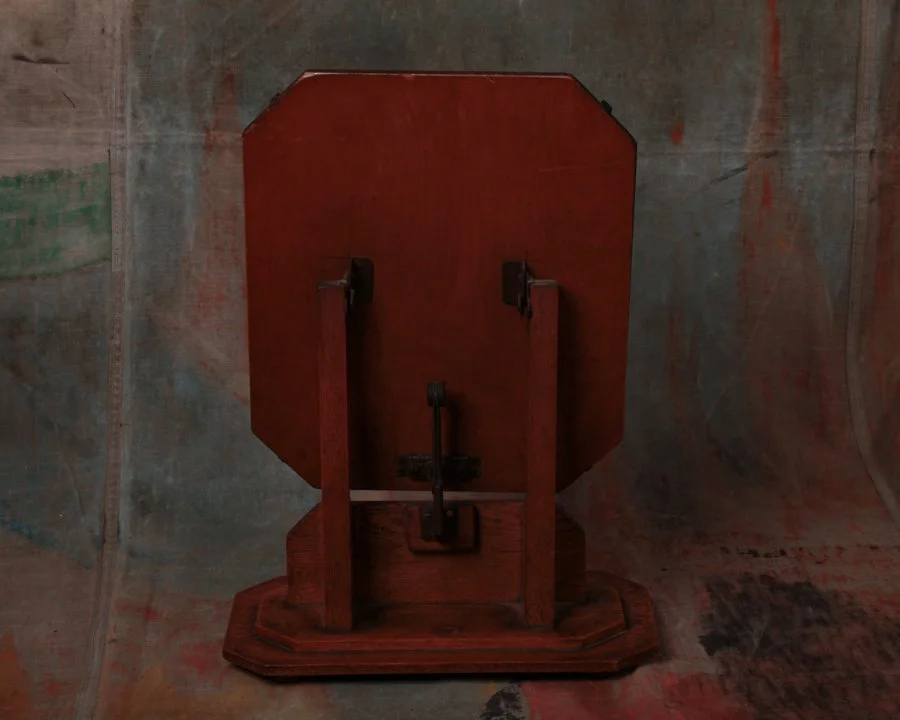
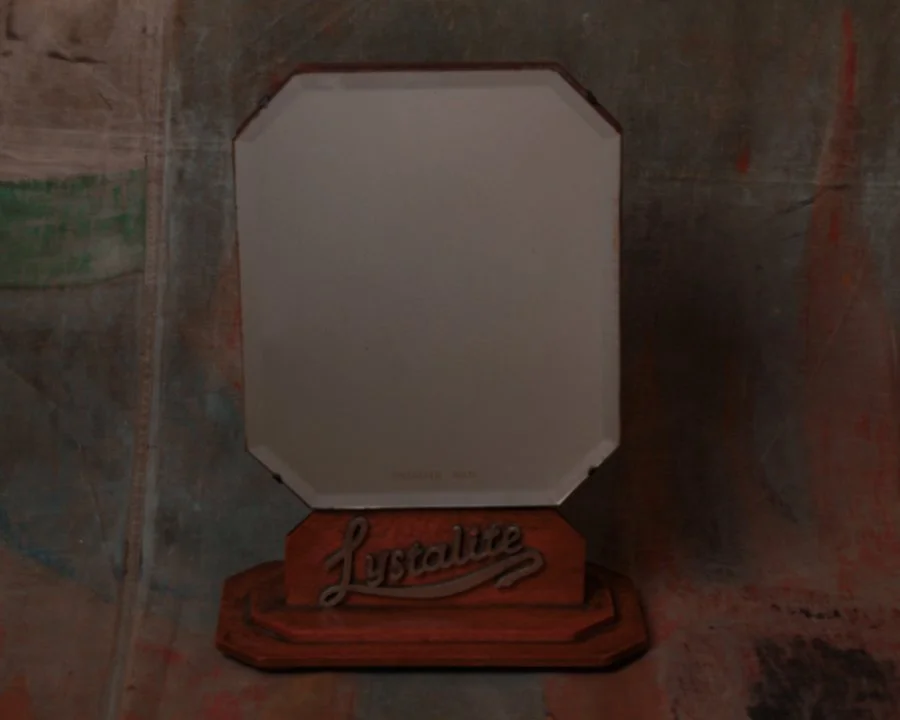
A killer piece of early 20th-century retail display, this Lystalite Hats advertising mirror is equal parts elegance and swagger. Mounted to a warm, reddish oak base with stepped beveled edges, the mirror is framed by clean lines and anchored by a cast metal script that reads "Lystalite" in bold, looping confidence. Below the mirror's surface, the words “Lystalite Hats” are subtly etched. The mirror tilts on a double-armed support and still holds solid.
There’s a quiet confidence to it—designed to catch the eye without shouting, inviting a closer look from across the counter. The materials do the talking: wood, glass, and metal working together in a way that feels both grounded and refined.
Category History
Lystalite hats are a clever answer to a very practical problem: how do you make something that looks like straw but holds up better to travel, weather, and wear? Introduced in the mid-20th century, Lystalite was a proprietary synthetic material developed to mimic the airy, woven look of traditional summer hats while offering more consistency and durability.
At a glance, they read like classic straw—light in color, open in structure, easy on the eyes. But up close, the difference shows. The fibers are more uniform, less prone to splitting, and better able to hold their shape over time. That made them especially appealing for hats that needed to be packed, handled, and worn regularly without losing form.
Design-wise, Lystalite hats didn’t reinvent the wheel. They followed familiar silhouettes—fedoras, western styles, casual summer hats—but with a slightly cleaner, more controlled finish thanks to the material. It’s subtle, but noticeable.
What makes them interesting now is that balance between imitation and innovation. They aren’t trying to replace straw so much as improve on its limitations. You get the look, with a bit more reliability.
They sit comfortably in that mid-century mindset—practical, forward-looking, and just a little optimistic about what new materials could do for everyday objects.
A killer piece of early 20th-century retail display, this Lystalite Hats advertising mirror is equal parts elegance and swagger. Mounted to a warm, reddish oak base with stepped beveled edges, the mirror is framed by clean lines and anchored by a cast metal script that reads "Lystalite" in bold, looping confidence. Below the mirror's surface, the words “Lystalite Hats” are subtly etched. The mirror tilts on a double-armed support and still holds solid.
There’s a quiet confidence to it—designed to catch the eye without shouting, inviting a closer look from across the counter. The materials do the talking: wood, glass, and metal working together in a way that feels both grounded and refined.
Category History
Lystalite hats are a clever answer to a very practical problem: how do you make something that looks like straw but holds up better to travel, weather, and wear? Introduced in the mid-20th century, Lystalite was a proprietary synthetic material developed to mimic the airy, woven look of traditional summer hats while offering more consistency and durability.
At a glance, they read like classic straw—light in color, open in structure, easy on the eyes. But up close, the difference shows. The fibers are more uniform, less prone to splitting, and better able to hold their shape over time. That made them especially appealing for hats that needed to be packed, handled, and worn regularly without losing form.
Design-wise, Lystalite hats didn’t reinvent the wheel. They followed familiar silhouettes—fedoras, western styles, casual summer hats—but with a slightly cleaner, more controlled finish thanks to the material. It’s subtle, but noticeable.
What makes them interesting now is that balance between imitation and innovation. They aren’t trying to replace straw so much as improve on its limitations. You get the look, with a bit more reliability.
They sit comfortably in that mid-century mindset—practical, forward-looking, and just a little optimistic about what new materials could do for everyday objects.