ITEM NOT AVAILABLE IMMEDIATELY—INQUIRE IF INTERESTED hello@heimweeantiques.com
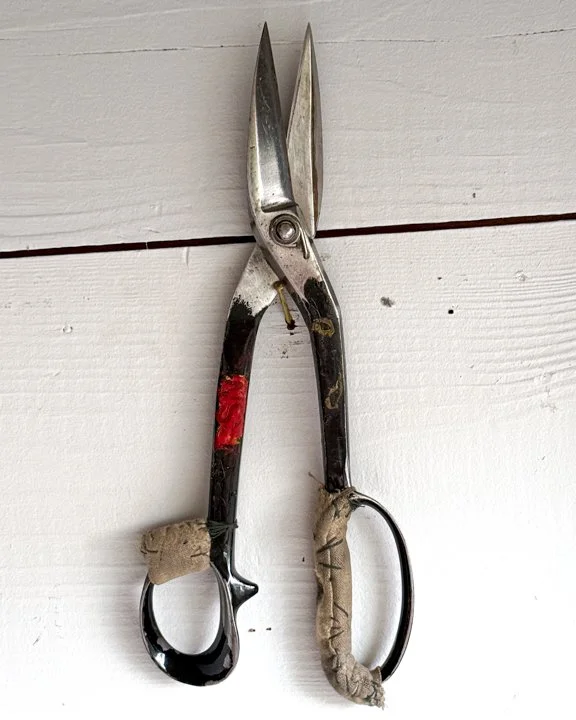
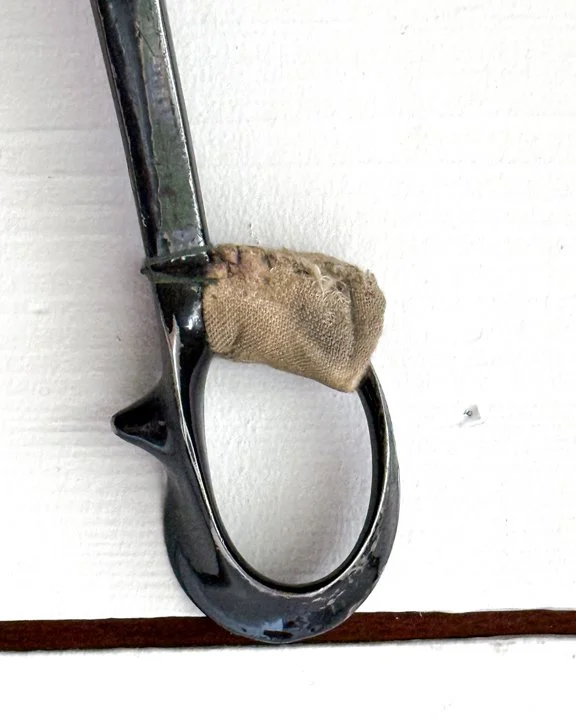
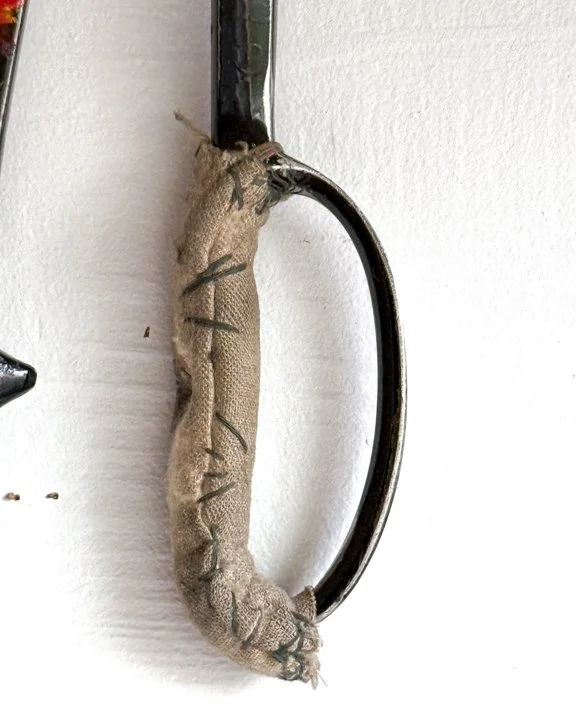
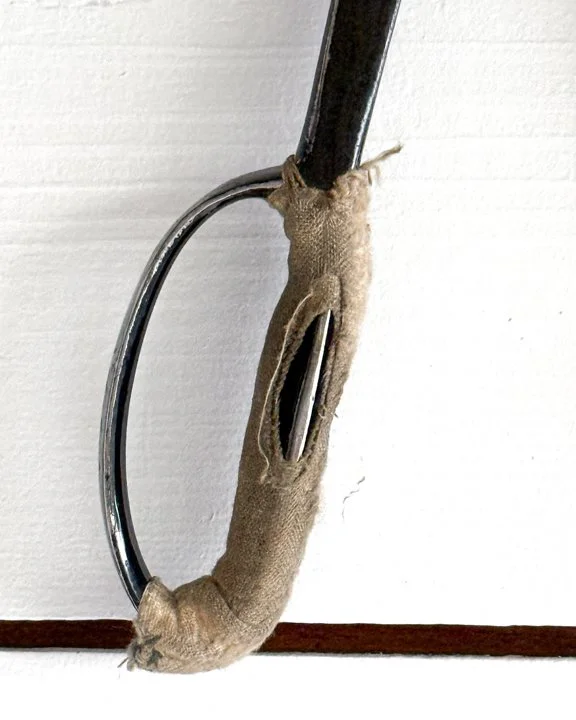
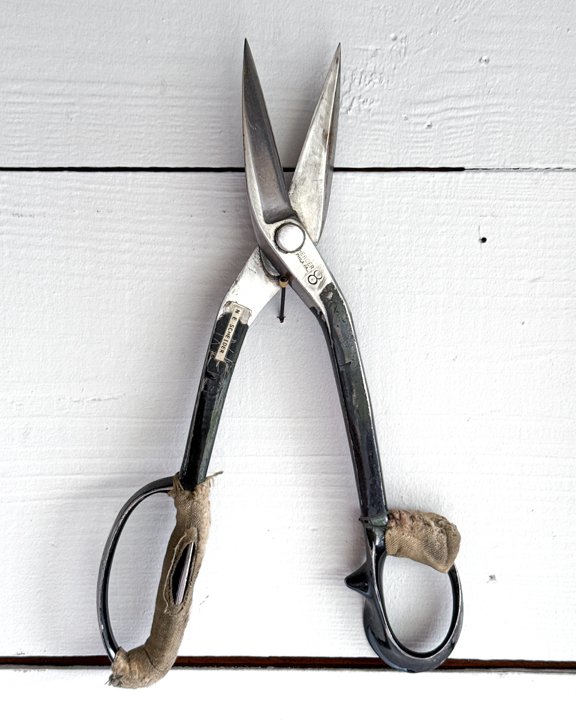
These aren’t just scissors—they’re a little glimpse into someone’s daily grind and their refusal to let blisters win. A sturdy pair of vintage shears, their steel still strong and sharp, but what really makes them sing is the humble hand-sewn solution: scraps of cloth, stitched and wrapped around the handles like homemade cushions. The stitching is crude but practical, the kind of fix you make not for looks but for survival, because the job has to get done and comfort matters. Call it make-do, call it early ergonomics, or just call it brilliant—this is a working object that tells a story of thrift, necessity, and the quiet creativity of everyday hands.
Category History
Some of the best objects aren’t the ones that stayed perfect—they’re the ones that refused to quit. Old make-do repairs show up everywhere: a cracked handle stitched with wire, a split board held together with mismatched nails, a ceramic vessel patched with a strip of tin. These fixes weren’t about aesthetics or preservation in the modern sense—they were about getting something back into service, quickly and with whatever was on hand.
There’s a certain logic to them. Repairs often reveal how the object failed and how someone chose to outsmart that failure. A brace added where stress collected, a patch layered over a weak spot, a join reinforced in a way the original maker never intended. It’s problem-solving in real time.
What’s compelling now is the honesty. Nothing is hidden. The repair becomes part of the object’s identity, sometimes more interesting than the original form. You’re seeing two makers at once—the person who made it, and the person who kept it going.
They carry a quiet resilience. Not pristine, not precious—just useful, adapted, and still here.
ITEM NOT AVAILABLE IMMEDIATELY—INQUIRE IF INTERESTED hello@heimweeantiques.com
These aren’t just scissors—they’re a little glimpse into someone’s daily grind and their refusal to let blisters win. A sturdy pair of vintage shears, their steel still strong and sharp, but what really makes them sing is the humble hand-sewn solution: scraps of cloth, stitched and wrapped around the handles like homemade cushions. The stitching is crude but practical, the kind of fix you make not for looks but for survival, because the job has to get done and comfort matters. Call it make-do, call it early ergonomics, or just call it brilliant—this is a working object that tells a story of thrift, necessity, and the quiet creativity of everyday hands.
Category History
Some of the best objects aren’t the ones that stayed perfect—they’re the ones that refused to quit. Old make-do repairs show up everywhere: a cracked handle stitched with wire, a split board held together with mismatched nails, a ceramic vessel patched with a strip of tin. These fixes weren’t about aesthetics or preservation in the modern sense—they were about getting something back into service, quickly and with whatever was on hand.
There’s a certain logic to them. Repairs often reveal how the object failed and how someone chose to outsmart that failure. A brace added where stress collected, a patch layered over a weak spot, a join reinforced in a way the original maker never intended. It’s problem-solving in real time.
What’s compelling now is the honesty. Nothing is hidden. The repair becomes part of the object’s identity, sometimes more interesting than the original form. You’re seeing two makers at once—the person who made it, and the person who kept it going.
They carry a quiet resilience. Not pristine, not precious—just useful, adapted, and still here.