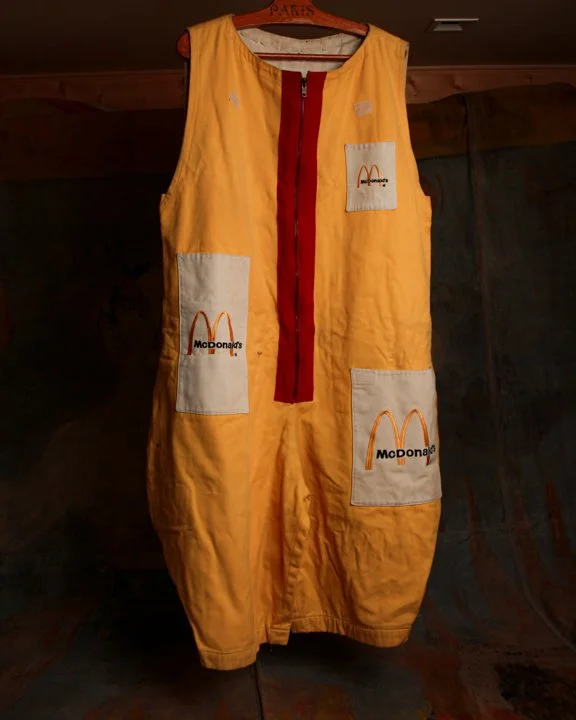
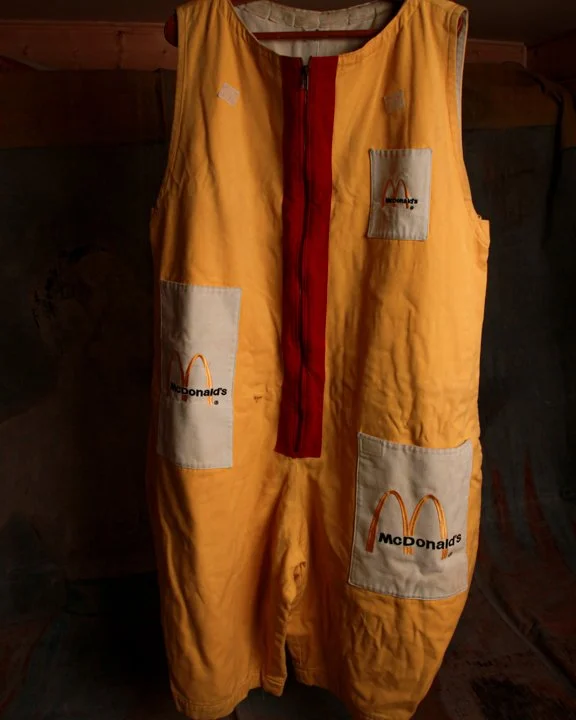
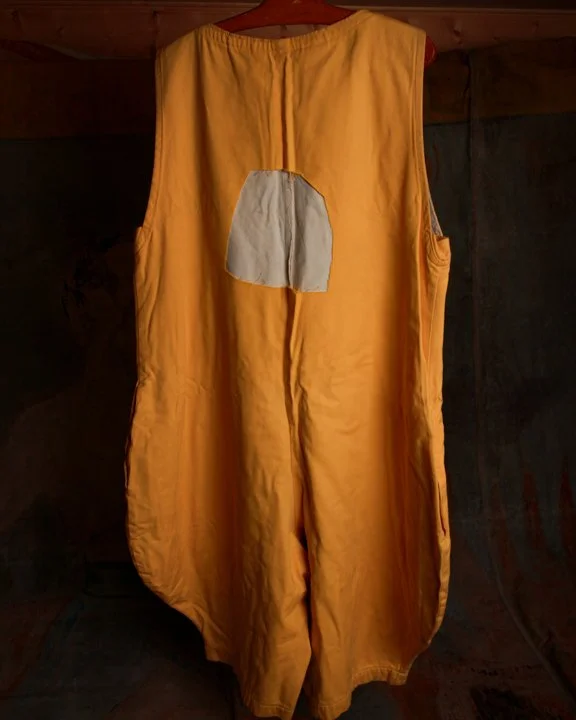
Please note that the "M" on the back is missing.
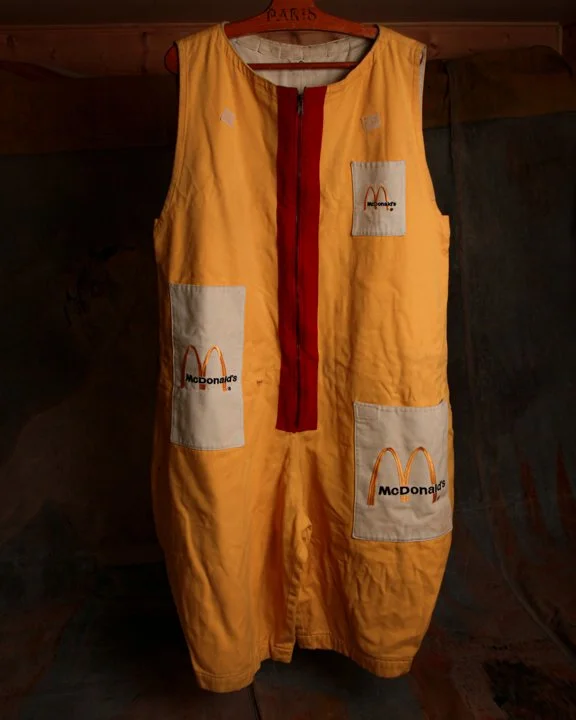
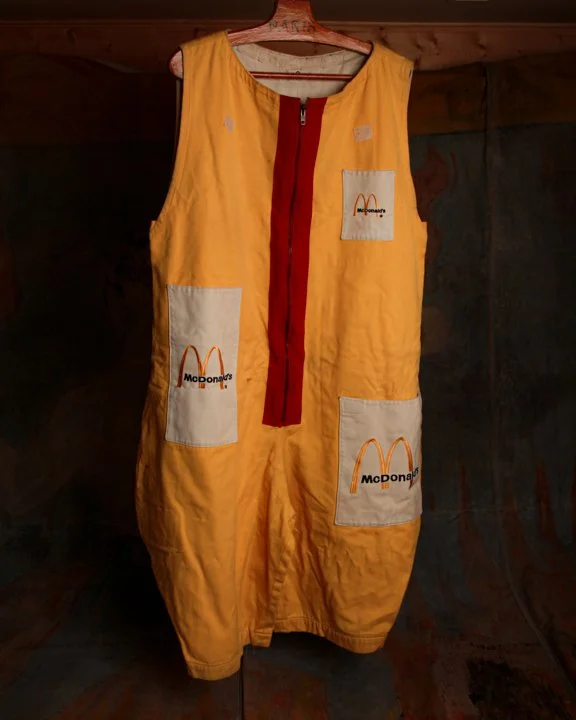
This 1970s Ronald McDonald clown costume, made by Eder Mfg. Co. in Milwaukee, is a rare relic from the golden era of McDonald's.
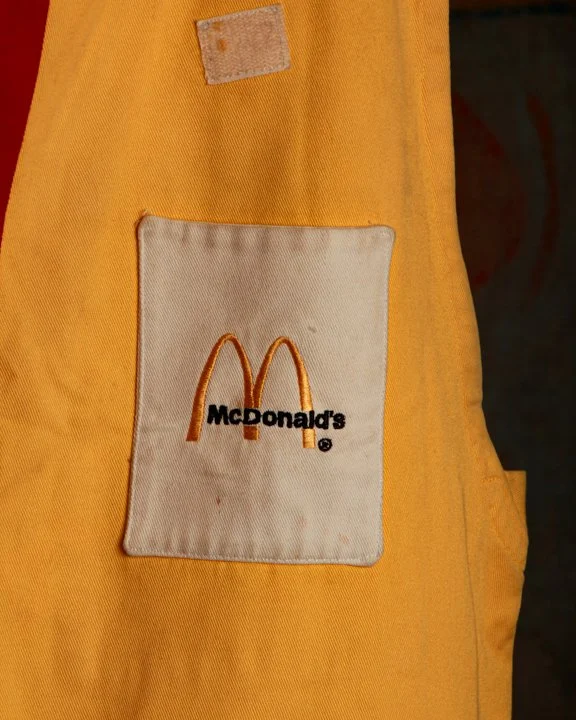
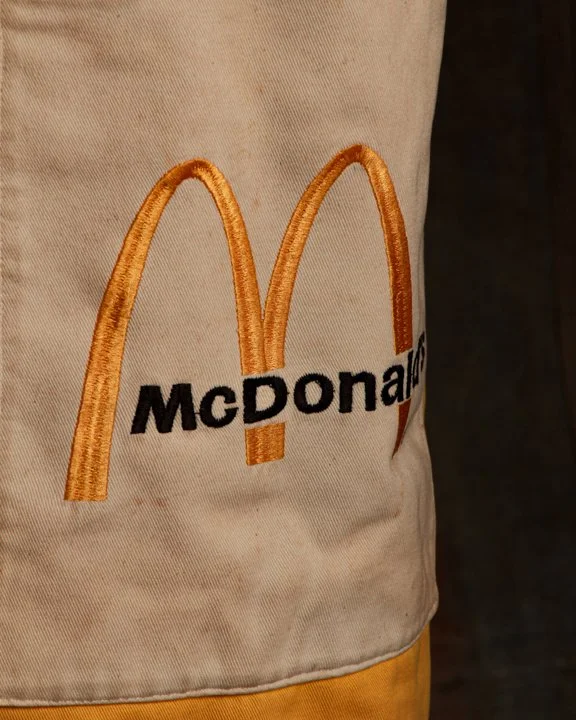
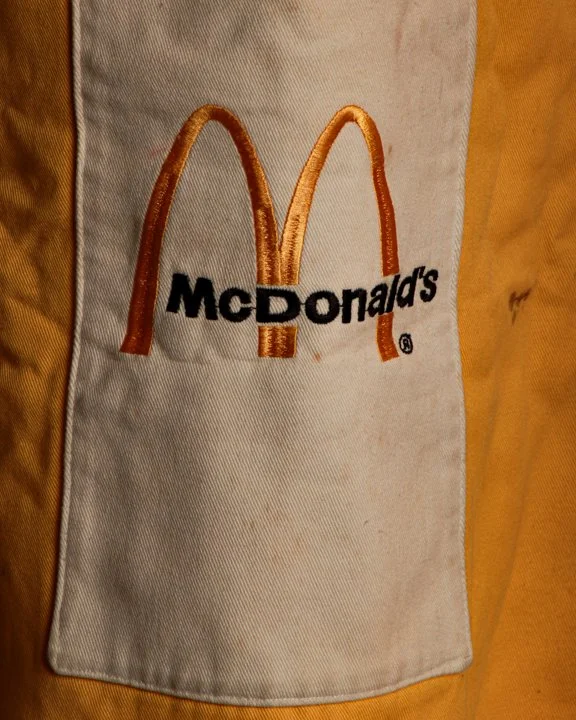
Drenched in that signature bright golden yellow, this oversized jumpsuit is complete with McDonald's embroidered logos on the pockets and bold red zipper down the front—the kind of branding that instantly sparks nostalgia for Happy Meals and birthday parties under the Golden Arches.
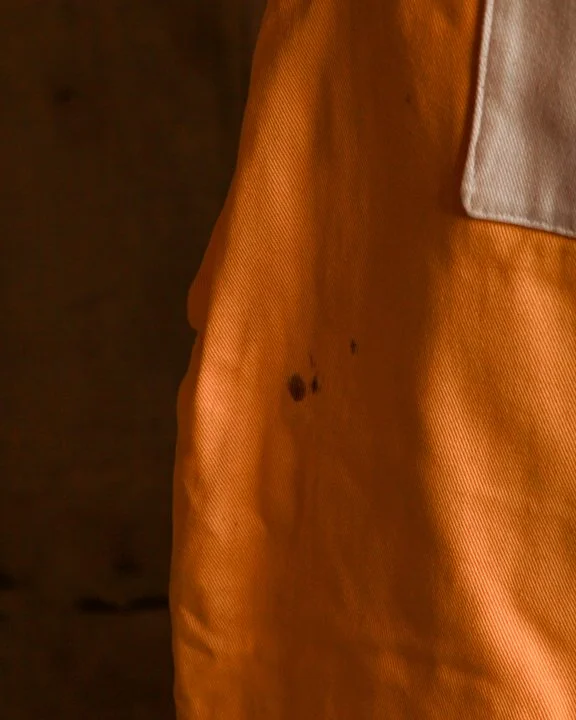
The fabric shows light wear consistent with use, but the color still pops, holding onto that unmistakable presence. It’s equal parts costume and cultural artifact—something that once performed, not just hung on a rack.
McDonald’s
McDonald’s built its empire on speed, consistency, and a kind of carefully engineered familiarity. Founded in the 1940s and rapidly expanding in the postwar years, McDonald's turned food into a system—streamlined menus, standardized kitchens, and an experience that felt the same whether you were in California or across the country.
Enter Ronald McDonald in the 1960s, a character designed to translate that system into something approachable, especially for families. Bright colors, exaggerated features, and a playful tone made him instantly recognizable. He wasn’t just a mascot—he was a bridge between brand and audience, turning a fast-food stop into something that felt a bit more like an event.
What makes this pairing interesting is how intentional it is. The food is predictable by design, and Ronald adds personality without disrupting that consistency. He appears in ads, packaging, and in-store promotions, reinforcing the brand’s identity in a way that’s hard to miss.
Over time, both the brand and the character have shifted—refined, updated, occasionally pulled back—but the core idea remains. Familiarity, delivered quickly, with just enough character to keep it from feeling purely mechanical.
It’s less about novelty and more about recognition—an experience built to be repeated, remembered, and easily found again.
Please note that the "M" on the back is missing.
This 1970s Ronald McDonald clown costume, made by Eder Mfg. Co. in Milwaukee, is a rare relic from the golden era of McDonald's.
Drenched in that signature bright golden yellow, this oversized jumpsuit is complete with McDonald's embroidered logos on the pockets and bold red zipper down the front—the kind of branding that instantly sparks nostalgia for Happy Meals and birthday parties under the Golden Arches.
The fabric shows light wear consistent with use, but the color still pops, holding onto that unmistakable presence. It’s equal parts costume and cultural artifact—something that once performed, not just hung on a rack.
McDonald’s
McDonald’s built its empire on speed, consistency, and a kind of carefully engineered familiarity. Founded in the 1940s and rapidly expanding in the postwar years, McDonald's turned food into a system—streamlined menus, standardized kitchens, and an experience that felt the same whether you were in California or across the country.
Enter Ronald McDonald in the 1960s, a character designed to translate that system into something approachable, especially for families. Bright colors, exaggerated features, and a playful tone made him instantly recognizable. He wasn’t just a mascot—he was a bridge between brand and audience, turning a fast-food stop into something that felt a bit more like an event.
What makes this pairing interesting is how intentional it is. The food is predictable by design, and Ronald adds personality without disrupting that consistency. He appears in ads, packaging, and in-store promotions, reinforcing the brand’s identity in a way that’s hard to miss.
Over time, both the brand and the character have shifted—refined, updated, occasionally pulled back—but the core idea remains. Familiarity, delivered quickly, with just enough character to keep it from feeling purely mechanical.
It’s less about novelty and more about recognition—an experience built to be repeated, remembered, and easily found again.