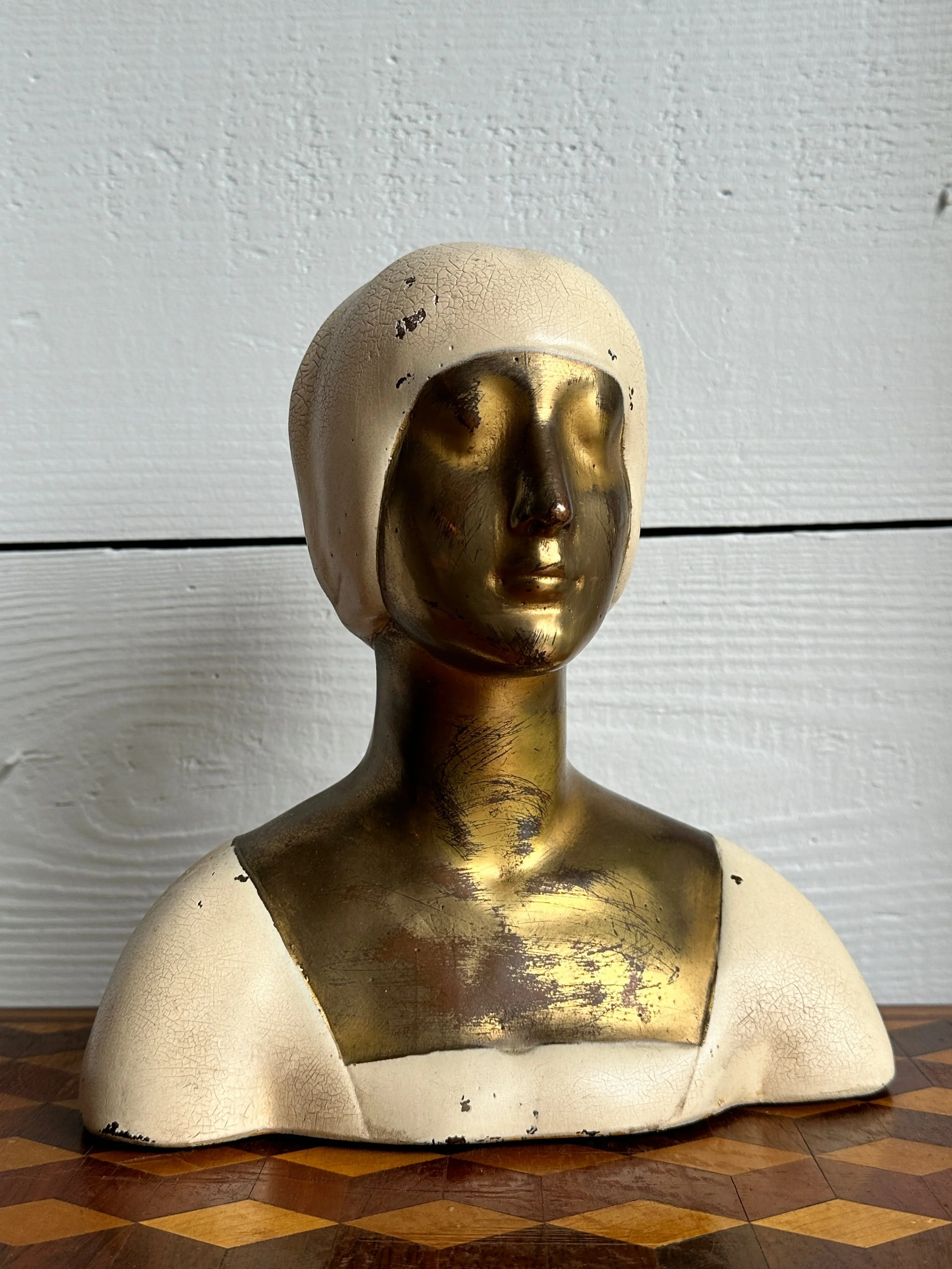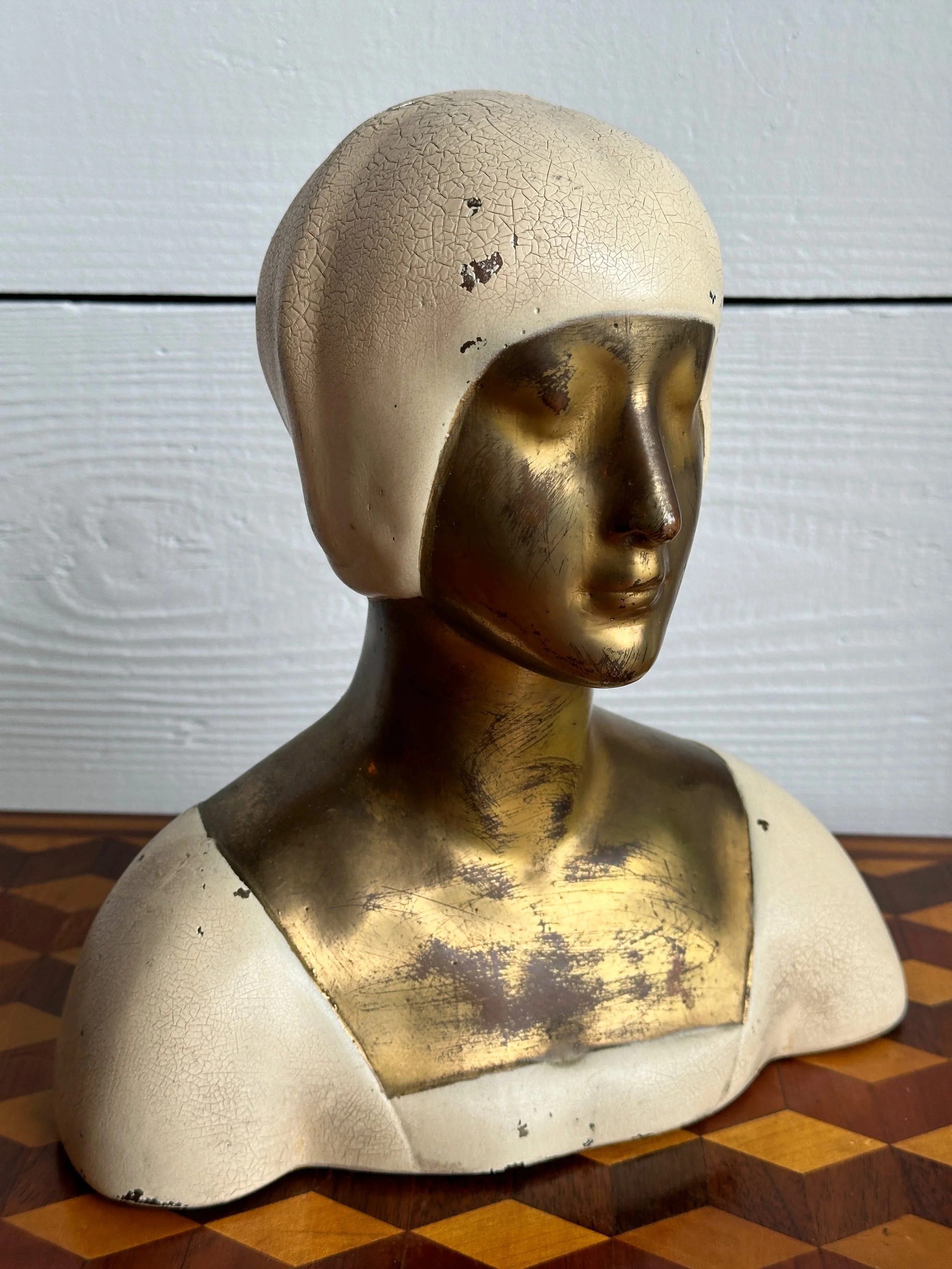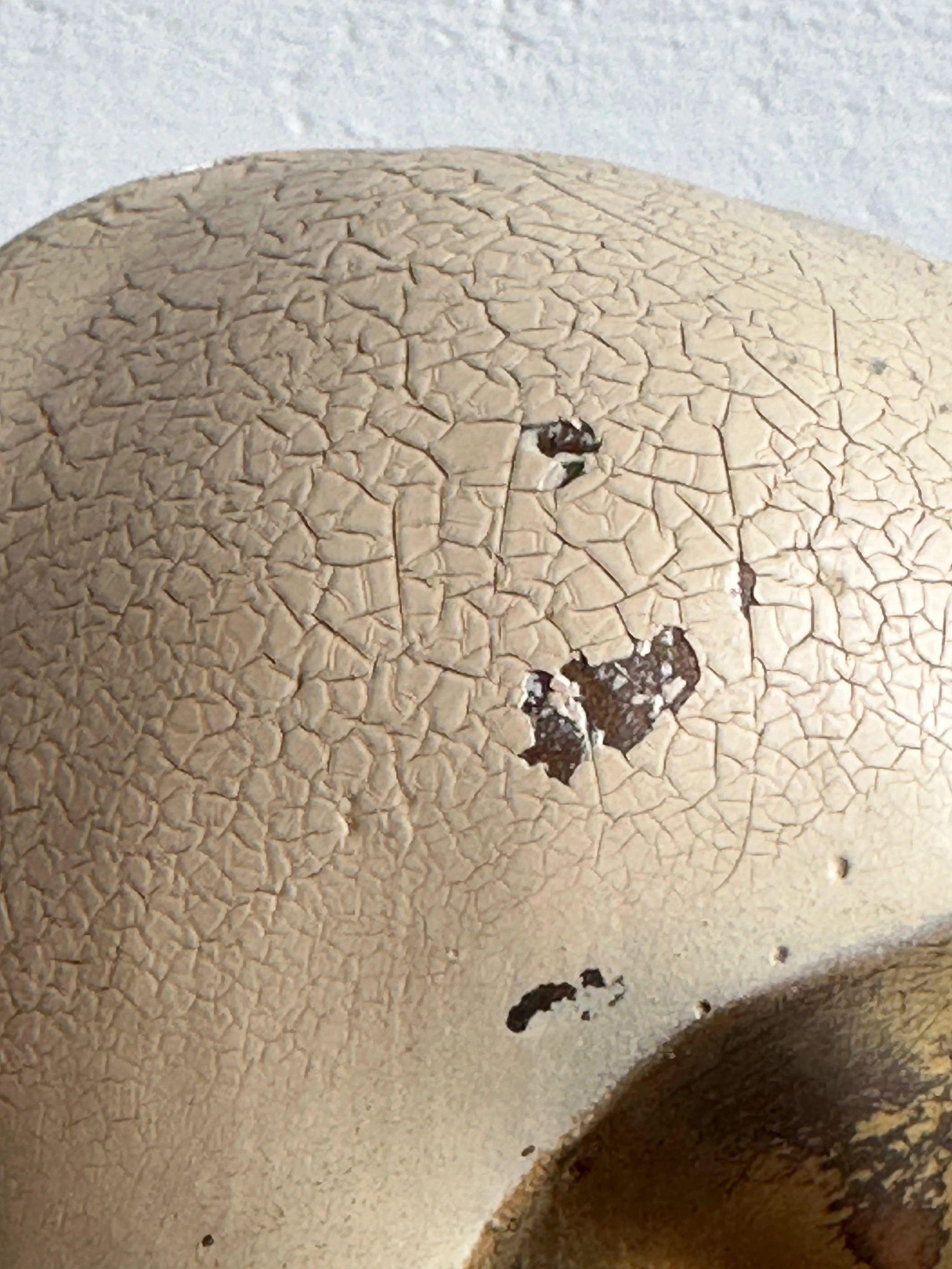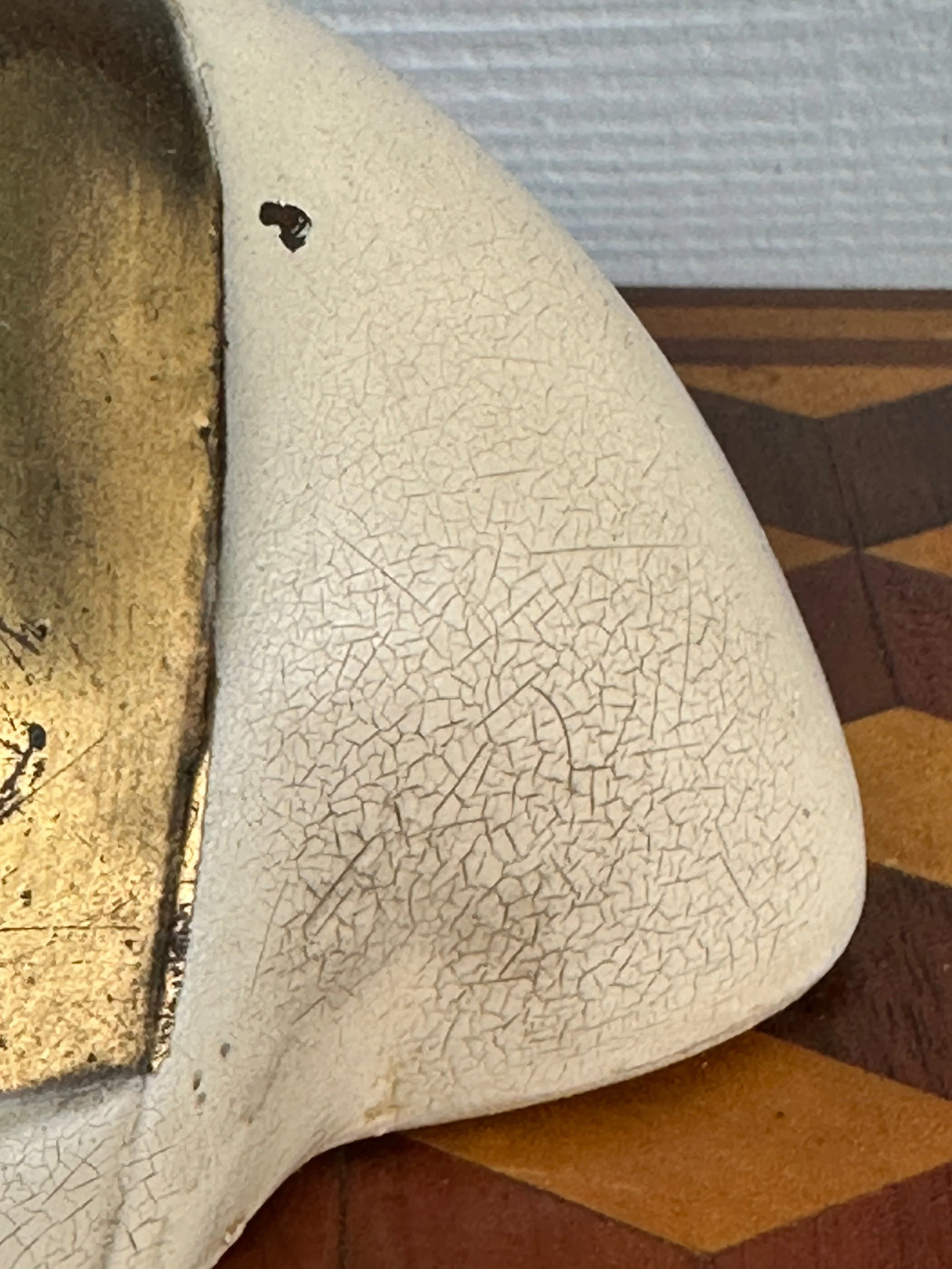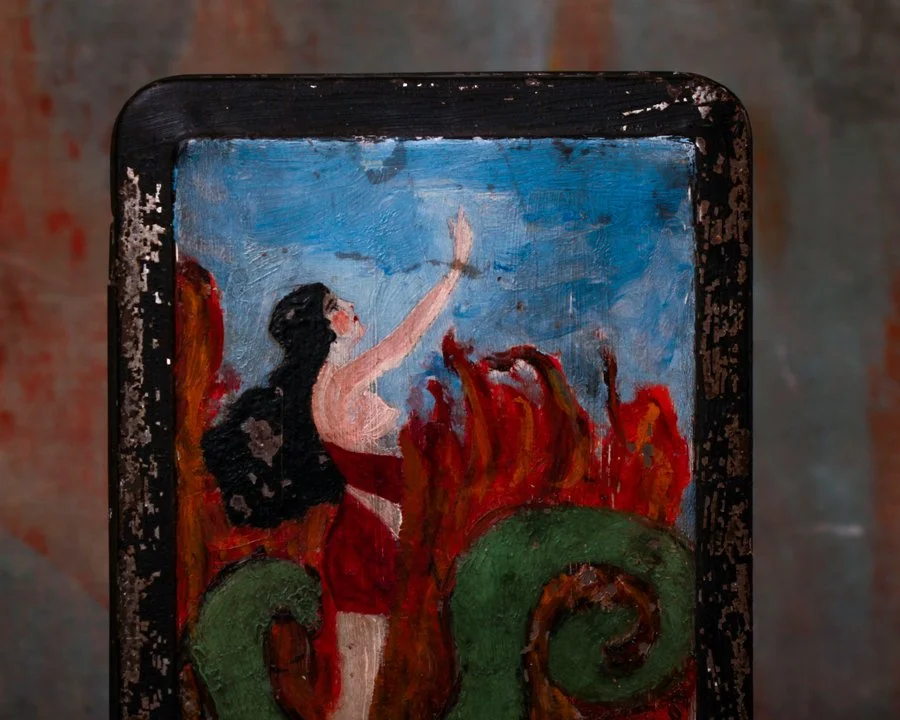
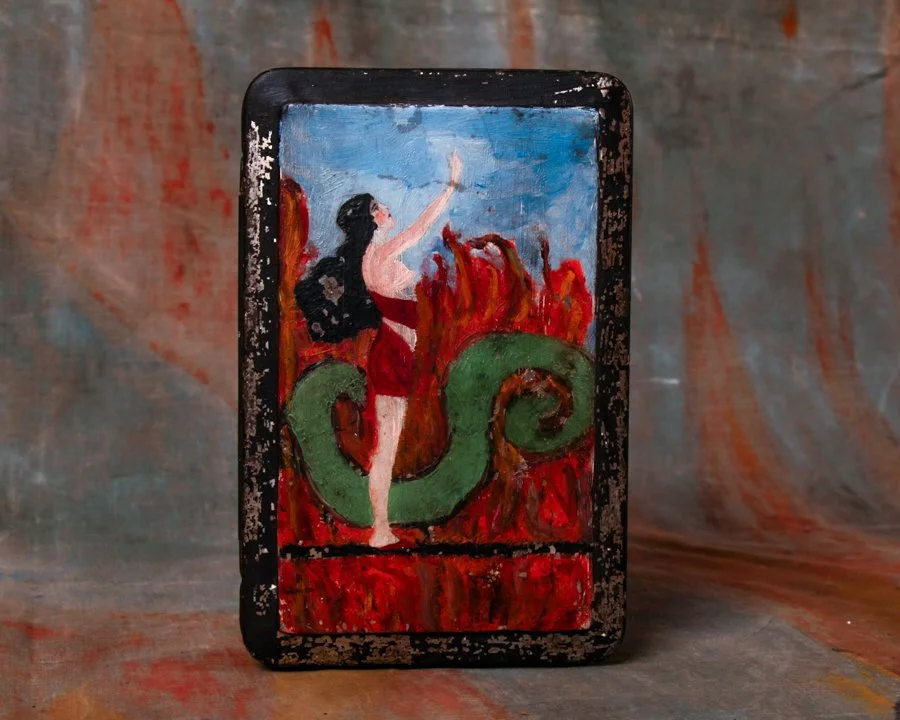
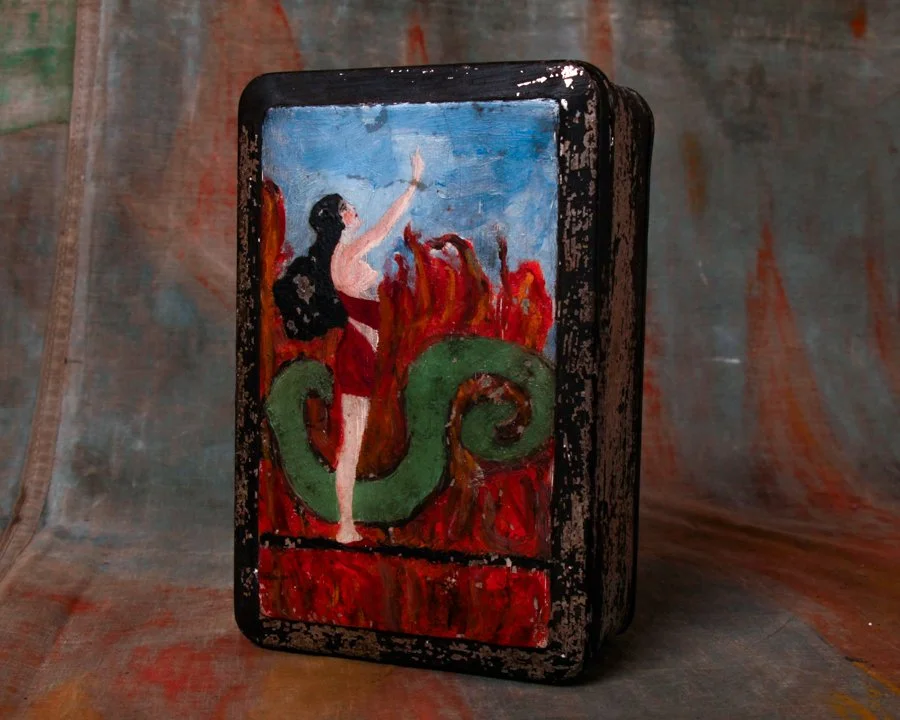
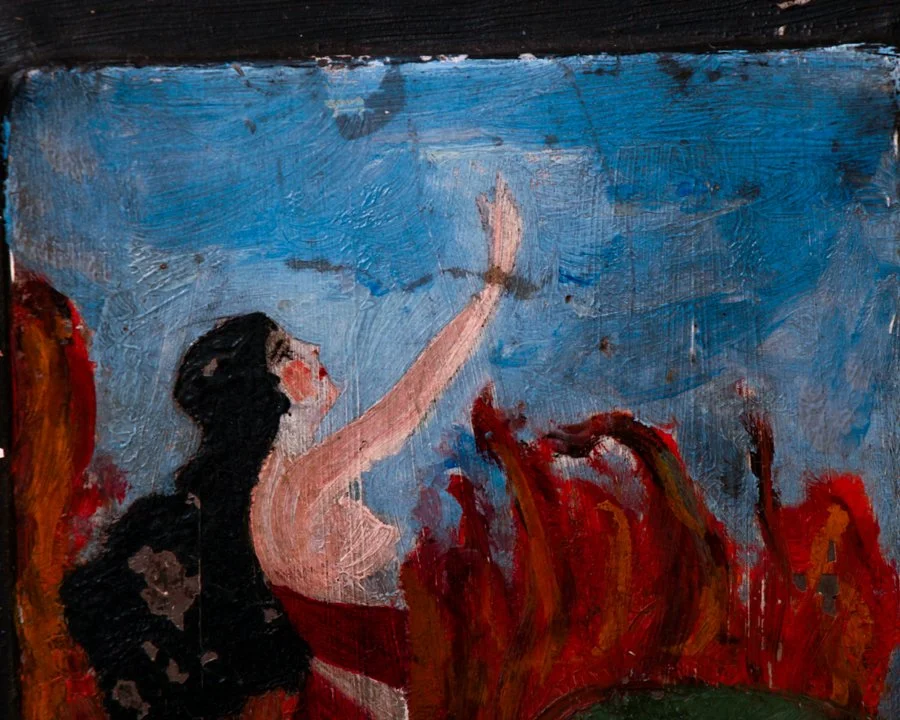
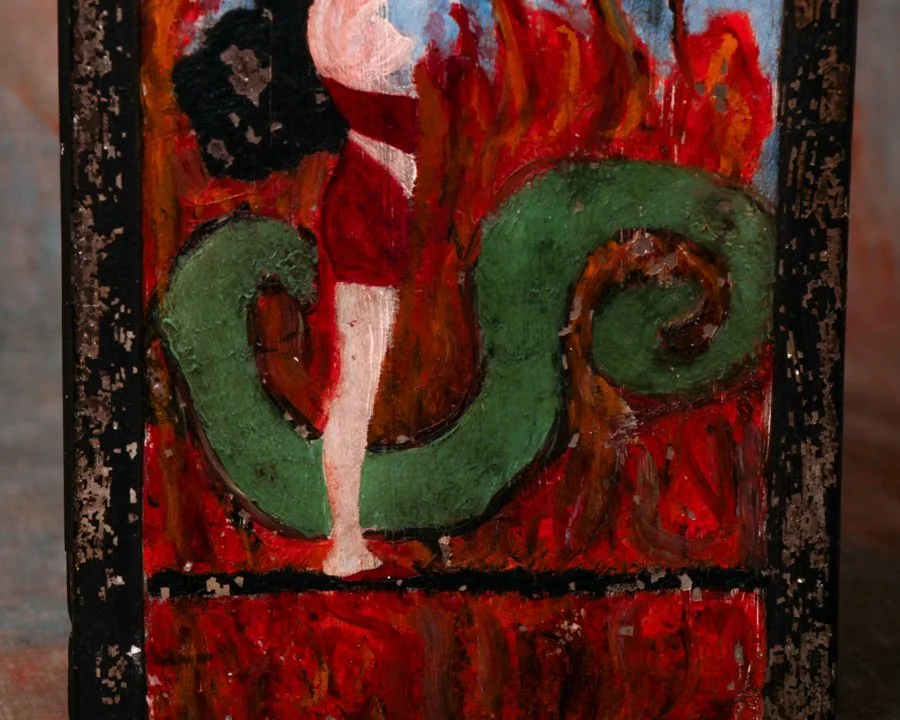
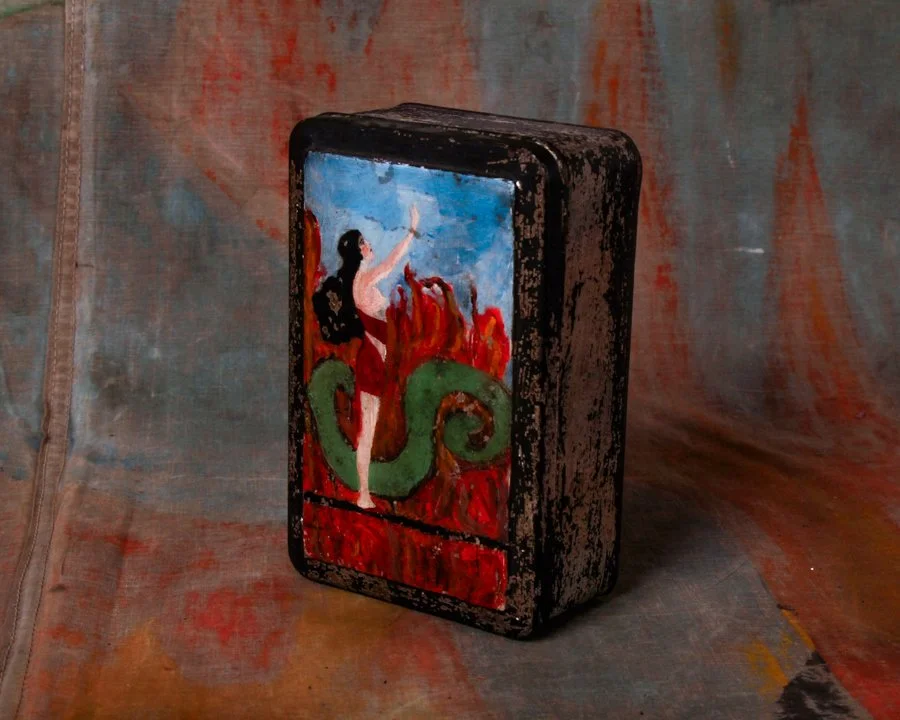
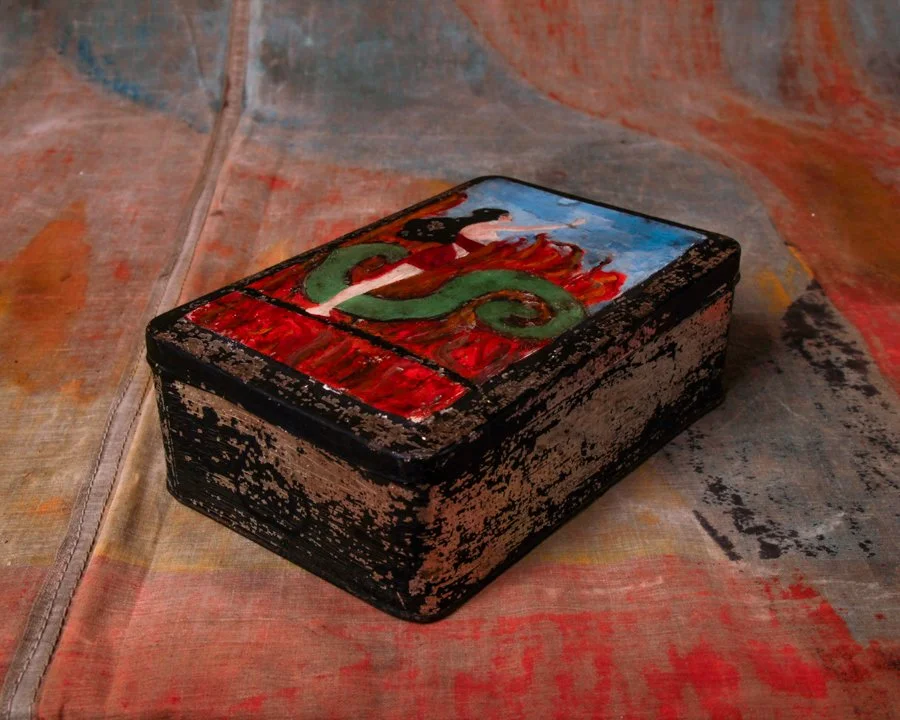
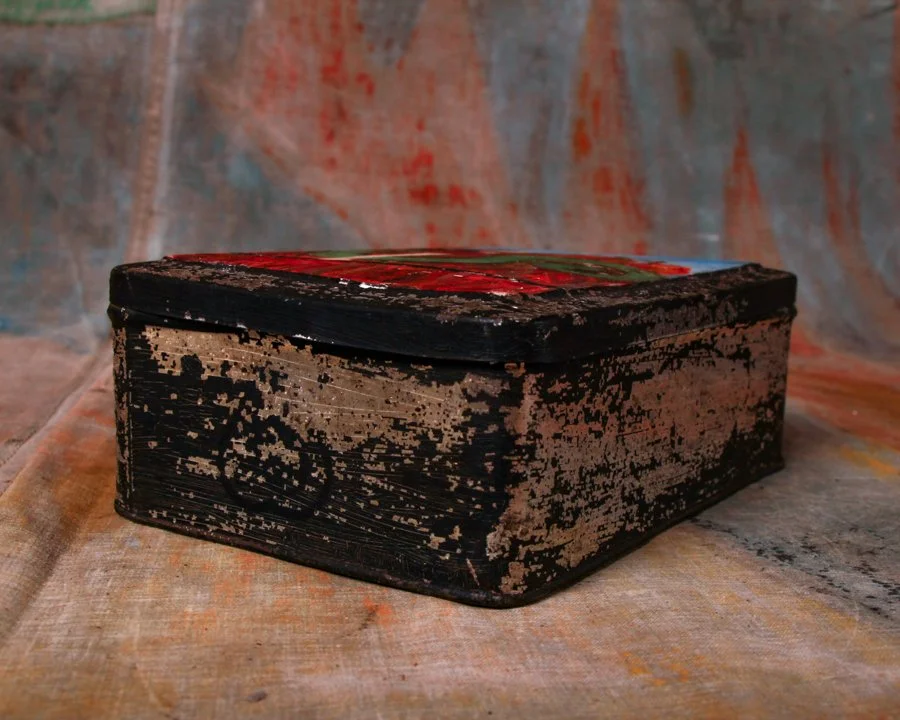
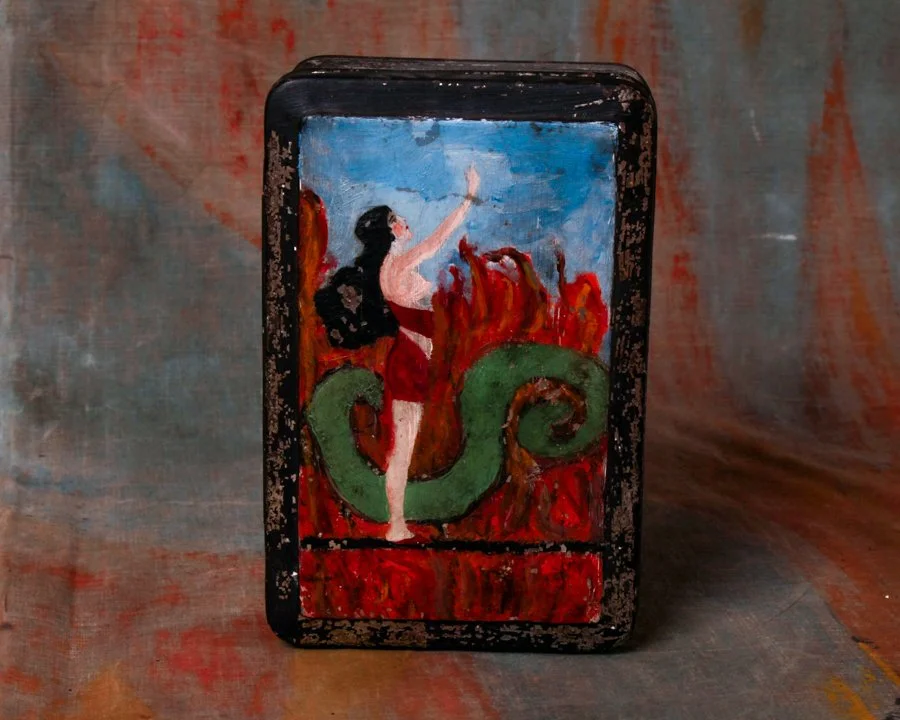
A little mystery, a lot of charm—this old tin box features a wonderfully naïve hand-painted mermaid (or maybe a fire-dancing siren?) mid-scene, reaching skyward as flames and a swirling green tail wrap around her. The whole thing has a raw, outsider-art energy to it, like someone poured their imagination straight onto metal with a very determined brush. The paint is thick and expressive, and the box itself has that perfect, uneven patina that only decades of wear can achieve. It looks like the lid might open, but we haven't tried forcing it (open at your own risk).
Category History
Folk art lives in that space where making isn’t about fitting into an art world—it’s about expressing something directly, often with whatever is at hand. It’s shaped by necessity, tradition, and instinct rather than formal training. You see it in carved figures, painted signs, stitched textiles, weathervanes, toys—objects that were sometimes made to be useful, sometimes just because someone felt like making them.
What sets folk art apart is its independence. Proportion might bend, perspective might flatten, colors might lean bold or unexpected—but it all works because it’s guided by the maker’s eye, not a rulebook. There’s often a strong sense of place, too. Materials and motifs reflect where it was made, whether that’s rural, coastal, urban, or somewhere in between.
Many pieces carry a kind of quiet storytelling. A carved animal that feels more like a memory than a specimen, a painted scene that captures an event or daily life without worrying about precision. Imperfections aren’t flaws—they’re part of the language.
Over time, these objects shift from everyday use into something more reflective. What was once a tool or decoration becomes a record of how someone saw the world and chose to shape it. Folk art doesn’t try to impress—it connects, directly and without much explanation.
A little mystery, a lot of charm—this old tin box features a wonderfully naïve hand-painted mermaid (or maybe a fire-dancing siren?) mid-scene, reaching skyward as flames and a swirling green tail wrap around her. The whole thing has a raw, outsider-art energy to it, like someone poured their imagination straight onto metal with a very determined brush. The paint is thick and expressive, and the box itself has that perfect, uneven patina that only decades of wear can achieve. It looks like the lid might open, but we haven't tried forcing it (open at your own risk).
Category History
Folk art lives in that space where making isn’t about fitting into an art world—it’s about expressing something directly, often with whatever is at hand. It’s shaped by necessity, tradition, and instinct rather than formal training. You see it in carved figures, painted signs, stitched textiles, weathervanes, toys—objects that were sometimes made to be useful, sometimes just because someone felt like making them.
What sets folk art apart is its independence. Proportion might bend, perspective might flatten, colors might lean bold or unexpected—but it all works because it’s guided by the maker’s eye, not a rulebook. There’s often a strong sense of place, too. Materials and motifs reflect where it was made, whether that’s rural, coastal, urban, or somewhere in between.
Many pieces carry a kind of quiet storytelling. A carved animal that feels more like a memory than a specimen, a painted scene that captures an event or daily life without worrying about precision. Imperfections aren’t flaws—they’re part of the language.
Over time, these objects shift from everyday use into something more reflective. What was once a tool or decoration becomes a record of how someone saw the world and chose to shape it. Folk art doesn’t try to impress—it connects, directly and without much explanation.