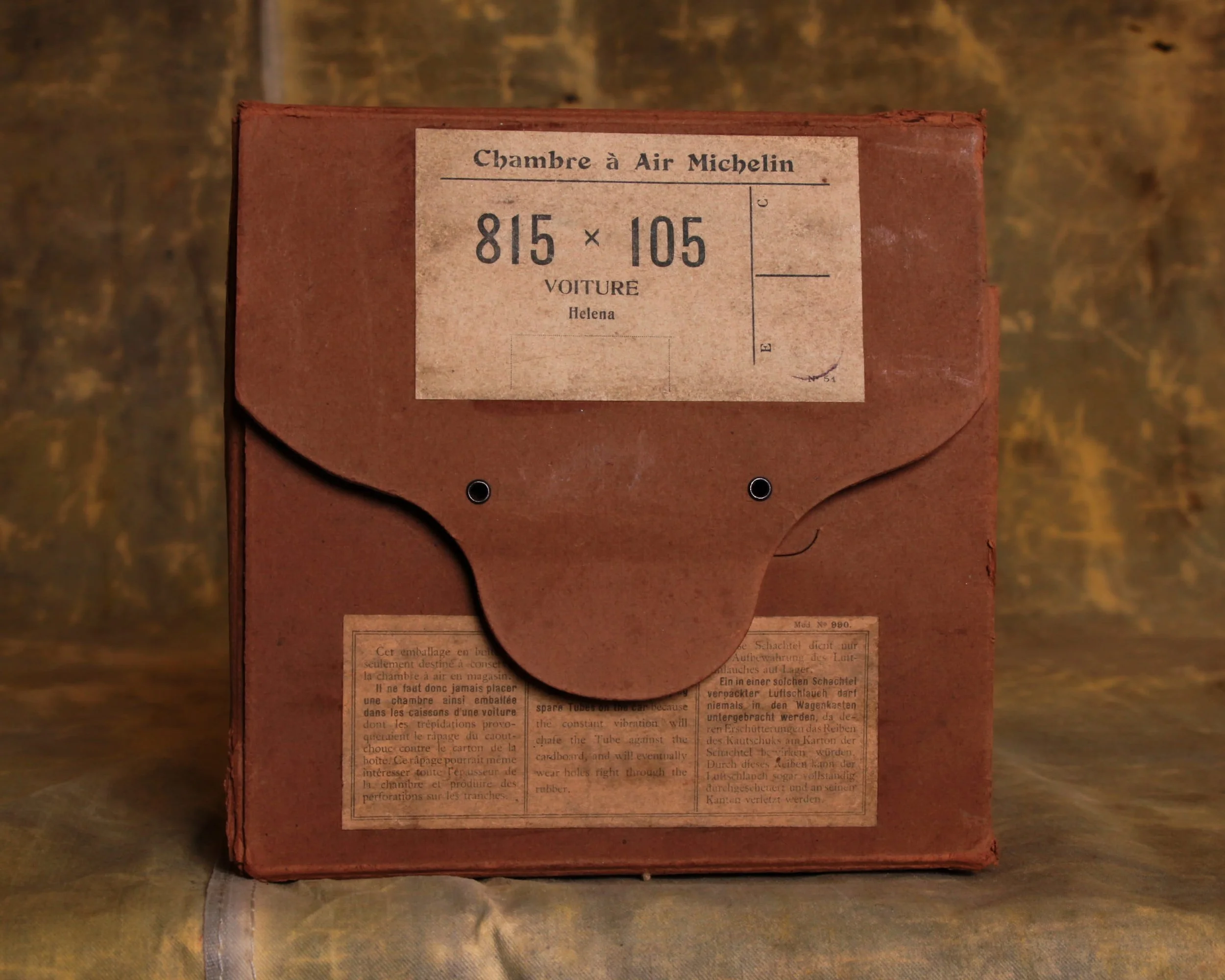
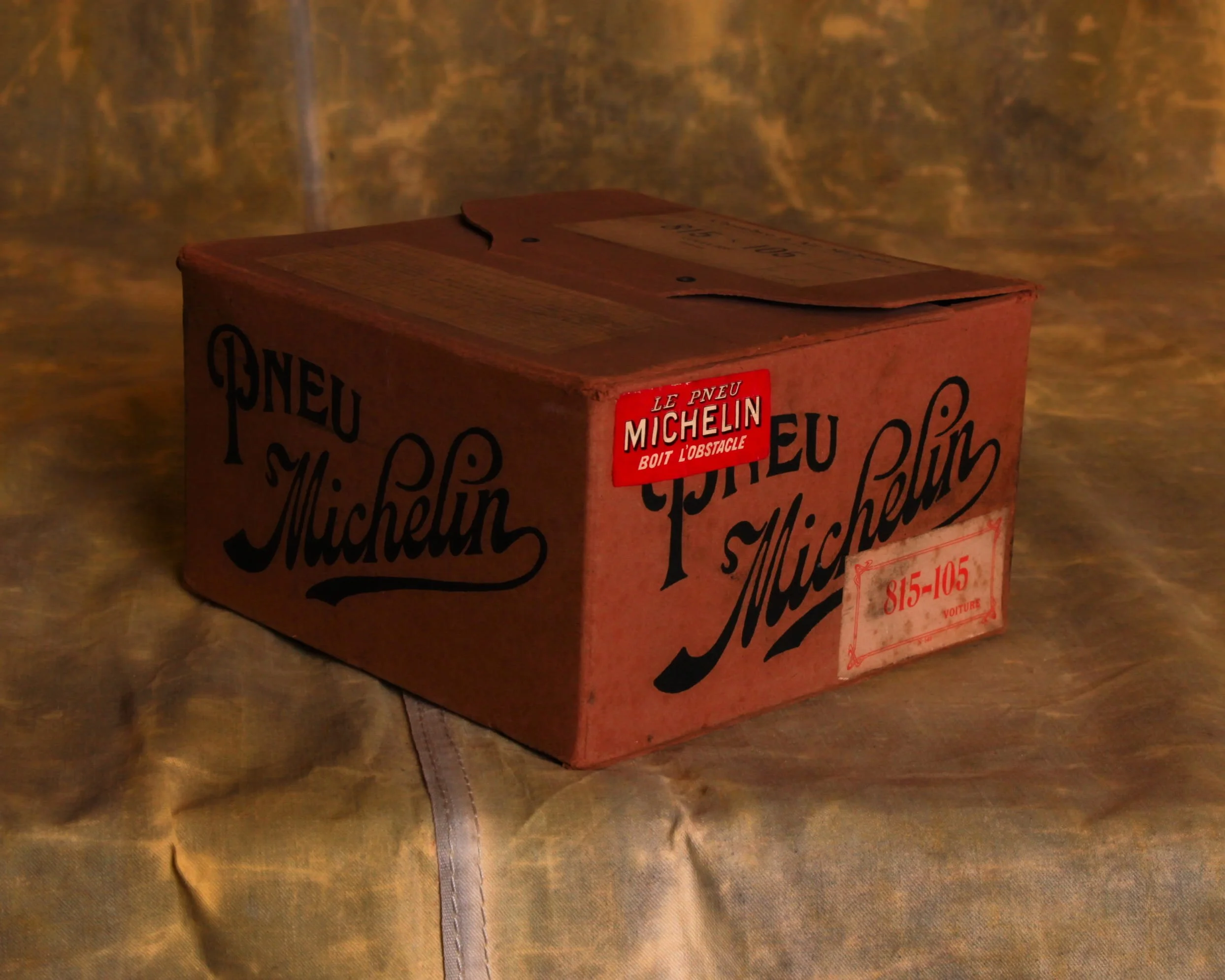
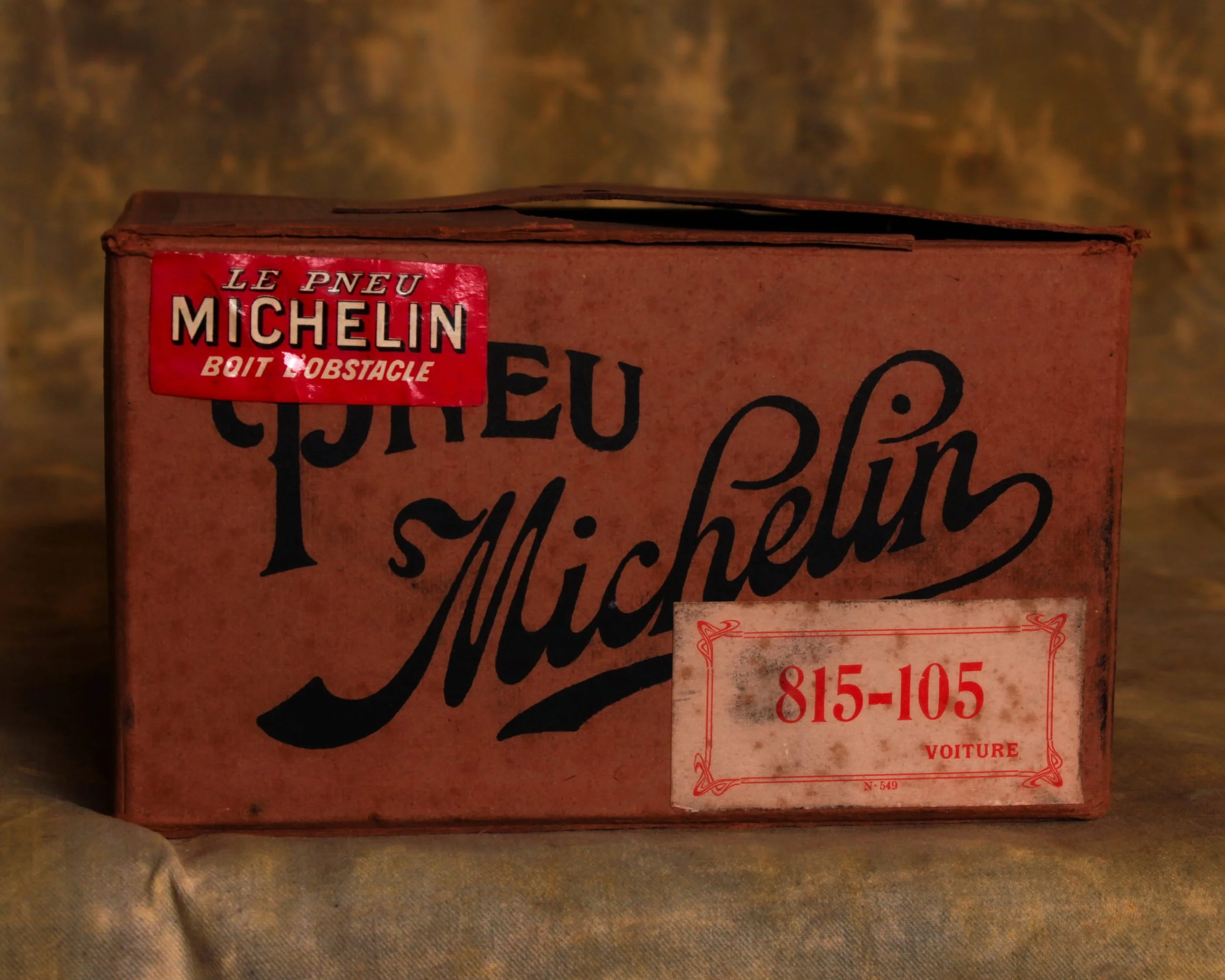
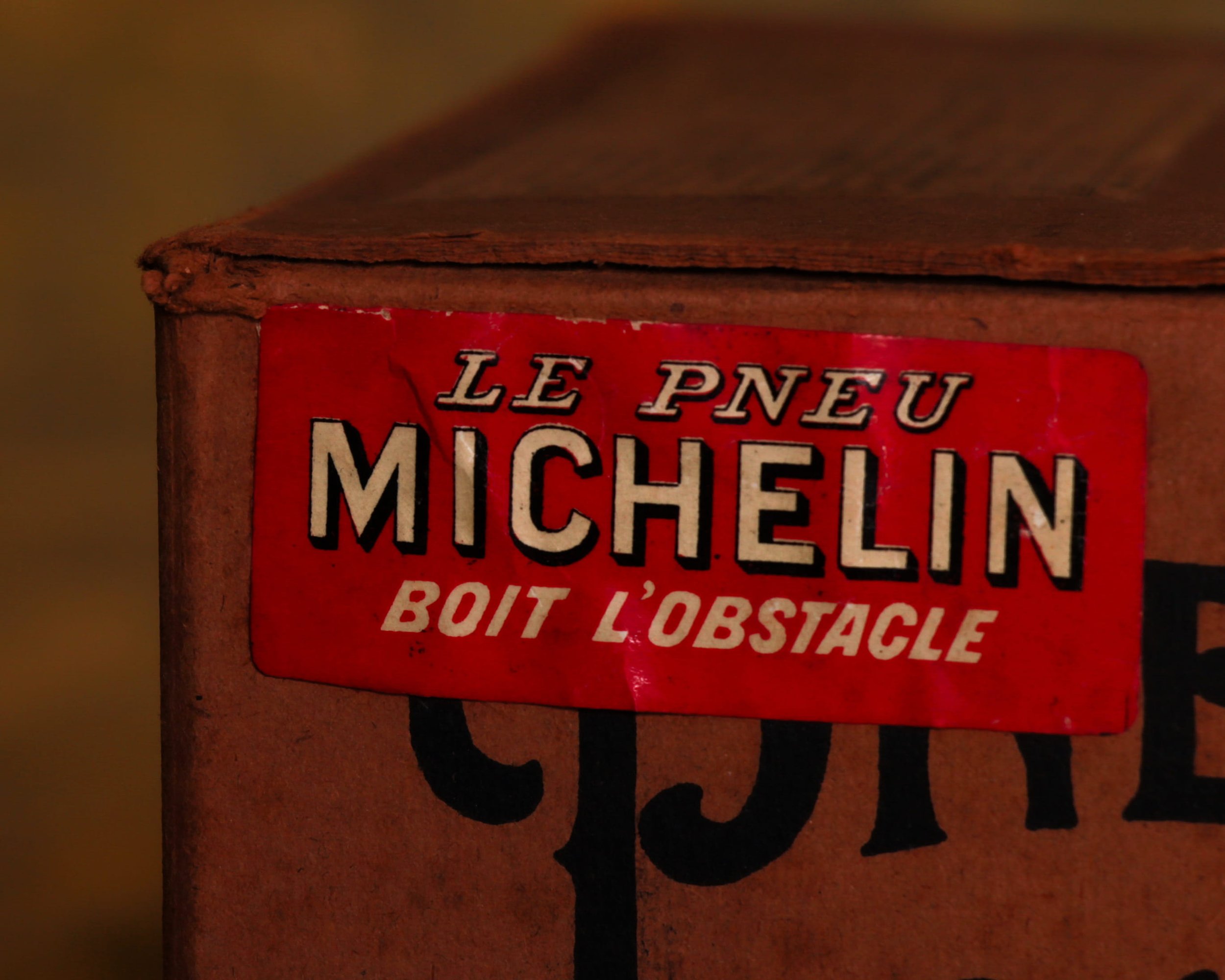
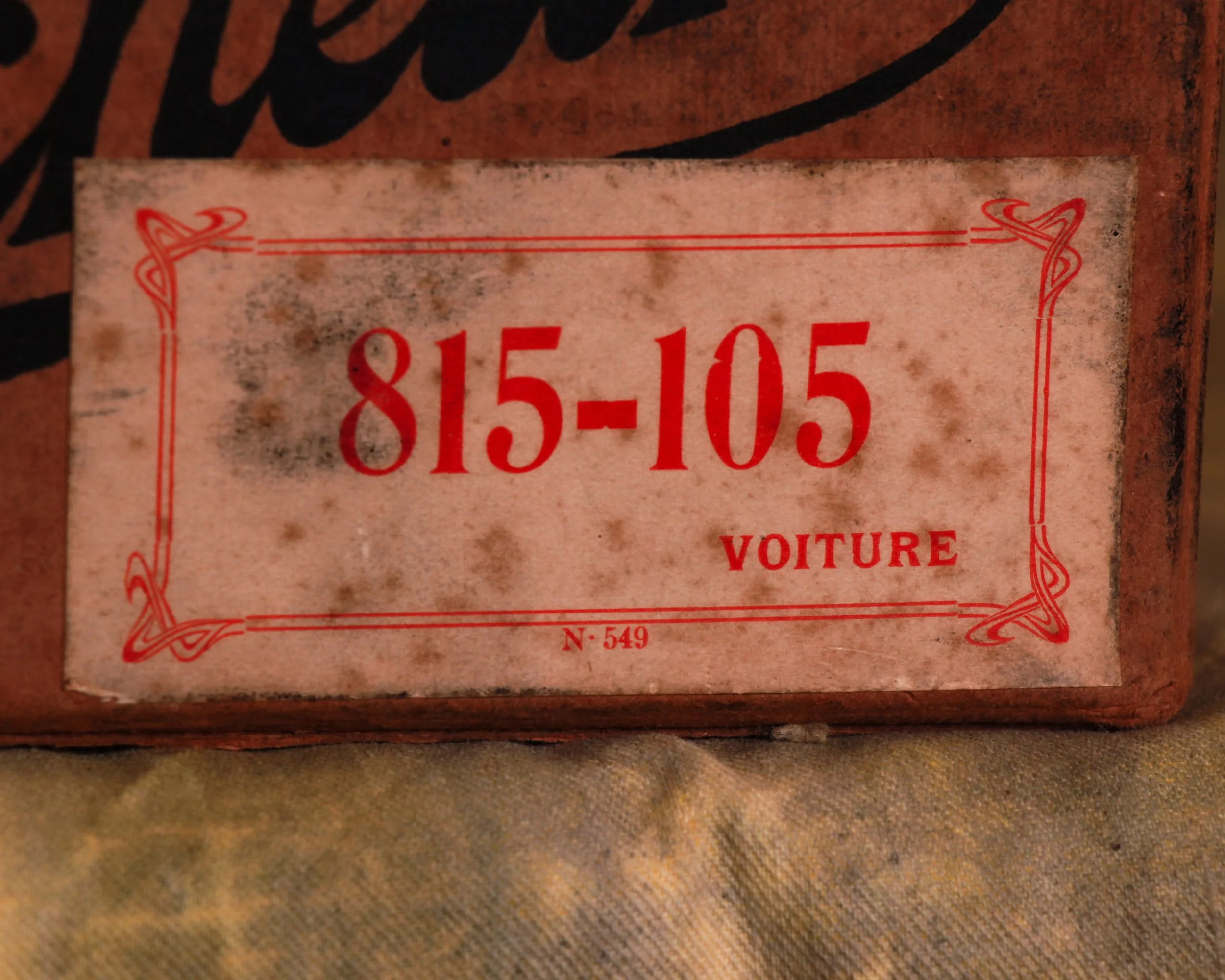
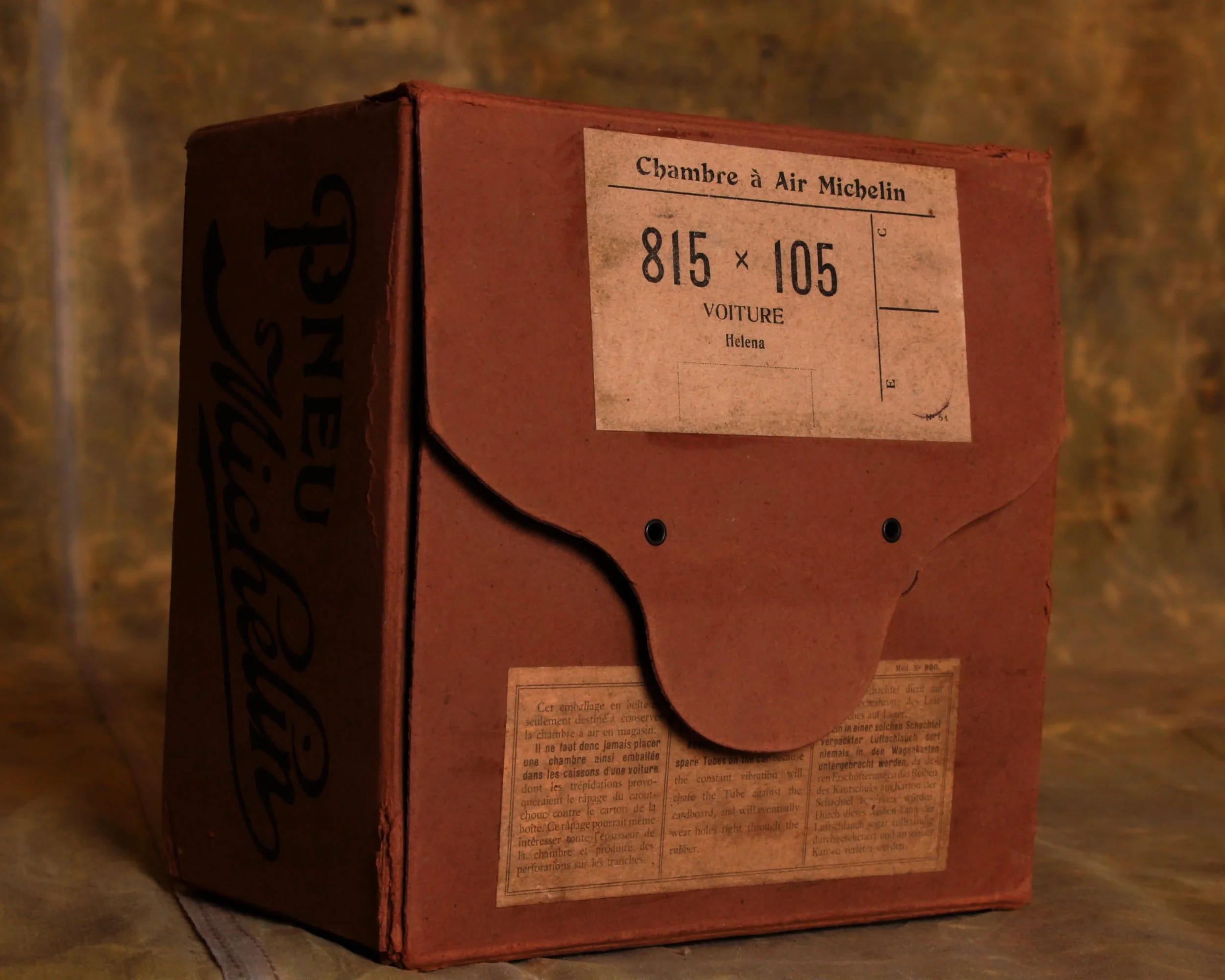
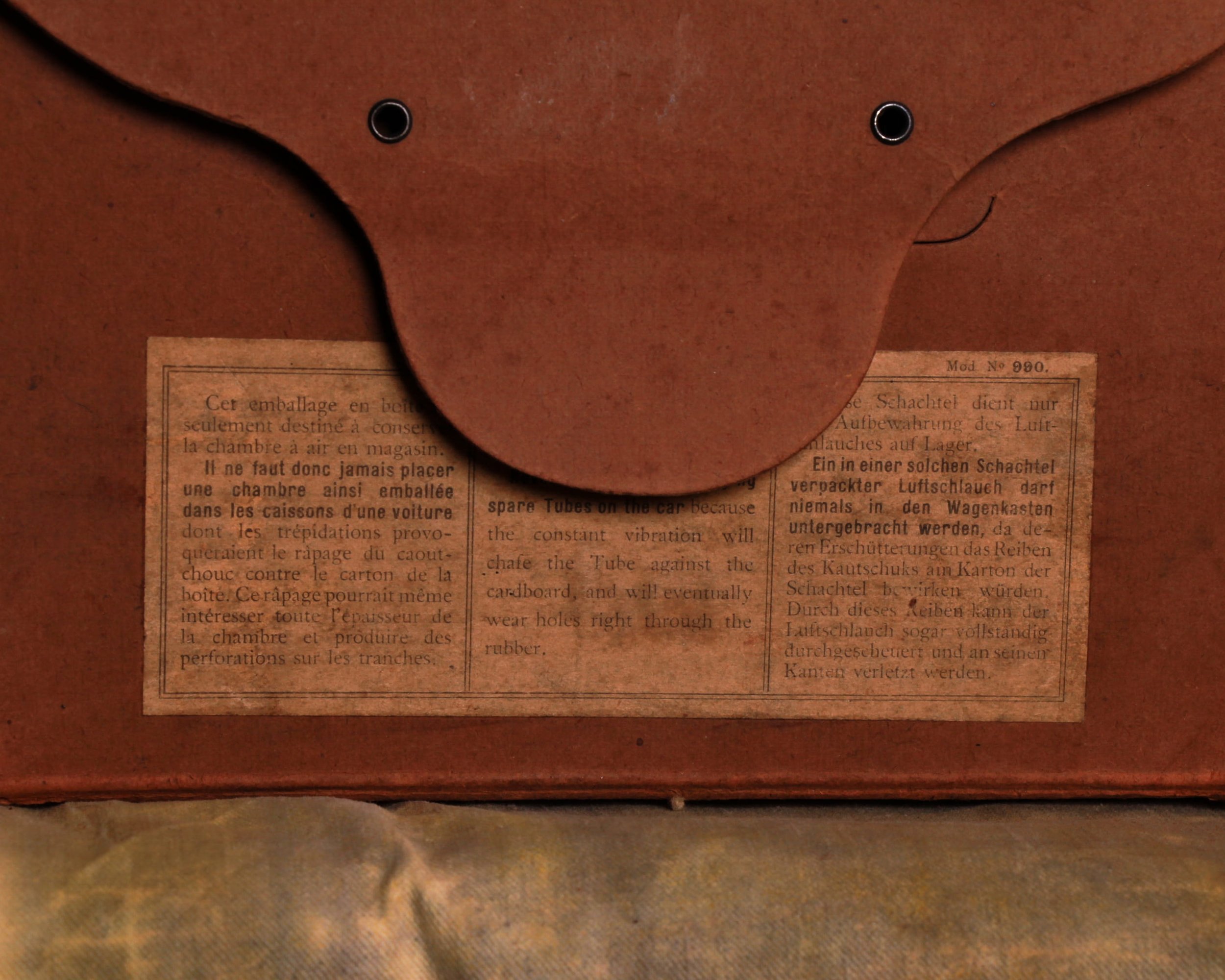
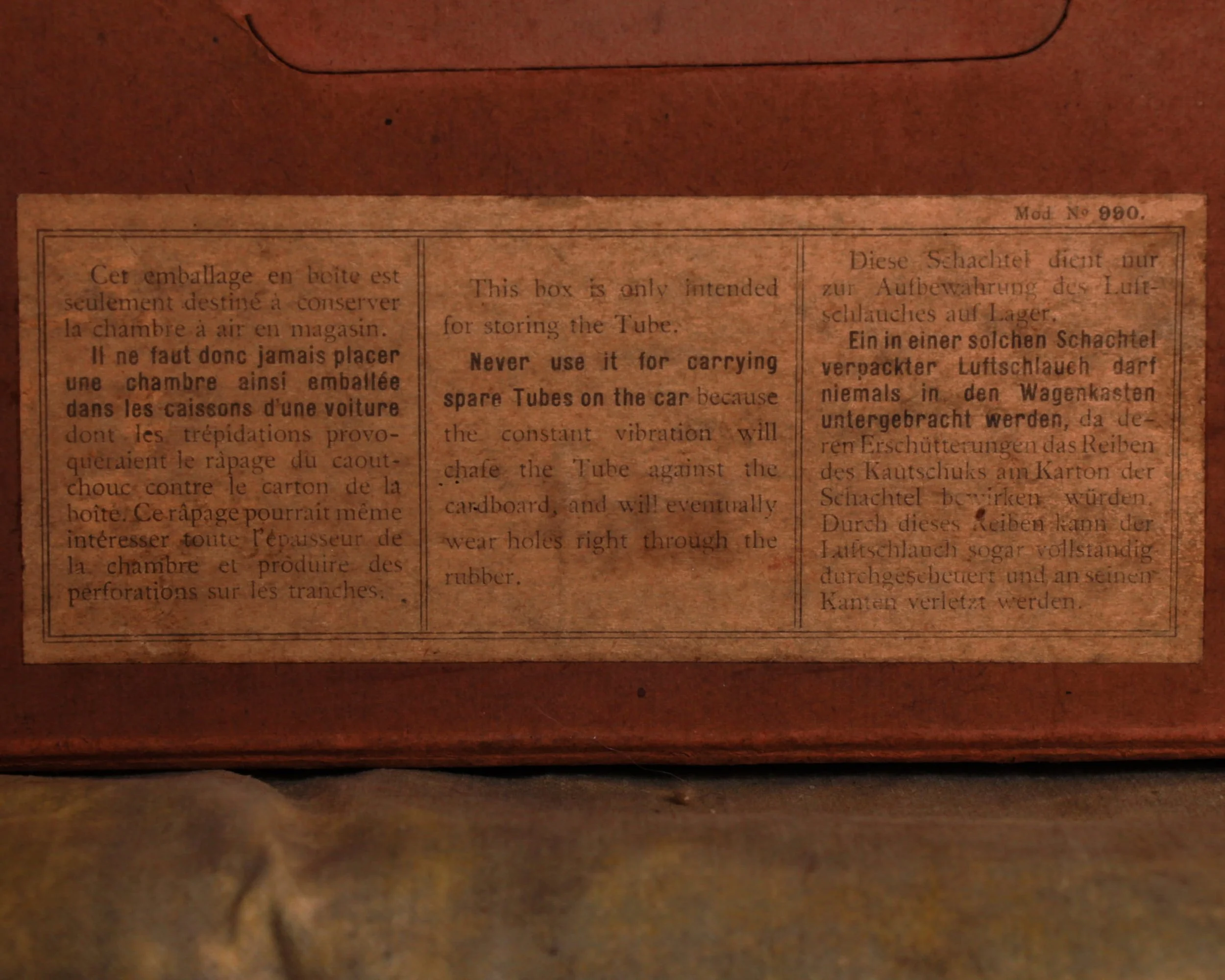
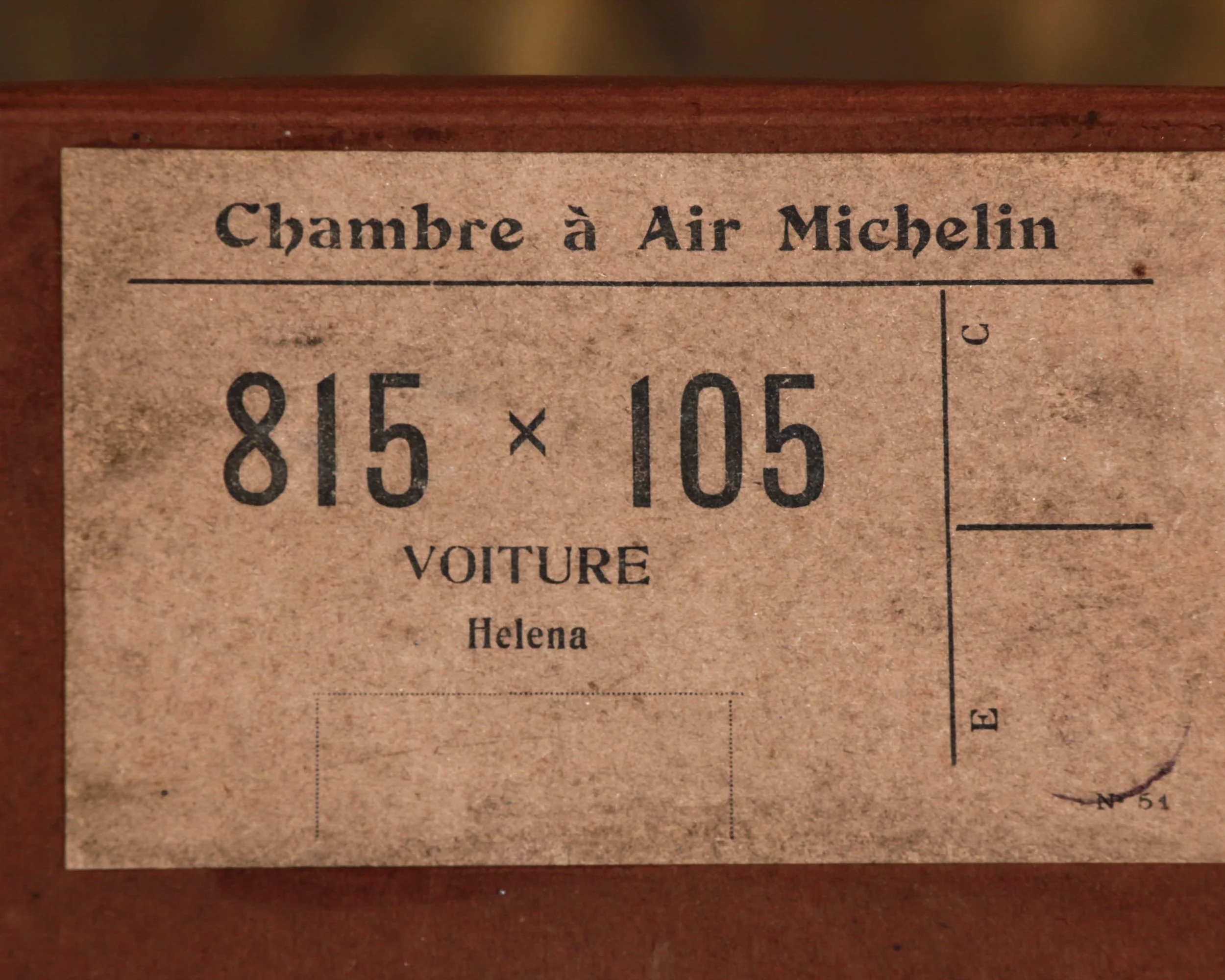
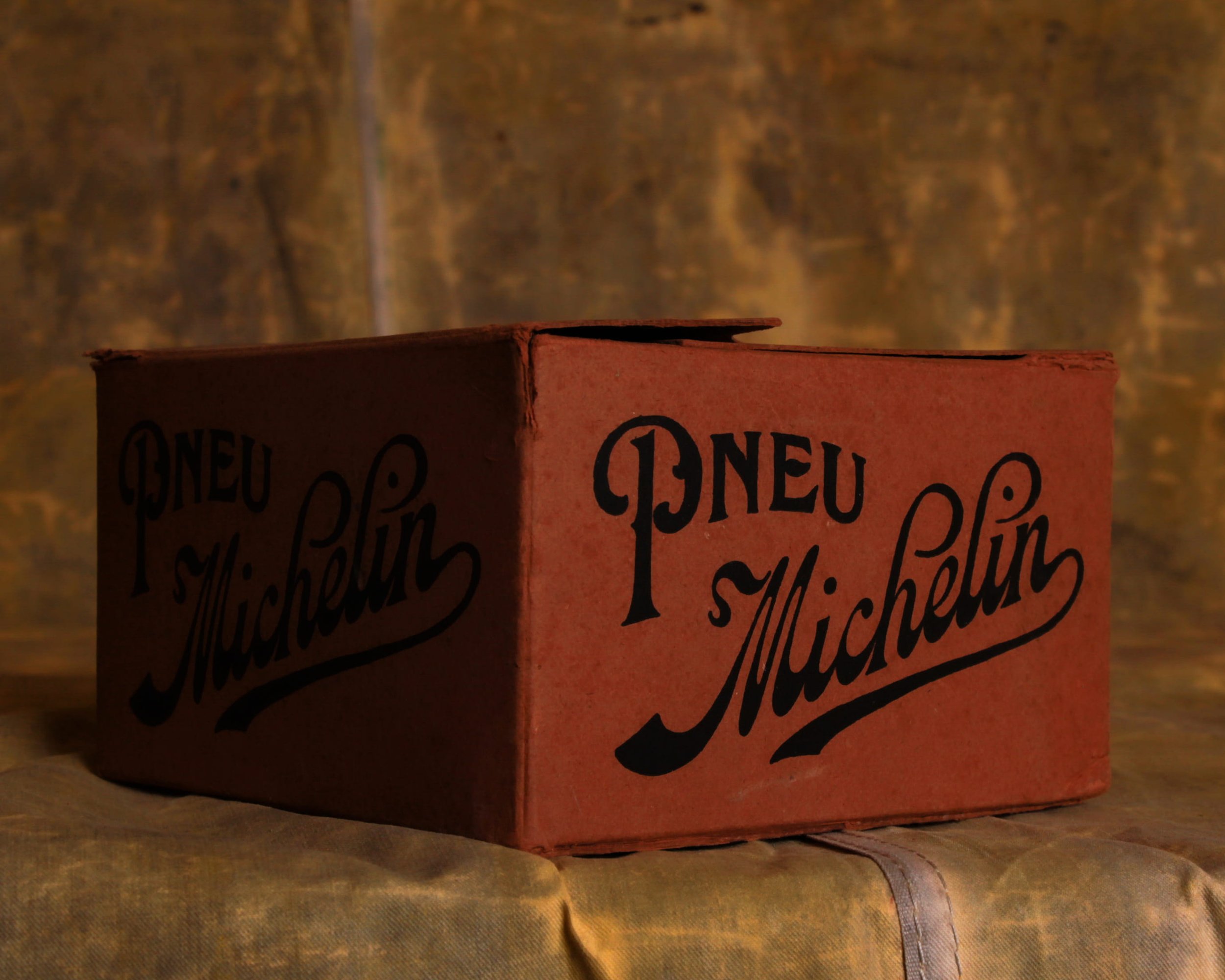
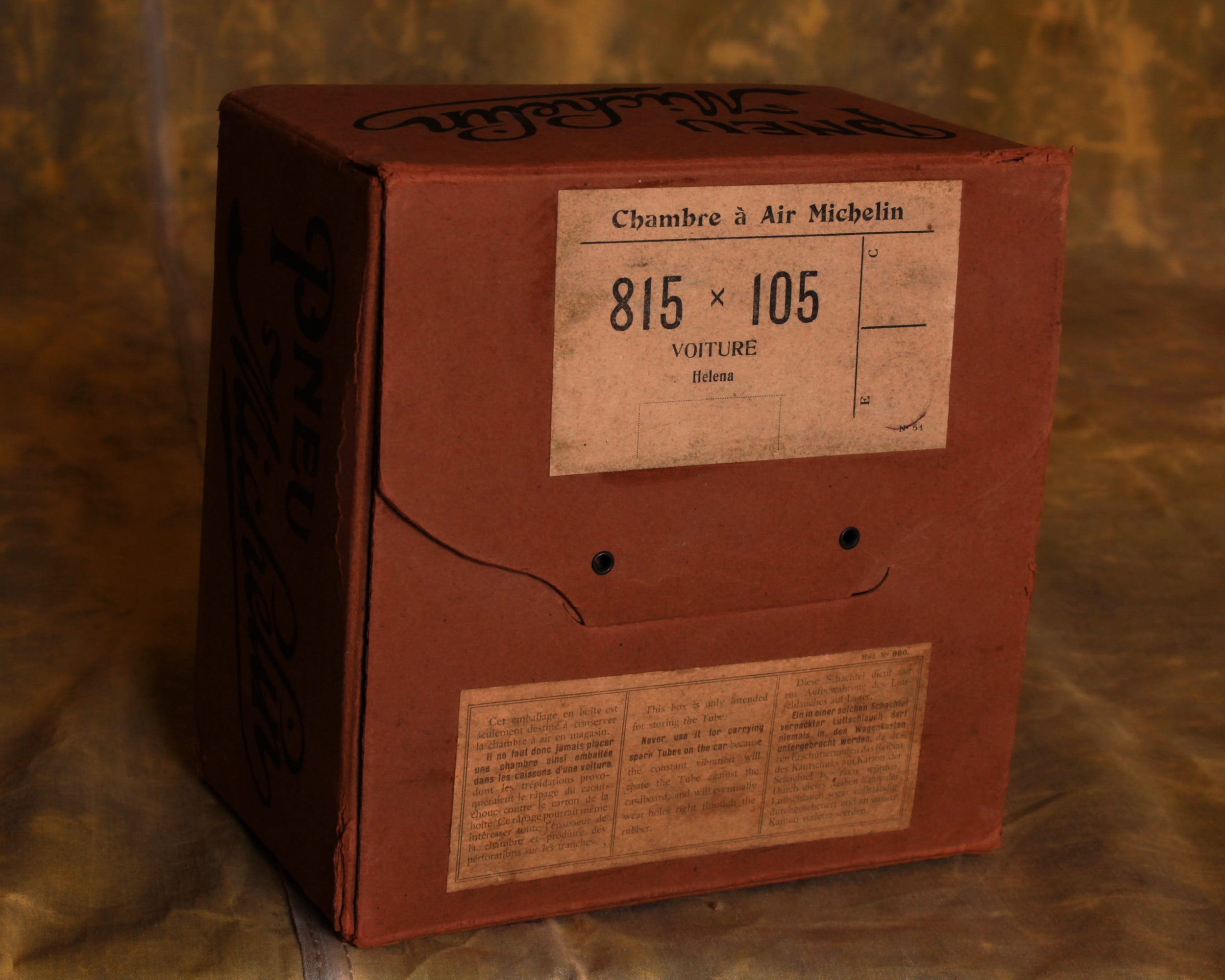
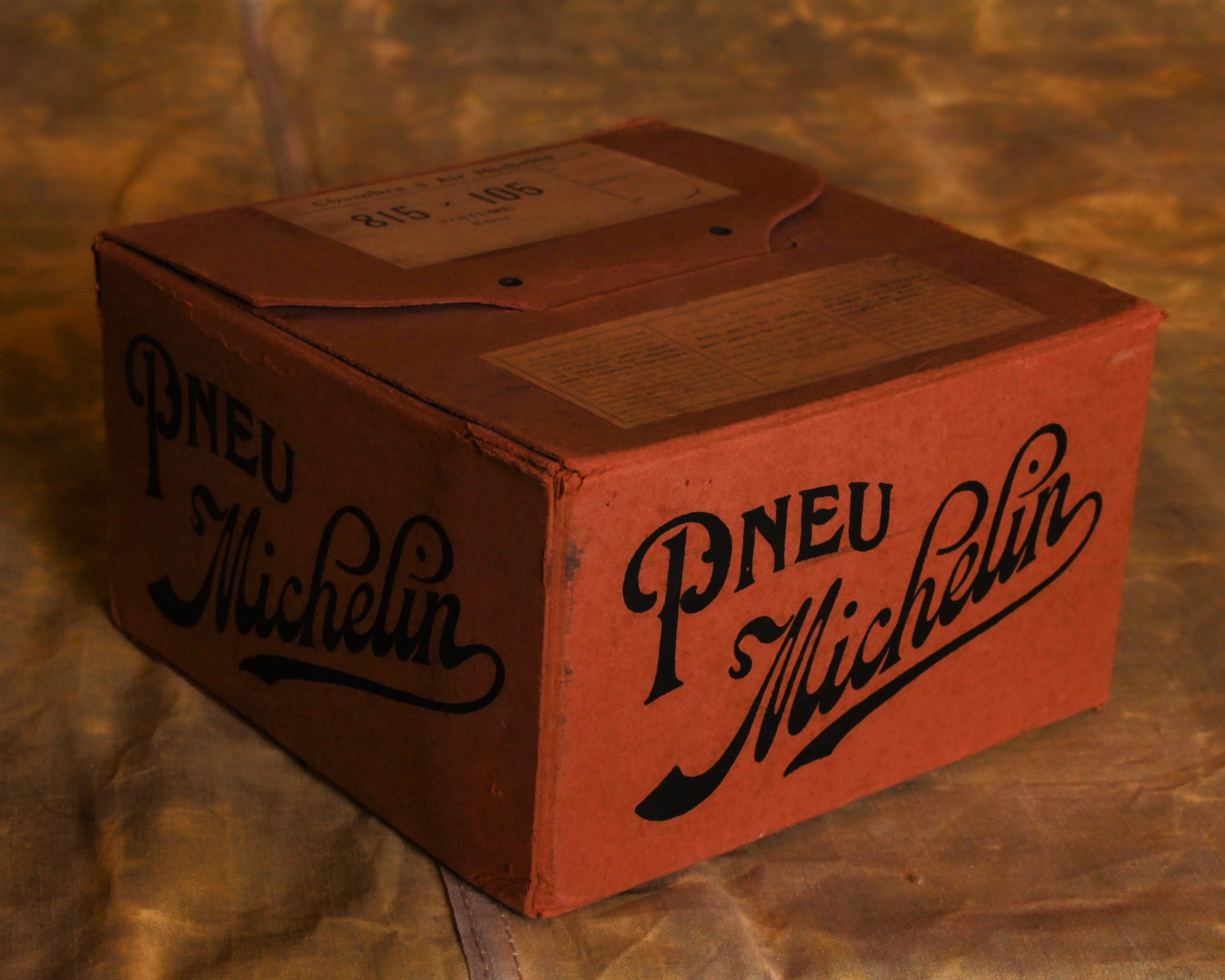
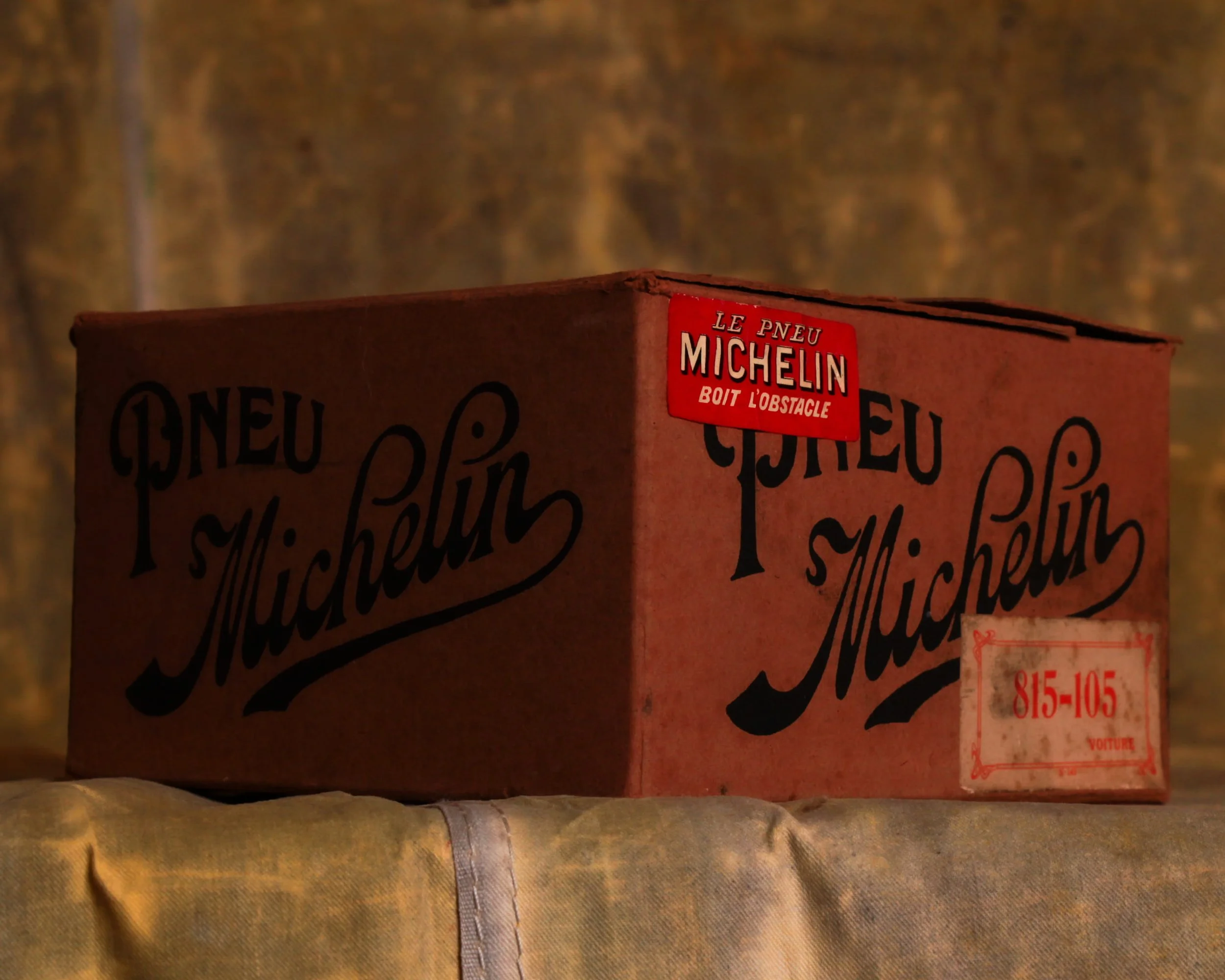
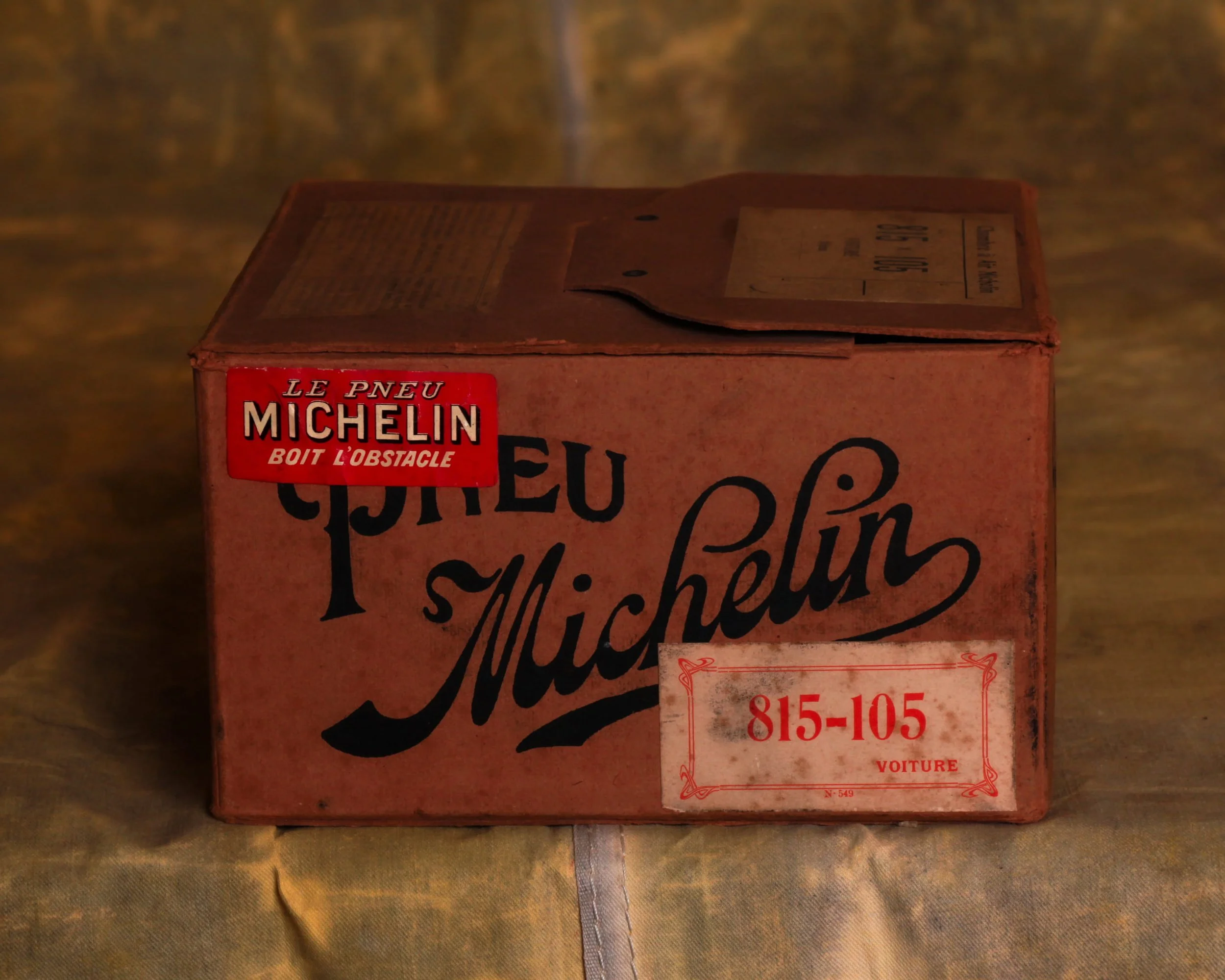
Empty Michelin "Pneu" (Tire) Box, with its striking typography and bold branding, this cardboard packaging once held a Michelin inner tube (chambre à air)—a critical component for keeping early automobiles rolling smoothly. The folded flap closure, complete with original instructions in multiple languages, adds a functional beauty that makes this piece an instant conversation starter.
The paper has taken on that soft, slightly brittle feel that only age can give, with minor creases and edge wear that speak to handling rather than neglect. It’s the kind of packaging that was never meant to last, yet somehow did—holding onto both its graphic punch and quiet sense of purpose.
Michelin Tires
Michelin tires start with a simple idea: make travel smoother, then keep refining it. Founded in 1889 in France by the Michelin brothers, Michelin entered a world where early bicycles and automobiles were still rough rides. Their breakthrough came with the detachable pneumatic tire—easier to repair, more practical, and a major step forward in usability.
From there, innovation became the throughline. Radial tires, introduced in the mid-20th century, changed how vehicles handled and how long tires lasted, setting a new standard that still shapes the industry. Michelin wasn’t just making tires—they were rethinking how rubber met the road.
What’s interesting is how closely the brand tied itself to travel itself. Maps, guides, signage—all part of a larger ecosystem encouraging people to move, explore, and rely on the journey. Even the iconic Bibendum figure turned a functional product into something recognizable and approachable.
The objects themselves—early tires, boxes, repair kits—carry that same sense of purpose. Built for durability, designed for real conditions, and constantly improved through use.
Today, Michelin reads as both manufacturer and storyteller. A company that turned something purely practical into a symbol of movement, reliability, and the long road ahead.
Empty Michelin "Pneu" (Tire) Box, with its striking typography and bold branding, this cardboard packaging once held a Michelin inner tube (chambre à air)—a critical component for keeping early automobiles rolling smoothly. The folded flap closure, complete with original instructions in multiple languages, adds a functional beauty that makes this piece an instant conversation starter.
The paper has taken on that soft, slightly brittle feel that only age can give, with minor creases and edge wear that speak to handling rather than neglect. It’s the kind of packaging that was never meant to last, yet somehow did—holding onto both its graphic punch and quiet sense of purpose.
Michelin Tires
Michelin tires start with a simple idea: make travel smoother, then keep refining it. Founded in 1889 in France by the Michelin brothers, Michelin entered a world where early bicycles and automobiles were still rough rides. Their breakthrough came with the detachable pneumatic tire—easier to repair, more practical, and a major step forward in usability.
From there, innovation became the throughline. Radial tires, introduced in the mid-20th century, changed how vehicles handled and how long tires lasted, setting a new standard that still shapes the industry. Michelin wasn’t just making tires—they were rethinking how rubber met the road.
What’s interesting is how closely the brand tied itself to travel itself. Maps, guides, signage—all part of a larger ecosystem encouraging people to move, explore, and rely on the journey. Even the iconic Bibendum figure turned a functional product into something recognizable and approachable.
The objects themselves—early tires, boxes, repair kits—carry that same sense of purpose. Built for durability, designed for real conditions, and constantly improved through use.
Today, Michelin reads as both manufacturer and storyteller. A company that turned something purely practical into a symbol of movement, reliability, and the long road ahead.