ITEM NOT AVAILABLE IMMEDIATELY—INQUIRE IF INTERESTED hello@heimweeantiques.com
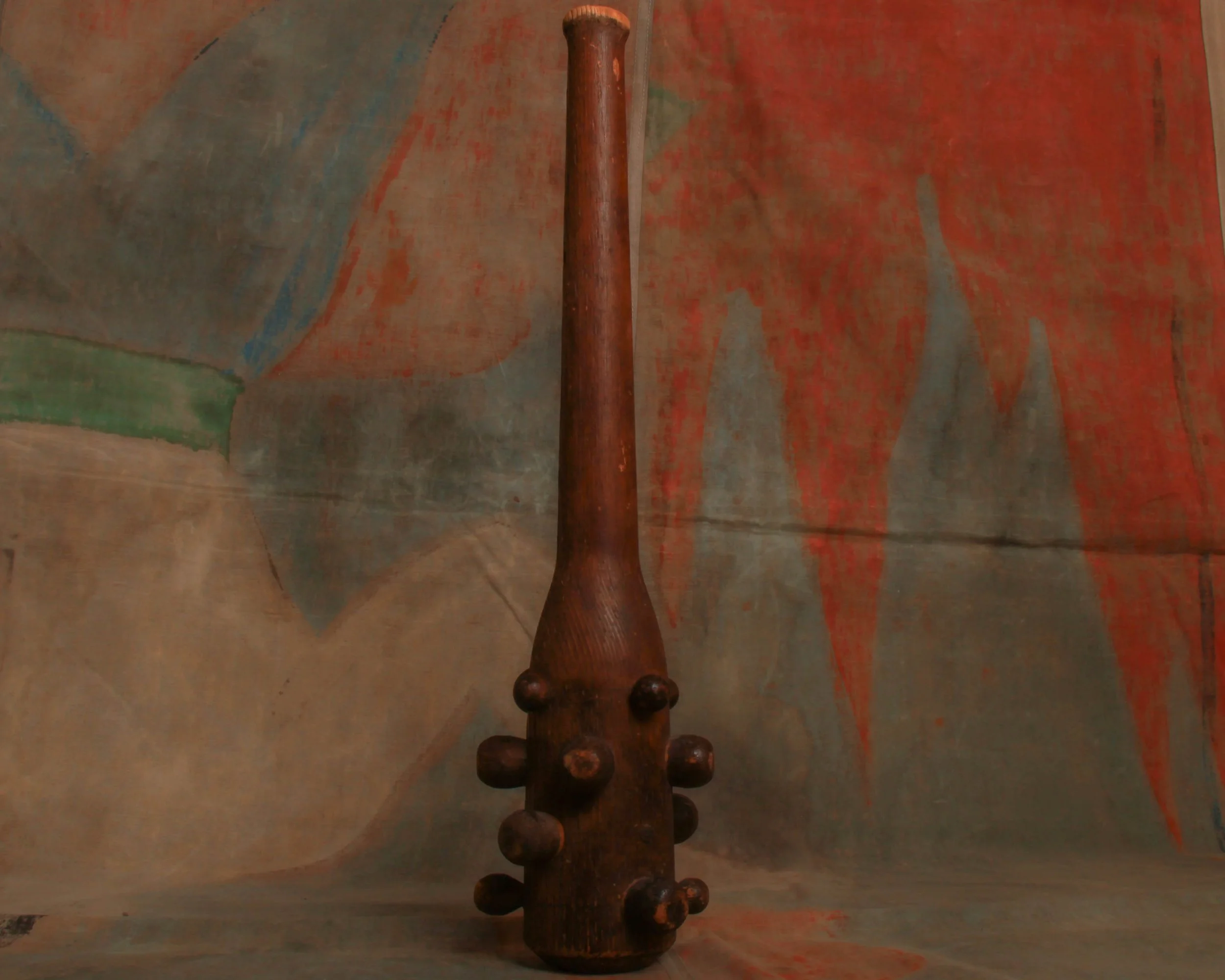
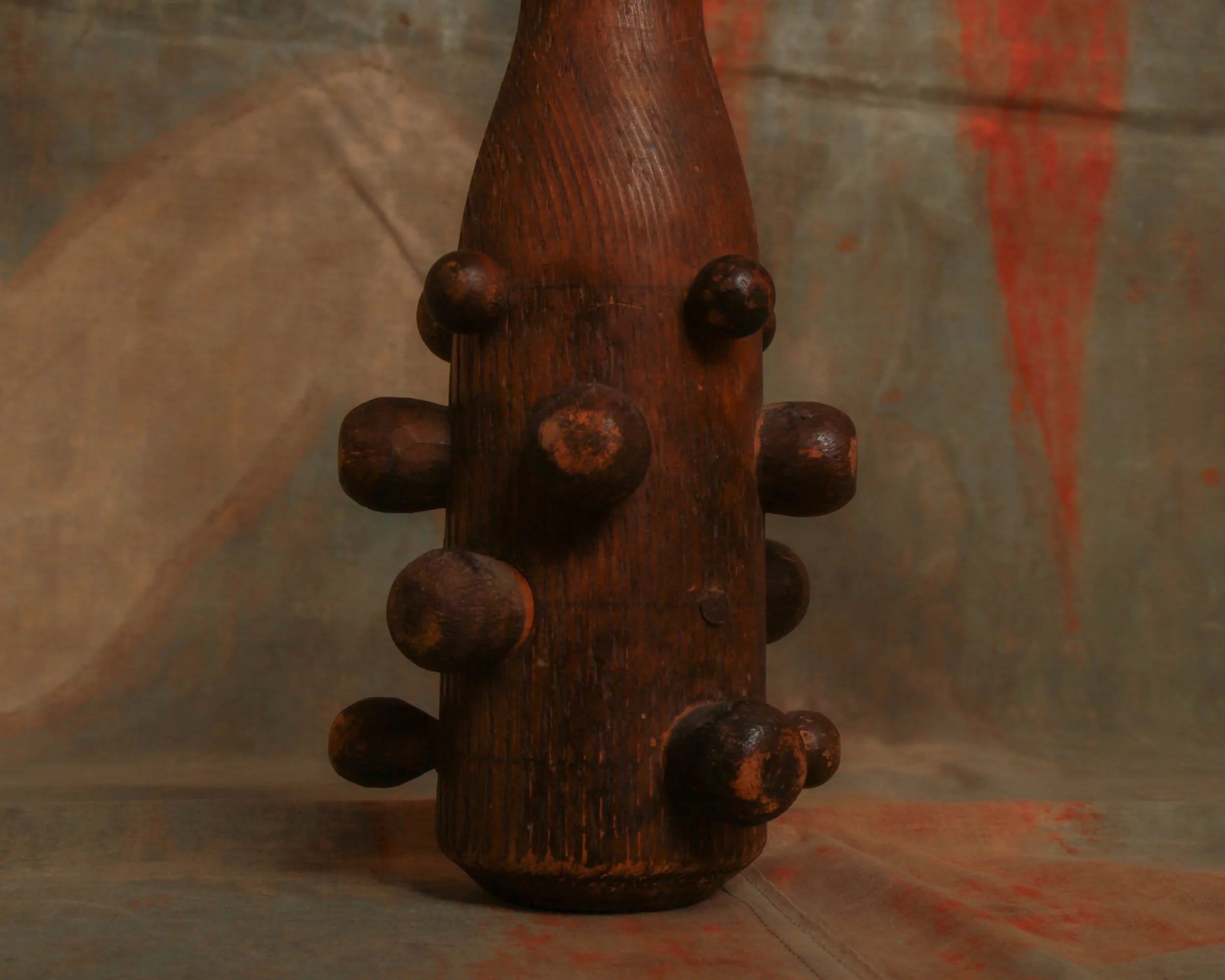
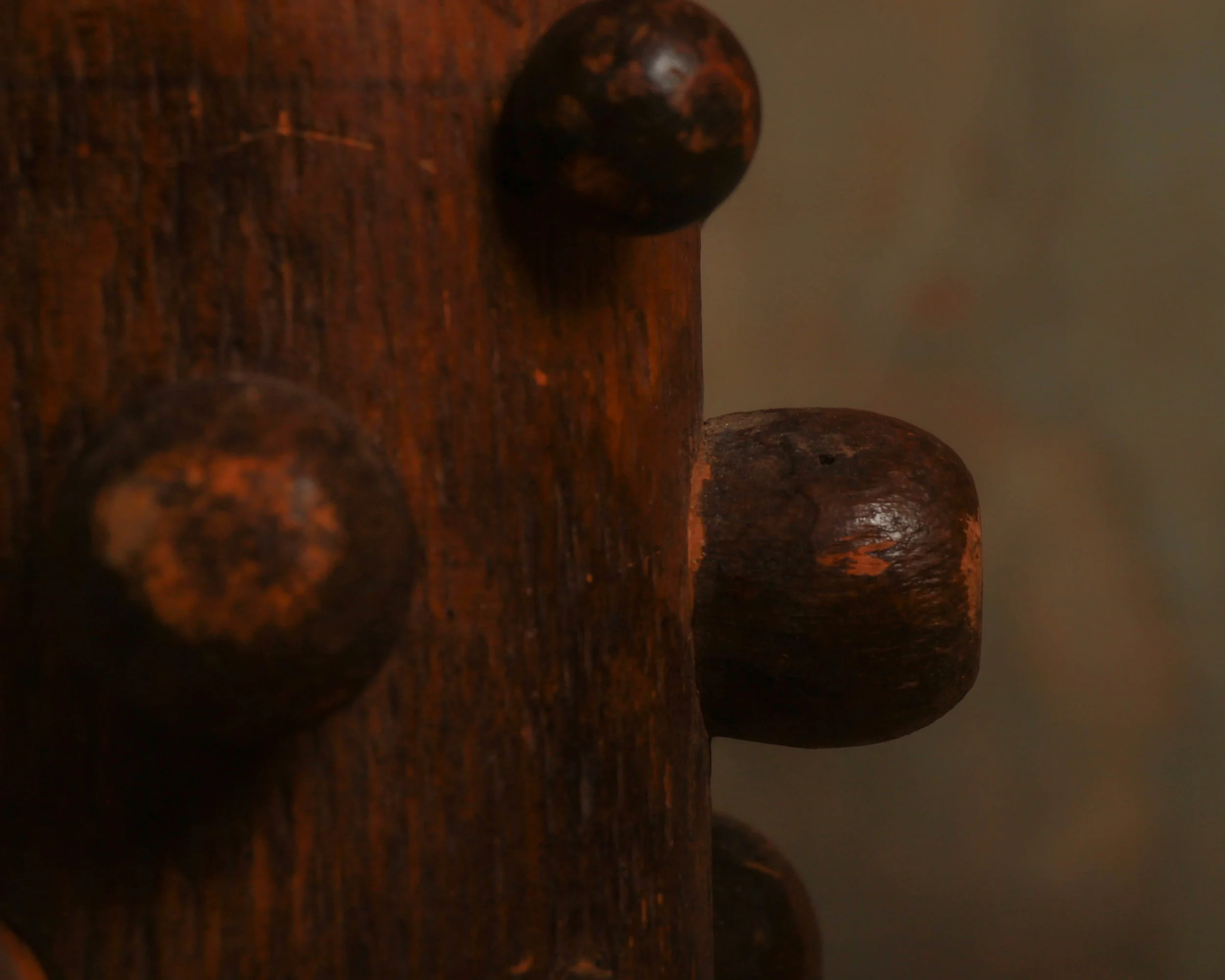
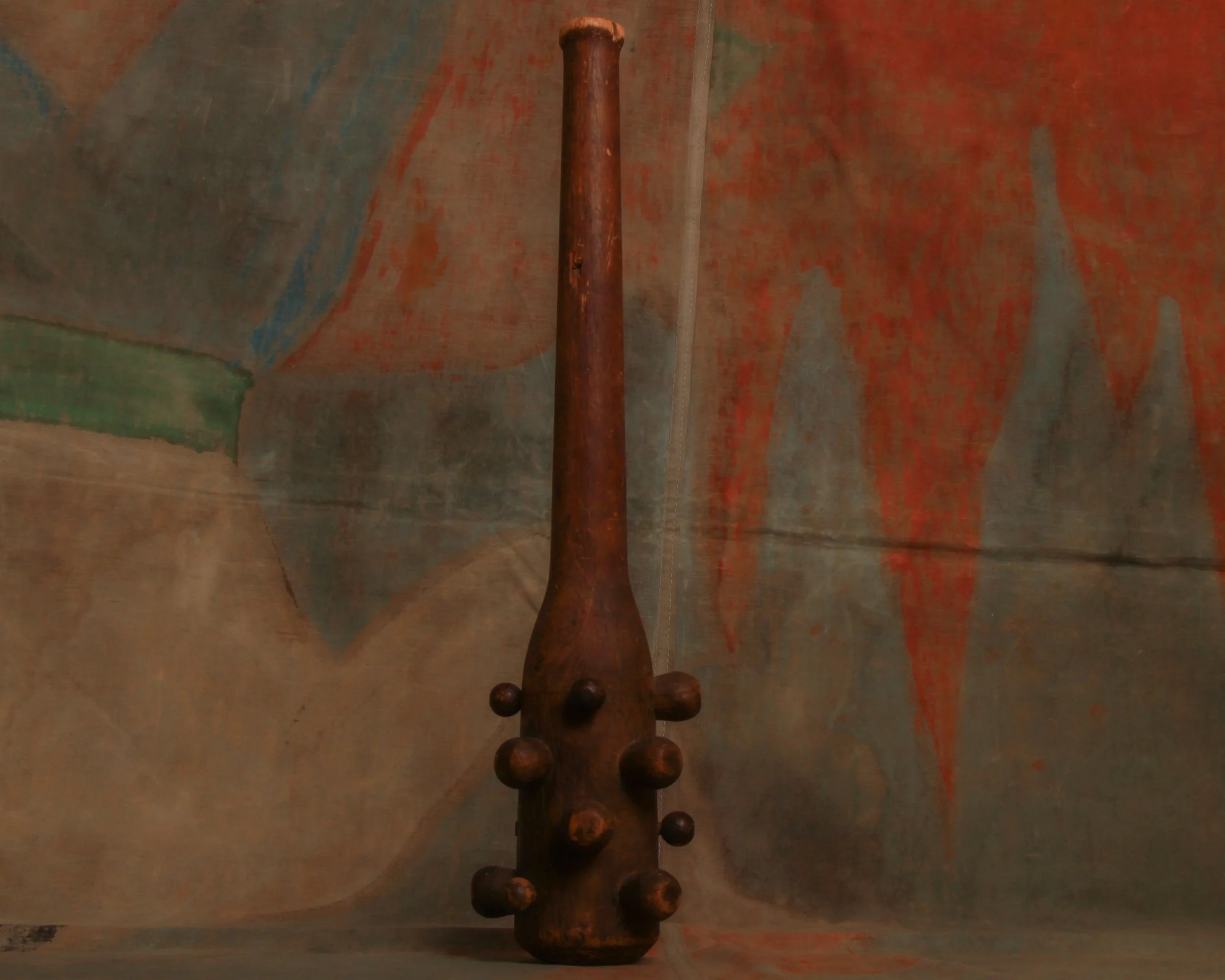
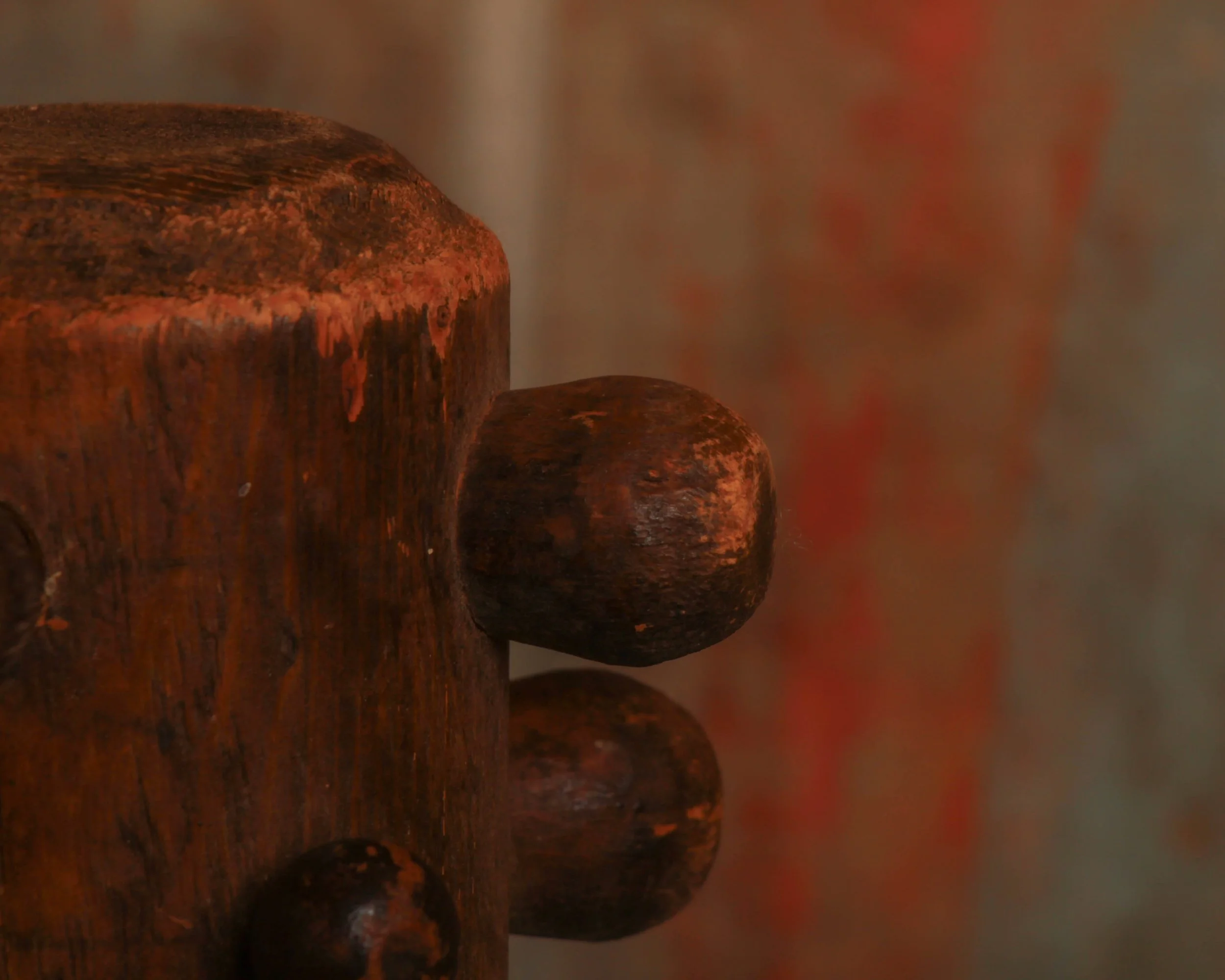
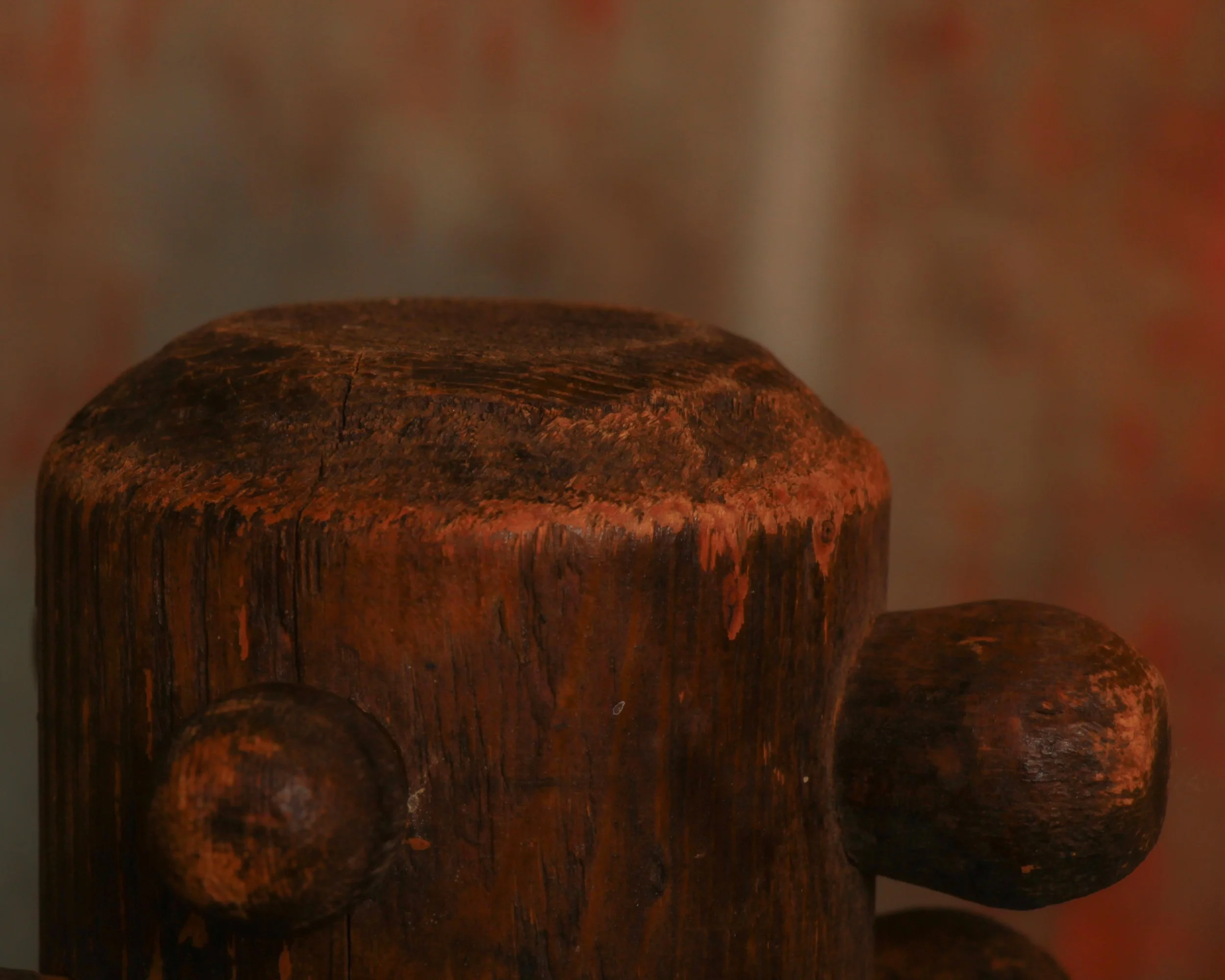
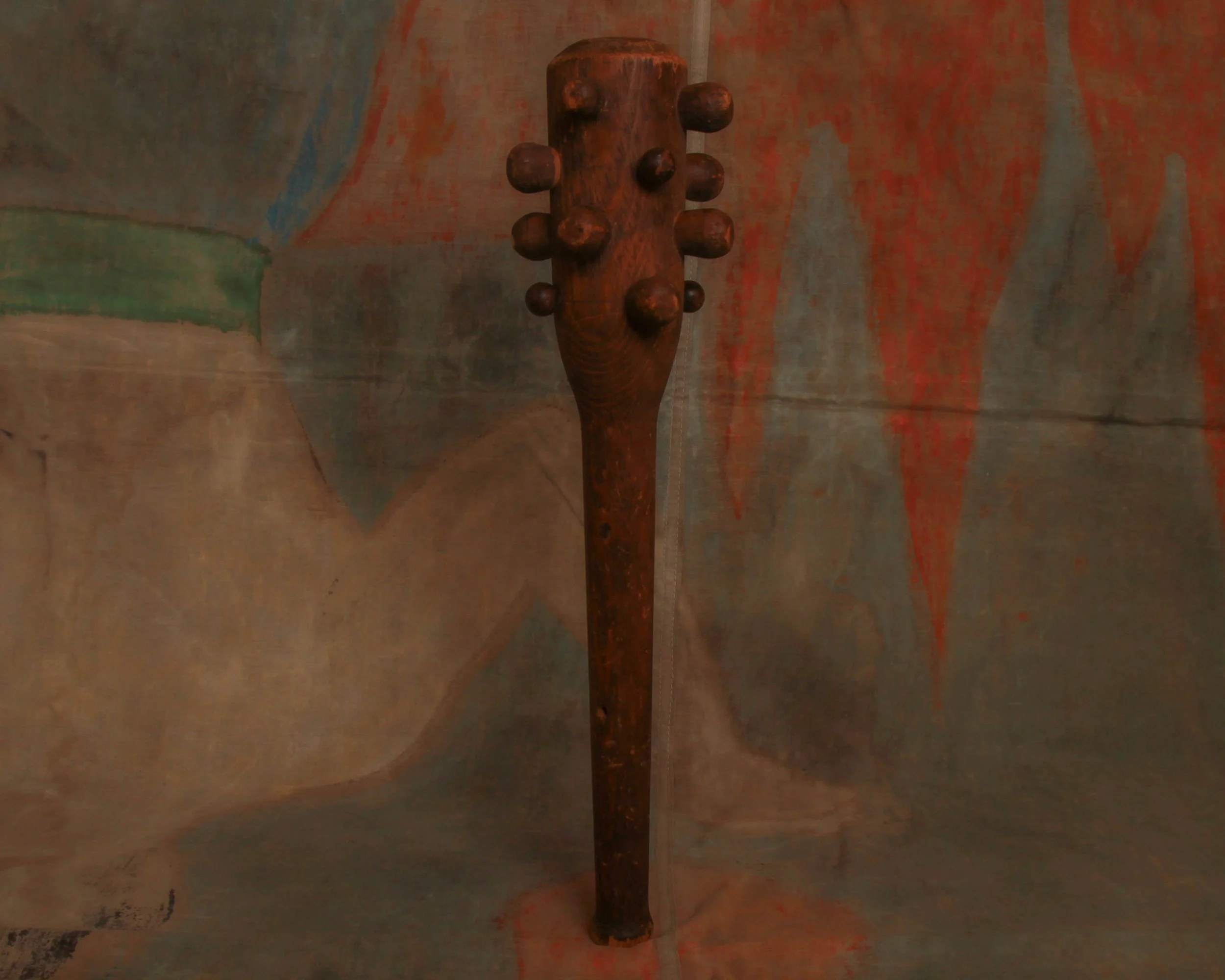
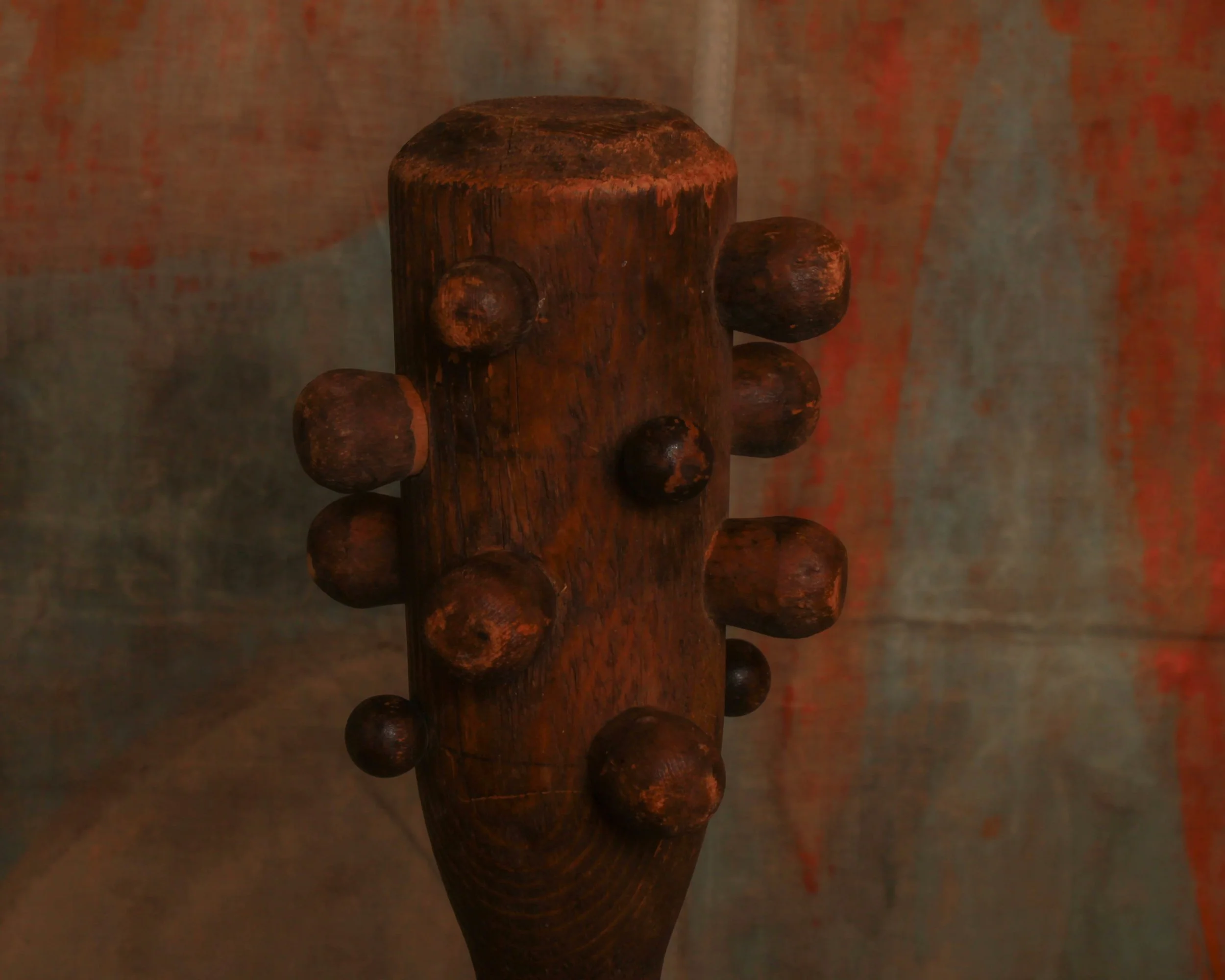
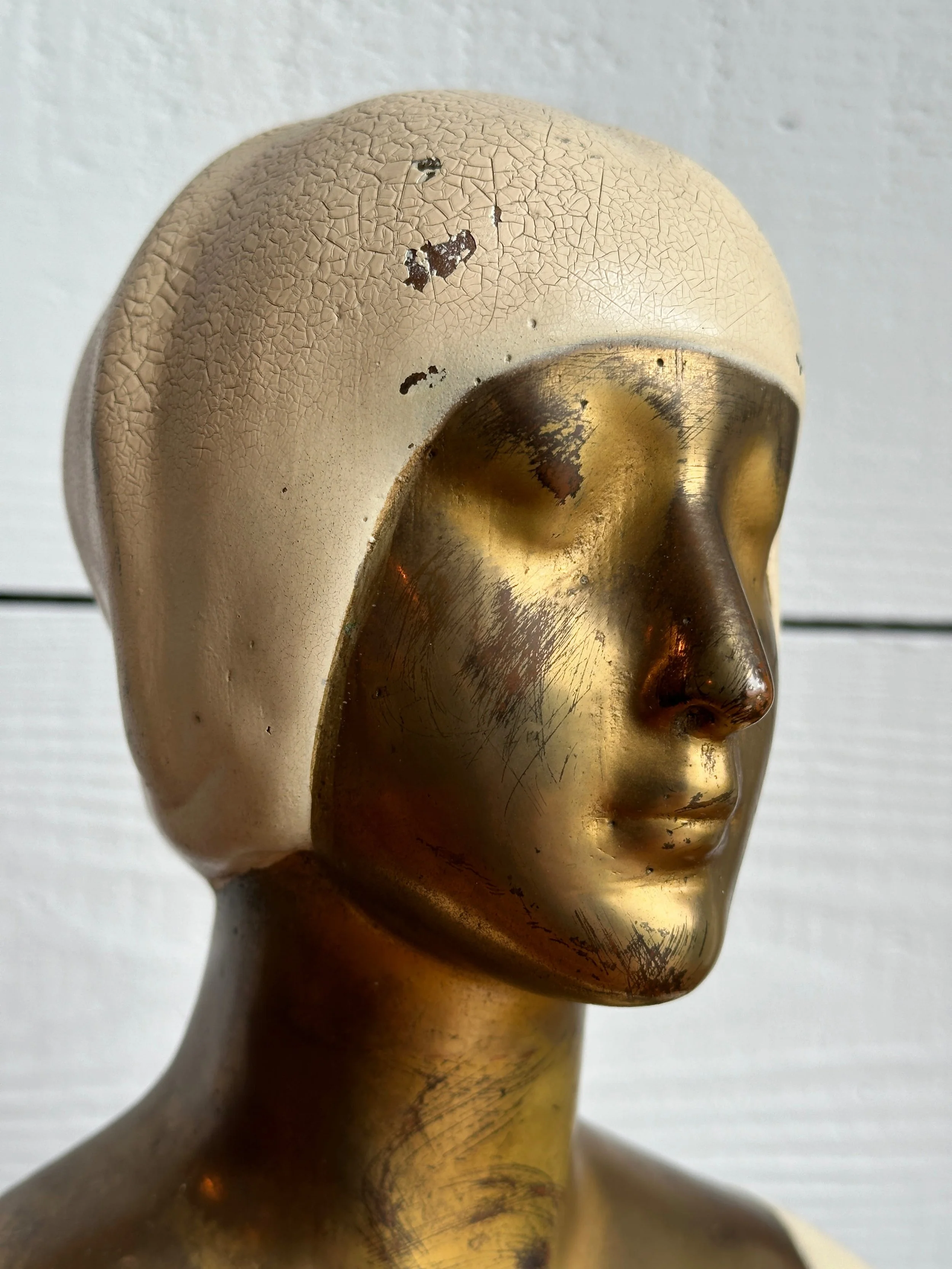
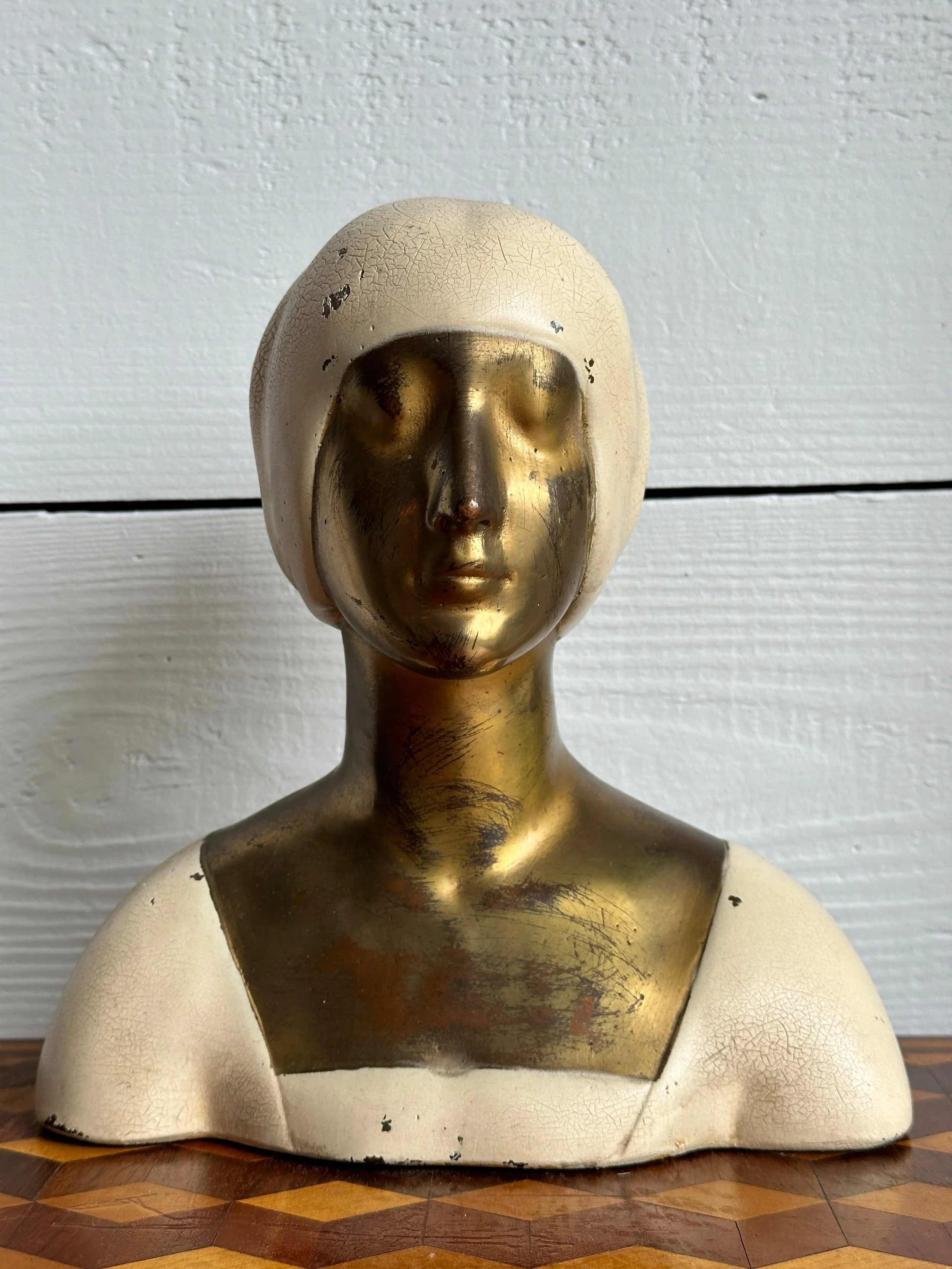
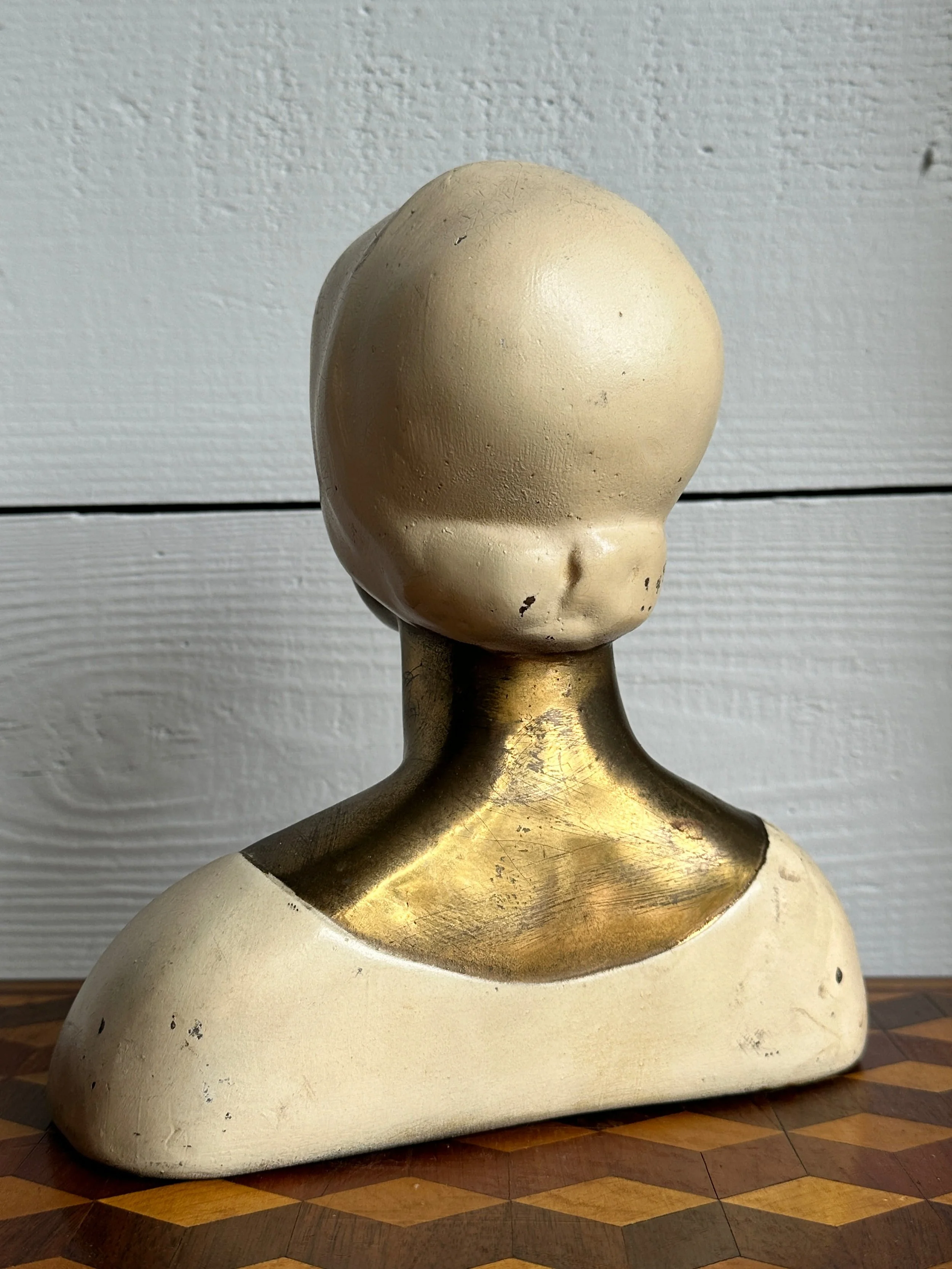
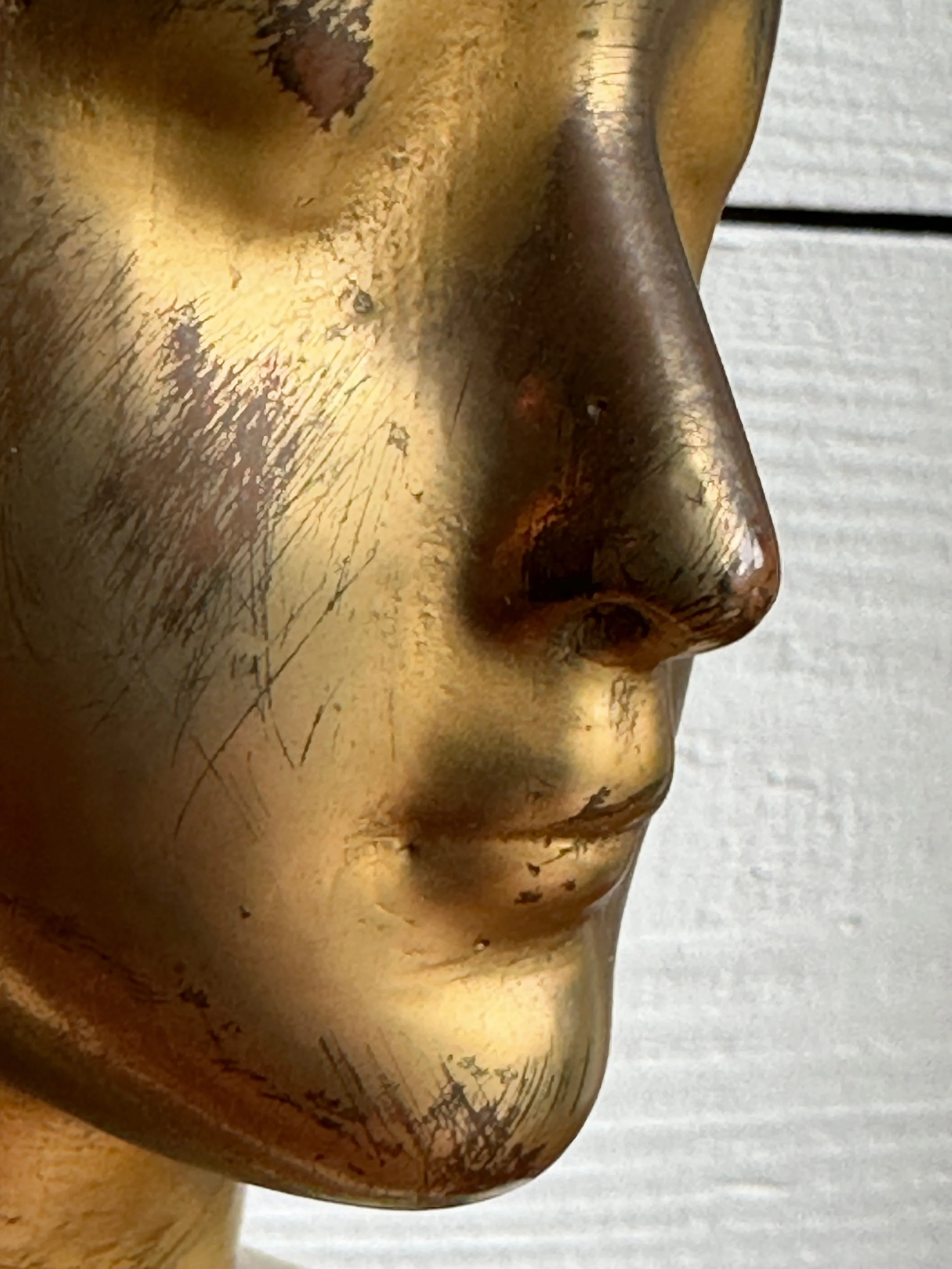
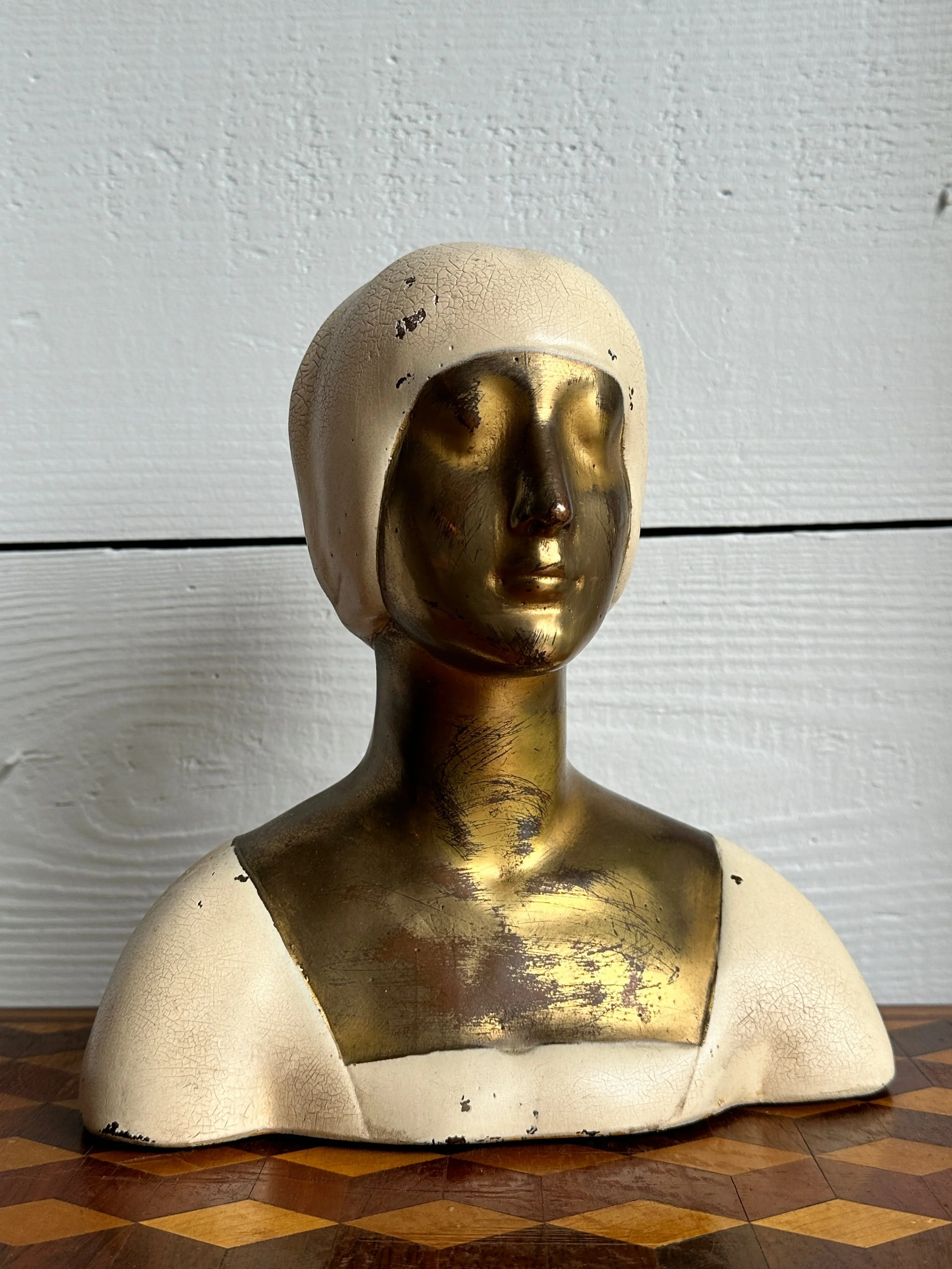
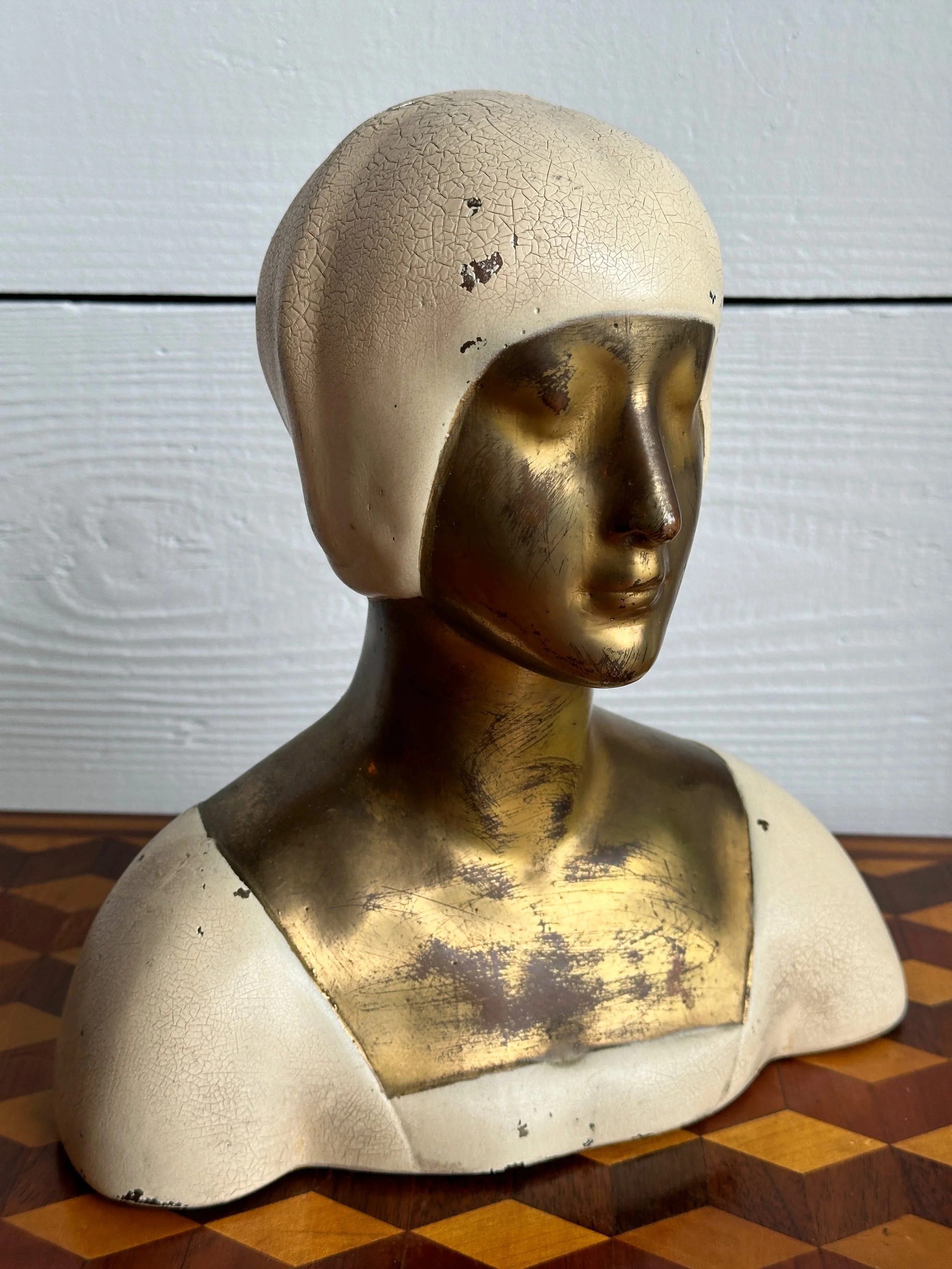
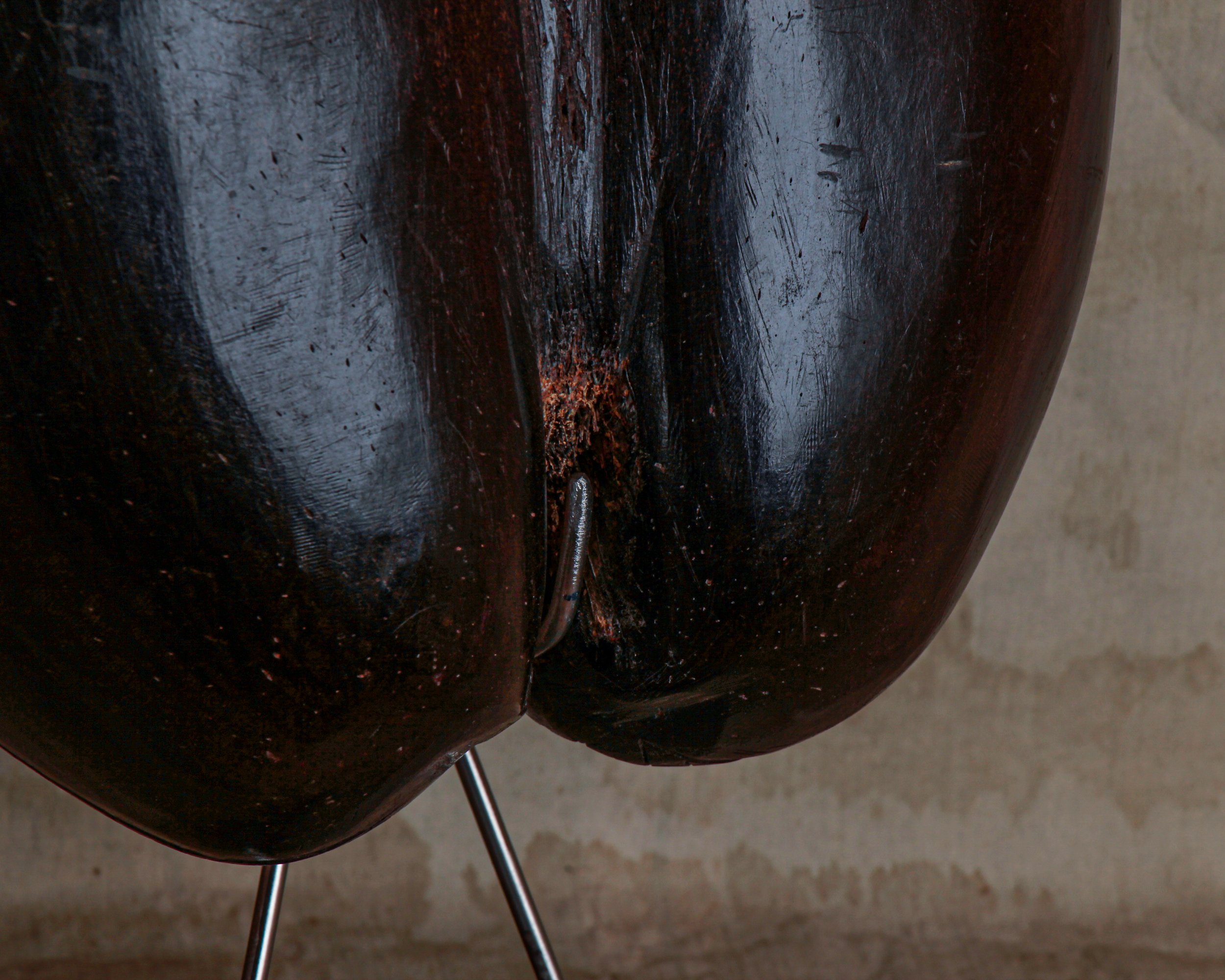
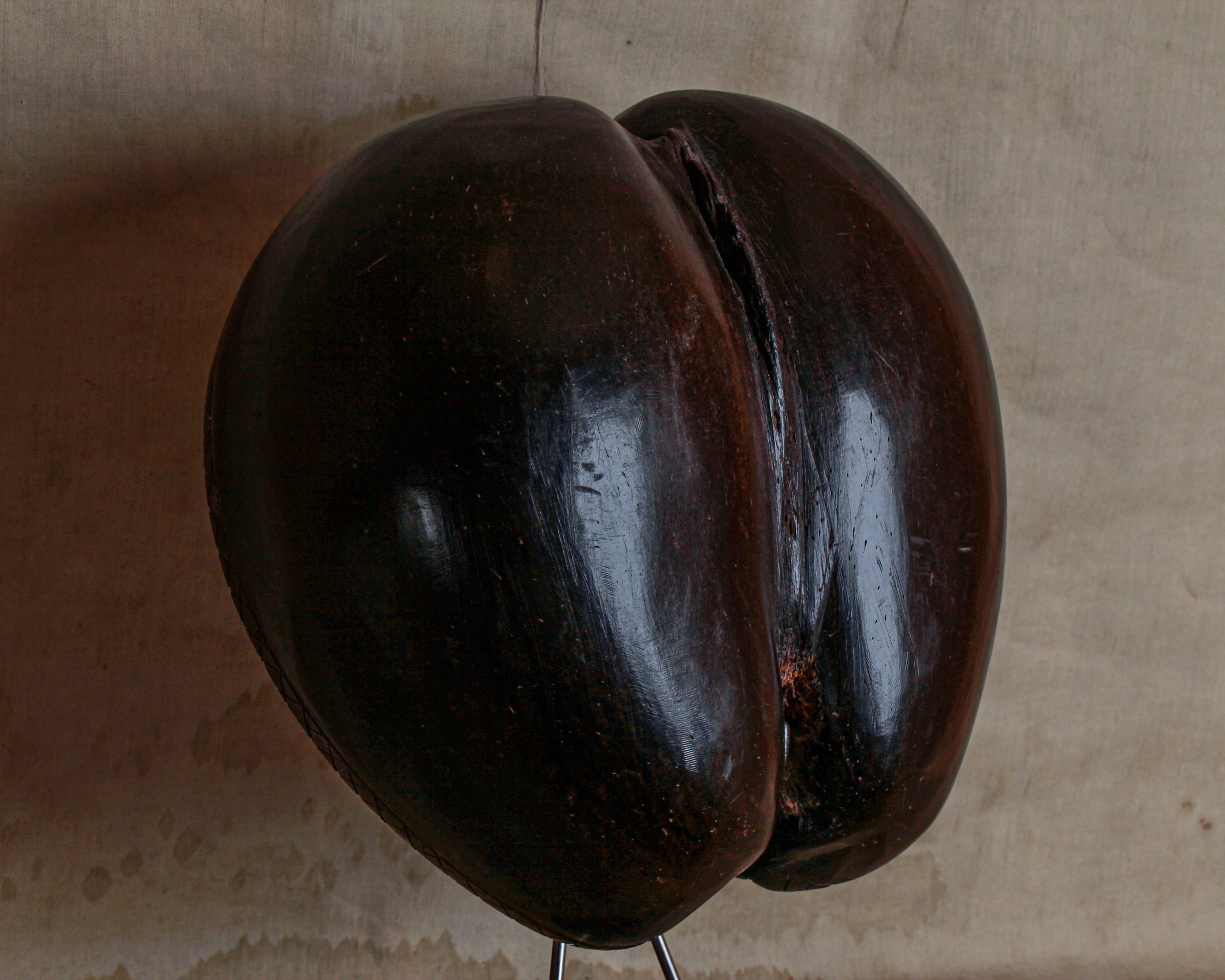
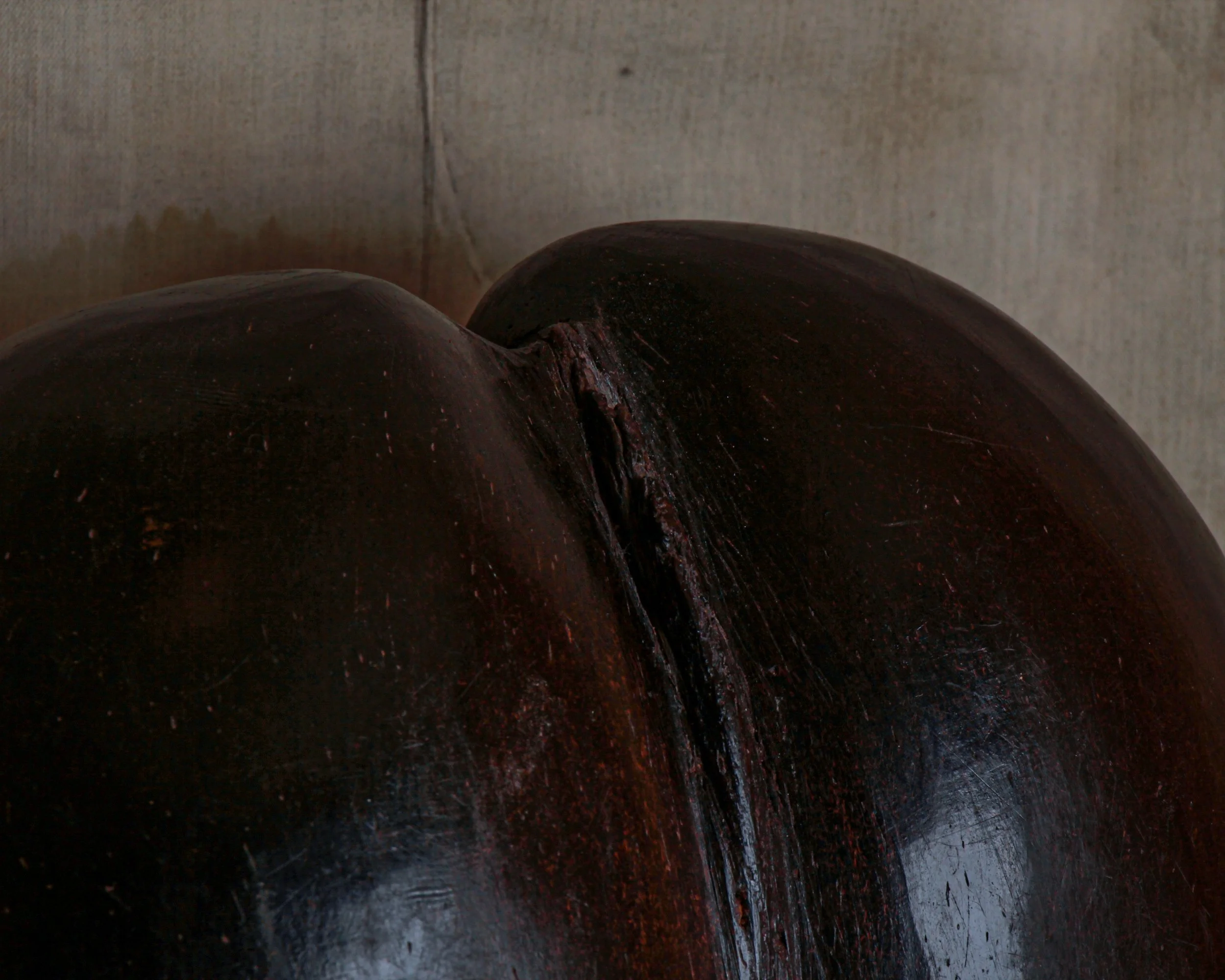
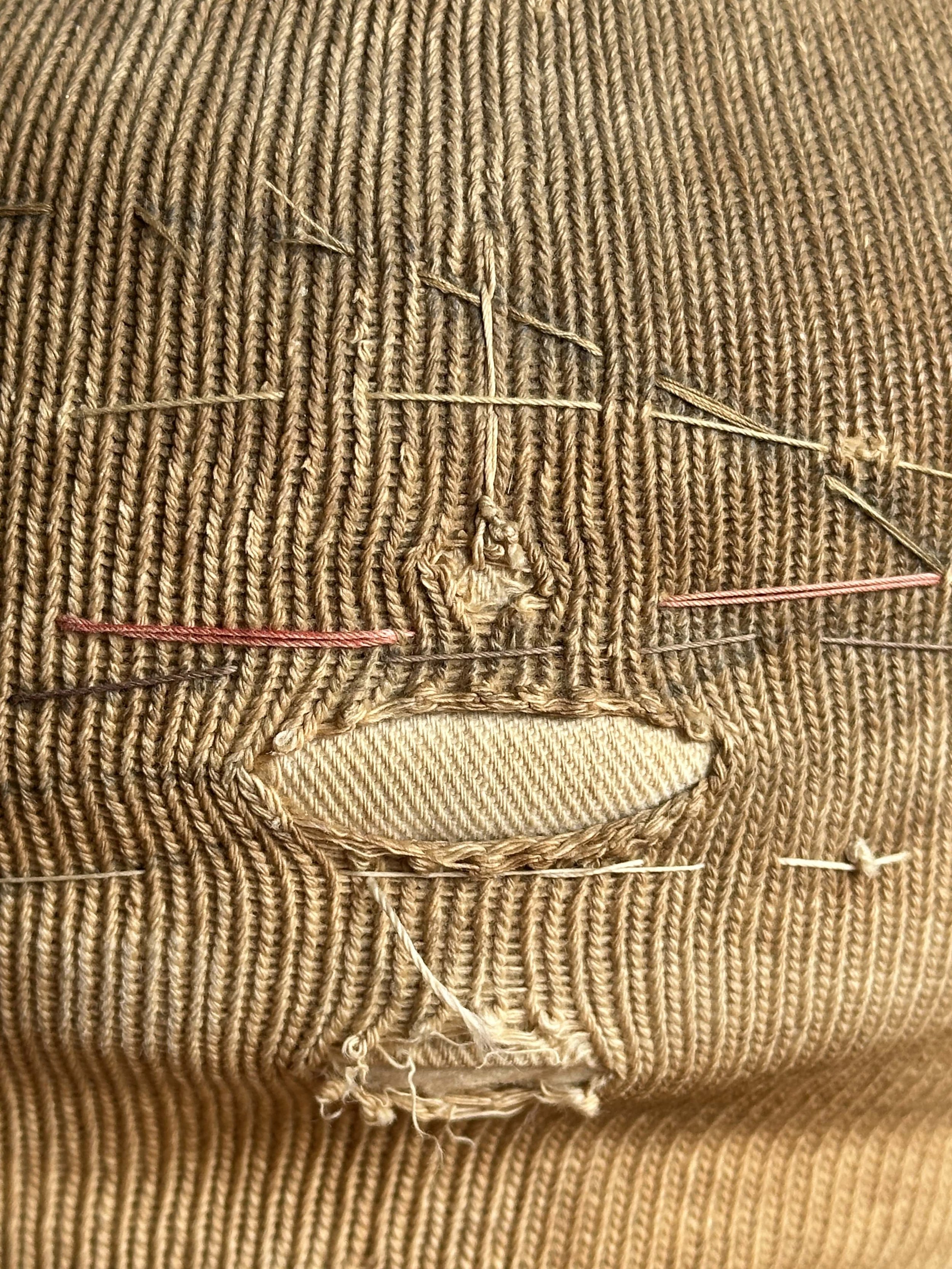
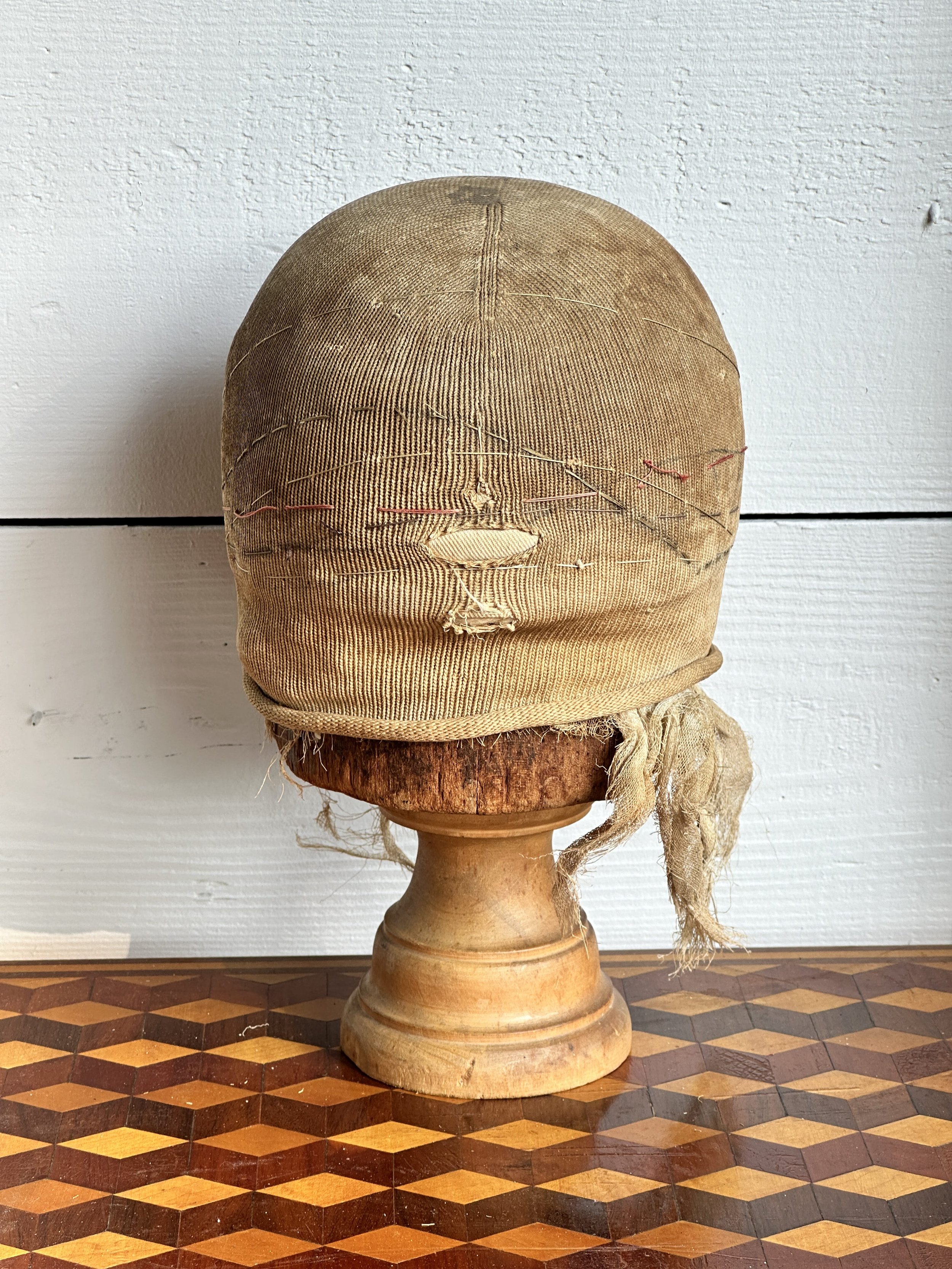
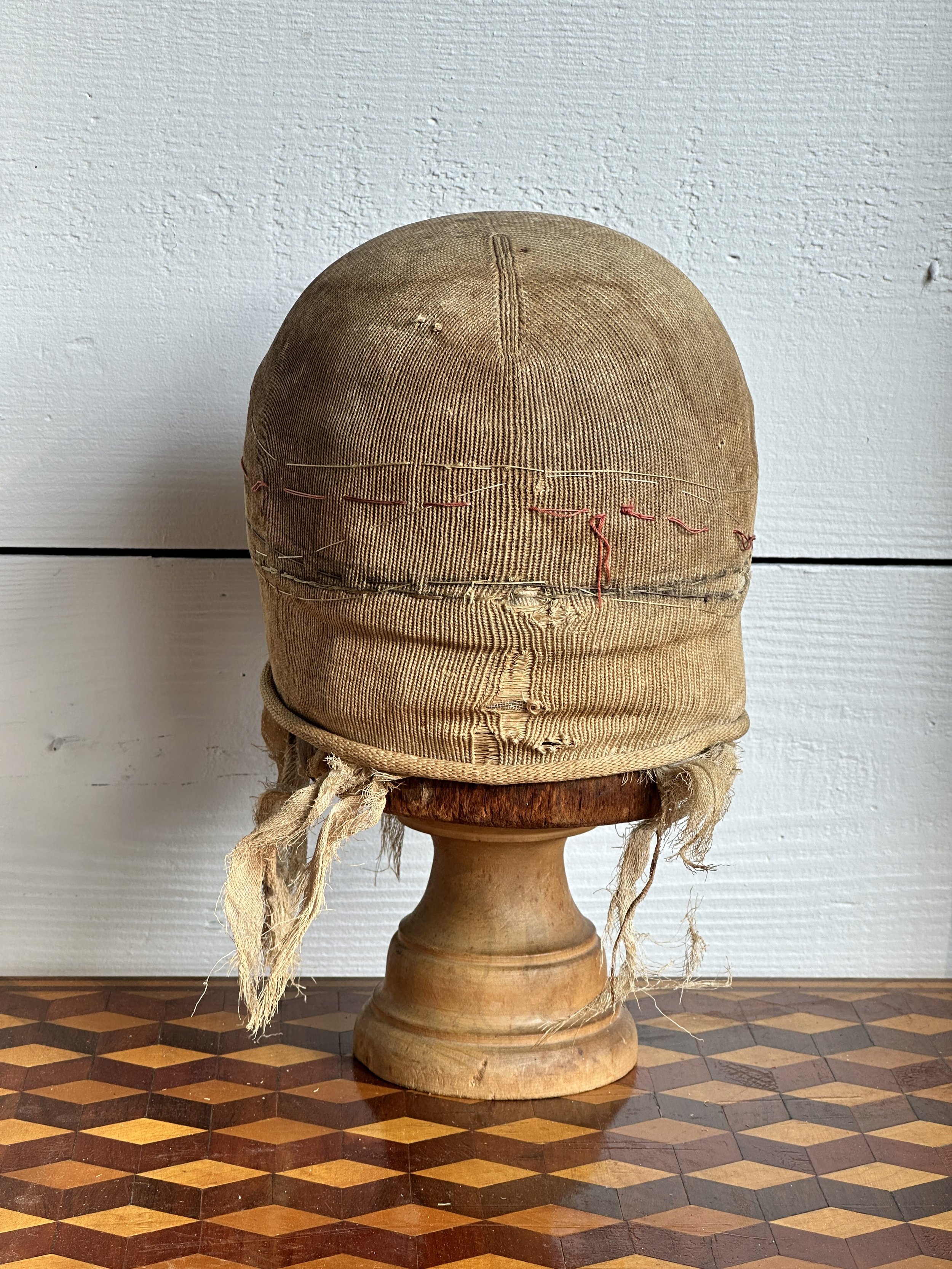
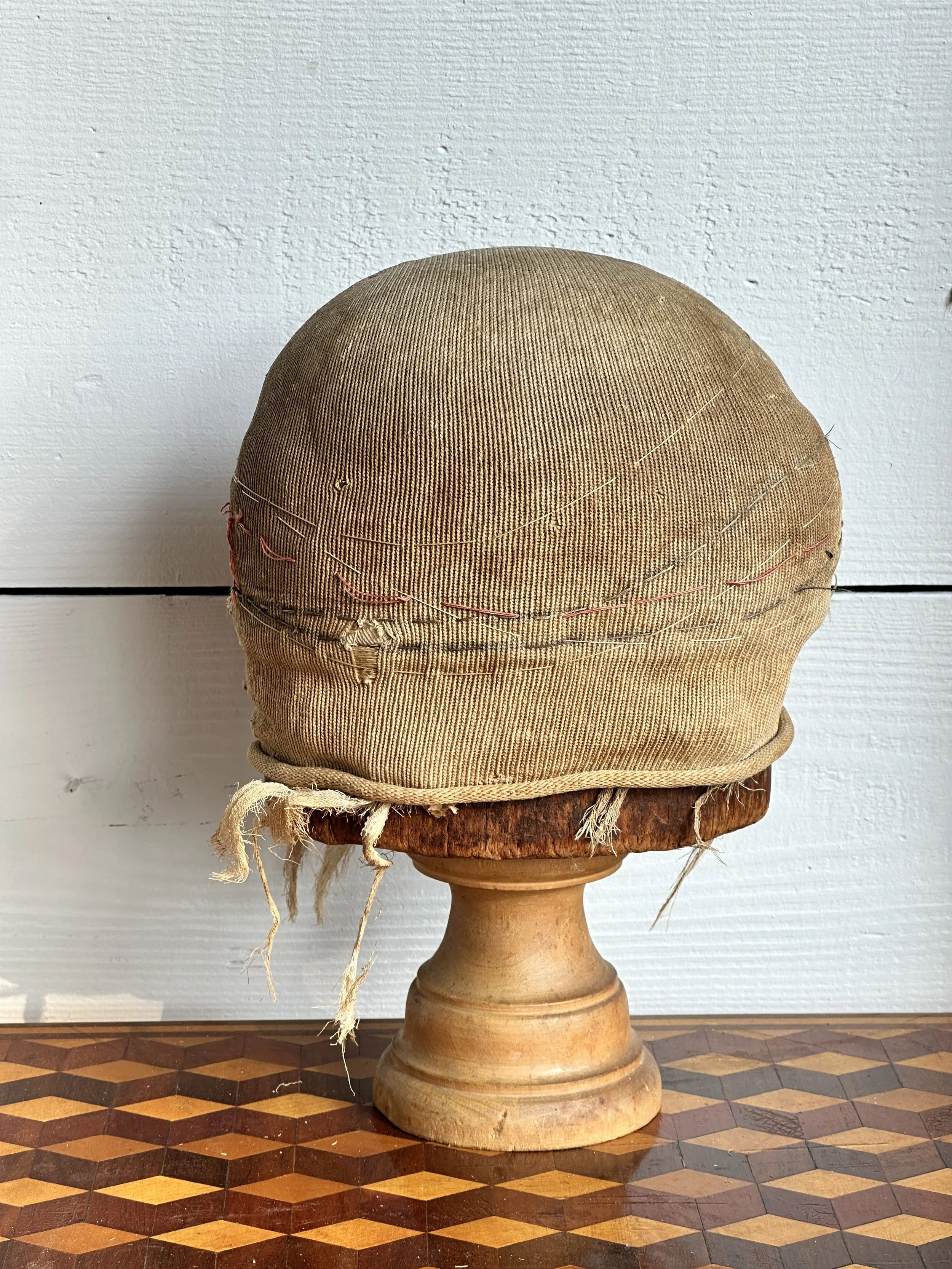
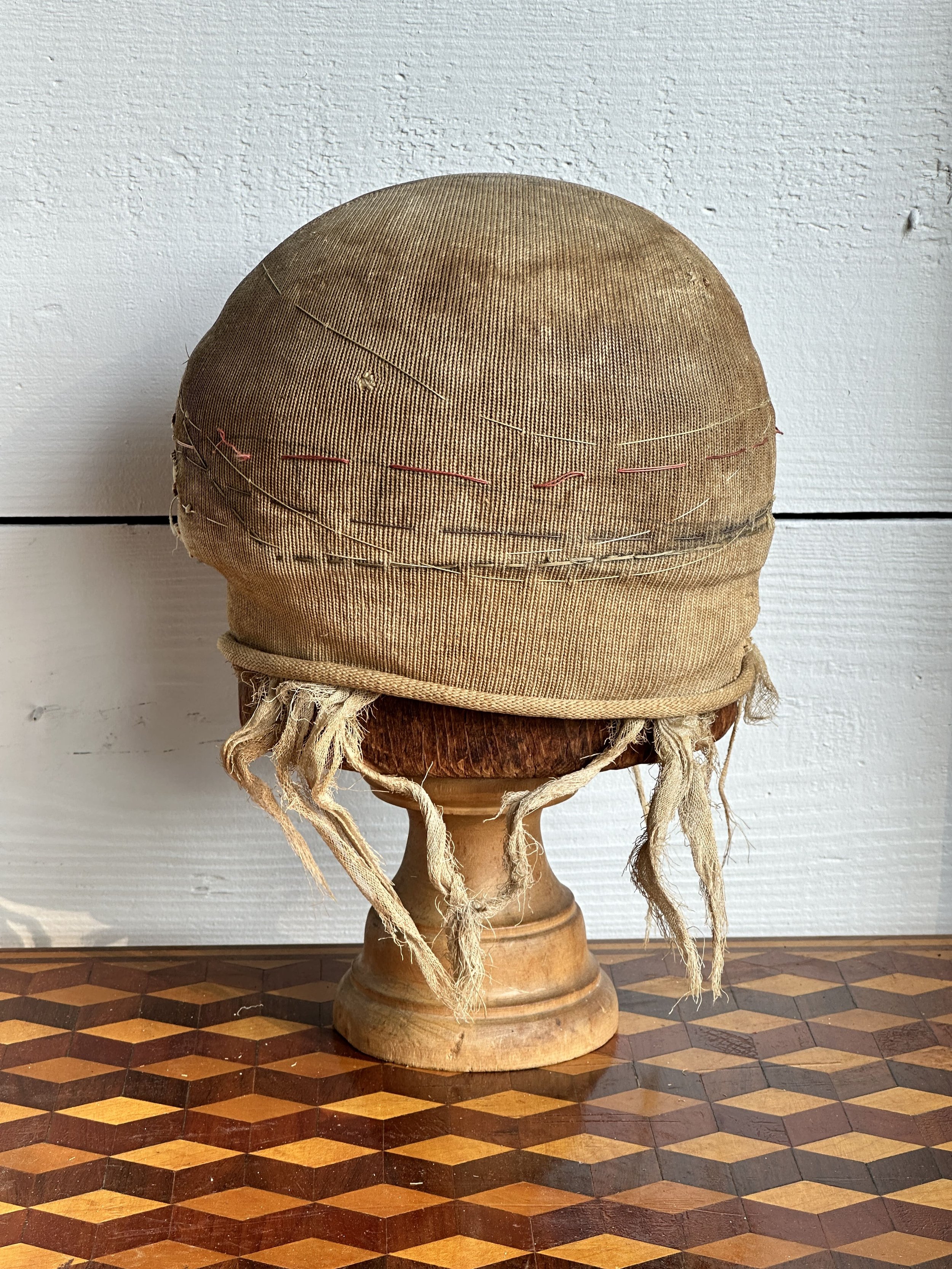
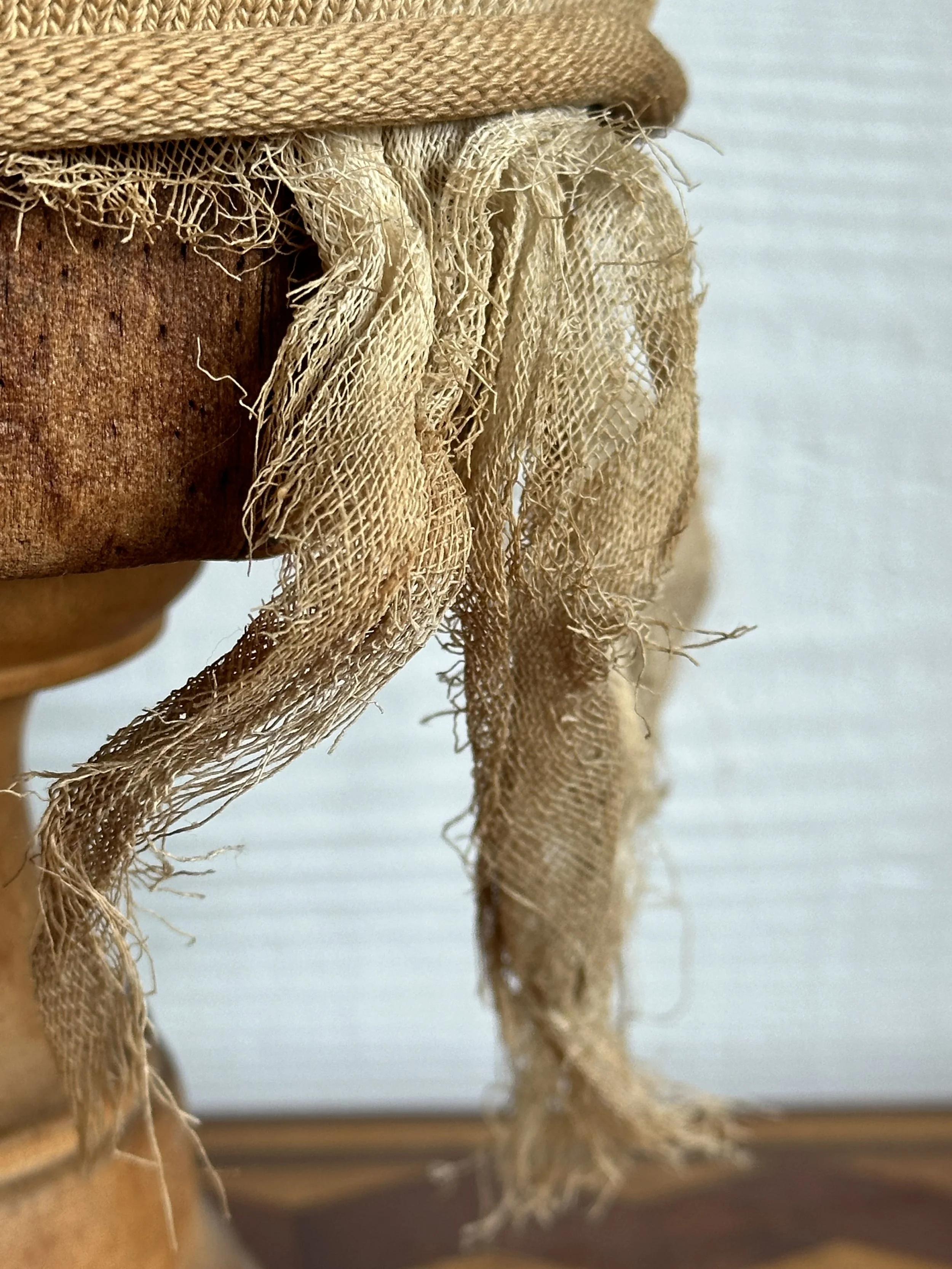
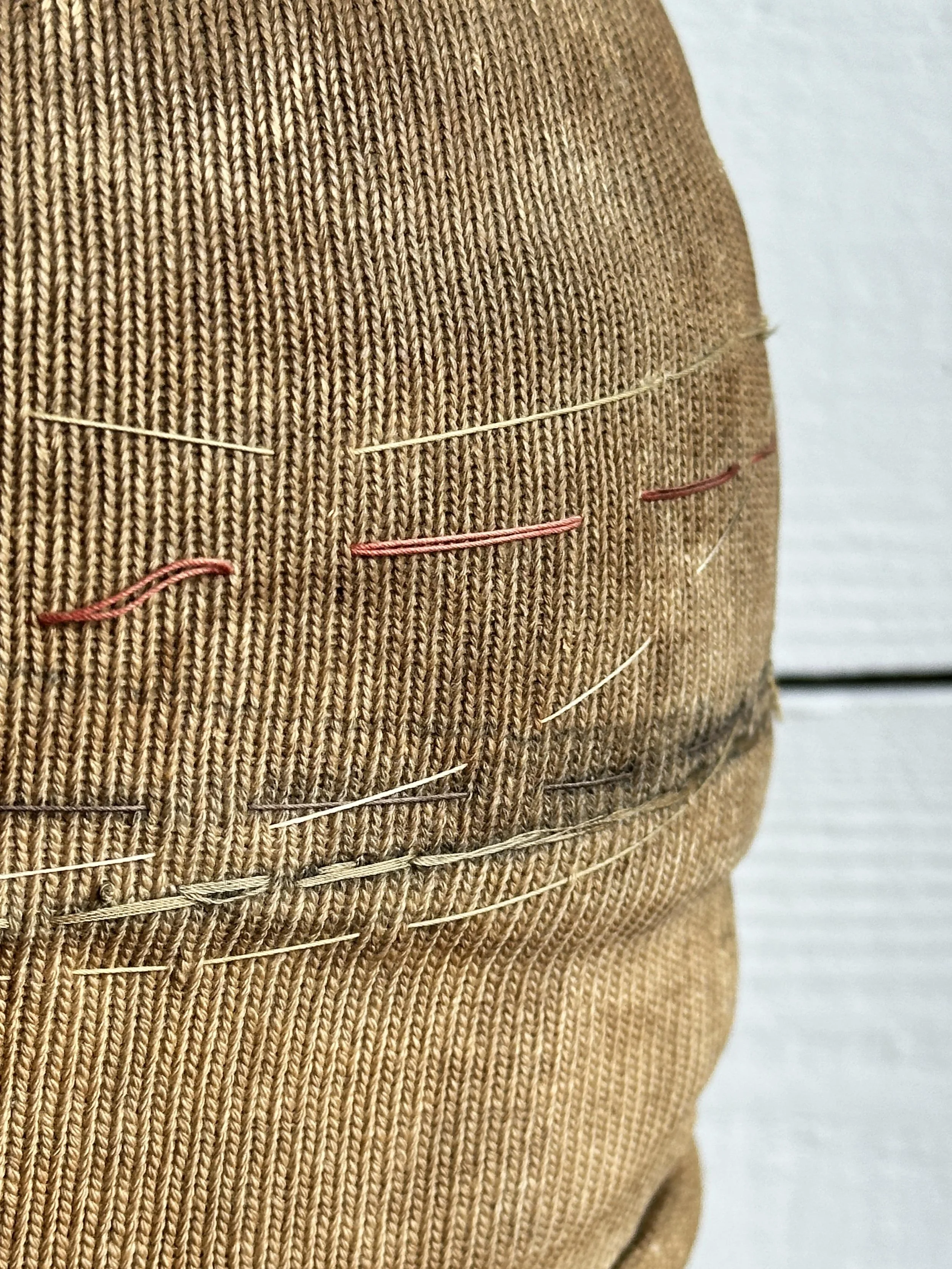
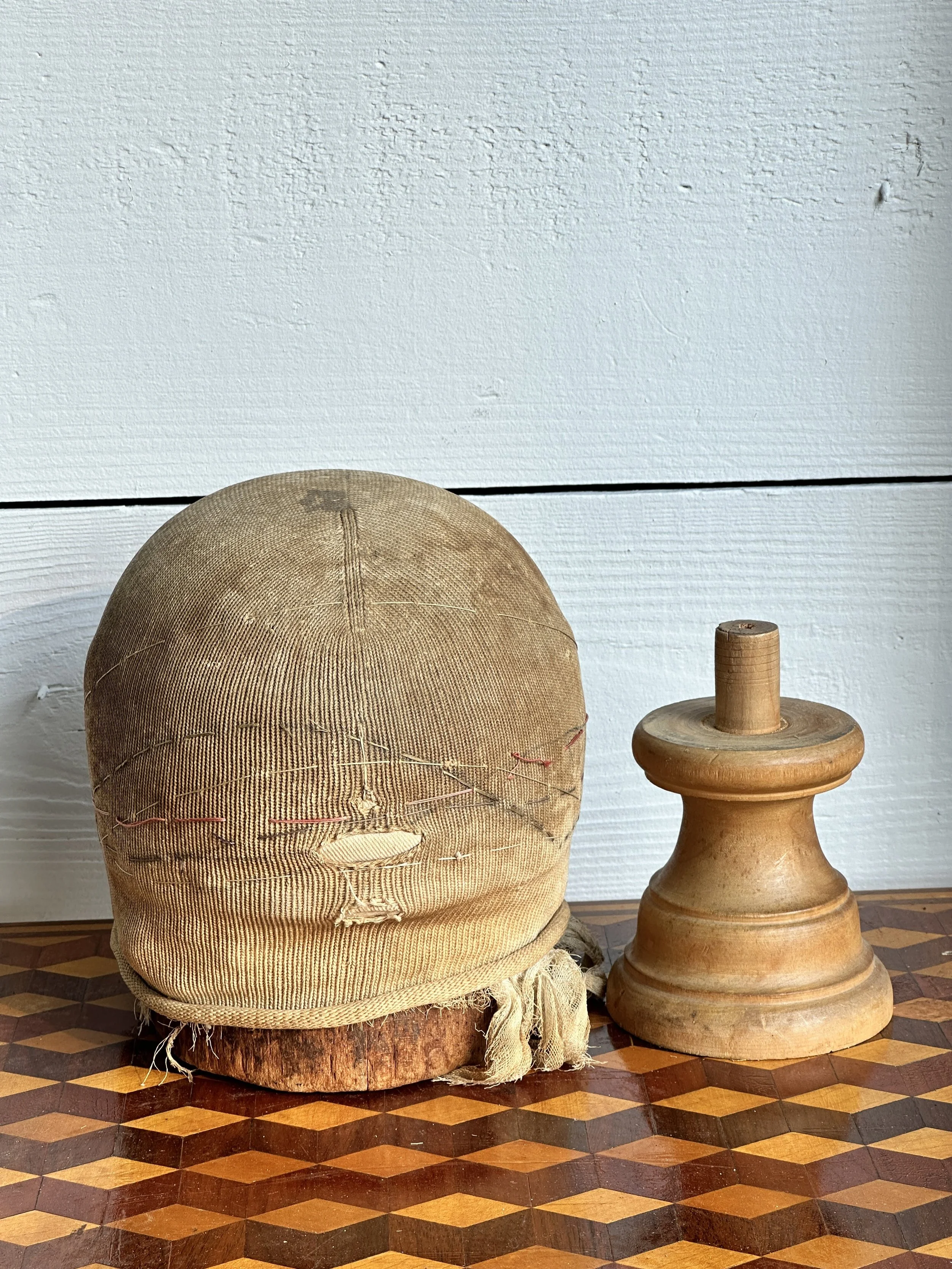
Here’s a piece that feels equal parts eerie and enchanting: a 19th-century milliner’s wig mold, wrapped in its original fabric covering. Stitched and restitched over time with a jumble of threads—reds, browns, creams—this head form wears its history literally on its face. The fabric is worn and frayed, with patches and tears that speak to years of use in a milliner’s shop, where wigs, bonnets, and hats would have been shaped and styled on its surface. The shredded edges hanging loose add a ghostly charm, almost as if the piece itself has grown hair. Mounted on a turned wooden pedestal, it has the presence of a small sculpture—raw, textural, and wonderfully imperfect.
Category History
Before hats came off a rack, they began on a form. Milliner hat and wig molds—most often carved from wood, later also made in plaster or metal—were the quiet workhorses of the trade. Each one was shaped to a specific size and silhouette: cloches, toppers, riding caps, or the precise curve of a wig block. They look sculptural now, but they were built for repetition.
The process was hands-on and methodical. Felt hoods or straw were steamed until pliable, then stretched and pulled over the form, pinned tight, and left to dry. As the material cooled, it took on the shape permanently. From there, the hat would be trimmed, wired, lined, and finished. Wig forms worked similarly, holding shape while hair was stitched or styled into place.
What makes these molds compelling is the evidence of use. You’ll often find pins still embedded, darkened surfaces from years of steam and handling, and subtle wear that maps out where hands pressed and adjusted. No two are exactly alike, even when they started that way.
They sit somewhere between tool and object—part craft history, part quiet sculpture. A reminder that before fashion was fast, it was formed, quite literally, by hand.
ITEM NOT AVAILABLE IMMEDIATELY—INQUIRE IF INTERESTED hello@heimweeantiques.com
Here’s a piece that feels equal parts eerie and enchanting: a 19th-century milliner’s wig mold, wrapped in its original fabric covering. Stitched and restitched over time with a jumble of threads—reds, browns, creams—this head form wears its history literally on its face. The fabric is worn and frayed, with patches and tears that speak to years of use in a milliner’s shop, where wigs, bonnets, and hats would have been shaped and styled on its surface. The shredded edges hanging loose add a ghostly charm, almost as if the piece itself has grown hair. Mounted on a turned wooden pedestal, it has the presence of a small sculpture—raw, textural, and wonderfully imperfect.
Category History
Before hats came off a rack, they began on a form. Milliner hat and wig molds—most often carved from wood, later also made in plaster or metal—were the quiet workhorses of the trade. Each one was shaped to a specific size and silhouette: cloches, toppers, riding caps, or the precise curve of a wig block. They look sculptural now, but they were built for repetition.
The process was hands-on and methodical. Felt hoods or straw were steamed until pliable, then stretched and pulled over the form, pinned tight, and left to dry. As the material cooled, it took on the shape permanently. From there, the hat would be trimmed, wired, lined, and finished. Wig forms worked similarly, holding shape while hair was stitched or styled into place.
What makes these molds compelling is the evidence of use. You’ll often find pins still embedded, darkened surfaces from years of steam and handling, and subtle wear that maps out where hands pressed and adjusted. No two are exactly alike, even when they started that way.
They sit somewhere between tool and object—part craft history, part quiet sculpture. A reminder that before fashion was fast, it was formed, quite literally, by hand.