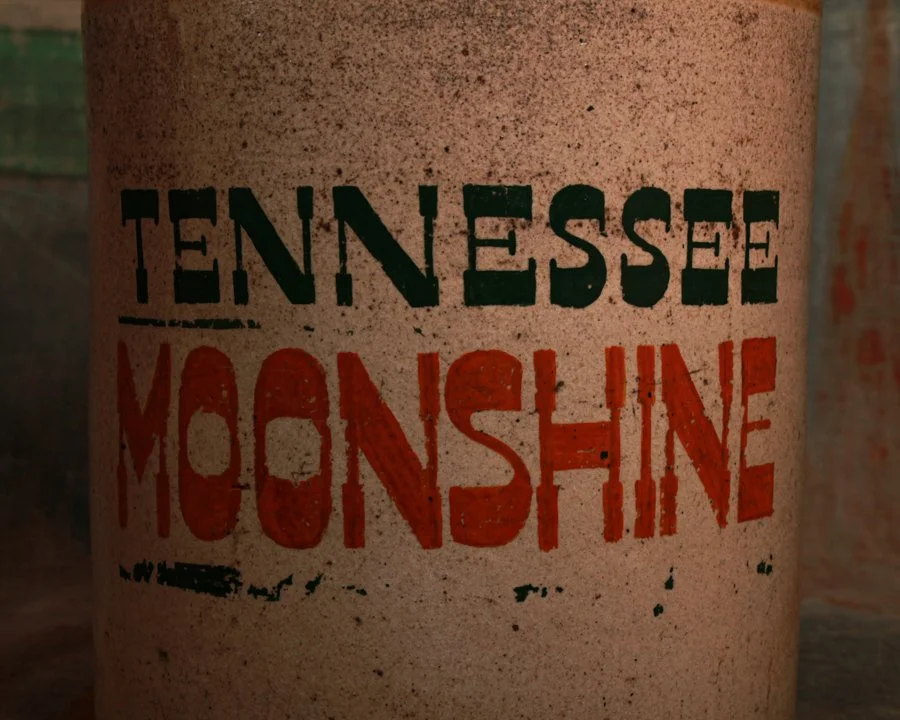
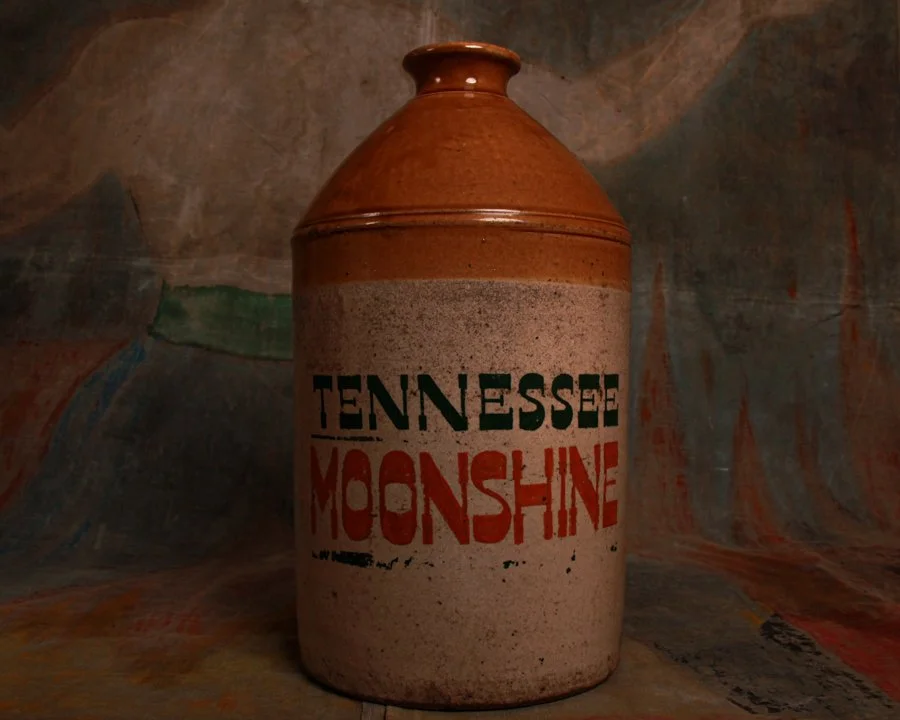
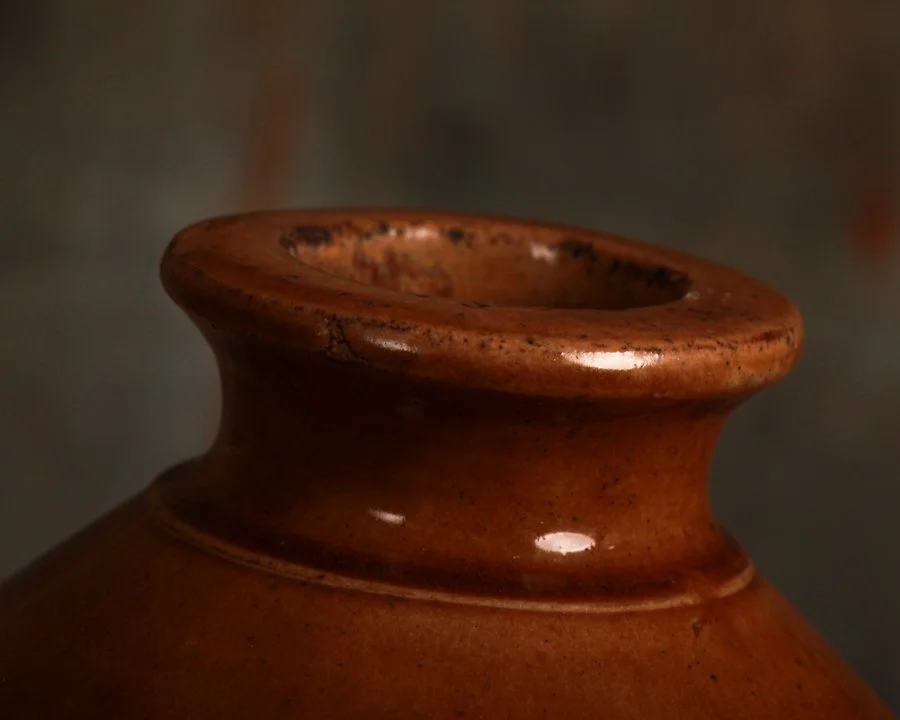
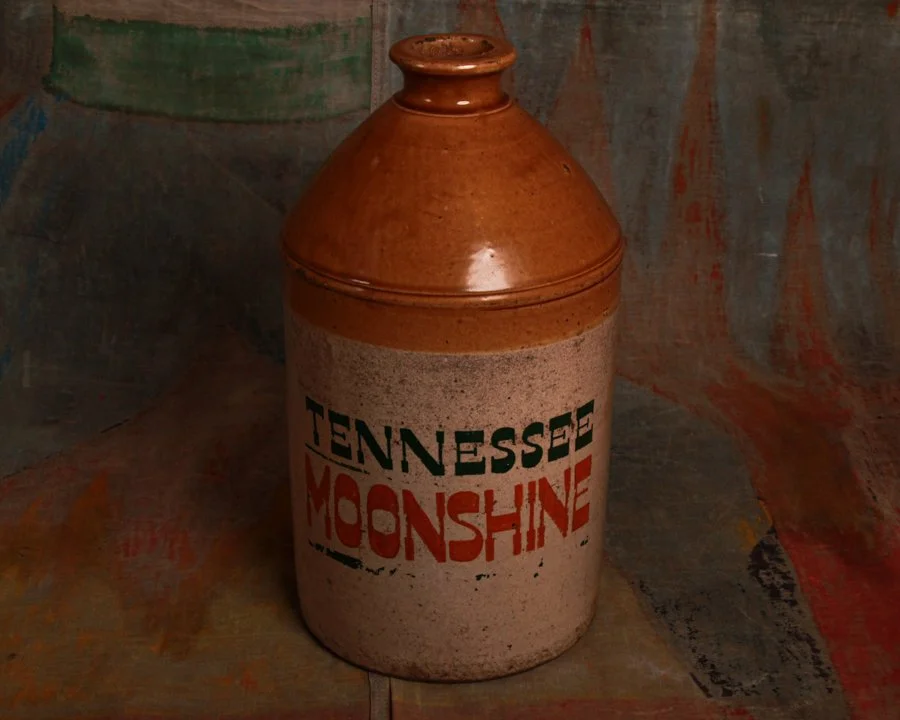
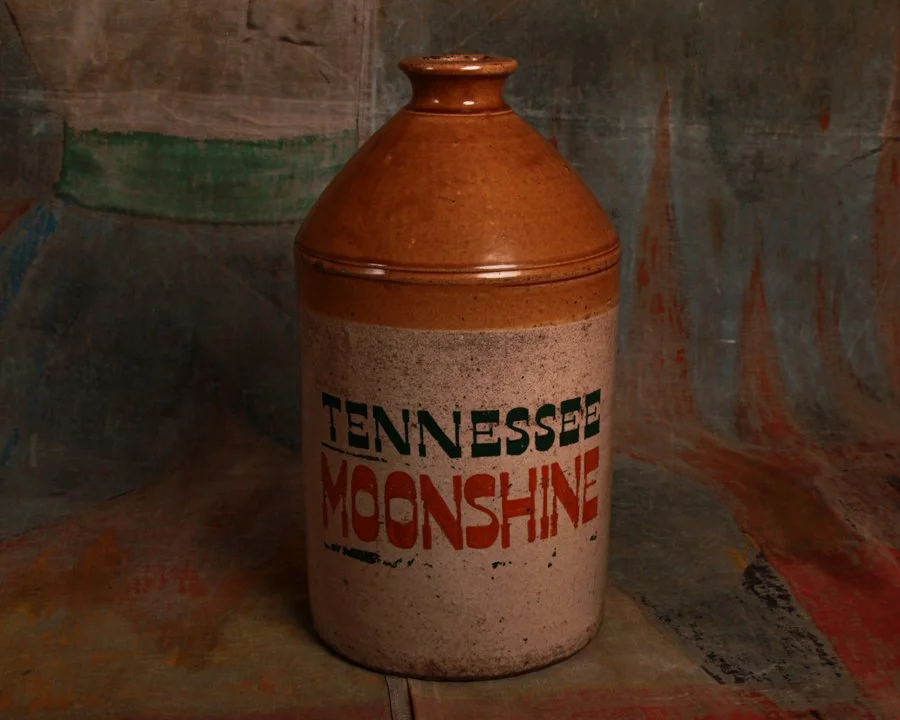
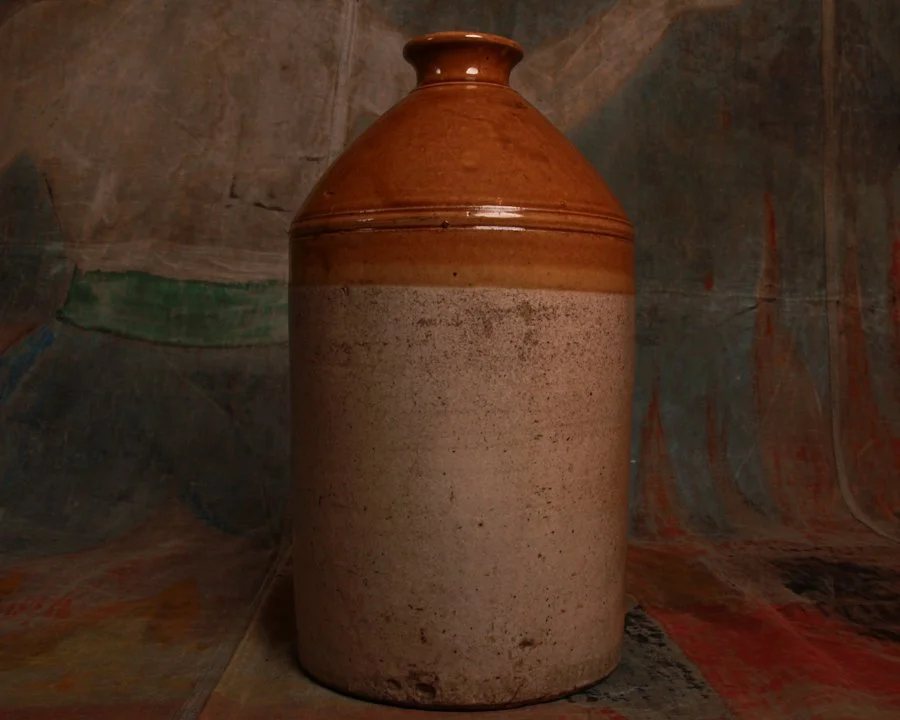
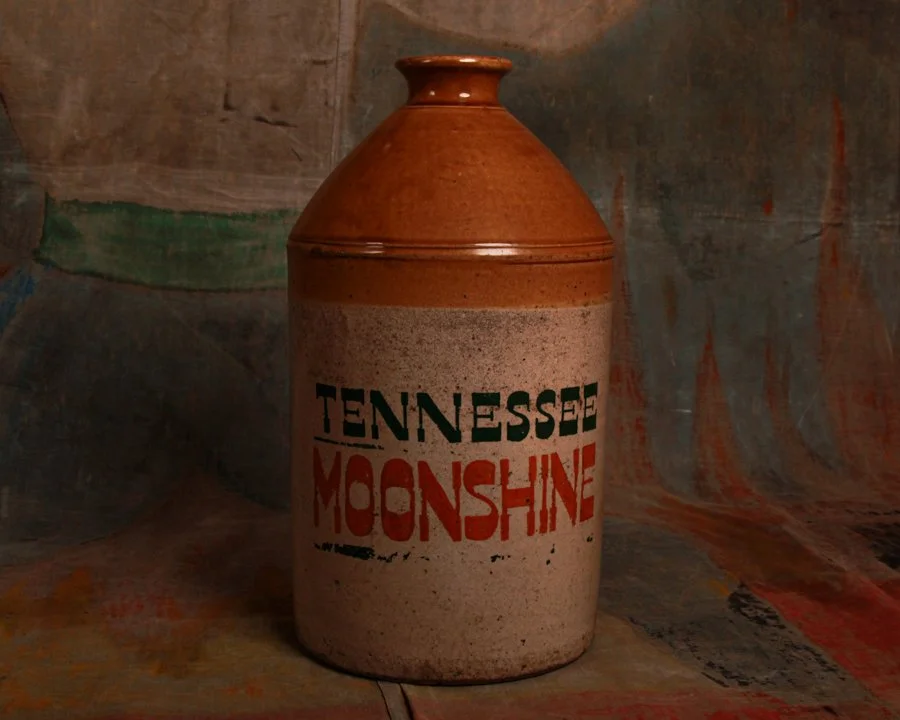
Hefty 19th-century earthenware moonshine jug that doesn't shy away from its past. This big-bellied flagon stands about 18 inches tall and 10 inches wide, with a rich mustardy glaze up top, and a bold stenciled shout of "TENNESSEE MOONSHINE" across the front in deep green and red.
Whether it once rode in the back of a Prohibition-era pickup or sat tucked behind floorboards, it definitely played a role in keeping spirits high. No handle, just a solid lug of ceramic made to be grabbed and poured with purpose. It's got presence. Weight. And that perfect mix of grit and charm.
Moonshine not included.
Category History
Moonshine and Prohibition are tied together by one simple idea: if you outlaw something people want, they’ll just get more creative. When the Prohibition in the United States went into effect in 1920, legal distilleries shut down, but demand didn’t disappear. It moved—quietly—into backwoods stills, hidden rooms, and improvised operations that could be packed up or moved at a moment’s notice.
Moonshine itself wasn’t new. Illicit distilling had been around for decades, especially in rural areas where making your own whiskey was as much tradition as it was necessity. But Prohibition scaled it up. Copper stills, mash barrels, and glass jars became part of a shadow economy, with producers, runners, and distributors forming tight networks.
What makes this period compelling is the balance of risk and ingenuity. Recipes varied, equipment was often homemade, and quality could swing wildly. Some batches were smooth, others… less forgiving.
The cultural imprint stuck. Fast cars built for running liquor later fed into stock car racing, and the image of the moonshiner—resourceful, independent, slightly outlaw—became part of American folklore.
At its core, it’s a story about adaptation. Restriction didn’t stop production—it just changed where, how, and who was involved.
Hefty 19th-century earthenware moonshine jug that doesn't shy away from its past. This big-bellied flagon stands about 18 inches tall and 10 inches wide, with a rich mustardy glaze up top, and a bold stenciled shout of "TENNESSEE MOONSHINE" across the front in deep green and red.
Whether it once rode in the back of a Prohibition-era pickup or sat tucked behind floorboards, it definitely played a role in keeping spirits high. No handle, just a solid lug of ceramic made to be grabbed and poured with purpose. It's got presence. Weight. And that perfect mix of grit and charm.
Moonshine not included.
Category History
Moonshine and Prohibition are tied together by one simple idea: if you outlaw something people want, they’ll just get more creative. When the Prohibition in the United States went into effect in 1920, legal distilleries shut down, but demand didn’t disappear. It moved—quietly—into backwoods stills, hidden rooms, and improvised operations that could be packed up or moved at a moment’s notice.
Moonshine itself wasn’t new. Illicit distilling had been around for decades, especially in rural areas where making your own whiskey was as much tradition as it was necessity. But Prohibition scaled it up. Copper stills, mash barrels, and glass jars became part of a shadow economy, with producers, runners, and distributors forming tight networks.
What makes this period compelling is the balance of risk and ingenuity. Recipes varied, equipment was often homemade, and quality could swing wildly. Some batches were smooth, others… less forgiving.
The cultural imprint stuck. Fast cars built for running liquor later fed into stock car racing, and the image of the moonshiner—resourceful, independent, slightly outlaw—became part of American folklore.
At its core, it’s a story about adaptation. Restriction didn’t stop production—it just changed where, how, and who was involved.