

ITEM NOT AVAILABLE IMMEDIATELY—INQUIRE IF INTERESTED hello@heimweeantiques.com
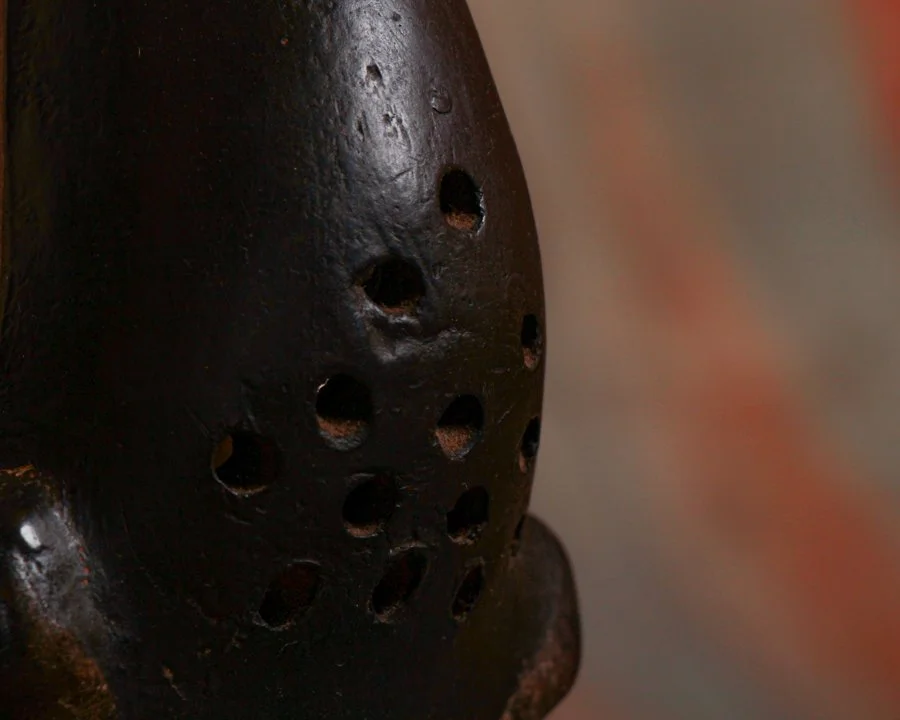
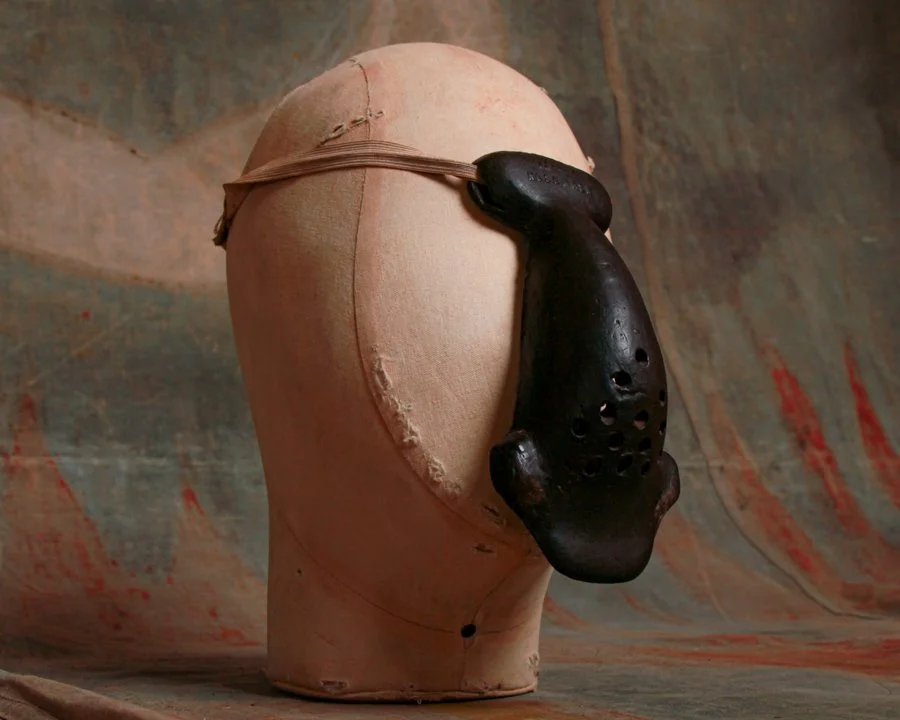
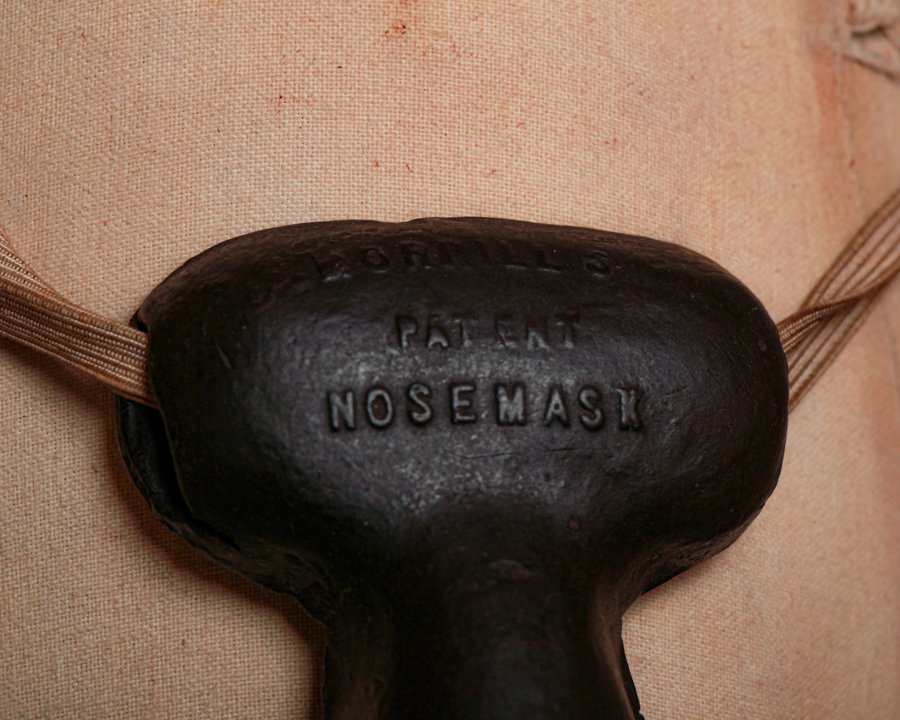
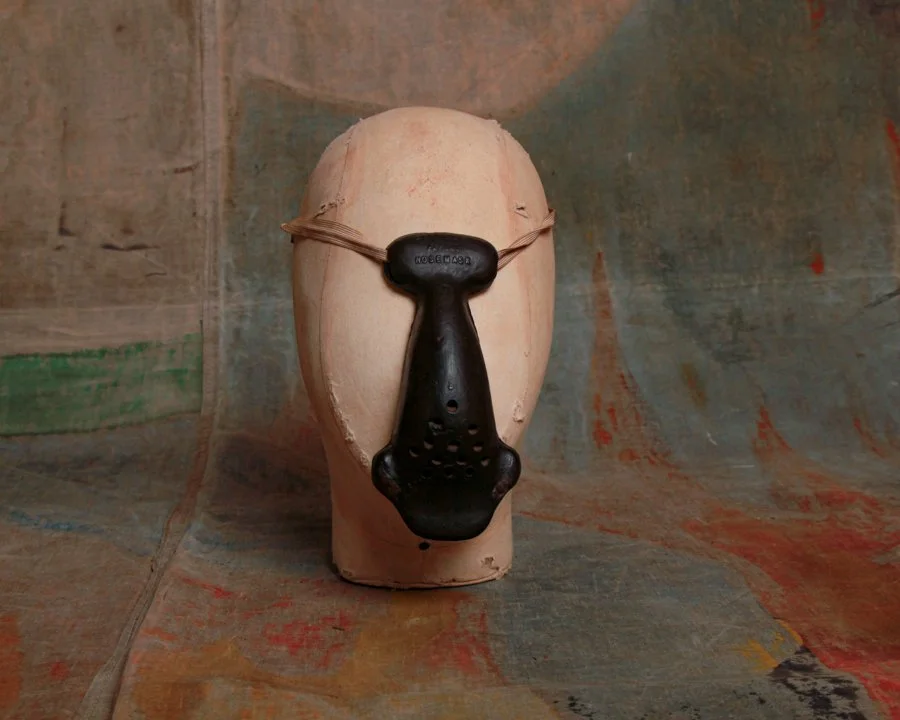
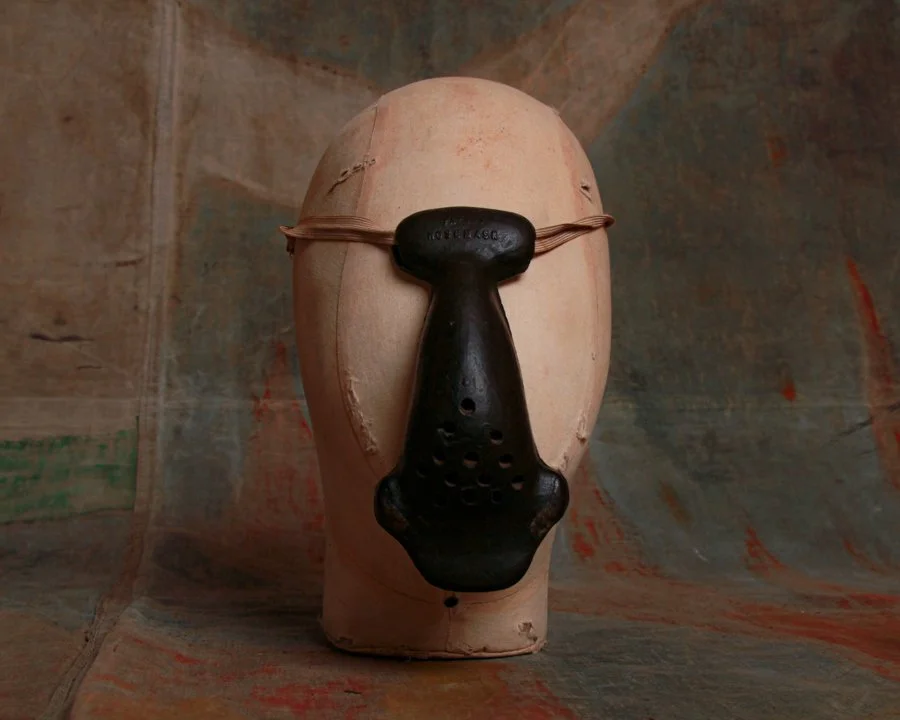
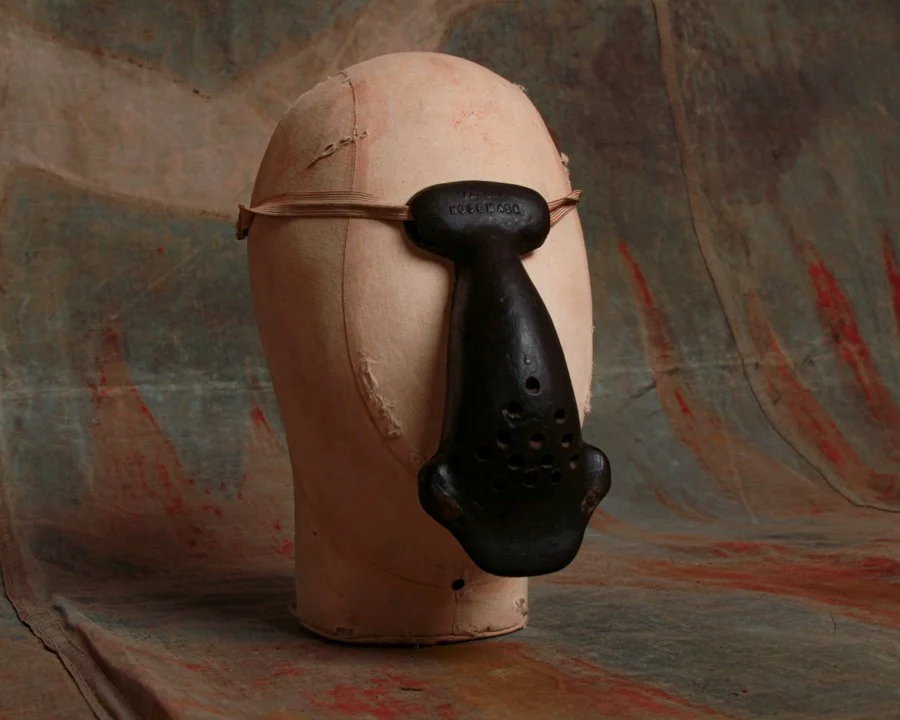
This antique nose mask is equal parts practical and bizarre. Made of stiff, vulcanized rubber, it was designed to protect the wearer’s nose from injury. Circa 1901, this nose mask was the only protective football gear of its kind. The embossed text reads "Morrill's Patent Nosemask" onthe forehead rest and "PAT'D SEPT. 29 1891" on the inside of the nose. Strapped snugly to the face with elastic forehead strap, the mask features a vented design with 13 holes for breathing, worn by early football players. On the reverse is a molded "bite plate" that fits between the teeth.
Category History
Early sports and athletic protective gear has a certain DIY logic to it—built at the intersection of necessity and experimentation, often before rules (or injuries) forced standardization. In the late 19th and early 20th centuries, as organized sports like football, baseball, boxing, and cycling grew in popularity, so did the need to protect the body from impacts no one had quite planned for.
The solutions were straightforward, sometimes improvised. Leather was the material of choice—thick, flexible, and relatively forgiving. Early football helmets looked more like padded caps, boxing gloves were less cushioned than you’d expect, and shin guards or chest protectors were often strapped together with buckles and laces. Comfort wasn’t the priority—survival was.
What stands out is how visibly handmade much of it feels. You see stitched seams, hand-cut panels, and repairs layered over time. These weren’t disposable pieces; they were maintained, patched, and used again.
Over time, gear became more engineered, more specialized, and far more regulated. But these early examples show the starting point—when athletes and makers were figuring it out in real time, shaping protection through trial, error, and a fair amount of courage.
ITEM NOT AVAILABLE IMMEDIATELY—INQUIRE IF INTERESTED hello@heimweeantiques.com
This antique nose mask is equal parts practical and bizarre. Made of stiff, vulcanized rubber, it was designed to protect the wearer’s nose from injury. Circa 1901, this nose mask was the only protective football gear of its kind. The embossed text reads "Morrill's Patent Nosemask" onthe forehead rest and "PAT'D SEPT. 29 1891" on the inside of the nose. Strapped snugly to the face with elastic forehead strap, the mask features a vented design with 13 holes for breathing, worn by early football players. On the reverse is a molded "bite plate" that fits between the teeth.
Category History
Early sports and athletic protective gear has a certain DIY logic to it—built at the intersection of necessity and experimentation, often before rules (or injuries) forced standardization. In the late 19th and early 20th centuries, as organized sports like football, baseball, boxing, and cycling grew in popularity, so did the need to protect the body from impacts no one had quite planned for.
The solutions were straightforward, sometimes improvised. Leather was the material of choice—thick, flexible, and relatively forgiving. Early football helmets looked more like padded caps, boxing gloves were less cushioned than you’d expect, and shin guards or chest protectors were often strapped together with buckles and laces. Comfort wasn’t the priority—survival was.
What stands out is how visibly handmade much of it feels. You see stitched seams, hand-cut panels, and repairs layered over time. These weren’t disposable pieces; they were maintained, patched, and used again.
Over time, gear became more engineered, more specialized, and far more regulated. But these early examples show the starting point—when athletes and makers were figuring it out in real time, shaping protection through trial, error, and a fair amount of courage.