PLEASE NOTE THIS ITEM WON’T SHIP TILL EARLY NOVEMBER
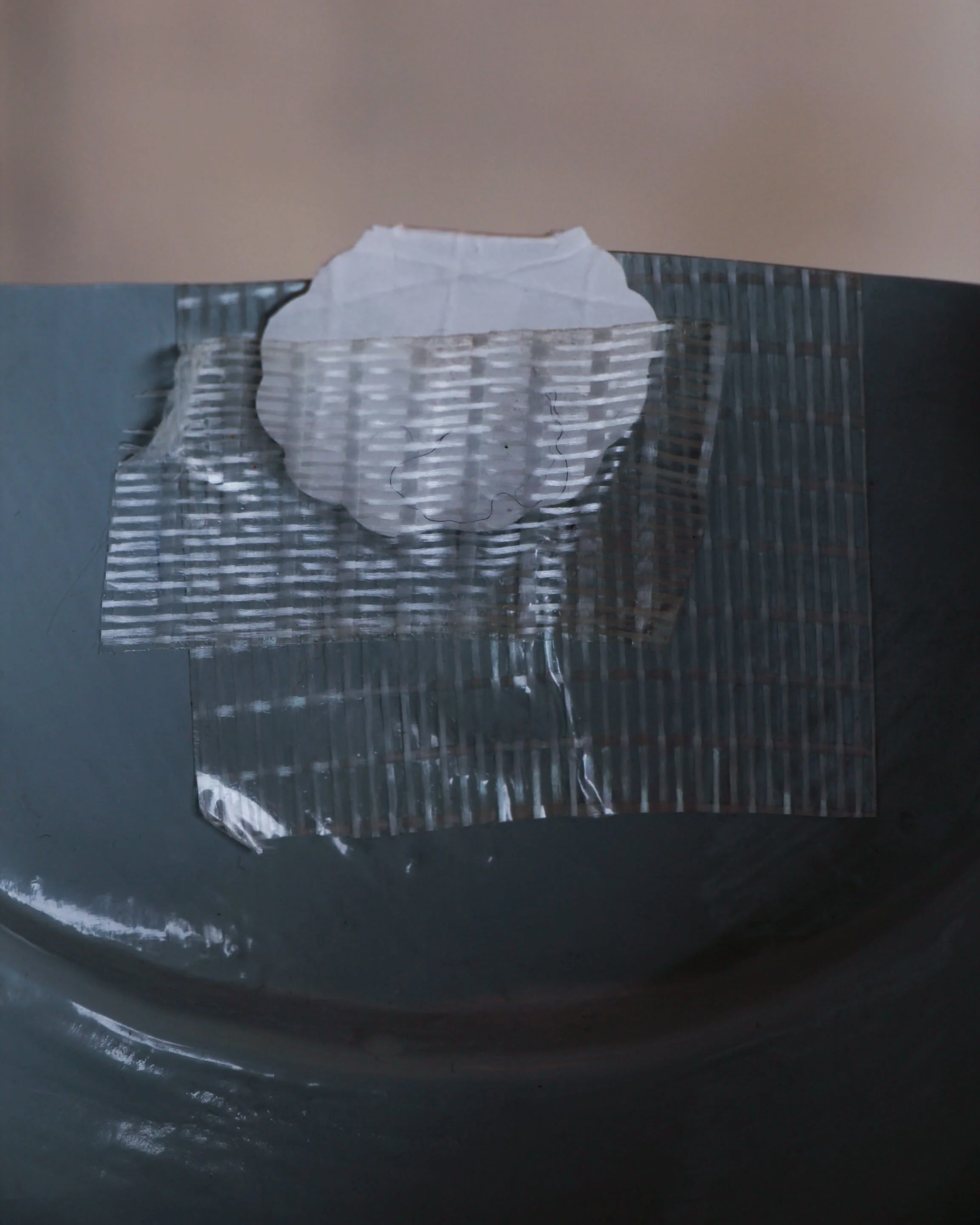
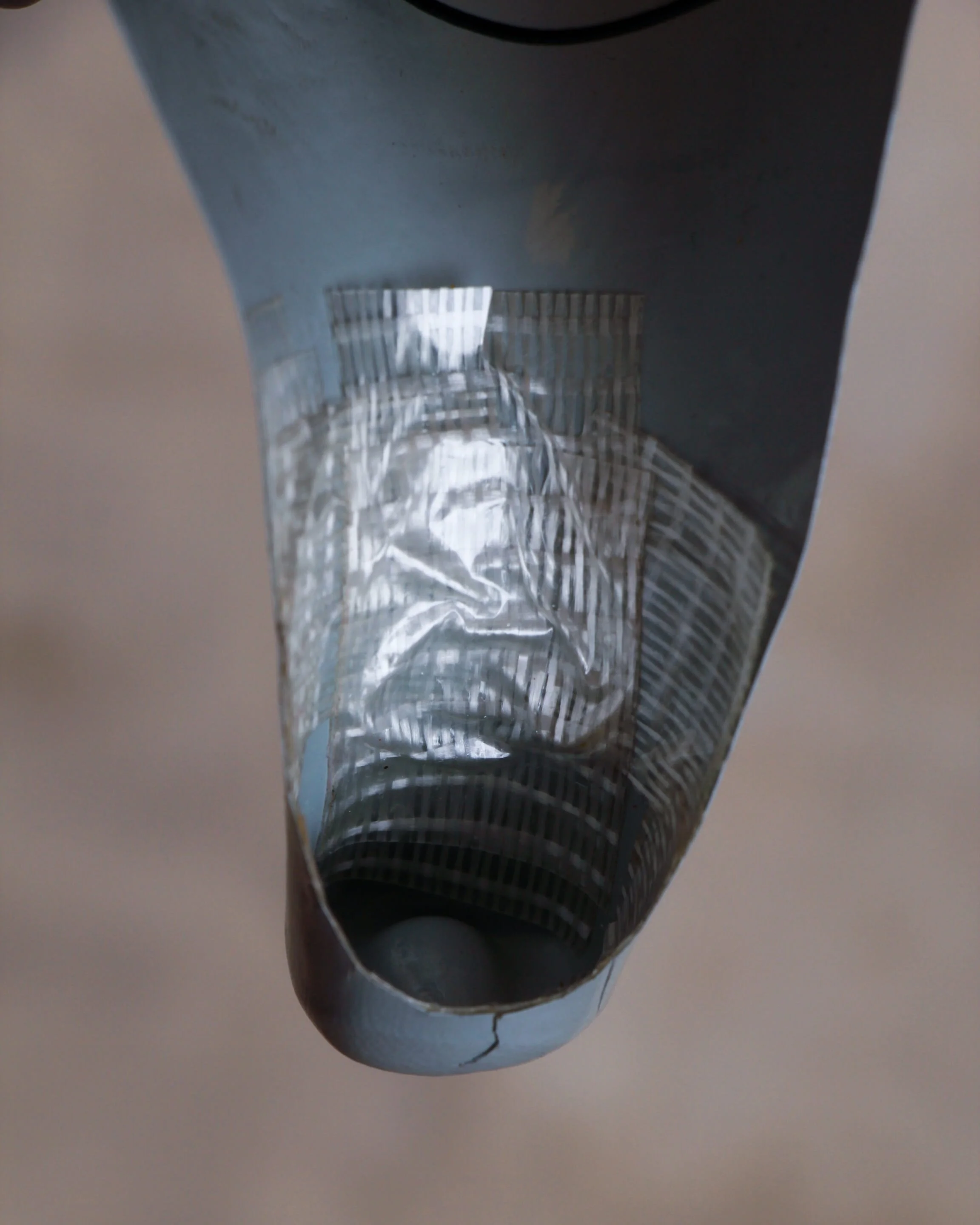
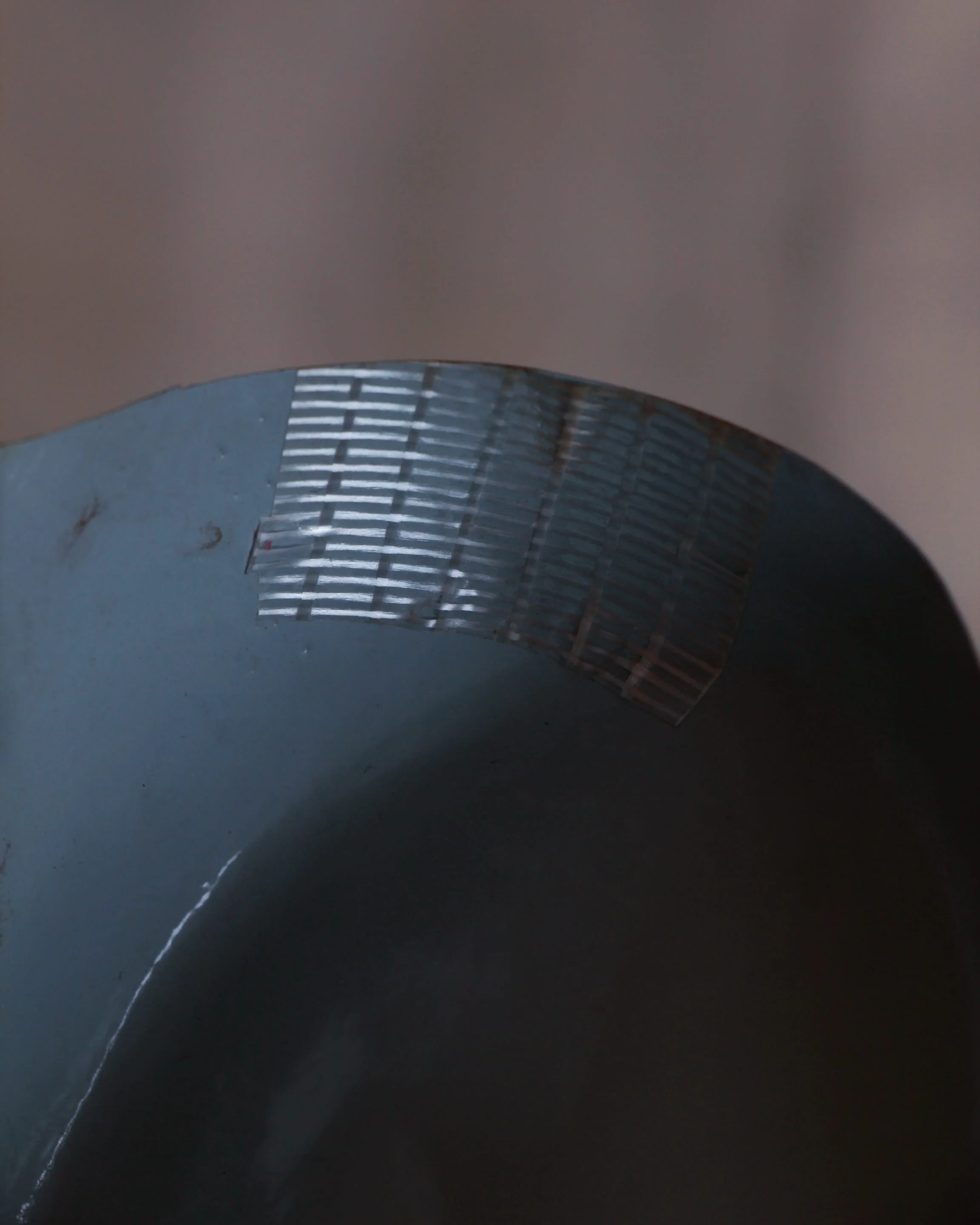
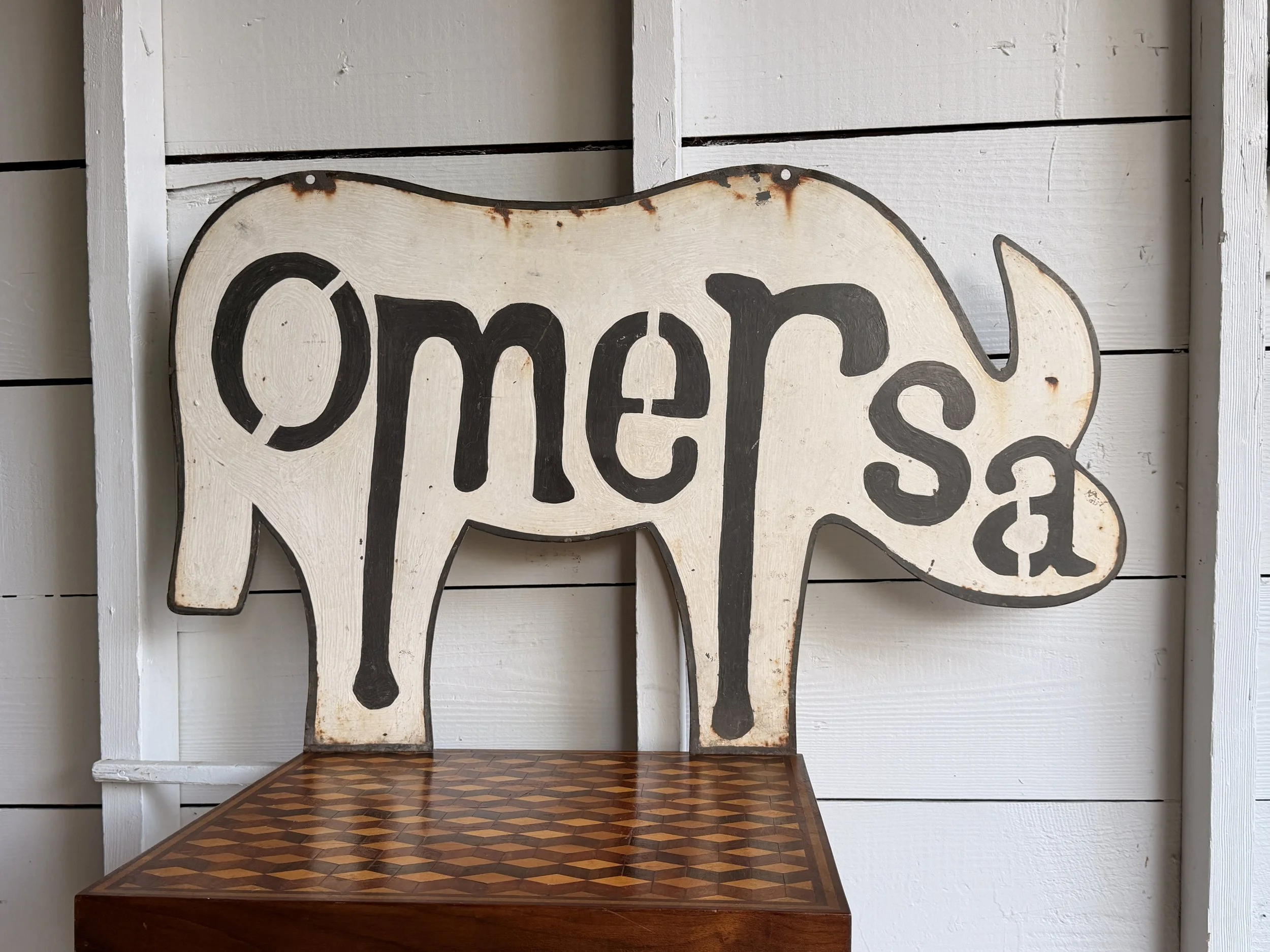
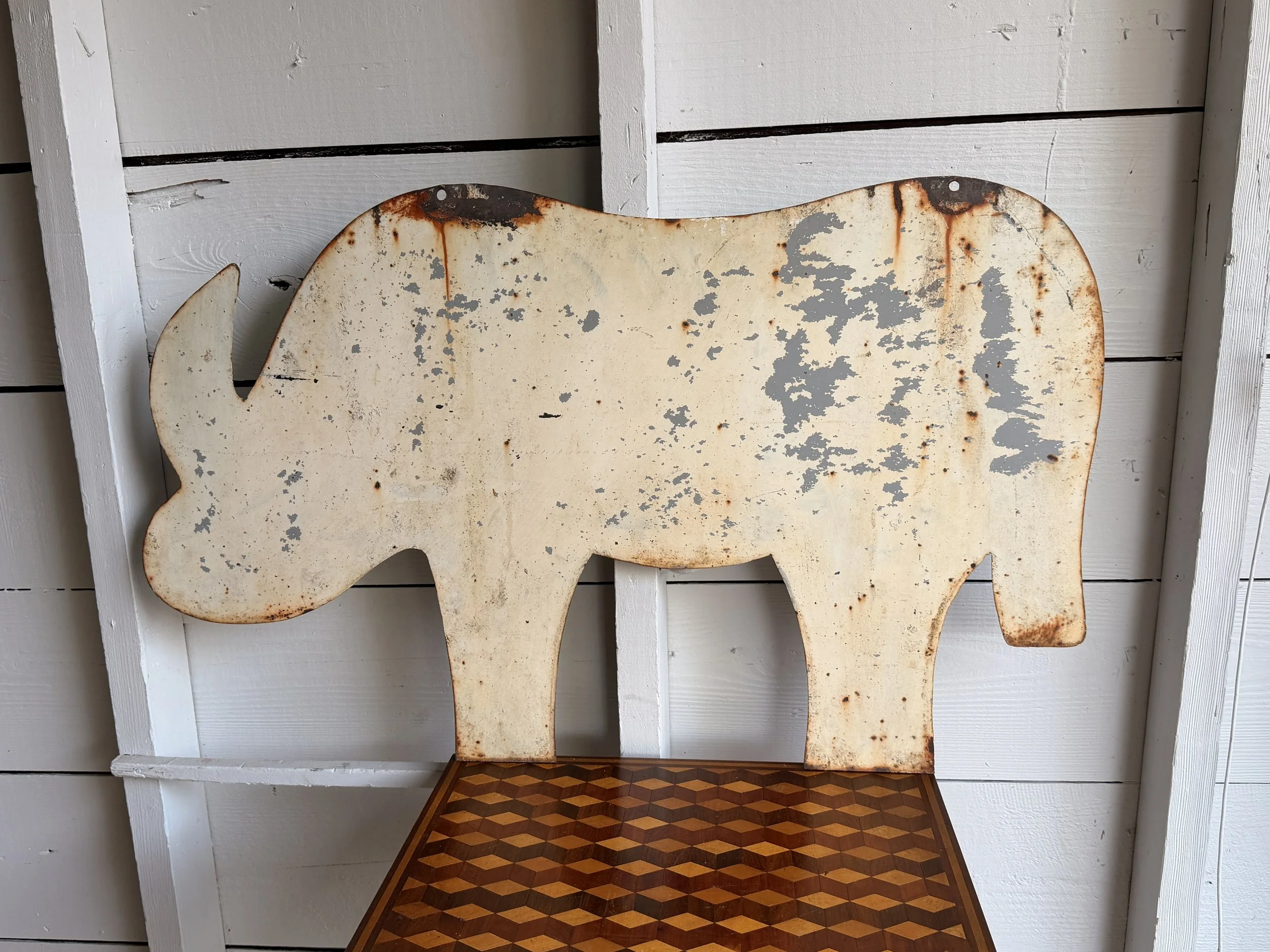
This single-sided metal sign was made for Omersa, the British company best known for its handmade leather animal footstools and sculptural home furnishings. Cut in the unmistakable shape of a rhinoceros, the sign has a cream-painted surface with bold black “Omersa” lettering worked directly into the silhouette. The reverse is unlettered, and the two holes along the upper edge suggest it was intended to hang. There is plenty of surface wear, paint loss, oxidation, and rust around the edges, all of which feel right for something that likely spent years in or around a working shop.
The handmade quality is what makes it especially interesting. This doesn’t look like a mass-produced retail sign. It feels much more like a one-off piece made for Omersa itself, probably to hang outside a workshop, showroom, or production space. The rhino shape is also especially fitting, since the leather rhinoceros became one of the company’s signature designs.
Omersa was founded in England in 1927 and became known for leather animals built over internal frames, pieces that were both sculptural and functional enough to use as footstools. Their popularity grew significantly through major retailers. In Britain, Omersa’s leather animals were sold through Liberty, where their playful, handmade character fit naturally alongside the department store’s distinctive design offerings. Later, in the United States, the pieces were carried by Abercrombie & Fitch, helping introduce them to a wider American audience and giving the brand an international following.
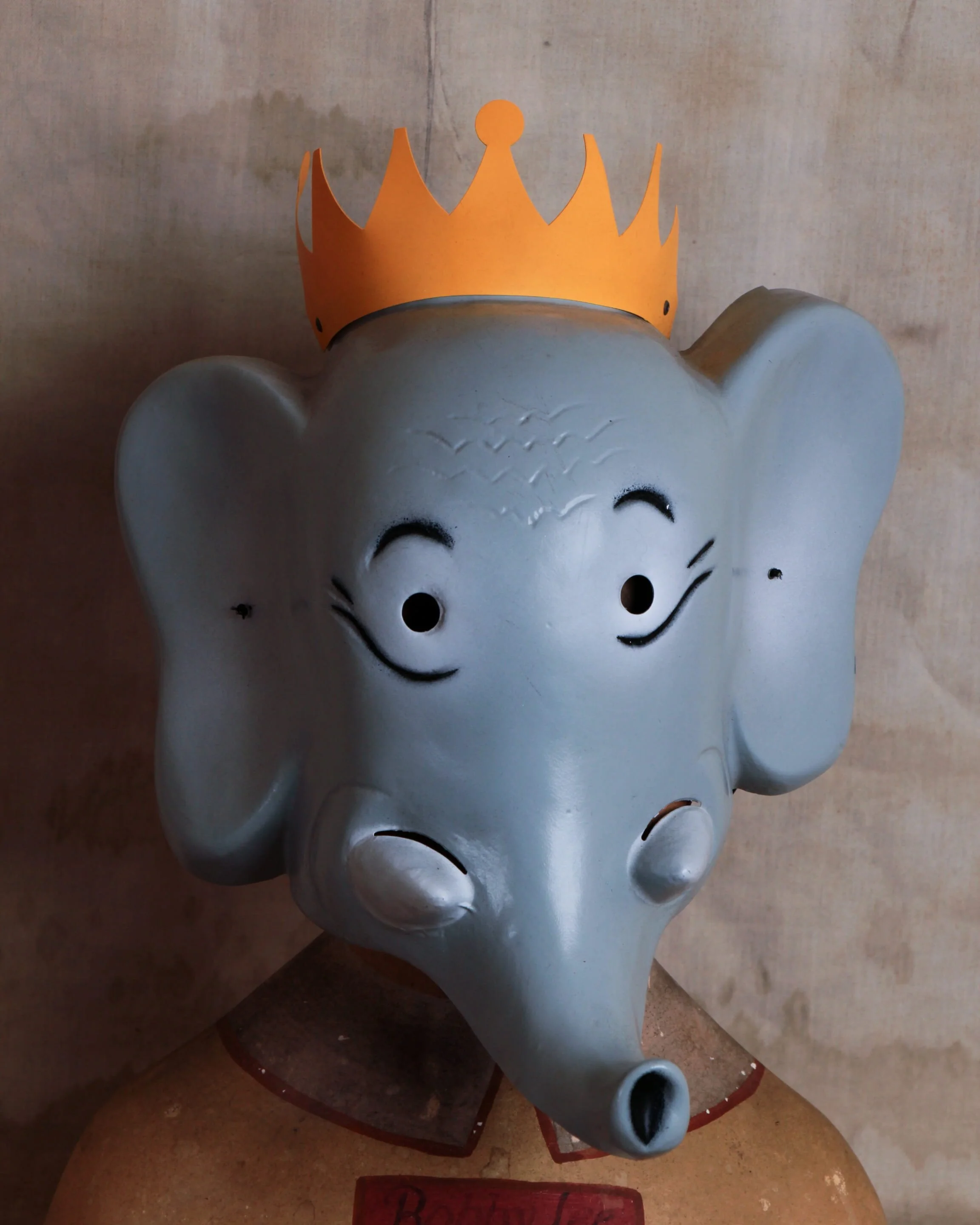
By the mid-20th century, Omersa animals had become recognizable decorative objects, especially the rhino, pig, elephant, and other wonderfully eccentric forms.
Signs like this are a different kind of survivor. Workshop signage was made to be useful, not collectible, which makes a piece tied directly to a maker all the more appealing today. This one sits somewhere between trade sign, folk art, and company ephemera, with enough wear to suggest it had a real working life.
PLEASE NOTE THIS ITEM WON’T SHIP TILL EARLY NOVEMBER
This single-sided metal sign was made for Omersa, the British company best known for its handmade leather animal footstools and sculptural home furnishings. Cut in the unmistakable shape of a rhinoceros, the sign has a cream-painted surface with bold black “Omersa” lettering worked directly into the silhouette. The reverse is unlettered, and the two holes along the upper edge suggest it was intended to hang. There is plenty of surface wear, paint loss, oxidation, and rust around the edges, all of which feel right for something that likely spent years in or around a working shop.
The handmade quality is what makes it especially interesting. This doesn’t look like a mass-produced retail sign. It feels much more like a one-off piece made for Omersa itself, probably to hang outside a workshop, showroom, or production space. The rhino shape is also especially fitting, since the leather rhinoceros became one of the company’s signature designs.
Omersa was founded in England in 1927 and became known for leather animals built over internal frames, pieces that were both sculptural and functional enough to use as footstools. Their popularity grew significantly through major retailers. In Britain, Omersa’s leather animals were sold through Liberty, where their playful, handmade character fit naturally alongside the department store’s distinctive design offerings. Later, in the United States, the pieces were carried by Abercrombie & Fitch, helping introduce them to a wider American audience and giving the brand an international following.
By the mid-20th century, Omersa animals had become recognizable decorative objects, especially the rhino, pig, elephant, and other wonderfully eccentric forms.
Signs like this are a different kind of survivor. Workshop signage was made to be useful, not collectible, which makes a piece tied directly to a maker all the more appealing today. This one sits somewhere between trade sign, folk art, and company ephemera, with enough wear to suggest it had a real working life.