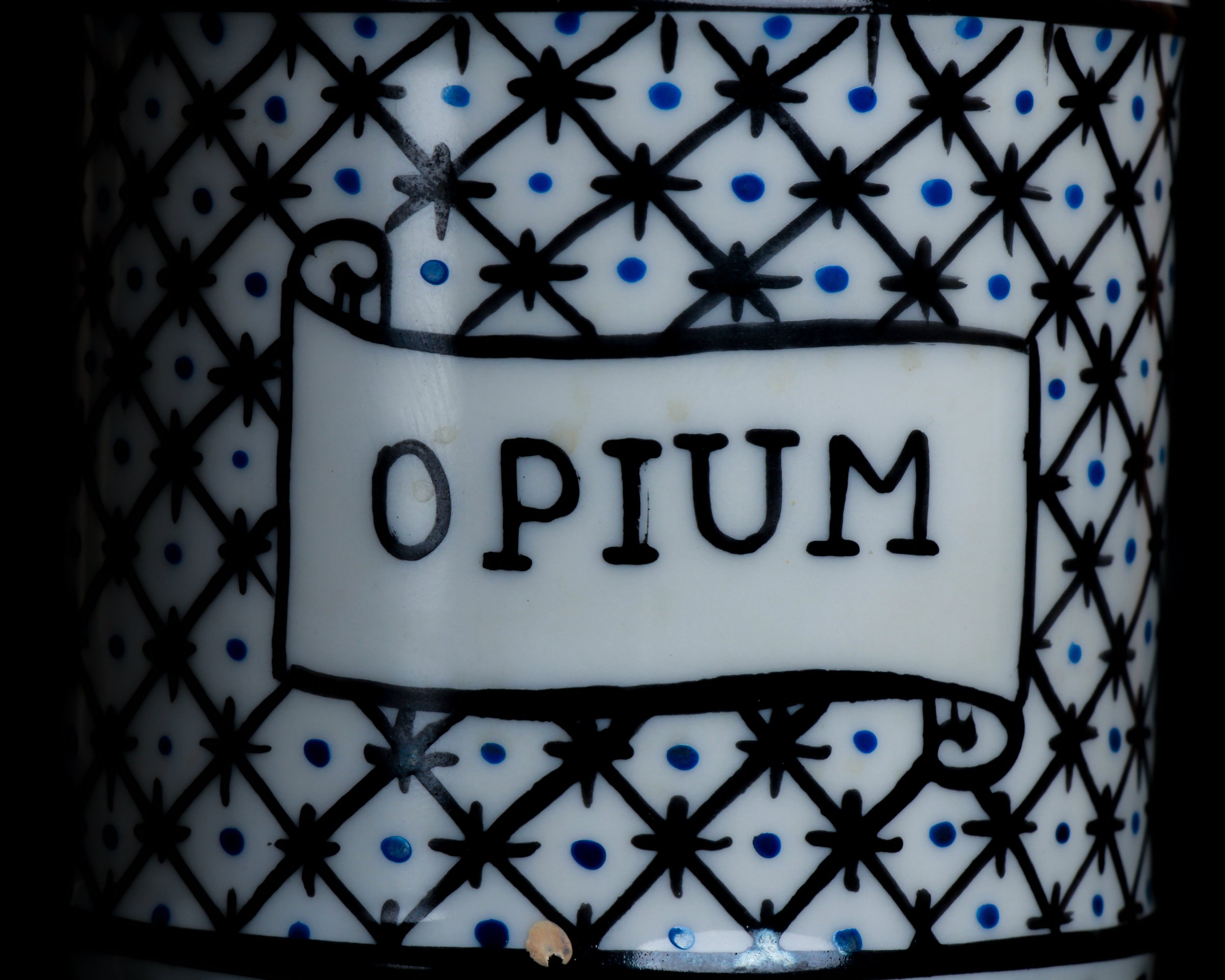
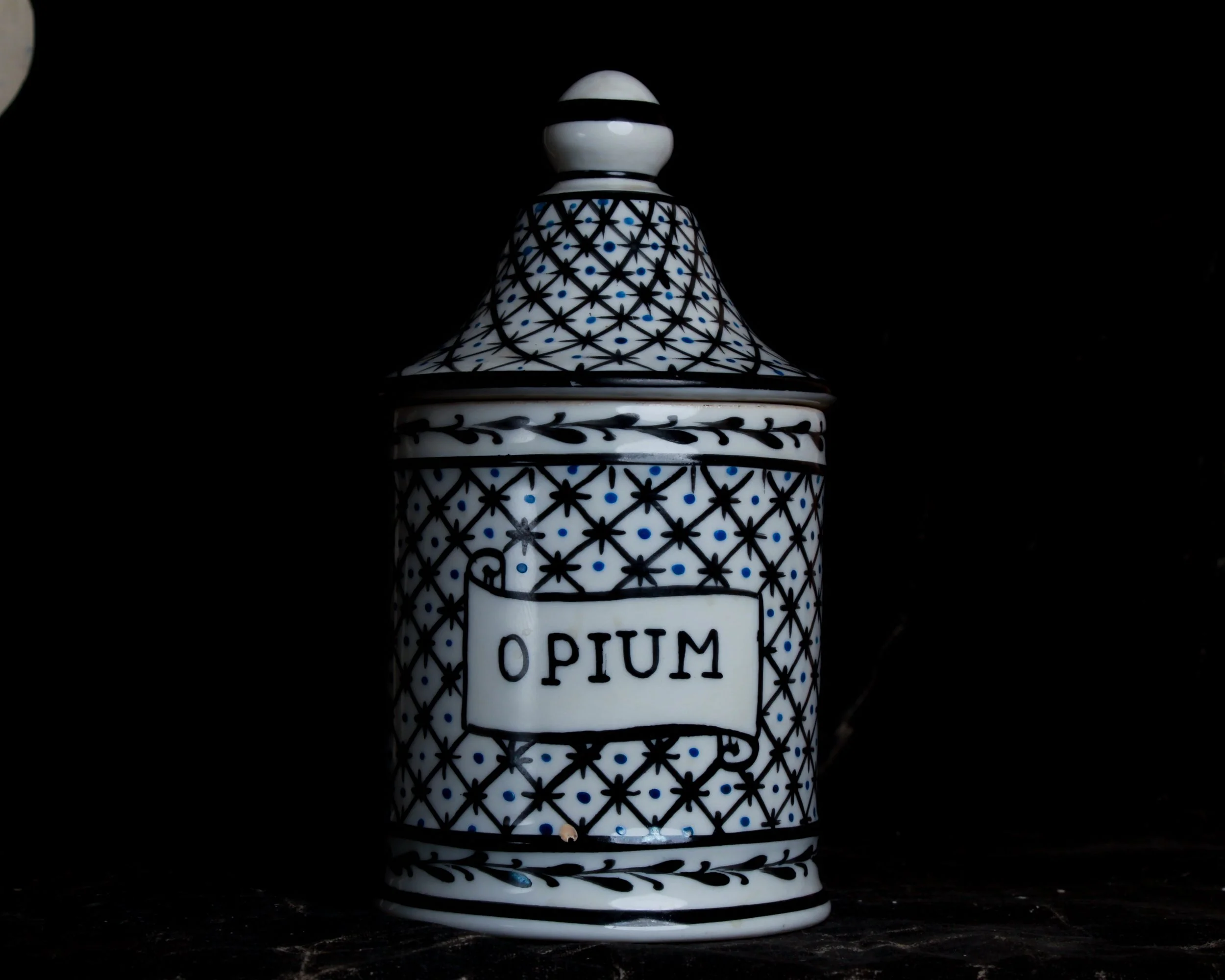
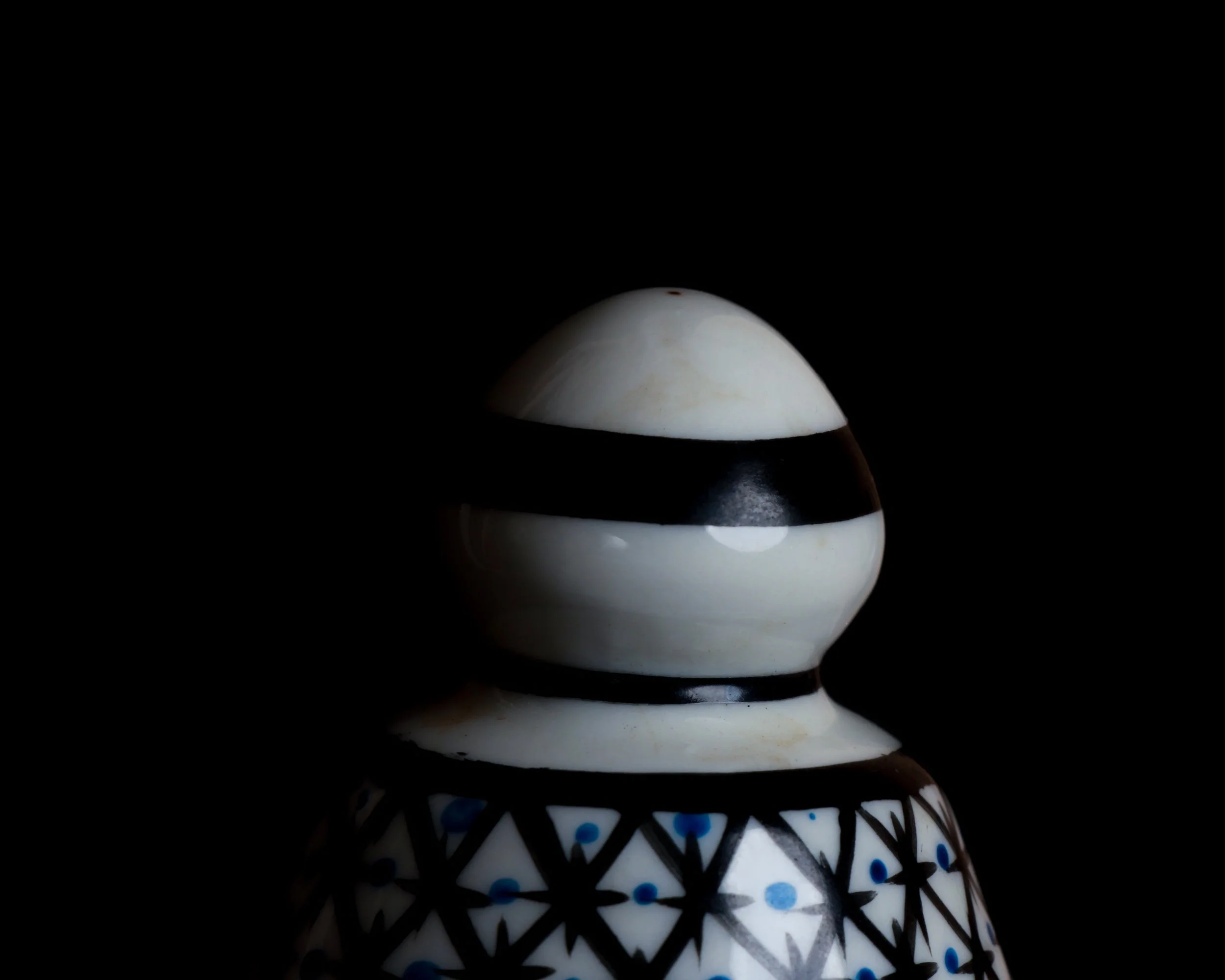
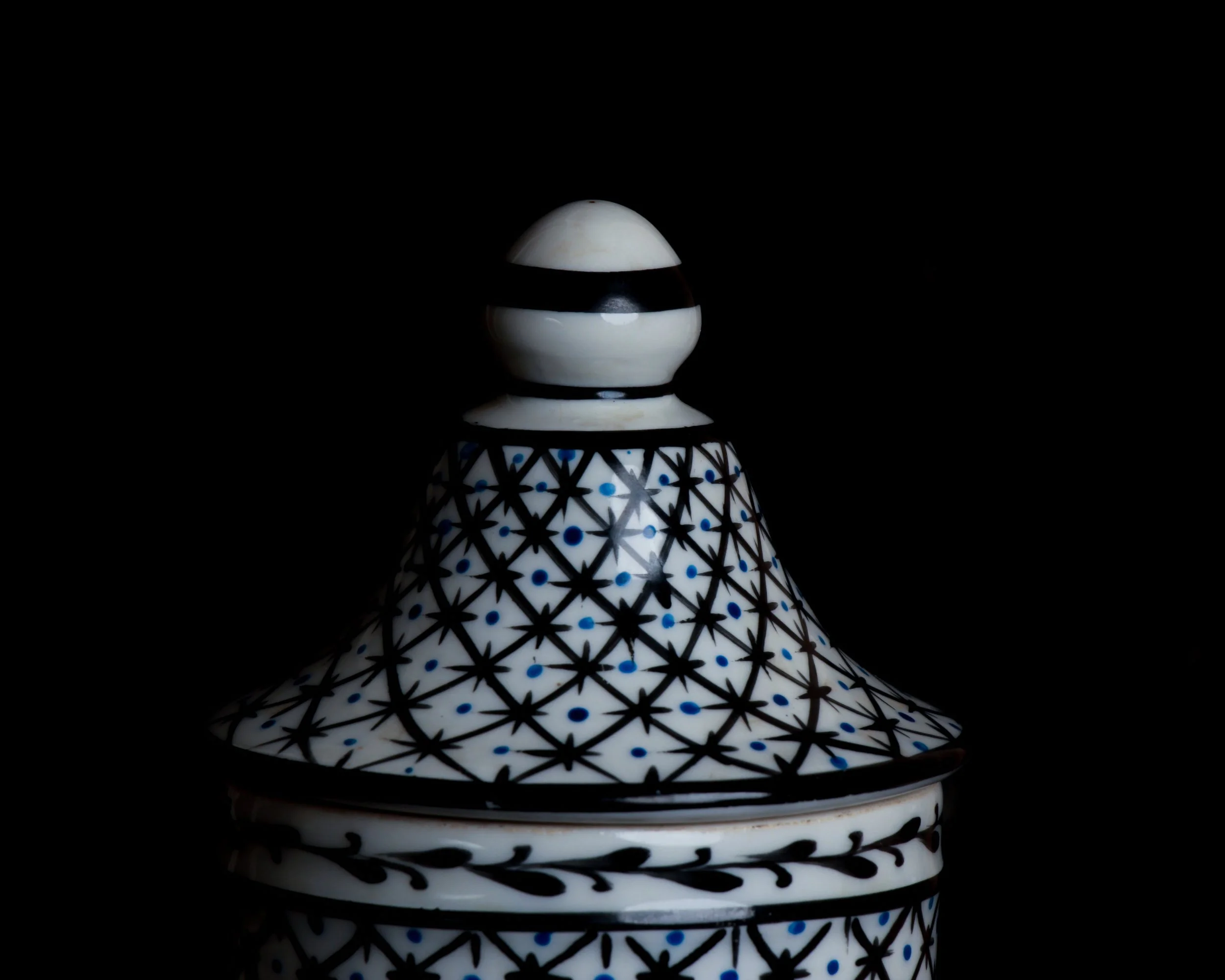
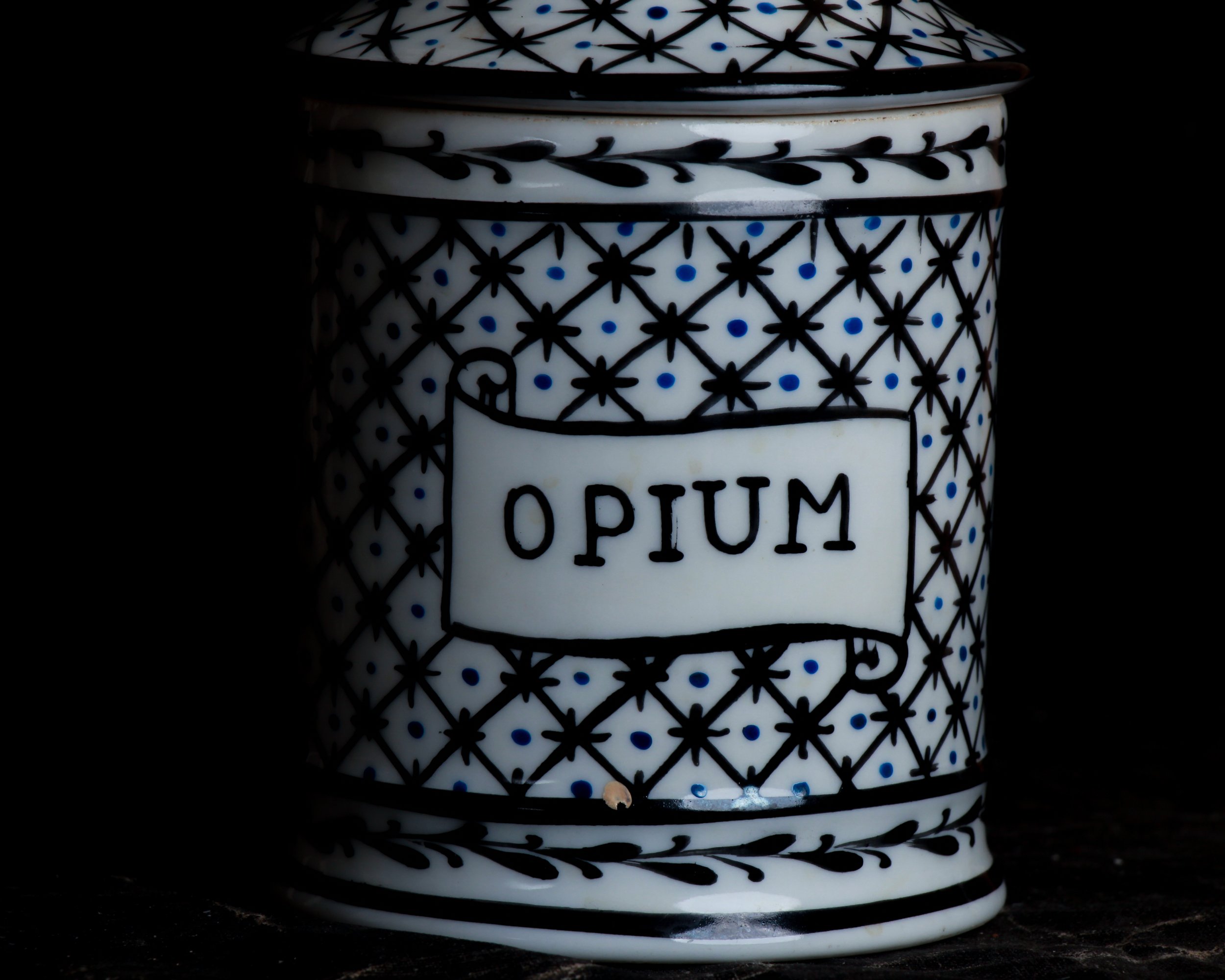
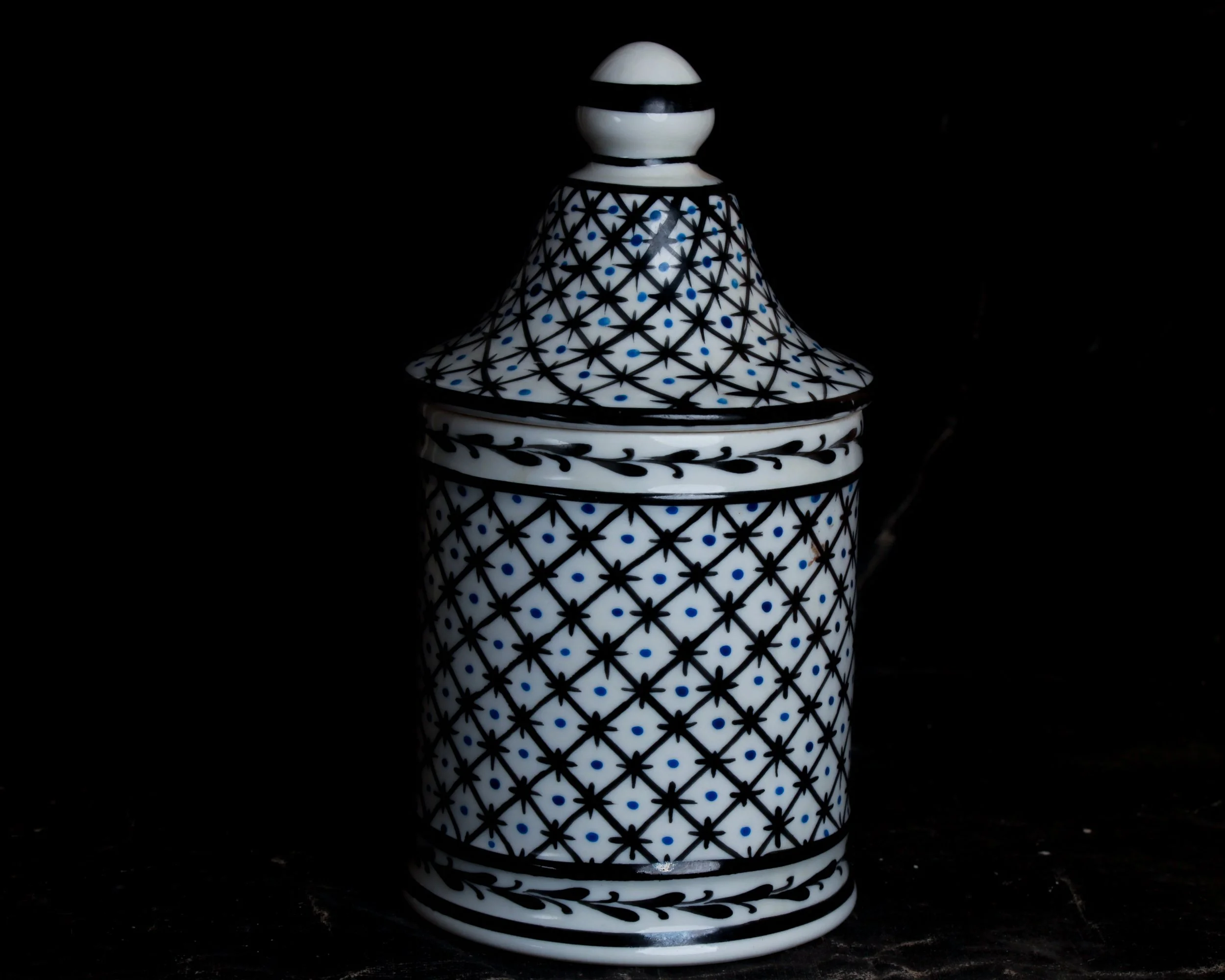
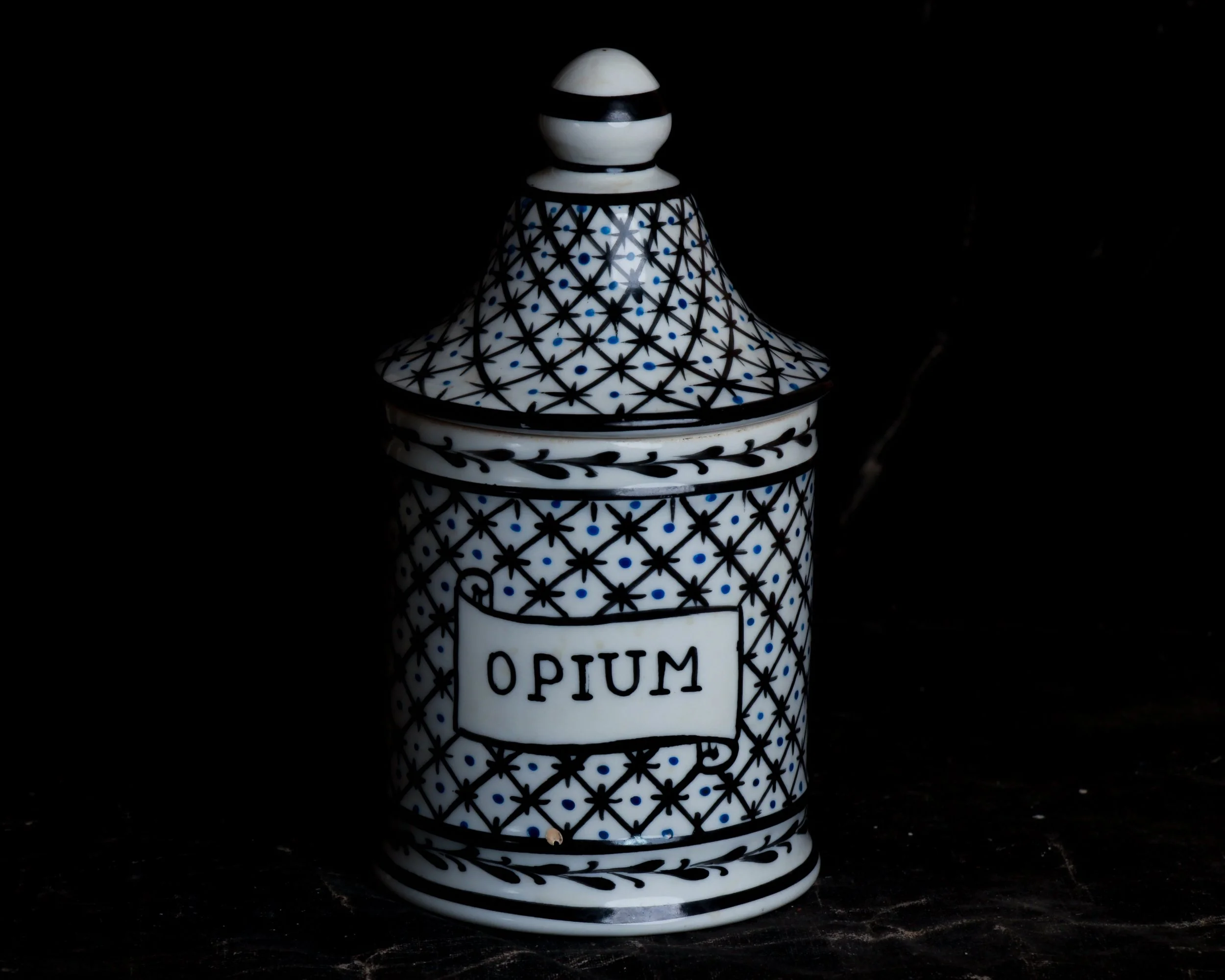
This mid-19th century Limoges porcelain apothecary jar is a terrific little piece of pharmacy history, standing just six inches high but carrying plenty of visual punch. The cylindrical body is topped with a tall, domed cover and rounded finial, giving it the elegant silhouette associated with Continental drug jars of the period. Against the white porcelain, a dense black lattice pattern is punctuated with small cobalt-blue dots, while leafy black borders frame the top and bottom. At the center, a scrolling cartouche is boldly labeled “OPIUM.”
There are a few small chips and areas of wear, all consistent with age and use, but the decoration remains crisp and graphic. The piece is possibly attributable to the Laviolette factory in Limoges, though without a visible maker’s mark that attribution should remain cautious.
Apothecary jars like this were made for pharmacies at a time when medicines were still commonly stored, compounded, and dispensed by hand. Shelves lined with labeled ceramic jars were both practical and theatrical, giving 19th-century pharmacies an orderly, almost laboratory-like appearance.
Opium was an important medicinal ingredient during the period and was widely used in preparations intended to relieve pain, suppress coughing, treat diarrhea, and induce sleep. Laudanum, a tincture of opium dissolved in alcohol, became especially common in Europe and America during the 18th and 19th centuries. Regulations were far looser than they are today, and opium-based medicines could often be purchased directly from pharmacists.
Limoges became one of France’s major porcelain-producing centers after deposits of kaolin were discovered nearby in the 18th century. By the 19th century, numerous factories were producing everything from tableware to specialized pharmacy vessels. Pieces like this sit at an interesting intersection of decorative arts, medical history, and everyday commerce, which is exactly what makes old apothecary jars so appealing to collectors today.
This mid-19th century Limoges porcelain apothecary jar is a terrific little piece of pharmacy history, standing just six inches high but carrying plenty of visual punch. The cylindrical body is topped with a tall, domed cover and rounded finial, giving it the elegant silhouette associated with Continental drug jars of the period. Against the white porcelain, a dense black lattice pattern is punctuated with small cobalt-blue dots, while leafy black borders frame the top and bottom. At the center, a scrolling cartouche is boldly labeled “OPIUM.”
There are a few small chips and areas of wear, all consistent with age and use, but the decoration remains crisp and graphic. The piece is possibly attributable to the Laviolette factory in Limoges, though without a visible maker’s mark that attribution should remain cautious.
Apothecary jars like this were made for pharmacies at a time when medicines were still commonly stored, compounded, and dispensed by hand. Shelves lined with labeled ceramic jars were both practical and theatrical, giving 19th-century pharmacies an orderly, almost laboratory-like appearance.
Opium was an important medicinal ingredient during the period and was widely used in preparations intended to relieve pain, suppress coughing, treat diarrhea, and induce sleep. Laudanum, a tincture of opium dissolved in alcohol, became especially common in Europe and America during the 18th and 19th centuries. Regulations were far looser than they are today, and opium-based medicines could often be purchased directly from pharmacists.
Limoges became one of France’s major porcelain-producing centers after deposits of kaolin were discovered nearby in the 18th century. By the 19th century, numerous factories were producing everything from tableware to specialized pharmacy vessels. Pieces like this sit at an interesting intersection of decorative arts, medical history, and everyday commerce, which is exactly what makes old apothecary jars so appealing to collectors today.