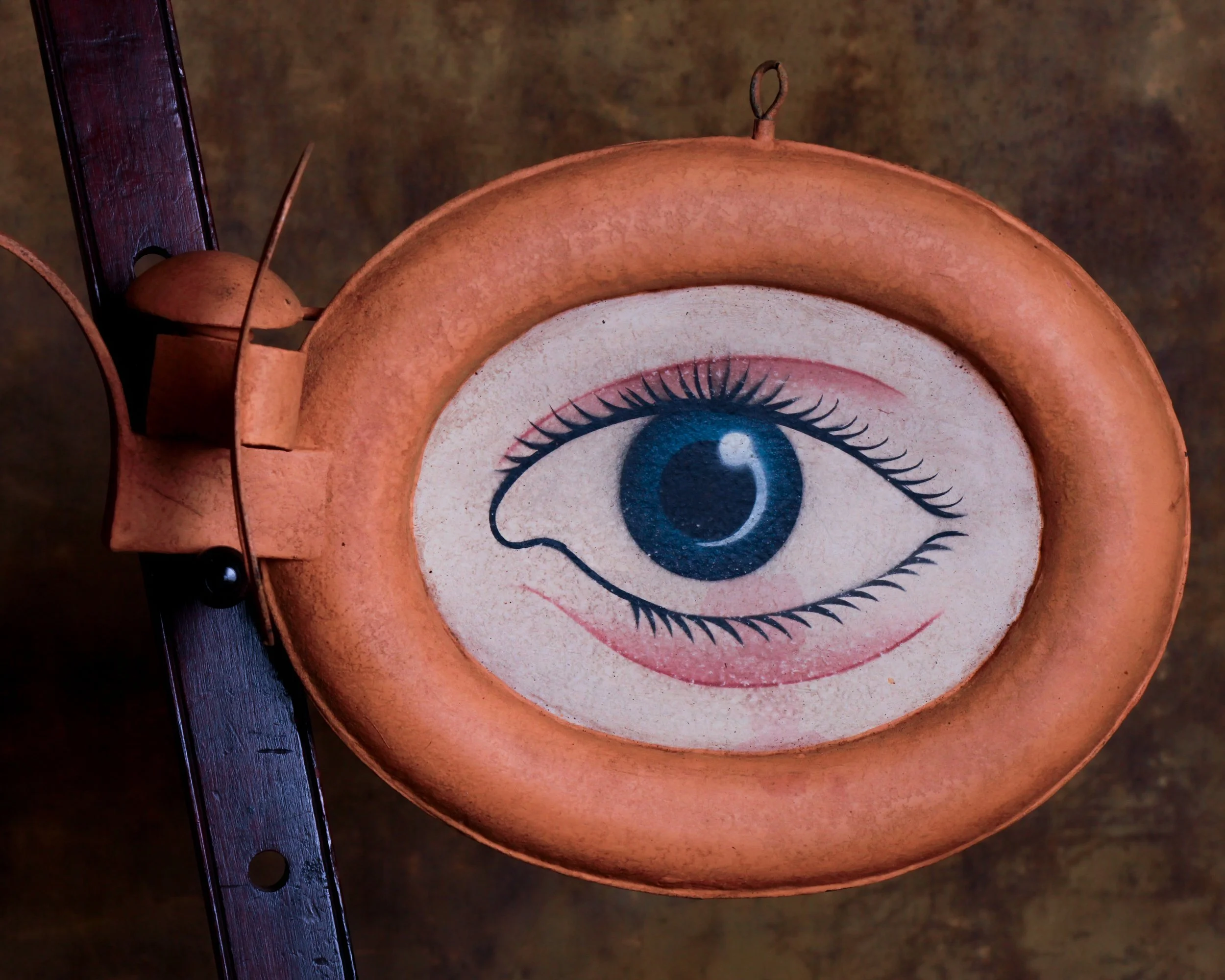
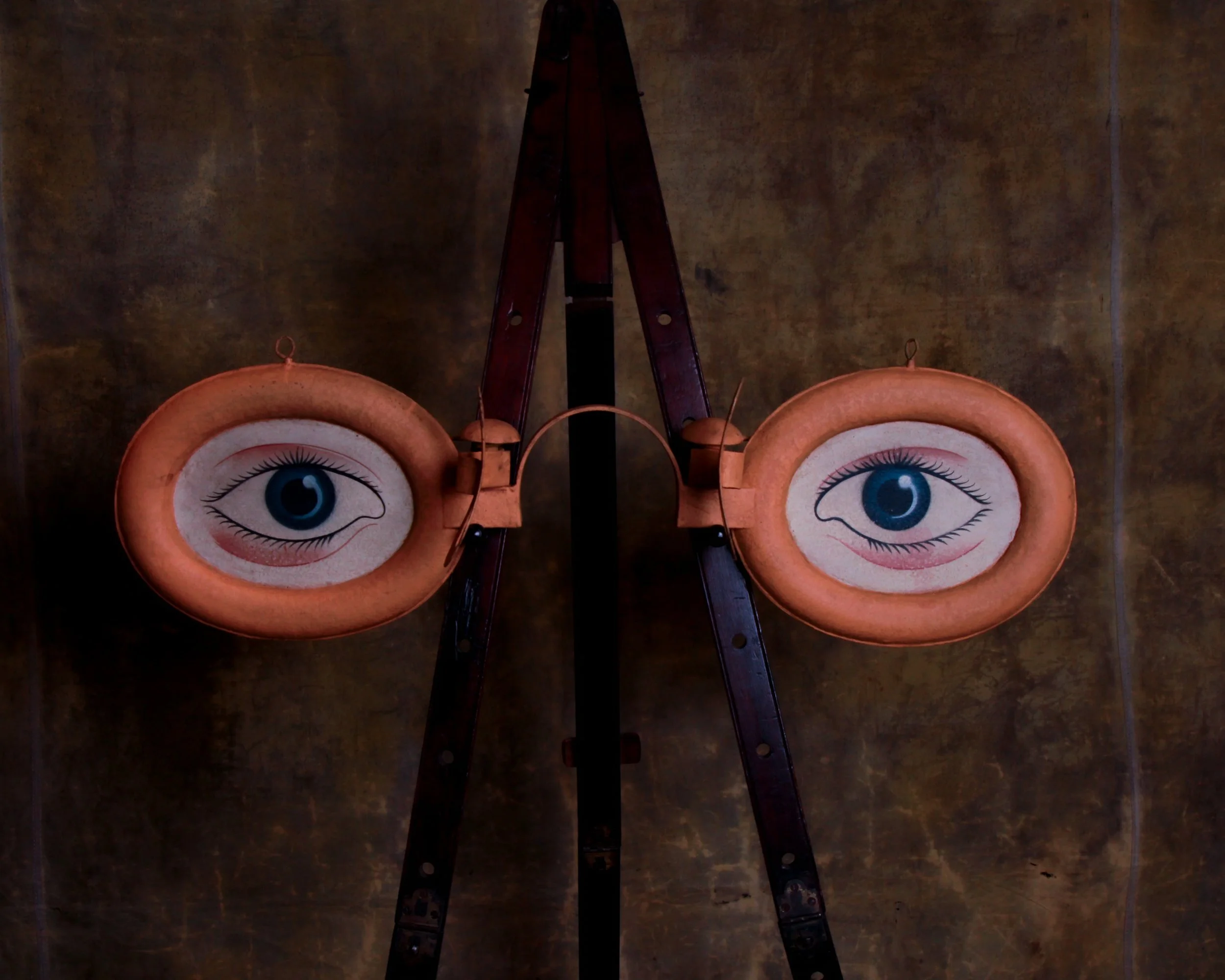
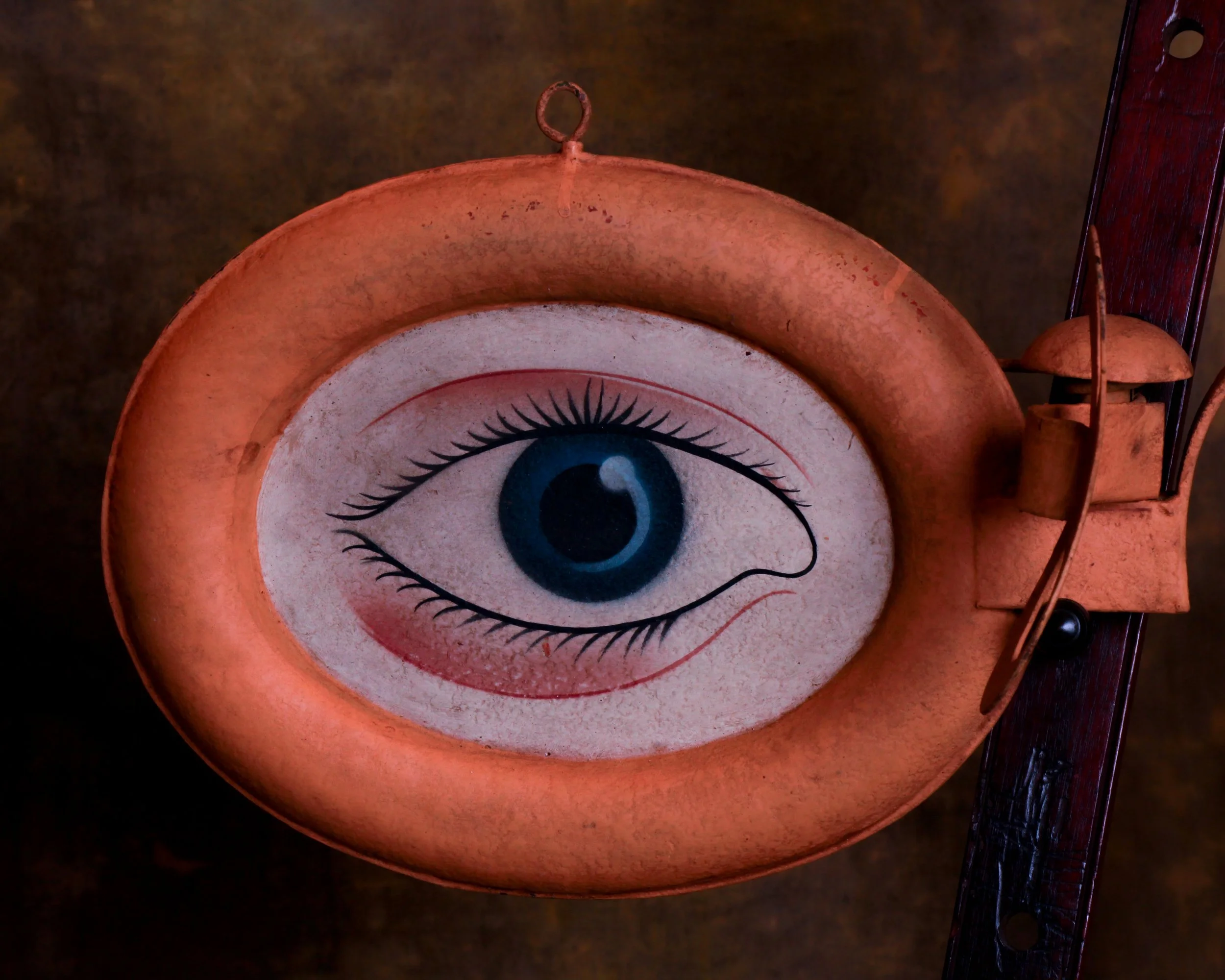
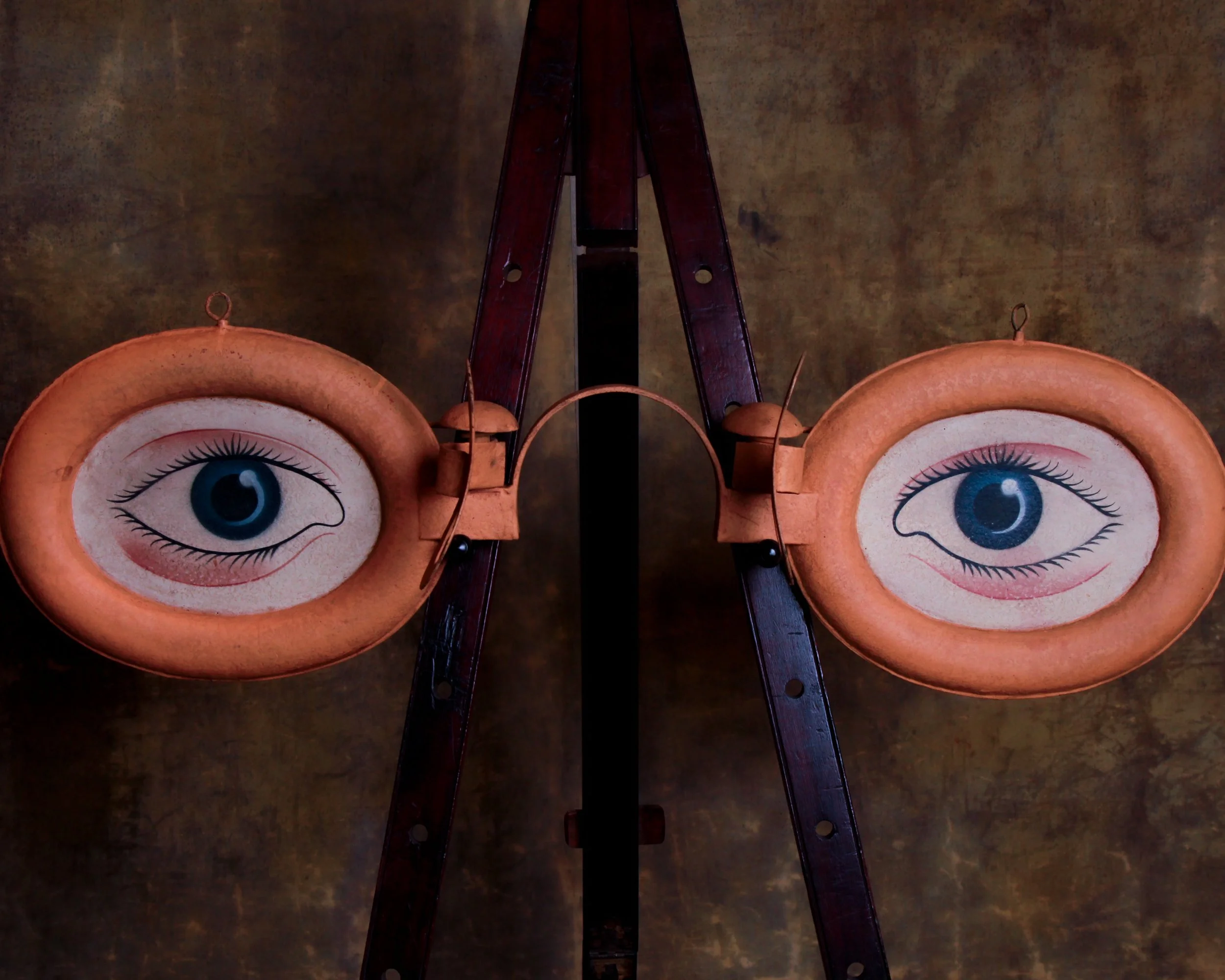


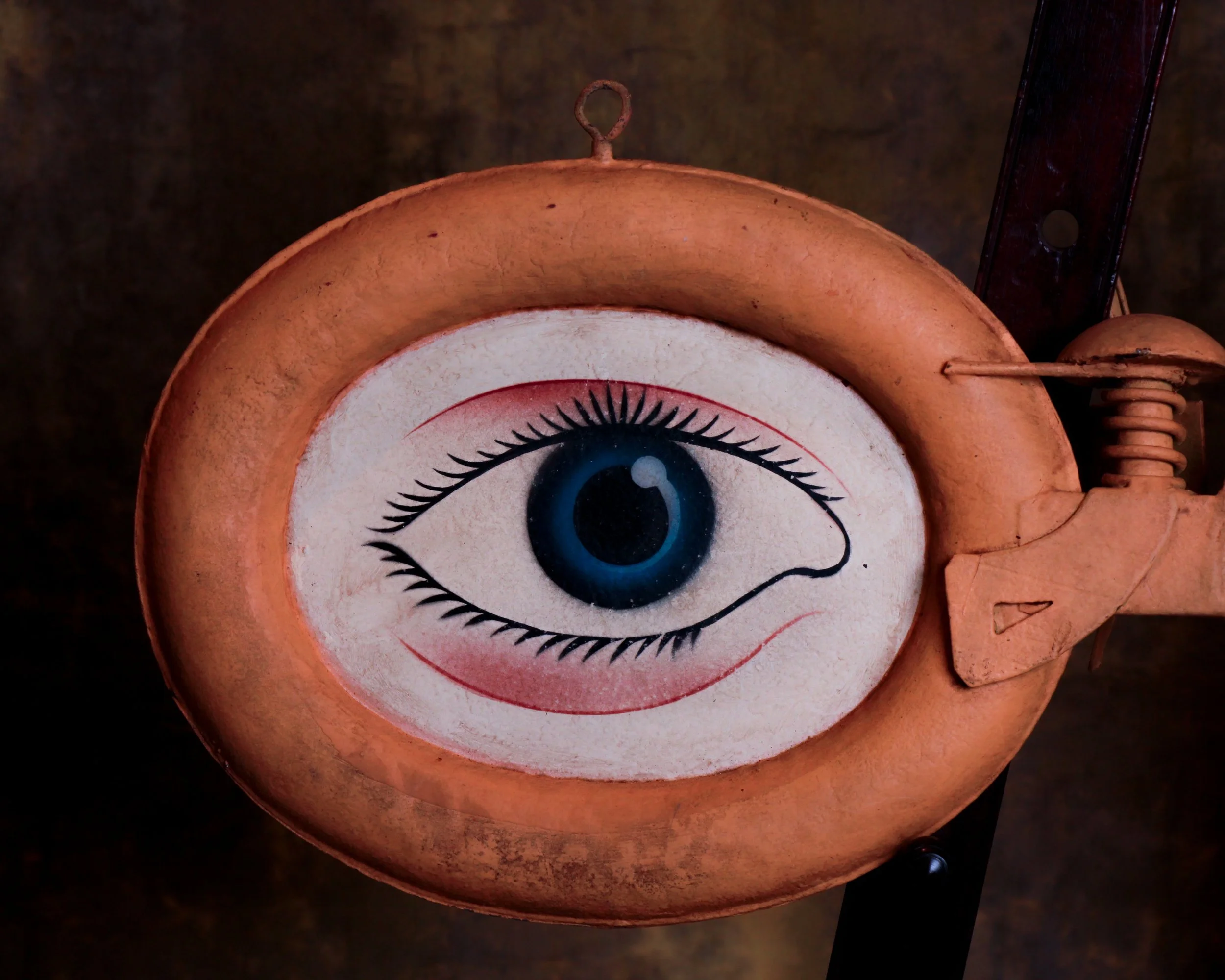
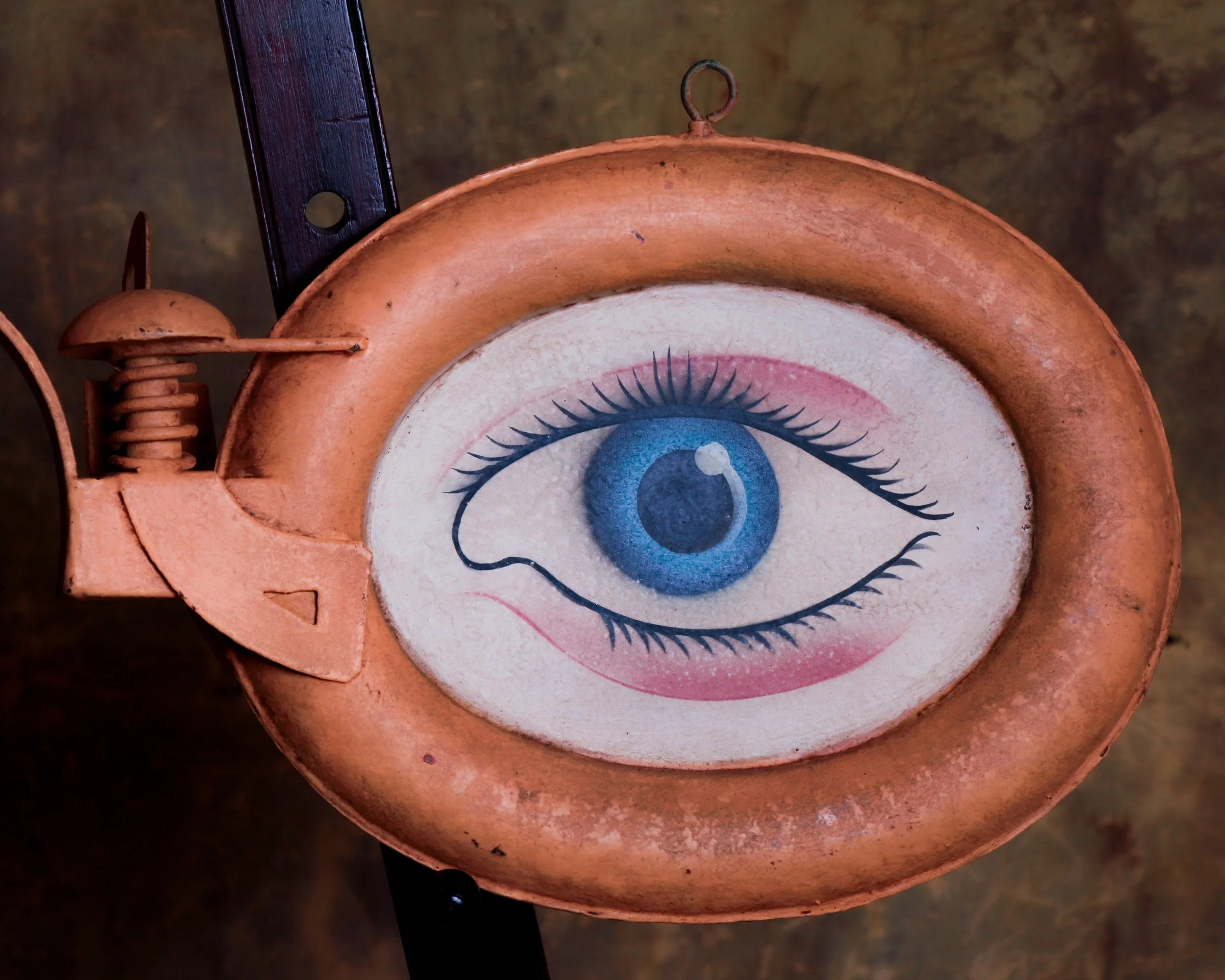


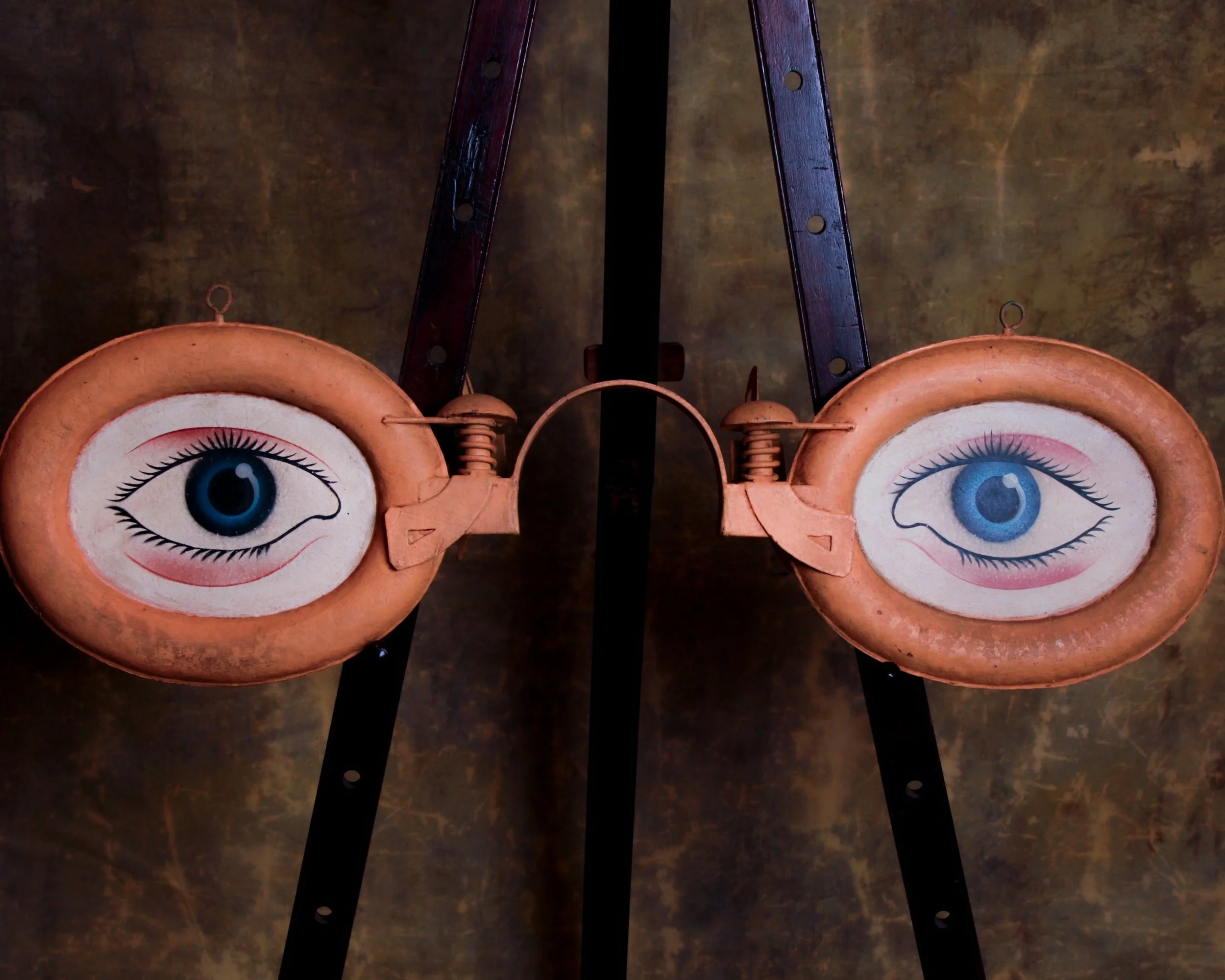
Optometrist or optician trade sign in the form of an oversized pair of spectacles, each lens filled with a large painted blue eye. The oval frames appear to be made from a lightweight metal with metal fittings, hanging loops, and a delicate wire bridge connecting the two sides. The eyes are carefully painted with dark lashes, pink lids, bright blue irises, and white highlights, giving them a slightly theatrical look. Exposed brackets and spring-like hardware add to the handmade, mechanical quality of the piece.
Optical trade signs have a long history in commercial advertising. Before modern printed storefront graphics, businesses often relied on oversized symbols that could be understood instantly from the street. Opticians and spectacle makers naturally turned to eyeglasses, eyes, or combinations of both as their visual shorthand.
Over time, these signs became increasingly elaborate. Three-dimensional examples were designed to hang perpendicular to a building so they could be seen by pedestrians approaching from either direction. Depending on the maker and intended setting, they might be constructed from metal, wood, papier-mâché, composition, or mixed materials.
The eye was an especially effective symbol because it communicated the trade immediately, even without lettering. It also fit neatly into the visual language of the period, when shop signs often leaned toward bold, literal imagery rather than subtle branding.
As optometry became more professionalized and retail eyewear more common, signs like these helped distinguish optical shops from jewelers, pharmacies, and general merchants who might also sell spectacles. Their scale and graphic clarity made them practical advertising tools, while the hand-painted details often gave them a distinctly local character.
Optometrist or optician trade sign in the form of an oversized pair of spectacles, each lens filled with a large painted blue eye. The oval frames appear to be made from a lightweight metal with metal fittings, hanging loops, and a delicate wire bridge connecting the two sides. The eyes are carefully painted with dark lashes, pink lids, bright blue irises, and white highlights, giving them a slightly theatrical look. Exposed brackets and spring-like hardware add to the handmade, mechanical quality of the piece.
Optical trade signs have a long history in commercial advertising. Before modern printed storefront graphics, businesses often relied on oversized symbols that could be understood instantly from the street. Opticians and spectacle makers naturally turned to eyeglasses, eyes, or combinations of both as their visual shorthand.
Over time, these signs became increasingly elaborate. Three-dimensional examples were designed to hang perpendicular to a building so they could be seen by pedestrians approaching from either direction. Depending on the maker and intended setting, they might be constructed from metal, wood, papier-mâché, composition, or mixed materials.
The eye was an especially effective symbol because it communicated the trade immediately, even without lettering. It also fit neatly into the visual language of the period, when shop signs often leaned toward bold, literal imagery rather than subtle branding.
As optometry became more professionalized and retail eyewear more common, signs like these helped distinguish optical shops from jewelers, pharmacies, and general merchants who might also sell spectacles. Their scale and graphic clarity made them practical advertising tools, while the hand-painted details often gave them a distinctly local character.