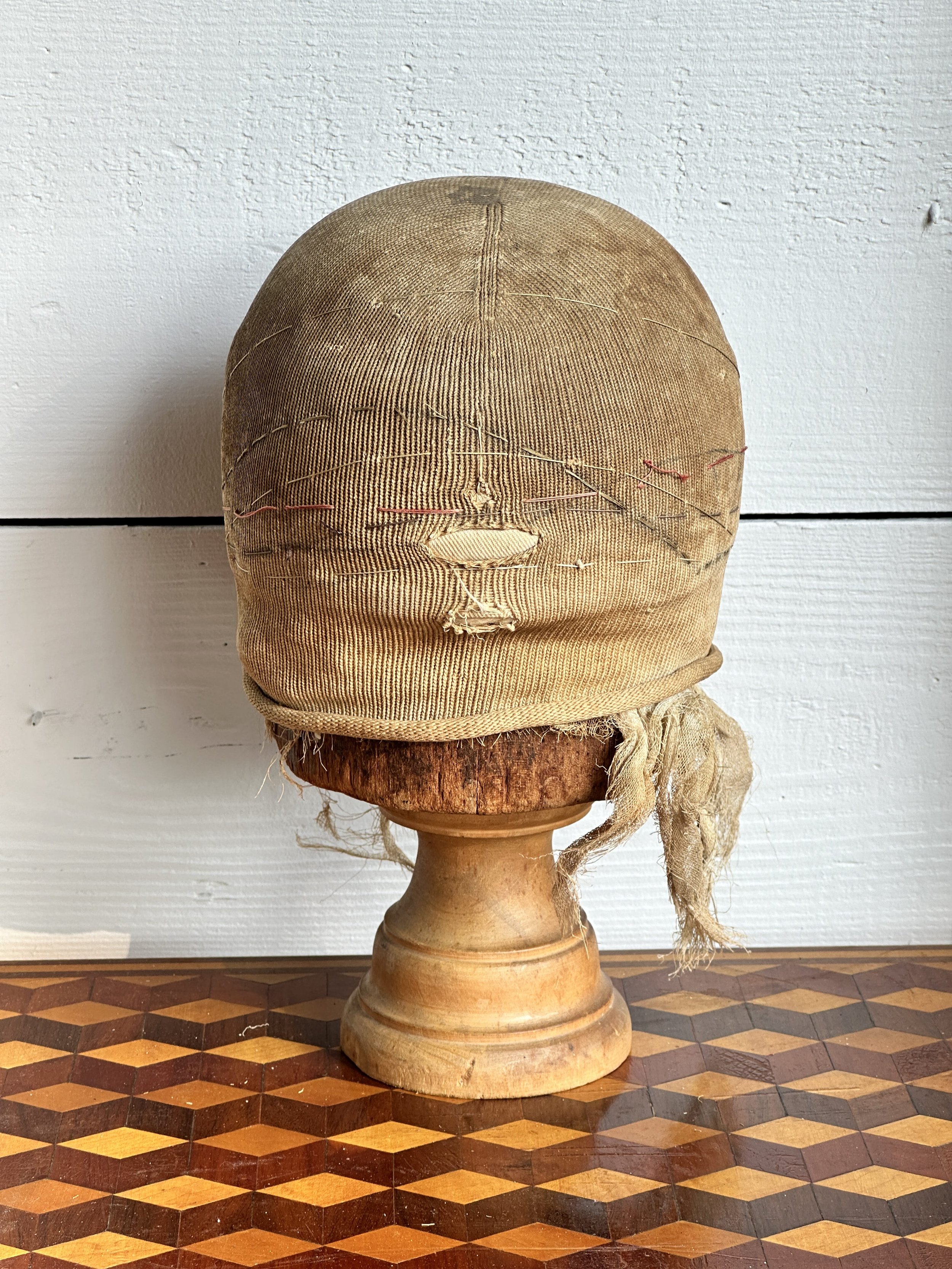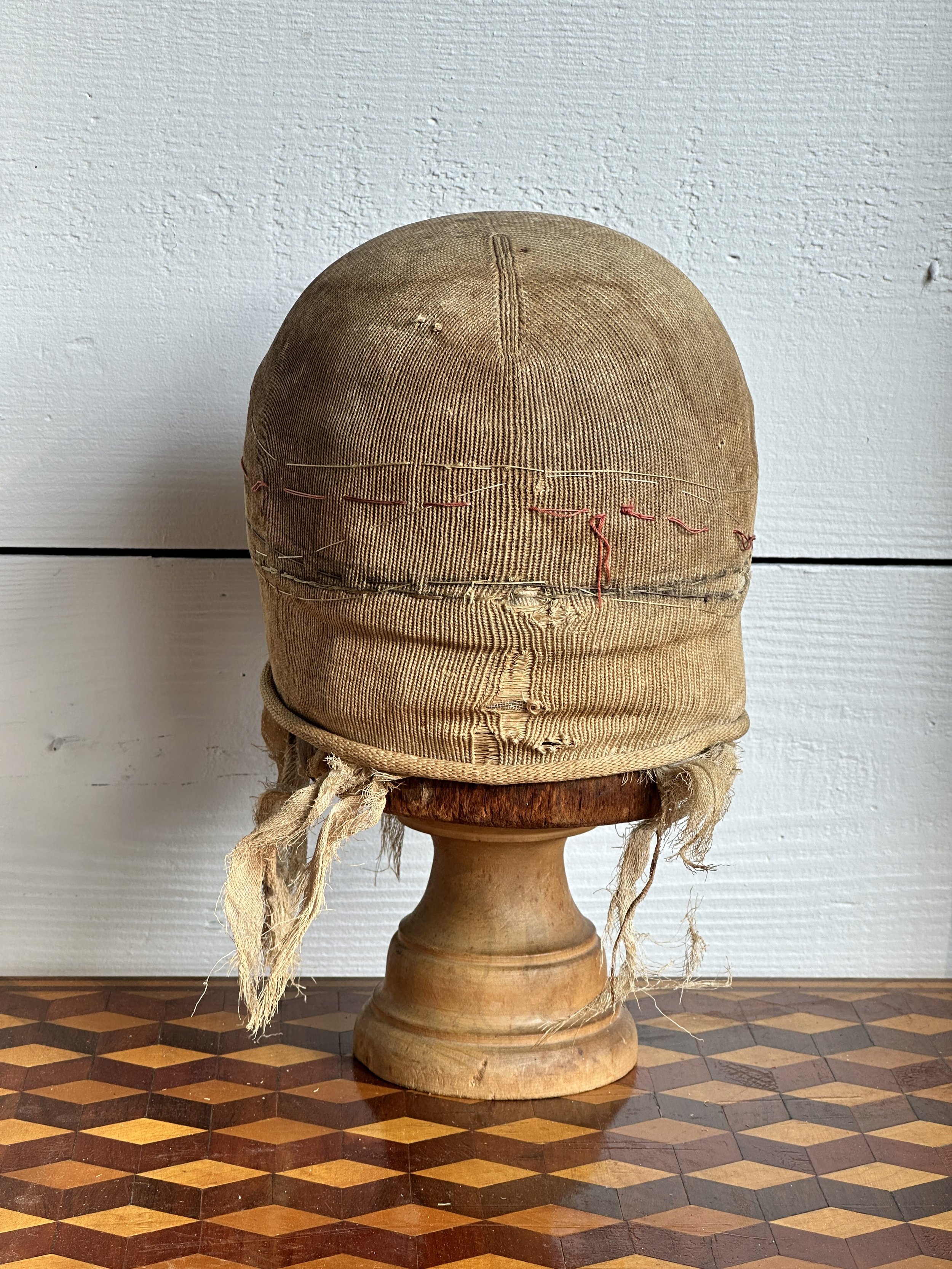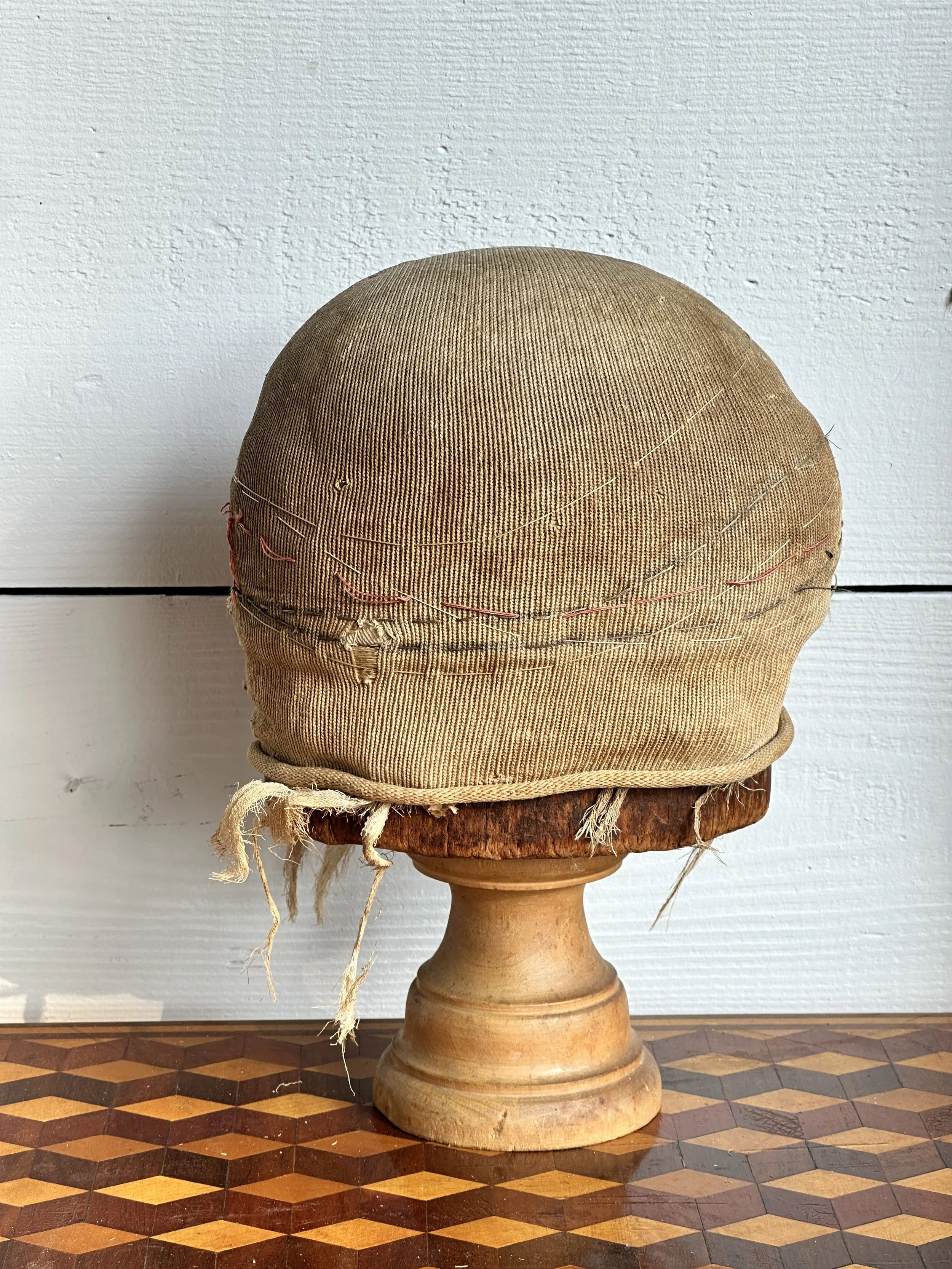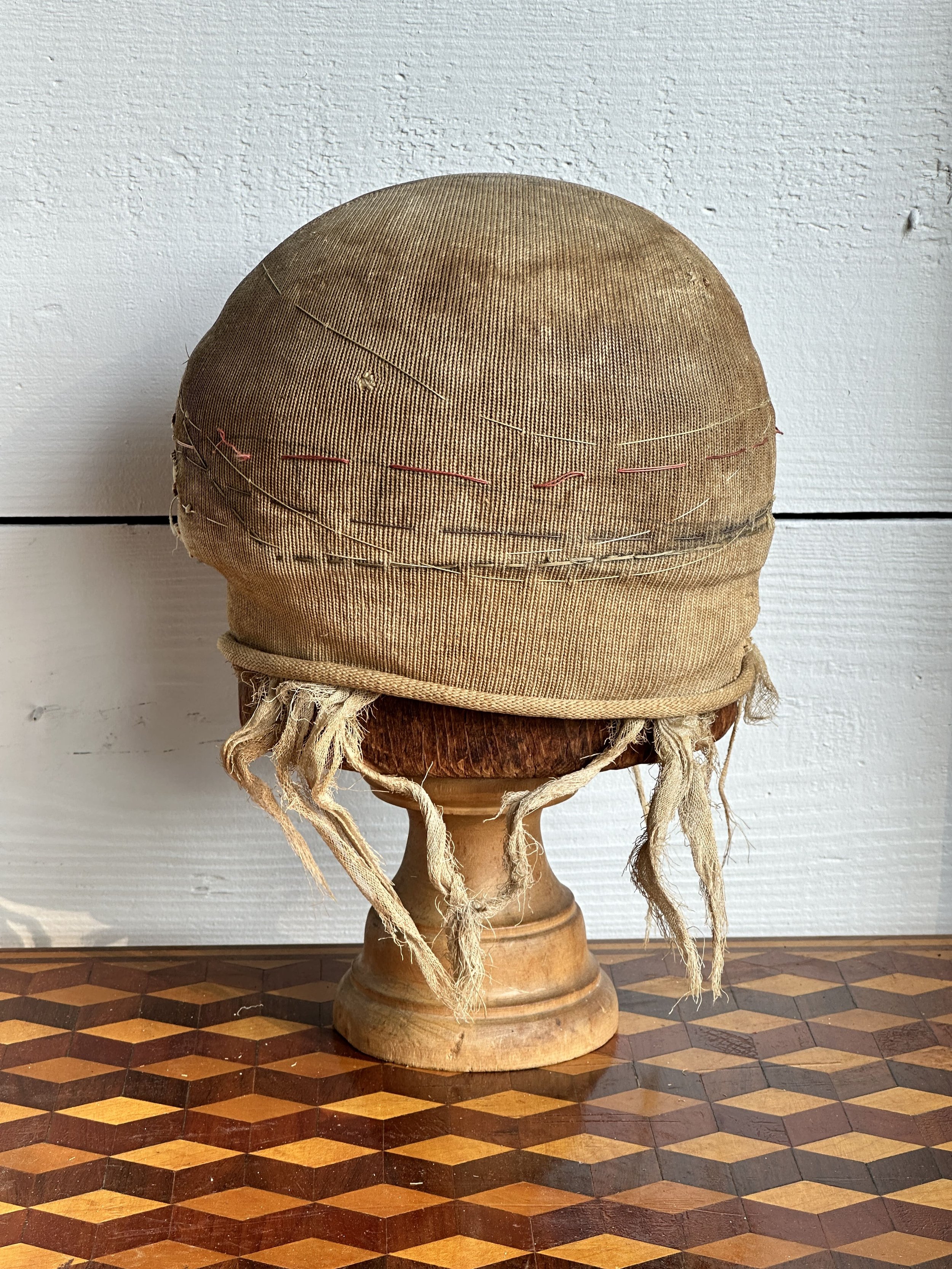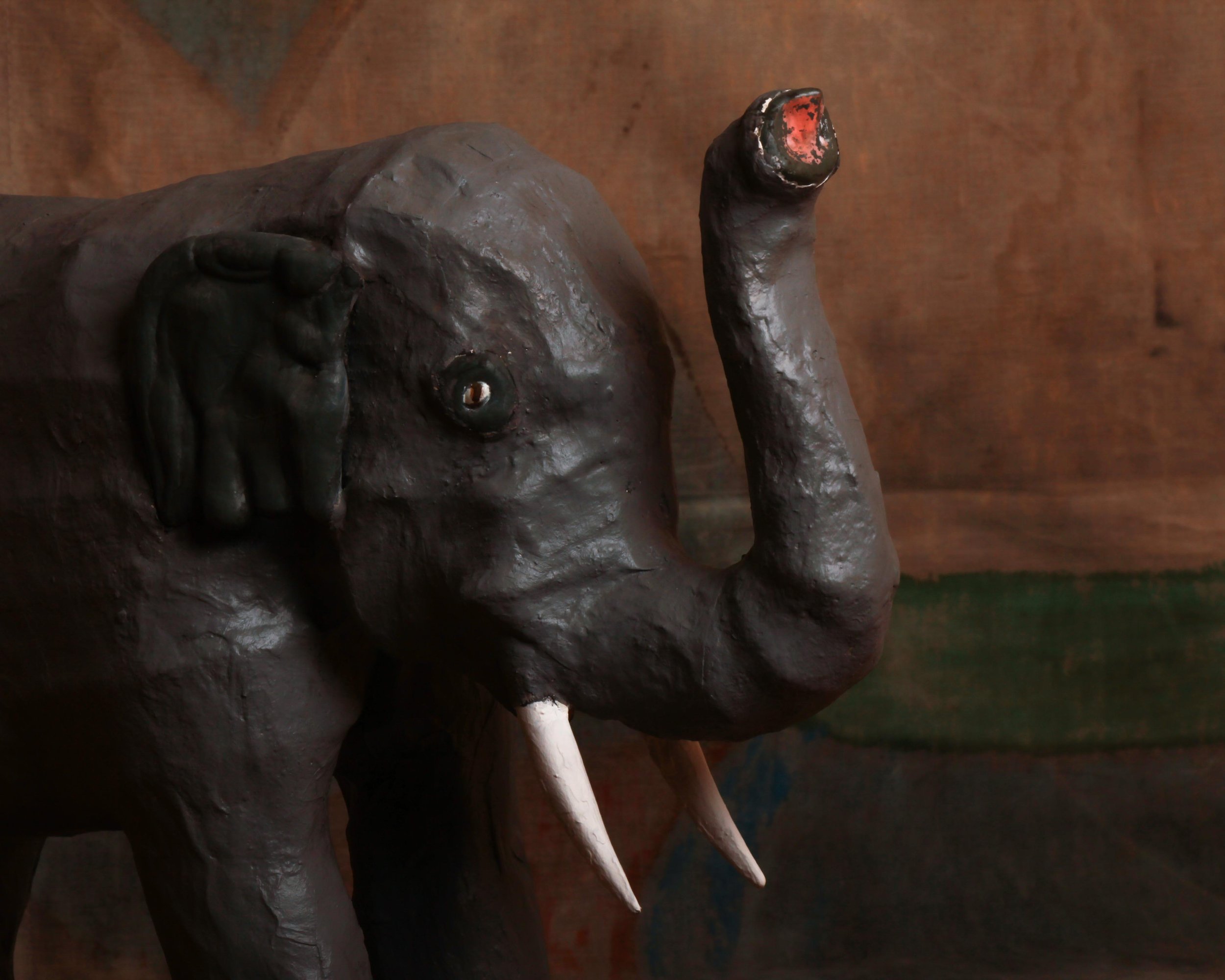
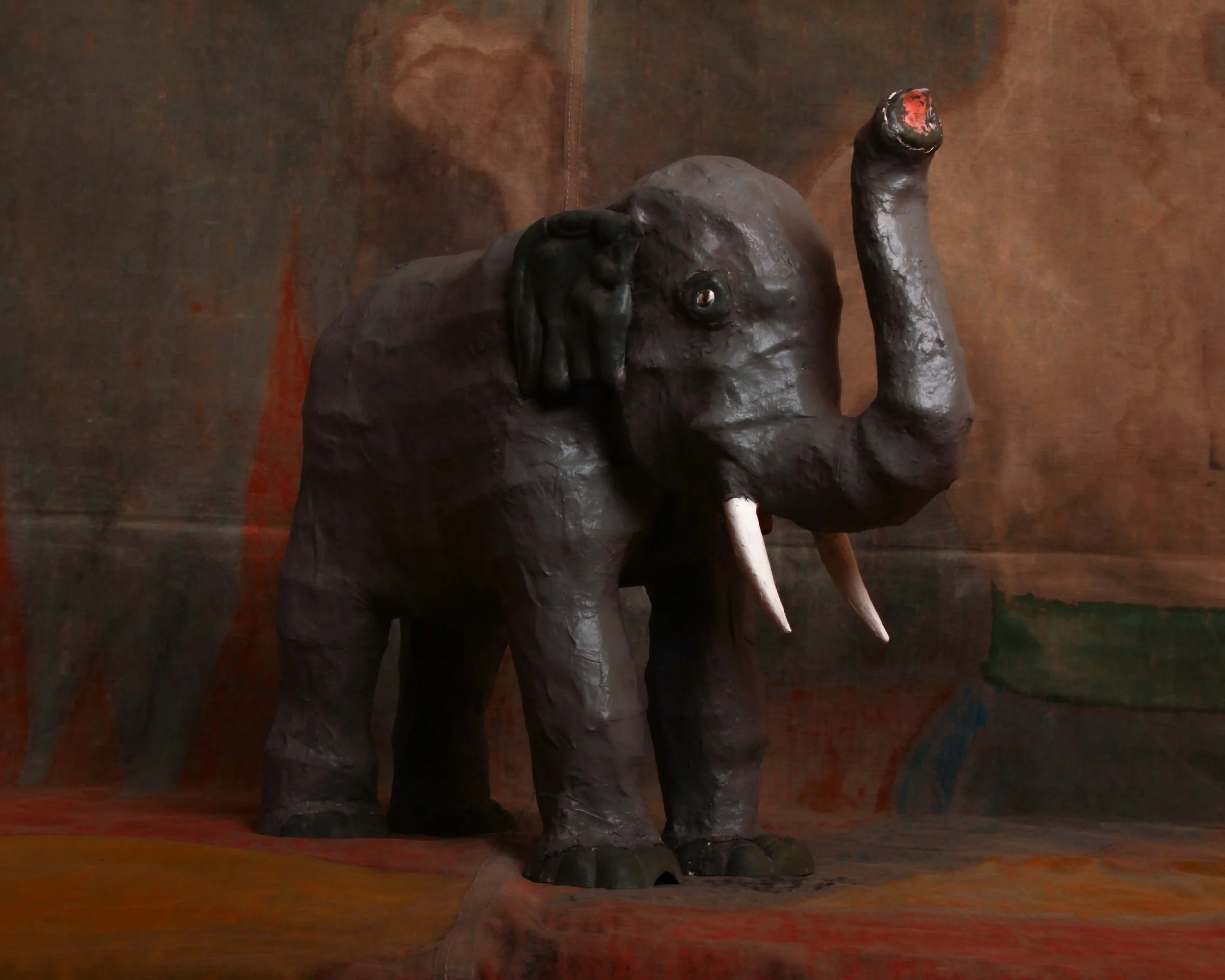
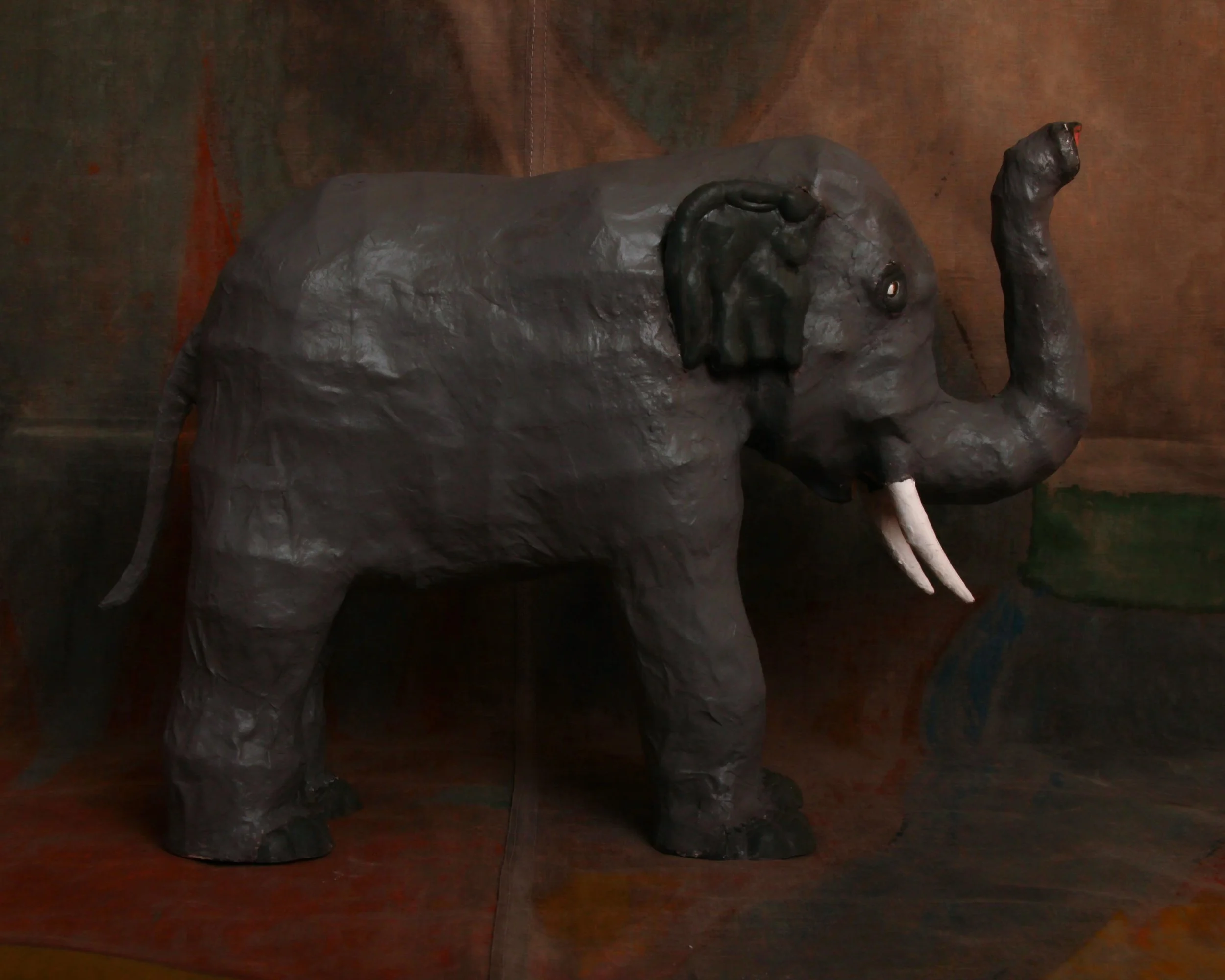
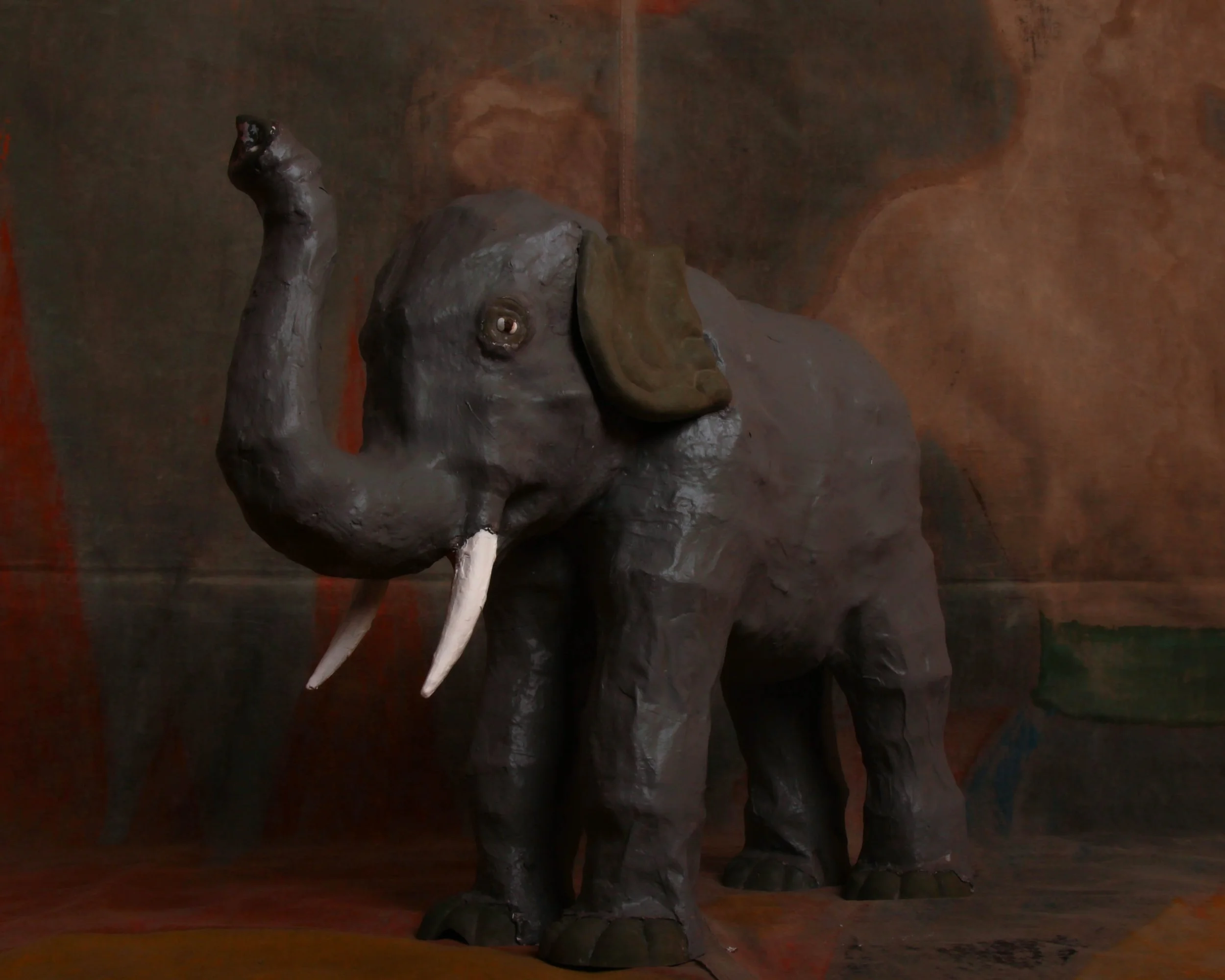
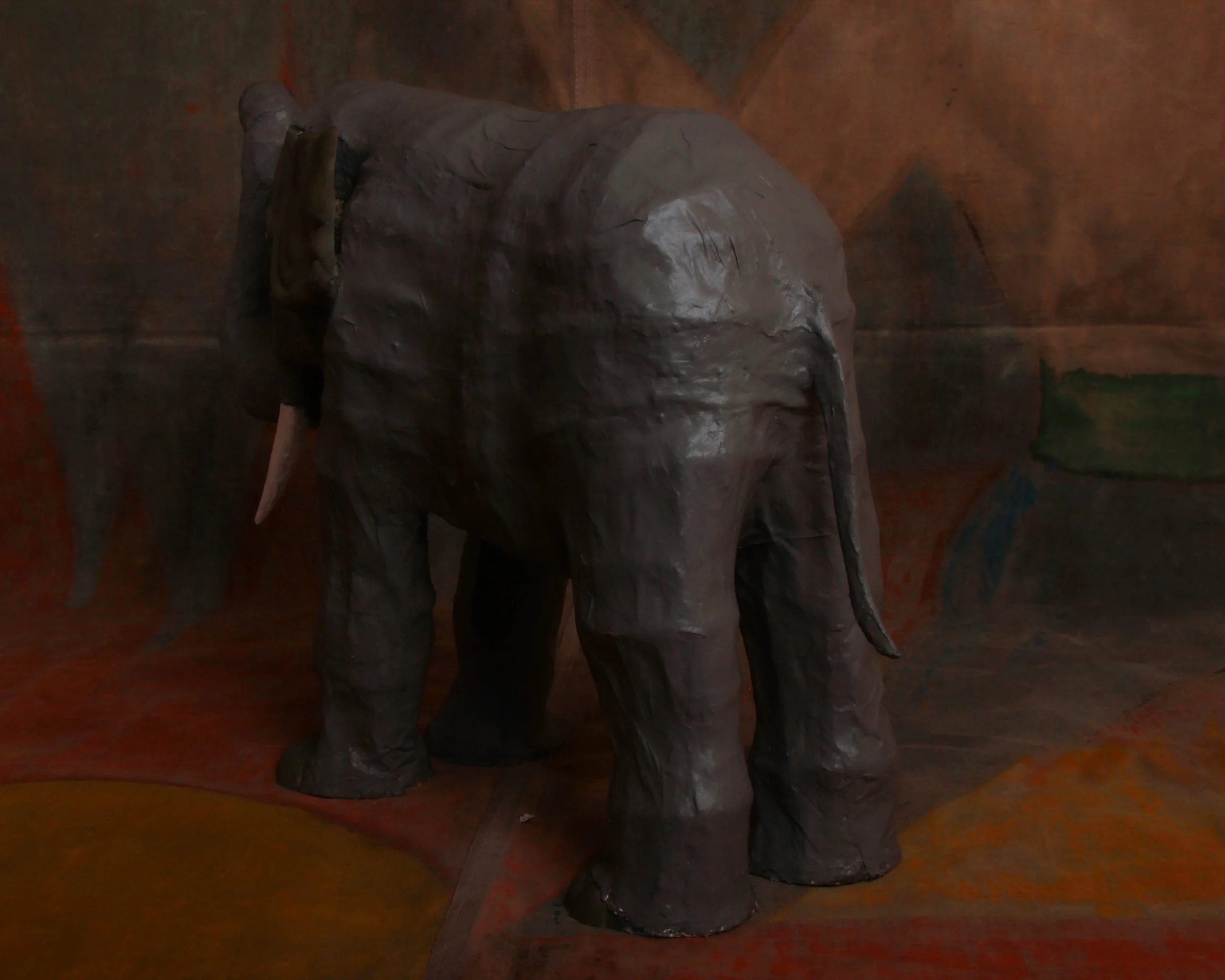
This mid-century papier-mâché elephant has a wonderfully handmade presence, with just enough realism to read immediately and just enough awkwardness to make it interesting. The body is built in a sturdy, simplified form, with thick legs, a rounded back, oversized ears, white tusks, and a raised trunk. The dark gray painted surface has plenty of texture from the papier-mâché underneath, and the slightly uneven modeling gives the elephant a lot more character than a perfectly molded factory piece would have. Small details, like the inset eyes and traces of red paint at the end of the trunk, add to its oddball charm.
What works here is the combination of scale and directness. The elephant is not trying to be zoologically perfect. Instead, it has the blunt, almost theatrical look of something made to be seen from across a room. The raised trunk gives it a celebratory stance, while the rough surface and hand-shaped details keep it grounded in the maker’s process. It is a good example of how humble materials can produce an object with real visual weight and personality.
Papier-mâché has been used for centuries because it is lightweight, inexpensive, and surprisingly strong once built up in layers. By the 19th century it was used for everything from decorative boxes and furniture to masks, toys, theatrical props, and shop displays. The material remained popular well into the 20th century, especially for larger sculptural objects that would have been costly or impractical to make from carved wood or plaster.
Mid-century papier-mâché animals often lived somewhere between toy, display piece, and folk sculpture. Elephants were especially appealing subjects because their heavy forms translated well into simplified construction, and their exotic associations made them natural candidates for circus displays, department-store decoration, children’s rooms, and promotional installations.
This mid-century papier-mâché elephant has a wonderfully handmade presence, with just enough realism to read immediately and just enough awkwardness to make it interesting. The body is built in a sturdy, simplified form, with thick legs, a rounded back, oversized ears, white tusks, and a raised trunk. The dark gray painted surface has plenty of texture from the papier-mâché underneath, and the slightly uneven modeling gives the elephant a lot more character than a perfectly molded factory piece would have. Small details, like the inset eyes and traces of red paint at the end of the trunk, add to its oddball charm.
What works here is the combination of scale and directness. The elephant is not trying to be zoologically perfect. Instead, it has the blunt, almost theatrical look of something made to be seen from across a room. The raised trunk gives it a celebratory stance, while the rough surface and hand-shaped details keep it grounded in the maker’s process. It is a good example of how humble materials can produce an object with real visual weight and personality.
Papier-mâché has been used for centuries because it is lightweight, inexpensive, and surprisingly strong once built up in layers. By the 19th century it was used for everything from decorative boxes and furniture to masks, toys, theatrical props, and shop displays. The material remained popular well into the 20th century, especially for larger sculptural objects that would have been costly or impractical to make from carved wood or plaster.
Mid-century papier-mâché animals often lived somewhere between toy, display piece, and folk sculpture. Elephants were especially appealing subjects because their heavy forms translated well into simplified construction, and their exotic associations made them natural candidates for circus displays, department-store decoration, children’s rooms, and promotional installations.