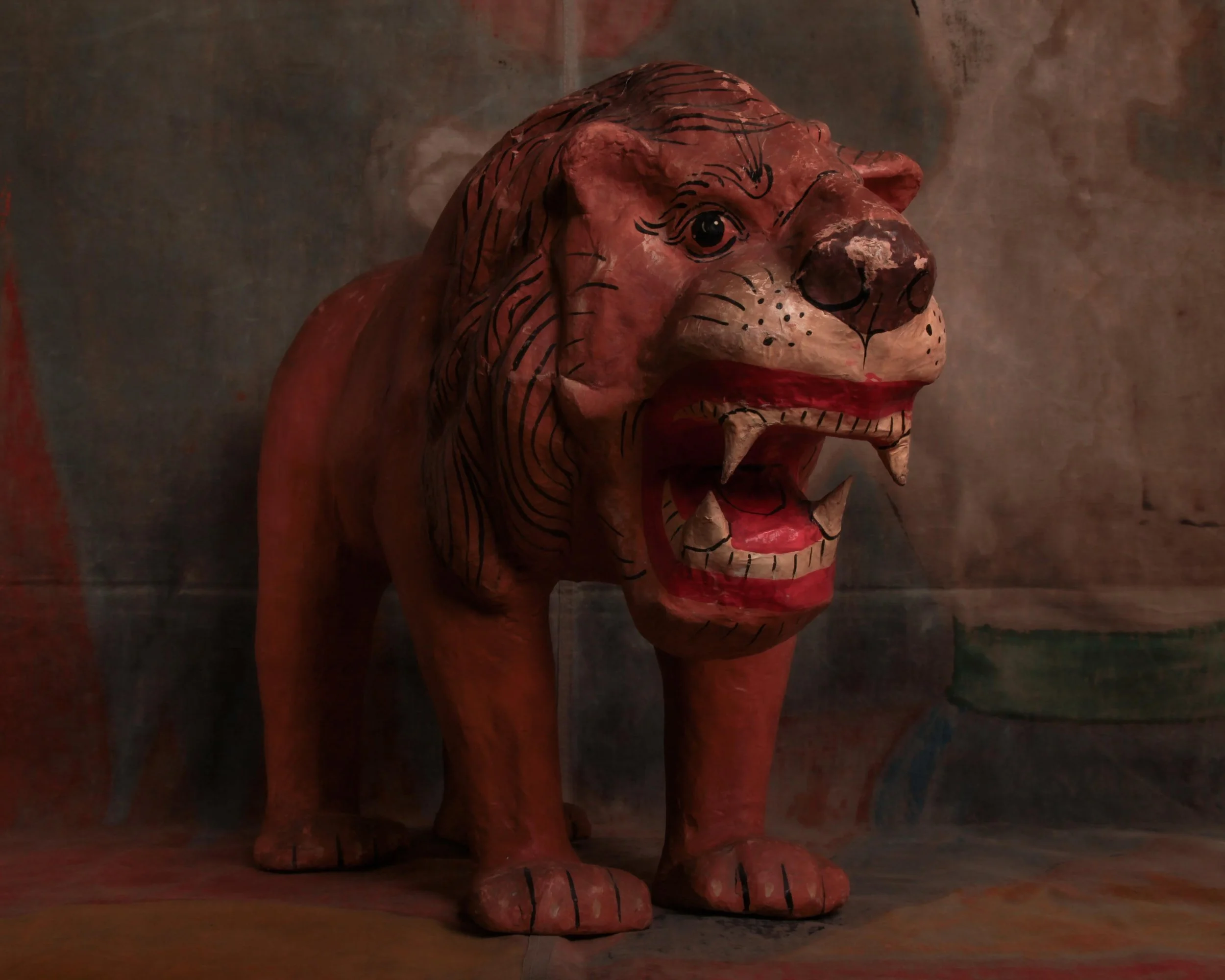
This wonderfully expressive papier-mâché lion dates to around the 1930s and has exactly the kind of personality that makes handmade objects hard to resist. He’s big, slightly awkward, a little intimidating, and somehow still very charming.
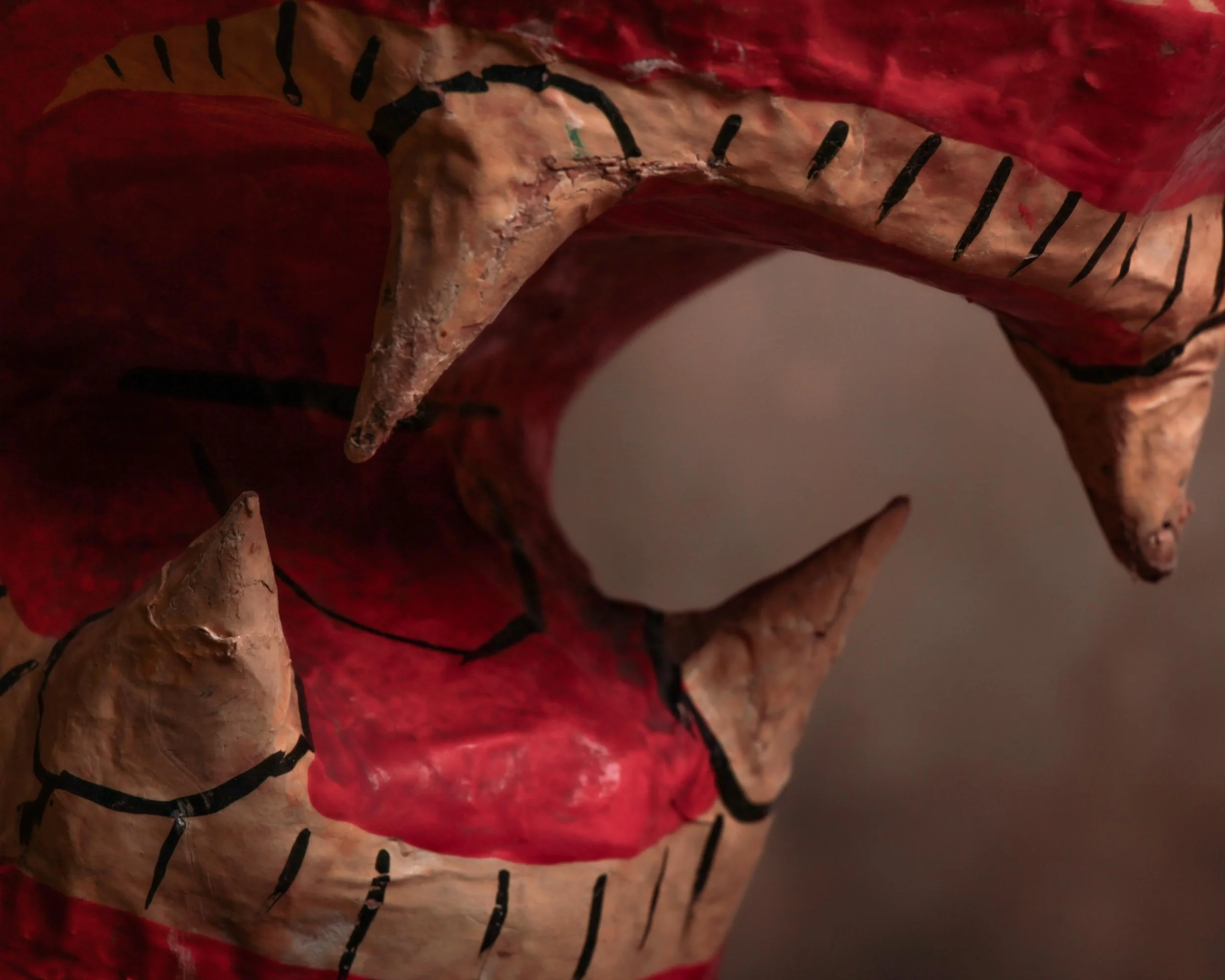
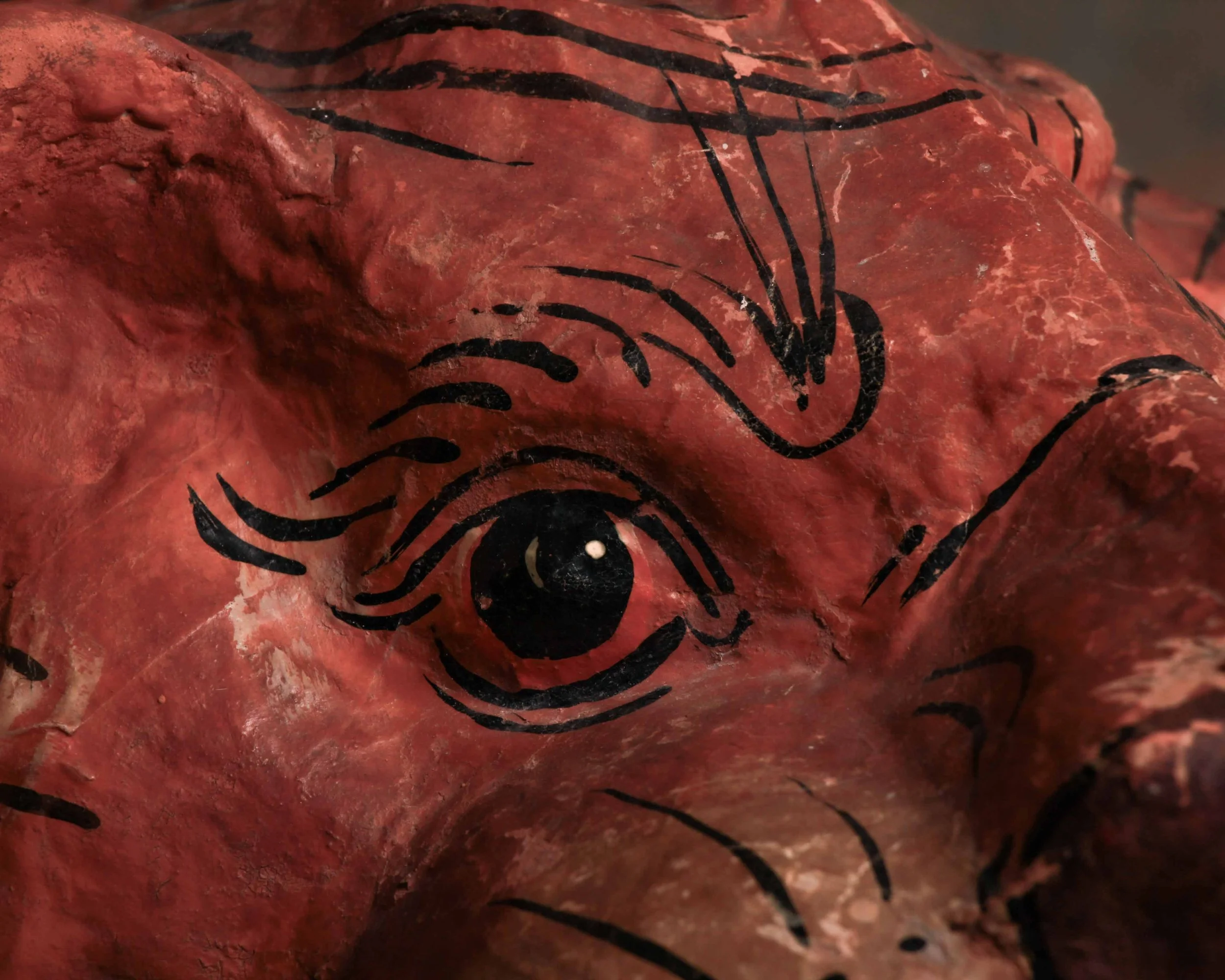
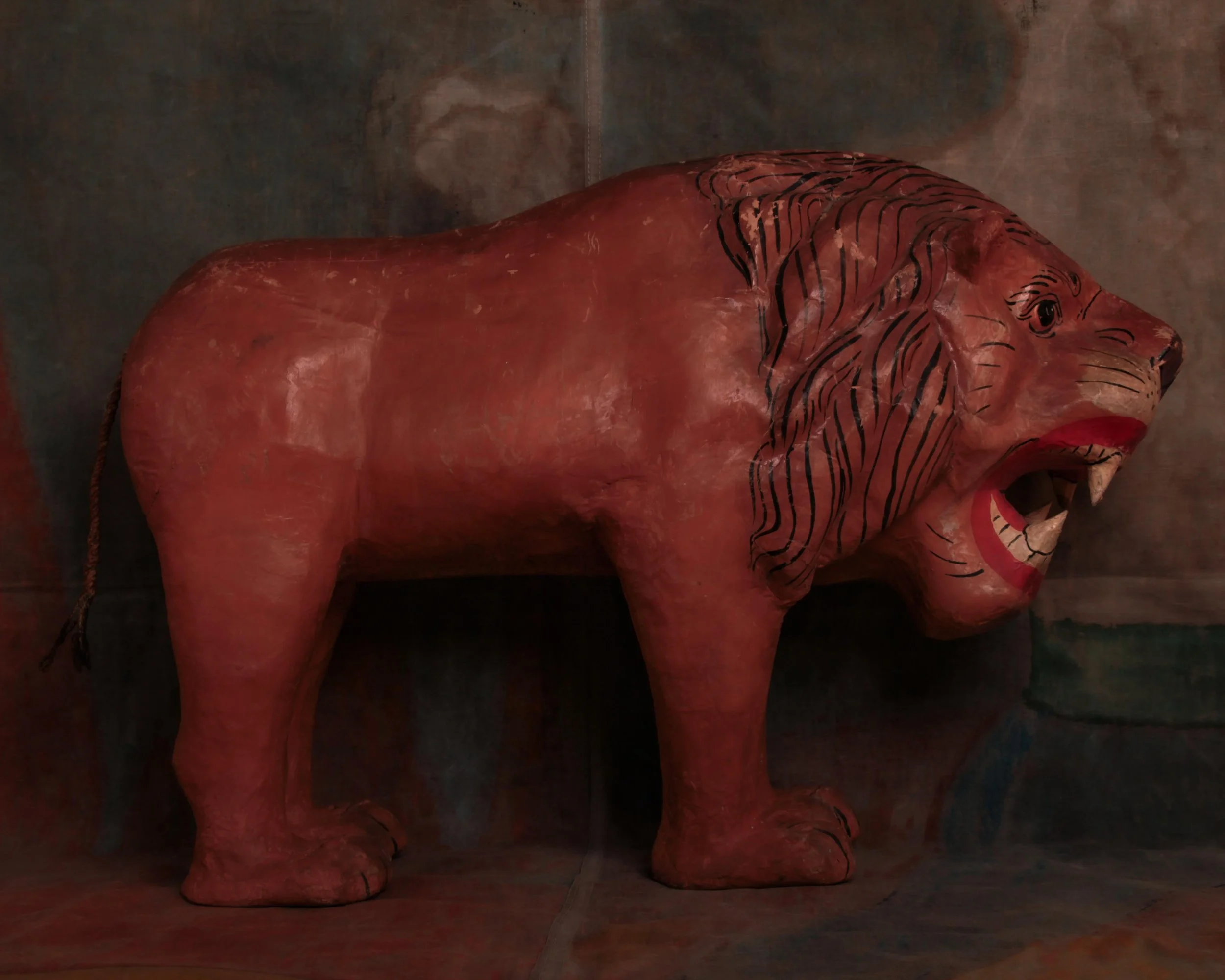
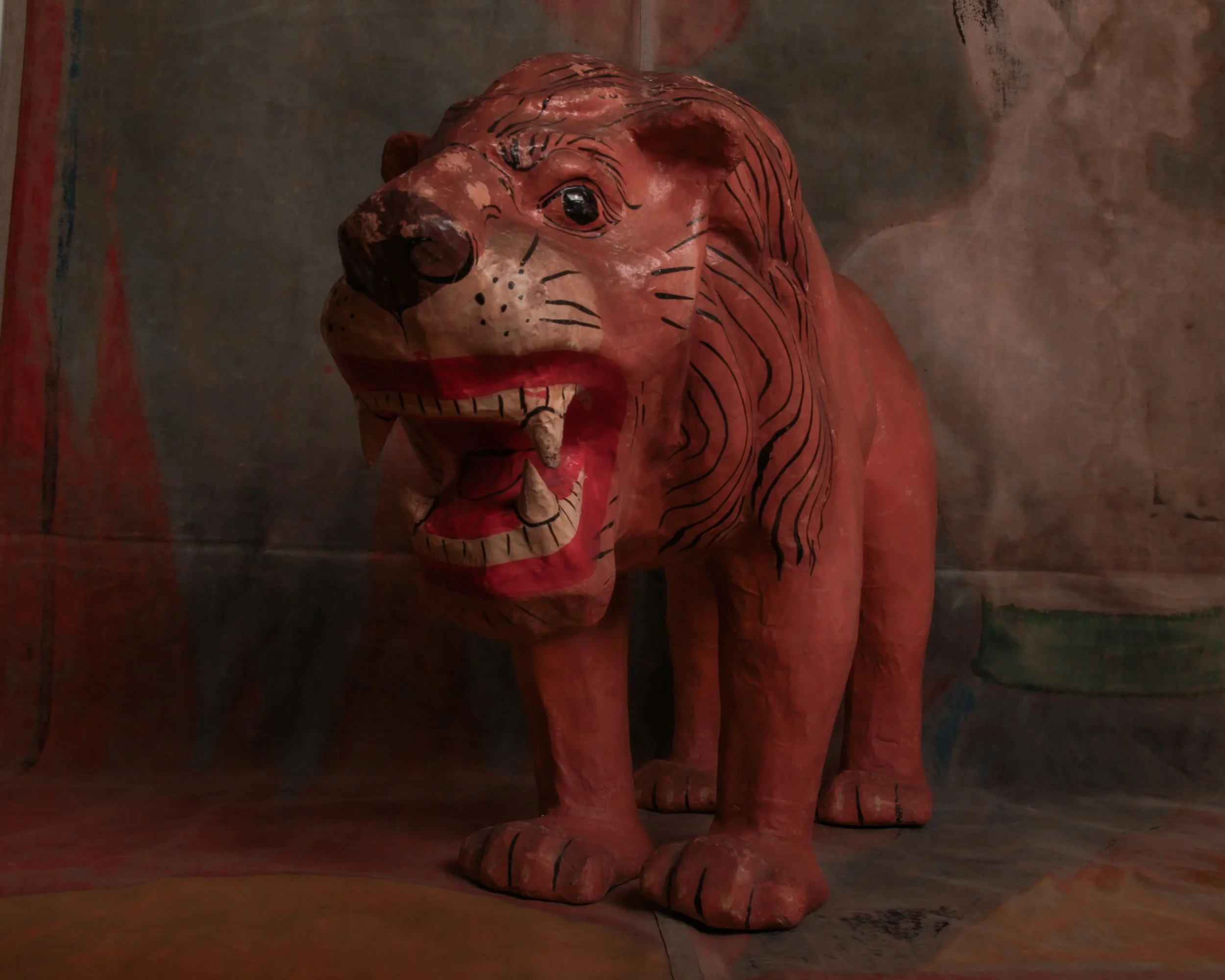
The lion is constructed in papier-mâché and finished in a warm reddish-brown paint, with simple black hand-painted lines defining the mane, paws, whiskers, facial features, and body. His oversized head is the main event. The mouth is wide open in a permanent roar, complete with individually formed teeth and fangs, a bright red interior, painted gums, and a wonderfully exaggerated muzzle. The large painted eyes give him an almost animated expression, somewhere between fierce and mildly surprised.
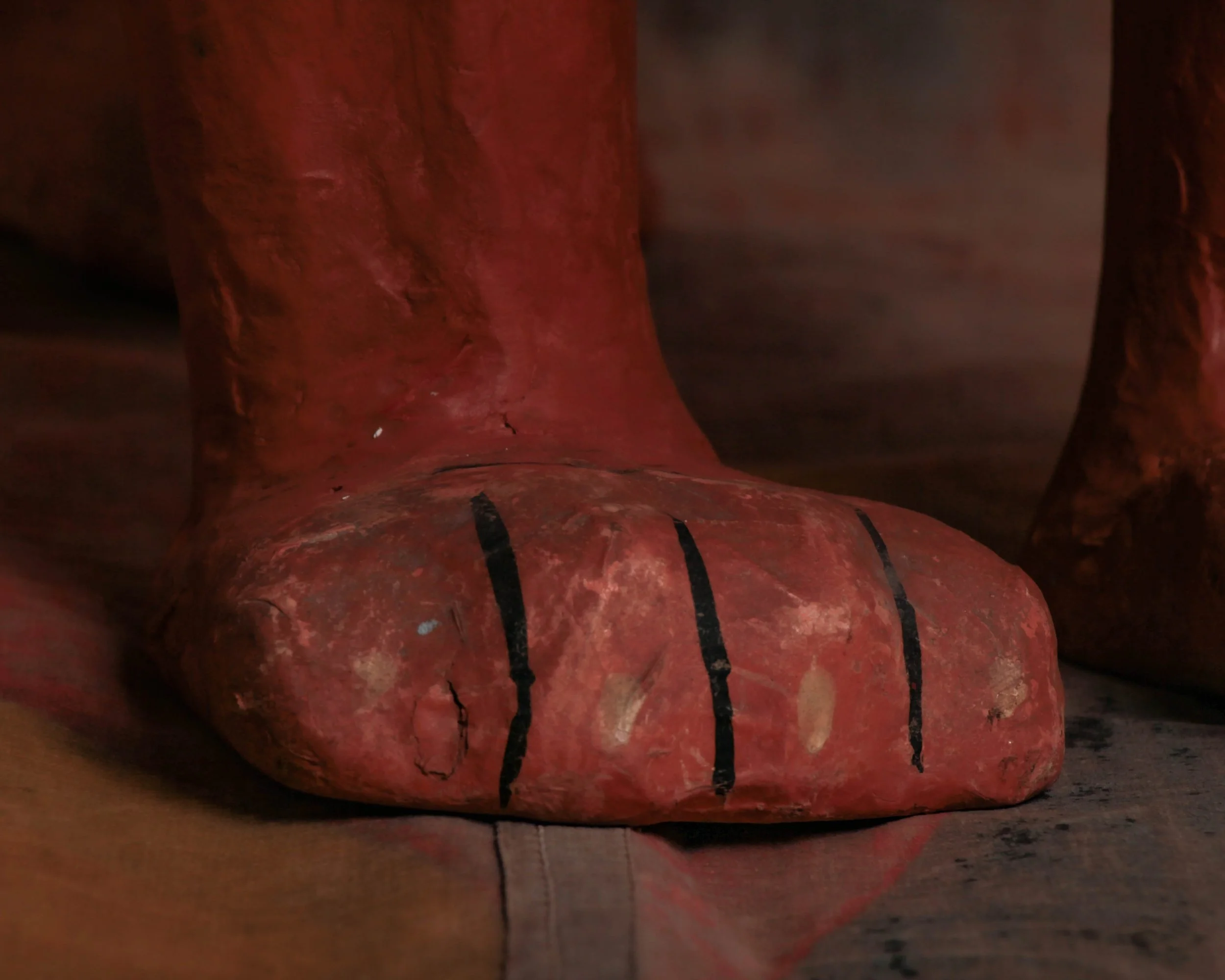
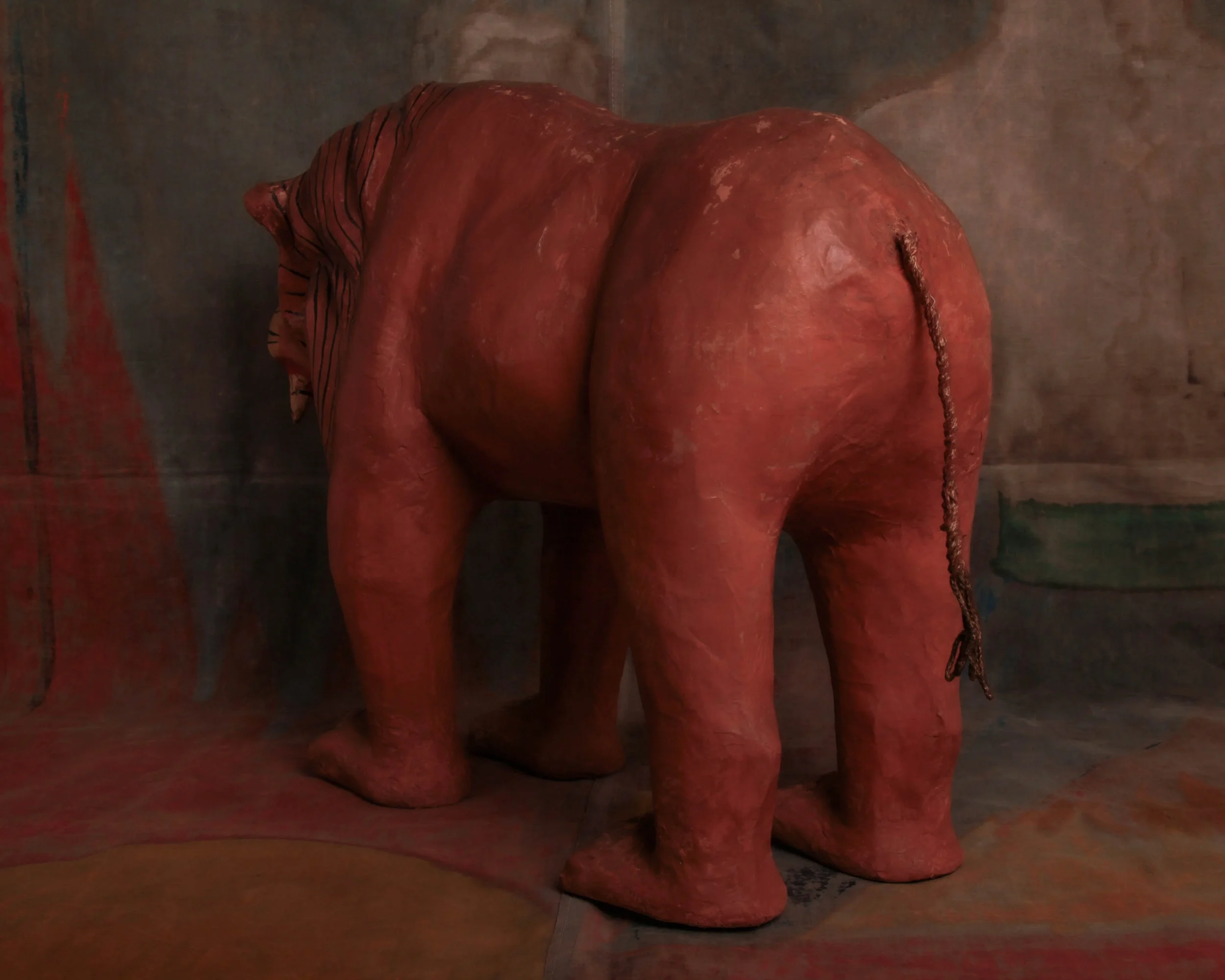
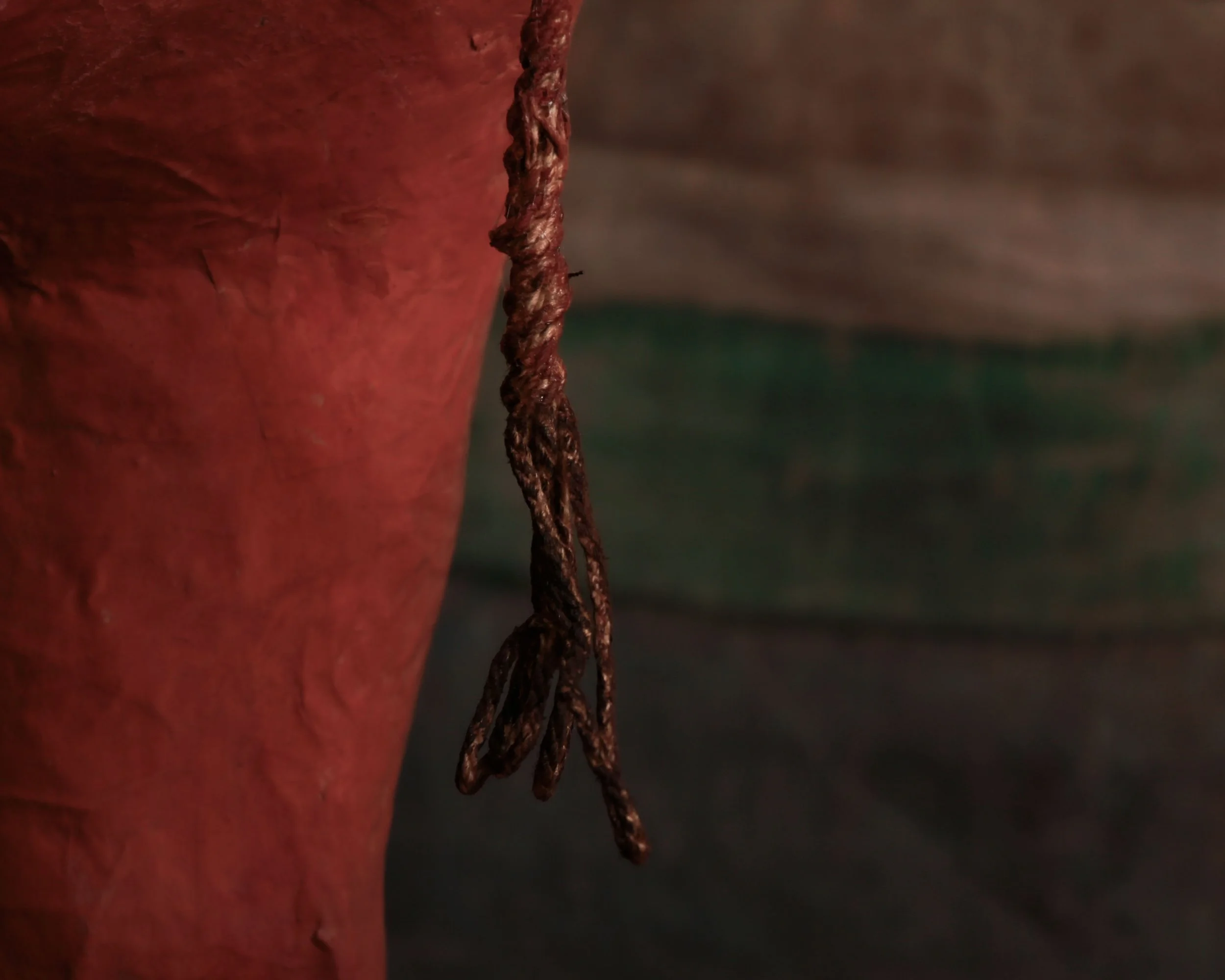
His body is substantial and simply modeled, standing firmly on four broad paws. Rather than trying for anatomical perfection, the maker clearly leaned into presence and character. A braided cord tail hangs from the back, an especially nice handmade detail that adds to the slightly theatrical feel of the piece.
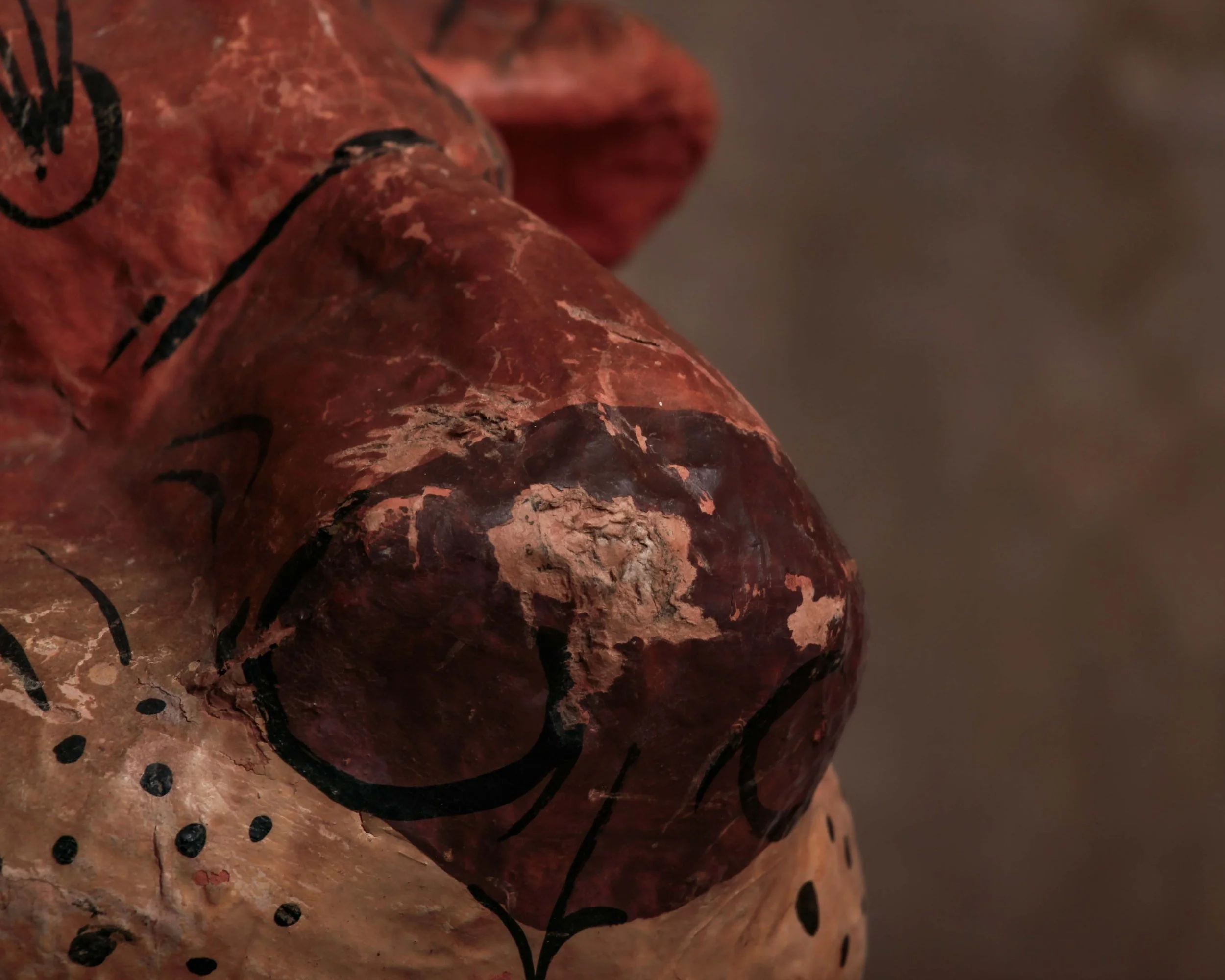
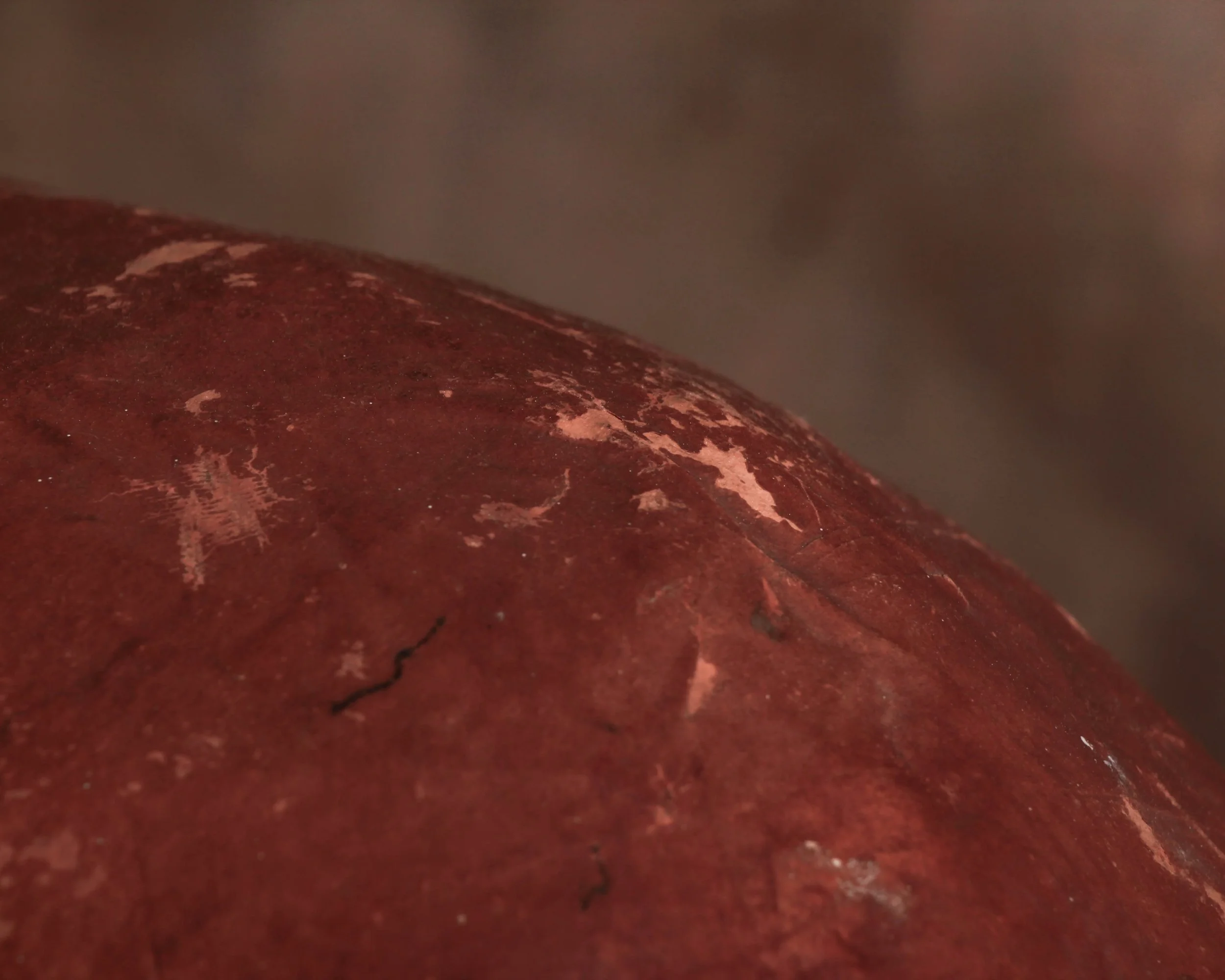
The surface shows plenty of age and use, including scuffs, scratches, areas of paint loss, small cracks, worn edges, and old repairs or touch-ups. There is visible wear around the nose, mouth, teeth, body, and paws. None of this feels out of place. In fact, the imperfections make the construction easier to appreciate and give the lion a much more interesting surface than a pristine example ever could.
Its original purpose is uncertain, but the large scale, lightweight construction, bold paintwork, and dramatic expression suggest it may have been made as a decorative display, theatrical prop, parade figure, or fairground-related object.
A great piece of early 20th-century folk art with a lot of visual presence, handmade charm, and just the right amount of bite.
This wonderfully expressive papier-mâché lion dates to around the 1930s and has exactly the kind of personality that makes handmade objects hard to resist. He’s big, slightly awkward, a little intimidating, and somehow still very charming.
The lion is constructed in papier-mâché and finished in a warm reddish-brown paint, with simple black hand-painted lines defining the mane, paws, whiskers, facial features, and body. His oversized head is the main event. The mouth is wide open in a permanent roar, complete with individually formed teeth and fangs, a bright red interior, painted gums, and a wonderfully exaggerated muzzle. The large painted eyes give him an almost animated expression, somewhere between fierce and mildly surprised.
His body is substantial and simply modeled, standing firmly on four broad paws. Rather than trying for anatomical perfection, the maker clearly leaned into presence and character. A braided cord tail hangs from the back, an especially nice handmade detail that adds to the slightly theatrical feel of the piece.
The surface shows plenty of age and use, including scuffs, scratches, areas of paint loss, small cracks, worn edges, and old repairs or touch-ups. There is visible wear around the nose, mouth, teeth, body, and paws. None of this feels out of place. In fact, the imperfections make the construction easier to appreciate and give the lion a much more interesting surface than a pristine example ever could.
Its original purpose is uncertain, but the large scale, lightweight construction, bold paintwork, and dramatic expression suggest it may have been made as a decorative display, theatrical prop, parade figure, or fairground-related object.
A great piece of early 20th-century folk art with a lot of visual presence, handmade charm, and just the right amount of bite.