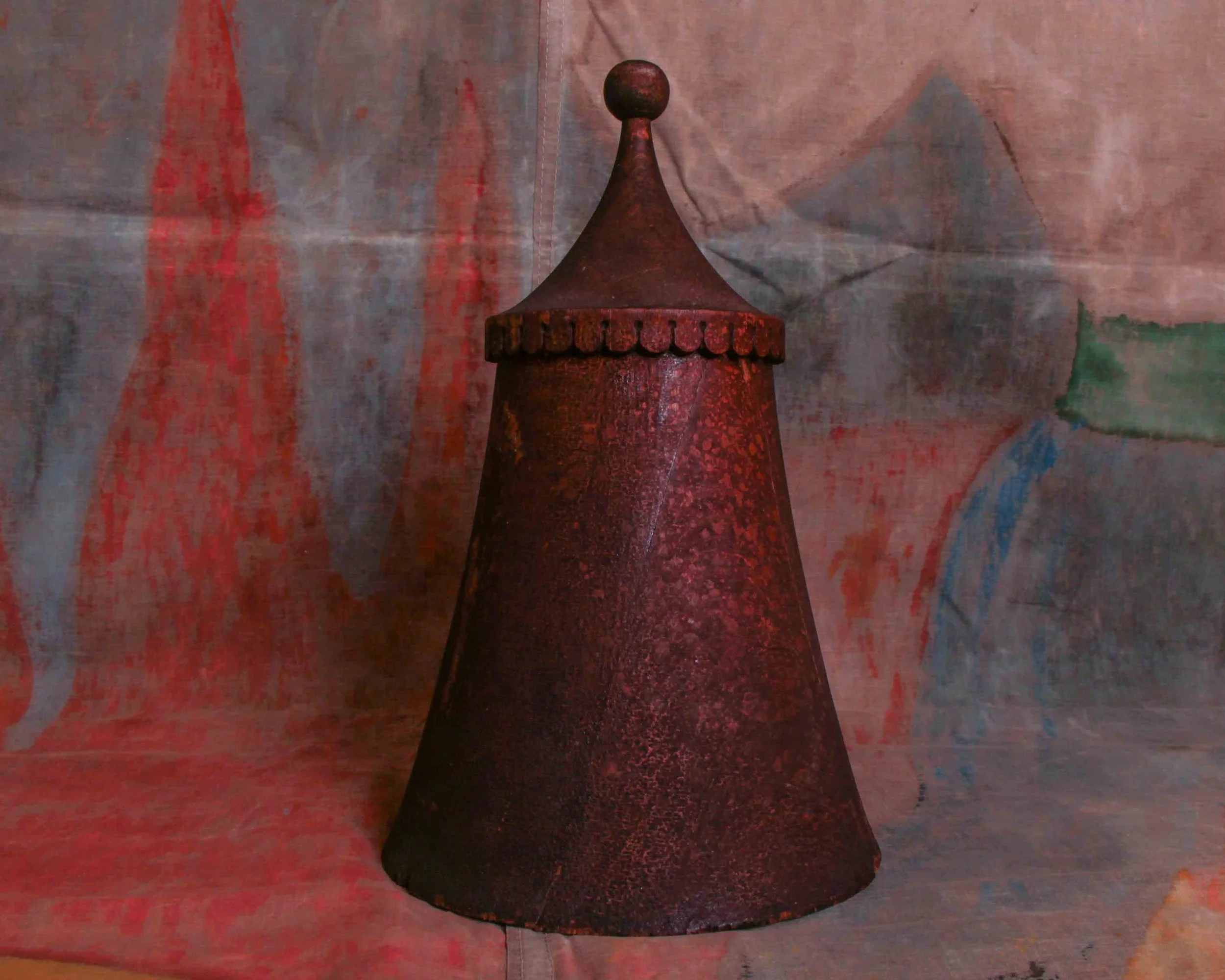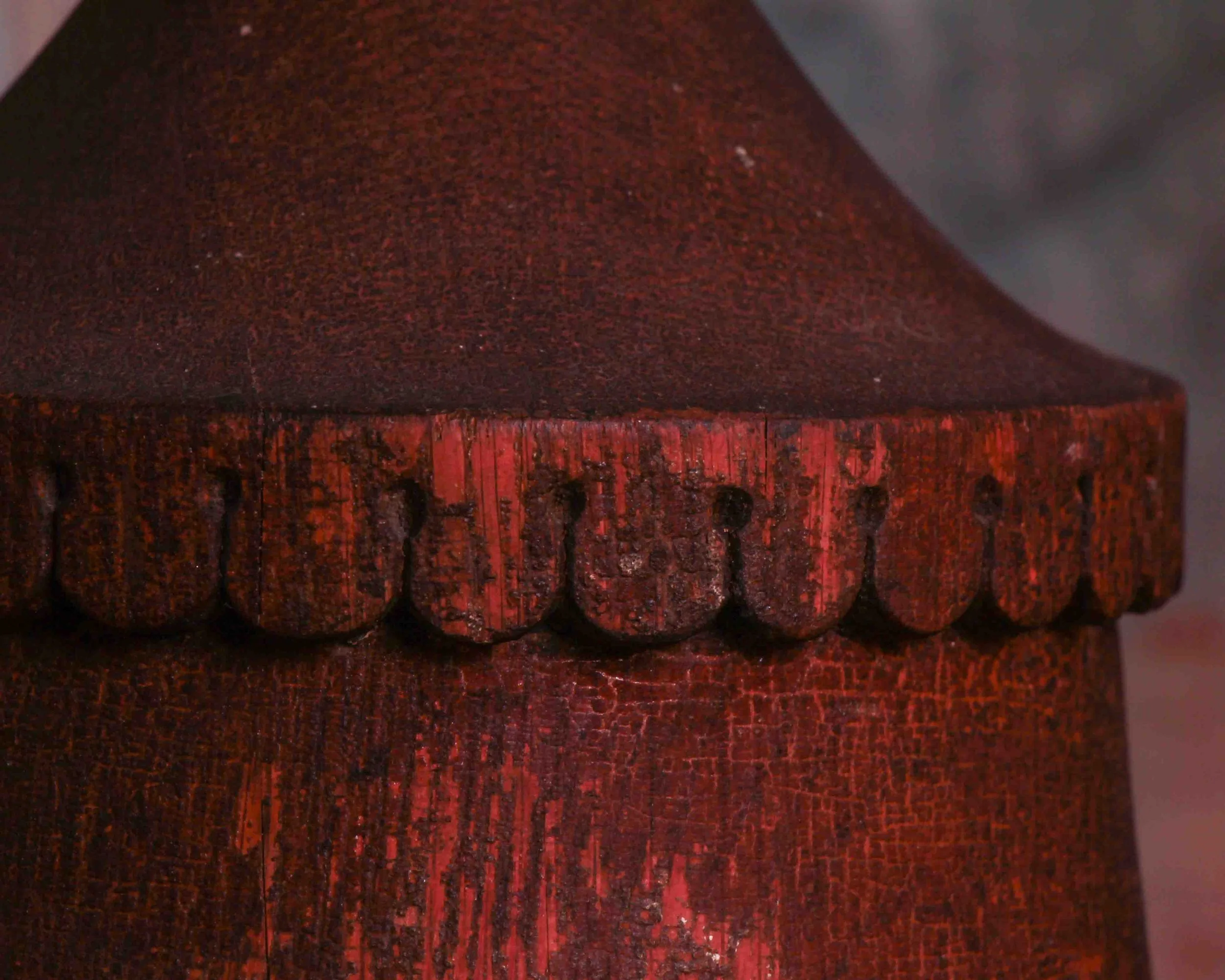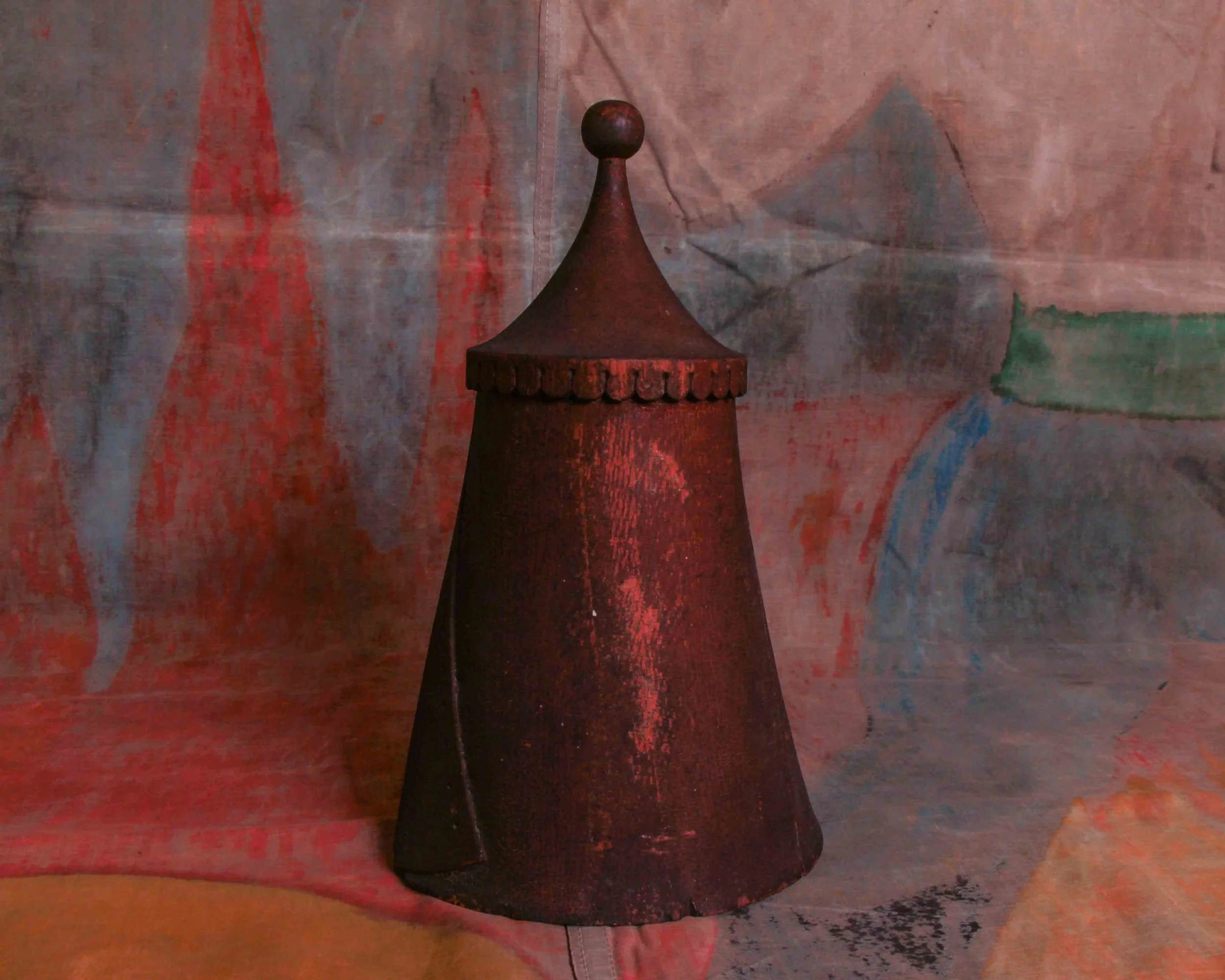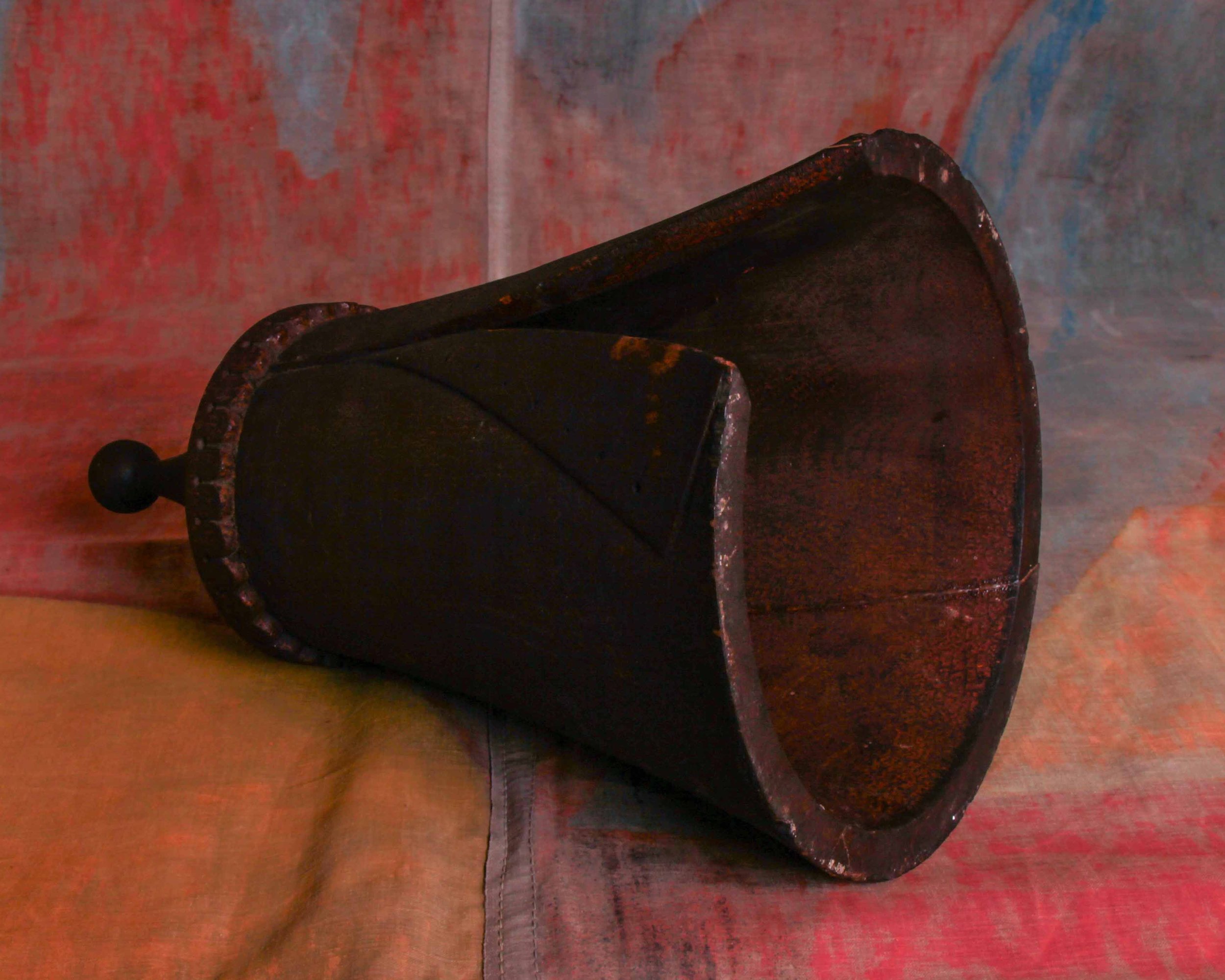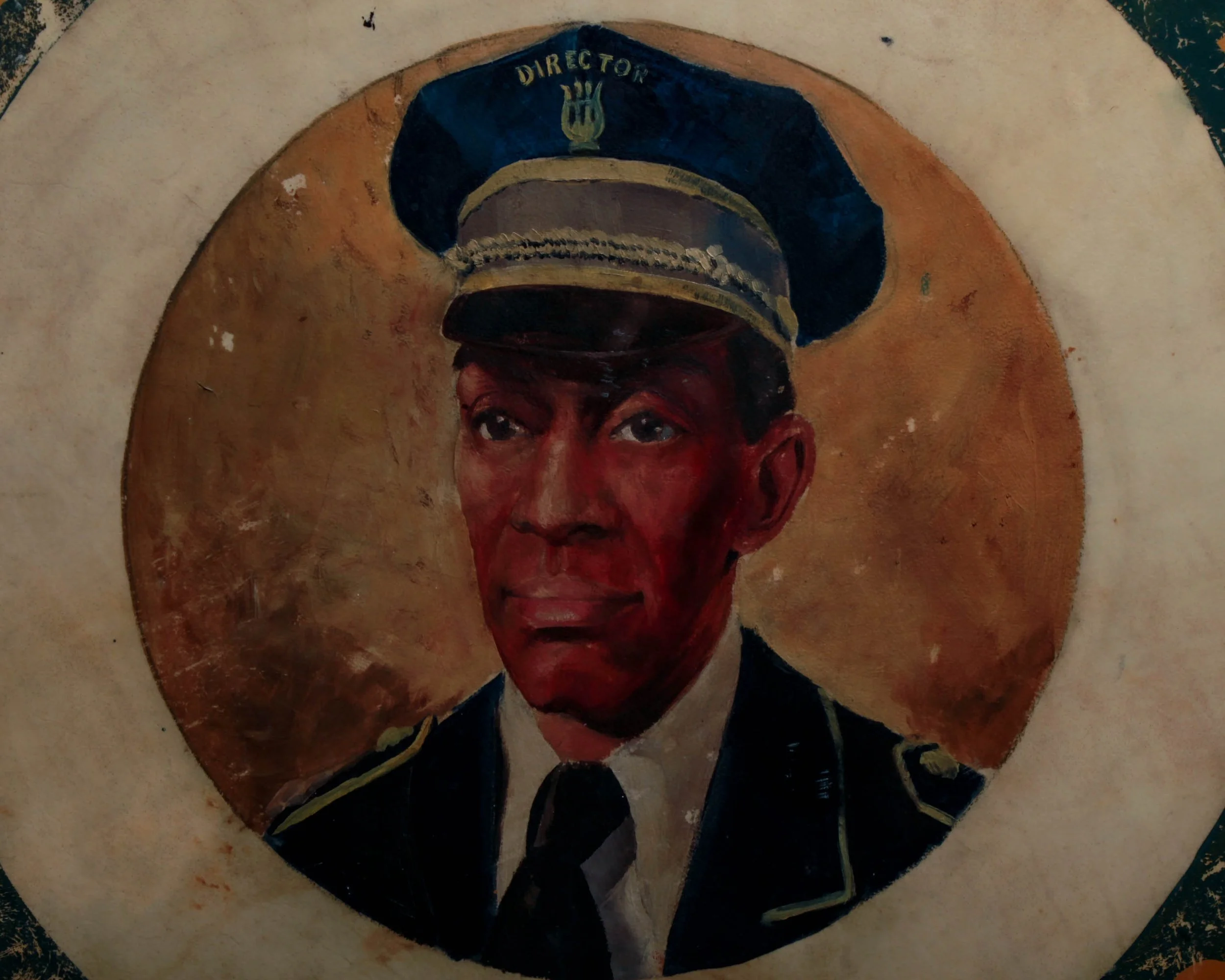
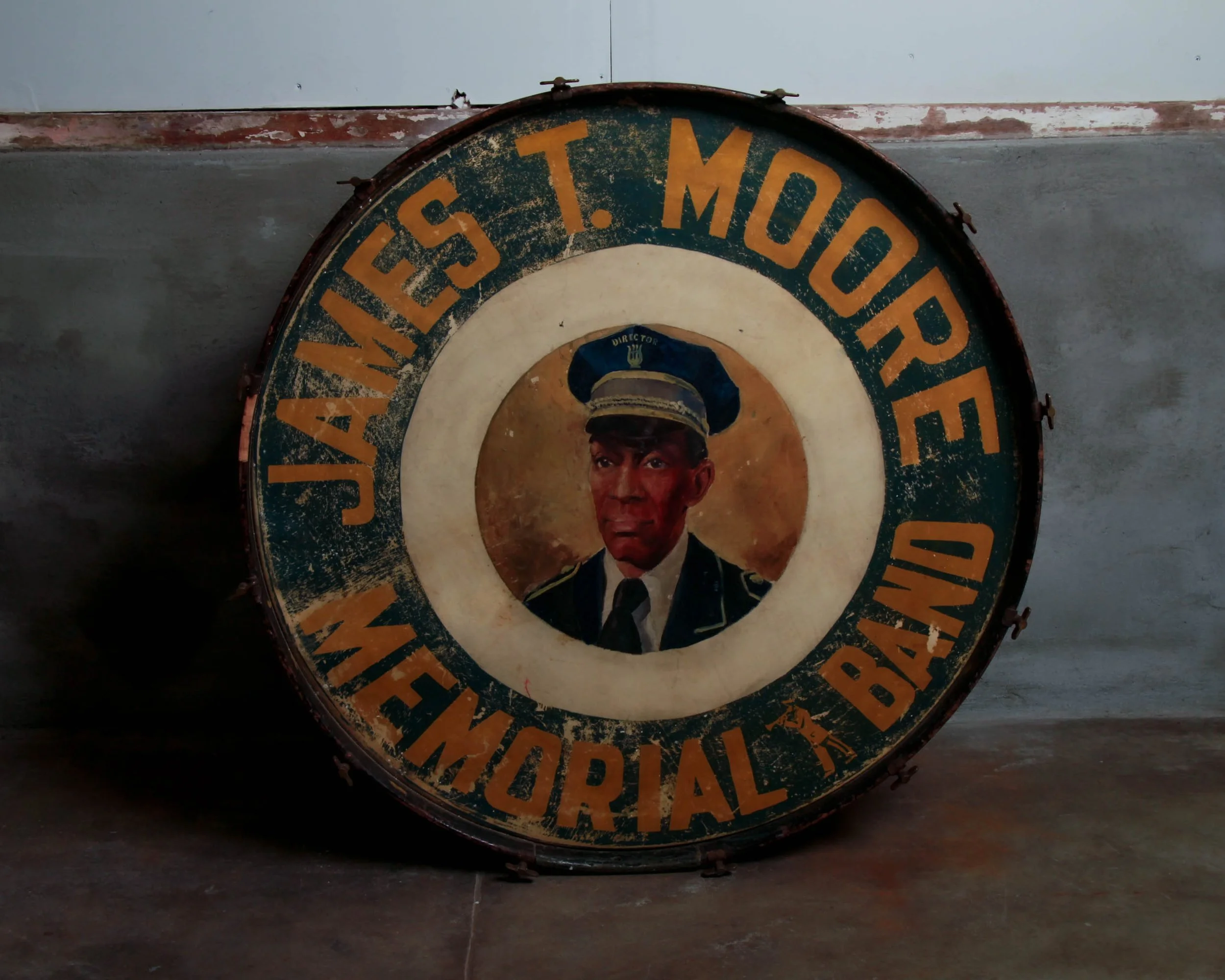
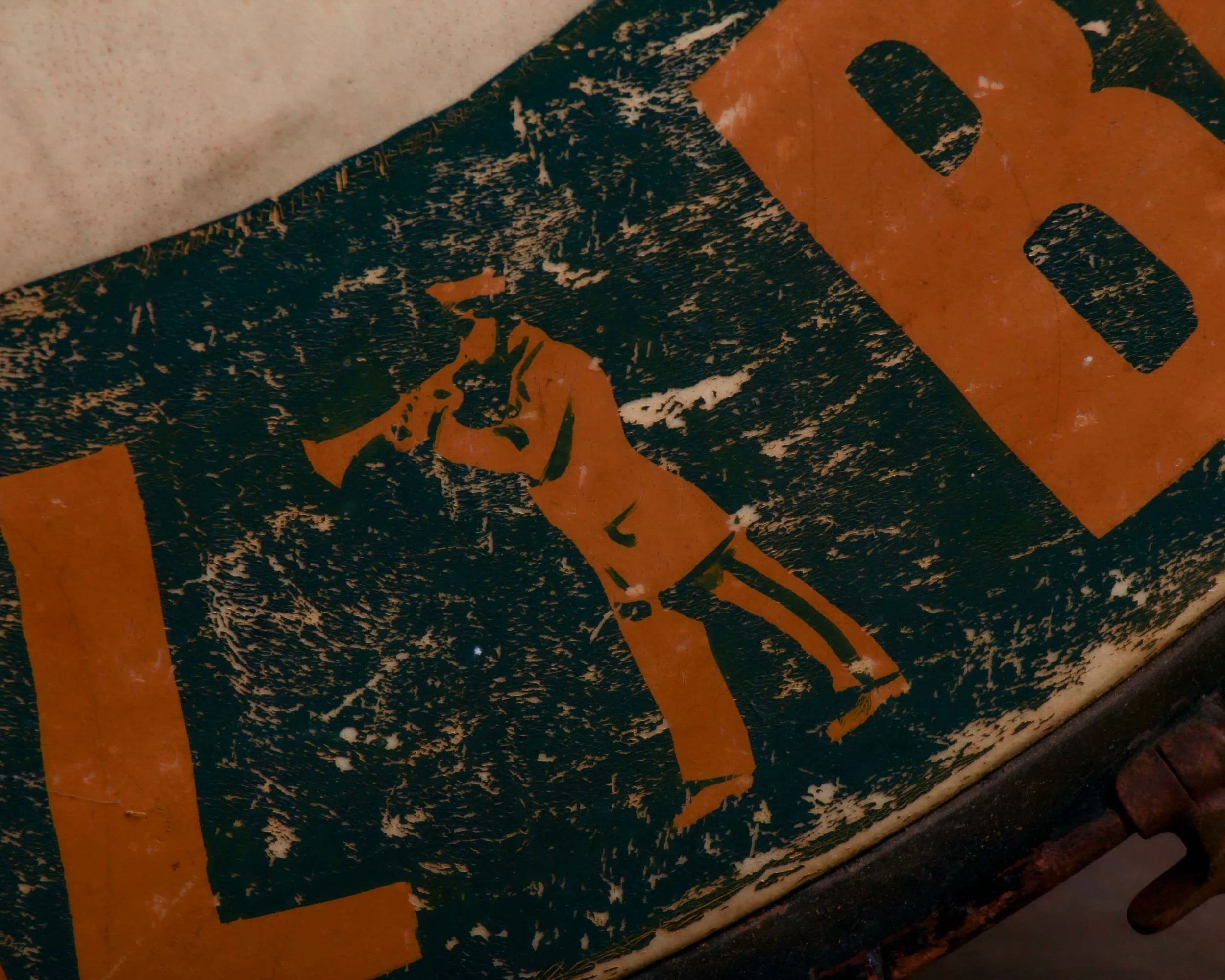
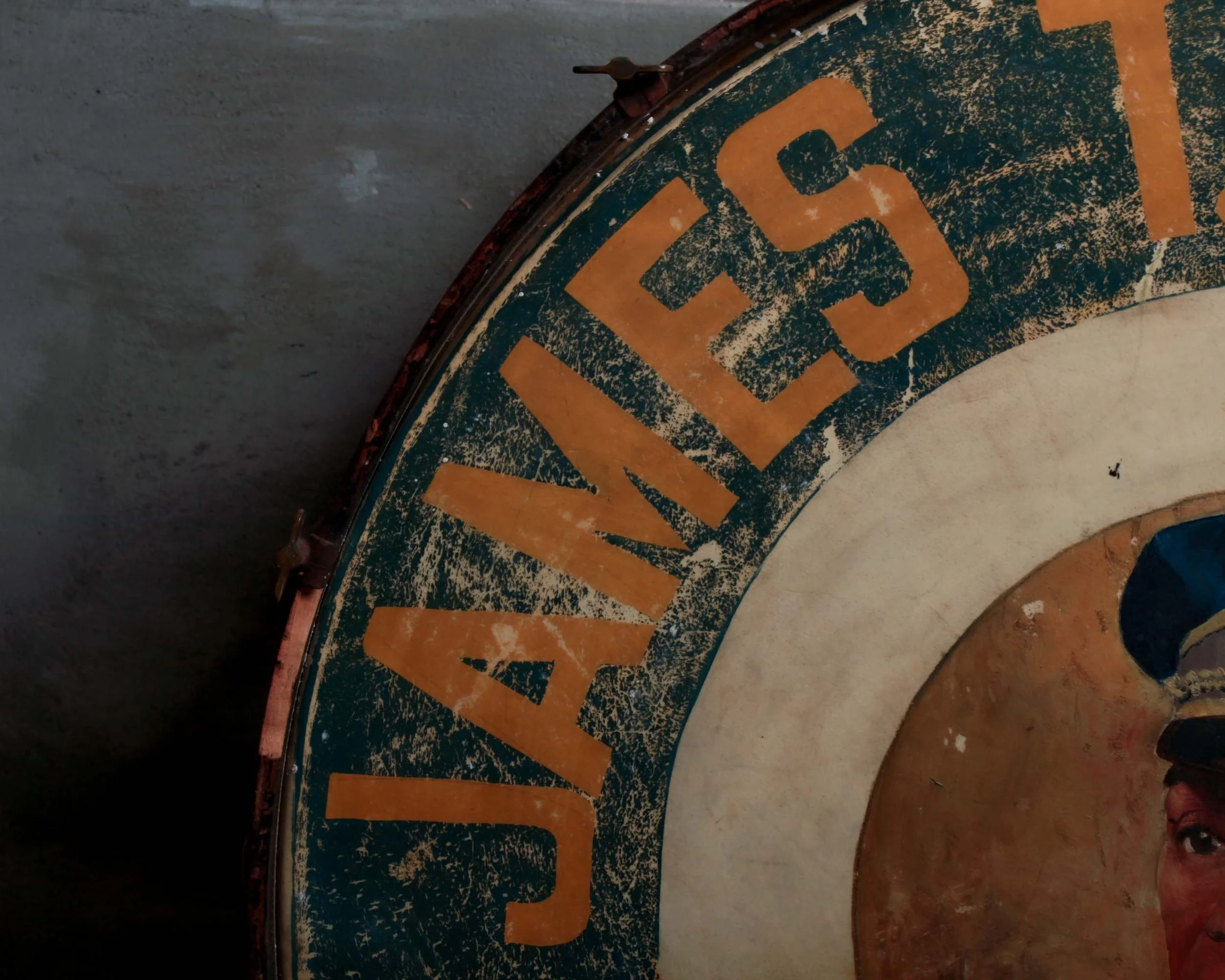
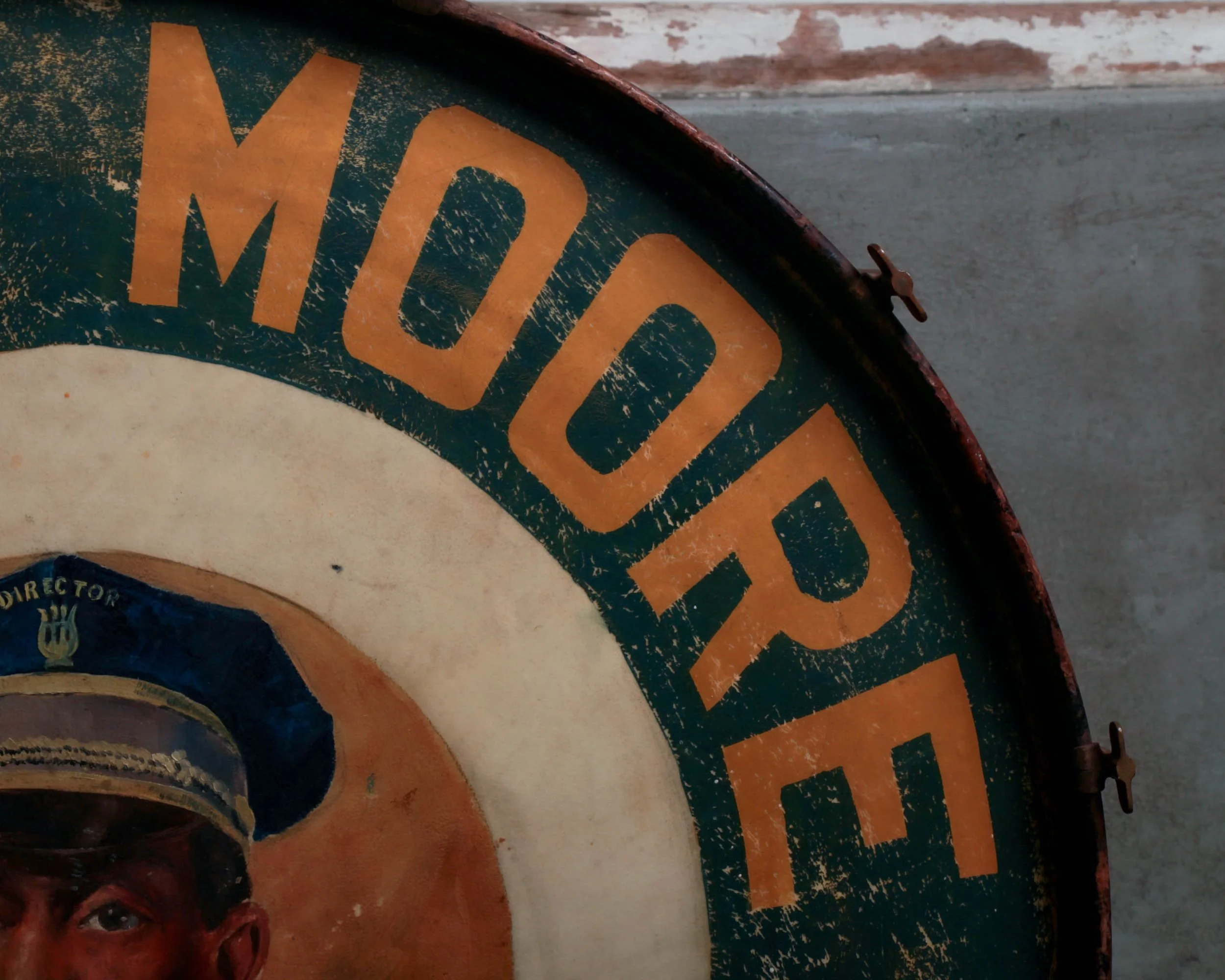
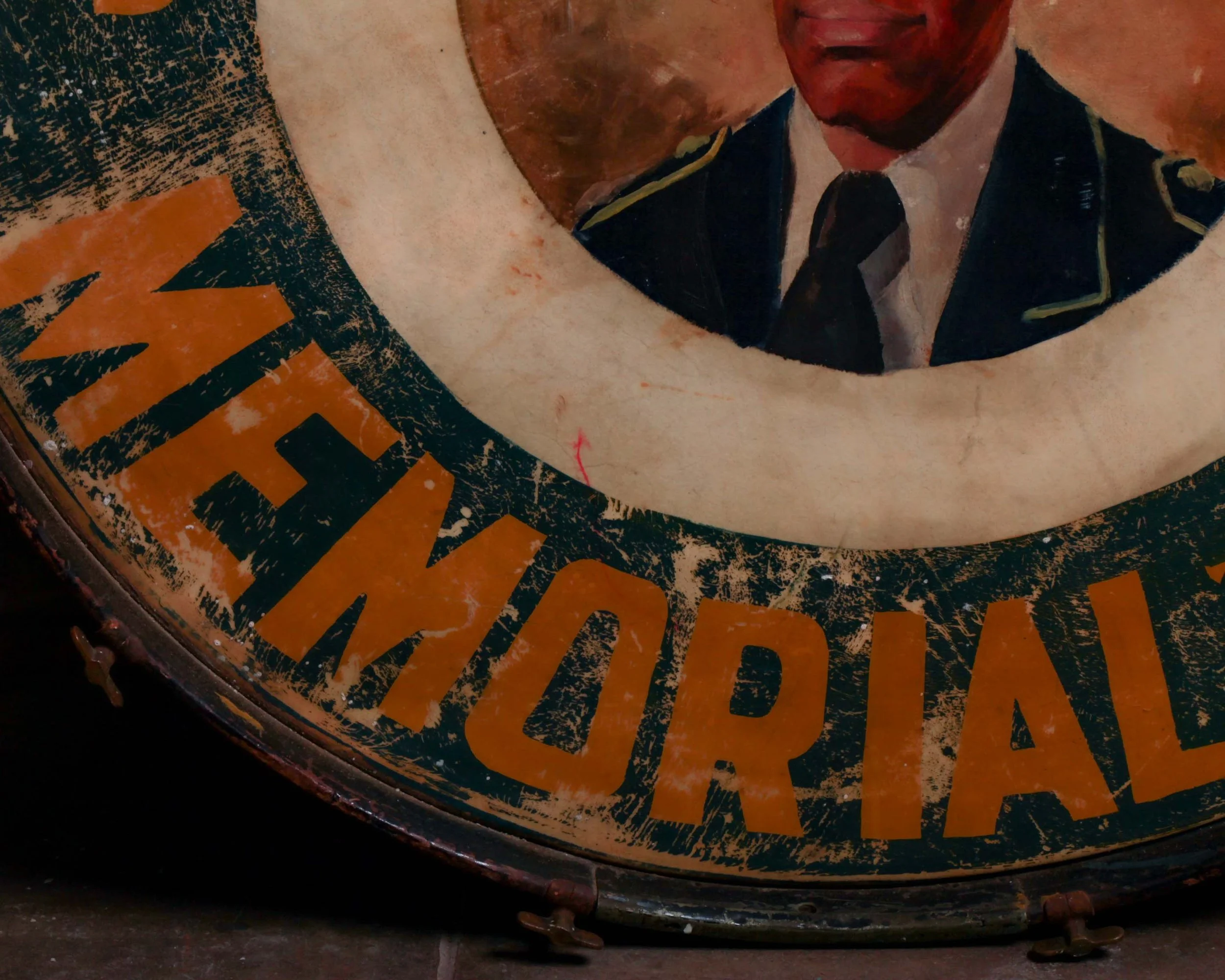
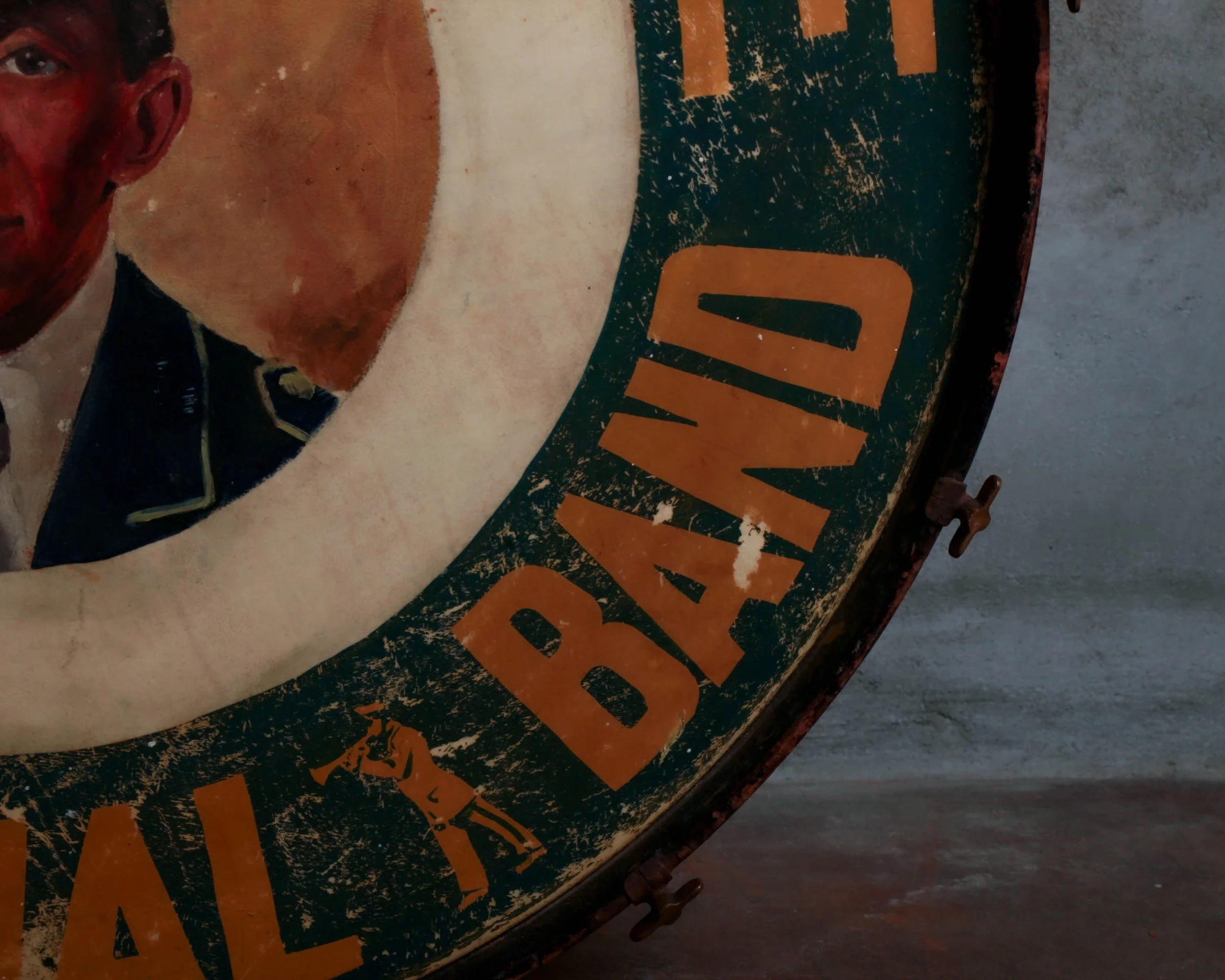
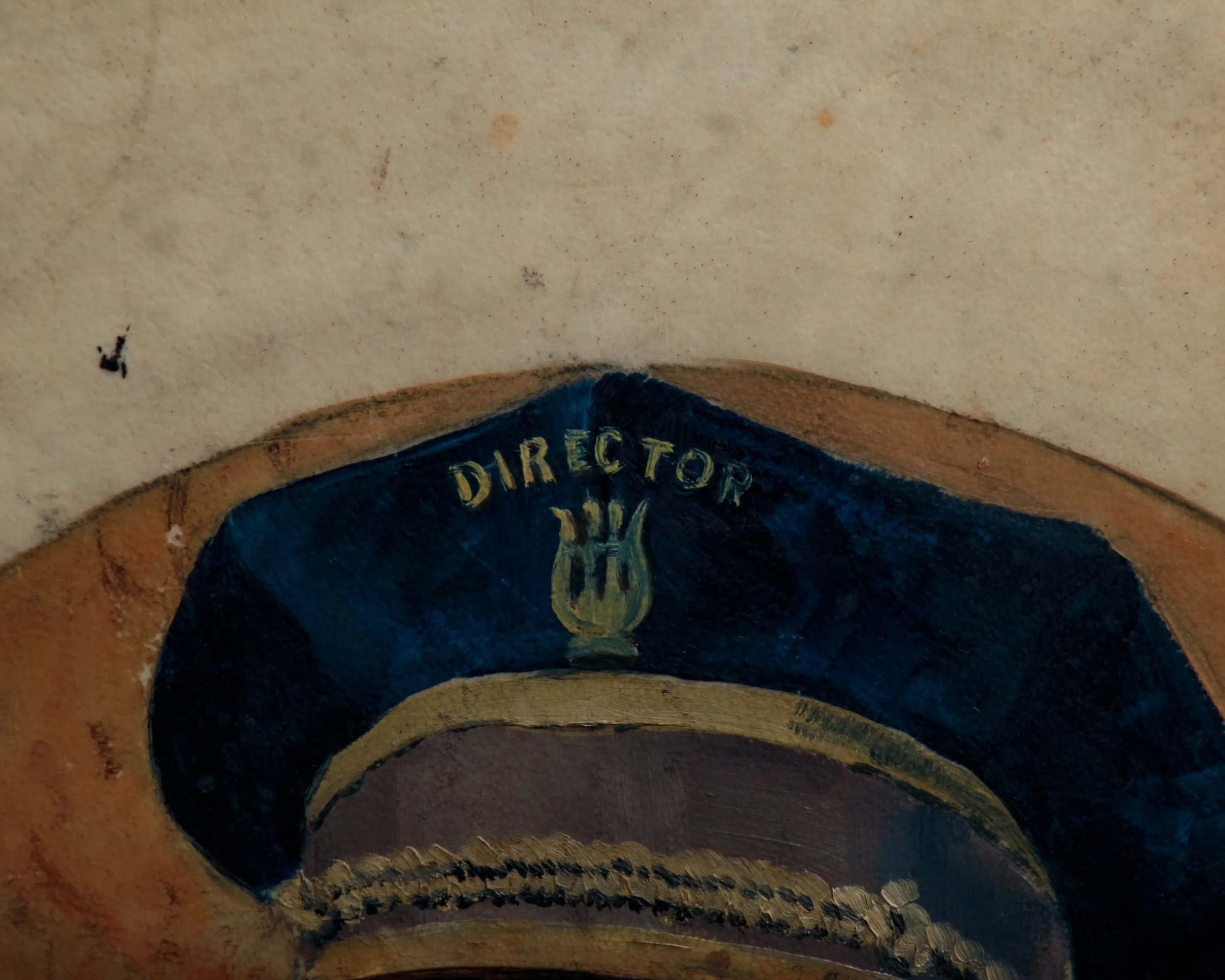
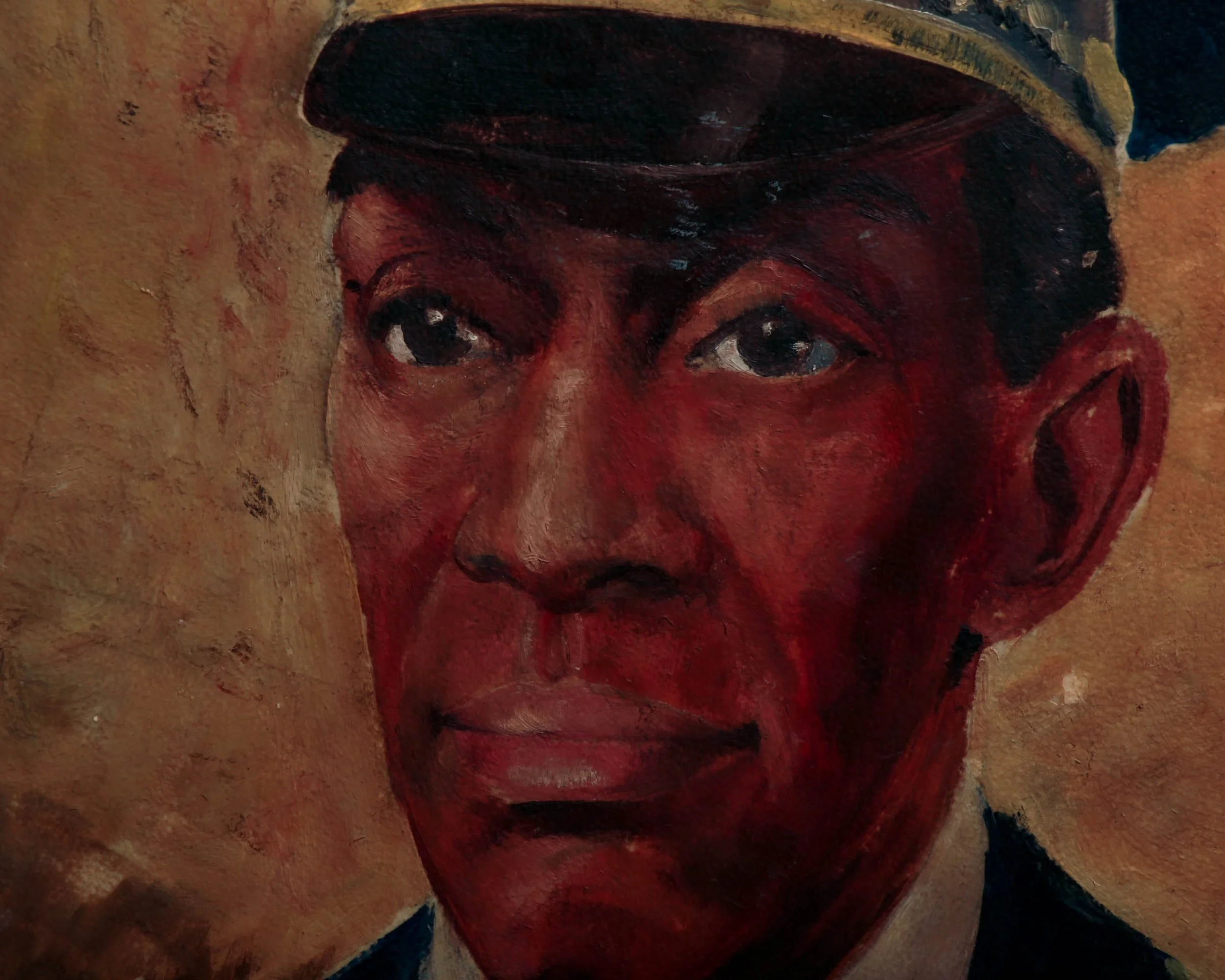
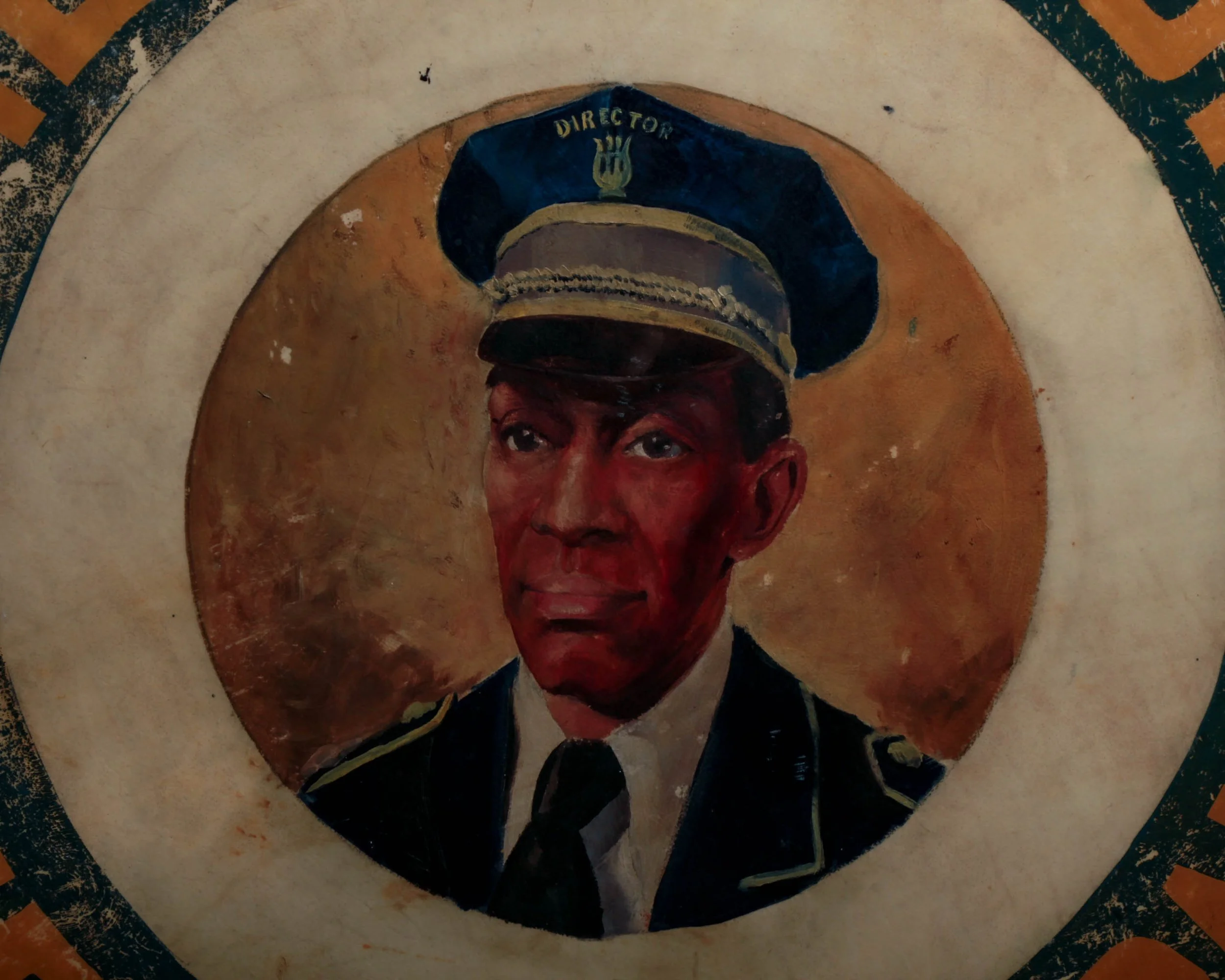
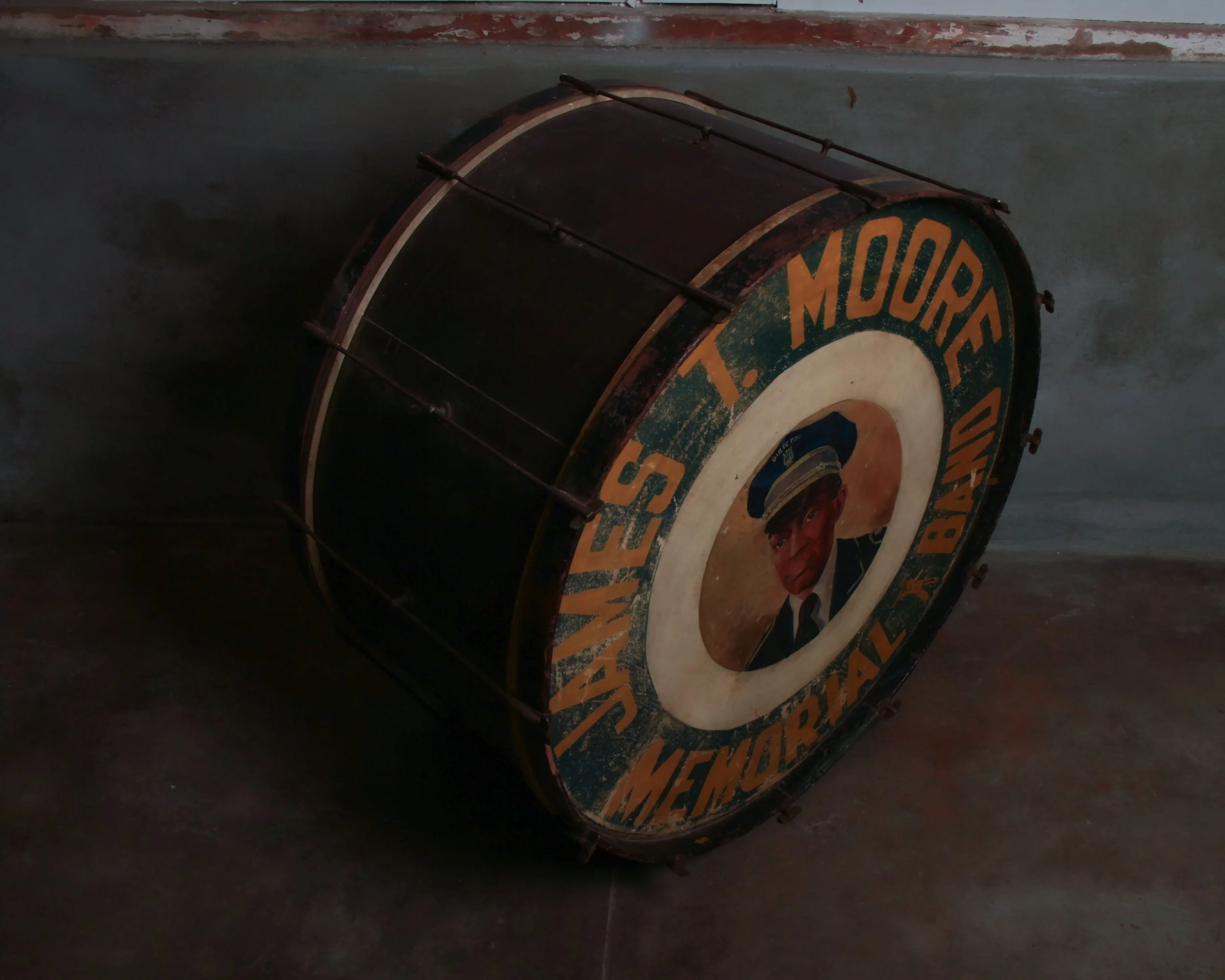
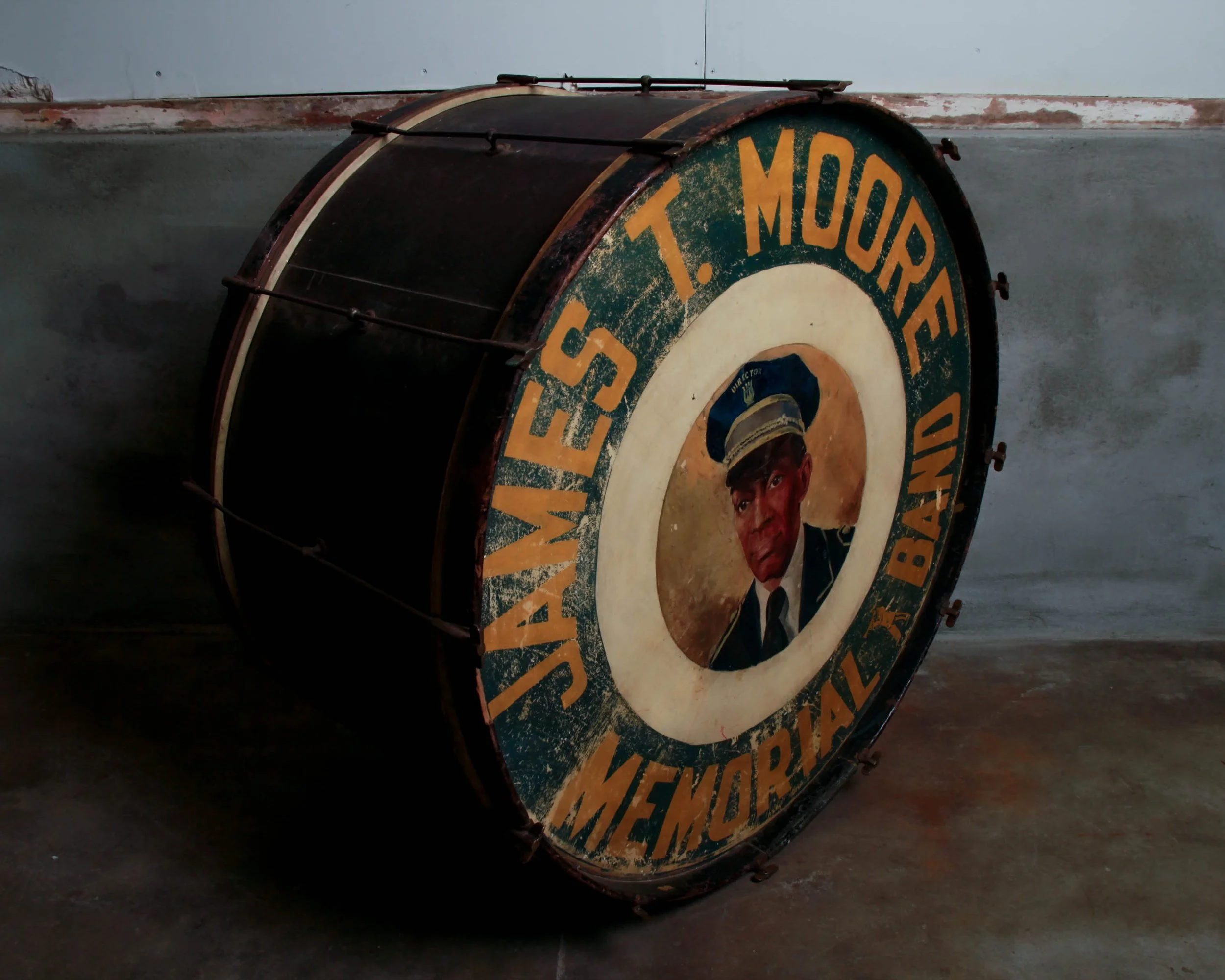
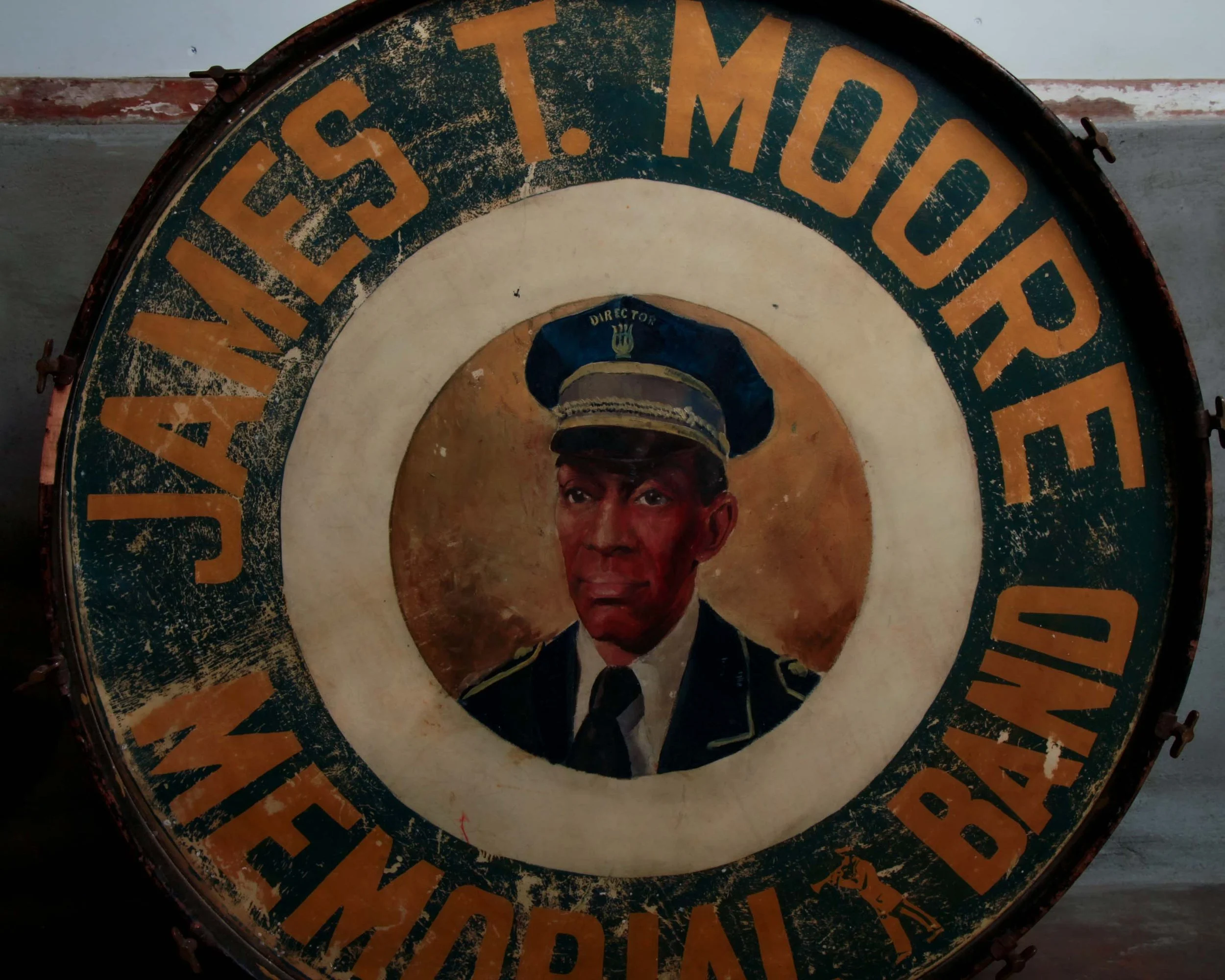
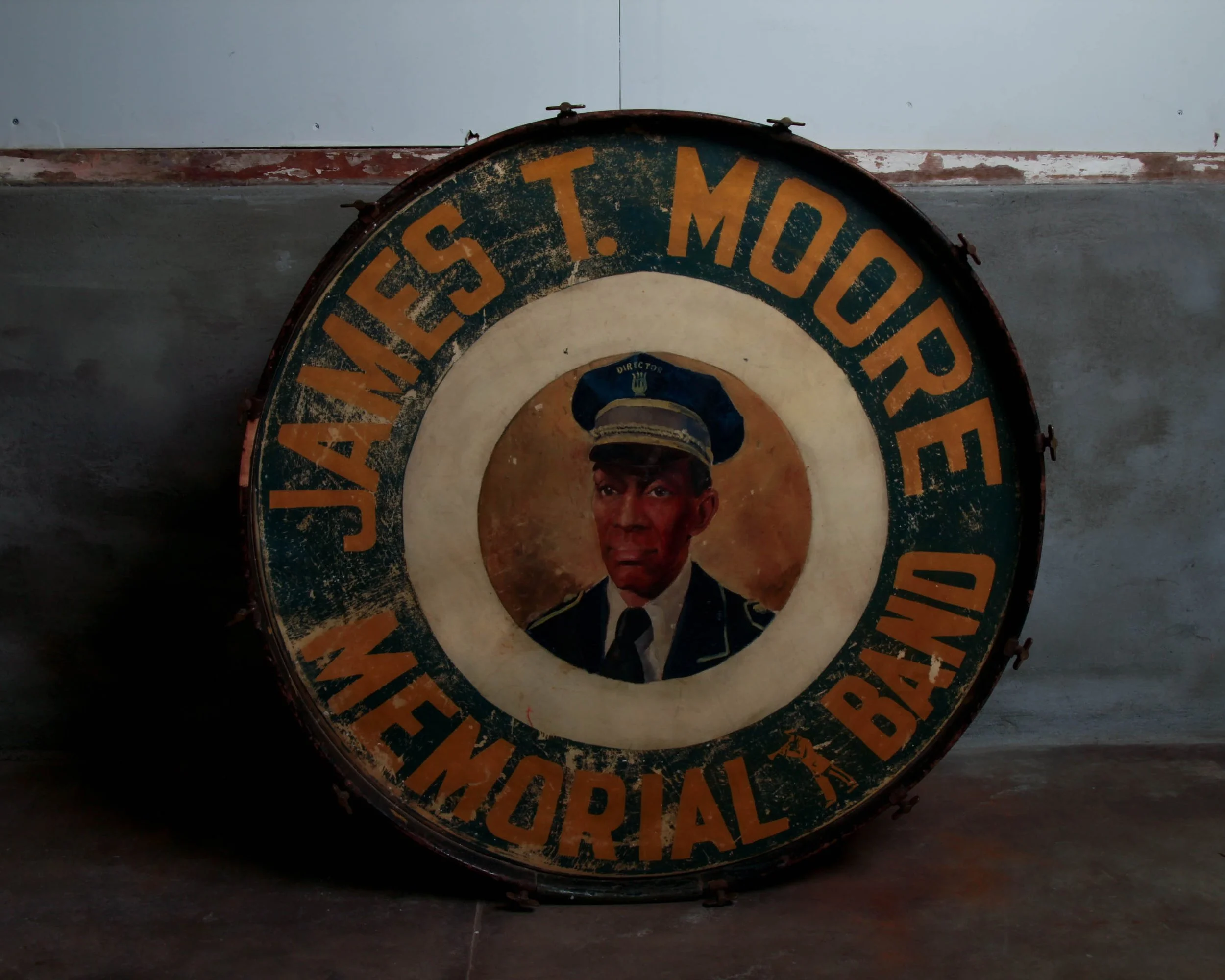
This large parade drum from the James T. Moore Memorial Band of Philadelphia carries all the swagger of a marching line at full tilt. The front head is hand-painted with bold lettering circling a portrait of the band’s director, framed by a deep green field that’s worn just right—honest scuffs and rubs that read like miles, not damage.
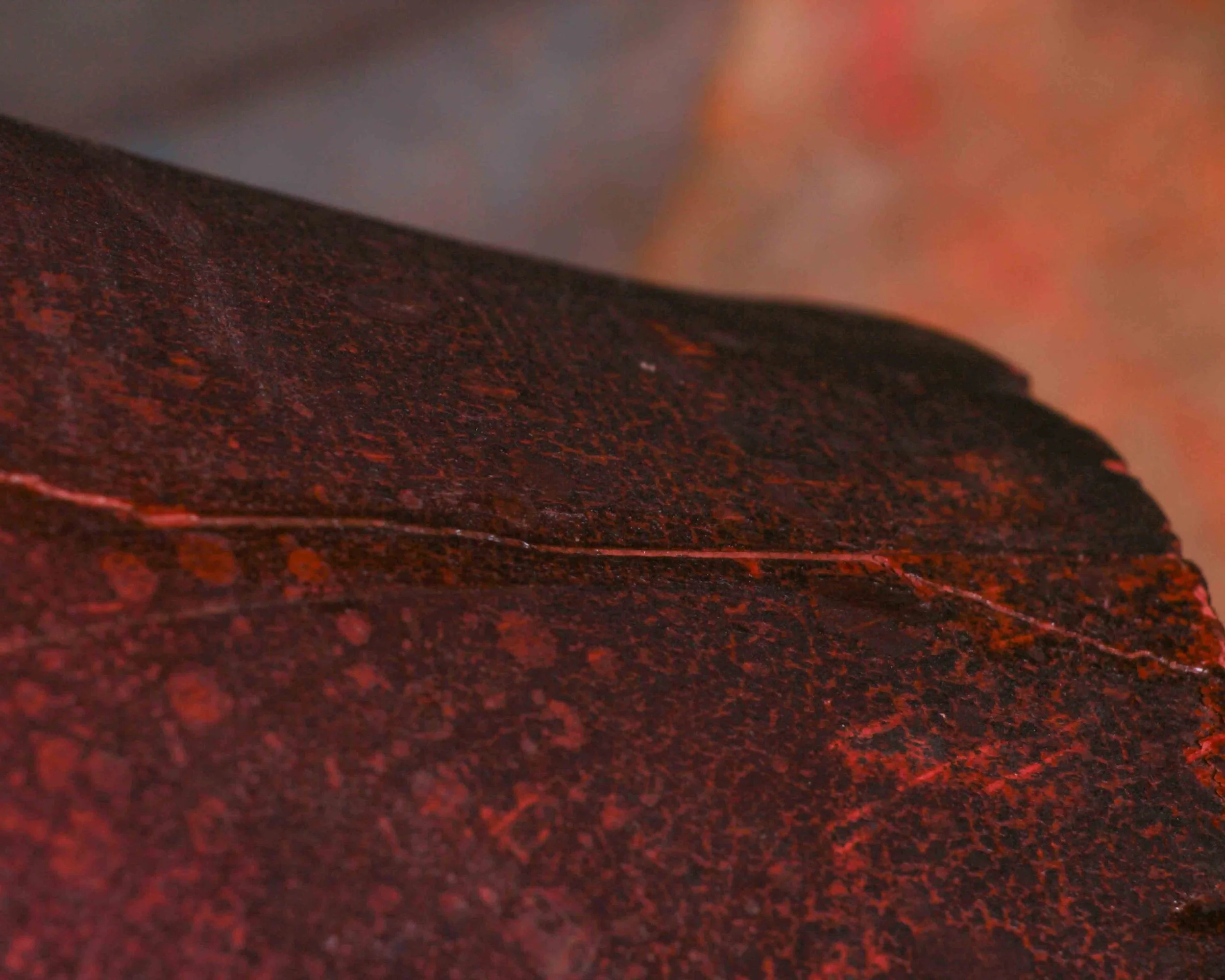
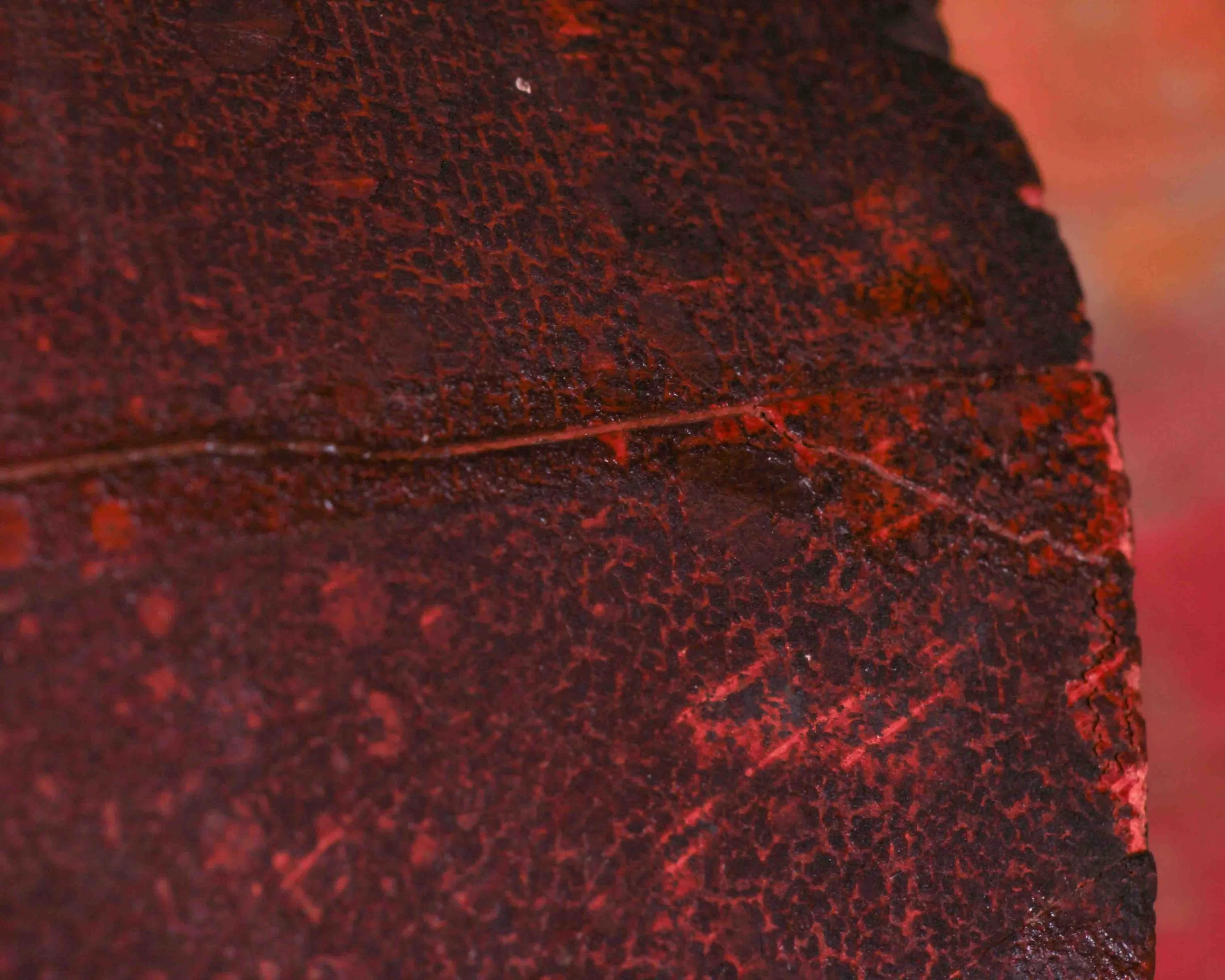
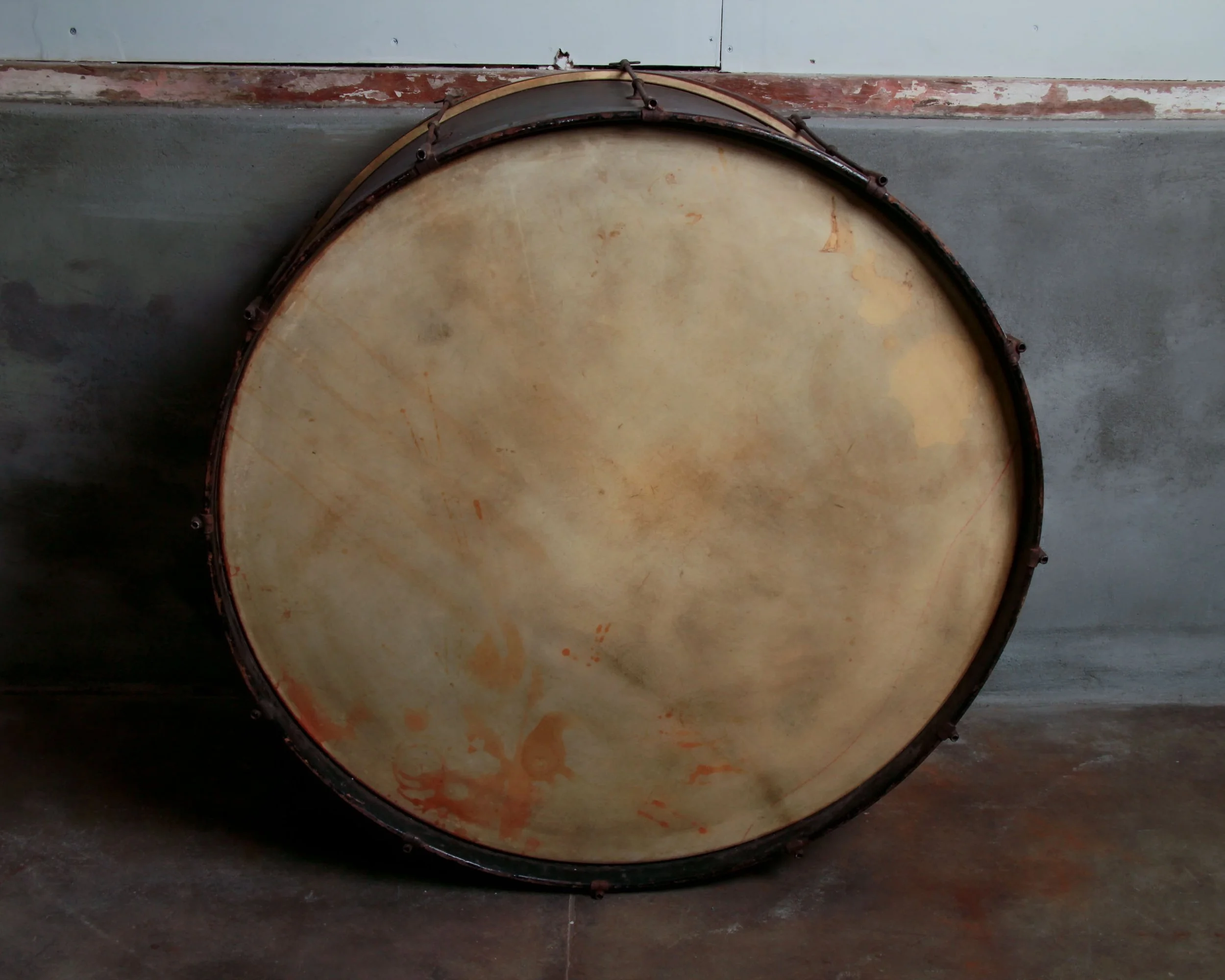
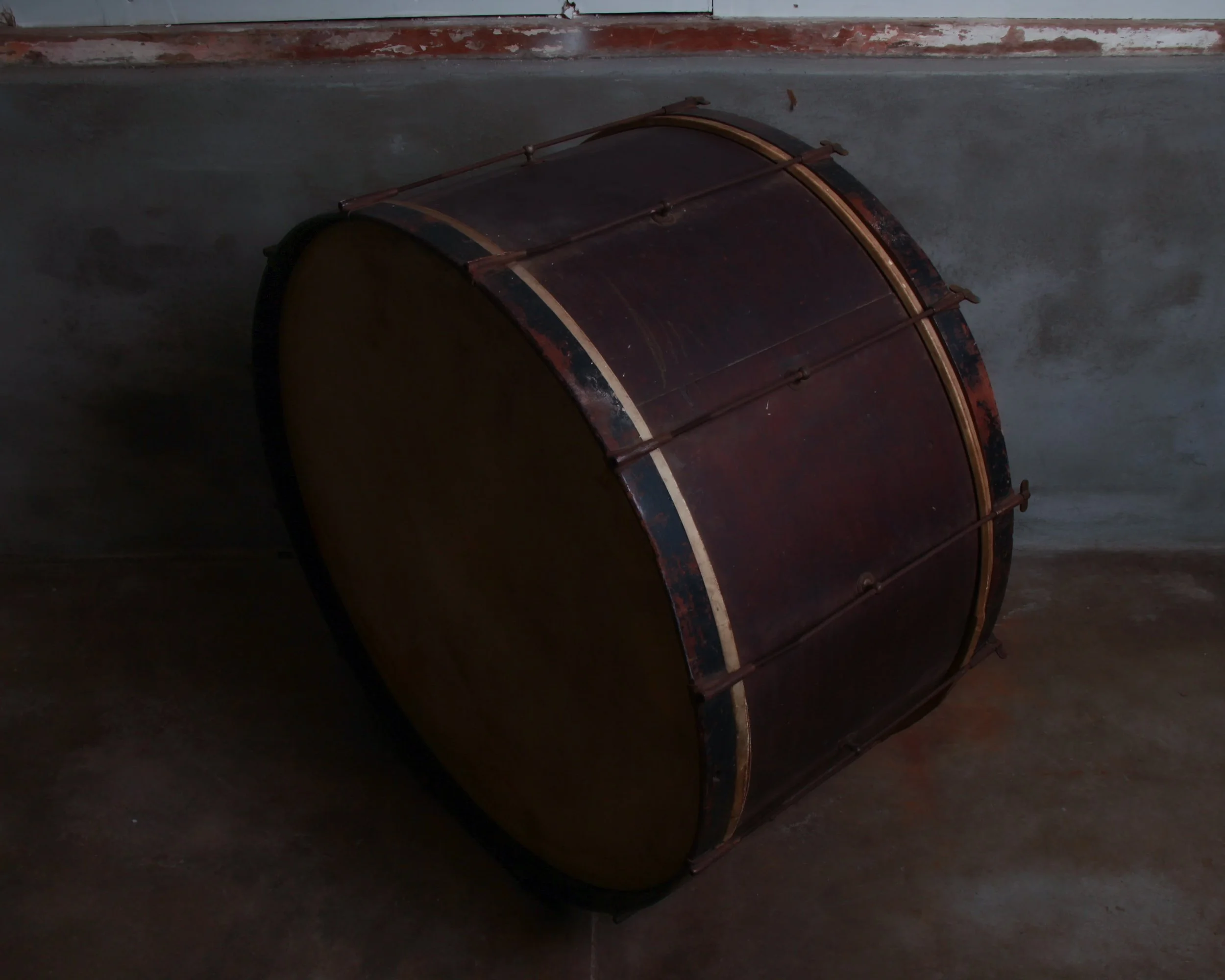
Circa 1940s, it’s built the way they should be: wood shell, brass hardware, and a beautifully aged vellum head that’s still intact with no cracks. The reverse shows the natural wear of use, with tonal variations and markings that only come from years in rotation. One small chip to the wooden rim, otherwise solid and structurally sound.
At 32 inches high and just over 19 inches in diameter, it’s a statement piece whether hung or leaned—it’s equal parts folk art and functional object.
Memorial parade marching bands
Memorial parade marching bands are built on rhythm, memory, and a shared sense of purpose. Emerging in the 19th century alongside military traditions, these bands became a central part of civic ceremonies—especially events tied to remembrance, where music helped set the tone as much as any speech.
Instrumentation is classic: brass, woodwinds, percussion—designed to carry outdoors and move in step. The sound is structured, deliberate, often familiar. Hymns, patriotic songs, and slow marches create a pace that matches the occasion, guiding both participants and spectators through the moment.
Uniforms matter too. Crisp lines, coordinated colors, polished details—all reinforcing unity and discipline. It’s not just about performance, it’s about presence.
What makes these bands compelling is how they balance formality with feeling. The music is rehearsed, the steps are counted, but the impact is immediate. You feel it in the repetition, the cadence, the way sound moves through space.
They’re less about spectacle and more about continuity—keeping traditions in motion, one measured step at a time, carrying memory forward through sound.
This large parade drum from the James T. Moore Memorial Band of Philadelphia carries all the swagger of a marching line at full tilt. The front head is hand-painted with bold lettering circling a portrait of the band’s director, framed by a deep green field that’s worn just right—honest scuffs and rubs that read like miles, not damage.
Circa 1940s, it’s built the way they should be: wood shell, brass hardware, and a beautifully aged vellum head that’s still intact with no cracks. The reverse shows the natural wear of use, with tonal variations and markings that only come from years in rotation. One small chip to the wooden rim, otherwise solid and structurally sound.
At 32 inches high and just over 19 inches in diameter, it’s a statement piece whether hung or leaned—it’s equal parts folk art and functional object.
Memorial parade marching bands
Memorial parade marching bands are built on rhythm, memory, and a shared sense of purpose. Emerging in the 19th century alongside military traditions, these bands became a central part of civic ceremonies—especially events tied to remembrance, where music helped set the tone as much as any speech.
Instrumentation is classic: brass, woodwinds, percussion—designed to carry outdoors and move in step. The sound is structured, deliberate, often familiar. Hymns, patriotic songs, and slow marches create a pace that matches the occasion, guiding both participants and spectators through the moment.
Uniforms matter too. Crisp lines, coordinated colors, polished details—all reinforcing unity and discipline. It’s not just about performance, it’s about presence.
What makes these bands compelling is how they balance formality with feeling. The music is rehearsed, the steps are counted, but the impact is immediate. You feel it in the repetition, the cadence, the way sound moves through space.
They’re less about spectacle and more about continuity—keeping traditions in motion, one measured step at a time, carrying memory forward through sound.