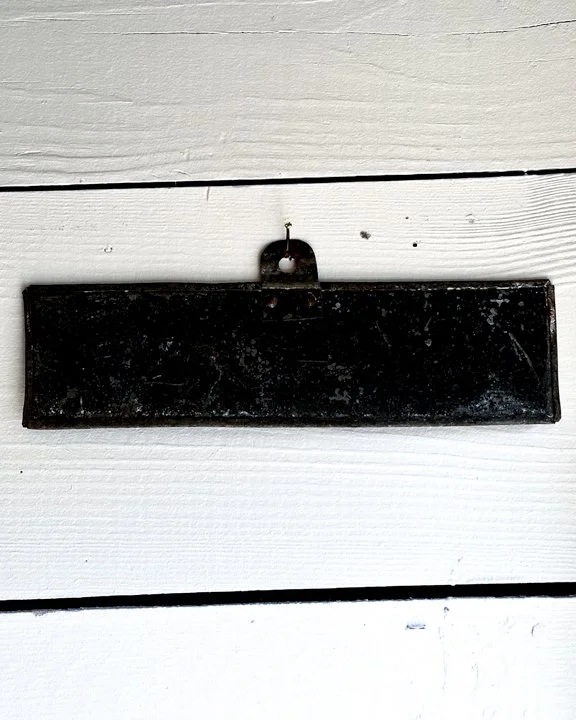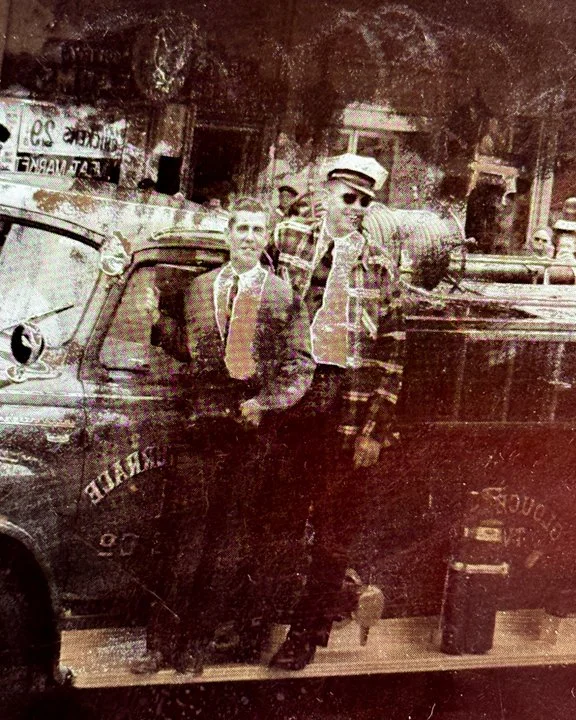

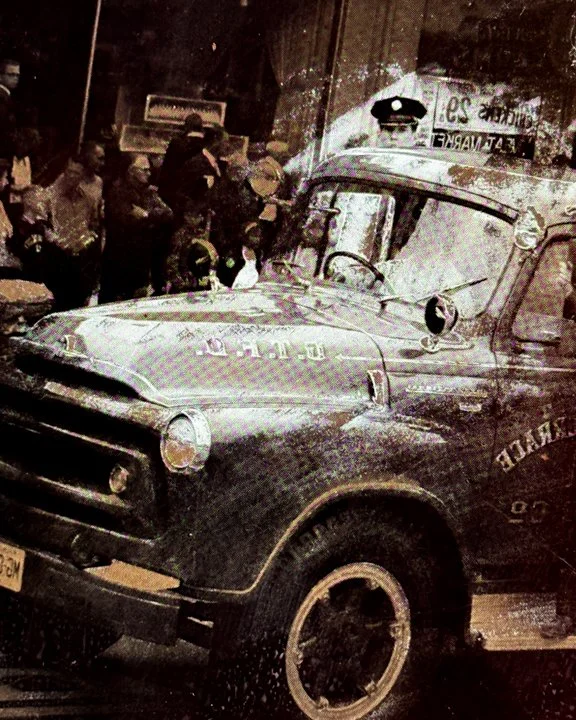
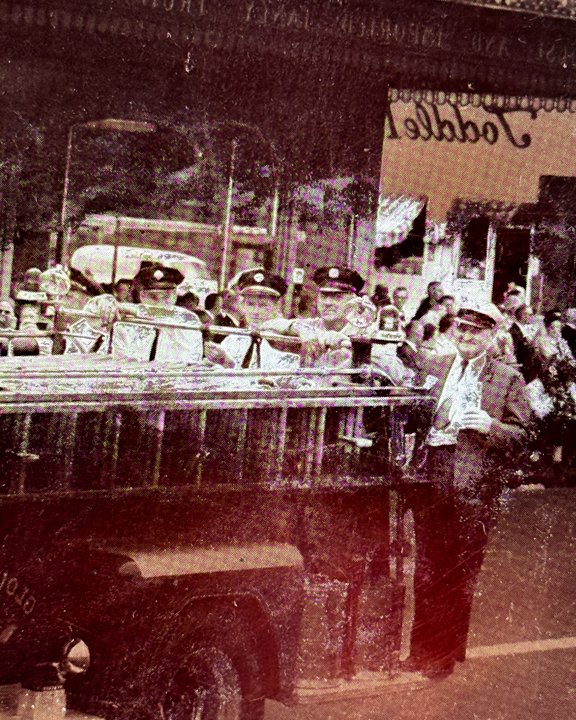
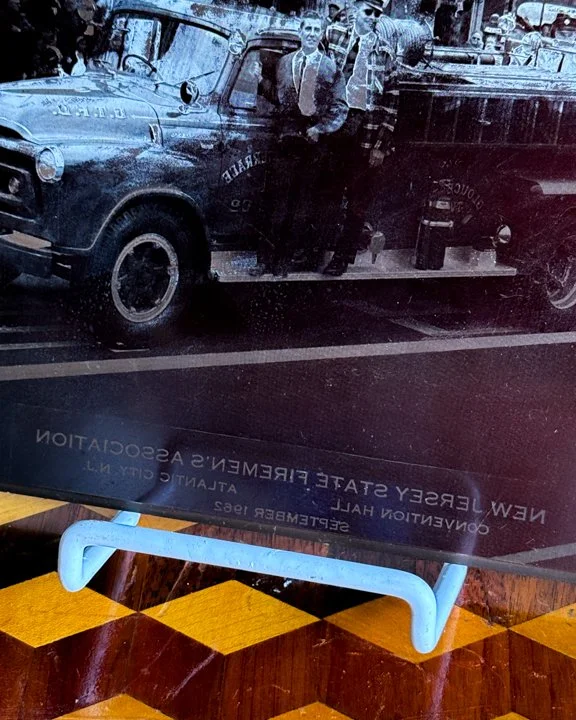
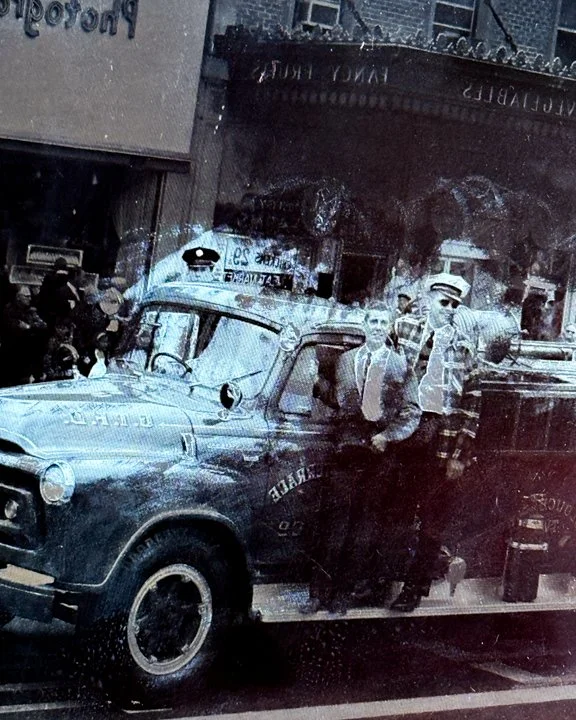
Step right up to this absolute time capsule of a photo plate—an original image from the 1962 New Jersey State Firemen’s Association Convention in Atlantic City. What you’re looking at is more than just an old photo; it’s a piece of mid-century civic pride, paraded down the street. Etched onto a metal plate, this photo captures a group of firemen riding high on a beautifully boxy fire truck, all stiff collars, crisp uniforms, and that unmistakable air of small-town dignity. Check out the storefronts in the background—“Fancy Fruits,” “East Orange 231,” and what appears to be a vintage photo studio—all frozen in time, signage and all. The truck’s a beast, proudly labeled "Orange NJ Fire Dept" and gleaming like it just got a spit shine for the parade.
Down at the bottom, laser-etched lettering reads:
"NEW JERSEY STATE FIREMEN’S ASSOCIATION
CONVENTION HALL – ATLANTIC CITY, N.J.
SEPTEMBER 1962"
Category History
Firefighter parades in the 1960s were part celebration, part demonstration, and part neighborhood ritual. They brought together working fire companies, polished apparatus, and a sense of civic pride that rolled right down Main Street. Engines were cleaned to a shine, brass fittings gleamed, and crews often marched in uniform alongside their rigs.
These events weren’t just about showing off equipment—they were about visibility. Fire departments were deeply tied to their communities, and parades offered a way to reinforce that connection. Sirens, bells, and the slow movement of trucks created a kind of moving spectacle, equal parts noise and order.
Bands, color guards, and local groups often joined in, turning the parade into a broader community event. Kids watched, families gathered, and the route became a temporary stage.
What makes them compelling now is that balance of function and presentation. The same vehicles used for emergencies were briefly recast as symbols—maintained, displayed, and appreciated.
They weren’t just passing through—they were being seen, recognized, and remembered.
Step right up to this absolute time capsule of a photo plate—an original image from the 1962 New Jersey State Firemen’s Association Convention in Atlantic City. What you’re looking at is more than just an old photo; it’s a piece of mid-century civic pride, paraded down the street. Etched onto a metal plate, this photo captures a group of firemen riding high on a beautifully boxy fire truck, all stiff collars, crisp uniforms, and that unmistakable air of small-town dignity. Check out the storefronts in the background—“Fancy Fruits,” “East Orange 231,” and what appears to be a vintage photo studio—all frozen in time, signage and all. The truck’s a beast, proudly labeled "Orange NJ Fire Dept" and gleaming like it just got a spit shine for the parade.
Down at the bottom, laser-etched lettering reads:
"NEW JERSEY STATE FIREMEN’S ASSOCIATION
CONVENTION HALL – ATLANTIC CITY, N.J.
SEPTEMBER 1962"
Category History
Firefighter parades in the 1960s were part celebration, part demonstration, and part neighborhood ritual. They brought together working fire companies, polished apparatus, and a sense of civic pride that rolled right down Main Street. Engines were cleaned to a shine, brass fittings gleamed, and crews often marched in uniform alongside their rigs.
These events weren’t just about showing off equipment—they were about visibility. Fire departments were deeply tied to their communities, and parades offered a way to reinforce that connection. Sirens, bells, and the slow movement of trucks created a kind of moving spectacle, equal parts noise and order.
Bands, color guards, and local groups often joined in, turning the parade into a broader community event. Kids watched, families gathered, and the route became a temporary stage.
What makes them compelling now is that balance of function and presentation. The same vehicles used for emergencies were briefly recast as symbols—maintained, displayed, and appreciated.
They weren’t just passing through—they were being seen, recognized, and remembered.