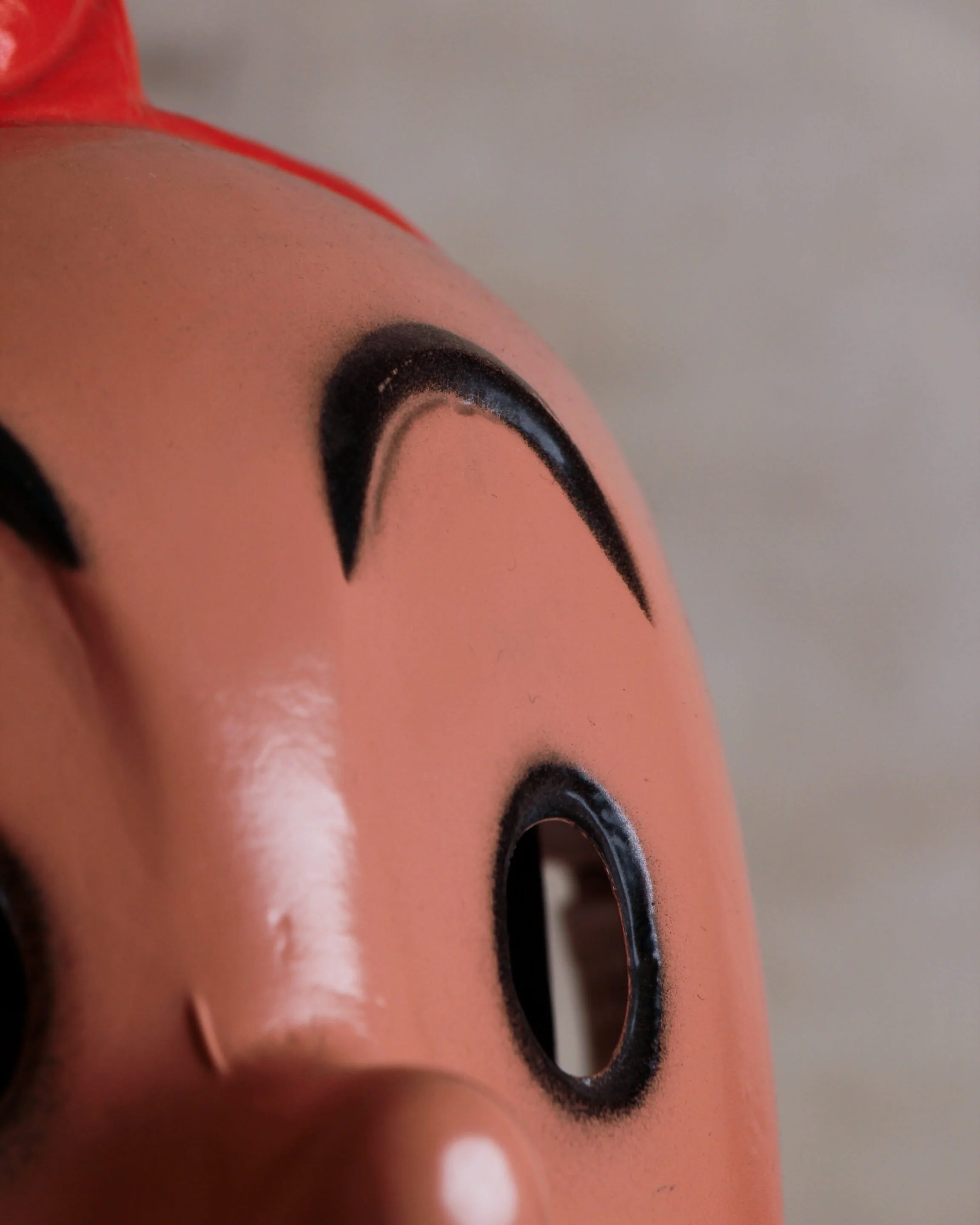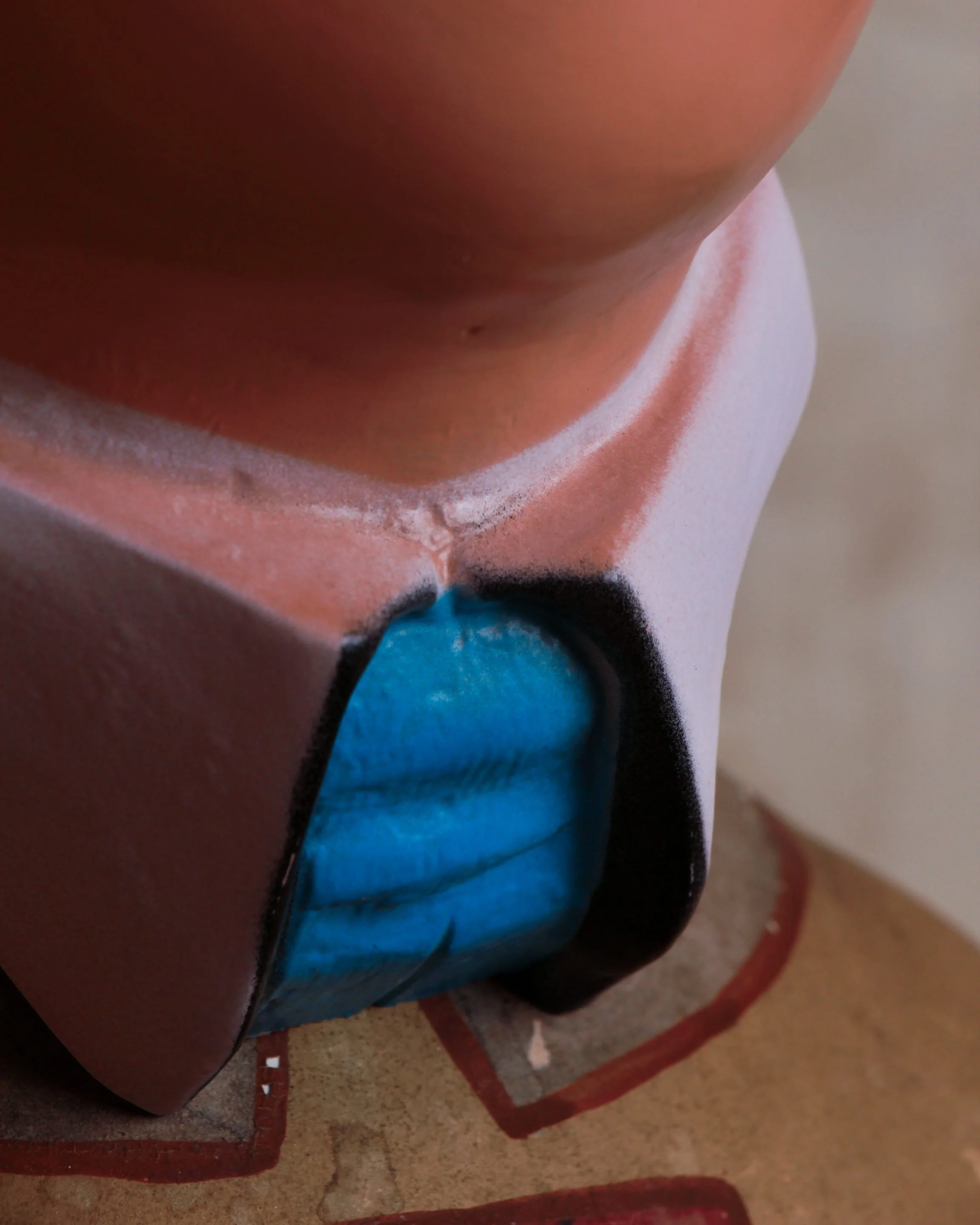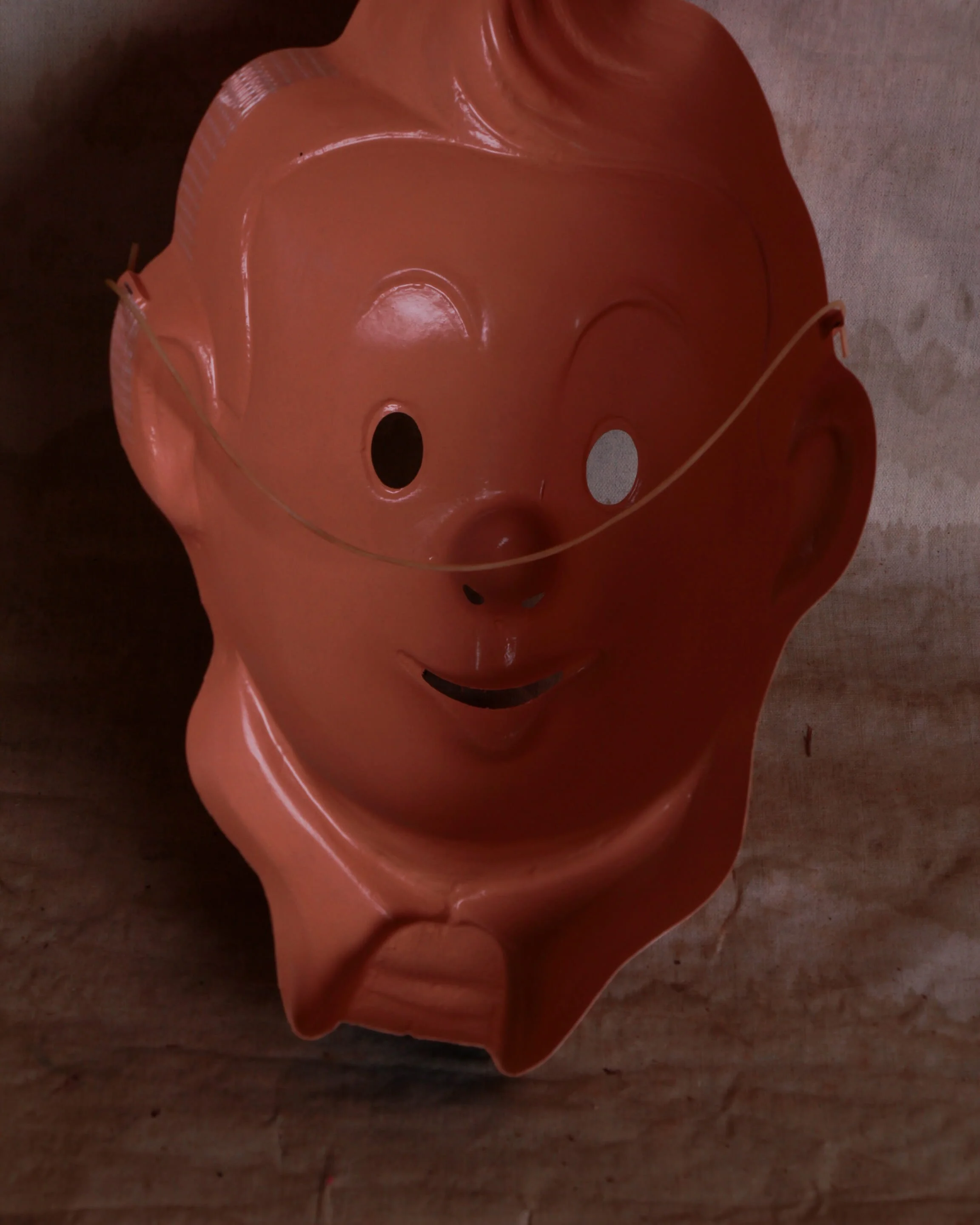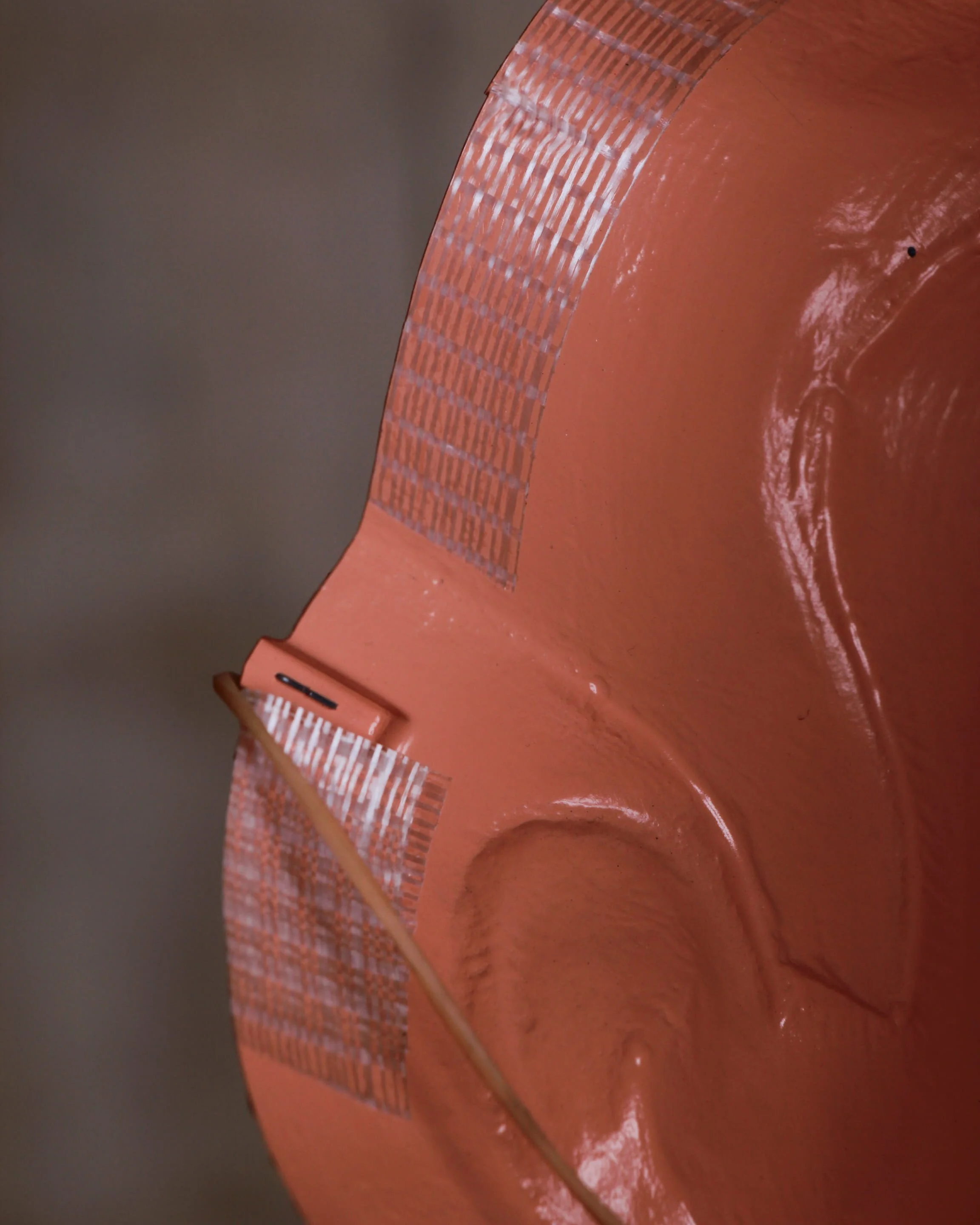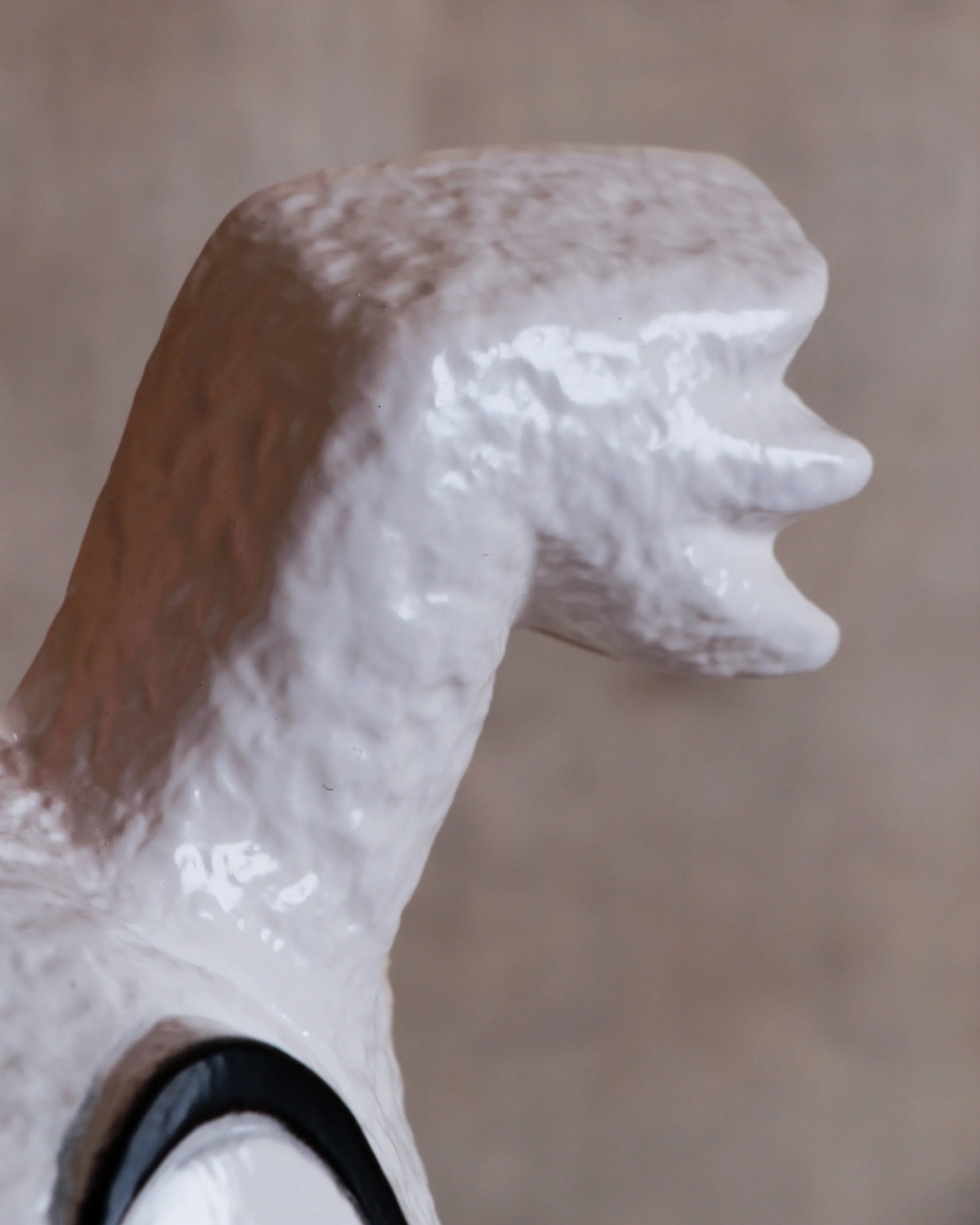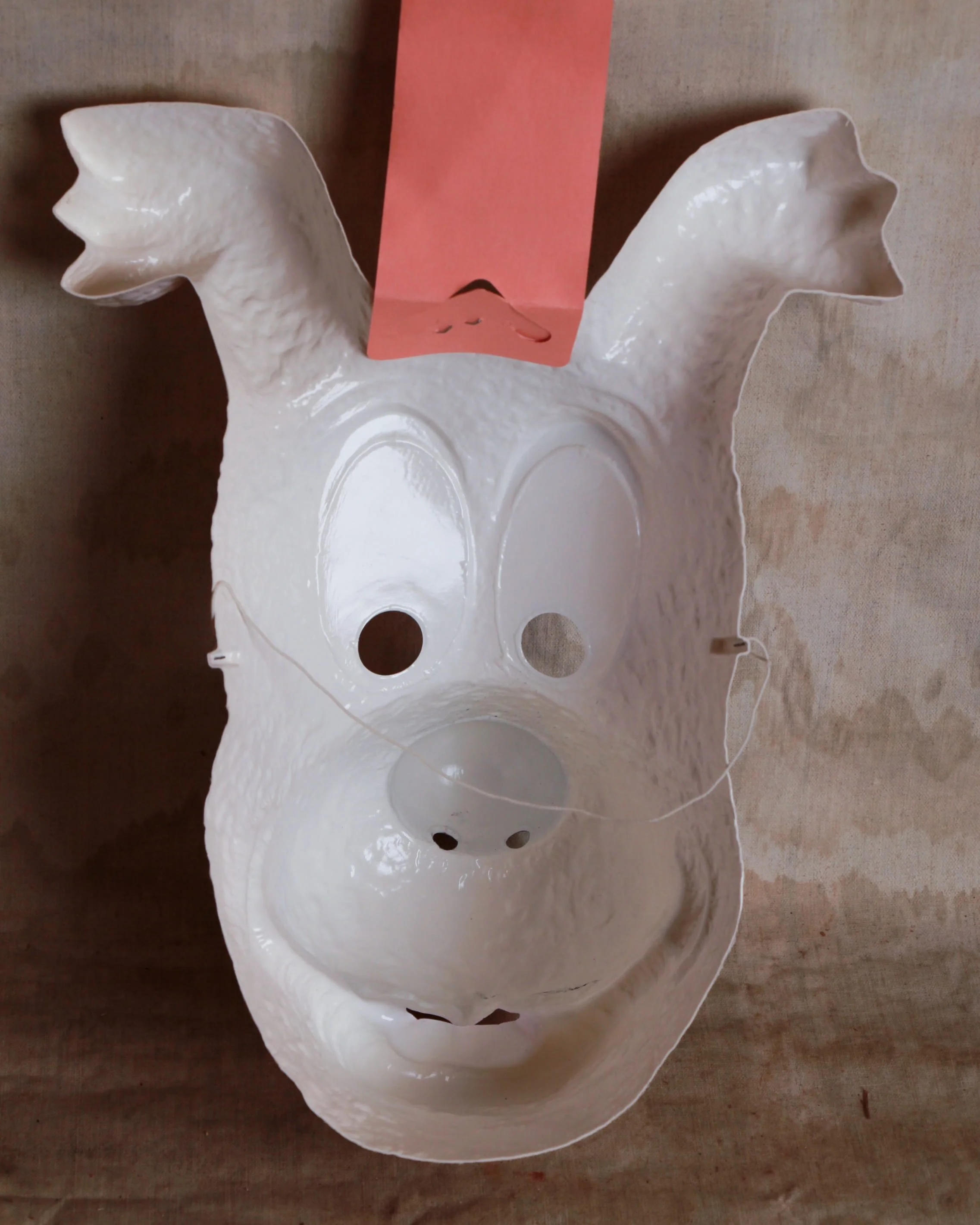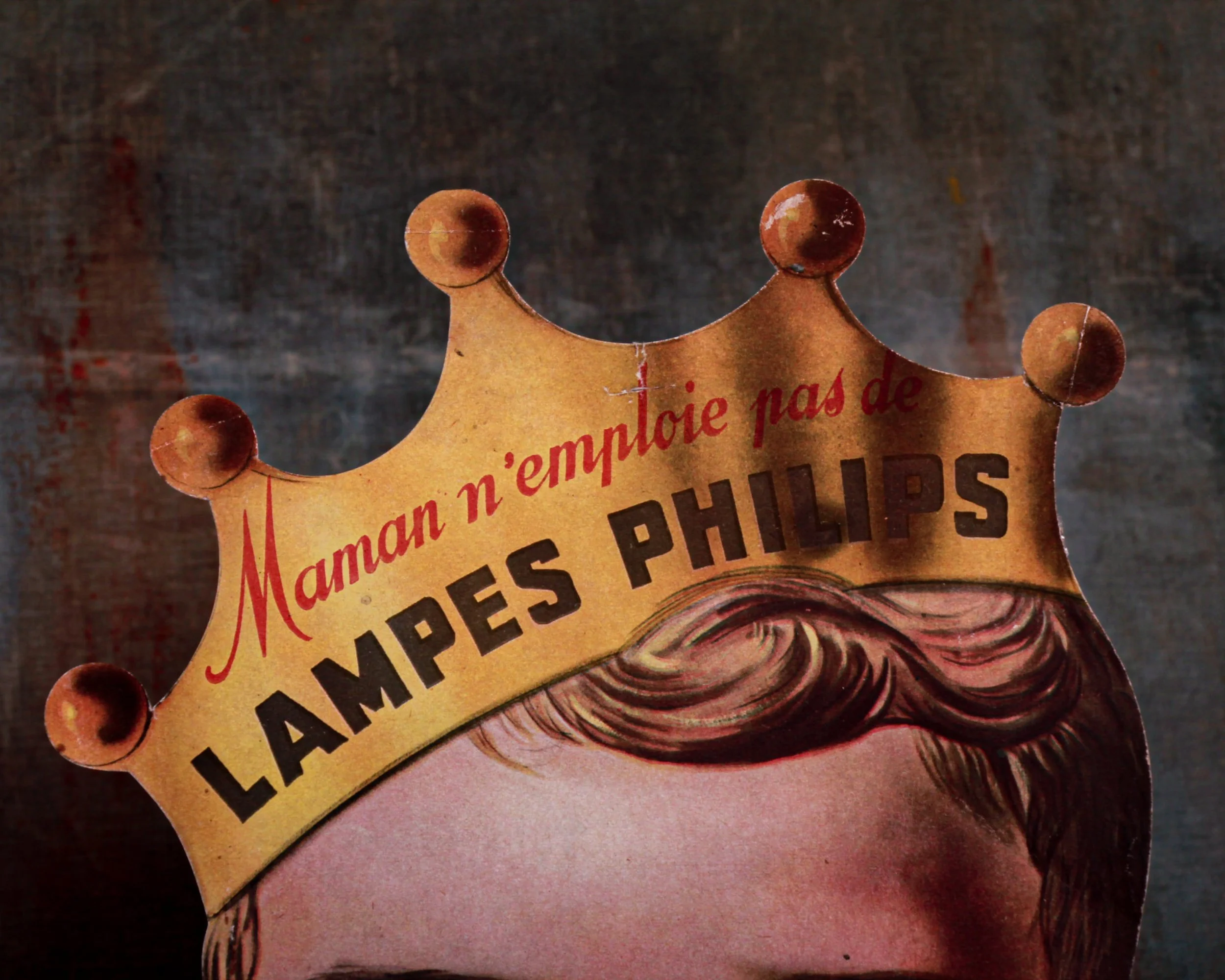
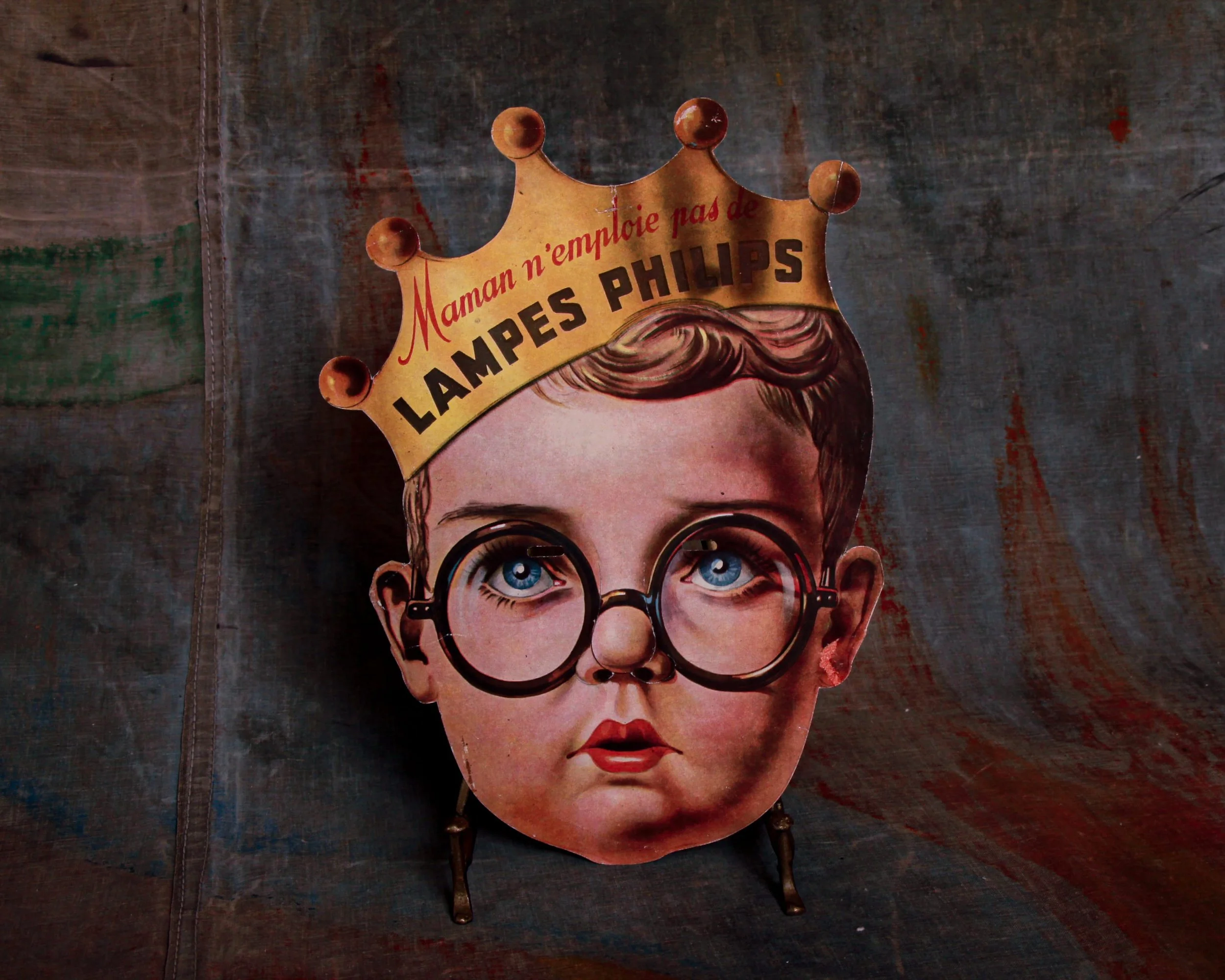
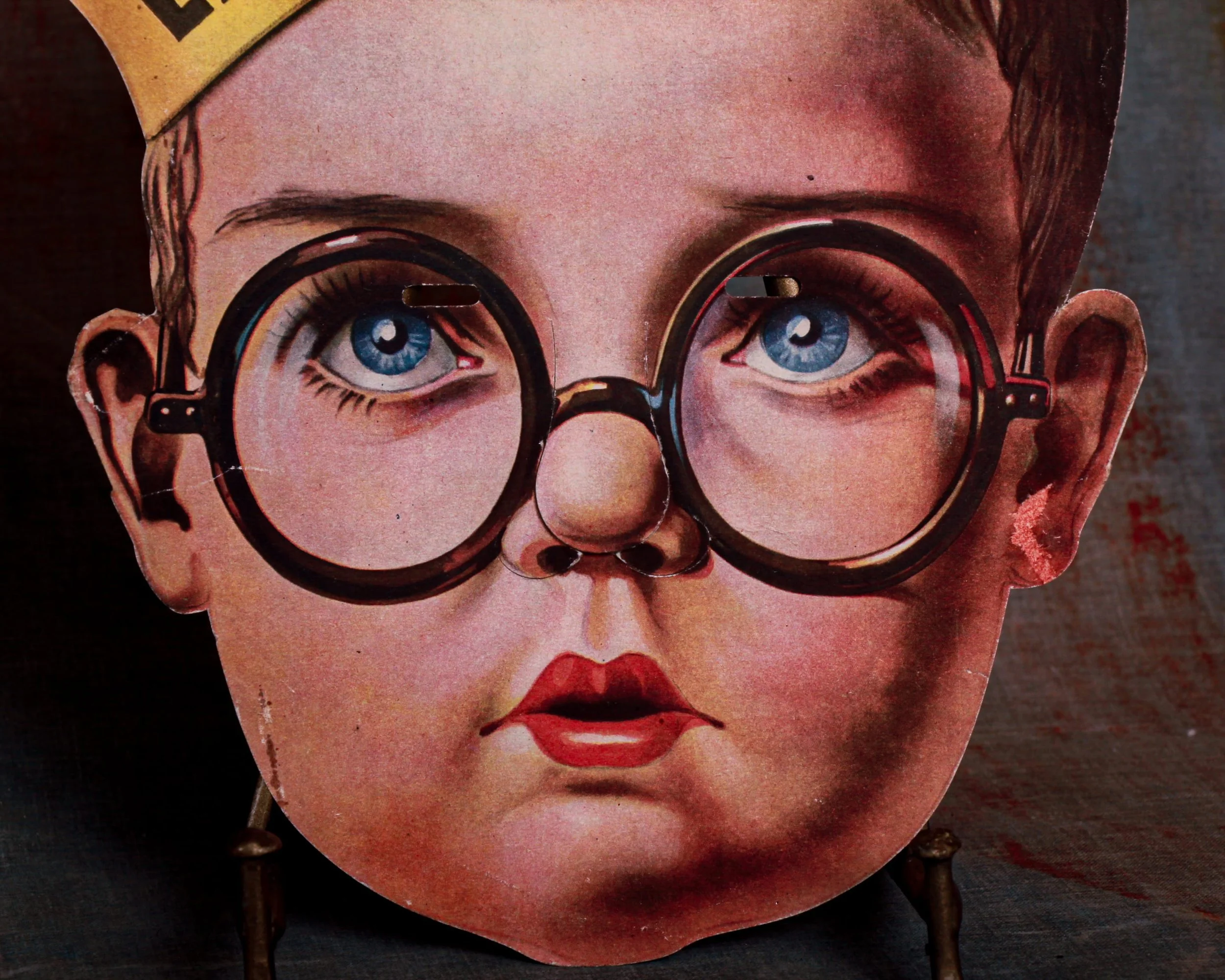
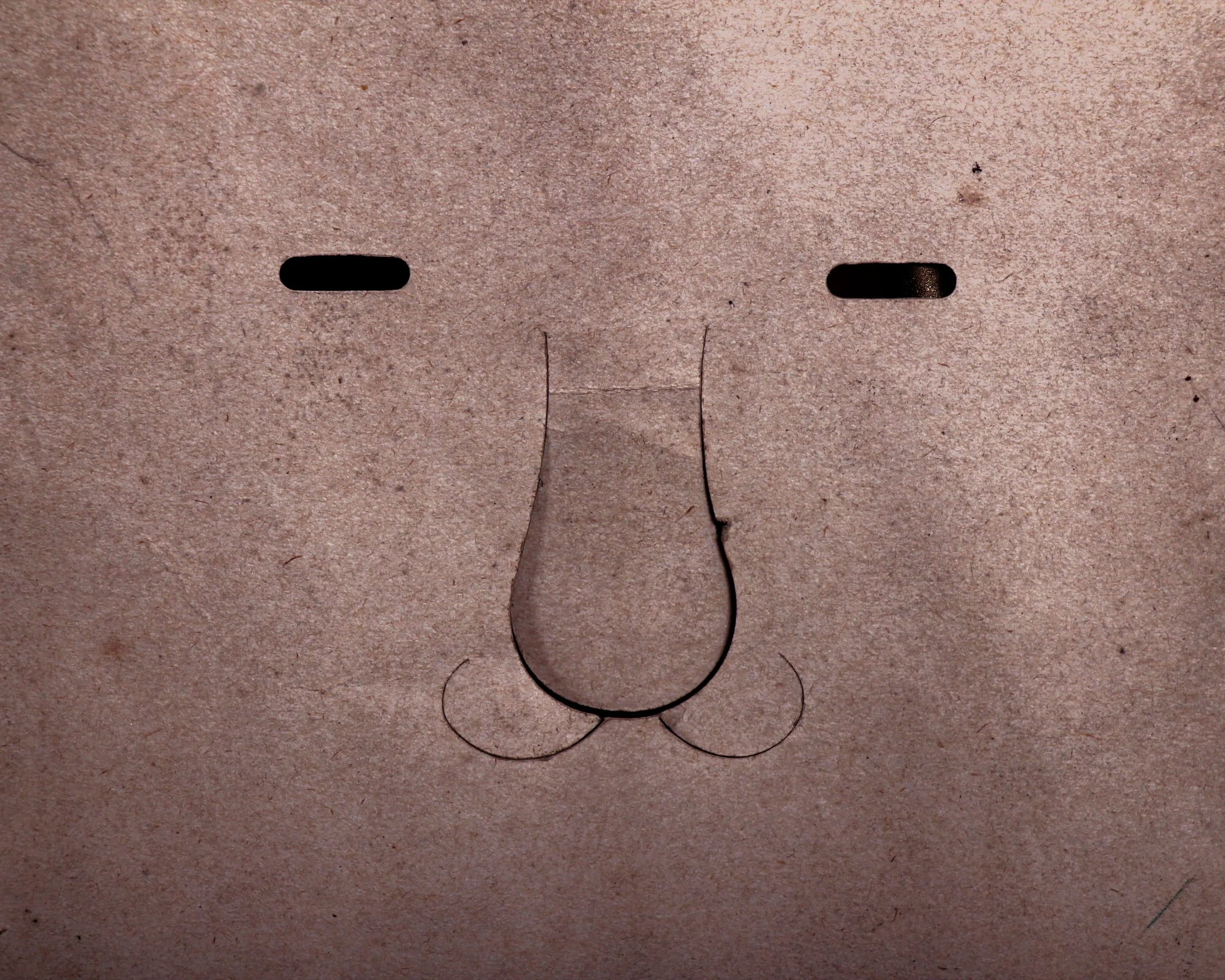
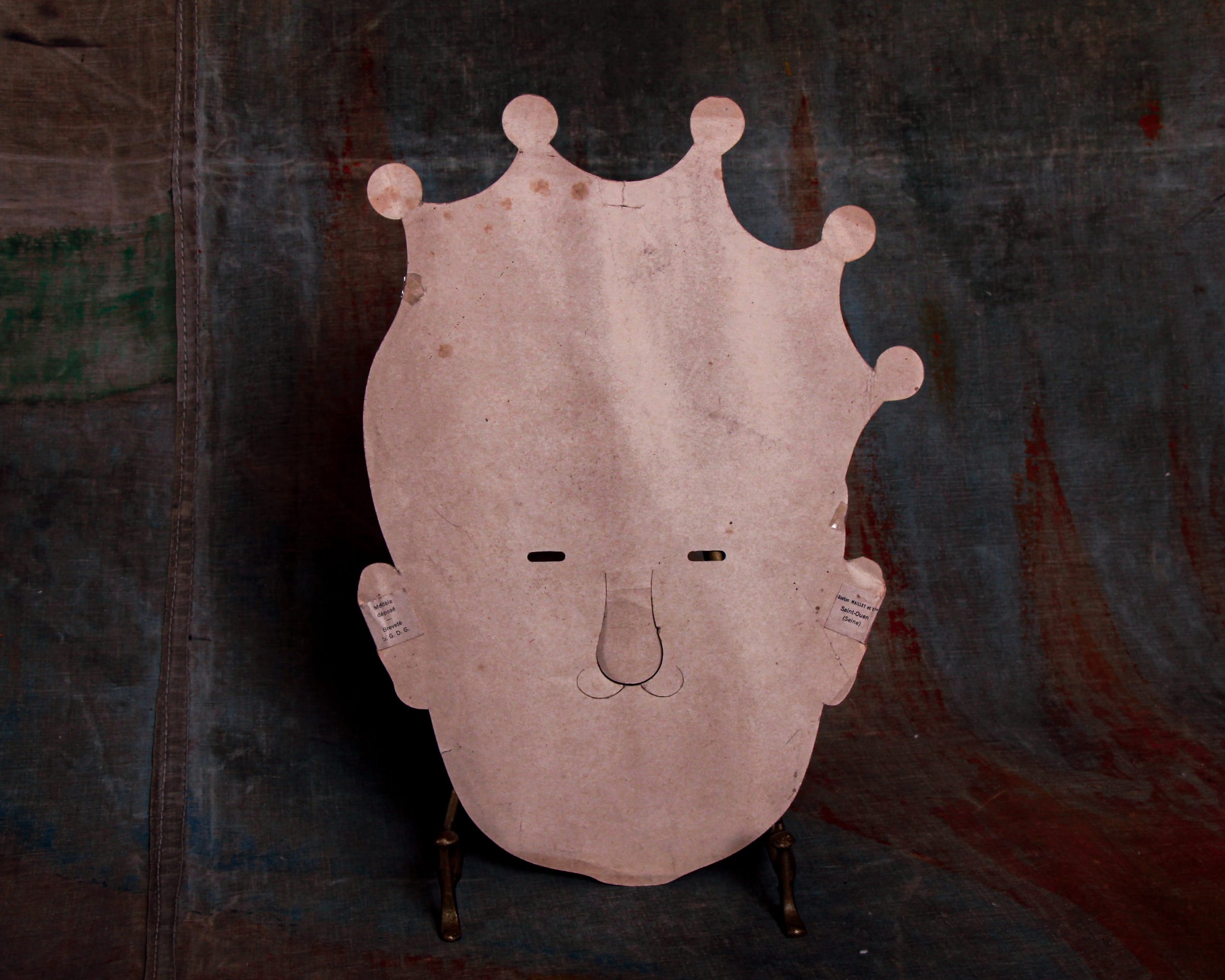
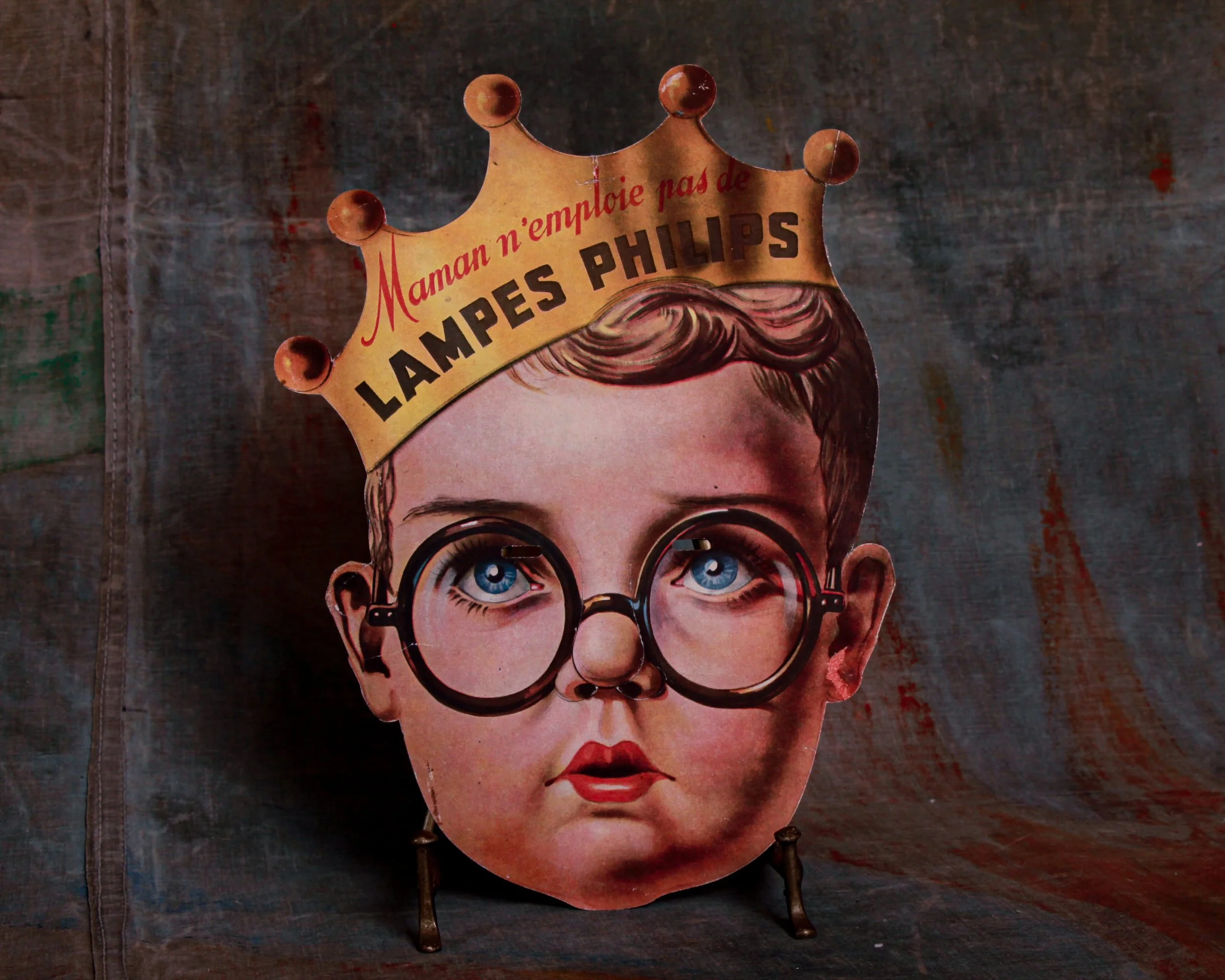
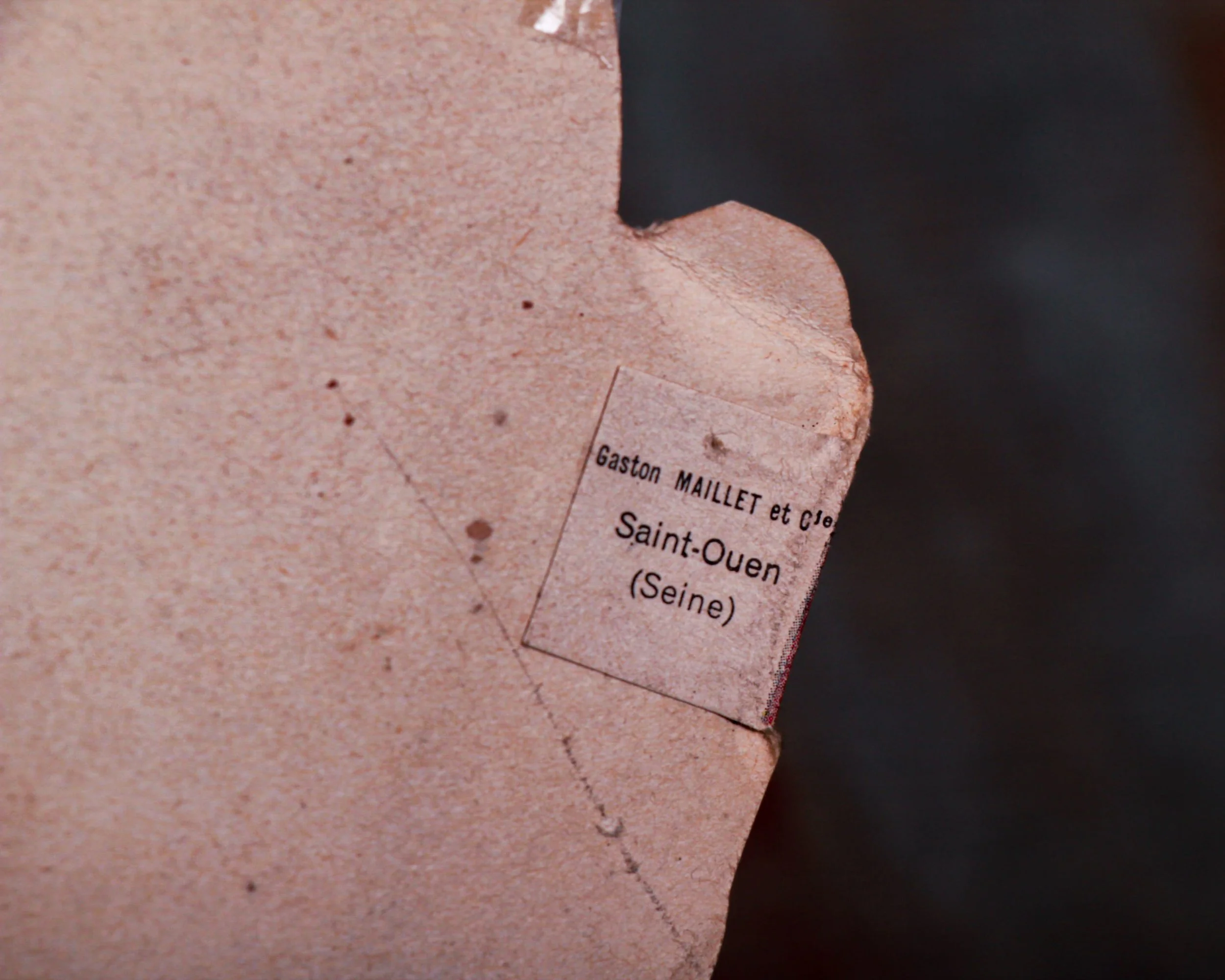
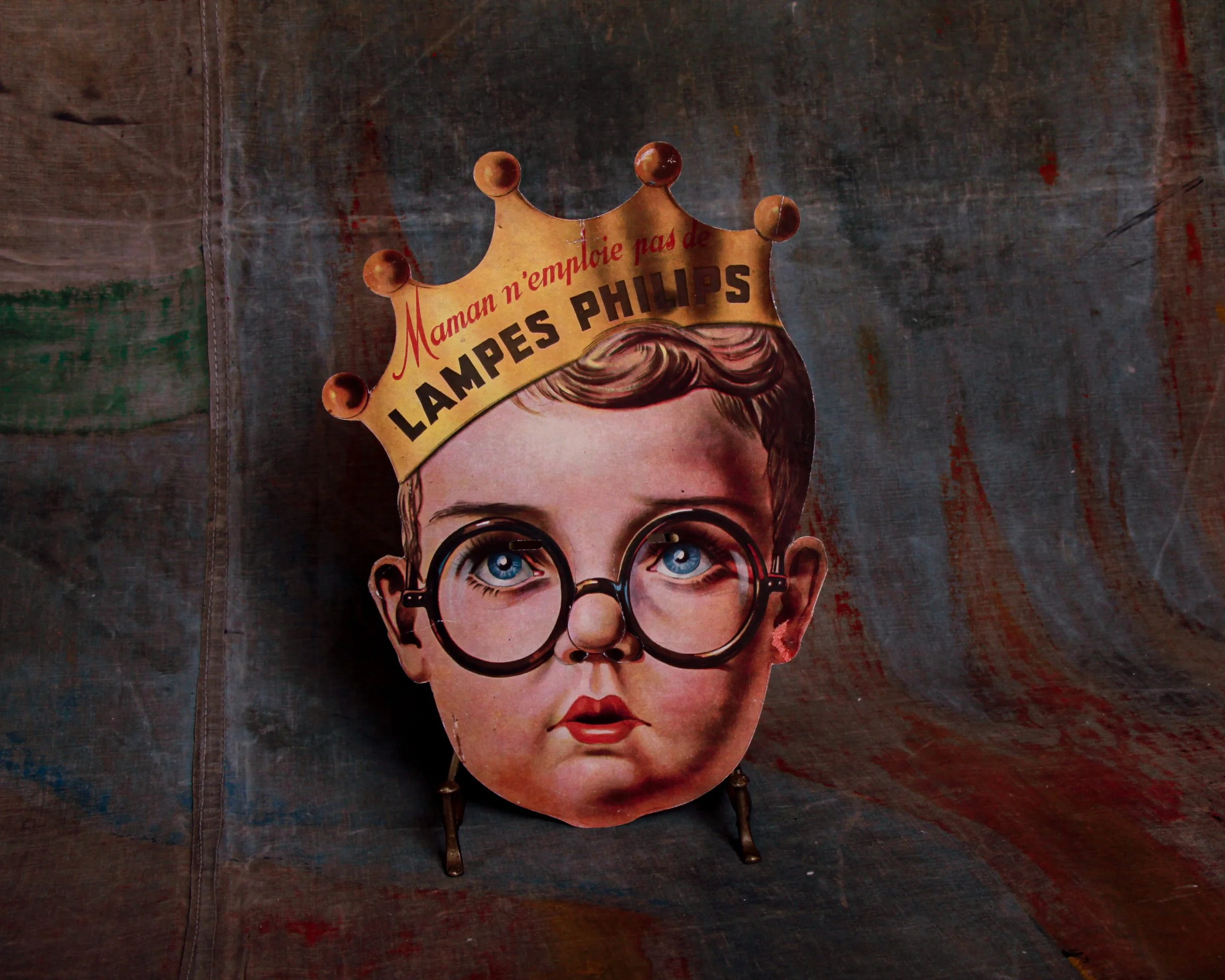
Wildly charming and wonderfully odd French advertising display for Philips light bulbs, shaped like the face of a wide-eyed, bespectacled child wearing a golden crown. The crown reads, in dramatic, slightly guilt-tripping French: "Maman n'emploie pas de LAMPES PHILIPS" ("Mom doesn't use Philips bulbs"). A clever little guilt trip aimed straight at the household lighting decision-maker. This piece is made from die-cut board and was designed to double as a mask, complete with eyeholes and a slit for the nose. It was produced by Gaston Maillet et Cie in Saint-Ouen and marked:
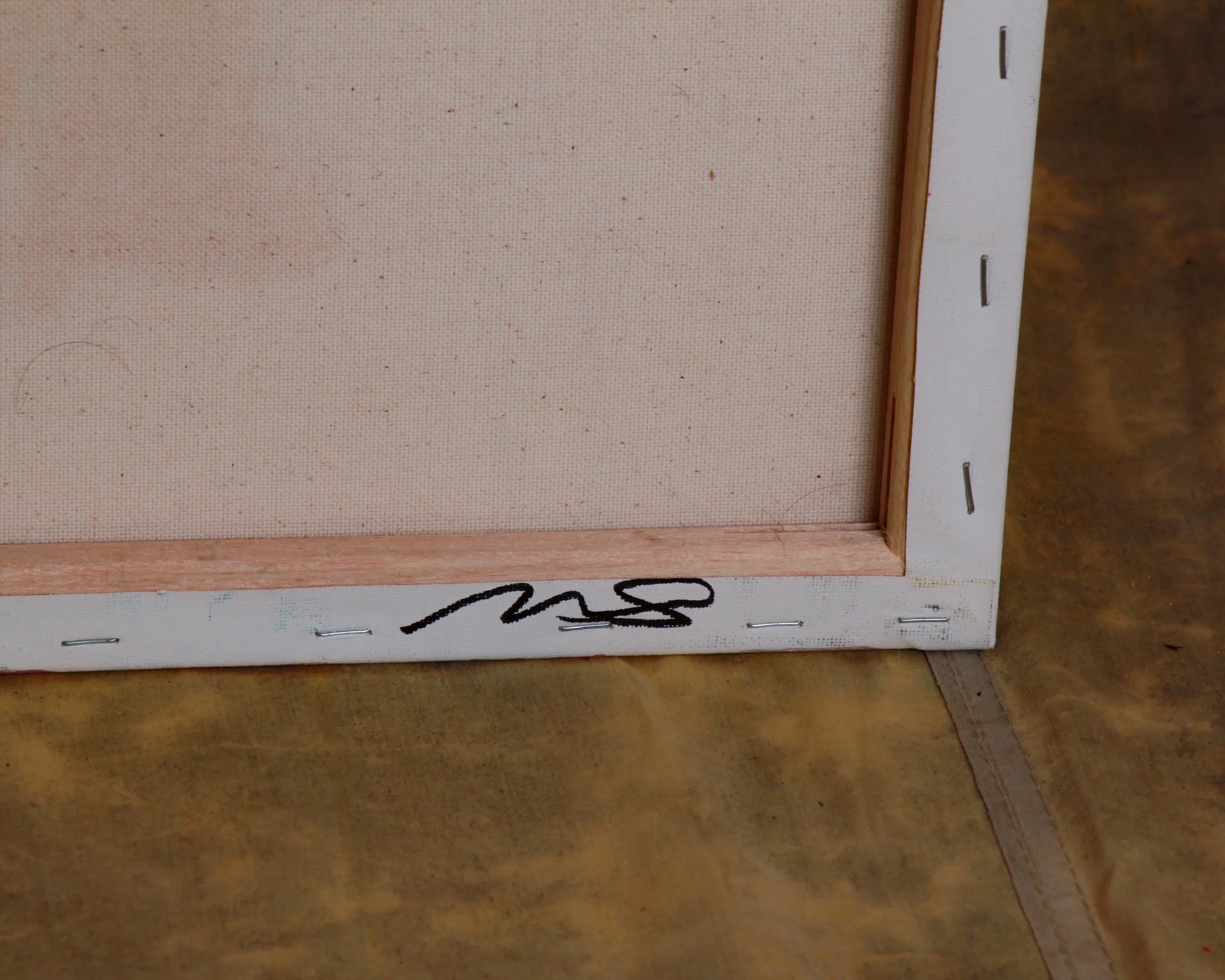
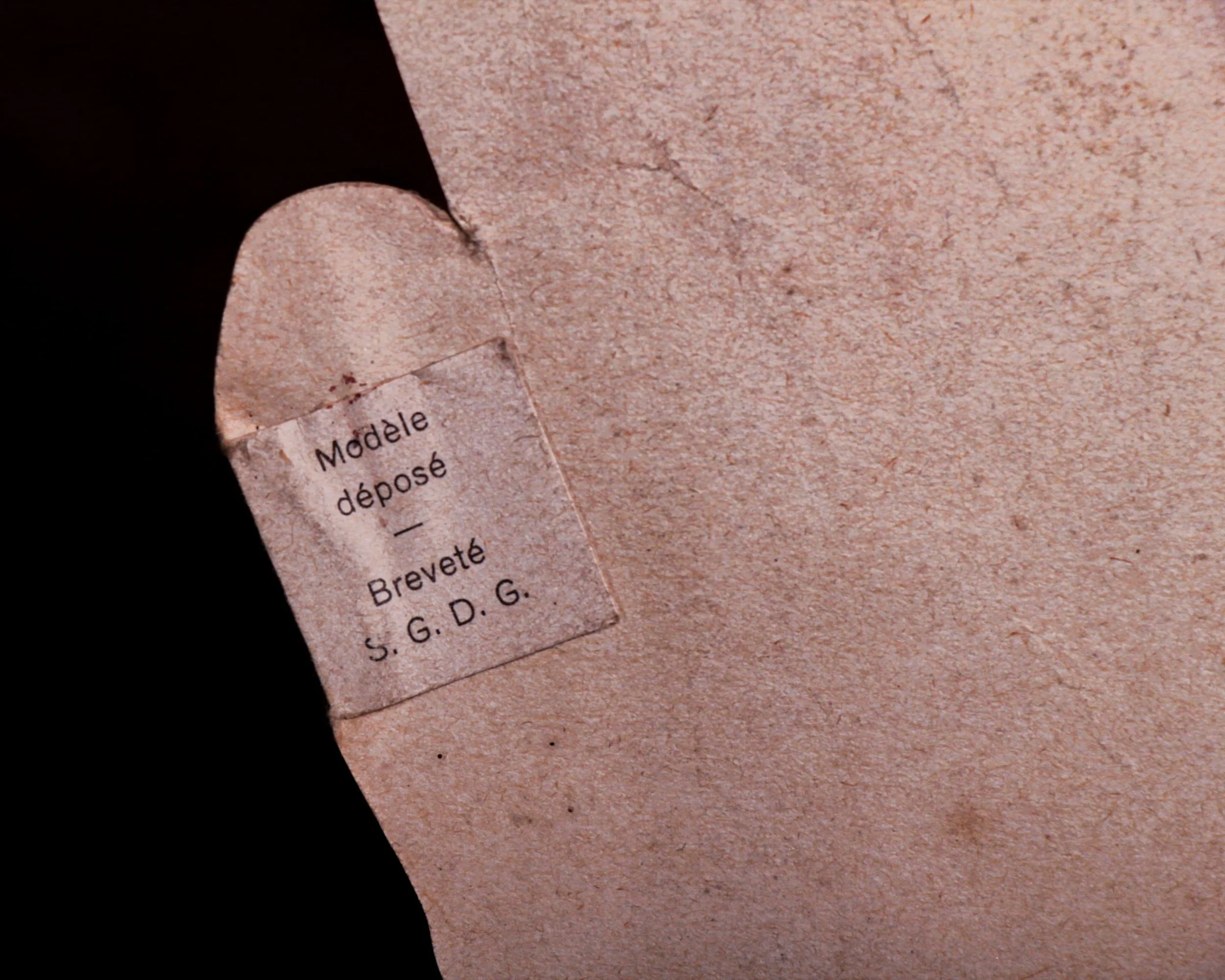
"Modèle déposé - Breveté S.G.D.G." on the back-essentially the French version of "patent pending" from the pre-war era.
Condition-wise, there are a few creases and scuffs from age as you would expect from ephemera this old, but nothing that detracts from the overall impact.
Category History
Philips light bulbs start with a straightforward ambition: make reliable light, then keep improving it. Founded in 1891 in the Netherlands, Philips began with carbon-filament lamps and quickly moved into refining how light could be produced, controlled, and standardized.
By the early 20th century, Philips was helping shape the shift to tungsten filaments and gas-filled bulbs, making light brighter, longer-lasting, and more efficient. Factories scaled up, but the focus stayed on consistency—one bulb behaving like the next, no surprises.
What’s interesting is how much design followed function. The bulb itself became an icon—simple, recognizable, unchanged in silhouette—while packaging and branding leaned into clarity and trust. You knew what you were getting.
Over time, Philips moved through fluorescent tubes, halogen, and into modern lighting technologies, but those early bulbs set the tone. Practical, dependable, and quietly transformative.
They’re easy to overlook, but that’s the point. Good light doesn’t announce itself—it just works, shaping spaces and routines without asking for attention.
Wildly charming and wonderfully odd French advertising display for Philips light bulbs, shaped like the face of a wide-eyed, bespectacled child wearing a golden crown. The crown reads, in dramatic, slightly guilt-tripping French: "Maman n'emploie pas de LAMPES PHILIPS" ("Mom doesn't use Philips bulbs"). A clever little guilt trip aimed straight at the household lighting decision-maker. This piece is made from die-cut board and was designed to double as a mask, complete with eyeholes and a slit for the nose. It was produced by Gaston Maillet et Cie in Saint-Ouen and marked:
"Modèle déposé - Breveté S.G.D.G." on the back-essentially the French version of "patent pending" from the pre-war era.
Condition-wise, there are a few creases and scuffs from age as you would expect from ephemera this old, but nothing that detracts from the overall impact.
Category History
Philips light bulbs start with a straightforward ambition: make reliable light, then keep improving it. Founded in 1891 in the Netherlands, Philips began with carbon-filament lamps and quickly moved into refining how light could be produced, controlled, and standardized.
By the early 20th century, Philips was helping shape the shift to tungsten filaments and gas-filled bulbs, making light brighter, longer-lasting, and more efficient. Factories scaled up, but the focus stayed on consistency—one bulb behaving like the next, no surprises.
What’s interesting is how much design followed function. The bulb itself became an icon—simple, recognizable, unchanged in silhouette—while packaging and branding leaned into clarity and trust. You knew what you were getting.
Over time, Philips moved through fluorescent tubes, halogen, and into modern lighting technologies, but those early bulbs set the tone. Practical, dependable, and quietly transformative.
They’re easy to overlook, but that’s the point. Good light doesn’t announce itself—it just works, shaping spaces and routines without asking for attention.