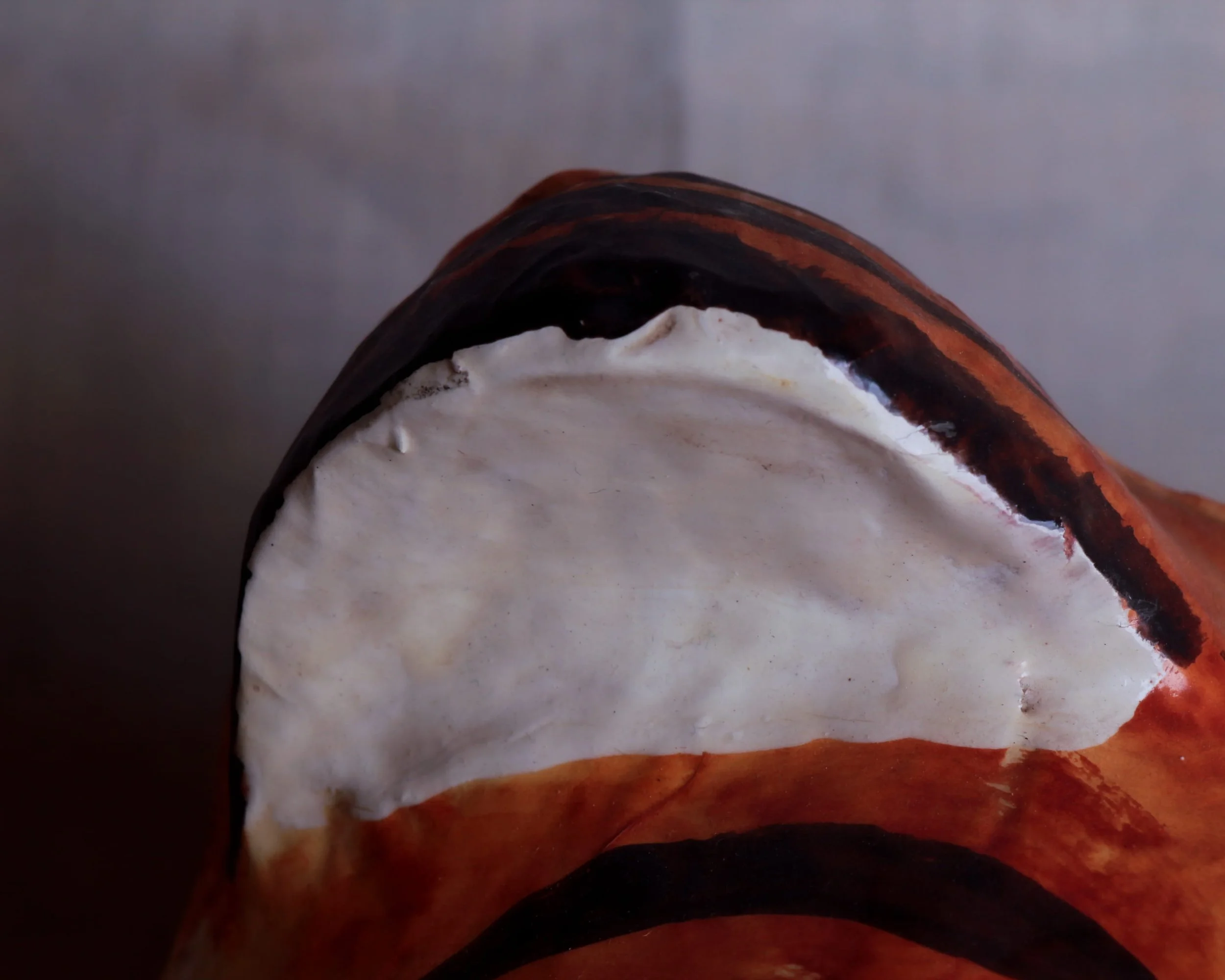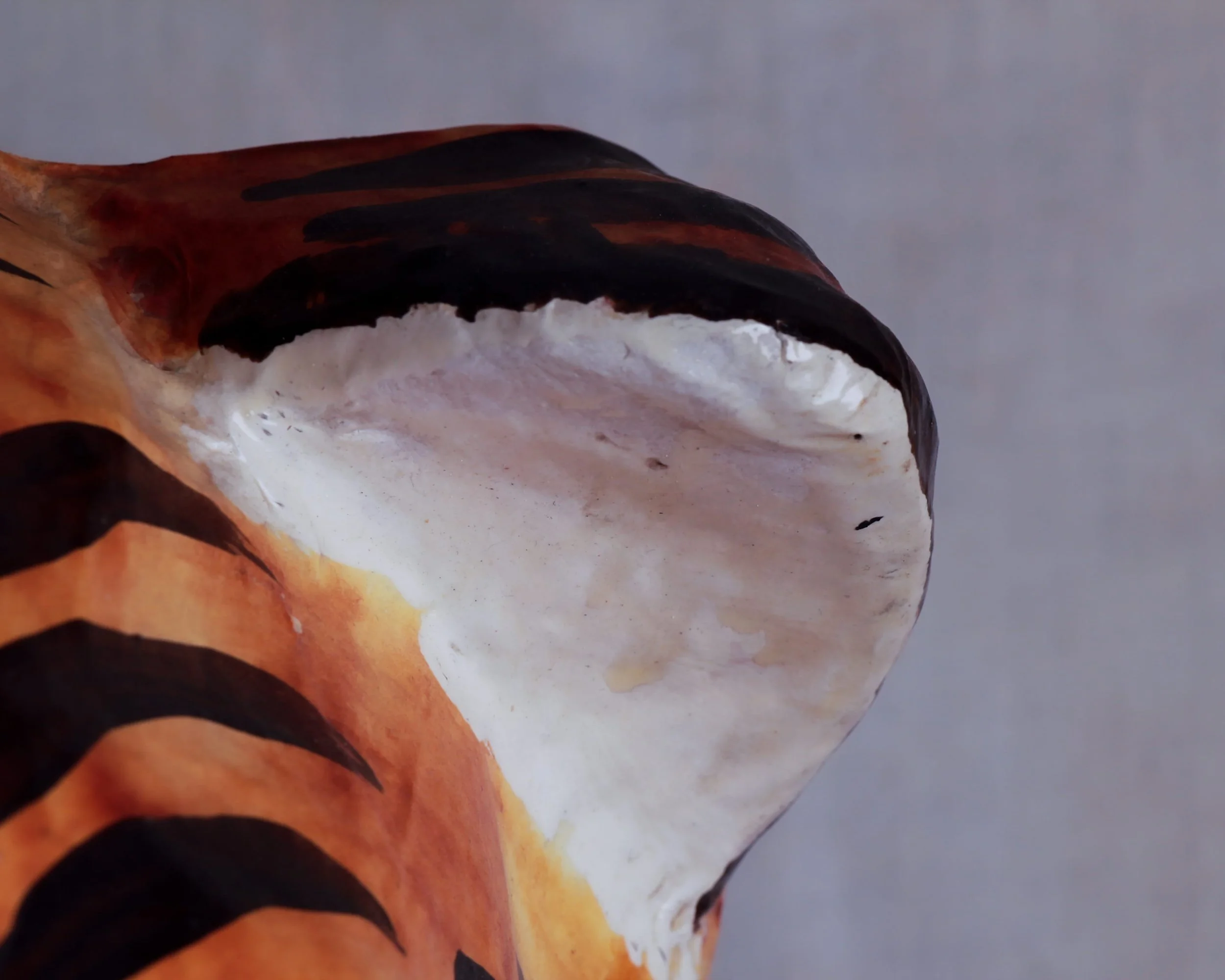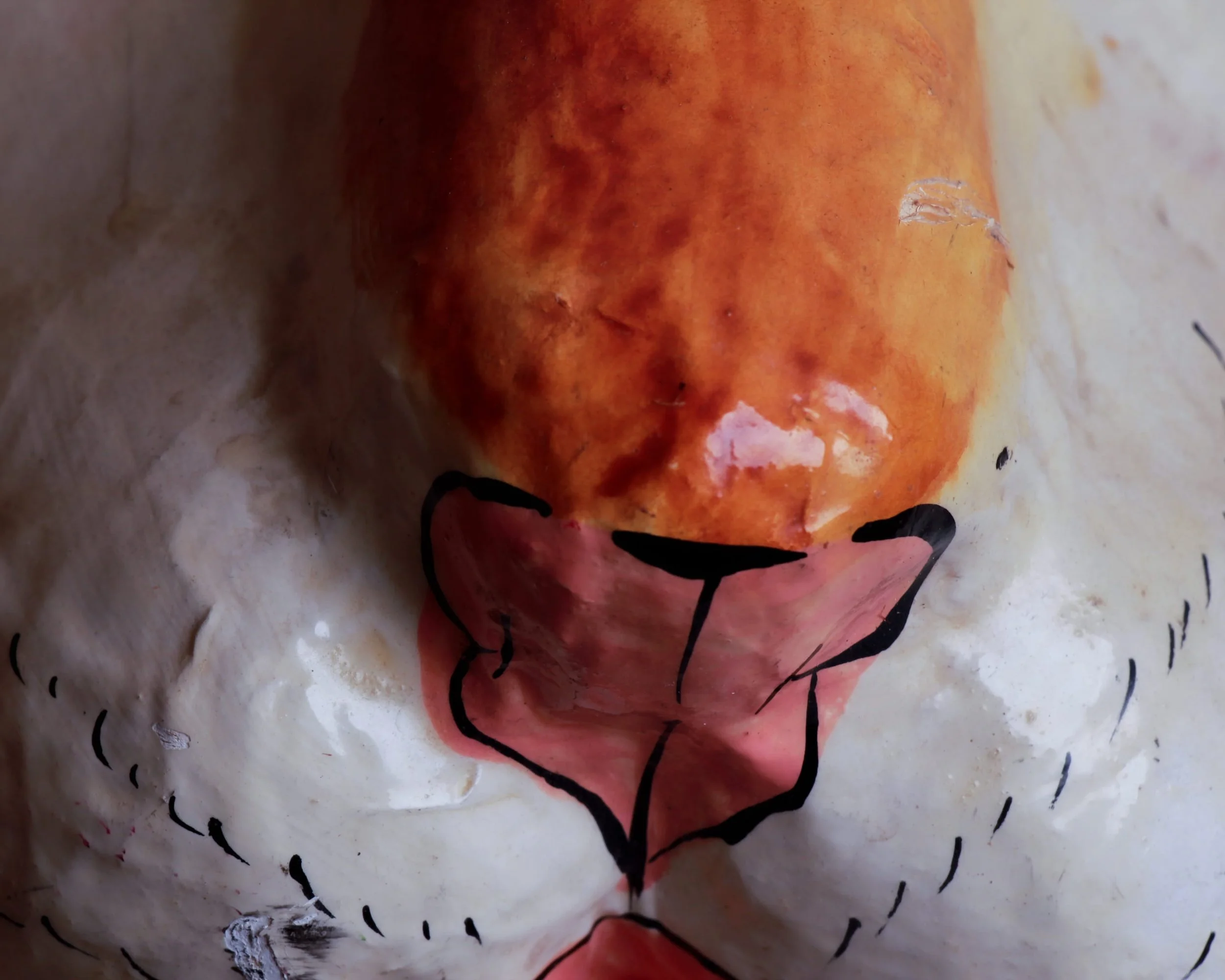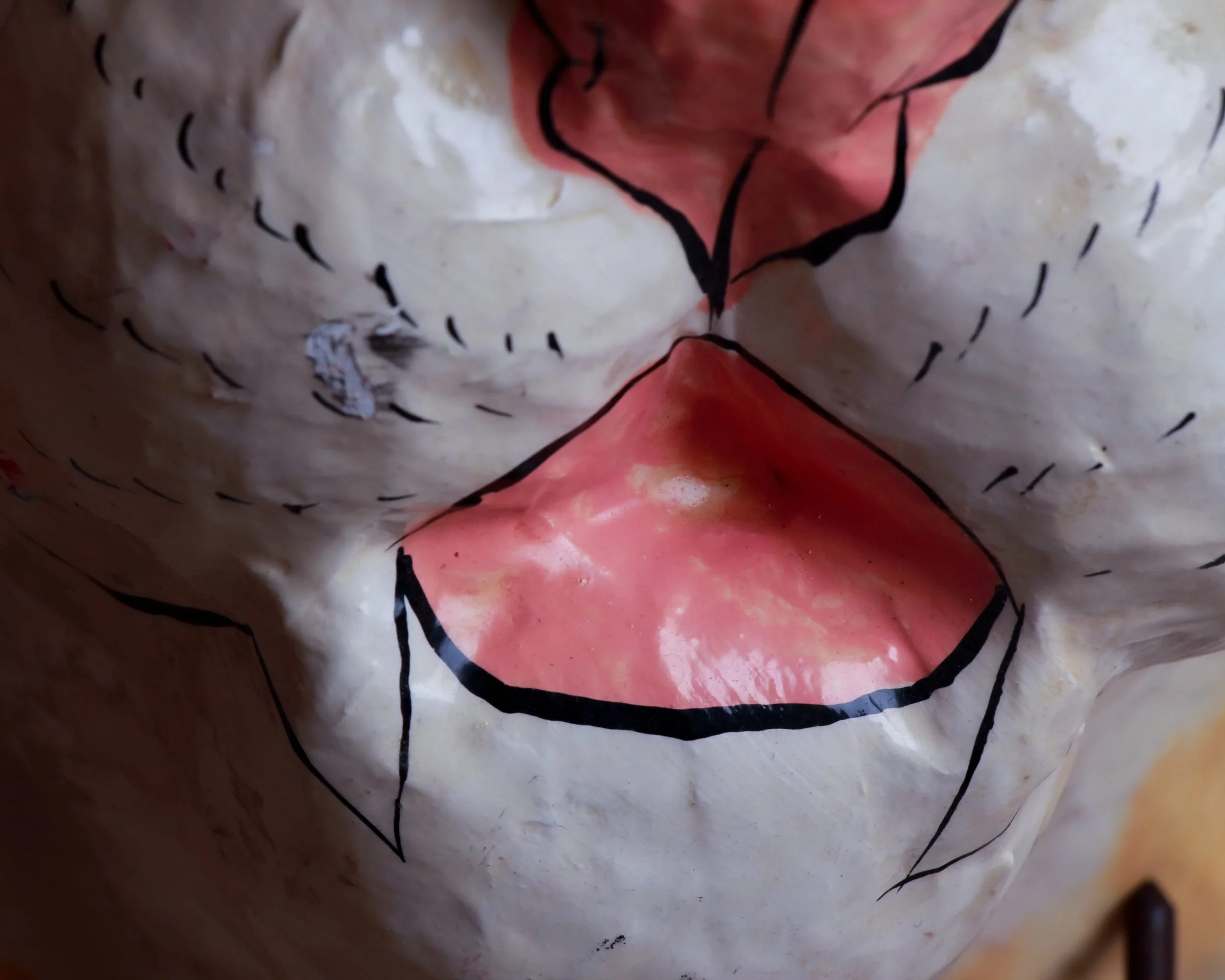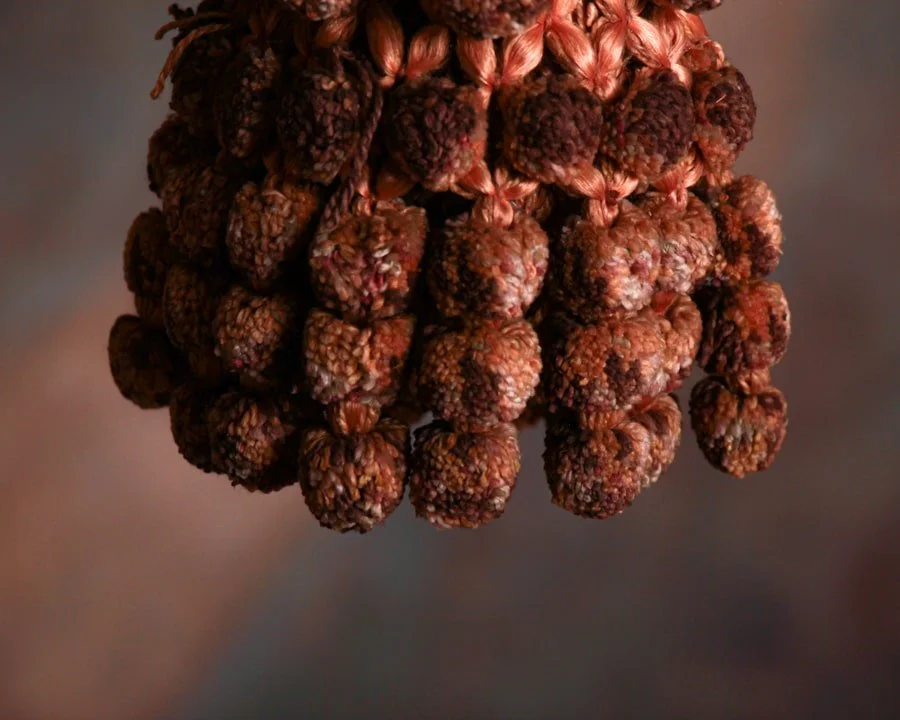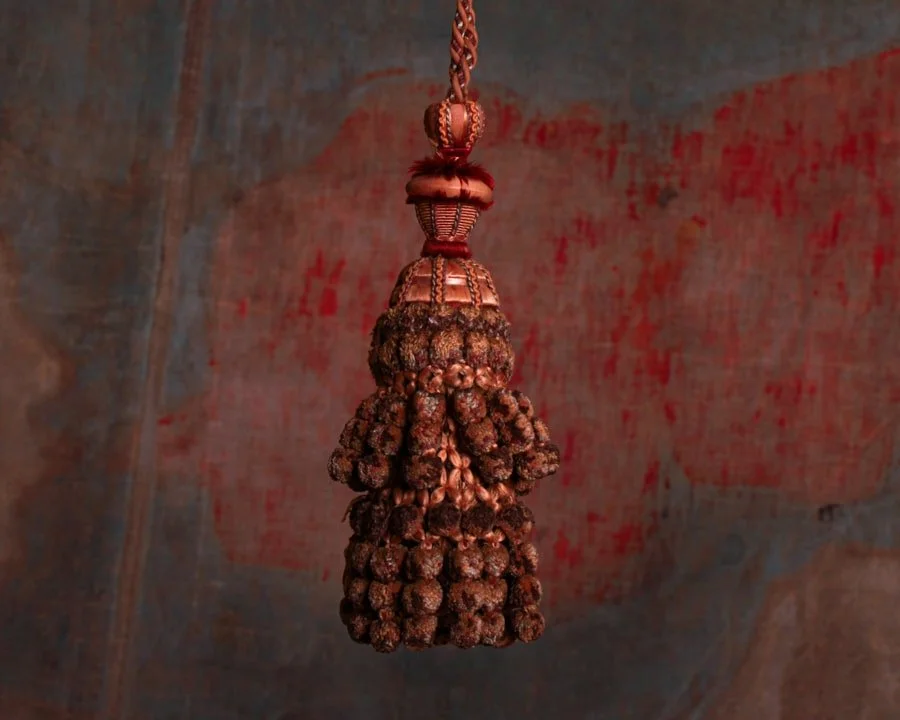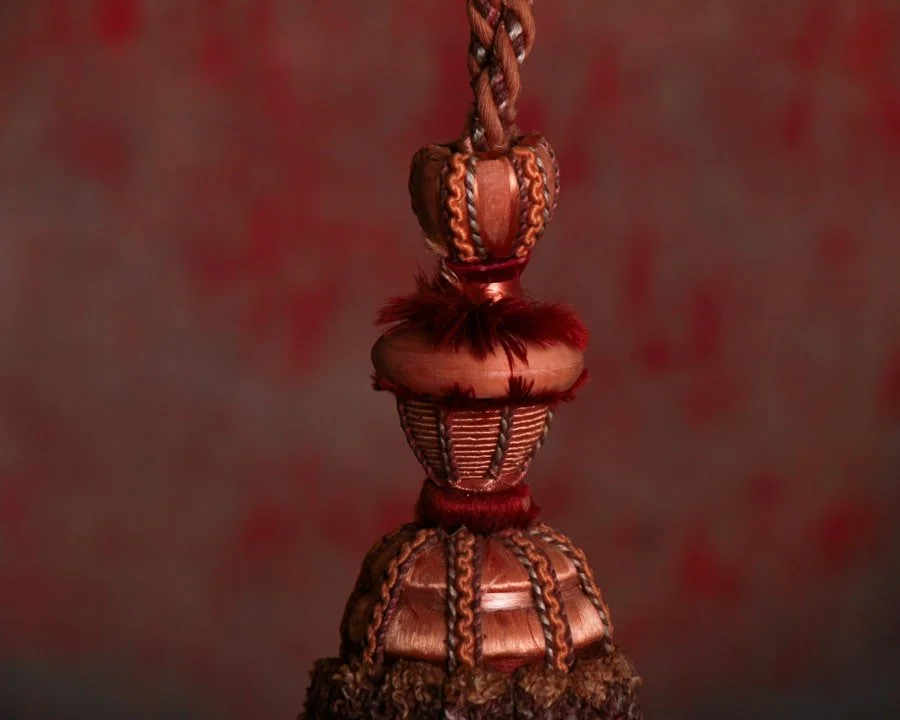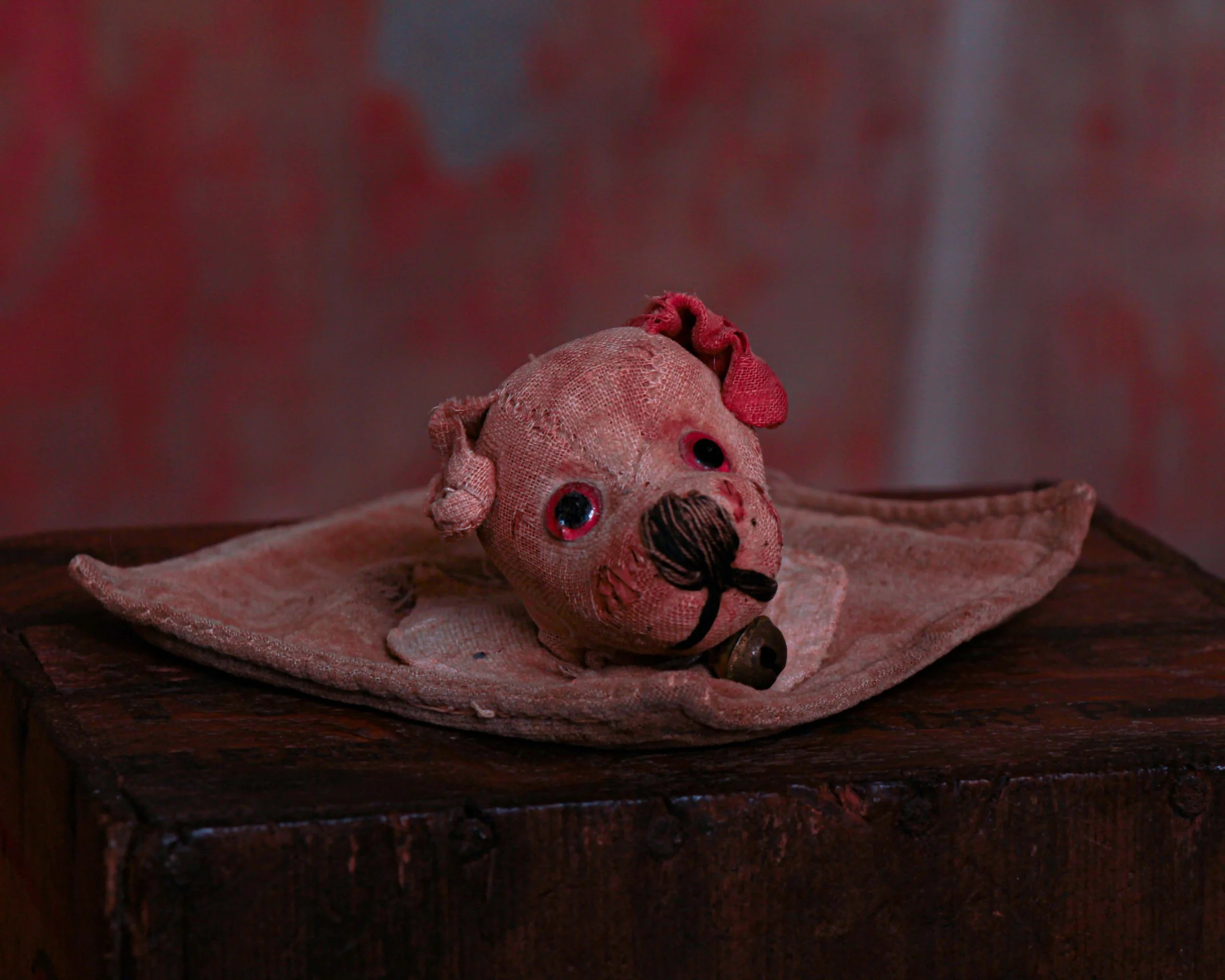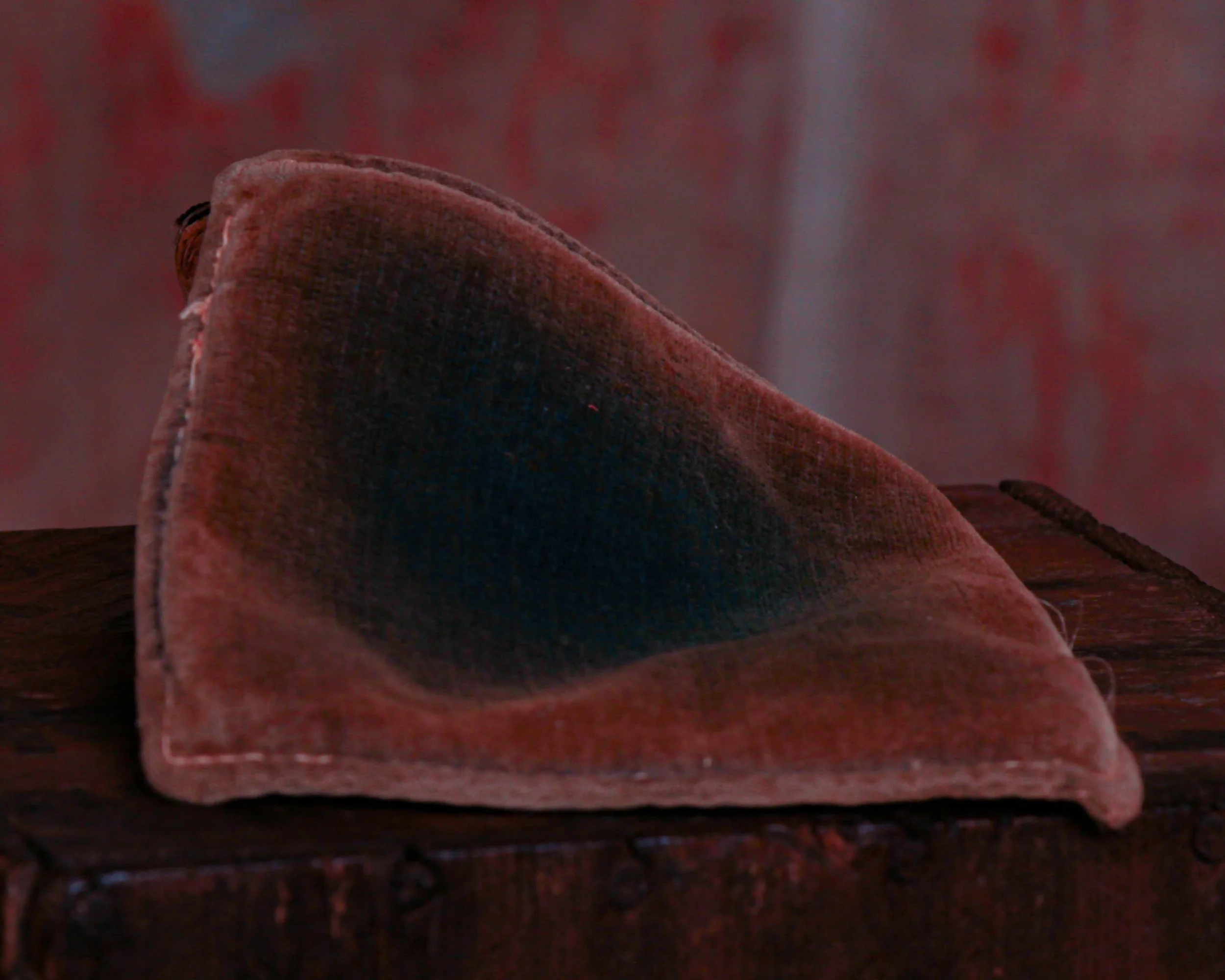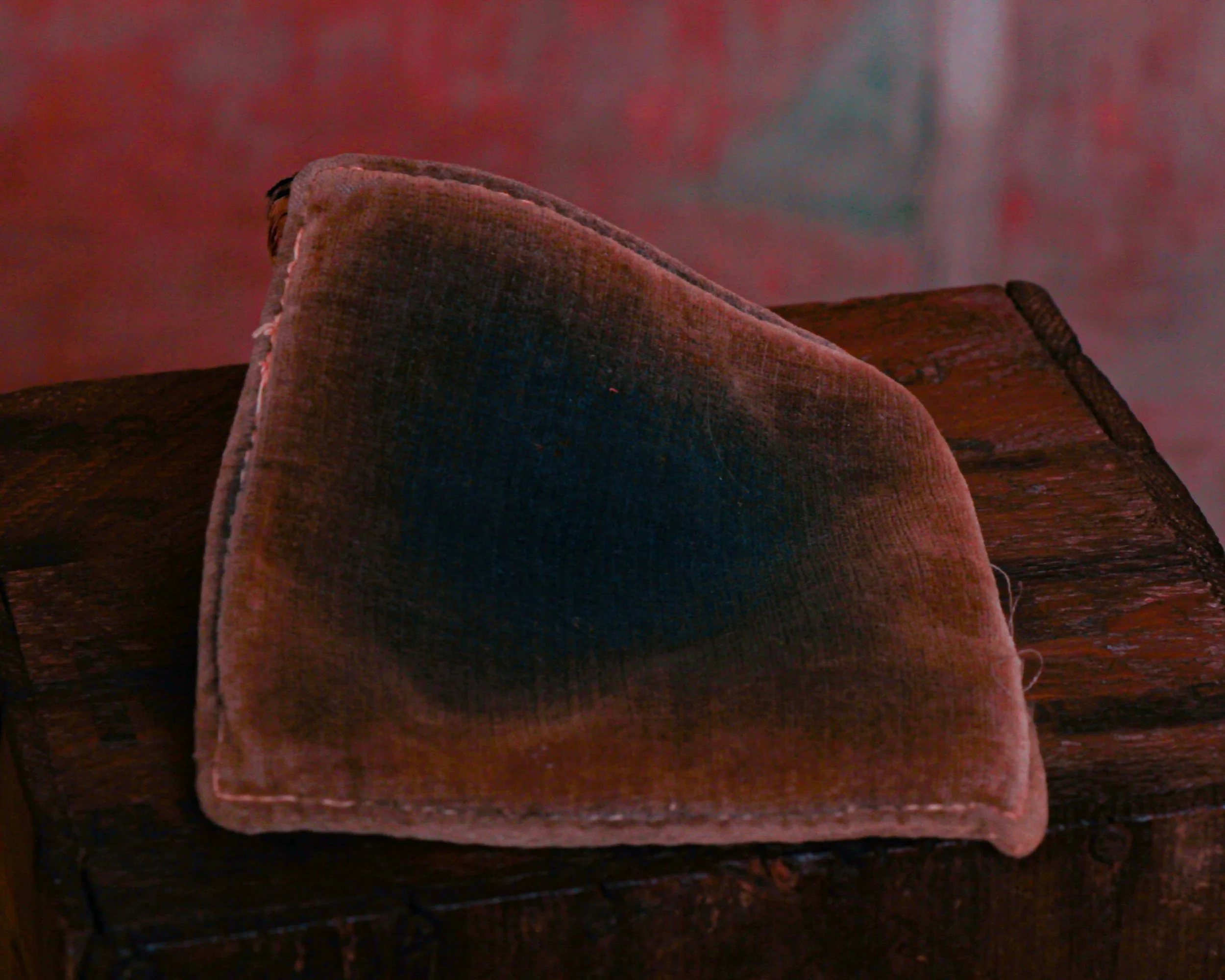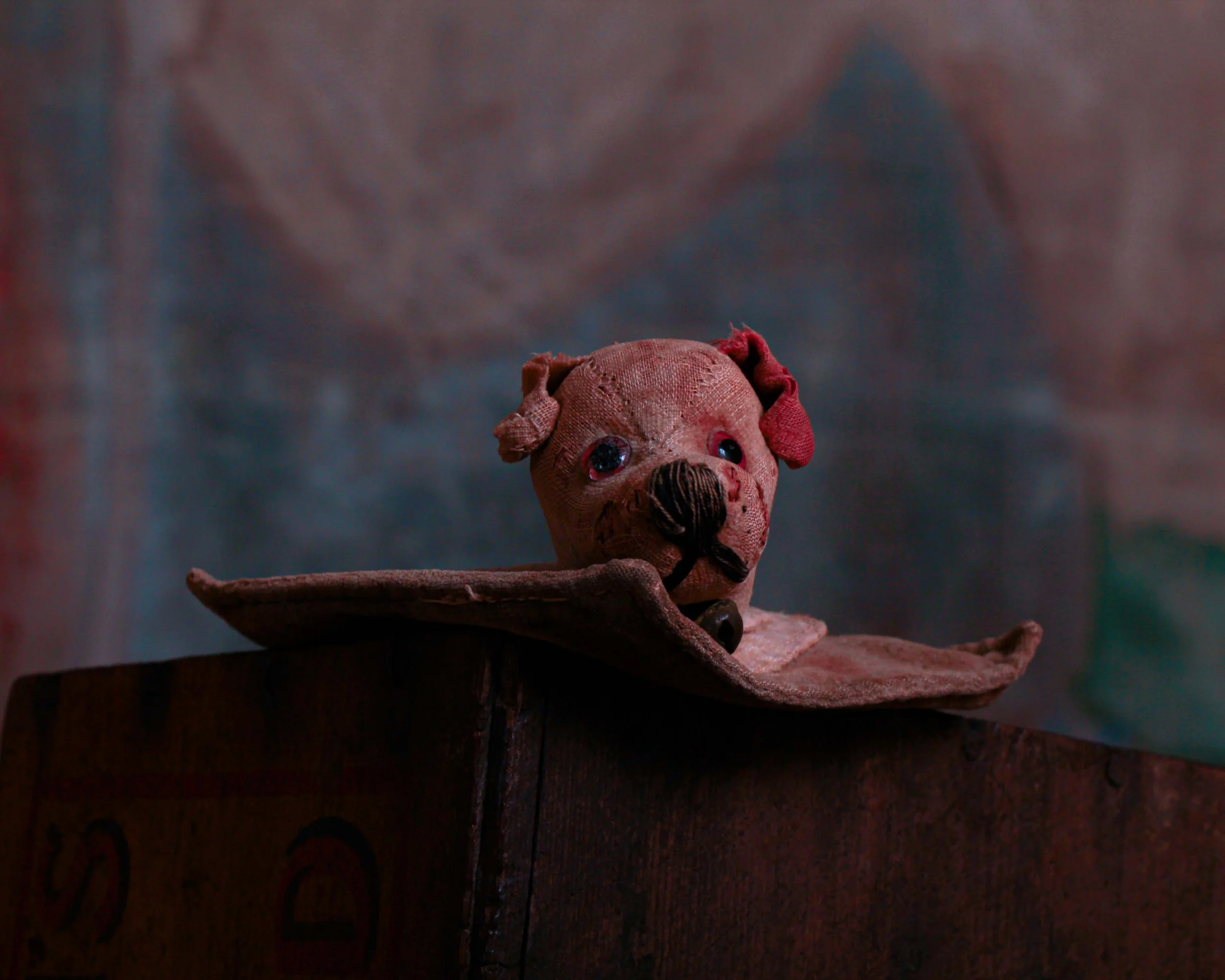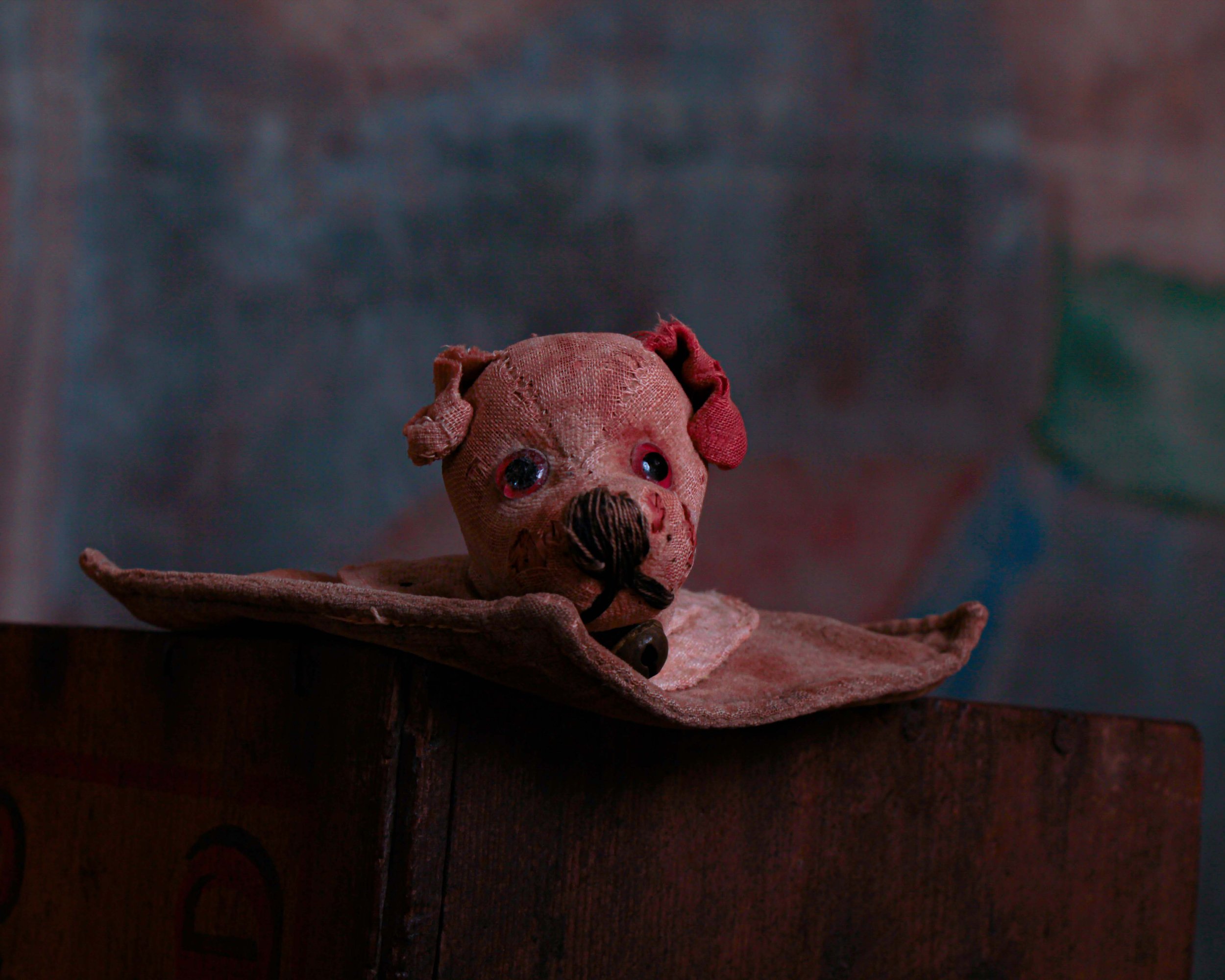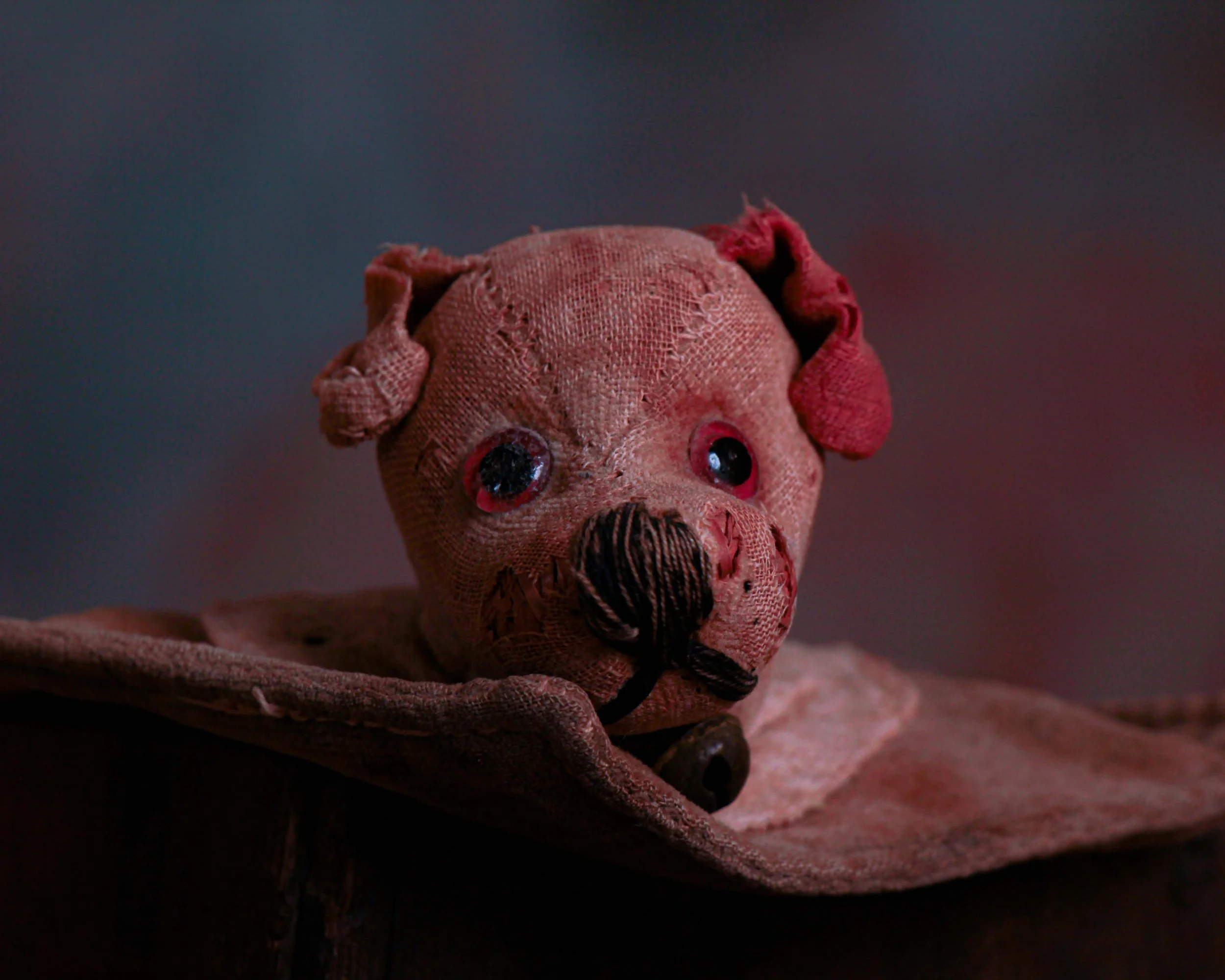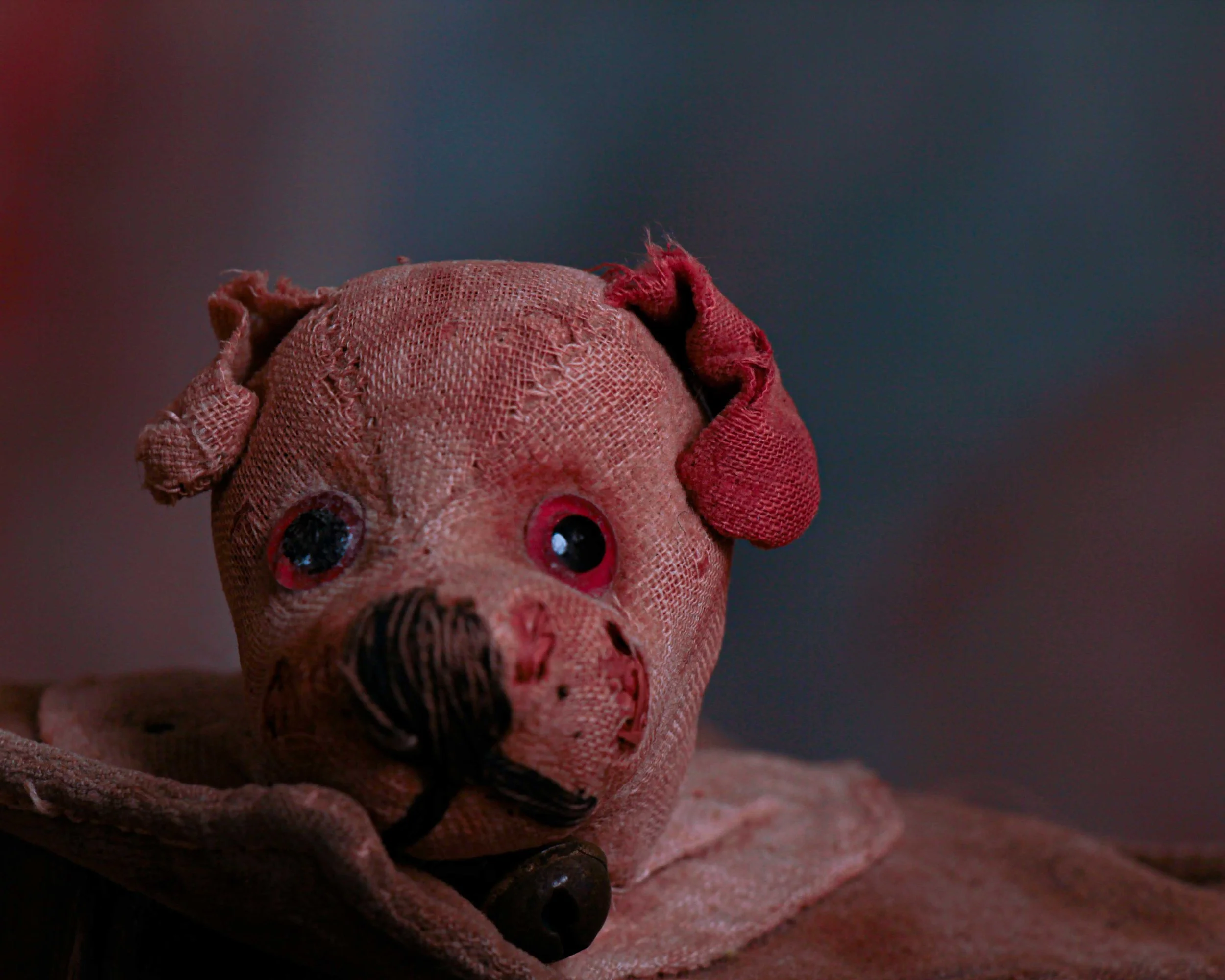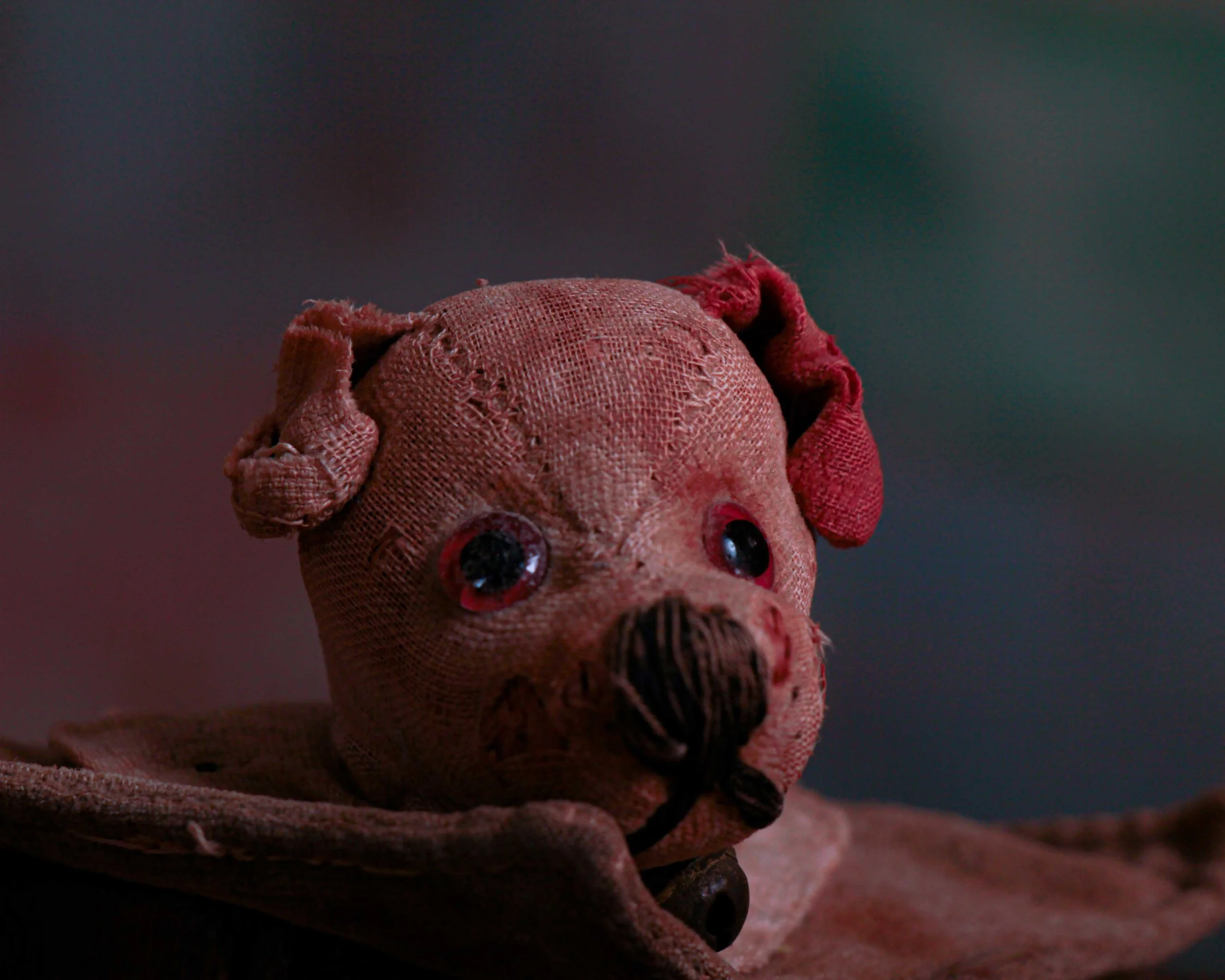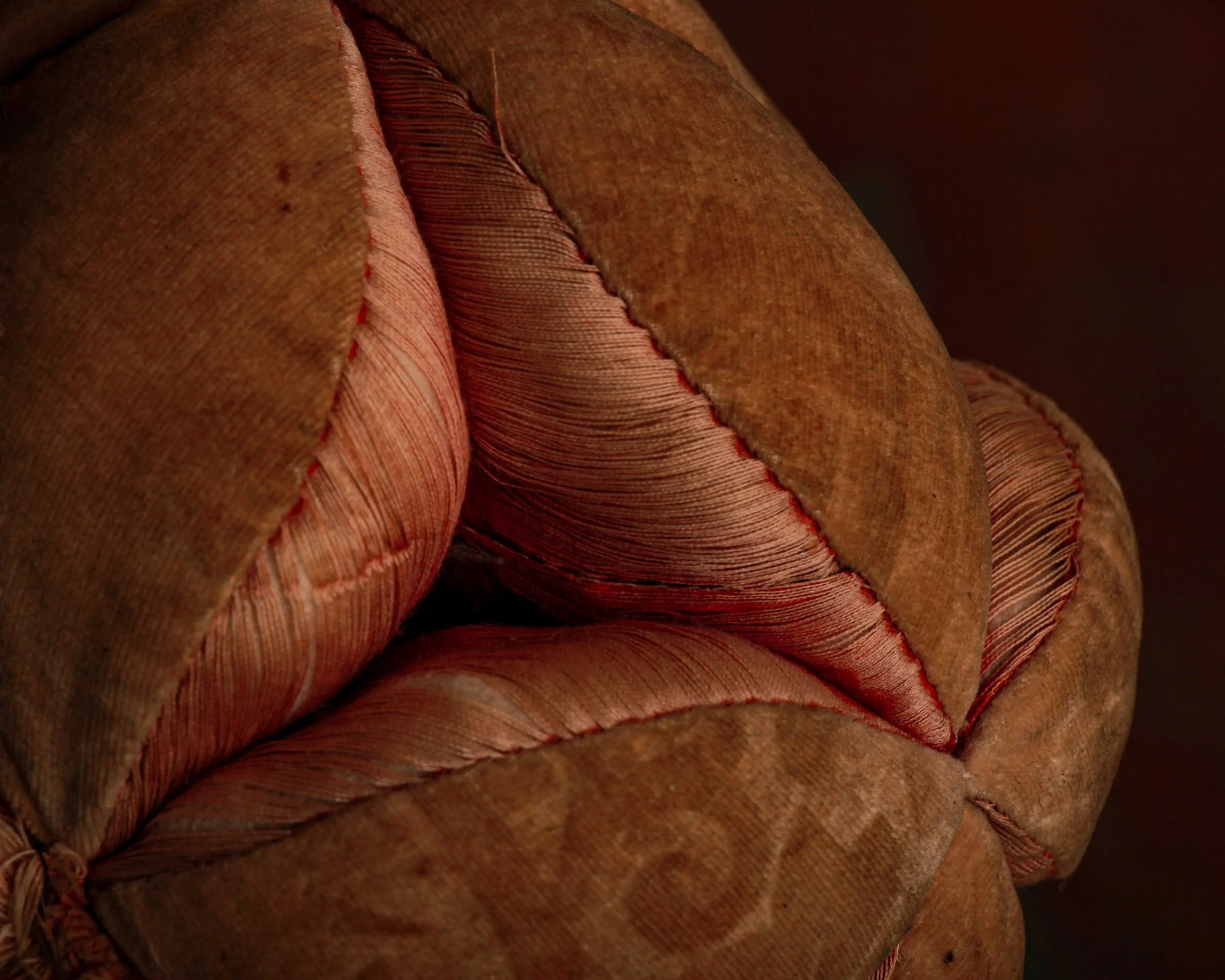
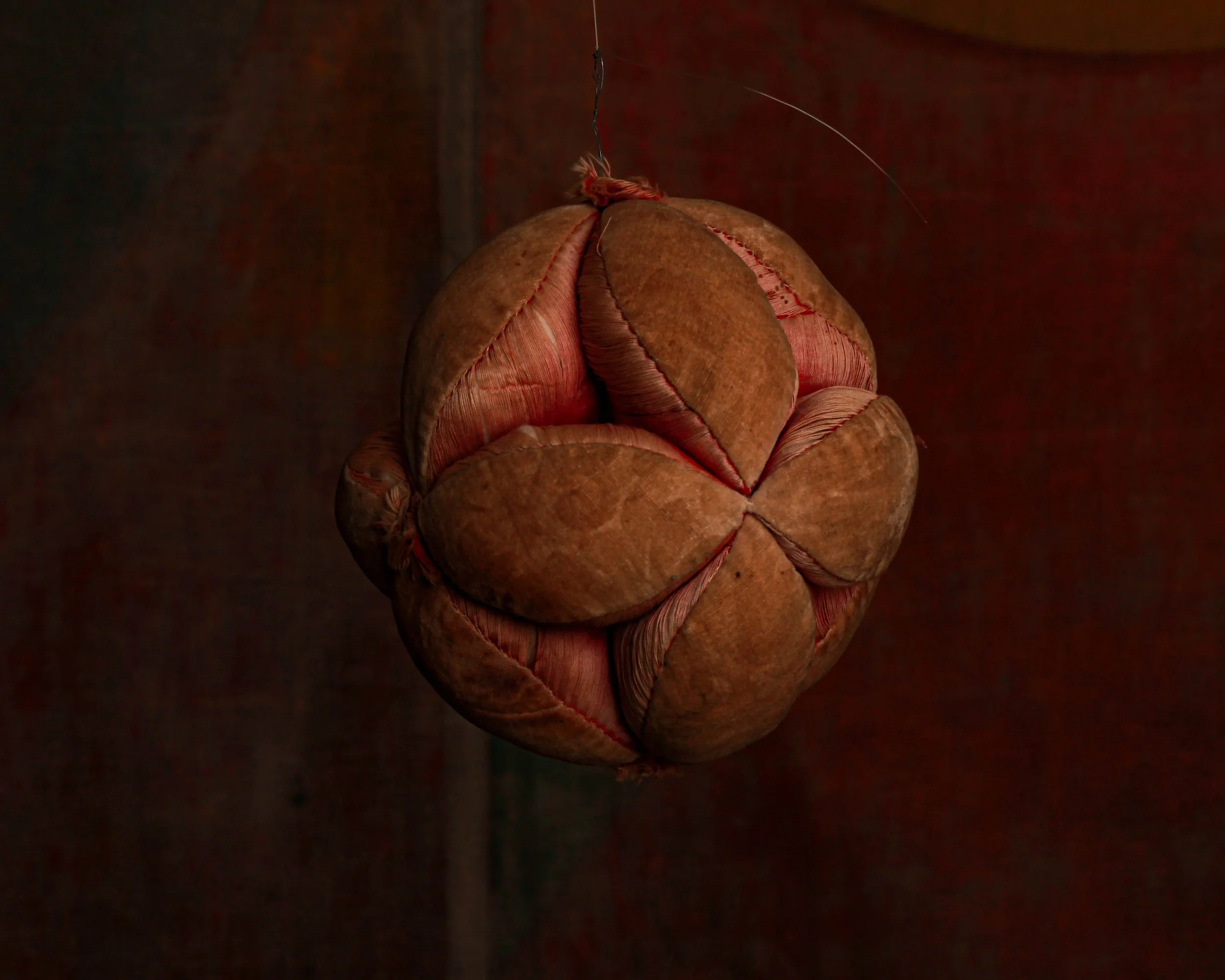
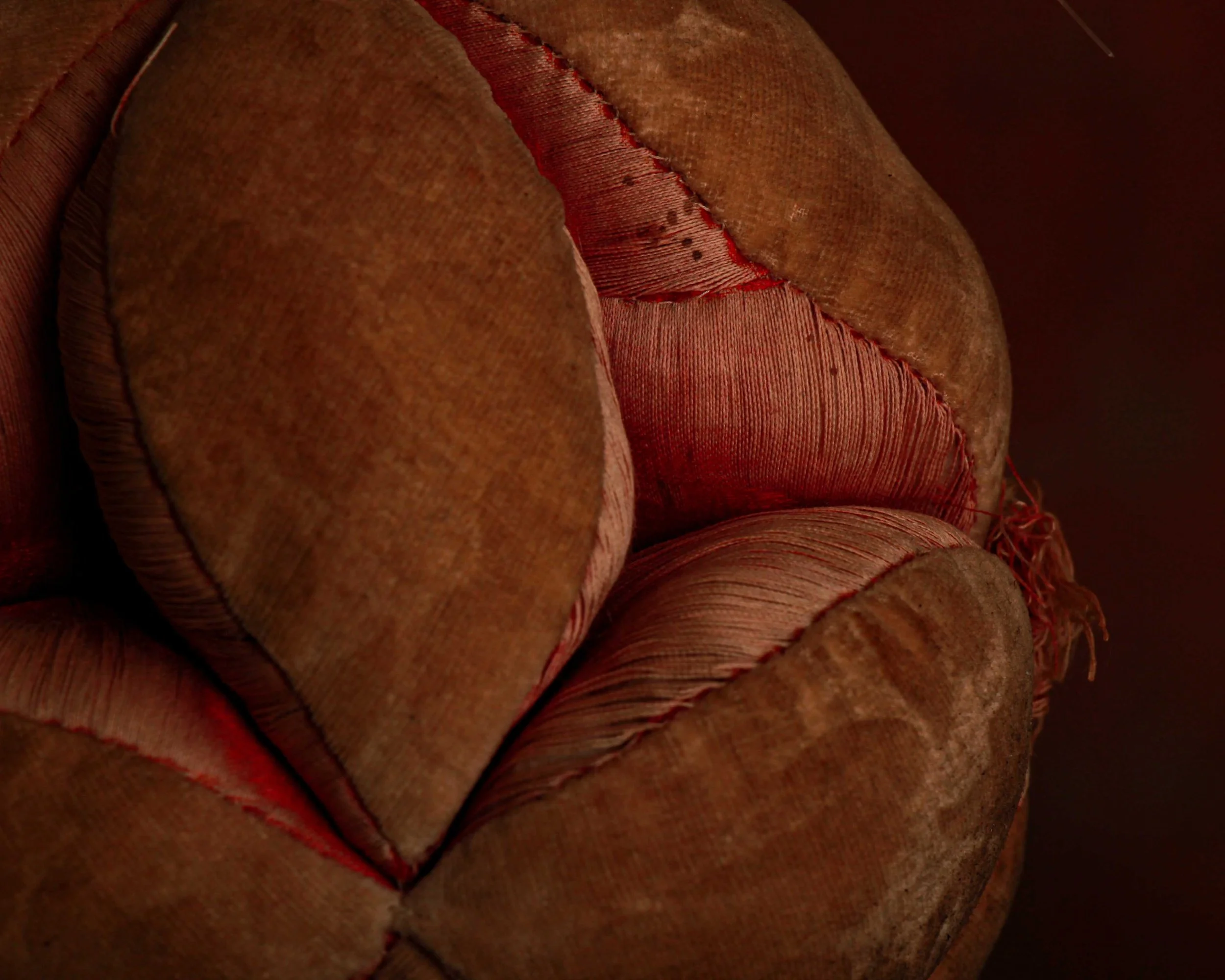
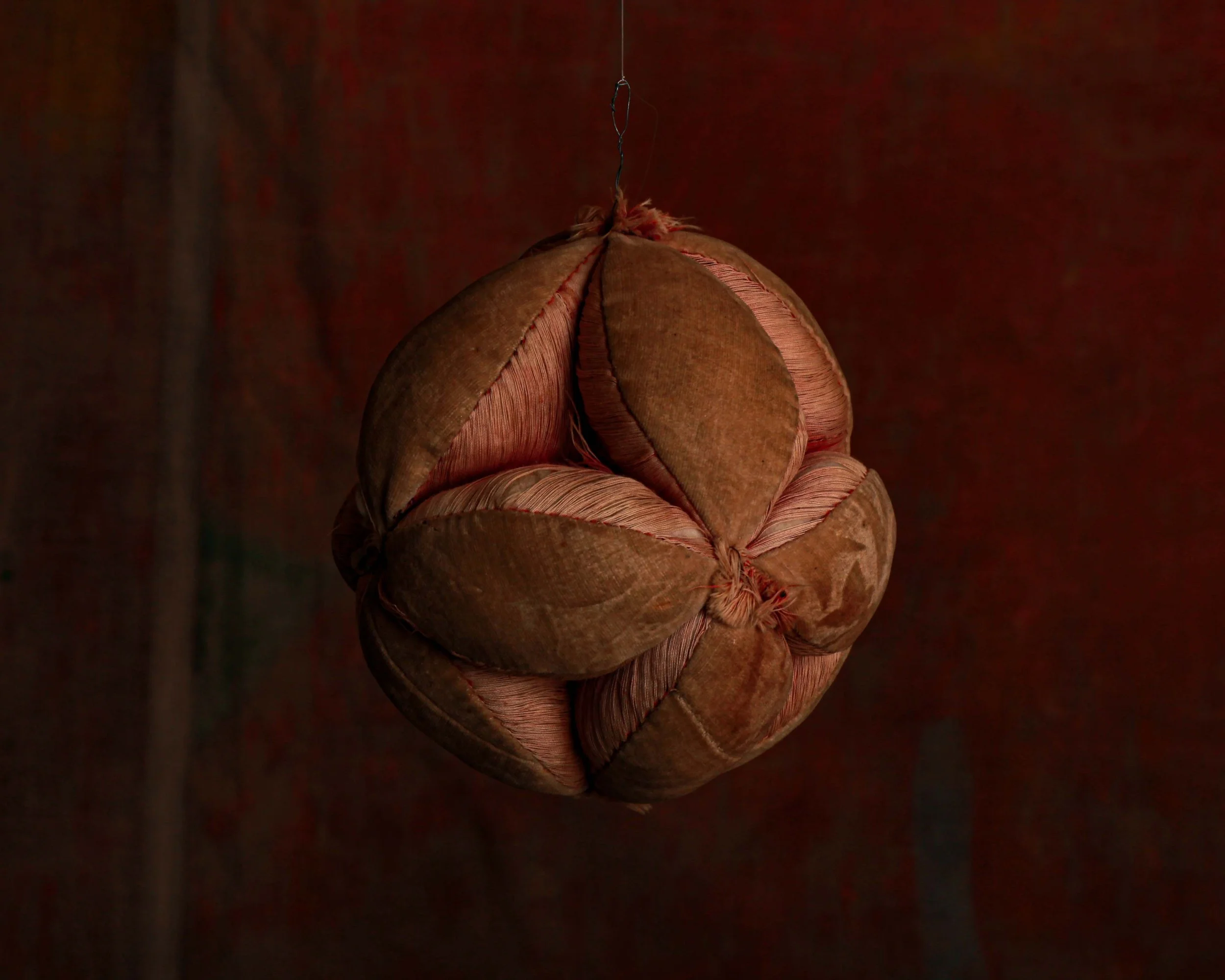
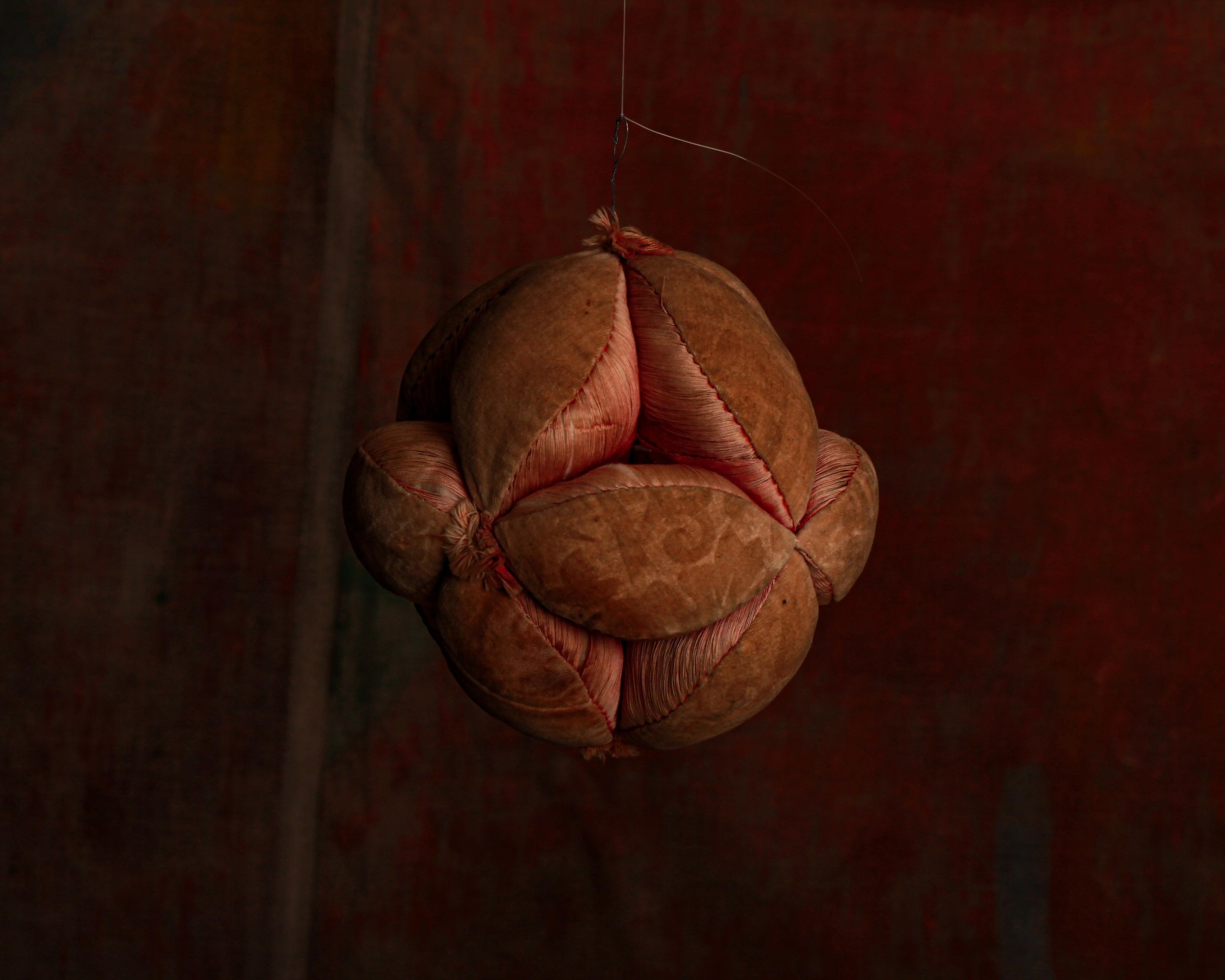
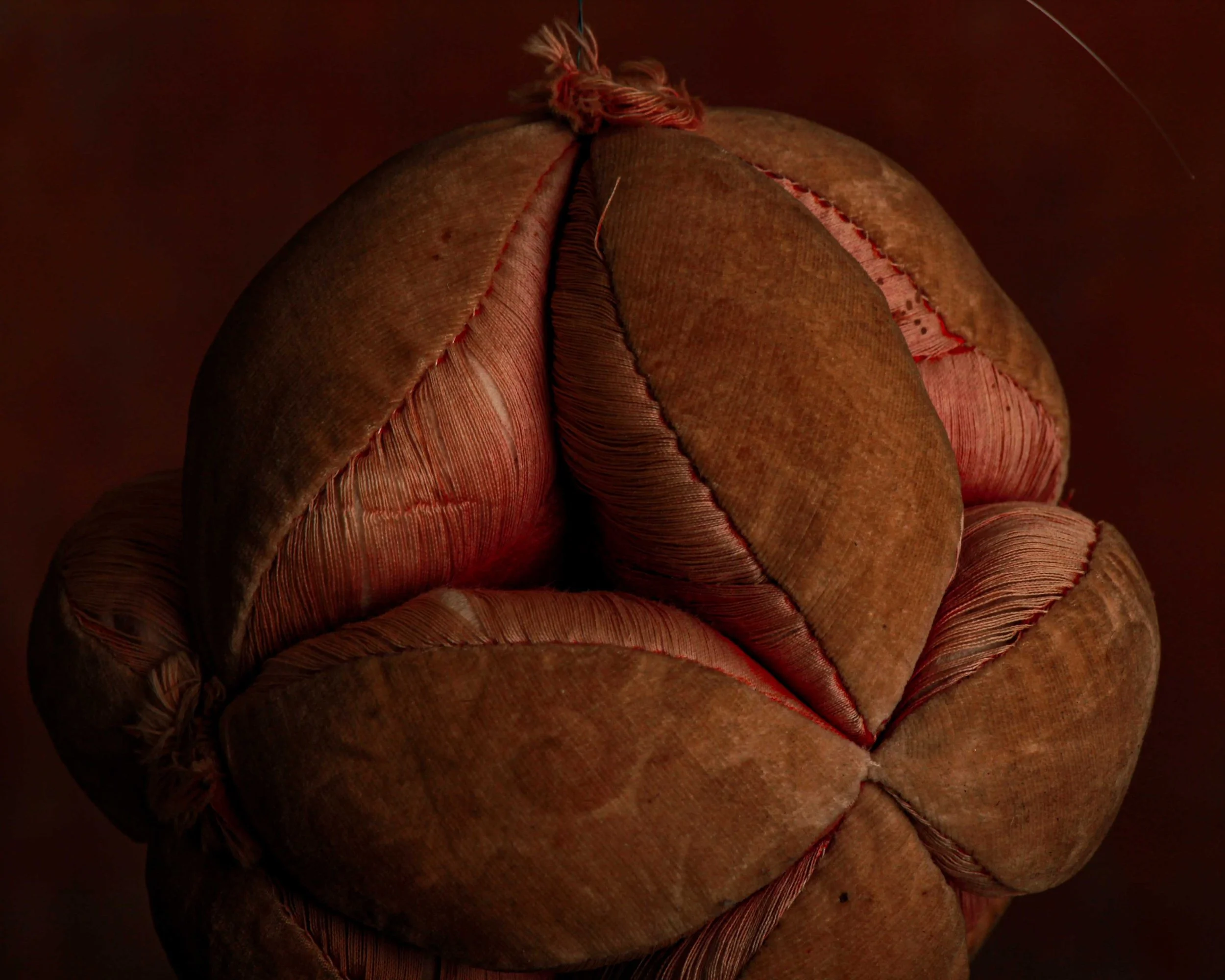
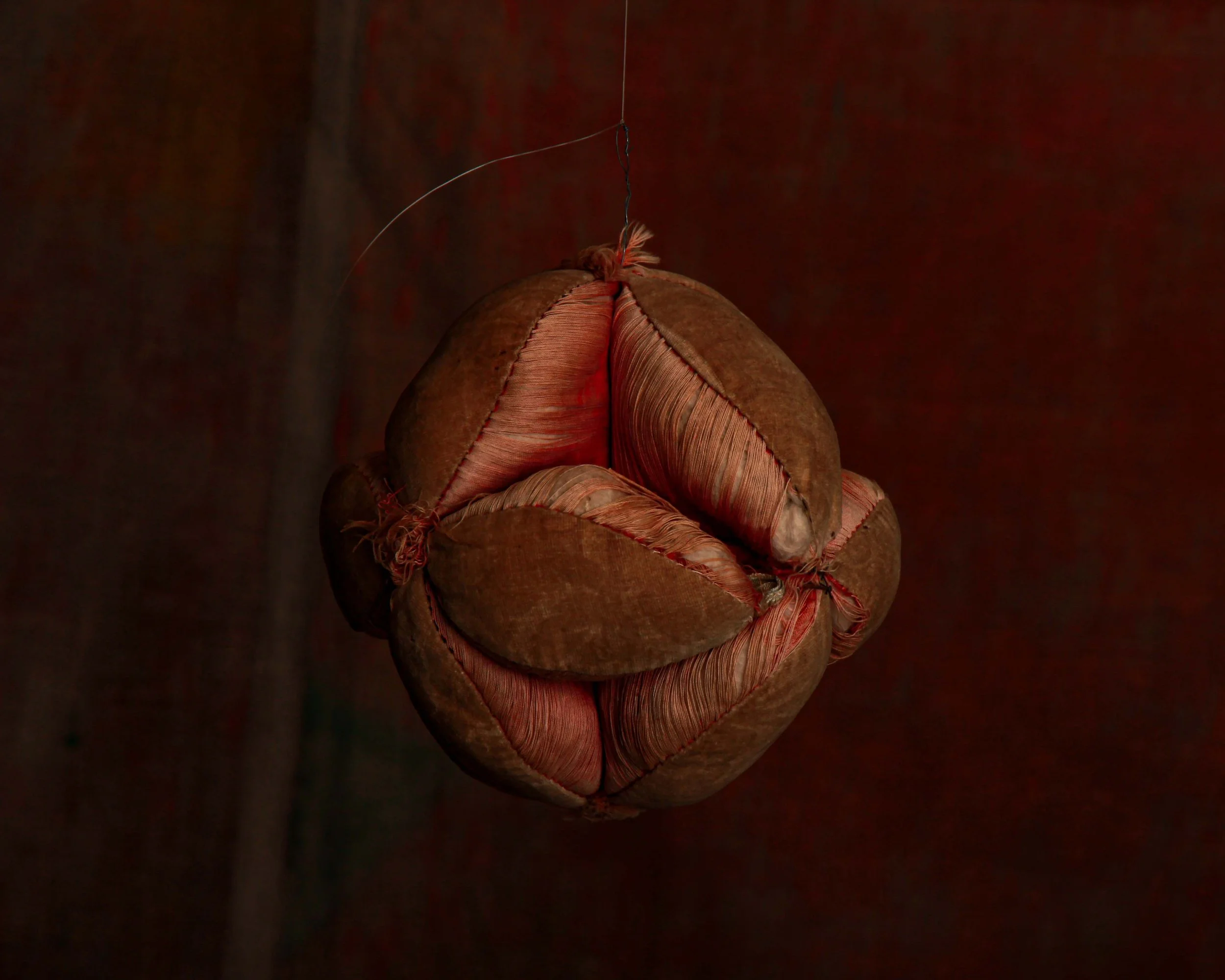
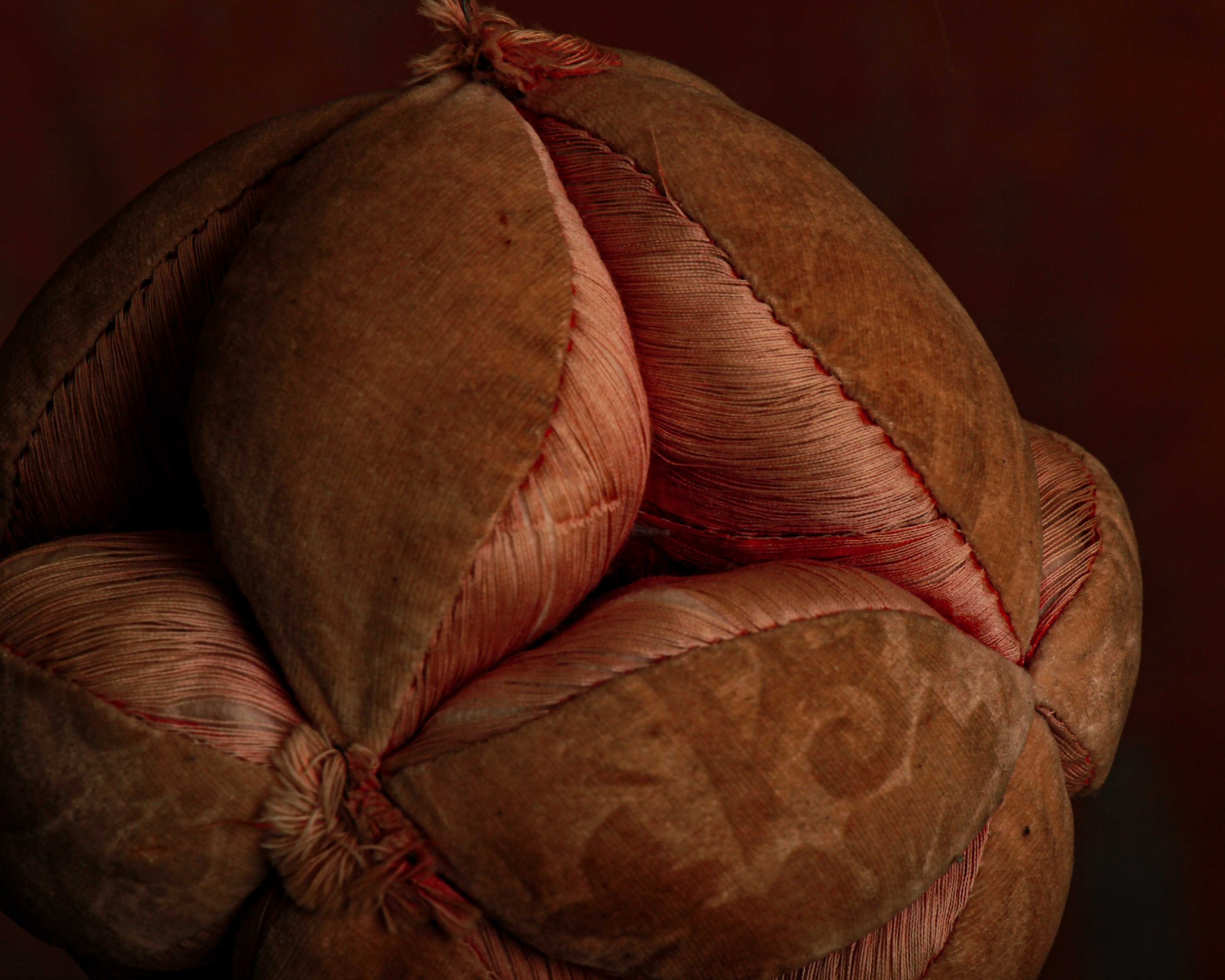
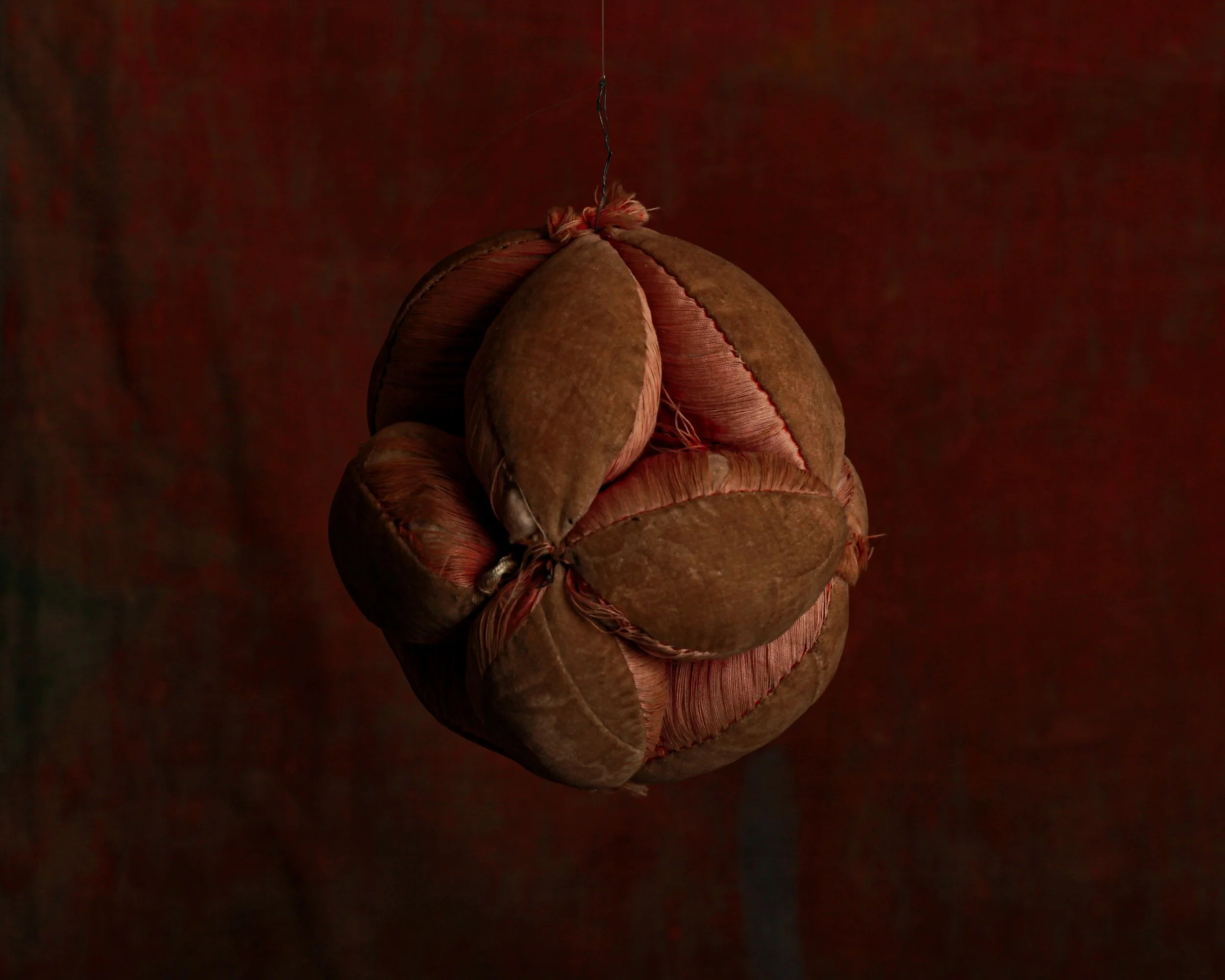
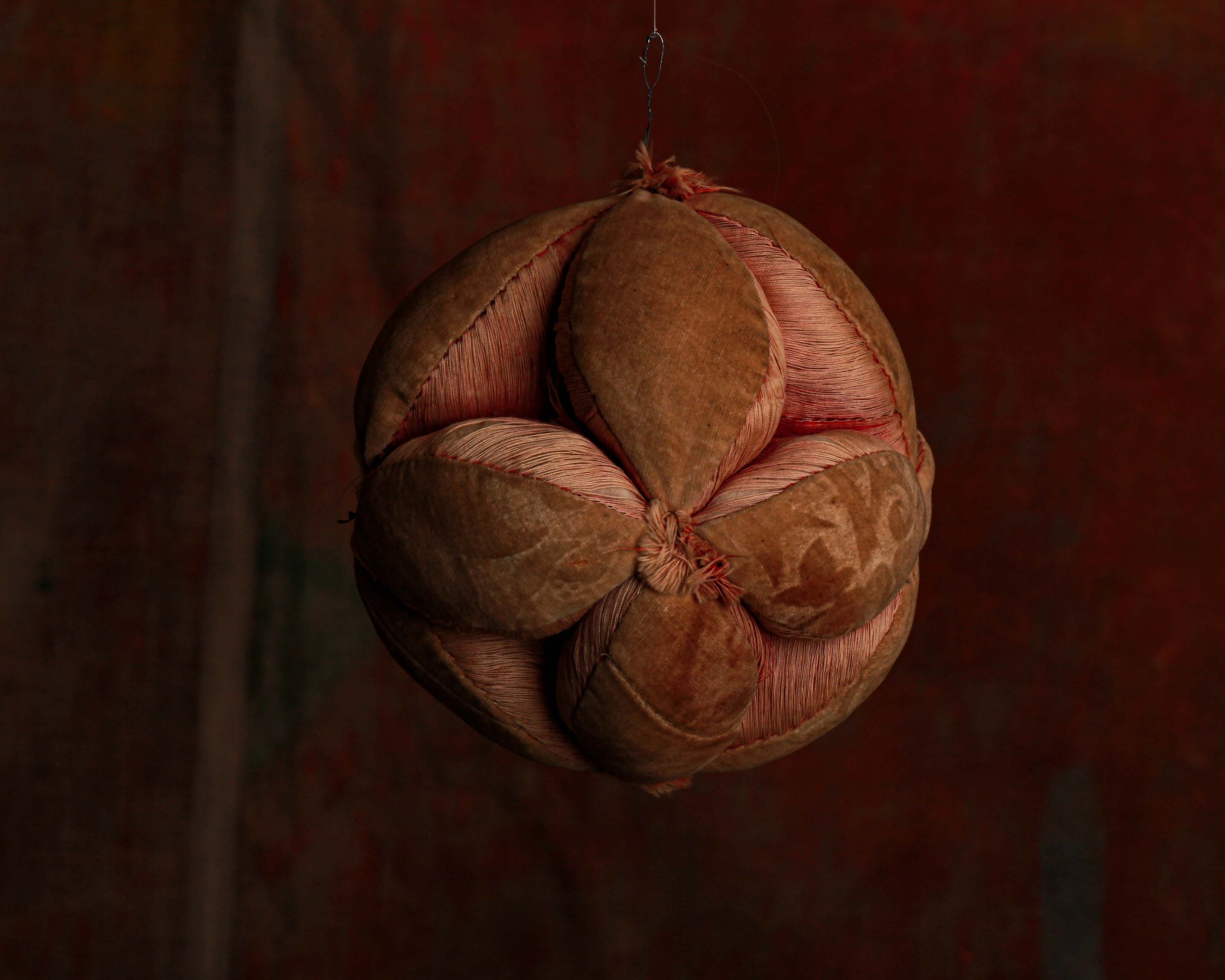
A handmade pincushion, roughly spherical, stitched together from petal-like segments of worn brown cloth, each one slightly puckered with age. Some might say yonic in nature.
The construction is beautiful in that very honest, utilitarian way. Each section is hand-sewn, pulled tight into a bulbous, almost floral form, with the seams acting like ribs. The outer fabric has that soft, handled patina you only get from years of use, while the exposed edges hint at older textile layers beneath. It’s the kind of object that lived within arm’s reach, passed over without ceremony, doing its job day in and day out.
And then there’s the surprise.
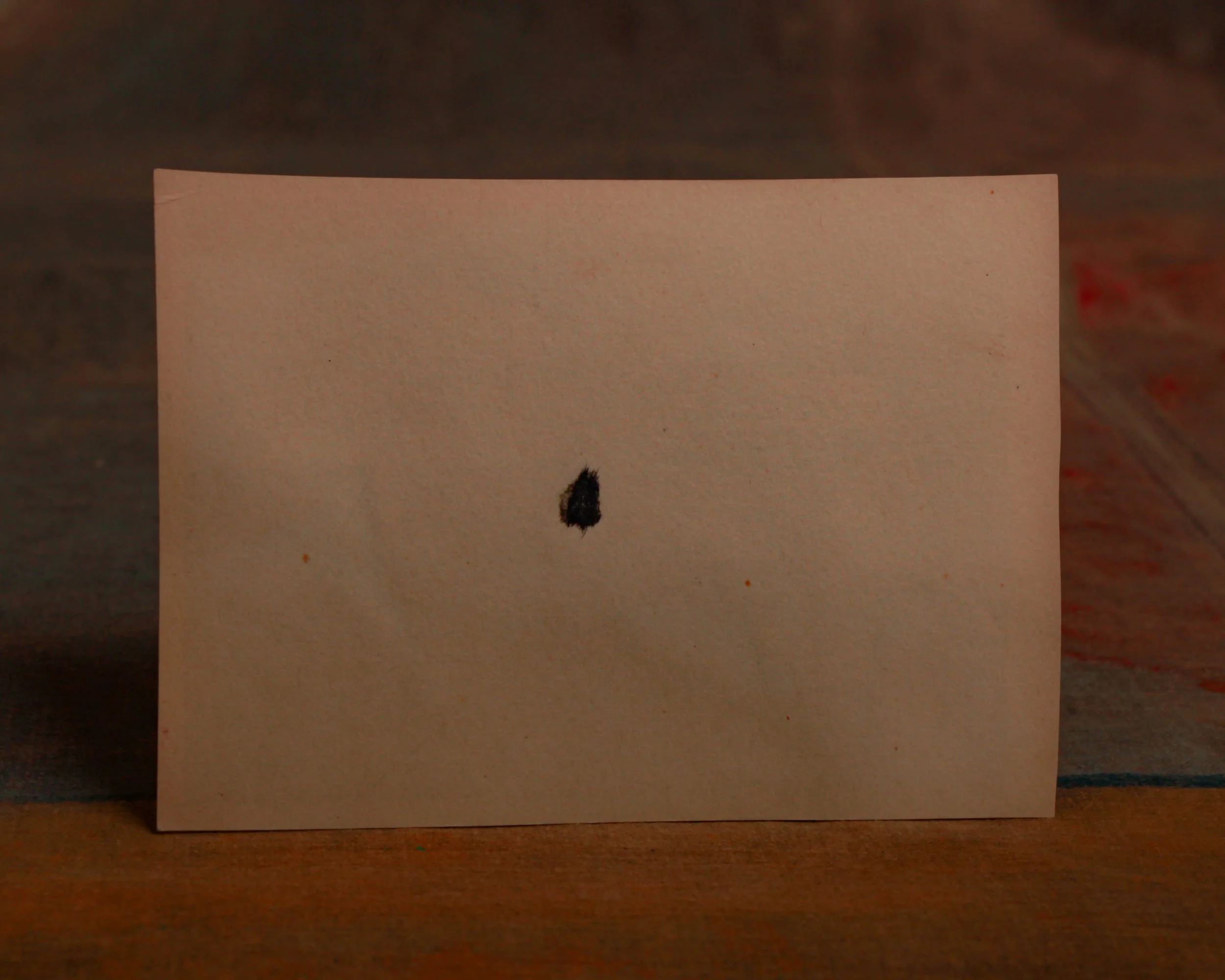
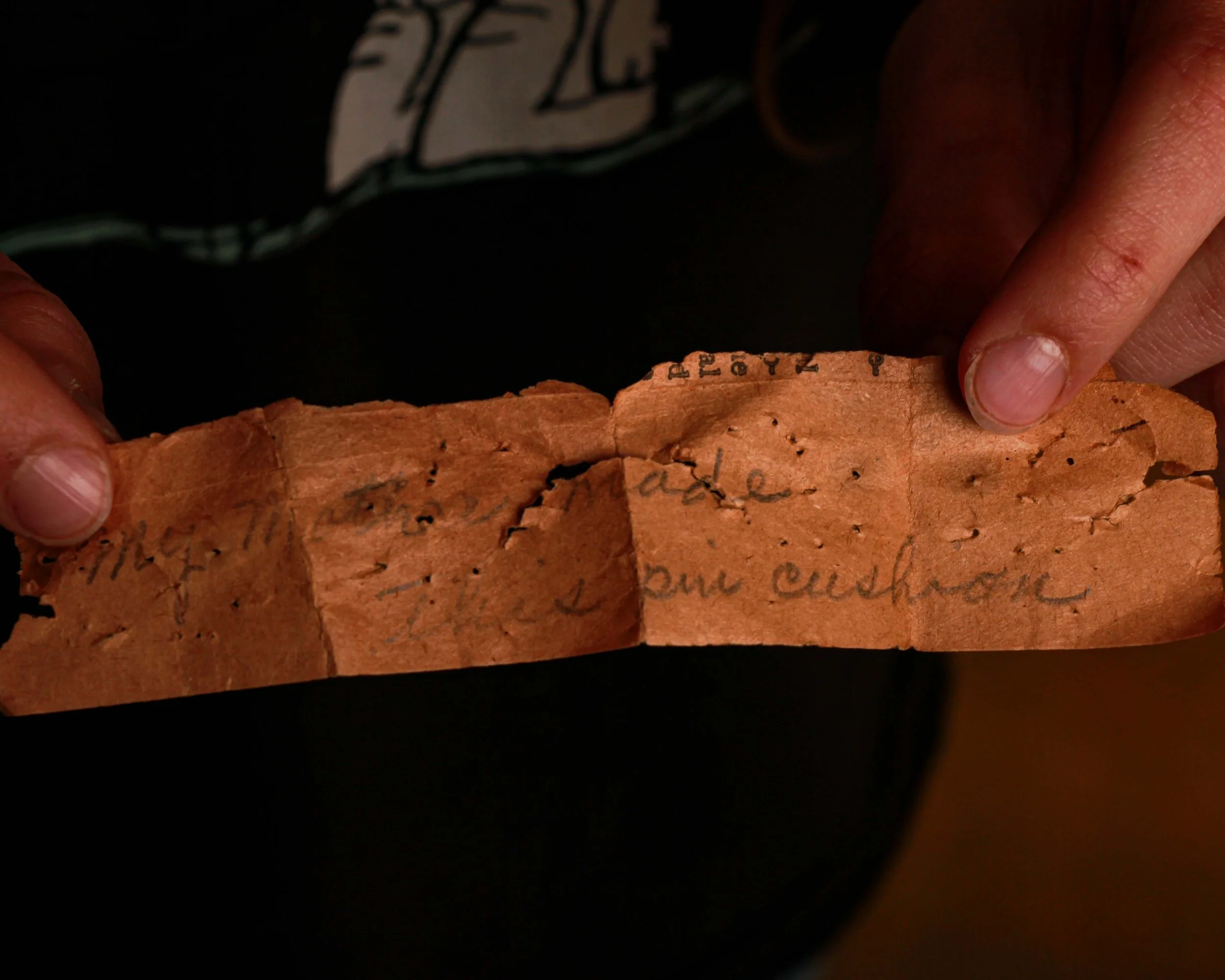
Tucked inside was a small, folded scrap of paper. Fragile, time-worn, and just barely holding together, with faint handwriting.
“My mother made this pin cushion.”
Pincushions History
Before sewing kits came in tidy tins and plastic organizers, the pincushion was the quiet center of the whole operation. It wasn’t just an accessory, it was the place where work paused and resumed, where tools were kept ready, and where a piece of daily life slowly took shape.
Handmade pincushions, especially those from the 18th and 19th centuries, were often improvised from whatever was on hand. Scraps of fabric, worn garments, bits of ribbon, even tightly packed sawdust or wool were repurposed into something practical. Some were simple and purely functional, while others leaned decorative, stitched into elaborate shapes like fruits, shoes, or small upholstered forms. A pincushion kept needles clean, sharp, and within reach.
What makes these pieces especially interesting now is how personal they feel. Many were made by the same hands that used them, sometimes gifted, sometimes kept for years in the same household. Over time, they absorbed the marks of use. Faded fabrics, uneven stitches, softened edges. They’re less about perfection and more about presence.
A handmade pincushion, roughly spherical, stitched together from petal-like segments of worn brown cloth, each one slightly puckered with age. Some might say yonic in nature.
The construction is beautiful in that very honest, utilitarian way. Each section is hand-sewn, pulled tight into a bulbous, almost floral form, with the seams acting like ribs. The outer fabric has that soft, handled patina you only get from years of use, while the exposed edges hint at older textile layers beneath. It’s the kind of object that lived within arm’s reach, passed over without ceremony, doing its job day in and day out.
And then there’s the surprise.
Tucked inside was a small, folded scrap of paper. Fragile, time-worn, and just barely holding together, with faint handwriting.
“My mother made this pin cushion.”
Pincushions History
Before sewing kits came in tidy tins and plastic organizers, the pincushion was the quiet center of the whole operation. It wasn’t just an accessory, it was the place where work paused and resumed, where tools were kept ready, and where a piece of daily life slowly took shape.
Handmade pincushions, especially those from the 18th and 19th centuries, were often improvised from whatever was on hand. Scraps of fabric, worn garments, bits of ribbon, even tightly packed sawdust or wool were repurposed into something practical. Some were simple and purely functional, while others leaned decorative, stitched into elaborate shapes like fruits, shoes, or small upholstered forms. A pincushion kept needles clean, sharp, and within reach.
What makes these pieces especially interesting now is how personal they feel. Many were made by the same hands that used them, sometimes gifted, sometimes kept for years in the same household. Over time, they absorbed the marks of use. Faded fabrics, uneven stitches, softened edges. They’re less about perfection and more about presence.