ITEM NOT AVAILABLE IMMEDIATELY—INQUIRE IF INTERESTED hello@heimweeantiques.com
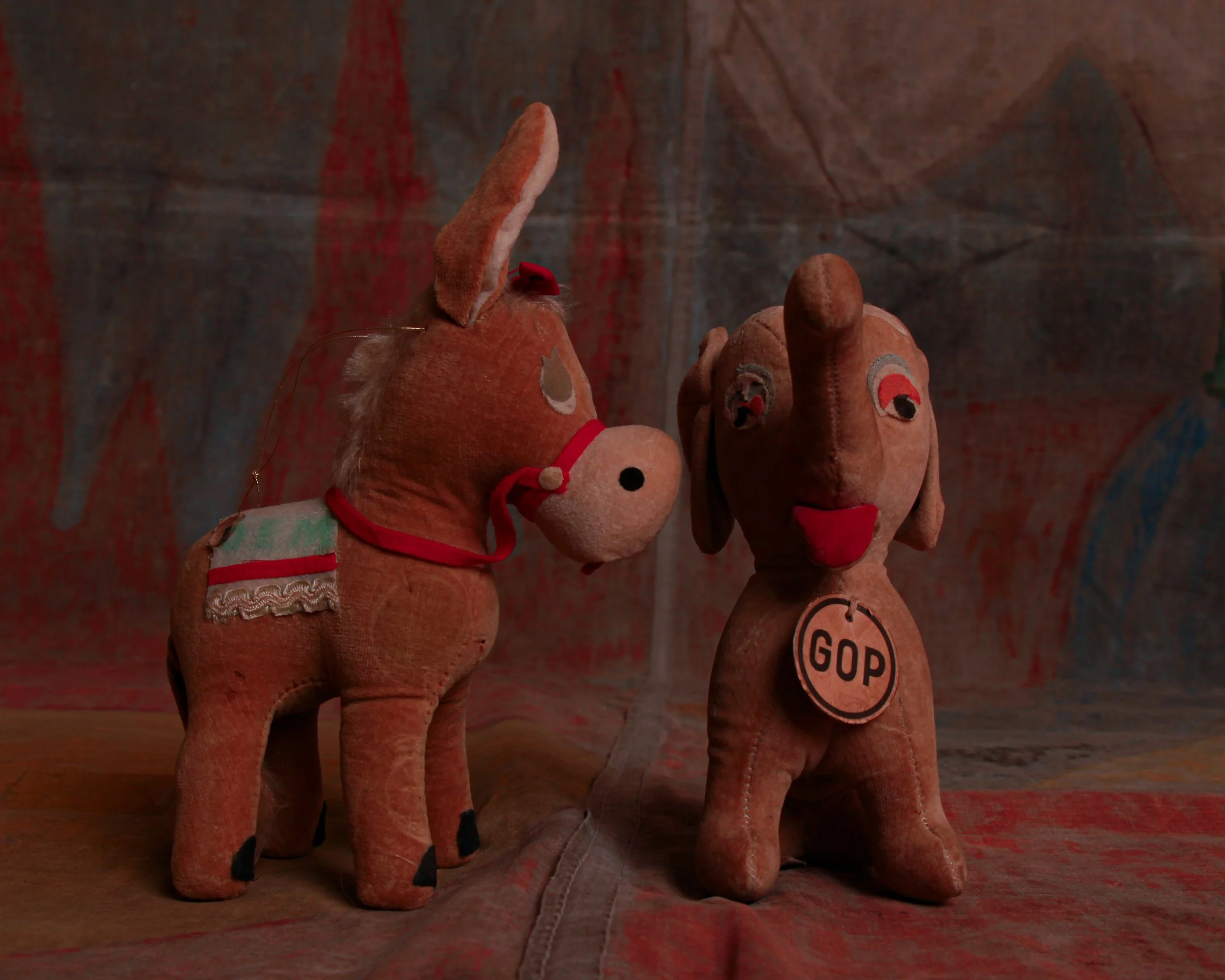
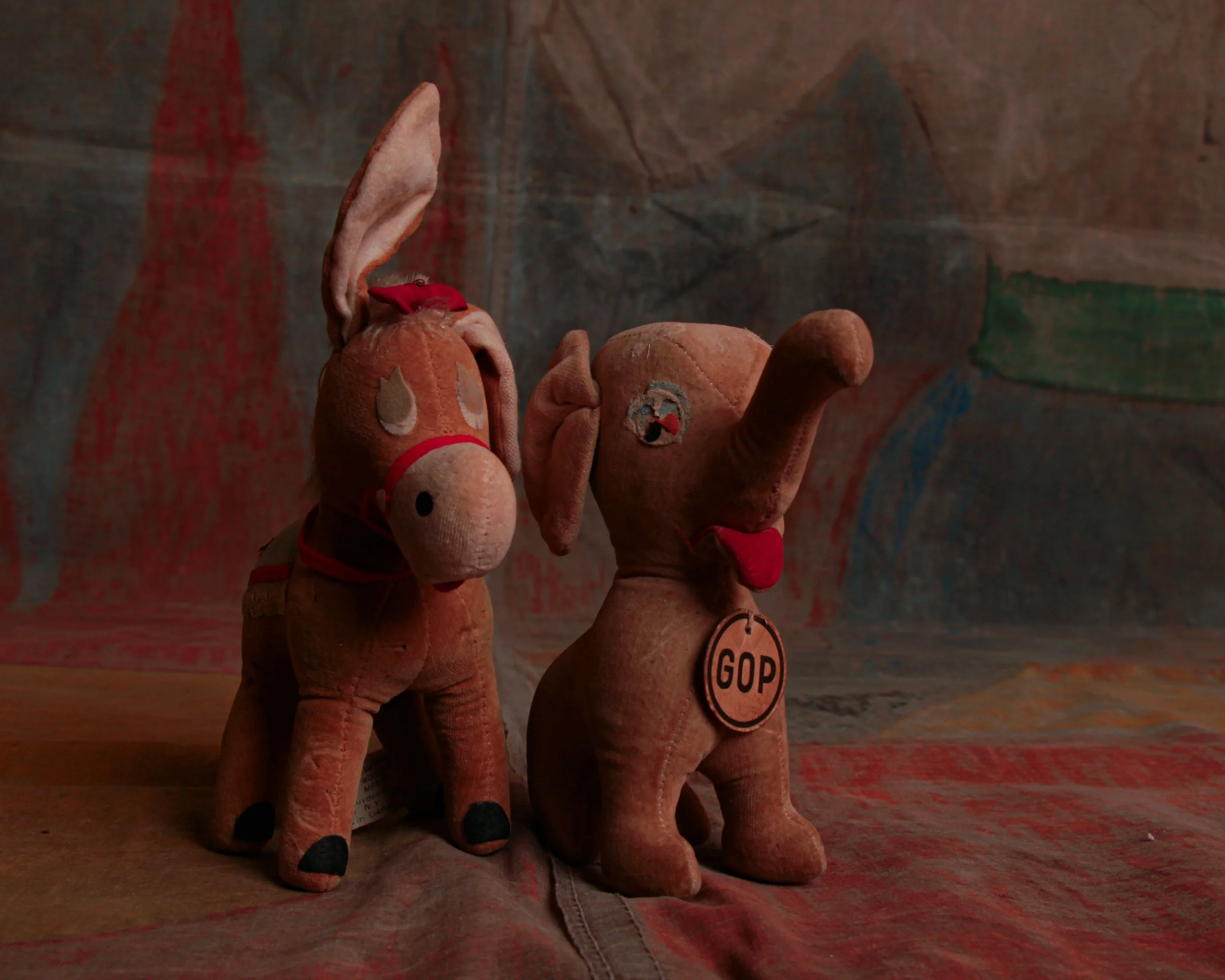
This pair feels like it wandered straight out of a 1940s campaign trail and never quite left. Two soft-spoken mascots of American politics, rendered not as firebrands but as slightly lopsided, endearing stuffed toys.
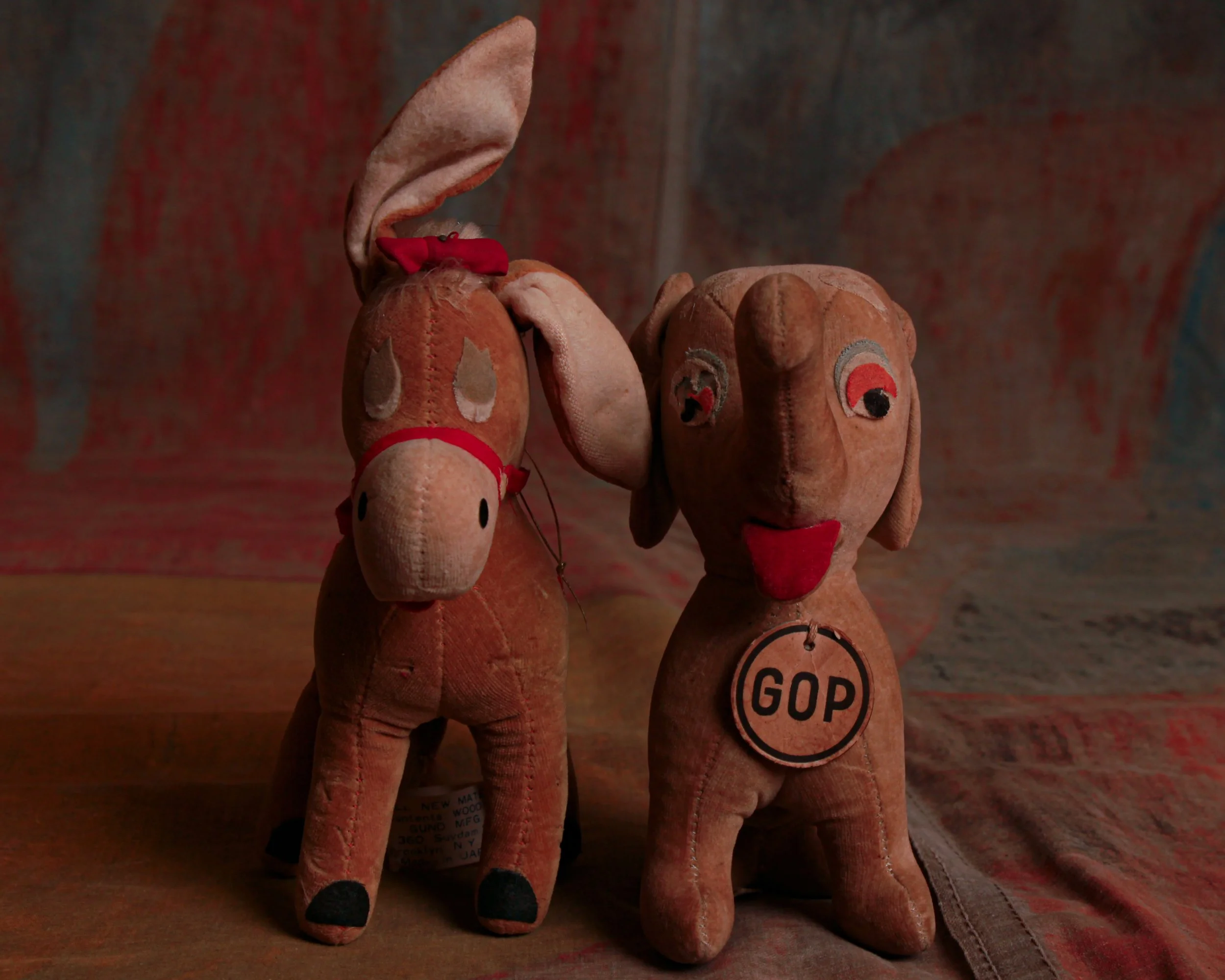
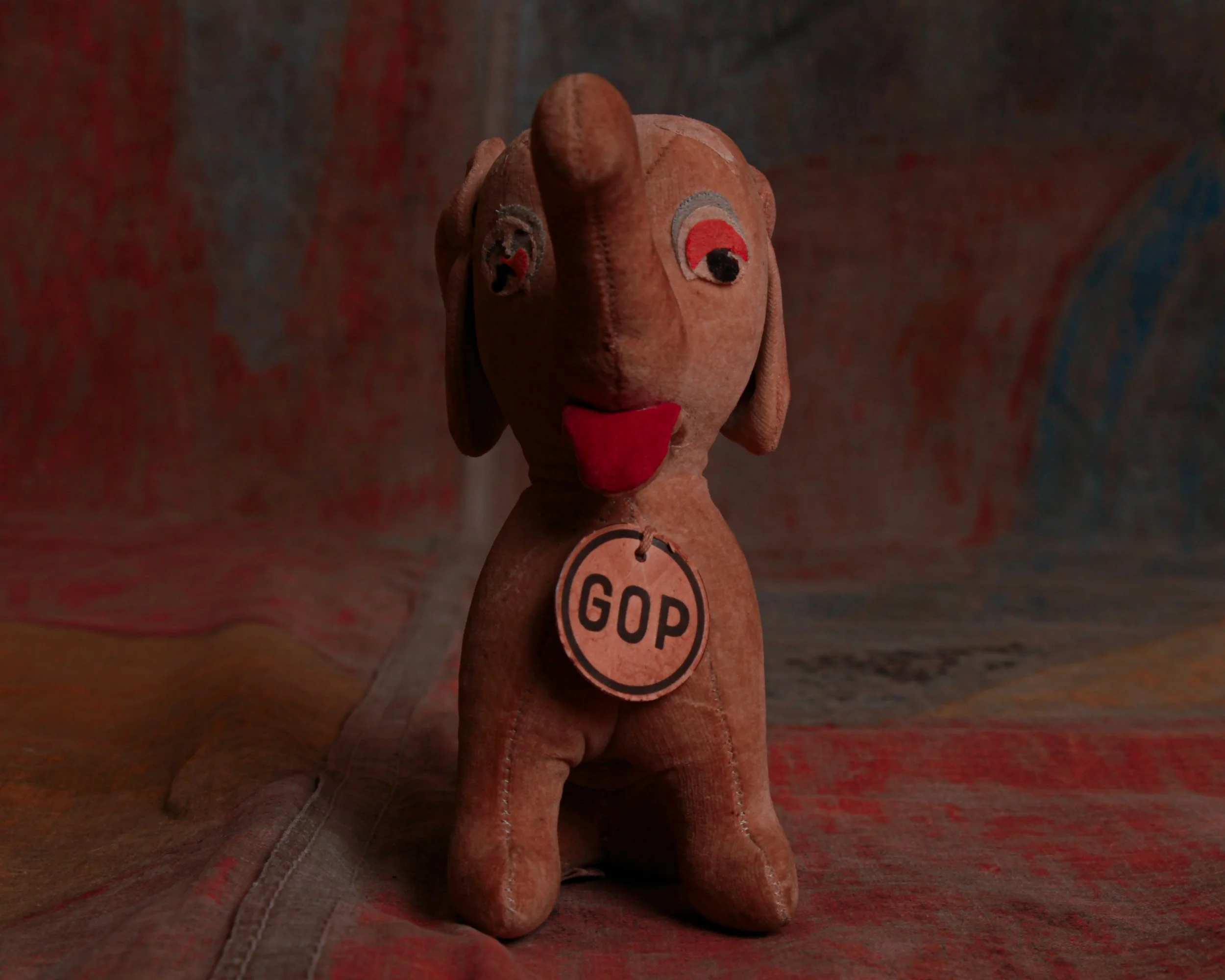
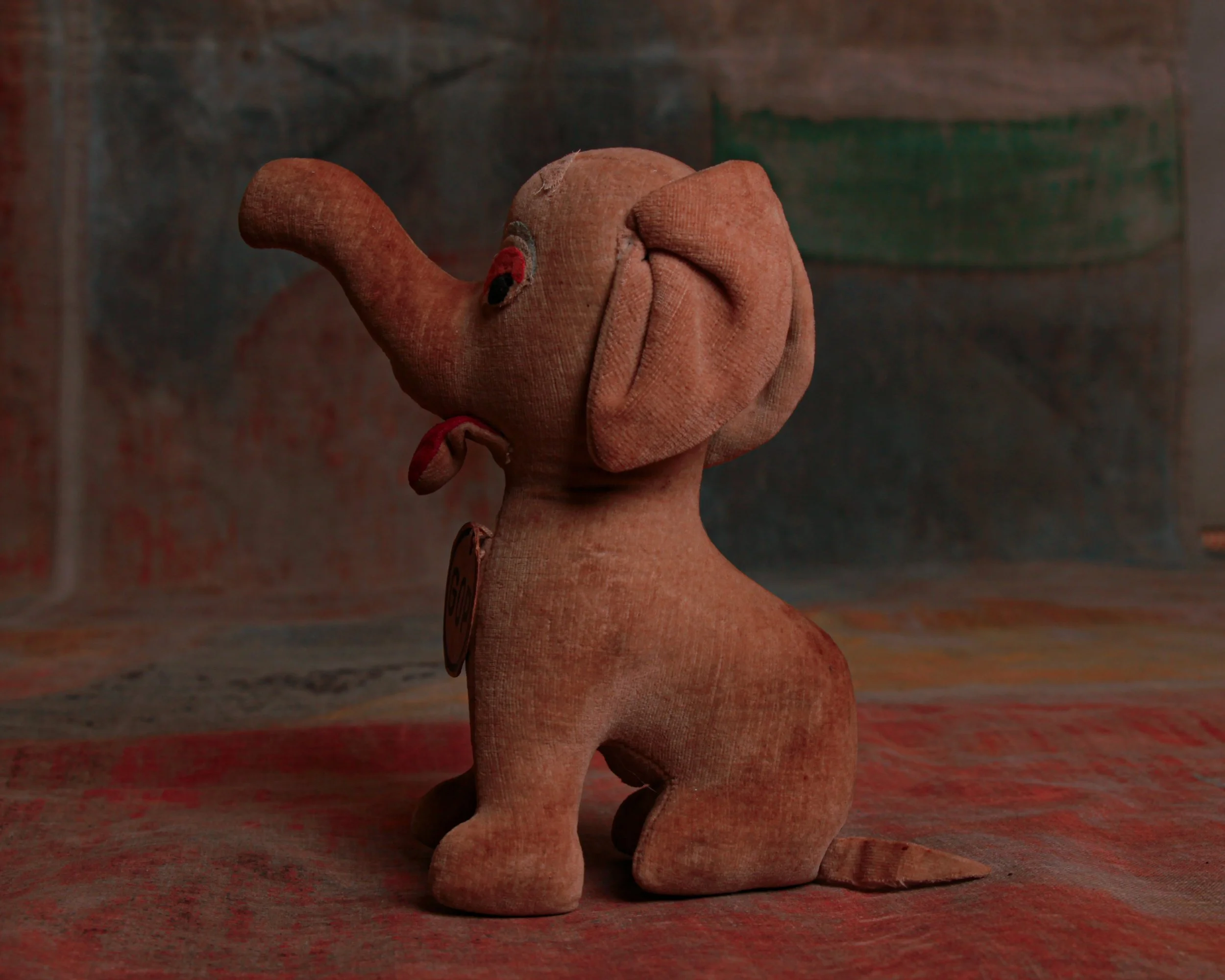
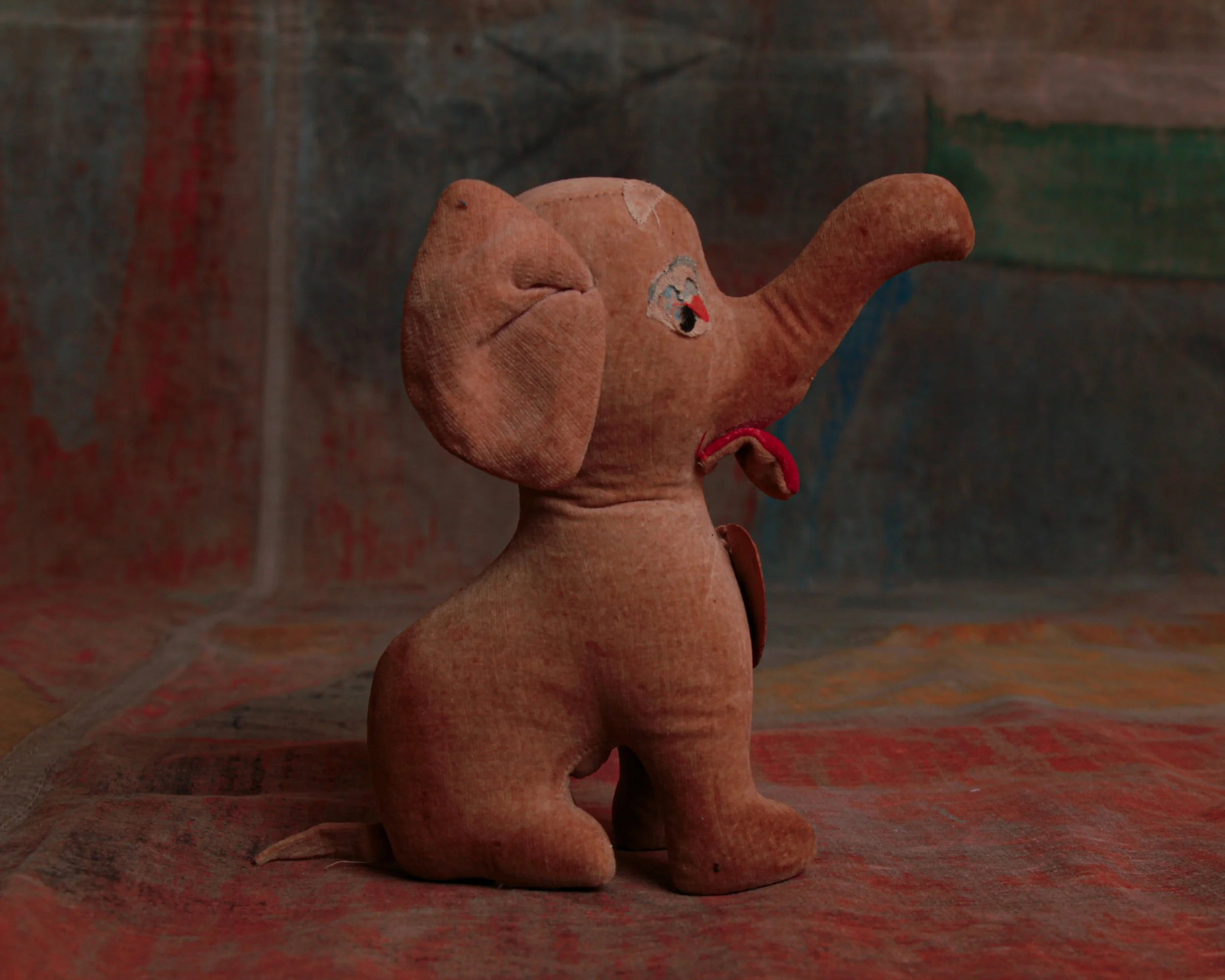
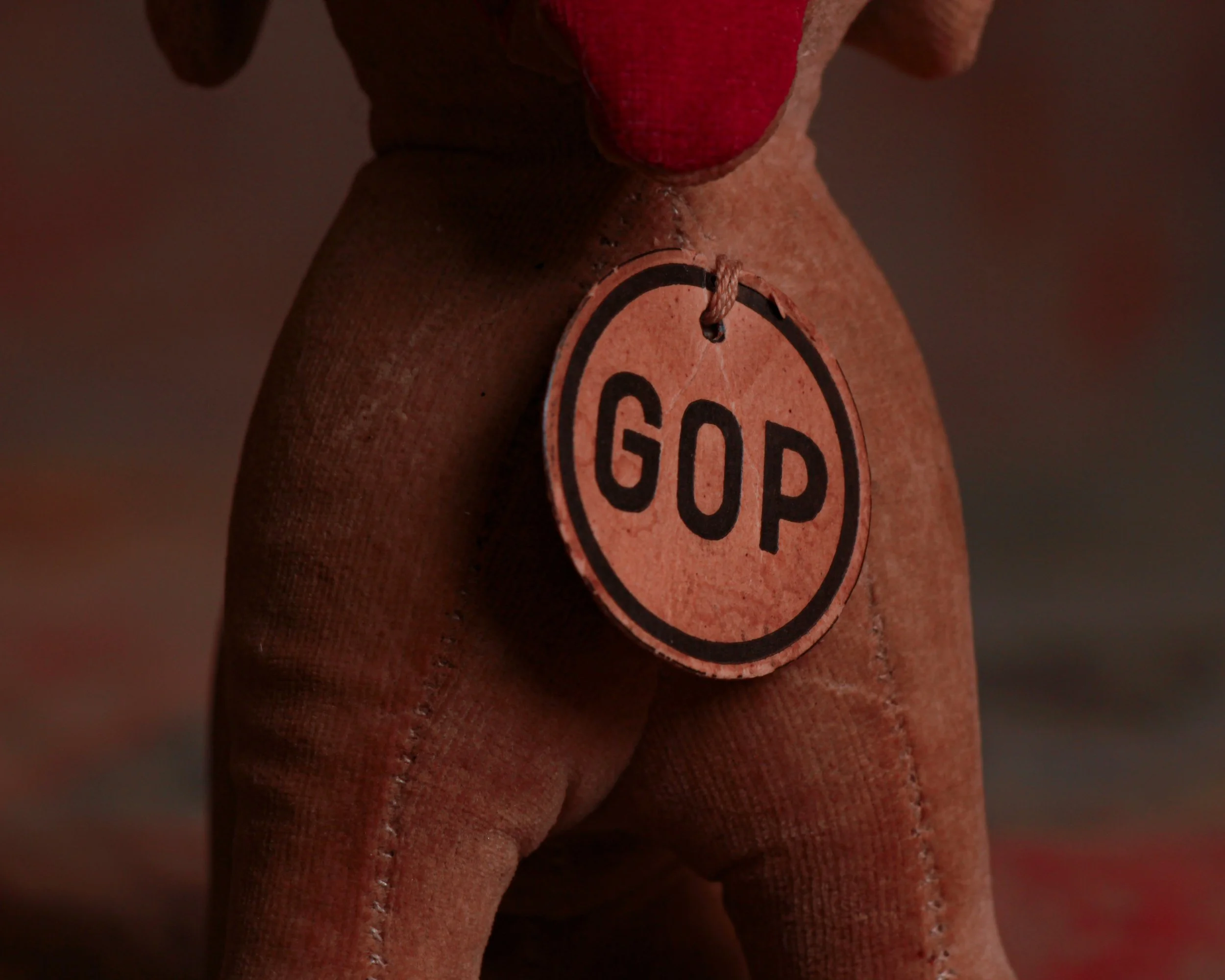
On one side you’ve got the Republican elephant, sturdy and upright, wearing a round “GOP” tag like a campaign button pinned just a little too earnestly to the chest. The expression is classic and calm, with those long ears and stitched features doing all the talking.
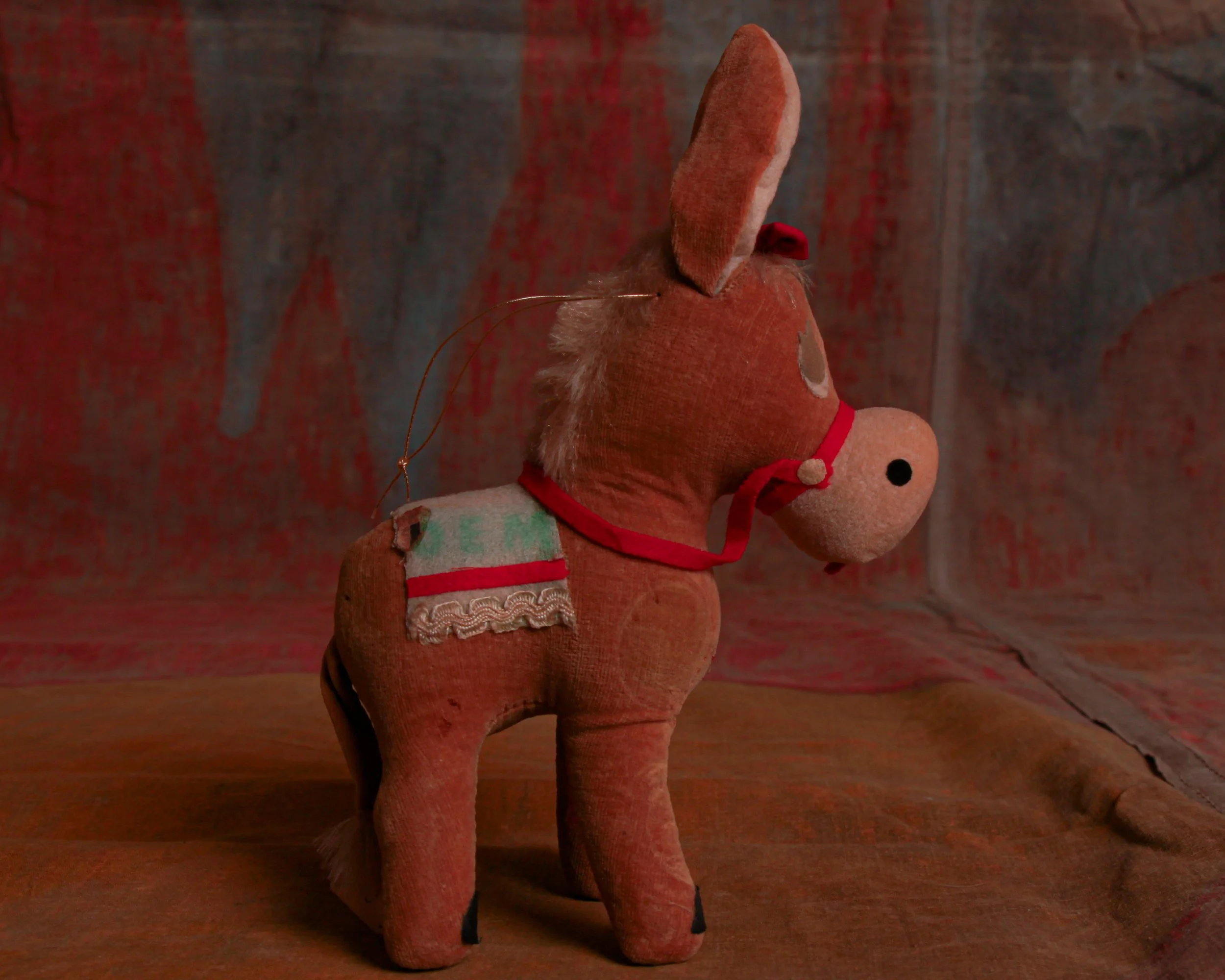
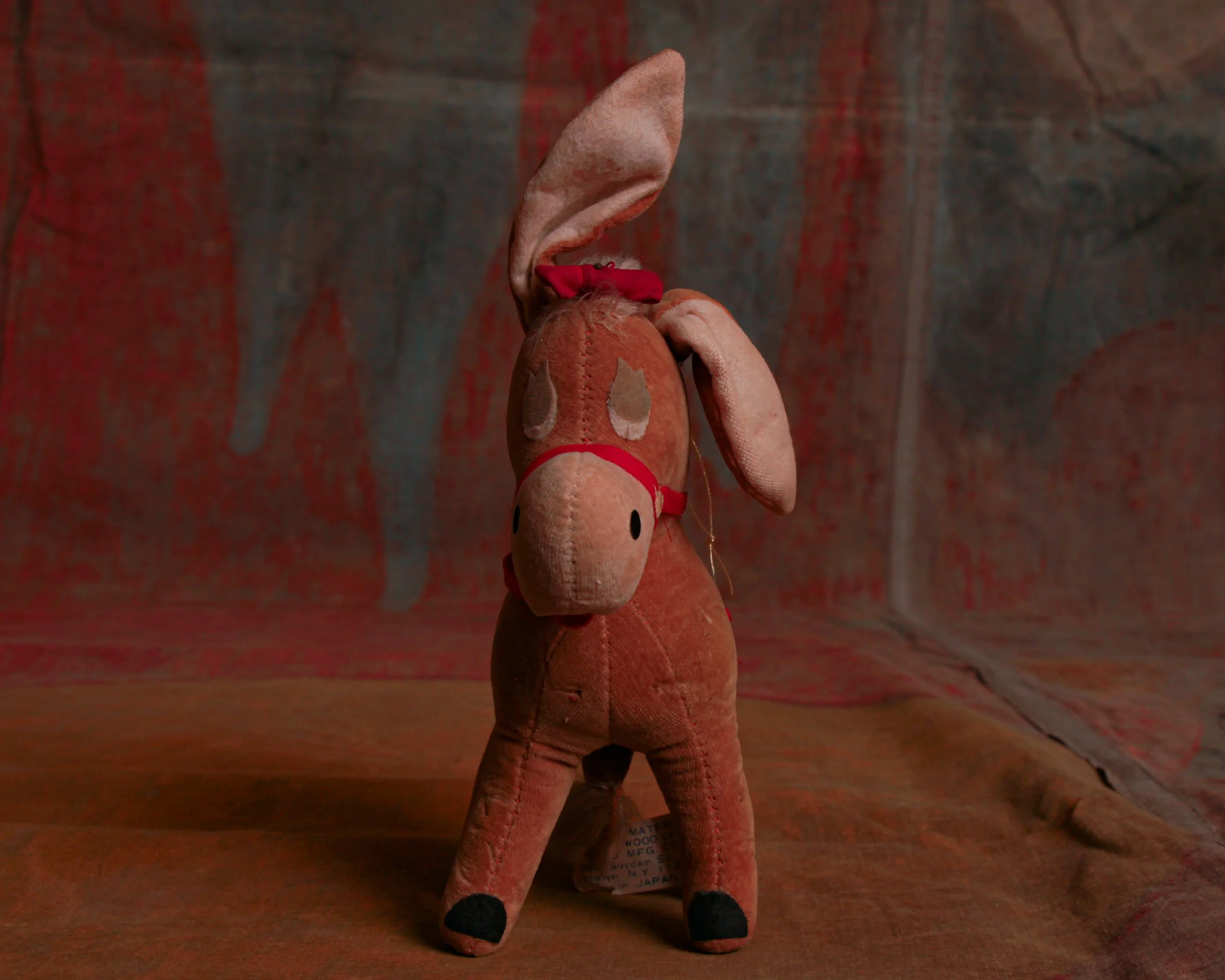
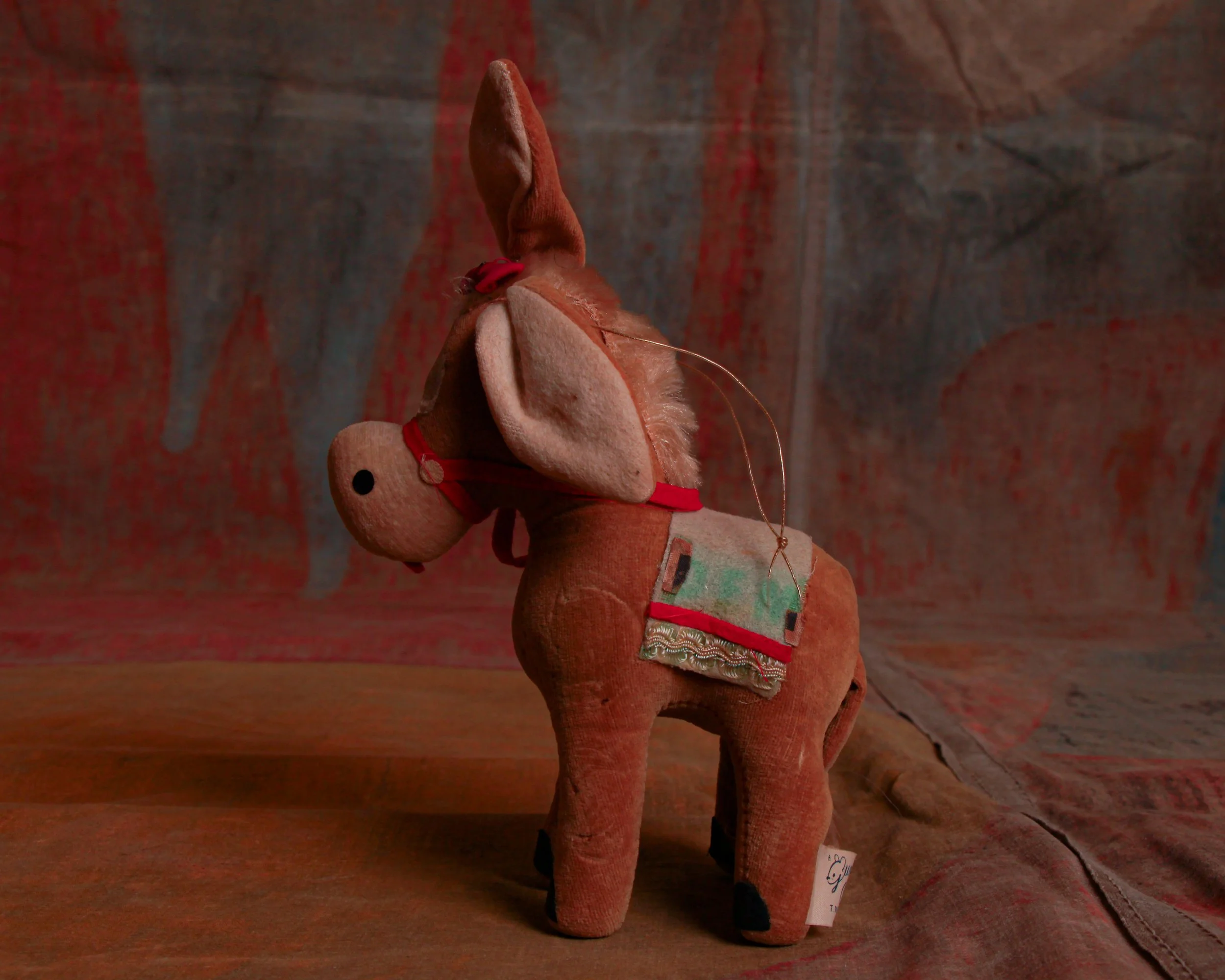
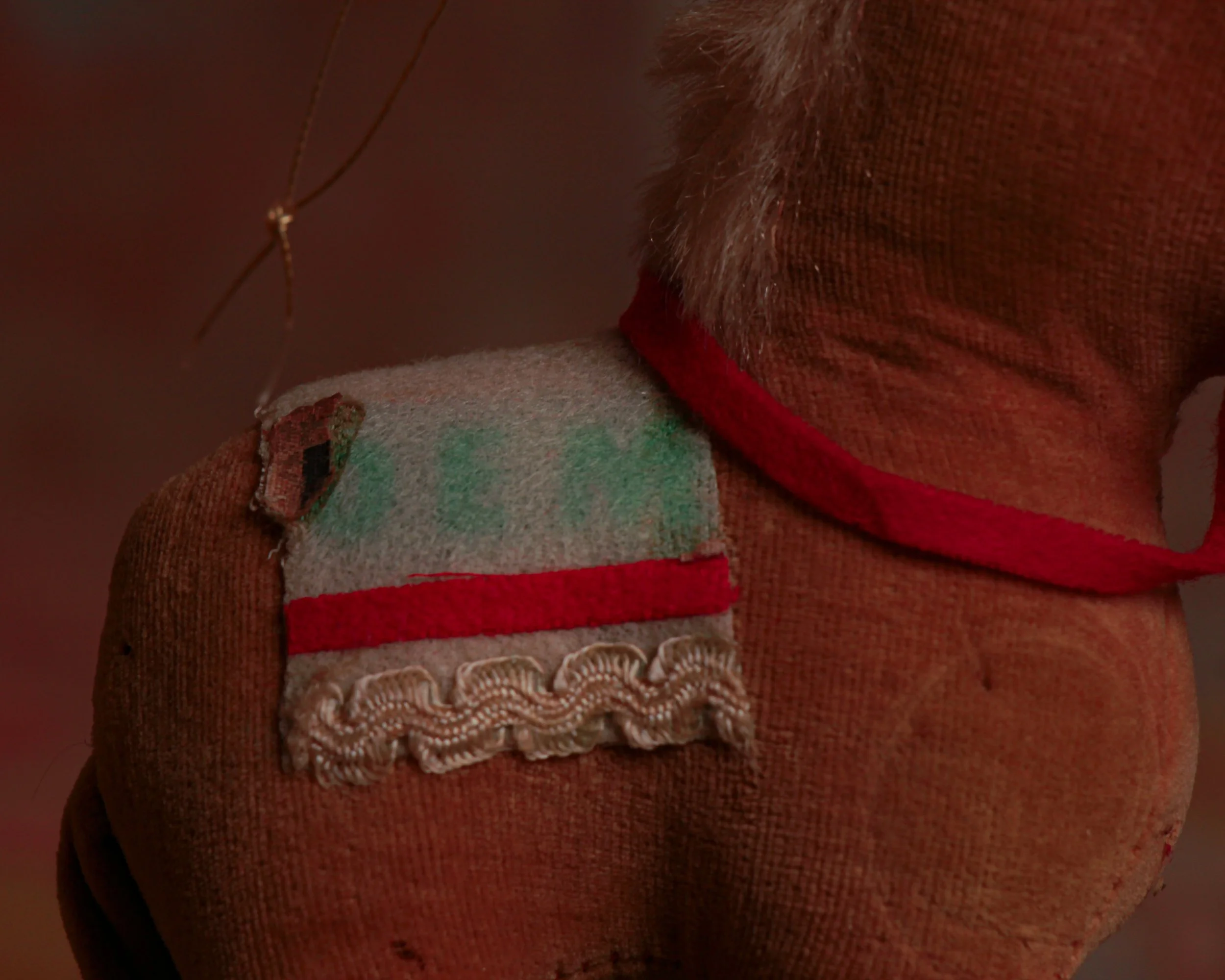
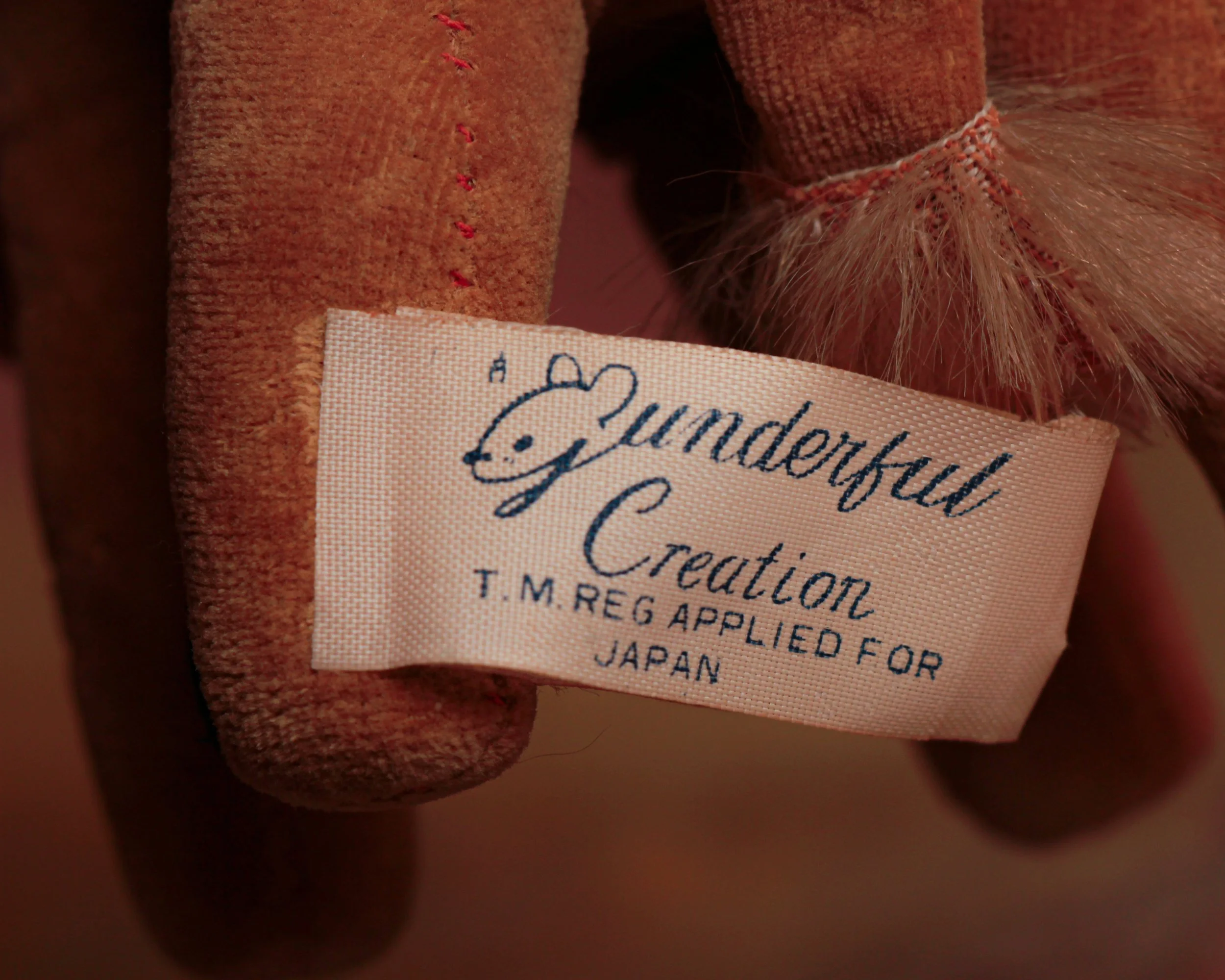
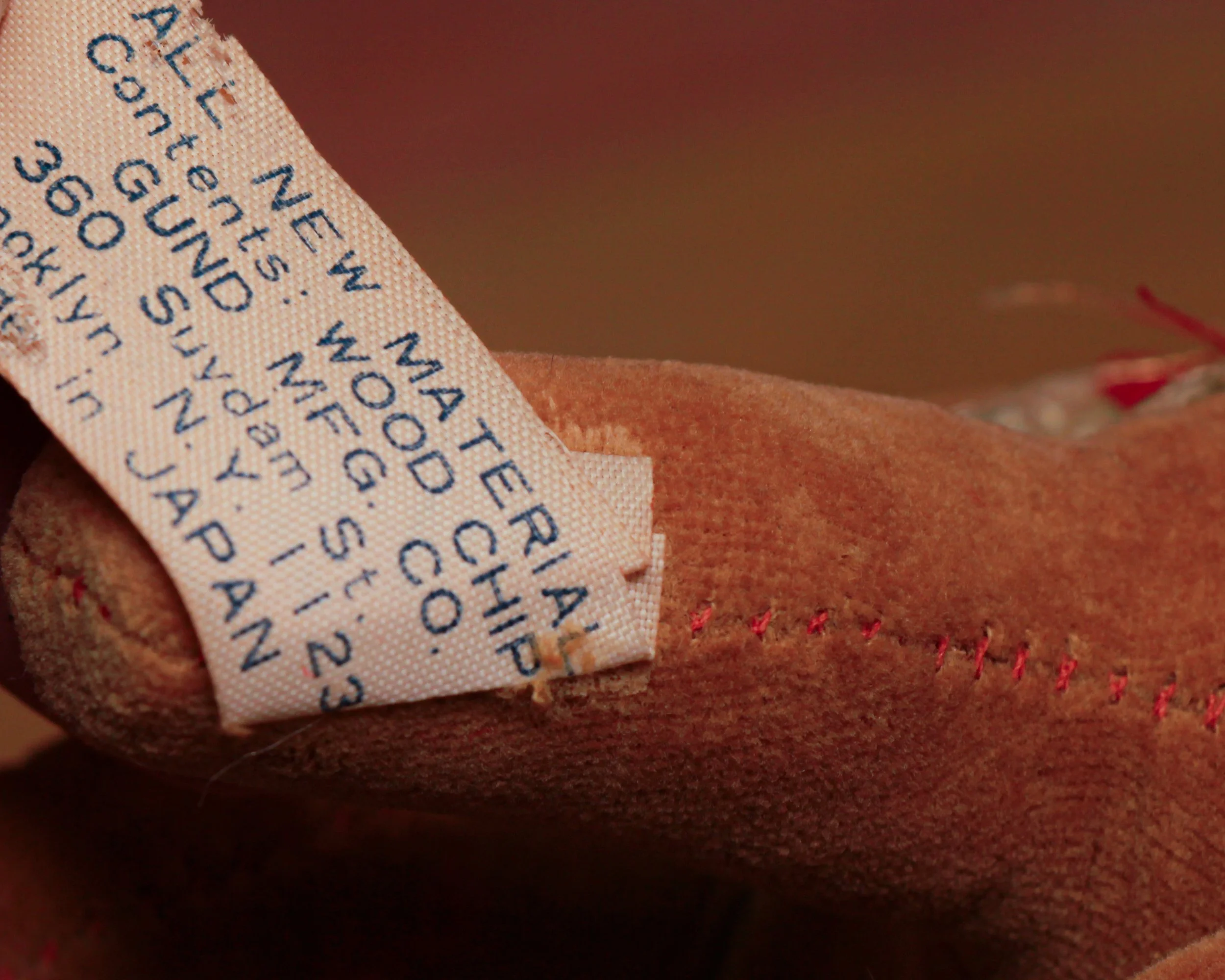
Standing beside it is the Democratic donkey, made by Gund and still proudly carrying its original manufacturing label. At some point, someone decided the message needed a little extra clarity and took a marker to its side, adding “DEM” by hand. It’s an unsanctioned update, and that’s exactly what makes it great. The felt eyes, red mouth, and slightly mischievous posture give it more personality than any printed slogan ever could.
Both are made from soft, velvety fabric with visible hand stitching, subtle wear, and the kind of patina that only comes from decades of handling. The donkey’s ears and trunk-like snout lean ever so slightly, while the elephant stands a bit more squarely.
Category History
The Republican elephant and Democratic donkey started less as official symbols and more as visual shorthand that stuck. The donkey gained traction in the 1820s when critics mocked Andrew Jackson as a “jackass”—a label he embraced. Decades later, Thomas Nast cemented both animals in the public imagination through his widely circulated cartoons in the late 19th century, pairing Democrats with the stubborn donkey and Republicans with a powerful, steady elephant.
Neither party formally adopted the animals at first, but repetition did the work. Over time, they became recognizable stand-ins—simple, graphic, and easy to read at a glance. Today, they function less as literal mascots and more as visual shorthand for identity and ideology.
ITEM NOT AVAILABLE IMMEDIATELY—INQUIRE IF INTERESTED hello@heimweeantiques.com
This pair feels like it wandered straight out of a 1940s campaign trail and never quite left. Two soft-spoken mascots of American politics, rendered not as firebrands but as slightly lopsided, endearing stuffed toys.
On one side you’ve got the Republican elephant, sturdy and upright, wearing a round “GOP” tag like a campaign button pinned just a little too earnestly to the chest. The expression is classic and calm, with those long ears and stitched features doing all the talking.
Standing beside it is the Democratic donkey, made by Gund and still proudly carrying its original manufacturing label. At some point, someone decided the message needed a little extra clarity and took a marker to its side, adding “DEM” by hand. It’s an unsanctioned update, and that’s exactly what makes it great. The felt eyes, red mouth, and slightly mischievous posture give it more personality than any printed slogan ever could.
Both are made from soft, velvety fabric with visible hand stitching, subtle wear, and the kind of patina that only comes from decades of handling. The donkey’s ears and trunk-like snout lean ever so slightly, while the elephant stands a bit more squarely.
Category History
The Republican elephant and Democratic donkey started less as official symbols and more as visual shorthand that stuck. The donkey gained traction in the 1820s when critics mocked Andrew Jackson as a “jackass”—a label he embraced. Decades later, Thomas Nast cemented both animals in the public imagination through his widely circulated cartoons in the late 19th century, pairing Democrats with the stubborn donkey and Republicans with a powerful, steady elephant.
Neither party formally adopted the animals at first, but repetition did the work. Over time, they became recognizable stand-ins—simple, graphic, and easy to read at a glance. Today, they function less as literal mascots and more as visual shorthand for identity and ideology.