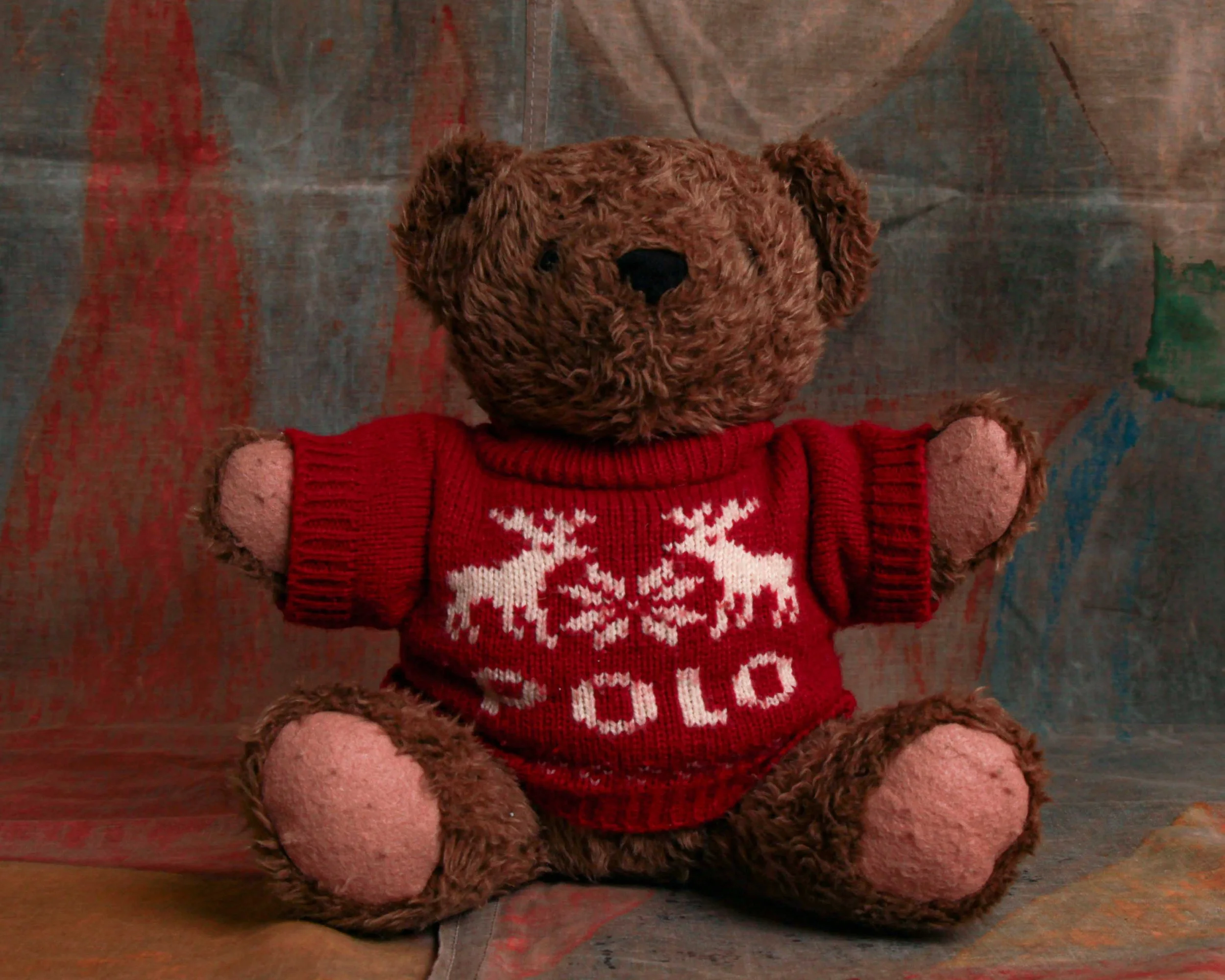
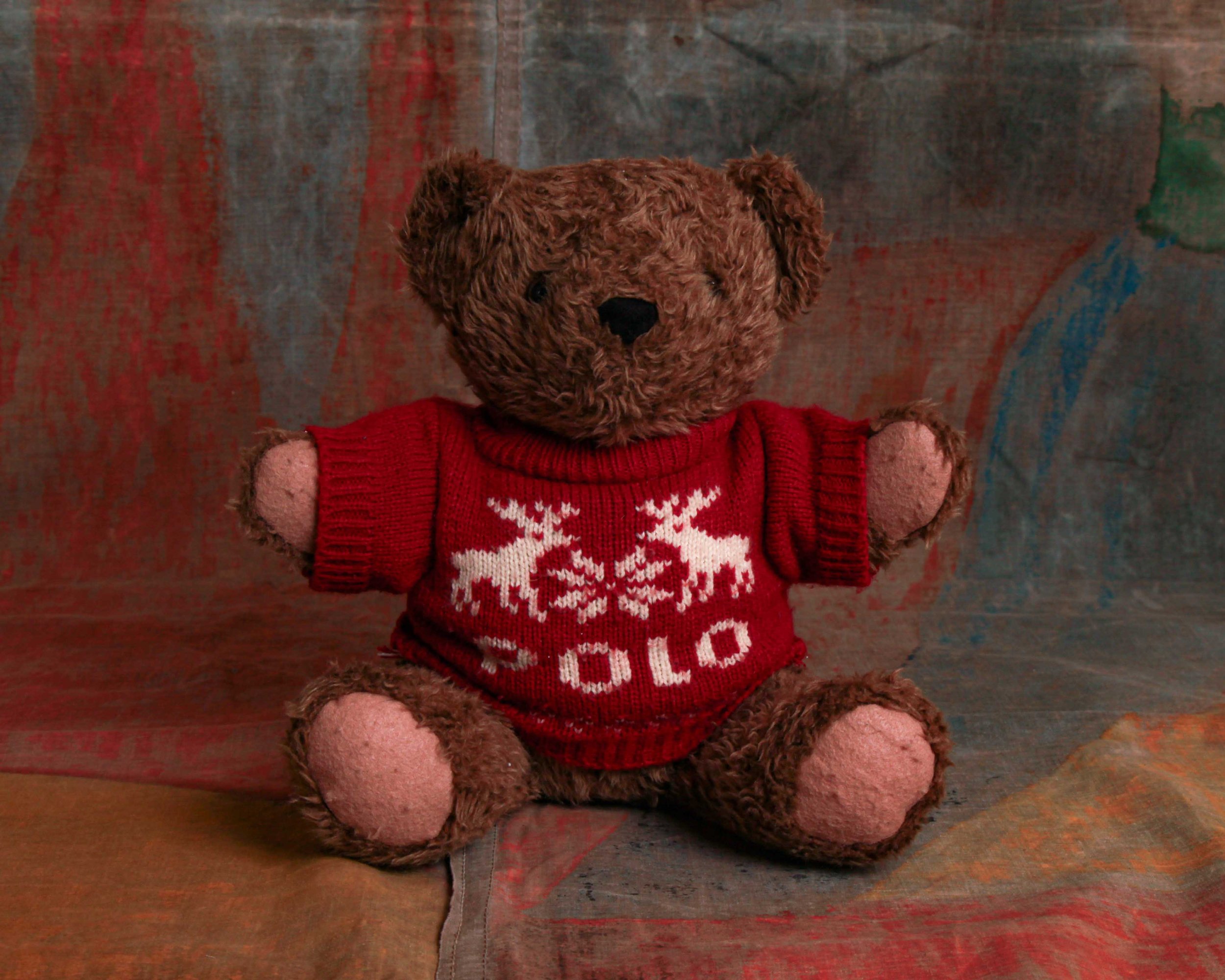
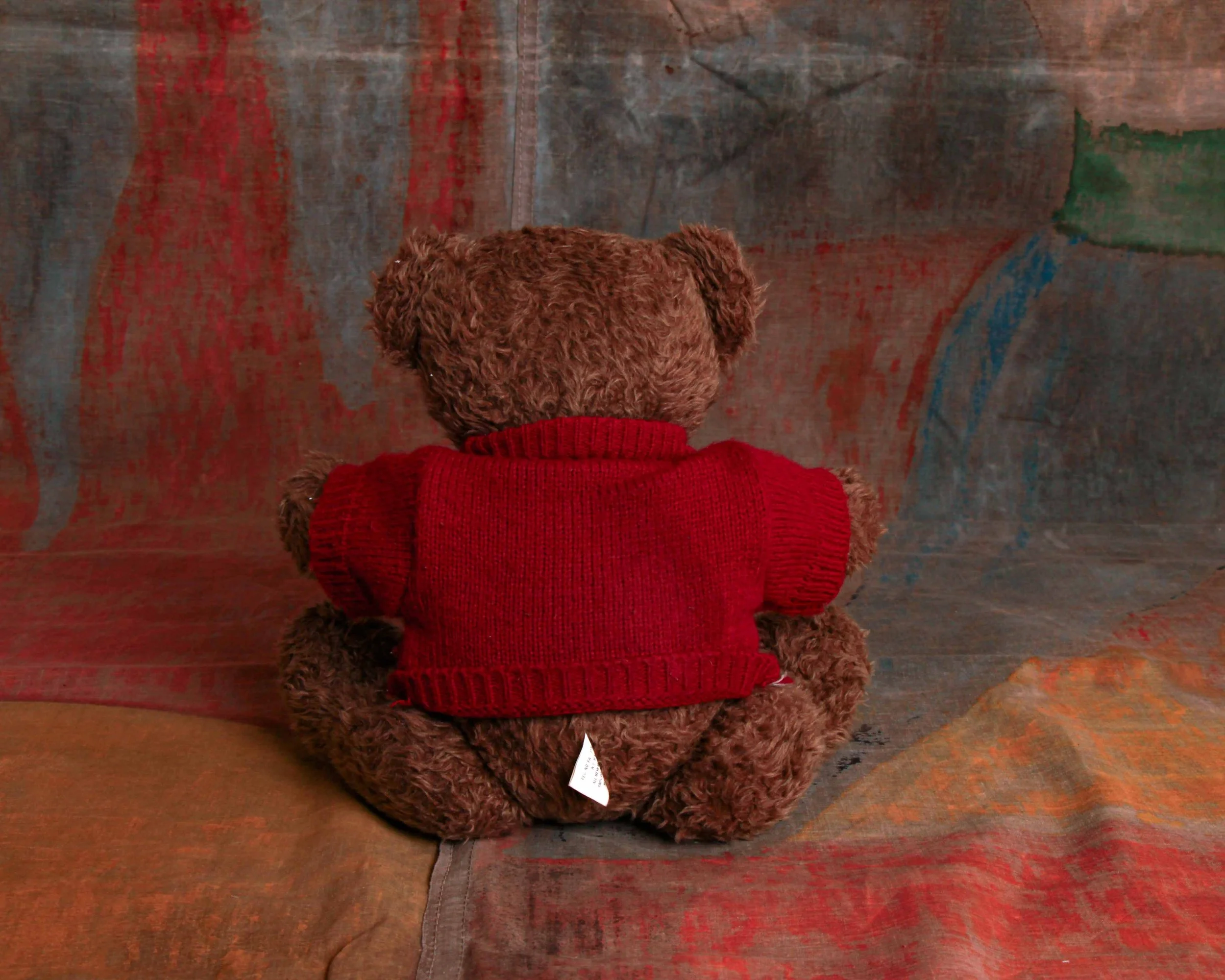
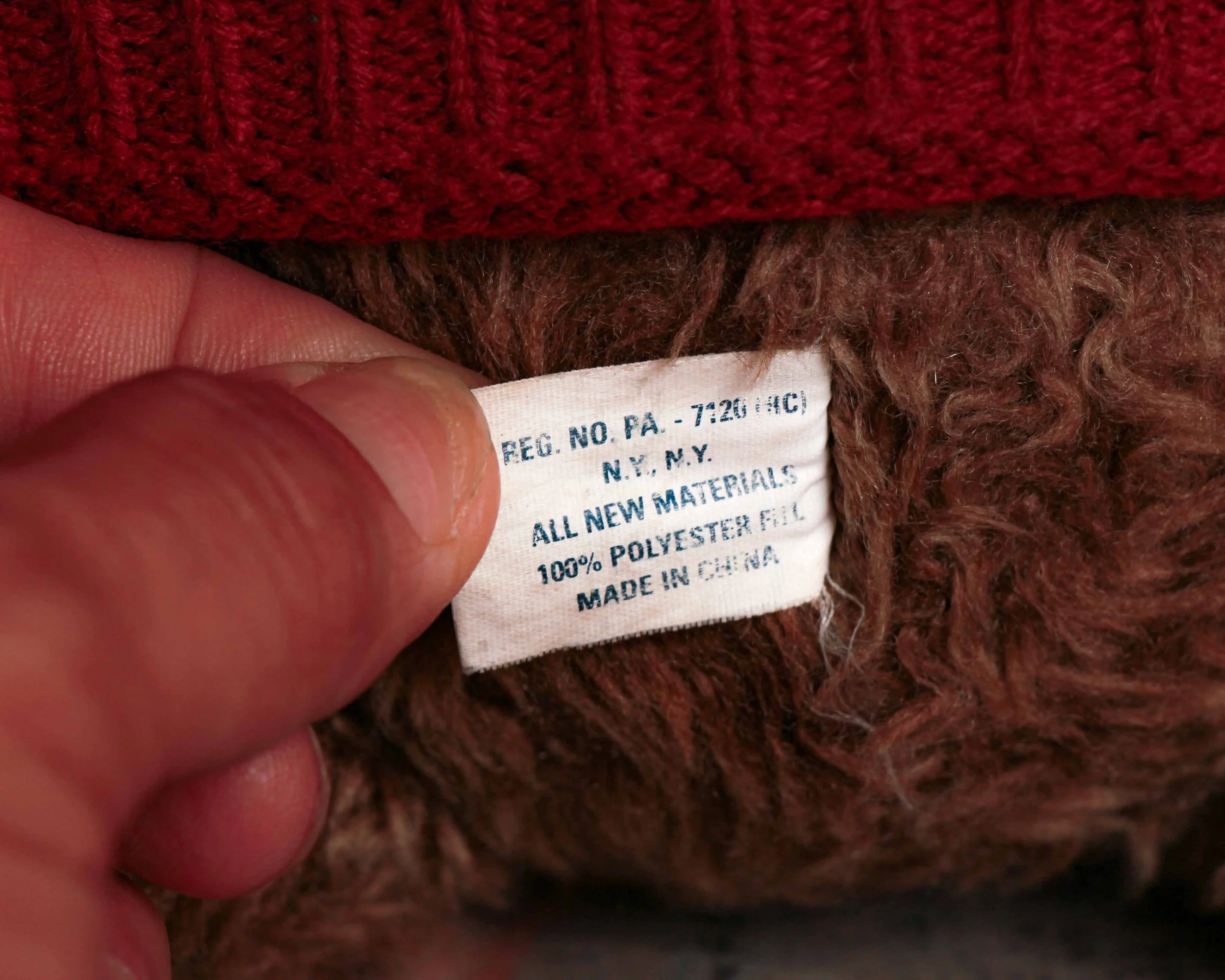
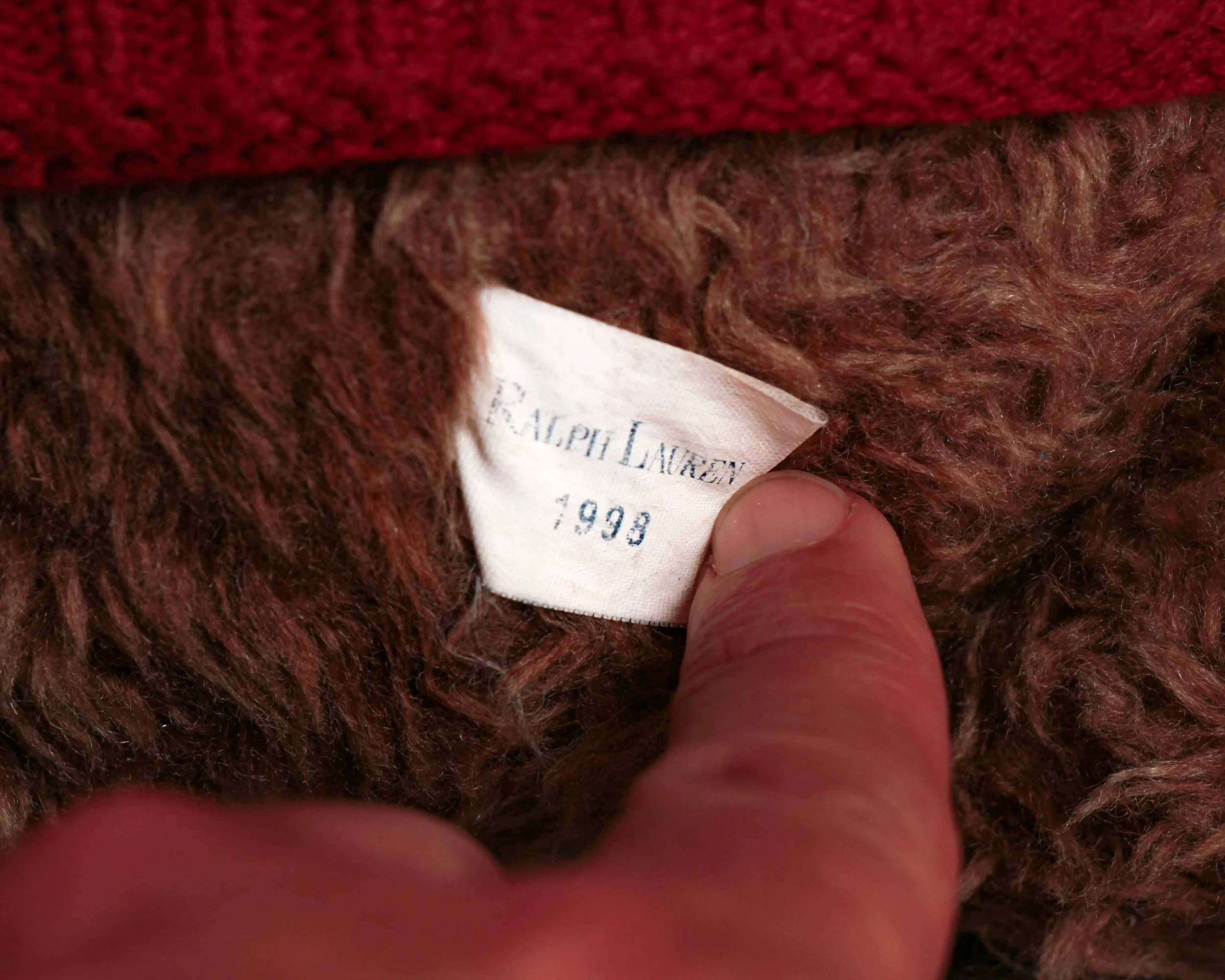
A classic Polo teddy bear from 1998, dressed head-to-paw in a red knit sweater featuring reindeer and snowflakes, with “POLO” stitched proudly across the front. Equal parts holiday spirit and lifestyle statement.
The bear itself has that unmistakable Ralph Lauren look: soft brown plush, gently rounded proportions, stitched black eyes, and a calm, slightly serious expression that feels more Upper East Side nursery than toy aisle chaos. The sweater is nicely made, snug but not stretched, with ribbed cuffs and hem that still hold their shape. It’s the kind of miniature knit that mirrors the adult versions Ralph Lauren was famous for at the time.
Category History
Ralph Lauren started with a tie—wider, softer, a little more relaxed than what was on the market in the late 1960s. Ralph Lauren wasn’t trained in the traditional sense, but he had a clear instinct: style wasn’t just about clothing, it was about building a world people wanted to step into.
By the 1970s, that idea expanded quickly. Polo shirts, tailored jackets, denim, western wear—all tied together by a kind of curated Americana that felt both nostalgic and aspirational. It wasn’t strictly historical or modern; it was a blend, pulling from Ivy League campuses, ranch life, English tailoring, and vintage workwear.
What set the brand apart was consistency. Every piece, every campaign, every store contributed to the same narrative. You weren’t just buying a shirt—you were buying into a lifestyle that felt considered and complete.
Over time, Ralph Lauren moved beyond clothing into home goods, fragrance, and beyond, maintaining that same visual language. It’s less about trends and more about atmosphere.
What makes it compelling is how constructed it is, yet how natural it feels. A carefully built vision that reads as effortless—layered, familiar, and still evolving without losing its core identity.
A classic Polo teddy bear from 1998, dressed head-to-paw in a red knit sweater featuring reindeer and snowflakes, with “POLO” stitched proudly across the front. Equal parts holiday spirit and lifestyle statement.
The bear itself has that unmistakable Ralph Lauren look: soft brown plush, gently rounded proportions, stitched black eyes, and a calm, slightly serious expression that feels more Upper East Side nursery than toy aisle chaos. The sweater is nicely made, snug but not stretched, with ribbed cuffs and hem that still hold their shape. It’s the kind of miniature knit that mirrors the adult versions Ralph Lauren was famous for at the time.
Category History
Ralph Lauren started with a tie—wider, softer, a little more relaxed than what was on the market in the late 1960s. Ralph Lauren wasn’t trained in the traditional sense, but he had a clear instinct: style wasn’t just about clothing, it was about building a world people wanted to step into.
By the 1970s, that idea expanded quickly. Polo shirts, tailored jackets, denim, western wear—all tied together by a kind of curated Americana that felt both nostalgic and aspirational. It wasn’t strictly historical or modern; it was a blend, pulling from Ivy League campuses, ranch life, English tailoring, and vintage workwear.
What set the brand apart was consistency. Every piece, every campaign, every store contributed to the same narrative. You weren’t just buying a shirt—you were buying into a lifestyle that felt considered and complete.
Over time, Ralph Lauren moved beyond clothing into home goods, fragrance, and beyond, maintaining that same visual language. It’s less about trends and more about atmosphere.
What makes it compelling is how constructed it is, yet how natural it feels. A carefully built vision that reads as effortless—layered, familiar, and still evolving without losing its core identity.