PLEASE EMAIL US RE: SHIPPING TIMING BEFORE PURCHASING hello@heimweeantiques.com
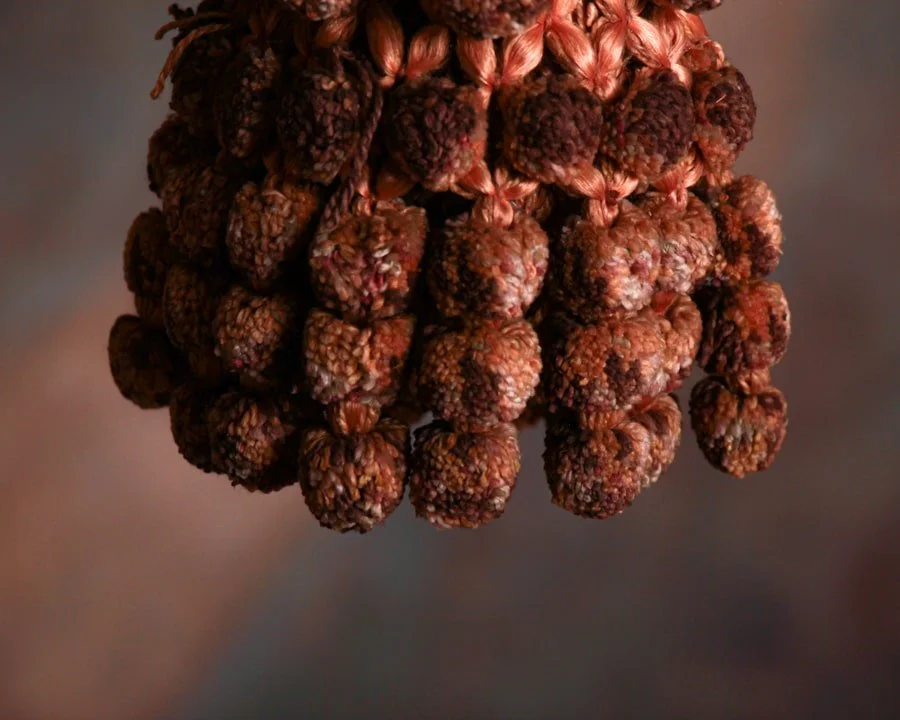
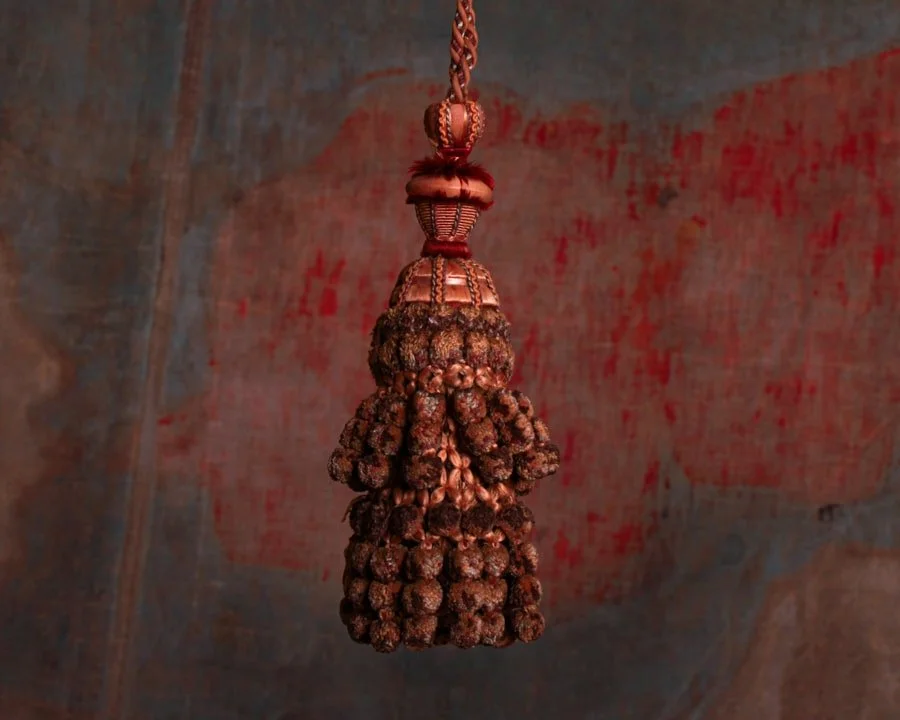
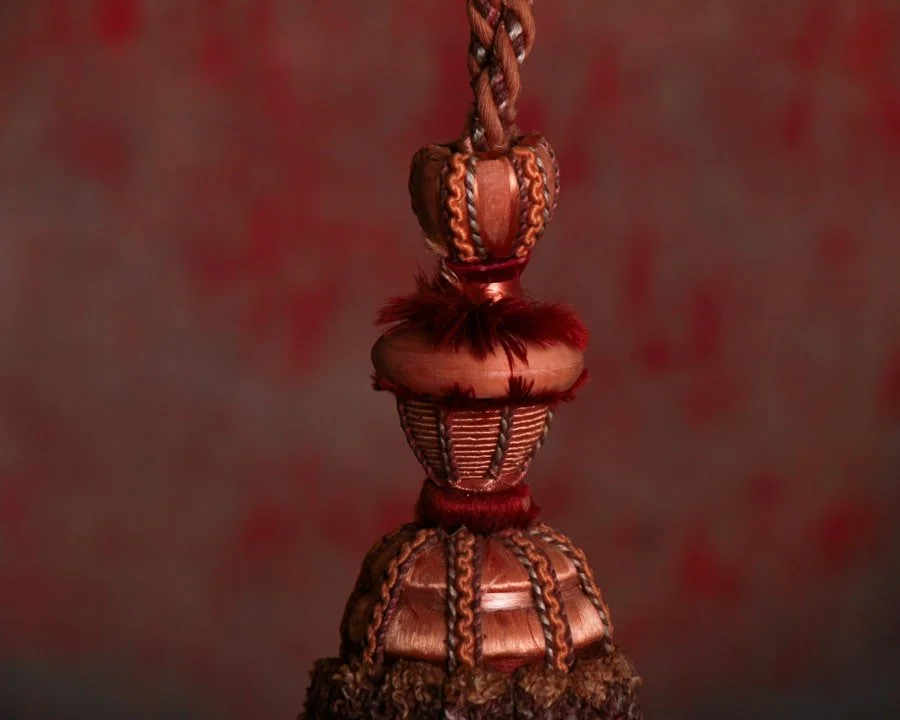
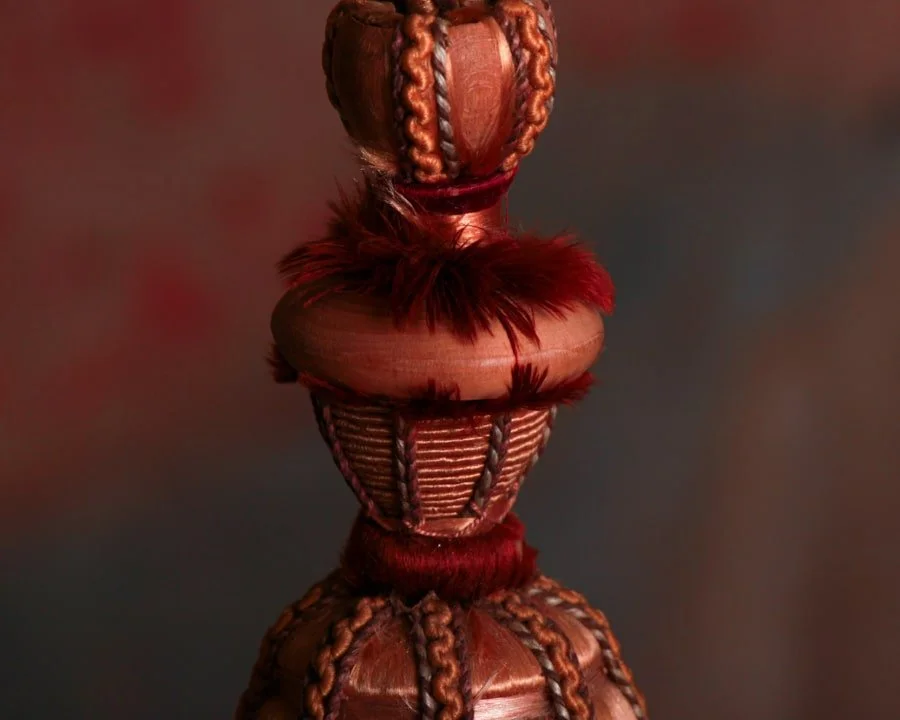
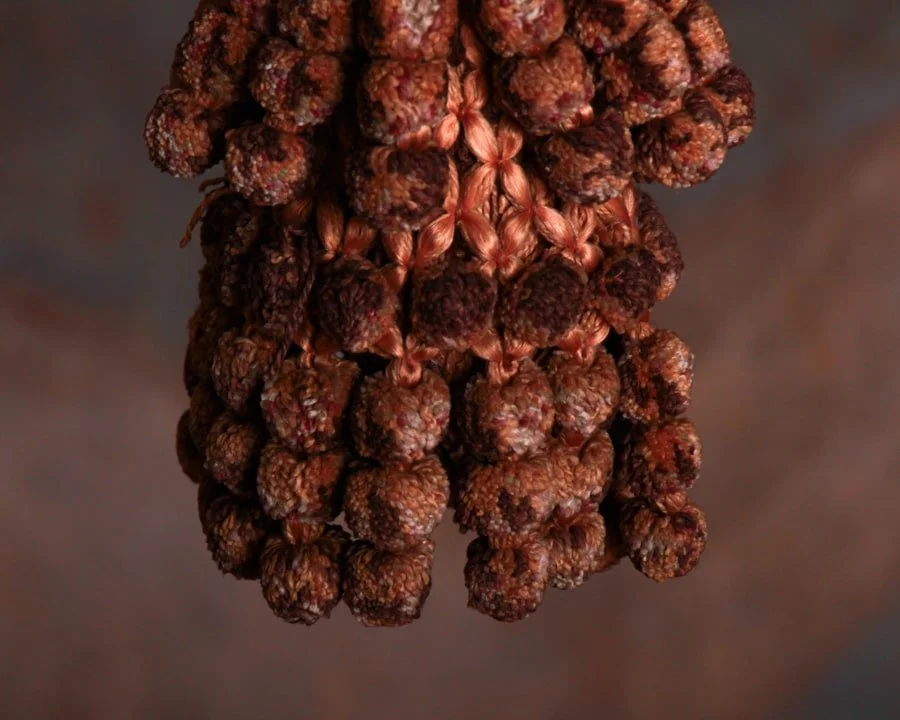
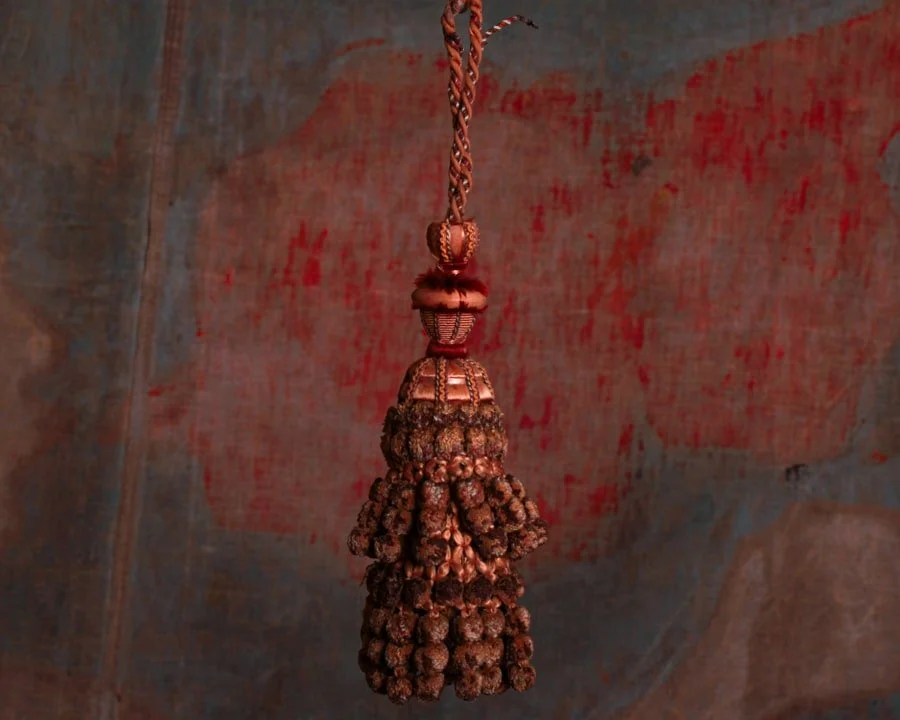
This 19th-century chenille tassel measures 9 inches long (not counting the loop)—it’s a densely packed cascade of tiny tufts, all tethered by layers of hand-braided threads, satin cord, and gleaming coppery silk. The top is wrapped like a prize ribbon, the body a plush forest of fuzzy spheres in shades of cinnamon, clove, and dusty rose. Probably originally made for draperies or fancy key pulls.
Category History
The 19th-century chenille tassel pom-pom lives in that lush, slightly over-the-top world of Victorian interiors, where texture was as important as color and no surface was left entirely alone. These were the finishing touches—added to curtains, upholstery, bell pulls, and even clothing—bringing movement and softness to otherwise structured spaces.
Chenille, with its velvety, caterpillar-like pile, was created by twisting short lengths of yarn around a core thread, producing that dense, plush feel. When gathered into tassels and pom-poms, it became something almost sculptural—rounded, tactile, and just a little indulgent. Rich dyes—deep reds, mossy greens, ochres—gave them depth, while the layered construction added a sense of weight and presence.
What’s interesting is how they were both decorative and functional. Tassels could finish an edge, conceal a tieback, or simply add visual rhythm along a curtain line. But they also carried a kind of theatricality—small objects that responded to air, light, and movement.
Over time, these pieces pick up a softness you can’t manufacture. The fibers relax, colors mellow, and the structure loosens just enough to feel lived-in. Today, they read as fragments of a larger interior story—little bursts of texture that hint at rooms once filled with fabric, pattern, and a clear love of detail.
PLEASE EMAIL US RE: SHIPPING TIMING BEFORE PURCHASING hello@heimweeantiques.com
This 19th-century chenille tassel measures 9 inches long (not counting the loop)—it’s a densely packed cascade of tiny tufts, all tethered by layers of hand-braided threads, satin cord, and gleaming coppery silk. The top is wrapped like a prize ribbon, the body a plush forest of fuzzy spheres in shades of cinnamon, clove, and dusty rose. Probably originally made for draperies or fancy key pulls.
Category History
The 19th-century chenille tassel pom-pom lives in that lush, slightly over-the-top world of Victorian interiors, where texture was as important as color and no surface was left entirely alone. These were the finishing touches—added to curtains, upholstery, bell pulls, and even clothing—bringing movement and softness to otherwise structured spaces.
Chenille, with its velvety, caterpillar-like pile, was created by twisting short lengths of yarn around a core thread, producing that dense, plush feel. When gathered into tassels and pom-poms, it became something almost sculptural—rounded, tactile, and just a little indulgent. Rich dyes—deep reds, mossy greens, ochres—gave them depth, while the layered construction added a sense of weight and presence.
What’s interesting is how they were both decorative and functional. Tassels could finish an edge, conceal a tieback, or simply add visual rhythm along a curtain line. But they also carried a kind of theatricality—small objects that responded to air, light, and movement.
Over time, these pieces pick up a softness you can’t manufacture. The fibers relax, colors mellow, and the structure loosens just enough to feel lived-in. Today, they read as fragments of a larger interior story—little bursts of texture that hint at rooms once filled with fabric, pattern, and a clear love of detail.